Are you ready to stand out in your next interview? Understanding and preparing for Land Use/Land Cover Mapping interview questions is a game-changer. In this blog, we’ve compiled key questions and expert advice to help you showcase your skills with confidence and precision. Let’s get started on your journey to acing the interview.
Questions Asked in Land Use/Land Cover Mapping Interview
Q 1. Explain the difference between land use and land cover.
Land use and land cover are often confused, but they represent distinct concepts. Land cover refers to the physical materials present on the Earth’s surface. Think of it as what you *see* – trees, grass, buildings, water, etc. Land use, on the other hand, describes how humans utilize that land. It’s about the *purpose* of the land – residential, agricultural, industrial, recreational, etc. For example, a land cover could be ‘forest,’ but the land use could be ‘timber production’ or ‘protected conservation area’. The same land cover can support various land uses, and vice versa.
Imagine a field. The land cover might be ‘grassland’. The land use could be ‘pasture for grazing’ or ‘growing hay’. This difference is crucial for accurate analysis and effective land management planning. A map showing only land cover won’t reveal the human impact and activities, while a land use map without the accompanying cover details is incomplete.
Q 2. Describe the various data sources used in Land Use/Land Cover mapping (e.g., satellite imagery, aerial photography, LiDAR).
Land Use/Land Cover (LULC) mapping relies on diverse data sources. Satellite imagery provides synoptic views over large areas and is frequently updated, offering multispectral and hyperspectral data crucial for detailed classification. Different satellites, like Landsat, Sentinel, and MODIS, offer various spatial and temporal resolutions. Aerial photography provides high-resolution images but usually covers smaller areas and may be more expensive and time-consuming to acquire. It’s particularly useful for detailed urban analysis or assessing features requiring finer spatial resolution. LiDAR (Light Detection and Ranging) offers a 3D perspective by measuring distances using laser pulses. This is incredibly valuable for generating Digital Elevation Models (DEMs), crucial for analyzing topography and its influence on LULC. It’s especially useful in complex terrain where other methods may struggle.
In many projects, a combination of these data sources is employed to maximize accuracy. For example, we might use high-resolution aerial photography for urban areas coupled with lower-resolution satellite imagery for rural regions, leveraging the strengths of each data type. In another case, combining LiDAR and satellite imagery allows for more accurate extraction of forest canopy height and density, leading to a more sophisticated classification.
Q 3. What are the common methods for land cover classification?
Several methods exist for land cover classification, broadly categorized as supervised and unsupervised techniques. Supervised classification requires training the algorithm using samples of known land cover types (e.g., identifying pixels known to represent ‘forest’ or ‘urban’). Common supervised methods include:
- Maximum Likelihood Classification: Assumes data follows a normal distribution for each class.
- Support Vector Machines (SVM): Effective for high-dimensional data and complex relationships.
- Random Forest: An ensemble learning method that combines multiple decision trees for improved accuracy.
Unsupervised classification doesn’t require prior knowledge of land cover types. The algorithm groups pixels based on spectral similarity. A common unsupervised technique is:
- ISODATA (Iterative Self-Organizing Data Analysis Technique): An iterative clustering algorithm that adjusts cluster parameters until a satisfactory solution is reached.
The choice of method depends on factors such as data quality, available ground truth data, and project requirements. In my experience, supervised methods generally deliver more accurate results when sufficient training data is available, while unsupervised methods are useful for exploratory analysis or when training data is limited.
Q 4. Explain the concept of image classification accuracy assessment (e.g., error matrix, kappa coefficient).
Assessing the accuracy of land cover classification is critical to ensure reliability. An error matrix (or confusion matrix) summarizes the classification results by comparing classified land cover to reference data (ground truth). It shows the counts of correctly and incorrectly classified pixels for each land cover type. The kappa coefficient (κ) is a statistical measure derived from the error matrix. It represents the agreement between the classified map and the reference data, correcting for chance agreement. A kappa value of 1 indicates perfect agreement, 0 indicates agreement equivalent to random chance, and negative values suggest agreement worse than random.
For example, an error matrix would show how many pixels classified as ‘forest’ were actually ‘forest’ (correct classification), how many were actually ‘urban’ (incorrect classification), and so on. A high kappa coefficient, say above 0.8, usually signifies a good classification accuracy, though the acceptable threshold depends on the application and the acceptable level of error.
Q 5. How do you handle cloud cover in satellite imagery for land cover mapping?
Cloud cover poses a significant challenge in satellite imagery for LULC mapping, as it obscures the ground features. Several strategies can mitigate this problem. Temporal compositing involves creating a single image by selecting the clearest pixels from multiple images acquired over time. This requires having a sufficient number of cloud-free images for a given area. Cloud masking techniques use algorithms to identify and remove cloud-covered areas from the imagery. Sophisticated algorithms can differentiate between clouds and similar features like snow or bright surfaces. Sometimes a combination of temporal compositing and cloud masking is used. Finally, advanced methods like deep learning are becoming increasingly popular for cloud removal or cloud filling.
The choice of approach depends on factors such as the extent of cloud cover, the availability of cloud-free images, and the desired level of accuracy. In instances of extensive and persistent cloud cover, alternative data sources such as aerial photography may need to be considered.
Q 6. Describe your experience with different GIS software (e.g., ArcGIS, QGIS).
I possess extensive experience with various GIS software packages. My primary experience is with ArcGIS, utilizing its extensive geoprocessing tools for image classification, analysis, and map production. I’m proficient in using tools like the Spatial Analyst extension for raster processing, the Geostatistical Analyst for spatial modeling, and the ArcPy scripting environment for automating tasks. I’ve also worked extensively with QGIS, appreciating its open-source nature and flexibility. QGIS is particularly powerful for tasks involving image pre-processing, using plugins for advanced functionalities, and creating visually appealing maps. I’ve used both platforms for diverse projects, selecting the best tool based on the project requirements and data characteristics. For example, for large-scale projects with complex data, ArcGIS’s processing power is preferred, while for smaller-scale projects with a focus on open-source solutions, QGIS is frequently my go-to choice.
Q 7. What are the challenges in maintaining accuracy and consistency in Land Use/Land Cover maps over time?
Maintaining accuracy and consistency in LULC maps over time is a significant challenge. Changes in land cover are inherent; urban sprawl, deforestation, and agricultural changes constantly alter the landscape. Data inconsistencies across different acquisition dates and sensors can also lead to discrepancies. Difficulties in ground truthing, especially in remote or inaccessible areas, complicate validation efforts. The costs associated with repeated data acquisition can limit the frequency of updates, especially for high-resolution data.
To address these challenges, a robust framework is needed. This includes using standardized classification systems, implementing quality control measures during data processing, and employing change detection techniques to monitor alterations between mapping periods. Regular updates, leveraging newer sensor technologies, and incorporating crowd-sourced data can also enhance accuracy. Moreover, developing methodologies that integrate various data sources (e.g., satellite imagery, aerial photography, and crowdsourced data) is crucial. A well-designed database management system will also help maintain data integrity and consistency across multiple versions of the map. This ensures that updates and changes are tracked and documented, supporting the reliability and longevity of the LULC mapping project.
Q 8. How do you address spatial autocorrelation in land cover data?
Spatial autocorrelation in land cover data refers to the tendency of nearby locations to have similar land cover types. Imagine a forest: trees tend to cluster together, not randomly scatter across a field. This violates the assumption of independence often made in statistical analyses. Ignoring it can lead to inaccurate results and inflated significance in statistical tests. To address this, we use techniques that account for spatial dependence.
- Spatial Lag Models: These models incorporate the values of neighboring locations as explanatory variables. For example, the probability of a pixel being classified as forest might depend not only on its spectral characteristics but also on the land cover of its surrounding pixels.
- Spatial Error Models: These models account for spatial autocorrelation in the error terms of a regression model, acknowledging that the unexplained variance may be spatially structured. They capture the spatial dependencies that remain unexplained by the other predictors.
- Geographically Weighted Regression (GWR): GWR allows for local variations in the regression coefficients, providing more spatially explicit insights into the relationships between variables. This helps to capture localized patterns of spatial autocorrelation.
- Sampling Strategies: Employing stratified sampling or spatial sampling designs, such as systematic sampling or cluster sampling, can help to minimize the impact of spatial autocorrelation during data collection and subsequent analysis. For example, if you suspect strong spatial autocorrelation, clustering your sample sites might be beneficial.
Choosing the appropriate method depends on the specific dataset and research question. Often, we’ll explore multiple methods to ensure robustness of our findings. In practice, I often utilize a combination of techniques like GWR and spatial error modeling to fully account for the spatial relationships within the data.
Q 9. Explain the importance of georeferencing in land use/land cover mapping.
Georeferencing is the process of assigning geographic coordinates (latitude and longitude) to land cover data. It’s crucial because it anchors the data to a real-world location, allowing us to analyze spatial patterns and relationships. Without georeferencing, your map is just a picture—it lacks the essential link to the Earth’s surface.
Think of it like this: you have a beautiful picture of a landscape, but without knowing where the picture was taken, it’s useless for mapping or analysis. Georeferencing provides that crucial ‘where’ information. It’s achieved using ground control points (GCPs)—locations identifiable on both the image and a reference map—and georeferencing software that uses algorithms to transform the image coordinates into geographic coordinates.
The accuracy of georeferencing directly impacts the accuracy of any subsequent analysis. Inaccurate georeferencing can lead to errors in measuring distances, areas, and spatial relationships, making your analyses misleading or completely wrong. For example, inaccurate georeferencing could lead to an overestimation of deforestation when analyzing satellite imagery if a significant part of the image is misaligned.
Q 10. What are the different spatial resolutions of satellite imagery and how do they impact land cover mapping?
Spatial resolution refers to the size of the smallest discernible detail on a satellite image. It’s typically expressed as the width of a pixel in meters (e.g., 30m, 10m, 1m). Different resolutions offer different levels of detail and are crucial in land cover mapping.
- Coarse Resolution (e.g., 30m, 100m): Suitable for large-scale mapping projects, covering vast areas. These images capture broad patterns but lack fine details. For example, Landsat imagery with 30m resolution is excellent for mapping large forest extents, but may not accurately delineate individual tree species or small patches of agriculture.
- Medium Resolution (e.g., 10m, 20m): A good balance between spatial detail and coverage. These allow for mapping more diverse land cover classes with greater accuracy than coarse resolution imagery. For example, mapping urban land use, including differentiating between residential and commercial areas.
- Fine Resolution (e.g., 1m, 0.5m): Provides very high detail, ideal for detailed mapping at the local level. These are useful for precise land cover classification and object recognition, particularly when dealing with small features such as individual buildings or trees. Examples include mapping individual tree health in a forest, or precisely delineating roads and buildings within a city.
The choice of spatial resolution depends entirely on the mapping objectives. High-resolution imagery is more expensive and computationally intensive, so it’s generally used when high detail is essential. For broad-scale assessments, coarser resolution images are often sufficient and more cost-effective.
Q 11. Describe your experience with object-based image analysis (OBIA).
Object-based image analysis (OBIA) is a powerful technique that moves beyond pixel-based classification. Instead of analyzing individual pixels, OBIA treats groups of pixels as meaningful objects (e.g., buildings, trees, fields). This leverages both spectral and spatial information to improve classification accuracy.
My experience with OBIA involves utilizing software such as eCognition or ArcGIS Pro. I typically follow these steps:
- Segmentation: This step groups pixels into meaningful objects based on spectral similarity and spatial proximity. Various segmentation algorithms (e.g., multiresolution segmentation) are used to achieve optimal object delineation.
- Feature Extraction: Once objects are segmented, I extract various features, such as shape, texture, size, and spectral indices (NDVI, etc.), which help to discriminate between different land cover classes.
- Classification: Finally, I classify the objects based on the extracted features using techniques like decision trees, support vector machines, or rule-based classifiers. This step allows us to assign land cover types to each object.
OBIA has been particularly useful in complex landscapes where traditional pixel-based methods struggle. For example, in urban environments, OBIA excels at distinguishing between buildings, roads, and vegetation due to its ability to use shape and context as important classification features. Compared to pixel-based approaches, it significantly reduces salt and pepper noise often present in classification results, generating cleaner and more accurate land cover maps.
Q 12. What are the ethical considerations in Land Use/Land Cover mapping?
Ethical considerations in land use/land cover mapping are vital. The maps we create have significant implications for policy, planning, and resource management, affecting people and the environment. Key ethical considerations include:
- Data Privacy: High-resolution imagery can potentially reveal sensitive information about individuals or properties. Careful consideration must be given to data anonymization and responsible data handling. Anonymizing the data ensures individual privacy is protected.
- Bias and Representation: The methods used in mapping can introduce biases, potentially underrepresenting or misrepresenting certain groups or environments. For example, a bias towards specific land cover classes in the training data for a machine learning model can lead to biased maps. Careful selection of data and algorithms is needed to mitigate this.
- Transparency and Accessibility: The methods used, data sources, and limitations of the maps should be clearly documented and made accessible to ensure transparency and accountability. This includes providing clear metadata and openly sharing the processed datasets when appropriate.
- Equitable Use of Information: The information derived from land cover maps should be used equitably and not contribute to environmental injustices or social inequities. For example, land cover maps should not be used to unfairly discriminate against particular communities.
- Environmental Impact: Consider the environmental impact of data acquisition, particularly for high-resolution data collection which requires significant energy.
Addressing these ethical issues ensures that our work is responsible, fair, and contributes positively to society and the environment.
Q 13. Explain the concept of change detection in land use/land cover analysis.
Change detection in land use/land cover analysis focuses on identifying and quantifying changes in land cover over time. It involves comparing two or more datasets (e.g., satellite images acquired at different times) to pinpoint alterations in land cover types (e.g., deforestation, urbanization). Imagine tracking the growth of a city over several decades – change detection would reveal that growth.
Methods for change detection include:
- Image differencing: A simple method that subtracts the pixel values of one image from another. Significant differences highlight areas of change.
- Post-classification comparison: Two separate land cover classifications are created for the different time periods, and then a comparison identifies the changes between the two maps.
- Image registration and co-registration: Critical steps before any comparison, ensuring that the images align perfectly in space. This is essential to avoid misidentifying changes due to misalignment.
- Multitemporal analysis: This involves using time-series data to track continuous changes, capturing gradual changes, which are typically not captured by single-time comparisons.
Change detection helps us to understand the dynamics of land cover transformation, informing land management decisions, environmental monitoring, and urban planning. For example, tracking deforestation rates can aid in conservation efforts, while mapping urban sprawl helps guide urban planning strategies.
Q 14. How do you validate your Land Use/Land Cover maps?
Validating land use/land cover maps is crucial to assess their accuracy and reliability. It involves comparing the mapped land cover with ground truth data—information collected on the ground, such as field surveys or high-resolution aerial photography.
Validation involves these steps:
- Accuracy Assessment: We collect ground truth data at randomly selected locations throughout the study area. The number of sample points depends on the desired level of accuracy and the spatial heterogeneity of the area. Then we compare the classified land cover at these points with the ground truth to calculate various accuracy metrics.
- Error Matrix (Confusion Matrix): This table summarizes the agreement and disagreement between the classified map and the reference data, providing information about producer’s accuracy, user’s accuracy, and overall accuracy. The error matrix helps to identify specific classes that are more prone to errors.
- Kappa Statistic: A statistical measure of agreement that accounts for chance agreement, giving a more robust indication of classification accuracy compared to just using overall accuracy.
- Visual Inspection: It’s always a good practice to visually inspect the map in conjunction with the accuracy assessment. Visual inspection helps to identify areas where the classification appears to be particularly inaccurate, even if the overall accuracy assessment appears good. This process can reveal spatial patterns in the errors that are not identified in the statistical measures.
The results of the validation process inform us about the reliability of the map and how it can be used to support decision-making. A robust validation process allows us to identify the limitations of the map and to communicate uncertainty clearly, adding value to the map in terms of usefulness and reliability. Poorly validated maps can mislead decision-makers and have negative consequences.
Q 15. Describe different land cover classification schemes (e.g., Anderson, LULC).
Land cover classification schemes are systems used to categorize the Earth’s surface into different types based on their physical characteristics. Several schemes exist, each with varying levels of detail and application. Let’s explore a few:
- Anderson Level I Classification: This is a hierarchical system, broadly categorizing land cover into nine major classes like urban or built-up land, agricultural land, rangeland, forest land, water bodies, wetland, barren land, tundra, and ice/snow. It’s useful for large-scale assessments and provides a general overview.
- Anderson Level II Classification: A more detailed version of Level I, this scheme breaks down the Level I classes into more specific categories. For example, ‘forest land’ in Level I might be further classified into deciduous forest, coniferous forest, and mixed forest in Level II. This increased specificity provides more context for analysis.
- LULC (Land Use/Land Cover): This is a more flexible term that often incorporates both the physical characteristics of the land (land cover) and how humans utilize that land (land use). A LULC map might classify areas as ‘residential’, ‘commercial’, ‘pasture’, or ‘forest’ combining both land cover and use. The level of detail can vary greatly depending on the specific application and data source.
- Other Schemes: Numerous other classification schemes exist, often tailored to specific regions or applications. For instance, you might find specialized schemes focused on vegetation types, urban morphology, or specific ecological zones. The choice of scheme depends entirely on the project’s goals and the scale of the analysis.
The key difference between these lies in the level of detail and the specific characteristics considered. Choosing the right classification scheme is crucial for the accuracy and applicability of your analysis.
Career Expert Tips:
- Ace those interviews! Prepare effectively by reviewing the Top 50 Most Common Interview Questions on ResumeGemini.
- Navigate your job search with confidence! Explore a wide range of Career Tips on ResumeGemini. Learn about common challenges and recommendations to overcome them.
- Craft the perfect resume! Master the Art of Resume Writing with ResumeGemini’s guide. Showcase your unique qualifications and achievements effectively.
- Don’t miss out on holiday savings! Build your dream resume with ResumeGemini’s ATS optimized templates.
Q 16. What are the applications of Land Use/Land Cover maps in urban planning?
Land Use/Land Cover (LULC) maps are invaluable tools in urban planning. They provide a visual representation of the spatial distribution of different land uses within a city or region. This information is crucial for informed decision-making across various planning aspects.
- Urban Growth Monitoring: LULC maps track the expansion of urban areas over time, identifying patterns of growth and highlighting areas at risk of sprawl. This is vital for implementing sustainable urban development strategies.
- Infrastructure Planning: By understanding existing land uses, planners can strategically locate new infrastructure (roads, schools, hospitals) to minimize environmental impact and improve accessibility.
- Zoning and Land Allocation: LULC maps inform zoning regulations and land allocation decisions. Planners can use these maps to identify suitable areas for residential, commercial, or industrial development, minimizing conflicts and ensuring efficient land use.
- Environmental Impact Assessment: Urban planning projects often require environmental impact assessments. LULC maps aid in evaluating the potential effects of development on natural habitats, water resources, and other environmental features.
- Disaster Risk Reduction: LULC data can identify areas vulnerable to natural disasters (floods, landslides) allowing for targeted disaster preparedness and mitigation efforts.
For example, a city planning to expand its public transportation network can use LULC maps to identify areas with high population density and limited transit access, prioritizing investment where it’s most needed.
Q 17. How are Land Use/Land Cover maps used in environmental monitoring?
Environmental monitoring relies heavily on LULC maps to track changes in the Earth’s surface over time, providing essential data for assessing environmental health and managing natural resources.
- Deforestation Monitoring: LULC maps are instrumental in monitoring deforestation rates, identifying areas experiencing significant tree cover loss, and tracking the impact of deforestation on biodiversity and climate change.
- Habitat Change Analysis: Changes in LULC patterns can indicate alterations in wildlife habitats. By comparing LULC maps from different time periods, researchers can track habitat fragmentation, loss, and the potential impact on species populations.
- Water Quality Assessment: The location and extent of water bodies, wetlands, and other hydrological features, as depicted in LULC maps, can be used to assess the condition of water resources. Changes in these features can indicate pollution or degradation.
- Climate Change Impact Assessment: LULC maps are crucial for assessing the impacts of climate change. Changes in vegetation patterns, snow cover, or ice extent, as shown in LULC maps, provide valuable information on climate change effects and potential consequences.
- Pollution Monitoring: By identifying land uses near pollution sources, LULC maps can inform pollution monitoring strategies and help target remediation efforts.
For instance, an environmental agency might use LULC maps to track the spread of invasive plant species, identifying areas needing immediate intervention to protect native ecosystems.
Q 18. What are the limitations of using remotely sensed data for land use/land cover mapping?
While remotely sensed data is a powerful tool for LULC mapping, it does have limitations:
- Spatial Resolution: The resolution of satellite imagery limits the level of detail that can be captured. Fine-scale features may be indistinguishable at coarser resolutions, leading to inaccuracies in classification.
- Spectral Resolution: The number and width of spectral bands in the imagery can influence the accuracy of classification. Limited spectral information might make it difficult to differentiate between spectrally similar land cover types.
- Temporal Resolution: The frequency of satellite image acquisition can affect the accuracy of LULC maps, especially for rapidly changing areas. Infrequent imaging may miss short-term changes.
- Atmospheric Effects: Clouds and atmospheric haze can obscure the ground features, reducing the quality of imagery and potentially introducing errors into the classification process. This often requires careful image selection and atmospheric correction techniques.
- Mixed Pixels: Satellite pixels often represent a mixture of land cover types, making it challenging to assign a single class to a pixel. Sub-pixel analysis techniques can help address this issue, but they add complexity to the analysis.
For example, distinguishing between different types of urban land use (residential, commercial, industrial) can be challenging with low spatial resolution imagery.
Q 19. How do you incorporate ancillary data (e.g., elevation, climate) to improve the accuracy of land cover mapping?
Incorporating ancillary data significantly improves the accuracy of LULC mapping. Ancillary data provides additional information that supplements the spectral information derived from remotely sensed data. This helps resolve ambiguities and improves classification accuracy.
- Elevation Data (DEM): Elevation data helps distinguish between land cover types at different elevations. For example, forests are often found at higher elevations than agricultural land. Incorporating DEM can aid in classifying areas with complex topography.
- Climate Data: Climate variables such as temperature and precipitation can influence vegetation types and land use patterns. This data can be used to refine classification rules and improve the accuracy of vegetation classification.
- Soil Data: Soil type influences vegetation growth and land use suitability. Including soil data in the classification process can improve the accuracy of land cover mapping, especially in agricultural areas.
- Vector Data: Existing vector data such as roads, buildings, or water bodies can be incorporated to improve classification accuracy by providing ground truth information or constraining the classification process.
For example, incorporating elevation data can aid in distinguishing between different forest types based on their elevation ranges, improving the overall map’s accuracy. This integration is typically done using techniques like machine learning algorithms that can use both spectral and ancillary information.
Q 20. What are some common errors in land cover classification and how can they be avoided?
Several common errors can occur during land cover classification:
- Confusion between spectrally similar classes: Some land cover types have similar spectral signatures, making them difficult to distinguish using only spectral information. For instance, differentiating between different types of grasslands or between shadow and water can be challenging.
- Salt and pepper effect: This refers to the presence of isolated pixels of a different class scattered throughout a homogenous area. This can result from noise in the imagery or from errors in the classification process.
- Commission errors (false positives): These occur when pixels are incorrectly classified as belonging to a particular class. For example, classifying a barren area as grassland.
- Omission errors (false negatives): These occur when pixels belonging to a particular class are incorrectly classified as something else. For example, classifying a forest as agricultural land.
- Unrepresentative training data: Using insufficient or poorly representative training data for the classification algorithm can significantly reduce classification accuracy.
These errors can be avoided by: employing sophisticated classification algorithms, using multiple data sources, careful preprocessing of data to minimize noise, rigorous quality control checks, and using robust accuracy assessment techniques.
Q 21. Explain your experience with data preprocessing techniques in remote sensing.
My experience with data preprocessing in remote sensing is extensive. It’s a critical step that directly impacts the accuracy of any LULC mapping project. Effective preprocessing ensures that the data is clean, consistent, and suitable for classification.
- Atmospheric Correction: I have experience applying various atmospheric correction methods, such as dark object subtraction and radiative transfer models, to remove the atmospheric effects and obtain true surface reflectance values. This is crucial for comparing imagery acquired at different times or under varying atmospheric conditions.
- Geometric Correction: I’m proficient in geometric correction techniques including orthorectification using digital elevation models (DEMs) to remove geometric distortions caused by terrain relief and sensor geometry. This ensures accurate spatial registration of the imagery and allows for precise measurements.
- Radiometric Calibration: I have experience calibrating remotely sensed data to ensure consistent radiometric values across different images and sensors. This involves converting digital numbers (DN) to physical units like reflectance or radiance, allowing for meaningful comparisons between images.
- Noise Reduction: I employ various noise reduction techniques, such as filtering (median, Gaussian), to remove noise from the imagery, thereby enhancing the quality of the data for further processing and classification.
- Data Enhancement: I utilize techniques like image sharpening or pansharpening to improve image resolution and detail, facilitating better feature extraction and classification.
For instance, in a recent project involving multispectral imagery, I utilized FLAASH (Fast Line-of-sight Atmospheric Analysis of Spectral Hypercubes) atmospheric correction to remove atmospheric scattering and absorption effects. This significantly improved the accuracy of my subsequent land cover classification.
Q 22. Describe your understanding of different image enhancement techniques.
Image enhancement techniques are crucial in Land Use/Land Cover (LULC) mapping because they improve the quality of remotely sensed imagery, making it easier to interpret and classify. These techniques aim to reduce noise, enhance contrast, and sharpen features to reveal subtle variations in land cover types.
- Contrast Enhancement: Techniques like histogram equalization stretch the range of pixel values, improving the visibility of different land cover features. Imagine a photo where all the colors are washed out; histogram equalization is like adjusting the brightness and contrast to make the details pop.
- Filtering: Spatial filters, such as low-pass (smoothing) and high-pass (sharpening) filters, remove noise and enhance edges, respectively. Low-pass filters are like blurring a picture to remove minor imperfections, while high-pass filters highlight the boundaries between different land cover types.
- Geometric Correction: This involves aligning images to a geographic coordinate system, correcting for distortions caused by sensor geometry and Earth’s curvature. This ensures accurate spatial registration essential for change detection and analysis.
- Atmospheric Correction: Removes atmospheric effects like haze and scattering, which can obscure land cover features. Think of it as removing a fog layer from a satellite image to reveal a clearer view of the land below.
- Principal Component Analysis (PCA): This statistical technique transforms the original image bands into new uncorrelated components, highlighting variations that may not be readily apparent in the original data. This can be particularly useful for identifying subtle spectral differences between land cover classes.
For example, in mapping urban areas, atmospheric correction can help differentiate between built-up areas and cloud cover, while sharpening filters can enhance the boundaries between roads and buildings.
Q 23. What are the advantages and disadvantages of supervised vs. unsupervised classification?
Supervised and unsupervised classification are two main approaches to classifying remotely sensed imagery for LULC mapping. They differ primarily in how training data is used.
- Supervised Classification: This method requires training data—samples of known land cover types—to train a classifier. The algorithm learns the spectral signatures of these known classes and then applies this knowledge to classify the entire image. Think of it like teaching a child to identify different fruits (training data) and then asking them to sort a basket of mixed fruits (image).
- Unsupervised Classification: This method doesn’t require training data. The algorithm automatically groups pixels based on their spectral similarity. It’s like asking a child to sort a basket of mixed fruits without showing them what each fruit looks like beforehand – the child will group similar-looking fruits together based on their own perception.
Advantages of Supervised Classification: Higher accuracy, more control over the classification process, specific classes can be defined.
Disadvantages of Supervised Classification: Requires significant effort to acquire and label training data, potential for bias if training data is not representative.
Advantages of Unsupervised Classification: Requires less effort than supervised classification, can reveal unexpected patterns in the data.
Disadvantages of Unsupervised Classification: Lower accuracy compared to supervised classification, often requires post-processing to interpret the resulting clusters, and class labels are not predetermined.
The choice between these methods depends on the project’s specific goals, the availability of training data, and the desired level of accuracy. For instance, in a detailed urban LULC mapping project, a supervised approach is typically preferred for higher accuracy, while in exploratory analyses of relatively homogenous areas, unsupervised techniques might be sufficient.
Q 24. How would you approach a project mapping land use change over a decade?
Mapping land use change over a decade involves a multi-step process leveraging remote sensing and GIS techniques. It’s akin to creating a time-lapse video of the land.
- Data Acquisition: Obtain suitable satellite imagery (e.g., Landsat, Sentinel) covering the study area for both the beginning and end of the decade. Ensure consistent spatial and spectral resolution between datasets.
- Pre-processing: This crucial step includes atmospheric correction, geometric correction, and image enhancement to minimize noise and improve data quality. Think of it as cleaning and preparing the raw footage for your time-lapse.
- Image Classification: Employ supervised or unsupervised classification methods (as described earlier) to classify each image into LULC classes. Consistency in class definitions across both time points is paramount.
- Change Detection: Compare the classified images from both time points to identify areas of land use change. Techniques include post-classification comparison (comparing classification results directly), image differencing (subtracting one image from the other), and image regression (analyzing changes over time).
- Accuracy Assessment: Evaluate the accuracy of the change detection results using ground truth data or high-resolution imagery. This is essential to ensure the reliability of the results.
- Data Visualization and Interpretation: Create maps and charts to display the spatial and temporal patterns of land use change. This includes identifying the magnitude and direction of changes and analyzing potential drivers of change. This is like editing your time-lapse video and adding explanatory titles.
For example, we might use this approach to study deforestation patterns in the Amazon rainforest, tracking the loss of forest cover over the past ten years and identifying potential causes like agricultural expansion or logging.
Q 25. Describe your familiarity with spatial statistics.
Spatial statistics plays a vital role in analyzing LULC data, allowing us to move beyond simple descriptive summaries to understand the spatial relationships and patterns within the data. Think of it as adding a layer of sophisticated analysis to our maps.
- Spatial Autocorrelation: Measures the degree to which nearby locations exhibit similar LULC characteristics. For instance, we can determine if urban areas tend to cluster together.
- Spatial Regression: Examines the relationship between LULC patterns and explanatory variables, such as elevation, proximity to roads, or climate factors. This helps us understand what factors drive land use changes.
- Geostatistics: Used for interpolating and predicting LULC values at unsampled locations. This is particularly useful when data is sparse.
- Point Pattern Analysis: Analyzes the spatial distribution of points representing specific features, such as trees or buildings. This helps determine if the distribution is random, clustered, or dispersed.
For example, using spatial regression, we could analyze the relationship between deforestation rates and distance to roads, potentially revealing that road construction is a primary driver of deforestation. Or using spatial autocorrelation, we can analyze the clustering patterns of different land cover types to identify potential habitat fragmentation.
Q 26. Explain your experience working with large geospatial datasets.
Working with large geospatial datasets is a common aspect of LULC mapping, often involving terabytes of data from multiple sources. Efficient processing requires specialized skills and tools.
- Data Management: I’m proficient in organizing and managing large datasets using geospatial databases (e.g., PostGIS, SpatiaLite) and cloud-based storage solutions (e.g., AWS S3, Google Cloud Storage). Think of this as establishing an efficient filing system for all the data.
- Parallel Processing: I utilize parallel processing techniques and high-performance computing resources (e.g., clusters, cloud computing) to expedite computationally intensive tasks like image classification and change detection. This is like using multiple computers to finish a task faster.
- Data Compression and Optimization: I employ data compression techniques and optimize data structures to reduce storage requirements and improve processing speeds. It’s like squeezing a large file into a smaller, manageable size.
- GIS Software Proficiency: My expertise includes using GIS software packages (e.g., ArcGIS, QGIS) with their extensive capabilities for handling, processing, and analyzing large geospatial datasets.
In a recent project involving nationwide LULC mapping, we successfully processed several petabytes of satellite imagery using cloud-based processing and parallel processing techniques, significantly reducing processing time compared to traditional methods.
Q 27. How do you communicate complex spatial information to non-technical audiences?
Communicating complex spatial information to non-technical audiences requires translating technical jargon into clear, concise language, avoiding overly technical terms. It’s about storytelling with data.
- Visualizations: Maps, charts, and infographics are essential. Avoid cluttered maps and keep the design simple and intuitive. Use compelling visuals to highlight key findings.
- Analogies and Metaphors: Use relatable examples to illustrate complex concepts. For instance, compare pixel values to shades of color or relate spatial patterns to familiar objects.
- Storytelling: Frame the spatial information within a narrative, focusing on the key messages and their implications. Make the information relevant to the audience’s interests and concerns.
- Interactive Tools: Web-based map applications or interactive dashboards can allow non-technical users to explore the data at their own pace.
For example, when presenting land use change data to policymakers, I might use a series of maps showing the loss of forest cover over time, accompanied by charts highlighting the economic impact. I’d use clear language and avoid technical terms like ‘spectral signature’ or ‘post-classification comparison,’ instead focusing on the implications for the local economy and environment.
Key Topics to Learn for Land Use/Land Cover Mapping Interview
- Remote Sensing Fundamentals: Understanding image acquisition, preprocessing (e.g., atmospheric correction, geometric correction), and various sensor types (e.g., Landsat, Sentinel). Practical application: Explaining your experience with specific software and techniques used for image processing.
- Classification Techniques: Mastering supervised (e.g., maximum likelihood, support vector machines) and unsupervised (e.g., k-means clustering) classification methods. Practical application: Discussing the strengths and weaknesses of different classification approaches and their suitability for various land cover types.
- Accuracy Assessment: Understanding error matrices, producer’s and user’s accuracy, and Kappa coefficient. Practical application: Explaining how you’ve evaluated the accuracy of your land cover maps and addressed sources of error.
- GIS and Spatial Analysis: Proficiency in using GIS software (e.g., ArcGIS, QGIS) for data management, spatial analysis (e.g., buffer analysis, overlay analysis), and map creation. Practical application: Describing your experience with geospatial data handling and visualization.
- Land Cover Change Detection: Methods for detecting changes in land cover over time (e.g., post-classification comparison, image differencing). Practical application: Illustrating your experience in analyzing land cover change and interpreting its implications.
- Data Sources and Integration: Familiarity with various data sources (e.g., ancillary data, field data) and their integration into land cover mapping workflows. Practical application: Demonstrating your ability to combine different data types to improve map accuracy.
- Applications of Land Use/Land Cover Mapping: Understanding the diverse applications of land cover maps (e.g., urban planning, environmental monitoring, natural resource management). Practical application: Providing examples of how land cover mapping has been used to address real-world problems.
Next Steps
Mastering Land Use/Land Cover Mapping opens doors to exciting careers in environmental science, urban planning, and resource management. To maximize your job prospects, creating a strong, ATS-friendly resume is crucial. ResumeGemini is a trusted resource that can help you build a professional resume that highlights your skills and experience effectively. ResumeGemini provides examples of resumes tailored specifically to Land Use/Land Cover Mapping positions, giving you a head start in crafting a compelling application.
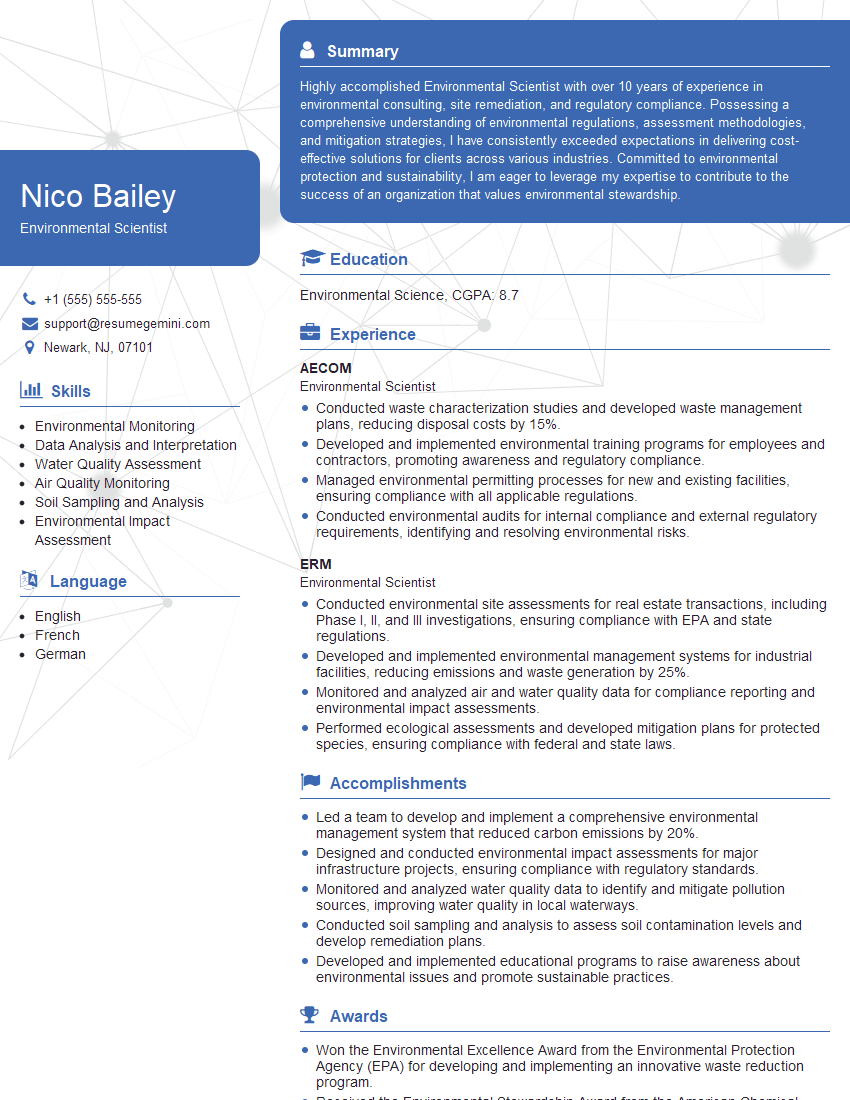
Environmental Scientist Resume Sample
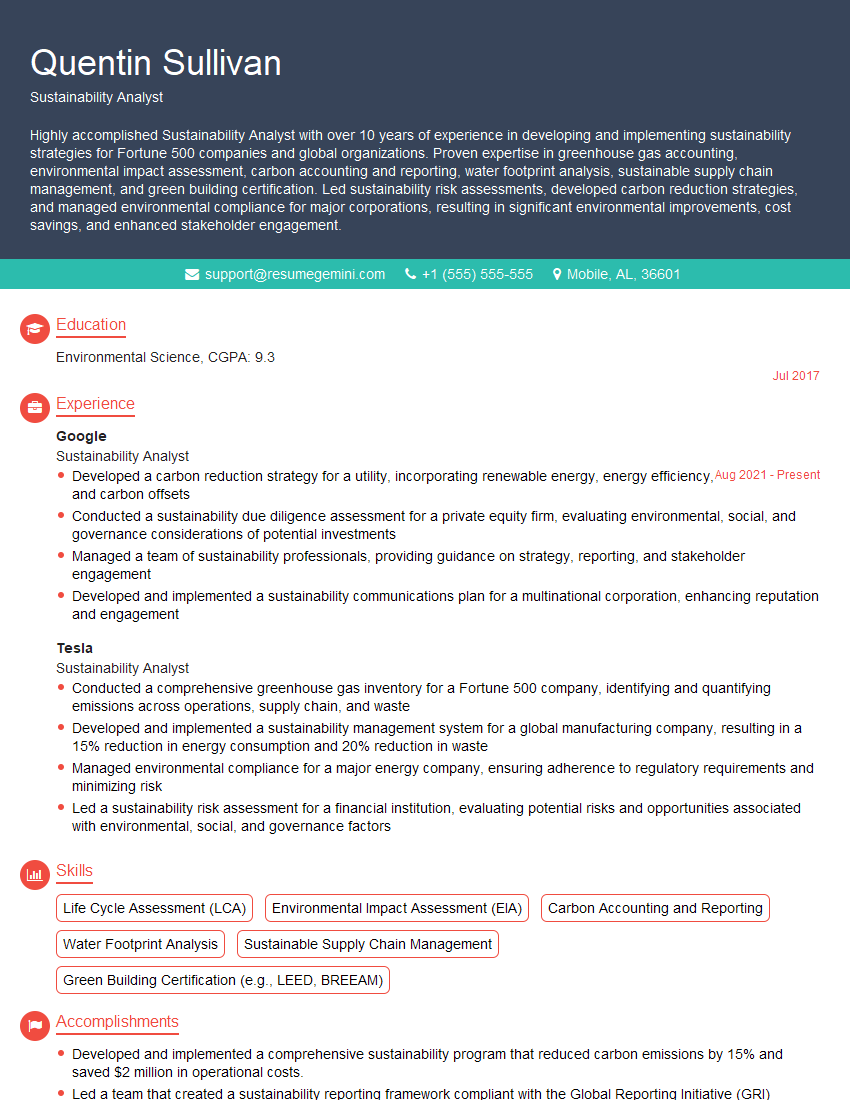
Sustainability Analyst Resume Sample
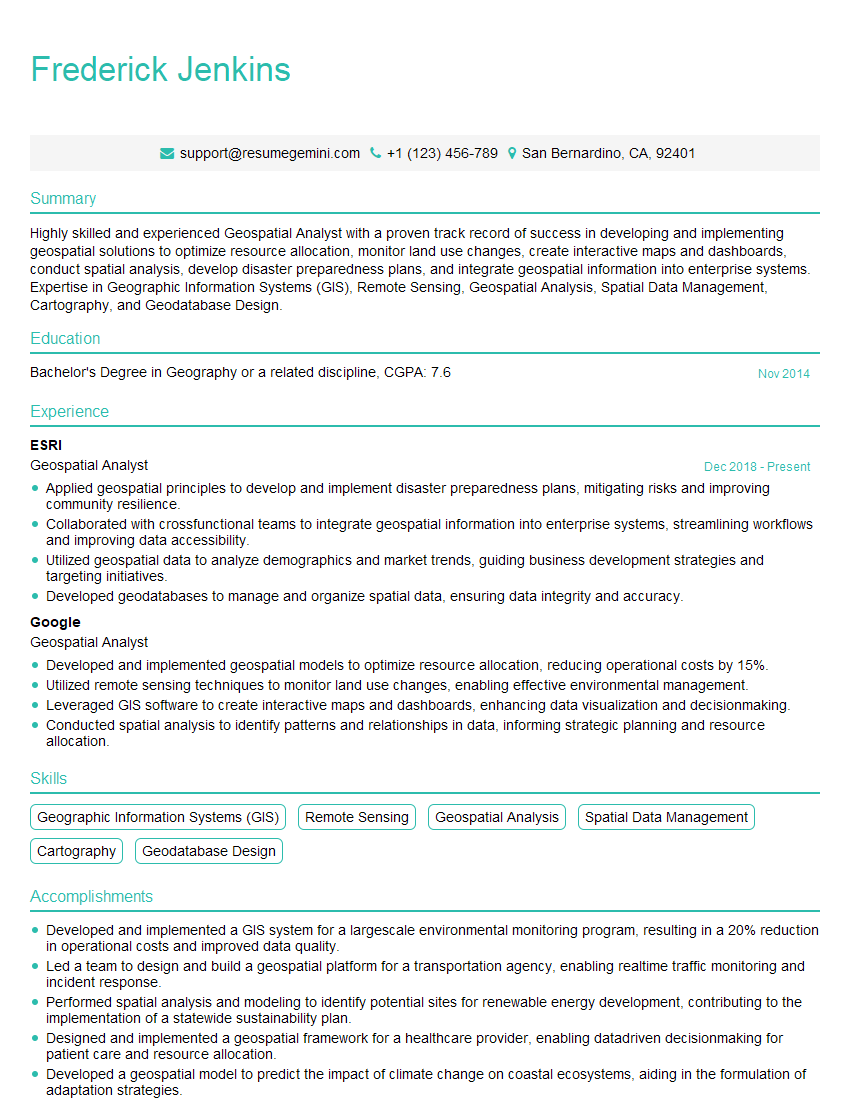
Geospatial Analyst Resume Sample

Cartographer Resume Sample
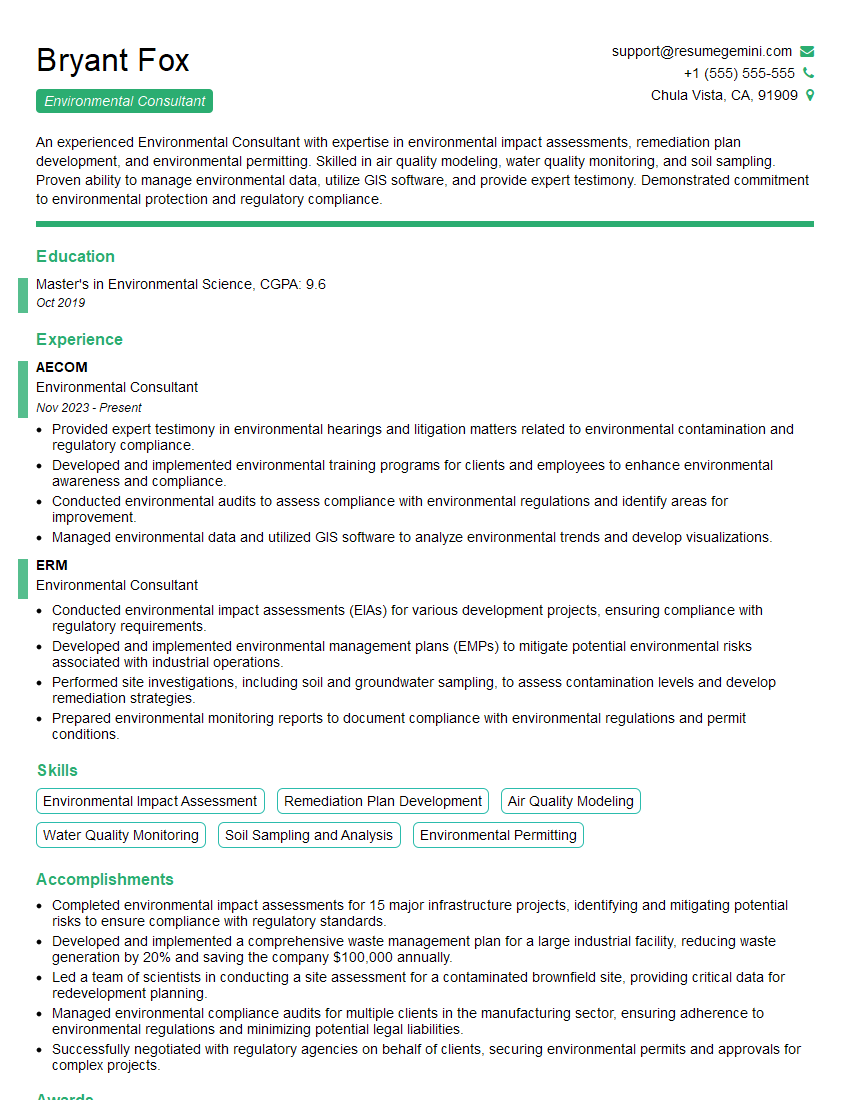
Environmental Consultant Resume Sample
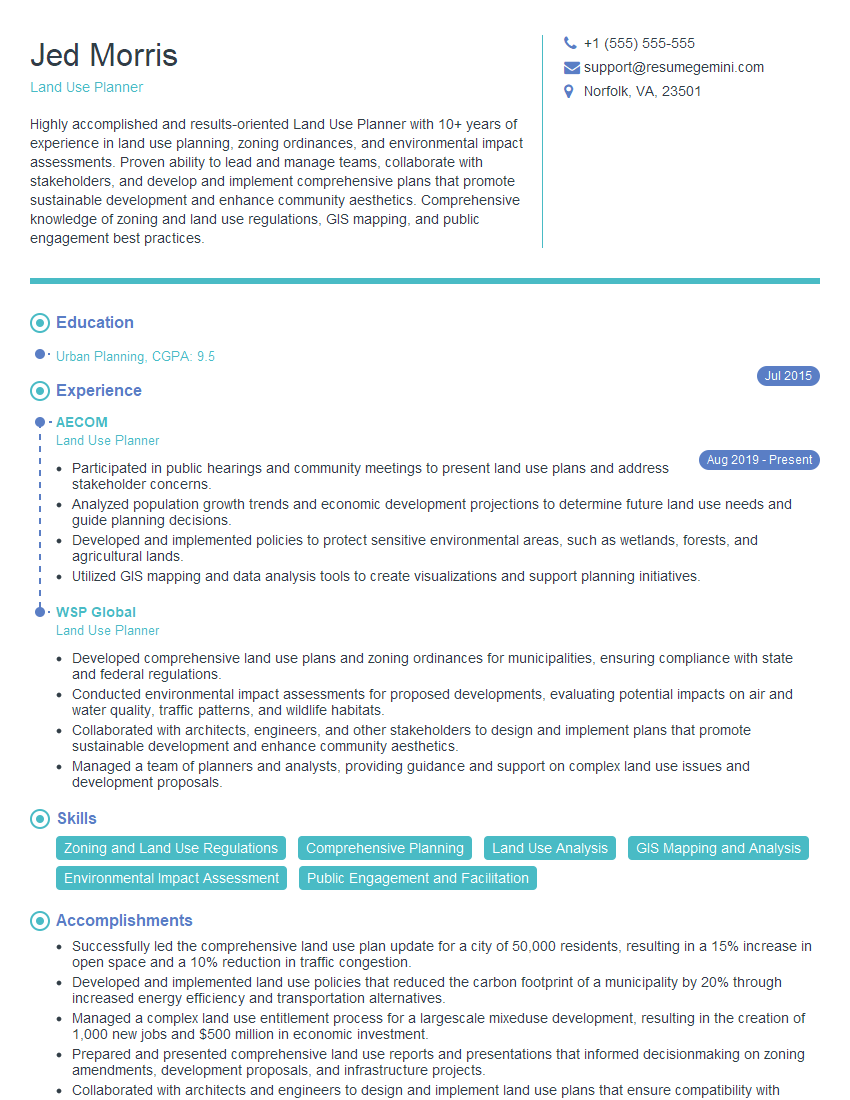
Land Use Planner Resume Sample
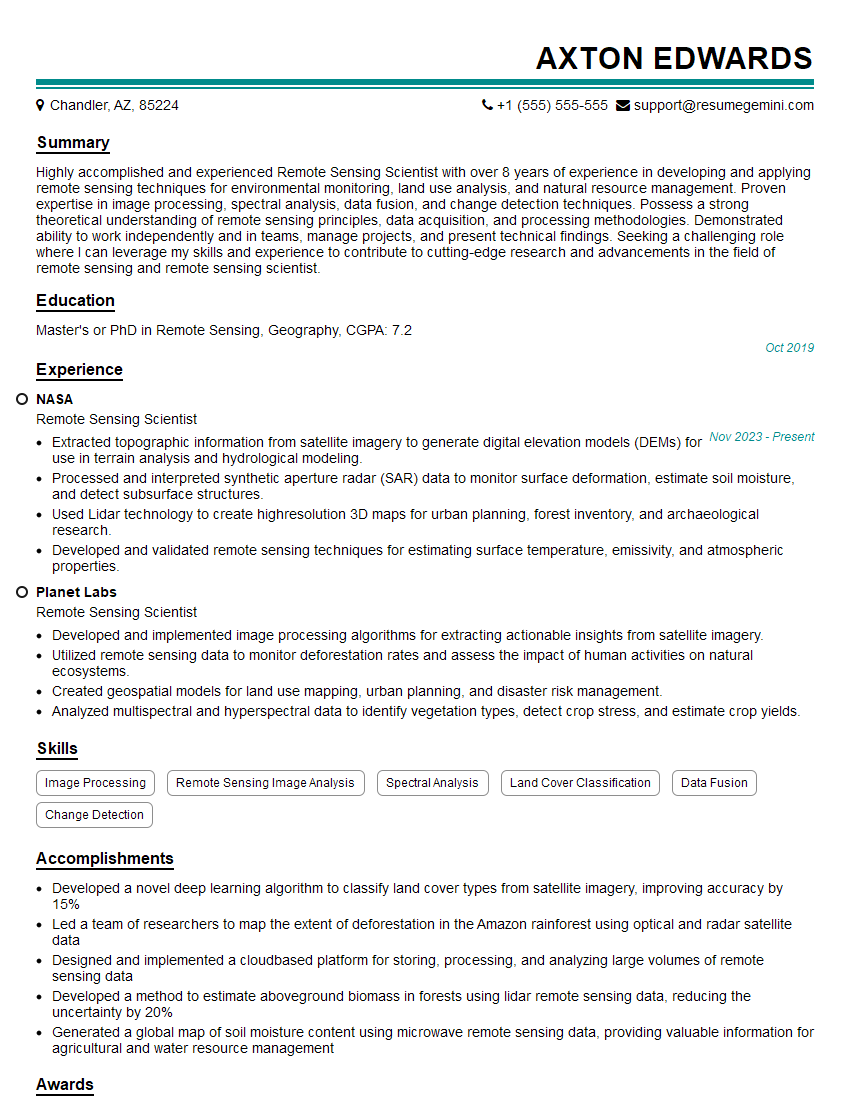
Remote Sensing Scientist Resume Sample

Remote Sensing Specialist Resume Sample
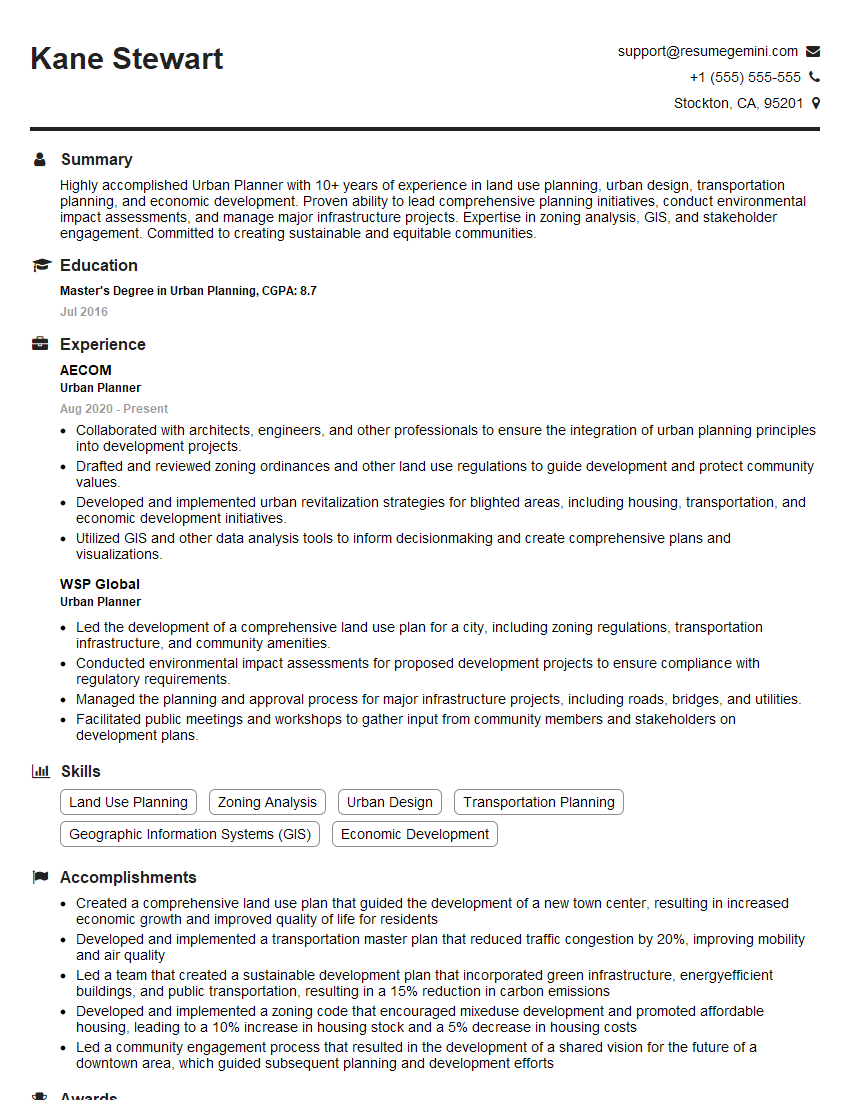
Urban Planner Resume Sample
Explore more articles
Users Rating of Our Blogs
Share Your Experience
We value your feedback! Please rate our content and share your thoughts (optional).
What Readers Say About Our Blog
I Redesigned Spongebob Squarepants and his main characters of my artwork.
https://www.deviantart.com/reimaginesponge/art/Redesigned-Spongebob-characters-1223583608
IT gave me an insight and words to use and be able to think of examples
Hi, I’m Jay, we have a few potential clients that are interested in your services, thought you might be a good fit. I’d love to talk about the details, when do you have time to talk?
Best,
Jay
Founder | CEO