Feeling uncertain about what to expect in your upcoming interview? We’ve got you covered! This blog highlights the most important Machine Monitoring and Diagnostics interview questions and provides actionable advice to help you stand out as the ideal candidate. Let’s pave the way for your success.
Questions Asked in Machine Monitoring and Diagnostics Interview
Q 1. Explain the difference between preventive, predictive, and reactive maintenance.
Maintenance strategies are broadly classified into three categories: reactive, preventive, and predictive. Reactive maintenance, also known as run-to-failure, only addresses issues after a machine breaks down. This approach is costly due to unexpected downtime and potential damage to other components. Preventive maintenance involves scheduled inspections and servicing based on time or usage, preventing potential failures before they occur. Think of it as regular oil changes for your car. Predictive maintenance, the most advanced approach, uses data analysis and machine learning to predict when a machine is likely to fail. This allows for timely intervention, minimizing downtime and maximizing efficiency. Imagine a car’s computer system warning you about an impending brake failure.
- Reactive: Repair only when a failure occurs. High cost, disruption, and potential for cascading failures.
- Preventive: Scheduled maintenance based on time or usage. Moderate cost, reduced failures, but may involve unnecessary maintenance.
- Predictive: Data-driven maintenance based on machine health predictions. Optimal cost, minimal downtime, and maximized operational efficiency.
Q 2. Describe your experience with various machine monitoring sensors and their applications.
My experience encompasses a wide range of machine monitoring sensors, each offering unique insights into machine health. For example, vibration sensors are crucial for detecting bearing wear, imbalance, and misalignment. I’ve extensively used accelerometers and proximity sensors for this purpose, analyzing frequency spectra to pinpoint the root cause of vibrations. Temperature sensors are essential for monitoring overheating, which can indicate friction, electrical faults, or impending failures. Thermocouples and infrared cameras have been invaluable in my work. Acoustic sensors capture sound patterns to detect unusual noises that might signify component failure. Current and voltage sensors are vital for electrical systems, helping identify issues like short circuits or overloaded components. Finally, oil condition monitoring sensors analyze oil samples to detect wear particles, contamination, and changes in viscosity, allowing prediction of lubrication-related problems. In one project, we used a combination of vibration, temperature, and acoustic sensors to predict bearing failures in a large industrial pump with impressive accuracy, leading to a 30% reduction in unplanned downtime.
Q 3. How do you identify and interpret anomalies in machine data?
Identifying anomalies in machine data often involves a combination of statistical methods and machine learning techniques. Initially, I establish a baseline of ‘normal’ operation by analyzing historical data. I use statistical process control (SPC) charts like control charts (e.g., Shewhart, CUSUM) to monitor key performance indicators (KPIs) for deviations from this baseline. Significant deviations flag potential anomalies. Machine learning algorithms, particularly unsupervised methods like anomaly detection algorithms (One-Class SVM, Isolation Forest), excel at identifying patterns that deviate significantly from the established norm. These algorithms learn the normal behavior and flag data points that lie outside this learned pattern. Visual inspection of time-series data through visualization tools also plays a vital role. For instance, a sudden spike in vibration amplitude or temperature beyond the expected range is a clear anomaly that warrants investigation. Once an anomaly is identified, root cause analysis techniques are applied to understand the underlying cause and prevent future occurrences. This often involves looking at other sensor data to find correlations.
Q 4. What are the key performance indicators (KPIs) you would track for machine health?
The key performance indicators (KPIs) I track for machine health vary depending on the type of machine and application, but generally include:
- Vibration levels: Measured using acceleration or velocity. High levels indicate imbalance, misalignment, bearing wear.
- Temperature: High temperatures can indicate overheating and potential component failure.
- Current and voltage: Monitor power consumption and identify electrical faults.
- Pressure: Crucial for systems involving compressed air, hydraulics, etc. Abnormal pressure indicates leaks or blockages.
- Speed and torque: Monitor motor performance, detecting anomalies that signify mechanical issues.
- Oil condition: Wear particle concentration, viscosity, and contamination.
- Run time and operating hours: Used for scheduled maintenance and trend analysis.
- Production output and efficiency: Indirect but valuable indicators of machine health. A drop in output may signal a problem.
The specific KPIs and thresholds are carefully chosen based on historical data analysis and expert knowledge of the machine’s operation.
Q 5. Explain your experience with different machine learning algorithms used in predictive maintenance.
My experience involves a variety of machine learning algorithms for predictive maintenance. I’ve successfully utilized both supervised and unsupervised techniques. Supervised learning algorithms, such as Support Vector Machines (SVMs), Random Forests, and Gradient Boosting Machines (GBMs), are employed when historical data includes labeled instances of machine failures. These algorithms learn to map sensor data to failure predictions. For example, a GBM model trained on vibration data, temperature data, and labeled failure events can predict the probability of a bearing failure in the near future. Unsupervised learning techniques, like clustering algorithms (K-Means, DBSCAN) and anomaly detection algorithms (mentioned earlier), are particularly useful when labeled failure data is scarce or unavailable. These methods identify unusual patterns in the sensor data that may indicate impending failures. In one project, we used a combination of Random Forests and One-Class SVM to achieve 95% accuracy in predicting pump failures.
Q 6. How do you handle missing data in machine monitoring datasets?
Missing data is a common challenge in machine monitoring datasets. Ignoring missing data can lead to biased and inaccurate models. My strategy involves a combination of techniques depending on the nature and extent of the missing data. If the missing data is missing completely at random (MCAR), simple imputation methods like mean/median imputation or k-Nearest Neighbors (k-NN) imputation can be effective. However, if the missing data is not MCAR, more sophisticated techniques are necessary. Multiple imputation, which creates multiple imputed datasets to account for uncertainty in the imputed values, is robust for handling various missing data mechanisms. For time-series data, interpolation methods, like linear interpolation or spline interpolation, are often used to fill in missing values based on surrounding data points. However, it’s crucial to evaluate the impact of imputation on model accuracy. For example, in a project involving a sensor that frequently malfunctioned, we used multiple imputation and a robust model to account for the uncertainty introduced by the missing data and minimize its impact on the predictive performance.
Q 7. Describe your experience with data visualization tools for machine monitoring data.
Data visualization is critical for understanding and communicating insights from machine monitoring data. I’ve used various tools including Tableau, Power BI, and custom Python scripts with libraries like Matplotlib and Seaborn. These tools allow for creating various visualizations such as:
- Time-series plots: To visualize trends and anomalies in sensor data over time.
- Scatter plots: To identify correlations between different sensor variables.
- Histograms and box plots: To understand the distribution of sensor data and identify outliers.
- Heatmaps: To visualize correlations between multiple variables.
- Control charts: To monitor KPIs and detect deviations from normal operation.
Interactive dashboards are particularly useful for monitoring machine health in real-time and visualizing key performance metrics. In a recent project, we developed a real-time dashboard using Tableau that allowed plant operators to monitor the health of critical machinery and promptly address potential issues, resulting in significant cost savings and increased uptime.
Q 8. What are the common challenges in implementing machine monitoring systems?
Implementing machine monitoring systems presents several challenges. One major hurdle is the sheer volume and variety of data generated by modern machinery. Effectively collecting, storing, and analyzing this data requires robust infrastructure and sophisticated algorithms. Think of it like trying to drink from a firehose – you need the right tools to manage the flow.
Another significant challenge lies in integrating monitoring systems with existing equipment and software. Older machines may lack the necessary sensors or communication interfaces, requiring costly retrofits. This integration process can be complex and time-consuming, especially in legacy industrial environments.
Furthermore, ensuring the accuracy and reliability of the data is crucial. Sensor failures, network disruptions, and data inconsistencies can lead to inaccurate diagnostics and flawed maintenance decisions. Imagine relying on a faulty speedometer to drive – the consequences could be disastrous. Finally, the lack of skilled personnel to manage and interpret the data can hinder the successful deployment of machine monitoring systems. Proper training and expertise are essential for effective utilization of the collected insights.
- Data volume and variety: Handling massive datasets from diverse sources.
- System integration: Integrating with existing infrastructure and legacy equipment.
- Data reliability and accuracy: Ensuring data quality and minimizing errors.
- Skill gap: Lack of trained personnel to manage and interpret data.
Q 9. How do you ensure data security and integrity in machine monitoring systems?
Data security and integrity are paramount in machine monitoring systems. We employ a multi-layered approach, starting with secure communication protocols like TLS/SSL to encrypt data transmitted between machines and the central monitoring system. Think of it like using a secure vault to protect sensitive information.
Access control mechanisms, such as role-based permissions, restrict access to sensitive data based on user roles and responsibilities. This prevents unauthorized modification or disclosure. We also use robust authentication methods to verify the identity of users and devices before granting access.
Data integrity is maintained through checksums and digital signatures, ensuring that data hasn’t been tampered with during transmission or storage. Imagine a tamper-evident seal on a package – it confirms that the contents remain untouched. We also regularly back up our data to prevent loss due to hardware failures or cyberattacks. This is like having a copy of important documents stored safely in a separate location.
Finally, regular security audits and penetration testing identify potential vulnerabilities before they can be exploited. This is similar to having a security guard regularly check the perimeter of a building.
Q 10. Explain your understanding of root cause analysis techniques.
Root cause analysis (RCA) is a systematic approach to identify the underlying cause of a problem, not just its symptoms. It’s like being a detective, not just observing the crime scene, but investigating to find the culprit. Several techniques are employed:
- 5 Whys: Repeatedly asking ‘why’ to drill down to the root cause. For example, if a machine is malfunctioning, we might ask: Why did it malfunction? (worn part), Why was the part worn? (lack of lubrication), Why was it not lubricated? (maintenance schedule not followed), Why wasn’t the schedule followed? (staffing shortage), Why was there a staffing shortage? (budget cuts). This helps in identifying the root cause as budget cuts ultimately leading to the malfunction.
- Fishbone diagram (Ishikawa): A visual tool to brainstorm potential causes categorized by category (e.g., materials, methods, manpower, machinery, environment).
- Fault tree analysis (FTA): A top-down approach that uses Boolean logic to model potential failure scenarios.
The choice of technique depends on the complexity of the problem and the available data. Regardless of the technique, a thorough RCA process involves data collection, hypothesis formulation, verification, and documentation of findings.
Q 11. How do you prioritize maintenance tasks based on machine monitoring data?
Prioritizing maintenance tasks based on machine monitoring data is crucial for maximizing uptime and minimizing costs. We use a risk-based approach, considering factors such as the severity of potential failure, the likelihood of failure, and the cost of repair or replacement.
Machine learning algorithms can be applied to predict potential failures, allowing for proactive maintenance. For example, if a sensor detects an unusual vibration pattern in a motor, the system can predict the likelihood of bearing failure within a certain timeframe. This allows us to schedule maintenance before the failure occurs, preventing costly downtime.
We often use a scoring system that combines these factors to rank maintenance tasks. For example, a high-severity, high-likelihood failure with a high repair cost receives a higher priority score than a low-severity, low-likelihood failure with a low repair cost. This ensures that resources are focused on the most critical tasks.
Q 12. What is your experience with SCADA systems and their role in machine monitoring?
Supervisory Control and Data Acquisition (SCADA) systems are essential components in many machine monitoring architectures. They provide the backbone for collecting data from various industrial devices and processes. Think of them as the nervous system of a factory, collecting sensory information from multiple points and transmitting it to a central control system.
My experience with SCADA systems involves integrating them with various monitoring platforms, ensuring seamless data transfer and real-time visualization of process variables. I’ve worked with both legacy and modern SCADA systems, leveraging their capabilities to enhance machine monitoring effectiveness. This includes configuring data acquisition points, defining alarm thresholds, and designing user interfaces for monitoring and control. For example, I have configured SCADA systems to monitor and control the operation of large industrial pumps, triggering alarms when pressure or temperature deviates from set points.
Q 13. Explain your experience with different communication protocols used in industrial IoT.
Industrial IoT communication protocols are diverse, and my experience spans several common ones. Choosing the right protocol depends on factors like data throughput requirements, network topology, and security considerations. Some prominent examples are:
- Modbus: A widely used master-slave protocol for industrial automation. It’s relatively simple and robust, suitable for various applications.
- Profibus: A fieldbus system that provides high-speed communication and efficient data exchange in complex industrial networks.
- Ethernet/IP: An industrial Ethernet protocol that offers high bandwidth and scalability, ideal for large-scale monitoring systems.
- Profinet: Another industrial Ethernet protocol designed for high-speed data transmission and real-time control applications.
- MQTT (Message Queuing Telemetry Transport): A lightweight publish-subscribe protocol often used in resource-constrained environments. It’s particularly useful for remote monitoring and control in scenarios with limited bandwidth.
My experience includes configuring and troubleshooting these protocols, ensuring reliable data communication between machines and the monitoring system. This involves understanding their specific characteristics, limitations, and best practices for implementation.
Q 14. How do you validate the accuracy of machine monitoring models?
Validating the accuracy of machine monitoring models is crucial to ensure reliable predictions and avoid costly errors. We employ a combination of techniques:
- Data splitting: Dividing the dataset into training, validation, and test sets. The model is trained on the training set, its performance is evaluated on the validation set (used for hyperparameter tuning), and its final performance is assessed on the unseen test set.
- Cross-validation: A resampling technique that uses multiple subsets of the data for training and validation, providing a more robust estimate of model performance.
- Performance metrics: Using relevant metrics to evaluate the model’s accuracy, precision, recall, and F1-score, depending on the specific problem and desired outcome. For example, in predicting equipment failures, we might focus on precision (minimizing false positives) to avoid unnecessary maintenance.
- Comparison with expert knowledge: Validating model predictions against the knowledge and experience of domain experts. This involves comparing model outputs with historical data, maintenance logs, and expert opinions.
- Ongoing monitoring and recalibration: Continuously monitoring the model’s performance in real-world operation and recalibrating it as needed to account for changes in machine behavior or environmental conditions.
By using these methods, we ensure that our machine monitoring models provide accurate and reliable insights.
Q 15. Describe your experience with different data storage solutions for machine monitoring data.
Choosing the right data storage solution for machine monitoring is crucial for performance and scalability. The optimal solution depends heavily on factors like data volume, velocity, variety, and the required level of access.
Relational Databases (e.g., MySQL, PostgreSQL): Excellent for structured data, providing efficient querying and data integrity. I’ve used these successfully for storing summary statistics and metadata about machines, like their location or model.
NoSQL Databases (e.g., MongoDB, Cassandra): Ideal for handling high-volume, unstructured or semi-structured data such as sensor readings or log files. Their scalability makes them a great choice for large-scale deployments. In a project involving hundreds of wind turbines, we used Cassandra to handle the massive influx of sensor data in real-time.
Time-series Databases (e.g., InfluxDB, TimescaleDB): Specifically designed for handling time-stamped data, offering optimized query performance for time-based analysis. These are perfect for retrieving historical sensor readings efficiently, crucial for trend analysis and anomaly detection. I’ve found TimescaleDB particularly effective when dealing with the long-term storage of sensor data from manufacturing equipment.
Cloud Storage (e.g., AWS S3, Azure Blob Storage): Cost-effective for archiving historical data that is not frequently accessed. This is useful for long-term trend analysis or regulatory compliance, reducing storage costs while preserving data. We used AWS S3 for storing years of sensor data from a large manufacturing plant.
The best approach often involves a hybrid strategy. For example, a time-series database might handle real-time data, while a cloud storage service handles long-term archiving.
Career Expert Tips:
- Ace those interviews! Prepare effectively by reviewing the Top 50 Most Common Interview Questions on ResumeGemini.
- Navigate your job search with confidence! Explore a wide range of Career Tips on ResumeGemini. Learn about common challenges and recommendations to overcome them.
- Craft the perfect resume! Master the Art of Resume Writing with ResumeGemini’s guide. Showcase your unique qualifications and achievements effectively.
- Don’t miss out on holiday savings! Build your dream resume with ResumeGemini’s ATS optimized templates.
Q 16. How do you integrate machine monitoring data with other enterprise systems?
Integrating machine monitoring data with other enterprise systems is essential for creating a holistic view of operations. This integration enables improved decision-making and streamlined workflows. I typically use several approaches:
APIs (Application Programming Interfaces): Most modern systems offer APIs allowing seamless data exchange. For instance, we’ve integrated machine monitoring data with an ERP system via its REST API, providing real-time machine status updates directly within the ERP’s production dashboard.
Message Queues (e.g., Kafka, RabbitMQ): These are ideal for asynchronous communication, handling high-volume data streams efficiently. They are particularly valuable when dealing with real-time data where immediate processing isn’t always critical. We used Kafka to stream data from numerous machines to a central processing unit, ensuring reliable delivery.
Data Warehousing and ETL (Extract, Transform, Load): This approach involves extracting data from various sources, transforming it into a consistent format, and loading it into a central data warehouse for analysis and reporting. This is crucial for long-term trend analysis and cross-system comparisons. In a project involving multiple factories, we built a data warehouse to consolidate machine data for overall performance monitoring and predictive maintenance planning.
Data Lakes: These provide a centralized repository for storing raw data from diverse sources. They allow for flexible data exploration and analysis without pre-defined schemas, accommodating various data types from the machine monitoring ecosystem.
The choice of integration method depends on factors such as data volume, real-time requirements, data structure, and the specific capabilities of the involved systems.
Q 17. What are the ethical considerations of using machine learning in machine monitoring?
Ethical considerations are paramount when using machine learning in machine monitoring. Bias in data, privacy concerns, and the potential for job displacement are key areas of concern.
Data Bias: Machine learning models are only as good as the data they are trained on. Biased data can lead to inaccurate and unfair predictions, potentially resulting in unnecessary downtime or safety hazards. For example, if training data primarily reflects performance under ideal conditions, the model might not accurately predict failures under less-than-ideal circumstances.
Privacy: Machine monitoring can collect sensitive data, raising privacy concerns, especially if this data identifies individuals. Anonymisation and data minimization techniques are critical to ensure compliance with privacy regulations like GDPR.
Transparency and Explainability: It’s important to understand how machine learning models arrive at their predictions, especially in high-stakes situations. ‘Black box’ models can lead to a lack of trust and difficulty in identifying and correcting errors. Using explainable AI (XAI) techniques helps in this regard.
Job Displacement: Automation driven by machine learning could lead to job displacement. Careful planning and retraining initiatives are essential to mitigate this risk and ensure a smooth transition for affected workers.
Addressing these concerns requires careful data selection, robust model validation, transparent decision-making processes, and a commitment to responsible AI development.
Q 18. Explain your experience with different types of machine learning models (e.g., regression, classification).
My experience encompasses a range of machine learning models, each suited to different tasks in machine monitoring:
Regression Models (e.g., Linear Regression, Support Vector Regression): Used for predicting continuous values, such as remaining useful life (RUL) of a machine component. For example, I’ve used linear regression to predict the time until a specific bearing requires replacement based on vibration sensor data.
Classification Models (e.g., Logistic Regression, Support Vector Machines, Random Forests): Used for categorizing data into discrete classes. In machine monitoring, this could be classifying the health status of a machine as ‘normal,’ ‘warning,’ or ‘critical.’ I’ve successfully employed Random Forests to classify different types of equipment faults based on sensor readings.
Clustering Models (e.g., K-means, DBSCAN): Used for grouping similar data points together. This can be helpful for identifying similar patterns of machine behavior, aiding in anomaly detection and root cause analysis. We used K-means to group similar vibration patterns to quickly identify the source of recurring problems.
Deep Learning Models (e.g., Recurrent Neural Networks (RNNs), Convolutional Neural Networks (CNNs)): Powerful models for handling complex, high-dimensional data like sensor time series. RNNs excel at handling sequential data, making them ideal for predicting future machine behavior based on past trends, while CNNs are effective at extracting features from images and other visual data. We successfully implemented an RNN for predicting remaining useful life of batteries in a fleet of electric vehicles based on their usage patterns.
Model selection depends on the specific problem, data characteristics, and desired outcomes. It often involves experimentation and comparison of different models to determine the best performing one.
Q 19. How do you handle false positives and false negatives in machine monitoring alerts?
False positives (alerts indicating a problem when none exists) and false negatives (missed alerts indicating a real problem) are significant challenges in machine monitoring. Effective strategies for handling them are crucial for maintaining operational efficiency and minimizing downtime.
Improving Model Accuracy: This is the most effective long-term solution. Careful feature engineering, data cleaning, and model selection can significantly reduce both false positives and negatives. Using cross-validation techniques and rigorous model testing is essential here.
Threshold Adjustment: Adjusting the alert thresholds can help balance the trade-off between sensitivity and specificity. Lowering the threshold increases sensitivity (reducing false negatives) but increases false positives. Raising the threshold reduces false positives but increases false negatives. Careful monitoring and analysis of alert performance are key to fine-tuning these thresholds.
Alert Prioritization and Filtering: Implementing systems to prioritize alerts based on their severity or likelihood helps manage the volume of alerts. Filtering out low-severity alerts or those that consistently prove to be false positives reduces noise and improves response times.
Feedback Mechanisms: Creating mechanisms for operators to provide feedback on alerts (e.g., marking them as true positives or false positives) allows the model to learn and improve over time through feedback loops and retraining.
Human-in-the-Loop Systems: Incorporating human review into the alert system allows for expert judgment on borderline cases and helps identify areas where the model needs improvement. This is critical, especially for safety-critical applications.
A combination of these strategies often yields the best results. The optimal approach depends on the specific context, considering the costs associated with false positives (unnecessary maintenance) and false negatives (unexpected failures).
Q 20. Describe your experience with different cloud platforms for machine monitoring.
Experience with various cloud platforms for machine monitoring has shown their significant advantages in terms of scalability, flexibility, and cost-effectiveness.
AWS (Amazon Web Services): I’ve extensively used AWS services like EC2 for hosting machine learning models, S3 for data storage, IoT Core for device connectivity, and CloudWatch for monitoring the entire system. Its comprehensive suite of tools is highly effective for large-scale deployments.
Azure (Microsoft Azure): Azure’s IoT Hub, Stream Analytics, and Machine Learning services offer similar capabilities to AWS. We used Azure for a project involving a geographically dispersed network of sensors, leveraging its global reach and scalability.
Google Cloud Platform (GCP): GCP’s offerings include Cloud IoT Core, Pub/Sub for messaging, and BigQuery for data warehousing. Its strong data analytics capabilities are particularly beneficial for detailed insights from machine data.
The choice of cloud platform depends on factors such as existing infrastructure, budget, specific needs (e.g., real-time processing requirements), and familiarity with specific services. Each platform offers strengths and weaknesses; the optimal choice often involves careful consideration of the project’s specific demands.
Q 21. How do you manage the deployment and maintenance of machine monitoring software?
Deployment and maintenance of machine monitoring software require a structured approach to ensure reliability, scalability, and security. My experience relies on several key practices:
Containerization (e.g., Docker): This simplifies deployment and ensures consistency across different environments. It makes it easy to manage dependencies and ensures that the software runs identically across development, testing, and production environments.
Orchestration (e.g., Kubernetes): For managing and scaling containerized applications, especially in cloud environments. Kubernetes simplifies deployment, scaling, and updating of the monitoring system, improving its resilience and availability.
CI/CD (Continuous Integration/Continuous Deployment): Automated build, testing, and deployment pipelines ensure rapid iteration and minimize downtime during updates. This approach enables us to quickly deploy bug fixes and new features while minimizing disruption.
Monitoring and Logging: It’s crucial to monitor the health and performance of the machine monitoring software itself. Robust logging systems enable efficient troubleshooting and help identify and address potential issues promptly. We use centralized logging and monitoring systems to track system performance and quickly identify and resolve any problems.
Security: Implementing strong security measures, including access control, encryption, and regular security audits, protects sensitive data and prevents unauthorized access. Regular vulnerability scanning and patching are paramount.
A well-defined deployment strategy, combined with proactive maintenance and monitoring, is essential for ensuring the long-term reliability and effectiveness of the machine monitoring system.
Q 22. Explain your experience with different anomaly detection techniques.
Anomaly detection in machine monitoring is crucial for identifying deviations from normal operating conditions, often indicating impending failures. I’ve extensive experience with various techniques, each with its strengths and weaknesses.
- Statistical methods: These are foundational and rely on establishing baseline behavior using metrics like mean, standard deviation, and variance. For example, using a control chart to monitor temperature readings. A sudden spike outside pre-defined control limits would flag an anomaly. Simple, but less effective with complex datasets or non-linear relationships.
- Machine learning (ML) based methods: These offer more sophisticated approaches. I’ve worked extensively with:
- Clustering: Algorithms like K-means group similar data points, with outliers indicating anomalies. This is useful for identifying unusual operating patterns.
- Classification: Trained on labeled data (normal vs. anomalous), classifiers like Support Vector Machines (SVMs) or Random Forests can effectively identify anomalies. This requires a good amount of historical data for effective training.
- One-class SVM: Particularly useful when labeled anomalous data is scarce. It learns the characteristics of normal behavior and flags deviations as anomalies.
- Autoencoders: Neural networks that learn a compressed representation of normal data. Reconstructing the data and comparing it to the original reveals anomalies based on reconstruction error. Very effective for high-dimensional data.
- Rule-based systems: These define specific thresholds or conditions for anomalies. For instance, if vibration exceeds a certain level for a specific duration, a warning is triggered. While straightforward, they can be less adaptive to evolving operating conditions.
The choice of technique depends heavily on the specific application, data characteristics, and computational resources. In one project, we used a combination of statistical process control (SPC) charts and an autoencoder to monitor a complex manufacturing line, achieving a significant reduction in unplanned downtime. The SPC charts provided early warning signs, and the autoencoder captured more subtle anomalies that SPC might miss.
Q 23. How do you evaluate the performance of a machine monitoring system?
Evaluating a machine monitoring system’s performance involves several key metrics, focusing on both its effectiveness in detecting anomalies and its efficiency in minimizing false positives.
- Accuracy: This measures the system’s ability to correctly identify both anomalies (true positives) and normal behavior (true negatives). We use metrics like precision, recall (sensitivity), and F1-score to assess this. A high precision means few false positives, while high recall means few false negatives (missed anomalies).
- Detection rate: This represents the percentage of actual anomalies detected by the system. A higher detection rate is always desirable.
- False positive rate: This is the percentage of normal events incorrectly flagged as anomalies. A high false positive rate leads to alert fatigue and reduces trust in the system. The optimal balance is crucial, often involving trade-offs between sensitivity and specificity.
- Latency: The time it takes for the system to detect an anomaly after it occurs. A low latency is essential for timely intervention and preventing significant damage.
- Computational cost: The system’s resource consumption (CPU, memory) needs to be balanced against its accuracy and latency. We often consider the trade-off between complex models and simpler ones.
- Maintainability: How easy is it to update, maintain, and expand the system to handle changes in equipment or processes?
We often use A/B testing to compare different approaches or system configurations. In a recent project, comparing a simple threshold-based system to an ML-based one showed the latter had a significantly higher detection rate with a comparable false positive rate, justifying the increased complexity.
Q 24. What are the limitations of machine learning in predicting machine failures?
While machine learning excels in predicting machine failures, certain limitations exist:
- Data dependency: ML models require vast amounts of high-quality, labeled data to train effectively. Obtaining sufficient data, especially for rare failure events, can be challenging and expensive. Insufficient data leads to poor model generalization and prediction accuracy.
- Overfitting: Complex ML models can overfit the training data, performing well on seen data but poorly on unseen data – leading to inaccurate predictions in real-world scenarios. This is mitigated through techniques like cross-validation and regularization.
- Lack of explainability: Many ML models, especially deep learning models, are ‘black boxes’, making it difficult to understand why they made a specific prediction. This hinders troubleshooting and gaining actionable insights.
- Unforeseen events: ML models are trained on historical data and may struggle to predict failures due to entirely novel circumstances or equipment degradation modes not previously encountered.
- Data quality issues: Noisy or incomplete data can significantly degrade the performance of ML models. Preprocessing and cleaning are critical steps, but even then, hidden biases can impact the outcome.
- Concept drift: The statistical properties of the data generating process might change over time (e.g., due to wear and tear), leading to model degradation. Regular model retraining and updating are needed to address this.
Addressing these limitations often involves careful data collection and preprocessing, selecting appropriate models, and employing techniques for improving model interpretability, and implementing strategies for continuous model monitoring and adaptation.
Q 25. Describe your experience with vibration analysis for machine diagnostics.
Vibration analysis is a cornerstone of machine diagnostics, allowing for the detection of imbalances, misalignments, bearing defects, and other mechanical issues. My experience involves both theoretical understanding and practical application using various techniques.
- Data Acquisition: I’ve worked with various sensors, including accelerometers, proximity probes, and velocity transducers, to collect vibration data. Sensor selection depends on the application and the type of information needed. Accelerometers are commonly used for high-frequency measurements, while proximity probes are better for measuring shaft displacement.
- Signal Processing: Raw vibration signals are often noisy and require processing. Techniques include Fast Fourier Transforms (FFTs) to analyze frequency content, order tracking for rotating machinery, and wavelet transforms for time-frequency analysis. I’m proficient in using software tools like MATLAB and specialized vibration analysis software to perform these analyses.
- Fault Diagnosis: By analyzing the frequency spectrum of vibration signals, characteristic frequencies associated with specific faults can be identified. For instance, a bearing defect often manifests as specific peaks in the frequency spectrum. I’ve used this knowledge to diagnose a variety of issues across different machine types, ranging from pumps and motors to turbines.
- Predictive Maintenance: Trends in vibration signatures can be used for predictive maintenance. By tracking changes in vibration levels or frequencies over time, potential failures can be predicted and maintenance scheduled proactively, reducing downtime and costs. In one project, we used vibration analysis to predict bearing failures with high accuracy, leading to a 30% reduction in unplanned downtime.
I am also experienced with different types of vibration analysis such as time-domain analysis, frequency-domain analysis, and time-frequency analysis. Choosing the right method depends heavily on the specific application. For example, time-domain analysis might be better suited for detecting impact events, while frequency-domain analysis is excellent for identifying repeating faults.
Q 26. How do you determine the appropriate sampling rate for machine monitoring data?
Determining the appropriate sampling rate for machine monitoring data is crucial. An insufficient rate can lead to aliasing (missing important information), while an excessively high rate wastes resources and storage.
The Nyquist-Shannon sampling theorem dictates that the sampling rate must be at least twice the highest frequency of interest in the signal. Therefore, we need to first determine the relevant frequency range for the specific application. This requires understanding the machine’s operating characteristics and the potential frequencies associated with various faults.
For example, detecting high-frequency bearing defects might require a sampling rate of several kilohertz, while monitoring slower rotational speeds may only need a few hundred hertz. In practice, we often add a safety margin to the calculated sampling rate to account for unforeseen frequencies or noise. Furthermore, the type of sensor being used also affects this decision. Some sensors might have inherent limitations on the maximum sampling rate.
In summary, choosing the optimal sampling rate involves a balance between obtaining sufficient data to capture relevant information and avoiding excessive data that adds unnecessary complexity and cost. A thorough analysis of the machine’s dynamics and potential failure modes is crucial in making this decision.
Q 27. What are your experience with different types of sensors such as temperature sensors, vibration sensors, current sensors etc?
I have extensive experience working with a wide array of sensors for machine monitoring, each with unique characteristics and applications:
- Temperature sensors: These are critical for monitoring overheating, a common precursor to failure. I’ve worked with thermocouples, RTDs (Resistance Temperature Detectors), and thermistors, choosing the best type based on factors like temperature range, accuracy, and response time. For example, thermocouples are robust and suitable for high-temperature applications, while RTDs offer high accuracy.
- Vibration sensors: As previously discussed, these are invaluable for detecting mechanical faults. My experience includes using accelerometers, velocity transducers, and proximity probes. The choice depends on the frequency range of interest and the type of vibration measurement required.
- Current sensors: These monitor electrical current draw, providing insights into motor performance and potential issues like winding faults or excessive load. I’ve used current transformers (CTs) and shunt resistors for this purpose.
- Pressure sensors: Essential for monitoring pressure levels in hydraulic or pneumatic systems, flagging leaks or blockages. Various types exist, with choices dependent on the pressure range and accuracy requirements.
- Acoustic sensors: These capture sound emissions, which can reveal unusual noises indicative of problems like bearing wear or cavitation. Microphones and accelerometers can both be utilized.
The selection of sensors is critical, as each sensor type has strengths and weaknesses. A well-designed monitoring system uses a combination of sensors to provide a comprehensive overview of the machine’s health. This provides a more robust and accurate assessment than relying on a single sensor type.
Q 28. Describe your experience with setting up and troubleshooting industrial communication networks.
Setting up and troubleshooting industrial communication networks is a critical aspect of machine monitoring. These networks transmit data from sensors to the monitoring system, and reliable communication is essential for effective monitoring. My experience spans various network types:
- Industrial Ethernet: I’ve worked extensively with protocols like PROFINET, EtherNet/IP, and Modbus TCP. These offer high bandwidth and robust communication, suitable for transmitting large amounts of data from many sensors. Experience with network configurations, addressing schemes, and troubleshooting network connectivity issues is crucial.
- Fieldbuses: I’ve used fieldbuses like Profibus and Foundation Fieldbus, particularly in older systems or situations where the cost of industrial Ethernet is a major factor. These are less commonly deployed now but still prevalent in many plants.
- Wireless communication: While less common for critical data due to latency and reliability concerns, I’ve used wireless technologies like WirelessHART and Zigbee for certain applications where cabling is impractical or cost-prohibitive. Addressing concerns related to signal strength, interference, and security is paramount.
Troubleshooting involves systematic approaches. Starting with basic checks – cable connections, network connectivity, and device status – before moving to more advanced techniques like packet analysis and network diagnostics tools. Understanding the network architecture, protocols, and the behavior of individual devices is essential for efficient troubleshooting. I’ve dealt with scenarios involving noisy signals, data loss, and network congestion, employing different strategies like improved shielding, changes to network configuration, and increased network bandwidth to resolve the issues.
Key Topics to Learn for Machine Monitoring and Diagnostics Interview
- Sensor Technologies and Data Acquisition: Understanding various sensor types (temperature, vibration, pressure, etc.), their limitations, and how to effectively collect and preprocess data for analysis.
- Signal Processing and Feature Extraction: Applying techniques like filtering, Fourier transforms, and wavelet analysis to extract meaningful features from raw sensor data for diagnostics.
- Machine Learning for Diagnostics: Utilizing algorithms like regression, classification, and anomaly detection to identify patterns indicative of machine health and predict potential failures.
- Predictive Maintenance Strategies: Implementing data-driven approaches to schedule maintenance proactively, minimizing downtime and maximizing operational efficiency. This includes understanding RUL (Remaining Useful Life) estimation techniques.
- Data Visualization and Reporting: Effectively communicating insights gleaned from monitoring data through clear and concise dashboards and reports.
- Fault Diagnosis and Troubleshooting: Developing a systematic approach to identify the root cause of machine malfunctions based on observed data and diagnostic results.
- Cybersecurity in Industrial IoT (IIoT): Understanding the security implications of connected machines and the measures needed to protect sensitive data and prevent cyberattacks.
- Cloud-Based Monitoring Platforms: Familiarity with cloud technologies and platforms used for storing, processing, and analyzing large volumes of machine data.
- Practical Application: Discuss real-world scenarios where you would apply these techniques, including specific examples from your experience (or hypothetical examples if you lack direct experience).
- Problem-Solving Approach: Articulate your systematic approach to addressing machine monitoring challenges, including data analysis, hypothesis testing, and validation.
Next Steps
Mastering Machine Monitoring and Diagnostics is crucial for a successful and rewarding career in the rapidly evolving field of industrial automation. Proficiency in these skills opens doors to high-demand roles with excellent growth potential. To maximize your job prospects, invest time in crafting a strong, ATS-friendly resume that highlights your expertise. ResumeGemini is a valuable resource to help you build a professional and impactful resume that effectively communicates your skills and experience. They provide examples of resumes tailored to Machine Monitoring and Diagnostics to help you get started. Take advantage of these resources and present yourself confidently to prospective employers.

Maintenance Manager Resume Sample
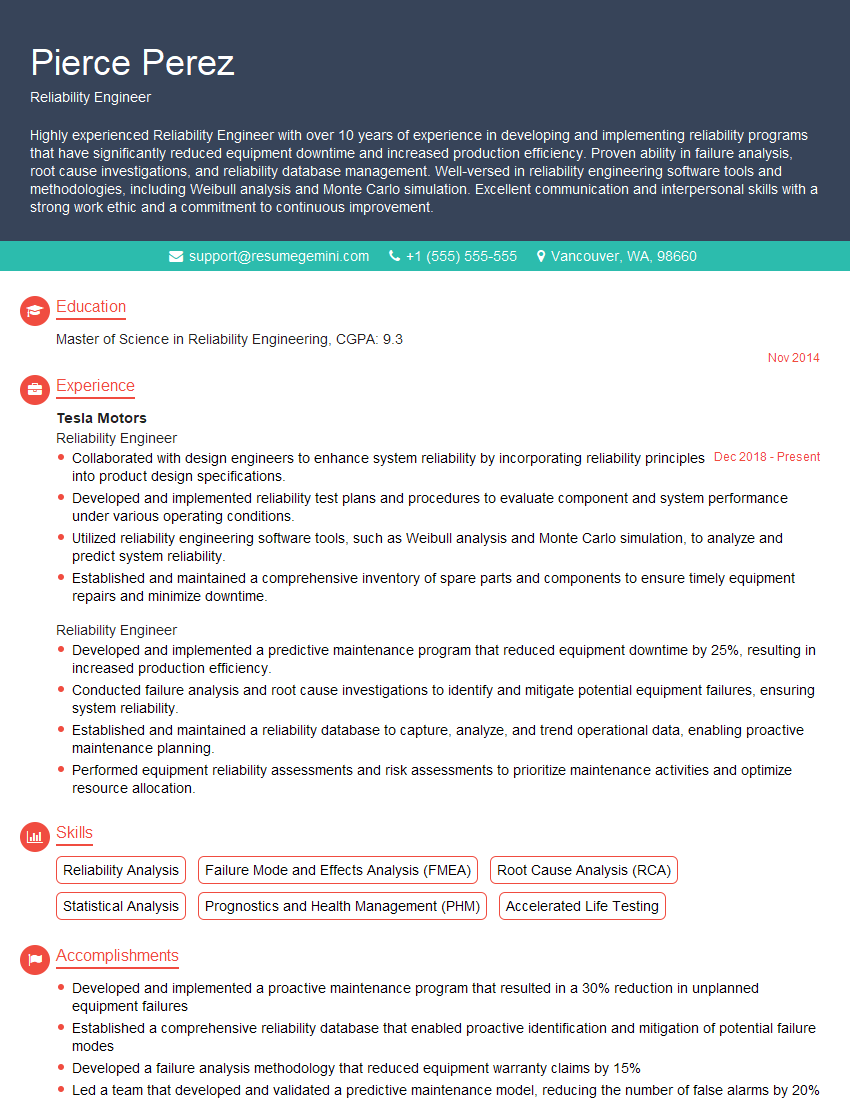
Reliability Engineer Resume Sample

Process Engineer Resume Sample
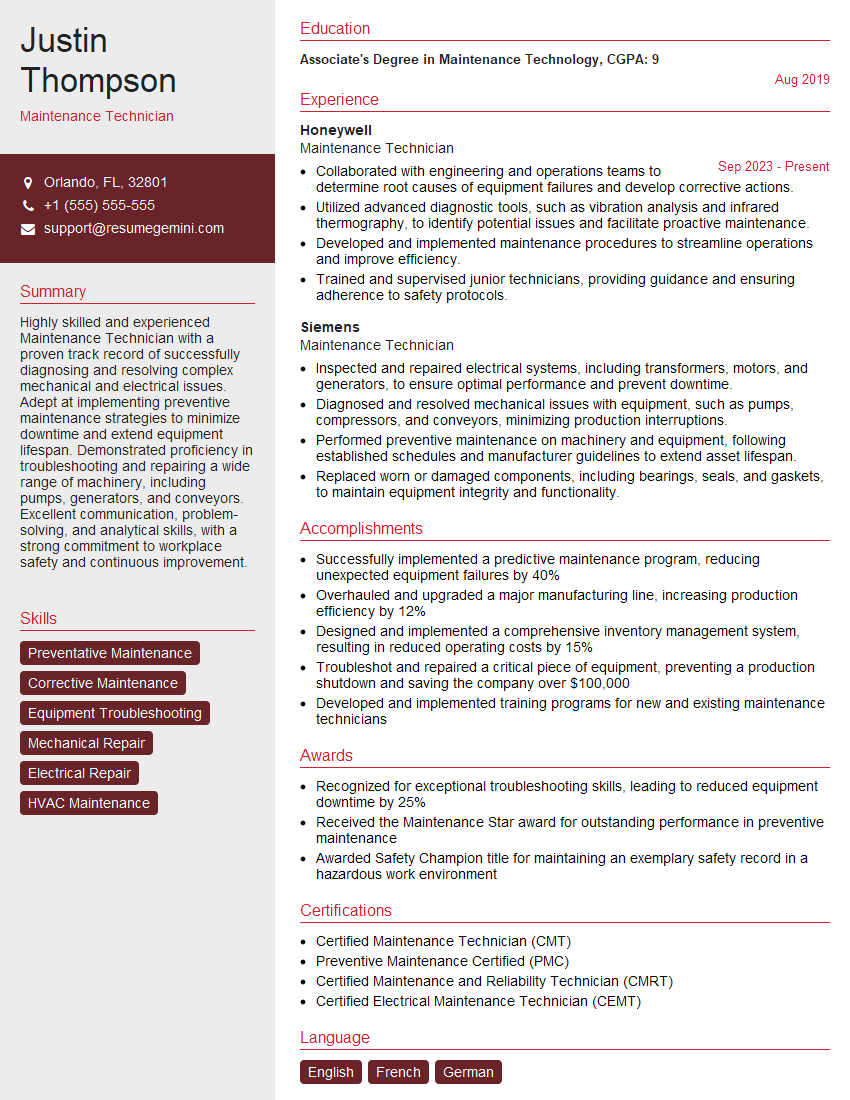
Maintenance Technician Resume Sample

Field Service Engineer Resume Sample

Manufacturing Engineer Resume Sample

Quality Control Engineer Resume Sample

Control Systems Engineer Resume Sample
Explore more articles
Users Rating of Our Blogs
Share Your Experience
We value your feedback! Please rate our content and share your thoughts (optional).
What Readers Say About Our Blog
I Redesigned Spongebob Squarepants and his main characters of my artwork.
https://www.deviantart.com/reimaginesponge/art/Redesigned-Spongebob-characters-1223583608
IT gave me an insight and words to use and be able to think of examples
Hi, I’m Jay, we have a few potential clients that are interested in your services, thought you might be a good fit. I’d love to talk about the details, when do you have time to talk?
Best,
Jay
Founder | CEO