The right preparation can turn an interview into an opportunity to showcase your expertise. This guide to Maximize Equipment Utilization interview questions is your ultimate resource, providing key insights and tips to help you ace your responses and stand out as a top candidate.
Questions Asked in Maximize Equipment Utilization Interview
Q 1. Explain your understanding of Overall Equipment Effectiveness (OEE).
Overall Equipment Effectiveness (OEE) is a key performance indicator (KPI) that measures how effectively equipment is utilized in manufacturing or production processes. It combines three essential factors: Availability, Performance, and Quality. Think of it like this: you have a fantastically efficient machine (high potential), but if it’s constantly breaking down (low availability), producing faulty products (low quality), or running slower than designed (low performance), you’re not getting its full value. OEE quantifies this, showing the percentage of ideal manufacturing time actually used to produce good parts.
Availability represents the time the equipment is actually available for production, factoring in unplanned downtime (breakdowns) and planned downtime (maintenance).
Performance measures how quickly the equipment is producing compared to its designed speed. This includes factors like speed reduction, minor stoppages, and idle time.
Quality reflects the percentage of good parts produced versus the total number of parts produced. This considers defects, rejects, and rework.
A high OEE score (ideally close to 100%) indicates optimal equipment utilization, while a low score highlights areas needing improvement.
Q 2. How do you calculate equipment utilization?
Equipment utilization is calculated by comparing the actual operating time of the equipment to its total available time. It’s a crucial metric for understanding how efficiently your assets are being used. The formula is straightforward:
Equipment Utilization = (Actual Operating Time / Total Available Time) * 100%Let’s say a machine has a total available time of 24 hours per day. If it actually ran for 18 hours, the utilization rate would be (18/24) * 100% = 75%.
It’s important to define ‘Total Available Time’ precisely. This includes scheduled operating hours, excluding planned downtime for maintenance and other known interruptions. Accurate data collection is crucial for reliable utilization calculations.
Q 3. Describe a time you identified and solved a problem leading to improved equipment utilization.
In a previous role, we were struggling with low utilization on a crucial packaging machine. Initially, we attributed the downtime to frequent breakdowns. However, after implementing a detailed data-logging system, we discovered that a significant portion of the downtime was due to operator errors in material handling – improperly loaded reels causing frequent jams. Simply addressing the root cause, we conducted training on proper loading procedures. We created detailed visual aids and implemented a checklist system. The result was a 20% improvement in equipment utilization within a month, exceeding our initial expectations. The solution was not fixing the machine itself, but optimizing human interaction with it.
Q 4. What are some common causes of equipment downtime, and how would you address them?
Common causes of equipment downtime include:
- Mechanical failures: Wear and tear, component malfunctions.
- Electrical issues: Power outages, short circuits, control system malfunctions.
- Human error: Operator mistakes, incorrect maintenance procedures.
- Material handling problems: Feedstock issues, jams, blockages.
- Process inefficiencies: Poorly designed processes, bottlenecks.
- Planned maintenance: Scheduled shutdowns for inspection and repair.
Addressing these requires a multifaceted approach:
- Preventative maintenance programs: Regular inspections, lubrication, and part replacements minimize breakdowns.
- Robust operator training: Ensuring proper operation and quick troubleshooting capabilities.
- Process optimization: Streamlining workflows, eliminating bottlenecks, and improving material flow.
- Real-time monitoring and alerts: Early detection of potential problems reduces downtime.
- Root cause analysis: Investigating past downtime events to identify and eliminate recurring issues.
Q 5. How would you implement a preventative maintenance program to improve equipment utilization?
A successful preventative maintenance (PM) program is vital for maximizing equipment utilization. It involves regularly scheduled maintenance activities to prevent unexpected breakdowns. The key is to create a tailored PM schedule based on the equipment’s specifications, operational history, and risk assessments.
Steps to implement a PM program:
- Equipment inventory: Create a comprehensive list of all equipment, including their critical components.
- Failure analysis: Analyze historical data to identify common failure points and their frequencies.
- Develop a PM schedule: Create a schedule specifying the frequency and type of maintenance for each piece of equipment.
- Assign responsibilities: Clearly define roles and responsibilities for performing PM tasks.
- Documentation: Maintain accurate records of all PM activities.
- Training: Ensure that maintenance personnel are properly trained and equipped.
- Continuous improvement: Regularly review the PM schedule and make adjustments based on performance data.
A well-structured PM program, coupled with effective monitoring and reporting, greatly reduces unplanned downtime and improves equipment utilization.
Q 6. What metrics do you use to track and measure equipment utilization?
Tracking and measuring equipment utilization requires a comprehensive set of metrics. I typically use these key performance indicators:
- Equipment Utilization Rate: (Actual Run Time / Planned Production Time) * 100%
- Overall Equipment Effectiveness (OEE): As previously described, combining Availability, Performance, and Quality.
- Mean Time Between Failures (MTBF): The average time between equipment failures.
- Mean Time To Repair (MTTR): The average time taken to repair a failed piece of equipment.
- Downtime analysis: Categorizing downtime causes (mechanical, electrical, human error, etc.) to pinpoint improvement areas.
- Production output per machine hour: Measures the efficiency of production relative to machine operating time.
These metrics provide a holistic view of equipment performance and guide improvement initiatives.
Q 7. Describe your experience with different scheduling techniques to maximize equipment usage.
My experience encompasses various scheduling techniques aimed at maximizing equipment usage, including:
- Level Scheduling: Aims to maintain a consistent workload across the production line, minimizing fluctuations and optimizing resource allocation. This is particularly effective when dealing with a variety of products with similar processing requirements.
- Mixed-Model Scheduling: This method sequences a mix of different product types to balance production and reduce changeover times. Effective implementation requires accurate forecasting and minimized changeover times.
- Kanban Scheduling: A pull system that relies on visual signals to manage production flow. It reduces waste by producing only what’s needed, when it’s needed. This approach is especially valuable when changeover times are high.
- Heuristic Scheduling: Utilizing algorithms and rules of thumb to create optimal schedules. This may involve considering machine capabilities, constraints, and other relevant factors. The best heuristic method depends on the specific production environment and complexity.
The choice of scheduling technique depends on the specific production environment, product mix, and available resources. Often, a combination of techniques provides the best results.
Q 8. How do you prioritize maintenance tasks to minimize downtime and maximize uptime?
Prioritizing maintenance is crucial for maximizing uptime. We use a system combining preventative, predictive, and corrective maintenance strategies. This isn’t just about fixing things when they break; it’s about proactive planning.
- Preventive Maintenance: This involves scheduled maintenance based on manufacturer recommendations or historical data. Think of it like regular car servicing – changing oil, rotating tires. For example, we might schedule a monthly lubrication of a critical assembly on a high-speed packaging line. This prevents minor issues from escalating into major breakdowns.
- Predictive Maintenance: This relies on data analytics (more on this later) to predict potential failures *before* they occur. Sensors on equipment might detect unusual vibrations or temperature fluctuations, alerting us to a developing problem. We might use this data to schedule maintenance *before* a critical component fails, preventing a costly production stoppage.
- Corrective Maintenance: This is reactive maintenance, addressing failures as they happen. While necessary, it’s the least desirable as it directly causes downtime. Our priority is to minimize corrective maintenance through effective preventative and predictive strategies. A critical path for fixing failures is crucial; having the right parts readily available and trained technicians ready to respond quickly.
We use a computerized maintenance management system (CMMS) to track all maintenance tasks, schedule appointments, and analyze the effectiveness of our strategies. This system allows us to prioritize tasks based on criticality, potential impact on production, and cost-effectiveness.
Q 9. How familiar are you with lean manufacturing principles and their application to equipment utilization?
Lean manufacturing principles are fundamental to maximizing equipment utilization. Lean focuses on eliminating waste in all forms, and in equipment utilization, this translates directly into minimizing downtime and maximizing output.
- 5S Methodology: A clean, organized workspace is essential for efficient equipment operation and maintenance. This improves safety, reduces search time for parts, and allows technicians to work more effectively.
- Total Productive Maintenance (TPM): TPM engages all employees in equipment maintenance, fostering a culture of ownership and responsibility. It’s not just the maintenance team’s job; operators also play a crucial role in spotting potential issues and performing basic maintenance checks.
- Just-in-Time (JIT) Inventory: Lean principles emphasize minimizing inventory, reducing storage space, and eliminating the risk of obsolescence. This applies directly to maintenance parts; we need to strategically stock critical parts to minimize downtime during repairs, but not overstock, wasting storage space.
- Value Stream Mapping: This technique visually maps the entire production process, highlighting bottlenecks and areas for improvement. It provides insights into how equipment is utilized and where improvements can be made to optimize flow and efficiency.
In practice, we use Lean principles to streamline our maintenance processes, reduce waste, and improve the overall effectiveness of our equipment. For instance, we’ve implemented kanban systems for managing maintenance parts, ensuring that we have the right parts at the right time, without excessive inventory.
Q 10. Explain your experience with using data analytics to identify areas for improvement in equipment utilization.
Data analytics are indispensable for maximizing equipment utilization. We leverage data from various sources to pinpoint areas for improvement.
- CMMS Data: We analyze historical maintenance records to identify patterns, such as frequent failures of specific components, pointing towards potential design flaws or maintenance procedure inefficiencies.
- Production Data: We track equipment operating hours, production output, and downtime durations. This data helps us to identify bottlenecks and optimize production schedules.
- Sensor Data: Modern equipment often includes sensors that monitor various parameters, such as temperature, vibration, and pressure. Analyzing this data allows for predictive maintenance, preventing catastrophic failures.
For instance, by analyzing sensor data from our injection molding machines, we identified a pattern of increased wear on a specific component during high-volume production runs. This led us to implement preventive maintenance protocols, reducing failures and extending machine lifespan. We use statistical process control (SPC) charts to monitor key performance indicators (KPIs) and detect deviations from expected performance.
Q 11. How do you identify bottlenecks in equipment usage and what strategies do you use to alleviate them?
Identifying bottlenecks is a continuous process. We use a combination of techniques:
- Visual Management: Visual tools, such as kanban boards or Andon systems, quickly highlight where issues are occurring. This allows for immediate attention to problems and quicker resolution.
- Data Analysis: Analyzing production data, we can identify equipment consistently falling behind schedule or experiencing frequent downtime. This pinpoints areas needing improvement.
- Operator Feedback: Direct feedback from operators provides valuable insights into operational challenges. They’re closest to the equipment and often spot problems early.
Once a bottleneck is identified, strategies to alleviate it might include:
- Process Improvement: Streamlining the process to reduce the time required for a specific task. This could involve changes to the production sequence or operator training.
- Equipment Upgrades: Replacing outdated or inefficient equipment can significantly increase productivity.
- Increased Capacity: Adding more equipment or employing additional personnel to handle peak demand.
- Maintenance Optimization: Implementing predictive maintenance to reduce downtime, ensuring equipment is running smoothly.
For example, we discovered a bottleneck at our assembly line due to slow-moving robotic arms. After analyzing data and consulting with engineers, we implemented software updates to optimize the robotic arm movements, increasing throughput by 15%.
Q 12. How would you manage unexpected equipment failures to minimize production delays?
Unexpected equipment failures require a swift and organized response. We have established protocols to minimize production delays:
- Rapid Response Team: A dedicated team is responsible for diagnosing the problem and implementing the repair quickly and effectively.
- Spare Parts Inventory: We maintain a well-stocked inventory of common replacement parts to reduce downtime spent sourcing parts.
- Root Cause Analysis: After the repair, we conduct a thorough root cause analysis to identify the reason for the failure and implement preventative measures to prevent recurrence.
- Alternative Production Plans: We might have contingency plans in place to redirect work to other production lines or temporarily adjust schedules to compensate for downtime.
In one instance, a critical compressor failed unexpectedly. Our response team was dispatched immediately, and the spare compressor was installed within two hours. The root cause analysis revealed a faulty pressure sensor, and we replaced all similar sensors as a preventative measure. This fast response minimized disruption and demonstrated our preparedness for unplanned events.
Q 13. How do you allocate resources (personnel, materials) to maximize equipment utilization?
Resource allocation is crucial for maximizing equipment utilization. It’s not just about throwing resources at the problem; it’s about strategic allocation based on needs and priorities:
- Demand Forecasting: Accurate demand forecasting allows us to predict the required resources, ensuring we have the right personnel and materials at the right time.
- Skill Matching: We assign personnel to tasks based on their skills and experience, optimizing efficiency and reducing the risk of errors.
- Resource Scheduling: Effective scheduling ensures optimal utilization of resources, minimizing idle time for both equipment and personnel.
- Inventory Management: Efficient inventory management ensures readily available parts and supplies, eliminating production delays caused by missing materials.
We use software to track resource allocation, monitor utilization rates, and identify potential bottlenecks in resource availability. This allows for proactive adjustments and prevents resource shortages that might impact equipment utilization.
Q 14. Describe your experience with different types of equipment maintenance (preventive, corrective, predictive).
Experience with various maintenance types is essential. Each type has its own purpose and effectiveness:
- Preventive Maintenance: This is proactive and involves regularly scheduled tasks to prevent equipment failures. This includes lubrication, inspections, and cleaning. Preventive maintenance lowers the likelihood of unexpected failures and keeps the equipment running at peak performance, like getting your car regularly serviced.
- Corrective Maintenance: This is reactive, dealing with equipment failures after they occur. This can range from minor repairs to complete overhauls. Corrective maintenance causes downtime, highlighting the importance of effective preventative measures.
- Predictive Maintenance: This utilizes data analysis and sensors to predict potential failures before they happen. It involves monitoring equipment performance through sensors and using that data to schedule maintenance before a component fails. Predictive maintenance minimizes unplanned downtime and optimizes maintenance spending. Think of this like receiving a warning light on your car dashboard indicating a potential problem before it becomes critical.
We integrate all three types to create a comprehensive maintenance strategy. We rely heavily on predictive maintenance, leveraging data to optimize preventative maintenance schedules and minimize the need for costly corrective maintenance.
Q 15. What software or tools have you used to track and analyze equipment utilization data?
Tracking and analyzing equipment utilization requires robust software and tools. I’ve extensively used enterprise resource planning (ERP) systems like SAP and Oracle, coupled with dedicated Manufacturing Execution Systems (MES) such as Siemens Opcenter and Rockwell Automation FactoryTalk. These systems provide real-time data on equipment uptime, downtime reasons, and production output. Beyond ERP/MES, I’ve leveraged data visualization tools like Tableau and Power BI to create dashboards and reports that translate raw data into actionable insights. For instance, in a previous role, we used FactoryTalk to track machine cycle times, then imported that data into Power BI to create a visual representation of overall equipment effectiveness (OEE), highlighting bottlenecks and areas for improvement. We could then drill down to individual machine performance to pinpoint specific issues.
In addition to these systems, I’ve also utilized custom-built applications and spreadsheets for smaller-scale projects or when integrating data from disparate sources wasn’t possible through existing software. The key is choosing tools that align with the scale and complexity of the operation and provide the necessary functionalities for data collection, analysis, and reporting.
Career Expert Tips:
- Ace those interviews! Prepare effectively by reviewing the Top 50 Most Common Interview Questions on ResumeGemini.
- Navigate your job search with confidence! Explore a wide range of Career Tips on ResumeGemini. Learn about common challenges and recommendations to overcome them.
- Craft the perfect resume! Master the Art of Resume Writing with ResumeGemini’s guide. Showcase your unique qualifications and achievements effectively.
- Don’t miss out on holiday savings! Build your dream resume with ResumeGemini’s ATS optimized templates.
Q 16. How would you communicate equipment utilization data and improvement plans to stakeholders?
Communicating equipment utilization data and improvement plans effectively requires a multi-faceted approach. I tailor my communication strategy to the audience. For executive stakeholders, I focus on high-level summaries, emphasizing key performance indicators (KPIs) like OEE and return on investment (ROI) of improvement initiatives. I typically use concise presentations with visually engaging charts and graphs from tools like Power BI, highlighting the impact on overall production efficiency and profitability. For operational teams, I provide more detailed reports, specifying areas needing attention, proposed solutions, and projected improvements. These reports often include data breakdowns by machine, shift, or operator, allowing for targeted interventions.
Regular meetings, both formal and informal, are crucial. I lead these sessions, explaining data trends, discussing potential solutions, and gathering feedback. Transparent communication fosters buy-in and collaboration. Finally, I document all improvement plans, including timelines, responsibilities, and anticipated results, ensuring everyone is aligned and accountable.
Q 17. What are some common challenges in maximizing equipment utilization, and how have you overcome them?
Maximizing equipment utilization presents numerous challenges. One common issue is unplanned downtime due to equipment failures. In one project, we tackled this by implementing a predictive maintenance program using sensor data and machine learning algorithms. This allowed us to anticipate potential failures and schedule maintenance proactively, reducing unexpected downtime by 30%. Another frequent challenge is inefficient scheduling and operator skill gaps. To address scheduling, I employed lean manufacturing principles, optimizing production sequences and minimizing idle time. To improve operator skills, I implemented a comprehensive training program, including on-the-job coaching and simulations. This led to a significant improvement in both production efficiency and product quality. Finally, data silos can hinder effective utilization analysis. Overcoming this often requires integrating disparate data sources into a unified system for comprehensive analysis and reporting, as described in my answer to question 1.
Q 18. Describe your experience with implementing new technologies or processes to improve equipment utilization.
I have extensive experience implementing new technologies to improve equipment utilization. In one instance, we integrated a real-time monitoring system using IoT sensors into our manufacturing process. This system provided continuous data on equipment performance, allowing us to identify inefficiencies and bottlenecks in real-time. We used this data to make immediate adjustments to the production schedule and optimize resource allocation. This resulted in a 15% increase in overall equipment effectiveness (OEE) within six months. In another project, we upgraded our CNC machines with advanced software that enabled automated tool changes and optimized cutting parameters. This reduced setup times and improved machining accuracy, leading to a significant increase in throughput and a reduction in scrap rates.
Beyond hardware, implementing new process improvements, such as adopting a Total Productive Maintenance (TPM) program, can be transformative. TPM involves engaging all employees in equipment maintenance, improving overall equipment care and reducing downtime.
Q 19. How do you balance the cost of maintenance with the benefits of increased equipment utilization?
Balancing maintenance costs with the benefits of increased utilization requires a strategic approach. It’s not about minimizing maintenance, but optimizing it. Predictive maintenance, as mentioned earlier, is key. By leveraging data analytics to predict potential failures, we can schedule maintenance proactively, preventing costly breakdowns and maximizing uptime. This approach shifts the focus from reactive, emergency repairs to planned, cost-effective maintenance. We also prioritize preventative maintenance tasks that offer the highest return on investment (ROI), focusing on critical equipment and components most likely to cause significant downtime if they fail.
Cost-benefit analysis is vital. We evaluate the cost of different maintenance strategies against the potential gains in productivity and reduced downtime. This analysis helps determine the optimal balance between maintenance expenditure and equipment utilization. A well-defined maintenance plan, combined with effective inventory management of spare parts, is also critical to minimizing costs and maximizing uptime.
Q 20. How do you ensure equipment operators are trained and proficient in their roles to maximize equipment usage?
Proficient operators are crucial for maximizing equipment utilization. I ensure this through a multi-pronged approach. Initial training programs cover safety procedures, equipment operation, and basic troubleshooting. This is followed by ongoing training and development programs that focus on advanced techniques, best practices, and new technologies. We utilize a blended learning approach, incorporating classroom sessions, hands-on training, and online modules. Regular performance evaluations help identify skill gaps and tailor training accordingly. Furthermore, we encourage operator feedback and suggestions for improvement, fostering a culture of continuous learning and improvement.
I also implement a system of certifications and competency assessments to ensure operators consistently meet performance standards. This creates accountability and reinforces the importance of skill development. Finally, I empower operators by providing them with the necessary tools and resources, such as detailed work instructions and readily accessible support, to perform their jobs effectively.
Q 21. How do you deal with conflicting priorities when optimizing equipment utilization across different production lines?
Balancing conflicting priorities across multiple production lines requires a systematic approach. I use a prioritization matrix that considers factors such as production urgency, equipment criticality, and potential impact on overall production goals. This matrix helps rank the optimization needs across different lines, ensuring that resources are allocated effectively. For example, a production line with a critical order approaching its deadline would take precedence over a line with less urgent demand. This prioritization is regularly reviewed and adjusted based on changing circumstances.
Communication and collaboration are key. I work closely with production managers and supervisors to ensure that everyone understands the priorities and contributes to the overall optimization strategy. Regular meetings allow us to address potential conflicts proactively and make informed decisions. Transparency and open communication help build consensus and foster cooperation across different teams.
Q 22. Describe a time you had to make a difficult decision regarding equipment maintenance or repair.
One challenging situation involved a critical piece of machinery—a high-speed packaging line—experiencing recurring malfunctions. The choice was between a costly, immediate, full-scale overhaul which would shut down production for a week, or implementing a series of targeted repairs and preventative maintenance measures over a longer period. The immediate overhaul minimized disruption to the production schedule and guaranteed the most comprehensive repair. However, it significantly increased short-term costs. The second option was cheaper in the short term, but posed a risk of extended downtime later on if the root cause wasn’t addressed effectively.
After carefully weighing the risks and benefits, considering production targets, potential revenue losses, and the long-term impact on equipment reliability, we opted for the targeted repairs combined with enhanced preventative maintenance. This involved a detailed assessment of the machinery by a specialist, the implementation of a rigorous monitoring program and the immediate training of our team on optimized maintenance procedures. This approach ultimately proved more cost-effective in the long run and improved the machine’s overall reliability. It demonstrated that a proactive, data-driven approach to maintenance can be more beneficial than a purely reactive one, particularly when dealing with critical equipment.
Q 23. How familiar are you with Root Cause Analysis (RCA) techniques and their application to equipment downtime?
I’m very familiar with Root Cause Analysis (RCA) techniques, particularly the ‘5 Whys’ method, Fishbone diagrams (Ishikawa diagrams), and Fault Tree Analysis (FTA). These are crucial for understanding and preventing equipment downtime.
For instance, using the 5 Whys method on a machine failure might look like this:
- Problem: Machine stopped producing.
- Why? Motor overheated.
- Why? Insufficient lubrication.
- Why? Lubrication system malfunctioned.
- Why? Sensor failed to detect low oil level.
- Why? Sensor was past its recommended replacement cycle.
This method helps to dig deeper than surface-level issues. Fishbone diagrams help visually organize potential causes, and Fault Tree Analysis helps identify all possible failure modes and their probabilities. By applying these RCA techniques, we identify the root cause of downtime, implement corrective actions, and prevent future occurrences. This leads to increased equipment uptime and reduced maintenance costs.
Q 24. What is your experience with using key performance indicators (KPIs) to monitor equipment utilization?
Key Performance Indicators (KPIs) are essential for monitoring equipment utilization. I regularly use several, including:
- Overall Equipment Effectiveness (OEE): This is a holistic KPI calculating the percentage of planned production time that is actually used to produce good, quality parts. It combines Availability, Performance, and Quality.
- Mean Time Between Failures (MTBF): Indicates the average time between equipment failures. A higher MTBF suggests improved reliability.
- Mean Time To Repair (MTTR): Measures the average time required to repair equipment after a failure. Reducing MTTR is crucial for minimizing downtime.
- Equipment Utilization Rate: This simply shows the percentage of time a machine is actively running compared to its total available time.
Using data visualization dashboards, I track these KPIs regularly to identify trends, bottlenecks, and areas for improvement. For example, a consistently low OEE might indicate a need for improved preventative maintenance or operator training. By closely monitoring these KPIs, we can make data-driven decisions to optimize equipment use and minimize downtime.
Q 25. How do you ensure safety standards are met while maximizing equipment utilization?
Safety is paramount. Maximizing equipment utilization shouldn’t compromise safety. A robust safety program is essential, including:
- Regular safety audits and inspections: Identifying potential hazards and addressing them proactively.
- Strict adherence to lockout/tagout procedures: Ensuring equipment is properly de-energized before maintenance.
- Employee training and competency assessment: Ensuring workers are properly trained to operate and maintain equipment safely.
- Use of Personal Protective Equipment (PPE): Providing and enforcing the use of appropriate PPE.
- Implementing and maintaining emergency shutdown systems: Allowing for quick responses to potential hazards.
These measures ensure a safe working environment while striving for maximum equipment utilization. Safety protocols are not just guidelines; they’re fundamental to our operations and are integrated into every aspect of equipment use and maintenance. The ultimate goal is a productive and accident-free work environment.
Q 26. Explain your understanding of Total Productive Maintenance (TPM).
Total Productive Maintenance (TPM) is a philosophy that involves integrating maintenance activities into all aspects of operations. It’s about empowering all employees to participate in equipment maintenance, not just a dedicated maintenance team. TPM aims to maximize equipment effectiveness and minimize losses.
Key elements of TPM include:
- Autonomous Maintenance: Operators taking responsibility for basic maintenance tasks.
- Planned Maintenance: Scheduled maintenance to prevent breakdowns.
- Preventative Maintenance: Proactive steps to minimize the risk of equipment failure.
- Quality Maintenance: Focus on maintaining product quality.
- Early Management of Equipment: Focusing on design and procurement to improve reliability.
By implementing TPM principles, organizations create a culture of proactive maintenance, reducing downtime, improving quality, and increasing equipment lifespan. It is a holistic approach which fosters ownership and responsibility across all team members.
Q 27. How do you collaborate with other departments (e.g., maintenance, procurement) to maximize equipment utilization?
Effective collaboration is vital for maximizing equipment utilization. I regularly work with maintenance, procurement, and production teams.
Maintenance: I work closely with them to schedule preventative maintenance, assess equipment reliability, and promptly resolve equipment failures. Open communication and shared data are crucial for efficient repairs and minimizing downtime.
Procurement: I collaborate with procurement to ensure timely acquisition of spare parts and materials for maintenance. We work together to analyze costs and ensure we’re acquiring the right quality of parts to optimize equipment lifecycle and reduce unscheduled downtime.
Production: I partner with production to optimize production schedules, taking into account equipment availability and maintenance schedules. We discuss potential bottlenecks and implement solutions together. Regular communication meetings and shared data visualization dashboards enhance this collaboration and ensure everyone is informed and on the same page.
By fostering strong relationships and open communication across these departments, we create a synergistic environment that leads to effective maintenance, minimized downtime and optimized equipment utilization.
Key Topics to Learn for Maximize Equipment Utilization Interview
- Defining Equipment Utilization: Understanding key performance indicators (KPIs) and their calculation methods. This includes differentiating between operational and effective utilization.
- Data Analysis & Interpretation: Analyzing historical equipment data to identify bottlenecks, downtime causes, and areas for improvement. Practical application: Using data visualization tools to present findings effectively.
- Scheduling & Optimization Techniques: Exploring different scheduling algorithms (e.g., First-Come, First-Served, Shortest Processing Time) and their impact on utilization. Practical application: Simulating scenarios to compare different scheduling strategies.
- Preventive Maintenance & its Impact: Understanding the relationship between proactive maintenance schedules and equipment uptime. Practical application: Calculating the return on investment (ROI) of preventive maintenance programs.
- Technological Solutions for Optimization: Exploring software and hardware solutions designed to monitor, analyze, and optimize equipment utilization (e.g., IoT sensors, predictive maintenance software). Practical application: Evaluating the suitability of different technological solutions for specific scenarios.
- Lean Manufacturing Principles & 5S Methodology: Applying lean principles to minimize waste and improve efficiency in equipment usage. Practical application: Identifying and eliminating sources of muda (waste) within equipment operations.
- Communication & Collaboration: Effective communication strategies to collaborate with different teams (maintenance, operations, management) to improve equipment utilization. Practical application: Developing and presenting improvement proposals.
- Problem-solving methodologies: Applying structured problem-solving approaches (e.g., root cause analysis, 5 Whys) to identify and resolve issues affecting equipment utilization. Practical application: Conducting a root cause analysis of a specific equipment downtime event.
Next Steps
Mastering Maximize Equipment Utilization is crucial for career advancement in operations, manufacturing, and logistics. It demonstrates your analytical skills, problem-solving abilities, and commitment to efficiency. To significantly boost your job prospects, crafting an ATS-friendly resume is essential. ResumeGemini is a trusted resource that can help you build a professional and impactful resume tailored to highlight your skills in this area. Examples of resumes specifically tailored to Maximize Equipment Utilization are available to help you get started.

Operations Manager Resume Sample
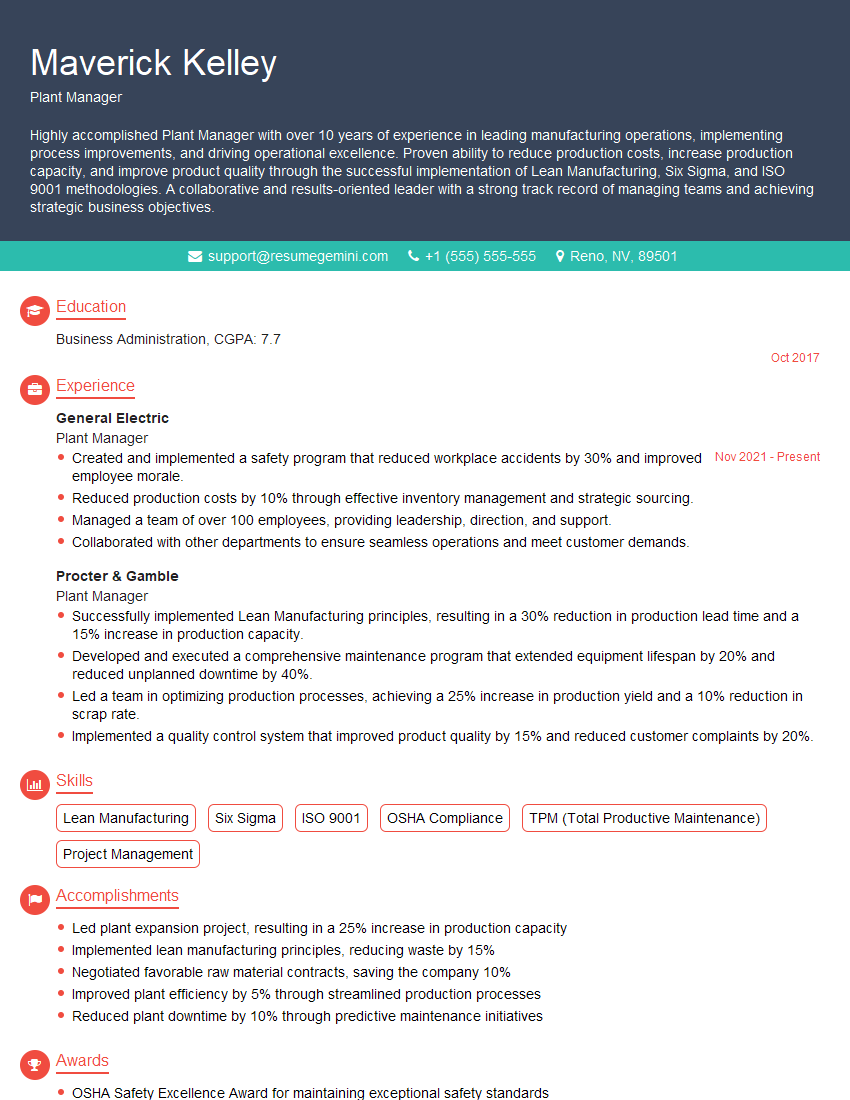
Plant Manager Resume Sample
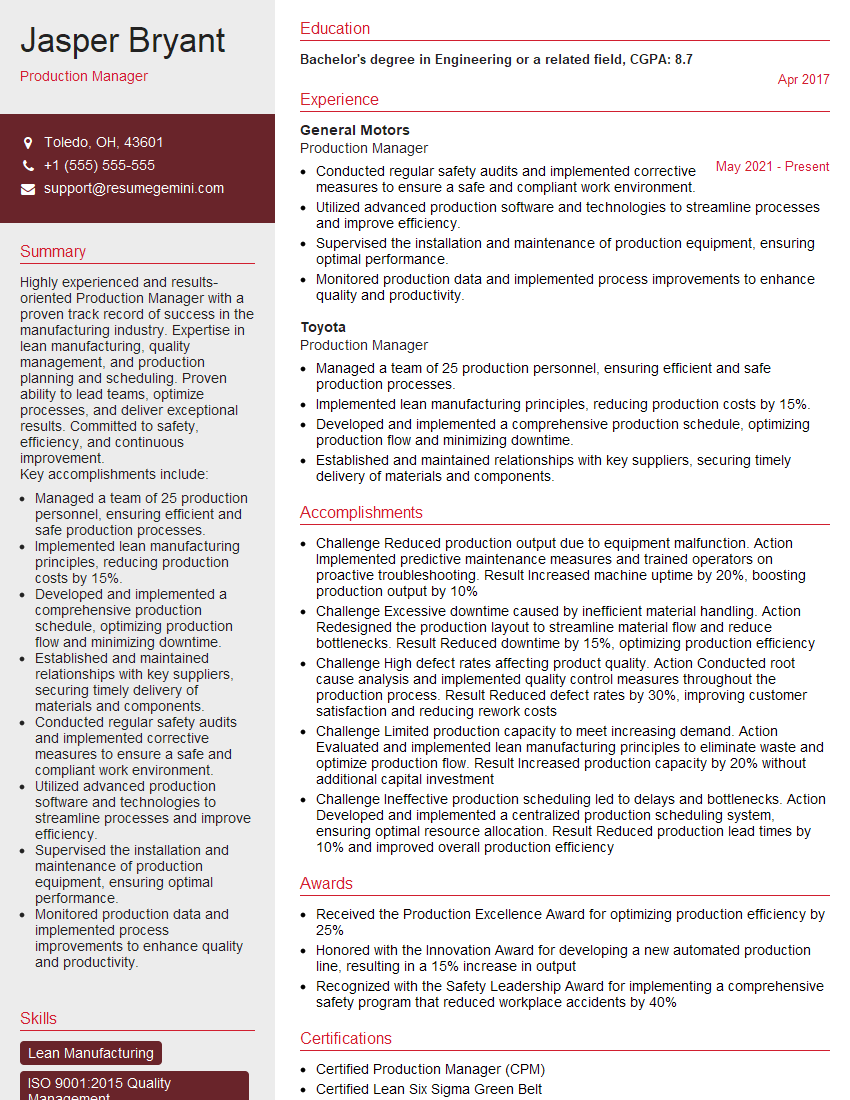
Production Manager Resume Sample
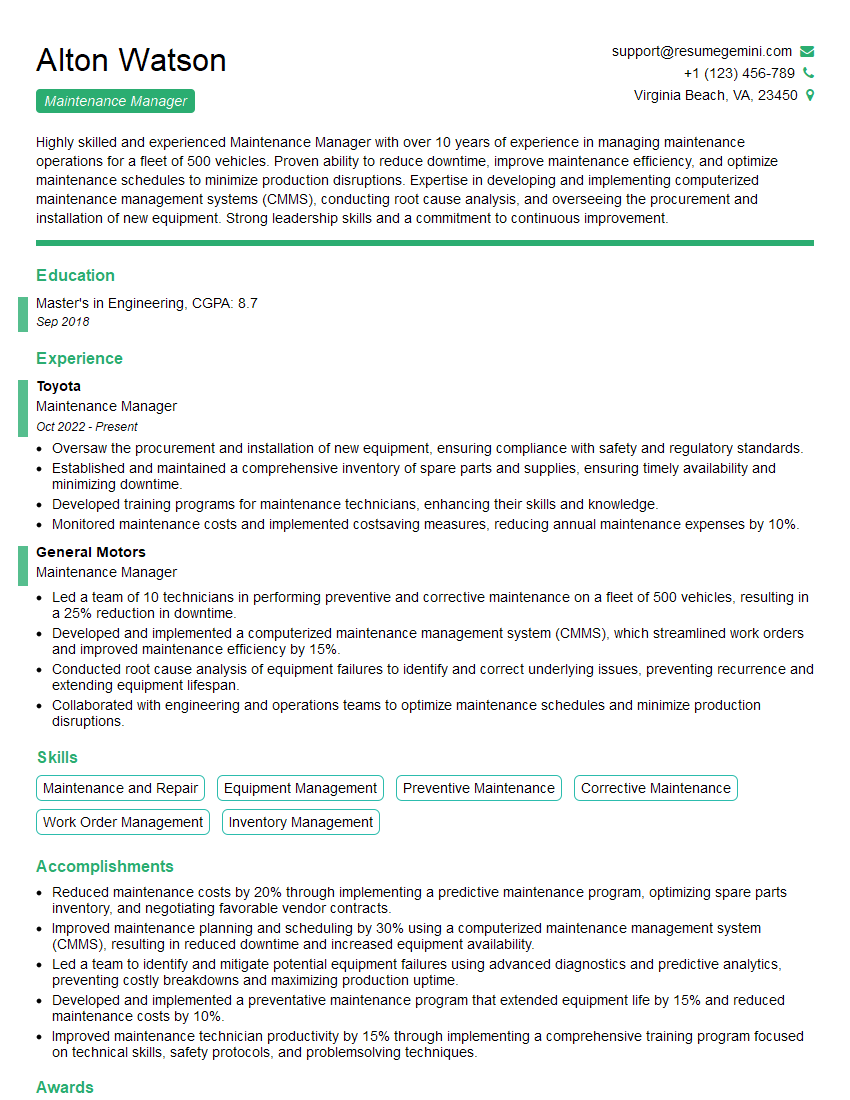
Maintenance Manager Resume Sample
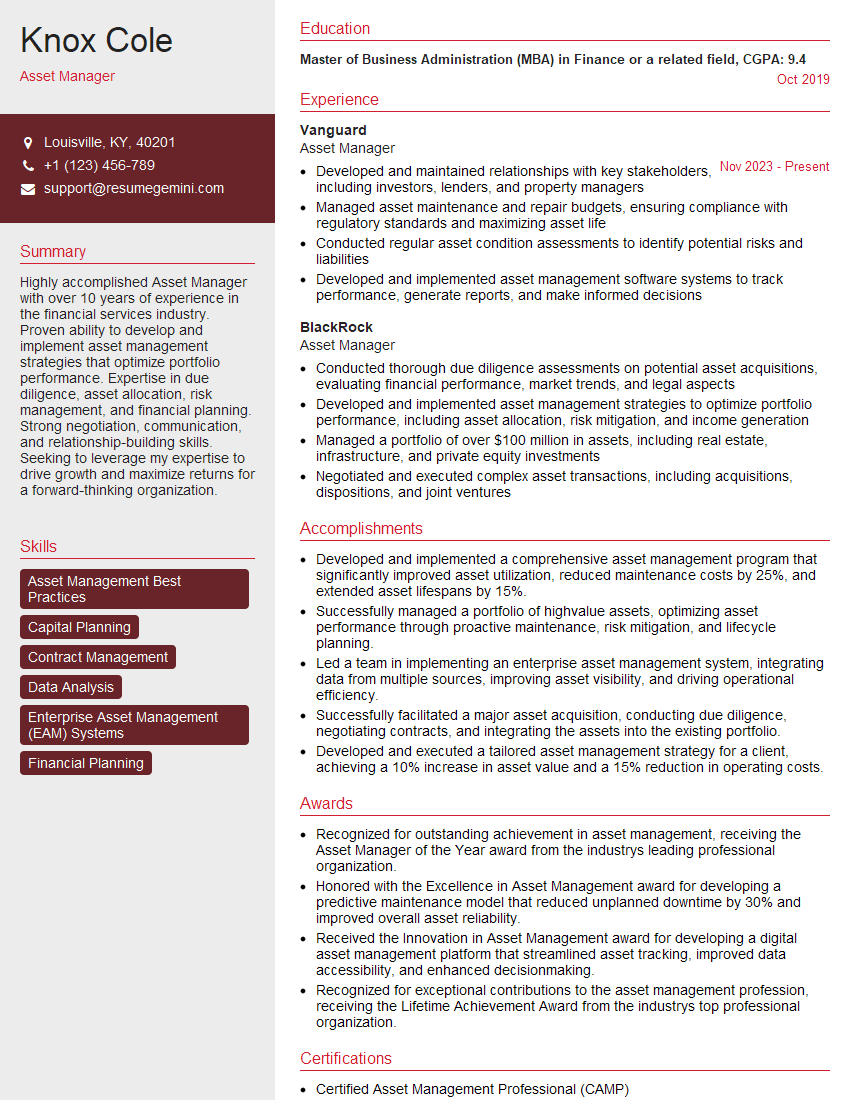
Asset Manager Resume Sample
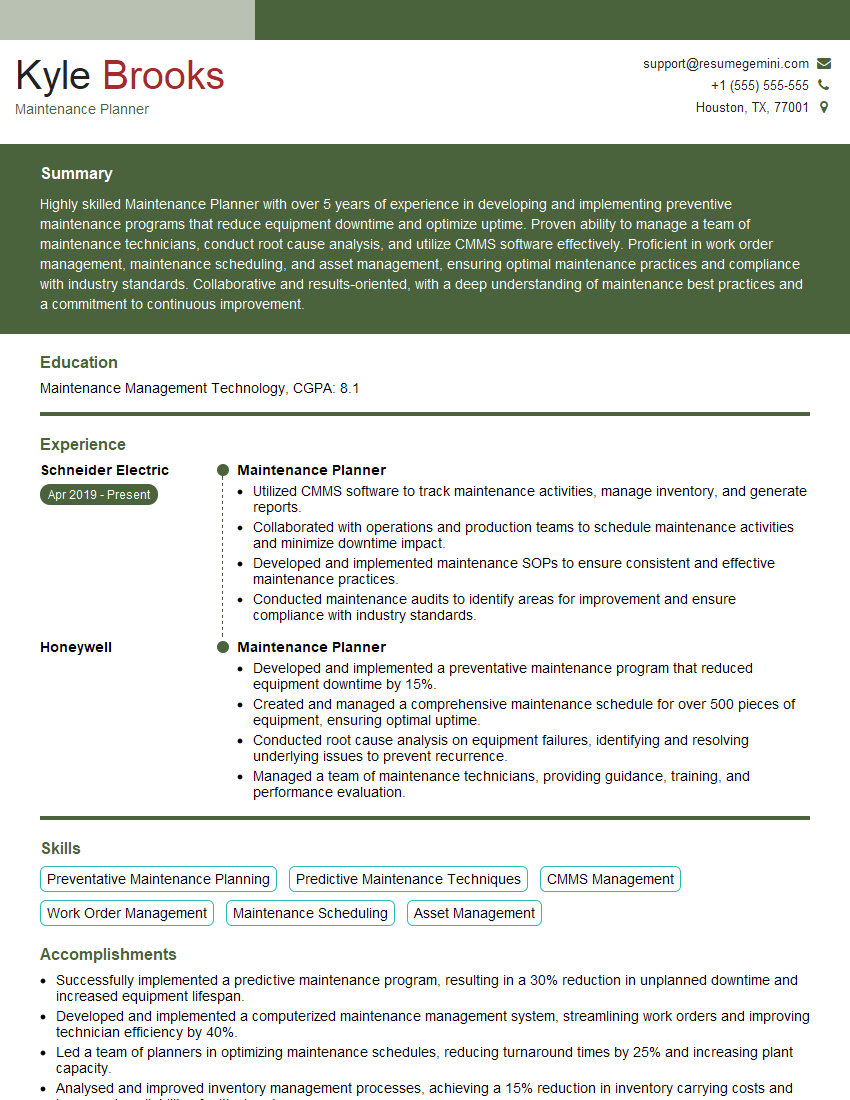
Maintenance Planner Resume Sample

Procurement Manager Resume Sample
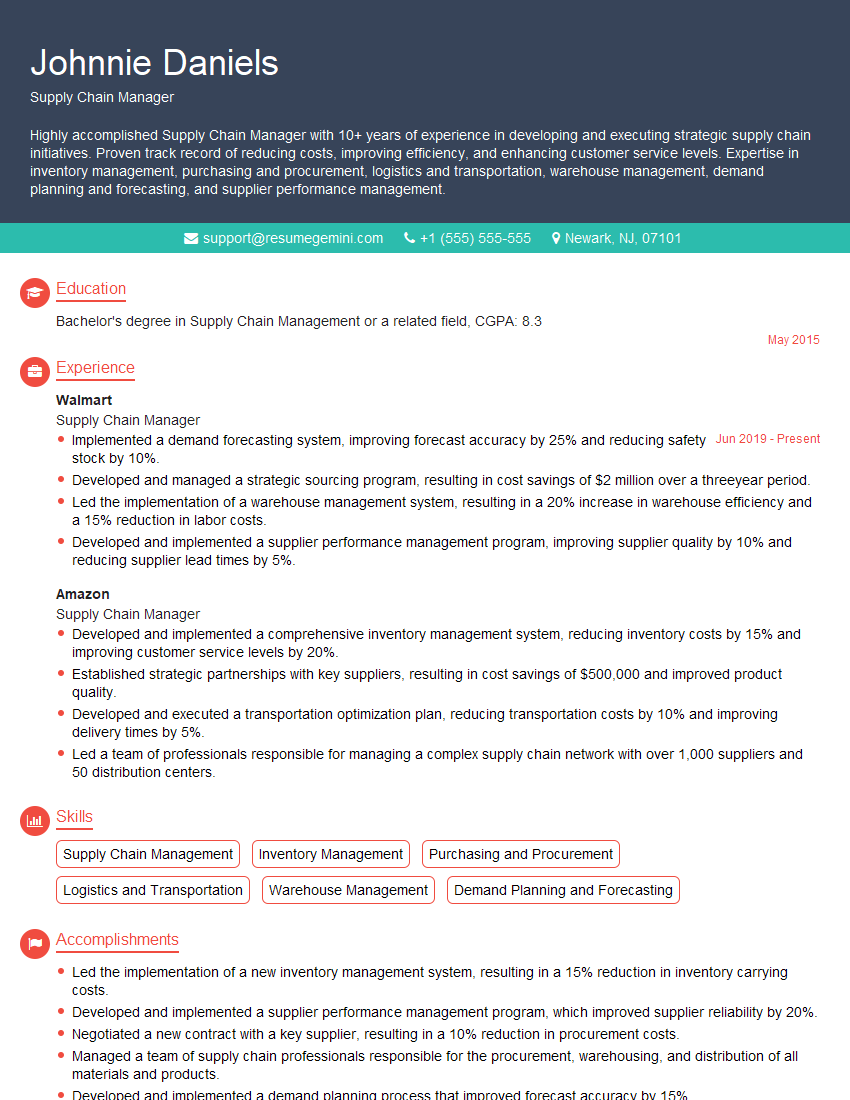
Supply Chain Manager Resume Sample
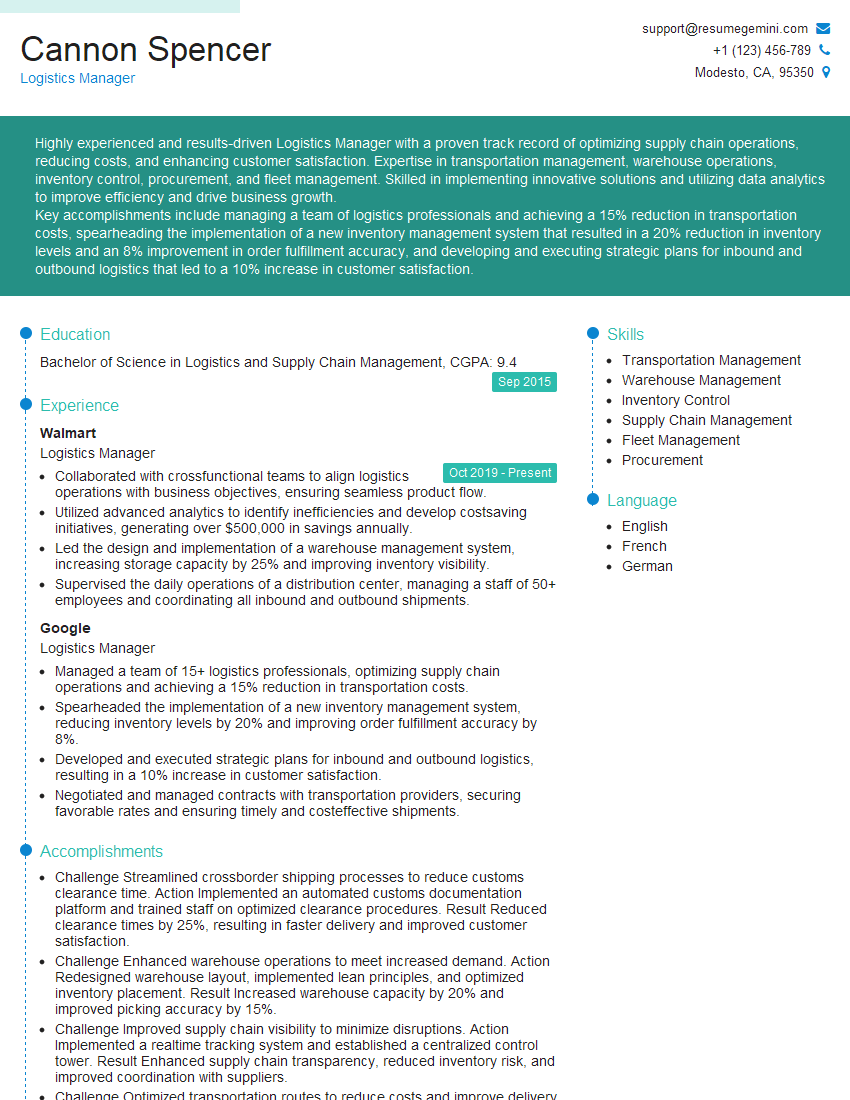
Logistics Manager Resume Sample
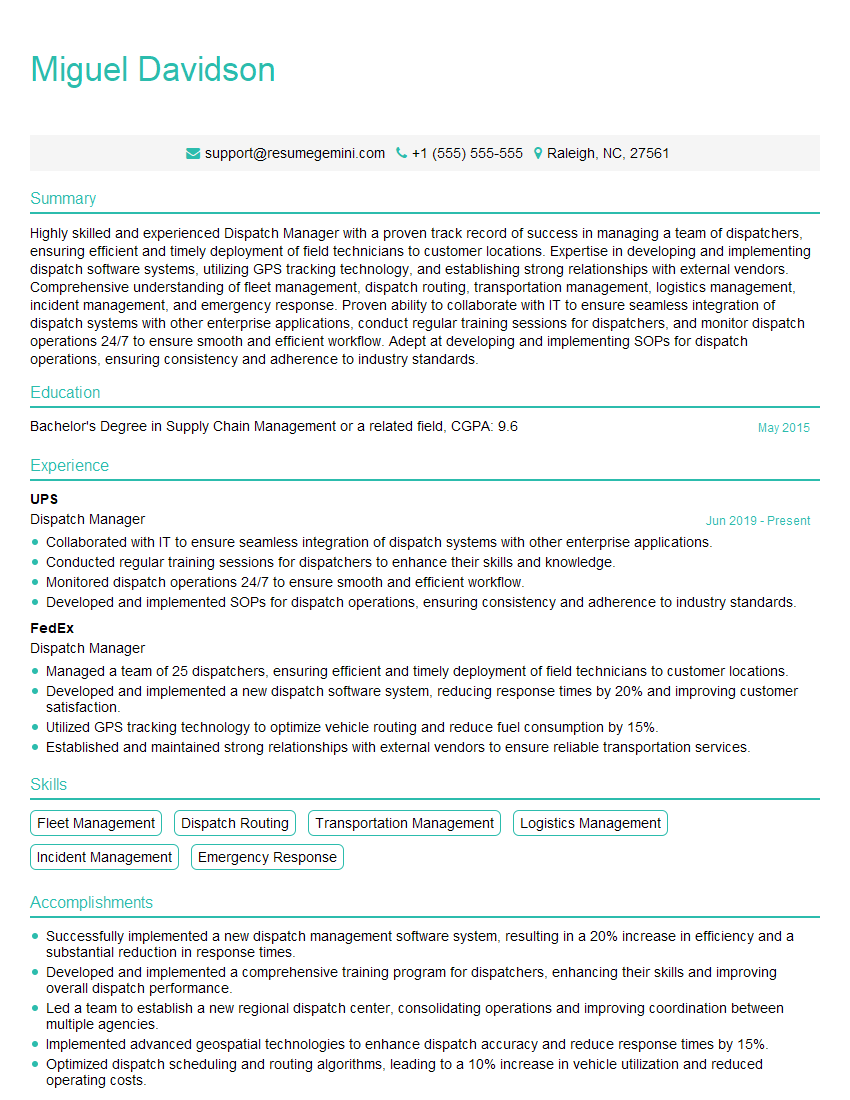
Dispatch Manager Resume Sample
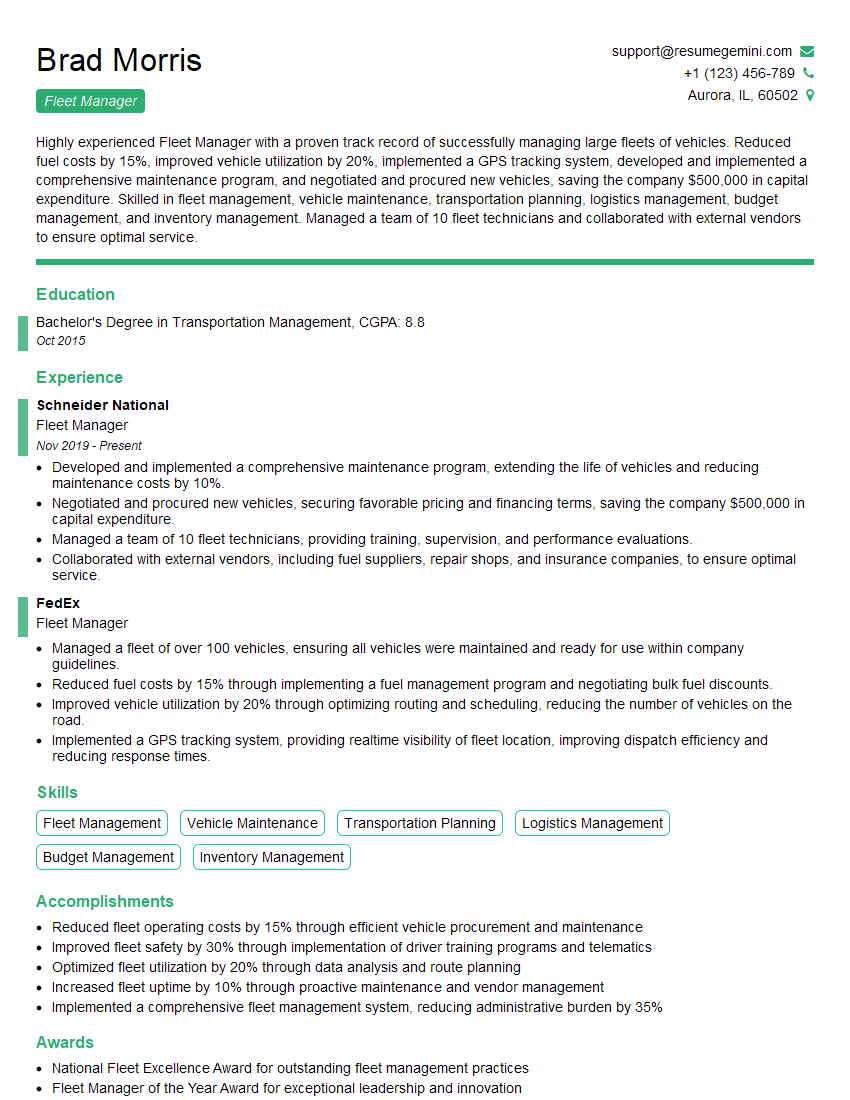
Fleet Manager Resume Sample
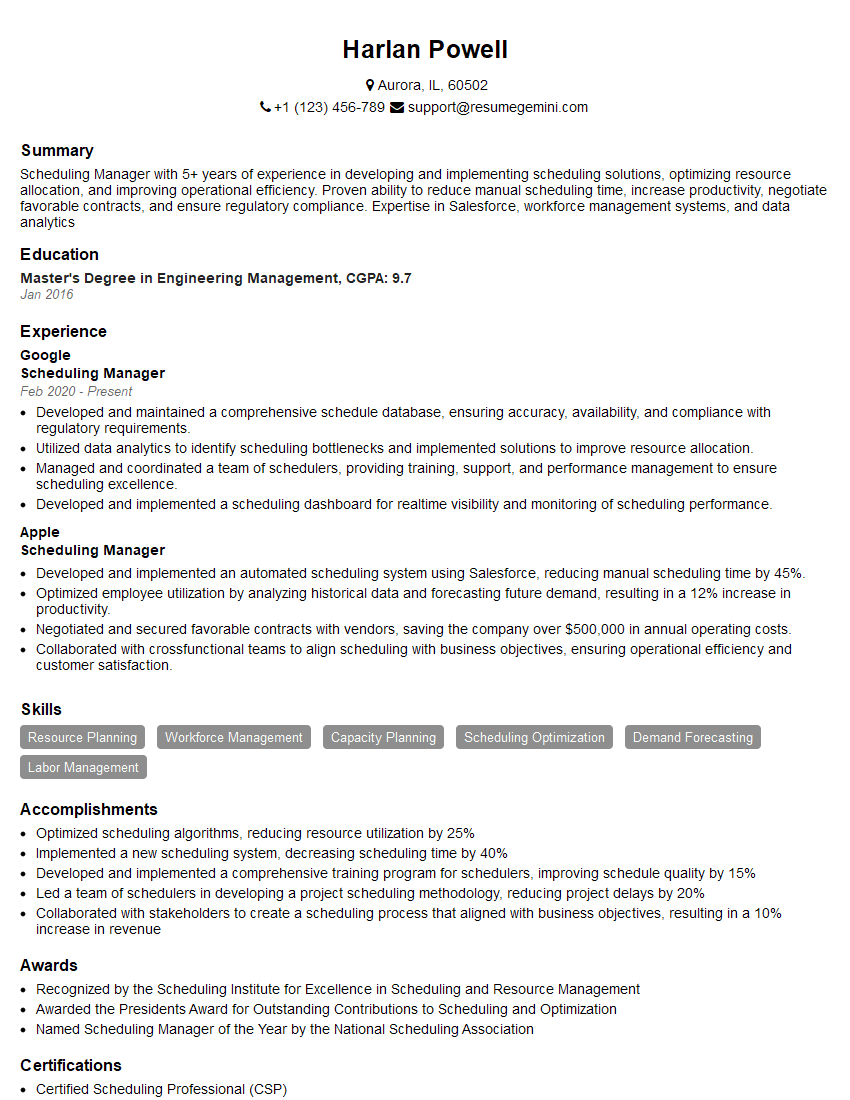
Scheduling Manager Resume Sample
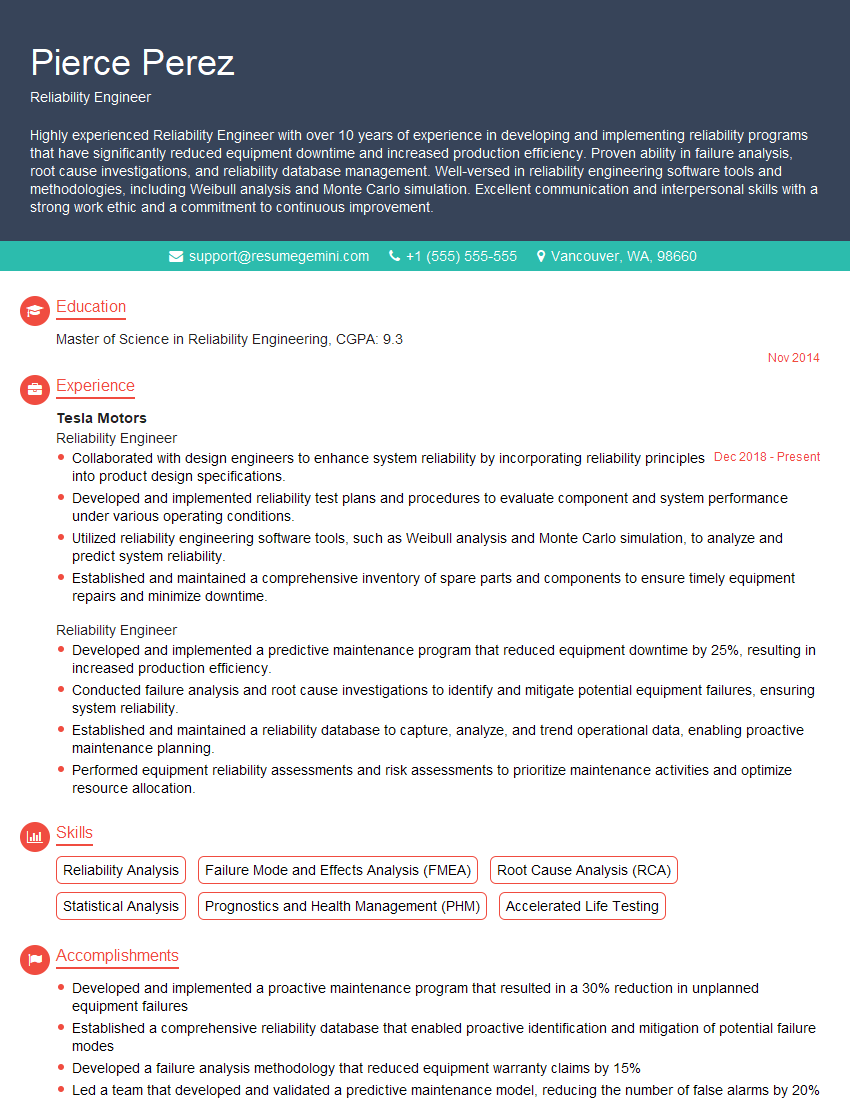
Reliability Engineer Resume Sample

Inventory Manager Resume Sample
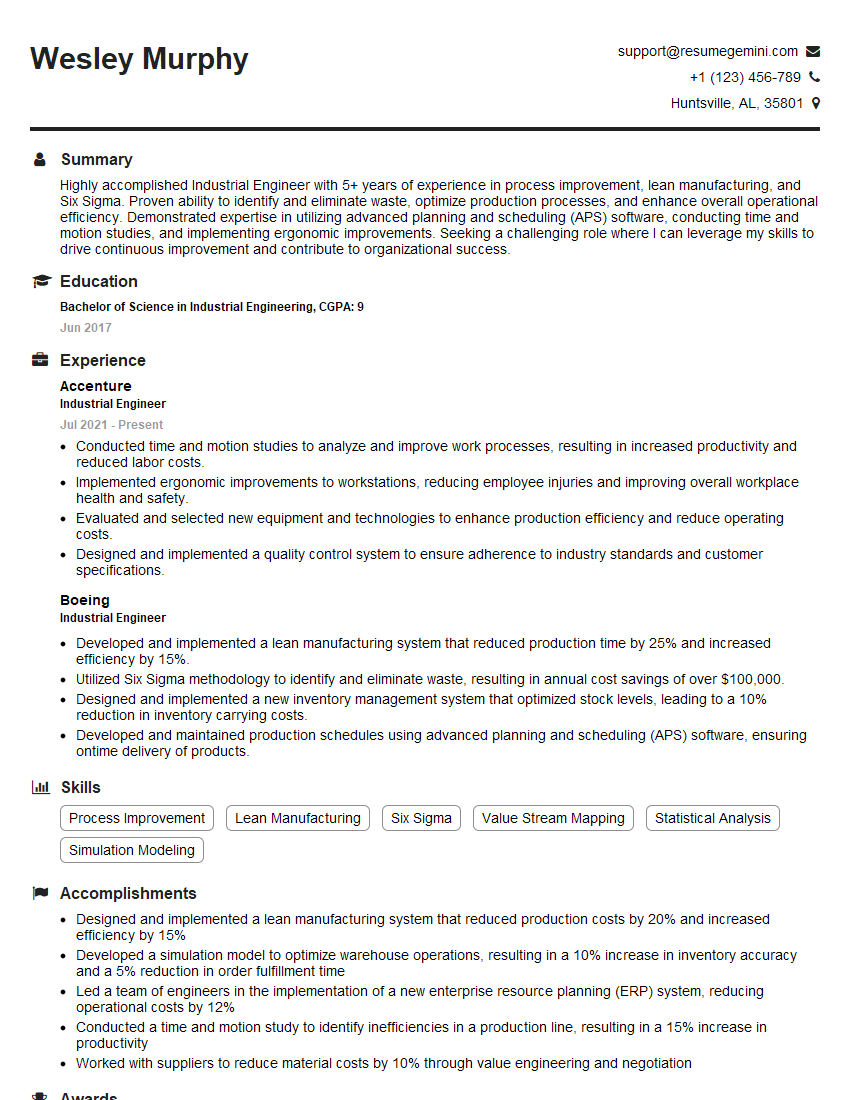
Industrial Engineer Resume Sample
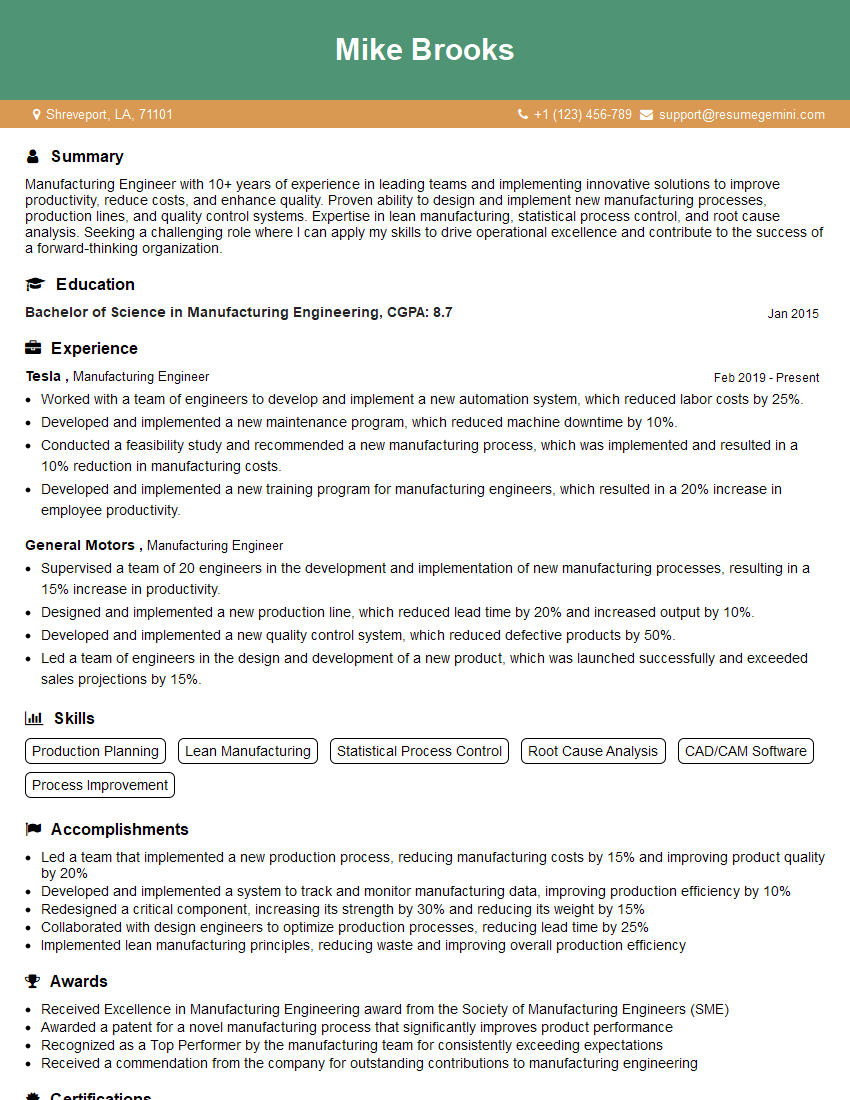
Manufacturing Engineer Resume Sample
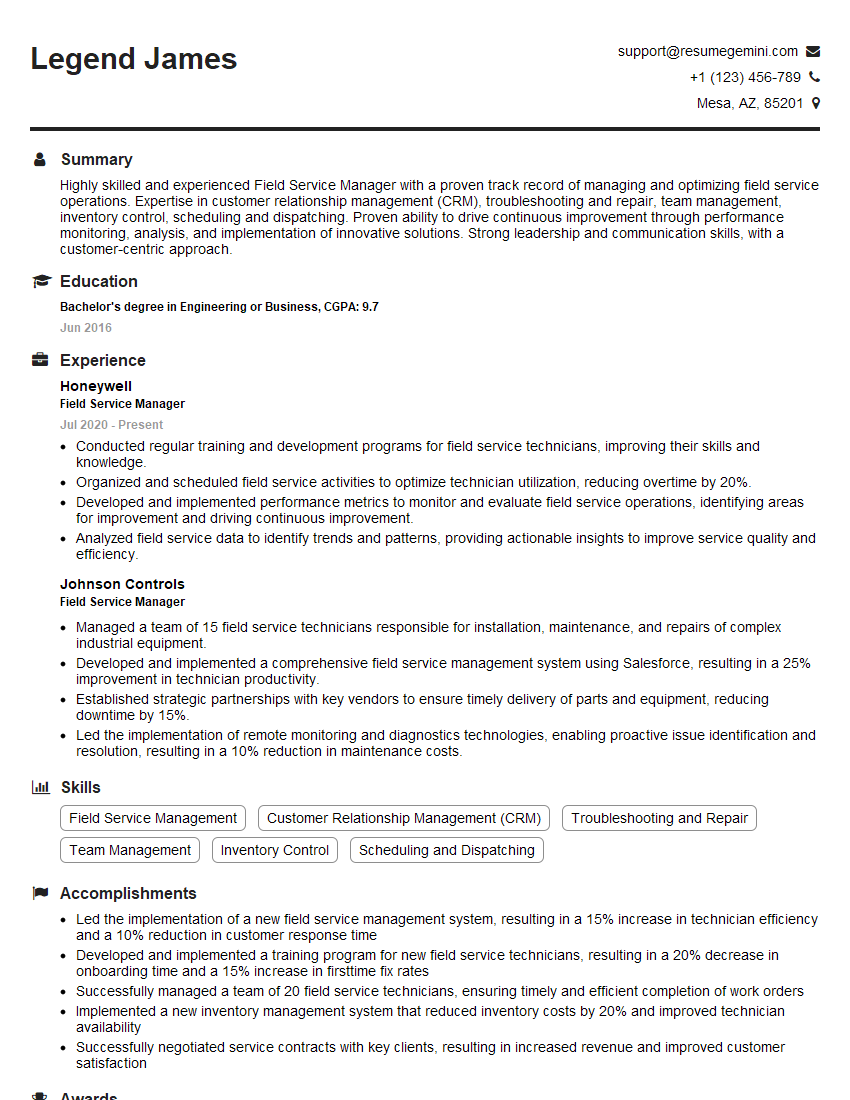
Field Service Manager Resume Sample
- Operations Manager
- Plant Manager
- Production Manager
- Maintenance Manager
- Asset Manager
- Maintenance Planner
- Procurement Manager
- Supply Chain Manager
- Logistics Manager
- Dispatch Manager
- Fleet Manager
- Scheduling Manager
- Reliability Engineer
- Inventory Manager
- Industrial Engineer
- Manufacturing Engineer
- Field Service Manager
Explore more articles
Users Rating of Our Blogs
Share Your Experience
We value your feedback! Please rate our content and share your thoughts (optional).
What Readers Say About Our Blog
I Redesigned Spongebob Squarepants and his main characters of my artwork.
https://www.deviantart.com/reimaginesponge/art/Redesigned-Spongebob-characters-1223583608
IT gave me an insight and words to use and be able to think of examples
Hi, I’m Jay, we have a few potential clients that are interested in your services, thought you might be a good fit. I’d love to talk about the details, when do you have time to talk?
Best,
Jay
Founder | CEO