Interviews are opportunities to demonstrate your expertise, and this guide is here to help you shine. Explore the essential Metrology Tools interview questions that employers frequently ask, paired with strategies for crafting responses that set you apart from the competition.
Questions Asked in Metrology Tools Interview
Q 1. Explain the principle of operation of a Coordinate Measuring Machine (CMM).
A Coordinate Measuring Machine (CMM) is a high-precision instrument used to measure the physical geometrical characteristics of an object. Think of it as a highly sophisticated 3D ruler. Its principle of operation revolves around precisely positioning a probe to contact various points on the part’s surface. The CMM’s computer system then uses these points to calculate the object’s dimensions and geometry.
The CMM uses three mutually perpendicular axes (X, Y, and Z) to locate the probe. These axes are driven by highly accurate linear encoders or rotary encoders, which provide feedback to the computer. The probe’s position is constantly monitored, allowing the system to track its movements and build a detailed 3D model of the part. This model then allows for calculations of dimensions, angles, surface areas, volumes, etc. Different types of CMMs exist, such as bridge-type, cantilever-type, and gantry-type, differing in their structural design and work envelope. Each movement is meticulously recorded, providing data points used to construct a digital representation of the part’s geometry.
Q 2. What are the different types of CMM probes and their applications?
CMM probes come in various types, each suited to different applications. The choice of probe depends on the part’s geometry, material, and the required measurement accuracy.
- Touch Probes: These are the most common type. They utilize mechanical contact to detect the surface of the part. They are further categorized into:
- Mechanical Probes: These rely on physical contact and a trigger mechanism to signal the CMM that contact has been made. They are robust but can cause damage to delicate parts.
- Optical Probes: These use light to detect surface contact, minimizing contact force and suitable for fragile parts.
- Trigger Probes: These are used for simple point measurements, offering speed and reliability for routine tasks. They detect contact via a mechanical trigger.
- Scanning Probes: These probes continuously measure the surface profile of the part as they are moved across it, providing a wealth of data for detailed surface analysis. This method is much faster for complex shapes.
- Non-Contact Probes: Examples include laser scanners and vision systems. These offer a non-destructive approach, ideal for delicate or fragile parts, but usually offer lower precision.
For example, a mechanical touch probe would be suitable for measuring the dimensions of a robust metal casting, while an optical probe might be preferred for measuring the surface of a delicate plastic component. Scanning probes excel in capturing the complex geometry of turbine blades. Non-contact probes would be best for measuring the dimensions of a live circuit board.
Q 3. Describe the process of calibrating a CMM.
Calibrating a CMM is crucial to ensuring its accuracy and reliability. This process involves verifying the machine’s performance against known standards. It typically follows a structured procedure that includes:
- Artifact Measurement: Certified reference standards (artifacts) with precisely known dimensions are measured using the CMM. These artifacts, such as gauge blocks or spheres, are traceable to national or international standards.
- Data Analysis: The CMM’s measurements are compared to the known values of the reference standards. Any discrepancies indicate potential errors within the CMM’s system.
- Compensation/Adjustment: If errors exceed acceptable tolerances, adjustments are made to the CMM’s system. This might involve adjusting the machine’s scales, correcting software parameters, or making mechanical adjustments.
- Documentation: A comprehensive calibration report is generated, documenting all measurements, deviations, and any corrective actions taken. This report serves as proof of the CMM’s accuracy and traceability.
The frequency of calibration depends on the CMM’s use, environmental conditions, and the required accuracy level. Regular calibration, usually performed annually or more frequently for critical applications, is essential to maintain measurement integrity.
Q 4. How do you compensate for thermal effects on CMM measurements?
Temperature fluctuations significantly impact CMM measurements due to thermal expansion and contraction of both the machine and the part. Compensating for thermal effects involves minimizing these variations and applying correction factors.
- Environmental Control: Maintaining a stable temperature within the CMM’s environment is crucial. This may involve using temperature-controlled rooms or enclosures.
- Temperature Monitoring: Sensors throughout the CMM and its surroundings constantly monitor temperature. This data is then used in the compensation process.
- Thermal Compensation Software: Sophisticated CMM software incorporates algorithms to compensate for temperature-induced errors. These algorithms account for the thermal expansion coefficients of the machine structure and the measured part.
- Part Temperature Measurement: In high-precision applications, measuring the part’s temperature directly improves compensation accuracy. Techniques include using contact or non-contact thermometers.
For instance, if the machine warms up, its structure expands, leading to errors in measurements. Software algorithms use the temperature data to correct for this expansion, ensuring accuracy.
Q 5. What are the common sources of error in CMM measurements?
Several factors can introduce errors in CMM measurements. Understanding these sources is critical for minimizing errors and ensuring accurate results:
- Machine Errors: These stem from imperfections in the CMM itself, including errors in the scales, guideways, and probe.
- Environmental Errors: Variations in temperature, humidity, and air pressure affect the machine’s performance and the part’s dimensions.
- Probe Errors: Probe wear, misalignment, and deflection contribute to measurement errors. Probe calibration is essential to address this.
- Operator Errors: Improper fixturing, incorrect probe approach angles, and measurement strategy can introduce human-induced errors. Proper training is essential.
- Software Errors: Incorrect software settings or algorithms can lead to inaccurate results.
- Part-Specific Errors: The part’s surface finish, flexibility, and temperature can influence measurement accuracy.
Addressing these errors requires a combination of proper calibration procedures, controlled environmental conditions, skilled operators, and appropriate measurement strategies.
Q 6. Explain the concept of Geometric Dimensioning and Tolerancing (GD&T).
Geometric Dimensioning and Tolerancing (GD&T) is a symbolic language used on engineering drawings to precisely define the acceptable variations in a part’s geometry. Unlike traditional dimensioning, which focuses solely on nominal sizes, GD&T specifies allowable deviations in form, orientation, location, and runout. It allows engineers to communicate design intent more clearly and unambiguously.
Consider it a standardized way to communicate tolerance requirements beyond simple plus/minus values. Instead of simply stating a diameter of 10mm ±0.1mm, GD&T could specify the circularity, position, and perpendicularity tolerances, allowing for variations in the shape and location of the 10mm diameter hole while ensuring it still functions correctly within an assembly. This leads to more reliable and less ambiguous manufacturing processes. It also ensures parts meet functional requirements rather than solely meeting nominal dimensions.
Q 7. How do you interpret GD&T symbols on engineering drawings?
Interpreting GD&T symbols requires understanding their meaning and context on the engineering drawing. Each symbol represents a specific geometric control. For example:
- Position:
①This symbol indicates the allowed deviation of a feature’s center point from its ideal location. - Perpendicularity:
②This symbol dictates the allowed deviation of a feature from being perfectly perpendicular to a datum plane or axis. - Flatness:
③This controls the flatness of a surface within specified limits. - Circular Runout:
④This specifies the total variation in a feature’s circularity as it rotates about a datum axis. - Cylindricity:
⑤This defines the allowed variation from a perfect cylinder along the entire length of the feature.
These symbols are accompanied by numerical values indicating the tolerance limits. Data reference frames (datums), usually denoted by A, B, and C, are crucial for defining the reference points or surfaces against which the tolerances are measured. Understanding the datum references is key to proper interpretation of the GD&T callouts. For instance, a position tolerance specified with reference to datum A implies that the feature’s position is referenced relative to surface A.
Q 8. Describe your experience with various metrology software packages.
My experience with metrology software spans several leading packages. I’m proficient in PolyWorks, a powerful software suite for 3D scanning data processing, allowing me to perform tasks such as surface registration, meshing, and dimensional analysis. I’ve also extensively used Geomagic Design X, focusing on reverse engineering and CAD model creation from scanned data. In addition, I have experience with Metrolog X4, specializing in coordinate measuring machine (CMM) data analysis, providing functionalities for creating reports, analyzing deviations, and implementing GD&T (Geometric Dimensioning and Tolerancing). Each software package has its own strengths; for instance, PolyWorks excels at handling large datasets from laser scanners, while Metrolog X4 is ideal for precise CMM measurements and robust reporting. My expertise allows me to select the optimal software based on project needs and desired outcomes.
For example, in one project involving the inspection of a complex automotive component, I used PolyWorks to process point cloud data from a laser scanner, identifying subtle deviations from the CAD model. Geomagic Design X was then used to create a revised CAD model incorporating the measured deviations, allowing for improved manufacturing processes. Finally, Metrolog X4 generated comprehensive reports documenting the measurement results and ensuring compliance with industry standards.
Q 9. Explain the difference between accuracy and precision in metrology.
Accuracy and precision are crucial, yet distinct, concepts in metrology. Accuracy refers to how close a measurement is to the true value. Think of it as hitting the bullseye on a dartboard. Precision, on the other hand, describes the repeatability of a measurement – how close multiple measurements are to each other. This is like consistently hitting the same spot on the dartboard, regardless of whether it’s the bullseye.
A measurement can be precise without being accurate (consistently missing the bullseye by the same amount), and vice-versa (randomly hitting close to the bullseye but not consistently). Ideal measurements are both accurate and precise. In a practical scenario, imagine calibrating a pressure sensor. High accuracy means the sensor’s readings closely match the actual pressure, while high precision implies that repeated measurements under the same pressure yield very similar results. Understanding this distinction is critical for assessing the reliability and validity of measurement data.
Q 10. What are the different types of optical metrology tools?
Optical metrology tools leverage light to make highly precise measurements. Several types exist, each suited to different applications.
- Coordinate Measuring Machines (CMMs) with optical probes: These combine the precision of a CMM with non-contact optical probes for delicate parts.
- Laser scanners: These use laser beams to create 3D point clouds of an object, allowing for detailed surface reconstruction and dimensional analysis. (Further explained in the next question)
- Structured light scanners: Projecting patterns of light onto an object and analyzing the distortion allows for accurate 3D surface measurement.
- Interferometers: Extremely precise instruments used to measure surface roughness, flatness, and distances down to nanometer scales.
- Optical microscopes: These provide high magnification for inspecting microscopic features. Some advanced versions offer 3D imaging capabilities.
The choice of optical tool depends on the size, shape, material, and required precision of the object being measured.
Q 11. Describe the principles of laser scanning and its applications in metrology.
Laser scanning is a non-contact 3D measurement technique that employs a laser beam to capture a point cloud representing the object’s surface. The principle involves directing a laser beam onto the object’s surface. The reflected light is then detected by sensors, and the distance to the surface is calculated using triangulation or time-of-flight techniques. Triangulation uses a known angle between the laser emitter and the sensor, while time-of-flight measures the time taken for the laser pulse to return.
This process is repeated millions of times to create a dense point cloud, subsequently processed into a 3D mesh. In metrology, laser scanning finds applications in reverse engineering, quality control, dimensional inspection, and surface analysis across diverse sectors – from automotive manufacturing (inspecting car bodies for deviations) to aerospace (verifying the accuracy of complex parts). The high speed and accuracy of laser scanning enable rapid inspection and detailed analysis, leading to improved efficiency and product quality.
Q 12. How do you ensure the traceability of measurements?
Traceability in metrology ensures that measurements can be linked back to internationally recognized standards. This is crucial for ensuring the reliability and comparability of results across different labs and organizations. We achieve traceability by:
- Regular calibration: All measuring instruments must be regularly calibrated against traceable standards, often by accredited calibration laboratories. Calibration certificates serve as evidence of traceability.
- Using certified reference materials: When applicable, using certified reference materials (CRMs) provides a known, traceable value for comparison during measurements.
- Maintaining a documented chain of custody: Each step in the measurement process, from calibration to data acquisition, is meticulously documented to establish an unbroken chain of traceability.
- Employing accredited methods: Following established, accredited measurement methods ensures the process is aligned with accepted standards and promotes traceability.
In essence, traceability provides confidence that the obtained measurements are reliable and consistent with globally recognized standards, allowing for accurate comparisons and informed decision-making.
Q 13. What are the key performance indicators (KPIs) for a metrology lab?
Key Performance Indicators (KPIs) for a metrology lab are designed to assess efficiency, accuracy, and overall performance. These often include:
- Turnaround time: The time taken to complete a measurement job. Short turnaround times indicate efficient operations.
- Measurement accuracy: The level of agreement between the lab’s measurements and reference values. This reflects the lab’s competence.
- Calibration compliance: The percentage of instruments that are up-to-date with calibration schedules. This ensures reliable measurement tools.
- Customer satisfaction: Feedback from clients on the lab’s service quality, speed, and accuracy.
- Equipment uptime: The percentage of time measuring equipment is operational. Downtime indicates maintenance needs and potential bottlenecks.
- Error rate: The number of measurement errors detected. Low error rates indicate high quality control.
Monitoring these KPIs allows the lab to identify areas for improvement, optimize processes, and maintain high standards of measurement accuracy and reliability.
Q 14. Explain your experience with statistical process control (SPC) in metrology.
Statistical Process Control (SPC) is an essential tool in metrology for monitoring and improving measurement processes. I have extensive experience applying SPC techniques to identify trends, variations, and potential issues in measurement data. This involves using control charts, such as X-bar and R charts, to visualize measurement data over time. By analyzing these charts, we can detect patterns that suggest process instability or the presence of assignable causes of variation (e.g., tool wear, environmental factors).
For example, if a control chart shows a consistent upward trend in measurements, it could indicate a gradual drift in a measuring instrument, necessitating recalibration or repair. By identifying and addressing these issues promptly, we can ensure consistent measurement accuracy and prevent the generation of faulty or misleading results. My experience includes implementing and interpreting SPC charts, calculating control limits, and identifying assignable causes of variation. This allows for proactive identification and resolution of issues, ensuring consistent quality and reliability of measurement data.
Q 15. Describe your experience with different types of measurement uncertainty analysis.
Measurement uncertainty analysis is crucial for determining the reliability of measurement results. It involves quantifying the uncertainty associated with a measurement, considering all potential sources of error. My experience encompasses various methods, including:
- Type A evaluation: This involves statistically analyzing repeated measurements to estimate the standard deviation, reflecting random errors. For example, if I’m measuring the diameter of a shaft multiple times with a micrometer, the standard deviation from these readings contributes to the Type A uncertainty.
- Type B evaluation: This accounts for uncertainties from sources like calibration certificates, instrument specifications, and environmental factors. Let’s say a calibration certificate for a scale states an uncertainty of ±0.1g; this would be a Type B uncertainty contribution.
- Combined uncertainty: This combines Type A and Type B uncertainties using a root-sum-of-squares (RSS) method to obtain an overall uncertainty estimate. This provides a single value representing the total uncertainty in the measurement.
- Monte Carlo Simulation: For more complex systems, Monte Carlo simulation can model the propagation of uncertainty through the entire measurement process, giving a more comprehensive uncertainty analysis.
I have applied these methods in various projects, ranging from dimensional metrology to material property characterization, always ensuring traceability to national or international standards for a robust and reliable uncertainty statement.
Career Expert Tips:
- Ace those interviews! Prepare effectively by reviewing the Top 50 Most Common Interview Questions on ResumeGemini.
- Navigate your job search with confidence! Explore a wide range of Career Tips on ResumeGemini. Learn about common challenges and recommendations to overcome them.
- Craft the perfect resume! Master the Art of Resume Writing with ResumeGemini’s guide. Showcase your unique qualifications and achievements effectively.
- Don’t miss out on holiday savings! Build your dream resume with ResumeGemini’s ATS optimized templates.
Q 16. How do you handle outliers in measurement data?
Outliers in measurement data represent values significantly deviating from the overall pattern. Handling them requires careful consideration. Simply discarding them is often inappropriate and can bias results. My approach involves a multi-step process:
- Identify potential outliers: I use statistical methods like box plots or Grubbs’ test to identify data points that fall outside a predefined range. This helps pinpoint suspicious readings.
- Investigate the cause: Rather than immediately removing outliers, I thoroughly investigate the possible reasons for their occurrence. Was there a recording error? A sudden environmental change? A malfunction of the equipment? Understanding the root cause is critical.
- Data validation: I re-examine the measurement procedure and instrument calibration to ensure accuracy. Sometimes, an outlier points to a more systemic problem that needs attention.
- Apply appropriate statistical methods: Depending on the investigation’s outcome, I might choose to use robust statistical methods less sensitive to outliers (e.g., median instead of mean) or cautiously remove outliers only after exhaustive investigation and proper justification. Documentation of this process is crucial.
For example, in a tensile test, an unusually low strength value might indicate a flaw in the material sample, requiring further analysis, rather than simple data exclusion.
Q 17. Explain the process of creating a measurement plan.
Creating a measurement plan is a systematic process crucial for ensuring accurate and reliable results. My process follows these steps:
- Define the objective: Clearly state what needs to be measured and the desired accuracy. For instance, measuring the diameter of a piston with an uncertainty less than 0.01mm.
- Identify the measurand: Precisely define the quantity being measured. Is it the diameter at a specific location? The average diameter?
- Select the measurement method and tools: Based on the objective and measurand, choose appropriate methods (e.g., coordinate measurement machine (CMM) for complex geometries, optical comparator for simpler shapes) and tools considering their capabilities and limitations.
- Establish traceability: Ensure the measurement process is traceable to national or international standards through calibrated instruments and reference materials.
- Develop a measurement procedure: Outline the step-by-step process, including instrument setup, sample preparation, measurement technique, and data recording. This ensures consistency and reduces variability.
- Determine the uncertainty budget: Identify and quantify all potential sources of uncertainty in the measurement, as discussed earlier. This helps to estimate the overall measurement uncertainty.
- Define acceptance criteria: Establish acceptance criteria based on the specifications and tolerances. This determines whether the measured values meet the requirements.
- Document the plan: Thoroughly document the entire plan, including all the details mentioned above. This is crucial for reproducibility, traceability, and audit trails.
A well-defined measurement plan minimizes errors, improves efficiency, and ensures the reliability of measurement results.
Q 18. How do you select the appropriate metrology tools for a specific task?
Selecting the appropriate metrology tools depends heavily on the specific task. My approach involves several key considerations:
- Accuracy and precision requirements: The required accuracy and precision of the measurement dictate the instrument’s resolution and uncertainty. A high-precision application might require a CMM, while a less demanding task could use a caliper.
- Measurand characteristics: The size, shape, material, and surface finish of the object being measured influence tool selection. Measuring the roughness of a surface requires a profilometer or surface roughness meter, not a simple micrometer.
- Measurement method: Different methods (contact, non-contact, optical, etc.) offer different advantages. A non-contact method might be preferred for delicate or easily damaged parts.
- Cost and availability: The budget and availability of specific tools are practical considerations.
- Operator skill level: Some instruments are more complex to operate than others. The operator’s skill level should match the complexity of the chosen tool.
For instance, measuring the thickness of a thin film might require optical interferometry, while checking the dimensions of a machined part could utilize a CMM or a combination of calipers and micrometers. The goal is to select the most suitable tool for the specific application, balancing accuracy, cost, and practicality.
Q 19. Describe your experience with surface roughness measurement techniques.
Surface roughness measurement is critical in many industries. My experience includes various techniques:
- Profilometry: This involves tracing a stylus across the surface to generate a profile. This provides detailed information about surface texture parameters like Ra (average roughness), Rz (maximum peak-to-valley height), and others. Different types of stylus profilometers are available depending on the resolution and application.
- Optical methods: Techniques like confocal microscopy and interferometry provide non-contact measurements of surface roughness. These are particularly useful for delicate or easily damaged surfaces. Interferometry provides 3D surface mapping.
- Focus variation microscopy: This uses a high-resolution camera and precise focus control to create a 3D model of the surface.
Data analysis involves understanding the various surface roughness parameters and selecting the appropriate ones for the application. For example, in machining, Ra is often used to define surface finish, while Rz may be important in wear analysis. Understanding the limitations of each technique and choosing the right one for specific surface characteristics is important. I also have experience interpreting and analyzing the data obtained from these techniques to ensure accurate results and quality control.
Q 20. What are the different types of calibration standards used in metrology?
Calibration standards are essential for ensuring the accuracy of metrology equipment. They serve as references against which instruments are compared. Types include:
- Primary standards: These are highly accurate artifacts or systems defined by fundamental physical constants. For example, a national metrology institute might maintain a primary standard for length based on the definition of a meter.
- Secondary standards: These are calibrated against primary standards and used to calibrate working standards. They provide a link between primary standards and everyday measurements.
- Working standards: These are used in daily operations for calibrating measurement equipment. They are typically less accurate than secondary standards and require more frequent calibration.
- Reference materials: These are materials with well-defined properties used for instrument calibration or verification. For example, a standard reference material with a known composition might be used to calibrate a spectrometer.
The choice of calibration standard depends on the level of accuracy required and the type of instrument being calibrated. Properly maintained and documented calibration standards are essential for maintaining measurement traceability and ensuring measurement accuracy.
Q 21. How do you manage and maintain metrology equipment?
Managing and maintaining metrology equipment is critical for ensuring accurate and reliable measurements. My approach involves:
- Regular calibration: Following a scheduled calibration program with traceable standards. This ensures the accuracy of the instruments is maintained within acceptable limits.
- Preventive maintenance: Performing routine checks and cleaning as per manufacturer recommendations. This includes inspecting for wear and tear, cleaning optical components, and lubricating moving parts.
- Proper handling and storage: Protecting instruments from damage and environmental factors. This includes storing them in climate-controlled environments, using proper handling procedures, and avoiding impacts or vibrations.
- Record keeping: Maintaining comprehensive records of calibration certificates, maintenance logs, and repair history. This demonstrates traceability and ensures compliance with quality standards.
- Operator training: Ensuring that operators are properly trained on the use and care of the instruments. This minimizes the risk of user errors and damage.
Effective equipment management reduces downtime, ensures data integrity, and ultimately increases the efficiency and reliability of the entire metrology process. A properly implemented preventive maintenance schedule significantly reduces the risk of unexpected equipment failure.
Q 22. Explain your experience with automated measurement systems.
My experience with automated measurement systems spans over eight years, encompassing various technologies like Coordinate Measuring Machines (CMMs), optical scanners, and automated vision systems. I’ve worked extensively with both contact and non-contact measurement techniques, programming and operating these systems to perform complex inspections and generate detailed reports. For example, in a previous role, I developed and implemented an automated CMM program to inspect the intricate geometries of turbine blades, significantly reducing inspection time and improving accuracy compared to manual methods. This involved meticulous planning of probe paths, utilizing advanced software features such as surface stitching and feature recognition. I’m also proficient in integrating these systems with other automation technologies such as robotic arms for automated part handling and feeding.
Another significant project involved implementing an automated optical scanner for high-volume inspection of plastic components. This required a deep understanding of image processing algorithms and the selection of appropriate light sources to ensure accurate surface reconstruction. Successfully automating these processes led to significant cost savings and improved production efficiency.
Q 23. How do you troubleshoot common problems encountered with CMMs?
Troubleshooting CMMs involves a systematic approach. I start by carefully reviewing the error messages, if any. Common problems include probe calibration issues, incorrect part fixturing, software glitches, and mechanical problems like a faulty drive system. My approach involves:
- Verification of Probe Calibration: I always begin by verifying the probe’s calibration status. An improperly calibrated probe can lead to inaccurate measurements. This usually involves running a standard calibration routine provided by the CMM software.
- Inspection of Part Fixturing: Incorrectly fixtured parts can induce measurement errors. I verify the fixture’s stability and its alignment with the CMM’s coordinate system. Even minor misalignments can lead to significant deviations in measurements.
- Software Diagnostics: Software issues can manifest in various ways. I’ll check for software updates, verify the integrity of the measurement program, and review the system logs for any error messages. In one instance, a seemingly random measurement error was traced to a corrupted data file, highlighting the importance of regular data backups.
- Mechanical Inspection: For more complex problems, I perform a thorough mechanical inspection. This includes checking for loose components, wear and tear on moving parts, and any signs of damage to the machine. A malfunctioning drive system, for example, can significantly impact the accuracy of the measurements.
Often, a combination of these steps is necessary. It’s akin to diagnosing a medical problem; it requires a detailed investigation using multiple diagnostic tools and a methodical approach.
Q 24. Describe your experience with data analysis and reporting in metrology.
Data analysis and reporting are critical aspects of metrology. My experience involves using statistical software packages to analyze measurement data, identify trends, and generate comprehensive reports. I’m proficient in using statistical process control (SPC) techniques to monitor measurement processes and identify potential sources of variation. For instance, I regularly use control charts to monitor the stability of my CMM measurements. Any point outside the control limits triggers an investigation. This ensures consistent accuracy and allows for proactive identification of any process drift.
My reports typically include detailed graphical representations of measurement data, statistical summaries (mean, standard deviation, etc.), and assessments of compliance with specifications. I also use advanced data analysis techniques like principal component analysis (PCA) to identify the most significant sources of variation in complex datasets. I’ve presented these findings to engineering teams, helping to identify and rectify design or manufacturing problems. In essence, I bridge the gap between raw measurement data and actionable insights.
Q 25. Explain your understanding of ISO standards related to metrology.
My understanding of ISO standards related to metrology is extensive. I’m familiar with ISO 9001 (Quality management systems), ISO 10012 (Measurement management systems), and ISO 17025 (General requirements for the competence of testing and calibration laboratories). These standards provide a framework for ensuring the quality and reliability of measurement processes. ISO 9001 provides the overall quality management framework, whereas ISO 10012 specifically focuses on establishing and maintaining a measurement management system. ISO 17025 addresses laboratory accreditation, ensuring that measurement results are accurate and reliable.
Understanding these standards is crucial for ensuring the traceability and accuracy of our measurements. For example, regular calibration of our equipment according to ISO 17025 guidelines ensures that our measurements can be traced back to national or international standards, thereby eliminating any ambiguity or doubt about the reliability of our findings.
Q 26. How do you ensure the integrity of measurement data?
Ensuring the integrity of measurement data is paramount. My approach involves a multi-layered strategy including:
- Proper Equipment Calibration: Regular calibration of all measurement equipment according to a traceable calibration schedule is vital. This ensures that the equipment is performing within its specified accuracy limits.
- Controlled Environment: Measurements are performed in a controlled environment to minimize the impact of external factors such as temperature and humidity variations. Environmental conditions can significantly affect the accuracy of certain measurements.
- Data Traceability: A detailed chain of custody for all measurement data is maintained. This ensures that the origin and handling of the data are fully documented, minimizing the risk of errors or manipulations. Each measurement is time-stamped and linked to the specific equipment and operator involved.
- Data Validation: I implement data validation techniques to identify and eliminate outliers or spurious data points. This typically involves statistical analysis and visual inspection of the measurement data.
- Secure Data Storage: All measurement data is stored securely to prevent unauthorized access or modification. Secure data storage and regular backups are essential to protect the integrity of the data.
Think of it like a highly secure bank vault. Multiple layers of protection safeguard the valuable measurement data from any form of compromise or loss.
Q 27. Describe your experience with different types of coordinate systems used in metrology.
I have extensive experience with various coordinate systems used in metrology, including Cartesian, cylindrical, and spherical coordinates. The Cartesian coordinate system (X, Y, Z) is the most commonly used, defining a point in 3D space using three mutually perpendicular axes. Cylindrical coordinates (R, θ, Z) are useful for measuring cylindrical parts, where R is the radial distance, θ is the angle, and Z is the height. Spherical coordinates (R, θ, φ) are used for measuring spherical objects, defining a point by its distance from the origin (R), its azimuthal angle (θ), and its polar angle (φ).
Understanding these systems is essential for selecting appropriate measurement strategies and interpreting measurement results. The choice of coordinate system depends largely on the geometry of the part being measured and the type of measurement being performed. For instance, while a Cartesian system is ideal for rectangular parts, a cylindrical coordinate system offers a more intuitive approach for measuring the dimensions of a shaft.
Q 28. What are the advantages and disadvantages of different metrology techniques?
Various metrology techniques offer unique advantages and disadvantages. Let’s compare CMMs and laser scanning:
- CMMs (Coordinate Measuring Machines):
- Advantages: High accuracy, versatility (can measure various geometries), well-established technology.
- Disadvantages: Slower measurement speeds, can be expensive, requires skilled operators, may not be suitable for delicate or flexible parts.
- Laser Scanning:
- Advantages: High speed, can measure complex shapes quickly, non-contact measurement (suitable for fragile parts), provides point cloud data for surface analysis.
- Disadvantages: Lower accuracy compared to CMMs for some applications, sensitive to surface reflectivity, requires specialized software for data processing.
The best technique depends on the specific application. For example, high-precision measurements of critical features might necessitate a CMM, whereas rapid prototyping or inspection of large, complex parts might benefit from laser scanning. Often, a combination of techniques is used to provide a comprehensive metrology solution.
Key Topics to Learn for Metrology Tools Interview
- Dimensional Metrology: Understanding various techniques like coordinate measuring machines (CMMs), optical metrology, and laser scanning. Consider the theoretical principles behind these methods and their limitations.
- Surface Metrology: Explore techniques for assessing surface roughness, waviness, and texture. Focus on practical applications in manufacturing and quality control, including choosing appropriate surface measurement techniques for specific materials and applications.
- Data Analysis and Interpretation: Learn how to analyze metrology data, identify trends, and draw meaningful conclusions. Practice interpreting statistical process control (SPC) charts and other relevant data visualization tools.
- Calibration and Traceability: Understand the importance of calibration procedures and maintaining traceability to national standards. Explore the practical challenges in ensuring accurate and reliable measurement results.
- Specific Metrology Tools: Gain a working knowledge of common tools such as CMMs, microscopes, profilometers, and interferometers. Focus on their operational principles, applications, and limitations.
- Uncertainty Analysis: Learn to assess and quantify the uncertainty associated with measurements. This is crucial for understanding the reliability of your findings and making informed decisions.
- Metrology Software: Familiarize yourself with common software packages used for data acquisition, analysis, and reporting in metrology. Understanding data management and report generation is key.
- Problem-Solving and Troubleshooting: Practice identifying and resolving common issues encountered during metrology measurements. Consider scenarios where measurements are inconsistent or deviate from expected values.
Next Steps
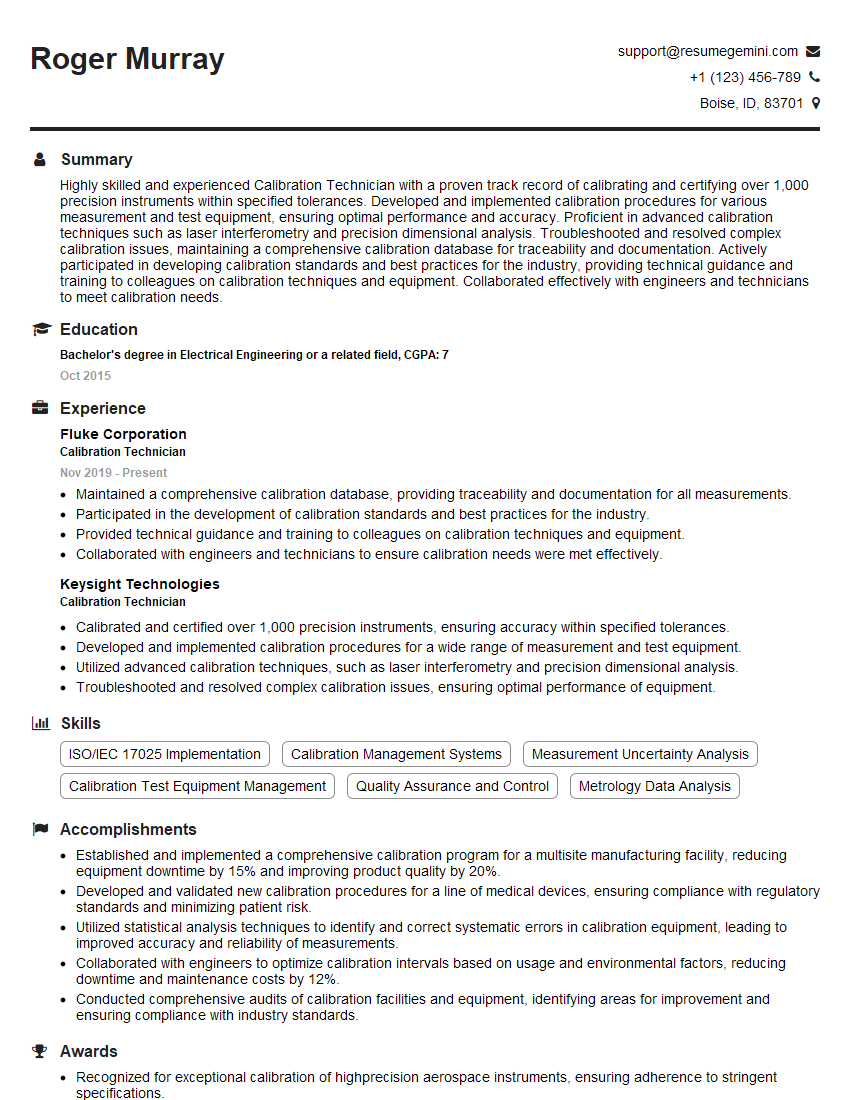
Mastering Metrology Tools is crucial for a successful career in manufacturing, quality control, and engineering. A strong understanding of these tools translates directly into higher earning potential and greater career opportunities. To maximize your chances of landing your dream role, focus on crafting a compelling and ATS-friendly resume that highlights your skills and experience. ResumeGemini is a valuable resource to help you build a professional resume that stands out to recruiters. They offer examples of resumes tailored to Metrology Tools professionals, allowing you to see how best to showcase your expertise and experience effectively.

Explore more articles
Users Rating of Our Blogs
Share Your Experience
We value your feedback! Please rate our content and share your thoughts (optional).
What Readers Say About Our Blog
I Redesigned Spongebob Squarepants and his main characters of my artwork.
https://www.deviantart.com/reimaginesponge/art/Redesigned-Spongebob-characters-1223583608
IT gave me an insight and words to use and be able to think of examples
Hi, I’m Jay, we have a few potential clients that are interested in your services, thought you might be a good fit. I’d love to talk about the details, when do you have time to talk?
Best,
Jay
Founder | CEO