Every successful interview starts with knowing what to expect. In this blog, we’ll take you through the top NCIDQ Certification interview questions, breaking them down with expert tips to help you deliver impactful answers. Step into your next interview fully prepared and ready to succeed.
Questions Asked in NCIDQ Certification Interview
Q 1. Describe your experience with the NCIDQ exam process.
The NCIDQ exam process was a rigorous but ultimately rewarding experience. It’s a multi-part exam designed to assess the knowledge and skills necessary for professional interior design practice. My preparation involved several months of intense study, focusing on each of the six divisions. I utilized various study materials, including textbooks, practice exams, and online resources. The exam itself was challenging, testing not only my knowledge of design principles but also my understanding of building codes, construction methods, and business practices. The process helped solidify my understanding of the profession’s intricacies and gave me a significant confidence boost upon successfully completing it.
One particularly challenging aspect was balancing study time with my ongoing professional commitments. Time management and prioritization were key to success. I also found study groups invaluable for sharing knowledge and gaining different perspectives on challenging concepts. Ultimately, the NCIDQ certification is a testament to my dedication to the profession and the high standards I hold myself to.
Q 2. Explain the importance of the six NCIDQ examination divisions.
The six NCIDQ examination divisions are crucial because they represent the multifaceted nature of professional interior design. Each division assesses a distinct but interconnected area of expertise, ensuring well-rounded competence. Imagine building a house: you need a strong foundation, proper framing, efficient systems, and a beautiful finish. Similarly, each division is essential for a successful design project.
- Division 1: Professional Practice focuses on business and legal aspects, encompassing contracts, liability, and ethical considerations.
- Division 2: Project Management covers the planning, scheduling, budgeting, and coordination of design projects. Think of this as the project roadmap.
- Division 3: Construction & Specifications deals with construction documents, building codes, and material selection. It’s the structural integrity of your house.
- Division 4: Design encompasses space planning, programming, and the application of design principles. This is the creative heart of the project, the aesthetics and functionality.
- Division 5: Technology & Practice focuses on the use of technology in design, such as CAD software and building information modeling (BIM). It’s the modern tools used in construction.
- Division 6: Interior Construction goes in-depth into construction methods, materials, and systems. This is the understanding of how things are put together.
A strong understanding of all six divisions is vital to ensuring a safe, functional, and aesthetically pleasing design that meets clients’ needs and complies with regulations.
Q 3. How do you stay updated on current building codes and regulations?
Staying current with building codes and regulations is paramount for any practicing interior designer. Neglecting this could lead to costly mistakes and legal issues. My strategy involves a multi-pronged approach:
- Regularly review updates: I subscribe to relevant publications and newsletters from organizations like the International Code Council (ICC) and local building departments. This ensures I’m alerted to changes.
- Attend continuing education courses: Many professional organizations offer continuing education units (CEUs) focusing on updated codes and regulations. This is a highly effective method for knowledge refresh and often includes discussions on real-world applications.
- Network with professionals: Discussions with architects, contractors, and other designers provide insights into current best practices and challenges encountered in the field. This collaborative knowledge sharing is incredibly valuable.
- Utilize online resources: I regularly access online databases and code-related websites to search for specific code information for each project’s location and context.
This proactive approach allows me to incorporate the most current and relevant information into my designs, ensuring compliance and minimizing risks.
Q 4. Describe your proficiency in CAD software relevant to design documentation.
I’m highly proficient in various CAD software packages, including AutoCAD, Revit, and SketchUp. My expertise extends beyond basic drafting; I can create detailed construction documents, develop 3D models, and generate comprehensive design presentations. I’ve utilized these programs for projects ranging from small-scale residential renovations to large-scale commercial fit-outs.
For example, in a recent hospitality project, I leveraged Revit to create a fully coordinated BIM model, which facilitated seamless communication with contractors and ensured accurate material quantities. My proficiency in these tools allows for efficient design iterations, better visualization, and ultimately, more accurate and cost-effective project delivery. I’m also adept at utilizing rendering software to create realistic visualizations for client presentations, ensuring clear communication and mutual understanding.
Q 5. Explain your understanding of sustainable design principles.
Sustainable design is a core principle guiding my work. It’s not just a trend; it’s a responsibility to create environments that are environmentally responsible, economically viable, and socially equitable. My understanding encompasses several key areas:
- Material Selection: I prioritize the use of sustainable materials with low environmental impact, such as recycled content, rapidly renewable resources, and locally sourced materials. This reduces transportation emissions and supports local economies.
- Energy Efficiency: I incorporate strategies to minimize energy consumption, such as designing for natural daylighting, specifying energy-efficient lighting and appliances, and optimizing building envelope performance. For instance, I might utilize a building performance simulation tool to evaluate different strategies.
- Water Conservation: I focus on water-efficient fixtures and landscaping designs to reduce water consumption. This includes choosing low-flow faucets, toilets, and showerheads.
- Indoor Environmental Quality: I consider the health and well-being of occupants by selecting low-VOC materials, ensuring proper ventilation, and optimizing thermal comfort. This reduces health issues and improves user productivity.
Incorporating sustainable practices isn’t just about reducing environmental impact; it also enhances the overall quality and value of the design. It’s about designing for a better future and maximizing resource efficiency.
Q 6. How do you manage project budgets and timelines effectively?
Effective project budget and timeline management is critical for success. My approach combines meticulous planning with proactive monitoring and adjustments. I start by developing a detailed budget that accounts for all project costs, including design fees, materials, labor, and permitting. I use project management software and spreadsheets to track expenses and ensure that the project remains on budget. Similarly, I create a comprehensive project schedule outlining key milestones and deadlines.
Regular progress meetings with the client and project team are integral to identify any potential deviations from the budget or schedule. If any unforeseen issues arise, such as material cost increases or design changes, I work collaboratively to find cost-effective solutions and adjust the timeline as needed. Open communication and transparency are vital throughout the process. This proactive approach ensures that projects are completed on time and within budget, fostering positive client relationships and minimizing potential conflicts.
Q 7. Describe your experience with client communication and project management.
Client communication and project management are intertwined aspects of my professional practice. I firmly believe in establishing clear, open communication from the initial consultation through project completion. This begins with actively listening to clients’ needs and translating those into design solutions. I use various communication methods such as regular meetings, email updates, and project management software to maintain consistent contact and keep clients informed of progress.
For instance, in one project, I used a dedicated online portal to share design iterations, construction documents, and meeting minutes. This ensured that the client had immediate access to information and could provide feedback promptly. Furthermore, I consistently prioritize client feedback and actively solicit their input throughout the design process. My goal is to build trust and ensure the design aligns perfectly with their vision and requirements. This collaborative approach minimizes misunderstandings and fosters a positive, productive working relationship.
Q 8. How do you handle conflicting design requests from clients?
Handling conflicting client requests is a crucial skill for any NCIDQ-certified designer. It’s about balancing client desires with design feasibility, budget constraints, and code compliance. My approach involves a three-step process: Listen, Collaborate, and Compromise.
Listen: I begin by actively listening to each client’s request, understanding their underlying needs and priorities. Asking clarifying questions is critical; for instance, if a client wants a specific material that’s beyond budget, I’ll ask about their reasoning: Is it the aesthetic, the durability, or something else? This helps me uncover the true need, not just the surface request.
Collaborate: I then present alternative solutions, explaining the pros and cons of each option in relation to the client’s goals and the project constraints. Visual aids, like mood boards or material samples, are invaluable here. For example, if a client wants a particular expensive tile, I might suggest a less costly but equally stylish alternative with a similar visual effect.
Compromise: Sometimes, finding a perfect balance isn’t possible. Through collaborative discussion, we prioritize needs and identify areas where compromise is necessary. This might involve scaling back the scope of a feature, using more cost-effective substitutes, or adjusting the project timeline. Transparency is key—I always clearly explain the rationale for any compromises and present them as win-win solutions.
For example, in a recent project, a client wanted a specific, handcrafted tile that would have significantly increased the project cost. By presenting alternative tile options with similar aesthetics but a lower price point and exploring options that emphasized budget-friendly design choices elsewhere, we achieved a visually stunning result within the budget constraints, satisfying both the client’s aesthetic goals and budget requirements.
Q 9. Explain your process for selecting appropriate materials and finishes.
Selecting appropriate materials and finishes is a multifaceted process that combines aesthetic considerations with functional, budgetary, and sustainability requirements. My selection process typically follows these steps:
Define Project Needs: This involves thoroughly understanding the project’s functional requirements, the desired aesthetic, and the client’s budget. This might involve analyzing the project’s lifestyle needs – durability for high-traffic areas, for example.
Research and Sourcing: I research various materials and finishes, considering factors such as durability, maintenance requirements, sustainability, cost-effectiveness, and availability. I’ll utilize material libraries, manufacturers’ websites, and industry publications. I also visit showrooms to view materials firsthand and compare quality.
Sample Selection and Presentation: I create a selection of material samples that meet the project’s criteria. These samples are presented to the client with detailed information on each option’s properties, cost, and potential maintenance requirements. This visual presentation helps clients make informed decisions.
Final Selection and Specification: Once the client makes their selection, I create detailed specifications for the materials, including manufacturer information, product codes, and any special installation requirements.
For instance, in a recent hospitality project, the selection of flooring was particularly critical. I presented a range of flooring options, including sustainable bamboo, resilient vinyl, and durable ceramic tile. After considering factors like durability, maintenance, and cost-effectiveness in relation to the high-traffic areas, we opted for a durable vinyl which provided the requisite longevity, ease of maintenance and met budget.
Q 10. Describe your understanding of accessibility guidelines (ADA).
My understanding of the Americans with Disabilities Act (ADA) Accessibility Guidelines is comprehensive. I am aware that these guidelines are crucial for ensuring that interior spaces are accessible and usable by individuals with disabilities. My knowledge encompasses several key areas:
ADA Standards for Accessible Design (ASAD): I’m familiar with the specific requirements for accessible routes, ramps, doorways, restrooms, and other areas. This includes understanding requirements for clear floor space, proper door widths, grab bars, and accessible restroom fixtures.
Sensory Considerations: Beyond physical accessibility, I also consider sensory considerations, such as providing adequate lighting, reducing noise levels, and minimizing visual clutter to create a comfortable and inclusive environment for people with visual or auditory impairments.
Communication: Effective communication of ADA features is also essential. This might include signage and clear wayfinding to ensure that people with disabilities can easily navigate the space.
Proactive Approach: I make ADA compliance a priority from the initial design stages rather than trying to retrofit accessibility later in the process. Early integration often leads to more seamless and cost-effective solutions.
For example, in a recent restaurant design, we integrated accessible features seamlessly—such as strategically placed ramps with appropriate gradients, appropriately sized restrooms and clear wayfinding signage—without compromising the overall aesthetic appeal.
Q 11. How do you incorporate universal design principles into your projects?
Universal design principles aim to create spaces that are usable and accessible to people of all ages, abilities, and sizes. I incorporate these principles throughout my projects by focusing on the seven key principles:
Equitable Use: Designing spaces that are usable by all people, to the greatest extent possible, without the need for adaptation or specialized design. This means creating a space that is usable by everyone rather than needing separate spaces or accommodations.
Flexibility in Use: Designing spaces that accommodate a wide range of individual preferences and abilities. This could include adjustable furniture, adaptable lighting controls, or multiple modes of interaction with the space.
Simple and Intuitive Use: Designing spaces that are easy to understand and use, regardless of the user’s knowledge, experience, or concentration level. Clear signage, intuitive layouts, and consistent design elements contribute greatly.
Perceptible Information: Ensuring that important information is easily accessible to users with sensory limitations. This includes using clear signage, providing auditory cues, and employing contrasting colors to improve visual clarity.
Tolerance for Error: Designing spaces that minimize hazards and the risks of accidents. This means designing spaces that are forgiving of mistakes, minimizing sharp edges and potential trip hazards.
Low Physical Effort: Designing spaces that minimize the physical effort needed to use the space. This might involve using ergonomic furniture, ensuring accessible routes, and providing adequate space for maneuverability.
Size and Space for Approach and Use: Ensuring that the space is large enough to accommodate individuals with mobility devices or other assistive devices and that there is adequate space for maneuvering and access.
In a recent residential project, I incorporated universal design by using lever-style door handles (easier for people with arthritis), installing adjustable countertops in the kitchen, and providing ample space for wheelchair maneuverability throughout the house. These features benefit everyone, not just people with disabilities.
Q 12. Describe your experience with construction detailing and documentation.
My experience with construction detailing and documentation is extensive. I understand that precise and comprehensive documentation is crucial for successful project execution. My approach includes:
Detailed Drawings: I create comprehensive construction drawings, including plans, sections, elevations, and details that clearly communicate the design intent to the construction team. I’m proficient in AutoCAD and other relevant design software.
Specifications: I develop detailed specifications that define the materials, finishes, and construction methods to be used. This ensures consistency and quality throughout the project.
Material Selection and Specifications: These specifications are crucial for ensuring the contractor uses the materials and finishes I’ve specified. Specific manufacturer details and product numbers are essential.
Coordination with Consultants: I effectively coordinate the design and documentation with other consultants, such as structural engineers, MEP engineers, and landscape architects, to ensure seamless integration of all disciplines. This is a key part of successful project delivery.
Constructability Review: I conduct constructability reviews to ensure the designs are feasible and buildable. This involves consulting with construction professionals to identify any potential challenges or issues.
In a past project, our detailed shop drawings and specifications were crucial in mitigating potential issues. The precisely detailed millwork drawings and detailed material specifications enabled us to avoid costly errors on site and enabled swift, accurate construction.
Q 13. Explain your understanding of contract administration and negotiation.
Contract administration and negotiation are vital aspects of the design process. My understanding includes:
Contract Review: I carefully review contracts to understand the scope of work, payment terms, and other contractual obligations. This is critically important in protecting both the client and myself.
Negotiation: I’m skilled in negotiating contracts to achieve favorable terms for the client, while also ensuring that my firm receives fair compensation for our services. This involves balancing the interests of all parties and ensuring a positive working relationship. I am adept at addressing potential conflict points before they escalate.
Change Orders: I effectively manage change orders, documenting any changes to the project scope and adjusting the contract accordingly. I make sure these changes are properly documented and approved by all parties. This ensures transparency and accountability throughout the project.
Payment Administration: I administer payments, ensuring that invoices are accurate, timely, and approved by the client. Proper documentation is crucial in preventing payment issues.
Dispute Resolution: I use my knowledge to attempt to resolve any conflicts or disputes that may arise during the project. My aim is to mitigate conflicts and prevent legal disputes, prioritizing professional solutions that preserve positive working relationships.
For example, I successfully negotiated a contract extension for a project that experienced unforeseen delays due to material shortages, ensuring our firm was fairly compensated while minimizing disruptions to the client.
Q 14. How do you ensure compliance with building codes and regulations throughout the project lifecycle?
Ensuring compliance with building codes and regulations is paramount throughout the project lifecycle. My approach involves a proactive and multi-stage strategy:
Early Code Research: I start by thoroughly researching all applicable building codes and regulations early in the design process. This includes local, state, and federal codes and any special requirements for the project site.
Design for Compliance: I integrate code compliance into the design from the outset, rather than addressing it as an afterthought. This prevents costly revisions later in the process.
Regular Code Checks: I regularly review the design against the codes and regulations throughout the design and construction phases. I use code-checking software to aid in this process.
Collaboration with Authorities: I actively collaborate with building officials and other relevant authorities to address any code-related questions or issues that may arise. This proactive communication is essential for a smooth process.
Documentation: I meticulously document all code compliance measures and obtain necessary approvals from authorities before construction begins. This documentation serves as proof of compliance.
Inspections: I coordinate with the construction team to ensure that all necessary inspections are conducted and passed.
In one project, proactive code review identified a potential conflict with accessibility requirements early on. Addressing this early saved significant time and costs compared to making changes after construction had already begun. Thorough documentation proved vital during inspections, ensuring a smooth approval process.
Q 15. Describe your experience with code research and interpretation.
Code research and interpretation are crucial in NCIDQ preparation and professional practice. It involves understanding building codes, accessibility standards (like ADA), fire codes, and local regulations. This goes beyond simply reading the text; it requires critical analysis to determine the implications for design choices. For example, understanding egress requirements dictates the placement and width of doors and corridors, while understanding accessibility standards informs the design of ramps, restroom facilities, and signage.
My approach involves a multi-step process: First, I identify the relevant codes based on the project’s location and type. Then, I meticulously review each section, highlighting key provisions and potential conflicts. I utilize cross-referencing to ensure complete understanding, and consult authoritative resources to clarify ambiguous clauses. Finally, I summarize my findings in a clear and concise manner, translating technical requirements into practical design considerations. I might even create a design checklist based on the code interpretation to ensure compliance throughout the project.
For instance, in a recent project involving a restaurant renovation, I had to thoroughly research local fire codes related to kitchen exhaust systems and occupancy limits. Understanding these codes allowed me to design a kitchen layout that ensured both safety and optimal functionality, while also meeting all building code requirements and avoiding potential delays or permit issues.
Career Expert Tips:
- Ace those interviews! Prepare effectively by reviewing the Top 50 Most Common Interview Questions on ResumeGemini.
- Navigate your job search with confidence! Explore a wide range of Career Tips on ResumeGemini. Learn about common challenges and recommendations to overcome them.
- Craft the perfect resume! Master the Art of Resume Writing with ResumeGemini’s guide. Showcase your unique qualifications and achievements effectively.
- Don’t miss out on holiday savings! Build your dream resume with ResumeGemini’s ATS optimized templates.
Q 16. How do you handle unforeseen site conditions or construction challenges?
Unforeseen site conditions and construction challenges are inevitable in any design project. My approach focuses on proactive planning and responsive problem-solving. Before construction begins, I ensure a thorough site analysis is conducted, which includes geotechnical surveys, existing utility mapping, and assessment of structural integrity. This helps mitigate surprises.
However, when unexpected issues arise – such as discovering hidden utilities or encountering structural limitations – I employ a structured problem-solving method. This involves: 1) Assessment: Clearly define the problem, collecting data and documenting the issue. 2) Analysis: Explore potential causes and consequences of the issue. 3) Solution Generation: Brainstorm multiple solutions, considering cost, time, and aesthetic impacts. 4) Evaluation: Analyze the pros and cons of each solution, prioritizing safety and compliance. 5) Implementation: Select and implement the most appropriate solution, ensuring proper documentation. 6) Communication: Maintain open communication with clients, contractors, and other stakeholders throughout the process.
For example, during a residential remodel, we uncovered unexpected asbestos in the floor. Instead of panicking, we halted work, engaged an asbestos abatement specialist, and revised the project schedule accordingly, keeping the client informed every step of the way. This transparent approach minimized delays and maintained client trust.
Q 17. Explain your approach to problem-solving in design projects.
My approach to problem-solving in design projects is iterative and collaborative. It emphasizes understanding the root cause of the problem before proposing solutions. I find that a design thinking approach, which focuses on empathy, ideation, prototyping, and testing, is very effective. I start by deeply understanding the client’s needs and project goals. I then use a combination of creative brainstorming techniques, analytical problem-solving methods, and a practical, hands-on approach to develop solutions.
My process often involves sketching, diagramming, and using digital modeling software to visualize and test potential solutions. I regularly seek feedback from clients and colleagues to refine my designs and address any potential issues early in the process. I also value leveraging technology; for example, using BIM (Building Information Modeling) software can help identify potential clashes and problems before construction even begins, saving time and money.
For example, in a recent project where we were tasked with maximizing the functionality of a small office space, I first interviewed the employees to understand their workflow. I then used space planning software to explore various layouts before settling on a design that optimized space utilization and improved workflow efficiency.
Q 18. Describe your experience with space planning and programming.
Space planning and programming are fundamental to my design process. Space planning involves efficiently arranging spaces to meet functional and aesthetic goals. Programming involves defining the needs of a space, determining its size and functions, and translating those needs into a design brief. I utilize a combination of quantitative and qualitative methods.
I begin by conducting thorough needs analyses through client interviews, questionnaires, and observations. This informs the functional program—a document that details the required spaces, their size, and relationships. Then, I use different techniques like bubble diagrams, adjacency matrices, and space planning software to explore various layouts, optimizing for flow, functionality, and spatial relationships. I consider factors like accessibility, code compliance, and budgetary constraints throughout this process.
For example, when planning a new school library, I conducted interviews with teachers, students, and librarians to understand their needs and preferences. The resulting program included separate areas for quiet study, collaborative work, and technology access, all strategically placed for optimal flow and accessibility.
Q 19. How do you incorporate user needs and functionality in your designs?
Incorporating user needs and functionality is paramount in my design philosophy. I believe that successful design is user-centered design. I achieve this through a multi-faceted approach.
First, I invest significant time in understanding the target users through research methods like interviews, surveys, and ethnographic studies. This helps me identify their needs, preferences, and potential challenges. I then translate these findings into design requirements, such as appropriate dimensions for furniture and clear wayfinding strategies. Throughout the design process, I conduct regular user testing and feedback sessions to ensure the design meets the needs of its users and is both usable and enjoyable.
For instance, while designing a senior center, I conducted focus groups with elderly individuals to understand their physical limitations and preferences. This informed design choices such as the selection of appropriate furniture, the incorporation of ample seating areas, and the implementation of clear signage and accessible pathways.
Q 20. Explain your knowledge of various design styles and their historical context.
My knowledge of design styles encompasses a broad range, from historical periods to contemporary movements. Understanding the historical context of design styles is crucial for informed decision-making and creating designs that are both relevant and meaningful.
I am familiar with styles such as Art Deco, characterized by geometric shapes and luxurious materials, and Mid-Century Modern, known for its clean lines and functional design. I also understand the principles of classical architecture, traditional styles, and modern and postmodern movements, along with emerging contemporary trends. I am also well-versed in the cultural and social influences that shaped these styles, allowing me to draw inspiration from the past while creating contemporary designs that are both innovative and respectful of history.
In a recent project, I drew inspiration from Mid-Century Modern principles to create a clean, functional, and aesthetically pleasing office space for a tech company. Understanding the historical context of this style allowed me to create a design that was both modern and timeless.
Q 21. Describe your experience with presentation techniques and client presentations.
Effective presentation techniques are crucial for communicating design ideas and securing client approval. I use a multi-sensory approach, combining visual aids with clear and concise verbal explanations. My presentations are tailored to the specific audience and project context.
I typically begin with a concise overview of the project’s goals and objectives. I then present design concepts using high-quality renderings, models, and digital presentations, supplemented by detailed drawings and specifications. I utilize storytelling to make the presentation more engaging and memorable, emphasizing the functionality, aesthetics, and sustainability of the proposed design. Finally, I allow ample time for client questions and feedback, which is essential for a collaborative design process.
In a past presentation, I used a virtual reality experience to let the client ‘walk through’ a 3D model of the proposed space, providing a more immersive and engaging experience than traditional methods. The client was incredibly impressed, and this visual aid significantly contributed to securing their approval.
Q 22. How do you manage design risks and mitigate potential problems?
Managing design risks is paramount for successful project delivery. It involves proactive identification, assessment, and mitigation of potential problems throughout the entire design lifecycle. My approach is multifaceted and begins with a thorough understanding of the project brief, including the client’s needs, budget constraints, and site conditions. This is followed by a detailed risk assessment, considering factors such as regulatory compliance, material availability, construction challenges, and potential schedule delays.
- Risk Identification: I use checklists, brainstorming sessions, and SWOT analyses to identify potential problems. For example, a historical flood plain might pose a risk necessitating elevated foundations or specialized waterproofing measures.
- Risk Assessment: I analyze the likelihood and impact of each identified risk. A high-likelihood, high-impact risk (like unstable soil) demands immediate attention and mitigation strategies.
- Risk Mitigation: This involves developing strategies to reduce the probability or impact of risks. Examples include incorporating contingency plans into the schedule, specifying robust materials, and seeking expert consultant input. For the unstable soil example, geotechnical engineering input is crucial.
- Contingency Planning: I always incorporate contingency plans to address unexpected issues. This might involve budgeting extra time or funds, or having alternative design solutions ready.
By systematically addressing potential risks, I ensure project success and minimize negative impacts on budget, schedule, and client satisfaction. Documentation of all risk assessments and mitigation strategies is maintained throughout the project.
Q 23. How do you incorporate feedback from consultants and contractors into your design process?
Incorporating feedback from consultants and contractors is crucial for a well-coordinated and successful project. I foster a collaborative environment where open communication is encouraged. My process involves scheduled meetings, regular updates, and constructive dialogue to integrate their expertise into my design.
- Regular Meetings: I schedule regular meetings with consultants (structural, MEP, etc.) and contractors to discuss design development and construction feasibility. These sessions allow for real-time feedback and immediate problem-solving.
- Constructive Criticism: I actively solicit feedback, valuing all perspectives and suggestions. I emphasize that feedback is an opportunity for improvement, not criticism.
- Design Review Meetings: Formal design review meetings with all stakeholders ensure alignment on design intent and address potential conflicts. Minutes from these meetings are documented and distributed.
- BIM (Building Information Modeling): Utilizing BIM fosters collaboration and allows for early detection of potential clashes and conflicts between different disciplines. Issues are flagged and discussed, allowing for prompt resolution.
- Documentation: All feedback is documented, including the date, source, and response. This ensures accountability and transparency.
For example, during a recent project, the structural engineer identified a potential issue with the load-bearing capacity of a chosen beam. This feedback allowed me to adjust the design, strengthening the beam and preventing potential issues during construction. This highlights the importance of actively soliciting feedback throughout the process.
Q 24. Describe your experience with project bidding and selection processes.
My experience with project bidding and selection processes spans various project types and delivery methods. I understand the importance of clear, concise, and comprehensive bidding documents to attract qualified bidders.
- Developing Bid Documents: I meticulously prepare bid documents that accurately reflect the project scope, requirements, and timelines. Ambiguity is avoided to prevent misunderstandings.
- Pre-bid Meetings: Holding pre-bid meetings allows potential bidders to ask clarifying questions, fostering a transparent process and ensuring a fair competition.
- Evaluating Bids: I use a systematic evaluation process, considering factors like price, qualifications, experience, and proposed methods. A weighted scoring system helps to objectively compare bids.
- Negotiation: After bid evaluation, I may engage in negotiations with potential contractors to clarify proposals and address concerns before selecting the winning bid.
- Contract Award: Once a bidder is selected, I carefully review and finalize the contract, ensuring all terms and conditions are clearly defined.
In a past project, the bid evaluation process revealed a significant disparity in pricing between bidders. Further investigation uncovered that one bid lacked crucial elements of the scope of work. Addressing this during the pre-award negotiation phase prevented potential issues and cost overruns.
Q 25. Explain your understanding of liability and professional responsibilities.
Understanding liability and professional responsibilities is fundamental to my practice. As an NCIDQ-certified designer, I am legally and ethically responsible for the quality and safety of my designs. This encompasses adherence to codes, standards, and professional best practices.
- Professional Liability Insurance: I maintain professional liability insurance to protect myself and my clients from potential financial losses arising from errors or omissions in my designs.
- Adherence to Codes and Standards: I meticulously follow all applicable building codes, accessibility standards, and fire safety regulations.
- Due Diligence: I perform thorough site analysis, research, and design reviews to ensure the safety and functionality of my designs.
- Clear Contracts: I use clear and comprehensive contracts to define the scope of work, deliverables, and payment terms, protecting both myself and my client.
- Documentation: I maintain detailed documentation of the entire design process, including all decisions, changes, and communications.
Negligence and unprofessional conduct can lead to serious legal and ethical consequences. Understanding these responsibilities guides my design decisions and ensures I deliver safe, functional, and compliant designs.
Q 26. How do you maintain professional ethics and integrity in your work?
Maintaining professional ethics and integrity is paramount in my practice. It guides my interactions with clients, colleagues, and contractors, ensuring fairness, transparency, and accountability in all my actions.
- Confidentiality: I maintain client confidentiality, protecting sensitive information and respecting intellectual property rights.
- Fairness and Objectivity: I provide objective advice and recommendations, free from bias or conflict of interest.
- Honesty and Transparency: I am honest and transparent in my dealings with clients, contractors, and other professionals.
- Respectful Communication: I maintain respectful and professional communication with all stakeholders.
- Continuing Education: I participate in continuing education to stay informed of new developments and best practices in the field.
For example, if a client requests a design element that I deem unsafe or non-compliant, I will openly explain the risks and suggest alternative solutions, prioritizing safety and ethics over personal gain.
Q 27. Describe your experience with LEED or other green building certifications.
I have significant experience with LEED (Leadership in Energy and Environmental Design) and other green building certifications. I understand the principles of sustainable design and incorporate them into my projects to minimize environmental impact and create healthier spaces.
- LEED Certification Process: I am familiar with the LEED rating system and its various certification levels. I understand the requirements for each credit category and can strategize design solutions to achieve certification targets.
- Sustainable Design Strategies: I incorporate sustainable design strategies, such as energy-efficient lighting, water-saving fixtures, and the use of recycled and locally sourced materials.
- Life-Cycle Assessment: I consider the life-cycle impacts of materials and systems, selecting options with minimal environmental footprint.
- Collaboration with Consultants: I collaborate with sustainability consultants to ensure adherence to LEED requirements and optimize energy performance.
- Documentation: I thoroughly document the sustainable design features and their impact, providing evidence for LEED certification submissions.
In a recent project, we successfully achieved LEED Silver certification by incorporating features like high-performance glazing, rainwater harvesting, and green roofs. This project demonstrated how thoughtful design choices can contribute to a more sustainable built environment.
Q 28. How do you utilize technology to improve design efficiency and collaboration?
Technology plays a vital role in enhancing design efficiency and collaboration. I leverage various software and tools to streamline my workflow and improve communication with clients and other stakeholders.
- BIM (Building Information Modeling): BIM software is integral to my design process. It allows for 3D modeling, clash detection, and coordination with other design disciplines. This significantly reduces errors and improves project efficiency.
- CAD (Computer-Aided Design): I utilize CAD software for precise drafting and documentation, enhancing the accuracy and clarity of my designs.
- Project Management Software: I use project management software (e.g., Asana, Trello) to organize tasks, track progress, and manage deadlines efficiently. This keeps the project on schedule and within budget.
- Cloud-Based Collaboration Tools: Cloud-based platforms facilitate seamless collaboration with clients, consultants, and contractors. Real-time updates and feedback enhance communication.
- Rendering and Visualization Software: I use rendering and visualization software to create high-quality images and animations. This helps clients understand and visualize the design before construction.
For instance, using BIM in a recent project allowed us to identify a potential conflict between the HVAC system and a structural element in the early design stages. This avoided costly rework during construction. Technology helps improve design quality, reduce errors, and optimize collaboration among teams.
Key Topics to Learn for NCIDQ Certification Interview
- Space Planning & Programming: Understanding client needs, developing functional diagrams, and optimizing space utilization. Consider practical applications like designing efficient healthcare spaces or maximizing retail floor plans.
- Building Codes & Regulations: Demonstrate familiarity with relevant codes (ADA, fire safety, etc.) and their impact on design decisions. Practice applying these codes to hypothetical scenarios.
- Construction Documents & Specifications: Interpreting drawings, understanding specifications, and communicating effectively with contractors. Focus on practical problem-solving related to construction challenges.
- Materials & Finishes: Deep understanding of material properties, sustainability, and cost implications. Be prepared to discuss material selections for various project types and justify your choices.
- Professional Practice & Ethics: Understanding professional responsibilities, ethical considerations, and legal aspects of the profession. Practice articulating ethical dilemmas and solutions.
- Sustainability & LEED: Knowledge of sustainable design principles and LEED certification processes. Be prepared to discuss incorporating sustainable practices into your design process.
- Design Communication & Presentation: Effectively communicating design concepts through drawings, models, and presentations. Practice your presentation skills to showcase your design thinking.
- Project Management: Understanding project timelines, budgets, and team collaboration. Be ready to describe your experience managing aspects of a design project.
Next Steps
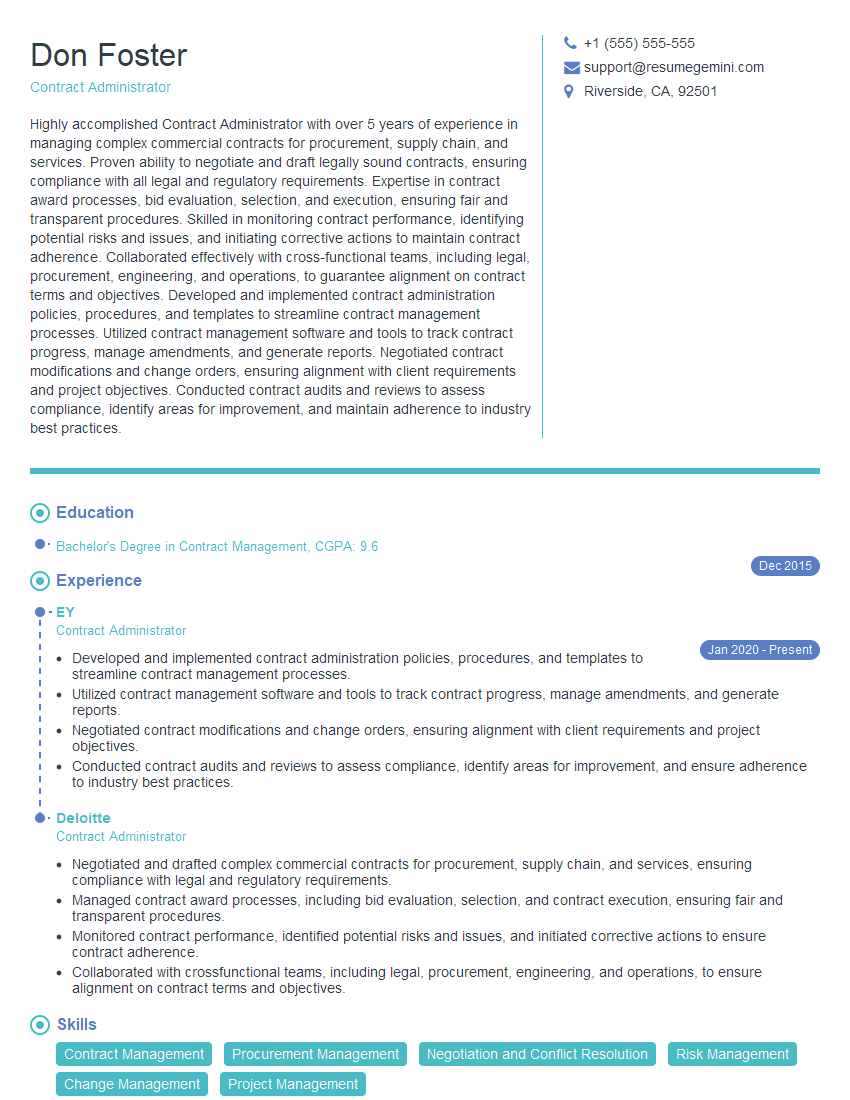
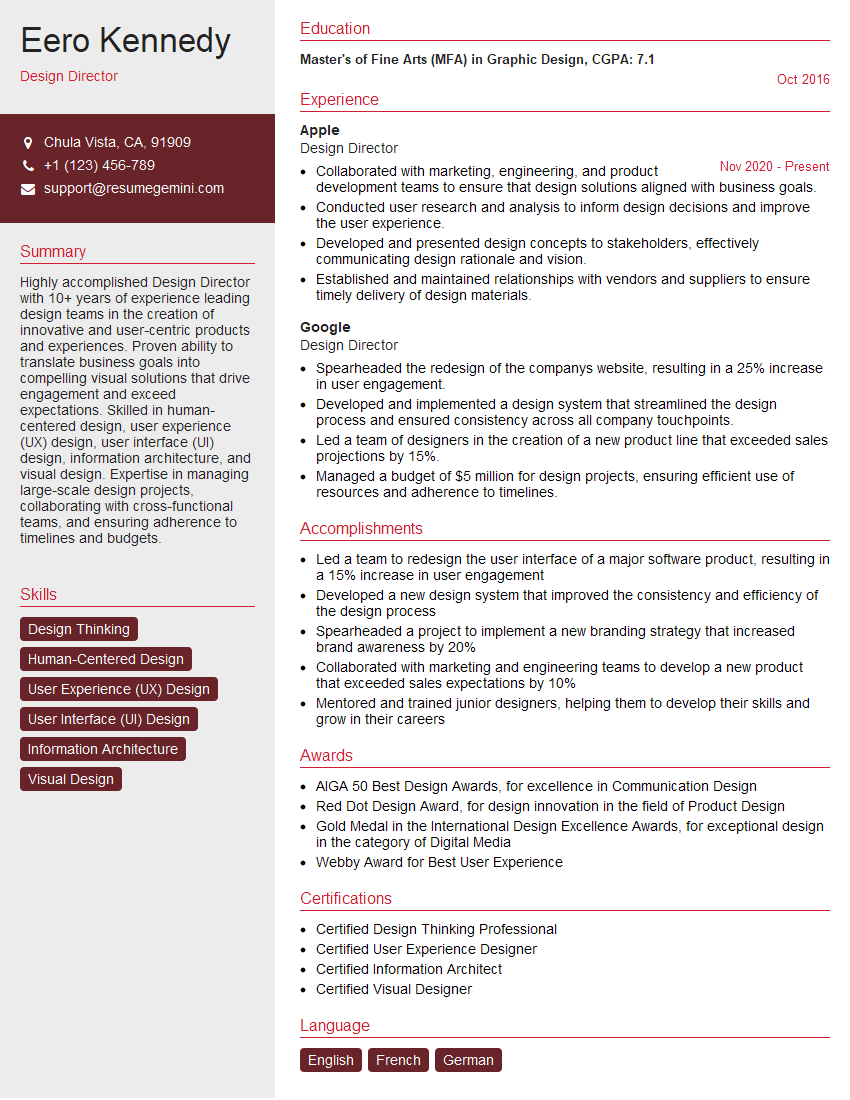
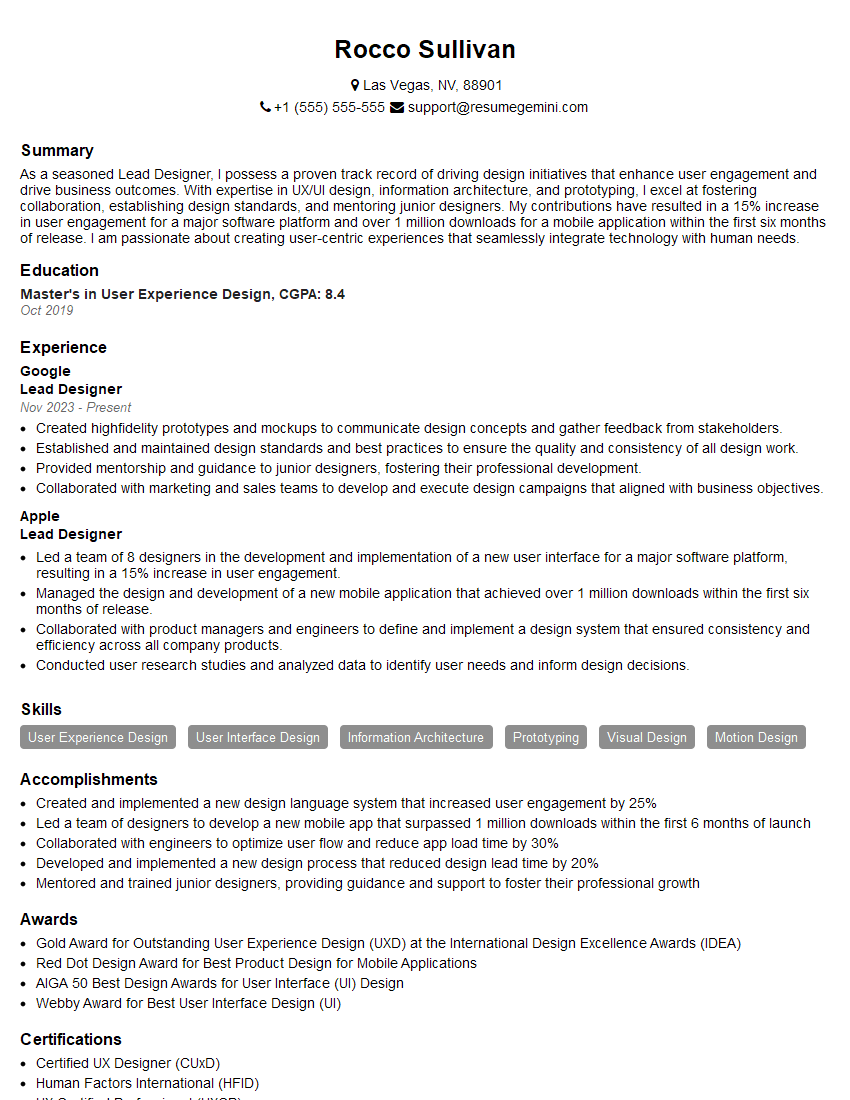
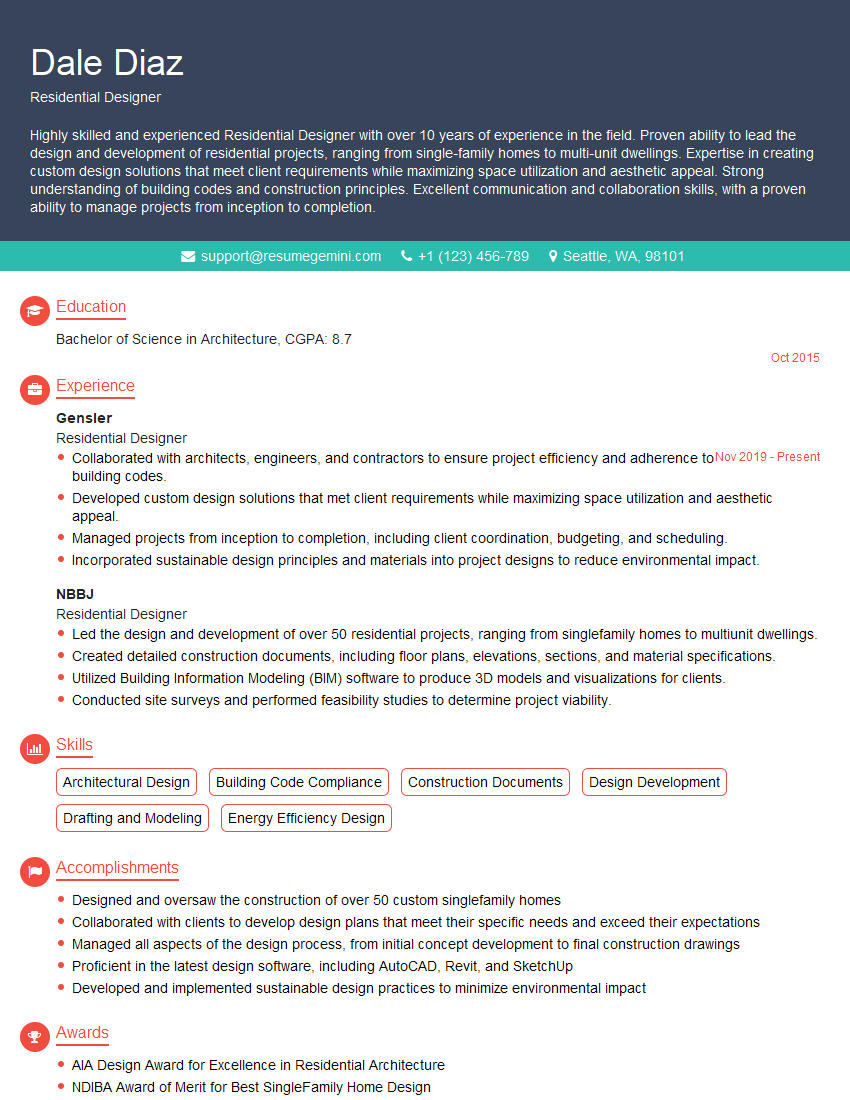
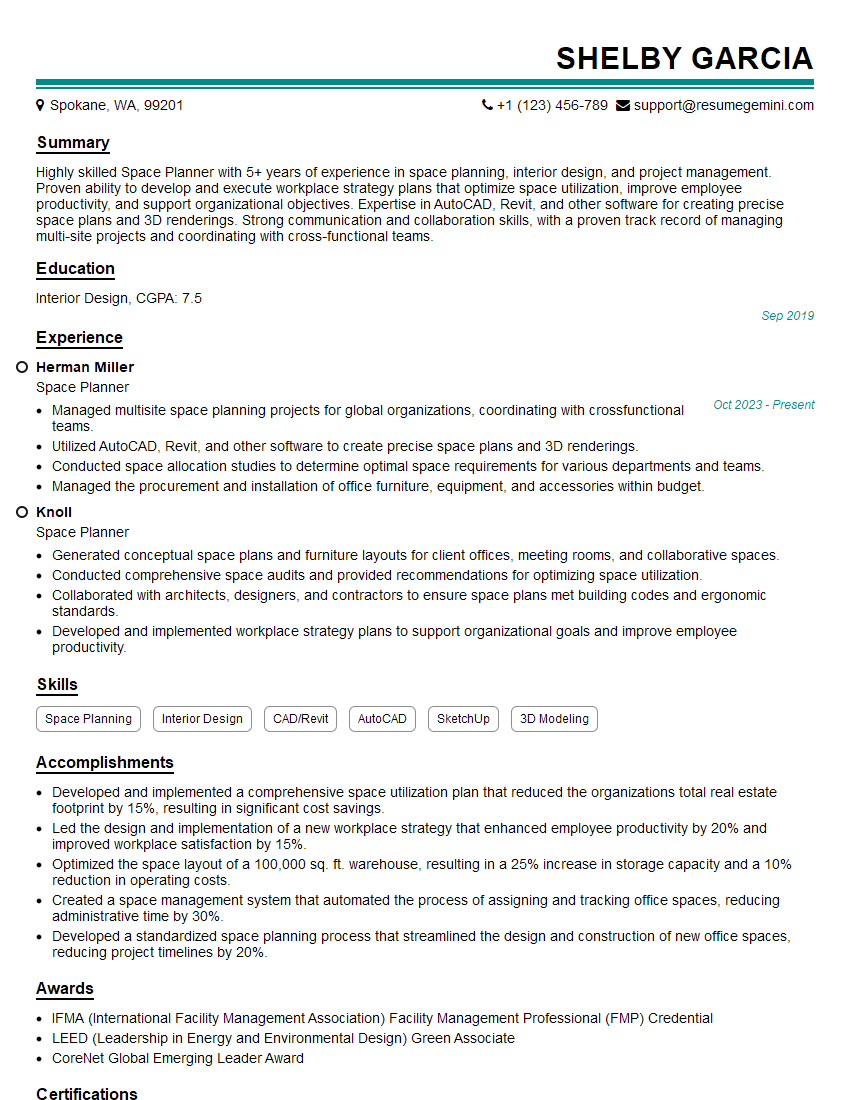
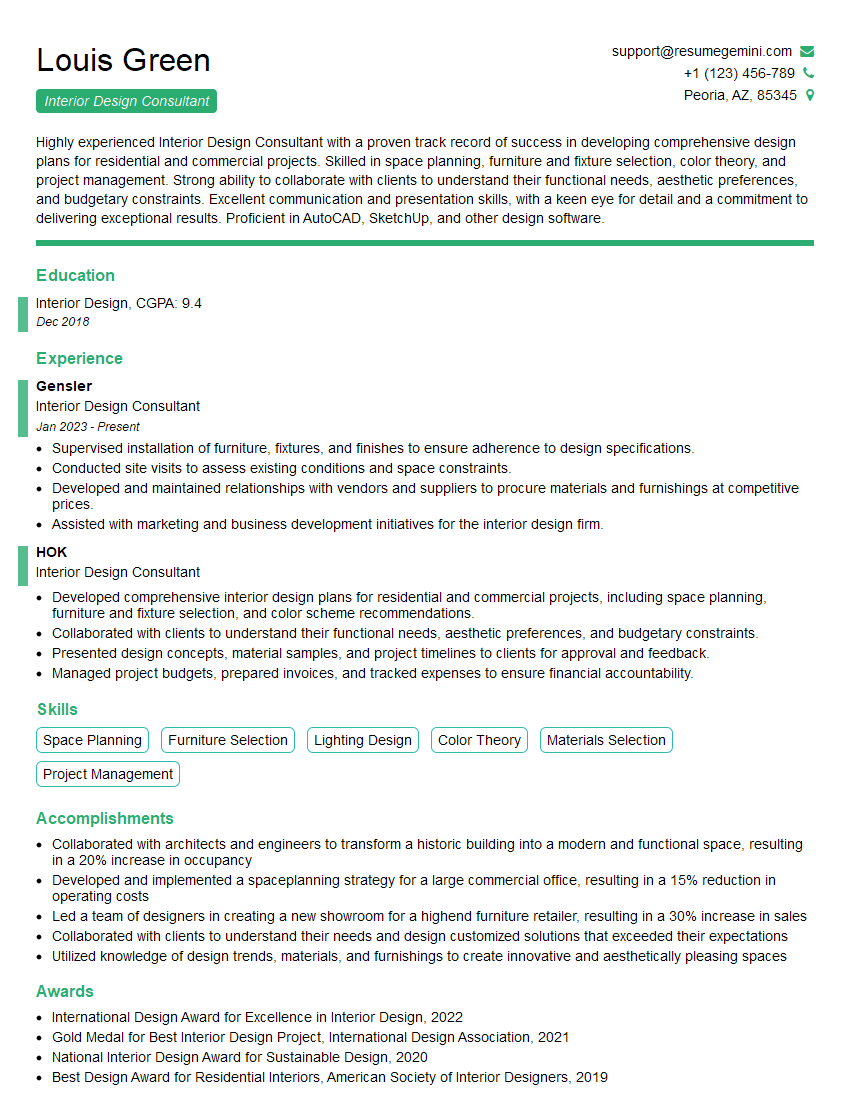
Mastering the NCIDQ Certification significantly enhances your career prospects, opening doors to leadership roles, higher earning potential, and increased recognition within the interior design profession. To maximize your job search success, crafting a strong, ATS-friendly resume is crucial. ResumeGemini is a trusted resource to help you build a professional and impactful resume that highlights your skills and experience. Examples of resumes tailored to NCIDQ Certification are available, allowing you to showcase your qualifications effectively and land your dream job.
Explore more articles
Users Rating of Our Blogs
Share Your Experience
We value your feedback! Please rate our content and share your thoughts (optional).
What Readers Say About Our Blog
I Redesigned Spongebob Squarepants and his main characters of my artwork.
https://www.deviantart.com/reimaginesponge/art/Redesigned-Spongebob-characters-1223583608
IT gave me an insight and words to use and be able to think of examples
Hi, I’m Jay, we have a few potential clients that are interested in your services, thought you might be a good fit. I’d love to talk about the details, when do you have time to talk?
Best,
Jay
Founder | CEO