Every successful interview starts with knowing what to expect. In this blog, we’ll take you through the top OOP (Object-Oriented Programming) interview questions, breaking them down with expert tips to help you deliver impactful answers. Step into your next interview fully prepared and ready to succeed.
Questions Asked in OOP (Object-Oriented Programming) Interview
Q 1. Explain the four fundamental principles of OOP.
The four fundamental principles of Object-Oriented Programming (OOP) are Abstraction, Encapsulation, Inheritance, and Polymorphism. These principles work together to create modular, reusable, and maintainable code. Think of them as the building blocks of a well-structured program.
- Abstraction: Hiding complex implementation details and showing only essential information to the user. Imagine a car; you don’t need to know how the engine works internally to drive it. You only interact with the steering wheel, pedals, and gear shift – the essential abstractions.
- Encapsulation: Bundling data (variables) and methods (functions) that operate on that data within a single unit (class). This protects data integrity and prevents unintended access or modification. Think of a capsule containing medication; the active ingredient is protected and delivered in a controlled manner.
- Inheritance: Creating new classes (child classes) from existing classes (parent classes), inheriting their properties and behaviors. This promotes code reuse and establishes a hierarchical relationship between classes. For instance, a ‘SportsCar’ class could inherit from a ‘Car’ class, inheriting properties like ‘number of wheels’ and ‘engine’ and adding its own unique properties like ‘turbocharger’.
- Polymorphism: The ability of an object to take on many forms. This allows you to treat objects of different classes in a uniform way. For example, different types of animals (‘Dog’, ‘Cat’, ‘Bird’) might all have a ‘makeSound()’ method, but each implements it differently. The polymorphism allows you to call `makeSound()` on any animal object without needing to know its specific type.
Q 2. What is encapsulation and why is it important?
Encapsulation is the bundling of data and methods that operate on that data within a class, restricting direct access to some of the components. It’s like a protective shell around the data, controlling how it’s accessed and modified.
Importance:
- Data Hiding: Prevents accidental or unauthorized modification of data. This increases data integrity and reliability.
- Code Maintainability: Changes to the internal implementation of a class don’t necessarily affect other parts of the program, simplifying maintenance and reducing the risk of introducing bugs.
- Modularity: Classes become self-contained units, promoting code reuse and modular design. This improves organization and makes it easier to understand and work with the codebase.
Example:
class BankAccount {
private double balance;
public void deposit(double amount) { balance += amount; }
public void withdraw(double amount) { if (balance >= amount) balance -= amount; }
public double getBalance() { return balance; }
}
In this example, the `balance` is private, meaning it can only be accessed through the provided methods (`deposit`, `withdraw`, `getBalance`), protecting it from direct manipulation and ensuring proper control over transactions.
Q 3. Describe the difference between inheritance and polymorphism.
Inheritance and Polymorphism are two key OOP concepts that work together to achieve code reusability and flexibility but differ significantly in their approach.
- Inheritance: This is about establishing a hierarchical relationship between classes. A child class inherits properties and methods from its parent class, extending its functionality. It’s like a family tree; a child inherits traits from its parents.
- Polymorphism: This is about the ability of objects of different classes to respond to the same method call in their own specific way. It allows you to treat objects of different classes uniformly. Think of it as different instruments playing the same note – the note is the method, and the instruments are the different classes, each producing a unique sound (implementation).
Example:
// Inheritance
class Animal { public void eat() { System.out.println("Animal is eating"); } }
class Dog extends Animal { public void bark() { System.out.println("Woof!"); } }
// Polymorphism
Animal dog = new Dog();
dog.eat(); // Output: Animal is eating
((Dog)dog).bark(); // Output: Woof!
Here, `Dog` inherits `eat()` from `Animal`. Polymorphism is demonstrated by calling `eat()` on both an `Animal` and a `Dog` object. Even though they are different classes, the `eat()` method is called appropriately for each.
Q 4. What is abstraction and how is it implemented?
Abstraction is the process of simplifying complex systems by modeling only the essential features and hiding unnecessary details. It’s about showing only what’s relevant to the user and concealing the underlying complexity. Think of a remote control for a TV; you don’t need to know the internal circuitry to change the channel.
Implementation: Abstraction is implemented primarily through abstract classes and interfaces.
- Abstract Classes: Classes that can’t be instantiated directly but serve as blueprints for other classes. They can contain both abstract methods (methods without implementation) and concrete methods (methods with implementation).
- Interfaces: Contracts that define a set of methods that implementing classes must provide. Interfaces contain only abstract methods (in Java and similar languages). In other languages like C#, interfaces can also define properties.
Example (Java):
abstract class Shape {
abstract double getArea();
public void display() { System.out.println("This is a shape"); }
}
class Circle extends Shape {
@Override
double getArea() { return 3.14159 * radius * radius; }
private double radius; //implementation detail
public Circle(double r){this.radius = r;}
}
The `Shape` class is abstract; it defines the `getArea()` method but doesn’t implement it. Concrete subclasses like `Circle` provide the specific implementation.
Q 5. Explain the concept of an interface.
An interface is a blueprint that defines a set of methods a class must implement. It acts as a contract; any class that implements the interface guarantees to provide implementations for all the methods defined in the interface. Interfaces promote loose coupling, ensuring that classes interact based on their capabilities rather than their concrete implementations.
Example (Java):
interface Drawable {
void draw();
}
class Circle implements Drawable {
public void draw() { System.out.println("Drawing a circle"); }
}
class Square implements Drawable {
public void draw() { System.out.println("Drawing a square"); }
}
Both `Circle` and `Square` implement `Drawable`, agreeing to provide a `draw()` method. This enables a generic `drawShapes` function to handle any `Drawable` object without knowing its specific type.
Q 6. What are abstract classes and how do they differ from interfaces?
Both abstract classes and interfaces provide a level of abstraction but differ in several key aspects:
- Instantiation: Abstract classes cannot be instantiated directly; they serve as templates. Interfaces can’t be instantiated either.
- Methods: Abstract classes can contain both abstract (without implementation) and concrete (with implementation) methods. Interfaces usually only contain abstract methods (although some languages like C# allow properties as well).
- Inheritance vs. Implementation: A class can extend only one abstract class (in most languages) but can implement multiple interfaces. This reflects a class inheriting properties and behaviors from a single parent while adhering to multiple contracts.
- Purpose: Abstract classes usually represent a common parent for subclasses with shared implementation. Interfaces are commonly used for defining contracts and specifying capabilities, without necessarily implying a hierarchical relationship.
In essence, abstract classes focus on ‘is-a’ relationships (inheritance), whereas interfaces focus on ‘can-do’ relationships (implementation).
Q 7. Describe different types of inheritance (e.g., single, multiple, multilevel).
Different types of inheritance allow for various ways to structure class relationships. They can be categorized as:
- Single Inheritance: A class inherits from only one parent class. This is the most basic form of inheritance, seen in many object-oriented languages.
- Multiple Inheritance: A class inherits from multiple parent classes. This is supported by some languages, like C++, but can lead to complex scenarios and the ‘diamond problem’ if not handled carefully.
- Multilevel Inheritance: A class inherits from a parent class, which in turn inherits from another parent class, creating a hierarchy. This forms a chain of inheritance.
- Hierarchical Inheritance: Multiple classes inherit from a single parent class, creating a tree-like structure. This is frequently used to represent common features and variations.
- Hybrid Inheritance: A combination of multiple and multilevel inheritance. This allows for very complex class structures.
Example (Illustrative – multiple inheritance isn’t directly supported in Java but shown conceptually):
//Conceptual Example (Multiple Inheritance - Not directly supported in Java):
// Assume multiple inheritance is allowed
class Animal { ... }
class Flyer { ... }
class Bird extends Animal, Flyer { ... } // Bird inherits from both Animal and Flyer
This example showcases multiple inheritance, where `Bird` inherits from both `Animal` and `Flyer`.
Example (Multilevel Inheritance):
class Animal{}
class Mammal extends Animal{}
class Dog extends Mammal{}
Here, `Dog` inherits from `Mammal`, which in turn inherits from `Animal` – a multilevel inheritance structure.
Q 8. What is method overriding and when is it used?
Method overriding is a powerful feature in OOP where a subclass provides a specific implementation for a method that is already defined in its superclass. Think of it like this: you have a general recipe for cake (the superclass method), but your grandmother has her own special twist (the overridden subclass method). The subclass method has the same name, parameters, and return type as the superclass method.
It’s used to achieve polymorphism, allowing objects of different classes to be treated as objects of a common type. This is particularly useful when you want to provide specialized behavior for a method based on the specific subclass. For example, consider a Shape class with a draw() method. Subclasses like Circle, Square, and Triangle can each override draw() to provide their specific drawing logic.
class Shape {
  public void draw() {
    System.out.println("Drawing a generic shape");
  }
}

class Circle extends Shape {
  @Override
  public void draw() {
    System.out.println("Drawing a circle");
  }
}

public class Main {
  public static void main(String[] args) {
    Shape shape = new Circle();
    shape.draw(); // Output: Drawing a circle
  }
}
In this example, even though we call draw() on a Shape reference, the overridden method in the Circle class is executed, demonstrating polymorphism.
Q 9. Explain the concept of method overloading.
Method overloading, in contrast to overriding, occurs within the same class. It involves having multiple methods with the same name but different parameters. The compiler distinguishes between these methods based on the number, type, and order of the arguments. This provides flexibility and improves code readability by allowing you to use the same method name for related operations with varying inputs. Imagine a calculateArea() method that can work with both rectangles and circles, each needing different parameters.
class Calculator {
  public int calculateArea(int length, int width) {
    return length * width;
  }

  public double calculateArea(double radius) {
    return Math.PI * radius * radius;
  }
}
In this example, calculateArea is overloaded. One version takes integer length and width, the other takes a double radius, allowing for versatile area calculation within the same class. The compiler automatically selects the appropriate method based on the arguments passed.
Q 10. What are constructors and destructors?
Constructors and destructors are special methods within a class that are automatically called during object creation and destruction respectively. Constructors are used to initialize the object’s state upon instantiation; they have the same name as the class and are called when you create a new object using the new keyword. Destructors (not explicitly defined in Java but implicitly managed through garbage collection) are responsible for releasing resources held by the object before it’s garbage collected. They help prevent memory leaks and resource exhaustion.
Think of a constructor as the setup process for a car: it assigns values to attributes like model, color, and engine type. A destructor (in languages that have them like C++) is akin to the car’s disposal process, where components are recycled or properly disposed of.
class Car {
  String model;
  String color;

  // Constructor
  public Car(String model, String color) {
    this.model = model;
    this.color = color;
  }
}
In Java, we don’t explicitly write destructors; garbage collection automatically handles memory management. Other languages like C++ or C# explicitly support destructors using the ~ symbol in C++ for example.
Q 11. Explain the difference between static and non-static members.
The key difference between static and non-static members lies in their association with the class itself versus individual objects of the class. Static members (variables, methods) belong to the class as a whole and are shared among all instances of that class. Non-static members, on the other hand, are unique to each object created from the class.
Think of a static member as a shared resource, like a class-wide counter, while non-static members are like individual possessions, each object having its own copies.
class Counter {
  static int staticCount = 0; // Static member
  int instanceCount;       // Non-static member

  public Counter() {
    staticCount++;
    instanceCount = 1;
  }
}
staticCount is shared among all Counter objects; each time a new Counter is created, staticCount increments. instanceCount, however, is unique to each Counter object. You access static members using the class name (e.g., Counter.staticCount), while non-static members are accessed via an object reference (e.g., myCounter.instanceCount).
Q 12. What are access modifiers (public, private, protected)?
Access modifiers in OOP control the visibility and accessibility of class members (variables and methods) from other parts of the program. They help in implementing data hiding and encapsulation, crucial aspects of object-oriented design. The three main access modifiers are:
public: Accessible from anywhere, within the same class, other classes in the same package, or other packages.private: Accessible only within the same class where they are declared. This provides strong encapsulation, hiding internal implementation details.protected: Accessible within the same class, other classes in the same package, and subclasses in other packages. This offers a balance between data hiding and inheritance flexibility.
These modifiers help in managing the internal state of objects and promoting code modularity and maintainability. A well-designed class will thoughtfully use access modifiers to protect its internal workings and control how other parts of the system interact with it.
Q 13. Describe the concept of data hiding.
Data hiding, also known as encapsulation, is a fundamental OOP principle that restricts direct access to an object’s internal data. It ensures that the internal state of an object is protected from unintended or unauthorized modification. Instead of directly accessing variables, you interact with the object through methods, which validate and control data access. This promotes code robustness, maintainability, and prevents accidental corruption of internal state.
Imagine a bank account. You don’t directly manipulate the balance; instead, you use methods like deposit() and withdraw(). These methods validate the transactions, ensuring the balance remains consistent and accurate. This is a clear example of data hiding. They offer a controlled interface for interacting with an object’s internal data.
class BankAccount {
  private double balance;

  public void deposit(double amount) {
    if (amount > 0) {
      balance += amount;
    }
  }

  public void withdraw(double amount) {
    if (amount > 0 && amount <= balance) {
      balance -= amount;
    }
  }
}
Here, balance is private, preventing direct access. Changes to balance are controlled through deposit() and withdraw() methods.
Q 14. What are design patterns and give examples of commonly used ones (e.g., Singleton, Factory).
Design patterns are reusable solutions to commonly occurring problems in software design. They provide a well-tested blueprint for structuring code, making it more maintainable, understandable, and reusable. They aren't concrete implementations but rather templates or guidelines for implementing specific functionality.
Here are two commonly used examples:
- Singleton Pattern: This pattern ensures that only one instance of a class is created. This is useful for resources that should be shared across the application, like a database connection or logger. The pattern typically involves a private constructor and a static method that returns the single instance.
- Factory Pattern: This pattern provides an interface for creating objects without specifying their concrete classes. This makes the code more flexible and maintainable, as you can easily switch between different implementations without modifying the client code. It decouples object creation from the client code.
Many other patterns exist, each addressing different design challenges. Using patterns promotes code consistency, clarity, and maintainability; choosing the right pattern is critical for efficient software design and reduces the risk of developing inflexible or difficult to maintain code.
Q 15. Explain SOLID principles and their significance.
SOLID principles are five design principles intended to make software designs more understandable, flexible, and maintainable. They're like the five pillars supporting a strong, robust building. Let's break them down:
- Single Responsibility Principle (SRP): A class should have only one reason to change. Think of a 'Car' class – it shouldn't handle both engine functionality and GPS navigation; those should be separate classes. This promotes modularity and easier debugging.
- Open/Closed Principle (OCP): Software entities (classes, modules, functions, etc.) should be open for extension, but closed for modification. Instead of altering existing code, you extend functionality using interfaces or inheritance. Imagine adding a new feature to a game without breaking existing code; this principle makes it possible.
- Liskov Substitution Principle (LSP): Subtypes should be substitutable for their base types without altering the correctness of the program. If you have a 'Bird' class and a 'Penguin' class inheriting from it, 'Penguin' should behave like a 'Bird' (even if it can't fly). Violating this leads to unexpected behavior.
- Interface Segregation Principle (ISP): Clients should not be forced to depend upon interfaces they don't use. Avoid creating massive interfaces; break them down into smaller, more specific ones. Think of a 'Printer' interface – it shouldn't force a class to implement functions for faxing if it only needs printing functionality.
- Dependency Inversion Principle (DIP): High-level modules should not depend on low-level modules. Both should depend on abstractions. Abstractions should not depend on details. Details should depend on abstractions. This promotes loose coupling; high-level components don't need to know the specific implementation details of low-level components. This is achieved through interfaces or abstract classes.
The significance of SOLID principles lies in their contribution to creating maintainable, scalable, and robust software systems. Following these principles helps to reduce bugs, improve code readability, and make future development and modifications easier.
Career Expert Tips:
- Ace those interviews! Prepare effectively by reviewing the Top 50 Most Common Interview Questions on ResumeGemini.
- Navigate your job search with confidence! Explore a wide range of Career Tips on ResumeGemini. Learn about common challenges and recommendations to overcome them.
- Craft the perfect resume! Master the Art of Resume Writing with ResumeGemini's guide. Showcase your unique qualifications and achievements effectively.
- Don't miss out on holiday savings! Build your dream resume with ResumeGemini's ATS optimized templates.
Q 16. What is coupling and cohesion, and how do they affect code quality?
Coupling refers to the degree of interdependence between modules or classes in a system. High coupling means changes in one part of the system are likely to necessitate changes in other parts, making the system brittle and harder to maintain. Think of tightly connected gears; if one breaks, the whole system might fail. Low coupling, on the other hand, means modules are more independent and changes in one have minimal impact on others. Imagine Lego blocks – you can easily rearrange them without affecting the rest of the structure.
Cohesion measures how closely related the elements within a module or class are. High cohesion implies that all elements within a module contribute to a single, well-defined purpose. A well-cohesive module is focused and easier to understand and maintain. Think of a chef preparing a single dish - all actions are directly related. Low cohesion means elements have little to do with each other, making the module confusing and difficult to maintain. Think of a tool box containing a hammer, a wrench, and a spoon - no common purpose.
The ideal scenario is low coupling and high cohesion. This combination leads to modular, maintainable, and reusable code. It’s a crucial aspect of good object-oriented design.
Q 17. How do you handle exceptions in your code?
Exception handling is crucial for creating robust applications. When unexpected errors occur, instead of crashing the program, we use try-catch blocks (or equivalent mechanisms in other languages) to gracefully handle them.
In Java, for example:
try {
    // Code that might throw an exception
    int result = 10 / 0; // This will throw an ArithmeticException
} catch (ArithmeticException e) {
    System.err.println("Error: Division by zero.");
    // Handle the exception appropriately, perhaps log it or display a user-friendly message
} catch (Exception e) { // Catching generic Exception is generally not recommended, but may be used as a final catch-all
    System.err.println("An unexpected error occurred: " + e.getMessage());
}
This ensures that the program doesn't terminate abruptly. We can log errors, display informative messages to the user, or take other corrective actions based on the type of exception caught. Using specific exception types (instead of a generic Exception catch) is important to improve clarity and debugging. Finally, always consider releasing resources in a finally block, to prevent resource leaks.
Q 18. What is the difference between compile-time and runtime polymorphism?
Polymorphism, meaning 'many forms,' is a powerful OOP concept allowing objects of different classes to be treated as objects of a common type. There are two main types:
- Compile-time polymorphism (static polymorphism): This is achieved through method overloading. Overloading means having multiple methods with the same name but different parameters within the same class. The compiler determines which method to call at compile time based on the arguments provided.
- Runtime polymorphism (dynamic polymorphism): This is achieved through method overriding. Overriding occurs when a subclass provides a specific implementation for a method that is already defined in its superclass. The actual method called is determined at runtime based on the object's type. This often involves interfaces or abstract classes.
Example (Java):
// Compile-time polymorphism (Method Overloading)
class MathOperations {
    int add(int a, int b) { return a + b; }
    double add(double a, double b) { return a + b; }
}

// Runtime polymorphism (Method Overriding)
class Animal {
    void makeSound() { System.out.println("Generic animal sound"); }
}
class Dog extends Animal {
    @Override
    void makeSound() { System.out.println("Woof!"); }
}
Compile-time polymorphism is resolved during compilation, while runtime polymorphism is resolved during program execution. Runtime polymorphism is more flexible and powerful as it allows for greater adaptability to changing requirements.
Q 19. Explain the concept of object serialization.
Object serialization is the process of converting the state of an object into a byte stream, which can then be stored in a file, database, or transmitted over a network. This is like taking a snapshot of an object's data. The reverse process, deserialization, reconstructs the object from the byte stream. This is useful for saving application state, transferring data between systems, or persisting data between program executions.
Example Scenarios:
- Saving game progress: Serialize the game state (player's position, inventory, etc.) to a file so it can be loaded later.
- Remote procedure calls (RPCs): Serialize method arguments and results for communication between different parts of a distributed system.
- Data persistence: Store application data in a database or file system.
Different programming languages provide different mechanisms for serialization. Java uses object serialization, while Python offers libraries like pickle and json. The choice of serialization method depends on factors like the data format required (binary or text-based), compatibility with other systems, and performance considerations.
Q 20. What are the advantages and disadvantages of using inheritance?
Inheritance is a powerful OOP mechanism where a class (subclass or derived class) acquires the properties and methods of another class (superclass or base class). It promotes code reusability and establishes an 'is-a' relationship between classes. However, it comes with its own set of advantages and disadvantages:
- Advantages:
- Code Reusability: Avoids redundant code by inheriting properties and methods from a parent class.
- Extensibility: Easily extend existing functionality by creating subclasses without modifying the parent class.
- Polymorphism: Allows objects of different classes to be treated as objects of a common type.
- Disadvantages:
- Tight Coupling: Subclasses become dependent on the parent class, making changes in the parent class potentially ripple through subclasses.
- Fragile Base Class Problem: Changes in the parent class can unexpectedly break the functionality of subclasses.
- Overuse can lead to complex inheritance hierarchies: Excessive inheritance can make the code difficult to understand and maintain.
The decision to use inheritance should be carefully considered, weighing its benefits against potential drawbacks. Alternatives such as composition (building complex objects from simpler objects) can often be a more flexible design choice.
Q 21. Describe your experience with different OOP languages (e.g., Java, C++, Python, C#).
I have extensive experience with several OOP languages, each with its own strengths and weaknesses.
- Java: I've used Java extensively for enterprise-level applications, leveraging its platform independence, strong standard libraries, and robust exception handling. I'm comfortable working with frameworks like Spring and Hibernate.
- C++: My experience with C++ includes low-level programming, game development, and high-performance computing. I appreciate its fine-grained control over memory management and performance optimization but also understand its complexity.
- Python: Python is my go-to language for rapid prototyping, scripting, and data science tasks. Its clear syntax and extensive libraries make it ideal for quick development cycles, although its performance can be a concern for computationally intensive tasks.
- C#: My C# experience involves building Windows desktop applications and using .NET framework. Its strong support for object-oriented programming and integration with the Microsoft ecosystem are valuable assets.
While each language presents a unique set of capabilities, the core OOP principles remain consistent. My approach prioritizes sound design, clean code, and appropriate application of OOP principles regardless of the language used.
Q 22. How do you design a class? Explain your approach.
Designing a robust class involves a systematic approach. I begin by identifying the class's responsibilities – what it needs to do. This dictates its attributes (data) and methods (behavior). Think of it like designing a blueprint for a house: you start by defining its purpose (e.g., a family home, a small apartment), then determine the rooms (attributes) and activities that will happen within (methods).
Next, I consider the principles of encapsulation, inheritance, and polymorphism. Encapsulation hides internal data and implementation details, exposing only necessary interfaces. Inheritance allows creating new classes (child classes) based on existing ones (parent classes), promoting code reusability. Polymorphism enables objects of different classes to respond to the same method call in their own specific ways.
For example, if I were designing a BankAccount class, its responsibilities would include managing account balance, deposits, withdrawals, and possibly interest calculations. Attributes could include accountNumber, balance, and accountHolderName. Methods would include deposit(amount), withdraw(amount), and getBalance(). I'd carefully consider access modifiers (public, private, protected) to ensure data integrity and appropriate access control.
Finally, thorough testing is crucial. Unit tests verify individual class methods function correctly, while integration tests check interactions between classes. This iterative process of design, implementation, and testing ensures a well-structured and reliable class.
Q 23. What are some common design mistakes to avoid when using OOP?
Several common OOP design mistakes can lead to inflexible, hard-to-maintain code. One major pitfall is god classes – classes that do too much. These behemoths become difficult to understand, test, and modify. Instead, strive for well-defined classes with specific, focused responsibilities (the Single Responsibility Principle).
Another frequent error is brittle base classes. If a base class changes, it might unexpectedly break derived classes. Favor composition over inheritance when possible, promoting loose coupling and reducing dependencies. Overuse of inheritance can create complex and confusing hierarchies.
Ignoring encapsulation is another issue. Publicly exposing internal data leads to tight coupling and makes it easy to accidentally corrupt the object's state. Instead, provide controlled access through well-defined methods.
Finally, neglecting design patterns can lead to reinventing the wheel and creating less efficient solutions. Understanding and applying established patterns like Singleton, Factory, Observer, etc., leads to more robust and maintainable code. Choosing the right design pattern is crucial and depends on the specific problem you are tackling.
Q 24. How do you implement unit testing for OOP code?
Unit testing in OOP focuses on verifying individual components – typically classes and their methods – in isolation. I usually employ a testing framework like JUnit (Java), pytest (Python), or NUnit (.NET) to structure my tests.
A good unit test should be:
- Independent: It shouldn't rely on other tests or external resources (databases, network connections).
- Repeatable: It should produce the same results every time it runs.
- Self-Validating: It should automatically determine success or failure.
For example, if testing the deposit() method of the BankAccount class, I'd write several tests to cover different scenarios: depositing a positive amount, depositing zero, handling negative deposits (expecting an exception), and verifying that the balance updates correctly. Test-driven development (TDD), where tests are written *before* the code, is also a very effective approach to ensure well-tested and maintainable code.
// Example JUnit test (Java)
@Test
public void testDepositPositiveAmount() {
    BankAccount account = new BankAccount();
    account.deposit(100);
    assertEquals(100, account.getBalance());
}
Q 25. How do you handle complex inheritance hierarchies?
Deep inheritance hierarchies can become unwieldy and difficult to maintain. Several strategies help manage complexity:
- Refactoring: Identify common functionality and move it up the hierarchy to avoid redundancy. This improves code reusability and reduces the risk of errors cascading down the hierarchy.
- Interface-Based Design: Replace inheritance with composition using interfaces. This promotes loose coupling and allows for more flexible class relationships.
- Strategy Pattern: Encapsulate algorithms within separate classes and choose them at runtime. This keeps the core class simple and flexible.
- Abstract Factory Pattern: Creates families of related objects without specifying their concrete classes. This adds flexibility and reduces dependencies.
The key is to strive for a balance between inheritance and composition. When using inheritance, carefully consider its implications and aim to create a hierarchy that's easy to understand and maintain. Overly deep hierarchies often signify an underlying design flaw that can be addressed by refactoring or by employing alternative design patterns.
Q 26. Explain the concept of dependency injection.
Dependency Injection (DI) is a design pattern that promotes loose coupling between classes. Instead of a class creating its own dependencies (objects it needs to function), these dependencies are provided from the outside – 'injected' into the class.
This improves testability because you can easily substitute mock objects during testing. It also enhances flexibility and reusability since classes are not tied to specific implementations of their dependencies. For example, imagine a class that needs a logging service. Instead of creating a concrete FileLogger object inside the class, the logger is passed in as an argument to the constructor or a setter method.
Consider a EmailService class that needs a Mailer object. With DI, you wouldn't instantiate Mailer within EmailService. Instead, you would:
- Define an interface
IMailer. - Create concrete implementations:
GmailMailer,OutlookMailer. - Inject an instance of
IMailer(e.g.,GmailMailer) intoEmailService.
This allows swapping mailer implementations easily, and makes the EmailService class much more reusable and testable. DI is often facilitated by Inversion of Control (IoC) containers, which manage the creation and injection of dependencies.
Q 27. What are your preferred debugging techniques for OOP programs?
My preferred debugging techniques for OOP programs involve a combination of tools and strategies. Debuggers (like those built into IDEs) allow stepping through the code line by line, examining variables, and observing the program's execution flow. This is invaluable for pinpointing the exact location of bugs.
Logging is another essential tool. Strategic placement of log statements provides insights into the program's state at various points. Using different log levels (debug, info, warning, error) helps manage the volume of log messages.
Unit Tests play a vital role. When a bug is found, writing a unit test that reproduces the bug ensures that the fix is correct and prevents regressions. The process of writing unit tests frequently uncovers bugs in the first place.
Static Analysis Tools can identify potential issues before runtime, such as null pointer exceptions or unchecked casts. These tools help catch errors early in the development process.
Finally, methodical code review is critical. Having another developer examine your code can identify blind spots and potential issues you might have missed.
Q 28. Discuss the tradeoffs between different OOP design choices.
OOP design choices often involve trade-offs. For example, choosing between inheritance and composition involves weighing the benefits of code reuse (inheritance) against the potential for tight coupling and fragility (inheritance). Composition provides greater flexibility and loose coupling but may require more code.
Similarly, the choice between using a singleton pattern and creating multiple instances of a class depends on whether you need only one instance of a class for the application's lifetime (singleton). While singletons enforce that constraint, they can make testing more challenging.
Another trade-off arises when considering the use of abstract classes versus interfaces. Abstract classes can provide some implementation, but interfaces offer more flexibility and promote loose coupling. The choice depends on the level of common implementation needed among subclasses.
Ultimately, the best design choice depends on the specific problem being solved. Consider factors such as code maintainability, scalability, testability, and performance when making these decisions. The goal is to find a balance that optimizes the overall design quality.
Key Topics to Learn for OOP (Object-Oriented Programming) Interview
- Core Principles: Understand the four fundamental pillars of OOP: Abstraction, Encapsulation, Inheritance, and Polymorphism. Be prepared to explain each concept with real-world examples.
- Class Design and Implementation: Practice designing robust and efficient classes, including proper use of constructors, destructors, methods, and attributes. Consider scenarios involving access modifiers and data hiding.
- Inheritance and Polymorphism: Grasp the power of inheritance for code reusability and the flexibility offered by polymorphism for handling objects of different classes uniformly. Be ready to discuss different types of inheritance and polymorphism.
- Data Structures and Algorithms: Familiarize yourself with common data structures (like linked lists, trees, graphs) and algorithms often implemented using OOP principles. Prepare to discuss time and space complexity.
- Design Patterns: Learn about common design patterns (e.g., Singleton, Factory, Observer) and understand when and how to apply them to solve real-world problems. Focus on the problem they solve and their trade-offs.
- Testing and Debugging: Understand the importance of unit testing and debugging in OOP. Be able to discuss different testing methodologies and debugging strategies in an object-oriented context.
- SOLID Principles: Familiarize yourself with the SOLID principles (Single Responsibility, Open/Closed, Liskov Substitution, Interface Segregation, Dependency Inversion) for designing maintainable and scalable code.
- Practical Application: Be prepared to discuss how you’ve applied OOP principles in past projects. Focus on your problem-solving approach and the decisions you made during the design and implementation phases.
Next Steps
Mastering OOP is crucial for a successful career in software development, opening doors to exciting opportunities and higher earning potential. A well-crafted resume is your key to unlocking these opportunities. Make sure your resume is ATS-friendly to maximize its visibility to recruiters. ResumeGemini is a trusted resource that can help you build a professional and impactful resume tailored to your skills and experience. Examples of resumes tailored to OOP (Object-Oriented Programming) are available to help guide you. Take the next step in your career journey – invest in a compelling resume that highlights your OOP expertise.
Data Scientist Resume Sample
Software Engineer Resume Sample
Enterprise Architect Resume Sample
Software Architect Resume Sample
Database Engineer Resume Sample
Game Developer Resume Sample
Software Developer Resume Sample
Application Architect Resume Sample
Solutions Architect Resume Sample

Senior Software Engineer Resume Sample
Web Developer Resume Sample
System Architect Resume Sample
Technical Architect Resume Sample
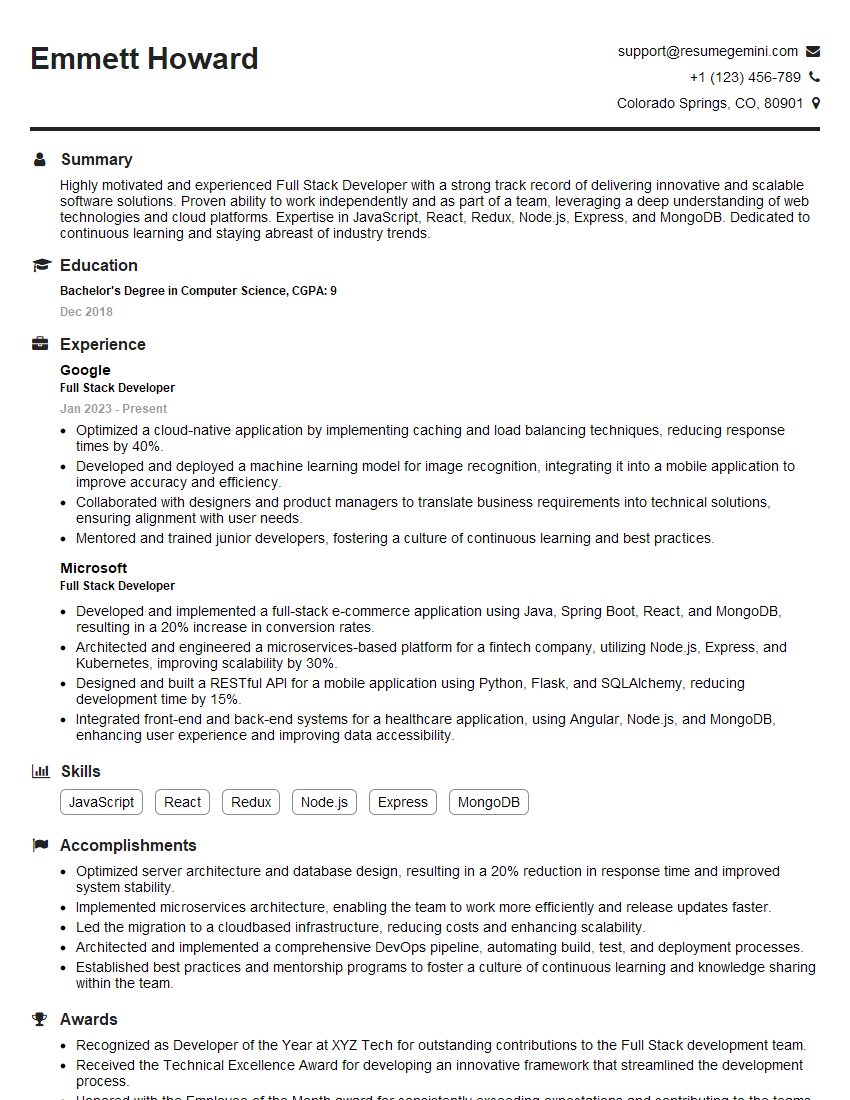
Full Stack Developer Resume Sample
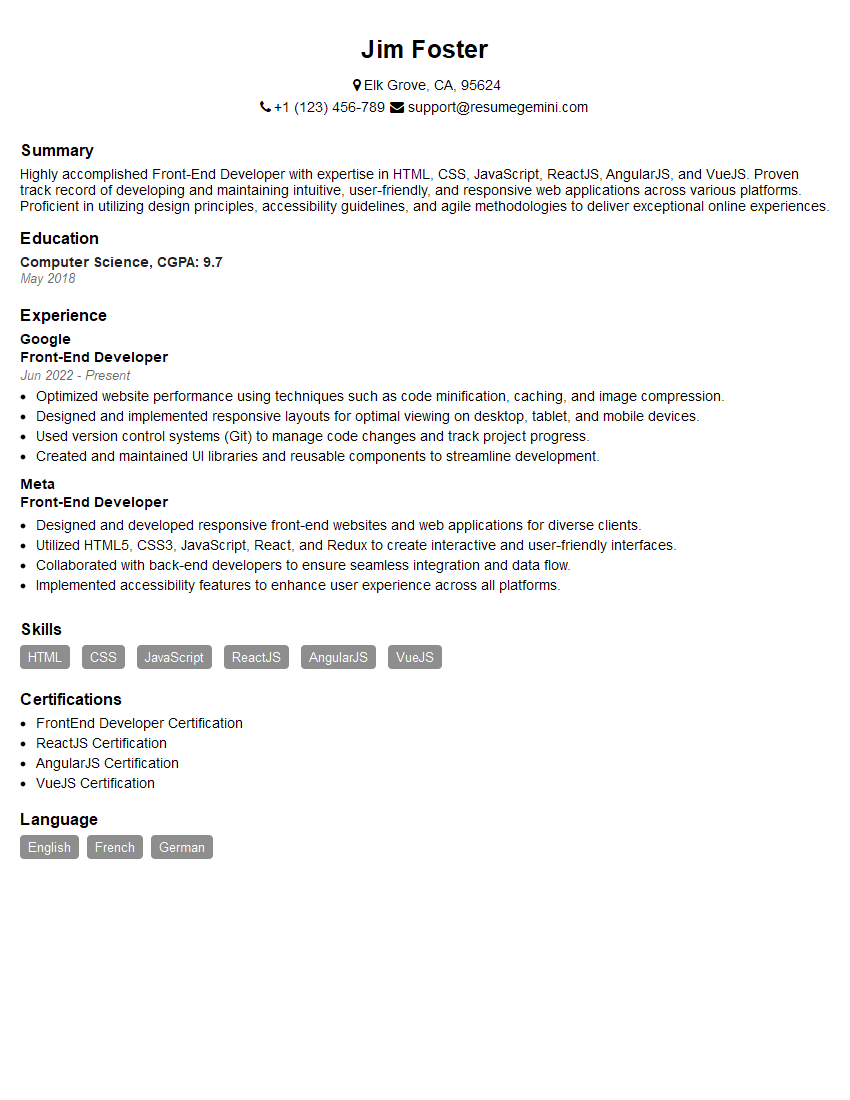
Front-End Developer Resume Sample
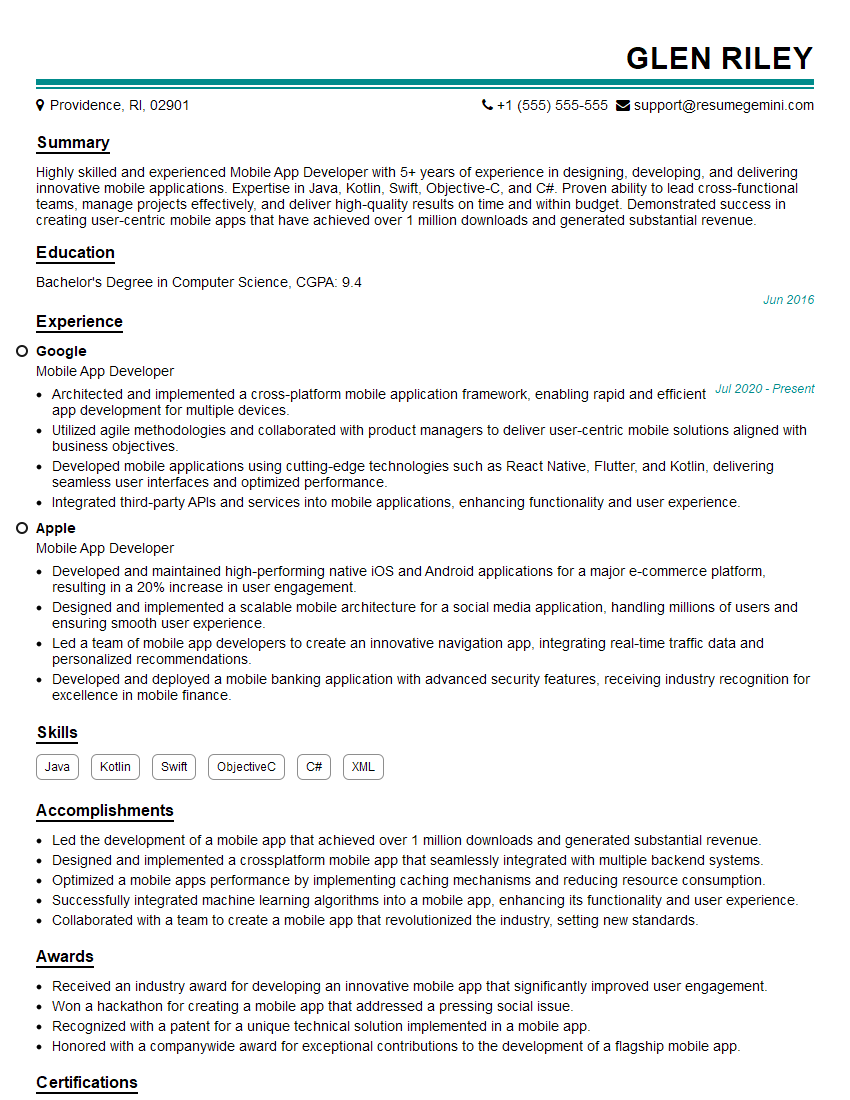
Mobile App Developer Resume Sample
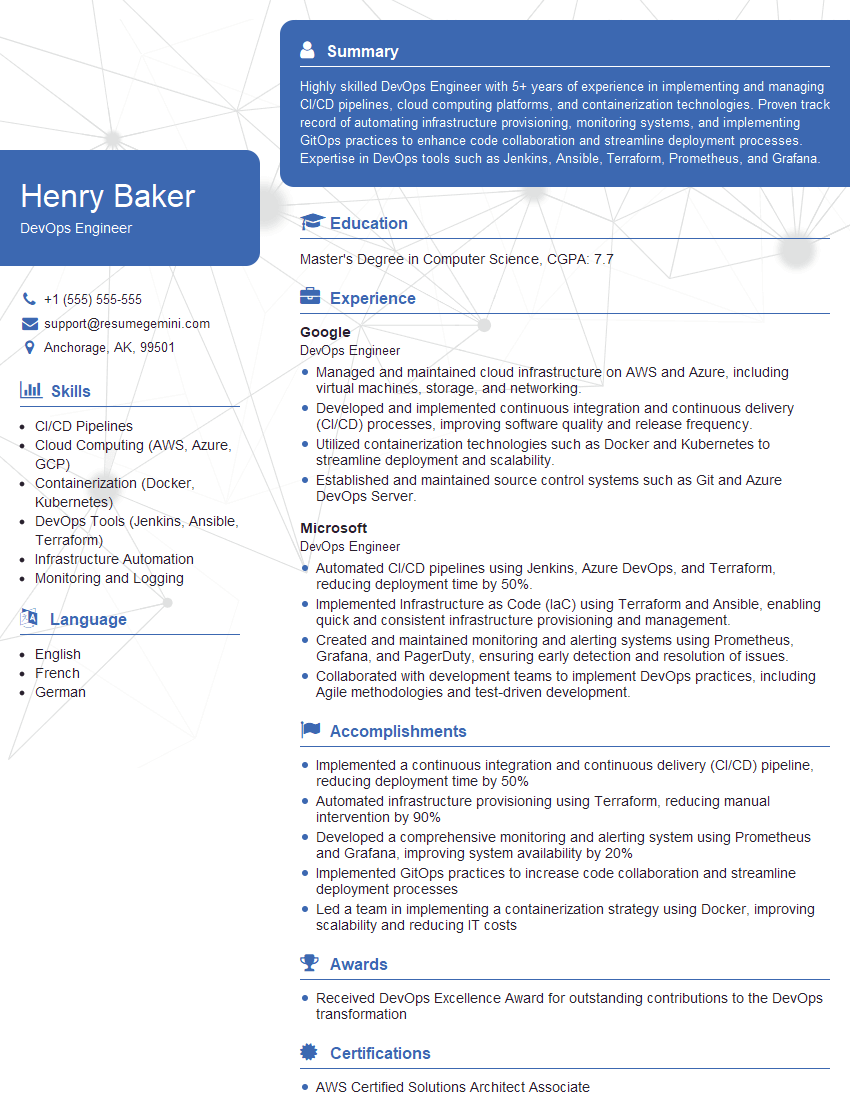
DevOps Engineer Resume Sample
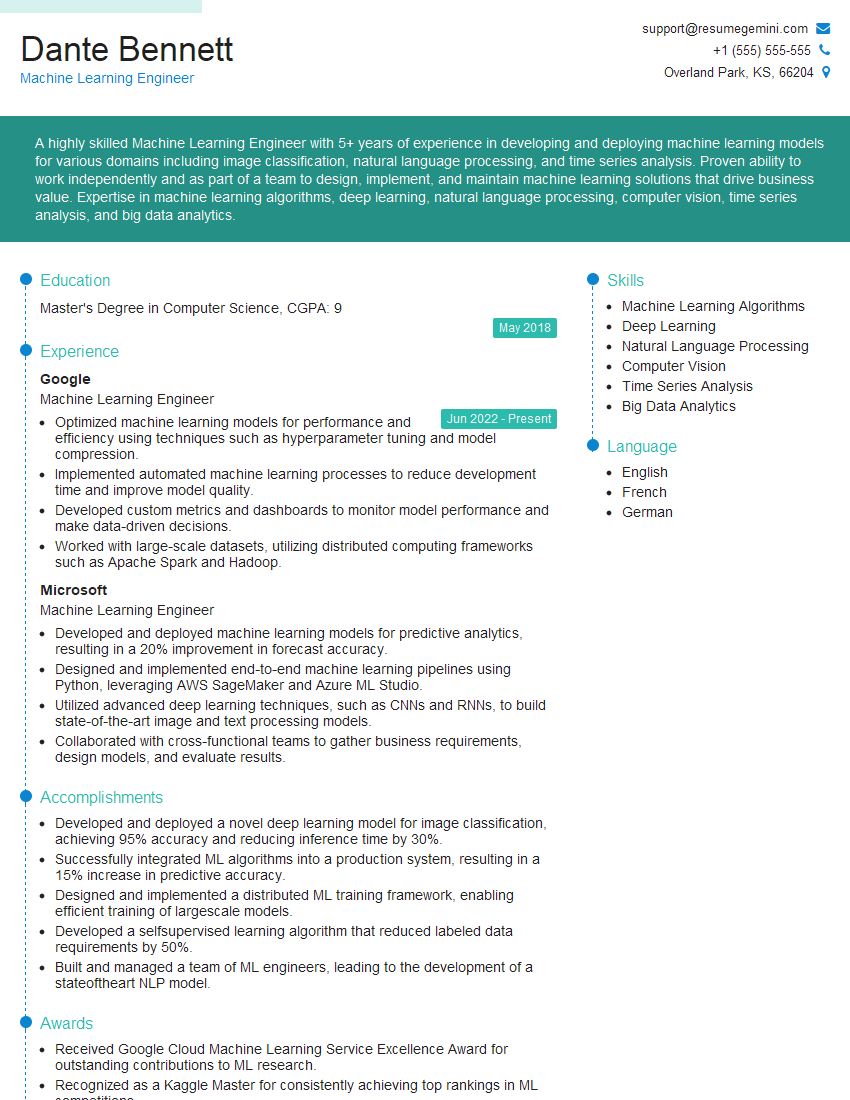
Machine Learning Engineer Resume Sample
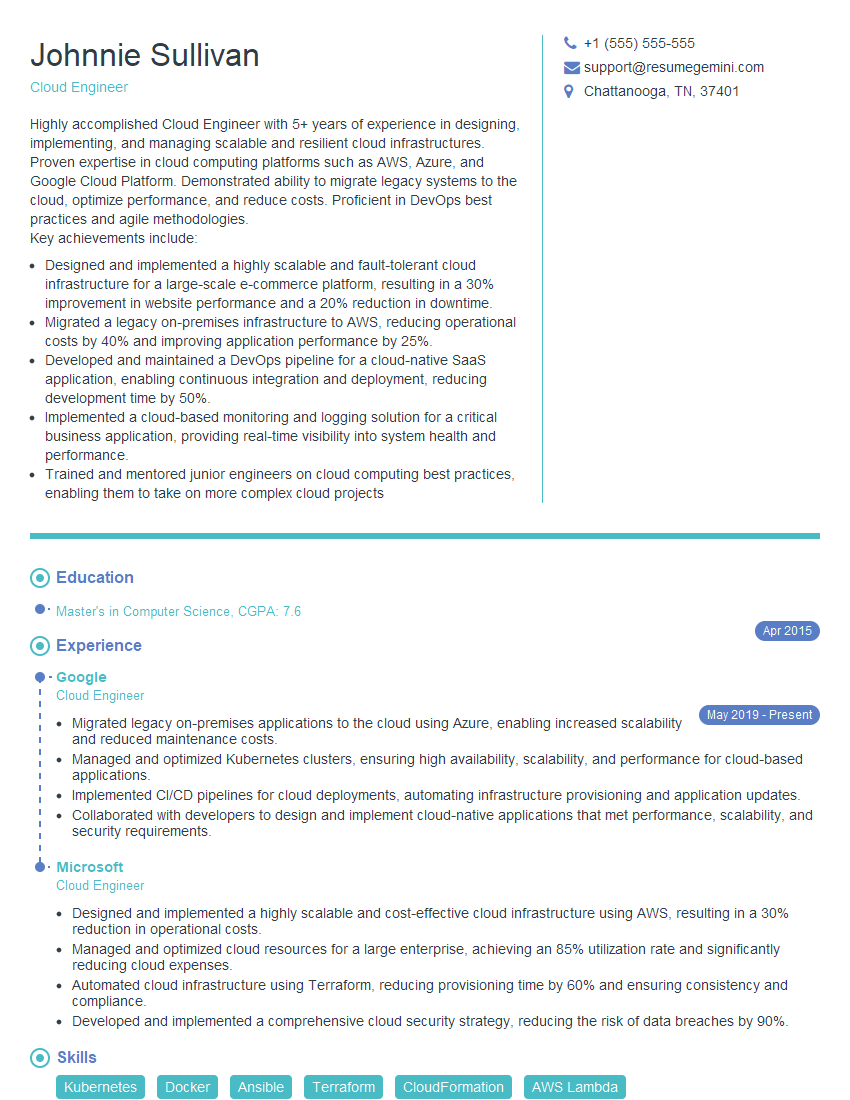
Cloud Engineer Resume Sample
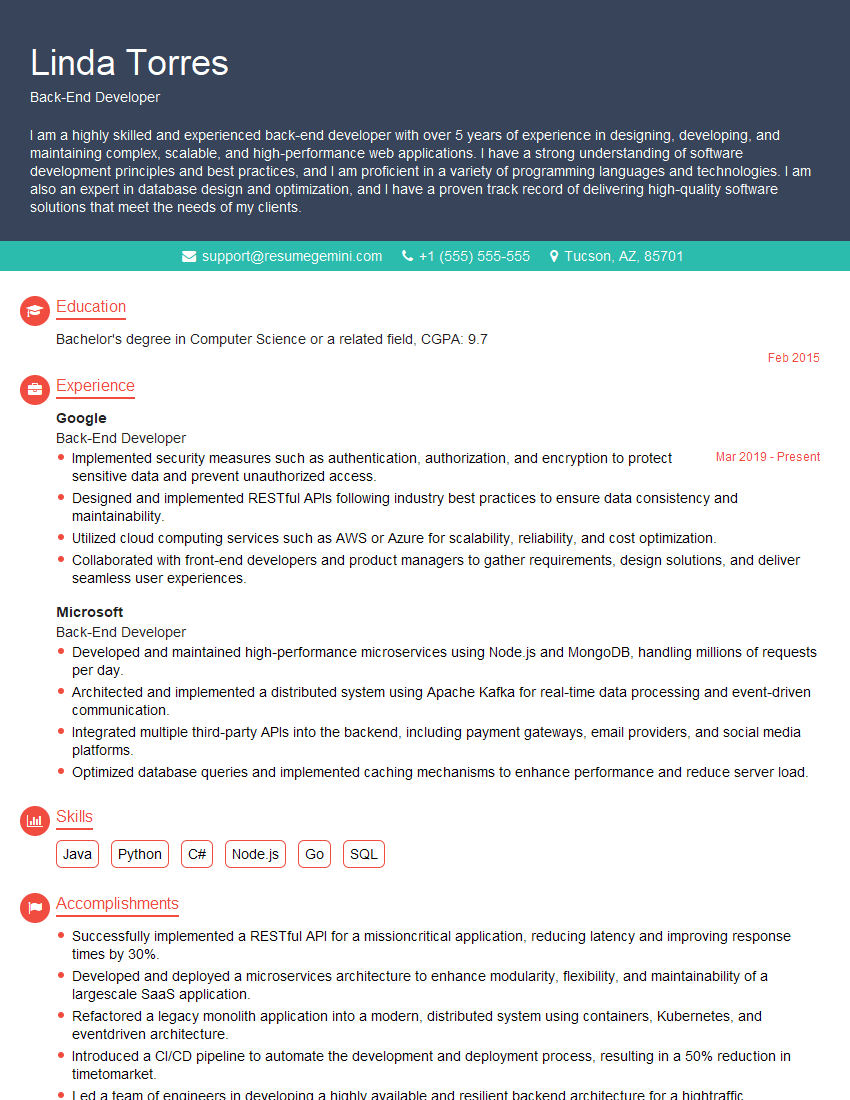
Back-End Developer Resume Sample
- Data Scientist
- Software Engineer
- Enterprise Architect
- Software Architect
- Database Engineer
- Game Developer
- Software Developer
- Application Architect
- Solutions Architect
- Senior Software Engineer
- Web Developer
- System Architect
- Technical Architect
- Full Stack Developer
- Front-End Developer
- Mobile App Developer
- DevOps Engineer
- Machine Learning Engineer
- Cloud Engineer
- Back-End Developer
Explore more articles
Users Rating of Our Blogs
Share Your Experience
We value your feedback! Please rate our content and share your thoughts (optional).
What Readers Say About Our Blog
I Redesigned Spongebob Squarepants and his main characters of my artwork.
https://www.deviantart.com/reimaginesponge/art/Redesigned-Spongebob-characters-1223583608
IT gave me an insight and words to use and be able to think of examples
Hi, I’m Jay, we have a few potential clients that are interested in your services, thought you might be a good fit. I’d love to talk about the details, when do you have time to talk?
Best,
Jay
Founder | CEO