The right preparation can turn an interview into an opportunity to showcase your expertise. This guide to Operating brass pouring equipment interview questions is your ultimate resource, providing key insights and tips to help you ace your responses and stand out as a top candidate.
Questions Asked in Operating brass pouring equipment Interview
Q 1. Describe the different types of brass alloys and their pouring characteristics.
Brass alloys are essentially mixtures of copper and zinc, with the proportions dictating their properties. Different ratios lead to variations in strength, ductility, and melting points, significantly impacting pouring characteristics.
- High-zinc brasses (e.g., cartridge brass): These have lower melting points and are more fluid when molten, making them easier to pour but also prone to oxidation if not handled carefully. They’re often used for applications needing formability.
- Low-zinc brasses (e.g., red brass): These have higher melting points and are less fluid, requiring higher temperatures and potentially slower pouring speeds to prevent defects like porosity. They tend to be stronger and more resistant to corrosion.
- Leaded brasses: The addition of lead improves machinability, but it also lowers the melting point and fluidity slightly. Special care must be taken as lead fumes are hazardous.
- Other alloying additions: Elements like tin, manganese, or silicon can be added to modify specific properties. These additions can alter fluidity and affect the cooling rate, requiring adjusted pouring techniques.
Imagine pouring honey versus water; high-zinc brass is closer to water in its fluidity, while low-zinc brass is more akin to honey. Understanding this analogy helps visualize the different pouring behaviors and the need for customized approaches.
Q 2. Explain the safety procedures for operating brass pouring equipment.
Safety is paramount when working with molten brass. Here’s a breakdown of crucial procedures:
- Personal Protective Equipment (PPE): This includes heat-resistant gloves, aprons, safety glasses with side shields, and closed-toe shoes. A respirator is crucial to avoid inhaling harmful fumes.
- Proper Ventilation: Pouring should ideally be conducted under a well-ventilated hood or in an area with strong exhaust systems to remove fumes and reduce the risk of respiratory problems.
- Emergency Preparedness: Have a readily accessible fire extinguisher (suitable for metal fires) and a spill containment plan in place. Know the location of safety showers and eyewash stations.
- Training and Competency: Only trained and authorized personnel should operate brass pouring equipment. Proper training on equipment operation and safety procedures is essential.
- Safe Work Practices: Avoid rushing, maintain a clean workspace, and never leave molten metal unattended. Use proper lifting techniques for heavy crucibles.
A simple mistake can have severe consequences. Following these procedures is not just recommended—it’s crucial for preventing accidents and ensuring a safe working environment.
Q 3. What are the potential hazards associated with molten brass?
Molten brass presents several significant hazards:
- Extreme Temperatures: Molten brass is incredibly hot and can cause severe burns upon contact. Even indirect exposure to radiant heat can be dangerous.
- Fume Inhalation: Inhaling brass fumes, particularly those containing zinc and lead, can lead to metal fume fever (a flu-like illness) or, in severe cases, long-term respiratory problems.
- Splashes and Spills: Splashes of molten brass can cause significant burns and damage to equipment.
- Fire Hazard: Molten brass can ignite flammable materials. It’s crucial to keep flammable materials away from the pouring area.
- Eye Injury: Molten brass splashing in the eyes can cause irreversible damage.
Think of it like handling lava – utmost care and respect are necessary. Understanding these hazards helps in implementing appropriate safety measures.
Q 4. How do you prevent spills and splashes during pouring?
Preventing spills and splashes requires meticulous attention to detail and proper technique:
- Crucible Condition: Ensure the crucible is clean, free of cracks, and securely mounted on the pouring system.
- Smooth Pouring: Pour steadily and avoid jerky movements. A controlled pouring rate reduces splashing.
- Proper Mold Preparation: Ensure the mold is properly preheated to avoid thermal shock and subsequent splashing caused by rapid cooling.
- Mold Design: Use molds with properly designed sprues and runners to direct the flow of molten brass smoothly into the casting cavity.
- Sufficient Crucible Capacity: Avoid overfilling the crucible, which increases the risk of spills during pouring.
- Clean Pouring Spout: A clogged spout can lead to uneven flow and splashing.
A smooth, controlled pour is the key. Practicing the right technique and maintaining equipment in excellent condition are crucial for preventing accidents.
Q 5. Describe the process of preparing a crucible for pouring.
Preparing a crucible for pouring involves several crucial steps to ensure a safe and efficient pour:
- Crucible Inspection: Check for cracks, damage, or any signs of weakness. Discard any damaged crucibles.
- Preheating: Preheat the crucible gradually to avoid thermal shock, usually done in a furnace or over a controlled heat source.
- Cleaning: The crucible’s interior should be clean and free of any residue from previous pours. This ensures consistent heat transfer and prevents contamination of the brass.
- Fluxing (Optional): Applying a flux can help prevent oxidation and improve the flow of the molten brass. The choice of flux depends on the alloy composition.
- Secure Mounting: Once preheated, carefully mount the crucible in the pouring system, ensuring it’s stable and secure.
Think of it like preparing a cooking pot; cleaning, preheating, and selecting the right tools are essential for achieving the desired results.
Q 6. What are the signs of a malfunctioning pouring system?
Several signs indicate a malfunctioning pouring system:
- Uneven Pouring: Irregular flow, sputtering, or hesitant pouring indicates a potential blockage in the spout or irregularities in the crucible.
- Leaks: Any leaks in the system, either from the crucible or the pouring spout, are serious safety hazards and must be addressed immediately.
- Overheating or Underheating: The pouring system should maintain a consistent temperature; significant deviations can compromise the quality of the cast.
- Excessive Noise or Vibration: Unusual noises or vibrations during operation can indicate mechanical issues needing attention.
- Difficulty in Tilting or Moving the Crucible: Issues with the tilting mechanism or the overall structure could pose safety risks.
Regular inspection and preventative maintenance are crucial to identify potential issues before they escalate into major problems.
Q 7. How do you troubleshoot a clogged pouring spout?
Troubleshooting a clogged pouring spout requires a careful and methodical approach:
- Safety First: Ensure the crucible and molten brass have cooled sufficiently before attempting any repairs. Use appropriate PPE.
- Visual Inspection: Examine the spout carefully for obstructions. Remove any visible debris or solidified brass.
- Cleaning Tools: Use a suitable cleaning tool, such as a long, thin rod or a specialized cleaning wire, to dislodge any remaining obstructions.
- Heat Application (Careful): If necessary, carefully apply heat to the clogged area to melt the blockage, but proceed with extreme caution to avoid burns.
- Replacement: If the spout is severely damaged or consistently clogs, consider replacing it with a new one.
Patience and a methodical approach are essential when tackling a clogged spout. Safety should always be the top priority.
Q 8. What safety equipment is required when operating pouring equipment?
Safety is paramount when handling molten brass. The required equipment includes:
- Heat-resistant gloves and sleeves: These protect your hands and arms from burns. Think of them as a crucial shield between you and extremely high temperatures.
- Safety glasses or a face shield: Molten brass splatter can cause serious eye injuries. Protecting your eyes is non-negotiable.
- Closed-toe shoes: Protecting your feet from spills or dropped objects is essential. Steel-toe boots offer superior protection.
- Long-sleeved shirt and long pants: These provide an extra layer of protection against splashes. Loose clothing should be avoided.
- Apron: An apron provides additional protection for your body from splashes and spills of molten metal.
- Respirator: Depending on the environment and the alloys involved, a respirator might be necessary to filter out metal fumes.
- Fire extinguisher: A readily available fire extinguisher, preferably rated for Class A and B fires, is a must-have for emergency situations.
Regular safety training and adherence to established safety protocols are also critical aspects of safe operation.
Q 9. Explain the importance of maintaining consistent pouring temperature.
Maintaining a consistent pouring temperature is crucial for several reasons:
- Ensuring proper fluidity: If the brass is too cold, it will be thick and difficult to pour, leading to incomplete filling of the mold and potentially resulting in defects. If it’s too hot, it can cause excessive oxidation and lead to weak castings.
- Preventing gas porosity: Pouring at the correct temperature minimizes the absorption of gases into the molten metal, which can create internal voids in the final casting.
- Minimizing shrinkage defects: Consistent temperature helps to control shrinkage during cooling, reducing the likelihood of cracks or internal stresses in the casting.
- Achieving consistent mechanical properties: The final mechanical properties of the casting, such as tensile strength and hardness, are strongly influenced by the pouring temperature. Inconsistent temperatures lead to inconsistent material properties.
Think of it like baking a cake – you need the precise oven temperature to get the desired consistency and outcome. Similarly, the ideal pouring temperature for brass is essential for achieving the desired quality in the final casting.
Q 10. How do you monitor the temperature of molten brass?
Molten brass temperature is typically monitored using a thermocouple-based pyrometer. These devices consist of a thermocouple probe (a sensor that measures temperature) and a display unit.
The thermocouple is inserted into the molten brass, and the temperature reading is displayed on the unit. Some advanced systems can even integrate with automated pouring systems for precise temperature control.
It’s crucial to ensure the thermocouple is properly calibrated to guarantee accuracy. Regular calibration is essential to maintain accurate readings over time and prevent costly mistakes from incorrect temperature measurements.
For smaller-scale operations, non-contact infrared thermometers can be used to measure the surface temperature of the molten metal, although this method is less accurate than thermocouple readings.
Q 11. Describe the different types of pouring ladles and their applications.
Pouring ladles come in various sizes and designs, each suited for specific applications:
- Hand ladles: These are smaller ladles, typically used for smaller castings or for intricate designs where precise pouring is required. They’re manually operated and ideal for detailed work.
- Tilting ladles: These are larger ladles mounted on a tilting mechanism, allowing for more controlled pouring and a smoother, more consistent flow rate. They are used for medium to large-scale production.
- Bottom-pour ladles: These ladles have a stopper at the bottom that controls the flow of molten metal. They provide precise control over pouring rate and prevent splashing. These are often favored for larger castings where a consistent flow is critical.
- Automatic pouring systems: In large-scale industrial settings, automated systems are frequently employed. These precisely control pouring temperature, flow rate and volume, ensuring consistency and efficiency.
The selection of the appropriate ladle depends on factors such as the size and complexity of the castings, the production volume, and the desired level of control over the pouring process. For instance, a small hand ladle would be sufficient for jewelry making, while a tilting or bottom-pour ladle would be necessary for automotive parts manufacturing.
Q 12. How do you ensure the proper flow rate during pouring?
Ensuring proper flow rate during pouring is crucial to prevent defects like cold shuts, shrinkage cavities, and gas porosity. This is achieved through a combination of factors:
- Correct pouring temperature: As previously discussed, the proper temperature ensures the ideal viscosity of the molten brass, facilitating a smooth pour.
- Appropriate ladle size and design: Using the right size and type of ladle promotes a consistent flow. A ladle that is too small will restrict the flow, while a ladle that is too large can lead to uncontrolled pouring.
- Controlled pouring speed: The pouring speed should be carefully controlled to allow the molten brass to fill the mold completely and without excessive turbulence. Too fast a pour can lead to air entrapment, while too slow a pour can lead to premature cooling and incomplete filling.
- Proper mold design: The design of the mold itself impacts flow. Proper gating and runners facilitate smooth flow into the mold cavity. Poor gating can lead to turbulence and incomplete filling.
- Using a sprue and runner system: This helps control the flow of molten metal into the mold cavity and prevents turbulence.
Think of it like watering a garden: a gentle, even flow ensures all parts of the garden get adequately watered. A similar approach is needed when pouring brass to ensure a quality casting.
Q 13. What are the common defects found in brass castings?
Several common defects can occur during brass casting. Some of the most prevalent include:
- Cold shuts: These are internal cracks caused by incomplete fusion of two streams of molten brass. They often appear as a seam or line on the casting surface.
- Shrinkage cavities: These are voids that form as the molten brass cools and contracts. They are caused by insufficient metal to fill the mold cavity during solidification.
- Gas porosity: This is caused by gases becoming trapped within the molten metal, creating small holes or pores in the casting.
- Misruns: These occur when the molten brass doesn’t fully fill the mold cavity. This can result in incomplete or thin sections.
- Mold shifts: This is when the mold moves during the pouring process, resulting in a distorted casting.
- Surface defects: These may include sand inclusions (sand grains becoming embedded in the casting), scabs (surface imperfections resulting from mold defects), or oxidation (surface discoloration due to excessive exposure to air).
Q 14. How do you identify and correct these defects?
Identifying and correcting casting defects requires a systematic approach:
- Visual inspection: A thorough visual inspection of the casting is the first step. This helps identify the type and location of the defects. Pay close attention to surface finish, shape and dimensions.
- Sectioning and metallographic examination: For internal defects, sectioning the casting and conducting microscopic analysis can reveal the nature and extent of the problem.
- Addressing the root cause: Once the defect is identified, addressing the underlying cause is essential. For example, cold shuts might be resolved by optimizing the pouring temperature and flow rate, while shrinkage cavities could be addressed by modifying the mold design or adding risers to supply additional molten metal.
- Adjusting pouring parameters: Refining the pouring temperature, flow rate, and pouring speed can mitigate many defects.
- Improving mold preparation and design: Ensuring proper mold venting to escape gases, using appropriate mold materials, and optimizing gating and runner systems can significantly reduce defects.
- Implementing quality control measures: Regularly checking the quality of the molten brass, mold conditions, and pouring process parameters is crucial to prevent defect recurrence.
Addressing defects is not simply about fixing the immediate problem; it’s about understanding the root cause and implementing corrective actions to prevent recurrence. It requires a combination of technical knowledge, problem-solving skills, and attention to detail.
Q 15. Describe the process of cleaning and maintaining pouring equipment.
Cleaning and maintaining brass pouring equipment is crucial for safety, efficiency, and the quality of the castings. It’s like regularly servicing your car – preventative maintenance avoids costly repairs and ensures optimal performance.
The process typically involves several steps:
- Crucible Cleaning: After each pour, while the crucible is still warm (but not dangerously hot!), remove any residual brass with a suitable tool, avoiding forceful scraping that could damage the crucible. Then, thoroughly clean it with a wire brush to remove any adhering slag or oxides. For stubborn residues, a specialized crucible cleaning agent might be necessary. Finally, inspect the crucible for cracks or damage.
- Furnace Cleaning: The furnace interior needs regular cleaning to remove accumulated slag and metal splatter. This prevents build-up that can affect the melting process and potentially damage the furnace lining. The specific cleaning method depends on the furnace type (e.g., electric induction furnaces may require different procedures than fuel-fired furnaces).
- Pouring System Cleaning: The ladles, spouts, and any other components of the pouring system should be cleaned immediately after use to prevent solidified brass from blocking flow. This often involves using a wire brush and appropriate cleaning solutions.
- General Area Cleanup: The surrounding work area must also be cleaned to remove any spilled brass, slag, or other debris. This is essential for both safety and maintaining a clean and organized workspace.
Regular maintenance, including scheduled inspections of all components for wear and tear, is essential to ensure the longevity and safety of your pouring equipment.
Career Expert Tips:
- Ace those interviews! Prepare effectively by reviewing the Top 50 Most Common Interview Questions on ResumeGemini.
- Navigate your job search with confidence! Explore a wide range of Career Tips on ResumeGemini. Learn about common challenges and recommendations to overcome them.
- Craft the perfect resume! Master the Art of Resume Writing with ResumeGemini’s guide. Showcase your unique qualifications and achievements effectively.
- Don’t miss out on holiday savings! Build your dream resume with ResumeGemini’s ATS optimized templates.
Q 16. What is the role of flux in brass pouring?
Flux plays a vital role in brass pouring by protecting the molten metal from oxidation and contamination. Think of it as a protective shield. Oxidation can weaken the brass and lead to poor-quality castings. Flux helps to create a cleaner, more fluid metal flow, which results in smoother, more consistent pours.
Flux is typically a mixture of chemicals that react with impurities in the molten brass and create a protective layer on the surface, preventing oxygen from reacting with the metal. Different fluxes are used depending on the specific composition of the brass and the type of furnace used. The choice of flux is critical for producing high-quality brass castings. Improper flux can result in porosity, inclusions, and other casting defects.
Q 17. How do you handle a crucible that has developed a crack?
A cracked crucible is a serious safety hazard and must be immediately taken out of service. Never attempt to use a cracked crucible, as it could catastrophically fail during pouring, resulting in molten metal spillage and potential injury.
The procedure is straightforward: immediately remove the cracked crucible from the furnace using appropriate safety equipment (heat-resistant gloves, tongs). The cracked crucible should be properly disposed of according to local environmental regulations. Replace it with a new crucible before resuming operations. A thorough investigation should be conducted to determine the cause of the crack (e.g., thermal shock, impact damage) to prevent similar incidents in the future.
Q 18. Explain the importance of proper ventilation in a foundry.
Proper ventilation in a foundry is absolutely critical for worker safety. Melting brass generates various fumes and gases, including zinc oxide, which can be toxic if inhaled. These fumes can cause respiratory problems, metal fume fever, and other health issues.
Adequate ventilation systems, such as exhaust hoods and strategically placed ventilation fans, must remove these harmful fumes from the work area and maintain a safe environment. Regular maintenance of ventilation systems is vital to ensure their continued effectiveness. The ventilation system should be designed and installed in accordance with all relevant safety regulations and standards.
Q 19. Describe the procedure for emergency shutdown of the pouring system.
Emergency shutdown procedures for a brass pouring system prioritize safety and minimize the risk of accidents. The specifics depend on the type of furnace and pouring equipment in use, but general principles apply. Speed and safety are paramount.
A typical emergency shutdown might involve:
- Immediately turning off the furnace’s power supply (if applicable).
- Closing off any gas or fuel supply to the furnace.
- Activating any emergency shutoff valves on the pouring system to prevent further molten metal flow.
- Evacuating the immediate area and ensuring all personnel are at a safe distance.
- Alerting emergency services if needed.
Regular training and drills are essential to ensure everyone knows the emergency shutdown procedures and can respond efficiently in the event of an emergency.
Q 20. How do you ensure the safety of yourself and others during pouring operations?
Ensuring the safety of yourself and others during pouring operations requires a multi-layered approach. It’s not just about following procedures; it’s about developing a safety-first mindset.
Key safety measures include:
- Wearing appropriate Personal Protective Equipment (PPE): This includes heat-resistant gloves, safety glasses or a face shield, long sleeves, closed-toe shoes, and respiratory protection.
- Following established safety procedures and protocols: These are developed to minimize risks and should always be followed meticulously.
- Maintaining a clean and organized workspace: This reduces the risk of tripping hazards and accidental spills.
- Using proper lifting techniques: Molten brass is extremely heavy and hot, so using proper lifting techniques and mechanical aids (like cranes or hoists) is critical.
- Regularly inspecting equipment for defects: This helps to identify and address potential hazards before they cause accidents.
- Regular safety training: Ongoing training reinforces safe practices and ensures everyone is aware of the risks involved.
Remember, safety is a shared responsibility. Everyone in the foundry needs to be committed to safe work practices.
Q 21. What are the different types of furnaces used for melting brass?
Several types of furnaces are used for melting brass, each with its own advantages and disadvantages. The choice depends on factors like production volume, metal quality requirements, and budget.
Common types include:
- Crucible Furnaces: These are relatively simple and inexpensive, often fuel-fired (gas or oil) but can also be electric resistance heated. They’re suitable for smaller foundries or for specific tasks.
- Induction Furnaces: These use electromagnetic induction to melt the brass, offering precise temperature control and rapid melting times. They are commonly used in larger-scale operations due to their efficiency and speed.
- Reverberatory Furnaces: These furnaces melt the brass indirectly, using radiant heat from a separate combustion chamber. They are less efficient than induction furnaces but can handle larger batches.
The selection of the right furnace is a crucial decision impacting the overall efficiency and quality of the brass casting process. Factors such as the desired production rate, the quality of the final product, and the operational costs should all be considered.
Q 22. What are the advantages and disadvantages of each type of furnace?
Choosing the right furnace for brass pouring depends heavily on the scale of operation and the desired level of control over the melting process. Let’s compare two common types: crucible furnaces and induction furnaces.
- Crucible Furnaces: These are relatively simple and inexpensive. They’re great for smaller-scale operations and are often fueled by gas or electricity.
- Advantages: Simple operation, low initial cost, relatively easy maintenance.
- Disadvantages: Lower temperature control precision, slower heating rates, potential for crucible failure, limited capacity.
- Induction Furnaces: These utilize electromagnetic induction to heat the metal. They’re favored for larger-scale operations and offer superior temperature control.
- Advantages: Precise temperature control, faster melting rates, less oxidation of the brass, higher efficiency.
- Disadvantages: Higher initial cost, more complex operation and maintenance, potential for electrical hazards.
For example, in a small jewelry-making workshop, a gas-fired crucible furnace might suffice. However, a large-scale brass foundry producing hundreds of castings daily would benefit significantly from the speed and control of an induction furnace. The choice ultimately involves balancing cost, production volume, and required precision.
Q 23. How do you determine the appropriate pouring temperature for a specific brass alloy?
Determining the correct pouring temperature is crucial for obtaining sound, defect-free brass castings. It’s not a single number but depends on several factors: the specific alloy composition, the casting method, and the desired final properties of the casting.
Typically, we consult alloy-specific data sheets provided by the brass supplier. These sheets specify a temperature range for pouring. However, experience plays a crucial role. I’ve learned over the years to visually inspect the molten brass. The surface should be bright and free from significant oxides. Also, I utilize a thermocouple to measure the temperature directly within the melt. This verifies the readings and aids in adjusting the temperature as needed. For instance, a slightly higher temperature might be used for complex castings to ensure complete filling of thin sections, while a lower temperature might be preferred for larger castings to minimize shrinkage porosity.
Beyond the temperature itself, the rate of cooling is equally important. Faster cooling can lead to increased hardness and potentially internal stresses. Slow, controlled cooling is often preferred for larger, intricate castings.
Q 24. Describe your experience with different types of casting processes.
My experience encompasses various casting processes, each with its strengths and limitations. These include sand casting, investment casting (lost-wax), and die casting.
- Sand Casting: A traditional method where molten brass is poured into a sand mold. It’s versatile and cost-effective for simpler shapes but results in lower surface finish quality. I’ve used it extensively for larger castings where precision isn’t paramount.
- Investment Casting (Lost-Wax): This provides excellent detail and surface finish. Molten brass is poured into a ceramic mold created from a wax pattern. I’ve employed this method for intricate designs and smaller, high-precision castings. It’s more expensive than sand casting.
- Die Casting: A high-speed process where molten brass is injected into a metal mold. It’s ideal for high-volume production of complex, consistently sized castings, but requires significant upfront investment in specialized equipment.
I’ve successfully managed projects using all three methods, adapting my pouring techniques and temperature control strategies to meet the requirements of each process.
Q 25. How do you ensure the quality of the brass castings?
Ensuring high-quality brass castings involves a multi-pronged approach starting from raw material selection and extending through the entire process.
- Raw Material Quality: Selecting brass ingots from reputable suppliers with consistent composition is paramount. Any impurities directly impact the final casting quality.
- Melting and Pouring Techniques: Proper temperature control, degassing (to remove trapped gases), and careful pouring techniques minimize defects like porosity and shrinkage.
- Mold Preparation: Thoroughly preparing the molds, whether sand, ceramic, or metal, is crucial. This ensures accurate reproduction of the design and prevents casting defects.
- Post-Casting Inspection: Visual inspection, dimensional checks, and potentially destructive testing (like tensile strength testing) are used to ensure the castings meet specifications.
I’ve implemented a rigorous quality control system that includes regular audits of the process, detailed record-keeping, and proactive corrective actions to address any deviations from standards. For instance, we regularly analyze samples of molten brass for trace impurities to maintain a high standard of consistency.
Q 26. What are the environmental considerations for brass pouring?
Brass pouring has environmental implications that need careful consideration. The primary concerns revolve around:
- Air Emissions: The melting process releases fumes containing zinc oxide and other compounds. These require effective ventilation and potentially filtration systems to minimize environmental impact and protect workers.
- Waste Management: Spent molding sand, refractory materials, and other process waste need proper disposal or recycling. We follow strict protocols to minimize landfill waste and ensure environmentally sound disposal methods.
- Water Usage: Cooling systems can consume significant amounts of water. Implementing water-saving technologies and recycling systems helps mitigate this impact.
We maintain strict adherence to local environmental regulations and continuously explore methods to minimize our ecological footprint. This includes using environmentally friendly coolants and working towards a closed-loop system for some waste streams.
Q 27. Describe your experience with preventative maintenance of pouring equipment.
Preventative maintenance is key to ensuring safe and efficient operation of pouring equipment. My approach involves a combination of scheduled maintenance and proactive monitoring.
- Scheduled Maintenance: This includes regular inspections of furnaces, crucibles, pouring ladles, and other equipment. We follow a detailed maintenance schedule specifying tasks like cleaning, lubrication, and component replacement at defined intervals.
- Proactive Monitoring: We constantly monitor the operational parameters of the equipment, looking for any signs of wear, tear, or malfunction. For example, we continuously monitor the temperature sensors in the furnace to prevent overheating and potential damage.
- Record Keeping: Maintaining meticulous records of all maintenance activities and repairs is crucial. This provides a valuable history that helps anticipate future needs and optimize our maintenance strategy.
A well-maintained furnace, for example, results in smoother operation, longer lifespan, and significantly reduces the risk of costly breakdowns during production runs. This preventative approach saves time and money in the long run.
Q 28. Explain your understanding of relevant safety regulations and standards.
Safety is paramount in brass pouring. I am thoroughly familiar with relevant safety regulations and standards, including OSHA (Occupational Safety and Health Administration) guidelines for foundry operations. This includes understanding and implementing procedures for:
- Personal Protective Equipment (PPE): Ensuring all personnel involved in the process wear appropriate PPE, including safety glasses, gloves, and protective clothing.
- Hot Metal Handling: Following strict procedures for handling molten brass to prevent burns and spills.
- Emergency Procedures: Having well-defined emergency protocols in place for dealing with accidents, fires, or spills.
- Electrical Safety: Following strict procedures for operating and maintaining electrical equipment, especially induction furnaces.
- Ventilation and Fume Control: Ensuring adequate ventilation to minimize exposure to harmful fumes and gases.
I’ve actively participated in safety training programs and regularly review safety protocols to maintain a safe work environment. My commitment to safety extends beyond compliance with regulations to fostering a safety-conscious culture within the team.
Key Topics to Learn for Operating Brass Pouring Equipment Interview
- Safety Procedures and Regulations: Understanding and adhering to all safety protocols, including PPE usage, emergency procedures, and hazard identification related to molten metal handling.
- Equipment Operation and Maintenance: Familiarization with the specific brass pouring equipment used (e.g., crucible furnaces, ladles, pouring systems), including their operational procedures, routine maintenance checks, and troubleshooting common malfunctions.
- Metallurgical Principles: Basic understanding of brass alloys, melting points, and the impact of temperature and pouring techniques on the final product’s quality. This includes recognizing signs of defects like porosity or slag inclusions.
- Pouring Techniques and Quality Control: Mastering different pouring methods to achieve consistent castings with minimal defects. This includes understanding the role of pouring speed, temperature control, and mold preparation in the final product’s quality.
- Material Handling and Storage: Safe and efficient handling of raw materials (brass ingots, fluxes), and proper storage to prevent contamination or degradation.
- Record Keeping and Documentation: Accurate record-keeping of production data, including melt composition, pouring parameters, and quality control results. Understanding the importance of documentation for traceability and process improvement.
- Troubleshooting and Problem Solving: Identifying and resolving common issues encountered during the brass pouring process, such as equipment malfunctions, metal defects, or safety hazards. Demonstrating analytical and problem-solving skills.
Next Steps
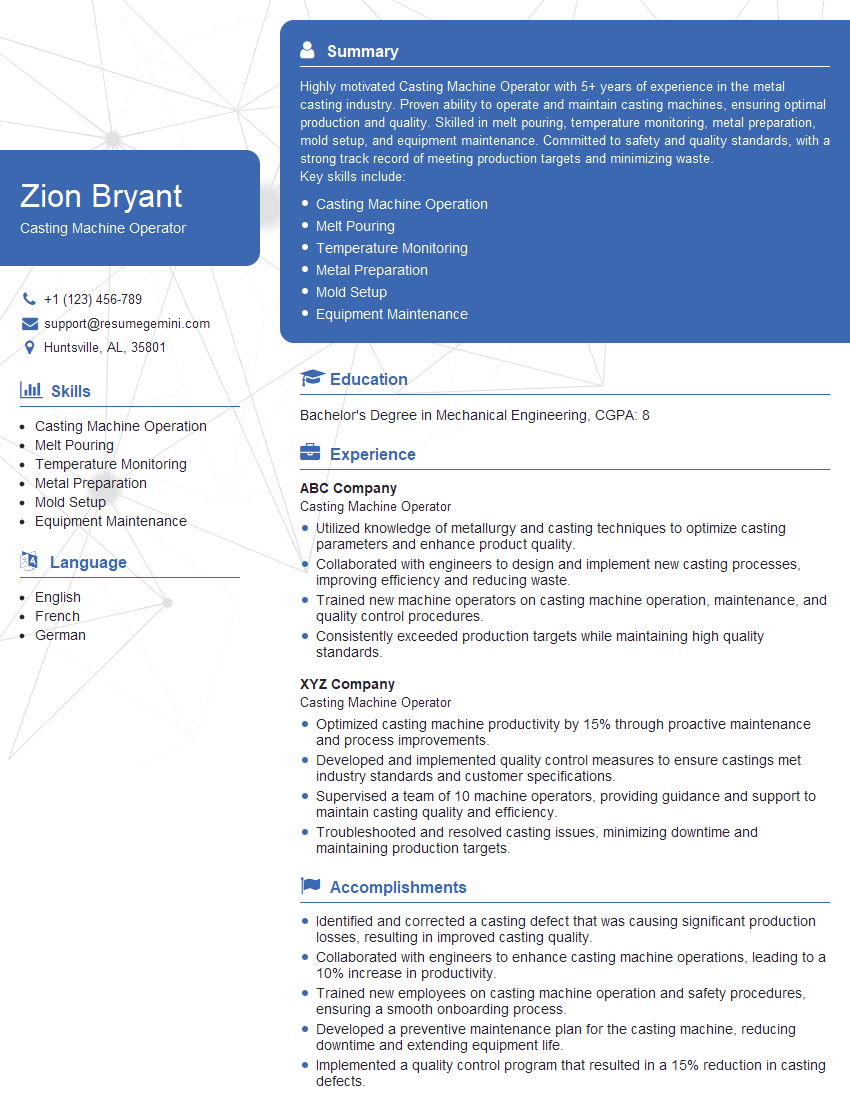
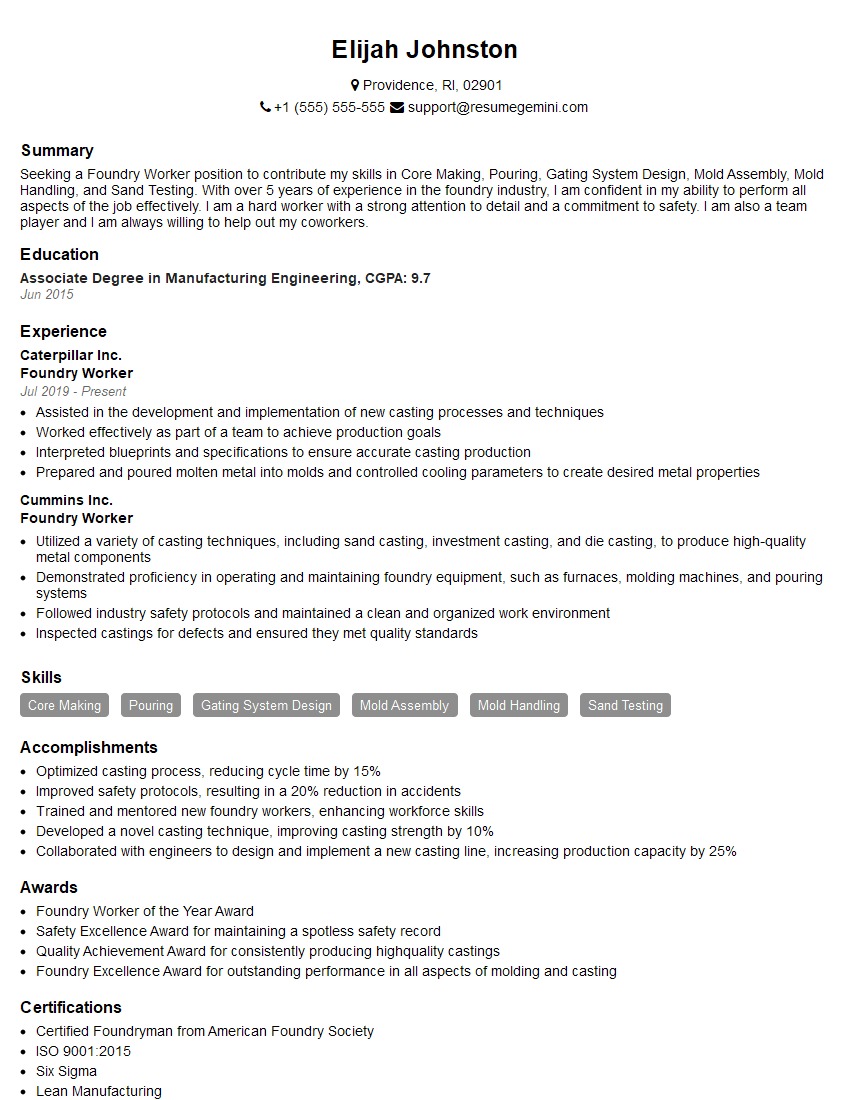
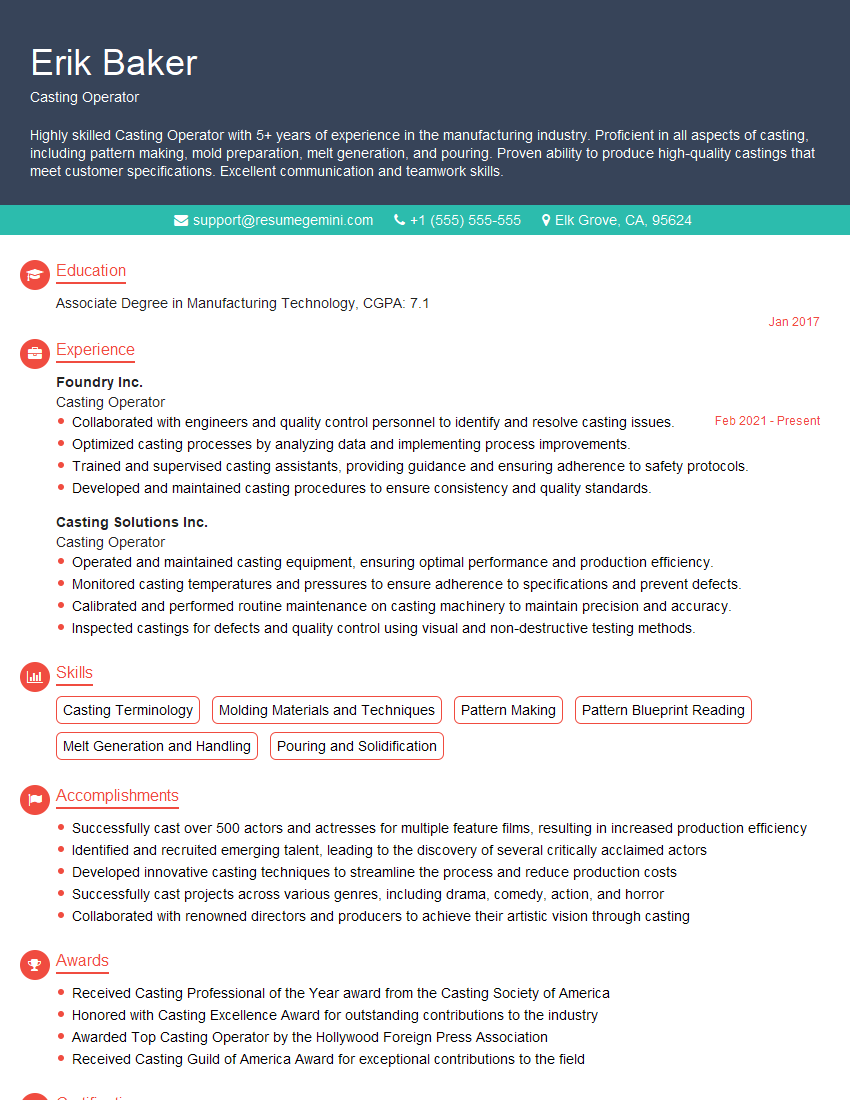
Mastering the operation of brass pouring equipment opens doors to rewarding careers in manufacturing and metalworking, offering opportunities for advancement and specialization. To significantly improve your job prospects, crafting a strong, ATS-friendly resume is crucial. ResumeGemini is a trusted resource that can help you build a professional and impactful resume that highlights your skills and experience effectively. Examples of resumes tailored to Operating Brass Pouring Equipment are available on ResumeGemini, designed to help you present your qualifications in the best possible light.

Explore more articles
Users Rating of Our Blogs
Share Your Experience
We value your feedback! Please rate our content and share your thoughts (optional).
What Readers Say About Our Blog
I Redesigned Spongebob Squarepants and his main characters of my artwork.
https://www.deviantart.com/reimaginesponge/art/Redesigned-Spongebob-characters-1223583608
IT gave me an insight and words to use and be able to think of examples
Hi, I’m Jay, we have a few potential clients that are interested in your services, thought you might be a good fit. I’d love to talk about the details, when do you have time to talk?
Best,
Jay
Founder | CEO