Interviews are opportunities to demonstrate your expertise, and this guide is here to help you shine. Explore the essential OSHA 10Hour Training interview questions that employers frequently ask, paired with strategies for crafting responses that set you apart from the competition.
Questions Asked in OSHA 10Hour Training Interview
Q 1. Explain the importance of OSHA’s role in workplace safety.
OSHA, the Occupational Safety and Health Administration, plays a crucial role in protecting workers by setting and enforcing safety and health standards in the workplace. Think of OSHA as the safety referee for American workplaces. They establish the rules of the game to minimize workplace hazards and prevent injuries, illnesses, and fatalities. Their role is vital because it ensures employers provide a safe and healthful working environment, leading to increased productivity, reduced healthcare costs, and a more positive work culture. Without OSHA’s oversight, many workplaces might operate with inadequate safety measures, putting employees at significant risk.
Q 2. Describe the key elements of an OSHA-compliant safety program.
An OSHA-compliant safety program is multifaceted and requires a proactive approach. Key elements include:
- Management Commitment: Leadership must demonstrate a genuine commitment to safety, allocating resources and actively participating in safety initiatives. This isn’t just a poster on the wall; it’s about demonstrating a real change in workplace culture.
- Hazard Identification and Assessment: Regularly identifying and assessing potential hazards through job hazard analyses (JHAs), workplace inspections, and employee input. This is like having a thorough security check before every shift.
- Hazard Prevention and Control: Implementing engineering controls (e.g., machine guarding), administrative controls (e.g., work procedures), and personal protective equipment (PPE) to eliminate or minimize hazards. Think of it as installing security cameras, implementing alarms, and having security guards.
- Training: Providing comprehensive safety training to all employees, tailored to their specific job tasks and hazards. This ensures everyone knows their roles in maintaining a safe environment.
- Recordkeeping and Reporting: Maintaining accurate records of injuries, illnesses, and near misses, and reporting incidents to OSHA as required. This data helps identify trends and implement preventive measures.
- Emergency Response Plan: Establishing and regularly practicing emergency procedures, including evacuation plans and first aid response. This is analogous to fire drills in schools – critical to effective emergency response.
Q 3. What are the major hazard communication standards covered in OSHA 10-Hour?
OSHA’s Hazard Communication Standard (HazCom) is a cornerstone of OSHA 10-Hour training. It focuses on ensuring employees are informed about the hazards of chemicals they handle. Key elements covered include:
- Chemical Labeling: Understanding the standardized labels on chemical containers, including hazard pictograms, signal words, hazard statements, and precautionary statements.
- Safety Data Sheets (SDSs): Knowing how to access, read, and understand SDSs, which provide detailed information about chemical hazards, safe handling practices, and emergency response procedures.
- Employee Training: Receiving training on the hazards of chemicals in the workplace, including proper handling, storage, and disposal procedures.
- Written Hazard Communication Program: Understanding that employers are required to develop and implement a written program outlining their HazCom procedures.
Q 4. How does OSHA define a hazardous material?
OSHA defines a hazardous material as any substance or mixture that poses a physical or health hazard. This includes a broad range of materials, such as flammable liquids, toxic substances, corrosive chemicals, and compressed gases. The specific hazards associated with a material can vary significantly, depending on its chemical composition and properties. Think about it like this: a seemingly innocuous substance like bleach can cause serious burns if not handled correctly. Knowing how to identify and handle these hazards is key to maintaining a safe working environment.
Q 5. Explain the hierarchy of hazard controls.
The hierarchy of hazard controls prioritizes the most effective methods to eliminate or minimize workplace hazards. It’s a step-by-step approach, starting with the most effective and progressing to less effective controls:
- Elimination: Removing the hazard entirely. For example, replacing a hazardous chemical with a safer alternative.
- Substitution: Replacing a hazardous substance or process with a less hazardous one. This might involve switching to a less toxic solvent.
- Engineering Controls: Implementing physical changes to the workplace to reduce hazard exposure. Examples include installing machine guards or using ventilation systems.
- Administrative Controls: Modifying work practices or procedures to reduce exposure to hazards. Examples include job rotation or reducing exposure time.
- Personal Protective Equipment (PPE): Providing employees with PPE to protect them from hazards when other controls aren’t feasible. Examples include safety glasses, gloves, respirators. This is the last line of defense.
Q 6. Describe the proper procedures for lockout/tagout.
Lockout/tagout (LOTO) procedures are crucial for preventing accidental start-up or release of energy during maintenance or repair of equipment. The process involves:
- Preparation: Identifying the energy sources that need to be controlled. This step involves consulting the machine’s instructions and understanding the energy sources (e.g., electrical, hydraulic, pneumatic).
- Lockout/Tagout: De-energizing the equipment, and then applying a lockout device (lock) and a tag to prevent accidental re-energization. Each person working on the equipment should have their own lock.
- Verification: After the equipment is de-energized, testing is done to ensure that all energy sources are completely isolated. For example, making sure that the electrical circuit is actually off.
- Energy Isolation:Ensuring that the energy source is locked out for the duration of the maintenance or repair tasks.
- Tagout: The tag clearly identifies the equipment, the person who performed the lockout, and the reason for the lockout.
- Release: Only the person who applied the lock can remove it after verifying that the equipment is safe.
Q 7. What are the main requirements for personal protective equipment (PPE)?
OSHA’s PPE requirements focus on ensuring that employees wear the appropriate personal protective equipment to minimize exposure to workplace hazards. Key requirements include:
- Hazard Assessment: Identifying the specific hazards employees face in their jobs before selecting appropriate PPE.
- Selection: Choosing PPE that is designed to protect against those specific hazards, and properly fitted for each employee.
- Training: Ensuring employees are properly trained on how to use and maintain their PPE.
- Maintenance: Regularly inspecting and maintaining PPE to ensure it is in good working order.
- Enforcement: Ensuring that employees wear the required PPE at all times when working near hazards.
Q 8. How do you recognize and report workplace hazards?
Recognizing and reporting workplace hazards is crucial for maintaining a safe work environment. It involves actively looking for potential dangers and promptly informing the appropriate personnel. This process starts with observation – actively looking for things that could cause harm. This could range from obvious dangers like exposed wires or faulty equipment to more subtle hazards like poor lighting, inadequate ventilation, or ergonomic issues causing strain.
- Visual Inspection: Regularly walk through your work area, paying attention to potential trip hazards, spills, damaged tools, and unsafe practices.
- Documentation: Take photos or videos of hazards whenever possible. This documentation supports your report and provides context.
- Reporting: Use the designated reporting system, whether it’s a formal incident report, a supervisor, or a safety hotline. Be specific in your description of the hazard, its location, and potential consequences.
- Near Miss Reporting: Don’t just report accidents; report near misses as well. A near miss is an event that could have resulted in an injury or damage but didn’t. Reporting near misses helps identify potential hazards before they cause accidents.
For example, imagine noticing a stack of boxes blocking a fire exit. This is a clear hazard. You’d take a picture, note the location, and immediately report it to your supervisor. Similarly, if you almost tripped over a loose cable, that near miss should be reported so the cable can be secured.
Q 9. What is the importance of incident investigation and reporting?
Incident investigation and reporting are critical for preventing future accidents. They provide valuable insights into the root causes of incidents, allowing for corrective actions and improvements in safety procedures. Thorough investigation helps determine what happened, why it happened, and how to prevent it from happening again. Accurate reporting ensures that the necessary data is collected and analyzed to identify trends and patterns in workplace incidents.
- Root Cause Analysis: Investigating an incident goes beyond simply identifying the immediate cause. It delves deeper to uncover the underlying factors that contributed to the event. This might involve reviewing procedures, equipment maintenance logs, and employee training records.
- Data Collection: Detailed reports provide data for tracking incident rates, identifying high-risk areas, and evaluating the effectiveness of safety interventions.
- Corrective Actions: The investigation’s findings lead to practical solutions such as improved training, new safety equipment, or revised procedures. These actions directly mitigate future risks.
Imagine a worker’s hand gets caught in a machine. A simple investigation might blame the worker. A thorough investigation, however, might reveal faulty machine guarding, inadequate training on its safe operation, or a lack of enforced safety procedures. The corrective actions then might include replacing the guarding, providing additional training, and implementing stricter enforcement of safety rules.
Q 10. What are some common causes of workplace accidents?
Workplace accidents stem from a variety of factors, often a combination of unsafe acts and unsafe conditions. Some common causes include:
- Unsafe Acts: These are actions performed by employees that violate safety rules or procedures. Examples include not using personal protective equipment (PPE), operating machinery without proper training, or taking shortcuts.
- Unsafe Conditions: These are hazards present in the work environment, such as faulty equipment, poor housekeeping, inadequate lighting, or hazardous substances.
- Human Factors: Fatigue, stress, lack of attention, inadequate training, and poor communication contribute significantly to accidents. A distracted worker is more likely to make mistakes.
- Environmental Factors: Extreme temperatures, noise, vibration, and poor ventilation can affect employee performance and increase the risk of accidents.
- Lack of Supervision: Inadequate supervision can lead to a breakdown of safety procedures and a greater chance of unsafe acts going unchecked.
For instance, a worker might fall from a ladder (accident) because the ladder wasn’t properly secured (unsafe condition) and the worker wasn’t wearing a safety harness (unsafe act) due to a lack of thorough safety training (human factor).
Q 11. Explain the difference between leading and lagging indicators of safety.
Leading and lagging indicators offer different perspectives on safety performance. Lagging indicators reflect past performance, while leading indicators predict future performance and allow for proactive intervention.
- Lagging Indicators: These measure the results of safety efforts, such as the number of accidents, injuries, illnesses, or lost workdays. They are reactive; they tell you what has already happened.
- Leading Indicators: These measure activities that influence safety performance before incidents occur. Examples include the number of safety training hours completed, the frequency of safety audits, near-miss reports, or the completion rate of safety checklists. These are proactive; they anticipate problems.
Think of it like this: lagging indicators are like looking in the rearview mirror. You see what has already happened, but you can’t change it. Leading indicators are like looking ahead through the windshield. You can see potential hazards and make adjustments before they cause an accident. Regular safety audits (leading) would help reduce the number of lost-time incidents (lagging).
Q 12. Describe the role of a safety committee.
A safety committee is a vital part of a comprehensive safety program. It’s a group of employees and management representatives who work together to identify, evaluate, and control workplace hazards. Their role is to provide a collaborative forum for identifying safety concerns and developing solutions.
- Hazard Identification: The committee conducts regular workplace inspections to identify potential hazards and assess risks.
- Recommendation Development: Based on their findings, they recommend corrective actions, improved safety procedures, or new safety equipment.
- Policy Development and Review: They participate in developing and reviewing workplace safety policies and procedures.
- Training and Education: The committee can contribute to the development and delivery of safety training programs.
- Communication: They serve as a vital communication channel between management and employees regarding safety issues.
A successful safety committee involves open communication, active participation from all members, and a commitment to implementing recommendations. They act as a safety ‘think tank’, constantly improving workplace safety.
Q 13. What are the employer’s responsibilities under OSHA?
Under OSHA, employers have several key responsibilities, all centered around providing a safe and healthful workplace for their employees. These include:
- Complying with OSHA Standards: Employers must follow all applicable OSHA standards related to their industry and workplace. This involves conducting regular inspections, maintaining records, and implementing safety and health programs.
- Providing a Safe Workplace: This involves eliminating or controlling hazards, providing proper training, providing personal protective equipment (PPE), and ensuring proper maintenance of equipment.
- Providing Training: Employees must receive adequate training on safe work practices, hazard recognition, and the use of PPE. OSHA 10-hour training is a great example of this.
- Maintaining Records: Employers must keep accurate records of workplace injuries and illnesses, as well as safety training and inspections.
- Reporting Injuries and Illnesses: Employers must report serious workplace injuries and illnesses to OSHA within specified timeframes.
- Providing Access to Records: Employees have a right to access safety-related records.
Failing to fulfill these responsibilities can result in OSHA citations, penalties, and legal action.
Q 14. What are the employee’s responsibilities under OSHA?
Employees also have crucial responsibilities under OSHA to ensure their own safety and the safety of their coworkers. These responsibilities include:
- Complying with Safety Rules: Employees must follow all workplace safety rules and procedures.
- Using PPE: Employees must use any provided PPE correctly and report any damage or malfunction.
- Reporting Hazards: Employees are responsible for reporting any observed hazards or unsafe conditions to their supervisor immediately.
- Following Training: Employees must participate in all required safety training and understand safe work practices.
- Reporting Injuries: Employees must report any workplace injuries or illnesses promptly.
- Asking Questions: Don’t hesitate to ask questions if something isn’t clear or if you have safety concerns. A safe work environment depends on everyone’s participation.
Remember, safety is a shared responsibility. Employees play a critical role in maintaining a safe and healthful workplace.
Q 15. Explain the concept of a Job Safety Analysis (JSA).
A Job Safety Analysis (JSA) is a systematic process used to identify and control hazards associated with a specific job task. Think of it as a detailed blueprint for safety, breaking down a job into steps and identifying potential dangers at each stage. This proactive approach helps prevent accidents before they happen.
The JSA process typically involves:
- Identify the job task: Clearly define the task, including all steps involved.
- Break down the task into steps: List each step sequentially and in detail.
- Identify potential hazards for each step: This includes anything that could cause harm, such as slips, trips, falls, exposure to chemicals, or machinery malfunctions.
- Identify control measures for each hazard: Determine how to eliminate or mitigate the identified hazards. This could involve using PPE, engineering controls, administrative controls, or a combination of these.
- Document the JSA: Create a written record of the entire process, including the task steps, hazards, and control measures. This document is crucial for training and ongoing safety management.
Example: A JSA for changing a tire might identify hazards like pinch points from the jack, flying debris from the wheel, and back strain from lifting. Control measures would include using jack stands, safety glasses, and proper lifting techniques.
Career Expert Tips:
- Ace those interviews! Prepare effectively by reviewing the Top 50 Most Common Interview Questions on ResumeGemini.
- Navigate your job search with confidence! Explore a wide range of Career Tips on ResumeGemini. Learn about common challenges and recommendations to overcome them.
- Craft the perfect resume! Master the Art of Resume Writing with ResumeGemini’s guide. Showcase your unique qualifications and achievements effectively.
- Don’t miss out on holiday savings! Build your dream resume with ResumeGemini’s ATS optimized templates.
Q 16. Describe the process of conducting a workplace safety inspection.
Conducting a thorough workplace safety inspection is vital for proactively identifying and addressing potential hazards. Imagine it as a health check for your workplace, ensuring a safe and healthy environment for everyone. A structured approach is key.
The process generally includes:
- Planning: Determine the scope of the inspection (specific area, entire facility), the team involved, and the tools needed (checklists, cameras, measuring devices).
- Inspection: Systematically examine the workplace, checking for hazards like electrical hazards, fire hazards, trip hazards, chemical spills, inadequate lighting, and proper use of PPE. Utilize a checklist to ensure thoroughness.
- Documentation: Record all findings, including the location, type, and severity of each hazard. Take photos or videos as evidence. Prioritize hazards based on their severity and likelihood of causing an incident.
- Reporting: Compile the inspection results into a report. Clearly communicate the findings to management and affected employees.
- Corrective Actions: Develop and implement corrective actions to eliminate or mitigate identified hazards. Establish timelines for completion and assign responsibilities.
- Follow-up: Conduct follow-up inspections to verify that corrective actions have been implemented effectively and to identify any new hazards.
Example: During an inspection, you notice a frayed electrical cord near a water source. This is immediately documented, reported, and corrective action (replacing the cord) is implemented.
Q 17. How would you address a safety violation in the workplace?
Addressing safety violations requires a measured and consistent approach, focusing on correction and prevention. It’s about ensuring compliance and fostering a culture of safety.
The steps typically involve:
- Immediate Action: If the violation poses an immediate threat, take immediate action to correct the hazard. This might involve shutting down equipment, isolating a hazardous area, or providing employees with necessary PPE.
- Investigation: Conduct a thorough investigation to determine the root cause of the violation. This often involves interviewing employees, reviewing documentation, and analyzing the situation.
- Corrective Action: Implement appropriate corrective actions to prevent recurrence. This may involve retraining employees, modifying work procedures, improving equipment, or enhancing safety systems.
- Documentation: Document the entire process, including the violation, the investigation, the corrective actions, and any follow-up actions. This creates a record for future reference and demonstrates a commitment to safety.
- Communication: Communicate the findings and corrective actions to relevant parties, including employees, supervisors, and management.
- Discipline (if necessary): In cases of willful or repeated violations, disciplinary action may be necessary, but should always be consistent with company policy and fair to the employee. Focus on correction and preventing future incidents.
Example: If an employee is not wearing required safety glasses, you would address this immediately, provide glasses, and provide further training on the importance of eye protection.
Q 18. Explain the significance of OSHA recordkeeping.
OSHA recordkeeping is crucial for tracking workplace injuries and illnesses, identifying trends, and demonstrating a commitment to safety. It provides valuable data for improving workplace safety programs and preventing future incidents. Think of it as a health record for your workplace.
The significance includes:
- Injury and Illness Tracking: Accurately documenting workplace injuries and illnesses helps identify trends and patterns, pinpointing areas needing improvement.
- Compliance Monitoring: Proper recordkeeping helps ensure compliance with OSHA regulations, reducing the risk of citations and penalties.
- Program Evaluation: Data from injury and illness records helps evaluate the effectiveness of safety programs and make necessary adjustments.
- Insurance and Legal Purposes: Accurate records are vital for insurance claims and potential legal proceedings.
- Trend Analysis: Analyzing data can identify specific hazards or contributing factors leading to injuries, allowing for proactive interventions.
Example: Consistent recordkeeping might reveal a high number of back injuries in a particular department, leading to an investigation and implementation of improved lifting techniques and equipment.
Q 19. What are some effective methods for safety training?
Effective safety training is essential for creating a safe work environment. It’s not just about compliance, but about building a safety-conscious workforce. A variety of methods can be used to best reach your employees.
Effective methods include:
- Classroom Training: Lectures, discussions, and presentations can provide a comprehensive overview of safety topics.
- Hands-on Training: Practical exercises and simulations allow employees to apply learned knowledge in a safe setting.
- On-the-job Training: Mentoring and coaching by experienced workers allows for direct application of safety procedures.
- Interactive Training: Games, quizzes, and online modules increase engagement and knowledge retention.
- Videos and Multimedia: Visually engaging materials help illustrate safety concepts and procedures.
- Regular Refresher Training: Reinforces learning and keeps safety top-of-mind.
Example: Combining classroom training on hazard communication with hands-on practice using safety data sheets (SDS) ensures workers understand and can properly access relevant information.
Q 20. How would you promote a positive safety culture in a workplace?
Promoting a positive safety culture involves creating an environment where safety is valued, prioritized, and integrated into every aspect of the workplace. It’s about making safety everyone’s responsibility.
Strategies for building a positive safety culture include:
- Leadership Commitment: Visible support from management demonstrates the importance of safety. Leaders should model safe behaviors.
- Employee Involvement: Encourage employees to actively participate in safety initiatives, such as safety committees and hazard identification programs.
- Open Communication: Create a culture where employees feel comfortable reporting hazards and near misses without fear of reprisal.
- Recognition and Rewards: Acknowledge and reward safe behaviors to reinforce positive actions.
- Regular Safety Meetings: Discuss safety topics, review incidents, and share best practices.
- Training and Education: Provide comprehensive safety training to all employees.
- Consistent Enforcement: Fair and consistent enforcement of safety rules ensures accountability.
Example: Regularly recognizing employees who consistently demonstrate safe work practices, such as wearing PPE correctly, can greatly contribute to creating a culture where safety is valued.
Q 21. Describe the different types of personal protective equipment (PPE) and when to use them.
Personal Protective Equipment (PPE) is crucial for protecting workers from hazards in the workplace. Choosing the right PPE for the right job is essential.
Different types of PPE include:
- Eye and Face Protection: Safety glasses, goggles, face shields – protect against flying debris, chemicals, and impacts.
- Head Protection: Hard hats – protect against falling objects and impacts.
- Hearing Protection: Earplugs, earmuffs – reduce exposure to loud noises.
- Respiratory Protection: Respirators – protect against inhaling harmful dusts, fumes, and gases.
- Hand Protection: Gloves – protect against cuts, abrasions, chemicals, and burns.
- Foot Protection: Safety shoes, boots – protect against punctures, crushing, and electrical hazards.
- Body Protection: Aprons, coveralls, high-visibility clothing – protect against chemicals, cuts, and impacts.
When to use them: PPE should be used whenever there’s a risk of injury or illness from workplace hazards. The selection of PPE depends on the specific hazard involved. Always refer to the JSA for the task.
Example: When working with chemicals, appropriate gloves, eye protection, and possibly a respirator should be worn, depending on the specific chemical’s hazards as outlined in the SDS.
Q 22. Explain the concept of confined space entry and the associated safety precautions.
A confined space is a space large enough for a person to enter and perform work, but with limited or restricted means of entry and exit, and is not designed for continuous human occupancy. Think of a storage tank, a sewer manhole, or a silo. Entering a confined space poses significant risks, primarily due to the potential for hazardous atmospheres (lack of oxygen, presence of flammable gases, or toxic fumes), engulfment (being submerged in liquids or solids), and other physical hazards.
Safety precautions include:
- Permit-required confined space entry (PRCS): This involves a comprehensive process with detailed atmospheric testing, ventilation, and a designated attendant. A permit is issued outlining entry and exit procedures, along with emergency plans. This is mandated for spaces with known or potential hazards.
- Atmospheric monitoring: Before entry, the atmosphere must be tested for oxygen levels, flammable gases, and toxic substances. Continuous monitoring is crucial during the entire entry process.
- Ventilation: Adequate ventilation is essential to dilute or remove hazardous atmospheres before and during entry.
- Personal protective equipment (PPE): Appropriate PPE such as respirators, harnesses, and fall protection are required based on the identified hazards.
- Rescue plan: A detailed rescue plan must be in place before entry, and trained personnel should be readily available.
- Communication: Maintaining constant communication between the entrant(s) and the attendant is crucial.
- Lockout/Tagout (LOTO): Ensure all energy sources to equipment within the confined space are locked out and tagged out to prevent accidental startup.
Example: Imagine a worker entering a large tank to clean it. Before entry, the atmosphere must be tested for flammable vapors and oxygen deficiency. A confined space entry permit would be required, and a designated attendant would remain outside monitoring conditions and ready for rescue.
Q 23. What are the emergency response procedures in case of a workplace accident?
Emergency response procedures are critical for minimizing injuries and property damage following workplace accidents. A well-defined plan is key.
- Immediate Actions: The first responder’s immediate actions are to ensure their own safety before attending to the injured. This includes assessing the scene for further hazards.
- First Aid/CPR: Administer first aid or CPR if qualified and necessary. Do not move the injured unless absolutely necessary to prevent further injury.
- Call for Help: Immediately contact emergency medical services (EMS), fire department, and/or OSHA as needed. Be prepared to clearly and concisely describe the situation, location, and number of injured.
- Evacuation/Securing the Scene: If necessary, evacuate the area and secure the scene to prevent further accidents.
- Accident Investigation: Following emergency response, a thorough investigation into the cause of the accident should be conducted to prevent future occurrences. This includes documenting the event, interviewing witnesses, and analyzing contributing factors.
- Reporting: Report the accident to your supervisor and follow all company reporting procedures. OSHA regulations mandate reporting certain types of accidents.
Example: If a worker falls from a scaffold, the immediate response involves ensuring the scene is safe, administering first aid, calling 911, securing the area, and preventing further access until the investigation is completed. All injuries must be documented and reported according to company policy and OSHA regulations.
Q 24. How do you identify and mitigate fall hazards?
Identifying and mitigating fall hazards involves a proactive approach that combines hazard recognition, risk assessment, and the implementation of control measures.
- Hazard Identification: Look for potential fall hazards, including unprotected edges, holes in floors or walkways, slippery surfaces, inadequate lighting, and unstable working surfaces.
- Risk Assessment: Evaluate the likelihood and severity of a fall occurring in different areas. This could involve using a simple checklist or a more detailed risk assessment matrix.
- Engineering Controls: These are the most effective methods. Examples include guardrails, safety nets, covers for holes, and the use of proper scaffolding.
- Administrative Controls: These include training programs, work permits for high-risk tasks, and establishing procedures to prevent falls.
- Personal Protective Equipment (PPE): Harnesses, lanyards, and other fall protection equipment are crucial as a last line of defense. Proper training on the correct use and inspection of PPE is essential.
Example: A construction site with an open trench needs guardrails or barriers around the edge. Workers must use harnesses and lanyards to prevent falls if they must work near the edge. Regular inspections are essential to ensure the integrity of guardrails and other fall protection systems.
Q 25. What are some common hazards associated with working at heights?
Working at heights presents several serious hazards, including:
- Falls: The most significant hazard, potentially resulting in serious injury or death.
- Struck-by hazards: Falling objects can strike workers, causing injuries.
- Electrocution: Contact with overhead power lines is a risk.
- Environmental hazards: Exposure to extreme weather conditions like wind, rain, or heat.
- Equipment failure: Malfunctioning or improperly maintained equipment can lead to accidents.
Example: A worker installing a sign on a high building faces the risk of falling, being struck by falling tools, and potential electrocution from nearby power lines.
Q 26. Explain the importance of machine guarding.
Machine guarding is crucial for preventing injuries from contact with moving machine parts. The purpose is to create a barrier between workers and hazardous machine elements.
Types of Guards:
- Fixed guards: Permanently attached to the machine, offering complete protection.
- Interlocked guards: Prevent operation when the guard is open.
- Adjustable guards: Allow access for adjustments but still provide protection when not in use.
- Self-adjusting guards: Automatically adjust to the workpiece.
Importance: Machine guarding protects workers from crushing, cutting, shearing, or other injuries caused by moving parts. It’s a critical component of OSHA’s general industry standards. Failure to properly guard machinery can result in severe penalties.
Example: A punch press must have a point-of-operation guard to prevent workers’ hands from entering the hazardous area while the press is operating.
Q 27. Describe the hazards associated with handling hazardous chemicals.
Handling hazardous chemicals poses numerous risks depending on the chemical’s properties. These hazards can be:
- Toxicity: Chemicals can cause poisoning through inhalation, ingestion, or skin absorption. The severity depends on the chemical’s toxicity and the route of exposure.
- Flammability: Many chemicals are flammable and can ignite easily, causing fires or explosions.
- Reactivity: Some chemicals react violently with water, air, or other substances, releasing toxic fumes or causing explosions.
- Corrosiveness: Corrosive chemicals can burn skin and damage equipment.
- Carcinogenic potential: Some chemicals can cause cancer with prolonged exposure.
Example: Working with strong acids requires protective clothing, including gloves, goggles, and respirators. Proper ventilation is essential to prevent inhalation of hazardous fumes.
Q 28. How do you manage and dispose of hazardous waste?
Managing and disposing of hazardous waste requires adherence to strict regulations to protect human health and the environment. This involves:
- Proper Identification: Accurately identifying the type and quantity of hazardous waste is the first step. This often involves consulting the Safety Data Sheet (SDS) for each chemical.
- Segregation and Storage: Hazardous waste must be segregated and stored appropriately in compatible containers, labeled clearly, and kept in designated areas.
- Waste Minimization: The best approach is to minimize waste generation by using less hazardous materials, improving processes, and recycling or reusing materials whenever possible.
- Treatment and Disposal: Hazardous waste requires specialized treatment before disposal. This might include neutralization, incineration, or other approved methods. Disposal must follow all applicable federal, state, and local regulations, often utilizing licensed hazardous waste disposal facilities.
- Documentation: Meticulous record-keeping of waste generation, storage, treatment, and disposal is crucial for compliance and auditing purposes.
Example: Used oil from machinery must be collected in designated containers, labeled correctly, and disposed of at a facility licensed to handle used oil, not simply poured down a drain.
Key Topics to Learn for OSHA 10-Hour Training Interview
- Introduction to OSHA & Workplace Safety: Understanding OSHA’s mission, regulations, and your role in maintaining a safe work environment. This includes knowing the difference between OSHA standards and guidelines.
- Hazard Recognition & Prevention: Identifying potential hazards (physical, chemical, biological, ergonomic) and implementing practical preventative measures. This might include examples from your own experiences or hypothetical scenarios.
- Personal Protective Equipment (PPE): Knowing the types of PPE, when it’s required, and how to properly use and maintain it. Be prepared to discuss specific PPE for different hazards.
- Accident Prevention & Emergency Response: Understanding emergency procedures, reporting requirements, and the importance of first aid and CPR training. Consider how you would respond to various workplace emergencies.
- Specific Hazards in Your Industry: Research and prepare for questions related to the specific hazards relevant to your target job and industry. Demonstrate your understanding of industry-specific regulations and best practices.
- Recordkeeping & Reporting: Understanding OSHA’s requirements for incident reporting, recordkeeping, and documentation. Be prepared to discuss the importance of accurate and timely reporting.
- Your Rights as a Worker: Knowing your rights under OSHA law and how to report violations or concerns safely and effectively. This shows responsibility and proactive safety awareness.
Next Steps
Mastering OSHA 10-Hour training significantly enhances your career prospects by demonstrating your commitment to workplace safety and legal compliance. This valuable certification opens doors to a wider range of job opportunities and positions you as a responsible and informed employee. To further boost your job search, focus on crafting an ATS-friendly resume that highlights your newly acquired skills and experience. ResumeGemini is a trusted resource that can help you build a professional and effective resume, ensuring your qualifications stand out to potential employers. They offer examples of resumes tailored to OSHA 10-Hour Training to give you a head start.
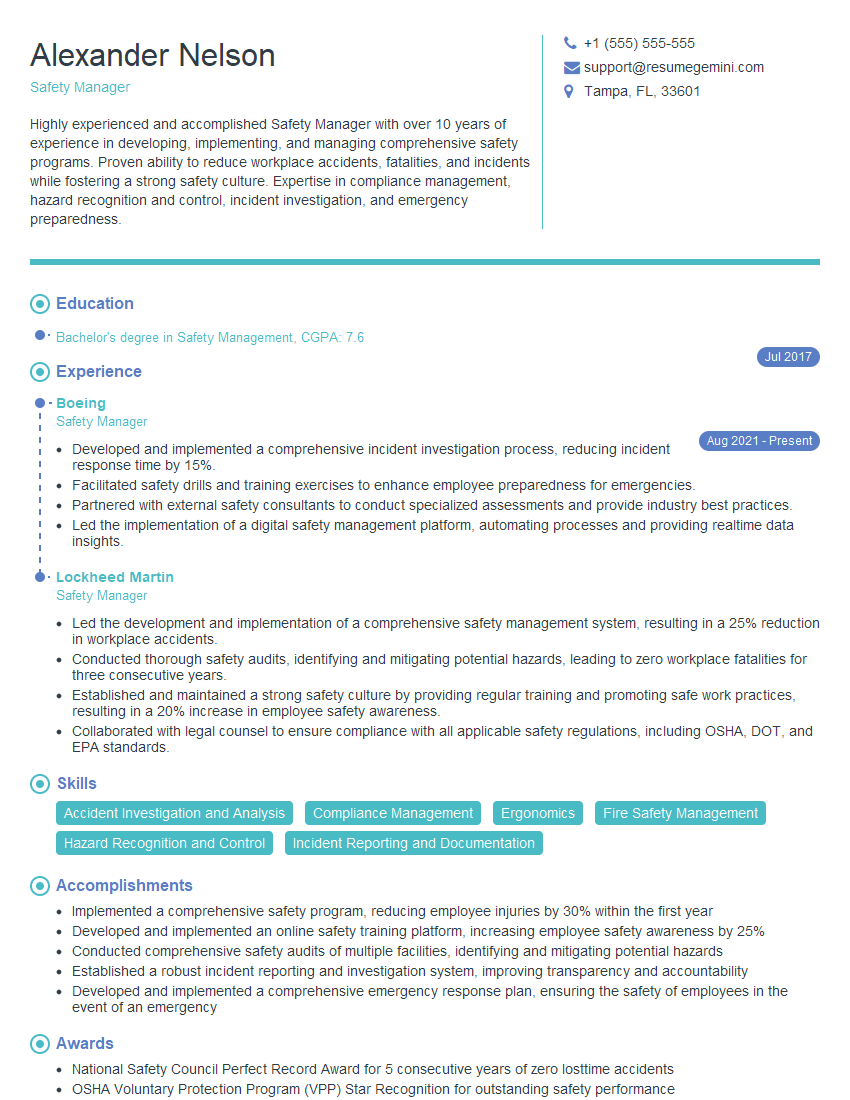
Safety Manager Resume Sample

Safety Director Resume Sample

Training Coordinator Resume Sample
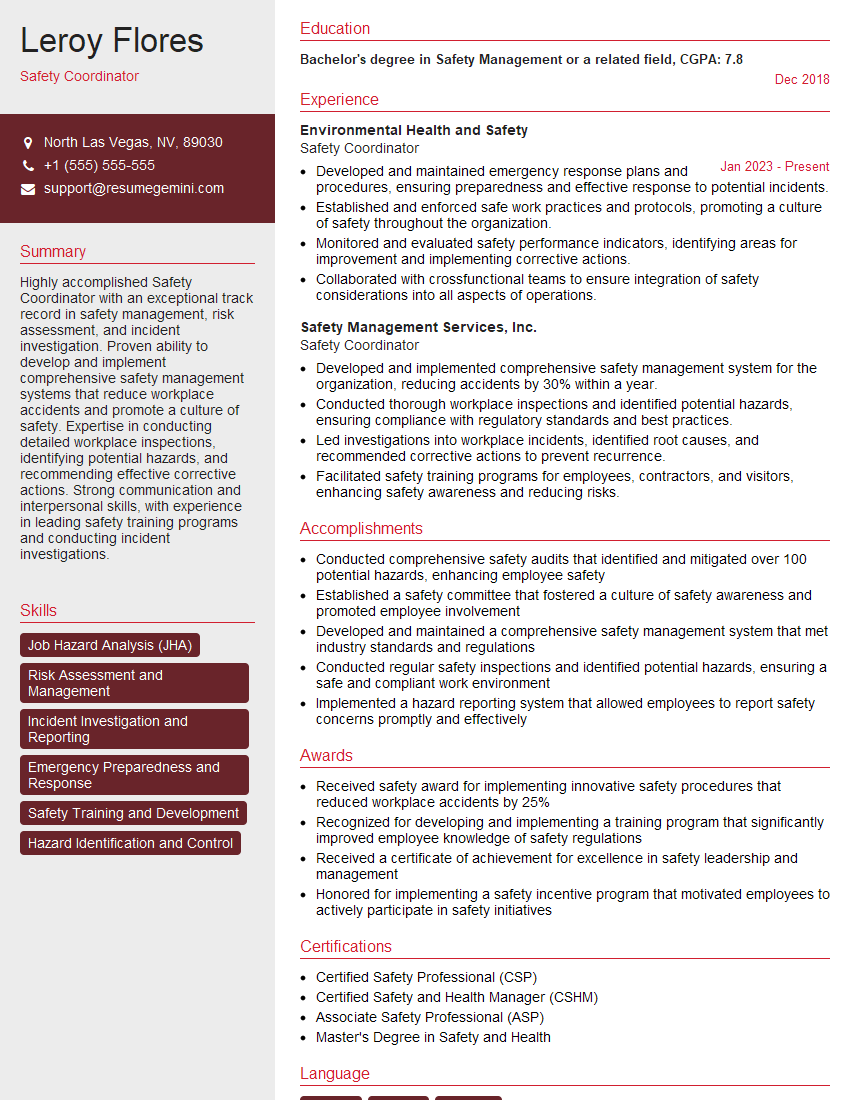
Safety Coordinator Resume Sample

Compliance Manager Resume Sample

Compliance Officer Resume Sample

Regulatory Compliance Specialist Resume Sample

Risk Manager Resume Sample

Loss Prevention Specialist Resume Sample
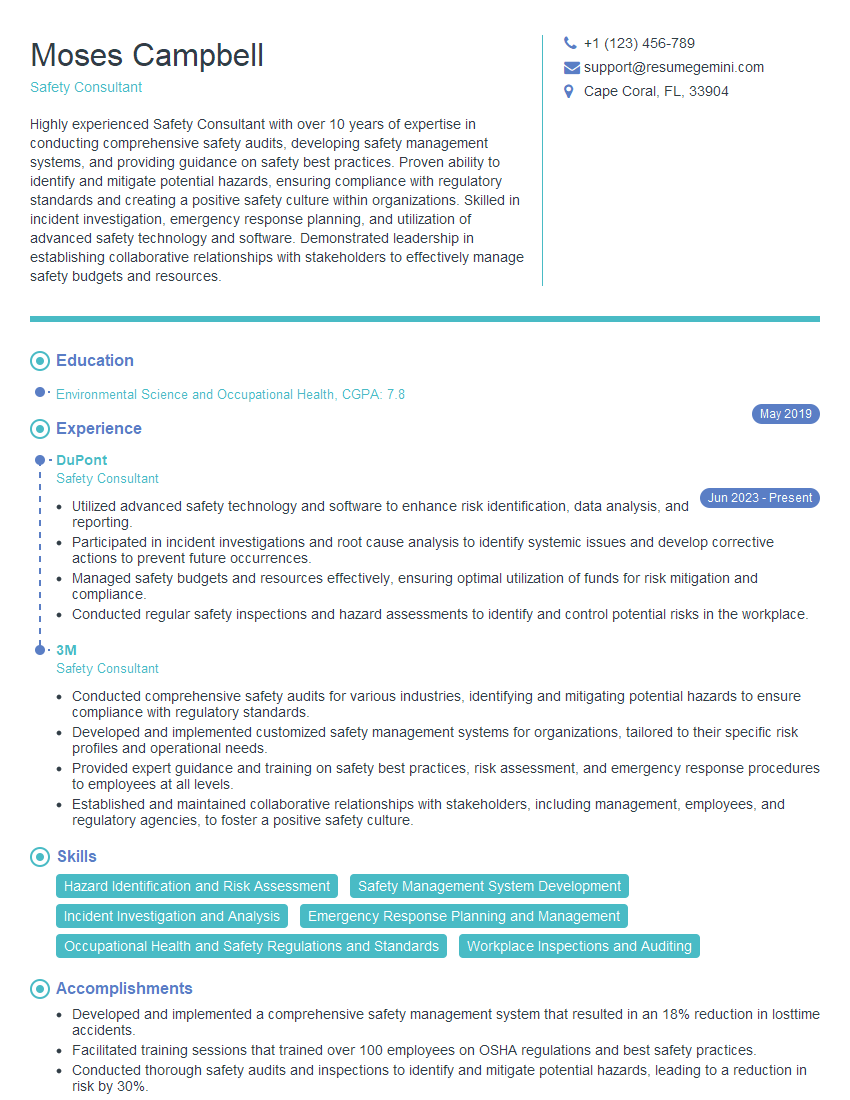
Safety Consultant Resume Sample

Safety Engineer Resume Sample
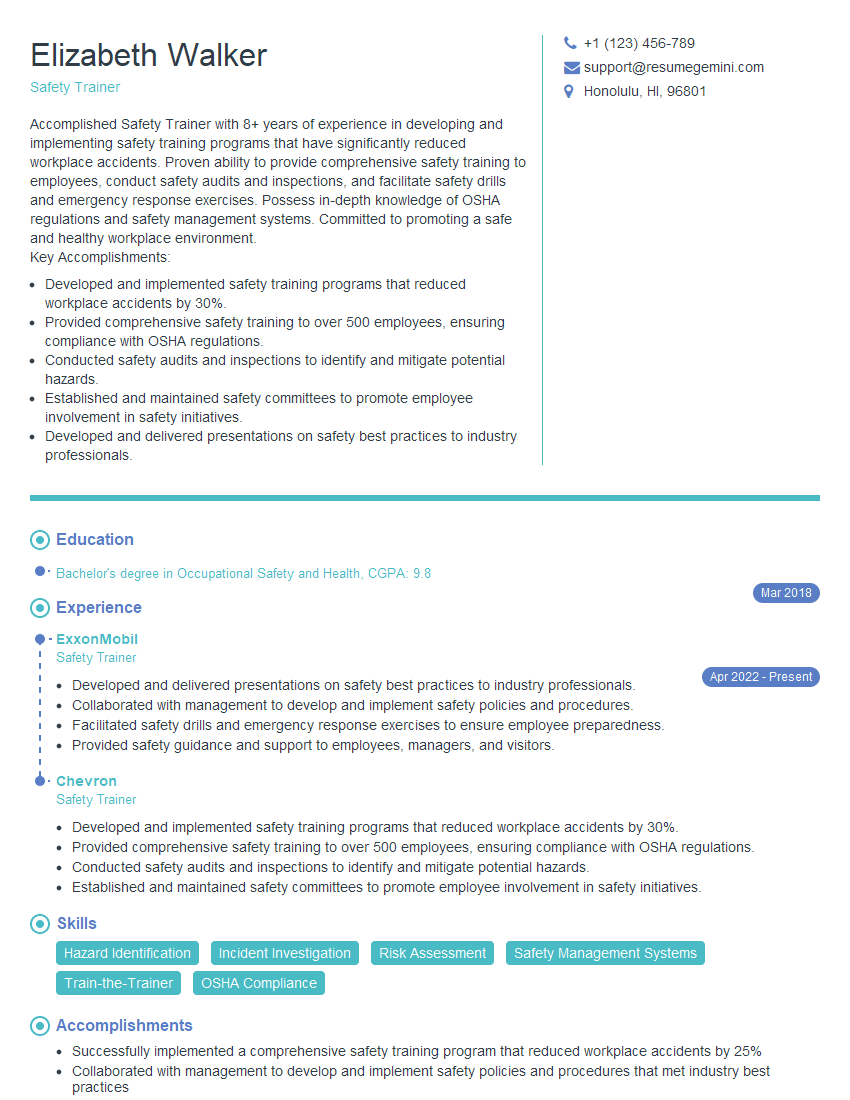
Safety Trainer Resume Sample
Explore more articles
Users Rating of Our Blogs
Share Your Experience
We value your feedback! Please rate our content and share your thoughts (optional).
What Readers Say About Our Blog
Really detailed insights and content, thank you for writing this detailed article.
IT gave me an insight and words to use and be able to think of examples