Cracking a skill-specific interview, like one for Patron Services and Outreach, requires understanding the nuances of the role. In this blog, we present the questions you’re most likely to encounter, along with insights into how to answer them effectively. Let’s ensure you’re ready to make a strong impression.
Questions Asked in Patron Services and Outreach Interview
Q 1. Describe your experience managing patron inquiries and resolving conflicts.
Managing patron inquiries and resolving conflicts requires a blend of empathy, effective communication, and a thorough understanding of library policies. My approach involves actively listening to understand the patron’s perspective, clarifying their needs, and then offering solutions within the framework of library regulations.
For example, I once dealt with a patron upset about a late fee. Instead of simply explaining the policy, I explored the reason for the delay. It turned out they had experienced a family emergency. By demonstrating understanding and offering options like an extension or a payment plan, I transformed a potentially negative experience into a positive interaction, reinforcing their trust in the library.
In cases of conflict, my strategy focuses on de-escalation. I maintain a calm and respectful demeanor, actively validating their feelings, and working collaboratively to find a mutually acceptable resolution. Documentation of the interaction is crucial for future reference.
Q 2. How do you prioritize patron requests in a busy environment?
Prioritizing patron requests in a busy environment necessitates a structured approach. I use a system that combines urgency and importance. I utilize a ticketing system or task management software, categorizing requests based on factors such as:
- Urgency: Immediate needs (e.g., technical issues preventing access to resources) take precedence.
- Importance: Requests impacting a large number of patrons or related to critical services are prioritized.
- Patron need: Regular patrons or those with specific needs might receive quicker attention.
This system allows me to efficiently manage a high volume of requests while ensuring that those with the greatest urgency and impact are addressed first. Regular review and adjustment of the system ensures it remains effective.
Q 3. Explain your approach to providing excellent customer service in a library setting.
Excellent customer service in a library setting goes beyond simply fulfilling requests; it’s about creating a welcoming and inclusive environment. My approach focuses on several key areas:
- Proactive assistance: Offering help before patrons even ask, such as guiding them to resources or providing information about library services.
- Empathetic communication: Listening actively, using clear and concise language, and demonstrating genuine concern for the patron’s needs.
- Problem-solving skills: Effectively addressing patron inquiries and resolving issues efficiently and fairly.
- Knowledge of resources: Possessing a thorough understanding of the library’s collection, services, and policies.
- Positive attitude: Maintaining a friendly and helpful demeanor, even in challenging situations.
I believe that each interaction is an opportunity to enhance the patron experience and foster a positive relationship with the library.
Q 4. What strategies do you employ to promote library resources and programs to diverse communities?
Promoting library resources and programs to diverse communities requires a multifaceted approach that considers the unique needs and preferences of each group. My strategies include:
- Targeted outreach: Partnering with community organizations, schools, and local businesses to reach specific demographics.
- Multilingual materials: Providing information in multiple languages to ensure accessibility for all patrons.
- Culturally relevant programs: Offering programs and events that reflect the diversity of the community.
- Utilizing various communication channels: Employing social media, email marketing, local newspapers, and community bulletin boards to disseminate information.
- Feedback mechanisms: Actively seeking input from community members to tailor services and programs.
For example, to reach a senior citizen community, we organized a tech literacy workshop, focusing on digital resources the library offers. For younger demographics, we used social media campaigns showcasing the library’s gaming collection and events.
Q 5. How do you assess the needs of your patrons and adapt services accordingly?
Assessing patron needs and adapting services requires ongoing monitoring and analysis. My approach involves:
- Collecting data: Analyzing circulation statistics, program attendance, and patron feedback surveys to identify trends and unmet needs.
- Direct interaction: Engaging in regular conversations with patrons to understand their experiences and gather suggestions.
- Community engagement: Participating in community events and forums to learn about local issues and opportunities.
- Needs assessments: Conducting formal needs assessments to gather comprehensive data on specific populations.
- Flexibility and adaptability: Adapting services and programs based on the gathered data and feedback.
For instance, if we notice low attendance at a specific program, we would analyze the feedback and potentially adjust the program’s time, format or content.
Q 6. Describe your experience developing and implementing outreach programs.
Developing and implementing outreach programs requires careful planning and execution. My experience includes:
- Needs assessment: Identifying the specific needs and interests of the target community.
- Program design: Developing engaging and relevant programs that address those needs.
- Resource allocation: Securing funding and resources necessary for program implementation.
- Partnership building: Collaborating with community organizations and stakeholders.
- Program evaluation: Assessing the effectiveness of the program and making adjustments as needed.
I’ve successfully developed outreach programs for underserved populations, for example, a summer reading program with a strong focus on bilingual storytimes, and a mobile library service extending resources to remote areas.
Q 7. How do you measure the success of your outreach initiatives?
Measuring the success of outreach initiatives requires a multi-faceted approach combining quantitative and qualitative data. I use several key metrics:
- Program attendance: Tracking the number of participants in programs and events.
- Patron feedback: Collecting feedback through surveys, focus groups, and informal conversations.
- Social media engagement: Monitoring social media activity related to outreach programs.
- Website analytics: Analyzing website traffic and engagement related to outreach materials.
- Community impact: Assessing the overall impact of the programs on the community.
For instance, increased program attendance and positive feedback indicate program success. We also analyze survey data to understand patron satisfaction and identify areas for improvement.
Q 8. What are some effective methods for marketing library services to different demographics?
Marketing library services effectively requires a multi-pronged approach tailored to different demographics. We can’t treat everyone the same; understanding the specific needs and preferences of various groups is key.
- Young Adults (18-35): Utilize social media platforms like Instagram, TikTok, and Snapchat with visually appealing content. Run contests and giveaways. Partner with local businesses frequented by this age group. Consider offering workshops on topics relevant to their interests, such as graphic design or social media marketing.
- Families with Children: Promote children’s programming through flyers in schools and community centers. Host family-friendly events, like story times and craft sessions. Partner with local preschools and daycare centers. Develop a dedicated section on the library website with age-appropriate resources.
- Senior Citizens: Offer large-print books, audiobooks, and assistive technology training. Host events tailored to their interests, such as book clubs, lectures, or movie screenings. Use simpler language and larger fonts in marketing materials. Consider partnerships with senior centers and retirement communities.
- Immigrant Communities: Provide materials in multiple languages. Offer ESL classes and citizenship preparation resources. Partner with local immigrant support organizations. Use culturally sensitive marketing materials that reflect the diversity of the community.
Consistent evaluation of marketing efforts is critical. Track website traffic, social media engagement, and attendance at library events to determine what’s working and what needs adjustment. Feedback from patrons is invaluable for continuous improvement.
Q 9. How familiar are you with library management systems (e.g., ILS)?
I’m highly proficient with Library Management Systems (ILS). My experience encompasses several platforms, including Koha, Evergreen, and Sierra. I’m familiar with their core functionalities, from cataloging and circulation to acquisitions and patron management.
Beyond the basic functionalities, I’m comfortable with advanced features such as report generation, data analysis, and system integration with other library databases and services. For instance, I’ve used reporting features to identify trends in patron borrowing habits to better inform collection development strategies. I understand the importance of data accuracy and integrity within the ILS and have experience troubleshooting and resolving system issues.
My familiarity extends to the back-end administration and maintenance of these systems, allowing me to ensure optimal performance and efficiency. I’ve been involved in system upgrades and migrations, and understand the importance of careful planning and execution to minimize disruption to patron services.
Q 10. Describe your experience with reference interview techniques.
The reference interview is a crucial interaction, a collaborative process between the librarian and the patron to identify the patron’s information need. It’s not simply answering a question; it’s about understanding the why behind the question.
My approach begins with active listening. I use open-ended questions to clarify the patron’s request, ensuring I understand their background knowledge, desired format, and level of detail. For example, instead of asking ‘What do you need?’, I might ask ‘Can you tell me more about what you’re researching?’
I employ various techniques like clarifying terms, paraphrasing to confirm understanding, and exploring related concepts. I also use controlled vocabulary and subject headings (like those in Library of Congress Classification) to guide the search process. If I don’t know the answer immediately, I’m transparent about that but promise to find the information for them, possibly through consultation with colleagues or research using reliable sources.
I document the entire interaction, noting the patron’s query, the resources consulted, and the results obtained. This ensures consistency and helps in tracking the effectiveness of my service.
Q 11. How do you handle sensitive or challenging patron interactions?
Handling sensitive or challenging patron interactions requires patience, empathy, and a commitment to de-escalation. My first priority is to ensure the safety and well-being of both the patron and myself.
I approach such situations with active listening and validation of the patron’s feelings. I might use phrases like, ‘I understand this is frustrating’ or ‘I can see why you’re upset.’ It’s essential to avoid judgment and create a safe space for open communication.
Depending on the situation, I might offer alternative solutions or refer the patron to appropriate resources, such as social services or mental health professionals. For situations involving disruptive behavior, I follow established library policies and procedures, prioritizing safety and maintaining a calm and respectful environment. I will always document the interaction thoroughly, following established protocols for reporting incidents.
For example, if a patron is upset about a late fee, I would explain the policy calmly, explore potential solutions (like reduced fees or payment plans) and ensure they understand the process. If a patron becomes verbally abusive, I would remain calm, reiterate library rules, and if necessary, call for security or management support.
Q 12. What are your skills in using technology to support patron services?
Technology is integral to modern patron services. I’m proficient in using various technologies to enhance the library experience.
- Online Catalogs and Databases: I’m adept at guiding patrons in navigating online catalogs (like WorldCat), accessing databases (like JSTOR or EBSCOhost), and utilizing advanced search techniques.
- Digital Resources: I’m skilled in promoting and assisting patrons with ebooks, audiobooks, online streaming services, and digital learning platforms.
- Social Media & Website Management: I have experience creating engaging content, managing social media accounts, and updating library websites to improve outreach and communication.
- Assistive Technology: I’m familiar with various assistive technologies, such as screen readers, text-to-speech software, and magnification devices, and can help patrons utilize them effectively.
- Library Management Systems (ILS): As mentioned previously, my expertise in ILS enables me to provide efficient and accurate patron services.
I am also a quick learner and enthusiastically embrace new technologies as they emerge within the library world.
Q 13. Explain your knowledge of copyright and intellectual property laws as they pertain to patron services.
Understanding copyright and intellectual property laws is crucial for providing responsible patron services. These laws protect creators’ rights and ensure fair use of copyrighted materials.
I understand the principles of fair use, which allows limited use of copyrighted works for purposes like criticism, commentary, news reporting, teaching, scholarship, or research. I can help patrons determine if their intended use falls under fair use guidelines. I’m aware of the factors considered in determining fair use, including the purpose and character of the use, the nature of the copyrighted work, the amount and substantiality of the portion used, and the effect of the use upon the potential market for or value of the copyrighted work.
I’m also familiar with digital rights management (DRM) and its implications for accessing and using digital materials. I can guide patrons in understanding licensing agreements and restrictions associated with specific resources. I know the importance of citing sources properly and educating patrons about plagiarism and its consequences.
When necessary, I’ll refer patrons to legal resources or copyright experts for more complex questions. My priority is to ensure that the library’s services are provided in a legally compliant and ethical manner.
Q 14. How do you promote digital literacy within your community?
Promoting digital literacy is essential for bridging the digital divide and ensuring equitable access to information and services. My approach is multifaceted and tailored to the community’s specific needs.
- Workshops and Tutorials: I organize and lead workshops on various digital skills, such as basic computer skills, internet safety, online research, and social media management. These workshops cater to different skill levels, from beginners to advanced users.
- One-on-One Assistance: I provide individual assistance to patrons needing help with specific technology-related tasks. This could involve troubleshooting computer problems, setting up email accounts, or navigating online resources.
- Partnerships: I collaborate with local organizations, schools, and community centers to offer digital literacy programs and resources. This expands the reach of our programs and ensures wider participation.
- Community Outreach: I participate in community events to promote digital literacy resources and raise awareness about the importance of these skills. This can include presentations, demonstrations, and distributing informational materials.
- Online Resources: I develop and maintain a library website with easy-to-access digital literacy resources, tutorials, and links to helpful online tools.
The key is to create a welcoming and supportive environment where individuals feel comfortable asking questions and learning at their own pace. The success of these efforts is measured by increased patron engagement with technology and their ability to independently utilize digital resources.
Q 15. Describe your experience working with volunteers or interns in a library setting.
Throughout my career, I’ve had extensive experience supervising and mentoring volunteers and interns in library settings. I believe in a structured approach that combines training, mentorship, and practical application. My strategy begins with a thorough onboarding process, where I provide clear expectations, detailed training materials, and opportunities for shadowing experienced staff.
For example, when training interns on patron assistance, I start with basic reference skills and gradually introduce them to more complex research tasks. I always emphasize the importance of empathy and effective communication with patrons. With volunteers, I often tailor tasks based on their skills and interests, ensuring they find their roles rewarding and engaging. This could range from shelving books and assisting with programs to providing digital literacy support.
I regularly provide feedback, both formal and informal, using a combination of one-on-one meetings and group sessions. This feedback focuses on both strengths and areas for improvement, ensuring continuous professional development. I’ve found this method to be highly effective in creating a supportive environment where volunteers and interns feel valued and motivated to contribute their best.
Career Expert Tips:
- Ace those interviews! Prepare effectively by reviewing the Top 50 Most Common Interview Questions on ResumeGemini.
- Navigate your job search with confidence! Explore a wide range of Career Tips on ResumeGemini. Learn about common challenges and recommendations to overcome them.
- Craft the perfect resume! Master the Art of Resume Writing with ResumeGemini’s guide. Showcase your unique qualifications and achievements effectively.
- Don’t miss out on holiday savings! Build your dream resume with ResumeGemini’s ATS optimized templates.
Q 16. How do you stay current with trends and best practices in library services?
Staying abreast of the latest trends and best practices in library services is crucial. I accomplish this through a multi-pronged approach that includes active participation in professional organizations like the American Library Association (ALA), attending conferences and workshops, and engaging with online resources.
Specifically, I subscribe to relevant journals and newsletters, such as Library Journal and American Libraries, which often feature articles on innovative service models, technological advancements, and emerging community needs. I actively participate in online professional development courses and webinars offered by organizations like ALA and others. I also follow key influencers and thought leaders in the library field on platforms like Twitter and LinkedIn. This diverse approach ensures that I’m constantly learning and adapting my practices to meet evolving patron needs and technological advancements.
Q 17. How do you adapt your communication style to meet the needs of diverse patrons?
Adapting my communication style to serve a diverse patron base is a cornerstone of my approach. It’s not just about speaking different languages (though that’s important!), it’s about understanding and responding to diverse communication preferences and cultural backgrounds. I believe in active listening and observing non-verbal cues to gauge a patron’s comfort level and understanding.
For instance, with patrons who may have limited English proficiency, I use clear and simple language, supplementing my verbal communication with visual aids whenever possible. For patrons with different learning styles, I might adjust my approach accordingly – offering visual demonstrations for visual learners, written instructions for those who benefit from written information, or hands-on activities for kinesthetic learners. I always strive to create a welcoming and inclusive environment where all patrons feel comfortable and respected.
Moreover, I am sensitive to cultural differences in communication styles. For example, some cultures might value direct communication, while others prefer a more indirect approach. By remaining aware of these nuances, I can better tailor my interactions to foster trust and rapport with every patron.
Q 18. Describe your experience with collection development and management.
My experience in collection development and management encompasses a wide range of activities, from needs assessment and acquisitions to weeding and preservation. I’m proficient in using various selection tools, including reviews, best-seller lists, and patron suggestions, to ensure the collection aligns with the community’s interests and needs. I have extensive experience managing budgets, selecting vendors, and processing new materials.
I utilize collection management software (like Evergreen or Koha) to track inventory, manage circulation, and analyze usage patterns. This data-driven approach helps identify gaps in the collection and inform purchasing decisions. For example, analyzing circulation data may reveal a high demand for specific genres or subjects, guiding me to prioritize acquisitions in those areas. Similarly, analyzing usage trends helps inform decisions on weeding less popular or outdated materials, freeing up space and resources for more relevant materials. I believe in a balanced collection that represents diverse perspectives and supports all forms of learning.
Q 19. How would you handle a situation where a patron is disruptive or behaving inappropriately?
Handling disruptive or inappropriate patron behavior requires a calm, consistent, and firm approach. My priority is always the safety and well-being of myself, other patrons, and staff. I would first assess the situation and determine the level of risk. For minor disruptions, a simple and polite reminder of library rules might suffice.
For example, if a patron is talking loudly, I would politely ask them to lower their voice. However, if a patron is behaving aggressively or threatening, I would immediately contact security or law enforcement. Documentation is key; I would document the incident, including the time, date, location, and a detailed description of the events, as well as any actions taken. Depending on the severity and the patron’s history, additional steps might be taken, such as issuing a warning or banning the patron from the library. The most important aspect is maintaining a safe and welcoming environment for all.
Q 20. What are your skills in data analysis and using metrics to improve services?
I possess strong data analysis skills and regularly use metrics to improve library services. I’m proficient in using library management systems to extract and analyze circulation data, website analytics, and program attendance figures.
For example, I might analyze circulation data to identify popular items and those that are underutilized. This informs collection development decisions. Website analytics can reveal which pages are most visited and which search terms are most frequently used, helping to improve website navigation and content. Program attendance data helps assess program effectiveness and tailor future programming to meet patron needs. I’m comfortable using spreadsheet software (like Excel or Google Sheets) and statistical software (like SPSS or R) to analyze data and present findings in clear, concise reports that inform decision-making and demonstrate the impact of library services. Essentially, data guides my efforts to make the library more effective and relevant for the community.
Q 21. Describe your experience working collaboratively with other library staff and community partners.
Collaboration is essential in library work. I have a proven track record of working effectively with colleagues and community partners. I’m adept at facilitating communication, building consensus, and working towards shared goals.
For example, I’ve collaborated with colleagues to develop and implement new library programs. This involved brainstorming ideas, assigning roles and responsibilities, and sharing updates regularly. With community partners, I’ve organized events such as author talks and workshops in collaboration with local schools, community organizations, and businesses. This required establishing clear communication channels, coordinating schedules, and sharing resources. My approach always emphasizes open communication, mutual respect, and a shared commitment to serving the community. Effective teamwork leads to better services and a more vibrant library.
Q 22. How would you approach building relationships with local community organizations?
Building strong relationships with local community organizations is crucial for effective library outreach. My approach involves a multi-faceted strategy focused on proactive engagement and mutual benefit. I begin by identifying organizations whose missions align with the library’s, such as schools, senior centers, community centers, and local businesses. Then, I conduct thorough research to understand their needs and goals. This allows me to craft tailored proposals that demonstrate how a partnership with the library can enhance their programs or services.
- Direct Outreach: I’d initiate contact through phone calls, emails, or in-person visits, scheduling meetings to introduce myself and the library’s resources. I would present collaborative opportunities, perhaps suggesting joint programming, cross-promotion, or resource sharing.
- Needs Assessment: I would actively listen to understand their existing initiatives and identify areas where the library can contribute value, whether it’s providing literacy programs, hosting workshops, or offering access to technology or resources.
- Relationship Building: It’s crucial to foster ongoing communication and build trust. Regular meetings, newsletters, and informal check-ins keep the lines of communication open. Celebrating successful collaborations further solidifies the partnership.
For example, I successfully partnered a library with a local after-school program, offering weekly story time and computer literacy workshops, boosting both the program’s engagement and the library’s visibility within the community.
Q 23. Explain your experience with program planning and evaluation.
Program planning and evaluation are essential for demonstrating the library’s impact and securing future funding. My approach is data-driven and incorporates a cyclical process of planning, implementation, assessment, and refinement.
- Planning: This stage involves defining clear program goals, identifying target audiences, developing a detailed timeline, and allocating resources. I use SMART goals (Specific, Measurable, Achievable, Relevant, and Time-bound) to ensure clarity and trackability.
- Implementation: I meticulously track progress throughout the program’s duration, gathering quantitative and qualitative data. This involves monitoring attendance, collecting feedback through surveys, and documenting program activities.
- Evaluation: After program completion, I analyze the collected data to assess the program’s success in achieving its goals. This analysis guides the creation of comprehensive reports illustrating achievements and areas for improvement.
- Refinement: Based on the evaluation, I make adjustments to the program design and implementation for future iterations. This iterative process ensures continuous improvement and program effectiveness.
In a recent project, we implemented a new adult literacy program. By tracking attendance, participant progress, and feedback surveys, we identified a need for more individualized support. We subsequently revised the program structure to incorporate one-on-one tutoring sessions, resulting in a significant improvement in participant outcomes.
Q 24. What is your experience with grant writing or fundraising for library programs?
Grant writing and fundraising are critical skills for securing resources to support library programs. My experience spans identifying appropriate funding opportunities, developing compelling grant proposals, and managing the grant lifecycle.
- Identifying Funding Sources: I thoroughly research potential funding organizations, focusing on those whose priorities align with the library’s initiatives. This includes foundations, government agencies, and corporate sponsors.
- Developing Grant Proposals: I craft persuasive proposals that clearly articulate the program’s goals, methodology, budget, and anticipated outcomes. I ensure the proposal’s narrative is compelling and demonstrates the program’s potential impact.
- Budget Management: I manage grant funds responsibly, meticulously tracking expenses and providing regular financial reports to the funding organization.
- Reporting and Evaluation: I prepare comprehensive final reports demonstrating the project’s success in meeting its objectives and showcasing its impact.
For instance, I secured a significant grant from a local foundation to fund a new digital literacy program for seniors. The grant proposal highlighted the growing digital divide and the library’s role in bridging it. The successful implementation and reporting of this program led to further funding opportunities.
Q 25. How do you ensure accessibility and inclusivity in your patron services and outreach efforts?
Accessibility and inclusivity are paramount in patron services and outreach. My approach centers on creating a welcoming environment for all individuals, regardless of their abilities or backgrounds.
- Universal Design Principles: I incorporate universal design principles in all program design and material creation, ensuring accessibility for people with disabilities. This involves using clear and simple language, providing alternative formats (e.g., large print, audio), and utilizing assistive technologies.
- Culturally Responsive Programming: I develop programs that are sensitive to the diverse cultural backgrounds of our community members, creating inclusive and welcoming spaces for all. This involves offering diverse materials, featuring multilingual resources, and partnering with community groups representing various cultures.
- Staff Training: I ensure that library staff receive comprehensive training on disability awareness, cultural sensitivity, and inclusive service delivery. This equips staff to provide respectful and effective assistance to all patrons.
- Feedback Mechanisms: I actively solicit feedback from patrons with disabilities and diverse backgrounds to identify areas for improvement and ensure the library is meeting their needs effectively.
For example, we offer large-print books, audiobooks, and assistive listening devices, and conduct programs in various languages, reflecting the community’s diversity.
Q 26. Describe your experience with social media and digital marketing for library services.
Social media and digital marketing are vital for reaching diverse audiences and promoting library services. My experience involves leveraging various platforms to engage patrons, share information, and build community.
- Platform Selection: I select the most suitable social media platforms based on the target audience’s demographics and preferences. This might include Facebook, Instagram, Twitter, or TikTok, depending on the specific campaign.
- Content Creation: I develop engaging and informative content, including text posts, images, videos, and live streams, to promote library events, resources, and services. I use a consistent brand voice and visual style across all platforms.
- Community Engagement: I actively interact with followers, responding to comments and messages, and fostering a sense of community. I encourage user-generated content, such as photos and reviews, to amplify the library’s message.
- Analytics and Optimization: I monitor website traffic, social media engagement, and other key metrics to assess campaign effectiveness and make data-driven adjustments. This iterative approach optimizes content and strategy to maximize reach and engagement.
For example, we use Instagram to showcase our visually appealing new children’s books and Facebook to announce upcoming author talks and workshops, tailoring content to each platform’s audience.
Q 27. How would you handle a situation involving a patron complaint or negative feedback?
Handling patron complaints or negative feedback requires a calm, empathetic, and professional approach. My strategy focuses on active listening, understanding the issue, and finding a resolution.
- Active Listening: I begin by actively listening to the patron’s concerns without interruption, acknowledging their feelings and validating their experience. This shows respect and creates a safe space for open communication.
- Understanding the Issue: I ask clarifying questions to fully understand the nature of the complaint and gather all relevant information. This helps to avoid misunderstandings and ensures a fair assessment of the situation.
- Finding a Resolution: I collaborate with the patron to find a mutually agreeable solution. This might involve apologizing for any inconvenience, offering a suitable alternative, or explaining the library’s policies and procedures.
- Follow-up: I follow up with the patron to ensure they are satisfied with the resolution and to document the incident. This shows that their concerns were taken seriously and demonstrates a commitment to improving library services.
For instance, if a patron complains about a long wait time at the checkout desk, I would apologize for the inconvenience, explain the reasons for the delay, and discuss possible solutions, such as implementing a new queuing system or adding additional staff during peak hours. I would follow up with the patron to see if the problem has been resolved.
Key Topics to Learn for Patron Services and Outreach Interview
- Understanding Patron Needs: Identifying diverse patron needs and expectations, including varying levels of technological proficiency and comfort.
- Effective Communication Strategies: Developing clear and empathetic communication techniques for in-person, phone, and digital interactions; resolving patron inquiries and complaints professionally and efficiently.
- Outreach Program Development & Implementation: Designing and executing outreach initiatives to engage new audiences and promote library services; evaluating program effectiveness and adapting strategies based on results.
- Reference & Research Assistance: Providing accurate and timely assistance with research queries, utilizing library resources effectively and guiding patrons through databases and online tools.
- Program Planning & Logistics: Coordinating and managing events, workshops, and other outreach activities; handling logistics such as scheduling, venue booking, and marketing.
- Data Management & Analysis: Tracking program participation, collecting feedback, and analyzing data to inform future programming decisions; understanding key performance indicators (KPIs) for outreach programs.
- Collaboration & Teamwork: Working effectively with colleagues across different departments to achieve shared goals; contributing positively to a team environment.
- Technological Proficiency: Demonstrating familiarity with library management systems (LMS), online databases, and relevant software; utilizing technology to enhance patron services and outreach.
- Problem-solving & Conflict Resolution: Developing strategies for addressing patron concerns and conflicts effectively and professionally; finding creative solutions to challenges in a fast-paced environment.
Next Steps
Mastering Patron Services and Outreach is key to a fulfilling and rewarding career in libraries and information services. It opens doors to diverse roles with increasing responsibility and impact. To maximize your job prospects, crafting an ATS-friendly resume is crucial. ResumeGemini is a trusted resource that can help you build a professional and impactful resume that highlights your skills and experience effectively. Examples of resumes tailored to Patron Services and Outreach are available to help guide you in this process.
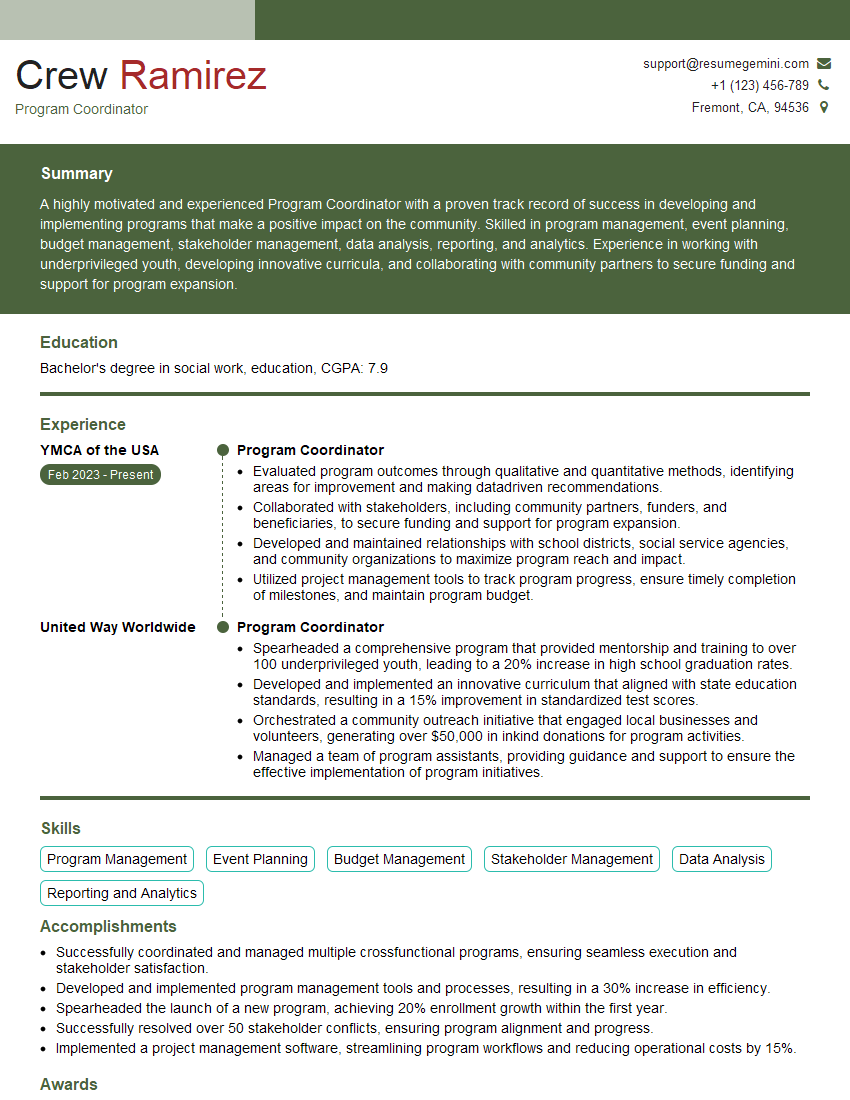
Program Coordinator Resume Sample
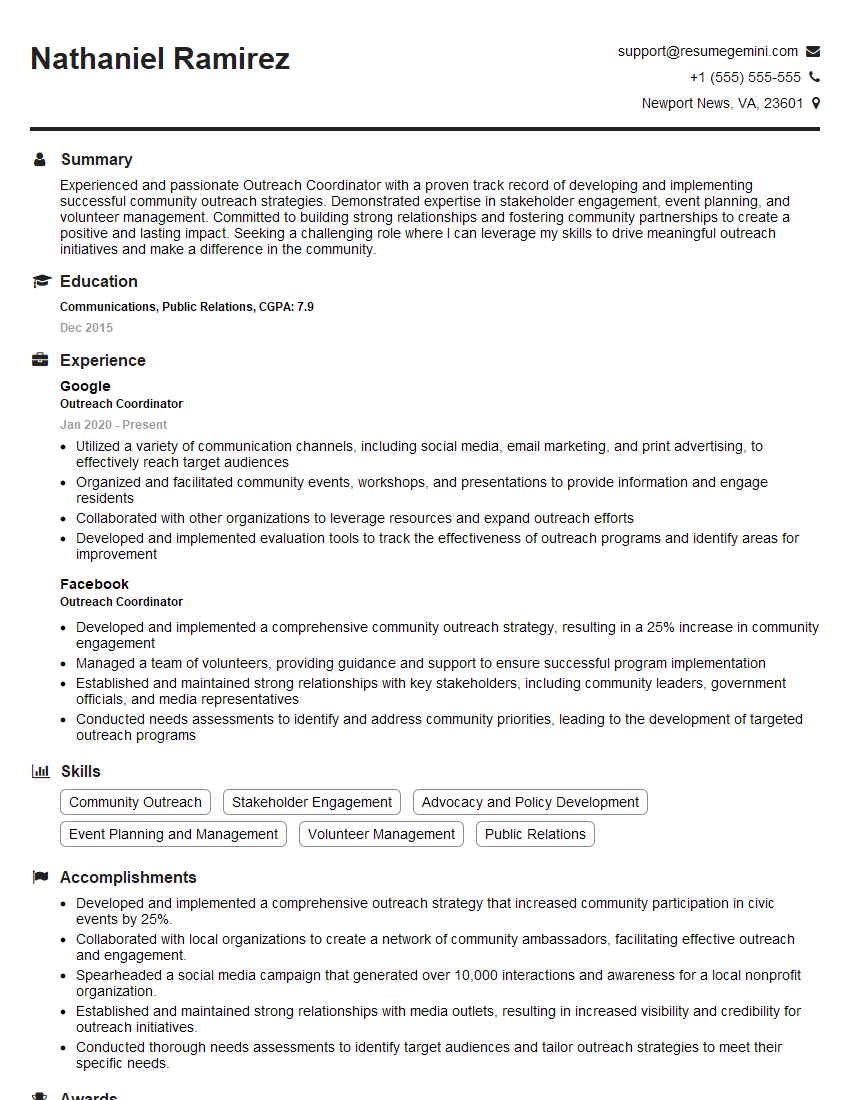
Outreach Coordinator Resume Sample
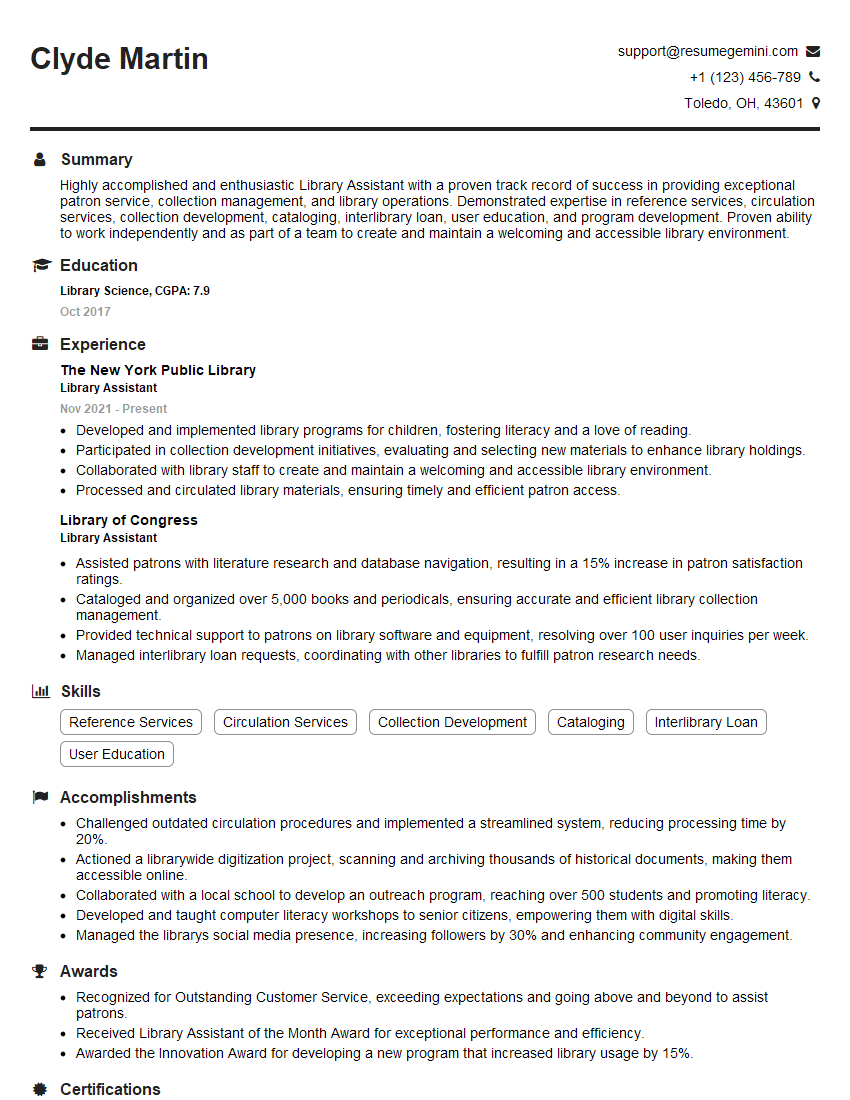
Library Assistant Resume Sample
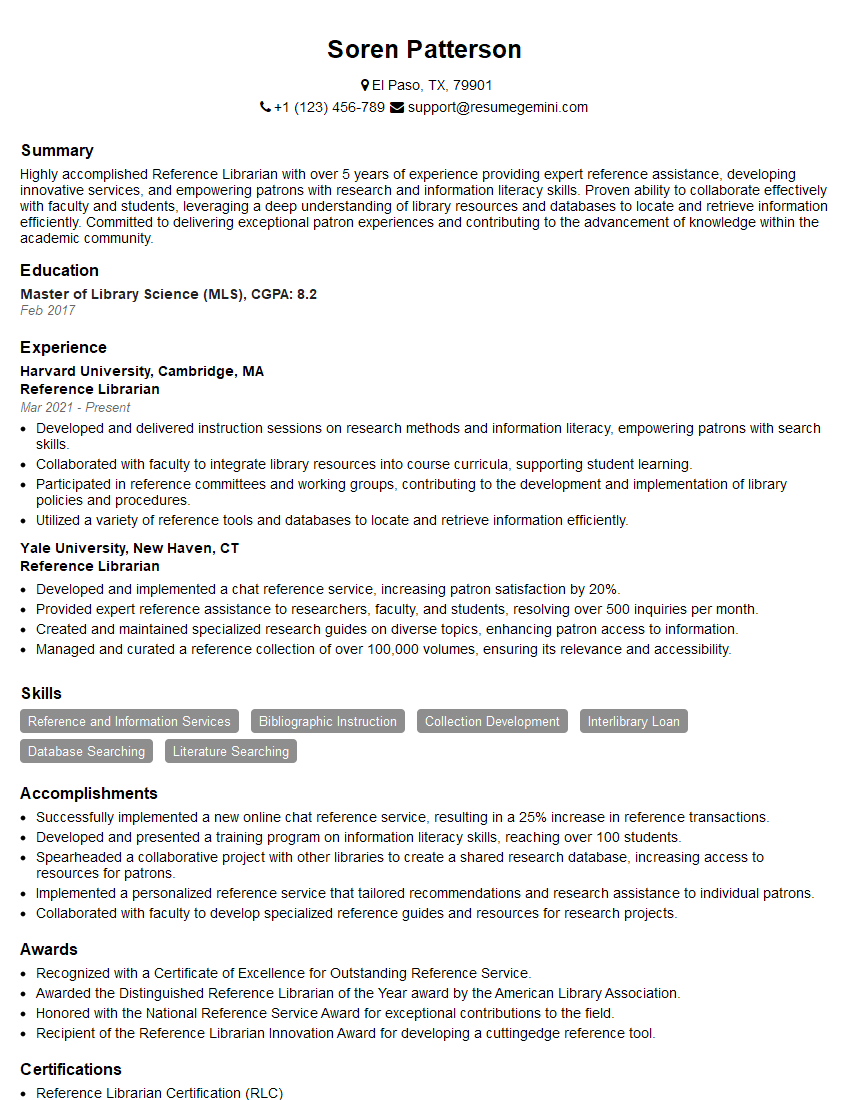
Reference Librarian Resume Sample
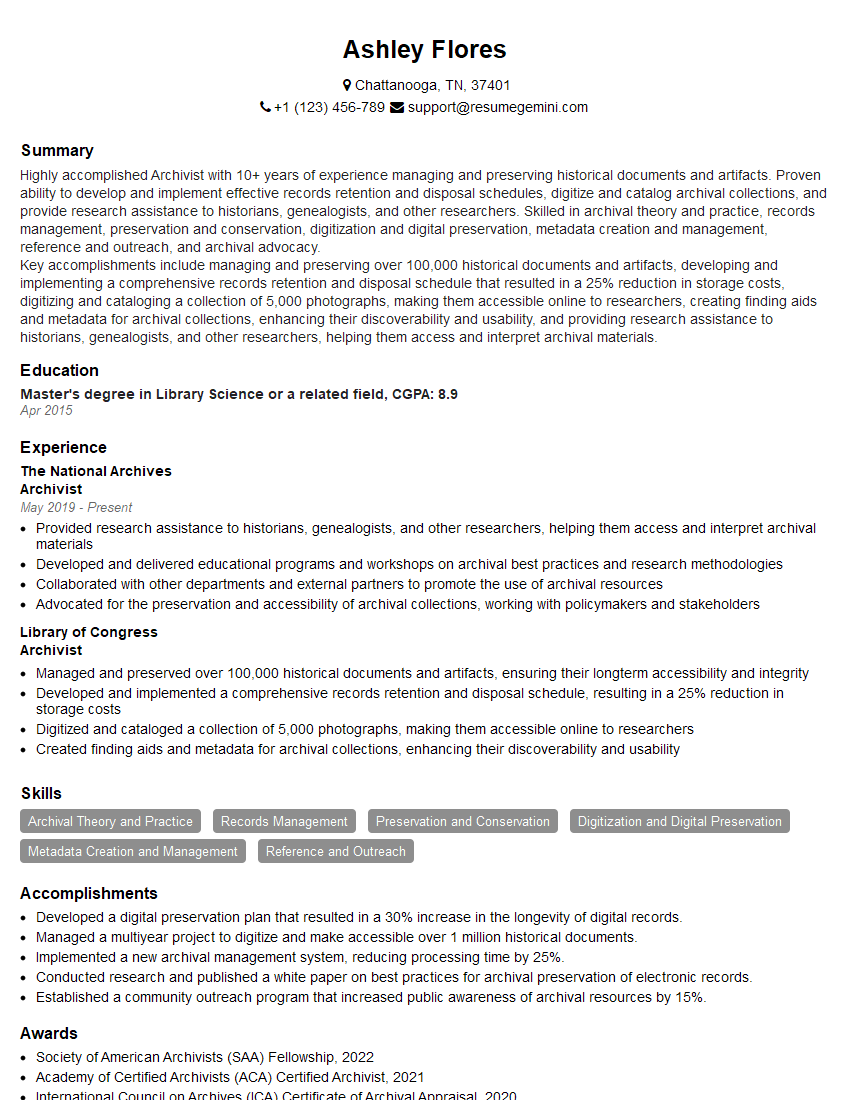
Archivist Resume Sample
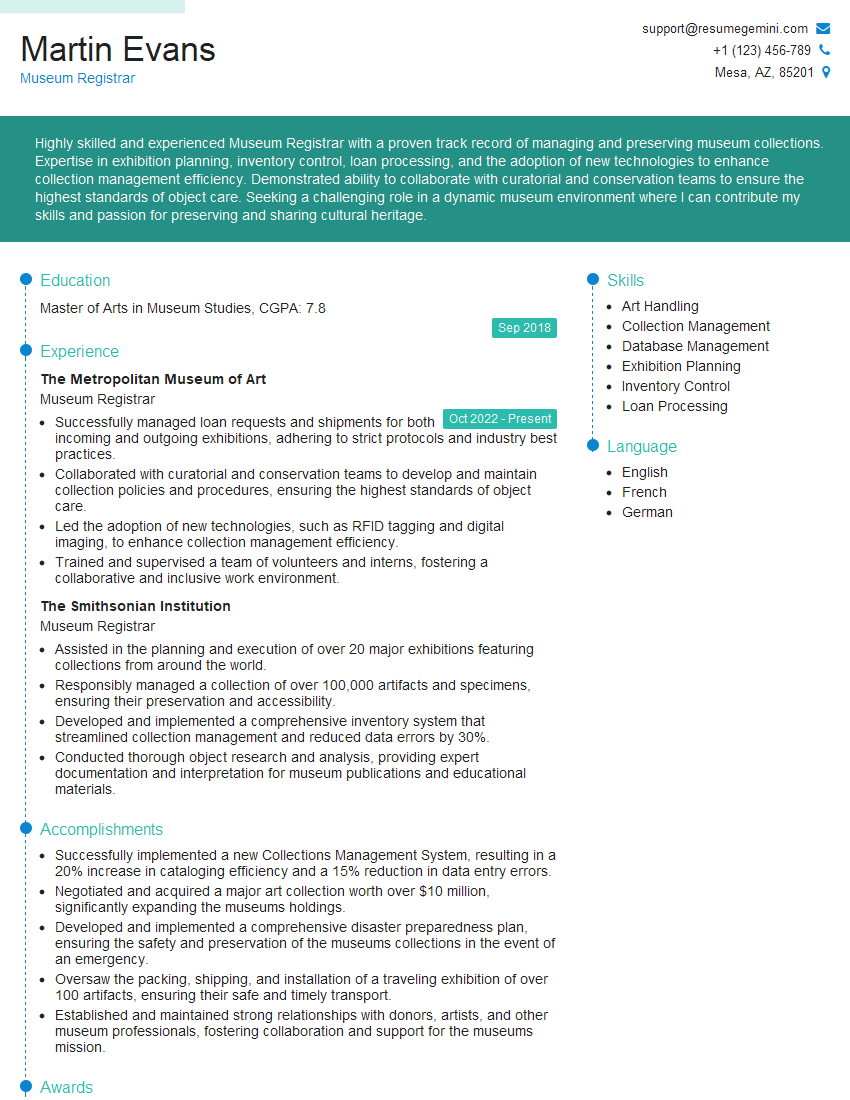
Museum Registrar Resume Sample
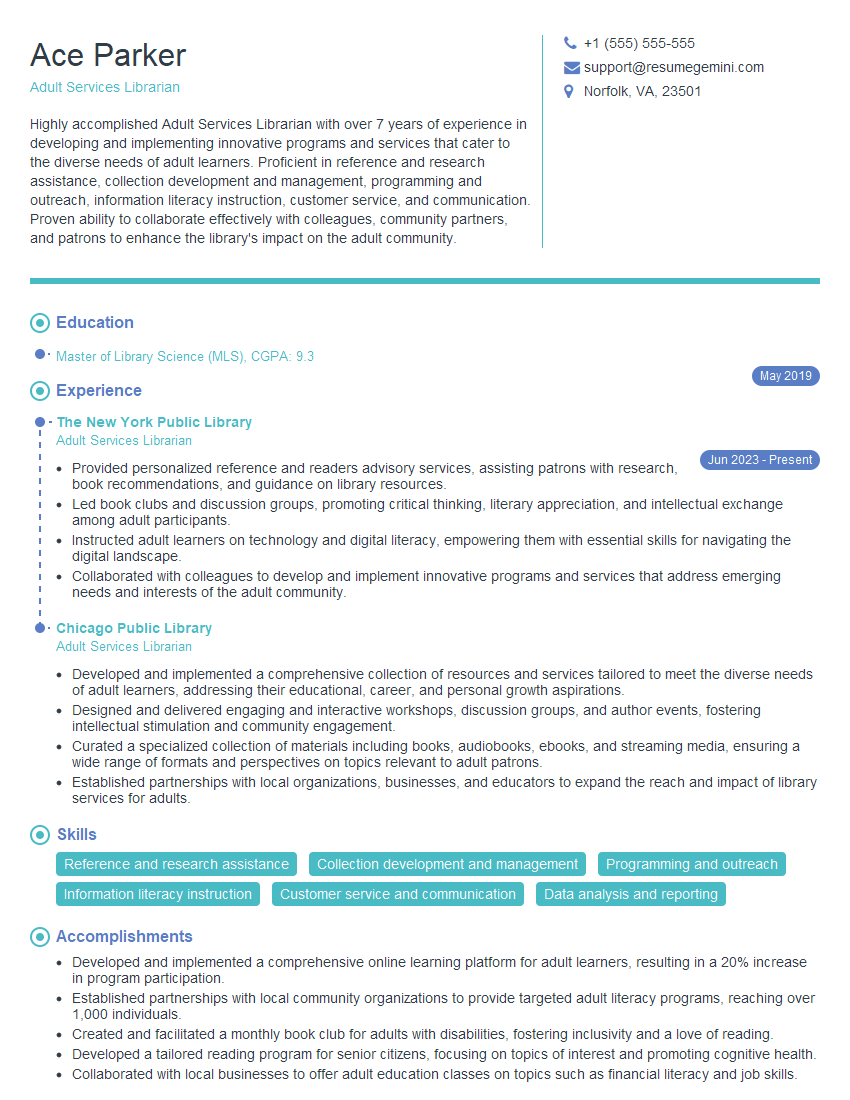
Adult Services Librarian Resume Sample
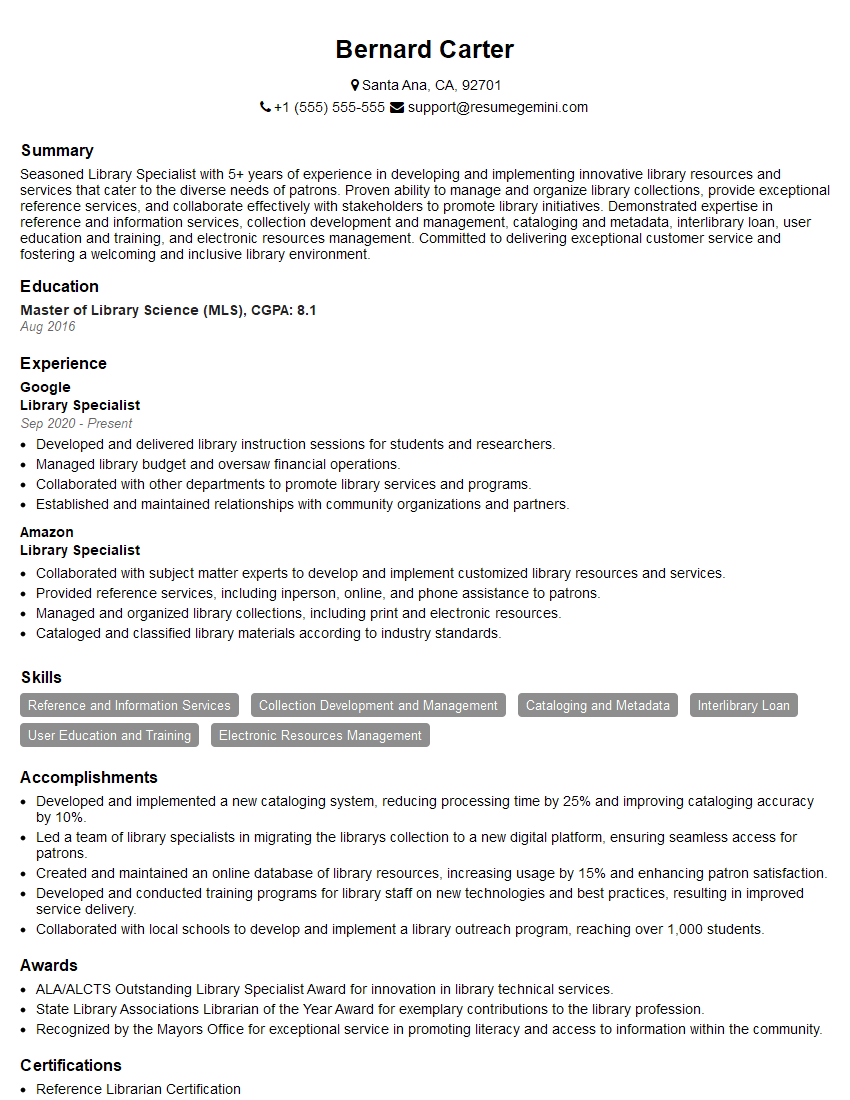
Library Specialist Resume Sample
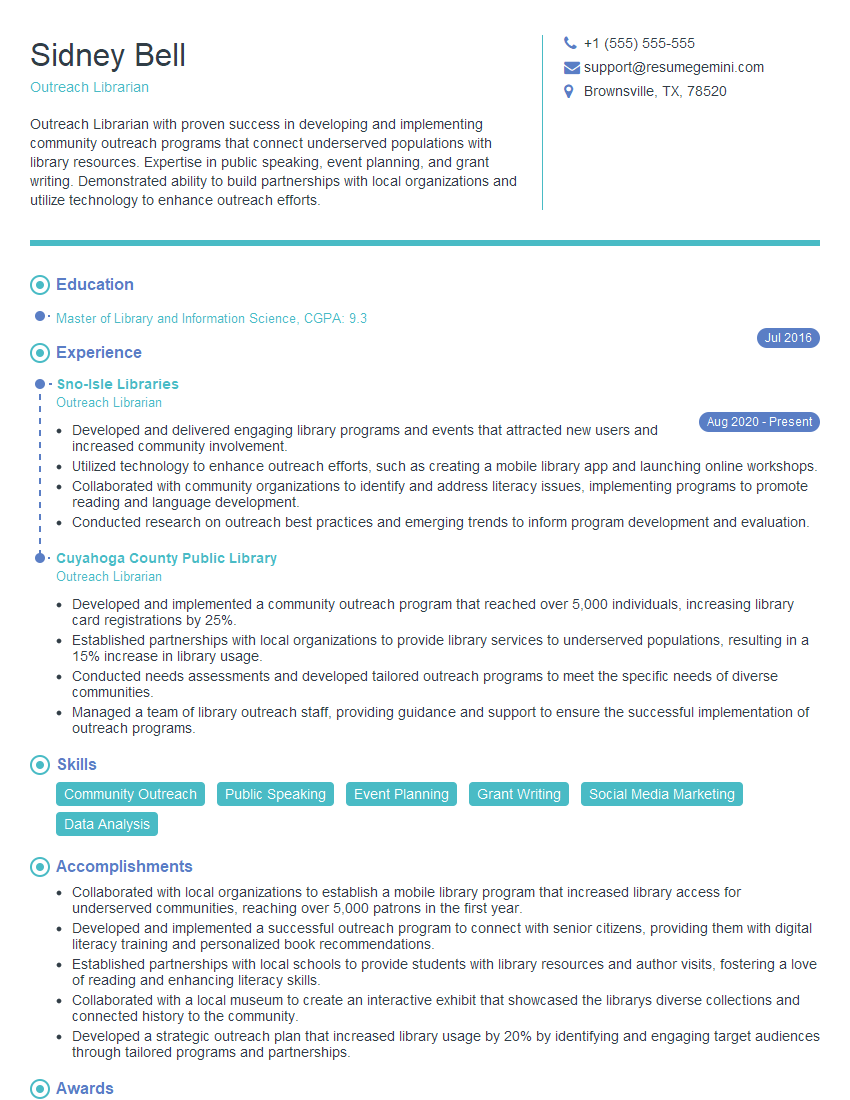
Outreach Librarian Resume Sample
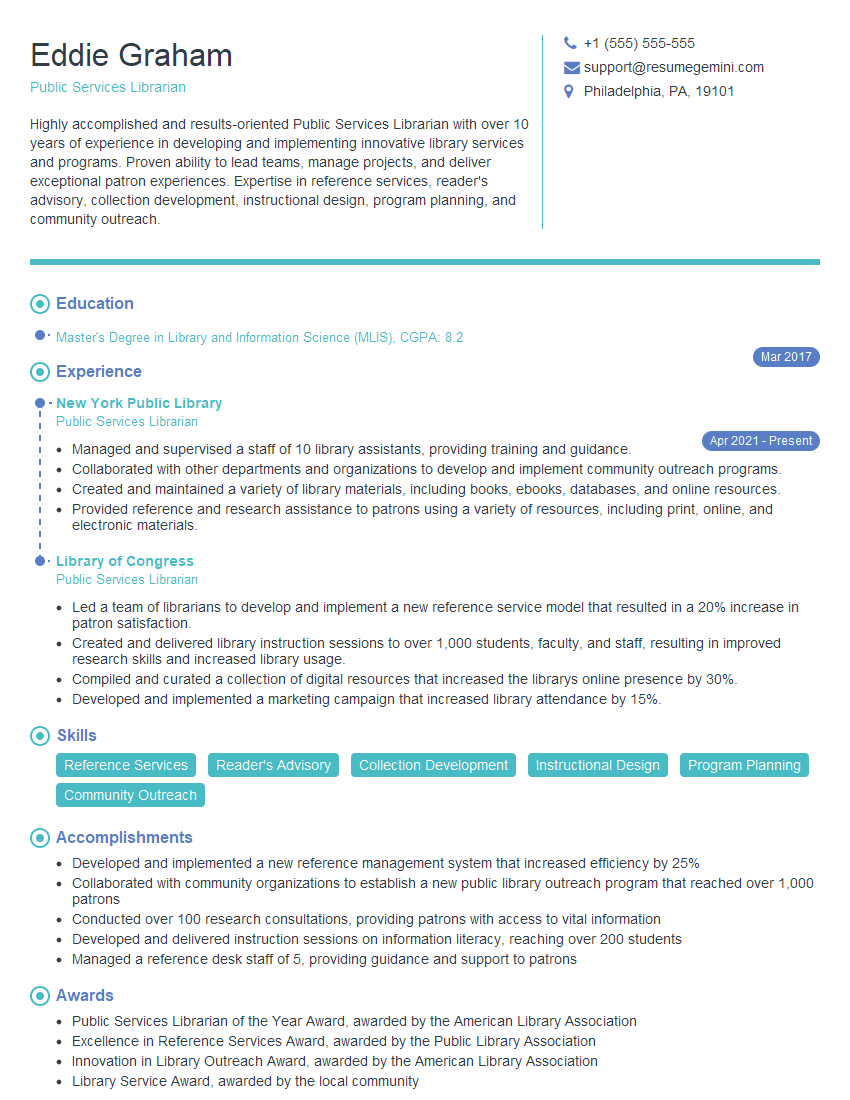
Public Services Librarian Resume Sample
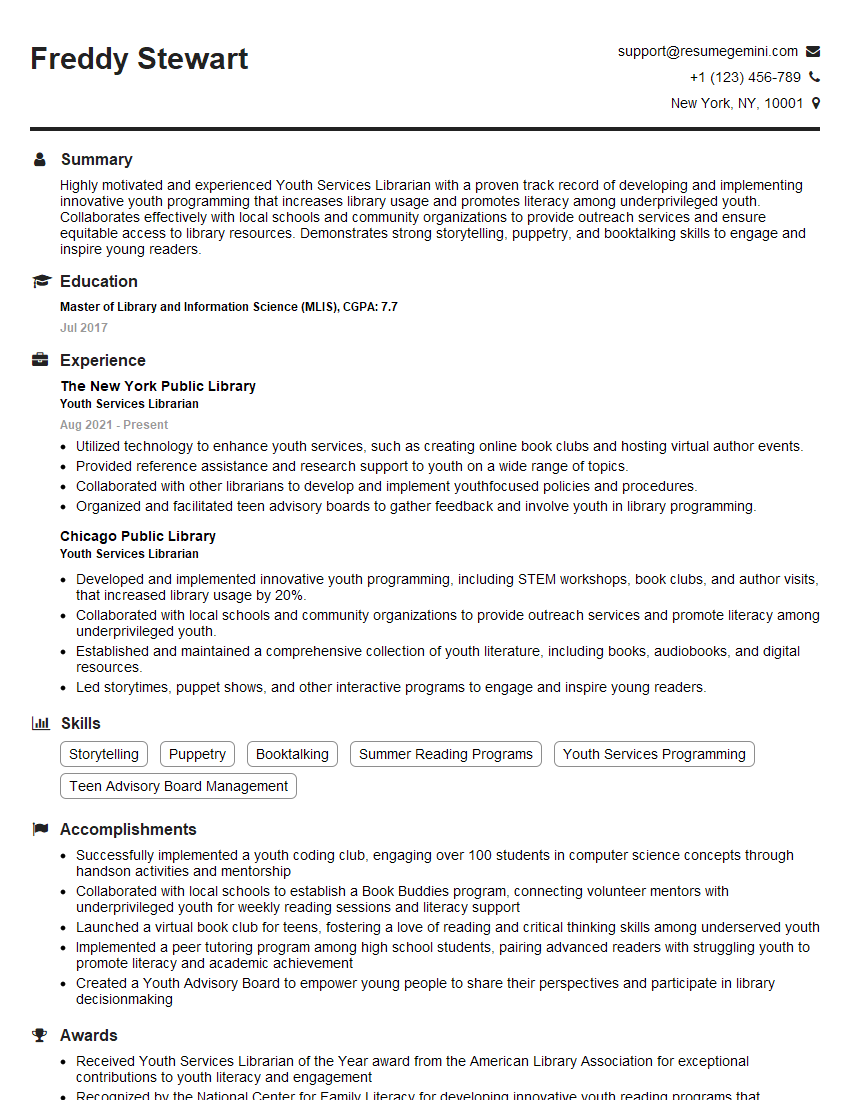
Youth Services Librarian Resume Sample
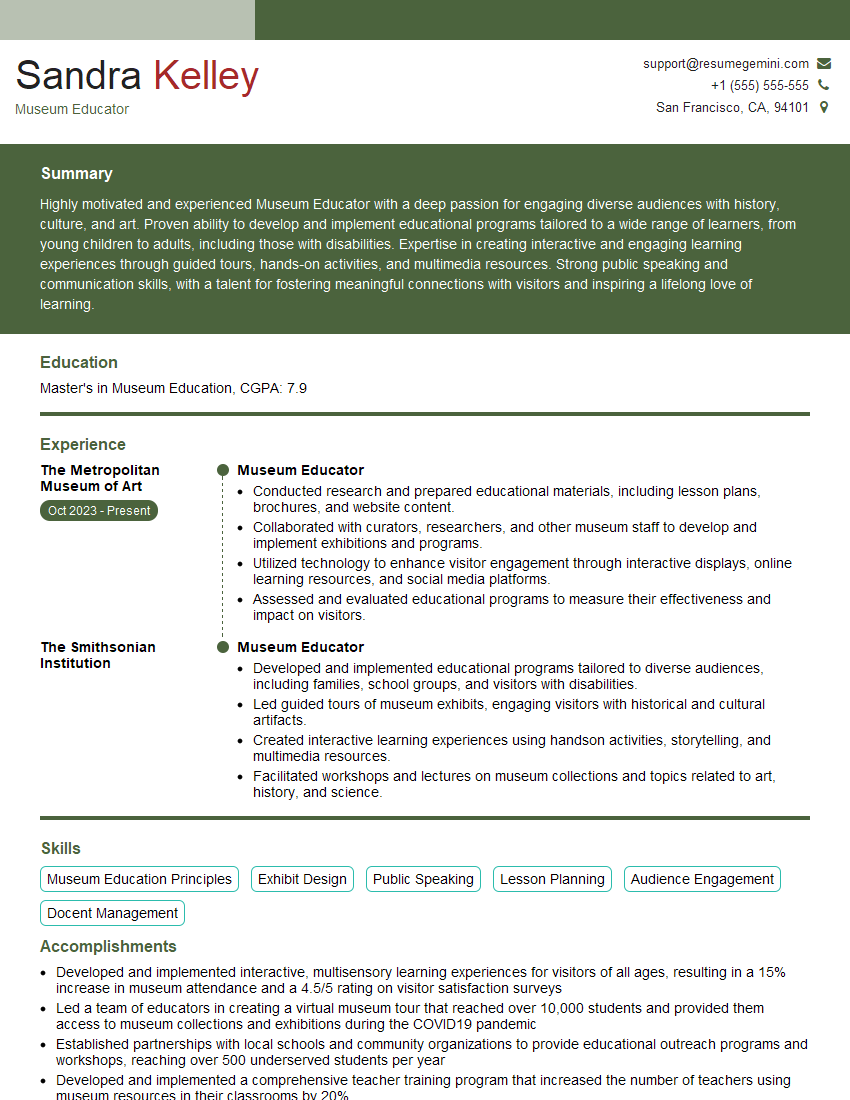
Museum Educator Resume Sample
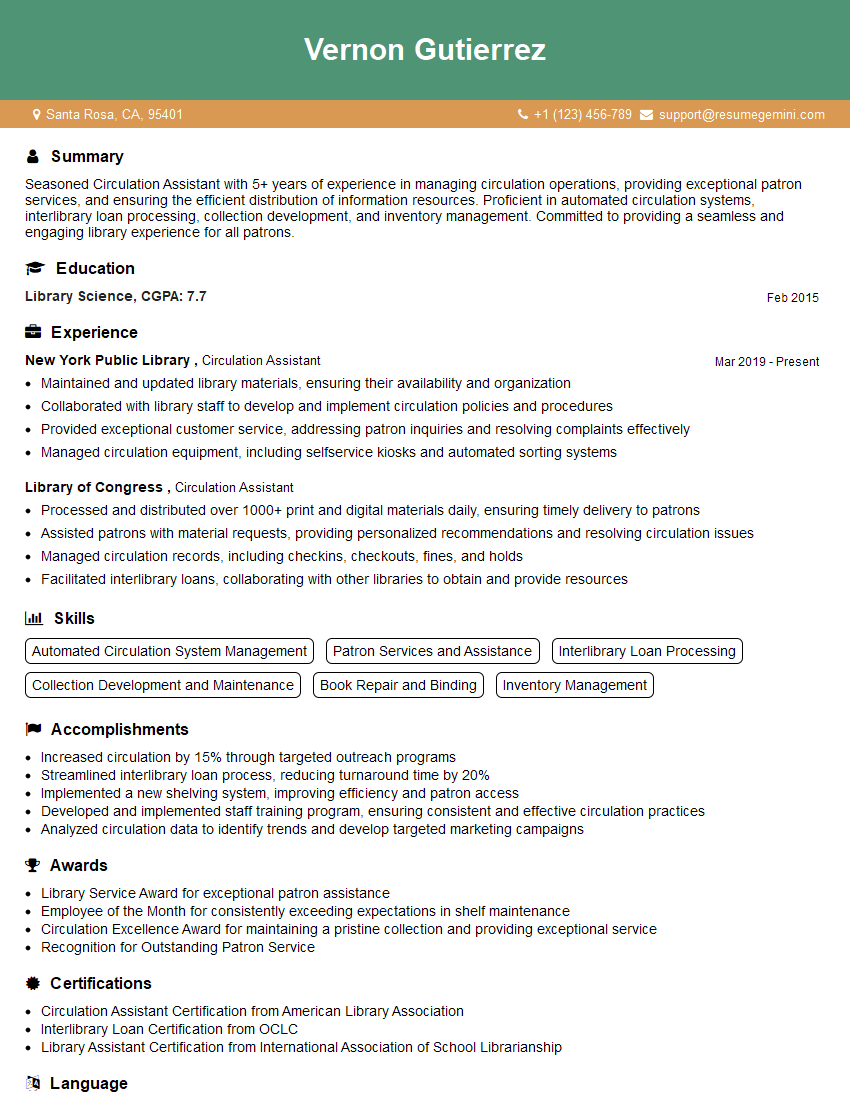
Circulation Assistant Resume Sample
Explore more articles
Users Rating of Our Blogs
Share Your Experience
We value your feedback! Please rate our content and share your thoughts (optional).
What Readers Say About Our Blog
I Redesigned Spongebob Squarepants and his main characters of my artwork.
https://www.deviantart.com/reimaginesponge/art/Redesigned-Spongebob-characters-1223583608
IT gave me an insight and words to use and be able to think of examples
Hi, I’m Jay, we have a few potential clients that are interested in your services, thought you might be a good fit. I’d love to talk about the details, when do you have time to talk?
Best,
Jay
Founder | CEO