Feeling uncertain about what to expect in your upcoming interview? We’ve got you covered! This blog highlights the most important Permit Compliance interview questions and provides actionable advice to help you stand out as the ideal candidate. Let’s pave the way for your success.
Questions Asked in Permit Compliance Interview
Q 1. Describe your experience managing the permitting process for a large-scale construction project.
Managing permits for a large-scale construction project, like a 20-story high-rise, is a complex undertaking. It requires meticulous planning and proactive communication. My experience involves orchestrating the entire process, from initial application to final inspection and certificate issuance. This includes identifying all necessary permits, preparing comprehensive applications, including detailed plans and specifications, submitting them to the relevant authorities, addressing any deficiencies, and diligently tracking the progress of each permit through the approval pipeline. For example, on a recent project, I managed over 50 different permits, from demolition permits to building permits, electrical permits and plumbing permits, coordinating the efforts of various subcontractors and consultants ensuring everything was perfectly aligned with the project schedule and budget. This included meticulous record-keeping, ensuring compliance with deadlines and proactively addressing potential conflicts or delays. The key to success lies in anticipating potential challenges and proactively addressing them to avoid costly project delays.
Q 2. Explain the different types of permits typically required for commercial construction.
The types of permits required for commercial construction vary significantly depending on the project’s scope, location, and specific activities. However, some common permits include:
- Building Permits: Authorize the construction, alteration, or demolition of a structure. These are fundamental and often involve detailed plans review.
- Demolition Permits: Required before any demolition work begins, outlining safety precautions and waste disposal plans.
- Electrical Permits: Cover all electrical work, ensuring compliance with electrical codes and safety standards.
- Plumbing Permits: Authorize all plumbing installations, ensuring compliance with plumbing codes and safety regulations.
- Mechanical Permits: Cover HVAC systems, ensuring compliance with energy efficiency and safety standards.
- Zoning Permits: Verify the project’s compliance with local zoning ordinances regarding land use, setbacks, and building height.
- Sign Permits: Required for any signage associated with the building.
- Fire Safety Permits: Ensure the building meets fire safety codes and regulations.
- Environmental Permits: May be needed depending on environmental factors like wetland protection or proximity to water bodies.
The exact requirements can vary significantly based on local jurisdictions, therefore, thorough research of the area-specific rules and regulations is critical.
Q 3. How do you ensure compliance with all applicable regulations and codes throughout the permitting process?
Ensuring compliance is paramount. My strategy involves a multi-pronged approach:
- Proactive Planning: I begin by thoroughly researching all applicable federal, state, and local regulations and codes. This involves identifying the specific requirements relevant to the project, and translating them into actionable steps throughout the design and construction phases.
- Detailed Documentation: I maintain meticulous records of all permit applications, approvals, inspections, and communications with regulatory agencies. This ensures transparency and aids in addressing potential compliance issues promptly.
- Regular Inspections and Audits: I conduct regular inspections at various construction stages to verify compliance with approved plans and applicable codes. Internal audits help pinpoint any potential deviation early on.
- Collaboration with Experts: I work closely with architects, engineers, and contractors to integrate compliance into the design and construction processes, ensuring that plans and specifications conform to all requirements from the outset.
- Open Communication: I maintain clear and consistent communication with regulatory agencies, addressing any queries promptly and providing any additional information they require.
Imagine this as building a house with a solid foundation – attention to detail in each step is crucial for overall structural integrity, just as compliance procedures ensure the project’s legal soundness.
Q 4. Describe your experience working with government agencies and regulatory bodies.
I have extensive experience interacting with various government agencies, including building departments, zoning boards, fire marshals, and environmental protection agencies. I understand the specific requirements of each agency and can effectively communicate with them to facilitate a smooth permitting process. I’ve developed strong relationships with many building inspectors through consistent communication and professionalism, enabling proactive issue resolution and swift permit approvals. For instance, in one project, I successfully negotiated a variance with the zoning board to accommodate a unique design feature, avoiding costly redesign. Effective communication, preparation of thorough documentation, and building trust with the inspectors are key to this.
Q 5. What strategies do you employ to identify and mitigate potential permit compliance risks?
Identifying and mitigating permit compliance risks requires a proactive and comprehensive approach. I employ these strategies:
- Risk Assessment: I conduct thorough risk assessments at the start of each project, identifying potential compliance issues that may arise, considering factors such as project complexity, local regulations, and potential environmental impacts.
- Due Diligence: I perform in-depth research to understand the specific requirements and regulations applicable to the project location and scope. This includes checking for any past compliance issues or zoning disputes relating to the site.
- Contingency Planning: I develop contingency plans to address potential delays or setbacks caused by permit denials or unexpected regulatory changes. This may involve alternative strategies for obtaining permits or adjusting project plans to meet compliance requirements.
- Regular Monitoring: I constantly monitor the project for compliance with all permits and regulations throughout the construction phase, conducting regular reviews and updating our risk assessments as necessary.
This approach minimizes surprises and ensures smooth operations by addressing challenges before they escalate.
Q 6. How do you stay current with changes in regulations and permitting requirements?
Staying up-to-date on regulatory changes is crucial. I achieve this through:
- Subscription to relevant newsletters and publications: This provides alerts on regulatory updates and upcoming changes impacting permit compliance.
- Attendance at industry conferences and workshops: Networking and participating in professional development activities helps gain insights into current best practices and upcoming changes.
- Active engagement with professional organizations: These organizations often share updates on regulatory changes, and provide training resources.
- Regular review of government websites: I frequently monitor the relevant government agency websites for notices, updates to codes, and changes in permitting procedures.
- Networking with other professionals: Discussions with colleagues and industry experts offer valuable insights into recent compliance challenges and solutions.
Continuous learning is essential in this dynamic field, ensuring proactive adaptation to new requirements.
Q 7. What is your experience with electronic permitting systems?
I have significant experience using various electronic permitting systems. These systems streamline the process, often offering online application submissions, tracking, and communication features. I am proficient in navigating different platforms, understanding their unique functionalities, and ensuring efficient use for timely submission of accurate and complete applications. My expertise spans from submitting digital plans and documents to utilizing online portals for tracking permit status and communication with reviewing agencies. This includes using systems that incorporate Geographic Information Systems (GIS) for spatial data management, improving the efficiency of the review and approval process. I’m comfortable working across various systems and adapting quickly to new platforms as needed, ensuring compliance even when utilizing different electronic permitting systems.
Q 8. Describe a time you had to resolve a complex permitting issue. What was your approach?
One particularly challenging permitting issue involved a client seeking to construct a commercial building near a protected wetland. The initial application was denied due to insufficient mitigation plans for potential environmental impact. My approach involved a multi-pronged strategy.
- Comprehensive Research: I thoroughly researched all applicable federal, state, and local environmental regulations, focusing on wetland protection laws and mitigation best practices. This involved consulting environmental impact reports, engaging with subject-matter experts, and reviewing case precedents for similar projects.
- Collaboration and Communication: I collaborated extensively with the client, environmental consultants, and the permitting agency. Open communication was key; I proactively addressed the agency’s concerns, clearly articulating our mitigation strategy and providing them with all necessary documentation. This collaborative effort included several meetings to discuss the revised plan and gather feedback.
- Detailed Mitigation Plan: Working with environmental consultants, we developed a robust and comprehensive mitigation plan that significantly exceeded the regulatory requirements. This involved detailed site assessments, hydrological studies, and proposed measures to minimize wetland disturbance and restore any impacted areas. We provided rigorous scientific data to back up our proposal.
- Amendment and Resubmission: Based on the feedback received, we amended the permit application to incorporate the revised mitigation plan. This amended application was meticulously reviewed to ensure completeness and accuracy before resubmission. The process took longer than originally planned, but the clear communication and comprehensive data ultimately secured approval.
Ultimately, the revised application was approved, demonstrating the importance of thorough research, collaboration, and a proactive approach to addressing regulatory concerns.
Q 9. How do you prioritize tasks and manage multiple concurrent permitting projects?
Managing multiple concurrent permitting projects requires a robust organizational system and a clear prioritization strategy. I employ a combination of techniques:
- Project Prioritization Matrix: I utilize a matrix based on urgency and importance to rank projects. Factors considered include deadlines, potential impact of delays, project complexity, and client priorities. Projects with imminent deadlines and significant potential consequences are prioritized.
- Detailed Project Calendars: I maintain meticulous project calendars with key deadlines for each stage of the permitting process. These calendars are shared with clients and internal teams to ensure everyone is aligned and aware of crucial milestones. I use project management software to track tasks and deadlines effectively.
- Regular Check-ins and Communication: Regular meetings with clients and internal teams are essential for staying on track. These meetings are used to review progress, address potential roadblocks, and adjust the schedule as needed. Transparent communication minimizes unexpected delays.
- Delegation and Teamwork: I effectively delegate tasks to team members, ensuring that each person has clear responsibilities and understands the project’s goals. This collaborative approach enhances efficiency and ensures timely completion.
For instance, if I have one high-priority project with a tight deadline alongside several lower-priority projects, I allocate a larger portion of my time and resources to the high-priority project while still maintaining regular updates and progress on the others. This approach ensures that all projects are managed effectively, without compromising quality or exceeding deadlines.
Q 10. How familiar are you with environmental regulations related to permitting?
I possess extensive familiarity with environmental regulations related to permitting. My experience encompasses a broad range of federal, state, and local regulations, including those related to:
- Clean Water Act (CWA): Understanding the permitting requirements under Section 404 for discharges into waters of the United States is crucial for many projects. I am knowledgeable about wetland delineation, mitigation banking, and other relevant aspects.
- Clean Air Act (CAA): Familiarity with air quality permits and regulations, particularly for projects emitting pollutants, is essential. I know how to navigate the permitting process for different emission sources and comply with associated monitoring and reporting requirements.
- Endangered Species Act (ESA): I am well-versed in the procedures for assessing potential impacts on endangered or threatened species and their habitats. This includes consultation with federal agencies and the implementation of appropriate conservation measures.
- National Environmental Policy Act (NEPA): I understand the requirements for environmental assessments and environmental impact statements for major federal projects.
This understanding allows me to effectively navigate the complexities of environmental compliance and ensure that projects meet all applicable regulations. I regularly attend professional development courses and workshops to stay abreast of evolving regulations and best practices.
Q 11. Explain the process of appealing a denied permit application.
Appealing a denied permit application is a formal process that typically involves several steps.
- Review the Denial Letter: Carefully review the denial letter to understand the specific reasons for the denial. Identify any deficiencies in the original application that need to be addressed.
- Gather Supporting Documentation: Compile all relevant documentation that supports your appeal, including any new evidence, expert opinions, or revised plans that address the reasons for denial.
- File the Appeal: Submit a formal appeal letter within the specified timeframe stipulated in the denial letter or relevant regulations. The appeal letter must clearly state the grounds for the appeal and provide supporting evidence.
- Attend Hearings (if necessary): Depending on the permitting authority’s procedures, you may be required to attend a hearing to present your case. Be prepared to answer questions from the decision-making body.
- Administrative Review: The appeal is then reviewed by a designated authority. This review may involve a reassessment of the application, additional documentation, or a formal hearing.
It’s crucial to understand the specific procedures and deadlines outlined by the permitting agency. Seeking legal counsel is advisable in complex appeals to ensure compliance with all requirements and to maximize the chances of a successful outcome.
Q 12. How do you handle conflicting permit requirements from different agencies?
Conflicting permit requirements from different agencies are a common challenge. The best approach is a proactive and collaborative one.
- Identify the Conflict: Clearly identify the specific conflicting requirements from each agency. Document each requirement with supporting documentation.
- Engage with Agencies: Meet with representatives from each agency to discuss the conflict. Clearly explain the project and highlight the conflicting requirements. The goal is to facilitate communication and find a mutually agreeable solution.
- Negotiation and Compromise: Work collaboratively with each agency to negotiate a solution that satisfies all requirements, or at least find a compromise that minimizes the conflict. This may involve revising the project plans or seeking variances or waivers.
- Documentation: Maintain thorough documentation throughout the process, including meeting minutes, correspondence, and any agreed-upon solutions or compromises.
- Mediation (if necessary): If negotiation fails, consider mediation as a neutral third-party process to resolve the conflict.
For example, a project might face conflicting requirements regarding stormwater management from the environmental agency and building setbacks from the zoning agency. Through meetings and discussions, a compromise could involve minor modifications to the design to satisfy both sets of requirements, possibly involving a slight reduction in building size to meet the setback requirement while incorporating a more effective stormwater management solution.
Q 13. What is your experience with permit renewals and amendments?
Permit renewals and amendments are integral parts of the permitting process.
- Permit Renewals: Renewals often require submitting an application demonstrating continued compliance with the original permit conditions. This typically involves documentation of ongoing operations, environmental monitoring reports, and any changes in project scope that might necessitate modifications to the original permit.
- Permit Amendments: Amendments are required when there are significant changes to the project that were not anticipated in the original permit. This could involve expansion of the project, changes in the type of work, or updated environmental mitigation strategies. Amendments often require a new review and approval process by the permitting agency.
My experience includes handling numerous permit renewals and amendments across diverse project types. I understand the necessary documentation, review processes, and communication required for successful renewals and amendment approvals. I always ensure that applications are submitted well in advance of expiration dates to avoid potential disruptions to ongoing projects.
Q 14. How do you ensure accurate and complete permit applications are submitted?
Ensuring accurate and complete permit applications is crucial for timely approvals. My approach involves a methodical process:
- Thorough Pre-Application Review: Before initiating the application, I conduct a comprehensive review of all applicable regulations, zoning codes, and environmental requirements. This includes identifying all necessary permits and ensuring all project plans and specifications align with regulatory standards.
- Checklists and Templates: I use customized checklists and templates specific to each permitting agency and project type. These ensure that all necessary information is gathered and included in the application.
- Data Verification: I implement a rigorous data verification process to ensure the accuracy of all information submitted, including measurements, calculations, and technical specifications. This includes cross-checking information from multiple sources.
- Internal Review Process: Before submission, the application undergoes a thorough internal review process to identify and correct any potential errors or omissions. This ensures a high-quality application.
- Communication with the Agency (pre-submission): I often pre-file, or at least communicate with permitting agencies prior to submission. This helps to clarify any uncertain requirements, ensure the application adheres to their specific needs, and potentially prevent delays or rejections.
This multi-layered approach minimizes the risk of errors and ensures that applications are both complete and accurate, significantly increasing the likelihood of timely approvals.
Q 15. Describe your experience using GIS software for permit review and tracking.
GIS software is invaluable in permit review and tracking. It allows for spatial analysis, visualization, and efficient management of geographically referenced permit data. My experience involves using ArcGIS and QGIS to map permit locations, overlay them with zoning boundaries and other relevant datasets (like utility lines, environmental sensitive areas, etc.), and track the progress of permits through various stages. For example, I used ArcGIS to create a dynamic map displaying the location of all active construction permits within a city, color-coded by permit status (e.g., applied, approved, under construction, completed). This allowed for easy identification of potential conflicts, efficient resource allocation, and proactive monitoring of project progress.
Furthermore, I’ve used GIS to analyze permit density to identify potential areas of high impact, helping inform land use planning decisions. Data analysis within GIS provides valuable insights for predicting potential challenges and optimizing resource allocation during the permit review process. For instance, analyzing proximity to wetlands helped expedite review processes and mitigate environmental risk.
Career Expert Tips:
- Ace those interviews! Prepare effectively by reviewing the Top 50 Most Common Interview Questions on ResumeGemini.
- Navigate your job search with confidence! Explore a wide range of Career Tips on ResumeGemini. Learn about common challenges and recommendations to overcome them.
- Craft the perfect resume! Master the Art of Resume Writing with ResumeGemini’s guide. Showcase your unique qualifications and achievements effectively.
- Don’t miss out on holiday savings! Build your dream resume with ResumeGemini’s ATS optimized templates.
Q 16. How would you handle a situation where a permit is found to be non-compliant after issuance?
Discovering non-compliance after permit issuance requires a careful and systematic approach. The first step is to thoroughly investigate the nature of the non-compliance. Is it a minor infraction or a significant violation? Then, we need to identify the responsible party and understand the circumstances leading to the discrepancy. Depending on the severity, the actions may range from issuing a stop-work order, requiring corrective actions with a revised plan submittal, imposing fines, or even revoking the permit.
For example, if a building’s construction deviates significantly from the approved plans, we’d issue a stop-work order. The applicant would then be required to submit a revised plan addressing the violations, undergo a new review, and potentially pay additional fees. Clear communication throughout this process, maintaining documentation at every stage, is crucial to ensure fairness and transparency. This process always involves a balance of protecting public safety and working with the permit holder to achieve compliance.
Q 17. Describe your understanding of zoning ordinances and their role in permitting.
Zoning ordinances are regulations that govern land use within a specific jurisdiction. They dictate what types of structures can be built where, the density of development, setbacks from property lines, and other land use restrictions. These ordinances play a critical role in the permitting process by providing the legal framework for evaluating permit applications. Before a permit can be issued, the proposed project must comply with all applicable zoning regulations.
For instance, if an applicant wants to build a multi-family dwelling in a zone designated for single-family homes only, the permit application would be denied based on the zoning ordinance. My expertise includes interpreting complex zoning maps and regulations, ensuring that proposed projects align with the zoning codes and regulations relevant to the specific geographic location. This often involves referencing official zoning documents, including maps and text descriptions, to identify specific requirements and ensure compliance.
Q 18. What are the key differences between federal, state, and local permitting requirements?
Permitting requirements vary significantly across federal, state, and local levels. Federal regulations often deal with broader environmental concerns, like those covered by the Clean Water Act or the Endangered Species Act, and usually apply to projects with significant national impacts. State regulations address issues like building codes, environmental protection within the state, and professional licensing requirements. Local regulations, implemented at the city or county level, are often the most specific, addressing zoning ordinances, land use regulations, and local building codes.
A project might require permits at multiple levels. For example, constructing a bridge over a navigable waterway could involve a federal permit from the Army Corps of Engineers, a state environmental permit, and a local building permit. Understanding this hierarchy of regulations is critical for ensuring compliance and avoiding delays.
Q 19. How do you ensure all stakeholders are informed of the permitting process?
Effective stakeholder communication is vital for a smooth permitting process. This involves identifying all relevant stakeholders (applicant, neighbors, government agencies, utility companies), establishing clear communication channels, and maintaining consistent updates throughout the process. Methods include regular meetings, email updates, online portals with permit status information, and public notice requirements.
For example, for a large development project, we would hold public hearings to address community concerns and provide regular updates through an online portal detailing the permit application status, review timeline, and decision outcomes. Proactive communication not only keeps stakeholders informed but also builds trust and minimizes potential conflicts.
Q 20. Explain your understanding of the National Environmental Policy Act (NEPA) and its impact on permitting.
The National Environmental Policy Act (NEPA) is a federal law requiring federal agencies to assess the environmental impacts of their actions and those they fund. This significantly impacts permitting by mandating the preparation of Environmental Impact Statements (EIS) or Environmental Assessments (EA) for projects that may significantly affect the environment. The NEPA process aims to ensure that environmental considerations are integrated into decision-making.
Essentially, projects triggering NEPA requirements need to go through an extensive review process to analyze potential environmental effects, including impacts on air and water quality, wildlife habitats, and other environmental resources. Depending on the assessment outcome, the agency may approve, modify, or reject the project. The NEPA review process is a crucial step in the larger permitting workflow for projects with potential environmental impacts.
Q 21. How familiar are you with building codes and their role in the permitting process?
Building codes are sets of rules and regulations that govern the design, construction, and maintenance of buildings to ensure public safety and structural integrity. They address various aspects, including structural stability, fire safety, accessibility, and energy efficiency. Building codes are inextricably linked to the permitting process; a project must adhere to all applicable building codes before a permit can be issued.
Permit reviewers must carefully check construction plans for compliance with building codes. This can involve reviewing structural calculations, reviewing fire protection systems, and verifying the plans satisfy accessibility requirements for people with disabilities. Non-compliance with building codes can lead to permit denial or the requirement for plan revisions. Regular updates and familiarity with the latest code editions are essential for an effective review process.
Q 22. Describe your experience working within a project team to manage permit compliance.
Managing permit compliance within a project team requires a collaborative and proactive approach. My experience involves leading and participating in teams across various project phases, from initial planning and design through construction and final inspections. This includes:
- Early Engagement: I ensure the permitting process is integrated into project planning from the outset. This avoids delays by identifying potential permit requirements early and incorporating them into project schedules and budgets.
- Risk Assessment: I work with the team to conduct thorough risk assessments, identifying potential permit-related challenges, such as jurisdictional overlaps or complex regulations. We then develop mitigation strategies to address these.
- Communication and Coordination: I maintain open communication with all team members, external agencies (like building departments), and contractors, ensuring everyone understands their roles and responsibilities in meeting permit requirements. This often involves regular meetings and progress reports.
- Documentation: Meticulous record-keeping is crucial. I oversee the collection and organization of all permit-related documents, ensuring their availability for inspections and audits.
- Problem Solving: Inevitably, issues arise. I lead the team in proactively addressing delays, denials, or other problems, exploring alternative solutions and communicating effectively with relevant parties.
For instance, on a recent commercial construction project, we anticipated a potential delay due to a complex environmental permit. By proactively engaging with the environmental agency early in the process, we identified a streamlined permitting pathway and avoided a costly delay.
Q 23. What software or tools are you proficient in using for permit management?
My proficiency extends to several software and tools integral to efficient permit management. These include:
- PlanSwift/On-Screen Takeoff: For accurate quantity take-offs and material estimations, aiding in permit applications.
- Project Management Software (e.g., Asana, Monday.com): For tracking applications, deadlines, inspections, and communicating progress within the team and with external agencies.
- GIS Software (e.g., ArcGIS): For visualizing project locations, identifying jurisdictional boundaries, and understanding potential environmental constraints relevant to permitting.
- Dedicated Permitting Software (e.g., various municipal online portals): I’m adept at navigating the specific requirements and interfaces of diverse permitting platforms.
- Microsoft Office Suite (Excel, Word): Essential for creating comprehensive applications, managing databases, and generating reports.
I also have experience using custom databases and spreadsheets tailored to specific client needs and regulatory requirements, ensuring all data is organized and accessible.
Q 24. Explain your approach to identifying potential permit-related liabilities.
Identifying potential permit-related liabilities is a systematic process that begins with a thorough understanding of the project scope and applicable regulations. My approach involves:
- Jurisdictional Review: Determining which local, state, and federal agencies have jurisdiction over the project.
- Regulatory Research: Thoroughly researching all applicable codes, ordinances, and regulations, paying close attention to deadlines and requirements.
- Site Analysis: Assessing site-specific conditions such as environmental factors, historical preservation considerations, or access limitations that might influence permit requirements.
- Gap Analysis: Comparing project plans and designs to the regulatory requirements, identifying potential inconsistencies or areas needing further clarification.
- Scenario Planning: Considering potential issues, such as permit denials or delays, and devising contingency plans to minimize liabilities.
For example, in a historic preservation district, I would conduct a thorough review of historic preservation regulations to ensure that our project plans conform, mitigating the risk of a permit denial or costly revisions.
Q 25. How do you ensure data accuracy and maintain thorough records within a permitting system?
Data accuracy and comprehensive record-keeping are paramount for successful permit compliance. My strategies include:
- Centralized Database: Utilizing a centralized system for storing all permit-related documents and information, accessible to all relevant team members.
- Version Control: Maintaining meticulous version control of all documents to track changes and ensure consistency.
- Data Validation: Implementing checks and balances throughout the data entry process to prevent errors and ensure accuracy.
- Regular Audits: Conducting periodic audits of permit files to ensure completeness and compliance with regulations.
- Digital Archiving: Securely archiving all digital and physical documents for long-term access and accountability.
By using a combination of these methods, I ensure that our permit information is consistently accurate, readily available, and auditable, thereby minimizing the risk of errors and complications.
Q 26. Describe your experience with permit inspections and follow-up actions.
Permit inspections are critical for ensuring compliance throughout a project. My experience includes:
- Pre-Inspection Preparation: Thoroughly preparing for inspections by ensuring that all required documents are readily available and the project site is in compliance with permit conditions.
- Active Participation: Participating actively in inspections, clearly communicating project details to inspectors and addressing any questions or concerns.
- Follow-up Actions: Promptly addressing any identified deficiencies or non-compliances, documenting all corrective actions, and rescheduling inspections as needed.
- Inspection Documentation: Maintaining detailed records of all inspections, including dates, results, and any required follow-up actions.
For instance, during a recent inspection, a minor discrepancy was identified. By promptly addressing this issue, we avoided further delays and ensured that the project remained on schedule.
Q 27. How do you handle disagreements or disputes with permit applicants?
Disagreements or disputes with permit applicants are handled professionally and diplomatically. My approach focuses on:
- Open Communication: Clearly explaining the reasons for any objections or denials, providing specific examples and referencing relevant regulations.
- Collaborative Problem Solving: Working with the applicant to find solutions that meet both regulatory requirements and project needs. This may involve suggesting modifications to plans or offering guidance on the permitting process.
- Escalation Procedures: Following established escalation procedures if disagreements cannot be resolved through direct communication. This could involve mediating between the applicant and the relevant authorities.
- Documentation: Maintaining detailed records of all communications and decisions, documenting the rationale behind any decisions.
I always strive to maintain a professional and respectful demeanor, understanding that effective communication is key to resolving disagreements effectively.
Q 28. Describe your process for tracking permit applications and their progress.
Tracking permit applications and their progress is crucial for maintaining project timelines. My process involves:
- Application Management System: Utilizing a centralized system to track applications, deadlines, and progress. This could be a dedicated software solution or a well-organized spreadsheet.
- Regular Status Updates: Providing regular status updates to the project team and stakeholders, highlighting potential delays and addressing any emerging issues.
- Automated Reminders: Utilizing automated reminders and alerts for approaching deadlines and required actions.
- Communication Log: Maintaining a detailed log of all communications with permitting agencies, noting dates, decisions, and next steps.
- Visual Dashboards (when applicable): Creating visual dashboards to provide clear and concise overviews of the status of multiple permit applications.
This structured approach ensures all applications are monitored, ensuring timely completion and minimizing the risk of delays.
Key Topics to Learn for Permit Compliance Interview
- Permitting Processes: Understand the lifecycle of a permit, from application to issuance to closure, including relevant regulations and timelines.
- Regulatory Compliance: Familiarize yourself with local, state, and federal regulations governing permits within your target industry (e.g., construction, environmental). Practice applying these regulations to hypothetical scenarios.
- Permit Application Review: Learn how to effectively review permit applications for completeness, accuracy, and compliance with regulations. Consider the practical challenges of incomplete or inaccurate submissions.
- Inspection Procedures: Understand the process of conducting on-site inspections to verify compliance with permit conditions. Be prepared to discuss different inspection techniques and potential challenges.
- Enforcement and Remediation: Learn about the processes for addressing permit violations, including issuing notices of violation, conducting enforcement actions, and overseeing remediation efforts.
- Data Management and Reporting: Understand how permit data is managed, analyzed, and reported, including the use of databases and reporting software. Consider the importance of accurate record-keeping.
- Stakeholder Communication: Develop your skills in effectively communicating with applicants, contractors, inspectors, and other stakeholders throughout the permitting process.
- Problem-Solving and Decision-Making: Practice applying your knowledge to solve complex problems related to permit compliance, such as resolving conflicts or addressing unexpected issues.
Next Steps
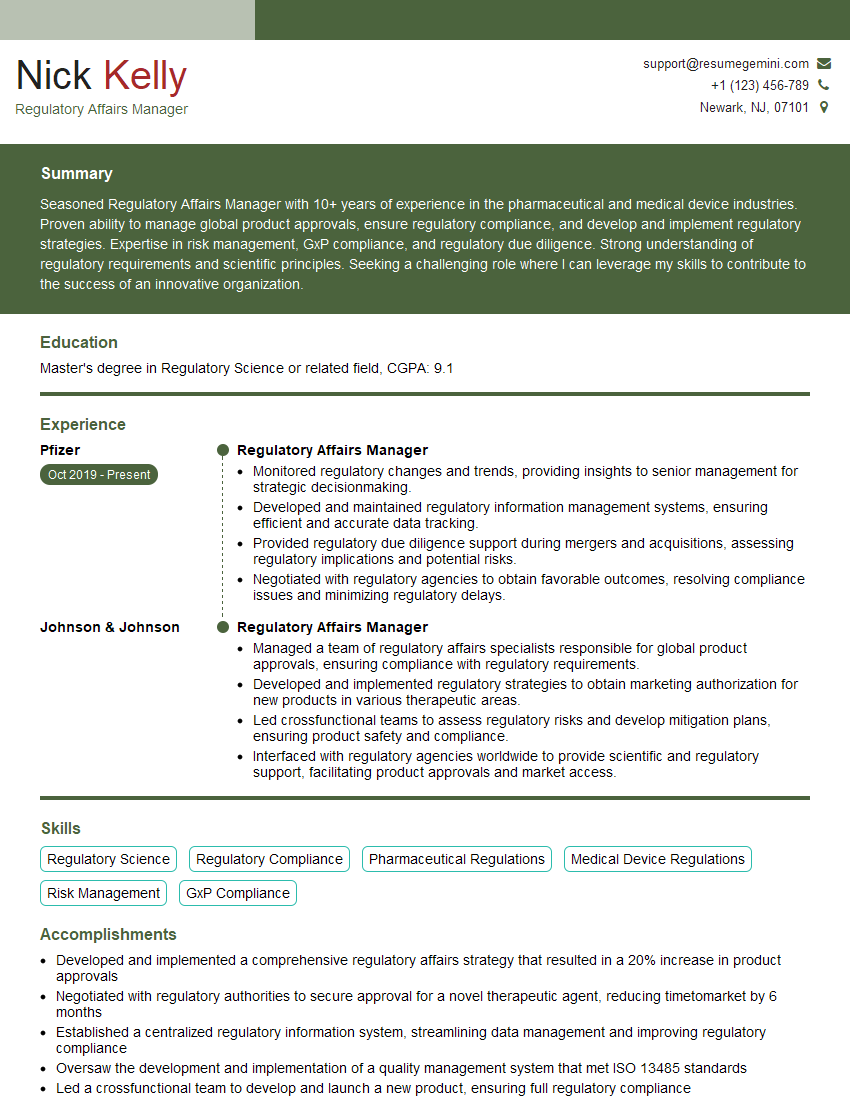
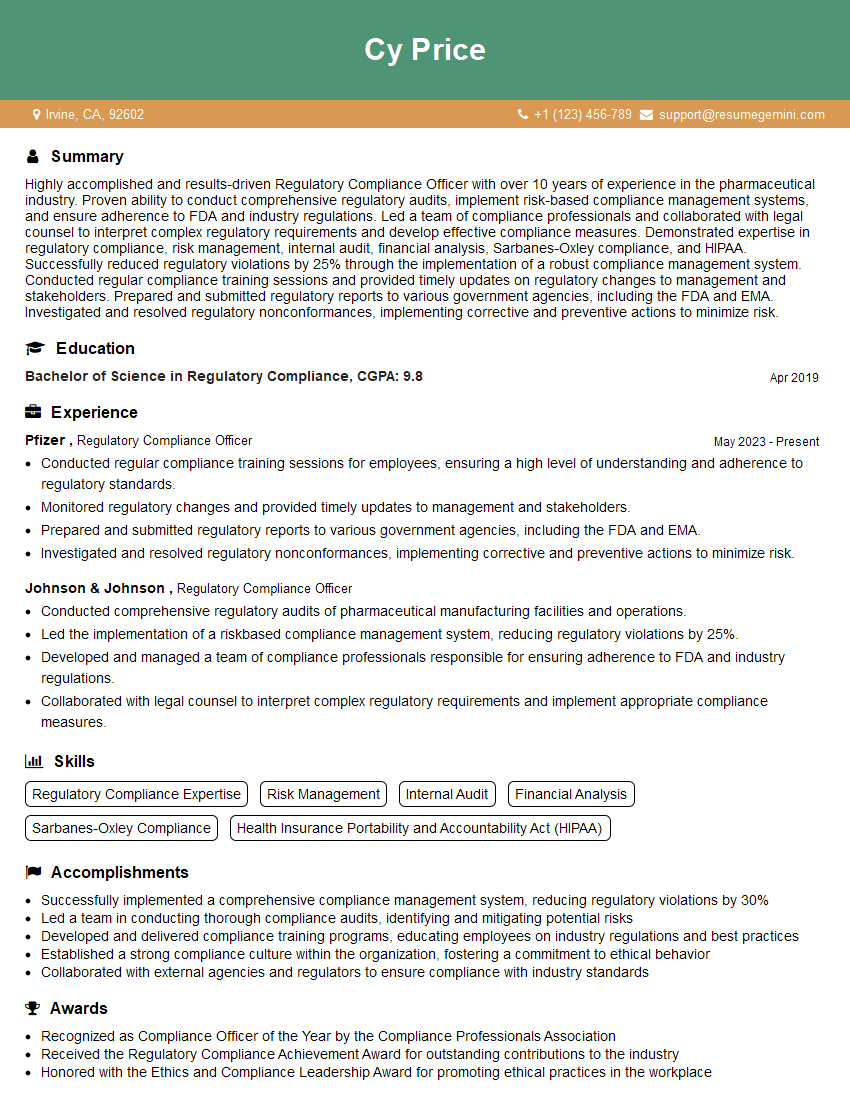
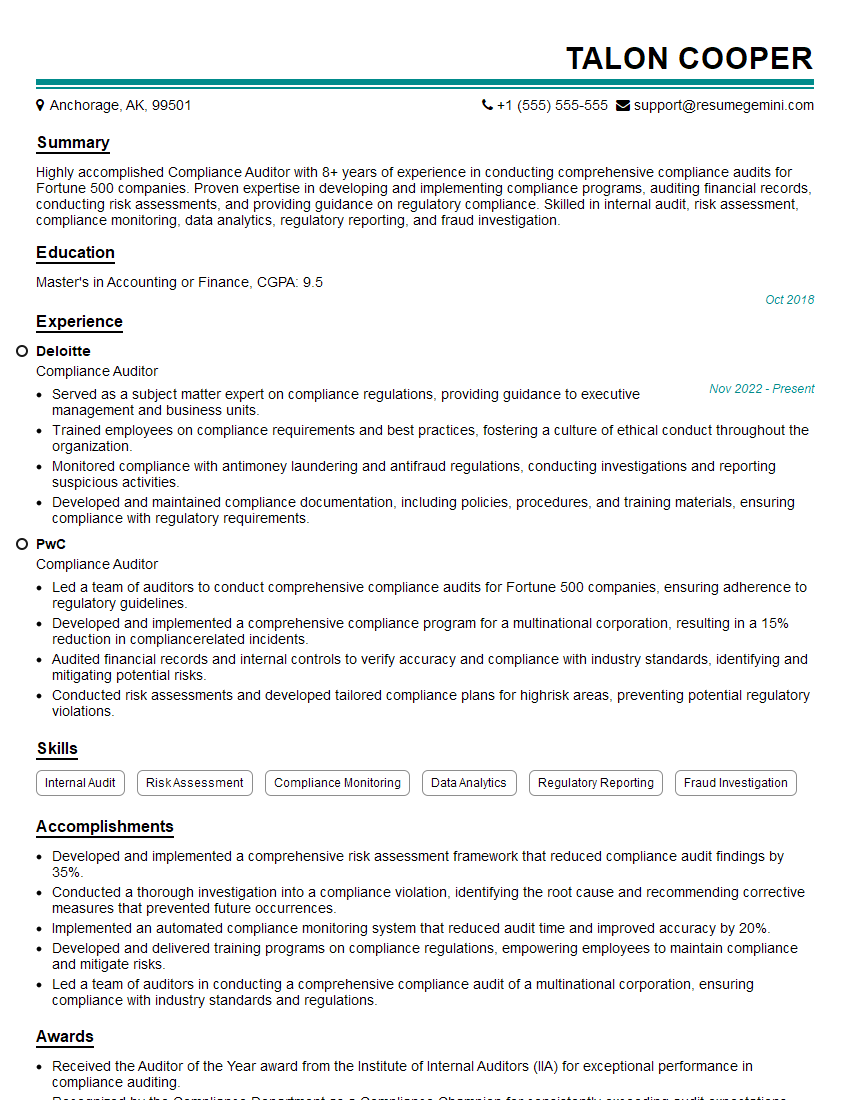
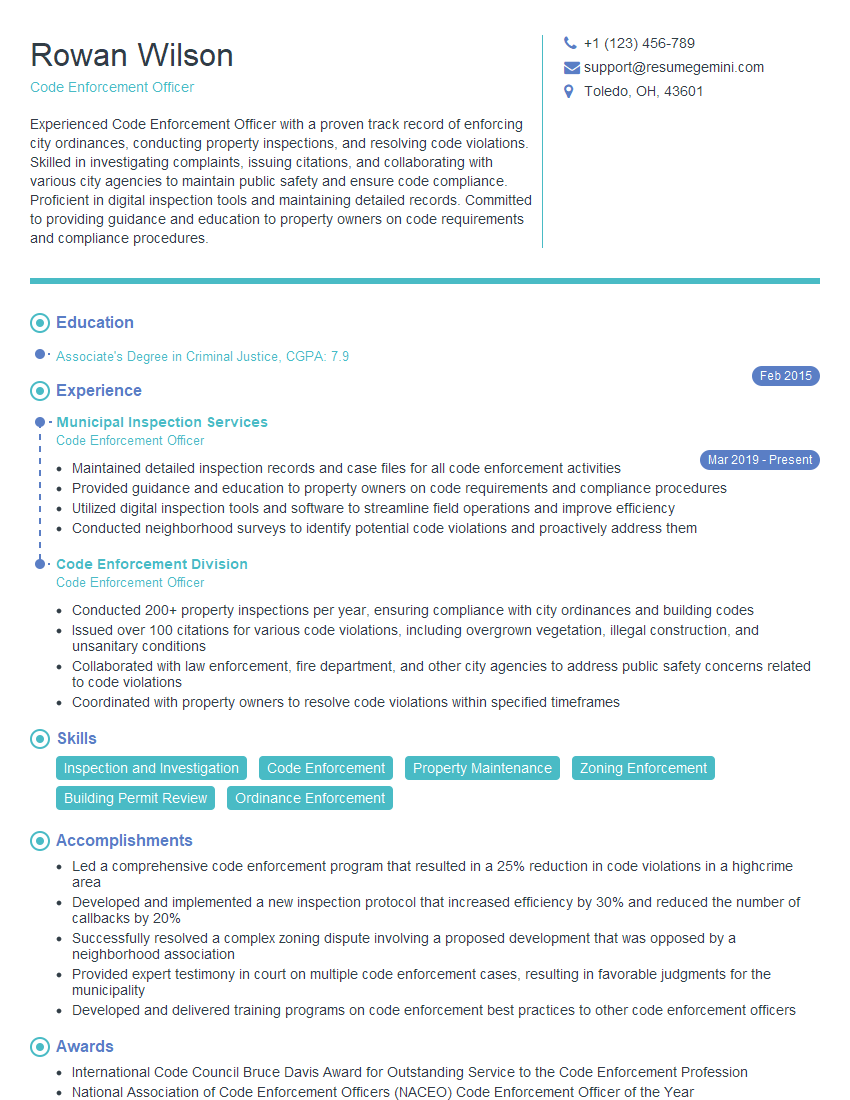
Mastering Permit Compliance opens doors to rewarding careers with significant growth potential in various sectors. Your expertise in navigating complex regulations and ensuring compliance is highly valued. To significantly increase your chances of landing your dream role, invest time in crafting an ATS-friendly resume that effectively showcases your skills and experience. ResumeGemini is a trusted resource to help you build a professional and impactful resume that gets noticed. Examples of resumes tailored to Permit Compliance are available to guide you through this process.
Explore more articles
Users Rating of Our Blogs
Share Your Experience
We value your feedback! Please rate our content and share your thoughts (optional).
What Readers Say About Our Blog
I Redesigned Spongebob Squarepants and his main characters of my artwork.
https://www.deviantart.com/reimaginesponge/art/Redesigned-Spongebob-characters-1223583608
IT gave me an insight and words to use and be able to think of examples
Hi, I’m Jay, we have a few potential clients that are interested in your services, thought you might be a good fit. I’d love to talk about the details, when do you have time to talk?
Best,
Jay
Founder | CEO