Interviews are opportunities to demonstrate your expertise, and this guide is here to help you shine. Explore the essential Pipelining and Forecasting interview questions that employers frequently ask, paired with strategies for crafting responses that set you apart from the competition.
Questions Asked in Pipelining and Forecasting Interview
Q 1. Explain the difference between top-down and bottom-up forecasting methods.
Top-down and bottom-up forecasting are two contrasting approaches to predicting future outcomes. Top-down forecasting starts with a high-level overview and breaks it down into smaller components. Imagine forecasting total sales for a company – you might start with macroeconomic indicators like GDP growth, then break it down by region, then by product line. It’s efficient but can be less accurate at the granular level because it doesn’t account for specific nuances of individual units. Bottom-up forecasting, on the other hand, starts with the most granular level – individual sales representatives, for example – and aggregates the projections upwards. This is more data-intensive but often provides a more precise overall forecast because it captures specific market realities at the ground level. Think of it like building a house: top-down is like designing the blueprint first, while bottom-up is like starting with each individual brick and mortar.
Q 2. Describe three common forecasting techniques and their strengths and weaknesses.
Three common forecasting techniques include:
- Simple Moving Average: This method calculates the average of a specific number of past data points to predict the next value. It’s easy to understand and implement, ideal for stable data with no significant trends. However, it’s highly sensitive to outliers and lags behind significant changes in the underlying pattern.
Example: Average sales over the last 3 months to predict next month's sales. - Exponential Smoothing: This technique assigns exponentially decreasing weights to older data points, giving more importance to recent observations. It’s better at capturing trends than the simple moving average and is less sensitive to outliers. However, it still might struggle with abrupt changes and requires careful selection of the smoothing factor.
- ARIMA (Autoregressive Integrated Moving Average): ARIMA models are sophisticated statistical models that capture both autocorrelations (relationships between past values) and moving averages. They are powerful for time series data with complex patterns, including trends and seasonality. However, they are more complex to implement and require significant expertise in time series analysis. Proper model identification and parameter estimation are crucial for accurate forecasting.
Q 3. How do you handle data outliers when building a forecasting model?
Handling outliers in forecasting is crucial, as they can significantly skew results. The approach depends on the nature and cause of the outliers. First, investigate the outlier. Was it a genuine anomaly (e.g., a natural disaster disrupting supply) or data entry error? For genuine anomalies, you might consider:
- Winsorizing: Replacing extreme values with less extreme values (e.g., the 95th percentile value).
- Transformation: Applying a transformation like a logarithmic transformation to reduce the impact of outliers.
- Robust methods: Using robust forecasting techniques less sensitive to outliers, like robust regression or median-based methods.
If it’s a data error, correct it. If the outlier represents a real but unusual event, you might exclude it from the model training data but consider its impact separately. Always document your outlier handling approach to ensure transparency and reproducibility.
Q 4. What are some key metrics you use to evaluate the accuracy of a forecast?
Several key metrics evaluate forecast accuracy. The choice depends on the context, but common ones include:
- Mean Absolute Error (MAE): The average absolute difference between the forecasted and actual values. Easy to understand and interpret.
- Root Mean Squared Error (RMSE): The square root of the average squared differences. Penalizes larger errors more heavily than MAE.
- Mean Absolute Percentage Error (MAPE): The average absolute percentage difference. Useful for comparing forecasts across different scales.
- R-squared: Measures the goodness of fit of the model, indicating the proportion of variance in the data explained by the model. Higher values indicate better fit.
It’s important to consider these metrics in conjunction with visual inspection of the forecast versus actual data to gain a comprehensive understanding of forecast accuracy.
Q 5. How do you identify and mitigate risks associated with forecasting?
Forecasting inherently involves uncertainty. Risk mitigation involves:
- Data quality assessment: Ensuring data accuracy, completeness, and consistency is fundamental. Poor data leads to poor forecasts.
- Model validation: Thoroughly testing the model on different datasets (e.g., holdout samples) and using appropriate metrics.
- Scenario planning: Developing forecasts under various assumptions (e.g., best-case, worst-case, most-likely) to account for potential uncertainties.
- Regular monitoring and updating: Continuously monitoring forecast performance and updating the model as new data becomes available.
- Sensitivity analysis: Assessing the impact of changes in key input variables on the forecast.
By proactively addressing these aspects, you can significantly improve the robustness and reliability of your forecasts.
Q 6. Explain the concept of pipeline velocity and its importance.
Pipeline velocity refers to the speed at which work moves through a process or pipeline. In software development, for example, it might measure the time it takes for code to progress from initiation to deployment. In sales, it might track the time from lead generation to closing a deal. Importance stems from its role in optimizing efficiency and predictability. Faster velocity often means faster delivery of value to customers, quicker feedback loops, and better resource allocation. Tracking pipeline velocity allows for identifying bottlenecks, predicting future outcomes (e.g., delivery dates), and continuously improving processes for greater efficiency.
Q 7. Describe your experience using different forecasting software or tools.
I have extensive experience with various forecasting software and tools, including:
- Statistical software packages: R and Python (using libraries like Statsmodels, scikit-learn, and Prophet) offer flexible and powerful tools for building and evaluating a wide range of forecasting models.
- Spreadsheet software: Microsoft Excel provides basic forecasting tools (like moving average and exponential smoothing) suitable for simpler analyses. However, for complex models, specialized statistical software is preferable.
- Specialized forecasting platforms: I’ve also utilized dedicated platforms offering advanced features like automated model selection, anomaly detection, and collaborative forecasting capabilities, streamlining the forecasting workflow and improving accuracy.
My choice of tool depends heavily on the complexity of the forecasting task, the size of the dataset, and the specific needs of the project. For instance, a simple sales forecast might be handled effectively in Excel, while a sophisticated financial time series model would necessitate the power of R or Python.
Q 8. How do you incorporate qualitative factors into your forecasting process?
Incorporating qualitative factors into forecasting is crucial for achieving accuracy, especially when dealing with market shifts or new product launches where purely quantitative data might be limited. I approach this by using a structured approach that combines quantitative analysis with expert judgment and market research.
- Expert Interviews: I conduct interviews with sales representatives, marketing teams, and product managers to gather insights into market sentiment, competitor actions, and potential disruptions.
- Qualitative Surveys and Focus Groups: These help understand customer preferences, perceptions, and potential challenges that might impact sales.
- Delphi Method: This technique involves gathering opinions from a panel of experts, iteratively refining their predictions to reach a consensus.
- Scenario Planning: This involves developing multiple future scenarios based on different qualitative assumptions (e.g., economic downturn, successful marketing campaign). Each scenario has its corresponding quantitative forecast, providing a range of possible outcomes.
For example, if launching a new software, understanding the competitive landscape and the perceived value proposition through customer interviews would significantly improve forecasting accuracy compared to relying solely on historical sales data.
Q 9. What is the difference between a lead, an opportunity, and a deal in a sales pipeline?
In a sales pipeline, ‘lead,’ ‘opportunity,’ and ‘deal’ represent distinct stages of the sales process, each with a different level of qualification and probability of closure.
- Lead: A lead is a potential customer who has shown initial interest in your product or service. They might have downloaded a resource, visited your website, or attended a webinar. Leads are generally unqualified and require further nurturing.
- Opportunity: An opportunity is a qualified lead that has demonstrated a genuine need for your product and has engaged in meaningful conversations with your sales team. They are more likely to convert into a customer compared to a lead.
- Deal: A deal is an opportunity that has progressed to a formal negotiation stage. A firm proposal has been presented, and the terms are being discussed with a high probability of closing.
Think of it like a funnel: many leads enter the top, some become opportunities, and even fewer become closed deals.
Q 10. How do you identify and address bottlenecks in the sales pipeline?
Identifying and addressing bottlenecks in the sales pipeline is critical for improving efficiency and increasing revenue. My process involves a combination of data analysis and collaborative problem-solving.
- Data Analysis: I analyze sales pipeline data (e.g., conversion rates between stages, deal cycle length, average deal size) to identify stages where deals are getting stuck or taking longer than expected.
- Sales Cycle Mapping: Visualizing the sales process helps pinpoint bottlenecks. This might reveal inefficiencies in lead qualification, proposal creation, or closing stages.
- Sales Team Feedback: Regularly engaging with the sales team to understand their challenges and roadblocks provides invaluable qualitative insights. Are they facing obstacles in accessing information, securing approvals, or overcoming customer objections?
Once a bottleneck is identified (e.g., low conversion rate from opportunity to deal), we might implement solutions like improving the sales pitch, providing additional training, or refining sales materials to address customer objections more effectively.
Q 11. Explain your process for prioritizing deals within the sales pipeline.
Prioritizing deals within the sales pipeline is crucial for maximizing revenue and resource allocation. I use a multi-faceted approach:
- Weighted Scoring System: Each deal is assigned a score based on factors like deal size, probability of closing, and customer lifetime value (CLTV). Deals with higher scores receive priority.
- Sales Stage: Deals that are closer to closing are naturally given higher priority.
- Strategic Importance: Deals involving key accounts or strategic partnerships might be prioritized regardless of their immediate revenue potential due to long-term value.
- Resource Allocation: Consider the resources required to close each deal and balance that against the potential return. Some deals might require more attention from senior sales representatives.
For example, a smaller deal with a 90% probability of closing might be prioritized over a larger deal with a 30% probability if resources are limited.
Q 12. How do you forecast revenue for a new product launch?
Forecasting revenue for a new product launch is inherently challenging due to the lack of historical sales data. I employ a combination of methods to build a robust forecast:
- Market Research: Thorough market analysis, including competitor analysis, target market size, and potential market share is critical.
- Pre-orders and Backlogs: If pre-orders are available, they provide a concrete indication of early demand.
- Analogous Products: Comparing the new product to similar, existing products and analyzing their initial sales trajectories can provide a reasonable baseline.
- Bottom-up Forecasting: Involving sales representatives in estimating their individual sales contributions provides a ground-level perspective.
- Statistical Modeling (e.g., Bass Diffusion Model): Sophisticated models can be used to predict the adoption rate of the new product.
The forecast will likely include a range of scenarios to account for uncertainty, reflecting best-case, most-likely, and worst-case scenarios.
Q 13. How do you handle changes in market conditions or economic factors that impact forecasting?
Changes in market conditions or economic factors require dynamic adjustment to forecasts. My approach involves:
- Monitor Economic Indicators: Closely tracking macroeconomic indicators (e.g., GDP growth, inflation, consumer confidence) helps assess the overall economic climate.
- Competitive Intelligence: Monitoring competitor actions and market trends helps understand the impact of external factors on the business.
- Scenario Planning (revisited): Regularly reviewing and updating the forecast based on evolving circumstances. This involves adapting existing scenarios or creating new ones to reflect the new reality.
- Sensitivity Analysis: Analyzing how changes in key assumptions (e.g., market size, price, competition) influence the forecast, allowing for a more robust prediction.
For example, if a recession is predicted, we would adjust the forecast downward to account for reduced consumer spending and potentially adjust marketing strategies.
Q 14. How do you communicate forecasting results to stakeholders?
Communicating forecasting results to stakeholders requires clear, concise, and visually appealing presentations. My approach focuses on:
- Visualizations: Charts, graphs, and dashboards effectively communicate complex data in an easily digestible format.
- Key Metrics: Highlighting key metrics (e.g., revenue, growth rate, key performance indicators) keeps the message focused.
- Uncertainty and Risk: Clearly outlining the assumptions underlying the forecast and the potential range of outcomes is crucial to manage expectations.
- Actionable Insights: Focusing on implications and recommended actions based on the forecast promotes proactive decision-making.
- Regular Updates: Providing periodic updates and revisions to the forecast keeps stakeholders informed of changes and allows for course correction.
I often use storytelling to connect the data to the bigger picture and make the forecast relatable to diverse audiences.
Q 15. How do you use forecasting data to inform sales strategy and resource allocation?
Forecasting data is the cornerstone of effective sales strategy and resource allocation. By predicting future sales, we can make informed decisions about everything from inventory management and staffing to marketing campaigns and new product development.
For example, if our forecast predicts a significant surge in demand for a particular product during the holiday season, we can proactively increase production, secure additional warehousing space, and allocate more resources to marketing efforts focused on that product. Conversely, if the forecast indicates a potential slowdown, we can adjust our production schedules, optimize inventory levels to avoid excess stock, and perhaps reallocate resources to other areas with higher projected demand. This proactive approach helps us optimize resource utilization, minimize waste, and maximize profitability.
The process typically involves analyzing historical sales data, market trends, and external factors (e.g., economic conditions) to generate a sales forecast. This forecast then becomes a key input in our strategic planning process, informing decisions across multiple departments.
Career Expert Tips:
- Ace those interviews! Prepare effectively by reviewing the Top 50 Most Common Interview Questions on ResumeGemini.
- Navigate your job search with confidence! Explore a wide range of Career Tips on ResumeGemini. Learn about common challenges and recommendations to overcome them.
- Craft the perfect resume! Master the Art of Resume Writing with ResumeGemini’s guide. Showcase your unique qualifications and achievements effectively.
- Don’t miss out on holiday savings! Build your dream resume with ResumeGemini’s ATS optimized templates.
Q 16. Describe your experience with different forecasting models (e.g., ARIMA, exponential smoothing).
I have extensive experience with a variety of forecasting models, including ARIMA and exponential smoothing. My choice of model depends heavily on the specific characteristics of the data and the business context.
- ARIMA (Autoregressive Integrated Moving Average): ARIMA models are particularly useful when dealing with time series data that exhibits autocorrelation – meaning that past values influence future values. They are powerful for capturing complex patterns, including trends and seasonality. However, they can be computationally intensive and require a good understanding of the underlying statistical principles.
- Exponential Smoothing: This is a family of models that assigns exponentially decreasing weights to older observations. They are relatively simple to implement and understand, making them suitable for situations where computational resources are limited or where simpler models offer sufficient accuracy. Different types of exponential smoothing (e.g., simple, double, triple) cater to different levels of trend and seasonality in the data.
In practice, I often combine these models or explore other techniques like machine learning algorithms (e.g., regression models, neural networks) depending on data characteristics and the desired level of forecasting accuracy.
Q 17. How do you validate the accuracy of your forecasting model?
Validating the accuracy of a forecasting model is crucial. I employ several techniques to assess its performance:
- Metrics: I use various metrics like Mean Absolute Error (MAE), Mean Squared Error (MSE), Root Mean Squared Error (RMSE), and Mean Absolute Percentage Error (MAPE) to quantify the difference between the forecasted and actual values. The choice of metric depends on the specific context and the relative importance of different types of errors.
- Visual Inspection: I visually inspect the forecasts against the actual data using charts and graphs. This helps to identify potential biases or systematic errors that may not be captured by the quantitative metrics alone.
- Backtesting: I often backtest the model using historical data. This involves applying the model to past data and comparing its predictions to what actually happened. This gives me a realistic assessment of how well the model is likely to perform in the future.
- Holdout Sample: I typically reserve a portion of the data as a holdout sample – data the model hasn’t seen during training. I then use this holdout sample to evaluate the model’s performance on unseen data, providing a more robust measure of its predictive accuracy.
A combination of these methods ensures a comprehensive evaluation of the forecast’s reliability.
Q 18. How do you measure the ROI of sales forecasting initiatives?
Measuring the ROI of sales forecasting initiatives requires a careful assessment of both costs and benefits. The costs include the time and resources invested in developing and implementing the forecasting system, including software, personnel, and training. The benefits can be substantial and are often difficult to fully quantify. They include:
- Improved Inventory Management: Reduced stockouts and excess inventory lead to cost savings.
- Optimized Resource Allocation: Efficient allocation of sales, marketing, and production resources.
- Enhanced Revenue Generation: Increased sales due to better demand planning and proactive sales strategies.
- Reduced Risk: Better preparation for potential market downturns or unexpected surges in demand.
To calculate ROI, I would compare the total benefits (e.g., cost savings, revenue increases) against the total costs. This calculation can be complex and often requires making assumptions about the impact of forecasting on various aspects of the business.
Q 19. What are some common challenges you’ve encountered in sales forecasting, and how did you overcome them?
One common challenge is dealing with unexpected external factors that impact sales, such as economic downturns, natural disasters, or significant shifts in consumer behavior. In one instance, unforeseen supply chain disruptions significantly impacted our ability to fulfill orders, leading to inaccurate forecasts. We overcame this by incorporating supply chain data and risk assessment into our forecasting model, working closely with the supply chain team to anticipate and mitigate potential disruptions.
Another challenge is data quality. Inaccurate or incomplete data can lead to poor forecasts. We addressed this by implementing robust data quality controls, including data validation checks and data cleansing processes. We also emphasized the importance of accurate data entry and timely updates across all departments.
Finally, ensuring the forecasting model remains relevant and accurate over time is also challenging. We mitigate this by regularly reviewing and updating the model, incorporating new data and insights as they become available.
Q 20. How do you incorporate seasonality into your sales forecasting model?
Seasonality is a crucial factor in many sales forecasting scenarios. There are several ways to incorporate it into a model:
- Dummy Variables: Create binary (0/1) variables representing different seasons or months. These variables are included as predictors in a regression model, allowing the model to learn different seasonal patterns.
- Seasonal Indices: Calculate seasonal indices based on historical data, representing the average seasonal effect for each period. These indices can then be used to adjust the base forecast for each season.
- Time Series Decomposition: Decompose the time series data into its components (trend, seasonality, residuals). The seasonal component can then be used to adjust the forecast.
- Specific Seasonal Models: Some models like SARIMA (Seasonal ARIMA) and triple exponential smoothing explicitly account for seasonality in their formulation.
The best approach depends on the data and the complexity of the seasonal patterns. For example, if the seasonality is relatively simple and consistent, seasonal indices might be sufficient. If the seasonal pattern is more complex, a more sophisticated model such as SARIMA might be necessary.
Q 21. Describe a time when your forecast was significantly inaccurate. What went wrong, and what did you learn?
During the launch of a new product, our forecast significantly underestimated demand. This led to stockouts and lost sales opportunities. The primary reason for the inaccuracy was the failure to fully account for the impact of a successful social media marketing campaign. Our model was based on historical data and didn’t adequately capture the potential for viral marketing to significantly boost sales. We learned a valuable lesson about the importance of incorporating qualitative factors (like marketing campaign effectiveness) into quantitative forecasting models. We now include assessments of marketing campaign effectiveness and social media sentiment in our forecasting process, enabling a more comprehensive and nuanced approach.
Q 22. How do you manage forecast revisions and updates?
Forecast revisions are a crucial part of maintaining accuracy. I manage them through a continuous monitoring and feedback loop. This involves regularly comparing actual results against the forecast, identifying deviations, and then investigating the root causes. For example, if sales significantly underperformed in a particular region, I’d investigate market changes, competitor activity, or internal sales issues.
Once the reason for the deviation is understood, I update the forecast model, incorporating the new information. This might involve adjusting parameters within the model (e.g., weighting factors in a weighted average forecast) or even switching to a more appropriate model altogether. Crucially, I document all revisions, explaining the rationale behind each change. This creates a transparent and auditable record of the forecasting process, allowing for better understanding and future improvements.
For example, if an unexpected economic downturn impacts our sales, I’ll adjust the forecast to reflect the decreased consumer spending. I would then track the actual sales figures closely and further refine the forecast based on the observed impact of the downturn. This iterative process allows for a more accurate and responsive forecast.
Q 23. What software or tools are you proficient in for sales forecasting and pipeline management?
My experience spans several leading software solutions for sales forecasting and pipeline management. I’m proficient in tools like Salesforce, Microsoft Dynamics 365, and HubSpot. These platforms provide robust capabilities for data input, pipeline visualization, and forecasting model building. I also have extensive experience using specialized forecasting software such as Tableau and Power BI for data analysis, visualization, and advanced statistical modeling. My proficiency extends to programming languages like Python and R, which I leverage to build and customize forecasting models, often incorporating machine learning algorithms for enhanced predictive accuracy.
Beyond the software, my skills also encompass data management and cleaning techniques, critical for ensuring accurate and reliable forecasts. I use these tools together to create a holistic and effective forecasting process.
Q 24. Explain the concept of weighted average forecasting.
Weighted average forecasting assigns different weights to historical data points based on their perceived relevance. This is particularly useful when recent data is considered more indicative of future performance than older data. Imagine you’re forecasting ice cream sales. Summer sales data will likely be more relevant than winter sales data.
The formula is relatively simple. Each data point (sales figures from a period) is multiplied by its assigned weight. These weighted values are then summed and divided by the total sum of weights. For instance:
Let’s say we have sales data for the past three months: Month 1: $10,000 (weight 0.2), Month 2: $15,000 (weight 0.3), Month 3: $20,000 (weight 0.5). The weighted average forecast would be: (10000 * 0.2) + (15000 * 0.3) + (20000 * 0.5) = $16,500.
The weights reflect our belief about the importance of each month’s sales. Higher weights are assigned to more relevant data points (like recent sales).
Q 25. How do you determine the appropriate forecasting horizon for your business?
Determining the appropriate forecasting horizon is crucial for effective planning. It depends on various factors including the business cycle, lead times, and the nature of the product or service. For example, forecasting fashion trends might require a shorter horizon (a few months) compared to forecasting infrastructure projects which need a longer horizon (several years).
My approach involves considering both the data available and the business needs. I analyze the data’s seasonality and trend to identify the appropriate timeframe. For businesses with stable demand and predictable patterns, a longer forecast horizon might be suitable. However, for rapidly changing markets, it’s often more effective to work with shorter horizons and update the forecasts frequently.
Often I involve stakeholders from various departments to get their input and align on the forecast horizon. This collaborative approach ensures that the forecast is relevant to the organization’s overall strategy and operational planning.
Q 26. How do you interpret forecast error metrics (e.g., MAPE, RMSE)?
Forecast error metrics like Mean Absolute Percentage Error (MAPE) and Root Mean Squared Error (RMSE) are essential for evaluating forecast accuracy. MAPE calculates the average percentage difference between forecasted and actual values, while RMSE measures the square root of the average squared difference.
MAPE is easy to interpret as it provides a percentage deviation from the actual values. For instance, a MAPE of 10% suggests that the forecast is, on average, off by 10%. RMSE, on the other hand, is more sensitive to large errors, as it penalizes them more heavily due to squaring. A lower MAPE or RMSE indicates a more accurate forecast.
However, I don’t rely solely on a single metric. I consider the context, the data distribution, and the business implications of errors when interpreting these metrics. For example, a higher RMSE might be acceptable if it reflects only a few large deviations instead of many small ones.
Q 27. Describe your experience with using data visualization to communicate forecasting results.
Data visualization is paramount in communicating complex forecasting results effectively. I regularly use charts, graphs, and dashboards to present information clearly and concisely. For instance, I might use line charts to show trends over time, bar charts to compare forecasts across different product lines, or heatmaps to visualize regional variations in sales.
Interactive dashboards allow stakeholders to explore the data themselves, examining the forecast details and underlying assumptions. I also use storytelling techniques in my presentations, illustrating trends, highlighting key insights, and explaining the implications of the forecasts in a compelling narrative. This makes the complex information understandable to a wider audience and promotes better decision-making.
For example, a simple line graph displaying sales forecasts for the next year, compared with past sales figures, makes it very easy for executives to understand the predicted growth or decline.
Q 28. How would you build a forecasting model with limited historical data?
Building a forecasting model with limited historical data can be challenging, but it’s achievable using appropriate techniques. I’d start by exploring external data sources that could provide additional information. For example, industry reports, economic indicators, or competitor data can enhance the model’s predictive power.
I would then consider using qualitative forecasting methods like expert opinions or Delphi technique. These methods leverage the knowledge and experience of industry experts to estimate future trends. These estimations are then integrated into a quantitative model, even if the historical data is sparse. Alternatively, I may opt for simpler models such as moving averages, which don’t require extensive historical data, but are sensitive to outliers and might not be suitable for long-term predictions. A crucial aspect is transparency – I’d explicitly document the limitations of the model due to limited data and focus on sensitivity analysis to assess the forecast’s robustness.
For example, if launching a new product with no sales history, I’d combine market research (external data) with sales team estimations (expert opinion) to build a preliminary forecast. As sales data becomes available, I would iteratively refine the model, increasing its accuracy over time.
Key Topics to Learn for Pipelining and Forecasting Interviews
- Understanding Sales Pipelines: Learn to define, design, and manage effective sales pipelines. Explore different pipeline stages and their associated metrics.
- Forecasting Methods: Master various forecasting techniques, including simple moving average, weighted moving average, exponential smoothing, and more advanced methods. Understand their strengths and weaknesses.
- Data Analysis for Pipelining: Develop skills in analyzing sales data to identify trends, patterns, and potential issues within the sales pipeline. Practice using relevant tools and software.
- Lead Qualification and Scoring: Learn how to effectively qualify leads and assign scores based on their likelihood to convert. Understand the impact on forecasting accuracy.
- Pipeline Management Tools and Software: Familiarize yourself with popular CRM and pipeline management software (without specifying names). Understand their functionalities and how they contribute to effective forecasting.
- Forecasting Accuracy and Error Analysis: Understand how to measure forecasting accuracy and identify sources of error. Develop strategies to improve forecast reliability.
- Scenario Planning and Contingency Planning: Practice developing multiple forecasting scenarios to prepare for different market conditions and unexpected events.
- Communication and Presentation of Forecasts: Develop skills in clearly communicating your forecasts and their implications to stakeholders.
- Strategic Implications of Pipelining and Forecasting: Understand how accurate pipelining and forecasting contribute to resource allocation, sales target setting, and overall business strategy.
Next Steps
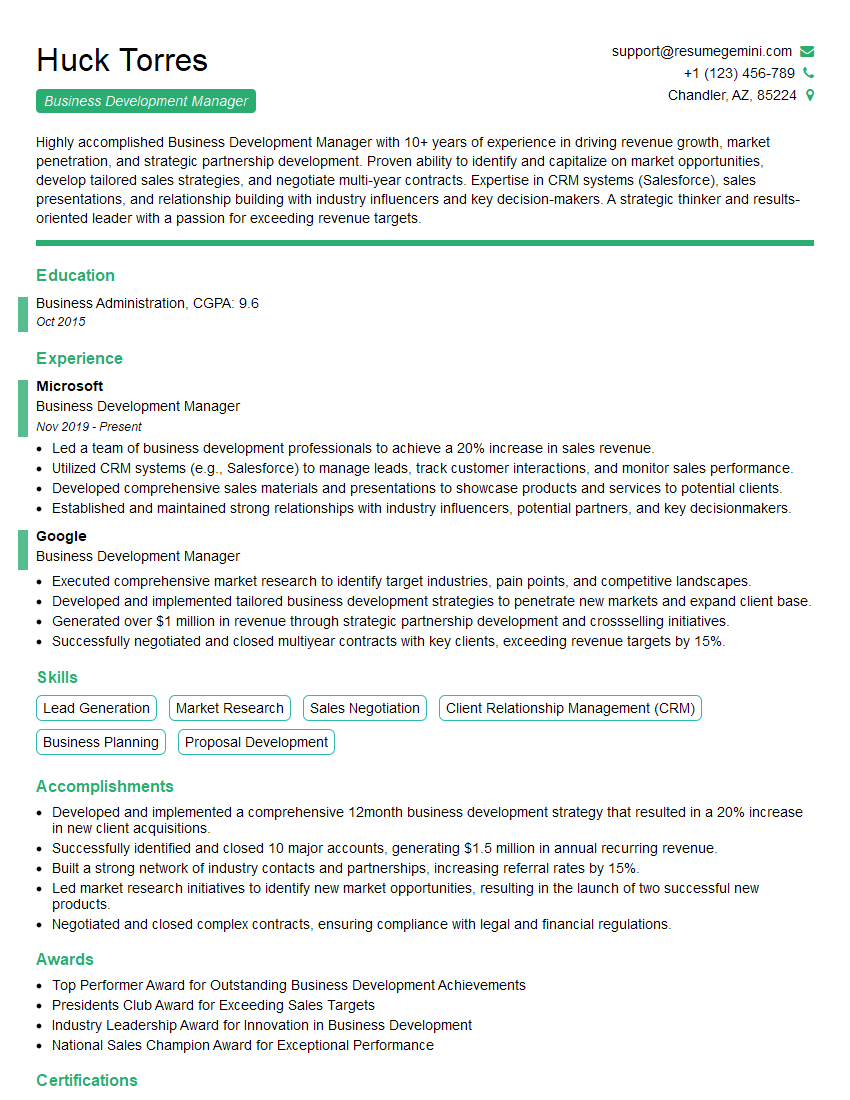
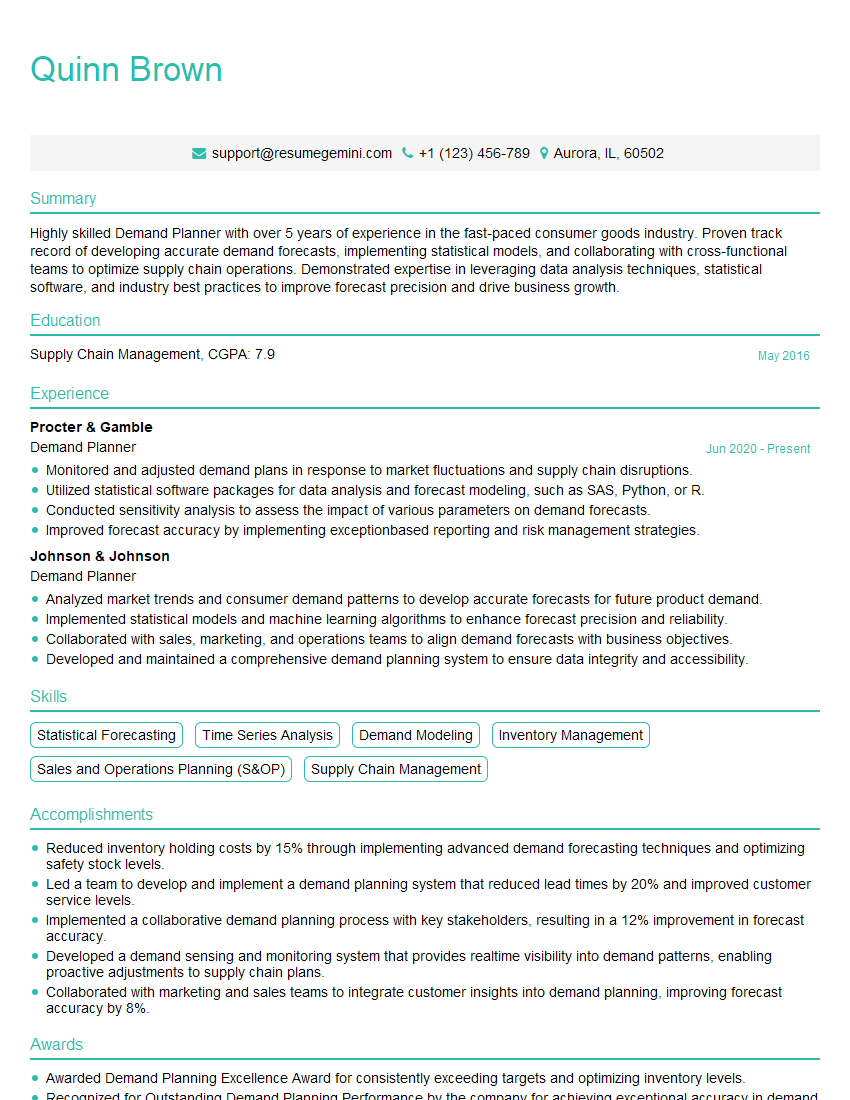
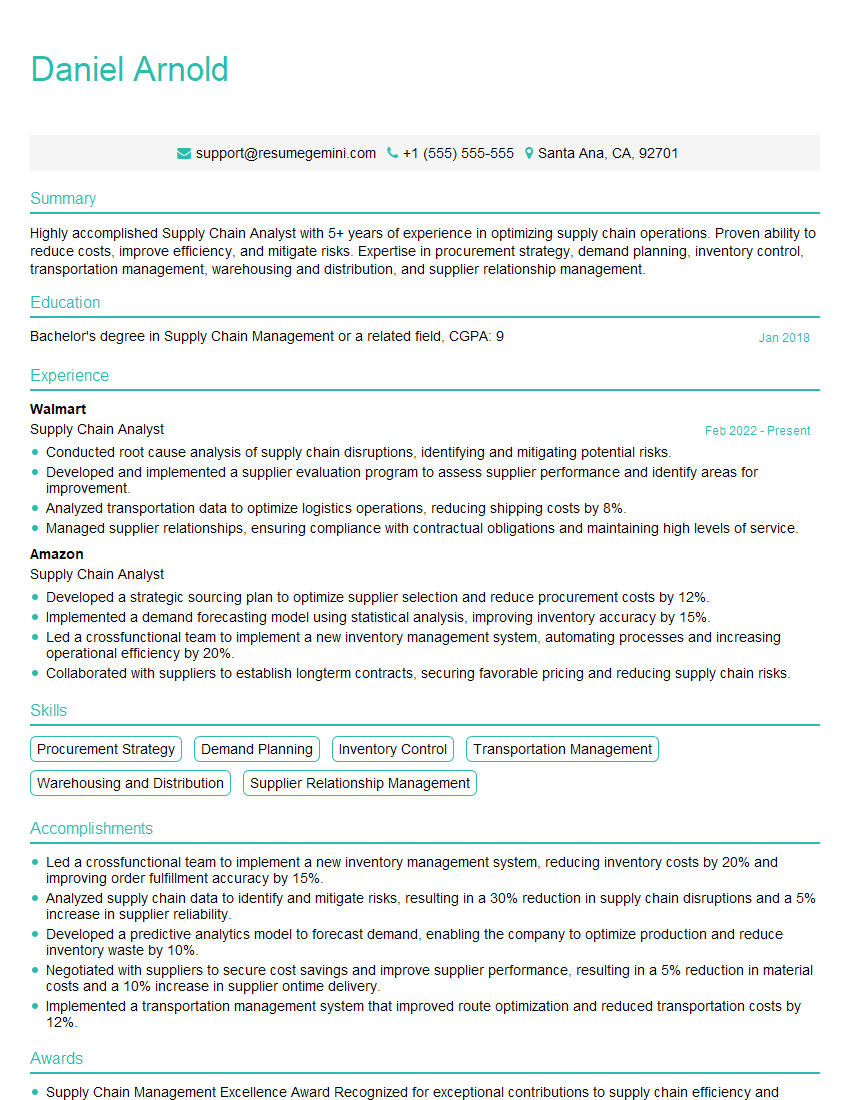
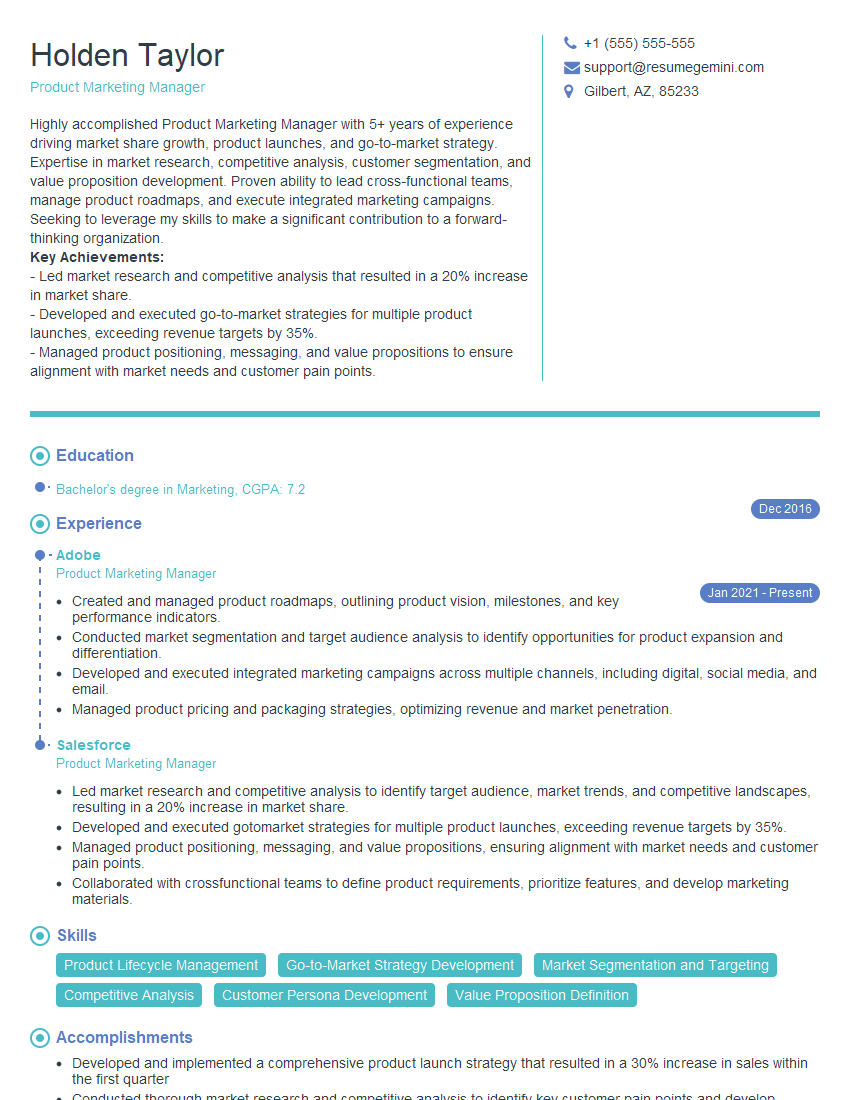
Mastering pipelining and forecasting is crucial for career advancement in sales, marketing, and business development. Accurate forecasting demonstrates valuable analytical skills and directly impacts revenue generation and business growth. To significantly enhance your job prospects, invest time in creating an ATS-friendly resume that highlights your relevant skills and experience. ResumeGemini is a trusted resource to help you build a professional and impactful resume. Examples of resumes tailored to Pipelining and Forecasting roles are provided to help guide you.

Explore more articles
Users Rating of Our Blogs
Share Your Experience
We value your feedback! Please rate our content and share your thoughts (optional).
What Readers Say About Our Blog
I Redesigned Spongebob Squarepants and his main characters of my artwork.
https://www.deviantart.com/reimaginesponge/art/Redesigned-Spongebob-characters-1223583608
IT gave me an insight and words to use and be able to think of examples
Hi, I’m Jay, we have a few potential clients that are interested in your services, thought you might be a good fit. I’d love to talk about the details, when do you have time to talk?
Best,
Jay
Founder | CEO