Interviews are more than just a Q&A session—they’re a chance to prove your worth. This blog dives into essential Power Plant Construction interview questions and expert tips to help you align your answers with what hiring managers are looking for. Start preparing to shine!
Questions Asked in Power Plant Construction Interview
Q 1. Explain your experience with different types of power plants (e.g., coal, nuclear, solar, gas).
My experience spans a diverse range of power plant technologies. I’ve been involved in projects encompassing coal-fired plants, where I oversaw the construction of the boiler systems, coal handling facilities, and emission control equipment. These projects demanded meticulous attention to detail due to the complex nature of coal combustion and environmental regulations. I also have significant experience with natural gas combined cycle plants, focusing on the gas turbines, steam turbines, and heat recovery steam generators. These plants are known for their efficiency and relatively lower emissions compared to coal. In the renewable energy sector, I’ve contributed to several solar photovoltaic (PV) power plant projects, managing the installation of solar panels, inverters, and the associated infrastructure. The challenges here are different; they focus on optimizing land use, managing grid integration, and ensuring long-term performance. While I haven’t directly worked on nuclear power plants due to the highly specialized nature of that field, I’m familiar with the stringent safety protocols and regulatory requirements involved in their construction. Each plant type presents unique construction challenges and requires a deep understanding of the specific technologies involved.
Q 2. Describe your experience with various construction methods used in power plant projects.
My experience encompasses various construction methods, including traditional methods and more modern approaches like modular construction. In traditional methods, we work sequentially, starting with site preparation, foundation laying, structural steel erection, and then equipment installation. This is very common in large-scale fossil fuel plants. For example, on a coal plant project, we employed traditional methods, carefully sequencing the installation of heavy equipment like boilers and turbines to minimize interference and downtime. More recently, I’ve been involved in projects using modular construction, where prefabricated components are manufactured off-site and assembled on-site. This significantly reduces construction time and improves quality control. For instance, in a solar PV plant project, using pre-assembled racking systems and string inverters sped up the installation process considerably. Each method has its pros and cons, and the optimal approach depends on factors like project size, budget, timeline, and site conditions.
Q 3. What safety protocols are essential during power plant construction?
Safety is paramount in power plant construction. Our protocols adhere to the highest industry standards, and we employ a multi-layered approach. This includes comprehensive risk assessments before the commencement of any work, detailed safety plans outlining procedures for every task, regular safety training for all personnel, and strict enforcement of personal protective equipment (PPE) use. We implement stringent fall protection measures, especially in high-rise structures. Lockout/Tagout procedures are rigorously followed to prevent accidental energization during maintenance or repairs. We use advanced monitoring systems to track potential hazards like confined space entry, working at heights, and handling hazardous materials. Regular safety inspections and audits ensure that protocols are consistently followed. A strong safety culture, where reporting near misses and incidents is encouraged, is crucial for proactively addressing potential problems. Failure to adhere to safety protocols can result in serious injury or even fatalities, causing project delays and legal repercussions.
Q 4. How do you manage project timelines and budgets in power plant construction?
Managing project timelines and budgets requires a proactive and data-driven approach. We begin with detailed scheduling using critical path method (CPM) techniques to identify crucial tasks and potential bottlenecks. Regular progress monitoring, utilizing earned value management (EVM), allows us to track performance against the baseline schedule and budget. We hold weekly progress meetings with all stakeholders to review performance, address issues, and make necessary adjustments. Changes to the scope of work are carefully evaluated and documented using change orders to ensure their impact on the schedule and budget is accurately assessed. Effective communication and collaboration among all project team members are key to successfully managing both aspects. For instance, on a gas turbine installation, we used a detailed CPM schedule that highlighted critical path activities, allowing us to proactively address potential delays and minimize their impact on the overall project timeline.
Q 5. Explain your experience with quality control measures in power plant construction.
Quality control is integrated throughout the entire construction process, starting with material selection and continuing through to commissioning. We implement rigorous inspection and testing procedures at each stage of construction. For example, welds on critical components are inspected using non-destructive testing (NDT) methods like radiography and ultrasonic testing to ensure integrity. We use third-party inspectors to provide independent verification of quality. Comprehensive documentation is maintained throughout, including inspection reports, test results, and as-built drawings. This detailed documentation is critical for ensuring long-term operation and maintenance of the power plant. We also utilize quality management systems (QMS) like ISO 9001 to provide a structured framework for maintaining quality standards and continuously improving processes. A strong focus on quality control minimizes defects, rework, and costly delays. Poor quality control can lead to equipment failure, safety hazards, and environmental issues, resulting in significant financial losses and reputational damage.
Q 6. Describe your experience with risk management in large-scale construction projects.
Risk management is crucial in large-scale projects. We use a combination of qualitative and quantitative techniques to identify, assess, and mitigate potential risks. This process begins with a thorough risk assessment identifying potential problems like material delays, equipment failures, and weather-related disruptions. We then analyze the likelihood and potential impact of each risk. Mitigation strategies are developed for high-risk items, including contingency planning and risk transfer mechanisms like insurance. Regular risk reviews are conducted throughout the project lifecycle to monitor emerging risks and update mitigation plans. For instance, on a project located in a seismically active zone, we incorporated robust seismic design considerations and developed contingency plans to deal with potential earthquake-related delays or damages. A proactive approach to risk management prevents costly delays, minimizes safety hazards, and reduces the overall project risk profile.
Q 7. How do you handle unexpected challenges or delays during construction?
Unexpected challenges are inevitable in construction. Our approach emphasizes proactive problem-solving and strong communication. When faced with unforeseen delays or issues, we conduct a thorough investigation to understand the root cause. We involve relevant stakeholders to brainstorm solutions, weighing the cost, time, and safety implications of each. Project scheduling software is then used to evaluate the impact of the challenge and determine how to reschedule or adapt work to mitigate the delay. For instance, a recent equipment delivery delay was addressed by resequencing tasks to minimize downtime and using readily available substitute components. Effective communication keeps all stakeholders informed of progress and any adjustments made to maintain transparency. A flexible and adaptable approach is essential to overcome unexpected challenges while minimizing their overall impact on the project.
Q 8. Explain your understanding of power plant regulatory compliance.
Power plant regulatory compliance is paramount, encompassing a complex web of local, national, and international regulations designed to ensure safety, environmental protection, and operational efficiency. This involves adhering to strict guidelines related to emissions, waste disposal, worker safety, and construction methodologies. Understanding and complying with these regulations is not just a legal necessity but also crucial for project success and avoiding hefty fines or project shutdowns.
For example, a coal-fired plant must strictly adhere to EPA regulations concerning SOx and NOx emissions, requiring specific equipment like scrubbers and selective catalytic reduction (SCR) systems. Similarly, nuclear power plants operate under exceptionally stringent safety regulations dictated by bodies like the Nuclear Regulatory Commission (NRC), demanding rigorous safety protocols and regular inspections. My experience includes ensuring compliance throughout the entire lifecycle of a project, from initial permitting to final decommissioning, using a combination of internal compliance programs and external audits.
- Permitting and Licensing: Navigating the complex permitting process, ensuring all required permits are obtained before construction commences.
- Environmental Compliance: Implementing measures to minimize environmental impact during construction and operation, including proper waste management and adherence to emissions standards.
- Safety Compliance: Implementing and enforcing strict safety protocols to prevent accidents and ensure worker well-being, adhering to OSHA and other relevant safety standards.
- Ongoing Monitoring and Reporting: Regularly monitoring compliance and submitting the necessary reports to regulatory authorities.
Q 9. What is your experience with different types of power generation equipment?
My experience encompasses a wide range of power generation equipment, including:
- Steam Turbines: I’ve worked on projects involving both fossil fuel-fired and nuclear steam turbines, understanding the intricacies of their design, installation, and testing.
- Gas Turbines: Experienced in the installation and commissioning of both simple and combined cycle gas turbine power plants, including familiarity with various manufacturers and their specific requirements.
- Combined Cycle Power Plants: I’ve been involved in multiple projects integrating gas and steam turbines for enhanced efficiency, requiring a deep understanding of the integration and coordination of various systems.
- Renewable Energy Equipment: My experience extends to renewable energy sources, including solar photovoltaic (PV) systems, wind turbines, and hydroelectric power plants. This involves understanding the unique challenges and opportunities presented by each technology.
In each case, my focus has been on ensuring the equipment’s seamless integration into the overall plant design, its proper installation and testing, and the subsequent maintenance and operation. For example, during a recent combined cycle project, we faced challenges integrating a new type of gas turbine. I coordinated with the manufacturer’s engineers to troubleshoot issues related to control system integration, eventually delivering the project on time and within budget.
Q 10. Describe your experience with commissioning and start-up procedures.
Commissioning and start-up procedures are critical phases in a power plant’s lifecycle, requiring meticulous planning, execution, and documentation. My experience includes leading and participating in various commissioning activities, ensuring that all systems operate according to design specifications and safety standards.
The process typically involves several key stages:
- Pre-commissioning: Inspection and testing of individual equipment and systems before integration.
- System Testing: Testing the integrated systems to ensure proper functionality and interaction.
- Performance Testing: Measuring the plant’s performance against design specifications.
- Start-up and Operation: Gradually bringing the plant online and transitioning to stable operation.
A successful commissioning process relies on detailed procedures, rigorous testing, and clear communication among the various teams involved. For instance, during the commissioning of a new gas-fired power plant, we identified a minor issue in the control system during system testing. By using a systematic approach to troubleshooting and engaging the relevant vendors, we solved the problem before it escalated, preventing significant delays and cost overruns.
Q 11. How do you ensure effective communication and collaboration within a construction team?
Effective communication and collaboration are foundational to successful power plant construction. I employ several strategies to foster a collaborative environment:
- Regular Meetings: Holding regular meetings with the construction team, subcontractors, and stakeholders to discuss progress, challenges, and solutions.
- Clear Communication Channels: Establishing clear communication channels, including email, instant messaging, and project management software, to ensure timely and effective information flow.
- Conflict Resolution: Developing strategies to resolve conflicts promptly and fairly, focusing on collaborative solutions.
- Team Building: Fostering a strong team spirit and a culture of mutual respect and support.
For example, on a recent project facing significant schedule pressure, I implemented daily ‘stand-up’ meetings to track progress, identify potential roadblocks, and quickly resolve issues. This proactive approach helped to maintain momentum and prevented minor problems from escalating into major delays.
Q 12. Explain your proficiency in relevant software (e.g., Primavera P6, AutoCAD).
I am proficient in several software applications essential for power plant construction management. My expertise includes:
- Primavera P6: I use Primavera P6 for project scheduling, resource allocation, and cost control. I am skilled in creating complex schedules, managing critical paths, and analyzing project performance.
For example, I utilize the 'What-if' analysis feature in Primavera P6 to assess the impact of potential delays on the overall project schedule. - AutoCAD: Proficient in AutoCAD for reviewing and creating detailed drawings, including piping and instrumentation diagrams (P&IDs), and site plans. I can efficiently use AutoCAD to make revisions and design modifications.
- Other software: My experience also encompasses other software, such as Microsoft Project, and specialized engineering simulation software.
This software proficiency allows for efficient planning, monitoring, and control of projects, minimizing risks and maximizing efficiency.
Q 13. Describe your experience with cost estimation and control in power plant projects.
Accurate cost estimation and control are vital for successful power plant projects. My approach involves a multi-stage process:
- Detailed Cost Estimation: Developing a detailed cost estimate based on a comprehensive understanding of the project scope, materials, labor, and equipment.
- Regular Monitoring and Reporting: Regularly monitoring actual costs against the budget and generating reports to identify variances and potential cost overruns.
- Cost Control Measures: Implementing cost-control measures, such as value engineering and change management processes, to mitigate potential cost overruns.
- Risk Assessment: Conducting risk assessments to identify potential cost risks and develop mitigation strategies.
For example, on a recent project, we used a bottom-up estimating approach, breaking down the project into smaller work packages to achieve greater accuracy. This enabled us to accurately predict costs and manage the budget effectively throughout the project’s lifecycle.
Q 14. How do you manage stakeholder expectations in a complex construction project?
Managing stakeholder expectations in a complex construction project requires clear communication, transparency, and proactive engagement. My strategy involves:
- Regular Communication: Establishing regular communication channels with all stakeholders, including clients, contractors, regulatory agencies, and the community.
- Transparent Reporting: Providing regular and transparent progress reports to keep stakeholders informed about the project’s status, challenges, and solutions.
- Proactive Problem Solving: Proactively identifying and addressing potential issues before they escalate, minimizing disruptions and maintaining stakeholder confidence.
- Relationship Building: Building strong relationships with stakeholders through open communication and collaboration.
A successful strategy requires understanding each stakeholder’s unique interests and concerns and tailoring communication accordingly. For example, we held regular community meetings during a recent project to address local residents’ concerns about noise and traffic disruptions. This proactive engagement helped to build trust and minimize potential conflicts.
Q 15. What are your experience with environmental impact assessments and mitigation strategies?
Environmental Impact Assessments (EIAs) are crucial for power plant projects. They systematically evaluate the potential environmental consequences of a project, encompassing air and water quality, biodiversity, and land use. My experience involves leading and participating in EIAs across multiple projects, utilizing tools like GIS mapping and specialized software to model potential impacts. This includes identifying potential risks, such as greenhouse gas emissions or habitat disruption.
Mitigation strategies are equally vital. These are actions designed to reduce or eliminate identified negative impacts. For example, in a recent coal-fired plant project, we implemented a robust air pollution control system exceeding regulatory standards, including advanced scrubbers and particulate filters. For another project, a hydroelectric plant, we developed a fish passage system to mitigate impacts on migratory fish populations. This involved collaborating with environmental scientists and regulatory agencies to ensure the chosen strategies are both effective and compliant. The key is proactive planning – incorporating mitigation into the design phase ensures a more efficient and environmentally responsible outcome.
Career Expert Tips:
- Ace those interviews! Prepare effectively by reviewing the Top 50 Most Common Interview Questions on ResumeGemini.
- Navigate your job search with confidence! Explore a wide range of Career Tips on ResumeGemini. Learn about common challenges and recommendations to overcome them.
- Craft the perfect resume! Master the Art of Resume Writing with ResumeGemini’s guide. Showcase your unique qualifications and achievements effectively.
- Don’t miss out on holiday savings! Build your dream resume with ResumeGemini’s ATS optimized templates.
Q 16. Explain your experience with procurement processes in power plant construction.
Procurement in power plant construction is a complex, multi-stage process that requires meticulous planning and execution. My experience spans all phases, from defining requirements and creating bid documents to contract negotiation and vendor management. I’m familiar with various procurement methods, including competitive bidding, negotiated procurement, and even utilizing frameworks for standardized equipment.
For example, in a recent project, we employed a two-stage bidding process for major equipment like turbines and generators. This ensured transparency and allowed us to thoroughly evaluate technical specifications before moving into price negotiations. Effective procurement isn’t just about getting the lowest price; it’s about selecting reliable vendors who meet stringent quality and delivery timelines. This involves robust risk assessment and the development of strong contractual agreements to protect the project’s interests.
Q 17. Describe your experience with different types of contracts used in power plant projects.
Power plant projects utilize a variety of contracts, each with its own risk allocation and payment mechanisms. I have extensive experience with Lump Sum Contracts, where the contractor provides a fixed price for a defined scope of work, and Cost Plus Contracts, which involve reimbursing the contractor for actual costs plus a predetermined fee or percentage. Engineering, Procurement, and Construction (EPC) contracts are frequently used, integrating the engineering, procurement, and construction phases under a single contractor, simplifying project management.
The choice of contract type depends heavily on the project’s complexity, the level of design detail, and the risk tolerance of the owner. For example, lump sum contracts are ideal for well-defined projects with minimal design changes expected, while cost-plus contracts are better suited for complex or fast-tracked projects where the scope might evolve. Understanding the intricacies of each contract type is crucial for mitigating potential disputes and ensuring project success.
Q 18. How do you manage conflicts between different stakeholders or contractors?
Conflict resolution is an inevitable part of large-scale projects. My approach involves proactive communication and collaborative problem-solving. I believe in fostering open dialogue between stakeholders, including contractors, subcontractors, regulatory bodies, and the client. Establishing clear communication channels and regular meetings helps prevent misunderstandings from escalating into major conflicts.
When conflicts arise, I follow a structured approach: First, I clearly identify the issue and the parties involved. Then, I facilitate open communication, encouraging each party to express their concerns and perspectives. I then work collaboratively to find a mutually acceptable solution, often using mediation or negotiation techniques. In situations where a resolution cannot be reached internally, I’m prepared to engage external dispute resolution mechanisms like arbitration or litigation, though this is always a last resort.
Q 19. Describe a situation where you had to solve a challenging technical problem during a project.
During the construction of a combined cycle power plant, we encountered a significant delay due to a critical mismatch in the dimensions of a key component of the gas turbine system. This component, a crucial part of the exhaust system, arrived from the vendor with incorrect dimensions, threatening the entire project timeline.
The solution involved a multi-pronged approach. First, I initiated a thorough investigation with the vendor to identify the root cause of the error. Simultaneously, we engaged a team of specialized engineers to design and fabricate a replacement component. We utilized 3D modeling and rapid prototyping to expedite the process. Open communication with the client and regulatory bodies was crucial to manage expectations during the delay. This involved providing regular updates on our progress and outlining mitigation strategies to minimize overall project impact. Ultimately, the problem was solved efficiently, and the project was completed with minimal disruption to the overall schedule, highlighting the value of swift decision-making and a proactive approach to problem-solving.
Q 20. How do you ensure the quality of materials and workmanship during construction?
Quality control is paramount in power plant construction. My approach incorporates a multi-layered system of checks and balances, starting with rigorous material selection and testing. We utilize strict quality assurance (QA) and quality control (QC) procedures at each stage of construction. This includes regular inspections, testing, and documentation. We implement a robust system of inspections – both in-process and final – following detailed checklists and standards.
For instance, every steel component is rigorously inspected for defects and undergoes metallurgical testing. Welding procedures are strictly controlled, with welders certified according to industry standards. We also maintain detailed records of all materials used and inspections performed. This system ensures that every aspect of the construction adheres to the highest standards, significantly reducing the risk of defects and operational issues after plant commissioning.
Q 21. Explain your experience with different types of foundations used in power plant construction.
Power plant foundations are critical for structural integrity and stability. The choice of foundation type depends on several factors, including soil conditions, plant size and type, and seismic activity. My experience encompasses a range of foundation types.
Shallow foundations, such as spread footings and raft foundations, are suitable for stable soil conditions and lighter structures. For example, smaller auxiliary buildings in a power plant complex might use spread footings. Deep foundations, like piles and caissons, are necessary for larger structures or when dealing with weak or unstable soil. These are common for heavy turbine foundations. In seismic zones, special considerations are taken; this might involve designing for increased seismic loads and utilizing specialized foundation systems. Each foundation type needs careful geotechnical analysis to ensure it can withstand the loads placed upon it, guaranteeing the safety and operational life of the power plant.
Q 22. Describe your experience with structural design and analysis for power plant structures.
My experience in structural design and analysis for power plants encompasses a wide range of projects, from conventional fossil fuel plants to advanced renewable energy facilities. I’m proficient in using Finite Element Analysis (FEA) software like ANSYS and ABAQUS to model complex structures, analyzing their behavior under various load conditions including seismic activity, wind loads, and thermal stresses. This involves considering the specific material properties of concrete, steel, and other components used in the power plant construction. For example, on a recent project involving a large cooling tower, we utilized FEA to optimize the tower’s design, minimizing material usage while ensuring structural integrity under extreme wind conditions. This process involved detailed analysis of stress concentrations, deflections, and potential failure modes. My expertise also extends to the design of foundations for heavy machinery like turbines and generators, ensuring they can withstand significant vibrations and loads. I also have experience working with building codes and industry standards, such as those from the American Society of Civil Engineers (ASCE), to guarantee the safety and longevity of the structures.
Q 23. What are the key considerations for designing a power plant for optimal efficiency?
Designing a power plant for optimal efficiency requires a holistic approach, considering various factors throughout the entire lifecycle of the plant. Key considerations include:
- Heat Rate Optimization: Minimizing the amount of fuel required to generate a unit of electricity. This involves careful selection of turbines, boilers (in thermal plants), and other critical components. For example, choosing a high-efficiency turbine directly impacts the overall plant efficiency.
- Integration of Renewable Sources: Incorporating renewable energy sources like solar or wind power into the plant’s design, reducing reliance on fossil fuels and improving the plant’s environmental impact. This often involves complex grid integration considerations.
- Advanced Control Systems: Implementing sophisticated control systems to optimize plant operation in real-time, automatically adjusting parameters based on changing conditions to maximize efficiency. This can involve predictive maintenance strategies that minimize downtime.
- Waste Heat Recovery: Designing systems to capture and utilize waste heat generated during the power generation process, further improving overall energy efficiency. This heat can be used for other purposes, like district heating.
- Water Management: Efficiently managing water usage, minimizing water consumption and ensuring compliance with environmental regulations. This is critical for thermal plants which require substantial water for cooling.
- Material Selection: Choosing materials with high durability and longevity to reduce maintenance costs and extend the lifespan of the power plant.
Each of these factors interacts with others. For instance, the choice of turbine significantly impacts the heat rate but also influences the foundation design and overall plant layout.
Q 24. How do you ensure the safety of workers during various stages of power plant construction?
Worker safety is paramount in power plant construction. Our approach is multi-faceted and proactive, encompassing several key strategies:
- Comprehensive Safety Training: Providing all workers with thorough training on relevant safety procedures, including hazard identification, personal protective equipment (PPE) usage, and emergency response protocols. This often involves simulations and practical demonstrations.
- Strict Adherence to Safety Regulations: Rigorously complying with all applicable OSHA (Occupational Safety and Health Administration) standards and industry best practices. This includes regular inspections to identify and rectify potential hazards.
- Implementing Safety Measures: Using appropriate safety equipment such as scaffolding, fall protection systems, and lockout/tagout procedures to minimize risks during various tasks. We conduct regular safety audits to ensure these measures are effectively implemented.
- Risk Assessments & Permit-to-Work System: Performing comprehensive risk assessments before commencing any potentially hazardous activity, implementing a permit-to-work system to control high-risk operations and ensure proper authorization.
- Emergency Response Planning: Developing detailed emergency response plans for various scenarios, including fire, spills, and medical emergencies, with regular drills to ensure preparedness. This includes clear communication protocols and designated emergency response teams.
- Incident Reporting & Investigation: Establishing a robust system for reporting and investigating all safety incidents, using the findings to prevent future occurrences. A thorough root cause analysis is performed for each incident.
We view safety not just as a compliance issue, but as a core value integrated into every aspect of the project.
Q 25. Explain your understanding of the different phases of a power plant construction project.
Power plant construction typically involves several distinct phases:
- Pre-construction Phase: This includes site selection, environmental impact assessment, obtaining permits, detailed engineering design, procurement of equipment and materials, and contractor selection. This phase lays the groundwork for the entire project.
- Construction Phase: This is the most extensive phase, encompassing site preparation, foundation work, erection of structures, installation of equipment, and piping and electrical work. This phase requires meticulous planning and coordination to ensure timely completion.
- Commissioning Phase: This involves testing and integrating all systems, verifying performance against design specifications, and addressing any issues identified during testing. It ensures the plant functions as designed before going live.
- Start-up and Operation Phase: This involves gradually bringing the plant to full operating capacity and training the plant operating personnel. This phase transitions the project to ongoing operation.
Effective project management is crucial for the smooth transition between these phases.
Q 26. Describe your experience with the integration of different systems within a power plant.
My experience in integrating various systems within a power plant is extensive. This involves coordinating the work of different contractors and ensuring seamless interaction between different systems, such as the mechanical, electrical, and instrumentation (MEI) systems, control systems, and safety systems. For instance, on a recent project, we integrated a sophisticated distributed control system (DCS) that monitors and controls all aspects of the plant’s operation. This involved careful planning and coordination to ensure compatibility between the DCS and various field instruments and actuators. Another example is the integration of the turbine generator system with the cooling water system. We made sure the cooling water system can handle the heat load from the turbines effectively, preventing overheating and ensuring efficient operation. Successful integration requires detailed system design, rigorous testing, and close collaboration between various engineering disciplines.
Q 27. How do you maintain accurate records and documentation throughout the project lifecycle?
Maintaining accurate records and documentation is crucial throughout the power plant construction lifecycle. We employ a robust Document Management System (DMS) to centralize all project documentation, ensuring easy access and version control. This includes design drawings, specifications, material certificates, inspection reports, test results, and operational manuals. We implement a rigorous document control process, tracking each document’s revision history and ensuring that all stakeholders have access to the most up-to-date version. Our DMS is integrated with project management software, enabling efficient tracking of progress against the project schedule. Furthermore, we use barcoding and RFID technology to track materials and equipment throughout the construction phase, preventing errors and ensuring quality control.
Q 28. Explain your experience with closeout procedures and project handover.
Closeout procedures and project handover are critical for ensuring the successful completion of a power plant project. This involves several key steps:
- Final Inspection & Testing: Performing a comprehensive final inspection of all systems, verifying compliance with design specifications and regulatory requirements. This includes thorough testing of all equipment and systems.
- As-Built Drawings & Documentation: Preparing accurate as-built drawings that reflect the final configuration of the plant. This documentation is crucial for future maintenance and upgrades.
- Training of Plant Operators: Providing comprehensive training to the plant operating personnel on the safe and efficient operation and maintenance of the plant. This involves hands-on training and simulation exercises.
- Warranty & Maintenance Agreements: Finalizing warranty agreements with vendors and establishing long-term maintenance agreements to ensure the plant’s continued operation. This is essential for the long-term success of the plant.
- Project Closure Documentation: Preparing detailed project closure documentation, including financial reports, safety records, and lessons learned. This ensures accountability and provides valuable information for future projects.
- Formal Handover: Conducting a formal handover ceremony, transferring responsibility for the plant’s operation and maintenance to the plant owner. This is a significant milestone in the project lifecycle.
A smooth handover ensures a successful transition from construction to operation, minimizing disruption and maximizing the plant’s longevity and efficiency.
Key Topics to Learn for Power Plant Construction Interview
- Project Planning & Management: Understanding project lifecycles, scheduling, budgeting, risk management, and resource allocation specific to power plant construction.
- Safety Regulations & Compliance: Deep knowledge of OSHA regulations, environmental impact assessments, and safety protocols throughout the construction process. Practical application includes implementing and enforcing safety measures on site.
- Structural Engineering & Design: Familiarity with the design and construction of various power plant structures, including foundations, turbine halls, and cooling towers. This includes understanding material selection and structural analysis techniques.
- MEP Systems (Mechanical, Electrical, Plumbing): Comprehensive understanding of the design, installation, and commissioning of HVAC, electrical distribution, piping, and instrumentation systems within a power plant. Practical experience with troubleshooting these systems is highly valuable.
- Instrumentation & Control Systems: Knowledge of SCADA systems, PLC programming, and the integration of various control systems crucial for power plant operation. Problem-solving approaches include diagnosing and resolving control system malfunctions.
- Quality Control & Assurance: Understanding quality management systems, inspection procedures, and documentation requirements to ensure the plant meets design specifications and safety standards. Practical application involves implementing quality control checks throughout the construction phases.
- Cost Estimation & Control: Proficiency in developing accurate cost estimates, tracking project expenses, and managing budgets effectively throughout the construction process.
- Contract Administration: Understanding different contract types, managing subcontractor relationships, and ensuring compliance with contractual obligations.
- Commissioning & Start-up: Knowledge of the commissioning process, testing procedures, and start-up activities required to bring a power plant online safely and efficiently.
Next Steps
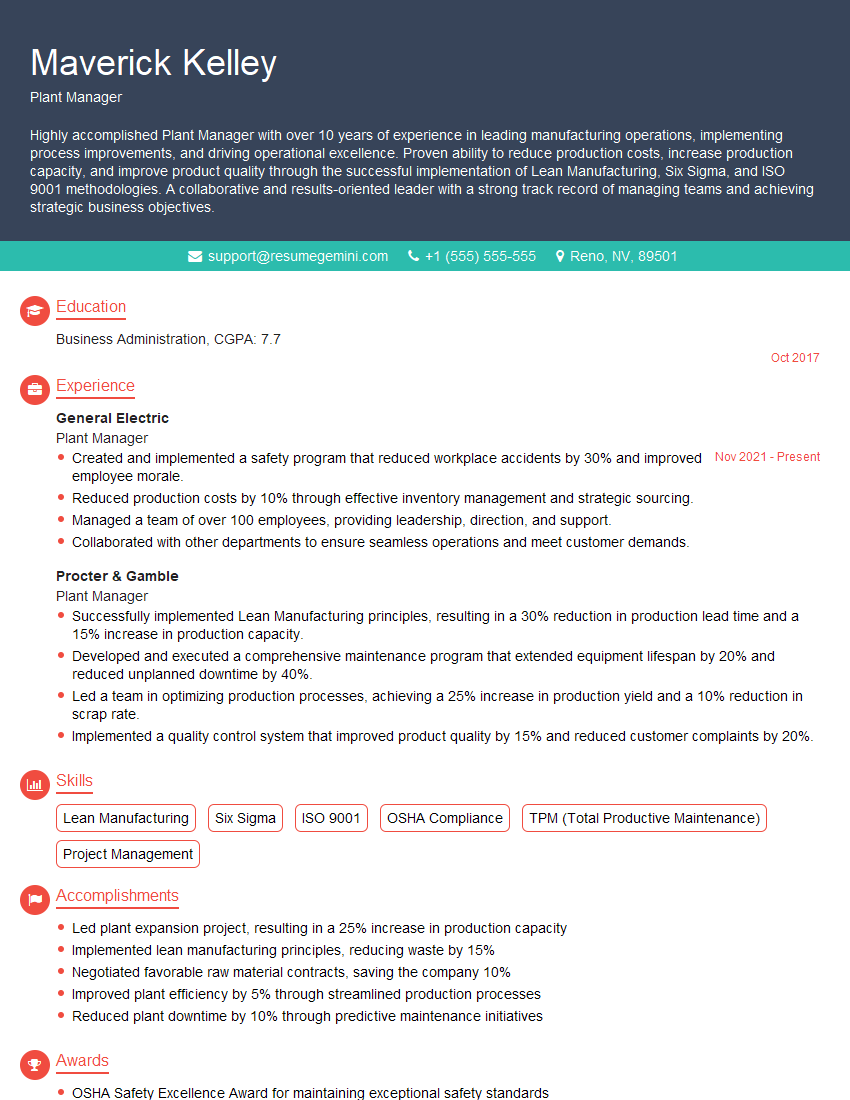
Mastering Power Plant Construction opens doors to a rewarding career with excellent growth potential in a vital industry. To maximize your job prospects, focus on creating an ATS-friendly resume that highlights your skills and experience effectively. ResumeGemini is a trusted resource to help you build a professional and impactful resume that stands out. We provide examples of resumes tailored to the Power Plant Construction field to guide you in showcasing your qualifications. Invest in your resume – it’s your first impression.
Explore more articles
Users Rating of Our Blogs
Share Your Experience
We value your feedback! Please rate our content and share your thoughts (optional).
What Readers Say About Our Blog
I Redesigned Spongebob Squarepants and his main characters of my artwork.
https://www.deviantart.com/reimaginesponge/art/Redesigned-Spongebob-characters-1223583608
IT gave me an insight and words to use and be able to think of examples
Hi, I’m Jay, we have a few potential clients that are interested in your services, thought you might be a good fit. I’d love to talk about the details, when do you have time to talk?
Best,
Jay
Founder | CEO