Every successful interview starts with knowing what to expect. In this blog, we’ll take you through the top Precision Welding Techniques interview questions, breaking them down with expert tips to help you deliver impactful answers. Step into your next interview fully prepared and ready to succeed.
Questions Asked in Precision Welding Techniques Interview
Q 1. Describe your experience with different precision welding processes (TIG, MIG, laser, etc.).
My experience spans a wide range of precision welding processes, including Gas Tungsten Arc Welding (TIG), Gas Metal Arc Welding (MIG), and laser welding. I’ve extensively used TIG welding for applications requiring the highest precision and quality, such as welding thin-walled stainless steel components in medical device manufacturing. My MIG welding experience focuses on higher deposition rates for thicker materials in automotive parts production, leveraging pulsed MIG for better control in challenging joints. Laser welding has been invaluable for applications requiring extremely precise, narrow welds, such as microelectronics assembly, where heat-affected zones must be minimized. Each process has its unique strengths and weaknesses, and selecting the right one depends critically on the material, joint design, and desired outcome.
- TIG: Excellent for precision, control over heat input, and clean welds, ideal for thin materials and dissimilar metals.
- MIG: Faster deposition rate, better suited for thicker materials and high-volume production. Can be challenging for thin materials.
- Laser: Extremely precise, narrow welds with minimal heat-affected zone, ideal for micro-welding and delicate components.
Q 2. What are the key differences between TIG and MIG welding?
The core difference between TIG and MIG welding lies in how the filler metal is added to the weld pool. In TIG welding, the filler metal is added manually by the welder using a separate filler rod, providing exceptional control over the weld bead. MIG welding, on the other hand, feeds the filler metal automatically through a wire, leading to faster welding speeds, but potentially less control over the final weld.
- TIG: Manual filler metal addition, higher precision, lower deposition rate, better for thin materials and intricate designs.
- MIG: Automatic filler metal feed, faster deposition rate, better for thicker materials and high-volume production, potentially less precise for intricate designs.
Think of it like painting: TIG is like using a fine brush for detailed work, while MIG is like using a spray gun for covering large areas quickly. Both have their place depending on the task.
Q 3. Explain the importance of proper joint preparation in precision welding.
Proper joint preparation is paramount in precision welding because it directly impacts weld quality, strength, and appearance. Improper preparation can lead to porosity, incomplete fusion, or excessive distortion. The goal is to create a consistent joint geometry that allows for complete penetration of the weld and minimizes stress concentrations.
- Cleaning: Removing contaminants like grease, paint, or oxides is essential for sound welds. This often involves mechanical cleaning (brushing, grinding) and chemical cleaning (solvents).
- Edge Preparation: The type of edge preparation (butt, bevel, lap, etc.) depends on the material thickness and welding process. Consistent edge preparation ensures uniform heat distribution during welding and complete fusion.
- Fixturing: Accurate and secure fixturing is crucial to maintain the proper joint alignment during welding. Any misalignment will result in an inferior weld.
For example, a poorly prepared butt joint in thin stainless steel may lead to burn-through or incomplete penetration, compromising the integrity of the weld. Conversely, meticulously prepared joints ensure a strong, consistent, and visually appealing weld.
Q 4. How do you ensure consistent weld quality in a high-volume production environment?
Ensuring consistent weld quality in high-volume production requires a multi-faceted approach combining robust process control, operator training, and quality assurance measures.
- Standardized Procedures: Implementing detailed written welding procedures (WPS) specifying parameters like voltage, current, travel speed, and filler material ensures consistency.
- Automated Systems: Where applicable, automated welding systems (e.g., robotic welding) minimize variability introduced by human operators and enhance repeatability.
- Regular Monitoring & Calibration: Equipment such as power sources and wire feeders needs regular calibration and preventative maintenance to ensure consistent performance.
- Operator Training & Certification: Thoroughly trained and certified welders are crucial. Regular proficiency testing ensures skills remain sharp.
- Statistical Process Control (SPC): Using SPC charts to monitor key weld parameters (e.g., penetration depth, bead width) provides real-time feedback and allows for immediate corrective actions if variations arise.
- Non-Destructive Testing (NDT): Regularly employing NDT methods like visual inspection, radiographic testing (RT), or ultrasonic testing (UT) helps identify defects early and ensures that only acceptable welds proceed to the next stage.
A systematic and data-driven approach, combined with continuous improvement initiatives, is key to maintaining consistent weld quality in high-volume settings.
Q 5. What are the common causes of weld defects and how do you prevent them?
Common weld defects stem from various sources, including improper welding parameters, poor joint preparation, and contamination. Addressing these root causes is critical for defect prevention.
- Porosity: Caused by gas entrapment in the weld pool. Prevented by proper cleaning of base materials, shielding gas purity, and correct welding parameters.
- Incomplete Fusion: Occurs when the weld metal doesn’t fully fuse with the base metal. Caused by insufficient heat input, incorrect joint design, or contamination. Proper joint preparation and parameter selection are crucial.
- Undercutting: A groove melted into the base material alongside the weld. Caused by excessive heat input, incorrect travel speed, or improper shielding. Reducing amperage and increasing travel speed can usually mitigate this.
- Lack of Penetration: The weld doesn’t fully penetrate the joint. Caused by insufficient heat input or improper joint design. Increasing amperage or preheating can solve this.
- Cracking: Can be caused by rapid cooling, hydrogen embrittlement, or improper material selection. Proper preheating, post-weld heat treatment, and material compatibility are key.
A proactive approach focusing on meticulous preparation, careful parameter selection, and diligent inspection is the best defense against weld defects.
Q 6. Describe your experience with different filler metals and their applications.
My experience encompasses a wide range of filler metals, each selected based on the base material, desired weld properties, and application requirements. For instance, I’ve used stainless steel filler metals (like 308L or 316L) extensively for welding stainless steel components in the medical device industry, prioritizing corrosion resistance and biocompatibility.
- Stainless Steel Filler Metals (308L, 316L): Excellent corrosion resistance, often used in food processing and medical applications.
- Aluminum Filler Metals (4043, 5356): Commonly used for welding aluminum alloys, offering high strength and weldability.
- Mild Steel Filler Metals (ER70S-6): Versatile filler metals for various mild steel applications, providing good strength and weldability.
- Nickel-based Filler Metals (Inconel): Used for high-temperature applications requiring exceptional corrosion and oxidation resistance.
The choice of filler metal is crucial for achieving the desired weld properties. Selecting the incorrect filler metal can lead to poor weld quality, reduced strength, or corrosion susceptibility. It’s essential to consult material specifications and welding codes when making filler metal selections.
Q 7. How do you select the appropriate welding parameters (voltage, amperage, travel speed) for a specific application?
Selecting the appropriate welding parameters is crucial for achieving high-quality welds. The optimal settings depend on several factors including the base material, joint design, welding process, and desired weld characteristics.
- Material Thickness: Thicker materials require higher amperage and voltage to achieve complete penetration.
- Joint Type: Different joint configurations (butt, fillet, lap) require varying parameter settings to ensure proper fusion.
- Welding Process: Each process (TIG, MIG, laser) has its own parameter ranges and sensitivities.
- Desired Weld Bead Profile: The desired weld bead shape (e.g., narrow and deep, wide and shallow) influences the selection of voltage and travel speed.
In practice, I often begin with parameters recommended in welding procedure specifications (WPS) or manufacturer’s guidelines. Then, I fine-tune these settings based on observations of the weld bead appearance and penetration depth during test welds. This iterative approach ensures that the selected parameters produce consistent and high-quality welds. For example, if the weld shows inadequate penetration, I may increase the amperage or reduce the travel speed. Conversely, if the weld shows excessive penetration or burn-through, I may decrease amperage or increase travel speed.
Q 8. Explain the importance of pre- and post-weld inspection.
Pre- and post-weld inspections are crucial for ensuring the structural integrity and quality of a weld. Think of it like a medical checkup for your weld – it helps catch potential problems early and prevent costly failures later. Pre-weld inspection focuses on verifying the materials, preparing the weld joint properly, and checking the equipment’s functionality. This includes things like checking for surface contamination, ensuring correct gap sizes, and verifying the proper settings on the welding machine. Post-weld inspection, on the other hand, assesses the quality of the completed weld itself. This involves visual inspection to look for defects like cracks, porosity, or lack of fusion, as well as potentially employing non-destructive testing (NDT) methods such as radiography or ultrasonic testing for deeper analysis. Failing to perform thorough inspections can lead to catastrophic failures in applications ranging from bridges to pipelines to aerospace components.
For example, during a pre-weld inspection of a pressure vessel, I meticulously checked the cleanliness of the stainless steel plates, verified the correct bevel angles, and confirmed that the shielding gas was of the correct type and purity. Following the weld, I performed a visual inspection and then utilized dye penetrant testing to check for surface cracking, before finally conducting a radiographic inspection to evaluate the internal integrity of the weld. This multi-layered approach ensured the vessel met stringent safety requirements.
Q 9. What are the different types of weld joints and their strengths/weaknesses?
Weld joints come in various configurations, each with its own strengths and weaknesses. Choosing the right joint type is paramount for the structural integrity of the final product. Common types include:
- Butt Joint: Simple and strong when properly welded, minimizing material waste. However, it requires careful preparation and precision to ensure complete penetration.
- Lap Joint: Easy to assemble and weld, offering good strength for certain applications. However, it’s less strong than a butt joint, particularly in tension.
- T-Joint: Versatile and commonly used, offering good strength in various orientations. However, proper penetration and fusion at the root can be challenging.
- Corner Joint: Suitable for joining two plates at an angle, but prone to cracking if not carefully welded. This joint often involves specialized filler material and techniques.
- Edge Joint: Used for thinner materials and relatively weaker compared to other joints. Requires precise control to avoid burn-through.
The choice depends on factors like the material being welded, the required strength, and the ease of access. For instance, a butt joint is ideal for high-strength structural applications, while a lap joint might suffice for less demanding tasks. A complex assembly might incorporate multiple joint types to maximize efficiency and structural integrity.
Q 10. How do you interpret welding symbols on blueprints?
Welding symbols on blueprints are a standardized way of conveying critical welding information. They provide a concise yet comprehensive representation of the weld type, size, location, and other details. Understanding these symbols is fundamental to accurate weld fabrication. The symbol consists of a reference line, arrow, and various components. The arrow indicates the location of the weld, pointing towards the part that receives the weld symbol. The reference line shows the location and plane of the weld, along with the various parameters.
For example, a symbol showing a ← | − 10mm ∑ 60o might indicate that a fillet weld of 10mm leg size is required on the other side of the joint, with a 60-degree groove angle. Each part of the symbol represents specific characteristics of the weld, and a thorough understanding allows welders to accurately execute the design requirements.
Mastering welding symbol interpretation is crucial. A misinterpretation can lead to flawed welds and jeopardize the structural integrity of the project.
Q 11. Describe your experience with non-destructive testing (NDT) methods used in welding.
I have extensive experience with several Non-Destructive Testing (NDT) methods, critical for ensuring the quality and integrity of welds. These methods allow for the detection of internal flaws without compromising the welded assembly.
- Radiographic Testing (RT): Uses X-rays or gamma rays to reveal internal flaws like porosity, cracks, and incomplete fusion. I have routinely utilized RT to inspect welds in critical pressure vessels and pipelines.
- Ultrasonic Testing (UT): Employs high-frequency sound waves to detect internal defects. UT is particularly useful for detecting flaws in thick sections and complex geometries. I’ve successfully used UT for inspecting welds in aerospace components and thick-walled cylinders.
- Dye Penetrant Testing (PT): A surface inspection method that identifies surface cracks and discontinuities. PT is a quick and effective way to screen for surface defects before further NDT. I frequently use PT as a first-line inspection technique, particularly in castings and welds with exposed surfaces.
- Magnetic Particle Testing (MT): This method is ideal for detecting surface and near-surface flaws in ferromagnetic materials. I have employed MT to inspect welds in steel structures and components.
My experience interpreting NDT results enables me to identify potential issues, recommending corrective actions where necessary, and ensuring compliance with industry standards.
Q 12. What safety precautions do you take when performing precision welding?
Safety is paramount in precision welding. I always adhere to stringent safety protocols to prevent accidents and protect myself and others. My safety practices include:
- Personal Protective Equipment (PPE): Consistent use of safety glasses, welding helmet with appropriate shade, protective clothing, gloves, and respiratory protection (depending on the welding process and materials).
- Workplace Safety: Maintaining a clean and organized workspace free from fire hazards and tripping risks. Proper ventilation is crucial to eliminate fumes.
- Fire Prevention: Keeping fire extinguishers nearby and knowing how to use them. Understanding and implementing proper fire safety procedures in the welding area.
- Electrical Safety: Following lockout/tagout procedures when working with electrical equipment and ensuring all connections are properly grounded.
- Material Safety Data Sheets (MSDS): Reviewing and understanding the MSDS for all materials used to understand potential hazards and proper handling procedures.
I regularly review safety procedures and participate in safety training to stay updated on best practices. Safety isn’t just a checklist – it’s a mindset integrated into every aspect of my welding work.
Q 13. How do you handle challenging weld geometries or tight tolerances?
Handling challenging weld geometries and tight tolerances requires meticulous planning, precision, and the right tools. My approach involves:
- Careful Joint Preparation: Precisely preparing the weld joint according to specifications, utilizing techniques such as machining, grinding, and fixturing to achieve the necessary tolerances and fit-up.
- Appropriate Welding Process Selection: Selecting the most suitable welding process for the geometry and material. For instance, TIG welding might be preferred for tight tolerances and intricate geometries, while MIG welding could be used for faster welding of simpler joints.
- Specialized Fixturing and Tooling: Utilizing specialized jigs, fixtures, and tooling to accurately position and hold the parts during welding, ensuring consistency and preventing distortion.
- Precise Welding Technique: Employing precise welding techniques like weaving or pulse welding to achieve consistent weld bead geometry and penetration. Regular monitoring and adjustment to maintain the desired parameters are crucial.
- Post-Weld Finishing: Employing precision grinding and finishing techniques to achieve the final desired dimensional accuracy.
For instance, when welding a complex aerospace component with tight tolerances, I meticulously prepared the parts, used a specialized jig to maintain accurate alignment during TIG welding, and employed pulse welding to control the heat input and prevent distortion. Post-weld, I used precision grinding to meet the final dimensional requirements.
Q 14. What is your experience with different types of welding fixtures and tooling?
My experience encompasses a range of welding fixtures and tooling. The appropriate choice is essential to ensure both efficiency and precision. I have used:
- Clamps and Vise Grips: For simpler joint configurations and smaller assemblies. These provide basic holding capabilities but lack the precision for complex geometries.
- Magnetic Clamps: Convenient for holding parts in place, particularly on ferrous metals. They offer more flexibility than fixed jigs but may not provide the same level of rigidity.
- Custom-Designed Jigs and Fixtures: Essential for complex geometries and tight tolerances. These are often designed and fabricated specifically for the part being welded, ensuring precise alignment and repeatability. I have extensive experience in designing and using jigs for various applications, from intricate robotic welds to large-scale structural components.
- Welding Positioners: These mechanized devices are used to rotate and position the workpiece during welding, enhancing efficiency and access for complex geometries.
- Robotics and Automated Welding Systems: Experience with robotic welding systems which allows for greater precision, consistency, and speed, particularly in high-volume manufacturing environments.
Choosing the right tooling and fixturing is as critical as choosing the right welding process. The selection depends on the complexity of the weld, the required precision, and the production volume. Often, a combination of different tooling is used to achieve optimal results.
Q 15. Describe your experience troubleshooting welding equipment problems.
Troubleshooting welding equipment is a crucial skill, requiring a systematic approach. I begin by systematically checking the most common issues. For instance, a lack of arc might be due to a faulty electrode, insufficient gas flow (in the case of gas-shielded processes like MIG or TIG), or a problem with the power source itself. I always start with the simple checks: is the power on? Are the gas cylinders full and properly connected? Is the electrode correctly positioned and prepared?
If the initial checks are inconclusive, I move to more advanced diagnostics. This may involve using a multimeter to test voltage, current, and ground connections. I’ll also inspect the welding cables for damage or poor connections. In the case of more sophisticated equipment with digital displays, error codes provide valuable clues. I am proficient in interpreting these codes and consulting relevant manuals. One instance I recall involved a faulty control board in a robotic welding cell; by systematically checking the power supply and various sub-systems, I pinpointed the faulty component, minimizing downtime.
For example, I once encountered a situation where a MIG welder wouldn’t strike an arc despite apparently correct settings. After checking the obvious (gas, power, etc.), I discovered a tiny crack in the welding cable’s insulation causing a short. Replacing the cable solved the issue. My approach always prioritizes safety; power must be isolated before any internal inspection.
Career Expert Tips:
- Ace those interviews! Prepare effectively by reviewing the Top 50 Most Common Interview Questions on ResumeGemini.
- Navigate your job search with confidence! Explore a wide range of Career Tips on ResumeGemini. Learn about common challenges and recommendations to overcome them.
- Craft the perfect resume! Master the Art of Resume Writing with ResumeGemini’s guide. Showcase your unique qualifications and achievements effectively.
- Don’t miss out on holiday savings! Build your dream resume with ResumeGemini’s ATS optimized templates.
Q 16. How do you maintain and calibrate welding equipment?
Maintaining and calibrating welding equipment is essential for ensuring consistent weld quality and operator safety. Regular maintenance includes cleaning the equipment, inspecting cables and connections for wear, and checking gas flow rates. This is often a daily task, especially in high-volume production environments. Calibrating the equipment, however, is a more specialized task done at intervals recommended by the manufacturer. This involves checking and adjusting parameters like voltage, current, and wire feed speed using precision measuring instruments.
For example, a MIG welder’s wire feed speed needs to be precisely calibrated to ensure consistent weld bead formation. Inaccurate wire feed can lead to inconsistent penetration and weld defects. I use calibrated measuring devices to check the wire feed rate against the machine’s settings. Similarly, I check the voltage and current output of the power source using a calibrated multimeter and adjust settings as per the manufacturer’s specifications. These calibrations are documented, ensuring traceability and compliance with quality standards. Beyond routine maintenance, I also perform thorough inspections after any significant event, like a power surge, to prevent potential malfunctions.
Q 17. Explain the principles of heat transfer in welding.
Heat transfer in welding is a complex process involving conduction, convection, and radiation. Conduction is the transfer of heat through direct contact. Think of the heat flowing from the welding arc directly into the base metal. Convection is the transfer of heat through the movement of fluids, such as molten metal or shielding gases. The rising plume of hot gas from the welding arc is a clear example of convection.
Radiation plays a significant role, particularly in processes like TIG welding where the heat is transferred through electromagnetic waves. This heat spreads out from the weld pool affecting the surrounding area. The efficiency of heat transfer directly influences the weld’s penetration and bead shape. Several factors affect the heat transfer, including the material’s thermal conductivity, welding current, welding speed, and the type of shielding gas used. Understanding these principles allows welders to control the heat input and optimize the welding process for the specific application. For instance, for thinner materials, lower heat input is preferred to prevent burn-through.
Q 18. Describe your experience with different welding power sources.
My experience encompasses a range of welding power sources, including Constant Current (CC) and Constant Voltage (CV) machines. CC power sources are commonly used in Stick (SMAW) and TIG welding, maintaining a relatively constant current despite variations in arc length. This is crucial for maintaining consistent weld penetration. CV power sources are typically used in MIG (GMAW) and Flux-cored (FCAW) welding and provide a constant voltage, which allows for easy control of the welding speed. The current adjusts according to the arc length, making it ideal for automatic and semi-automatic welding.
I’m also familiar with pulsed power sources, offering precise control over heat input. Pulsed MIG welding, for example, uses short bursts of high current to melt the base metal, followed by periods of lower current to control the cooling rate. This helps produce high-quality welds with minimal distortion. I have extensive experience with various manufacturers’ equipment, understanding their strengths and weaknesses. The choice of power source depends entirely on the materials being welded, the desired weld characteristics, and the production environment. Each power source necessitates a unique understanding of its controls and parameters.
Q 19. What is your understanding of the weldability of different materials?
Weldability refers to a material’s ability to be joined by welding. It is influenced by several factors, including the material’s melting point, thermal conductivity, susceptibility to cracking, and tendency to form oxide layers. Some materials, like mild steel, are relatively easy to weld, exhibiting good weldability with various welding processes. Other materials, such as stainless steel or aluminum, require specialized techniques and considerations. Stainless steels are prone to sensitization, which can lead to intergranular corrosion. Careful control of welding parameters and the use of appropriate filler materials are crucial. Aluminum’s high thermal conductivity necessitates the use of higher welding currents, to ensure proper fusion.
For instance, welding dissimilar metals requires careful consideration of their different physical and chemical properties and the potential for formation of brittle intermetallic compounds that can lead to weld failure. My experience includes working with various materials, including mild steel, stainless steel, aluminum, titanium, and various high-strength alloys, each requiring tailored welding procedures and techniques to ensure the weld’s structural integrity and longevity. I always consult material datasheets and relevant codes to determine the proper welding procedures.
Q 20. How do you ensure dimensional accuracy in your welds?
Ensuring dimensional accuracy in welds is critical for many applications. This requires meticulous attention to detail throughout the welding process. Proper fixturing is crucial in holding the components in the correct position before welding. The use of jigs and clamps ensures precise alignment, preventing distortion and ensuring the final weldment meets the specified dimensions. Precise control of the welding parameters, like welding current, welding speed, and heat input, minimizes distortion and ensures the weld bead conforms to the intended shape.
For instance, in the case of thin materials, preheating might be necessary to reduce the risk of warping or distortion. Post-weld heat treatment can also alleviate stress and improve the dimensional stability of the weld. In some critical applications, I utilize non-destructive testing techniques like X-ray or ultrasonic inspection to verify the weld’s internal quality and ensure it’s free from defects that might affect the final dimensions. Advanced techniques like laser welding offer superior dimensional accuracy due to their highly focused heat input. Proper quality control procedures, including regular measurements and dimensional checks at various stages of the welding process are essential for consistent accuracy.
Q 21. What is your experience with robotic or automated welding systems?
I possess significant experience with robotic and automated welding systems, including programming and operating various robotic arms and automated welding machines. These systems offer advantages in terms of speed, consistency, and repeatability, especially in high-volume production. Programming robotic welding systems involves using specialized software to create weld paths, define welding parameters, and integrate with other automation equipment.
My experience includes working with both arc welding robots and laser welding robots, each demanding specific programming techniques and considerations. I’m proficient in troubleshooting robotic welding systems, identifying and resolving issues related to programming, sensor malfunctions, and mechanical problems. For example, I once helped optimize a robotic welding cell that was experiencing inconsistencies in weld penetration. By modifying the welding parameters and adjusting the robot’s trajectory, I managed to improve the weld quality and increase production output. The use of robotic and automated welding systems are essential for high precision and complex weldments.
Q 22. Describe a time you had to solve a complex welding problem.
One particularly challenging project involved welding a complex assembly of dissimilar metals for a high-precision aerospace component. The challenge stemmed from the significant differences in thermal expansion coefficients between titanium and aluminum alloys. Traditional welding methods risked warping and cracking the assembly due to the uneven cooling and stress concentrations.
My solution involved a multi-stage approach. First, I employed laser welding, a precision technique ideal for minimizing heat input and controlling the weld bead size. Second, I incorporated a pre- and post-weld heat treatment process to relieve residual stresses induced during welding. Finally, I used real-time monitoring of the welding parameters and post-weld inspections (including X-ray and ultrasonic testing) to ensure the integrity of the weld. This systematic approach resulted in a successful weld with minimal distortion and excellent mechanical properties, exceeding the project’s stringent quality requirements.
Q 23. How do you ensure the safety of yourself and others while welding?
Safety is paramount in welding. My approach involves a multi-layered strategy. Firstly, I meticulously follow all relevant safety regulations and company policies, which includes using appropriate Personal Protective Equipment (PPE) like welding helmets with auto-darkening lenses, flame-resistant clothing, gloves, and safety footwear. I always inspect my equipment before use to ensure it’s functioning correctly. Secondly, I maintain a clean and organized workspace, free from clutter and fire hazards. Thirdly, I’m always mindful of my surroundings – ensuring sufficient ventilation to avoid exposure to harmful fumes, and establishing a safe perimeter to prevent accidental contact with hot materials or sparks. Finally, I regularly communicate with my colleagues to ensure everyone is aware of the ongoing welding activities and potential risks.
Q 24. What are the common industry standards and codes related to precision welding?
Precision welding adheres to a number of crucial industry standards and codes, which vary depending on the application and material. Commonly used standards include the American Welding Society (AWS) codes, such as AWS D1.1 for structural welding code and AWS D17.1 for sheet metal welding. These codes specify welding procedures, welder qualifications, and quality control measures. In aerospace applications, we adhere to more stringent standards like those defined by the SAE (Society of Automotive Engineers) and the relevant aviation authorities. These standards often dictate specific welding processes, material requirements, and non-destructive testing (NDT) methods such as radiographic testing, ultrasonic testing, and dye penetrant inspection to ensure the weld’s structural integrity and reliability.
Q 25. How do you stay updated with the latest advancements in precision welding techniques?
Staying abreast of the latest advancements requires a proactive approach. I regularly attend industry conferences and workshops, and actively participate in professional organizations like the AWS. I subscribe to relevant industry journals and publications, and actively follow the research published in peer-reviewed scientific literature. Online resources, such as reputable industry websites and webinars, are also valuable tools for continuous learning. Furthermore, I actively engage with colleagues and experts in the field, participating in knowledge-sharing opportunities and leveraging their expertise to broaden my understanding of new techniques and technologies.
Q 26. What is your experience with specialized welding processes such as friction welding or electron beam welding?
I have significant experience with specialized welding processes, including friction welding and electron beam welding. Friction welding offers a solid-state joining method suitable for joining dissimilar materials with high strength and minimal heat-affected zone. I’ve used it successfully in applications requiring high structural integrity, such as automotive parts manufacturing. Electron beam welding, on the other hand, is excellent for producing very narrow and deep welds with high precision. My experience with EBW includes welding thin-walled components in aerospace projects, where minimizing distortion and maintaining excellent metallurgical properties are critical. Both techniques demand a thorough understanding of material science and process parameters for optimal results.
Q 27. How do you document your welding procedures and results?
Documentation is crucial for traceability and quality control. My approach starts with a detailed welding procedure specification (WPS) that outlines all parameters like welding process, filler material, preheating temperature, and post-weld heat treatment. This WPS is then meticulously followed during the welding process. Every weld is documented with a Welding Procedure Qualification Record (WPQR) that includes details like welder identification, base material properties, and results of non-destructive testing. All data, including visual inspection reports, NDT results, and any deviations from the WPS, are meticulously recorded and stored in a secure, accessible database. This rigorous documentation enables traceability, facilitates quality assurance, and helps in identifying areas for improvement in the welding process.
Q 28. Describe your experience with managing welding projects
My experience in managing welding projects encompasses all aspects, from planning and resource allocation to execution and quality control. I begin by thoroughly understanding the project requirements, including design specifications, material properties, and quality standards. This helps in selecting the appropriate welding process and creating a detailed project plan, including timelines, resource requirements, and risk assessment. Throughout the project, I coordinate the activities of the welding team, ensuring adherence to safety protocols and the WPS. I oversee quality control measures, including regular inspections and NDT, to ensure the welds meet the specified standards. I also manage communication with stakeholders, providing regular updates and addressing any issues that arise. Effective project management is key to delivering high-quality, cost-effective, and timely results.
Key Topics to Learn for Precision Welding Techniques Interview
- Weld Joint Design & Preparation: Understanding different joint types (butt, lap, tee, corner), their strengths and weaknesses, and proper preparation techniques for optimal weld penetration and strength.
- Welding Processes: Deep understanding of various precision welding processes like TIG (GTAW), MIG (GMAW), laser welding, and their applications in different materials and thicknesses. This includes familiarity with process parameters (voltage, amperage, gas flow) and their impact on weld quality.
- Material Science & Metallurgy: Knowledge of different base metals (steel, aluminum, stainless steel, etc.), their properties, and how they affect weldability. Understanding heat-affected zones (HAZ) and their impact on mechanical properties.
- Weld Defects & Inspection: Identifying common weld defects (porosity, cracking, undercut, etc.) using visual inspection, and understanding non-destructive testing (NDT) methods like radiography and ultrasonic testing.
- Safety Procedures & Regulations: Familiarity with relevant safety protocols, PPE requirements, and industry regulations related to precision welding.
- Troubleshooting & Problem Solving: Ability to diagnose and solve common welding problems, such as poor weld penetration, excessive spatter, or inconsistent weld bead geometry. This includes understanding the root cause analysis process.
- Fixturing & Jigs: Understanding the importance of proper fixturing and jig design to ensure accurate and consistent weld placement and geometry, especially in complex assemblies.
- Quality Control & Documentation: Knowledge of quality control procedures, documentation requirements (weld maps, WPS/PQR), and adherence to industry standards (e.g., AWS).
Next Steps
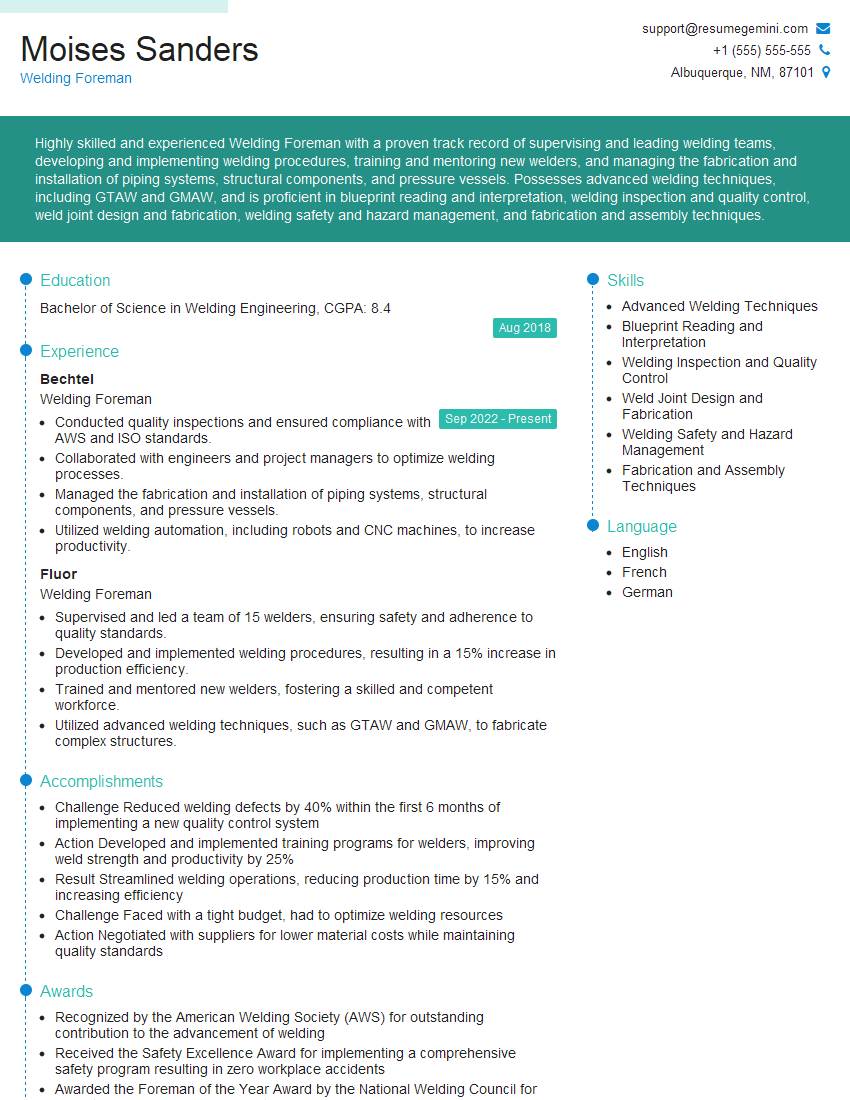
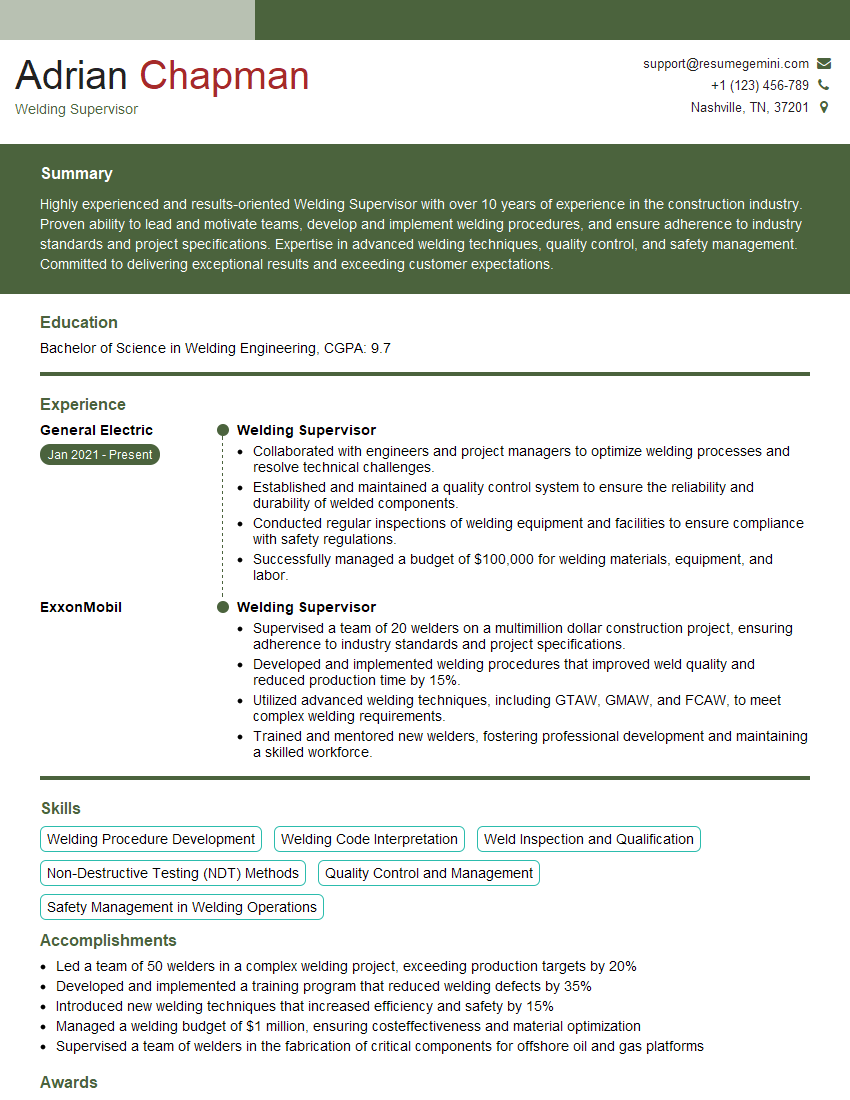
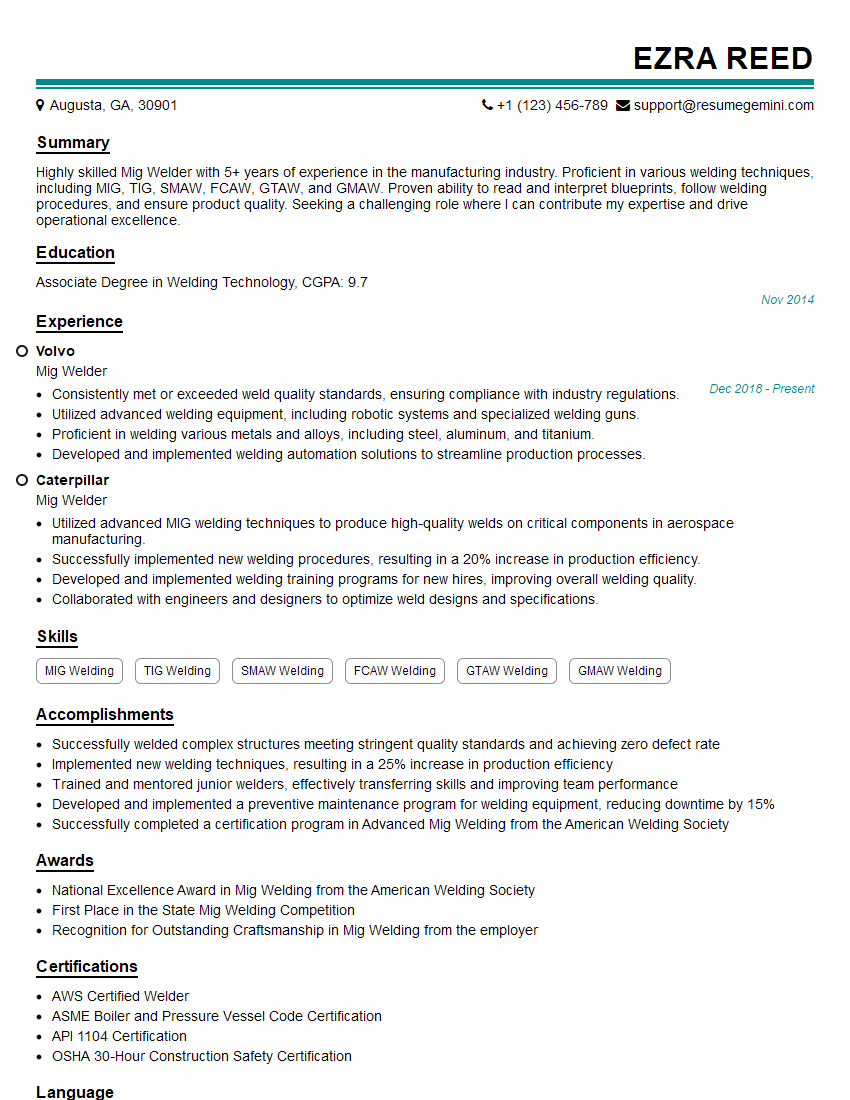
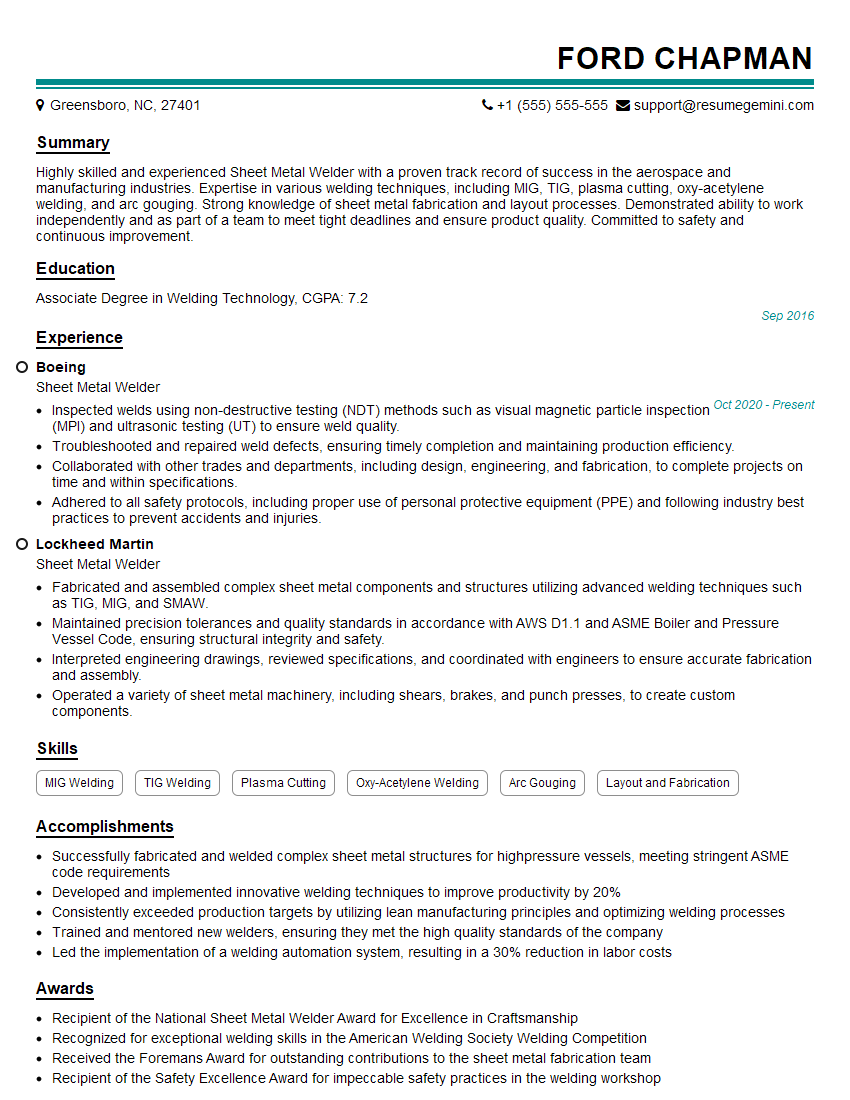
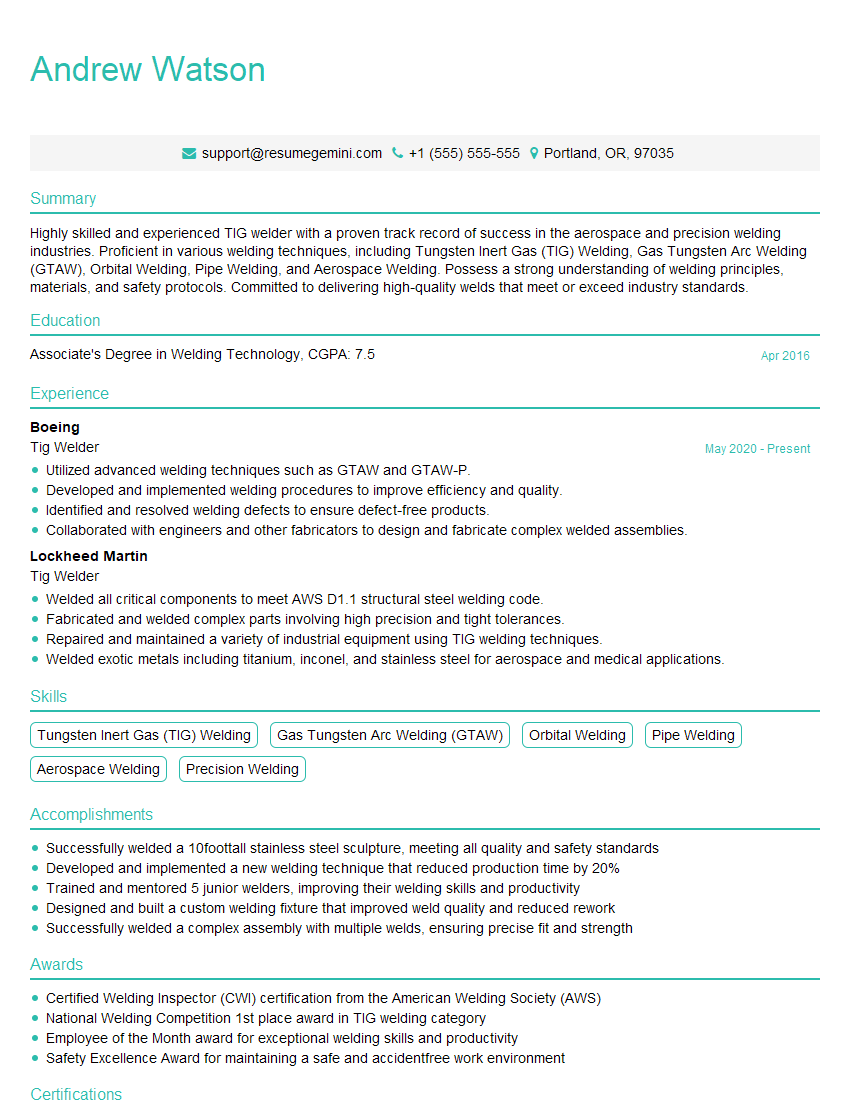
Mastering precision welding techniques is crucial for career advancement in this highly skilled field. Employers value welders who possess a strong theoretical foundation and practical expertise, enabling them to tackle complex projects and deliver high-quality results. To stand out, create an ATS-friendly resume that showcases your skills and experience effectively. ResumeGemini is a trusted resource to help you build a professional resume that highlights your qualifications. Examples of resumes tailored to Precision Welding Techniques are available to guide you. Take the next step in your career journey – build a compelling resume that gets noticed!


Explore more articles
Users Rating of Our Blogs
Share Your Experience
We value your feedback! Please rate our content and share your thoughts (optional).
What Readers Say About Our Blog
I Redesigned Spongebob Squarepants and his main characters of my artwork.
https://www.deviantart.com/reimaginesponge/art/Redesigned-Spongebob-characters-1223583608
IT gave me an insight and words to use and be able to think of examples
Hi, I’m Jay, we have a few potential clients that are interested in your services, thought you might be a good fit. I’d love to talk about the details, when do you have time to talk?
Best,
Jay
Founder | CEO