Are you ready to stand out in your next interview? Understanding and preparing for Proficiency in Automation and Technology interview questions is a game-changer. In this blog, we’ve compiled key questions and expert advice to help you showcase your skills with confidence and precision. Let’s get started on your journey to acing the interview.
Questions Asked in Proficiency in Automation and Technology Interview
Q 1. Explain the difference between RPA and automation.
While both RPA (Robotic Process Automation) and general automation aim to reduce manual effort, they differ significantly in scope and approach. Think of automation as a broad umbrella encompassing various techniques to streamline tasks, including manual coding, scripting, and the use of specialized tools. RPA, on the other hand, is a *specific type* of automation that focuses on mimicking human actions within software applications. RPA uses bots to interact with user interfaces (UIs) – clicking buttons, filling forms, copying data, etc. – just like a human would.
For example, automation could involve building a complex ETL (Extract, Transform, Load) pipeline using Python to process massive datasets. This requires coding skills and a deep understanding of data structures. RPA, conversely, might automate the process of taking data from that processed dataset, entering it into a specific CRM system through the system’s UI, and then sending a confirmation email. It’s rule-based and often doesn’t require in-depth coding knowledge.
In short: Automation is the broad concept; RPA is a specific implementation focused on UI interaction.
Q 2. Describe your experience with different automation frameworks (e.g., Selenium, Cypress, Robot Framework).
I have extensive experience with several automation frameworks, including Selenium, Cypress, and Robot Framework. My experience spans from designing and implementing test automation suites to integrating them into CI/CD pipelines.
- Selenium: I’ve leveraged Selenium WebDriver extensively for automating web application testing across various browsers (Chrome, Firefox, Edge). I’m proficient in using different locators (XPath, CSS selectors) to identify web elements, handling dynamic content, and implementing waits to ensure script stability. For instance, I recently used Selenium to build a robust regression test suite for a large e-commerce platform, covering various user flows from product search to checkout.
- Cypress: I appreciate Cypress’s developer-centric approach, particularly its ease of debugging and its built-in time travel feature. I’ve employed Cypress to create end-to-end tests focused on user experience. One project involved automating the testing of a single-page application (SPA), where Cypress’s ability to handle asynchronous operations proved invaluable.
- Robot Framework: I’ve used Robot Framework for test automation projects needing more flexibility and easier collaboration across diverse teams. Its keyword-driven approach promotes reusability and makes the tests more readable. I used Robot Framework to build a comprehensive acceptance test-driven development (ATDD) framework for a banking application, facilitating seamless collaboration between developers and business analysts.
Q 3. How do you handle exceptions in your automation scripts?
Robust exception handling is crucial for the reliability of automation scripts. My approach is multi-layered and incorporates:
- Try-Except Blocks: I use try-except blocks to gracefully catch specific exceptions (e.g.,
ElementNotFoundException,TimeoutException) and implement recovery strategies. This prevents script crashes and provides informative error messages. - Custom Error Handling: For more complex scenarios, I create custom exception classes to represent specific error conditions within the application under test. This aids in better categorization and debugging.
- Logging: Comprehensive logging is essential. I log both successful actions and exceptions, including timestamps, error messages, and relevant context. This assists in pinpointing problems during debugging.
- Retry Mechanisms: For intermittent errors, I implement retry logic with exponential backoff. This approach allows the script to attempt the action again after a delay, increasing the delay with each attempt, before finally failing.
For example, if an element on a webpage isn’t immediately available, a retry mechanism might wait a few seconds and try again. A simple example in Python:
try:
    element = driver.find_element(By.ID, "myElement")
except NoSuchElementException:
    for i in range(3):
        time.sleep(2 ** i)
        try:
            element = driver.find_element(By.ID, "myElement")
            break
        except NoSuchElementException:
            print(f"Element not found after retry {i+1}")
    else:
        raise
Q 4. What are the key performance indicators (KPIs) you would use to measure the success of an automation project?
The KPIs used to measure the success of an automation project are heavily dependent on the project goals, but typically include:
- Test Coverage: Percentage of test cases automated, reflecting the completeness of automation.
- Defect Detection Rate: Number of defects found through automation versus manual testing.
- Automation Efficiency: Time saved due to automation, measured against manual effort.
- Script Execution Time: Speed and performance of the automation scripts.
- Test Script Maintainability: Ease of updating and maintaining automated test scripts.
- Return on Investment (ROI): A cost-benefit analysis comparing the cost of automation with the savings and other benefits.
For instance, in one project, we focused on the ROI by comparing the cost of manual testing with the automated testing approach and tracking the reduction in defect escape rate, ultimately demonstrating a significant cost saving.
Q 5. Explain your approach to testing automated systems.
My approach to testing automated systems involves a multi-faceted strategy that integrates various testing techniques. It’s not just about verifying the automated scripts themselves but also ensuring the automated process successfully achieves its intended outcome:
- Unit Tests: Small, focused tests that verify individual functions or modules within the automation scripts.
- Integration Tests: Tests that verify the interaction between different components of the automation system.
- System Tests (End-to-End): Verify the entire automated system’s functionality from start to finish, simulating real-world scenarios.
- Regression Testing: Running tests repeatedly after code changes to ensure new features or bug fixes haven’t broken existing functionality.
- Performance Testing: Measuring response time, throughput, and resource utilization to assess the system’s performance under load.
Furthermore, I emphasize using a combination of automated and manual testing. Manual testing helps to validate the automated processes and address edge cases that are not easily captured via automation alone. For example, after automating a UI test suite I still conduct manual exploratory testing to ensure that the user experience aligns with requirements.
Q 6. Describe your experience with CI/CD pipelines and automation.
I have extensive experience integrating automation into CI/CD pipelines using various tools like Jenkins, GitLab CI, and Azure DevOps. This involves automating the build, test, and deployment processes.
A typical workflow includes using the version control system (like Git) to trigger the CI pipeline when code changes are committed. This pipeline would automatically build the code, run unit and integration tests using frameworks like pytest or JUnit, then conduct end-to-end tests using Selenium or Cypress. Upon successful test execution, the code is deployed to the relevant environments (staging, production), often using tools like Docker and Kubernetes for containerization and orchestration.
For example, in a recent project, we set up a CI/CD pipeline that automatically deployed changes to our application after successful testing. This reduced deployment time from days to hours and ensured more frequent and reliable releases.
Q 7. What are some common challenges in implementing automation, and how have you overcome them?
Implementing automation presents several challenges, but experience has taught me how to overcome them. Some common issues include:
- Application Changes: Frequent changes in the application being automated often require frequent updates to the automation scripts. To mitigate this, I utilize modular design principles, making scripts more maintainable and adaptable.
- Data Dependency: Automation scripts often depend on external data sources. Handling data variations requires robust data management and techniques like data virtualization or mocking.
- Environment Differences: Discrepancies between different testing environments (development, testing, production) can lead to script failures. Careful environment configuration and virtualization are key here.
- Lack of Collaboration: Successful automation requires close collaboration between developers, testers, and business users. Promoting clear communication and a shared understanding of project goals is essential.
For example, one project had challenges due to frequent UI changes. We addressed this by implementing a page object model to encapsulate UI elements and functions, making the scripts more resilient to UI updates.
Q 8. How do you choose the right automation tool for a specific project?
Choosing the right automation tool depends heavily on the project’s specific needs. It’s not a one-size-fits-all situation. Think of it like choosing the right tool for a job in carpentry – you wouldn’t use a hammer to screw in a screw. My approach involves a structured evaluation process:
- Defining Scope and Requirements: First, I clearly define the tasks to be automated, the systems involved, the expected outcomes, and any constraints (budget, time, existing infrastructure). For example, if we’re automating deployment, I need to know the target environment (cloud, on-premise), the application’s architecture, and the frequency of deployments.
- Identifying Potential Tools: Based on the requirements, I research and shortlist potential tools. This involves considering factors like ease of use, community support, scalability, integration capabilities, and licensing costs. For instance, for simple scripting tasks, Python might suffice; for complex UI automation, Selenium might be necessary; for infrastructure automation, tools like Ansible or Terraform are more suitable.
- Proof of Concept (POC): Before committing to a tool, I conduct a small-scale POC to test its feasibility and suitability. This involves creating a prototype automation script for a small part of the project. This allows me to validate the tool’s capabilities and identify any potential challenges early on.
- Evaluation and Selection: Finally, I compare the tools based on the POC results, considering factors like performance, maintainability, and cost-effectiveness. The tool that best aligns with the project requirements and offers the optimal balance between features and cost is selected.
For example, in a recent project involving automating the deployment of a microservice architecture to AWS, we chose Ansible due to its ease of use for managing configurations across multiple servers and its seamless integration with AWS services. For a different project involving web UI testing, Selenium with Python was the ideal choice because of its powerful features for web element interaction and the flexibility of Python.
Q 9. Explain your experience with different scripting languages (e.g., Python, JavaScript, PowerShell).
I have extensive experience with several scripting languages, each with its strengths and weaknesses. My proficiency allows me to select the most appropriate language for a given task, maximizing efficiency and maintainability.
- Python: My go-to language for many automation projects. It’s versatile, boasts a large library ecosystem (requests for web interactions, beautifulsoup for web scraping, pytest for testing), and is highly readable. I’ve used Python extensively for automating tasks like data processing, web scraping, API testing, and infrastructure management using libraries like boto3 (for AWS) and google-cloud-python (for GCP).
- JavaScript: Essential for web automation, particularly when interacting with browser-based applications using Selenium or Puppeteer. I’ve used it for automating front-end testing, simulating user interactions, and extracting data from dynamic websites.
- PowerShell: My preferred choice for automating tasks within Windows environments. Its strong integration with the Windows operating system makes it ideal for managing systems, configuring settings, and interacting with Active Directory. I’ve leveraged it for automating server deployments, user account management, and log analysis.
# Example Python code for automating a simple file copy: import shutil; shutil.copy2('source.txt', 'destination.txt')
The choice of language often depends on the context. For instance, when automating tasks within a Windows server environment, PowerShell is the most natural choice; whereas, for cross-platform compatibility and vast library support, Python becomes more appropriate.
Q 10. Describe your experience with version control systems (e.g., Git).
Version control, primarily using Git, is an integral part of my workflow. I consider it indispensable for maintaining a history of changes, collaborating effectively, and ensuring the integrity of my automation solutions.
- Branching Strategies: I employ branching strategies like Gitflow or GitHub Flow to manage different versions and features independently. This enables parallel development and allows for safe experimentation without impacting the main codebase. For example, I might create a feature branch for a new automation script, thoroughly test it, and merge it into the main branch only after it passes all quality checks.
- Commit Messages: I write clear and concise commit messages that explain the purpose and scope of each change. This is vital for maintaining a clear project history and facilitating future debugging and maintenance.
- Pull Requests and Code Reviews: I utilize pull requests to facilitate code reviews, ensuring that changes are thoroughly vetted before merging. This is crucial for maintaining code quality and preventing regressions.
- Conflict Resolution: I’m experienced in resolving merge conflicts efficiently, ensuring that code integration is smooth and free from errors.
Git’s collaborative capabilities are essential for team projects. It allows multiple developers to work simultaneously on different parts of an automation project, ensuring a smooth and efficient development cycle.
Q 11. How do you ensure the maintainability and scalability of your automation solutions?
Maintainability and scalability are paramount for long-term success in automation. To ensure this, I adhere to best practices during the design and development phases:
- Modular Design: I break down large automation tasks into smaller, independent modules. This improves readability, testability, and reusability. Changes to one module are less likely to impact others.
- Documentation: Thorough documentation is crucial. This includes clear comments in the code, detailed explanations of the automation logic, and user manuals where appropriate. This makes it easier for others (and myself in the future) to understand, maintain, and extend the automation scripts.
- Configuration Management: I separate the automation logic from configuration data. This allows changes to the environment or parameters to be easily made without altering the core code. Tools like configuration files or environment variables are helpful for this.
- Error Handling: Robust error handling mechanisms are essential to prevent failures and make debugging easier. The use of try-except blocks (in Python) or similar constructs is crucial for this.
- Testing: Comprehensive testing (unit, integration, system) is vital for ensuring that the automation scripts work correctly and remain stable over time. A strong test suite allows for rapid detection of regressions and makes refactoring safer.
- Scalability Considerations: Designing automation solutions with scalability in mind is important from the start. Using technologies that can handle increased workloads, leveraging cloud resources, and implementing efficient algorithms are all considerations.
For example, a well-documented and modular script allows for easier debugging and maintenance. A scalable solution will be capable of handling more data or more concurrent tasks as needed without significant performance degradation. Failing to consider these aspects often leads to brittle, difficult-to-maintain automation solutions which become a burden to update and expand.
Q 12. Explain your experience with cloud platforms (e.g., AWS, Azure, GCP) and their automation capabilities.
I have significant experience with major cloud platforms – AWS, Azure, and GCP – and their automation capabilities. These platforms provide a rich set of tools and services that significantly enhance the efficiency and scalability of automation projects.
- AWS: I’ve utilized various AWS services for automation, including AWS Lambda (for serverless functions), EC2 (for virtual machines), S3 (for storage), and CloudFormation (for infrastructure-as-code). I’ve used tools like boto3 (Python library) to interact with AWS services programmatically, automating tasks such as server provisioning, application deployments, and data backups.
- Azure: My experience with Azure includes using Azure Functions (similar to AWS Lambda), Azure Virtual Machines, Azure Blob Storage, and Azure Resource Manager (ARM) templates for infrastructure automation. I’ve leveraged Azure CLI and Python libraries for programmatic interaction.
- GCP: In GCP, I’ve worked with Google Cloud Functions, Compute Engine, Cloud Storage, and Deployment Manager. I’ve utilized the Google Cloud SDK and Python libraries to manage resources and automate various tasks.
Cloud platforms offer many advantages for automation, including scalability (ability to handle increased workloads), high availability (reduced downtime), and cost-effectiveness (pay-as-you-go pricing). Using cloud-native services also simplifies the management of underlying infrastructure, freeing up time and resources to focus on other aspects of the automation project.
Q 13. How do you handle version control for your automation scripts?
Version control for automation scripts is managed using the same principles and tools as any other software development project. Git remains the cornerstone of this process.
- Centralized Repository: All automation scripts are stored in a centralized Git repository (e.g., GitHub, GitLab, Bitbucket). This ensures easy collaboration and version tracking.
- Branching Strategy: A clear branching strategy, such as Gitflow or GitHub Flow, helps in managing multiple versions and preventing conflicts. Feature branches are created for new scripts or changes, allowing for thorough testing before integration into the main branch.
- Regular Commits: Frequent commits with descriptive messages track progress and allow for easy rollback if necessary. Each commit should represent a logical unit of change.
- Code Reviews: Before merging code into the main branch, code reviews are essential to ensure code quality, consistency, and the absence of potential errors. This also helps in knowledge sharing within the team.
- Tagging Releases: Important releases are tagged with descriptive labels to easily identify and deploy specific versions of the automation scripts. This is particularly useful for tracking versions in production environments.
This rigorous approach ensures that the automation scripts remain versioned, organized, and maintainable over time, allowing for easy collaboration and rapid troubleshooting.
Q 14. What is your experience with different types of automation testing (unit, integration, system, etc.)?
My experience encompasses various types of automation testing, each with its specific purpose and methodology:
- Unit Testing: This focuses on testing individual units of code (functions, methods) in isolation. It ensures that each unit functions correctly and helps identify bugs early in the development cycle. I use frameworks like pytest (Python) or Jest (JavaScript) for this.
- Integration Testing: This verifies the interaction between different modules or components of the automation system. It ensures that these components work together correctly, identifying issues with data flow and interfaces. I often use mocking techniques to isolate components under test.
- System Testing: This involves testing the entire automation system as a whole to ensure that it meets the specified requirements. It involves simulating real-world scenarios and verifying the overall functionality. It’s typically conducted in a staging or test environment.
- End-to-End (E2E) Testing: This simulates the complete user journey, from start to finish, to validate the automation’s effectiveness in a realistic setting. Tools like Selenium or Cypress are frequently used for this.
The choice of testing types depends on the complexity and scope of the automation project. A comprehensive testing strategy, including all relevant levels, ensures a robust and reliable automation system.
Q 15. Describe your approach to debugging automation scripts.
My approach to debugging automation scripts is systematic and methodical, focusing on isolating the problem and understanding its root cause. I typically follow a structured process:
- Reproduce the error: First, I meticulously recreate the error to understand the exact conditions under which it occurs. This often involves checking logs, reviewing the script’s execution flow, and possibly using debugging tools to step through the code.
- Isolate the problem area: Once I can reliably reproduce the error, I try to pinpoint the section of the script causing the issue. This might involve commenting out sections of code or adding print statements to track variable values.
- Analyze error messages and logs: Error messages and logs provide crucial clues. I carefully examine these for specific error codes, timestamps, and other relevant information. Understanding the error type (e.g., syntax error, runtime error, logical error) is key.
- Utilize debugging tools: Debuggers are invaluable for stepping through code line by line, examining variable states, and setting breakpoints. I leverage the debugging capabilities of my chosen scripting language (e.g., Python’s pdb, JavaScript’s debugger) extensively.
- Check inputs and outputs: Incorrect or unexpected inputs can lead to errors. I verify that the script receives the correct data and that the outputs are as expected. This includes carefully examining APIs calls, database interactions, and file I/O.
- Version control and rollback: Using a version control system like Git is paramount. If I introduce a bug during development, I can easily revert to a previous working version.
- Testing and validation: Thorough testing is crucial. I use a combination of unit tests, integration tests, and end-to-end tests to ensure the script functions correctly under various conditions. This helps prevent bugs from slipping into production.
For example, if I encounter an unexpected HTTP error during an API call, I would first check the API documentation for the expected response codes, then inspect the request and response headers and bodies for clues, and finally, debug the code handling the API call itself.
Career Expert Tips:
- Ace those interviews! Prepare effectively by reviewing the Top 50 Most Common Interview Questions on ResumeGemini.
- Navigate your job search with confidence! Explore a wide range of Career Tips on ResumeGemini. Learn about common challenges and recommendations to overcome them.
- Craft the perfect resume! Master the Art of Resume Writing with ResumeGemini’s guide. Showcase your unique qualifications and achievements effectively.
- Don’t miss out on holiday savings! Build your dream resume with ResumeGemini’s ATS optimized templates.
Q 16. What are the security considerations when implementing automation?
Security is paramount when implementing automation. Ignoring security best practices can lead to vulnerabilities that expose sensitive data or compromise systems. Key considerations include:
- Access control: Automation scripts should only have access to the resources they absolutely need. This includes limiting permissions, using least privilege principles, and employing strong authentication mechanisms. For instance, avoid storing credentials directly in the scripts; utilize secure credential management systems.
- Input validation: Always validate user input and other external data sources to prevent injection attacks (e.g., SQL injection, cross-site scripting). Sanitize and escape data before using it in queries or displaying it.
- Data encryption: Sensitive data should be encrypted both in transit and at rest. This involves using secure protocols (like HTTPS) and encryption algorithms to protect data from unauthorized access.
- Secure coding practices: Following secure coding guidelines is critical to prevent vulnerabilities. This involves avoiding common pitfalls like buffer overflows, race conditions, and insecure libraries.
- Regular security audits and penetration testing: Regular security assessments are essential to identify and address vulnerabilities proactively. Penetration testing simulates real-world attacks to uncover weaknesses.
- Monitoring and logging: Monitor automation scripts for suspicious activity, and log all significant events. This allows for early detection of security breaches and helps with forensic analysis.
For example, an automation script interacting with a database should only have the necessary permissions to perform its specific tasks, and should use parameterized queries to prevent SQL injection.
Q 17. How do you ensure the security of your automation scripts and the systems they access?
Ensuring the security of automation scripts and the systems they access involves a multi-layered approach. Here’s how I approach it:
- Secure credential management: Never hardcode credentials directly into scripts. Use secure credential management systems or secrets management tools (like HashiCorp Vault or AWS Secrets Manager) to store and retrieve credentials securely.
- Least privilege access: Grant automation scripts only the minimum necessary permissions to perform their tasks. This limits the potential damage if a script is compromised.
- Regular updates and patching: Keep all software and libraries used by automation scripts updated with the latest security patches to mitigate known vulnerabilities.
- Code reviews and security scanning: Conduct code reviews to identify potential security flaws. Use static and dynamic application security testing (SAST/DAST) tools to automatically detect vulnerabilities.
- Network security: Ensure that the network infrastructure used by automation scripts is properly secured with firewalls, intrusion detection/prevention systems, and other relevant security measures.
- Regular monitoring and alerting: Implement monitoring and alerting to detect anomalies or suspicious activities. This enables timely response to security incidents.
- Secure deployment practices: Follow secure deployment practices, such as using containerization (Docker, Kubernetes) and infrastructure as code (Terraform, Ansible) to manage and secure the environment.
For example, if a script needs access to a cloud storage service, it should be configured with appropriate access keys, and these keys should be stored securely outside the script itself, perhaps in a secrets manager.
Q 18. How do you document your automation processes?
Documentation is crucial for maintaining and understanding automation processes. My documentation approach includes:
- Script comments: I thoroughly comment my code, explaining the purpose of each section, the logic behind algorithms, and any non-obvious steps. This makes the code easier to understand and maintain.
- Readme files: Every automation project has a comprehensive README file that provides an overview of the project, including its purpose, dependencies, instructions for setup and execution, and troubleshooting tips.
- Process diagrams: I often use visual tools (like Lucidchart or draw.io) to create diagrams illustrating the workflow of the automation process. This helps visualize the steps involved and identify potential bottlenecks.
- API documentation: If the automation interacts with APIs, I maintain clear documentation of the APIs used, including endpoints, request parameters, and response formats. I leverage tools like Swagger or Postman for API documentation.
- Version history: Version control (Git) is essential for tracking changes and reverting to previous versions if needed. Commit messages should clearly describe the changes made.
- Runbooks and troubleshooting guides: I develop runbooks that provide step-by-step instructions for running and maintaining the automation. I also create troubleshooting guides to address common issues.
For example, a well-documented script would have comments explaining the purpose of each function, the data structures used, and error handling mechanisms. The README would explain how to install dependencies, run the script, and interpret its output.
Q 19. How do you prioritize automation projects?
Prioritizing automation projects involves a careful consideration of various factors. My approach typically involves:
- Business value: I prioritize projects with the highest potential return on investment (ROI). This involves quantifying the benefits of automation, such as cost savings, increased efficiency, or improved accuracy.
- Feasibility: I assess the technical feasibility of each project, considering factors like the complexity of the task, the availability of data and tools, and the skillset of the team.
- Risk assessment: I evaluate the risks associated with each project, including potential disruptions to operations and security vulnerabilities.
- Dependencies: I consider the dependencies between projects and prioritize those that can enable or support other automation initiatives.
- Urgency: I take into account the urgency of the need for automation. Some projects might require immediate attention due to time constraints or business criticality.
- Impact analysis: I analyze the impact of automation on different stakeholders (e.g., employees, customers). I ensure that the changes introduced by automation are properly communicated and supported.
For example, automating a high-volume, error-prone manual process with a clear ROI would generally be prioritized over a lower-impact project with higher technical complexity.
Q 20. Explain your experience with robotic process automation (RPA).
I have extensive experience with Robotic Process Automation (RPA). RPA involves using software robots to automate repetitive, rule-based tasks. My experience includes:
- Selecting the right RPA tool: I’ve worked with various RPA platforms (UiPath, Automation Anywhere, Blue Prism), selecting the appropriate tool based on project requirements, scalability needs, and integration capabilities.
- Process analysis and design: I have experience in analyzing existing business processes to identify areas suitable for automation. I then design efficient and robust RPA workflows.
- Development and implementation: I’ve developed and implemented numerous RPA solutions, integrating them with various systems like ERPs, CRMs, and other enterprise applications.
- Testing and deployment: I employ rigorous testing methodologies, including unit testing, integration testing, and user acceptance testing (UAT), to ensure the quality and reliability of RPA solutions before deploying them to production.
- Maintenance and support: I provide ongoing maintenance and support for deployed RPA solutions, addressing issues and making necessary enhancements.
- Exception handling: I’ve designed robust exception handling mechanisms to manage unexpected situations and errors during RPA execution.
For example, I implemented an RPA solution that automated the invoice processing workflow for a large organization, resulting in significant improvements in efficiency and accuracy. This involved integrating the RPA bot with the company’s ERP system and various other applications.
Q 21. What are the benefits and drawbacks of using AI/ML in automation?
AI/ML offers powerful capabilities for enhancing automation, but it’s crucial to understand both the benefits and drawbacks:
Benefits:
- Intelligent automation: AI/ML allows for more sophisticated automation that can handle complex tasks, adapt to changing conditions, and make decisions based on data.
- Improved accuracy and efficiency: AI/ML algorithms can improve accuracy and efficiency compared to rule-based automation, especially in tasks involving pattern recognition, prediction, and decision-making.
- Self-learning and adaptation: AI/ML models can learn from data and improve their performance over time, adapting to changing environments and requirements.
- Enhanced decision-making: AI/ML can provide data-driven insights that can help inform better decision-making in automation processes.
Drawbacks:
- Complexity and cost: Implementing AI/ML in automation can be complex and costly, requiring specialized expertise and infrastructure.
- Data dependency: AI/ML models rely heavily on data, and the quality and quantity of data can significantly impact their performance. Poor data can lead to inaccurate or biased results.
- Explainability and interpretability: Some AI/ML models (e.g., deep learning) can be difficult to interpret and understand, making it challenging to debug or explain their decisions.
- Bias and fairness: AI/ML models can inherit biases present in the data they are trained on, leading to unfair or discriminatory outcomes.
- Security concerns: AI/ML models can be vulnerable to adversarial attacks, where malicious actors try to manipulate the model’s behavior.
For example, an AI-powered chatbot can handle customer inquiries more efficiently than a rule-based system, but it requires significant training data and careful monitoring to ensure accuracy and avoid bias.
Q 22. How do you measure the ROI of an automation project?
Measuring the Return on Investment (ROI) of an automation project requires a multifaceted approach. It’s not just about the cost savings; it’s about quantifying the overall value delivered. We need to consider both tangible and intangible benefits.
- Cost Savings: This is the most straightforward aspect. We calculate the reduction in labor costs, material costs, or operational expenses due to automation. For example, if automating a process reduces manual labor by 10 hours per week at $50/hour, the annual savings would be significant.
- Increased Efficiency and Productivity: Automation often accelerates processes. We track the increase in throughput, reduced cycle times, and faster turnaround times. For instance, if automation reduces order processing time from 2 days to 1 day, that’s a considerable efficiency gain.
- Reduced Errors: Human error is a significant source of problems. Quantify the reduction in errors and associated costs (rework, lost revenue, customer dissatisfaction) resulting from automation. A concrete example would be the reduction in data entry errors leading to lower customer service call volume.
- Improved Quality: Automation can lead to higher quality products or services. While this can be harder to quantify directly, we can track metrics like defect rates or customer satisfaction scores to demonstrate the impact.
- Enhanced Scalability and Flexibility: Automation allows for easier scaling of operations. We should measure the improvement in the capacity to handle increased workload without proportionally increasing costs.
- Better Compliance and Risk Mitigation: Automation can strengthen compliance with regulations or reduce risks associated with manual processes. This benefit is harder to quantify in monetary terms but is crucial in some industries.
To calculate ROI, we typically use a formula that considers the total investment (including software, hardware, implementation costs, and training) and the total return (the sum of all benefits identified above). A simple calculation would be: ROI = (Total Return - Total Investment) / Total Investment. However, it’s crucial to use a realistic timeframe for calculating the ROI and to factor in potential risks and unforeseen expenses.
Q 23. Describe a time you had to troubleshoot a complex automation issue.
During a recent project automating our customer onboarding process, we encountered a critical issue. The system was failing to send confirmation emails to a significant percentage of new users, leading to high support ticket volumes and negative customer feedback. Initial investigations suggested problems with our SMTP server configuration and email template rendering.
My troubleshooting approach was systematic:
- Reproduce the issue: I first meticulously replicated the problem, observing the exact sequence of events leading to failure.
- Gather logs and data: I analyzed server logs, email delivery logs, and database records for clues. This revealed a pattern: emails weren’t failing outright but were being flagged as spam by recipient servers due to issues with email headers and content.
- Isolate the root cause: By carefully reviewing the email templates and server configurations, I identified the problem as a mismatch between the declared sender email address and the domain’s SPF (Sender Policy Framework) record. This made the emails appear suspicious to spam filters.
- Implement a fix: The solution was straightforward: updating the SPF record and correcting the email headers to ensure proper authentication. We also implemented more robust email deliverability checks in our automated process.
- Test and monitor: After implementing the fix, I thoroughly tested the system and monitored email delivery rates for several days to ensure stability.
This experience underscored the importance of thorough testing, detailed logging, and a methodical debugging process when dealing with complex automation issues. It also highlighted the need for comprehensive understanding of related technologies (in this case, email server infrastructure and spam filtering mechanisms).
Q 24. How do you manage large and complex automation projects?
Managing large and complex automation projects requires a structured approach. I typically employ a project management framework like Agile, incorporating these key elements:
- Detailed Project Planning: This includes defining clear objectives, scope, deliverables, timelines, and resources. A Work Breakdown Structure (WBS) helps decompose the project into smaller, manageable tasks.
- Team Collaboration: Effective communication and collaboration among team members (developers, testers, business analysts, etc.) is paramount. Regular meetings, status updates, and collaborative tools facilitate this.
- Version Control: Using a robust version control system (e.g., Git) is crucial to track code changes, manage different versions, and facilitate collaboration among developers.
- Testing and Quality Assurance: A comprehensive testing strategy, including unit tests, integration tests, and user acceptance testing (UAT), is crucial to ensure the quality and reliability of the automation. Continuous Integration/Continuous Delivery (CI/CD) pipelines automate this process.
- Monitoring and Maintenance: Post-deployment monitoring is crucial to identify and address issues promptly. This includes setting up alerts, dashboards, and logging mechanisms to track performance and identify potential problems.
- Documentation: Clear and comprehensive documentation (including design specifications, code comments, and user manuals) is essential for maintenance, troubleshooting, and knowledge transfer.
I leverage project management software (like Jira or Azure DevOps) to track tasks, manage timelines, and monitor progress. For very large projects, I’d employ a modular approach, breaking down the project into smaller independent modules that can be developed and tested concurrently.
Q 25. Explain your experience with Agile methodologies in an automation context.
My experience with Agile methodologies in automation is extensive. I’ve successfully utilized Scrum and Kanban in multiple projects. Agile’s iterative approach aligns perfectly with automation development. Instead of long, upfront design phases, we work in short sprints (typically 2-4 weeks) focusing on delivering incremental value.
In an automation context, Agile allows us to:
- Prioritize features: We can prioritize automation tasks based on business value and focus on delivering the most impactful automations first.
- Get early feedback: Frequent demonstrations and user feedback ensure we’re building the right automations and meeting user needs.
- Adapt to changes: The iterative nature of Agile allows for flexibility to adapt to evolving requirements or unexpected challenges.
- Improve continuously: Regular sprint retrospectives provide opportunities to learn from our mistakes and improve our processes.
For example, in a recent project, we used Scrum to automate a data migration process. We broke the task into smaller user stories, each representing a specific aspect of the migration. Each sprint delivered a working piece of the automation, allowing us to test and refine the system incrementally. This approach reduced risk, improved collaboration, and ensured we delivered a high-quality, robust solution.
Q 26. How do you stay up-to-date with the latest advancements in automation and technology?
Staying current in the rapidly evolving field of automation and technology requires a proactive approach.
- Online Courses and Certifications: Platforms like Coursera, edX, Udemy, and LinkedIn Learning offer a wealth of courses on various automation technologies. I regularly pursue relevant certifications to validate my skills.
- Industry Conferences and Webinars: Attending conferences and webinars provides exposure to the latest trends, best practices, and innovative solutions. It’s also a great opportunity for networking.
- Technical Blogs and Publications: I follow influential blogs, podcasts, and industry publications to stay abreast of advancements in automation technologies and their applications.
- Open Source Projects: Contributing to or closely following open-source projects exposes me to innovative code and practices. It’s also a great way to learn from experts in the field.
- Professional Networks: Engaging with professional networks (like LinkedIn) and attending meetups allows me to connect with other automation professionals and share knowledge.
Continuous learning is not merely a choice but a necessity in this field. By actively engaging in these activities, I maintain a strong understanding of emerging technologies and best practices, ensuring I remain a valuable asset.
Q 27. Describe your experience with integrating automation with existing systems.
Integrating automation with existing systems is a critical aspect of my work. This often requires a deep understanding of both the automation tools and the target systems. A successful integration depends on careful planning and execution. My experience typically involves these steps:
- Assessment of Existing Systems: This involves understanding the architecture, APIs, and data structures of the existing systems. I often need to work with system owners or architects to gather this information.
- API Integration: Many integrations leverage APIs to exchange data and trigger actions. I have experience working with RESTful APIs, SOAP APIs, and other common integration protocols.
- Data Transformation: Data often needs transformation before it can be used by the automation system. I employ techniques like ETL (Extract, Transform, Load) processes to handle data mapping and conversion.
- Security Considerations: Security is a crucial aspect. I utilize secure authentication mechanisms, encryption, and access control policies to protect sensitive data.
- Testing and Monitoring: Thorough testing is essential to ensure the integration works flawlessly. Post-integration monitoring helps to detect and address any issues that may arise.
For example, I integrated a robotic process automation (RPA) tool with our legacy CRM system to automate data entry. This involved using the CRM’s API to extract data, transforming it, and then using the RPA tool to input the data into our marketing automation platform. We employed robust error handling and monitoring to ensure data integrity and system stability.
Q 28. What are your salary expectations?
My salary expectations are commensurate with my experience, skills, and the market rate for a senior automation engineer with my qualifications. Based on my research and understanding of similar roles in this region, I am targeting a salary range of [Insert Salary Range]. I am open to discussing this further and am confident we can reach a mutually agreeable compensation package.
Key Topics to Learn for Proficiency in Automation and Technology Interview
- Automation Frameworks: Understand the principles and practical application of popular automation frameworks like Selenium, Cypress, Robot Framework, or Appium. Explore their strengths and weaknesses in different contexts.
- Testing Methodologies: Master various testing methodologies such as Agile, Waterfall, and DevOps, and their impact on automation strategies. Be prepared to discuss their practical application in real-world projects.
- Programming Languages for Automation: Develop proficiency in at least one programming language commonly used in automation (e.g., Python, Java, JavaScript). Practice implementing automation scripts and debugging techniques.
- API Testing and Automation: Gain a solid understanding of API testing principles and how to automate API tests using tools like Postman or REST-Assured. Understand concepts like RESTful APIs and JSON.
- CI/CD Pipelines: Learn about Continuous Integration and Continuous Delivery (CI/CD) pipelines and how automation plays a crucial role in streamlining the software development lifecycle. Be familiar with tools like Jenkins, GitLab CI, or Azure DevOps.
- Cloud Technologies and Automation: Explore cloud platforms (AWS, Azure, GCP) and how automation simplifies cloud infrastructure management and deployment. Understand IaC (Infrastructure as Code) concepts.
- Problem-solving and Troubleshooting: Develop strong problem-solving skills to effectively debug and resolve issues in automated systems. Practice identifying and resolving common automation challenges.
- Security Considerations in Automation: Understand the security implications of automation and how to implement secure automation practices. This includes secure coding practices and access control.
Next Steps
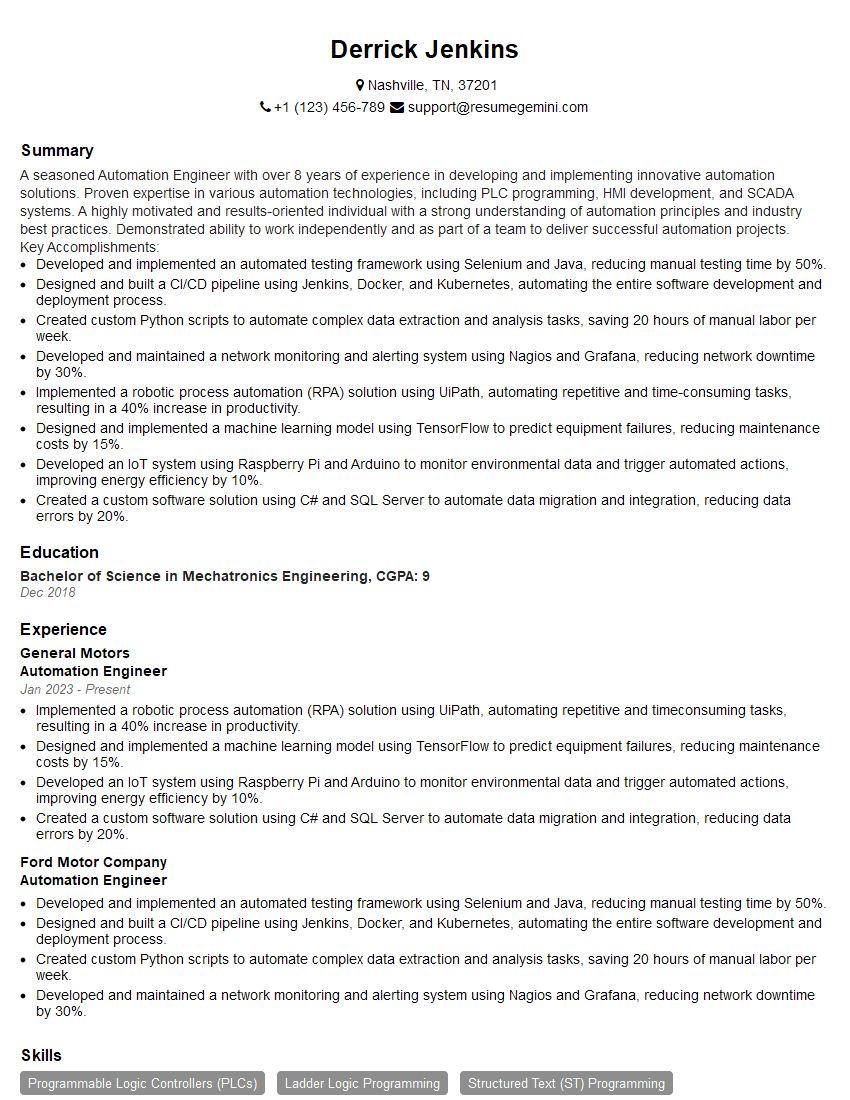
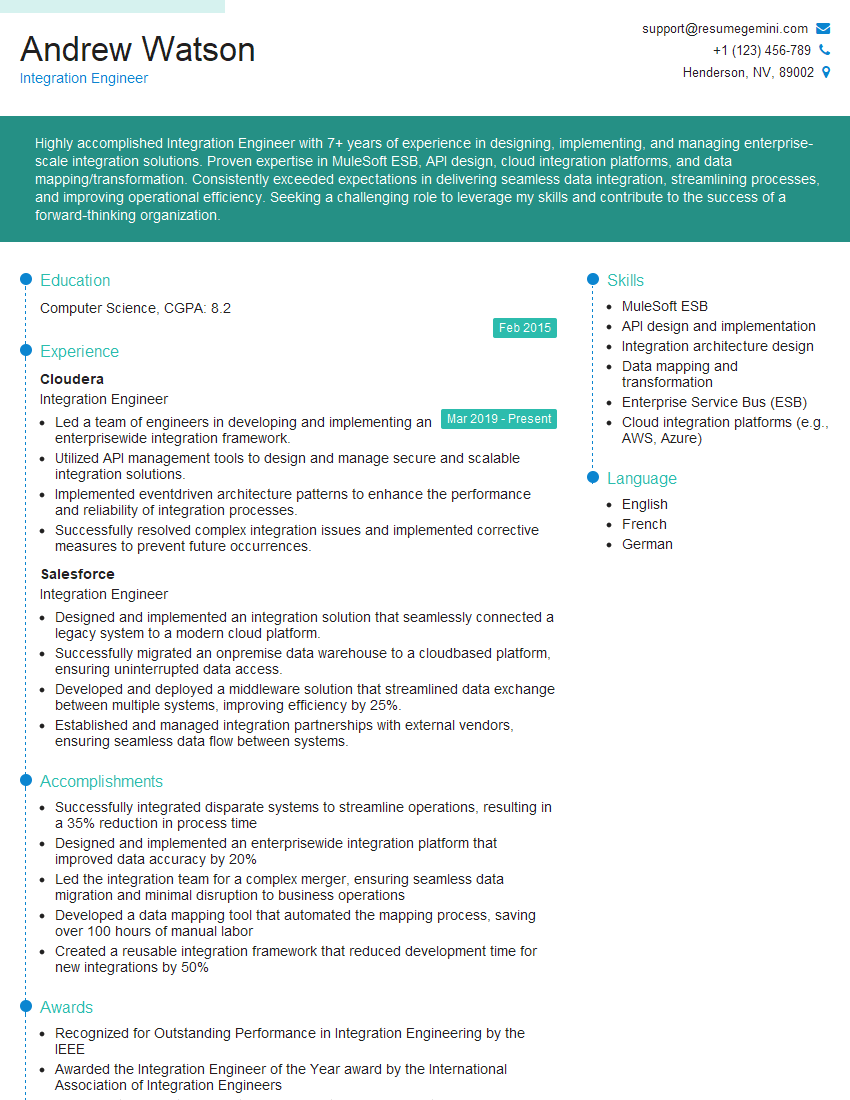
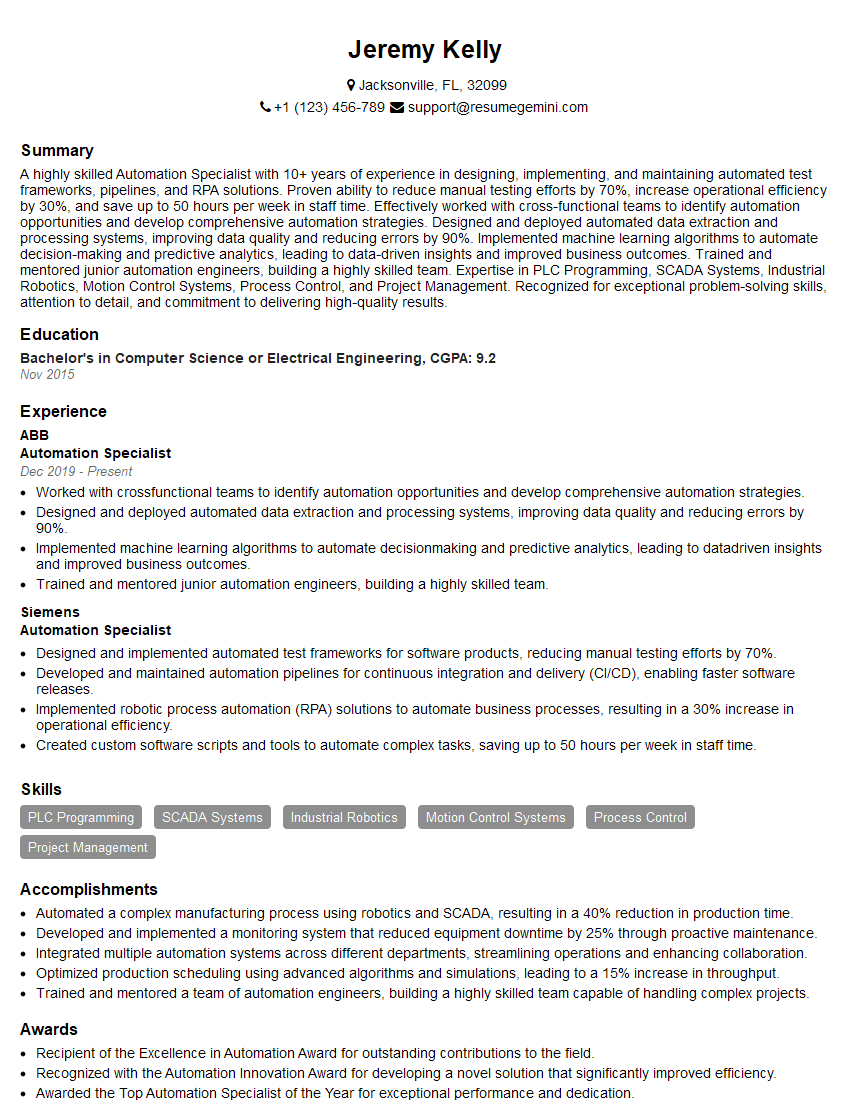
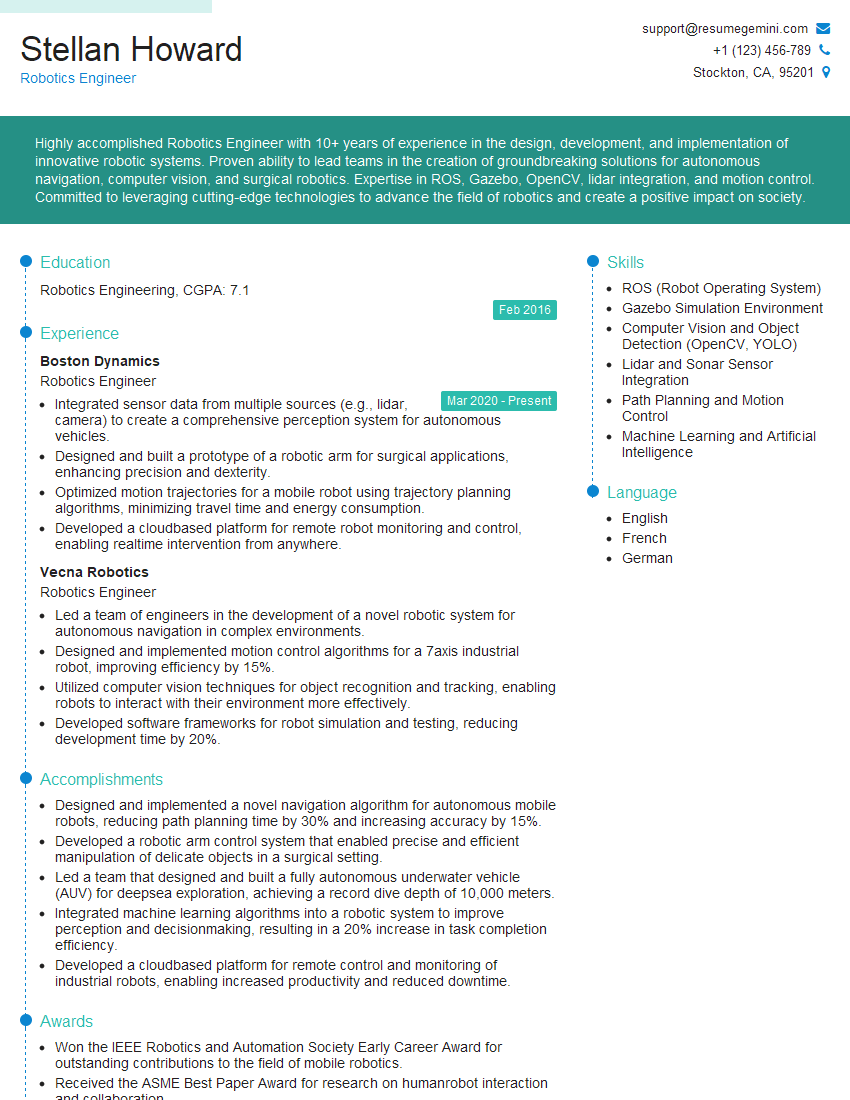
Mastering proficiency in Automation and Technology is crucial for accelerating your career growth in the ever-evolving tech landscape. These skills are highly sought after, opening doors to exciting and rewarding opportunities. To significantly enhance your job prospects, it’s essential to create a compelling and ATS-friendly resume that highlights your expertise. We highly recommend using ResumeGemini to craft a professional and impactful resume that showcases your abilities effectively. ResumeGemini provides examples of resumes tailored to Proficiency in Automation and Technology to help guide you in this process. Take this opportunity to present your skills in the best possible light and secure your dream role.
Explore more articles
Users Rating of Our Blogs
Share Your Experience
We value your feedback! Please rate our content and share your thoughts (optional).
What Readers Say About Our Blog
I Redesigned Spongebob Squarepants and his main characters of my artwork.
https://www.deviantart.com/reimaginesponge/art/Redesigned-Spongebob-characters-1223583608
IT gave me an insight and words to use and be able to think of examples
Hi, I’m Jay, we have a few potential clients that are interested in your services, thought you might be a good fit. I’d love to talk about the details, when do you have time to talk?
Best,
Jay
Founder | CEO