The thought of an interview can be nerve-wracking, but the right preparation can make all the difference. Explore this comprehensive guide to Proficiency in Cattle Handling interview questions and gain the confidence you need to showcase your abilities and secure the role.
Questions Asked in Proficiency in Cattle Handling Interview
Q 1. Describe your experience handling different breeds of cattle.
My experience encompasses handling a wide variety of cattle breeds, including Angus, Hereford, Charolais, Holstein Friesian, and Simmental. Each breed presents unique challenges and requires a tailored approach. For example, Angus cattle are generally known for their docile nature, making handling relatively straightforward. However, Herefords can sometimes be more excitable, necessitating a calmer, more patient approach. Understanding the temperament and typical behavior of each breed is crucial for safe and efficient handling.
I’ve worked with breeds exhibiting different levels of horn size and temperament, impacting the choice of handling techniques. My experience includes working with both beef and dairy cattle, adapting my approach to their specific needs and environments. This adaptability allows me to handle a wide variety of cattle safely and efficiently.
Q 2. Explain your methods for safely restraining cattle for various procedures.
Safe restraint is paramount for both animal welfare and worker safety. My methods are always humane and prioritize minimizing stress on the animal. The specific method employed depends heavily on the procedure and the temperament of the animal. For routine procedures like vaccination or weighing, a simple halter and lead rope often suffice. However, for more involved procedures, such as hoof trimming or veterinary examinations, more secure restraint may be necessary.
- Halter and Lead Rope: This is the most common method for gentle restraint, ideal for docile animals.
- Headgate: For procedures requiring immobilization of the head, a headgate provides excellent control and safety.
- Chute System: A chute system, often used in larger operations, allows for controlled movement of cattle through a series of squeeze gates, providing a safe and efficient way to restrain animals for various procedures.
- Side-restraining devices: For handling more aggressive or larger animals, side-restraining devices, often used in conjunction with a chute, provide a higher degree of control.
Regardless of the method, calm, deliberate movements and a quiet demeanor are crucial for minimizing stress. I always ensure the restraint is secure and comfortable without causing pain or injury to the animal.
Q 3. How do you identify sick or injured cattle within a herd?
Identifying sick or injured cattle relies on keen observation and a thorough understanding of normal cattle behavior. I look for deviations from the norm, which can manifest in several ways:
- Changes in behavior: Isolation from the herd, lethargy, reluctance to eat or drink, abnormal vocalizations (e.g., excessive mooing or groaning), or lameness.
- Physical signs: Fever (detected through rectal temperature), respiratory distress (coughing, rapid breathing), diarrhea, unusual discharges (from the eyes, nose, or rectum), swollen joints, wounds, or abnormal body condition (e.g., weight loss or excessive bloating).
- Reduced milk production: In dairy cattle, a sudden decrease in milk yield can be an indicator of illness.
Regular visual inspections, combined with attentive monitoring of individual animal behavior, are crucial for early detection of illness or injury. If any of these signs are observed, I immediately separate the affected animal and seek veterinary assistance.
Q 4. What are the common signs of stress in cattle, and how do you mitigate them?
Cattle, like all animals, exhibit stress through various behavioral and physiological changes. Recognizing these signs is key to minimizing stress and improving animal welfare. Common signs include:
- Restlessness and agitation: Excessive pacing, pawing at the ground, bellowing.
- Increased respiratory rate: Rapid, shallow breathing.
- Elevated heart rate: This is harder to assess in the field but can be inferred from other stress indicators.
- Decreased feed intake: Reduced appetite or complete refusal to eat.
- Changes in fecal consistency: Diarrhea or constipation.
- Increased salivation: Foaming at the mouth.
To mitigate stress, I use techniques that focus on gentle handling, quiet movements, and minimizing noise and sudden movements. Providing adequate space, shade, and access to water and food is also critical. Understanding and respecting the natural behavior of the animals allows for more effective communication and minimizing stress.
Q 5. Detail your experience with cattle vaccination and other health treatments.
I have extensive experience with cattle vaccination and other health treatments. This includes administering various vaccines, such as those protecting against infectious bovine rhinotracheitis (IBR), bovine viral diarrhea (BVD), and leptospirosis. I’m proficient in both intramuscular and subcutaneous injections, ensuring accurate placement and minimizing discomfort for the animal.
Beyond vaccinations, I’m experienced in administering other health treatments, including deworming medications (oral or injectable), antibiotic treatments for infections, and topical treatments for wounds. I always follow the veterinary instructions precisely, ensuring the correct dosage and administration method. Maintaining accurate records of treatments administered is also crucial for herd health management.
The process always starts with proper animal restraint to ensure both animal and handler safety. Cleanliness and hygiene are strictly adhered to, to minimize the risk of infection.
Q 6. Describe your experience with castration and dehorning procedures.
Castration and dehorning are common procedures in cattle management, and I’m experienced in performing both using humane and effective techniques. The specific method employed depends on factors like the age of the animal and the available resources.
- Castration: I’m proficient in both surgical and non-surgical castration methods. The choice depends on the age of the calf and the preference of the owner. Surgical castration, using a scalpel and proper antiseptic technique, is more common in older calves. Non-surgical methods, like using elastrator bands, are often preferred for younger calves.
- Dehorning: Again, various methods exist, including disbudding (removal of horn buds in young calves) and dehorning (removal of mature horns). I’m proficient in using both chemical and physical dehorning methods. The method choice depends on the age of the animal and the available resources. Pain management techniques are always employed to minimize discomfort.
In both procedures, pain management and post-operative care are crucial. Proper disinfection and monitoring for complications are paramount. I always adhere to best practices and ensure all procedures are conducted humanely.
Q 7. How do you manage cattle during transportation?
Safe and humane transportation of cattle is vital for minimizing stress and preventing injury. My experience covers various aspects of cattle transportation, from loading and unloading to ensuring appropriate conditions during transit.
- Loading and Unloading: I use calm, controlled techniques, utilizing well-designed ramps and avoiding the use of electric prods whenever possible. I prioritize gentle handling to prevent injury to both the animals and the handlers.
- In-transit Conditions: I ensure adequate ventilation, space, and appropriate floor surfaces within the trailer to prevent injury and overheating. Sufficient water and feed are also provided for longer journeys. Regular checks during transit are crucial to identify any issues.
- Compliance with Regulations: I am aware of and strictly adhere to all relevant transportation regulations, ensuring the journey complies with animal welfare standards.
Prioritizing animal welfare during transportation is crucial. It requires meticulous planning and execution, starting with proper pre-loading preparations and continuing through to safe unloading at the destination.
Q 8. What are the best practices for preventing cattle injuries during handling?
Preventing cattle injuries during handling hinges on understanding their natural behavior and implementing low-stress techniques. Cattle are easily stressed by noise, sudden movements, and unfamiliar environments. This stress can lead to injuries from panicked stampedes or aggressive reactions.
- Slow and steady movements: Avoid sudden movements or loud noises. Think of it like approaching a skittish horse – slow and deliberate is key.
- Proper facility design: Curved chutes and alleys prevent cattle from seeing the end and reduce stress. Well-lit, well-ventilated facilities are crucial. Sharp edges and obstacles should be eliminated.
- Trained personnel: Experienced handlers understand cattle behavior and know how to use appropriate techniques, such as using calm voices and gentle touches.
- Appropriate equipment: Using correctly sized and maintained equipment, such as headgates and squeeze chutes, prevents injury. Regular inspection is crucial.
- Pre-handling considerations: Ensure cattle are well-rested and not overly hungry or thirsty before handling. Minimizing travel time also reduces stress.
For example, I once worked on a ranch where a poorly designed chute caused several cattle injuries due to sharp corners. After redesigning the chute with smoother curves and wider walkways, the injury rate dropped dramatically.
Q 9. Explain your knowledge of different cattle handling facilities and equipment.
Cattle handling facilities and equipment are designed to minimize stress on animals and maximize efficiency for handlers. There’s a wide range of options, each with its pros and cons.
- Raceways and alleyways: These guide cattle to processing areas. Well-designed raceways use curved walls to encourage forward movement, preventing them from seeing the end and becoming hesitant.
- Crowding pens: These smaller areas temporarily hold cattle before processing, reducing the chance of escape. They should be well-ventilated to prevent overheating.
- Headgates and squeeze chutes: These restrain individual cattle for vaccinations, examinations, or other procedures. A properly adjusted squeeze chute ensures secure containment while minimizing discomfort.
- Loading ramps and chutes: These allow cattle to be safely loaded and unloaded onto trucks or trailers. Non-slip surfaces and appropriate incline angles are crucial for safe transitions.
- Sorting gates and panels: These facilitate separating different groups of cattle. These can be manual or automated, making the sorting process efficient and less stressful.
My experience includes working with both traditional and modern facilities. I find that a well-maintained, thoughtfully designed facility greatly improves both animal welfare and the efficiency of handling operations.
Q 10. How do you handle aggressive or unruly cattle?
Handling aggressive or unruly cattle requires patience, experience, and a clear understanding of their body language. Force should be the last resort. The goal is always to de-escalate the situation and prevent injury to both the animal and the handler.
- Identify the cause: Aggression can stem from pain, fear, hunger, or dominance issues. Try to identify the underlying cause before attempting intervention.
- Use calm and confident body language: Avoid sudden movements or loud noises. Speak in a calm, low voice.
- Provide ample space: Give the aggressive animal room to move and reduce feeling cornered.
- Use appropriate equipment: A well-designed chute and experienced handlers are essential. Don’t be afraid to use additional help.
- Seek professional assistance: If the situation is too dangerous or beyond your expertise, seek assistance from a veterinarian or experienced cattle handler.
I once encountered a bull that became unexpectedly aggressive during vaccination. By working calmly and creating space, we were able to successfully complete the procedure without incident. However, sometimes a veterinarian or a specialized team is necessary for severely aggressive animals.
Q 11. Describe your experience with cattle sorting and segregation.
Cattle sorting and segregation are critical tasks in many operations. Efficient and humane sorting minimizes stress on the animals and maximizes efficiency. This involves carefully managing the flow of cattle through the facility.
- Pre-planning: Knowing which animals need to be sorted into which groups is essential. This may involve visual identification, ear tags, or other methods.
- Strategic use of gates and panels: Well-placed gates and panels allow handlers to easily direct cattle flow. Understanding how cattle react to movement and pressure is vital.
- Patience and careful observation: Cattle sorting can take time. Using a low-stress approach helps prevent injuries and maintains animal welfare.
- Proper use of equipment: Well-maintained gates and panels are essential. Damaged or faulty equipment can lead to escapes or injuries.
- Teamwork: Multiple handlers often work together in large-scale sorting operations, emphasizing coordination and communication.
For instance, I have overseen the sorting of over 500 head of cattle into different weight classes for market. This required careful planning and coordination, but we successfully completed it with minimal stress to the animals.
Q 12. Explain your understanding of cattle behavior and herd dynamics.
Understanding cattle behavior and herd dynamics is paramount for successful handling. Cattle are herd animals with a complex social structure. They communicate through visual cues, vocalizations, and body language.
- Flight zone: This is the area around a cow where they will move away from a perceived threat. Understanding this is essential for controlling their movement.
- Point of balance: The point on the animal’s side where shifting pressure can encourage them to move forward or backward. This is a key tool for guiding cattle.
- Visual cues: Cattle are sensitive to movement and sudden changes. Using slow, predictable movements minimizes stress.
- Auditory cues: Loud noises can frighten them. Using calm voices and avoiding sudden sounds is important.
For example, a knowledge of their flight zone allows handlers to work efficiently and safely, without causing the animals to become agitated or panicked. Observing the herd’s leaders and their behavior can make the handling process easier.
Q 13. What are your methods for preventing cattle escapes?
Preventing cattle escapes requires a multifaceted approach focusing on facility design, equipment maintenance, and careful handling techniques.
- Secure fencing: Regular inspection and repair of fences are essential. Fences should be strong, high enough, and free from gaps.
- Well-designed facilities: Properly designed chutes and alleys prevent animals from getting stuck or finding escape routes.
- Functional gates and latches: Gates should be securely latched and well-maintained. Regular inspection prevents accidental openings.
- Careful handling: Avoiding sudden movements and loud noises reduces the risk of panicked escapes.
- Trained personnel: Experienced handlers know how to anticipate and prevent escape attempts.
I once worked on a ranch where a faulty latch on a gate led to a significant escape. After repairing the latch and adding additional security measures, we were able to eliminate similar incidents.
Q 14. How do you ensure the welfare of cattle during all handling processes?
Ensuring cattle welfare during handling is paramount. It’s not just about avoiding injuries but about minimizing stress and discomfort throughout the process.
- Low-stress handling techniques: Employing techniques that minimize stress on animals, such as curved chutes and calm handling, is crucial.
- Regular breaks: Allowing cattle regular breaks during long handling sessions prevents exhaustion and overheating.
- Proper climate control: Facilities should be well-ventilated and protected from extreme weather conditions.
- Access to water: Providing access to fresh water before, during, and after handling helps prevent dehydration.
- Humane euthanasia: If an animal is suffering from an incurable condition or injury, ensuring a humane euthanasia is essential.
Cattle welfare isn’t just an ethical consideration; it directly impacts productivity and the quality of the final product. I believe a strong emphasis on animal welfare is essential for sustainable and responsible cattle operations.
Q 15. Describe your experience with artificial insemination in cattle.
Artificial insemination (AI) is a crucial technique in cattle breeding, allowing for controlled genetic improvement and the introduction of superior genetics into a herd. My experience spans over [Number] years, encompassing both practical application and theoretical understanding. I’ve successfully performed thousands of AI procedures, achieving a pregnancy rate of [Percentage]%. This involves mastering several key steps:
- Estrus detection: Accurately identifying cows in heat is paramount. This involves observing behavioral changes like restlessness, mounting other cows, clear mucus discharge, and using heat detection aids like tail paint or activity monitors.
- Preparation: This includes cleaning and disinfecting the reproductive tract to minimize infection risk. Proper restraint of the cow is crucial for both safety and effective insemination.
- Insemination technique: This requires precise insertion of the insemination gun into the uterus, depositing the semen accurately. The correct depth and placement are vital for successful fertilization.
- Record keeping: Meticulous record-keeping is essential, documenting the date of insemination, sire used, cow ID, and any observations. This is crucial for pregnancy diagnosis and herd management.
For instance, I once worked with a dairy herd struggling with low fertility. By implementing a rigorous AI program, including improved estrus detection and refined insemination techniques, we increased their pregnancy rate by 15% within a year, significantly boosting their profitability.
Career Expert Tips:
- Ace those interviews! Prepare effectively by reviewing the Top 50 Most Common Interview Questions on ResumeGemini.
- Navigate your job search with confidence! Explore a wide range of Career Tips on ResumeGemini. Learn about common challenges and recommendations to overcome them.
- Craft the perfect resume! Master the Art of Resume Writing with ResumeGemini’s guide. Showcase your unique qualifications and achievements effectively.
- Don’t miss out on holiday savings! Build your dream resume with ResumeGemini’s ATS optimized templates.
Q 16. What are the key elements of a safe and efficient cattle handling system?
A safe and efficient cattle handling system prioritizes both animal welfare and worker safety. The key elements include:
- Well-designed facilities: This includes properly sized holding pens, curved alleys to encourage smooth movement, and solid, non-slippery flooring. Adequate lighting is essential for both visibility and animal comfort.
- Proper equipment: This encompasses correctly sized headgates, squeeze chutes, and working alleys. Tools like sorting gates and panels allow for efficient movement and separation of animals.
- Trained personnel: Workers must be trained in safe handling techniques, understanding cattle behavior and the appropriate use of equipment. This minimizes stress on the animals and reduces the risk of injury to handlers.
- Low-stress handling practices: This emphasizes minimizing noise, sudden movements, and visual distractions that might startle cattle. Gentle handling and calm demeanor are vital. Using solid panels to guide animals rather than loud shouts prevents panic.
- Regular maintenance: Regular inspections and maintenance of facilities and equipment ensure their proper functioning and continued safety.
Imagine a poorly designed facility with narrow alleys and slippery floors. This increases the risk of injury to both animals and handlers, and it adds to stress and inefficiency in handling the cattle. A well-designed system, on the other hand, optimizes workflow, protects the cattle and people, and improves overall productivity.
Q 17. How do you maintain accurate records of cattle health and movement?
Maintaining accurate cattle health and movement records is critical for efficient herd management and disease control. I utilize a combination of methods:
- Individual animal identification: Each animal is tagged with a unique identifier (ear tag, RFID tag) to track its individual history.
- Electronic record-keeping systems: Software programs are used to input and manage data, including health records (vaccinations, treatments, illnesses), breeding records (AI, calving dates), and movement records (transfers within or outside the farm).
- Visual inspections and physical examinations: Regular checks are conducted to assess the overall health and condition of each animal, recording any observations.
- Data backups and security: Regular backups are essential to prevent data loss, and data security measures protect sensitive information.
For example, using a well-organized database, we can quickly identify animals due for vaccinations or those with a history of specific health problems. This enables timely intervention and minimizes the risk of outbreaks.
Q 18. Describe your experience with cattle weighing and measurement techniques.
Cattle weighing and measurement are crucial for monitoring growth rates, assessing body condition, and optimizing feeding strategies. My experience includes the use of various techniques:
- Electronic scales: These provide accurate and quick weight measurements. Different scales are available, from portable units for individual animals to larger scales for weighing groups of cattle.
- Tape measures: These are used to measure body dimensions, such as heart girth and body length, which can be used to estimate weight if a scale is unavailable.
- Weigh tapes: These are calibrated tapes that estimate weight based on heart girth measurements.
- Data logging and analysis: Weighing data is carefully recorded, analyzed, and integrated with other records to track growth patterns, feed efficiency, and overall herd performance.
For example, by tracking weight gain over time, we can adjust the feeding program to optimize growth rates and maximize profitability. Variations in weight gain might indicate underlying health problems, allowing for timely veterinary intervention.
Q 19. What are the common diseases affecting cattle and how are they managed?
Cattle are susceptible to various diseases, impacting productivity and profitability. Some common diseases include:
- Bovine Respiratory Disease (BRD): A complex of respiratory infections often affecting young calves. Management involves vaccination, good hygiene practices, and early treatment with antibiotics.
- Mastitis: Inflammation of the udder, primarily affecting dairy cattle. Prevention includes proper hygiene during milking, timely treatment with antibiotics, and culling of chronically infected animals.
- Foot rot: A bacterial infection of the hooves causing lameness. Management involves hoof trimming, providing clean and dry housing, and treatment with antibiotics.
- Leptospirosis: A bacterial disease affecting multiple organ systems. Management involves vaccination and improved hygiene.
Disease management involves implementing biosecurity protocols, vaccination programs, early detection through regular health checks, and prompt treatment. Record-keeping is essential to track disease incidence and tailor preventative strategies.
Q 20. How do you assess the body condition score of cattle?
Body condition scoring (BCS) is a visual assessment of an animal’s fat reserves, providing a valuable tool to evaluate nutritional status. Cattle are typically scored on a scale of 1 to 9, with 1 being emaciated and 9 being obese. Assessment involves:
- Visual inspection: Examining the animal’s back, ribs, tailhead, and pins (hip bones) for fat cover. A thin animal will show prominent bones, while a fat animal will have significant fat covering.
- Palpation: Feeling the areas mentioned above to assess fat depth. The thickness of the fat layer correlates to the BCS.
- Experience and training: Accurate BCS assessment requires experience and training to correctly interpret visual cues and palpation findings.
A BCS of 5 is generally considered ideal for most cattle. Animals with a low BCS may require supplemental feeding to improve their condition, while those with a high BCS may benefit from reduced feed intake.
Q 21. Explain your knowledge of cattle nutrition and feeding strategies.
Cattle nutrition is fundamental to maximizing productivity and maintaining health. Effective feeding strategies consider several factors:
- Nutritional requirements: These vary depending on factors like age, breed, sex, pregnancy status, and production level (milk, meat). For example, lactating dairy cows have significantly higher energy and nutrient requirements than dry cows.
- Feed quality and availability: Feedstuffs should be analyzed to determine their nutritional composition. The availability and cost of different feed sources will impact feed choice.
- Feeding methods: This includes various techniques such as total mixed rations (TMR), individual feeding, and pasture grazing. Each method has advantages and disadvantages depending on the production system and resources.
- Monitoring and adjustments: Regular monitoring of animal growth rates, body condition scores, and milk production (in dairy cows) is crucial to fine-tune feeding strategies and ensure optimal performance.
For example, a TMR system allows for precise control over the nutrient content of the diet, minimizing nutrient deficiencies and maximizing feed efficiency. However, it requires specialized equipment and careful management.
Q 22. How do you identify and address parasites in cattle?
Identifying and addressing parasites in cattle requires a multi-pronged approach combining preventative measures with effective treatment. It starts with regular observation for signs of infestation, which can vary depending on the parasite. For example, weight loss, rough hair coat, diarrhea, anemia (pale gums), and bottle-jaw (swollen jawline) are common indicators.
- Visual Inspection: Regularly checking cattle for external parasites like lice and ticks is crucial. This involves looking at the skin, especially around the ears, flanks, and tail.
- Fecal Examination: A key method for detecting internal parasites like worms is fecal analysis. A sample is collected and examined under a microscope to identify the presence and type of parasite eggs.
- Blood Tests: Blood tests can help identify internal parasites that affect blood cells, like Anaplasma or Babesia.
Once parasites are identified, treatment depends on the type and severity of infestation. This might involve deworming medication (administered orally or via injection), topical treatments for external parasites, or even a combination approach. It’s essential to follow veterinary advice on dosage and application, ensuring safe and effective parasite control. Regular preventative treatments, tailored to the specific region and parasitic pressures, are also highly effective.
For instance, during my time at Willow Creek Farms, we implemented a strategic deworming program based on fecal egg counts. This targeted approach minimized the development of parasite resistance, while keeping the herd healthy and productive.
Q 23. Describe your experience with cattle breeding programs.
My experience with cattle breeding programs is extensive, encompassing both traditional selection methods and modern genetic technologies. I’ve worked with various breeding systems, including artificial insemination (AI), embryo transfer, and genomic selection. Success in cattle breeding hinges on understanding the desired traits, the genetic merit of the breeding stock, and effectively implementing a chosen breeding strategy.
- Traditional Selection: This involves selecting breeding animals based on visual appraisal and performance records, focusing on traits like milk production (in dairy cattle), growth rate (in beef cattle), and temperament. Careful record-keeping is vital for tracking performance and making informed selection decisions.
- Artificial Insemination (AI): AI is widely used to introduce superior genetics into a herd, allowing access to bulls with proven desirable traits, irrespective of geographic location. It offers better genetic progress and disease control compared to natural mating.
- Embryo Transfer (ET): ET allows for the rapid multiplication of elite females, accelerating genetic improvement. Multiple embryos can be harvested from high-performing cows and transferred to recipient females, generating numerous offspring with the same desirable genetics.
- Genomic Selection: This technology utilizes DNA markers to predict the genetic merit of young animals, enabling earlier and more accurate selection decisions. It significantly increases genetic gain by improving the accuracy of selection.
At Green Valley Ranch, I was instrumental in implementing a genomic selection program, resulting in a 15% improvement in average daily gain within three generations of cattle.
Q 24. What are your methods for managing cattle manure and waste?
Effective cattle manure management is critical for environmental protection and operational efficiency. My approach centers around minimizing environmental impact while maximizing resource utilization. Methods I employ include:
- Composting: Composting transforms manure into a valuable soil amendment. This involves carefully managing the carbon-to-nitrogen ratio within the compost pile to ensure proper decomposition and reduce odor. The resulting compost is rich in nutrients and improves soil health.
- Anaerobic Digestion: This process breaks down organic matter in the absence of oxygen, generating biogas (a renewable energy source) and digestate (a nutrient-rich fertilizer). It offers a sustainable solution for manure management while producing clean energy.
- Liquid Manure Management: Liquid manure can be stored in lagoons or tanks and applied to fields as fertilizer through carefully managed irrigation systems. Careful planning is essential to avoid runoff and minimize nutrient loss.
- Solid Manure Management: Solid manure can be stored in open yards, bedded packs, or covered storage areas. Regular cleaning and spreading minimizes accumulation and prevents fly breeding.
For example, at Oakwood Farm, we implemented a system combining composting and liquid manure storage, dramatically reducing odor and runoff, resulting in positive feedback from neighboring communities.
Q 25. Explain your understanding of biosecurity measures in cattle operations.
Biosecurity measures are fundamental in preventing the introduction and spread of diseases within a cattle operation. It’s a proactive approach involving multiple strategies:
- Quarantine: Newly introduced animals are kept separate from the main herd for a specified period to monitor for any signs of illness. This crucial step prevents the potential spread of pathogens.
- Vaccination: Regular vaccination programs against common diseases protect the herd and minimize economic losses. The vaccine schedule should be tailored to the specific diseases prevalent in the region.
- Hygiene and Sanitation: Maintaining clean facilities, equipment, and vehicles helps prevent the transmission of pathogens. Regular disinfection of surfaces, especially in high-traffic areas, is essential.
- Pest Control: Effective pest control programs minimize the risk of disease vectors, such as ticks and flies, which can transmit pathogens.
- Traffic Control: Limiting access to the farm and implementing strict hygiene protocols for visitors and personnel reduces the risk of disease introduction.
- Rodent Control: Rodents can be carriers of disease and should be actively managed to prevent them from accessing feed and water sources.
At one operation, a strict biosecurity protocol, which included foot dips at all entry points, prevented a costly outbreak of foot-and-mouth disease that devastated neighboring farms.
Q 26. How do you adapt your handling techniques to different age groups of cattle?
Adapting cattle handling techniques to different age groups is critical for safety and efficiency. Calves, yearlings, and mature cattle all exhibit unique behaviors and responses to handling.
- Calves: Calves are more vulnerable and require gentle handling. Avoid sudden movements or loud noises, which can frighten them. Use smaller chutes and restrain them appropriately to minimize stress.
- Yearlings: Yearlings are more independent but still require careful handling. They are less prone to panic than calves, but caution is still important to avoid injury to both the animals and handlers.
- Mature Cattle: Mature cattle can be strong and potentially dangerous if mishandled. Calm, confident handling is essential. Use appropriate facilities and techniques to control their movements and minimize stress.
My experience has taught me the importance of understanding cattle behavior at each life stage. For example, I found using a curved chute for mature cattle was more effective in preventing them from turning back, compared to a straight chute.
Q 27. Describe your experience with using technology in cattle management (e.g., GPS tracking).
Technology plays an increasingly vital role in modern cattle management. I’ve extensively used GPS tracking, automated feeding systems, and data analysis tools to optimize herd management.
- GPS Tracking: GPS collars or ear tags allow for real-time monitoring of cattle location and movement. This is especially useful for tracking grazing patterns, identifying stray animals, and improving pasture management. It also helps during herd movements, particularly on large properties.
- Automated Feeding Systems: Automated feeders optimize feed distribution, reducing labor costs and improving feed efficiency. They can be programmed to deliver precise amounts of feed based on individual animal needs or group requirements.
- Data Analysis: Collecting and analyzing data on animal performance, health, and reproductive status enables informed decision-making. This data-driven approach can significantly improve efficiency and profitability.
At one operation, we used GPS tracking to identify areas of overgrazing, leading to improved pasture rotation and increased pasture productivity. The data-driven insights resulted in substantial cost savings.
Q 28. How would you handle a situation where a cattle handling procedure goes wrong?
When a cattle handling procedure goes wrong, immediate and decisive action is required, prioritizing the safety of both the animals and the handlers. My approach involves:
- Assessment of the Situation: The first step is to calmly assess the situation and identify the cause of the problem. Is an animal injured? Is equipment malfunctioning? Is there a safety hazard?
- Prioritization of Safety: The safety of both the animals and the handlers should be the top priority. Remove any immediate danger before attempting to rectify the situation.
- Addressing the Problem: Once the immediate danger has been removed, address the root cause of the problem. This might involve repairing equipment, providing medical attention to an injured animal, or retraining personnel.
- Post-Incident Review: Conduct a thorough review of the incident to identify areas for improvement and prevent similar incidents in the future. This could involve analyzing video footage, discussing the incident with involved personnel, or adjusting handling procedures.
For example, during a stressful situation involving a panicked bull, I quickly assessed the immediate threat, calmly redirected the bull using a calm and assertive approach, and safely secured the animal before assessing its health.
Key Topics to Learn for Proficiency in Cattle Handling Interview
- Cattle Behavior and Psychology: Understanding herd dynamics, individual animal temperaments, and stress indicators. Practical application: Describing how you would approach a nervous or aggressive bull versus a calm cow.
- Safe Handling Techniques: Proper use of equipment (e.g., halters, chutes, sorting gates), low-stress handling procedures, and recognizing and mitigating potential hazards. Practical application: Explaining your approach to safely moving a large group of cattle through a narrow passage.
- Cattle Health and Welfare: Identifying signs of illness or injury, understanding basic animal husbandry practices, and implementing preventative measures. Practical application: Describing your experience recognizing and responding to lameness in cattle.
- Facility Design and Management: Knowledge of effective facility layouts for efficient and safe cattle handling, including considerations for animal flow and welfare. Practical application: Explaining how you would design a cattle handling facility to minimize stress on the animals.
- Emergency Procedures: Responding to emergencies such as escapes, injuries, or aggressive behavior. Practical application: Detailing your experience in handling a cattle escape or injury situation.
- Regulations and Best Practices: Understanding and adhering to relevant animal welfare regulations and industry best practices. Practical application: Describing how you ensure compliance with relevant animal handling regulations.
Next Steps
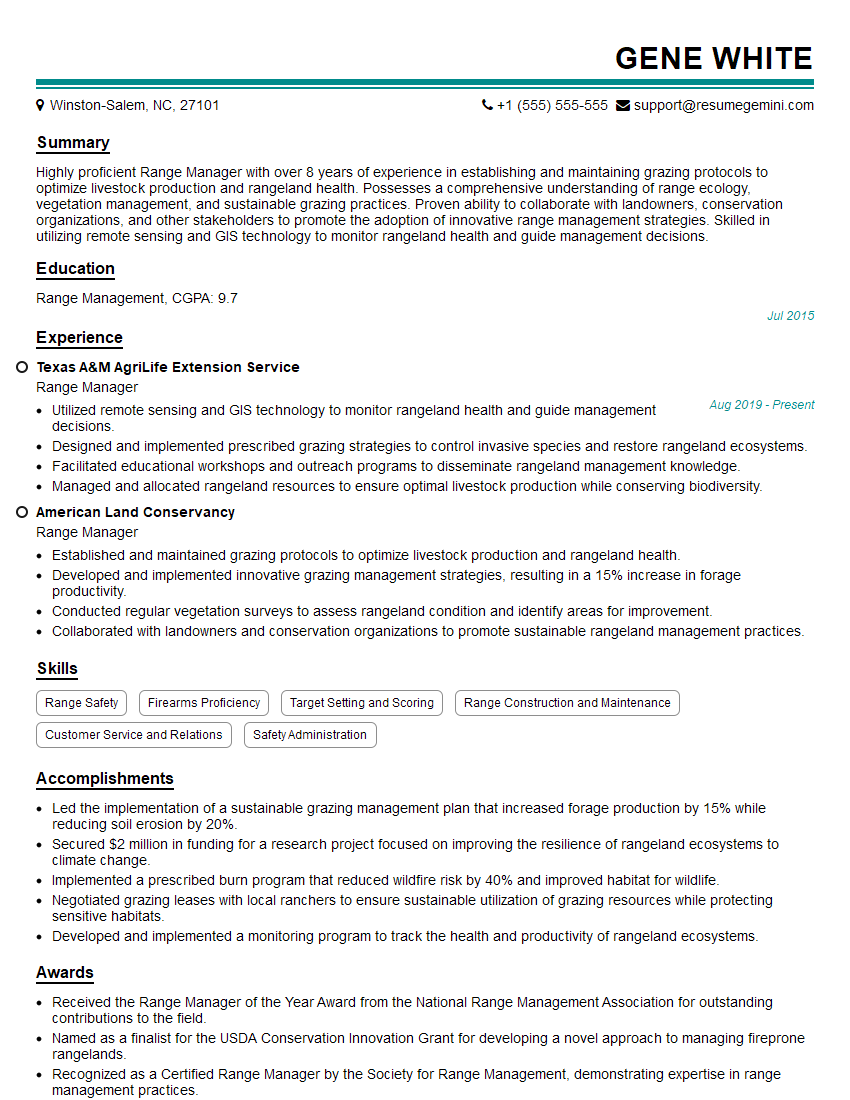
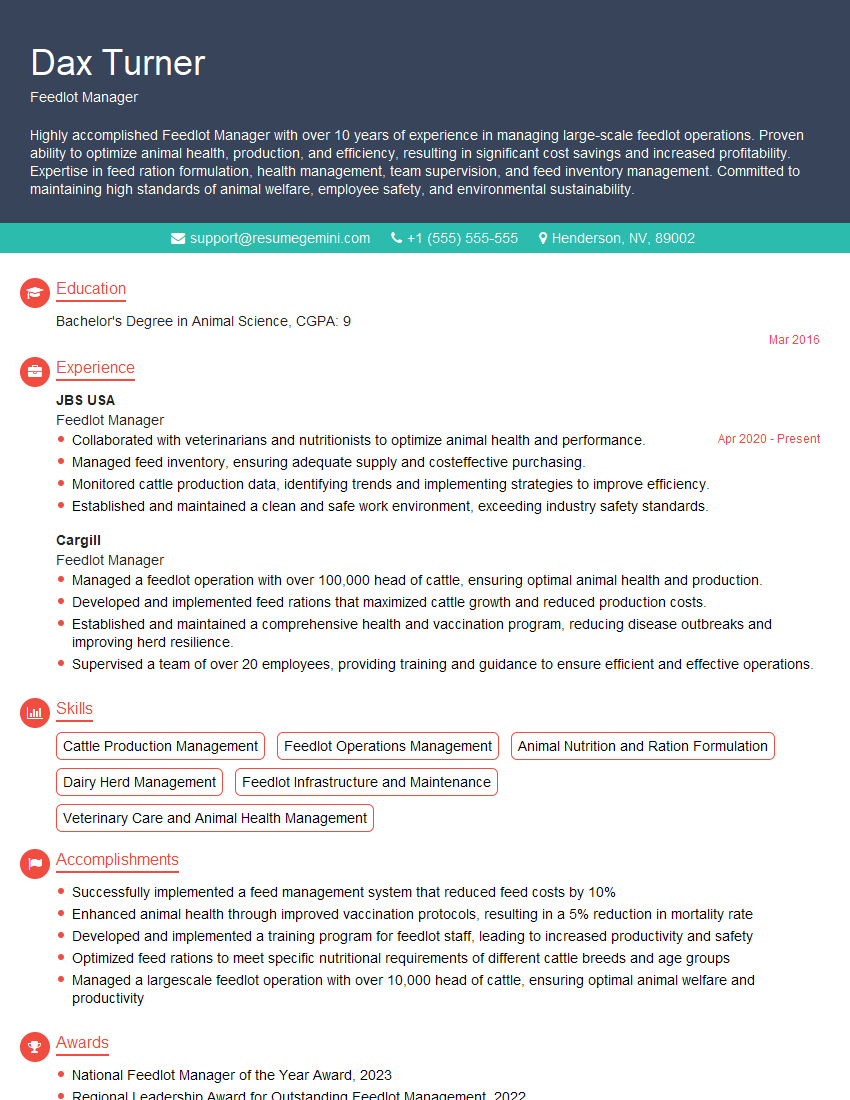
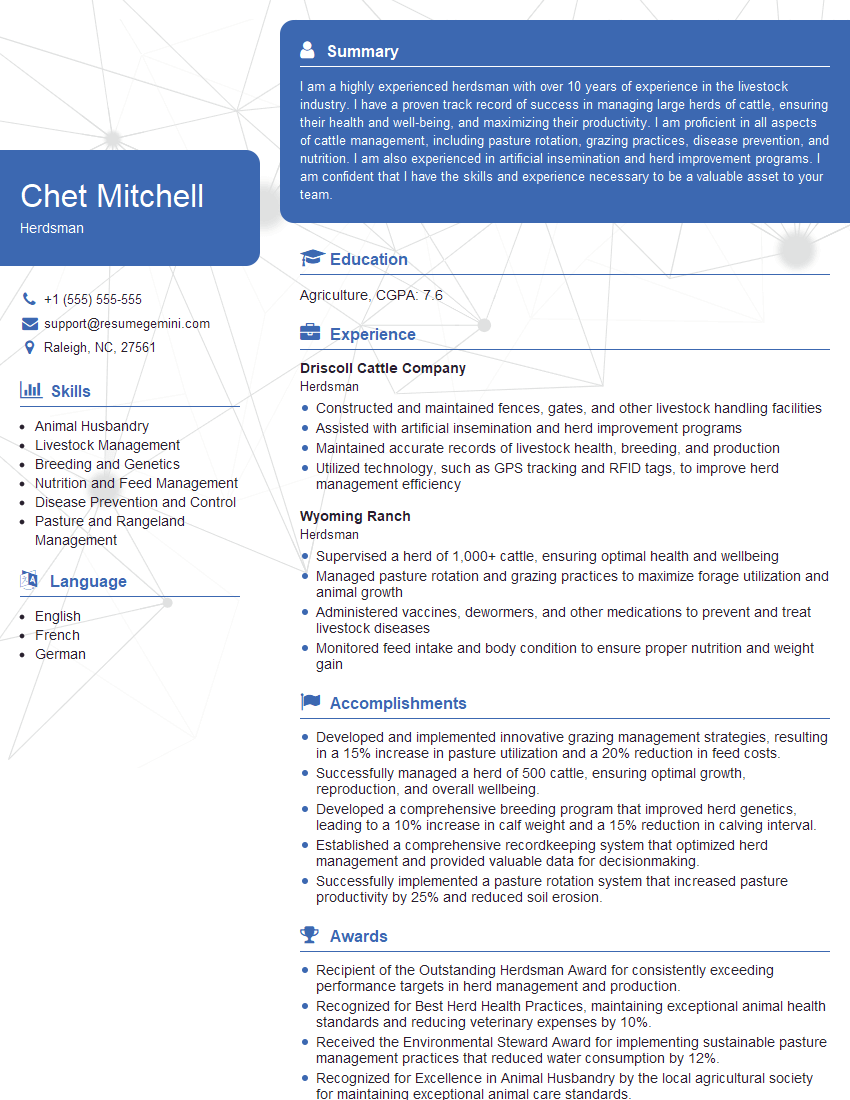
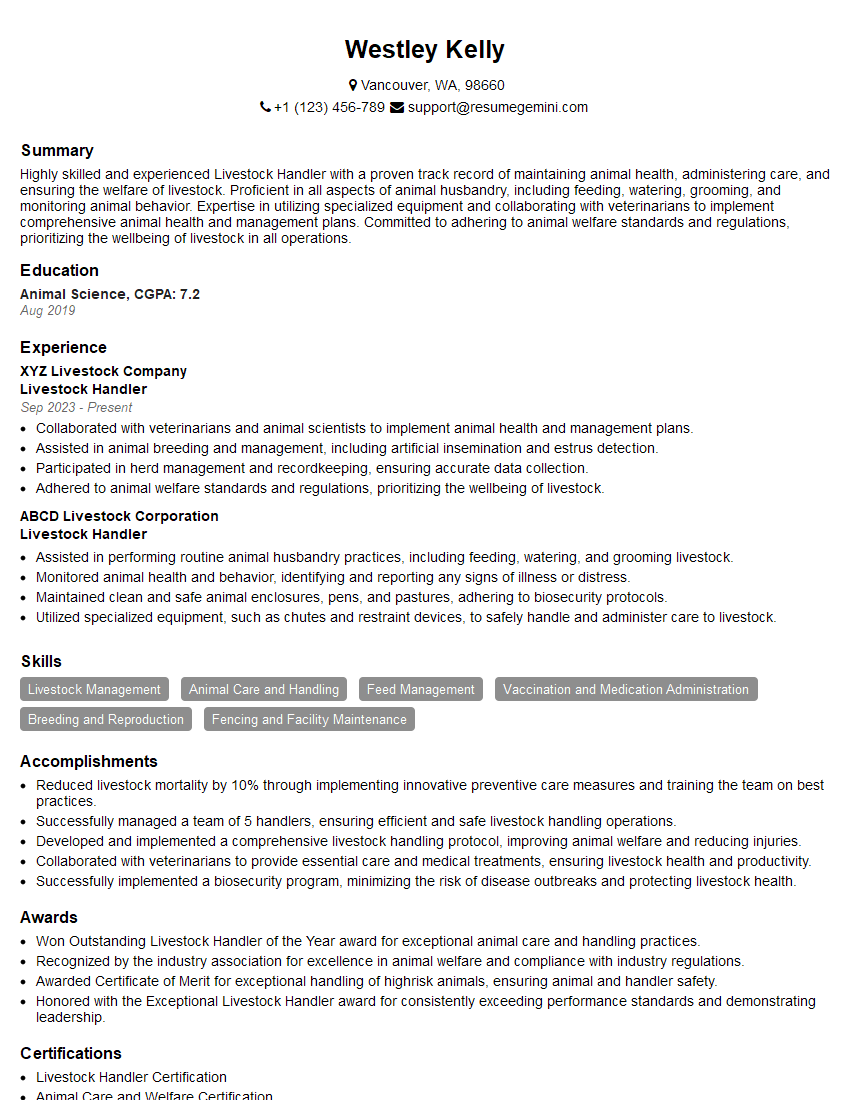
Mastering proficiency in cattle handling opens doors to rewarding careers in agriculture, showcasing your commitment to animal welfare and efficient operations. A strong resume is crucial for highlighting your skills and experience to potential employers. To increase your chances of getting noticed by Applicant Tracking Systems (ATS), create an ATS-friendly resume that emphasizes your accomplishments and keywords relevant to the industry. ResumeGemini is a trusted resource to help you build a professional and impactful resume. Examples of resumes tailored to Proficiency in Cattle Handling are available to help guide your efforts. Invest time in crafting a compelling resume – it’s your first impression with future employers.


Explore more articles
Users Rating of Our Blogs
Share Your Experience
We value your feedback! Please rate our content and share your thoughts (optional).
What Readers Say About Our Blog
I Redesigned Spongebob Squarepants and his main characters of my artwork.
https://www.deviantart.com/reimaginesponge/art/Redesigned-Spongebob-characters-1223583608
IT gave me an insight and words to use and be able to think of examples
Hi, I’m Jay, we have a few potential clients that are interested in your services, thought you might be a good fit. I’d love to talk about the details, when do you have time to talk?
Best,
Jay
Founder | CEO