The right preparation can turn an interview into an opportunity to showcase your expertise. This guide to Proficient in Analytical Techniques for Zinc Analysis interview questions is your ultimate resource, providing key insights and tips to help you ace your responses and stand out as a top candidate.
Questions Asked in Proficient in Analytical Techniques for Zinc Analysis Interview
Q 1. Explain the principle behind Atomic Absorption Spectroscopy (AAS) for zinc determination.
Atomic Absorption Spectroscopy (AAS) measures the amount of light absorbed by free zinc atoms in a gaseous state. Imagine shining a specific wavelength of light (a beam tailored to zinc’s unique atomic structure) through a flame containing zinc atoms. Some of the light will be absorbed by these atoms, exciting their electrons to higher energy levels. The amount of light absorbed is directly proportional to the concentration of zinc in the sample. A detector measures the amount of light that passed through, and using a calibration curve, we can determine the zinc concentration.
In simpler terms, it’s like shining a flashlight through a cloud of zinc atoms. The denser the cloud (higher concentration), the more light gets absorbed. We measure the light’s dimming to quantify the zinc.
Q 2. Describe the interference effects in AAS zinc analysis and how to mitigate them.
Interferences in AAS zinc analysis can be chemical or spectral. Chemical interferences occur when other elements in the sample matrix hinder the efficient atomization of zinc, leading to lower absorbance readings than expected. For example, high concentrations of phosphate ions can form stable compounds with zinc, reducing the free zinc atoms available for absorption. Spectral interferences are less common in zinc analysis but arise when other elements absorb light at or near the same wavelength as zinc, causing inaccurate readings.
Mitigation strategies involve sample preparation techniques such as dilutions, matrix matching (preparing standards in a matrix similar to the sample), releasing agents (chemicals that prevent the formation of stable zinc compounds), and background correction techniques. Background correction employs techniques like deuterium arc background correction to subtract non-specific absorbance caused by other substances in the flame. Choosing appropriate wavelengths and flame conditions can also minimize interferences.
Q 3. What are the advantages and disadvantages of using AAS versus ICP-MS for zinc analysis?
Both AAS and ICP-MS are powerful techniques for zinc analysis, each with its strengths and weaknesses. AAS offers simplicity, lower cost, and easier maintenance. It’s excellent for routine analysis, especially where high sample throughput is needed. However, its sensitivity is generally lower than ICP-MS, and it’s less versatile for multi-element analysis.
ICP-MS, on the other hand, boasts exceptional sensitivity, making it ideal for trace zinc determination in complex matrices. Its multi-element capabilities mean you can analyze multiple elements simultaneously, saving time and resources. However, ICP-MS is more expensive, requires specialized training, and is more prone to spectral interferences (requiring more advanced correction techniques).
The choice depends on the specific application: AAS is suitable for routine high-throughput analysis where sensitivity isn’t the primary concern, while ICP-MS is preferred for trace analysis and complex samples requiring high sensitivity and multi-element capabilities.
Q 4. Explain the principle of Inductively Coupled Plasma Mass Spectrometry (ICP-MS) for zinc analysis.
Inductively Coupled Plasma Mass Spectrometry (ICP-MS) ionizes the sample using an inductively coupled plasma (ICP), a high-temperature plasma torch. The sample is introduced into the plasma as an aerosol, where it’s atomized and ionized. These zinc ions are then passed through a mass spectrometer, which separates them based on their mass-to-charge ratio. The abundance of each ion is measured, and this signal is directly proportional to the concentration of zinc in the original sample.
In essence, we turn zinc atoms into charged particles (ions), separate them based on their weight, and count them to determine the original quantity of zinc. This is a highly sensitive and precise method, particularly for trace elements like zinc.
Q 5. How do you prepare samples for zinc analysis using AAS and ICP-MS?
Sample preparation is crucial for both AAS and ICP-MS. The goal is to get the zinc into solution in a form that is compatible with the instrument and free from interfering substances. This typically involves digestion using strong acids (like nitric acid, aqua regia, or a combination) to dissolve the sample matrix. For solid samples, microwave digestion or hot plate digestion is often employed. After digestion, the solution might require further treatment depending on the sample matrix and the chosen analytical technique. For example, dilutions may be necessary to reach the required concentration range of the instrument.
The specific sample preparation method depends on the sample matrix (soil, water, biological tissue, etc.). A certified reference material (CRM) with a known zinc concentration is used to validate the digestion and analysis procedure. The choice of acid and digestion method is essential to ensure complete zinc recovery and minimize contamination.
Q 6. What are the common calibration methods used in zinc analysis?
Common calibration methods for zinc analysis include external calibration, standard additions, and internal standardization. External calibration involves preparing a series of standards with known zinc concentrations and measuring their absorbance or ion intensity. A calibration curve is then constructed by plotting the signal against concentration, which is used to determine the concentration of unknown samples.
Standard additions compensate for matrix effects by adding known amounts of zinc to the sample and analyzing the resulting solution. The method involves plotting the signal against the added zinc concentration, extrapolating back to determine the original zinc concentration in the sample. Internal standardization involves adding a known amount of an internal standard (an element not present in the sample) to both samples and standards to compensate for variations in instrument response or sample introduction. The zinc signal is then corrected by the internal standard signal.
Q 7. How do you ensure the accuracy and precision of zinc analysis results?
Accuracy and precision in zinc analysis require meticulous attention to detail at every stage. This starts with proper sample collection and storage to minimize contamination. Accurate weighing, efficient digestion, and avoidance of contamination are crucial. Using certified reference materials (CRMs) is essential for method validation and quality control. Regular calibration and instrument maintenance are necessary for consistent performance.
Performing duplicate or triplicate analyses and monitoring the quality control parameters such as recovery rate, precision (expressed as relative standard deviation, RSD), and accuracy (comparison to CRM values) helps to assess the reliability of the results. Implementing a robust quality assurance/quality control (QA/QC) program with regular checks, blank measurements, and spike recovery experiments is critical for ensuring the accuracy and precision of zinc analysis results.
Q 8. Explain the concept of method validation in zinc analysis.
Method validation in zinc analysis is crucial for ensuring the accuracy, reliability, and reproducibility of our results. It’s like rigorously testing a recipe before you bake a cake for a competition – you want to be confident it will produce the desired outcome every time. We systematically evaluate several key parameters of our chosen analytical method. This includes assessing its accuracy (how close our measurements are to the true value), precision (how consistent our measurements are when repeated), linearity (whether the response is proportional to the concentration of zinc), limit of detection (LOD) and limit of quantitation (LOQ) (the lowest concentration that can be reliably detected and quantified, respectively), and ruggedness (how sensitive the method is to changes in experimental conditions). We use certified reference materials (CRMs) with known zinc concentrations to evaluate these parameters. For example, we might analyze a CRM multiple times to determine precision and compare the average result to the certified value to assess accuracy. Failing to validate a method can lead to inaccurate results with significant consequences, particularly in industries like food safety and environmental monitoring.
Q 9. What are the quality control measures implemented during zinc analysis?
Quality control in zinc analysis is paramount. Think of it as a series of checkpoints to ensure the entire process is running smoothly. We use several measures, including:
- Calibration verification: Regularly checking the calibration curve of our instrument using standards to ensure it’s accurate and reliable. If it drifts outside acceptable limits, we recalibrate.
- Blank analysis: Measuring the zinc content in a blank sample (containing all reagents except the analyte) to correct for any background contamination from reagents or glassware. This helps us eliminate false positives.
- Spike recovery: Adding a known amount of zinc to a sample and analyzing it. The recovery percentage indicates the accuracy of the method in the presence of the sample matrix. A recovery of 90-110% is generally acceptable.
- Duplicate analysis: Analyzing the same sample twice to assess the precision of the method. Significant discrepancies might indicate a problem with the instrument or technique.
- Use of certified reference materials (CRMs): Analyzing CRMs with known zinc concentrations to verify the accuracy of the analysis. CRMs act as independent checks on our results.
- Internal quality control samples: Analyzing samples with known zinc concentrations alongside the unknown samples to monitor the performance of the analytical method. This helps to detect trends and potential issues.
These measures ensure that our zinc analysis is robust, reliable, and free from systematic errors.
Q 10. How do you interpret zinc analysis results?
Interpreting zinc analysis results involves more than just looking at the numbers; it requires understanding the context. First, we compare the obtained zinc concentration to the expected range or reference values, considering the specific matrix being analyzed (e.g., soil, food, water). We also carefully consider the uncertainties associated with the measurement, including the standard deviation and the confidence interval. For example, if we’re analyzing the zinc content in a dietary supplement, a value below the labelled amount might indicate a deficiency in the product. Conversely, a significantly higher level might raise safety concerns. If the result is outside the expected range, we investigate potential sources of error, such as sample contamination or instrument malfunction, before drawing any conclusions. Documentation of the entire process is crucial for a proper interpretation and traceability.
Q 11. Describe the different types of zinc standards used in analysis.
We utilize various zinc standards in our analysis, each serving a specific purpose. These include:
- Single-element standard solutions: These contain only zinc dissolved in a suitable solvent (e.g., nitric acid) at known concentrations. They are used for instrument calibration and quality control checks.
- Multi-element standard solutions: These contain zinc along with other elements, often used in techniques like inductively coupled plasma optical emission spectrometry (ICP-OES) or inductively coupled plasma mass spectrometry (ICP-MS). This allows for simultaneous determination of multiple elements.
- Certified reference materials (CRMs): These are materials with certified zinc concentrations, used for method validation and quality control. They are essential for ensuring accuracy and traceability of the results. Examples include CRMs from NIST (National Institute of Standards and Technology) or other reputable organizations.
- In-house prepared standards: In some cases, we might prepare standards in-house using high-purity zinc metal. However, the preparation and purity verification of these standards require meticulous attention to detail to minimize errors. It’s important that the concentration of these standards is rigorously verified against a certified standard.
The selection of the appropriate standard depends on the specific analytical technique and the nature of the sample being analyzed.
Q 12. How do you handle matrix effects in zinc analysis?
Matrix effects are a common challenge in zinc analysis. The sample matrix (everything except the zinc) can interfere with the analytical signal, leading to inaccurate results. For example, the presence of high concentrations of other metals or organic compounds can suppress or enhance the zinc signal. We address this using several strategies:
- Standard additions method: We add known amounts of zinc to the sample and measure the increase in signal. Extrapolating the resulting calibration curve to zero added zinc corrects for matrix effects. This is similar to adding a known quantity of sugar to a cake batter to figure out how much sugar is already present.
- Matrix matching: Preparing calibration standards in a matrix similar to the sample. This minimizes differences between the standards and the sample, reducing the impact of matrix effects. Think of baking two cakes with identical ingredients but using different types of sugar to see how the sugar concentration affects the outcome.
- Internal standardization: Adding a known amount of an internal standard (a compound that is not present in the sample) to both the standards and the samples. This helps to correct for variations in the instrument response and sample introduction efficiency.
- Sample dilution: Diluting the sample to reduce the concentration of interfering compounds in the matrix. This can often be a useful first step before employing more sophisticated techniques.
The choice of method depends on the severity of the matrix effect and the analytical technique being employed.
Q 13. What are the regulatory requirements for zinc analysis in your industry?
Regulatory requirements for zinc analysis vary significantly depending on the industry and the application. For instance, in the food industry, regulations govern the maximum permissible levels of zinc in food products to ensure consumer safety. These limits are often specified by agencies like the FDA (Food and Drug Administration) or equivalent bodies in other countries. In environmental monitoring, regulations define acceptable limits for zinc in wastewater and soil, set by EPA (Environmental Protection Agency) or similar agencies. These regulations often dictate the required analytical methods, accuracy, precision, and documentation needed to demonstrate compliance. Failing to meet these standards can have serious legal and economic consequences. Furthermore, industry-specific quality standards such as ISO 17025 guide the laboratory’s practices and the documentation required to demonstrate competence.
Q 14. Explain the importance of blank corrections in zinc analysis.
Blank corrections are essential in zinc analysis to account for any zinc contamination present in the reagents, glassware, or the analytical instrument itself. Imagine baking a cake and finding out the flour itself had some sugar – you’d need to adjust your sugar calculations accordingly. A blank sample contains all the reagents and solvents used in the analysis but without the analyte (zinc). Analyzing this blank and subtracting its zinc content from the sample measurements corrects for any background contamination. Without blank corrections, we risk overestimating the zinc concentration in the sample, leading to inaccurate results. This is particularly critical when dealing with trace levels of zinc where the blank contribution can be significant compared to the sample concentration.
Q 15. How do you troubleshoot common problems encountered in AAS and ICP-MS zinc analysis?
Troubleshooting AAS and ICP-MS zinc analysis involves a systematic approach. In AAS (Atomic Absorption Spectroscopy), common problems include low sensitivity, inconsistent readings, and spectral interference. Low sensitivity might stem from a clogged nebulizer, improper flame adjustment, or a malfunctioning lamp. Inconsistent readings often point to variations in sample preparation or matrix effects. Spectral interference, where other elements absorb at similar wavelengths, can be mitigated with background correction techniques. For ICP-MS (Inductively Coupled Plasma Mass Spectrometry), common issues include matrix effects (where the sample matrix influences ionization efficiency), polyatomic interferences (where molecules mimic the zinc isotope), and instrument drift.
My troubleshooting strategy always begins with verifying instrument parameters, checking for leaks, and ensuring proper calibration. I systematically investigate each component – the nebulizer, the burner, the lamp (for AAS) or the plasma torch (for ICP-MS), the detector, and the data acquisition system. For example, if I observe low sensitivity in AAS, I would first check the lamp current and alignment, then inspect the nebulizer for blockages, cleaning or replacing it if necessary. For ICP-MS, addressing matrix effects might involve dilution of the sample or the use of internal standards to correct for variations in ionization. If polyatomic interferences are suspected, I would adjust the instrument settings or consider using alternative isotopes or collision/reaction cell technology. Maintaining meticulous records of instrument parameters and troubleshooting steps is crucial for repeatability and efficiency.
Career Expert Tips:
- Ace those interviews! Prepare effectively by reviewing the Top 50 Most Common Interview Questions on ResumeGemini.
- Navigate your job search with confidence! Explore a wide range of Career Tips on ResumeGemini. Learn about common challenges and recommendations to overcome them.
- Craft the perfect resume! Master the Art of Resume Writing with ResumeGemini’s guide. Showcase your unique qualifications and achievements effectively.
- Don’t miss out on holiday savings! Build your dream resume with ResumeGemini’s ATS optimized templates.
Q 16. What software packages are you familiar with for analyzing zinc data?
I’m proficient in several software packages used for analyzing zinc data from AAS and ICP-MS. These include:
- Spectra6 (for PerkinElmer instruments): This software provides comprehensive data processing and reporting capabilities, including peak integration, background correction, and quality control charting.
- ICP-MS Workbench (for Agilent instruments): This intuitive software simplifies data acquisition, processing, and interpretation. It offers tools for managing instrument parameters, calibrations, and quality control data.
- Qtegra Intelligent Scientific Data Solution (for Waters instruments): This software provides a unified platform for instrument control, data acquisition, and data processing across various analytical techniques, including ICP-MS.
- Excel and specialized statistical packages (e.g., R, Minitab): I often use these for further data analysis, statistical testing, and visualization after initial data processing in the instrument-specific software. This allows me to perform more advanced statistical analysis and generate publication-quality figures.
My experience encompasses data analysis involving calibration curves, standard additions, and internal standardization methods, depending on the specific requirements of the analysis and the sample matrix.
Q 17. Describe your experience with different types of sample digestion techniques for zinc analysis.
Sample digestion is a critical step in zinc analysis, ensuring complete dissolution of the zinc from the sample matrix. I have extensive experience with several methods:
- Microwave digestion: This is my preferred method for many samples due to its speed, efficiency, and reduced risk of contamination. I typically use a mixture of concentrated nitric acid and hydrochloric acid, adjusted based on the sample matrix. The high pressure and temperature within the microwave accelerate the digestion process.
- Hotplate digestion: A more traditional method involving heating the sample with acids on a hotplate. This is slower and requires more careful monitoring to prevent sample loss or acid evaporation but can be suitable for less complex matrices.
- Acid leaching: For less resistant samples, a simple acid leaching with dilute acid (e.g., 1M HCl) may suffice to extract the easily-accessible zinc. This is quicker but may not completely dissolve all zinc forms.
The choice of digestion method depends strongly on the sample type. For instance, plant tissues might require a nitric-perchloric acid mixture for complete digestion, while soil samples often necessitate a combination of nitric, hydrochloric, and hydrofluoric acids. For each sample type, I rigorously follow validated protocols to ensure accuracy and reproducibility.
Q 18. What are the limitations of the techniques you’ve used for zinc analysis?
The techniques I’ve utilized for zinc analysis, while powerful, have inherent limitations:
- AAS: Susceptible to spectral interferences, requires separate determinations for different zinc isotopes, and may have lower sensitivity compared to ICP-MS for trace level zinc.
- ICP-MS: Prone to matrix effects and polyatomic interferences (although these can be mitigated), expensive to operate and maintain, and requires specialized skills for operation and data interpretation.
- Sample digestion: Incomplete digestion can lead to inaccurate results. The choice of acids and digestion conditions must be carefully optimized to avoid introducing contamination.
It’s crucial to acknowledge these limitations when planning an analysis. For example, when analyzing samples with high concentrations of other elements that might interfere with AAS measurements, I would consider ICP-MS. Furthermore, I always perform method validation to assess the accuracy, precision, and detection limits for each specific application.
Q 19. How do you maintain and calibrate the instruments used in zinc analysis?
Regular maintenance and calibration are paramount for accurate and reliable zinc analysis. For both AAS and ICP-MS, this involves:
- Daily: Checking gas flows, lamp alignment (AAS), plasma stability (ICP-MS), and performing blank and standard runs to assess instrument stability.
- Weekly: Cleaning the nebulizer and torch (ICP-MS), checking for leaks, and potentially performing a more comprehensive performance check using certified reference materials.
- Monthly or as needed: More extensive cleaning, replacement of consumables (e.g., nebulizer, torch), and potentially a full recalibration with a multi-point calibration curve.
- Calibration: I typically use a multi-point calibration curve prepared from certified zinc standards, ensuring the calibration covers the expected concentration range. Internal standards are often employed in ICP-MS to compensate for instrument drift.
Record keeping is crucial; I meticulously document all maintenance and calibration activities, including dates, results, and any corrective actions taken. This allows for traceability and helps identify potential issues.
Q 20. What safety precautions are necessary when performing zinc analysis?
Safety is a top priority in zinc analysis. Precautions include:
- Handling acids: Always wear appropriate personal protective equipment (PPE), including gloves, eye protection, and lab coats. Acid additions should be performed slowly and under a fume hood to prevent acid splashes and inhalation of corrosive fumes.
- Microwave digestion: Adhere to the manufacturer’s instructions for microwave digestion to prevent explosions. The use of appropriate pressure vessels is crucial.
- Instrument operation: Follow the manufacturer’s instructions for operating the AAS and ICP-MS instruments, ensuring all safety interlocks are functioning correctly.
- Waste disposal: Dispose of chemical wastes according to established laboratory protocols and local regulations.
I emphasize safe work practices to prevent accidents and ensure the safety of myself and colleagues. Thorough training in the handling of acids and operation of analytical instrumentation is essential.
Q 21. Describe your experience with quality assurance and quality control protocols in analytical labs.
Quality assurance (QA) and quality control (QC) are integral to analytical labs. My experience involves implementing and adhering to rigorous protocols. These include:
- Method validation: Before routine analysis, a detailed method validation is performed. This includes assessing accuracy, precision, linearity, limit of detection (LOD), limit of quantitation (LOQ), and robustness of the chosen method.
- Use of certified reference materials (CRMs): CRMs are used to verify accuracy and to assess the systematic errors. Analysis of CRMs throughout the analytical run allows for the continuous monitoring of the analytical performance.
- Blank analysis: Blank samples are processed through the entire analytical procedure to assess contamination levels from reagents and the instrument itself. This helps identify any potential sources of error.
- Control charts: Control charts are used to monitor the ongoing performance of the analytical system. These charts provide a visual representation of the instrument’s stability and identify any shifts or trends that might indicate a problem.
- Internal quality control (IQC): IQC samples, which are often replicates of known concentrations, are included in each analytical run to monitor the precision and accuracy of the analysis. Significant deviations from the expected values indicate a need for corrective actions.
I am committed to maintaining high levels of QA/QC, ensuring the reliability and validity of all analytical results. Documentation is key; complete and accurate records of all QA/QC measures are maintained to demonstrate compliance with regulatory requirements and internal quality standards.
Q 22. How do you evaluate the performance of different analytical methods for zinc analysis?
Evaluating different analytical methods for zinc analysis hinges on several key performance indicators. We assess accuracy, precision, sensitivity, limit of detection (LOD), limit of quantification (LOQ), and robustness.
- Accuracy refers to how close the measured value is to the true value. We often use certified reference materials (CRMs) with known zinc concentrations to assess this. A high accuracy implies minimal systematic error.
- Precision describes the reproducibility of measurements. We perform replicate analyses on the same sample to calculate standard deviation and relative standard deviation (RSD). Lower RSD indicates better precision, implying minimal random error.
- Sensitivity measures the change in response (signal) per unit change in analyte concentration. A higher sensitivity allows for the detection of smaller amounts of zinc.
- LOD and LOQ define the lowest concentration of zinc that can be reliably detected and quantified, respectively. These are crucial for determining the method’s applicability to different sample types.
- Robustness refers to the method’s ability to withstand small variations in experimental conditions without significant changes in results. We test this by intentionally introducing small changes in parameters like temperature, reagent concentration, or pH.
For example, comparing atomic absorption spectrometry (AAS) and inductively coupled plasma optical emission spectrometry (ICP-OES) for zinc analysis, ICP-OES often exhibits superior sensitivity and ability to handle complex matrices, while AAS might be more cost-effective for simpler samples.
Q 23. Explain your understanding of uncertainty and error analysis in zinc determination.
Uncertainty and error analysis are critical for reliable zinc determination. Uncertainty encompasses all potential sources of error, both random and systematic. Random errors are unpredictable fluctuations that affect precision, while systematic errors are consistent biases that affect accuracy.
We quantify uncertainty using various statistical methods. For instance, calculating the standard deviation of replicate measurements provides an estimate of random uncertainty. Systematic errors are identified and quantified through methods like recovery studies (comparing measured concentration to known concentration in a spiked sample) and blank corrections (subtracting the signal from a blank sample).
Proficiency testing participation and regular instrument calibration are essential for monitoring and minimizing both types of errors. We use error propagation formulas to combine individual uncertainties and obtain an overall uncertainty associated with the final result, often expressed as a confidence interval. This helps us understand the reliability and limits of our measurement.
For instance, a systematic error might arise from inaccurate instrument calibration, leading to consistently higher or lower zinc readings. A random error might occur due to slight variations in sample handling or pipetting.
Q 24. How do you manage and interpret large datasets generated from zinc analysis?
Managing and interpreting large datasets from zinc analysis involves a combination of data processing and statistical techniques. First, I ensure data quality by checking for outliers and inconsistencies using visual inspection and statistical methods like box plots. Then, I use software packages like R or Python with libraries like Pandas and NumPy to clean, organize, and transform the data.
Data visualization is crucial for pattern recognition. Histograms, scatter plots, and other graphical representations help to identify trends, correlations, and potential issues. Statistical analysis methods, such as ANOVA (analysis of variance) or t-tests, are applied to compare zinc concentrations across different groups or treatments.
For example, I might analyze a dataset of zinc concentrations from various soil samples to determine if there are significant differences in zinc levels across different soil types or locations. Principal component analysis (PCA) could be used to reduce the dimensionality of the dataset and identify the most important factors contributing to zinc variability.
Q 25. What is your experience with data processing and statistical analysis of zinc data?
My experience in data processing and statistical analysis of zinc data is extensive. I am proficient in using statistical software like R and Python, utilizing packages such as SPSS, and have experience working with various data formats including CSV, Excel, and database systems.
Beyond basic descriptive statistics (mean, standard deviation, etc.), I have used advanced methods such as regression analysis (linear, multiple, non-linear) to model relationships between zinc concentration and other factors, time series analysis to analyze trends in zinc levels over time, and multivariate analysis techniques to explore complex datasets with numerous variables.
For instance, I’ve used linear regression to model the relationship between soil zinc concentration and plant growth, and time series analysis to monitor changes in zinc levels in a water body over a period of several years.
Q 26. Describe your experience in troubleshooting and resolving instrument malfunctions related to zinc analysis.
Troubleshooting instrument malfunctions is a crucial aspect of my work. My approach is systematic: I begin by identifying the nature of the problem (e.g., inaccurate readings, lack of signal, instrument errors).
I then follow a structured troubleshooting process, starting with simple checks such as verifying gas flow rates (if applicable), checking connections, and inspecting for leaks. I consult the instrument’s manual for troubleshooting guides and error codes. If the issue persists, I might check the calibration, clean or replace components, or contact instrument support for further assistance.
For example, if an AAS instrument is producing inconsistent readings, I’d first check the lamp, ensure proper alignment, and examine the aspiration system. If an ICP-OES shows low signal intensity, I would check the plasma conditions, nebulizer, and pump. Thorough documentation of all troubleshooting steps is critical for future reference.
Q 27. How do you ensure the traceability of your zinc analysis results?
Traceability in zinc analysis is ensured through a chain of custody that links the results back to internationally recognized standards. This involves using certified reference materials (CRMs) with known zinc concentrations for calibration and quality control.
We regularly participate in proficiency testing programs, comparing our results to those of other laboratories to assess our performance and identify potential biases. Detailed record-keeping is essential, including all reagents used, instrument parameters, and calculation methods. This meticulous approach guarantees the accuracy and reliability of our results and allows for audits or investigations if needed. Complete traceability enhances the credibility and confidence in our findings.
Q 28. What is your experience with different sample matrices and their impact on zinc analysis?
Different sample matrices significantly impact zinc analysis. The presence of interfering substances can affect accuracy and precision. For example, high concentrations of certain elements in a soil sample can interfere with zinc measurement in atomic absorption spectrometry, leading to inaccurate results.
Sample preparation is crucial for overcoming these challenges. Techniques like acid digestion, microwave digestion, or extraction methods are employed to dissolve the sample and separate zinc from interfering substances. The choice of sample preparation method depends on the sample matrix and the analytical technique used. For instance, a complex biological sample might require a more rigorous digestion process compared to a simple aqueous solution.
Method validation is essential to determine the suitability of a method for a particular sample matrix. This involves assessing the accuracy, precision, and recovery of zinc from various matrices under different conditions. Understanding the influence of the matrix on the chosen method is crucial for obtaining reliable and accurate zinc measurements.
Key Topics to Learn for Proficient in Analytical Techniques for Zinc Analysis Interview
- Sample Preparation Techniques: Understanding various methods for preparing zinc samples for analysis, including digestion, dissolution, and extraction. Consider the impact of different methods on accuracy and precision.
- Atomic Absorption Spectroscopy (AAS): Mastering the principles of AAS for zinc determination, including flame AAS and graphite furnace AAS. Be prepared to discuss limitations and advantages of each technique.
- Inductively Coupled Plasma Optical Emission Spectrometry (ICP-OES): Familiarize yourself with ICP-OES principles and its application in zinc analysis. Compare and contrast its performance with AAS.
- Inductively Coupled Plasma Mass Spectrometry (ICP-MS): Understand the capabilities of ICP-MS for trace zinc analysis and its advantages over other techniques. Discuss potential interferences and their mitigation.
- Titration Methods: Explore relevant titration techniques applicable to zinc determination and their underlying principles. Understand the limitations and suitability of different titrants.
- Quality Control and Quality Assurance (QC/QA): Demonstrate a thorough understanding of QC/QA procedures in zinc analysis, including calibration, standard additions, internal standards, and blank corrections. Be ready to discuss error analysis and its impact on results.
- Data Analysis and Interpretation: Practice interpreting analytical data, including understanding statistical concepts like standard deviation, confidence intervals, and limit of detection. Be prepared to discuss the significance of your findings.
- Troubleshooting and Problem-solving: Develop your ability to identify and resolve common issues encountered during zinc analysis, such as spectral interferences, matrix effects, and instrument malfunctions.
Next Steps
Mastering proficient analytical techniques for zinc analysis significantly enhances your career prospects in fields such as environmental science, materials science, and analytical chemistry. A strong understanding of these techniques demonstrates valuable problem-solving skills and attention to detail, highly sought after by employers. To maximize your job search success, create an ATS-friendly resume that effectively highlights your expertise. ResumeGemini is a trusted resource that can help you build a professional and impactful resume tailored to your skills and experience. Examples of resumes tailored specifically to demonstrate proficiency in analytical techniques for zinc analysis are available, providing you with a strong foundation for your job application materials.

Quality Control Manager Resume Sample
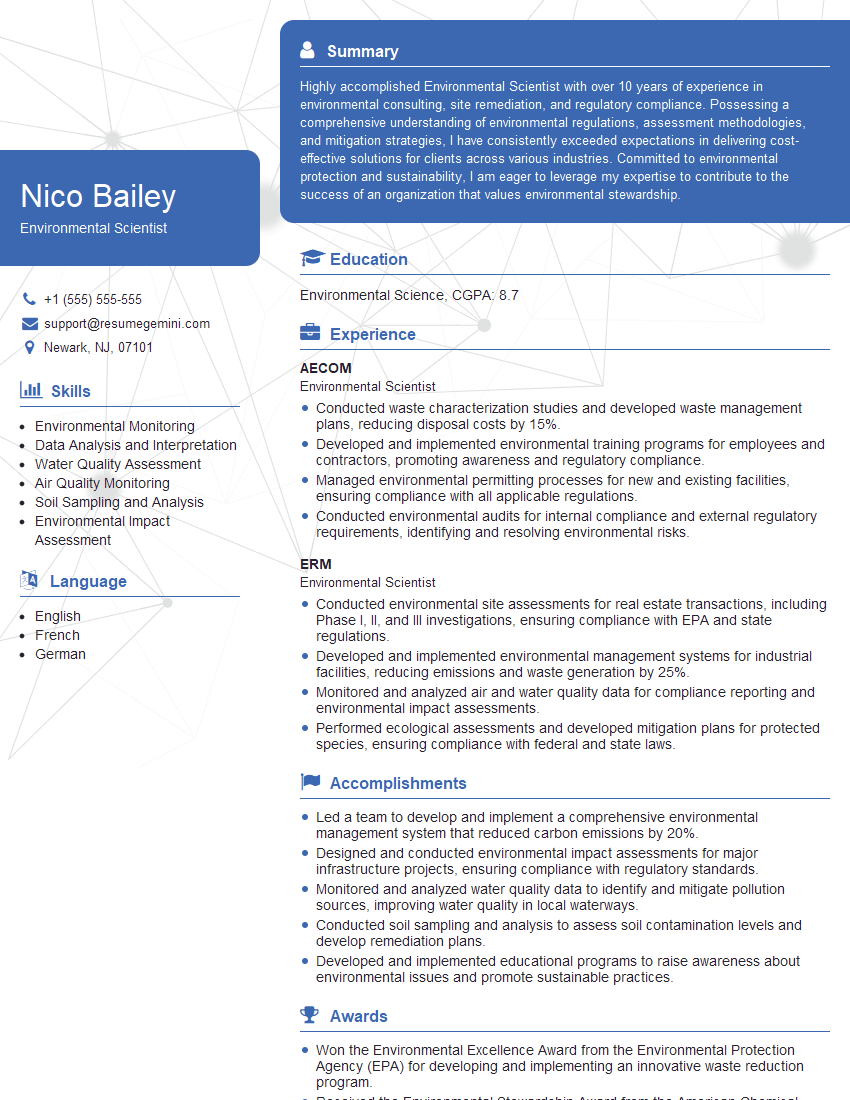
Environmental Scientist Resume Sample

Regulatory Affairs Specialist Resume Sample

Quality Control Analyst Resume Sample

Metallurgist Resume Sample

Analytical Chemist Resume Sample
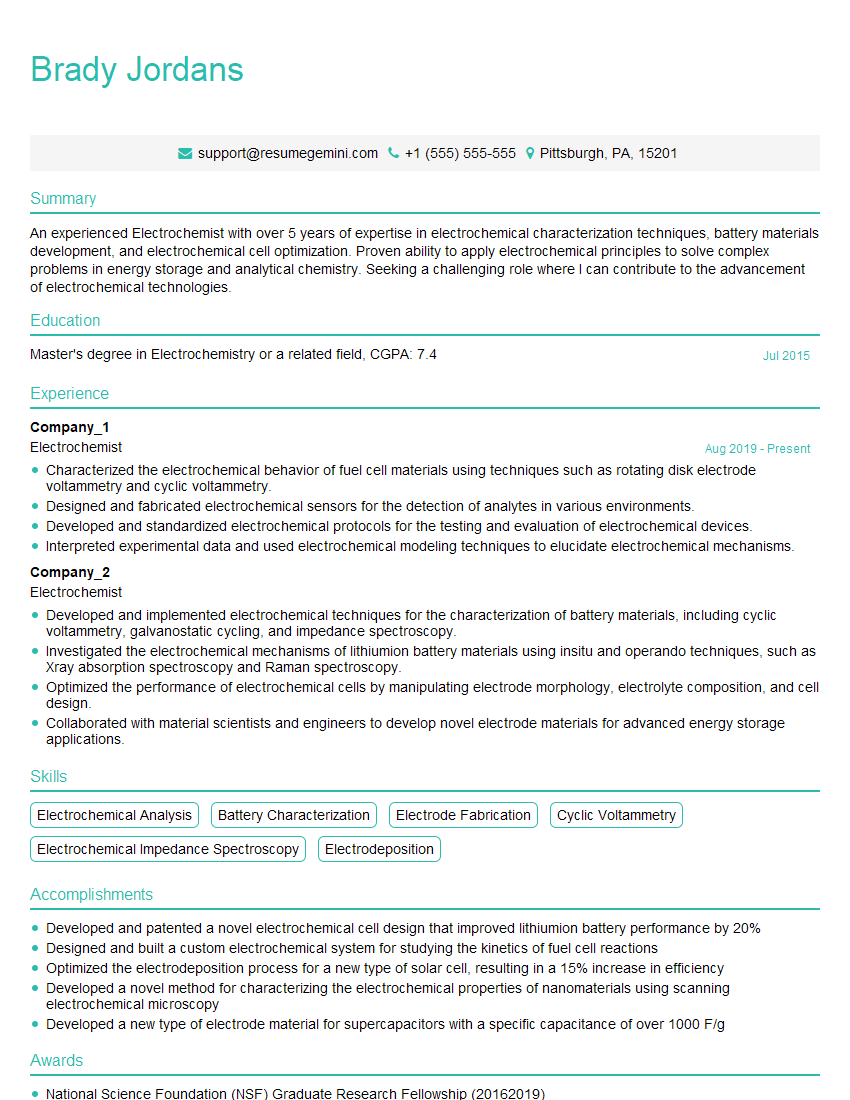
Electrochemist Resume Sample

Process Chemist Resume Sample

Materials Scientist Resume Sample

Geochemist Resume Sample
Explore more articles
Users Rating of Our Blogs
Share Your Experience
We value your feedback! Please rate our content and share your thoughts (optional).
What Readers Say About Our Blog
I Redesigned Spongebob Squarepants and his main characters of my artwork.
https://www.deviantart.com/reimaginesponge/art/Redesigned-Spongebob-characters-1223583608
IT gave me an insight and words to use and be able to think of examples
Hi, I’m Jay, we have a few potential clients that are interested in your services, thought you might be a good fit. I’d love to talk about the details, when do you have time to talk?
Best,
Jay
Founder | CEO