Are you ready to stand out in your next interview? Understanding and preparing for Proficient in the use of marine firefighting equipment interview questions is a game-changer. In this blog, we’ve compiled key questions and expert advice to help you showcase your skills with confidence and precision. Let’s get started on your journey to acing the interview.
Questions Asked in Proficient in the use of marine firefighting equipment Interview
Q 1. Describe the different types of marine fire extinguishers and their applications.
Marine fire extinguishers are categorized based on the type of extinguishing agent they use and the fire classes they’re effective against. Common types include:
- Water spray/fog extinguishers: Ideal for Class A fires (ordinary combustibles like wood and paper). The spray pattern cools the fire and prevents reignition. Think of a garden hose, but with a finer spray for better penetration.
- Foam extinguishers: Effective against Class A and B fires (flammable liquids). The foam creates a barrier that smothers the fire and prevents oxygen from reaching the fuel. Imagine a blanket of foam suffocating the flames.
- Dry chemical extinguishers: Versatile, tackling Class B, C (electrical), and sometimes A fires. The dry chemical powder disrupts the chemical chain reaction of combustion. They’re like throwing a cloud of fire-stopping powder onto the flames.
- CO2 extinguishers: Primarily used for Class B and C fires. CO2 displaces oxygen, suffocating the fire. Because it’s a gas, there’s no mess to clean up afterward.
- Halon extinguishers (being phased out): Once commonly used for Class B and C fires, halons are being replaced due to their ozone-depleting properties. They were exceptionally effective due to their ability to interrupt the fire’s chemical chain reaction.
The application depends on the type of fire and the extinguisher’s rating. Always check the extinguisher label for its suitability before use and ensure proper training.
Q 2. Explain the operation of a fixed fire-fighting system on a vessel.
Fixed fire-fighting systems on vessels are designed to automatically suppress or control fires in specific areas. These systems typically include:
- Water sprinkler systems: Activated by heat sensors, these systems release water to suppress fires in their immediate vicinity. They’re similar to those found in buildings, but adapted for marine environments.
- Foam systems: Utilize foam to blanket and suffocate fires, often deployed in engine rooms or cargo holds. These systems require a foam concentrate and water mixing system.
- CO2 flooding systems: Discharge large quantities of carbon dioxide into an enclosed space to displace oxygen and extinguish the fire. They are effective but require careful consideration of personnel evacuation as CO2 displaces breathable air.
- High-pressure water mist systems: These systems deliver a fine mist of water, very effective at cooling and suppressing fires. They use less water than traditional sprinkler systems and can provide better access to difficult areas.
The operation usually involves a detection system (heat detectors, smoke detectors) that triggers the release of the extinguishing agent. Regular testing and maintenance are crucial to ensure these systems function correctly in an emergency.
Q 3. How would you respond to a fire in an engine room?
Responding to an engine room fire requires a systematic approach, prioritizing safety and rapid fire suppression. The steps are:
- Raise the alarm: Immediately alert other crew members and the vessel’s captain.
- Contain the fire: If safe to do so, try to contain the fire by closing fire doors and hatches to limit its spread. Remember safety first. If the fire is too intense do not enter.
- Evacuate the engine room: Ensure all personnel safely exit the engine room. This is the top priority.
- Assess the situation: Determine the type and extent of the fire from a safe location.
- Utilize appropriate extinguishers/systems: Deploy fixed fire-fighting systems (if activated), or use portable extinguishers suited to the fire type. Use only approved extinguishers and methods.
- Call for external assistance: Contact port authorities or other emergency services as needed.
- Monitor the situation: Keep an eye on the fire to ensure it’s fully extinguished and prevent reignition.
- Ventilation: After the fire is out and deemed safe, ventilate the engine room to clear out smoke and fumes.
Remember: Always follow established fire-fighting procedures for the vessel and prioritize personal safety.
Q 4. What are the different classes of marine fires and the appropriate extinguishing agents?
Marine fires are classified into several classes, each requiring a specific extinguishing agent:
- Class A: Ordinary combustibles (wood, paper, textiles). Extinguished with water spray/fog, foam, or dry chemical.
- Class B: Flammable liquids (oil, gasoline, solvents). Extinguished with foam, dry chemical, or CO2.
- Class C: Electrical fires (electrical equipment). Extinguished with CO2 or dry chemical (never water!).
- Class D: Combustible metals (magnesium, titanium). Require specialized extinguishing agents, usually dry powder, that’s specifically designed for metal fires.
- Class F: Cooking oils and fats. Require specialized foam agents designed for these types of fires.
Choosing the wrong extinguishing agent can worsen the situation, so proper identification of the fire class is paramount. For example, using water on a Class B fire will spread the burning liquid.
Q 5. Describe the procedures for donning and using a self-contained breathing apparatus (SCBA).
Donning and using an SCBA (Self-Contained Breathing Apparatus) is crucial for operating in smoke-filled or oxygen-deficient environments. The procedure is as follows:
- Pre-use Inspection: Check the air pressure gauge, ensure the mask is undamaged, and inspect the straps and harness.
- Donning the Mask: Carefully place the mask over your face, ensuring a tight seal. Adjust the straps for a comfortable and secure fit.
- Activating the Air Supply: Turn on the air supply, checking the pressure gauge again. Ensure a steady flow of air.
- Self-Check: Conduct a self-check to ensure the mask fits properly and the air supply is functioning. Try speaking to verify clear communication.
- Entry into Hazardous Area: Proceed carefully into the hazardous environment, always maintaining awareness of surroundings and team communication.
- Post-Use Procedures: Once you exit the hazardous area, turn off the air supply and properly remove the mask. The SCBA should be inspected and recharged according to safety procedures.
Regular training and practice are essential to properly use an SCBA. Improper use can have life-threatening consequences.
Q 6. Explain the importance of fire prevention measures onboard a vessel.
Fire prevention is paramount in a marine environment, as fires can quickly spread and cause devastating damage. Key preventative measures include:
- Regular inspections: Frequent inspections of electrical systems, fuel lines, and other potential ignition sources are crucial.
- Proper storage of flammables: Flammable materials should be stored in designated areas, away from heat sources and ignition points. This includes proper ventilation to prevent the build up of flammable gases.
- Maintenance: Regular maintenance of engines, machinery, and equipment to prevent malfunctions that could cause fires. This also includes regular checks and cleaning of exhaust systems.
- Designated smoking areas: Limiting smoking to designated areas and providing appropriate receptacles for extinguished cigarettes can prevent accidental fires.
- Hot work permits: Any activity involving welding, cutting, or other high-temperature processes requires a hot work permit to ensure proper safety measures are in place. The area needs proper ventilation and fire watch.
- Crew training: Proper training and drills on fire prevention, detection, and response help to prepare the crew for emergencies.
By implementing these measures, you significantly reduce the risk of fires onboard a vessel and safeguard lives and property.
Q 7. What are the limitations of using water as a fire extinguishing agent?
While water is an effective extinguishing agent for Class A fires, it has limitations:
- Ineffective on Class B and C fires: Water is ineffective on flammable liquids (Class B) as it can spread the fire and on electrical fires (Class C) as it can cause electrocution.
- Damage to equipment: Water can damage sensitive electronics and machinery.
- Weight and space: Carrying large quantities of water adds significant weight and reduces available space on a vessel.
- Risk of spreading fire: If not carefully applied, water can spread burning liquids rather than extinguish them.
- Steam production: Heating water creates large amounts of steam, which can reduce visibility and hamper firefighting efforts.
Therefore, while useful for Class A fires, water should be used cautiously and judiciously, and is often supplemented with other agents for broader fire-fighting capabilities.
Q 8. How do you perform a fire risk assessment on a vessel?
A fire risk assessment on a vessel is a systematic process to identify potential fire hazards, evaluate their risks, and determine appropriate control measures. Think of it like a ship’s health check-up, but for fire safety.
The process typically involves:
- Identifying hazards: This includes locating potential ignition sources (e.g., faulty wiring, hot work areas, smoking areas), flammable materials (e.g., fuels, paints, solvents), and potential sources of fuel (e.g., cargo, engine rooms).
- Analyzing risks: Evaluating the likelihood and severity of a fire starting and spreading. Factors considered include the type and quantity of flammable materials, proximity to ignition sources, and the effectiveness of existing fire protection systems.
- Developing control measures: Implementing measures to eliminate or reduce risks. This could involve improved housekeeping, better storage of flammable materials, installation of fire detection and suppression systems, fire drills, and crew training.
- Documentation and review: Recording findings, control measures, and a schedule for regular review and updates of the assessment.
For example, a vessel carrying large quantities of highly flammable cargo would require a more rigorous assessment and stricter control measures than a passenger ferry. Regular inspections and updates are crucial, especially after modifications or changes in cargo type.
Q 9. What is the role of a fire marshal on a vessel?
The fire marshal on a vessel plays a crucial role in ensuring fire safety. They are responsible for implementing and enforcing fire safety regulations, conducting regular inspections, and leading fire drills. Imagine them as the ship’s dedicated fire safety officer.
Their key responsibilities include:
- Inspections: Regularly checking fire safety equipment, escape routes, and storage areas for flammable materials.
- Training: Ensuring crew members receive proper training in fire prevention, detection, and fighting techniques.
- Enforcement: Enforcing fire safety regulations and addressing any identified deficiencies.
- Incident response: Leading the initial response to any fire incidents, coordinating efforts with other crew members and emergency services.
- Record-keeping: Maintaining accurate records of inspections, training, and incidents.
A proactive and well-trained fire marshal can significantly reduce the risk of fire-related incidents and improve the safety of the vessel and its crew.
Q 10. Explain the significance of maintaining fire safety equipment.
Maintaining fire safety equipment is paramount for ensuring the safety of the vessel and its crew. Regular maintenance prevents equipment failure during an emergency – something you simply can’t afford to have happen.
The significance lies in:
- Effectiveness: Regularly serviced equipment ensures its readiness and effectiveness in case of a fire. A faulty fire extinguisher or malfunctioning sprinkler system can be catastrophic.
- Compliance: Maintaining equipment is crucial for meeting regulatory requirements and avoiding penalties.
- Crew confidence: Knowing that the safety equipment is in good working order boosts crew confidence and their ability to respond effectively in an emergency.
- Prevention: Early detection and prevention is key. Regular inspections can help identify potential problems before they escalate into major issues.
Think of it like regular car maintenance; neglecting it can lead to major breakdowns. Similarly, neglecting fire safety equipment maintenance can result in failure during a critical moment.
Q 11. Describe the procedures for raising a fire alarm on a vessel.
Raising a fire alarm on a vessel involves a clear and immediate process to alert the entire crew and initiate emergency response. Speed and accuracy are vital.
Procedures generally include:
- Activating the alarm system: This might involve breaking a glass alarm button, pulling a manual call point, or using a fire alarm system control panel. The location and method will vary depending on the vessel’s system.
- Announcing the fire: Simultaneously, verbally announce the location of the fire using a public address system or shouting clearly. This ensures everyone understands the situation.
- Reporting to the bridge: Inform the bridge immediately about the fire, its location, and any initial observations.
- Initiating emergency procedures: Following pre-established emergency procedures, which may include activating the muster stations, securing the vessel, and commencing firefighting efforts.
For example, if you discover a fire in the engine room, you’d immediately activate the nearest fire alarm, announce the fire’s location, inform the bridge, and then proceed to attempt to extinguish the fire with the appropriate fire extinguisher before the larger emergency response arrives.
Q 12. How would you handle a fire involving flammable liquids?
Handling a fire involving flammable liquids requires specialized techniques and equipment due to the rapid spread and intensity of such fires. It’s a dangerous situation requiring swift, skillful action.
The key steps include:
- Safety first: Ensure your own safety and that of others by maintaining a safe distance and wearing appropriate personal protective equipment (PPE).
- Isolate the source: If possible, shut off the supply of the flammable liquid to prevent further spread.
- Use the correct extinguisher: Flammable liquid fires require a foam or dry chemical extinguisher (class B fire). Never use water on a flammable liquid fire – it will spread the flames.
- Apply the extinguisher correctly: Aim the extinguisher at the base of the flames, sweeping back and forth to cover the entire fire. Do not use a narrow stream; you want good blanket coverage.
- Call for assistance: Immediately contact the bridge and other crew members for assistance and support.
- Evacuation: If the fire cannot be controlled safely, initiate an evacuation of the area.
For instance, a fire involving spilled diesel fuel would necessitate the use of a foam extinguisher, applying it at the base of the flames while carefully isolating the source if possible. If it becomes unmanageable, you’ll need to prioritise evacuation.
Q 13. What is the importance of emergency escape routes and assembly points?
Emergency escape routes and assembly points are critical for the safe and efficient evacuation of a vessel in case of a fire or other emergency. They are crucial to prevent chaos and loss of life in emergency situations.
Their importance lies in:
- Safe evacuation: Clearly marked escape routes allow crew members to quickly and safely exit the vessel, avoiding hazardous areas.
- Accountability: Assembly points provide a designated location for all crew members to gather after evacuation, facilitating a headcount and ensuring everyone is accounted for.
- Organized response: Pre-determined routes and points allow for a more organised and efficient emergency response, reducing confusion and panic.
- Compliance: Proper escape routes and assembly points are mandatory requirements under maritime regulations.
Imagine a situation with a fire; clearly marked and well-maintained escape routes and assembly points will guide the crew efficiently to safety. These measures save valuable time during an emergency response. They are not to be ignored.
Q 14. Describe the use of fire blankets and their limitations.
Fire blankets are a small but handy piece of fire safety equipment used to smother small fires. Imagine it as a small, fire-resistant quilt.
Their use involves:
- Small fires only: They are suitable for small, localized fires on flammable materials. They should not be used on flammable liquids.
- Smothering the flames: Carefully and swiftly wrap the blanket around the burning material to cut off the oxygen supply, smothering the flames.
- Safety precautions: Wear appropriate PPE during use to avoid burns.
Limitations include:
- Small fires only: They are ineffective against larger or established fires.
- Limited duration: The blanket’s effectiveness diminishes over time and exposure to heat.
- Not for flammable liquids: Never use a fire blanket on flammable liquid fires.
A fire blanket is a useful tool for dealing with small, contained fires, but it’s not a replacement for proper fire extinguishers and training. It’s a supplement, not the main solution.
Q 15. How would you deal with a person suffering from smoke inhalation?
Dealing with smoke inhalation requires immediate action. Smoke inhalation is incredibly dangerous, as it can cause severe respiratory distress and even death. The first step is to move the victim to fresh air, away from the source of the smoke. This is crucial to prevent further damage to their lungs.
Once in fresh air, assess their breathing. If they’re not breathing or their breathing is shallow and labored, begin CPR immediately if you are certified. If they are breathing but struggling, place them in a recovery position to keep their airway open. Administer oxygen if available and monitor their vital signs until emergency medical services arrive. It is vital to remain calm and reassure the victim.
Remember to protect yourself from smoke inhalation as well, by using appropriate respiratory protection. During a maritime emergency, this might involve a self-contained breathing apparatus (SCBA).
Career Expert Tips:
- Ace those interviews! Prepare effectively by reviewing the Top 50 Most Common Interview Questions on ResumeGemini.
- Navigate your job search with confidence! Explore a wide range of Career Tips on ResumeGemini. Learn about common challenges and recommendations to overcome them.
- Craft the perfect resume! Master the Art of Resume Writing with ResumeGemini’s guide. Showcase your unique qualifications and achievements effectively.
- Don’t miss out on holiday savings! Build your dream resume with ResumeGemini’s ATS optimized templates.
Q 16. Explain the importance of regular fire drills and training.
Regular fire drills and training are paramount for maritime safety. They are not just a formality; they’re a lifeline. Think of them as rehearsals for a critical performance – a real-life fire emergency. The more frequently crews practice emergency procedures, the more seamlessly they’ll perform under pressure. These drills ensure everyone understands their roles and responsibilities in a fire emergency, fostering a cohesive and efficient response.
Training goes beyond drills; it involves instruction on using fire suppression equipment, understanding fire dynamics, and recognizing hazards. It also covers escape routes, communication protocols, and the proper use of personal protective equipment (PPE). Regular training keeps everyone’s skills sharp and builds confidence in their ability to handle any situation.
For instance, a recent drill on our vessel revealed a minor flaw in our evacuation procedures, allowing us to promptly correct it before it became a significant problem. That’s the real value of consistent training and practice.
Q 17. What are the legal requirements for fire safety on vessels?
Legal requirements for fire safety on vessels are stringent and vary slightly depending on the flag state (the country under whose laws the vessel is registered) and the type of vessel. However, several international standards and conventions underpin most regulations. The International Maritime Organization (IMO) plays a central role, establishing regulations through conventions like the SOLAS Convention (Safety of Life at Sea).
Generally, regulations mandate comprehensive fire detection and suppression systems, appropriate fire-resistant materials in construction, well-defined escape routes, adequate firefighting equipment, and regular inspections and maintenance. Crews must be adequately trained in firefighting techniques and emergency procedures. Detailed fire plans and instructions are compulsory, outlining procedures for different types of fires and emergencies. Failure to comply with these regulations can lead to significant penalties and operational restrictions.
Documentation of all inspections, training, and maintenance is crucial for demonstrating compliance with these regulations.
Q 18. How do you identify and mitigate fire hazards?
Identifying and mitigating fire hazards is a proactive process that should be continuous. It begins with regular inspections of the vessel, both above and below deck. Look for anything that could be an ignition source or fuel source, such as improperly stored flammable materials, faulty electrical wiring, overloaded circuits, leaks of flammable liquids, and accumulations of grease or oil.
A systematic approach is key: check engine rooms for leaks and proper ventilation, galley areas for potential grease fires, and living quarters for overloaded electrical outlets. Ensure all safety equipment, including fire extinguishers and fire detection systems, is in good working order and readily accessible.
Mitigation involves eliminating or reducing hazards. This could mean replacing faulty wiring, properly storing flammable materials in approved containers, regular cleaning to eliminate grease and oil build-up, and implementing strict rules on smoking. The key is to create a culture of safety awareness among all crew members, encouraging them to report any potential hazard immediately.
Q 19. What is your experience with different types of fire detection systems?
I have experience with various fire detection systems, including heat detectors (fixed temperature and rate-of-rise), smoke detectors (ionization and photoelectric), flame detectors (ultraviolet and infrared), and gas detectors. Each type has its strengths and weaknesses. Heat detectors are reliable but might not detect a fire in its early stages. Smoke detectors are good at early detection but can be triggered by steam or dust. Flame detectors are highly sensitive to flames but less effective for smoldering fires. Gas detectors are essential for detecting flammable gas leaks.
Modern vessels often employ a combination of these systems for comprehensive fire detection, creating a layered approach. A sophisticated system might integrate these detectors with a central monitoring panel, alerting the crew to the location and type of fire. My experience also includes understanding the importance of regular testing and maintenance to ensure the systems function effectively.
For example, I recently worked on a vessel where the photoelectric smoke detectors proved more effective than ionization detectors in detecting a small galley fire in its early stages. This reinforced the importance of using a variety of detection methods.
Q 20. How would you handle a fire involving electrical equipment?
Handling a fire involving electrical equipment requires a specific and cautious approach. The priority is to de-energize the equipment immediately if it’s safe to do so. This means switching off the main power supply or isolating the circuit breaker. Never attempt to fight an electrical fire with water; it can cause a dangerous electrical shock.
The recommended fire suppression agent for electrical fires is a CO2 extinguisher, as it doesn’t conduct electricity and leaves no residue. Dry chemical extinguishers (ABC type) are also suitable but may leave a residue that requires cleaning. Foam extinguishers are generally not recommended for electrical fires.
After the fire is extinguished, ensure the power remains off until the equipment has been inspected by qualified personnel. Any damaged wiring or equipment should be repaired or replaced before re-energizing the system. Thoroughly documenting the incident, including the cause, suppression methods used, and any damage, is crucial for safety analysis and preventing future incidents. Remember, safety first; if you are unsure, do not approach the fire but call for assistance.
Q 21. Describe your experience with foam fire suppression systems.
My experience with foam fire suppression systems is extensive. I’m familiar with both low-expansion and high-expansion foam systems, understanding their applications and limitations. Low-expansion foam systems, typically used for hydrocarbon fires, create a blanket that separates the fuel from the oxygen, smothering the fire. High-expansion foam, used for enclosed spaces, generates a large volume of foam to fill the area and displace the oxygen.
I have practical experience with the operation and maintenance of foam systems, including understanding the importance of proper foam concentrate storage, proportioning systems, and nozzle selection. I know how to test and inspect the system’s components regularly, ensuring that the system is fully operational and ready in case of an emergency.
One particular instance involved a fuel oil spill that ignited. The rapid deployment of the low-expansion foam system successfully contained and extinguished the fire, preventing it from spreading and causing significant damage. This highlighted the effectiveness of foam systems in controlling large-scale hydrocarbon fires.
Q 22. Explain the principles of fire triangle/tetrahedron and their application in fire fighting.
The fire triangle illustrates the three elements necessary for combustion: heat, fuel, and an oxidizing agent (usually oxygen). Removing any one of these elements extinguishes the fire. The fire tetrahedron expands on this by adding a fourth element: a chemical chain reaction. This chain reaction is the continuous process that sustains the fire.
In firefighting, understanding the fire triangle/tetrahedron is crucial for effective fire suppression. We attack fires by targeting one or more of these elements. For example:
- Removing heat: Cooling the fire with water is the most common method. Water absorbs heat, lowering the temperature below the ignition point.
- Removing fuel: This involves isolating the burning material from the fire’s source. It might involve removing flammable materials from the area or creating a firebreak.
- Removing oxygen: This can be achieved using specialized agents like CO2, which displaces oxygen, starving the fire. Foam also helps in this by creating a barrier that prevents oxygen from reaching the fuel.
- Interrupting the chain reaction: Dry chemical powders interrupt the chemical chain reaction, preventing the fire from continuing to burn.
Imagine a bonfire – removing the wood (fuel), pouring water on it (removing heat), or covering it with a blanket (removing oxygen) will all put it out. On a ship, applying this knowledge means using appropriate agents based on the type of fire and the available resources.
Q 23. What are your experience with CO2 fire suppression systems?
I have extensive experience with CO2 fire suppression systems, both in fixed installations and portable units. I’m proficient in inspecting, maintaining, and operating these systems. My experience includes:
- System inspections: Checking for leaks, proper pressure, and the integrity of the piping and nozzles.
- Operational readiness checks: Ensuring the system is fully charged and ready for deployment in case of an emergency.
- Deployment during fire drills and simulations: Activating the system in controlled environments to test its efficacy and identify potential issues.
- Troubleshooting malfunctions: Diagnosing and rectifying problems with CO2 systems, including low pressure or nozzle malfunctions.
One specific instance involved a malfunction in a CO2 system during a routine inspection on a tanker. I discovered a small leak in a valve, preventing the system from reaching full pressure. I promptly reported the issue, and the valve was replaced, ensuring the ship’s safety. I understand the hazards of CO2 and how to mitigate them during discharge; ensuring proper ventilation after CO2 deployment is critical to avoid asphyxiation.
Q 24. How would you manage a fire emergency when you are alone?
If alone during a marine fire emergency, my priorities are personal safety, activating the alarm, and containing the fire until help arrives. My actions would be:
- Assess the situation: Determine the fire’s size, location, and type.
- Activate the alarm: Immediately sound the general alarm to alert others.
- Attempt to contain the fire: If safe to do so, use available fire extinguishers appropriate for the fire class (e.g., AFFF for flammable liquids, CO2 for electrical fires). Remember PASS (Pull, Aim, Squeeze, Sweep).
- Evacuate if necessary: If the fire is too large or rapidly spreading, evacuate the immediate area and alert others to do the same. Follow established emergency procedures.
- Contact emergency services: Use the ship’s emergency communication systems to alert shore-based authorities or other vessels.
- Meet emergency personnel: Once emergency services arrive, provide them with relevant information about the fire, its location, and any hazards present.
The key is to remain calm, prioritize safety, and act decisively based on the situation.
Q 25. What is your experience with the use of high-pressure water monitors?
I have significant experience operating high-pressure water monitors, including training, practical application during drills and, thankfully, limited real-world deployment. My experience includes:
- Pre-operation checks: Ensuring the monitor is correctly assembled, the water supply is adequate, and pressure is within safe operating limits.
- Water stream control: Mastering the use of the monitor’s controls to adjust the water stream’s reach, pattern (fog, jet, etc.), and intensity.
- Safe operating procedures: Adhering to safety protocols, including the use of personal protective equipment (PPE) and maintaining awareness of surroundings.
- Teamwork and communication: Working effectively with other firefighters to coordinate water application and ensure optimal fire suppression.
During a large-scale fire drill, I was responsible for operating a high-pressure water monitor, effectively coordinating with a team to extinguish a simulated fire in a cargo hold. This drill reinforced the importance of clear communication and precise water application for successful fire suppression.
Q 26. Describe your familiarity with marine firefighting regulations (e.g., SOLAS).
I am thoroughly familiar with international marine firefighting regulations, particularly the SOLAS (Safety of Life at Sea) Convention. My understanding encompasses:
- Fire detection and alarm systems: The requirements for fire detection and alarm systems, including their testing and maintenance.
- Fire-fighting equipment: Regulations concerning the type, quantity, and location of fire-fighting equipment on board vessels.
- Fire safety drills and training: The mandatory training requirements for crew members in fire prevention, detection, and suppression.
- Emergency procedures: The documented procedures for responding to fire emergencies and the responsibilities of crew members.
- Maintenance and inspection: The regular inspections and maintenance required for all fire-fighting equipment to ensure operational readiness.
I understand that compliance with SOLAS is paramount for ensuring the safety of crew and passengers, and my experience ensures I can contribute to a safe marine environment.
Q 27. What is your experience with the use of dry powder extinguishers?
I’m experienced in using dry powder extinguishers, specifically in their proper application and limitations. My experience includes:
- Identifying appropriate fire classes: Knowing which classes of fire (A, B, C) dry powder extinguishers are effective against.
- Safe operation: Understanding and following the PASS method (Pull, Aim, Squeeze, Sweep).
- Limitations of use: Recognizing that dry powder can cause damage to electrical equipment and may be less effective on certain fire types compared to other agents.
- Post-use procedures: Knowing how to properly recharge or replace the extinguisher after use.
During training exercises, I’ve frequently used dry powder extinguishers to fight class B fires (flammable liquids). I understand their effectiveness in interrupting the chemical chain reaction and their importance in tackling initial stages of such fires. It’s also vital to remember the potential hazards of inhaling the powder; proper respiratory protection is necessary, especially in confined spaces.
Q 28. How would you conduct a post-fire investigation?
Conducting a post-fire investigation involves a systematic approach to determine the cause, origin, and spread of the fire, as well as identifying areas for improvement in fire safety measures. The process typically involves:
- Securing the scene: Ensuring the area is safe and preventing unauthorized access to preserve evidence.
- Preliminary assessment: Gathering initial information from witnesses, reviewing alarm logs, and documenting the fire’s extent.
- Detailed investigation: This involves a systematic search for the fire’s origin, examining burn patterns, and identifying potential ignition sources.
- Evidence collection and analysis: Gathering samples for laboratory analysis (e.g., fire debris), and documenting findings through photos and sketches.
- Interviewing witnesses: Obtaining statements from crew members and other relevant personnel to reconstruct events leading up to and during the fire.
- Report writing: Preparing a comprehensive report detailing findings, conclusions, and recommendations for preventing similar incidents.
It’s crucial to follow established procedures and maintain proper documentation throughout the process. A thorough post-fire investigation not only helps determine responsibility but also provides crucial insights to prevent future fires and enhance overall safety protocols on board vessels.
Key Topics to Learn for Proficient in the use of Marine Firefighting Equipment Interview
- Types of Marine Firefighting Equipment: Understand the differences and applications of various firefighting systems, including fixed and portable fire extinguishers, fire monitors, sprinkler systems, and foam systems. Be prepared to discuss their strengths and limitations.
- Safety Procedures and Regulations: Demonstrate knowledge of relevant safety protocols, emergency response plans, and international maritime regulations (e.g., SOLAS) related to fire prevention and suppression on vessels.
- Fire Suppression Techniques: Explain different fire suppression techniques based on fire class (A, B, C, D) and the appropriate use of various extinguishing agents. Be ready to describe practical scenarios and your approach to tackling different fire types.
- Personal Protective Equipment (PPE): Discuss the importance of PPE and demonstrate knowledge of the various types of protective gear used in marine firefighting, including their proper donning and doffing procedures.
- Maintenance and Inspection: Explain the importance of regular maintenance and inspection of firefighting equipment. Discuss procedures for checking pressure gauges, inspecting hoses, and ensuring equipment readiness.
- Emergency Response and Teamwork: Describe your experience in coordinating with a team during fire emergencies, including communication protocols, roles and responsibilities, and effective problem-solving under pressure.
- Fire Prevention Measures: Explain preventative measures to minimize fire risks on vessels, including regular inspections, hazard identification, and the implementation of fire safety regulations.
Next Steps
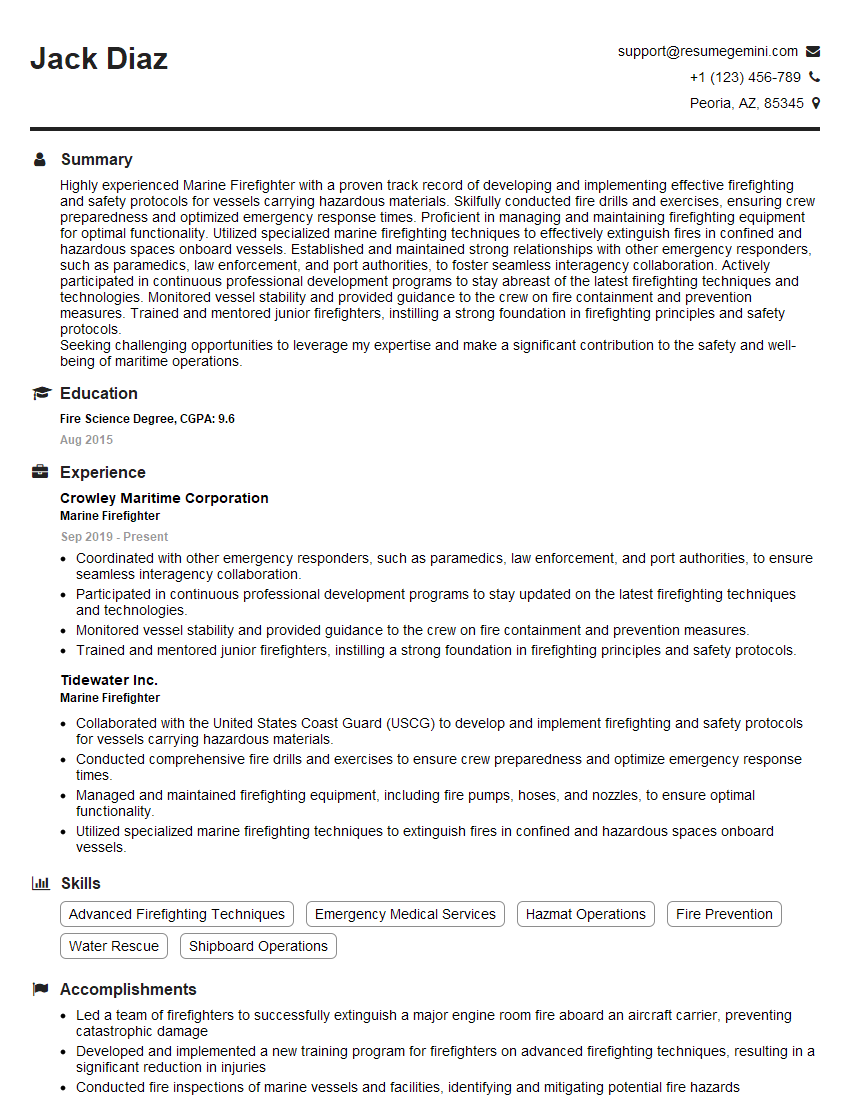
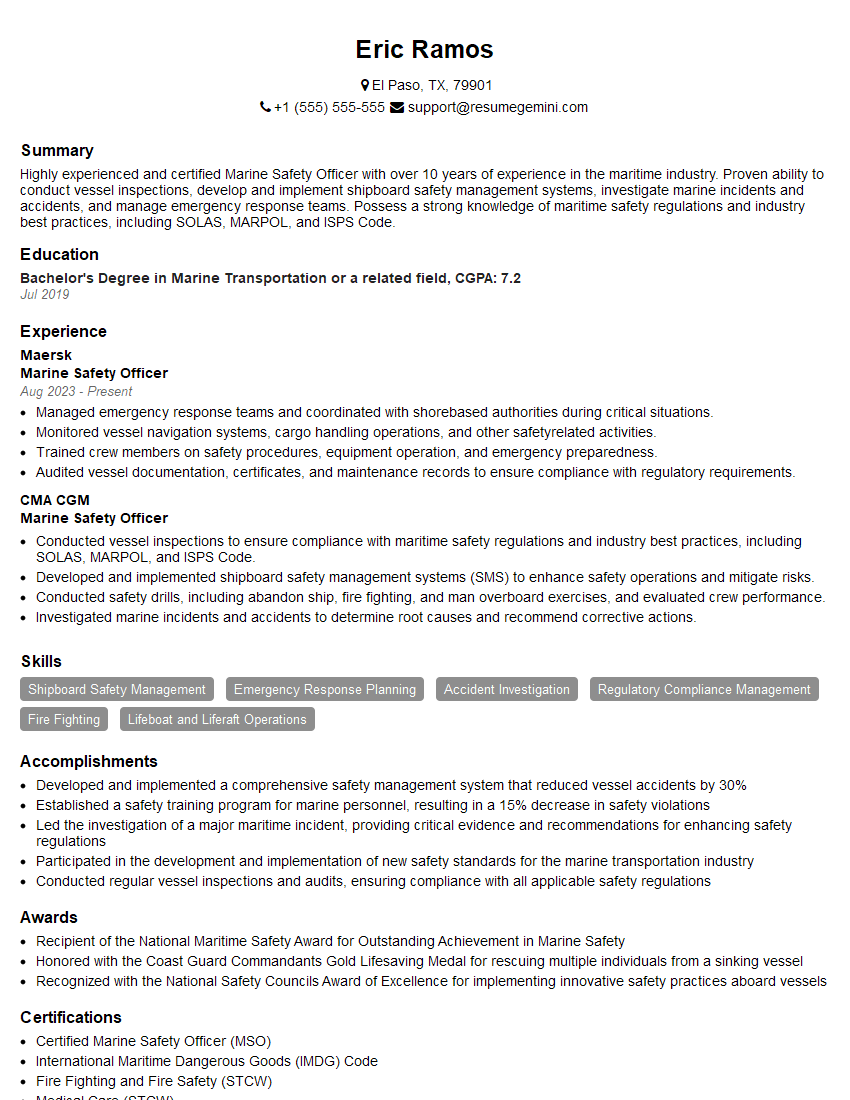
Mastering the use of marine firefighting equipment is crucial for career advancement within the maritime industry, opening doors to higher-paying roles with increased responsibility and opportunities for professional growth. To maximize your job prospects, a well-crafted, ATS-friendly resume is essential. ResumeGemini is a trusted resource that can help you create a compelling resume tailored to highlight your skills and experience in marine firefighting. Examples of resumes tailored to this specific area of expertise are available through ResumeGemini, showcasing the best ways to present your qualifications to prospective employers.
Explore more articles
Users Rating of Our Blogs
Share Your Experience
We value your feedback! Please rate our content and share your thoughts (optional).
What Readers Say About Our Blog
I Redesigned Spongebob Squarepants and his main characters of my artwork.
https://www.deviantart.com/reimaginesponge/art/Redesigned-Spongebob-characters-1223583608
IT gave me an insight and words to use and be able to think of examples
Hi, I’m Jay, we have a few potential clients that are interested in your services, thought you might be a good fit. I’d love to talk about the details, when do you have time to talk?
Best,
Jay
Founder | CEO