Every successful interview starts with knowing what to expect. In this blog, we’ll take you through the top Public Speaking and Media Engagement interview questions, breaking them down with expert tips to help you deliver impactful answers. Step into your next interview fully prepared and ready to succeed.
Questions Asked in Public Speaking and Media Engagement Interview
Q 1. Describe your experience crafting compelling narratives for diverse audiences.
Crafting compelling narratives involves understanding your audience and tailoring your message to resonate with their values, interests, and needs. It’s about more than just presenting facts; it’s about weaving a story that connects emotionally and intellectually. I approach this by first identifying the core message – the single, most important takeaway I want the audience to remember. Then, I develop a narrative arc, much like a good story, with a beginning, rising action, climax, and resolution. This involves selecting vivid details, using strong imagery, and incorporating relatable examples or anecdotes to make the information memorable and engaging. For example, when presenting on the benefits of sustainable agriculture to a group of farmers, I wouldn’t just cite statistics; I’d share a case study of a local farmer who successfully transitioned to sustainable practices and saw a significant increase in their profits and soil health. The key is to show, not just tell.
- Understanding your audience: Conducting thorough audience research is crucial to tailoring your message effectively.
- Developing a narrative arc: Structure your presentation with a clear beginning, middle, and end to maintain audience engagement.
- Using vivid language and imagery: Employ strong verbs, descriptive adjectives, and metaphors to create a lasting impact.
- Incorporating relatable examples: Use case studies, anecdotes, and personal experiences to connect with your audience on an emotional level.
Q 2. How do you adapt your communication style to different media formats (e.g., print, broadcast, social media)?
Adapting communication style across different media requires understanding the unique characteristics of each platform. Print media allows for greater detail and complexity, so I focus on precise language and well-structured arguments. Broadcast media demands conciseness and engaging delivery, so I prioritize impactful soundbites and visual storytelling. Social media necessitates brevity and immediate impact, calling for shorter, easily digestible messages with strong calls to action. For example, a complex policy paper might be condensed into a short, engaging video for social media, highlighting key takeaways using strong visuals and a compelling narrative. For print, I would provide the detailed background and supporting data. For broadcast, I’d prepare short, memorable statements suitable for soundbites and adapt my tone to the specific program’s format.
- Print: Detailed, well-structured arguments, precise language.
- Broadcast: Concise statements, strong soundbites, engaging visuals.
- Social Media: Short, impactful messages, strong calls to action, visually appealing content.
Q 3. Explain your process for developing and delivering impactful presentations.
Developing and delivering impactful presentations involves a multi-stage process. It begins with identifying the key message and desired outcome. Then, I conduct thorough audience research to understand their needs and expectations. Next, I structure the presentation logically, using a clear narrative arc and supporting visuals. Rehearsals are crucial; I practice my delivery multiple times, refining my pacing, tone, and body language. Finally, I incorporate audience engagement techniques, such as Q&A sessions and interactive exercises, to foster participation and maximize impact. For instance, when preparing a presentation on climate change for a business audience, I would focus on the economic implications and opportunities for sustainable practices, tailoring my message to their specific interests and concerns. I would use data visualizations to illustrate key points and incorporate real-world examples of successful corporate sustainability initiatives.
- Define objectives: Clearly outline the goals of the presentation.
- Audience analysis: Understand the audience’s background, interests, and expectations.
- Structure and content: Develop a clear and logical structure with compelling content.
- Visual aids: Use visuals to enhance understanding and engagement.
- Rehearse and refine: Practice delivery to ensure smooth and confident presentation.
- Audience engagement: Involve the audience through Q&A sessions or interactive elements.
Q 4. How do you manage Q&A sessions effectively?
Effective Q&A sessions require preparation and skillful moderation. I begin by anticipating potential questions and crafting concise, informative responses. During the session, I actively listen to each question, clarifying if needed, before providing a thoughtful and concise answer. If I don’t know the answer, I acknowledge that honestly and offer to follow up later. I manage time effectively, ensuring all questions are addressed within the allotted time. For instance, if I receive a repetitive question, I acknowledge the common concern and address it for the entire audience while briefly acknowledging the individual who asked. This way, I maintain a respectful and efficient dialogue, managing audience expectations and preventing the Q&A from dominating the presentation.
- Anticipate questions: Prepare answers to potential questions beforehand.
- Active listening: Listen carefully to each question and clarify if needed.
- Concise answers: Provide informative yet succinct responses.
- Time management: Manage the Q&A session effectively within the allotted time.
- Handle unknown questions: Acknowledge honestly and offer to follow up later.
Q 5. Describe a time you had to handle a difficult question from a journalist or audience member.
During a press conference on a controversial new policy, a journalist challenged the data I presented, accusing me of manipulating figures to support the policy. My first response was to remain calm and acknowledge his concern. I then restated the data clearly, explaining the methodology used and providing additional sources to support my claims. I also addressed the specific points of his challenge directly, clarifying any potential misunderstandings. By remaining composed and addressing the concerns with factual information and transparency, I diffused the situation and maintained credibility. The key was acknowledging the question’s validity, offering a well-reasoned response, and maintaining a professional and respectful demeanor throughout. The event reinforced the importance of thorough preparation and the ability to think on one’s feet in high-pressure situations.
Q 6. What strategies do you use to build and maintain positive relationships with the media?
Building and maintaining positive media relationships is crucial for effective communication. This requires proactive engagement and consistent transparency. I regularly contact media professionals to offer insights and updates relevant to their areas of coverage. I respond promptly and thoroughly to inquiries, even when dealing with challenging or negative topics. I always aim to build trust and mutual respect, recognizing that journalists play a vital role in shaping public perception. Providing regular updates and proactively addressing concerns helps build rapport and prevent miscommunication. A personal touch is important, so I often follow-up with thank you notes or calls, reinforcing the relationship. This proactive and transparent approach helps establish trust and fosters ongoing collaboration.
- Proactive engagement: Regularly contact media professionals and offer relevant information.
- Prompt responses: Respond promptly and thoroughly to media inquiries.
- Transparency: Be honest and forthcoming, even with difficult topics.
- Relationship building: Cultivate trust and mutual respect with journalists.
- Personal touch: Show appreciation and maintain consistent communication.
Q 7. How do you measure the success of a public speaking engagement or media campaign?
Measuring the success of a public speaking engagement or media campaign involves both qualitative and quantitative assessment. Quantitative metrics include audience size, engagement levels (e.g., social media interactions, website traffic), and media coverage (number of articles, broadcast mentions, reach). Qualitative metrics focus on audience feedback, changes in attitudes or behaviors, and the overall impact on the campaign’s objectives. For example, after a public speaking event, we might survey attendees to gauge their satisfaction and understanding of the key messages. We’d also track media mentions and analyze their tone and impact. The success is ultimately judged by whether the engagement or campaign achieved its stated goals, which could be increasing brand awareness, influencing policy, driving sales, or changing public perception.
- Quantitative metrics: Audience size, engagement levels, media coverage.
- Qualitative metrics: Audience feedback, changes in attitudes or behaviors.
- Goal alignment: Assess success based on achieving pre-defined campaign objectives.
Q 8. Explain your understanding of media relations and crisis communication.
Media relations is the strategic process of building and maintaining mutually beneficial relationships with journalists, media outlets, and influencers to effectively communicate your message. It’s about proactively shaping public perception and securing positive coverage. Crisis communication, on the other hand, is the art of managing a negative event or situation that threatens an organization’s reputation. It’s about swiftly responding to a crisis, minimizing damage, and restoring public trust. Both are crucial for organizational success.
For example, in media relations, you might proactively pitch a story about a new product launch to relevant journalists. In crisis communication, you might need to develop a swift and coordinated response plan to address a product recall, a social media firestorm, or a public relations disaster.
The key difference lies in the proactive vs. reactive nature. Media relations aims to prevent crises through positive engagement, while crisis communication is about mitigating the damage after a crisis has occurred. A strong media relations strategy can often help prevent crises from arising in the first place.
Q 9. How do you utilize social media to amplify your message and engage with your audience?
Social media is a powerful tool for amplifying your message and engaging directly with your audience. I use a multi-platform approach, tailoring my content to each platform’s unique characteristics and audience. For instance, Twitter is great for short, impactful messages and quick responses; LinkedIn is ideal for professional networking and thought leadership; and Instagram or Facebook can allow for more visual and engaging content.
My strategy involves creating engaging content – including videos, infographics, and compelling stories – that resonate with my target audience. I also actively monitor social media for mentions of my organization or relevant topics, allowing me to respond quickly and effectively to comments and questions. Using analytics tools, I track key metrics like engagement, reach, and sentiment to measure the effectiveness of my social media campaigns and adjust my strategy accordingly. For example, I might A/B test different types of posts to see which resonates best with my audience.
Q 10. Describe your experience with media training.
I have extensive experience in media training, having conducted numerous workshops and one-on-one sessions for executives, spokespeople, and other professionals. My training focuses on helping individuals develop their messaging, improve their interview skills, and handle challenging questions with confidence and professionalism. This includes media coaching on how to craft key messages, how to deal with difficult questions in interviews (both live and recorded), and how to effectively manage your body language and tone of voice.
I emphasize practical application, using role-playing exercises and simulated interviews to give participants real-world experience. I also provide personalized feedback, helping them refine their techniques and build their confidence. One memorable success was helping a CEO improve their interview skills, resulting in significantly more positive media coverage following a difficult product launch.
Q 11. How do you handle negative press or public criticism?
Handling negative press or public criticism requires a calm, measured, and strategic approach. The first step is to acknowledge the criticism and understand its source. Then, develop a response strategy that addresses the concerns directly and honestly, without resorting to defensiveness.
Transparency and empathy are crucial. If a mistake has been made, acknowledge it and outline the steps being taken to rectify the situation. If the criticism is unfounded, present facts and evidence to counter the claims. It’s essential to engage directly with critics, responding professionally and constructively, while simultaneously focusing on repairing any damaged reputation through positive actions and communications.
For example, a social media campaign addressing an incorrect claim about a product would involve using data and user feedback to highlight the factual information, and address user concerns individually and respectfully.
Q 12. What is your experience with using data and analytics to inform your communication strategies?
Data and analytics are integral to informing my communication strategies. I use various tools to track key metrics, such as website traffic, social media engagement, media mentions, and audience sentiment. This data helps me understand what’s working, what’s not, and how to optimize my campaigns for maximum impact.
For instance, analyzing social media sentiment allows me to gauge public opinion on a particular issue, informing my messaging and response strategies. Website analytics provide insights into audience behaviour, helping me tailor content to their interests and needs. By tracking media mentions, I can measure the effectiveness of my media outreach efforts and identify areas for improvement.
I use this data to refine my strategies, ensuring I am effectively reaching my target audience and achieving my communication objectives. Example: Using Google Analytics to track website traffic and identify popular content pages.
Q 13. How do you identify and target key media outlets for your communication efforts?
Identifying and targeting key media outlets requires thorough research and a strategic approach. I begin by defining my target audience and the key messages I want to convey. Then, I identify media outlets that reach this audience and align with my communication goals. This involves analyzing their readership, viewership, or listenership demographics, editorial focus, and past coverage of similar topics.
I build a media list that includes journalists, bloggers, and influencers who are likely to be interested in my story. I also consider the format of my message – a press release for a newsworthy announcement, an opinion piece for a thought leadership perspective, or a social media campaign for direct audience engagement. Finally, I craft personalized pitches tailored to the specific publication and journalist, emphasizing the relevance of my story to their audience.
Q 14. How familiar are you with different communication theories and models?
I’m familiar with a range of communication theories and models, including the two-step flow model, agenda-setting theory, framing theory, and the diffusion of innovations model. Understanding these theories helps me to develop effective communication strategies that consider the complexities of human behavior and information processing.
For instance, understanding the agenda-setting theory helps me identify the key issues that are shaping public opinion and tailor my messaging to address these concerns effectively. Using the diffusion of innovations model helps me to strategically target key influencers to facilitate the spread of information within a community or target group. Applying these theories provides a robust framework for crafting impactful and persuasive communication messages that can achieve meaningful results.
Q 15. How would you develop a communication plan for a specific product launch or campaign?
Developing a communication plan for a product launch or campaign requires a strategic and phased approach. It’s like building a house – you need a solid foundation, a well-defined structure, and careful attention to detail.
- Phase 1: Define Objectives and Target Audience: Start by clearly defining your goals (e.g., increase brand awareness by 20%, generate 1000 leads). Thoroughly analyze your target audience – their demographics, psychographics, media consumption habits, and communication preferences. This informs your message and channel selection.
- Phase 2: Key Message Development: Craft a concise, compelling message that resonates with your target audience and clearly communicates the product’s value proposition. This message should be consistent across all communication channels.
- Phase 3: Channel Strategy: Identify the most effective communication channels to reach your target audience. This could include social media, email marketing, public relations, paid advertising, content marketing (blog posts, videos, infographics), and traditional media (print, radio, television).
- Phase 4: Timeline and Budget: Create a realistic timeline for each activity and allocate a budget accordingly. This includes content creation, media buys, and agency fees (if applicable).
- Phase 5: Measurement and Evaluation: Define key performance indicators (KPIs) to track the success of your campaign. This could include website traffic, social media engagement, lead generation, sales, and brand mentions. Regularly monitor your progress and make adjustments as needed.
Example: For a new sustainable clothing line launch, we might focus on influencer marketing on Instagram and TikTok (reaching a younger, environmentally conscious audience), alongside PR outreach to relevant publications and a targeted email campaign to existing customers. We would track website traffic, social media engagement, and sales to measure campaign effectiveness.
Career Expert Tips:
- Ace those interviews! Prepare effectively by reviewing the Top 50 Most Common Interview Questions on ResumeGemini.
- Navigate your job search with confidence! Explore a wide range of Career Tips on ResumeGemini. Learn about common challenges and recommendations to overcome them.
- Craft the perfect resume! Master the Art of Resume Writing with ResumeGemini’s guide. Showcase your unique qualifications and achievements effectively.
- Don’t miss out on holiday savings! Build your dream resume with ResumeGemini’s ATS optimized templates.
Q 16. Describe your experience working with different stakeholders to align on communication strategies.
Aligning stakeholders on communication strategies requires strong facilitation and collaborative skills. It’s about building consensus and ensuring everyone is on the same page. My approach involves:
- Kick-off Meetings: Initiating meetings with all stakeholders to establish shared goals, clarify roles and responsibilities, and discuss the overall communication plan.
- Regular Check-ins: Holding regular check-in meetings to review progress, address concerns, and make necessary adjustments to the strategy.
- Open Communication: Fostering open and honest communication channels among stakeholders to ensure everyone feels heard and involved.
- Conflict Resolution: Addressing conflicts and disagreements in a constructive and collaborative manner, finding common ground and reaching mutually agreeable solutions.
- Presentation & Documentation: Providing clear, concise presentations and documentation to keep all stakeholders informed and aligned on the agreed strategy.
Example: During a product launch, I worked with the marketing team, sales team, and executive leadership to align on messaging, target audience, and communication channels. We used a collaborative document to track our progress and address any discrepancies that arose. This proactive approach ensured a seamless and effective communication strategy.
Q 17. How do you ensure consistency and coherence across different communication channels?
Maintaining consistency and coherence across communication channels is crucial for building a strong brand identity. Think of it like a well-orchestrated symphony – each instrument (communication channel) plays its part to create a harmonious whole. My approach includes:
- Brand Style Guide: Developing and adhering to a comprehensive brand style guide that outlines the brand’s voice, tone, messaging, and visual identity. This ensures consistency across all materials.
- Centralized Content Repository: Creating a centralized repository for all brand assets (logos, templates, images, etc.) to prevent inconsistencies and ensure everyone is using the most up-to-date versions.
- Template Usage: Using consistent templates for emails, social media posts, presentations, and other materials to maintain visual consistency.
- Regular Reviews: Conducting regular reviews of all communication materials to identify and correct any inconsistencies or deviations from the brand guidelines.
- Cross-Channel Collaboration: Ensuring close collaboration between teams responsible for different communication channels to maintain a unified approach.
Example: For a large corporate client, I developed a comprehensive brand style guide that included detailed specifications for logo usage, color palettes, typography, and tone of voice. This ensured consistency across all marketing materials, website, and social media platforms.
Q 18. Explain your understanding of different communication styles and how you adapt to them.
Understanding different communication styles is paramount for effective engagement. Just like speaking different languages, you need to adapt your approach to connect with diverse individuals and groups. I am familiar with various styles, including:
- Direct: Clear, concise, and to-the-point. Effective for conveying information quickly.
- Indirect: More nuanced and subtle, often relying on context and implication. Can be effective in building rapport but requires careful consideration.
- Formal: Uses professional language and a respectful tone. Appropriate for formal settings and professional communication.
- Informal: Uses casual language and a friendly tone. Appropriate for building relationships and fostering a sense of connection.
I adapt my communication style based on the audience, context, and desired outcome. For example, I would use a formal and direct style when presenting to senior executives, but adopt a more informal and engaging style when interacting with younger audiences on social media.
Q 19. How proficient are you in using presentation software such as PowerPoint or Keynote?
I am highly proficient in using presentation software such as PowerPoint and Keynote. My skills extend beyond simply creating slides; I leverage these tools to craft compelling narratives that engage audiences and effectively communicate key messages. I’m adept at using visual aids, data visualization, animations, and transitions to enhance the impact of my presentations. I also understand the principles of design, ensuring that my presentations are visually appealing and easy to follow.
Example: I’ve used Keynote to create interactive presentations with embedded videos and data visualizations, enhancing audience engagement and information retention. For a complex technical topic, I used PowerPoint to create a clear and concise presentation with step-by-step explanations and visuals to simplify complex concepts.
Q 20. Describe your experience with writing press releases and media kits.
I have extensive experience writing press releases and media kits. I understand the importance of crafting compelling narratives that capture the attention of journalists and editors. My approach involves:
- Newsworthiness: Identifying the newsworthy aspects of the story and framing it in a way that is relevant and engaging to the media.
- Compelling Headline: Crafting a concise and attention-grabbing headline that accurately reflects the content of the release.
- Clear and Concise Writing: Writing in a clear, concise, and journalistic style, avoiding jargon and technical language.
- Fact-Checking: Meticulously fact-checking all information to ensure accuracy and credibility.
- Media Kit Development: Creating comprehensive media kits that include background information, high-resolution images, biographies, and other relevant materials.
Example: I recently wrote a press release announcing a new product launch for a tech company. The release was picked up by several major technology publications, resulting in significant media coverage and increased brand awareness.
Q 21. What is your approach to developing a compelling personal brand?
Developing a compelling personal brand is about showcasing your unique skills, expertise, and personality. It’s about creating a distinct identity that resonates with your target audience. My approach involves:
- Identify Your Niche: Define your area of expertise and what makes you unique. What are you passionate about? What are your strengths?
- Craft Your Message: Develop a clear and concise message that communicates your value proposition. What do you offer? How do you help others?
- Build Your Online Presence: Create a professional website and social media profiles that showcase your expertise and personality. Consistency is key.
- Network and Build Relationships: Attend industry events, connect with people on social media, and actively participate in your community.
- Share Your Expertise: Write blog posts, create videos, give presentations, or participate in podcasts to share your knowledge and establish yourself as a thought leader.
- Monitor and Adapt: Regularly monitor your online presence and adapt your strategy as needed. Pay attention to feedback and analytics to refine your approach.
Example: I’ve consistently shared my expertise through writing articles, participating in webinars, and speaking at industry conferences. This consistent effort has helped establish me as a trusted voice in the field of public speaking and media engagement.
Q 22. How do you maintain a professional online presence?
Maintaining a professional online presence is crucial for building credibility and trust. It’s about presenting a consistent and polished image across all platforms. This involves several key strategies:
- Profile Optimization: Ensure your LinkedIn, Twitter, and other relevant profiles are complete, accurate, and reflect your expertise. Use a professional headshot and write a compelling bio that highlights your skills and experience.
- Content Curation: Share insightful content related to your field. This could include articles, blog posts, videos, or podcasts. This demonstrates your knowledge and positions you as a thought leader.
- Engagement: Actively participate in online discussions, respond to comments, and connect with others in your industry. Genuine engagement builds relationships and expands your network.
- Brand Consistency: Maintain a consistent tone and style across all your online platforms. This ensures a cohesive and professional brand identity.
- Monitoring and Management: Regularly monitor your online presence for any negative comments or inappropriate content. Address concerns promptly and professionally.
For example, I consistently share articles on public speaking techniques and media engagement strategies on LinkedIn, and I actively participate in relevant discussions on Twitter. This helps me connect with potential clients and collaborators while showcasing my expertise.
Q 23. How do you prepare for interviews with journalists or bloggers?
Preparing for media interviews requires meticulous planning and understanding your audience. Here’s my approach:
- Research: Thoroughly research the journalist, their publication, and their past work. This helps tailor your message to their audience and anticipate their questions.
- Key Messages: Identify 2-3 key messages you want to convey. Keep them concise, memorable, and relevant to the topic.
- Anticipate Questions: Brainstorm potential questions and craft concise, compelling answers. Practice delivering these answers aloud.
- Prepare Visual Aids: If appropriate, prepare visual aids such as charts, graphs, or images to support your points and make the interview more engaging.
- Practice: Rehearse the interview with a colleague or friend. This helps you refine your answers and improve your delivery.
For instance, before a recent interview on the impact of social media on public speaking, I researched the journalist’s previous articles on similar topics and tailored my answers to focus on the practical implications for public speakers. This allowed me to provide relevant and insightful responses.
Q 24. Describe your experience using multimedia elements in your presentations.
Multimedia elements significantly enhance presentations, making them more engaging and memorable. My experience includes using a variety of media:
- High-Quality Images: Using relevant, visually appealing images to illustrate key points, avoids overwhelming the audience with text-heavy slides.
- Data Visualization: Employing charts and graphs to present complex data in a clear and concise manner. This makes it easier for the audience to understand key trends and insights.
- Short Videos: Incorporating short, engaging videos to illustrate a point or tell a story, capturing the audience’s attention and adding variety.
- Interactive Elements: Utilizing interactive polls or quizzes to actively engage the audience and gauge their understanding.
- Animations and Transitions: Using subtle animations and transitions to guide the audience’s attention and create visual interest.
For example, in a presentation on effective communication, I used a short video clip demonstrating a successful negotiation, which was far more impactful than simply describing the process.
Q 25. How do you deal with unexpected questions or situations during a live presentation?
Handling unexpected questions or situations during a live presentation requires composure and quick thinking. My approach is to:
- Acknowledge the Question: Acknowledge the question or situation calmly and confidently, even if it’s unexpected or challenging.
- Buy Time: Briefly pause to gather your thoughts and formulate a response. You can use phrases like, “That’s an excellent question,” or “Let me address that point.”
- Address the Core Issue: Focus on answering the core of the question, even if you can’t provide a complete answer.
- Bridge to Your Message: If possible, try to bridge the unexpected question back to your prepared remarks.
- Be Honest: If you don’t know the answer, it’s perfectly acceptable to admit it and offer to follow up later.
Once, I was asked a question about a competitor’s product during a presentation. I acknowledged the question, briefly mentioned the competitor’s strengths, and then pivoted to highlighting the unique benefits of my own product. The honesty and smooth transition kept the audience engaged.
Q 26. What techniques do you use to engage your audience during a presentation?
Engaging an audience requires a multi-pronged approach that combines different techniques:
- Storytelling: Weaving in relatable stories to connect with the audience on an emotional level.
- Humor: Using appropriate humor to lighten the mood and create a more relaxed atmosphere.
- Interaction: Asking questions, conducting polls, or encouraging audience participation.
- Visuals: Employing engaging visuals to enhance understanding and keep the audience focused.
- Enthusiasm: Projecting genuine enthusiasm for the topic to inspire and motivate the audience.
I often start my presentations with a short, relevant anecdote to hook the audience and establish a connection. I then use interactive elements to keep them involved throughout the presentation.
Q 27. How do you incorporate storytelling into your communication strategy?
Storytelling is a powerful tool for making complex ideas relatable and memorable. I integrate storytelling into my communication strategy by:
- Identifying Relevant Stories: Identifying personal anecdotes, case studies, or relevant news stories that illustrate my points effectively.
- Structuring Stories Effectively: Following a clear narrative structure with a beginning, middle, and end. Ensuring the story has a clear point and is relevant to the audience.
- Using Vivid Language: Using vivid language and imagery to paint a picture for the audience and bring the story to life.
- Connecting to the Audience: Making sure the stories resonate with the audience’s experiences and values.
- Practicing Delivery: Rehearsing the story to ensure a natural and engaging delivery.
For instance, when discussing the importance of preparation in public speaking, I share a personal story about a presentation I delivered without adequate preparation, highlighting the challenges and lessons learned. This makes the message relatable and impactful.
Q 28. Describe your experience with delivering presentations in virtual settings.
Delivering presentations in virtual settings requires a different approach compared to in-person presentations. My experience includes:
- Technical Proficiency: Ensuring familiarity with the chosen virtual platform and its features, such as screen sharing, video conferencing, and Q&A functions.
- Engaging Visuals: Using high-quality visuals that are clear and easy to see on screen. Simplifying slides and using larger font sizes.
- Interactive Elements: Utilizing polls, quizzes, or chat features to actively engage the audience.
- Effective Communication: Speaking clearly and concisely, ensuring the audience can hear you easily and understand your message.
- Managing Time: Being mindful of time constraints and keeping the presentation concise and focused.
I’ve found that using breakout rooms in virtual meetings for smaller group discussions can significantly improve audience engagement and participation in a virtual setting. Pre-presentation testing of all technical elements is also critical.
Key Topics to Learn for Public Speaking and Media Engagement Interview
- Crafting a Compelling Narrative: Learn to structure your message for maximum impact, whether in a presentation or interview setting. Consider audience analysis and tailoring your delivery accordingly.
- Nonverbal Communication Mastery: Practice confident posture, eye contact, and hand gestures to enhance your message and build rapport. Understand how your body language contributes to your overall presentation.
- Handling Q&A Sessions Effectively: Develop strategies for anticipating questions, formulating concise and insightful answers, and managing challenging inquiries with grace and professionalism.
- Media Training Fundamentals: Understand how to effectively communicate your message to different media outlets (print, broadcast, online). Practice delivering concise soundbites and managing challenging interview scenarios.
- Crisis Communication Strategies: Develop a plan for addressing potential negative press or difficult situations. Learn how to maintain composure and convey credibility even under pressure.
- Utilizing Technology for Engagement: Explore the use of visual aids, multimedia, and social media platforms to enhance your message and reach a wider audience. Understand best practices for digital communication.
- Adapting to Different Audiences: Practice tailoring your communication style and content to resonate with various audiences, from corporate boardrooms to general public forums.
- Measuring Communication Effectiveness: Understand how to assess the impact of your communication efforts. Learn methods to track engagement and refine your strategies.
Next Steps
Mastering public speaking and media engagement is crucial for career advancement in today’s competitive landscape. These skills are highly valued across numerous industries, opening doors to leadership roles and enhanced professional visibility. To significantly boost your job prospects, it’s essential to create a strong, ATS-friendly resume that highlights your accomplishments and skills effectively. We highly recommend utilizing ResumeGemini to build a professional and impactful resume. ResumeGemini offers a streamlined process and valuable tools to create a resume that showcases your abilities in public speaking and media engagement. Examples of resumes tailored to this field are available to help guide you.

Communications Director Resume Sample

Marketing Communications Manager Resume Sample
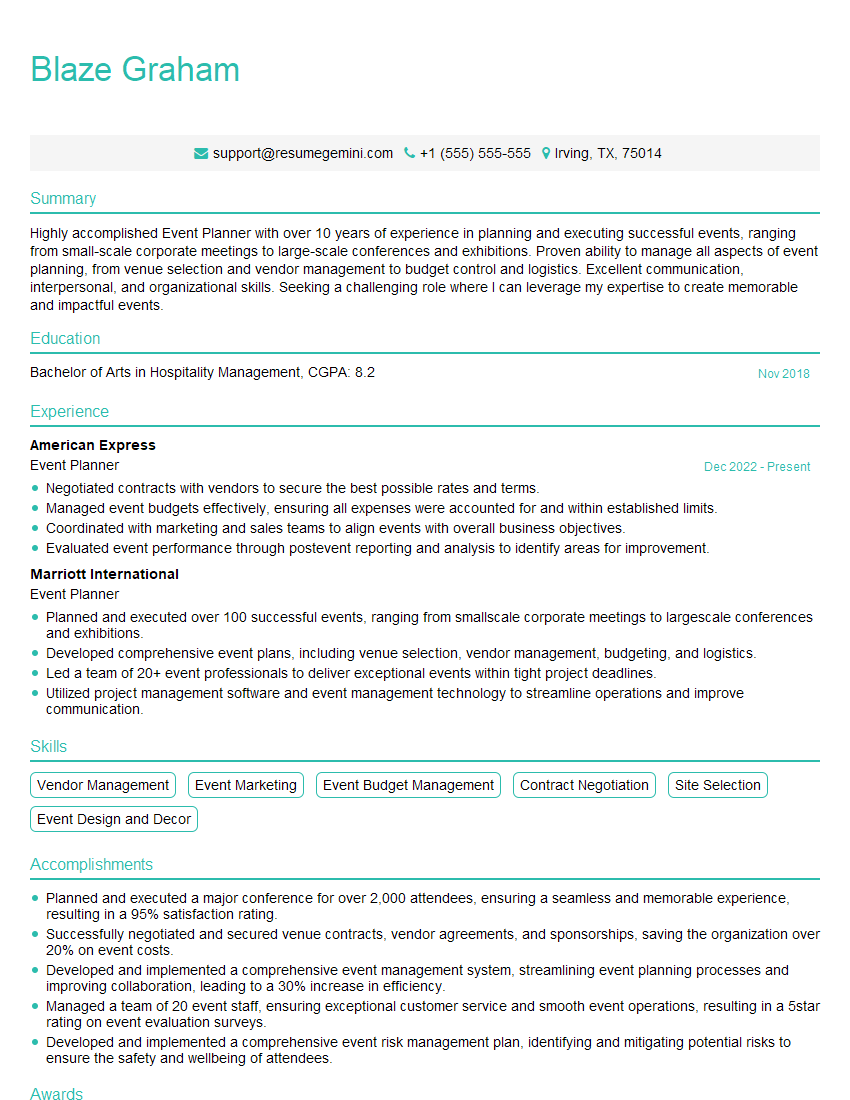
Event Planner Resume Sample

Social Media Manager Resume Sample

Communications Consultant Resume Sample
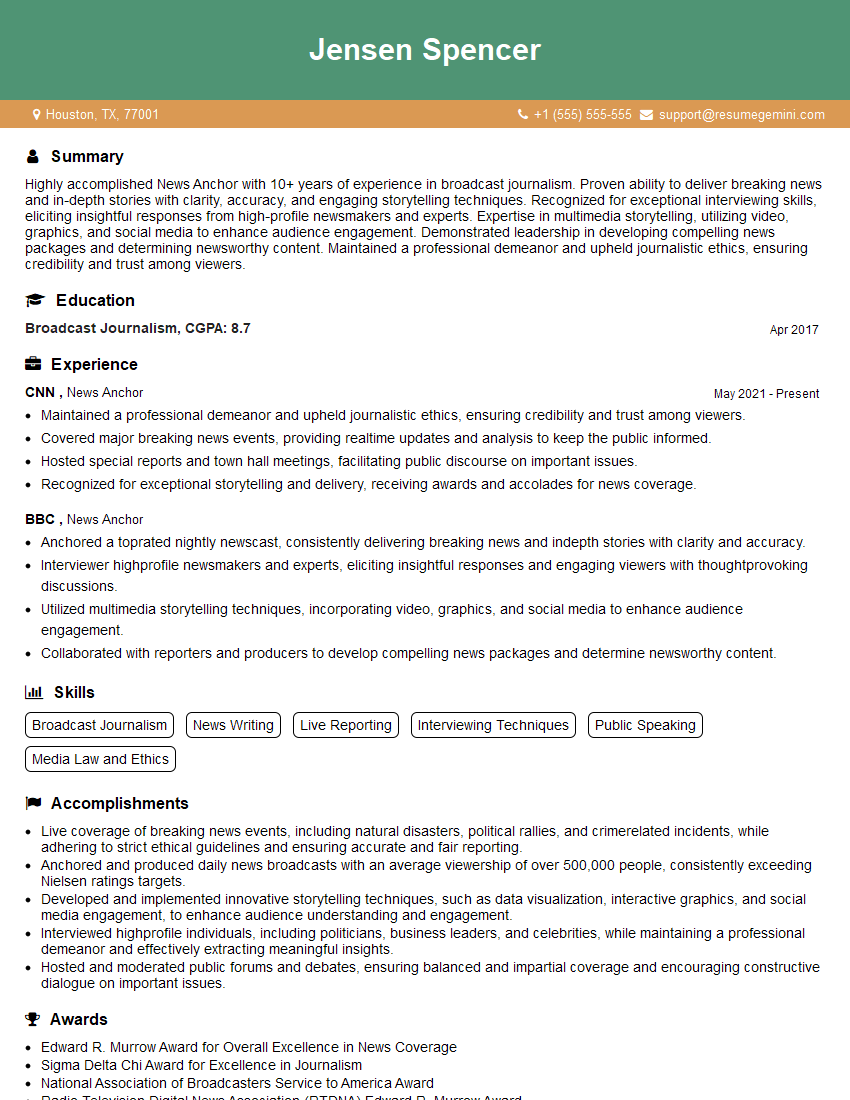
News Anchor Resume Sample
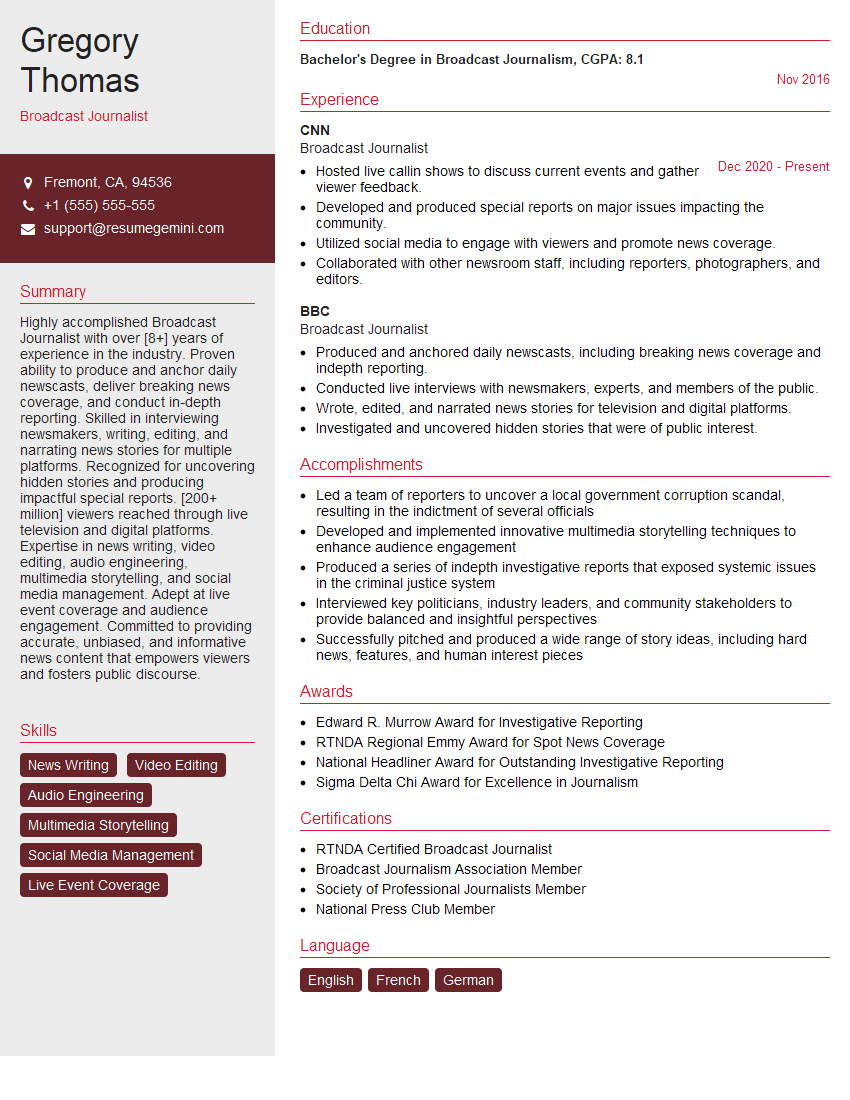
Broadcast Journalist Resume Sample
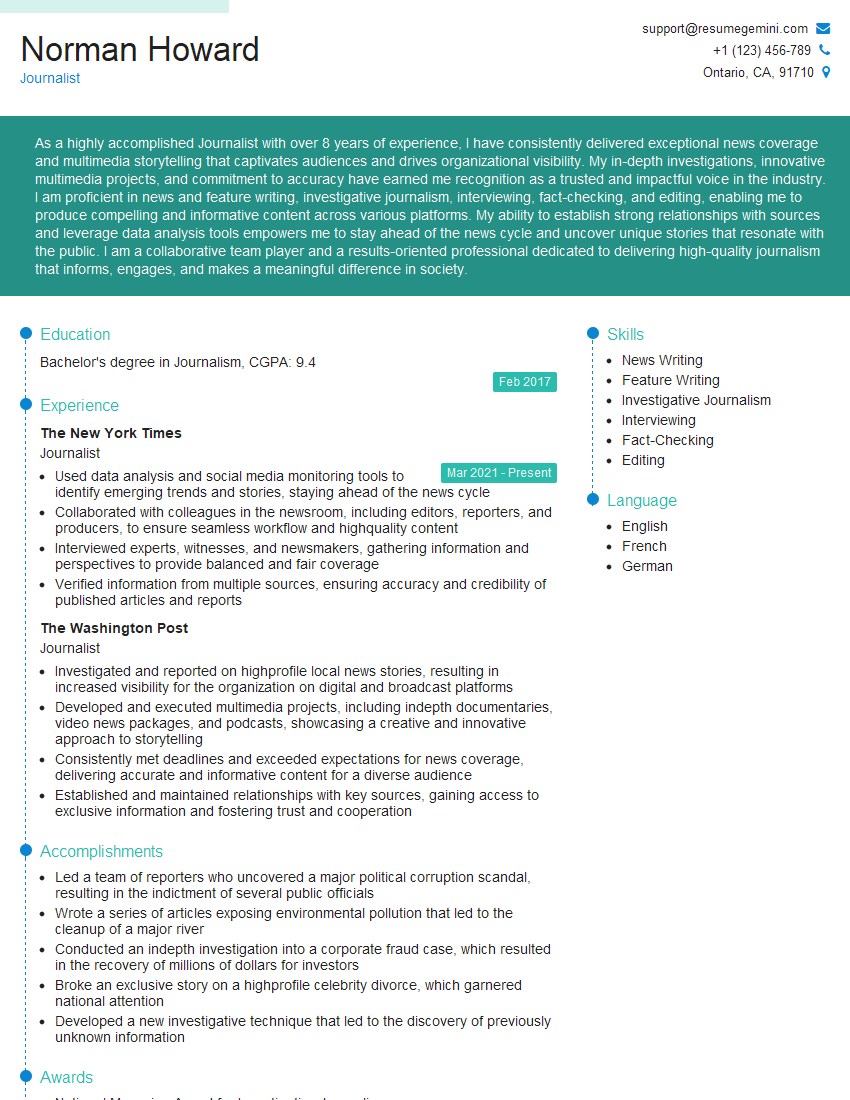
Journalist Resume Sample
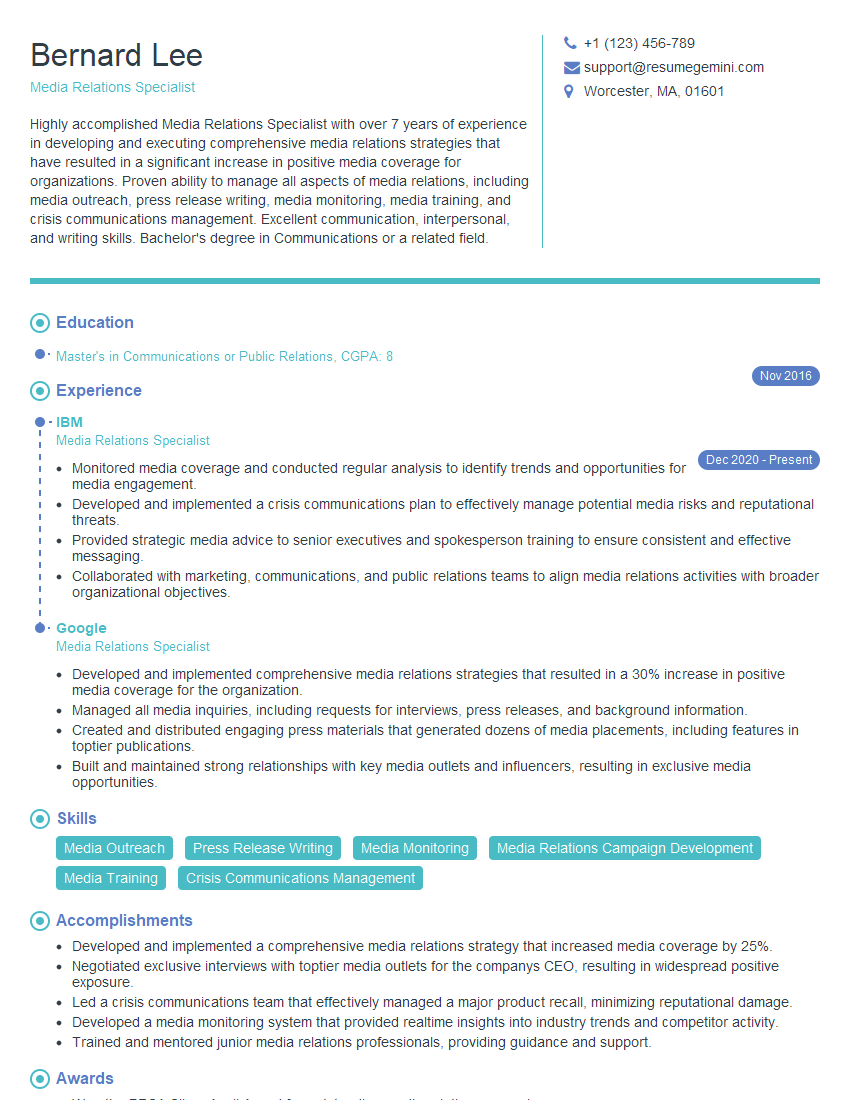
Media Relations Specialist Resume Sample
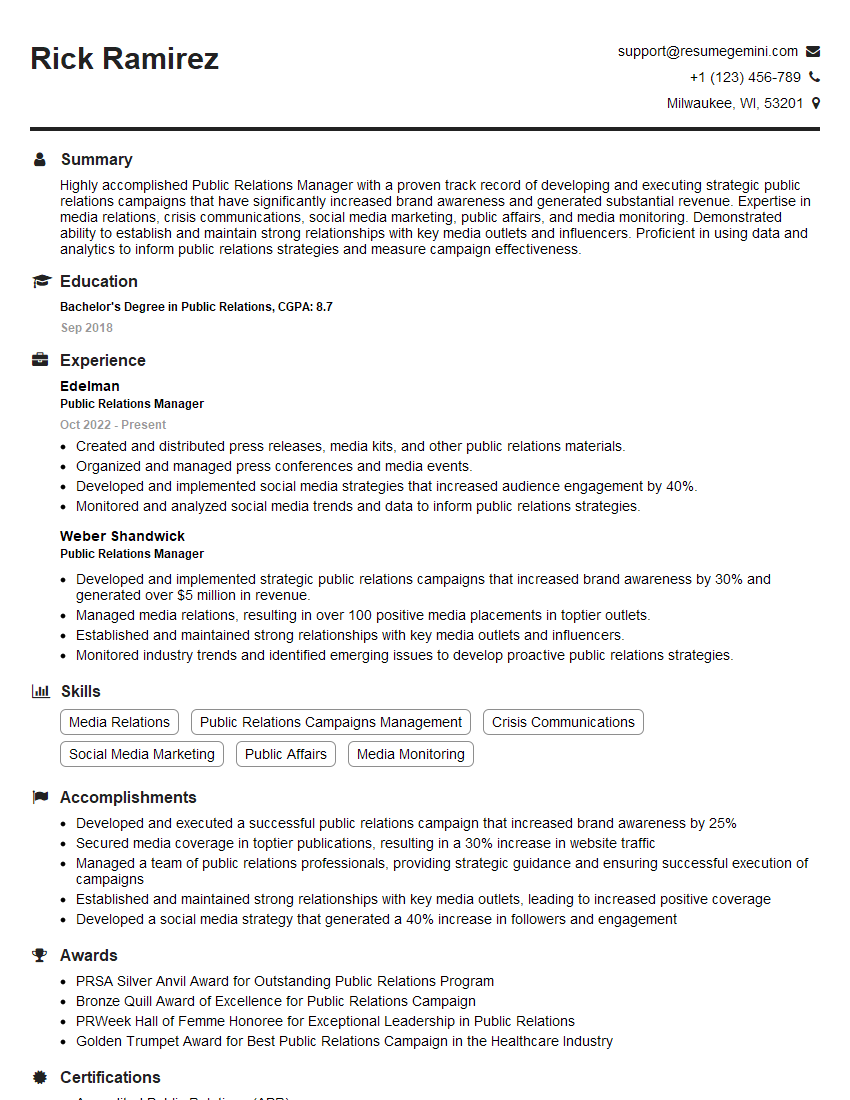
Public Relations Manager Resume Sample
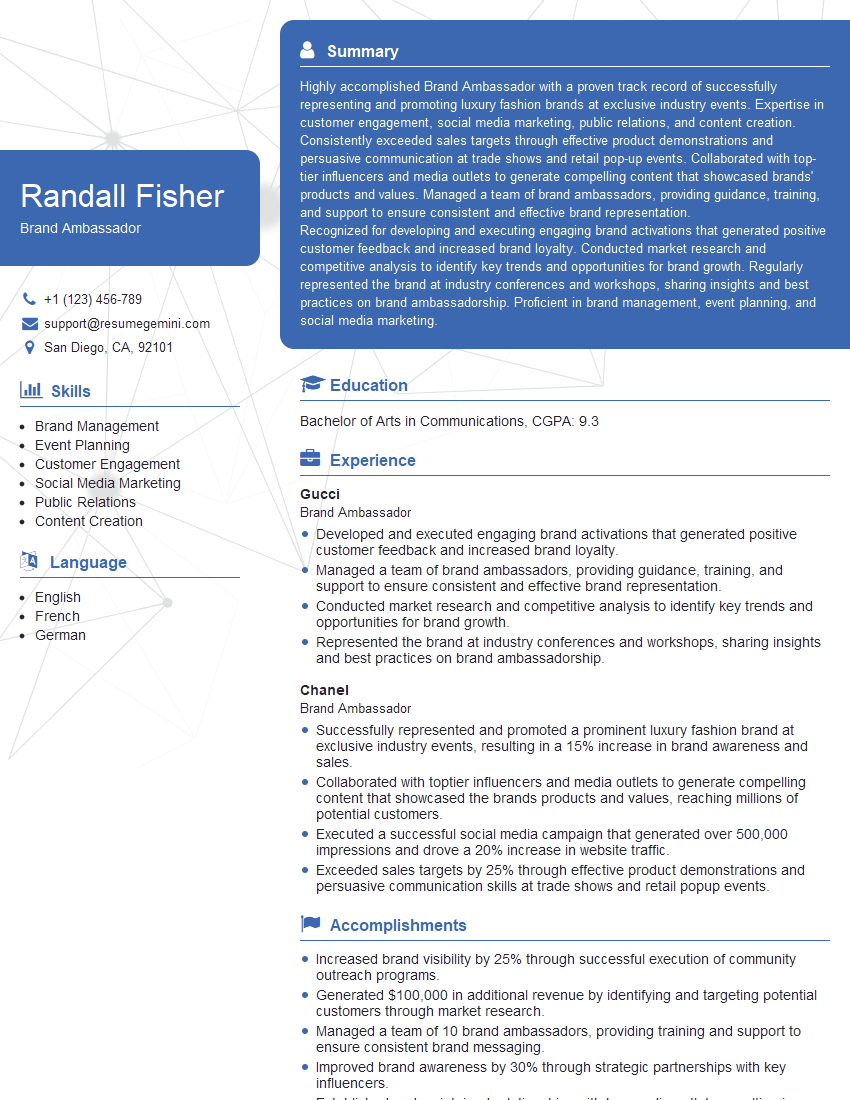
Brand Ambassador Resume Sample
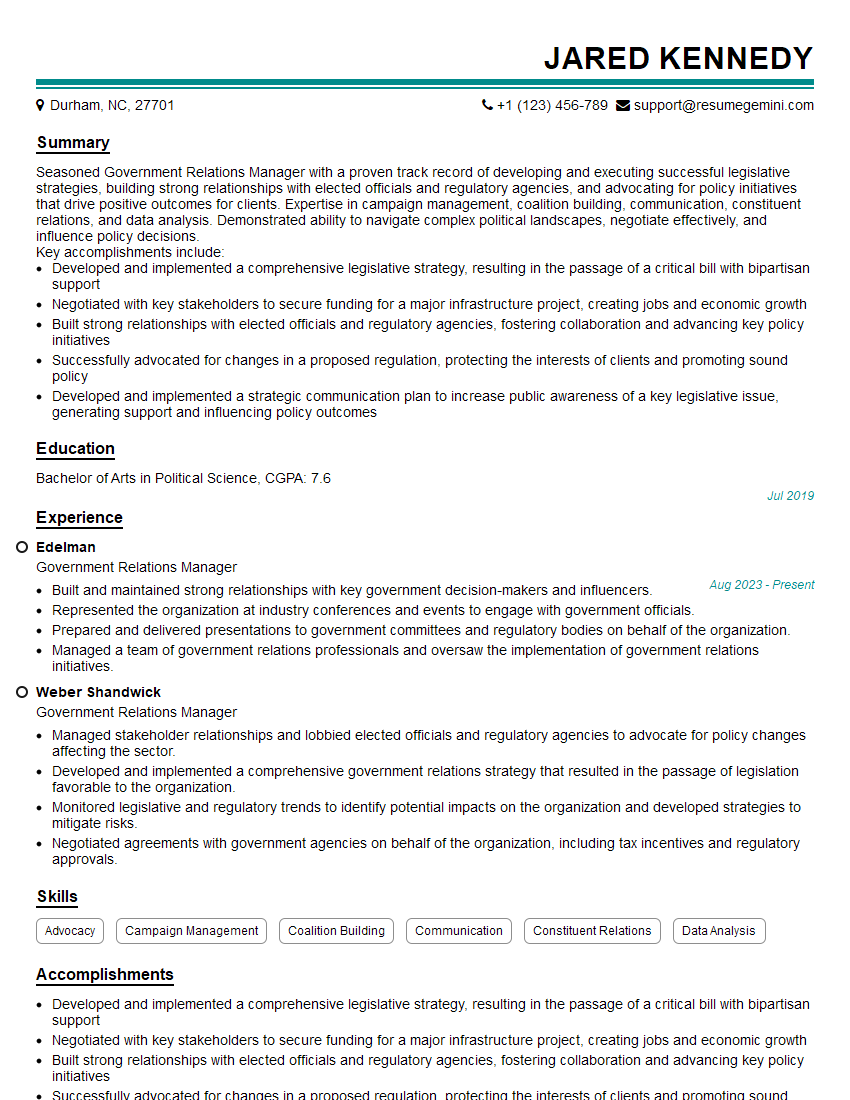
Government Relations Manager Resume Sample
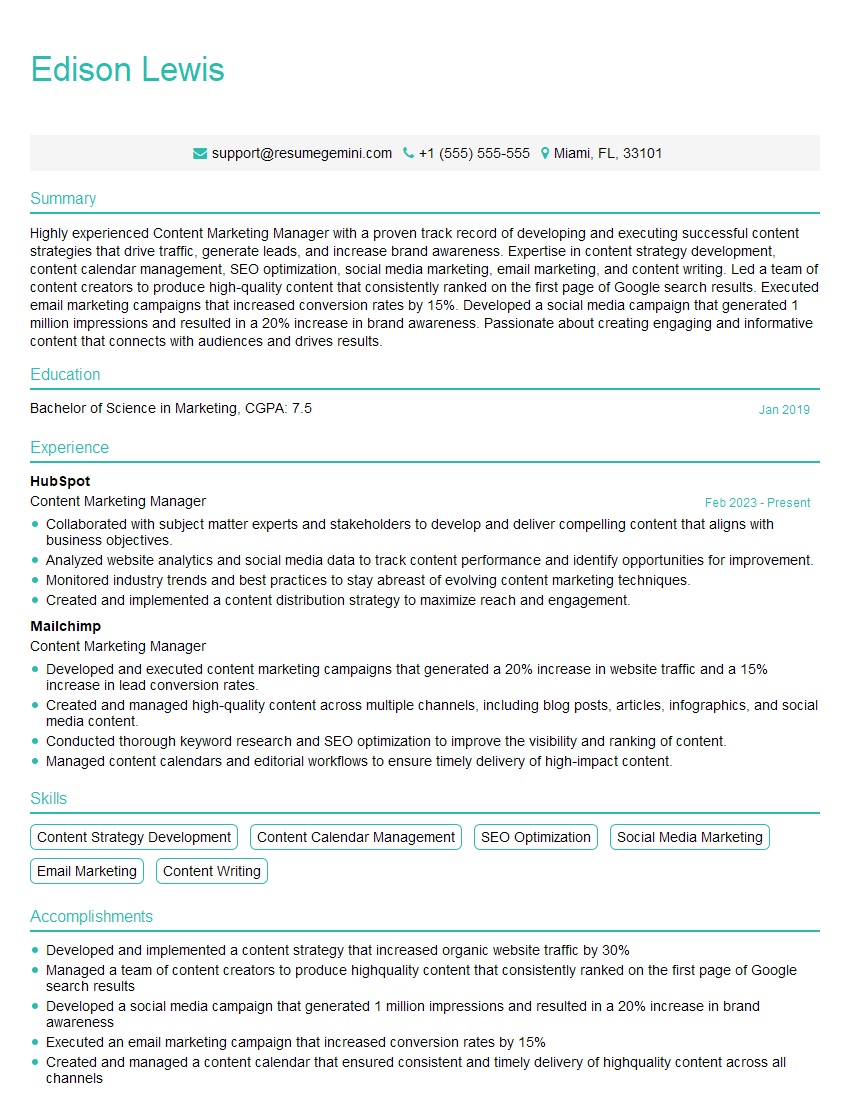
Content Marketing Manager Resume Sample
Explore more articles
Users Rating of Our Blogs
Share Your Experience
We value your feedback! Please rate our content and share your thoughts (optional).
What Readers Say About Our Blog
I Redesigned Spongebob Squarepants and his main characters of my artwork.
https://www.deviantart.com/reimaginesponge/art/Redesigned-Spongebob-characters-1223583608
IT gave me an insight and words to use and be able to think of examples
Hi, I’m Jay, we have a few potential clients that are interested in your services, thought you might be a good fit. I’d love to talk about the details, when do you have time to talk?
Best,
Jay
Founder | CEO