Preparation is the key to success in any interview. In this post, we’ll explore crucial Radio Operation interview questions and equip you with strategies to craft impactful answers. Whether you’re a beginner or a pro, these tips will elevate your preparation.
Questions Asked in Radio Operation Interview
Q 1. Explain the difference between AM and FM radio transmissions.
AM (Amplitude Modulation) and FM (Frequency Modulation) are two fundamental methods for transmitting radio signals. The key difference lies in how the audio information is encoded onto the radio wave.
In AM, the amplitude (strength) of the carrier wave is varied to represent the audio signal. Think of it like a ripple in a pond – the height of the ripple changes according to the sound. This is simple to implement but susceptible to noise and interference because atmospheric static directly affects the amplitude. Classic AM radio often has a crackling or staticky sound due to this.
FM, on the other hand, modulates the frequency of the carrier wave. The frequency shifts up and down corresponding to the audio signal. Imagine a whistle – the pitch (frequency) changes, not the loudness. This method is much more resistant to noise and interference because static affects the amplitude, not the frequency. This translates to cleaner, higher-fidelity audio compared to AM.
In a nutshell: AM changes the height of the wave, FM changes the spacing of the waves.
Q 2. Describe your experience with troubleshooting radio equipment.
Throughout my career, I’ve tackled a wide range of radio equipment troubleshooting challenges. One memorable instance involved a VHF radio system experiencing intermittent audio dropouts. After systematically checking the obvious – antenna connections, power supply, and cabling – I discovered a faulty filter capacitor within the transmitter. Replacing it resolved the issue. This highlighted the importance of methodical diagnosis, starting with the simplest components and progressively examining more complex ones.
Another time, we had a problem with a high-power HF transceiver that wouldn’t transmit. Using a signal generator and oscilloscope, I traced the fault to a failed power amplifier transistor. In both instances, I leveraged my knowledge of electronics and radio principles, using test equipment efficiently. Beyond hardware, software issues can also be significant. I’ve experience troubleshooting programming errors in radio control systems, resolving issues with incorrect frequency settings or flawed data protocols, using diagnostic software and documentation.
Q 3. What are the common causes of radio signal interference?
Radio signal interference can stem from various sources. Atmospheric noise, caused by lightning strikes and solar activity, is a natural source affecting all frequencies. Man-made noise, however, is often more significant and can originate from:
- Other radio transmissions: Signals from nearby transmitters operating on similar frequencies can cause interference, necessitating careful frequency planning and coordination.
- Electrical equipment: Appliances, motors, and power lines emit electromagnetic radiation that can interfere with radio signals, especially on lower frequencies.
- Switching power supplies: These are common in electronics and create significant noise in a broad spectrum.
- Intermodulation products: When two or more strong signals mix in a non-linear component, they create spurious signals that can fall within a desired operating frequency, often causing interference.
- Multipath propagation: This happens when radio waves reflect off buildings or other objects, causing delayed and distorted signals that interfere with the original.
Identifying the source of interference often involves careful observation, signal tracing with specialized equipment, and considering the environment’s electromagnetic landscape.
Q 4. How do you ensure radio communication security?
Ensuring radio communication security involves several layers of protection. The most basic is selecting an appropriate frequency band and adhering to regulations to minimize the chance of unintended interception.
More sophisticated methods include:
- Frequency hopping spread spectrum (FHSS): This technique rapidly changes the transmission frequency, making it difficult for unauthorized listeners to track the signal.
- Encryption: Algorithms scramble the audio or data, making it unintelligible to anyone without the decryption key. This could be at the software level or a hardware-based encryption system.
- Voice scrambling: This alters the audio signal, making it incomprehensible to those without a matching descrambler. This is less secure than proper digital encryption.
- Access control: Limiting who can transmit or receive on a given radio frequency or network via authentication mechanisms.
The choice of security measures depends on the sensitivity of the information being transmitted and the potential threats. In some cases, a combination of these techniques is necessary for robust security.
Q 5. Explain your understanding of radio frequency spectrum allocation.
Radio frequency spectrum allocation is the process of assigning specific frequency bands to different users and services. This is crucial to prevent interference and ensure efficient use of this limited resource. Governmental regulatory bodies, like the FCC in the US or Ofcom in the UK, are responsible for this allocation. The spectrum is divided into different bands, each with its characteristics affecting propagation and application. For instance, very high frequency (VHF) waves propagate well over long distances but are not suitable for high data rates, while microwave frequencies are ideal for high-bandwidth applications but have limited propagation ranges.
The allocation process considers several factors including the demand for specific frequency ranges, the technical capabilities of different technologies and propagation characteristics, and the potential for interference between different users.
Understanding spectrum allocation is crucial for radio operators to ensure that their transmissions do not interfere with others and that they operate within legal and regulatory guidelines. This involves careful frequency planning and coordination with other users.
Q 6. What is your experience with different types of antennas?
My experience encompasses a broad range of antenna types, each tailored to specific applications and frequency bands. I’ve worked with:
- Dipole antennas: These simple, yet effective, antennas are widely used for VHF and UHF applications. Their relatively simple construction makes them cost-effective for many applications. Their performance is directional.
- Yagi antennas: These directional antennas provide high gain and are commonly used for long-distance communications, especially in amateur radio and point-to-point links. They are more complex to build but offer much better performance.
- Helical antennas: Often used for circular polarization, offering less sensitivity to the orientation of the antenna. They are commonly used for satellite communications.
- Ground-plane antennas: These utilize the ground as part of the antenna system, providing a simple and efficient design for mobile applications. They are often seen on mobile radios.
- Microstrip antennas: Commonly found in mobile devices and other small electronics. These printed antennas are compact and cost-effective for integration into smaller electronic devices.
The selection of the appropriate antenna depends on factors such as the frequency band, desired gain, radiation pattern, and physical constraints.
Q 7. Describe your experience with radio system maintenance and repair.
Radio system maintenance and repair is a critical aspect of ensuring reliable communications. My experience includes preventative maintenance, such as regular inspections of equipment, cleaning of connectors, and testing of critical components to identify potential problems before they escalate. This is especially important for high-power systems where component failure can lead to significant losses. I’ve also handled corrective maintenance, troubleshooting and resolving malfunctions.
I am proficient in using various test equipment, including signal generators, spectrum analyzers, oscilloscopes, and multimeters, to diagnose and resolve faults. This includes replacing faulty components, repairing damaged cabling, and reprogramming control systems when necessary. Accurate record-keeping of maintenance activities, including parts used and repairs performed is essential to maintain regulatory compliance and ensure system performance. This allows for better future troubleshooting and ensures traceability. Preventive maintenance is key to minimizing downtime and prolonging the lifespan of the radio equipment.
Q 8. How familiar are you with radio licensing regulations?
Radio licensing regulations are incredibly important for maintaining order and preventing interference in the radio frequency spectrum. My familiarity extends to both national and international regulations, including those governing amateur, commercial, and governmental radio operations. I understand the processes involved in obtaining licenses, adhering to allocated frequencies, power restrictions, and emission standards. For example, in the US, the Federal Communications Commission (FCC) dictates these regulations, while other countries have their own equivalent bodies. Non-compliance can result in hefty fines and even license revocation. My experience includes reviewing license applications, ensuring compliance, and troubleshooting potential regulatory issues.
Q 9. Explain your experience with various modulation techniques.
I have extensive experience with various modulation techniques, which are essentially methods of encoding information onto a radio carrier wave. Common techniques include Amplitude Modulation (AM), Frequency Modulation (FM), and various digital modulation schemes like Phase-Shift Keying (PSK) and Quadrature Amplitude Modulation (QAM). AM is simple and robust against noise but less spectrally efficient. FM, often used in broadcast radio, provides better audio quality and noise immunity. Digital modulation schemes, like those used in modern cellular and Wi-Fi systems, are far more efficient, allowing for higher data rates and better error correction. I’ve worked extensively with these techniques in different contexts, including designing and implementing communication systems and troubleshooting signal quality issues. For instance, I once optimized a digital radio link using QAM modulation to improve data throughput in a challenging environment with high levels of interference.
Q 10. How do you handle emergency situations involving radio communication failures?
Emergency situations involving radio communication failures require immediate and decisive action. My approach is based on a structured framework: First, I assess the situation to determine the extent of the failure and the impact on operations. This might involve checking antenna connections, power supplies, and the radio equipment itself. Second, I implement backup communication systems. This could involve using alternate frequencies, switching to a different radio system, or employing alternative communication methods like satellite phones or messengers. Third, I initiate a full-scale investigation to determine the root cause of the failure and prevent future occurrences. This includes documenting all findings and implementing corrective actions. For example, during a severe storm, our primary radio link went down. I immediately switched to our backup satellite phone system to maintain communication and coordinated repairs while the storm subsided. Thorough post-incident analysis revealed a lightning strike had damaged the primary antenna. We then implemented additional lightning protection measures.
Q 11. Describe your experience with digital radio systems.
My experience with digital radio systems is substantial, encompassing design, implementation, and troubleshooting. These systems offer significant advantages over analog systems, including increased data capacity, improved security, and greater resilience to interference. I’ve worked with various digital radio technologies, including DMR (Digital Mobile Radio), TETRA (Terrestrial Trunked Radio), and P25 (Project 25), each with its own strengths and weaknesses depending on the application. I understand the complexities of digital signal processing, error correction coding, and network protocols used in these systems. A recent project involved migrating a legacy analog system to a DMR network, which resulted in improved voice quality, increased capacity, and enhanced security for our client.
Q 12. What is your experience with radio network planning and design?
Radio network planning and design are crucial for ensuring reliable and efficient communication. My experience involves site surveys, frequency planning, link budget calculations, and network optimization. I use specialized software to model radio wave propagation, predict coverage areas, and identify potential interference sources. The goal is to design a network that meets the specific needs of the user, considering factors like geographic location, terrain, building density, and the required level of coverage. For instance, I designed a wide-area network for a large construction project, ensuring reliable communication between crews across a vast and challenging terrain. This involved careful selection of frequencies, antenna placement, and power levels to optimize coverage while minimizing interference.
Q 13. Explain your understanding of radio propagation and its impact on signal strength.
Radio propagation refers to how radio waves travel through the atmosphere and interact with the environment. Understanding this is fundamental to designing effective radio systems. Factors influencing signal strength include frequency, distance, terrain, atmospheric conditions (temperature, humidity, and ionospheric activity), and obstacles like buildings and trees. Higher frequencies generally experience greater attenuation (signal loss) and are more susceptible to obstacles. Diffraction and reflection can cause signal to bend around or bounce off objects, affecting coverage patterns. Furthermore, multipath propagation, where signals arrive via different paths, can lead to fading and interference. In my work, I regularly use propagation models and simulation software to predict signal strength and optimize network design. I once solved a coverage problem in a mountainous region by strategically positioning repeaters to overcome signal attenuation caused by the terrain.
Q 14. How familiar are you with radio frequency identification (RFID) technology?
Radio Frequency Identification (RFID) technology is a system using radio waves to automatically identify and track tags attached to objects. My familiarity with RFID extends to its various applications, including inventory management, access control, and asset tracking. I understand the different types of RFID systems (passive, active, and semi-passive), frequency bands, and communication protocols. While not directly involved in radio communications in the same way as traditional radio systems, RFID leverages similar principles of radio wave propagation and signal processing. I’ve consulted on projects using RFID to improve warehouse efficiency by automatically tracking inventory movements, reducing manual labor and errors.
Q 15. What is your experience with testing and calibrating radio equipment?
Testing and calibrating radio equipment is crucial for ensuring optimal performance and reliable communication. My experience encompasses a wide range of procedures, from basic signal strength measurements to complex system-level testing. This includes using specialized test equipment like spectrum analyzers, signal generators, and network analyzers to verify transmitter power output, receiver sensitivity, frequency accuracy, and modulation quality. For instance, I’ve worked on calibrating VHF/UHF radios used in public safety applications, ensuring they met stringent regulatory requirements regarding spurious emissions and harmonic distortion. I also have experience with automated test equipment (ATE) for high-volume production testing of radio modules.
A typical calibration process involves comparing the radio’s performance against known standards, adjusting internal components to correct deviations, and documenting the results. I’m proficient in interpreting test results, identifying potential issues, and recommending corrective actions. For example, I once identified a faulty crystal oscillator in a high-power transmitter by observing unusual frequency drift during a routine calibration. Replacing the oscillator restored the transmitter’s performance to within the acceptable tolerances.
Career Expert Tips:
- Ace those interviews! Prepare effectively by reviewing the Top 50 Most Common Interview Questions on ResumeGemini.
- Navigate your job search with confidence! Explore a wide range of Career Tips on ResumeGemini. Learn about common challenges and recommendations to overcome them.
- Craft the perfect resume! Master the Art of Resume Writing with ResumeGemini’s guide. Showcase your unique qualifications and achievements effectively.
- Don’t miss out on holiday savings! Build your dream resume with ResumeGemini’s ATS optimized templates.
Q 16. Describe your experience with different types of radio transmitters and receivers.
My experience spans a broad spectrum of radio transmitters and receivers, including AM, FM, SSB (Single Sideband), and digital modes like DMR (Digital Mobile Radio) and P25 (Project 25). I’ve worked with everything from low-power handheld transceivers to high-power broadcast transmitters and sophisticated satellite communication equipment. In the broadcast realm, I’ve worked with both analog and digital audio processing chains, understanding the intricacies of modulation techniques and their impact on signal quality.
For example, I have hands-on experience with narrowband FM radios commonly used in two-way radio systems, as well as wideband FM radios employed in broadcasting. I understand the differences in their modulation schemes, power requirements, and antenna characteristics. Similarly, I’ve worked with HF (High Frequency) transceivers which require intricate understanding of propagation characteristics and ionospheric conditions. This experience has instilled in me a deep understanding of the underlying principles governing radio frequency (RF) transmission and reception, regardless of the specific technology involved.
Q 17. How familiar are you with various types of radio protocols?
I’m very familiar with a wide variety of radio protocols, encompassing both analog and digital communication standards. My expertise includes understanding the specifics of modulation, error correction, and data encoding techniques. This knowledge is crucial for ensuring interoperability and efficient communication between different radio systems. For example, I have experience with:
- Analog Protocols: AM, FM, SSB, CW (Morse code)
- Digital Protocols: DMR, P25, TETRA, D-STAR, and various proprietary protocols used in industrial settings.
Understanding the nuances of each protocol, including their data rates, bandwidth requirements, and error correction capabilities, is essential for selecting the appropriate system for a given application. I can also analyze communication traffic using protocol analyzers to diagnose problems and optimize system performance.
Q 18. Explain your understanding of power amplifiers used in radio systems.
Power amplifiers are essential components in radio systems, boosting the output power of the transmitter to reach desired distances. I understand the various types of power amplifiers, including class A, B, AB, C, and E, and their respective characteristics in terms of efficiency and linearity. Linearity is particularly important for applications where high fidelity is required, such as in broadcasting, to prevent distortion of the transmitted signal. Class C amplifiers are commonly used for higher power applications, but their inherent non-linearity requires careful consideration of filtering to minimize harmonic distortion.
I’ve worked with power amplifiers ranging from low-power RF transistors to high-power vacuum tube amplifiers used in broadcasting. Troubleshooting issues with power amplifiers often involves checking for component failures (such as transistors or MOSFETs), examining DC bias settings, and assessing impedance matching to minimize reflected power. Understanding the thermal management aspects of high-power amplifiers is also critical to prevent overheating and component damage. For example, I’ve solved amplifier problems by checking the cooling systems and ensuring proper airflow.
Q 19. Describe your experience with remote radio monitoring and control systems.
I have significant experience with remote radio monitoring and control systems, which allow for the supervision and management of radio equipment from a remote location. This often involves using Supervisory Control and Data Acquisition (SCADA) systems or specialized network management tools. These systems allow for remote control of transmitter parameters (such as power output and frequency), monitoring of critical operating data (such as temperature and RF output level), and automated fault detection and alarm generation.
In practical terms, this could involve setting up remote monitoring of a network of repeater stations to ensure reliable coverage, remotely adjusting transmitter power levels based on changing propagation conditions, or responding to alarms indicating a system malfunction. My experience includes working with various networking protocols, including TCP/IP, and using secure remote access methods to prevent unauthorized access to the system. Security considerations are paramount in these systems to prevent malicious access and tampering.
Q 20. What is your experience with troubleshooting audio quality issues in radio broadcasting?
Troubleshooting audio quality issues in radio broadcasting requires a systematic approach, starting with identifying the source of the problem. This often involves examining the entire audio chain, from the microphone input to the transmitter output. Common issues include noise, distortion, frequency response problems, and intermodulation distortion. Techniques for diagnosing these problems include using audio analyzers, oscilloscopes, and spectrum analyzers to isolate the point of failure.
For instance, I’ve successfully resolved issues by identifying and replacing a faulty microphone preamplifier, adjusting equalization settings to compensate for poor room acoustics, and resolving grounding issues that introduced unwanted hum and noise. Understanding the characteristics of different audio codecs and their impact on audio quality is also crucial. I have experience using advanced audio processing techniques, such as noise reduction and dynamic range compression, to optimize the quality of the transmitted signal.
Q 21. How familiar are you with satellite communication systems?
My familiarity with satellite communication systems is extensive. I understand the principles of satellite link budgets, propagation delays, and the various types of satellite orbits (e.g., geostationary, low earth orbit). I’ve worked with satellite ground stations, including uplink and downlink equipment, and have experience with satellite tracking and antenna pointing systems. My work includes understanding different modulation schemes used in satellite communication, such as QPSK (Quadrature Phase Shift Keying) and others used for higher data rates.
I’ve worked on projects involving satellite-based data transmission for remote sensing applications and disaster relief communications. This experience involved coordinating with satellite operators, configuring ground station equipment, and ensuring reliable data transmission despite the challenges of atmospheric attenuation and propagation delays. Troubleshooting satellite communication issues requires a thorough understanding of the system architecture, including the satellite transponder characteristics, ground station equipment, and the communication protocol being used.
Q 22. Explain your experience with implementing and maintaining radio communication networks.
Implementing and maintaining radio communication networks involves a multifaceted approach encompassing planning, deployment, testing, and ongoing support. My experience spans various network architectures, from simple point-to-point links to complex, multi-site systems utilizing diverse technologies like VHF, UHF, and microwave.
For example, I was instrumental in designing and deploying a trunked radio system for a large municipal public safety department. This involved site surveys to identify optimal antenna locations, frequency coordination with other users to avoid interference, and rigorous testing to ensure reliable coverage across the entire service area. Post-deployment, my responsibilities included ongoing maintenance, troubleshooting issues like signal degradation or equipment malfunctions, and implementing software updates to enhance performance and security.
- Network Planning: This includes frequency selection, site selection, power calculations, and network topology design.
- Equipment Procurement and Installation: Selecting appropriate radio equipment, antennas, and cabling, and ensuring proper installation and grounding.
- Testing and Optimization: Conducting drive tests and other measurements to ensure optimal signal strength and quality, and adjusting system parameters as needed.
- Maintenance and Troubleshooting: Regular maintenance, identifying and resolving equipment failures, and addressing signal interference issues.
Q 23. How do you prioritize tasks during a high-pressure situation involving radio communication?
Prioritizing tasks during a high-pressure situation involving radio communication hinges on a structured approach that combines swift assessment with decisive action. My approach centers on a three-step process: Assess, Prioritize, Act.
Assess: Quickly identify the nature and severity of the issue. Is it a widespread outage affecting critical operations, or a minor equipment malfunction? Who is impacted? What are the potential consequences of inaction?
Prioritize: Using a triage system based on the urgency and impact of each task, prioritize addressing the most critical issues first. Life safety concerns always come first. For example, if a critical communication line is down during an emergency response, restoring that line takes precedence over resolving a less urgent problem, such as a minor signal strength issue in a less-critical area.
Act: Assign resources effectively, communicate clearly to all stakeholders, and execute the prioritized tasks efficiently and effectively. Regular updates are essential to keep everyone informed and to adapt to evolving circumstances.
Q 24. What is your understanding of cybersecurity threats related to radio communication?
Cybersecurity threats to radio communication systems are increasingly prevalent. These threats can range from unauthorized access and eavesdropping to denial-of-service attacks and manipulation of transmitted data. Many modern radio systems are now IP-based, making them vulnerable to the same cybersecurity risks that affect other networked devices.
- Unauthorized Access: Malicious actors could gain unauthorized access to the radio system’s control software or data networks, potentially allowing them to monitor or disrupt communications.
- Eavesdropping: Unencrypted communications are vulnerable to eavesdropping, potentially compromising sensitive information.
- Denial-of-Service (DoS) Attacks: DoS attacks can overwhelm the radio system, rendering it unusable.
- Data Manipulation: Malicious actors could manipulate transmitted data, potentially causing miscommunication or accidents.
Mitigation strategies include robust access controls, encryption of communication signals and data, regular software updates, and intrusion detection systems.
Q 25. Describe your experience working with different radio frequency bands.
My experience encompasses a wide range of radio frequency bands, including VHF (Very High Frequency), UHF (Ultra High Frequency), and microwave frequencies. Each band has its own characteristics and applications. VHF and UHF are commonly used for land mobile radio (LMR) systems, while microwave frequencies are often used for point-to-point communication links, especially over longer distances.
For instance, I’ve worked extensively with UHF systems in public safety applications, ensuring clear and reliable communication between emergency responders in dense urban environments. In another project, I was involved in the design and deployment of a microwave link to connect two remote sites, where the use of microwave enabled a cost-effective solution and the ability to transmit large amounts of data.
Understanding the propagation characteristics of each band (e.g., signal attenuation, diffraction, multipath) is crucial for efficient system design and reliable operation.
Q 26. How familiar are you with radio frequency interference (RFI) mitigation techniques?
Radio frequency interference (RFI) is a significant challenge in radio communication, causing signal degradation or complete loss of communication. My experience includes implementing several RFI mitigation techniques.
- Site Surveys: Careful site surveys help identify potential sources of interference before deploying equipment.
- Proper Antenna Placement and Shielding: Strategically positioning antennas and using shielding to minimize interference.
- Frequency Coordination: Working with other users to avoid using overlapping frequencies.
- Filtering: Using filters to remove unwanted frequencies.
- Directional Antennas: Using directional antennas to focus the signal and minimize interference from other directions.
For example, in one project, we used specialized filtering techniques to reduce interference from nearby industrial equipment on a critical communication link used by a major utility company.
Q 27. Explain your experience with using test equipment such as spectrum analyzers and signal generators.
I am proficient in using various test equipment, including spectrum analyzers and signal generators, essential for testing and troubleshooting radio communication systems.
Spectrum Analyzers: These instruments are used to analyze the frequency spectrum, identify sources of interference, and measure signal strength and quality. For example, I’ve used a spectrum analyzer to pinpoint the source of interference causing signal degradation on a VHF radio system and then implemented solutions to resolve the interference.
Signal Generators: These devices generate signals of known characteristics, used for testing the receiver sensitivity and selectivity of radios and to simulate real world RF conditions. I have used signal generators to verify the performance of newly installed radio equipment and ensure it meets specified standards.
Proficiency with these tools is vital for effective troubleshooting and system optimization.
Q 28. How do you stay up-to-date with the latest advancements in radio technology?
Staying current with the latest advancements in radio technology is crucial in this rapidly evolving field. My approach is multi-pronged:
- Industry Publications and Journals: I regularly read industry publications such as specialized magazines and online journals to keep abreast of new technologies and trends.
- Conferences and Workshops: Attending industry conferences and workshops provides opportunities to learn from experts, network with colleagues, and see demonstrations of new technologies.
- Professional Organizations: Membership in professional organizations, such as the IEEE (Institute of Electrical and Electronics Engineers), provides access to valuable resources, publications, and networking opportunities.
- Online Courses and Webinars: Online learning platforms offer a wealth of courses and webinars on various aspects of radio technology, allowing for continuous professional development.
- Vendor Training: Participating in vendor-provided training on specific radio equipment and technologies.
This proactive approach ensures I maintain a strong understanding of cutting-edge advancements and best practices in radio technology.
Key Topics to Learn for Radio Operation Interview
- Radio Frequency (RF) Principles: Understanding basic RF concepts like frequency, wavelength, propagation, and modulation techniques is fundamental. Consider how these principles impact signal transmission and reception.
- Transmission and Reception Systems: Familiarize yourself with the components of a radio system, including transmitters, receivers, antennas, and associated equipment. Be prepared to discuss their functions and interoperability.
- Troubleshooting and Maintenance: Radio operation often involves diagnosing and resolving technical issues. Practice identifying common problems and describing your approach to troubleshooting and preventative maintenance.
- Regulatory Compliance: Understand the relevant regulations and licensing requirements for radio operation in your region. This includes frequency allocation, power limits, and operational procedures.
- Safety Procedures: Demonstrate your awareness of safety protocols related to radio equipment and high-powered transmissions. Discuss how to mitigate potential risks and ensure safe operating practices.
- Digital Signal Processing (DSP): Depending on the role, understanding basic DSP concepts and their application in modern radio systems could be advantageous. Consider exploring topics like digital modulation and signal coding.
- Emergency Procedures: Be ready to discuss your understanding of emergency communication protocols and your ability to react effectively in critical situations.
Next Steps
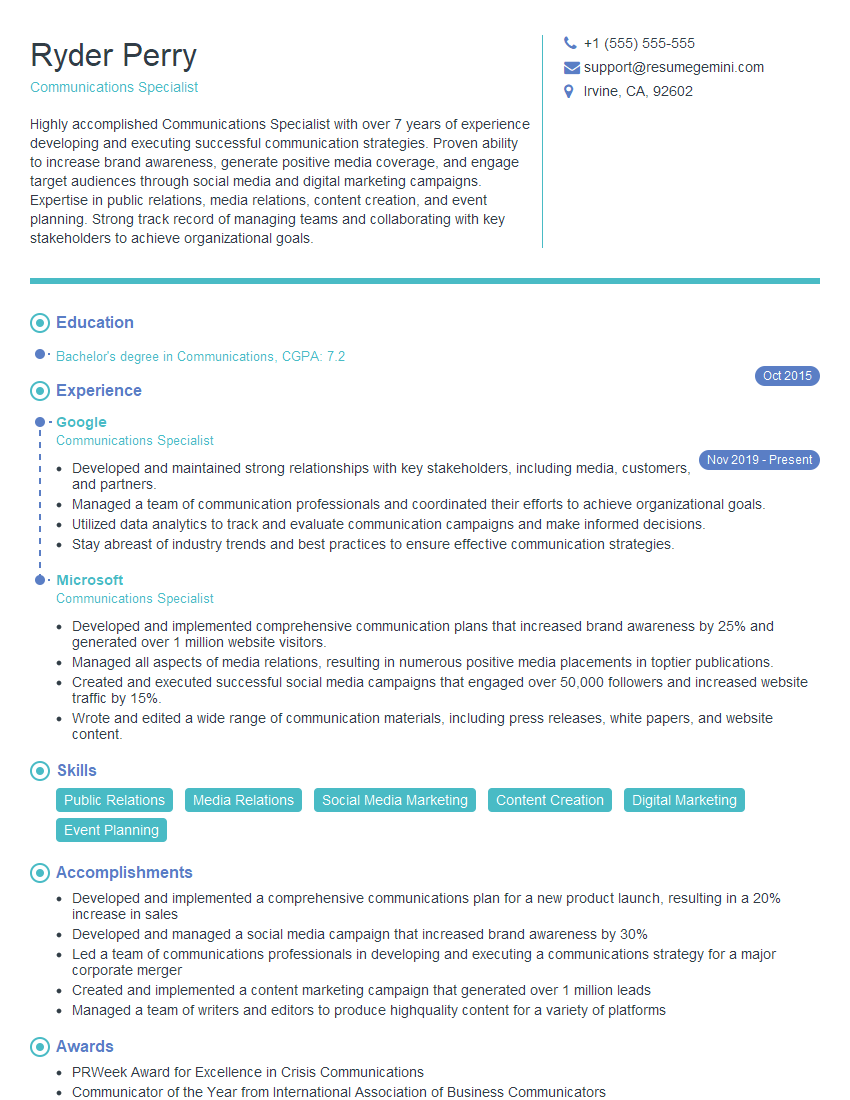
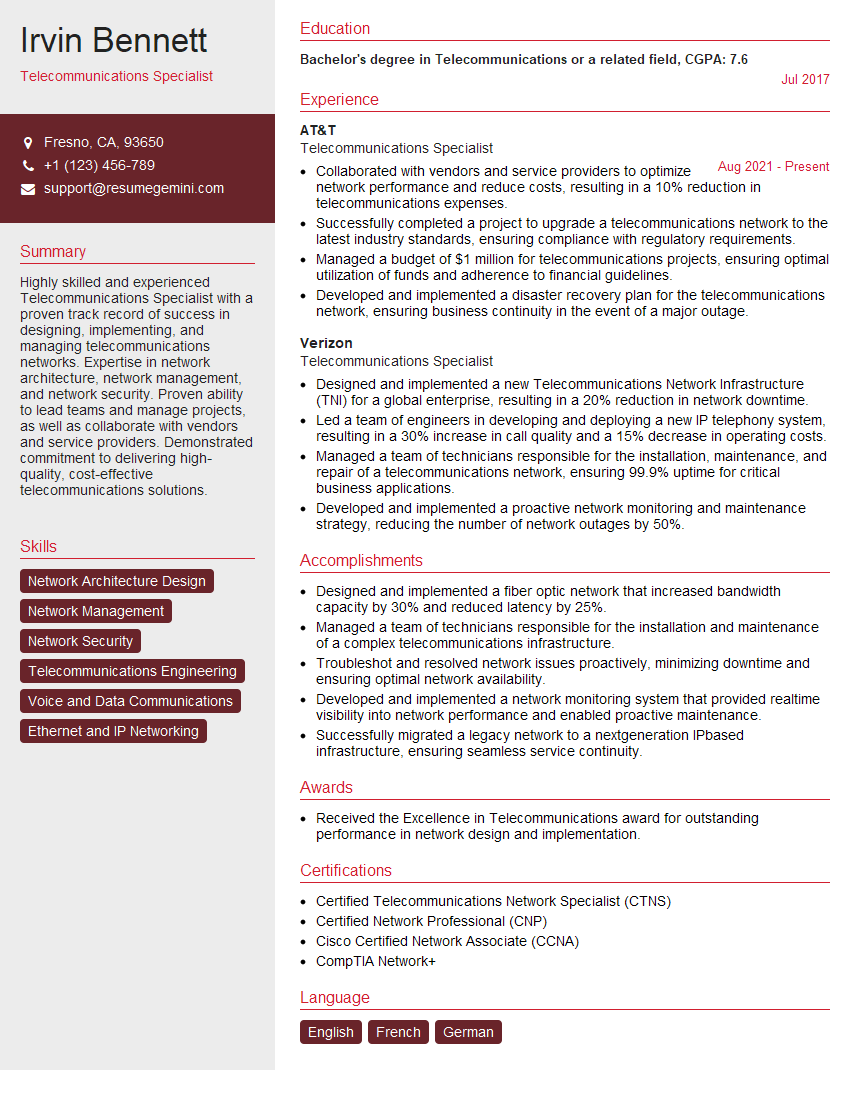
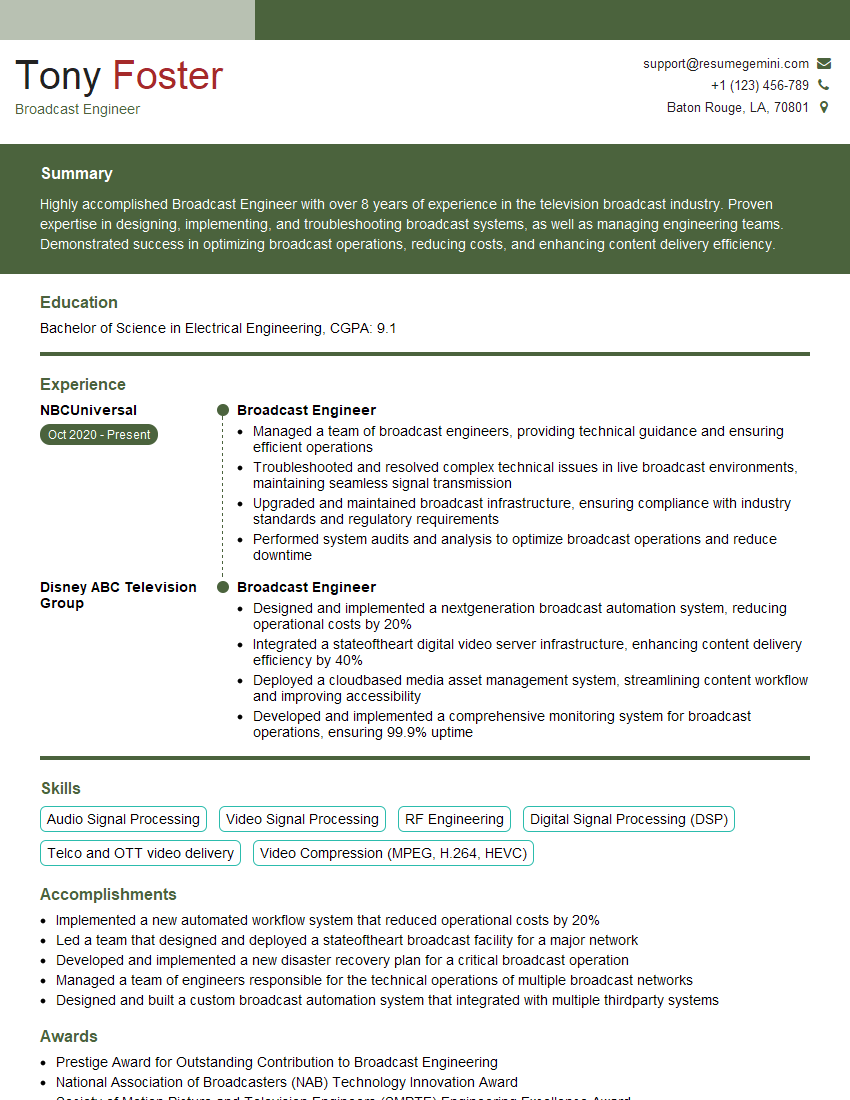
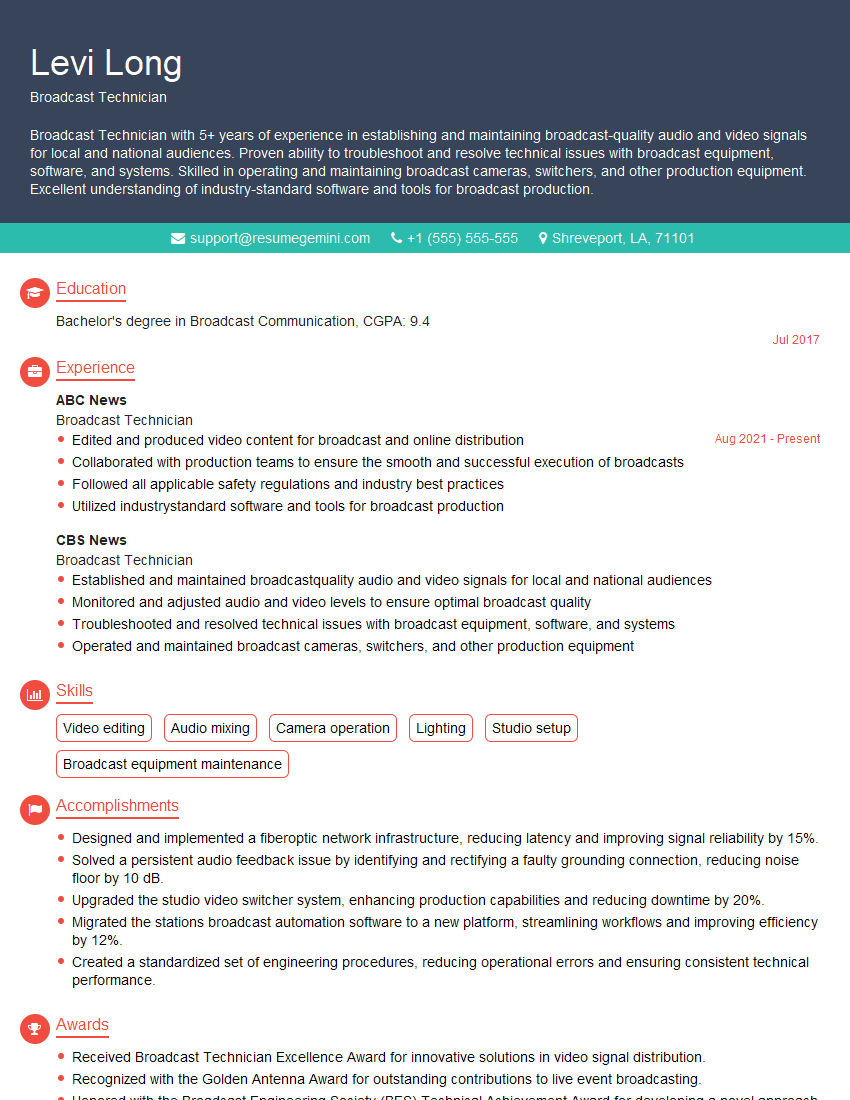
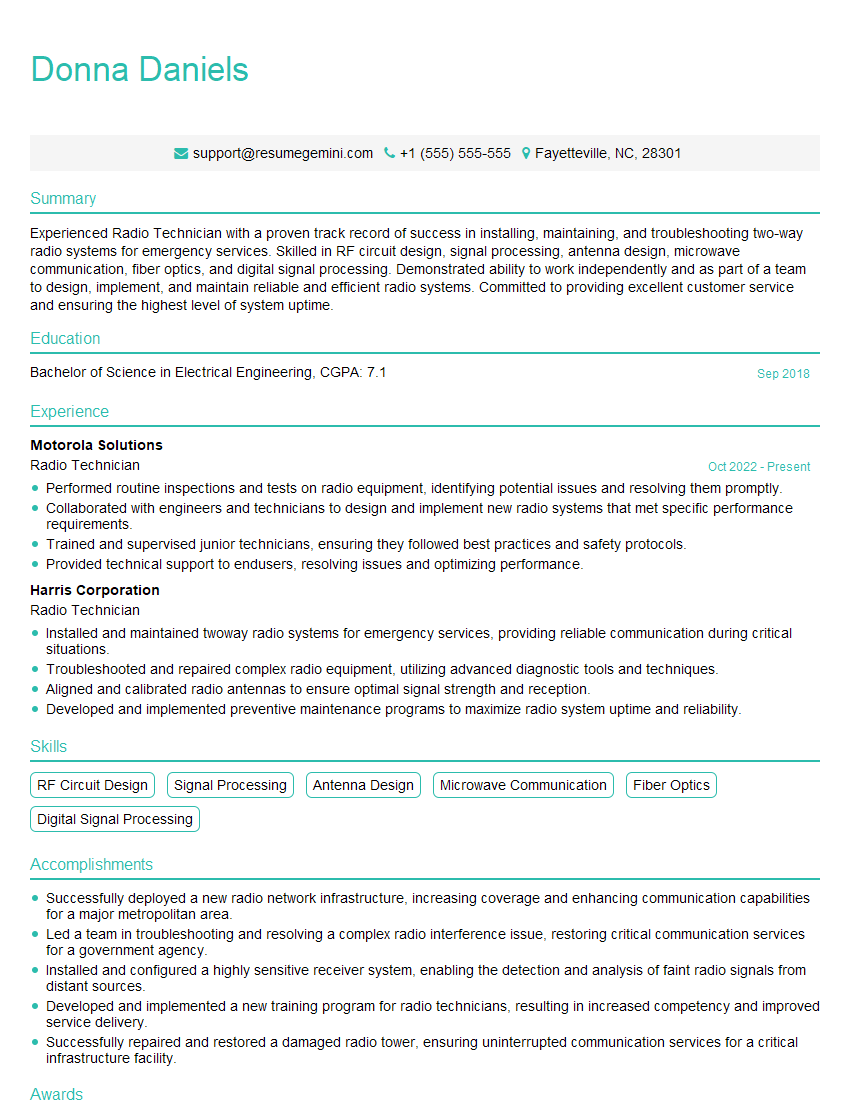
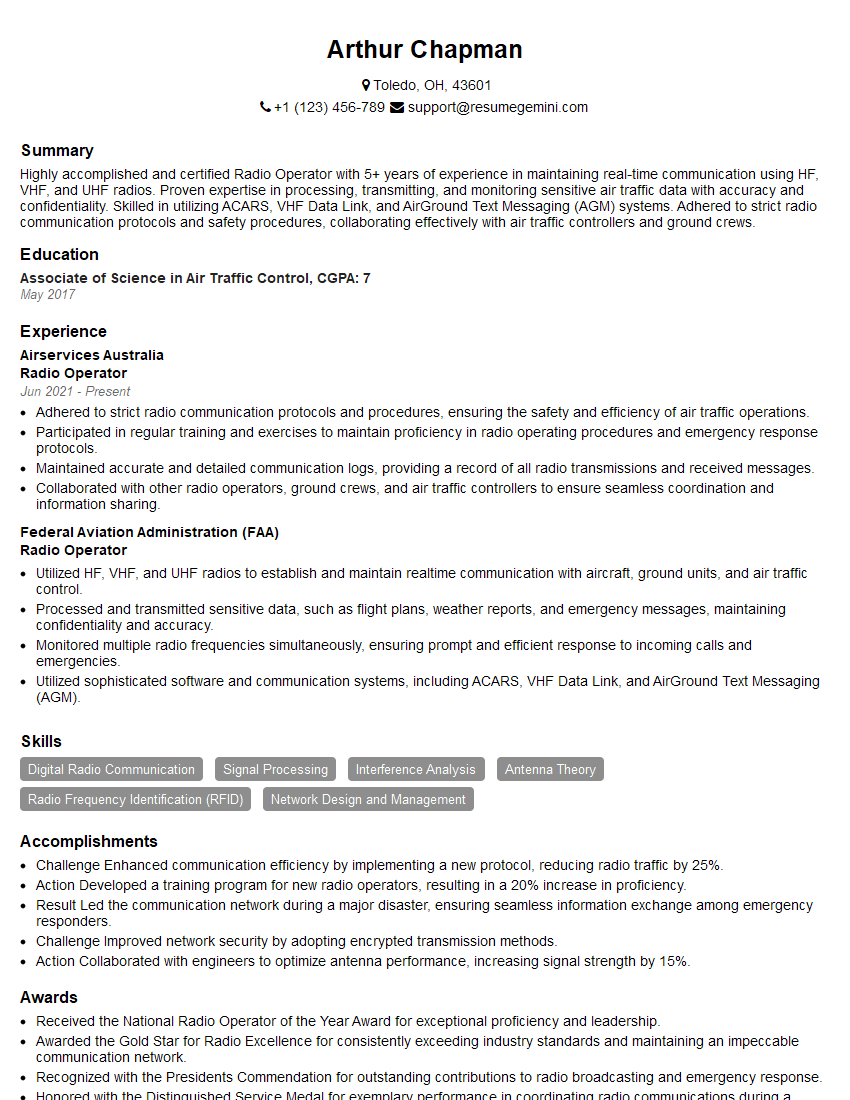
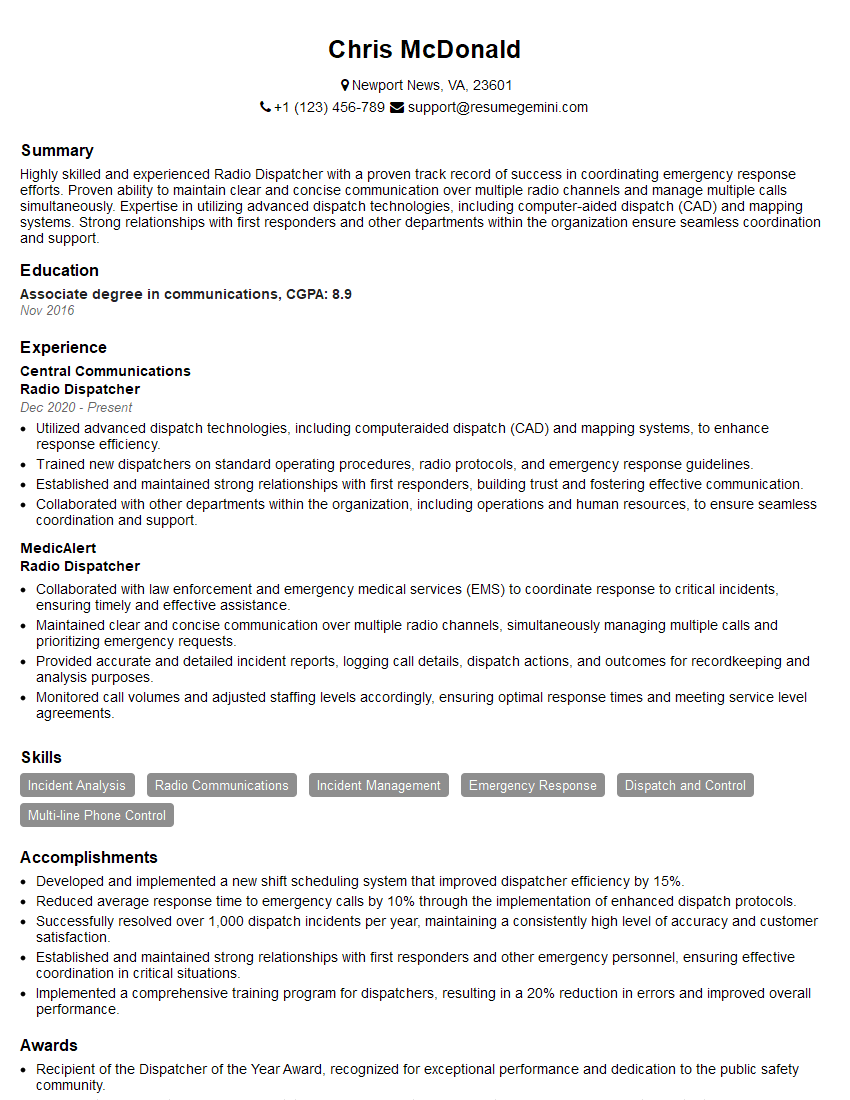
Mastering radio operation opens doors to a dynamic and rewarding career, offering opportunities for growth in diverse fields. A strong foundation in these key areas will significantly enhance your interview performance and career prospects. To increase your chances of landing your dream job, crafting an ATS-friendly resume is crucial. ResumeGemini is a trusted resource to help you build a professional and impactful resume that showcases your skills and experience effectively. Examples of resumes tailored to Radio Operation are available to help guide you. Take the next step towards your successful career in radio operation!
Explore more articles
Users Rating of Our Blogs
Share Your Experience
We value your feedback! Please rate our content and share your thoughts (optional).
What Readers Say About Our Blog
I Redesigned Spongebob Squarepants and his main characters of my artwork.
https://www.deviantart.com/reimaginesponge/art/Redesigned-Spongebob-characters-1223583608
IT gave me an insight and words to use and be able to think of examples
Hi, I’m Jay, we have a few potential clients that are interested in your services, thought you might be a good fit. I’d love to talk about the details, when do you have time to talk?
Best,
Jay
Founder | CEO