Preparation is the key to success in any interview. In this post, we’ll explore crucial Reading Promotion and Literacy interview questions and equip you with strategies to craft impactful answers. Whether you’re a beginner or a pro, these tips will elevate your preparation.
Questions Asked in Reading Promotion and Literacy Interview
Q 1. Describe your experience with different reading assessment tools.
Throughout my career, I’ve utilized a range of reading assessment tools, each offering unique insights into a student’s reading abilities. These tools span various aspects of reading, from phonological awareness to fluency and comprehension.
- Informal Reading Inventories (IRIs): These are invaluable for assessing a student’s reading level across multiple areas. I use IRIs to determine their independent, instructional, and frustration reading levels, guiding my instructional decisions. For example, an IRI might reveal a student struggling with decoding multisyllabic words, prompting me to focus on morphology instruction.
- Standardized Tests: While standardized tests provide a broader picture of a student’s reading performance compared to their peers, they also offer limited qualitative data. I use them cautiously, supplementing the results with more in-depth assessments like IRIs.
- Curriculum-Based Measurements (CBMs): CBMs provide ongoing monitoring of student progress using short, simple reading passages. I use these to track growth over time and identify students who may need additional support. For instance, consistent low scores on CBM probes can indicate a need for targeted interventions.
- Running Records: These are observational tools used to analyze a student’s oral reading performance, providing detailed insights into their accuracy, fluency, and self-correction strategies. For instance, frequent pauses or substitutions might highlight difficulties with specific phonics patterns.
Selecting the appropriate tool depends heavily on the student’s needs and the specific information I’m seeking. I often combine multiple assessment methods to gain a comprehensive understanding of their reading profile.
Q 2. How do you differentiate instruction to meet the diverse needs of learners?
Differentiating instruction is crucial for catering to the diverse learning needs within a classroom. It’s not about providing different material, but rather tailoring the *delivery* of instruction to meet individual learning styles and needs.
- Grouping Strategies: I frequently use flexible grouping, creating small groups based on students’ specific needs. This might involve homogeneous grouping (students with similar needs) for targeted instruction or heterogeneous grouping (students with diverse abilities) for collaborative learning.
- Differentiated Tasks: I offer tiered assignments, allowing students to access the same learning objectives but at varying levels of complexity. For example, a comprehension activity might involve summarizing a text for one group, analyzing character motivations for another, and creating a presentation for a more advanced group.
- Choice in Activities: Offering students choices empowers them and increases engagement. This could be as simple as allowing them to choose a reading book from a selection that aligns with their interests and reading level or selecting from different project formats to demonstrate understanding.
- Assistive Technology: For students with specific learning needs, assistive technology plays a vital role. This includes text-to-speech software, graphic organizers, and specialized keyboards.
Effective differentiation requires ongoing assessment and adjustment. Regular monitoring of student progress allows me to adapt my strategies, ensuring that every student has the opportunity to succeed.
Q 3. Explain your approach to teaching phonics.
My approach to teaching phonics is systematic and explicit, focusing on building a strong foundation in decoding and encoding skills. I don’t rely on just rote memorization; I emphasize understanding the relationships between letters and sounds.
- Explicit Instruction: I explicitly teach phonics skills, modeling correct pronunciation and blending sounds. I use multi-sensory approaches, incorporating visual aids, kinesthetic activities, and oral practice.
- Systematic Progression: I follow a carefully sequenced phonics program, introducing letter sounds in a logical order, starting with simple consonant and vowel sounds before moving to more complex digraphs, blends, and vowel teams. For example, I introduce short vowels before long vowels and consonant blends before digraphs.
- Decodable Texts: I utilize decodable readers, which are books containing only the letter sounds students have already learned. This allows them to practice decoding words and build confidence in their reading skills.
- Assessment and Feedback: Regular assessments allow me to monitor student progress and identify any areas where they need additional support. I provide targeted interventions based on individual needs.
My approach is designed to make phonics learning engaging and effective, enabling students to become confident and skilled readers.
Q 4. What strategies do you use to promote reading comprehension?
Promoting reading comprehension involves teaching students a range of strategies to understand and interpret texts. It’s not just about decoding words but also understanding their meaning within context.
- Before Reading Activities: I use pre-reading activities like activating prior knowledge, setting a purpose for reading, and previewing the text to build students’ anticipation and comprehension.
- During Reading Activities: During reading, I encourage students to use strategies like visualizing, questioning, clarifying, inferring, and summarizing. Modeling these strategies explicitly is crucial.
- After Reading Activities: Post-reading activities include discussions, retellings, graphic organizers, and writing activities to solidify understanding and promote critical thinking. Examples might include creating story maps, comparing characters, or writing alternate endings.
- Think-Alouds: I often use think-alouds to model the thought processes involved in comprehension. This allows students to see how proficient readers approach and understand a text.
- Explicit Instruction in Comprehension Strategies: I teach students various comprehension strategies explicitly, ensuring they understand how and when to use them. For instance, I explicitly teach students how to identify the main idea and supporting details.
By using a multifaceted approach, I aim to equip students with a toolkit of strategies that empowers them to become thoughtful and engaged readers.
Q 5. How do you incorporate technology to enhance reading instruction?
Technology can significantly enhance reading instruction, offering engaging and interactive learning experiences. However, it’s vital to use technology purposefully and strategically, not just for the sake of using it.
- Interactive Whiteboards: Interactive whiteboards allow for collaborative learning activities, enabling students to actively participate in lessons. We can use them for interactive games, vocabulary building, and text analysis.
- Educational Apps and Software: Many apps and software programs offer engaging reading activities and games tailored to different reading levels. These programs can provide personalized instruction and immediate feedback.
- E-books and Digital Texts: E-books offer accessibility and diverse features such as text-to-speech, adjustable font sizes, and built-in dictionaries. These features can be particularly beneficial for students with learning disabilities.
- Online Reading Communities: Online platforms can connect students with peers and provide opportunities for collaborative reading and discussion. This fosters a sense of community and encourages active engagement with texts.
Technology should be used as a tool to enhance, not replace, effective teaching practices. It’s essential to carefully select appropriate tools and integrate them seamlessly into the curriculum. For example, an app that provides feedback on fluency might complement the work students do on running records.
Q 6. Describe your experience with implementing a reading intervention program.
I’ve had extensive experience implementing a variety of reading intervention programs, tailoring my approach to the specific needs of the students involved. My approach always includes careful assessment and planning.
For example, I implemented a small-group intervention program for students struggling with fluency. We started with an assessment to determine each student’s current fluency level. Based on this, I created small groups of students with similar needs. The intervention focused on repeated readings of decodable texts, paired reading, and explicit instruction in fluency strategies. We also used technology, such as fluency-building apps, to supplement instruction and track progress.
Another example involved implementing a comprehensive literacy intervention program for students struggling across various aspects of reading. This required a multi-tiered system of support (MTSS) approach, where students received differentiated instruction based on their needs. Students requiring more intense support participated in small-group interventions, while others received targeted support within the general education classroom. Regular progress monitoring and data analysis were essential to making informed adjustments and ensuring the program’s effectiveness. Successful implementation required collaboration with colleagues, administrators and most importantly, constant attention to the individual needs of each student. The key to success lies in careful planning, ongoing assessment and effective data-driven decision making.
Q 7. How do you collaborate with parents and families to support literacy development?
Collaborating with parents and families is crucial for supporting literacy development. Open communication and shared goals are paramount.
- Regular Communication: I maintain regular contact with parents through newsletters, emails, phone calls, and parent-teacher conferences. These interactions provide updates on student progress, highlight successes, and discuss areas for improvement.
- Home-School Connections: I encourage parents to actively participate in their children’s reading journey by setting aside dedicated time for reading, creating a supportive home environment, and engaging in literacy-related activities together. Providing suggestions for engaging books and strategies to work on at home are helpful.
- Parent Workshops and Training: Hosting workshops or providing training sessions empowers parents with strategies and resources to support their children’s literacy development at home. Topics such as effective reading strategies and understanding assessment results are particularly useful.
- Shared Reading Goals: Establishing shared reading goals with parents aligns home and school efforts, ensuring consistency and maximizing impact. For example, parents and teachers might agree on a specific number of books or minutes of reading each week.
Building strong relationships with parents through transparent communication and collaborative efforts fosters a supportive environment that contributes significantly to students’ reading success.
Q 8. How do you assess student progress and adjust instruction accordingly?
Assessing student progress in reading involves a multifaceted approach that goes beyond simple test scores. I use a combination of formative and summative assessments to gain a holistic understanding of each student’s strengths and weaknesses.
- Formative Assessments: These ongoing assessments, such as reading conferences, informal observations during independent reading time, and quick fluency checks, provide real-time feedback on student progress. For example, during a reading conference, I might observe a student struggling with specific phonics patterns or comprehension strategies. This informs my immediate instructional decisions.
- Summative Assessments: Standardized tests, benchmark assessments, and end-of-unit tests offer a broader picture of student achievement against established learning targets. These data points help me track growth over time and identify areas where additional support may be needed. Analyzing the patterns of errors on these assessments is crucial.
Based on this assessment data, I adjust my instruction by:
- Differentiation: Providing varied levels of support based on individual needs. This might involve small group instruction, individualized reading programs, or targeted interventions focusing on specific skills.
- Re-teaching: Revisiting concepts that students struggle with, using different teaching methods or materials to ensure understanding.
- Enrichment: Providing advanced challenges and opportunities for students who demonstrate mastery.
Regularly monitoring and adjusting instruction is a continuous cycle, ensuring that every student receives the appropriate support to reach their full reading potential. Imagine it like a gardener tending to their plants – some need more water, some need more sunlight, and some need pest control. Similarly, my instruction is tailored to the unique needs of each student.
Q 9. What are some common challenges faced in promoting reading, and how do you address them?
Promoting reading faces various challenges, including:
- Lack of Access to Books: Many students, particularly from low-income families, lack access to age-appropriate and engaging reading materials at home. This limits their opportunities for independent reading practice.
- Digital Distractions: The prevalence of screens and digital entertainment often competes with reading for students’ attention. It’s crucial to foster a healthy balance and demonstrate the intrinsic rewards of reading.
- Learning Disabilities: Students with dyslexia or other reading difficulties may require specialized instruction and support to succeed. Early identification and intervention are key.
- Lack of Motivation: Some students may lack intrinsic motivation to read, requiring engaging strategies to foster a love for reading.
Addressing these challenges requires a multi-pronged approach:
- Providing Access: Establishing classroom libraries, partnering with community organizations to provide books to students, and utilizing digital resources can help bridge the access gap.
- Creating Engaging Learning Environments: Minimizing distractions, promoting active reading strategies, and creating a classroom culture that values reading can significantly increase student engagement. We can leverage interactive whiteboards, read-alouds, and collaborative projects.
- Implementing Evidence-Based Interventions: For students with learning difficulties, employing structured literacy programs, multi-sensory learning techniques, and assistive technology can make a significant difference. Collaboration with specialists is essential.
- Fostering Intrinsic Motivation: Providing choice in reading materials, incorporating student interests, and celebrating reading successes can help nurture a love of reading.
Addressing these challenges requires a proactive and collaborative approach involving teachers, parents, and the community.
Q 10. How do you foster a love of reading in students?
Fostering a love of reading is about creating positive associations with books and reading. It’s not just about teaching skills; it’s about igniting a passion.
- Model Enthusiasm: Sharing my own love for reading by discussing books I’m reading, recommending titles, and creating a vibrant reading atmosphere in the classroom.
- Choice and Voice: Providing students with choices in their reading materials, allowing them to select books that align with their interests, and giving them opportunities to share their thoughts and opinions about what they’re reading. Book talks and student-led discussions can be very effective.
- Engaging Activities: Incorporating creative and interactive activities like reader’s theater, book clubs, collaborative projects, and creating book trailers to make reading more fun and engaging. We can even use technology to create interactive learning experiences.
- Creating a Positive and Supportive Environment: Building a classroom community where reading is valued and celebrated, where students feel comfortable sharing their thoughts and feelings about books without judgment.
- Connecting Reading to Real Life: Discussing how reading applies to everyday life, showing how stories and books can help us understand the world and ourselves better.
Essentially, I aim to create a classroom where students see reading as a source of enjoyment, knowledge, and empowerment.
Q 11. What are your strategies for working with students who have reading difficulties?
Working with students who have reading difficulties requires a personalized approach that addresses their specific needs. This necessitates a thorough understanding of their challenges and the implementation of targeted interventions.
- Assessment: First, a comprehensive assessment is crucial to identify the specific areas of difficulty (phonics, fluency, vocabulary, comprehension). This might involve using standardized tests, informal reading inventories, and observations.
- Differentiated Instruction: Tailoring instruction to meet the individual student’s needs, focusing on their specific weaknesses while building upon their strengths. This can involve explicit and systematic phonics instruction, fluency practice through repeated readings, vocabulary building activities, and comprehension strategy instruction.
- Multi-Sensory Learning: Incorporating various learning modalities (visual, auditory, kinesthetic) to make learning more engaging and effective. Examples include using manipulatives, interactive games, and technology-based tools.
- Collaboration: Working closely with specialists, such as reading interventionists, special education teachers, and parents, to provide comprehensive support. This collaborative approach is key to effective intervention.
- Positive Reinforcement: Focusing on celebrating successes and providing positive feedback to build confidence and motivation. Even small improvements deserve recognition.
Remember, patience and persistence are key when working with students who have reading difficulties. Progress might be gradual, but consistent effort will yield positive results.
Q 12. Explain your understanding of various reading theories (e.g., balanced literacy).
My understanding of reading theories informs my instructional practices. Balanced literacy is a framework that integrates various approaches to reading instruction, aiming to develop proficient readers. It encompasses:
- Phonemic Awareness: The ability to hear and manipulate the sounds of language. Activities like rhyming, segmentation, and blending are vital.
- Phonics: Understanding the relationship between letters and sounds. Explicit and systematic phonics instruction is essential for decoding.
- Fluency: The ability to read accurately, quickly, and with expression. Repeated reading and fluency practice are crucial.
- Vocabulary: Developing a rich vocabulary is essential for comprehension. We introduce new words in context, encourage dictionary use, and use vocabulary building games.
- Comprehension: The ability to understand and make meaning from text. This includes teaching comprehension strategies such as predicting, questioning, visualizing, and summarizing.
- Writing: Writing strengthens reading skills and allows students to express their understanding. Writing and reading are intertwined processes.
Other important theories include:
- Sociocultural Theory: Emphasizes the role of social interaction and cultural context in reading development.
- Schema Theory: Highlights the importance of prior knowledge in understanding new information.
These theories complement each other, and I draw upon them to create a comprehensive and engaging reading program for my students.
Q 13. How do you select appropriate reading materials for diverse learners?
Selecting appropriate reading materials for diverse learners requires careful consideration of their individual needs, interests, and reading levels. I use several strategies:
- Differentiated Reading Levels: Providing a range of reading materials that cater to different reading levels, ensuring that all students have access to books that are appropriately challenging yet accessible. This might involve using leveled readers, guided reading books, and independent reading choices from a diverse range of genres.
- Diverse Genres and Themes: Offering a wide selection of books that represent various genres (fiction, non-fiction, poetry, graphic novels) and themes (culture, history, science, fantasy), catering to students’ diverse interests. This ensures that all students can find books that resonate with them.
- Culturally Relevant Materials: Including books that reflect the cultural backgrounds and experiences of all students, promoting inclusivity and fostering a sense of belonging. This increases student engagement and makes the learning more relevant and meaningful.
- Accessibility: Providing books in different formats, including audiobooks, large print books, and ebooks, to meet the needs of students with diverse learning styles and disabilities. This supports learning styles and accessibility needs.
- Regular Assessment and Monitoring: Continuously assessing students’ reading levels and interests to ensure that their reading materials remain appropriate and engaging. Adjustments are made based on progress and evolving interests.
A well-curated collection of diverse and accessible reading materials fosters a classroom culture of reading for pleasure and enriches the learning experience for all.
Q 14. How do you build strong relationships with students and their families?
Building strong relationships with students and their families is fundamental to creating a supportive and effective learning environment. I prioritize open communication and mutual respect:
- Regular Communication: Maintaining consistent communication with families through newsletters, emails, phone calls, and parent-teacher conferences. This keeps families informed about their child’s progress and allows for collaborative problem-solving.
- Positive Interactions: Creating a positive and welcoming classroom environment where students feel safe, respected, and valued. This fosters trust and open communication.
- Parent Involvement: Encouraging parent involvement in their child’s reading development through activities like reading at home, attending school events, and participating in classroom activities. We can host reading nights, workshops, or family literacy events.
- Individualized Attention: Taking the time to get to know each student and their family individually, understanding their unique needs, interests, and backgrounds. This personal connection strengthens the bond.
- Celebrating Successes: Celebrating both academic and personal achievements, reinforcing positive behavior and fostering a sense of accomplishment. Recognizing efforts builds confidence and encourages persistence.
Building these relationships requires genuine care, effort, and a commitment to fostering collaborative partnerships. A strong home-school connection is crucial for student success.
Q 15. Describe your experience with data-driven decision-making in literacy instruction.
Data-driven decision-making in literacy instruction is crucial for maximizing student outcomes. It involves using assessment data to inform instructional choices, monitor progress, and adapt teaching strategies. Instead of relying on intuition alone, I leverage data to pinpoint areas where students are struggling and tailor interventions accordingly.
For example, if benchmark assessments reveal a significant gap in students’ comprehension of complex sentences, I’ll adjust my instruction to focus on explicit grammar instruction and sentence diagramming, incorporating more practice with complex text structures. I might also use diagnostic tools like reading fluency assessments to identify specific decoding challenges, guiding me towards targeted phonics interventions. Regular formative assessments – quick checks for understanding during lessons – provide ongoing feedback, allowing me to make adjustments in real-time. I regularly analyze this data using spreadsheets and educational software to track trends and identify patterns, helping me refine my approach and ensure that my instruction aligns with the specific needs of my students.
This data-driven approach has allowed me to significantly improve student literacy scores, as demonstrated by the consistent upward trend in reading comprehension scores on standardized tests. The key is to use data not just to evaluate but to actively shape and improve the learning experience.
Career Expert Tips:
- Ace those interviews! Prepare effectively by reviewing the Top 50 Most Common Interview Questions on ResumeGemini.
- Navigate your job search with confidence! Explore a wide range of Career Tips on ResumeGemini. Learn about common challenges and recommendations to overcome them.
- Craft the perfect resume! Master the Art of Resume Writing with ResumeGemini’s guide. Showcase your unique qualifications and achievements effectively.
- Don’t miss out on holiday savings! Build your dream resume with ResumeGemini’s ATS optimized templates.
Q 16. What professional development activities have you pursued to enhance your literacy expertise?
Throughout my career, I’ve actively sought professional development opportunities to refine my literacy expertise. This includes attending workshops and conferences focusing on evidence-based literacy practices, such as the International Literacy Association (ILA) conferences. I’ve also participated in intensive training programs on specific literacy methodologies, like explicit phonics instruction and differentiated instruction. Moreover, I’ve actively engaged in online courses and webinars offered by organizations such as Reading Rockets and Scholastic, which keep me up-to-date on the latest research and best practices.
Beyond formal training, I actively participate in professional learning communities (PLCs) with fellow educators. These collaborative groups provide a valuable forum for sharing best practices, discussing challenges, and collectively seeking solutions. For example, we recently collaborated on developing a new intervention program for struggling readers, drawing upon our combined expertise and using data from our classrooms to refine our approach. This continuous learning ensures that my instruction remains relevant, effective, and informed by the latest research and evidence-based strategies.
Q 17. How do you monitor and evaluate the effectiveness of your literacy programs?
Monitoring and evaluating the effectiveness of literacy programs is an ongoing process involving multiple layers of assessment. It’s not enough to simply teach; we must meticulously track student progress and use the data to refine our strategies.
- Formative Assessments: These are ongoing, low-stakes assessments integrated into daily instruction. Examples include exit tickets, quick writes, and informal observations. These provide immediate feedback, enabling me to adjust my teaching in real-time.
- Summative Assessments: These are larger-scale assessments, such as unit tests, benchmark tests, and standardized tests, used to evaluate student learning at the end of a unit or period. They provide a broader picture of student achievement.
- Qualitative Data: I also collect qualitative data through observations of student engagement, anecdotal notes, and student work samples. These provide rich insights into students’ thinking processes and learning styles that quantitative data alone cannot capture.
I analyze this data using various methods, including calculating average scores, identifying trends in student performance, and comparing results across different groups. This analysis informs revisions to my teaching strategies and curriculum adjustments. For instance, if summative assessments reveal consistent weakness in a particular skill, I will adjust my instruction to provide more targeted practice and support in that area.
Q 18. How do you adapt your teaching methods to accommodate different learning styles?
Accommodating diverse learning styles is fundamental to effective literacy instruction. I use a multi-sensory approach, incorporating a variety of teaching methods to cater to visual, auditory, and kinesthetic learners.
- Visual Learners: I use graphic organizers, visual aids, and colorful charts to support comprehension and vocabulary development.
- Auditory Learners: I incorporate discussions, read-alouds, and audiobooks into my lessons, allowing students to process information through listening.
- Kinesthetic Learners: I incorporate hands-on activities, such as role-playing, dramatic readings, and interactive games, to make learning engaging and memorable.
Furthermore, I differentiate instruction by providing varied levels of support and challenge. This involves creating learning activities and assignments that cater to students at different reading levels. For example, I may provide guided reading groups for students needing extra support, while offering independent reading projects for advanced learners. This personalized approach ensures that all students are challenged and supported appropriately, maximizing their learning potential.
Q 19. Describe your experience working with students from diverse backgrounds.
Working with students from diverse backgrounds is a rewarding aspect of my profession. I recognize that students bring unique experiences, perspectives, and learning styles to the classroom. I create a culturally responsive classroom where students feel safe, valued, and respected. This involves incorporating diverse literature that reflects the students’ backgrounds and experiences into my curriculum. For example, I ensure that the books we read represent a range of cultures, languages, and perspectives.
I also actively seek to understand the cultural and linguistic backgrounds of my students, recognizing that these factors can significantly influence their learning. I collaborate with families to understand their home language and literacy practices, integrating this knowledge into my teaching strategies. I may also use bilingual resources or incorporate students’ home languages into classroom activities, fostering a sense of inclusivity and celebrating the richness of diversity.
For instance, I had a student whose first language was Spanish. By incorporating Spanish vocabulary and stories into our classroom activities, I was able to build her confidence and connect her prior knowledge to new concepts. This not only improved her reading skills but also fostered a stronger sense of belonging in the classroom.
Q 20. How do you integrate writing into your reading instruction?
Reading and writing are inextricably linked; they are reciprocal processes that support each other. I integrate writing into my reading instruction in several ways to enhance comprehension and communication skills.
- Response Journals: Students write reflections on the books they read, analyzing characters, themes, and plot.
- Creative Writing Prompts: I use prompts based on reading material to encourage creative expression and deeper engagement with the text.
- Summarizing and Paraphrasing Activities: Students practice summarizing chapters or entire books, which solidifies their understanding of the text.
- Compare and Contrast Essays: Students compare and contrast different characters, books, or themes.
These activities strengthen students’ reading comprehension by requiring them to process information actively and articulate their understanding in writing. It also develops essential writing skills, such as planning, drafting, revising, and editing, creating well-rounded literacy skills.
Q 21. What are your strategies for supporting students’ vocabulary development?
Vocabulary development is crucial for reading comprehension. I employ various strategies to support students’ vocabulary growth, focusing on both direct and indirect instruction.
- Direct Instruction: I explicitly teach new vocabulary words, providing definitions, synonyms, antonyms, and sentence examples. I use visual aids, such as pictures and diagrams, to help students visualize the meaning of words.
- Contextual Vocabulary: I encourage students to infer the meaning of unknown words from context clues within the text.
- Word Walls: I maintain a word wall of frequently encountered vocabulary words, encouraging students to review and use these words in their writing and conversations.
- Vocabulary Notebooks: Students maintain notebooks where they record new vocabulary words, their definitions, and example sentences. They also draw pictures or create other visual representations of the words.
- Reading Wide Variety of Texts: Exposure to rich vocabulary through diverse reading materials is invaluable. I encourage students to read widely, exploring different genres and authors.
By combining direct and indirect instruction, I aim to create a rich vocabulary-learning environment where students actively engage with language, expanding their understanding and fluency.
Q 22. Describe your experience with using formative and summative assessments in literacy.
Formative and summative assessments are crucial for effective literacy instruction. Formative assessments, like quick checks, exit tickets, and observations, are ongoing evaluations that inform teaching *during* the learning process. They help me identify students’ strengths and weaknesses in real-time, allowing for immediate adjustments to my instruction. Summative assessments, such as unit tests or end-of-year exams, provide a broader overview of student learning at the *conclusion* of a unit or course. They measure mastery of specific skills and knowledge.
For example, during a reading comprehension unit, I might use a quick formative assessment like a think-pair-share activity to gauge student understanding of a key concept before moving on. This allows me to address misconceptions immediately. Later, a summative assessment, such as a written test on the entire unit, would demonstrate their overall comprehension.
- Formative Examples: Running records, anecdotal notes, observation checklists, informal reading inventories.
- Summative Examples: Standardized tests, benchmark assessments, end-of-unit projects, portfolio assessments.
Using both types of assessments creates a balanced approach, ensuring I’m both monitoring progress continually and evaluating overall achievement.
Q 23. How do you address the needs of students with dyslexia or other learning disabilities?
Addressing the needs of students with dyslexia or other learning disabilities requires a multifaceted approach centered around differentiation and individualized instruction. I firmly believe in creating a supportive and inclusive classroom environment where all learners feel valued and can succeed.
For students with dyslexia, this means incorporating specific strategies like multi-sensory techniques (combining visual, auditory, and kinesthetic learning), utilizing assistive technologies (e.g., text-to-speech software, audiobooks), and providing ample opportunities for oral reading and response. I also work closely with specialists, such as special education teachers and learning support staff, to develop Individualized Education Programs (IEPs) that cater to their unique needs.
For other learning disabilities, I adapt my instruction by offering varied learning materials (e.g., graphic organizers, visual aids), providing choices in assignments, and adjusting the pace and complexity of tasks. Regular communication with parents and guardians is key to ensuring a cohesive approach across all learning environments.
For example, a student with dysgraphia might benefit from using a computer for writing assignments, while a student with ADHD might need frequent breaks and structured tasks to stay focused. The key is to remain flexible and adapt my teaching methods to meet the specific needs of each individual student.
Q 24. What is your philosophy on literacy instruction?
My philosophy on literacy instruction is grounded in the belief that reading is a multifaceted skill that develops best through engaging and meaningful experiences. I embrace a balanced literacy approach, incorporating various instructional methods to cater to different learning styles and needs.
This includes:
- Phonemic awareness instruction: Developing an understanding of sounds and their relationship to letters.
- Phonics instruction: Teaching the relationship between letters and sounds to decode words.
- Fluency practice: Developing the ability to read accurately, quickly, and with expression.
- Vocabulary development: Expanding students’ knowledge of words and their meanings.
- Reading comprehension strategies: Teaching students how to understand and interpret texts.
- Writing and speaking activities: Connecting reading with other language arts.
I believe in fostering a love of reading through exposure to a wide variety of genres and texts. I create a classroom library with diverse books, encourage independent reading, and provide opportunities for students to discuss their reading with peers and teachers. The goal is not just to teach skills, but to cultivate a lifelong love of reading and literacy.
Q 25. Describe your experience with creating and implementing literacy curriculum.
My experience in creating and implementing literacy curricula involves a collaborative and data-driven approach. I start by analyzing standards and benchmarks to determine the essential skills and knowledge students need to acquire. I then select high-quality instructional materials, aligning them with those standards.
I incorporate a variety of engaging activities and strategies into the curriculum, ensuring it caters to different learning styles and needs. This might include using technology, incorporating movement and hands-on activities, or providing opportunities for collaborative learning. I always ensure there’s a balance between explicit instruction and independent practice.
For example, in a recent curriculum development project, I incorporated project-based learning activities where students researched and presented on a topic of their choice, culminating in a creative writing piece or presentation. This allowed students to apply their literacy skills in a meaningful and engaging way. The feedback gathered informed future iterations of the curriculum.
Regular monitoring and assessment throughout the implementation phase allows for adjustments based on student performance and feedback. This iterative process ensures the curriculum remains relevant and effective.
Q 26. How do you use data to inform your instructional decisions?
Data is indispensable in informing my instructional decisions. I utilize a variety of assessment data, including formative and summative assessments, to monitor student progress and identify areas where additional support may be needed. This data helps me make evidence-based decisions about my teaching practices.
For example, if formative assessments reveal that a significant portion of my students are struggling with a particular phonics skill, I can adjust my instruction to provide more targeted support in that area. This might involve providing additional practice activities, using different teaching methods, or offering one-on-one tutoring.
I also analyze data from standardized tests and benchmark assessments to track students’ overall literacy development and identify trends across the class. This helps me make informed decisions about curriculum adjustments and resource allocation.
Data analysis involves more than just looking at numbers. I consider the context of the data, including individual student needs and classroom dynamics. I use data visualization tools and collaborative discussions with colleagues to interpret the data and plan effective interventions.
Q 27. How do you promote a positive and supportive learning environment for reading?
Creating a positive and supportive learning environment for reading is crucial for fostering a love of literacy. This involves creating a classroom culture where students feel safe to take risks, make mistakes, and share their thinking without judgment.
I accomplish this by:
- Modeling a love of reading: Sharing my own reading experiences and enthusiasm with students.
- Creating a classroom library with diverse books: Providing students with access to a wide variety of genres and authors.
- Providing choice and autonomy: Allowing students to select books that interest them.
- Encouraging collaborative reading activities: Providing opportunities for students to discuss their reading with peers.
- Celebrating student successes: Recognizing and acknowledging student effort and achievement.
- Providing positive feedback: Focusing on students’ strengths and areas for growth.
- Using flexible grouping strategies: Allowing students to work independently, in pairs, or in small groups.
I believe that a positive and supportive learning environment is essential for students to develop their reading skills and become confident, lifelong readers. This is as important as the direct teaching of reading skills themselves.
Key Topics to Learn for Reading Promotion and Literacy Interview
- Early Literacy Development: Understanding the stages of reading development in young children, including phonological awareness, phonics, fluency, vocabulary, and comprehension.
- Reading Interventions and Strategies: Familiarize yourself with evidence-based interventions for struggling readers, such as differentiated instruction, systematic phonics instruction, and multisensory learning techniques. Be prepared to discuss how you would adapt your approach for diverse learners.
- Promoting a Love of Reading: Explore effective strategies for fostering a positive attitude towards reading in children and adults, including creating engaging reading environments, using diverse materials, and incorporating technology.
- Literacy Assessment and Evaluation: Understand various assessment methods used to evaluate reading skills and identify areas for improvement. This includes both formal and informal assessment tools.
- Community Engagement and Collaboration: Discuss your experience (or potential approach) to collaborating with parents, teachers, librarians, and community organizations to promote literacy. Consider the importance of building strong relationships to support reading initiatives.
- Program Development and Implementation: Familiarize yourself with the process of designing and implementing effective literacy programs, including needs assessment, program evaluation, and budget management. Be ready to share examples of successful programs you’ve been involved with or developed.
- Technology Integration in Literacy: Explore how technology can be used effectively to enhance reading instruction and engagement. Consider e-books, educational apps, and online resources. Discuss the ethical considerations of technology use in literacy.
- Advocacy and Policy: Understand the role of advocacy in promoting literacy at the local, state, and national levels. Be prepared to discuss current literacy challenges and potential solutions.
Next Steps
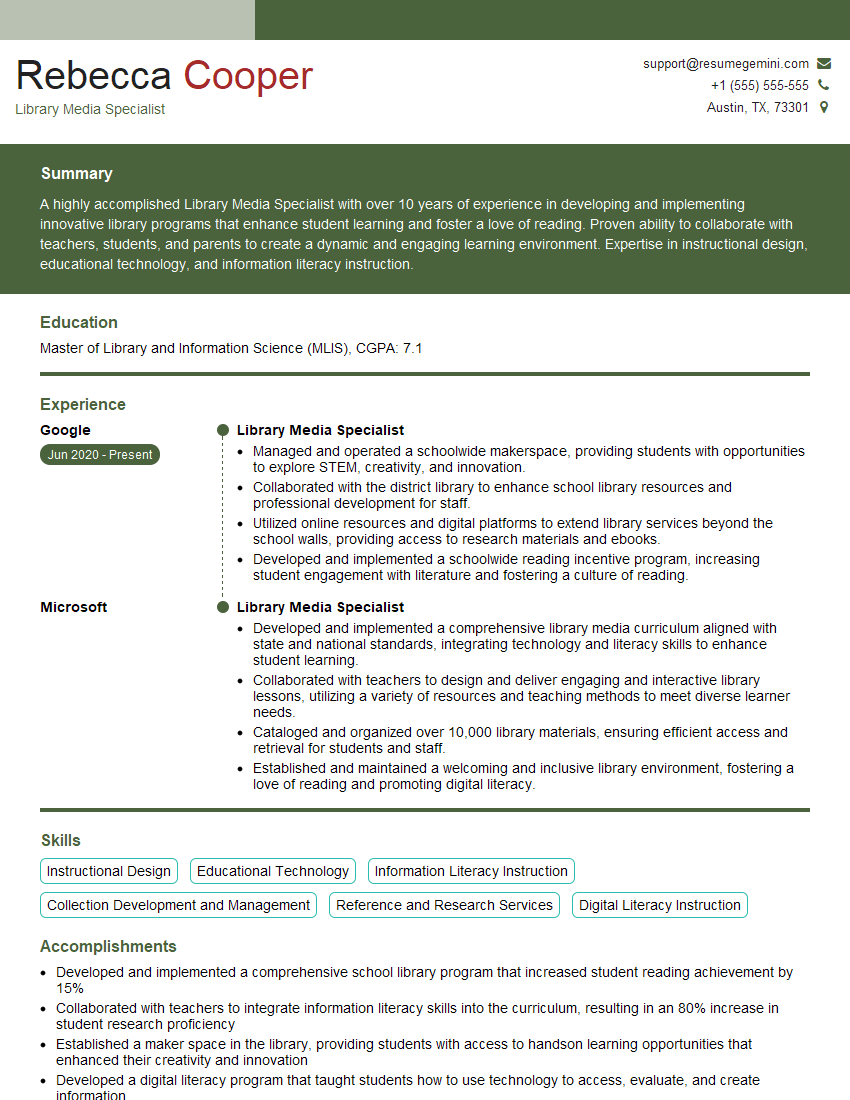
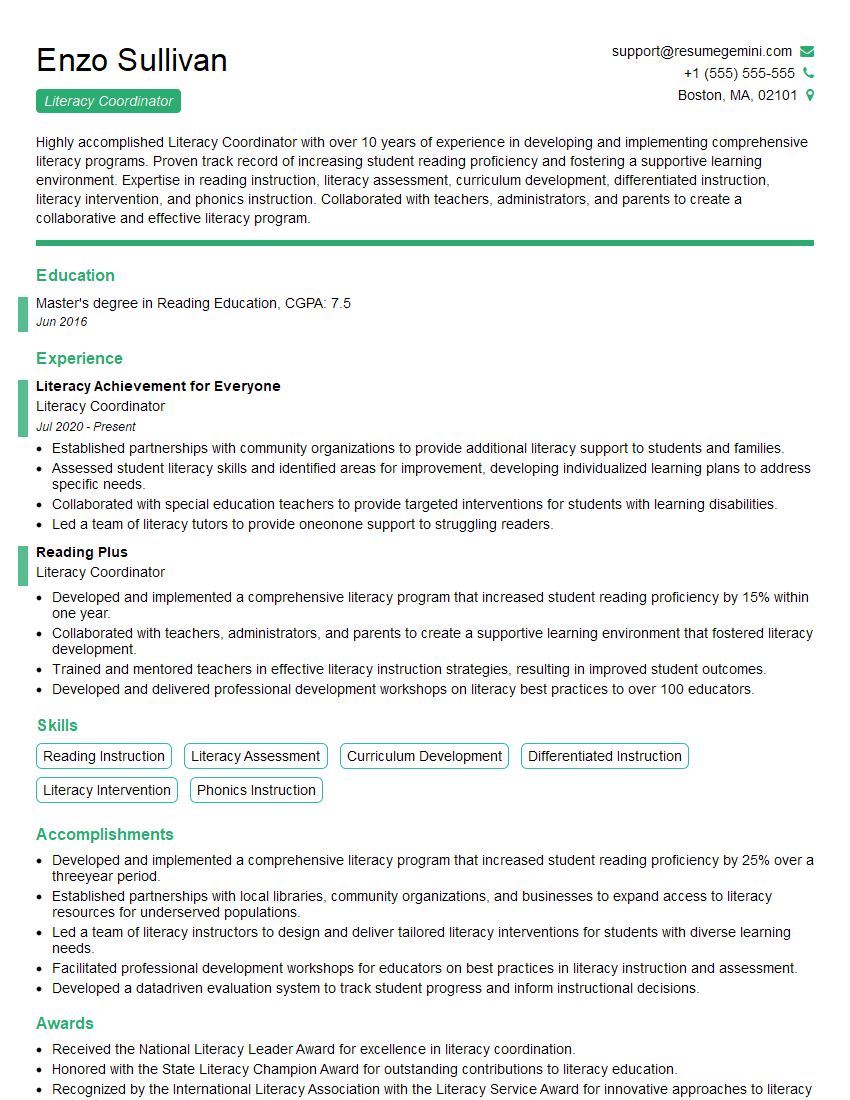
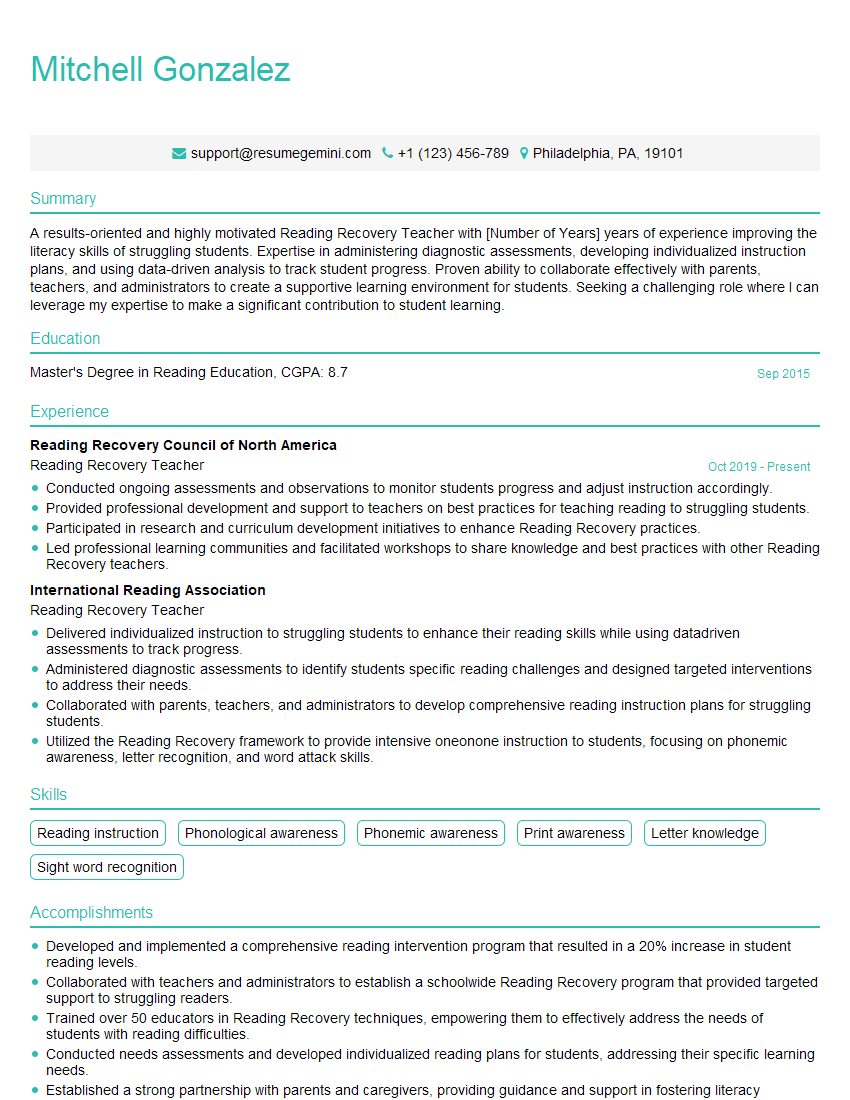
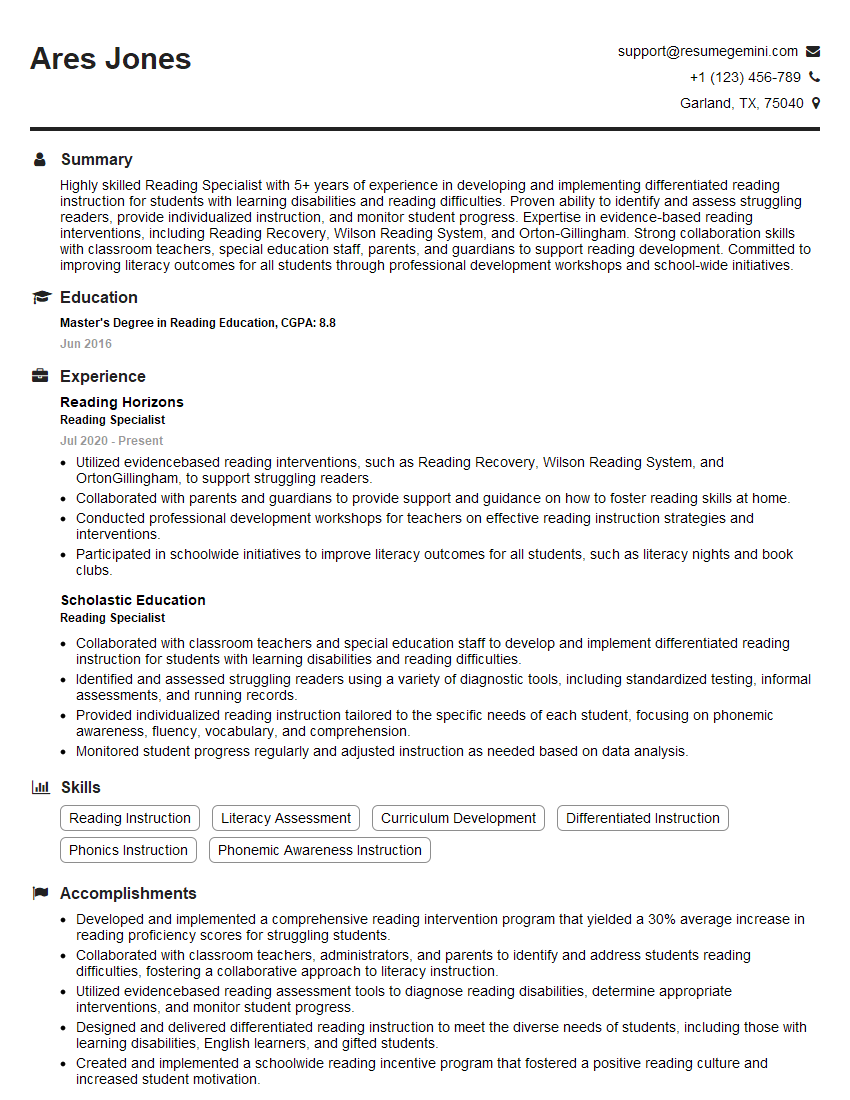
Mastering the principles of Reading Promotion and Literacy is crucial for career advancement in this rewarding field. A strong understanding of these concepts will significantly enhance your interview performance and open doors to exciting opportunities. To maximize your chances, create an ATS-friendly resume that highlights your skills and experience effectively. We strongly recommend using ResumeGemini, a trusted resource for building professional resumes. ResumeGemini provides examples of resumes tailored to Reading Promotion and Literacy to help you craft a compelling application. Investing time in a well-crafted resume is an investment in your future career success.
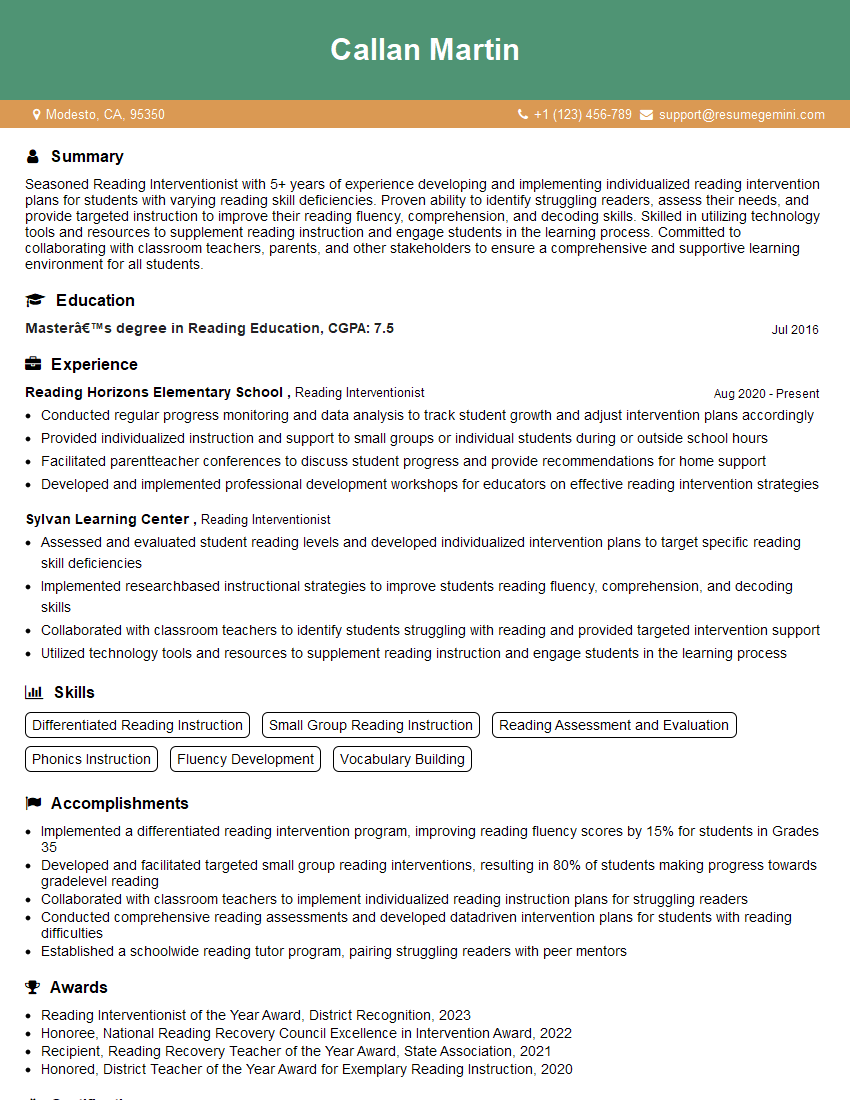
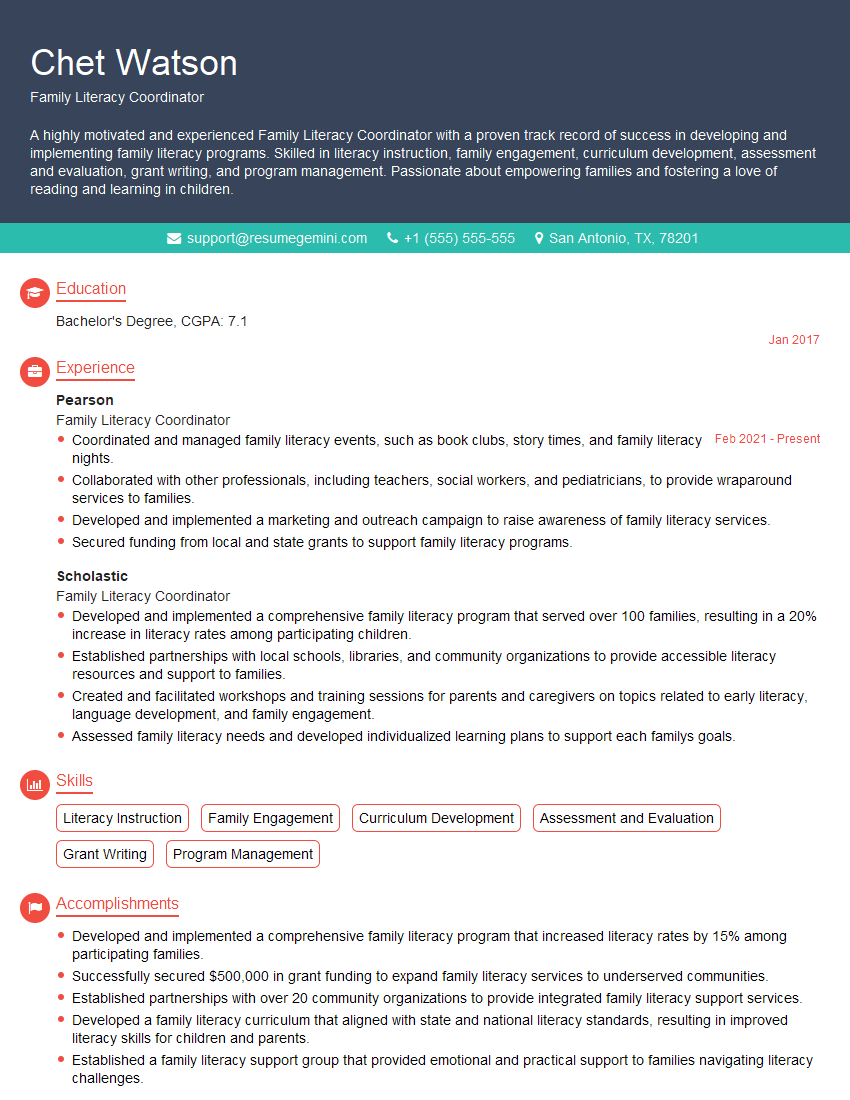
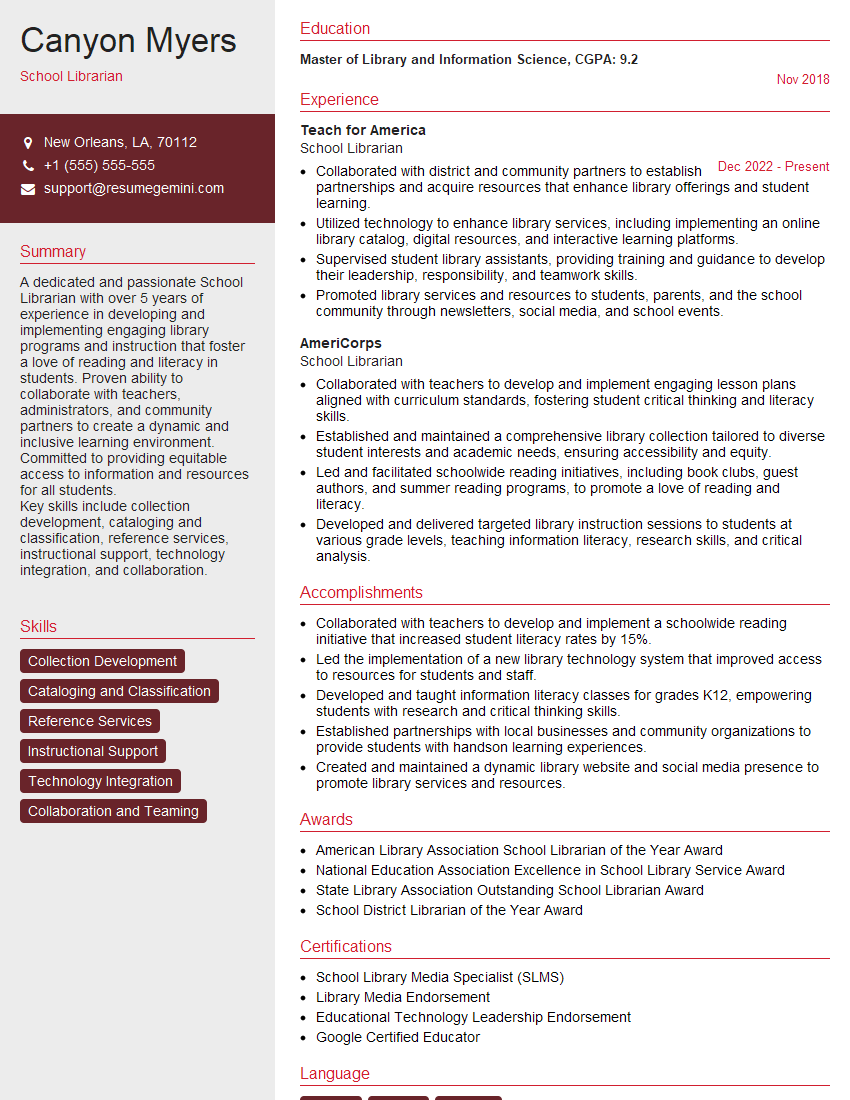
Explore more articles
Users Rating of Our Blogs
Share Your Experience
We value your feedback! Please rate our content and share your thoughts (optional).
What Readers Say About Our Blog
I Redesigned Spongebob Squarepants and his main characters of my artwork.
https://www.deviantart.com/reimaginesponge/art/Redesigned-Spongebob-characters-1223583608
IT gave me an insight and words to use and be able to think of examples
Hi, I’m Jay, we have a few potential clients that are interested in your services, thought you might be a good fit. I’d love to talk about the details, when do you have time to talk?
Best,
Jay
Founder | CEO