Unlock your full potential by mastering the most common Real Estate Counseling interview questions. This blog offers a deep dive into the critical topics, ensuring you’re not only prepared to answer but to excel. With these insights, you’ll approach your interview with clarity and confidence.
Questions Asked in Real Estate Counseling Interview
Q 1. Explain the difference between a 1031 exchange and a traditional property sale.
The core difference between a 1031 exchange and a traditional property sale lies in how capital gains taxes are handled. In a traditional sale, you sell a property, receive the proceeds, and pay capital gains taxes on any profit. Think of it like selling a stock – you get the money, but Uncle Sam takes his cut.
A 1031 exchange, named after Section 1031 of the Internal Revenue Code, allows you to defer capital gains taxes by reinvesting the proceeds from the sale of one investment property into another ‘like-kind’ property. This means you don’t pay taxes on the profit immediately. Instead, you roll that profit into your new investment. It’s like trading one stock for another without realizing the gains – tax-deferred until you eventually sell the replacement property.
Example: You sell a rental property for $500,000, having a basis (original cost plus improvements) of $200,000. Your profit is $300,000. In a traditional sale, you’d owe capital gains taxes on this $300,000. In a 1031 exchange, you could reinvest that $500,000 into another rental property and defer those taxes until you eventually sell that new property.
Crucially, there are strict rules and deadlines governing 1031 exchanges, requiring the use of a Qualified Intermediary to manage the transaction to avoid tax implications. It’s a complex process best navigated with expert advice.
Q 2. How do you assess the financial viability of a real estate investment?
Assessing the financial viability of a real estate investment involves a multi-faceted approach. We don’t just look at the price tag; we delve deep into the potential profitability. I utilize several key metrics:
- Cash Flow Analysis: This examines the difference between rental income and operating expenses (mortgage, taxes, insurance, repairs, etc.). Positive cash flow indicates the property generates more income than it costs to operate.
- Capitalization Rate (Cap Rate): This measures the potential rate of return on an investment property. It’s calculated as Net Operating Income (NOI) divided by the property’s purchase price. A higher cap rate generally indicates a better investment.
- Return on Investment (ROI): This shows the total return on your investment over a period. We consider both cash flow and appreciation in value.
- Debt Service Coverage Ratio (DSCR): This vital metric measures the ability of the property’s cash flow to cover its debt obligations. A DSCR above 1.0 is generally desirable.
- Comparable Market Analysis (CMA): This helps determine the current market value of similar properties, ensuring the purchase price is fair and aligns with market trends.
Example: Suppose a property generates $50,000 in NOI annually and you purchase it for $500,000. The cap rate is 10% ($50,000/$500,000). This is a good starting point, but we must then analyze the ROI considering potential appreciation, loan terms, and other factors before determining viability.
Q 3. Describe your experience with analyzing market trends and predicting future values.
Analyzing market trends and predicting future values is a crucial part of my work, and it relies on a combination of quantitative and qualitative analysis. I utilize several methods:
- Data Analysis: I leverage databases of property sales, rental rates, and demographic data to identify patterns and trends. This involves utilizing statistical models and regression analysis to forecast future price movements.
- Market Research: I actively monitor local news, economic indicators, and government reports to understand broader market forces. I attend industry events and network with other professionals to gain insights.
- Comparative Market Analysis (CMA): By studying recently sold properties in the same neighborhood, we can project potential value appreciation.
- Qualitative Factors: While data is crucial, I also consider non-quantifiable factors such as infrastructure developments, zoning changes, and overall economic conditions that can significantly affect property values.
Example: I recently advised a client against purchasing in a rapidly developing area due to high construction activity that could soon saturate the market, despite promising initial indicators. My analysis, combining data on new construction permits and comparable sales, highlighted the potential risk of price stagnation or even depreciation.
Q 4. What are the key factors you consider when evaluating a property’s risk profile?
Evaluating a property’s risk profile involves a comprehensive assessment of various factors:
- Location Risk: This includes considering factors such as crime rates, proximity to amenities, environmental hazards, and the overall desirability of the neighborhood. A property in a high-crime area carries significantly higher risk.
- Market Risk: This assesses the overall health of the local real estate market, considering supply and demand, economic conditions, and potential market fluctuations. A rapidly declining market presents higher risk.
- Financial Risk: This evaluates the property’s financial performance, including potential vacancy rates, operating expenses, and the ability to generate positive cash flow. High vacancy rates represent a significant risk.
- Legal Risk: This encompasses potential legal issues such as zoning violations, environmental concerns, or pending litigation. Title defects are a prime example of legal risks.
- Physical Risk: This considers the physical condition of the property, the need for repairs or renovations, and potential structural issues. Deteriorating infrastructure can lead to costly repairs.
Example: A property with a history of significant deferred maintenance and located in a neighborhood experiencing rising crime rates represents a high-risk investment due to the combined physical and location risks.
Q 5. How do you identify and mitigate potential legal and regulatory issues in real estate transactions?
Identifying and mitigating potential legal and regulatory issues is paramount. My approach involves:
- Thorough Due Diligence: This includes a review of title reports, survey documents, zoning regulations, environmental assessments, and other relevant legal documents to detect any potential problems.
- Consulting with Legal Experts: I collaborate with real estate attorneys and environmental consultants to gain expert insight on any complex or ambiguous issues.
- Ensuring Compliance: I ensure all transactions comply with local, state, and federal regulations, including fair housing laws, environmental protection laws, and disclosure requirements.
- Risk Mitigation Strategies: When issues are discovered, I work with clients to develop strategies to address them, such as negotiating with sellers, obtaining necessary permits, or securing appropriate insurance coverage.
Example: During a recent transaction, a title search revealed a minor encroachment on the property line. By working with the attorney and the opposing party, we negotiated a settlement that resolved the issue before closing, avoiding a potential lawsuit.
Q 6. What are your preferred methods for conducting due diligence on a property?
My due diligence process is meticulous and thorough. I utilize several methods:
- Review of Public Records: I access county assessor records, tax records, and other public documents to verify ownership, property details, and tax assessments. This helps detect discrepancies or potential issues.
- Property Inspection: I engage a qualified inspector to thoroughly examine the property’s condition, identifying any structural, mechanical, or other physical defects.
- Environmental Assessment (Phase I ESA): This helps determine the presence of environmental hazards on the property. This is particularly crucial for older properties or those located in potentially contaminated areas.
- Title Search and Insurance: A thorough title search identifies any liens, encumbrances, or other issues that may affect the property’s ownership. Title insurance provides protection against potential title defects.
- Review of Leases and Contracts: For income-producing properties, a detailed review of existing leases and contracts is crucial to assess the potential income and liabilities.
This multi-faceted approach helps mitigate potential problems and provides a solid foundation for informed decision-making.
Q 7. Explain your process for developing a real estate investment strategy for a client.
Developing a real estate investment strategy for a client is a collaborative process that begins with understanding their goals, risk tolerance, and financial resources. I follow a structured approach:
- Goal Setting: We clearly define the client’s investment objectives (e.g., wealth building, passive income, tax advantages). This helps establish realistic expectations and align the strategy accordingly.
- Financial Assessment: I analyze the client’s financial situation to determine their available capital, debt capacity, and investment timeframe.
- Risk Tolerance Assessment: We assess the client’s willingness to accept risk and tailor the strategy accordingly. Some clients prefer safer, low-risk investments, while others are comfortable with more speculative ventures.
- Market Research and Property Selection: We identify potential investment properties that align with the client’s goals, considering factors such as location, property type, and projected return.
- Strategy Implementation: This involves executing the chosen strategy, including securing financing, completing due diligence, and managing the property.
- Ongoing Monitoring and Review: We regularly review the investment’s performance, adjusting the strategy as needed to meet the client’s evolving goals.
Example: A client seeking passive income with low risk might be steered towards a diversified portfolio of multifamily units in stable markets. In contrast, a client with a higher risk tolerance and longer timeframe might be advised to pursue development or value-add projects with higher potential returns.
Q 8. How do you handle conflicts of interest in real estate counseling?
Conflicts of interest are a critical concern in real estate counseling, potentially jeopardizing client trust and legal compliance. My approach is proactive and transparent. I begin by carefully disclosing any potential conflicts, even seemingly minor ones, during the initial consultation. This includes any existing or prior relationships with parties involved in a transaction, like a past client or a family member. If a potential conflict arises, I thoroughly analyze the situation, weighing the potential impact on my objectivity and the interests of all involved parties. My top priority is maintaining the confidentiality and best interests of each client. If the conflict cannot be mitigated or managed effectively, I will decline representation, referring the client to another qualified professional.
For example, if I’m already advising a seller, I would decline to simultaneously represent a buyer interested in the same property. The potential for biased advice or compromised negotiations is simply too high. Maintaining a strict ethical code and transparent communication are central to avoiding such situations and building lasting client relationships based on trust.
Q 9. Describe your experience with different types of real estate financing.
My experience encompasses a broad spectrum of real estate financing, including conventional mortgages, FHA loans, VA loans, jumbo loans, commercial loans, and private financing. I’m familiar with the intricacies of each, understanding their eligibility criteria, interest rates, and associated fees. This knowledge is crucial in guiding clients towards the most suitable option based on their financial profile and investment goals.
For example, I’ve assisted first-time homebuyers in navigating the FHA loan process, highlighting its benefits such as lower down payment requirements. Conversely, I’ve advised experienced investors on securing commercial loans for multi-family properties, focusing on maximizing leverage and minimizing borrowing costs. My expertise goes beyond simply understanding the financing options. I also help clients prepare compelling loan applications, strengthening their chances of approval.
Q 10. What are the key elements of a successful real estate development project?
A successful real estate development project hinges on a meticulous blend of factors. It begins with thorough market analysis, identifying the right location, and understanding the target demographic. A well-defined project scope, including a realistic budget and timeline, is paramount. This is followed by securing appropriate financing, managing risk effectively, and assembling a skilled team comprising architects, engineers, contractors, and legal professionals. Effective communication and collaboration throughout all phases are vital to ensuring the project stays on track.
Moreover, a key element is understanding and mitigating potential risks. This includes evaluating environmental concerns, adhering to zoning regulations, and obtaining necessary permits. Post-completion, managing the property and ensuring its long-term profitability are crucial factors for a truly successful endeavor.
- Feasibility Study: In-depth market research and financial analysis.
- Project Management: Effective planning, scheduling, and execution.
- Risk Management: Identifying and mitigating potential problems.
- Teamwork: Collaboration among stakeholders.
Q 11. How do you advise clients on tax implications of real estate transactions?
Advising clients on the tax implications of real estate transactions requires a deep understanding of both real estate and tax law. I help clients navigate the complexities of capital gains taxes, depreciation, 1031 exchanges, and other relevant tax provisions. I explain how different transaction structures can affect their tax liabilities. My guidance helps clients minimize their tax burden while adhering to all applicable regulations.
For instance, I would explain the benefits of a 1031 exchange, which allows investors to defer capital gains taxes by reinvesting proceeds from the sale of a property into a like-kind property. This requires precise timing and adherence to specific IRS rules, and I ensure my clients understand these rules fully. I also help them prepare for tax reporting, ensuring accuracy and avoiding potential penalties.
Q 12. What software or tools do you utilize for real estate analysis and reporting?
My work utilizes a range of software and tools to facilitate effective real estate analysis and reporting. These include Argus Enterprise for complex financial modeling and forecasting, Excel for data analysis and financial statement preparation, and various Geographic Information System (GIS) software packages for market research and property analysis. Additionally, I use specialized real estate databases to access property records, market trends, and comparable sales data. This combination allows me to provide clients with insightful reports and projections, facilitating informed decision-making.
For example, using Argus, I can model the cash flow projections for a multi-family investment property, enabling clients to evaluate the potential return on their investment. The GIS software helps me visualize property locations, proximity to amenities, and market trends, adding another layer of insight into investment decisions.
Q 13. Explain your experience working with different types of clients (e.g., individual investors, corporations).
I have experience working with a diverse client base, ranging from individual investors to large corporations. My approach is tailored to each client’s specific needs and circumstances. With individual investors, the focus often lies on personalized financial planning and risk tolerance. For corporations, I provide sophisticated analysis, focusing on large-scale development projects and strategic asset management. Regardless of the client type, clear communication, trust, and understanding their objectives are foundational to my work.
For example, I’ve helped an individual investor analyze a potential fixer-upper purchase, considering repair costs, projected rental income, and long-term appreciation. Simultaneously, I’ve guided a major corporation in the acquisition and development of a large-scale commercial project, considering due diligence, financing options, and risk mitigation strategies.
Q 14. How do you stay current with changes in real estate laws and regulations?
Staying current in the ever-evolving real estate landscape is crucial. I utilize multiple methods to stay informed. I regularly attend industry conferences and seminars to learn about new trends and regulations. I subscribe to legal and financial publications and maintain memberships with relevant professional organizations. I also actively network with other real estate professionals, sharing knowledge and staying abreast of the latest developments. This multifaceted approach helps me provide my clients with the most up-to-date and relevant advice.
Furthermore, I monitor changes in legislation and case law through online legal databases and government websites. This proactive approach helps me anticipate potential challenges and provide clients with the most effective strategies to navigate the legal and regulatory environment.
Q 15. Describe a time you had to adapt your approach to a client’s unique needs.
Adaptability is crucial in real estate counseling. Every client has unique circumstances, financial situations, and goals. For instance, I once worked with a young couple looking to buy their first home. They were overwhelmed by the process and lacked the financial literacy to fully understand mortgage options and closing costs. My initial approach, which focused on market analysis and property selection, had to be adjusted. I spent extra time explaining the intricacies of financing, providing them with simplified financial worksheets, and connecting them with a reputable financial advisor. This helped them feel more confident and empowered throughout the process. I shifted from a purely real estate-focused approach to a more holistic approach that included financial guidance and emotional support, adapting to their specific needs.
Career Expert Tips:
- Ace those interviews! Prepare effectively by reviewing the Top 50 Most Common Interview Questions on ResumeGemini.
- Navigate your job search with confidence! Explore a wide range of Career Tips on ResumeGemini. Learn about common challenges and recommendations to overcome them.
- Craft the perfect resume! Master the Art of Resume Writing with ResumeGemini’s guide. Showcase your unique qualifications and achievements effectively.
- Don’t miss out on holiday savings! Build your dream resume with ResumeGemini’s ATS optimized templates.
Q 16. How do you handle situations where a client is making a decision you believe is not in their best interest?
When a client makes a decision I believe is detrimental, my approach is centered on education and informed consent. I don’t tell them what to do, but I guide them towards making the best decision for themselves. For example, if a client is about to overextend their budget on a property, I will present a detailed financial analysis showcasing the potential long-term risks, such as high debt-to-income ratio and potential difficulty in securing future financing. I’ll present alternative options, like exploring more affordable properties or adjusting their financial plan. Ultimately, the decision remains theirs, but they will make it with a clearer understanding of the consequences. My role is to ensure they are fully informed before proceeding.
Q 17. How do you measure the success of your real estate counseling services?
Measuring success in real estate counseling goes beyond simply closing a deal. I gauge success through a multi-faceted approach. First, I assess client satisfaction through post-transaction surveys and follow-up calls. I also measure success based on the achievement of their stated goals – did they find a property that meets their needs and budget? Did they navigate the complex process smoothly and efficiently? Finally, I track key performance indicators (KPIs) like the average time to close a deal and client retention rates. These metrics help me refine my strategies and ensure I’m providing consistently high-quality service.
Q 18. What is your experience with property valuation methods (e.g., comparable sales, income approach)?
I have extensive experience using various property valuation methods. The comparable sales approach (also known as the market approach) is fundamental. It involves analyzing recently sold properties with similar characteristics (size, location, features) to determine a likely price range for the subject property. The income approach is valuable for income-producing properties like apartment buildings or commercial spaces; it estimates value based on the property’s potential to generate income. This involves analyzing net operating income (NOI) and applying a capitalization rate. I also utilize the cost approach, especially for newer properties, which estimates value based on the cost of constructing a similar property, less depreciation. Choosing the appropriate method depends heavily on the property type and the availability of reliable data. For example, when valuing a single-family home, the comparable sales approach is often most relevant. However, when appraising a large commercial building with multiple tenants, the income approach would be more appropriate.
Q 19. Describe your understanding of different property types (e.g., residential, commercial, industrial).
My understanding of property types encompasses a broad spectrum. Residential properties include single-family homes, townhouses, condos, and multi-family dwellings. Commercial properties encompass office buildings, retail spaces, shopping centers, and hotels. Their valuation often focuses on rental income potential and tenant occupancy rates. Industrial properties include warehouses, manufacturing plants, and distribution centers, valued based on factors like location, accessibility, and building specifications. Understanding the nuances of each property type is crucial for providing tailored advice to clients. For example, the due diligence required for a commercial property acquisition is far more extensive than for a residential purchase, involving detailed financial statements and lease agreements review.
Q 20. Explain your knowledge of zoning regulations and their impact on property value.
Zoning regulations significantly impact property value. They dictate how a property can be used – residential, commercial, industrial, etc. – and the types of structures that can be built. For example, a property zoned for residential use can’t be legally used as a commercial building without a zoning variance, which can be difficult and costly to obtain. Restrictive zoning can limit property development potential and therefore reduce its value. Conversely, a property in an area with favorable zoning regulations that allows for higher density development or mixed-use projects may command a higher price. Understanding these regulations is crucial for accurately assessing a property’s potential and its fair market value. Ignoring zoning can lead to significant financial losses for a client, as they may not be able to use the property as intended.
Q 21. How do you build and maintain relationships with clients and other professionals in the real estate industry?
Building strong relationships is fundamental to success in real estate counseling. I maintain regular communication with clients, providing updates, answering questions promptly, and offering ongoing support even after the transaction is complete. Networking is key; I actively participate in industry events, attend conferences, and collaborate with other real estate professionals, such as mortgage brokers, inspectors, and attorneys. Referrals are a testament to strong client relationships and a collaborative industry network. For instance, I regularly attend local real estate association meetings, fostering relationships with fellow agents and other relevant professionals, facilitating referrals and collaborative opportunities. Transparency, clear communication, and a commitment to delivering exceptional service underpin all my client and professional relationships.
Q 22. Describe a challenging real estate project you worked on and how you overcame the challenges.
One particularly challenging project involved a client wanting to redevelop a historically significant brownstone in a highly competitive market. The primary challenges were navigating the stringent historical preservation regulations, securing the necessary permits, and finding a financially viable development plan that respected the building’s heritage.
To overcome these hurdles, I employed a multi-pronged approach. First, I assembled a team of experts: a historical architect specializing in renovations, a seasoned construction manager, and a lawyer experienced in zoning and preservation laws. This ensured we addressed each aspect of the project comprehensively. Second, we meticulously researched the historical significance of the building and worked closely with the preservation society to develop a redevelopment plan that met their standards while still allowing for modern amenities. This collaborative approach significantly reduced potential delays and conflicts. Finally, we developed a detailed financial model that demonstrated the project’s profitability while highlighting the long-term value preservation would bring, securing financing from a historically conscious lender. Through careful planning and collaboration, we successfully navigated the regulatory hurdles and delivered a profitable project that preserved an important piece of the city’s history.
Q 23. How do you deal with pressure and tight deadlines in a fast-paced real estate market?
The real estate market is inherently dynamic, demanding quick thinking and decisive action. I manage pressure and tight deadlines by implementing a highly organized workflow. This includes prioritizing tasks, utilizing project management tools to track progress, and maintaining open communication with all stakeholders. I also delegate effectively when appropriate and proactively identify potential bottlenecks before they arise. For instance, I might anticipate a delay in securing a permit and initiate a contingency plan early on. Think of it like a chess game – anticipating your opponent’s moves is crucial for success. Finally, I prioritize self-care; ensuring I have adequate rest and time to de-stress helps me maintain focus and clarity under pressure.
Q 24. What is your approach to negotiating favorable terms for your clients?
My approach to negotiation is based on thorough preparation, active listening, and strategic compromise. Before entering any negotiation, I thoroughly research the market, analyze comparable properties, and understand my client’s needs and financial capabilities. This allows me to present a well-informed and compelling offer. I actively listen to the other party’s perspective, understanding their motivations and constraints. This facilitates building rapport and identifying common ground. I am adept at framing the negotiation in a way that benefits both parties, creating win-win scenarios whenever possible. For instance, rather than focusing solely on price, I might explore creative solutions like flexible payment terms or contingencies that satisfy both buyers and sellers. The goal is not to simply get the best deal, but to forge mutually beneficial long-term relationships.
Q 25. How do you handle difficult conversations with clients or other stakeholders?
Difficult conversations are an inevitable part of real estate. My approach is to address them directly, with empathy and professionalism. I begin by actively listening to the other party’s concerns, validating their feelings, and ensuring they feel heard. I then clearly and calmly explain my position, using objective data and facts to support my points. I focus on finding solutions rather than assigning blame, aiming for a collaborative resolution that addresses everyone’s needs. For example, if a client is unhappy with a delay, I would apologize for the inconvenience, explain the cause of the delay, and offer concrete solutions to mitigate the impact. The key is to remain respectful, maintain a positive tone, and focus on a collaborative problem-solving approach.
Q 26. What are your professional ethics and how do they guide your real estate counseling practice?
My professional ethics are grounded in integrity, honesty, and transparency. I prioritize my client’s best interests above all else, acting as a trusted advisor and advocate. This includes providing accurate and unbiased information, diligently fulfilling my fiduciary duties, and maintaining confidentiality at all times. I adhere to all relevant professional standards and regulations, avoiding any conflicts of interest. For example, if I find a property that might better suit a client’s needs than the one they’re currently considering, I have a professional obligation to disclose that information, even if it means missing out on a commission. This commitment to ethical practice is the cornerstone of my reputation and fosters trust with my clients.
Q 27. How do you ensure the confidentiality of your client’s information?
Client confidentiality is paramount. I utilize secure data storage and communication methods, adhering to all relevant privacy regulations. Client information is only accessible to authorized personnel, and I never share sensitive data without explicit written consent. I use encrypted email and secure file sharing platforms, and I maintain meticulous records of all communications and transactions. I also make sure to obtain a signed confidentiality agreement from clients before engaging in any sensitive discussions. This commitment to protecting client information is not just a professional obligation; it’s a fundamental aspect of building and maintaining trust.
Q 28. What are your long-term career goals in real estate counseling?
My long-term career goals involve becoming a leading expert in sustainable and ethical real estate practices. I aspire to leverage my expertise to help clients navigate the complexities of sustainable development, assisting them in making environmentally responsible real estate decisions. I also plan to mentor and train aspiring real estate counselors, sharing my knowledge and experience to promote ethical practices in the industry. Ultimately, I envision contributing to a more sustainable and equitable real estate landscape, where both financial success and environmental responsibility are prioritized.
Key Topics to Learn for Your Real Estate Counseling Interview
- Financial Analysis & Investment Strategies: Understanding property valuations, cash flow projections, and return on investment (ROI) calculations is crucial. Practical application includes analyzing a client’s financial situation to recommend suitable investment properties or debt management strategies.
- Real Estate Market Trends & Analysis: Stay updated on local and national market conditions, including supply and demand, interest rates, and economic factors. Apply this knowledge by advising clients on optimal buying or selling windows and market risks.
- Property Management & Maintenance: Familiarity with landlord-tenant laws, property maintenance procedures, and budgeting for repairs is vital. This is applicable when guiding clients on maximizing rental income and minimizing property-related expenses.
- Real Estate Law & Regulations: A strong grasp of relevant laws, including fair housing regulations and contract negotiation, is essential for ethical and legal practice. Apply this knowledge to mitigate legal risks and ensure client compliance.
- Client Communication & Relationship Management: Building rapport and effectively communicating complex financial information to clients is key. Practice actively listening to client needs and offering tailored solutions.
- Ethical Considerations & Professional Standards: Understanding and adhering to ethical guidelines within the real estate industry is paramount. This involves upholding fiduciary responsibilities and maintaining client confidentiality.
- Problem-Solving & Decision-Making: Demonstrate your ability to analyze complex situations, identify potential challenges, and develop effective solutions for clients facing financial or property-related issues.
Next Steps
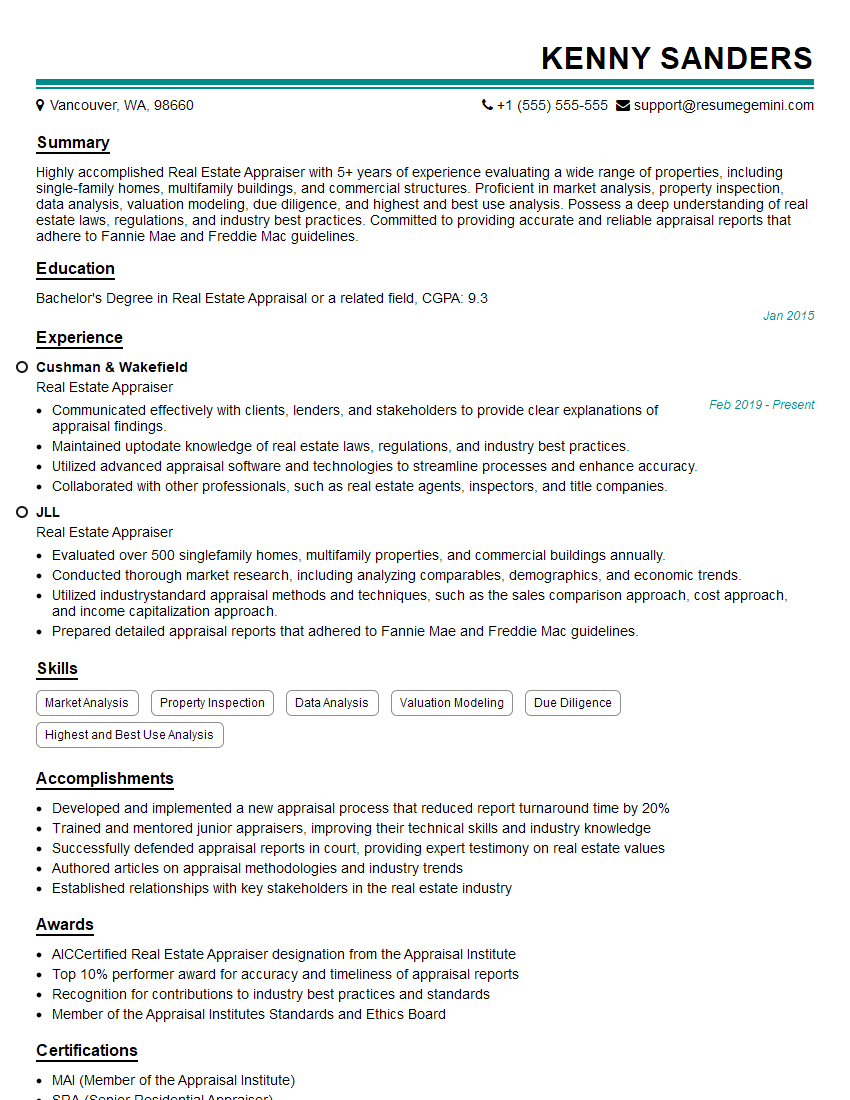
Mastering Real Estate Counseling opens doors to a rewarding career with significant earning potential and the satisfaction of helping others achieve their financial and real estate goals. To maximize your job prospects, create an ATS-friendly resume that showcases your skills and experience effectively. ResumeGemini is a trusted resource to help you build a compelling and professional resume. Leverage their expertise and access examples of resumes tailored to Real Estate Counseling to present your qualifications powerfully. This investment in your resume will significantly increase your chances of landing your dream role.
Explore more articles
Users Rating of Our Blogs
Share Your Experience
We value your feedback! Please rate our content and share your thoughts (optional).
What Readers Say About Our Blog
I Redesigned Spongebob Squarepants and his main characters of my artwork.
https://www.deviantart.com/reimaginesponge/art/Redesigned-Spongebob-characters-1223583608
IT gave me an insight and words to use and be able to think of examples
Hi, I’m Jay, we have a few potential clients that are interested in your services, thought you might be a good fit. I’d love to talk about the details, when do you have time to talk?
Best,
Jay
Founder | CEO