Every successful interview starts with knowing what to expect. In this blog, we’ll take you through the top Regulatory compliance and industry knowledge interview questions, breaking them down with expert tips to help you deliver impactful answers. Step into your next interview fully prepared and ready to succeed.
Questions Asked in Regulatory compliance and industry knowledge Interview
Q 1. Explain your understanding of the Sarbanes-Oxley Act (SOX).
The Sarbanes-Oxley Act of 2002 (SOX) is a landmark piece of legislation in the United States designed to protect investors from corporate accounting fraud. It was enacted in response to major corporate accounting scandals such as Enron and WorldCom. At its core, SOX aims to improve the accuracy and reliability of corporate financial reporting.
Key aspects of SOX include:
- Increased corporate responsibility for financial reporting: CEOs and CFOs are personally responsible for the accuracy of financial statements.
- Enhanced auditor independence: Restrictions are placed on the types of non-audit services accounting firms can provide to their audit clients.
- Establishment of the Public Company Accounting Oversight Board (PCAOB): This board oversees the audits of public companies to ensure quality and consistency.
- Internal controls over financial reporting: Companies are required to establish and maintain effective internal controls to ensure the reliability of their financial reporting (Section 404).
In practice, SOX compliance requires a robust internal control system, regular audits, and a strong culture of ethical conduct. For example, a company might implement a comprehensive system of segregation of duties to prevent fraud, and conduct regular internal audits to test the effectiveness of those controls. Failure to comply with SOX can lead to significant fines and reputational damage.
Q 2. Describe your experience with HIPAA compliance.
HIPAA, the Health Insurance Portability and Accountability Act of 1996, is a US law designed to protect the privacy and security of Protected Health Information (PHI). My experience with HIPAA compliance encompasses several key areas:
- Risk assessment and management: Identifying vulnerabilities in systems and processes that handle PHI, and implementing appropriate safeguards.
- Policy development and implementation: Creating and enforcing policies that ensure adherence to HIPAA regulations, including access control, data encryption, and breach notification procedures.
- Employee training: Conducting regular training sessions to educate employees about HIPAA regulations and their responsibilities in protecting PHI. This includes understanding concepts like the Privacy Rule and Security Rule.
- Vendor management: Ensuring that third-party vendors who access PHI have appropriate security measures in place and comply with HIPAA requirements through Business Associate Agreements (BAAs).
- Incident response planning: Developing and testing procedures to handle data breaches and other security incidents in compliance with HIPAA’s breach notification rules.
For example, I’ve worked with healthcare organizations to implement encryption of PHI stored on mobile devices and laptops, and to develop procedures for handling requests for PHI from patients and other authorized parties. I’ve also assisted in conducting HIPAA risk assessments and creating customized policies that address the organization’s specific needs and vulnerabilities.
Q 3. What is your experience with GDPR and CCPA regulations?
The General Data Protection Regulation (GDPR) and the California Consumer Privacy Act (CCPA) are landmark regulations focused on data privacy and consumer rights. GDPR applies to organizations processing the personal data of individuals in the European Union, while CCPA applies to businesses operating in California. Both regulations share similarities but also have key differences.
My experience with these regulations includes:
- Data mapping and inventory: Identifying and cataloging all personal data collected, processed, and stored, including its source, purpose, and location.
- Privacy impact assessments (PIAs): Conducting PIAs to identify and mitigate risks associated with data processing activities.
- Consent management: Implementing mechanisms for obtaining valid consent from individuals for the processing of their personal data, in accordance with the requirements of GDPR and CCPA.
- Data subject rights: Ensuring that individuals can exercise their rights, such as access, rectification, erasure, and data portability.
- Data breach notification: Developing procedures for handling data breaches and complying with notification requirements.
For instance, I helped a client implement a consent management platform that complied with GDPR’s requirements for granular consent and allowed users to easily manage their data preferences. In another project, I assisted a company in preparing for a CCPA audit by conducting a thorough data inventory and updating its privacy policies and procedures. Understanding the nuances between GDPR and CCPA, particularly around data subject access requests and the right to be forgotten, is critical for effective compliance.
Q 4. How would you handle a situation where a company policy conflicts with a regulatory requirement?
When a company policy conflicts with a regulatory requirement, the regulatory requirement always takes precedence. Company policies should never undermine legal obligations. This is a fundamental principle of regulatory compliance.
The steps to address this situation are:
- Identify and document the conflict: Clearly define the conflicting policy and regulatory requirement.
- Assess the potential risks: Determine the potential consequences of non-compliance, including fines, legal action, reputational damage, and operational disruptions.
- Develop a remediation plan: Modify the company policy to align with the regulatory requirement. This might involve creating new policies, updating existing ones, or eliminating the conflicting policy entirely.
- Implement the remediation plan: Update internal systems, processes, and documentation to reflect the changes.
- Communicate the changes: Inform relevant stakeholders, including employees, management, and external parties, about the changes made to the company policies.
- Monitor and review: Regularly monitor compliance with the revised policies and regulatory requirements to ensure ongoing compliance.
For example, if a company’s data retention policy conflicts with a regulation requiring shorter data retention periods, the company must revise its policy to adhere to the regulatory mandate. Failure to do so could result in serious penalties.
Q 5. Explain your understanding of risk assessment in regulatory compliance.
Risk assessment in regulatory compliance is a systematic process of identifying, analyzing, and prioritizing potential risks that could lead to non-compliance. It’s about proactively identifying vulnerabilities and taking steps to mitigate them, rather than reacting to incidents after they occur. Think of it like a health check-up for your compliance program.
A typical risk assessment involves:
- Identifying potential risks: This might involve reviewing regulations, analyzing processes, and considering potential threats (e.g., data breaches, employee misconduct).
- Analyzing the likelihood and impact of each risk: Consider the probability of each risk occurring and the potential consequences if it does.
- Prioritizing risks: Focusing on the most critical risks first, based on their likelihood and impact.
- Developing mitigation strategies: Implementing controls and procedures to reduce the likelihood or impact of identified risks.
- Monitoring and reviewing: Regularly reviewing the effectiveness of mitigation strategies and updating the risk assessment as necessary.
For instance, a risk assessment for a financial institution might identify the risk of money laundering as high due to the large volume of transactions it processes. Mitigation strategies might include implementing robust anti-money laundering (AML) software and training employees on AML procedures. This process is iterative and requires continuous monitoring and improvement.
Q 6. Describe your experience with internal audits and compliance reviews.
My experience with internal audits and compliance reviews includes conducting and managing both internal and external audits across various regulatory frameworks. This involves planning, execution, and reporting to ensure compliance and identify areas for improvement.
Specific tasks include:
- Planning the audit scope and objectives: Defining the specific regulations and areas to be reviewed.
- Developing audit programs: Creating detailed procedures for testing compliance.
- Collecting and analyzing evidence: Reviewing documents, conducting interviews, and performing testing.
- Identifying and documenting findings: Reporting any instances of non-compliance or areas for improvement.
- Developing recommendations for remediation: Suggesting corrective actions to address identified issues.
- Following up on remediation: Verifying that corrective actions have been implemented.
For example, I’ve performed SOC 2 audits, helping organizations demonstrate the security of their systems and data. I’ve also led compliance reviews for HIPAA, ensuring healthcare providers meet the necessary security and privacy standards. The goal isn’t just to find problems, but to help organizations strengthen their compliance posture and build a culture of compliance.
Q 7. How would you develop and implement a compliance training program?
Developing and implementing a comprehensive compliance training program is crucial for embedding a culture of compliance within an organization. It’s not a one-time event but an ongoing process that needs to be tailored to the specific regulatory requirements and the organization’s unique context.
Here’s a step-by-step approach:
- Needs assessment: Identify the specific regulations that apply to the organization and the knowledge gaps among employees.
- Learning objectives: Define clear, measurable learning objectives for the training program. What should employees know and be able to do after completing the training?
- Content development: Develop training materials that are engaging, relevant, and easy to understand. This could include online modules, interactive exercises, videos, and case studies. The language should be accessible to all employees regardless of their technical background.
- Delivery method: Choose a delivery method that is effective and convenient for employees. This could be online training, classroom sessions, or a blended approach.
- Testing and evaluation: Include assessments to measure employee understanding and retention. Use a variety of methods including quizzes, practical exercises, and simulations.
- Documentation and record-keeping: Maintain detailed records of employee participation and training completion. This is crucial for demonstrating compliance in audits.
- Regular updates: Regulations change, so the training program must be regularly updated to reflect the latest requirements.
For example, a financial institution might develop a training program that covers AML regulations, data privacy, and ethics. A healthcare provider might focus on HIPAA compliance, patient privacy, and handling sensitive health information. The key is to make the training engaging, practical, and relevant to the employees’ daily work.
Q 8. How familiar are you with the Foreign Corrupt Practices Act (FCPA)?
The Foreign Corrupt Practices Act (FCPA) is a US law that prohibits bribery of foreign officials to obtain or retain business. It’s a complex piece of legislation with two main components: the anti-bribery provisions and the accounting provisions. The anti-bribery provisions prohibit the offering, promising, or giving anything of value to a foreign official to influence a business decision. The accounting provisions require companies to maintain accurate books and records and implement an effective internal accounting control system to prevent bribery and other corrupt practices. My familiarity extends to understanding the nuances of both components, including the definition of ‘foreign official’, the concept of ‘anything of value’, and the requirements for implementing an effective compliance program. I’ve worked extensively on FCPA risk assessments, developing compliance policies and procedures, and conducting training programs for employees. For example, in my previous role, I led an initiative to strengthen our anti-bribery program by implementing a robust due diligence process for third-party vendors operating in high-risk jurisdictions, aligning perfectly with FCPA requirements.
I have a deep understanding of the FCPA’s extraterritorial reach and its application to both US and non-US companies. I also understand the significant penalties that can be imposed for violations, including substantial fines and imprisonment.
Q 9. Describe your approach to managing regulatory changes and updates.
Managing regulatory changes requires a proactive and systematic approach. I use a multi-step process. First, I leverage subscription services and government agency websites to track updates to relevant regulations. Second, I analyze those changes to determine their impact on our organization. This involves identifying affected policies, procedures, and systems. Third, I develop an implementation plan that outlines the necessary changes, timelines, and resources. This plan is carefully reviewed by senior management for approval. Finally, I communicate these changes to the relevant teams, provide necessary training, and monitor compliance with the revised regulations. For instance, when GDPR came into effect, I developed a comprehensive plan to ensure data privacy, which involved updating privacy policies, employee training programs, and data security protocols. This included conducting data mapping exercises and establishing a clear process for responding to data breach incidents.
Q 10. How would you communicate compliance-related issues to senior management?
Communicating compliance-related issues to senior management requires a clear, concise, and timely approach. I use a structured format, typically presenting information in writing with a verbal summary. My reports always highlight the issue, its potential impact, the proposed solution, and the recommended action plan. I focus on presenting facts objectively, avoiding emotional language. The urgency of the issue is reflected in the speed of communication and the proposed response. For instance, if I identify a significant risk, I would immediately inform senior management, explaining the risk, its potential impact, and my recommended mitigation actions. I’ve found that using visual aids like charts and graphs can enhance understanding and impact. Following up with regular updates on the progress of the mitigation strategy builds trust and confidence.
Q 11. Explain your experience with regulatory reporting and documentation.
My experience with regulatory reporting and documentation is extensive. I’m proficient in preparing and submitting various regulatory reports, including those related to data privacy, anti-bribery, and environmental regulations. I’m familiar with diverse reporting requirements across different jurisdictions. This involves meticulous record-keeping, using standardized templates, and ensuring data accuracy. I understand the importance of maintaining audit trails and supporting documentation. In my previous role, I managed the submission of annual compliance reports to multiple regulatory bodies. This required careful coordination with various teams, and rigorous verification of data accuracy to ensure compliance. I also implemented a document management system to improve efficiency and ensure easy access to relevant documents during audits.
Q 12. How do you prioritize compliance tasks and manage multiple projects?
Prioritizing compliance tasks and managing multiple projects requires a structured approach. I use a combination of methodologies, including project management frameworks like Agile or Waterfall, depending on project specifics. I begin by identifying all tasks, assessing their urgency and impact, then assigning priorities using methods like MoSCoW (Must have, Should have, Could have, Won’t have). This allows for effective resource allocation and prevents bottlenecks. Regular progress meetings and tracking tools help maintain momentum. Visual tools like Kanban boards offer a clear overview of the progress of various projects. For instance, during a large-scale system implementation, I prioritized critical compliance tasks to ensure alignment with ongoing regulatory requirements even amidst competing demands.
Q 13. Describe your experience using compliance management software.
I have experience with various compliance management software, including [mention specific software names if you have experience with them, e.g., Archer, ServiceNow, MetricStream]. My experience encompasses using these tools for tasks such as risk assessment, policy management, training administration, and audit management. I’m adept at configuring the software to meet our organization’s specific needs and reporting requirements. For instance, I used [mention software name] to automate policy distribution and track employee acknowledgements, reducing manual effort and improving compliance rates.
Q 14. How do you stay current with changes in relevant regulations?
Staying current with regulatory changes requires a multi-faceted strategy. I subscribe to reputable legal and compliance news sources and actively monitor relevant government agency websites. I participate in professional development activities, such as attending conferences and webinars, to remain informed about emerging trends and best practices. Building relationships with peers in my field facilitates the exchange of information and insights. Networking through professional organizations is also valuable. For example, I regularly review publications from organizations like the American Bar Association and actively participate in industry discussions. This allows me to anticipate potential changes and proactively adjust our compliance programs.
Q 15. How would you identify and mitigate compliance risks within an organization?
Identifying and mitigating compliance risks requires a proactive and multi-faceted approach. Think of it like a security system for your organization’s legal and ethical operations. First, we need to understand the organization’s risk profile. This involves identifying all applicable laws and regulations – think industry-specific rules, data privacy laws like GDPR or CCPA, and general business regulations. We then map these regulations to the organization’s operations, pinpointing areas of potential vulnerability. For example, a healthcare provider needs to comply with HIPAA, while a financial institution must adhere to regulations like SOX.
Next, we conduct risk assessments, evaluating the likelihood and potential impact of non-compliance. This might involve reviewing internal processes, conducting interviews with employees, and analyzing past incidents. We then prioritize these risks, focusing on the most significant threats. Mitigation strategies might include implementing new policies and procedures, enhancing employee training, investing in technology solutions like data encryption and access controls, and establishing robust monitoring and reporting mechanisms. Regular audits and reviews are essential to ensure these mitigations remain effective.
For instance, if a risk assessment reveals a high probability of data breaches due to weak password policies, the mitigation would involve implementing a strong password policy, perhaps using a password manager, and providing regular employee training on cybersecurity best practices.
Career Expert Tips:
- Ace those interviews! Prepare effectively by reviewing the Top 50 Most Common Interview Questions on ResumeGemini.
- Navigate your job search with confidence! Explore a wide range of Career Tips on ResumeGemini. Learn about common challenges and recommendations to overcome them.
- Craft the perfect resume! Master the Art of Resume Writing with ResumeGemini’s guide. Showcase your unique qualifications and achievements effectively.
- Don’t miss out on holiday savings! Build your dream resume with ResumeGemini’s ATS optimized templates.
Q 16. What are some key indicators of compliance weaknesses?
Key indicators of compliance weaknesses often manifest in various forms, acting like warning signs. One clear sign is a high frequency of non-compliance incidents or near misses. This suggests gaps in training, processes, or oversight. For example, repeated failure to properly document client interactions in a financial institution might indicate weakness in record-keeping procedures. Another indicator is a lack of consistent application of policies and procedures. If different departments or employees interpret and apply rules differently, this shows a lack of clarity and potential for errors.
Furthermore, increased regulatory scrutiny, such as frequent audits or warnings from regulatory bodies, points to potential weaknesses. Similarly, employee complaints or whistleblowing regarding compliance issues signal internal problems. Finally, a lack of updated compliance training or outdated policies demonstrates a lack of proactive engagement and exposes the organization to risks. Think of it like a ship sailing without a proper navigation system – the destination (compliance) is unclear and potential hazards (risks) are easily encountered.
Q 17. Describe your experience in conducting compliance investigations.
My experience in conducting compliance investigations involves a structured, systematic approach. I’ve led numerous investigations into potential violations, ranging from suspected data breaches to allegations of unethical conduct. This typically begins with establishing a clear scope and objectives, defining the specific issue under investigation, and identifying relevant individuals and documents. I then gather evidence using various methods including interviews, document reviews, and data analysis. This process is very important to ensure all parties are interviewed fairly and that we get a complete picture. Remember, a thorough and impartial investigation is vital to maintaining credibility and protecting the organization’s reputation.
Throughout the investigation, I maintain meticulous documentation, ensuring chain of custody for any physical or electronic evidence. Once the investigation is complete, I prepare a detailed report summarizing the findings, conclusions, and recommendations for corrective action. I also work closely with legal counsel to navigate any potential legal ramifications. For instance, I once led an investigation into a suspected data breach, employing forensic techniques to identify the source, scope, and impact of the breach. The investigation’s report helped the company implement enhanced security measures, preventing future incidents and minimizing reputational damage.
Q 18. How would you respond to a regulatory audit?
Responding to a regulatory audit requires thorough preparation and a collaborative approach. First, we proactively assemble a dedicated team with representatives from relevant departments. It’s crucial to have a central repository of all relevant documentation readily available, organized and easily accessible for auditors. We should also review all relevant policies and procedures, ensuring they are up-to-date and compliant. This is akin to preparing for a major exam; you need to know the material and be ready to explain it clearly and concisely.
During the audit, we maintain open and transparent communication with the auditors, providing them with timely and accurate responses to their inquiries. We proactively address any identified issues and demonstrate our commitment to remediation. Throughout the audit, detailed notes are meticulously maintained to track the process and document all interactions. Following the audit, we carefully review the auditor’s report, develop a plan to address any identified deficiencies, and implement corrective actions. Finally, we monitor the effectiveness of these actions to ensure long-term compliance.
Q 19. Explain your understanding of data privacy and security regulations.
Data privacy and security regulations are crucial for protecting sensitive information and maintaining public trust. Regulations like GDPR (General Data Protection Regulation) in Europe and CCPA (California Consumer Privacy Act) in the US govern the collection, use, storage, and disclosure of personal data. These regulations place strict obligations on organizations, including obtaining consent, ensuring data security, and providing individuals with rights to access, correct, and delete their data. Security regulations, on the other hand, focus on protecting data from unauthorized access, use, disclosure, disruption, modification, or destruction. This might involve measures such as data encryption, access controls, and regular security assessments.
Understanding these regulations is paramount for compliance. Non-compliance can lead to significant financial penalties and reputational damage. For example, failing to obtain proper consent before collecting data or experiencing a data breach due to inadequate security measures can result in hefty fines and loss of customer trust. The key is to embed data privacy and security principles throughout an organization’s operations, from data collection to disposal. This necessitates regular employee training, robust security protocols, and a culture of data protection.
Q 20. How do you ensure the accuracy and completeness of compliance data?
Ensuring the accuracy and completeness of compliance data is critical for effective risk management and regulatory reporting. This requires a combination of robust data governance processes and technological solutions. We must first establish clear data definitions and standards, ensuring everyone understands what data is needed and how it should be collected, recorded, and stored. Think of it like building a foundation for a house – the stronger the foundation, the more stable the structure.
Data collection should be automated whenever possible, minimizing manual entry and reducing the potential for human error. Regular data quality checks and validation processes are essential to identify and correct inaccuracies. This might involve data reconciliation, cross-referencing data from multiple sources, and employing data analytics to detect anomalies. We also need to document all data sources and processes, maintaining a clear audit trail to support the accuracy and reliability of the data. Finally, regular audits of compliance data are crucial to assess its quality and identify areas for improvement. This proactive approach ensures that data is reliable, accurate, and trustworthy for informed decision-making.
Q 21. Describe your experience in working with external auditors.
My experience working with external auditors has been consistently positive and collaborative. I’ve found that a transparent and open relationship with auditors is vital for a successful audit. This involves providing them with timely and comprehensive access to all relevant information and actively engaging with their questions and concerns. I believe in fostering a partnership rather than an adversarial relationship. Think of it as a collaborative effort towards a common goal – achieving and maintaining compliance.
Prior to the audit, I ensure all necessary documentation is organized and readily accessible. During the audit, I facilitate clear and effective communication between the audit team and internal stakeholders. This may involve scheduling meetings, providing explanations, and answering questions promptly. After the audit, I work collaboratively with auditors to address any identified weaknesses and implement corrective actions. I’ve found that proactive communication, clear documentation, and a commitment to remediation build trust and enhance the overall effectiveness of the audit process. This collaborative approach helps strengthen compliance and ensures regulatory readiness.
Q 22. How would you handle a suspected violation of company policy or regulatory requirements?
Suspected violations of company policy or regulatory requirements must be addressed swiftly and thoroughly. My approach involves a structured process prioritizing investigation, reporting, and remediation. First, I’d gather all relevant information, including documentation, witness statements, and any affected systems or data. This investigation phase is crucial for establishing the facts and determining the extent of the violation. Next, I’d immediately report the suspected violation to the appropriate internal channels, likely including my direct supervisor and the compliance department. The severity of the violation will dictate the urgency and reporting level. For instance, a minor procedural error might be addressed internally, while a major violation, such as a data breach, would require immediate notification to relevant regulatory bodies. Following the investigation and reporting, a remediation plan is developed and implemented to correct the violation, prevent recurrence, and mitigate any potential consequences. This might involve retraining employees, updating policies and procedures, or implementing new controls. Finally, a thorough review is conducted to assess the effectiveness of the remediation efforts and identify any further necessary steps. For example, in a previous role, a suspected violation of HIPAA regulations regarding patient data security was handled using this process. The thorough investigation led to the identification of a software vulnerability, which was then remediated, and appropriate employee training was implemented.
Q 23. What is your experience with developing and implementing compliance policies and procedures?
I have extensive experience in developing and implementing compliance policies and procedures across various industries. My approach focuses on a risk-based framework, understanding the specific regulations and potential risks to the organization. This includes conducting risk assessments to identify vulnerabilities and prioritizing areas that need the most attention. I then work collaboratively with subject matter experts and stakeholders from different departments to draft comprehensive policies and procedures. These documents are not simply created; they are carefully crafted to be clear, concise, and easily understandable for all employees, regardless of their technical expertise. Regular reviews and updates are critical to ensure the policies remain relevant and effective. Furthermore, I ensure that policies are aligned with industry best practices and regulatory standards. For instance, I was instrumental in developing a comprehensive data security policy that met GDPR and CCPA requirements in my previous role. This involved a thorough analysis of our data handling processes, the creation of detailed procedures for data access, storage, and deletion, and the implementation of robust security controls, ultimately resulting in improved data protection and reduced risk.
Q 24. How would you measure the effectiveness of a compliance program?
Measuring the effectiveness of a compliance program requires a multi-faceted approach that goes beyond simply checking boxes. Key performance indicators (KPIs) are crucial. Examples include the number and types of violations, the time taken to resolve issues, employee training completion rates, and the results of internal audits. However, quantitative metrics alone are insufficient. We also need to analyze qualitative factors, such as employee understanding of compliance policies, the effectiveness of internal controls, and the overall culture of compliance within the organization. Regular audits, both internal and external, play a vital role in assessing the effectiveness of the program and identifying areas for improvement. Using a combination of these quantitative and qualitative measures helps create a holistic view of the compliance program’s health and identifies areas requiring strengthening or adjustment. For example, in one organization, we tracked the number of reported violations, coupled with employee feedback from surveys about their confidence in their compliance knowledge. This provided a complete view of compliance program success.
Q 25. What are some common challenges faced in regulatory compliance?
Regulatory compliance presents several ongoing challenges. One major challenge is the ever-evolving regulatory landscape. Laws and regulations are constantly updated, requiring continuous monitoring and adaptation of compliance programs. Keeping up with these changes is a significant undertaking, demanding access to up-to-date information and resources. Another challenge is the complexity of regulations themselves. Many regulations are lengthy, technical, and difficult to interpret, particularly across multiple jurisdictions. This can lead to inconsistencies in implementation and increased risk of non-compliance. Resource constraints are also a common issue. Effective compliance programs require significant investment in terms of personnel, technology, and training, but budgets may not always reflect this need. Finally, ensuring compliance across a geographically diverse workforce or with multiple external vendors can be particularly challenging, often requiring specialized approaches and collaborative management.
Q 26. Describe your experience in collaborating with different departments to ensure compliance.
Effective compliance requires cross-functional collaboration. I have extensive experience working with various departments, including IT, Human Resources, legal, and operations, to ensure compliance across the organization. My approach focuses on clear communication, fostering strong working relationships, and establishing shared goals. This starts with proactively involving relevant stakeholders in the development and implementation of compliance policies and procedures. Regular meetings and updates are crucial to ensure alignment and address any concerns. For example, when implementing new data privacy regulations, I worked closely with the IT department to ensure the necessary technical controls were in place, with HR to update employee training materials, and with legal to ensure compliance with all legal requirements. This cross-functional approach creates a unified effort towards regulatory compliance, avoiding the risk of siloed efforts and enhancing program effectiveness.
Q 27. How do you balance the need for compliance with business objectives?
Balancing compliance with business objectives is a crucial aspect of my role. It’s not a matter of choosing one over the other; it’s about integrating them. My approach involves proactively identifying compliance risks and assessing their potential impact on business operations. This allows us to implement cost-effective and efficient compliance strategies that minimize disruption to business activities. For instance, by collaborating with business leaders to understand their goals and constraints, I can develop solutions that meet both compliance requirements and business needs. This might involve finding innovative technological solutions to streamline compliance processes or developing training programs that are both engaging and effective. Ultimately, a strong compliance program not only reduces risks but also fosters trust, strengthens the brand reputation, and enhances operational efficiency, contributing positively to the business bottom line.
Q 28. How would you approach the implementation of a new regulatory requirement?
Implementing a new regulatory requirement necessitates a structured approach. The first step involves thoroughly understanding the specific requirements of the new regulation, including its scope, timelines, and potential penalties for non-compliance. Next, we assess the impact of the new regulation on our organization, including its potential effect on our operations, systems, and processes. This assessment helps prioritize the actions required to achieve compliance. Then, a comprehensive implementation plan is developed, outlining the steps needed to achieve compliance, including timelines, responsibilities, and resource allocation. This plan is crucial for efficient and organized implementation. The implementation plan should also include employee training, updates to existing policies and procedures, and system modifications, as needed. After implementation, ongoing monitoring and evaluation are crucial to ensure continued compliance and to identify any areas needing adjustment. Regular audits and reviews further enhance compliance program effectiveness. For example, when the GDPR was introduced, we followed a similar process, conducting a thorough impact assessment, updating our data protection policies, enhancing our security controls, and implementing comprehensive employee training to address the new requirements successfully.
Key Topics to Learn for Regulatory Compliance and Industry Knowledge Interviews
- Core Regulatory Frameworks: Understanding the fundamental principles and applications of relevant regulations (e.g., GDPR, CCPA, HIPAA, SOX, etc.) depending on your target industry. This includes knowing the key definitions, obligations, and penalties for non-compliance.
- Risk Assessment and Management: Learn how to identify, assess, and mitigate regulatory risks within an organization. Practical application involves understanding risk matrices, control frameworks, and developing mitigation strategies.
- Compliance Monitoring and Auditing: Explore methods for establishing and maintaining a robust compliance program. This includes designing and executing internal audits, monitoring for changes in regulations, and reporting on compliance status.
- Data Privacy and Security: Master the principles of data protection and security relevant to your target industry. Understand best practices for data handling, storage, and transmission, along with incident response procedures.
- Industry-Specific Regulations: Deepen your understanding of regulations specific to your chosen sector (finance, healthcare, technology, etc.). This demonstrates specialized knowledge and a commitment to the field.
- Problem-Solving in Compliance: Develop your ability to analyze compliance challenges, propose solutions, and articulate your reasoning clearly and concisely. Practice applying theoretical knowledge to realistic scenarios.
- Communication and Collaboration: Effective communication is vital. Practice explaining complex regulatory concepts to both technical and non-technical audiences. Understand how to collaborate with different teams to achieve compliance objectives.
Next Steps
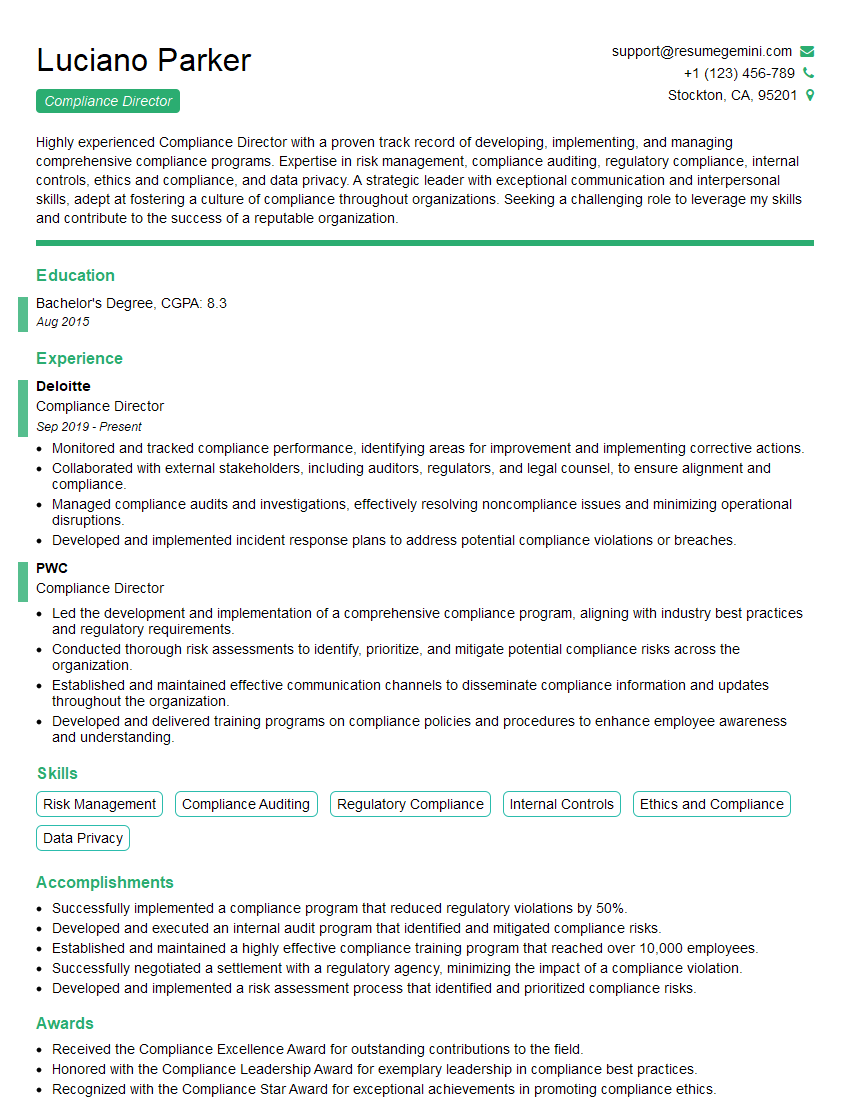
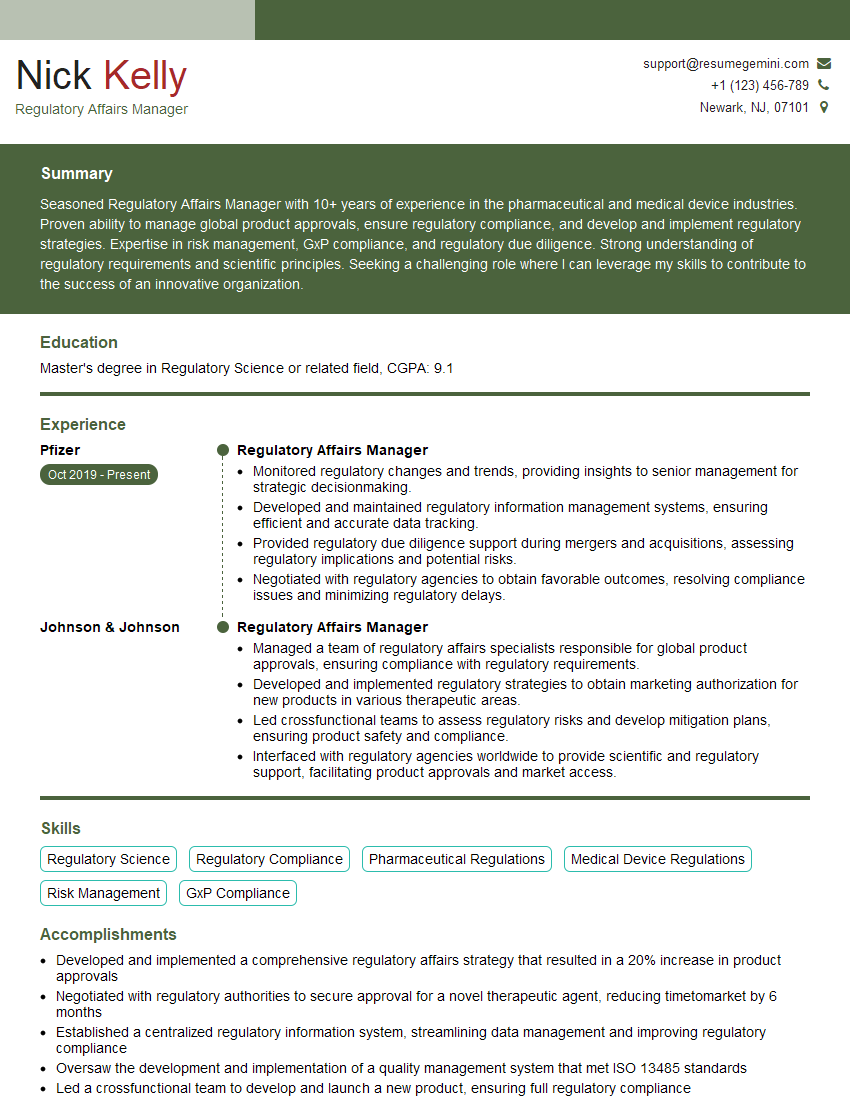
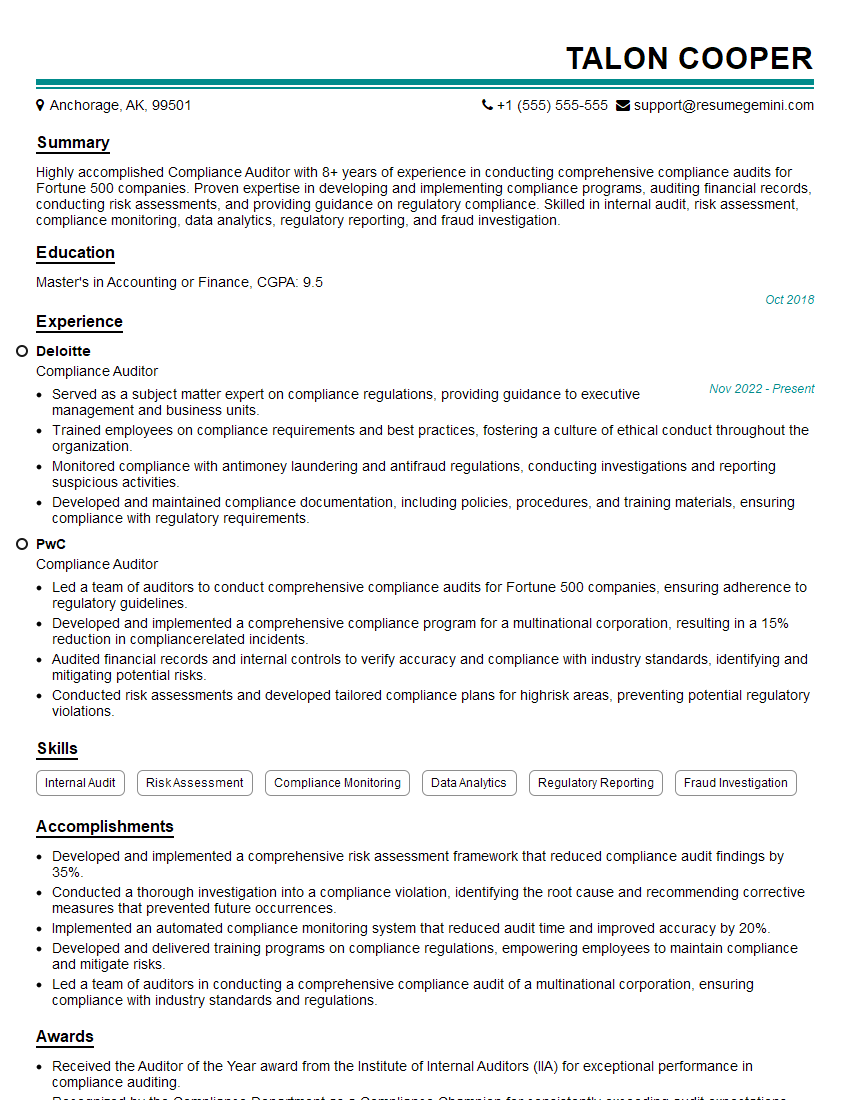
Mastering regulatory compliance and industry knowledge is crucial for career advancement in today’s complex regulatory landscape. It demonstrates your commitment to ethical practices and your ability to protect your organization from potential legal and financial risks. To significantly enhance your job prospects, creating a strong, ATS-friendly resume is essential. ResumeGemini can be a trusted partner in this process, helping you build a professional and impactful resume that highlights your skills and experience effectively. Examples of resumes tailored to Regulatory Compliance and Industry Knowledge are available to guide your resume creation process.

Explore more articles
Users Rating of Our Blogs
Share Your Experience
We value your feedback! Please rate our content and share your thoughts (optional).
What Readers Say About Our Blog
I Redesigned Spongebob Squarepants and his main characters of my artwork.
https://www.deviantart.com/reimaginesponge/art/Redesigned-Spongebob-characters-1223583608
IT gave me an insight and words to use and be able to think of examples
Hi, I’m Jay, we have a few potential clients that are interested in your services, thought you might be a good fit. I’d love to talk about the details, when do you have time to talk?
Best,
Jay
Founder | CEO