Feeling uncertain about what to expect in your upcoming interview? We’ve got you covered! This blog highlights the most important Rigger interview questions and provides actionable advice to help you stand out as the ideal candidate. Let’s pave the way for your success.
Questions Asked in Rigger Interview
Q 1. Explain the different types of rigging hardware.
Rigging hardware encompasses a wide array of components crucial for safely lifting and moving loads. These components are designed to connect the load to the lifting device, ensuring secure and efficient operations. The types are numerous, but some key examples include:
- Shackles: These are U-shaped pieces of metal with a pin through the bow, used to connect various rigging components. Different types exist, like bow shackles, D-shackles, and screw pin shackles, each suited for specific applications. For instance, screw pin shackles offer superior pin security compared to simpler bow shackles.
- Hooks: These are used to connect the lifting device to the load or other rigging components. They come in various shapes and sizes, including single and double hooks, and are designed to withstand significant loads. Regular inspections for cracks and deformations are vital.
- Rings and Swivels: Rings provide connection points, while swivels reduce twisting and kinking of ropes and chains. They’re indispensable for smooth operations and to prevent premature wear.
- Slings: These are flexible load-bearing components made of various materials like wire rope, synthetic fiber (nylon, polyester), or chain. Wire rope slings are known for their high strength, while synthetic slings are often lighter and more flexible.
- Chain: High-strength steel chain is a robust rigging element, suitable for heavy-duty lifting, but it requires meticulous inspection for wear and elongation.
- Turnbuckles: These allow for adjustment of the length of a rigging assembly, ensuring proper tension and alignment.
The choice of rigging hardware depends heavily on the load’s weight, shape, and the specific lifting operation. Using the wrong hardware can lead to catastrophic failures.
Q 2. Describe the process of calculating the safe working load (SWL) of a rigging assembly.
Calculating the Safe Working Load (SWL) of a rigging assembly is paramount for ensuring safety. It’s the maximum load a rigging system can safely support without risk of failure. The calculation isn’t simply adding the SWLs of individual components; it’s more complex and involves several factors:
- SWL of each component: Begin by identifying the SWL of each component (sling, shackle, hook, etc.) from its manufacturer’s markings. These are typically stamped on the hardware.
- Angle of the lift: The angle at which slings are attached significantly affects the SWL. A vertical lift (0 degrees) is the strongest. As the angle increases, the SWL of each sling decreases. This is because the load is distributed at an angle, placing greater stress on individual components. Often, engineers use a formula that incorporates the sling angle to calculate the effective SWL.
- Number of slings: Multiple slings can distribute the load, increasing the overall system’s SWL. However, the arrangement needs careful consideration to ensure even weight distribution.
- Type of sling: Different sling materials and configurations (e.g., choker hitch vs. basket hitch) will impact the SWL. These factors are often accounted for by derating factors provided by the manufacturer or relevant safety standards.
- Safety factor: A safety factor is always applied – often 5:1 or greater. This means the SWL is the maximum load divided by the safety factor. This helps provide a margin of safety against unforeseen events or variations in material strength.
The overall SWL of the assembly is the lowest SWL among all its components, taking into account the angle and number of slings, and the applied safety factor. For complex assemblies, it’s often best to consult a qualified rigging engineer.
Q 3. What are the common hazards associated with rigging operations?
Rigging operations present numerous hazards, demanding constant vigilance and adherence to safety protocols. Some of the most common hazards include:
- Falling objects: Loads can slip, slings can fail, or components can detach, resulting in serious injury or death. This is the most significant risk.
- Crushing injuries: Being caught between moving loads or equipment can lead to severe crushing injuries.
- Struck-by hazards: Moving loads, swinging chains, or falling objects can strike workers. Always maintain a safe distance from operations.
- Electrocution: Contact with overhead power lines is a significant risk, especially during outdoor lifting operations.
- Entanglement: Becoming entangled in rigging equipment or slings can result in serious injury.
- Strain and musculoskeletal injuries: Manual handling of heavy equipment or awkward lifting postures can lead to strain and injury.
- Equipment failure: Failure of rigging hardware or lifting equipment due to wear, damage, or misuse.
Risk mitigation involves proper planning, pre-lift inspections, using appropriate PPE (Personal Protective Equipment), establishing safe working zones, employing spotters, and adhering strictly to safety regulations.
Q 4. How do you inspect rigging equipment for damage or wear?
Rigging equipment inspection is non-negotiable. Regular and thorough inspections are crucial for preventing accidents. Here’s a step-by-step approach:
- Visual inspection: Carefully examine all components for obvious signs of damage, such as cracks, kinks, corrosion, deformation, or excessive wear. Look for broken wires in wire rope slings, stretched or damaged chains, and any signs of heat damage.
- Check for wear and tear: Look for fraying on synthetic slings, broken or missing links in chains, and any signs of bending or distortion in metal components.
- Check for proper markings: Ensure that all equipment is clearly marked with the manufacturer’s name, SWL, and any other relevant information. If markings are illegible or missing, the equipment should be removed from service.
- Test components (where appropriate): While a comprehensive load test isn’t always practical, a visual check for elongation in a chain, for instance, might indicate excessive use, requiring replacement.
- Documentation: Maintain thorough records of all inspections, noting any damage or wear identified. This helps track the condition of equipment and ensure timely maintenance or replacement.
If any damage or wear is found, the equipment must be immediately removed from service and repaired or replaced. Never compromise safety by using damaged equipment.
Q 5. What are the different types of knots used in rigging?
Various knots are employed in rigging, each with specific applications and strengths. Selecting the right knot is crucial for safety and efficiency. Some common knots used in rigging include:
- Bowline: Forms a strong, non-slip loop that’s easy to untie even under load.
- Clove Hitch: A simple and quick knot used for attaching a rope to a ring or hook. It’s not suitable for heavy loads on its own.
- Figure Eight Knot: Used to create a secure loop at the end of a rope, improving security for the main knot.
- Timber Hitch: Used for securing a rope to a cylindrical object, such as a log or pipe.
- Sheet Bend: Connects two ropes of different diameters.
- Rolling Hitch: Used for hauling or securing loads along a line.
It’s important to practice tying these knots correctly and to ensure they are tied securely. Improperly tied knots can weaken the entire rigging assembly and lead to accidents.
Q 6. Explain the importance of proper rigging techniques.
Proper rigging techniques are non-negotiable for ensuring safe and efficient lifting operations. They minimize the risk of accidents, equipment damage, and injuries. The importance of these techniques stems from:
- Load distribution: Proper techniques ensure even weight distribution across the rigging assembly, minimizing stress on individual components and preventing premature failure.
- Preventing damage: Correct techniques prevent damage to the load, the rigging equipment, and the lifting device.
- Ensuring stability: Proper techniques ensure the stability of the load throughout the lifting operation, preventing swinging or uncontrolled movement.
- Protecting workers: Correct techniques minimize the risk of workers being injured by falling objects or moving equipment.
- Efficiency: Efficient rigging techniques streamline the lifting process, reducing the time and effort required.
Training and certification in rigging are essential to ensure that personnel are fully competent in applying these techniques safely and correctly. A shortcut here could be extremely costly.
Q 7. Describe your experience with different types of lifting equipment (cranes, hoists, etc.).
My experience with different types of lifting equipment is extensive. I’ve worked with a variety of cranes, including:
- Tower cranes: Used extensively on large construction projects. I understand their assembly, dismantling, and safe operation, including load charts and wind speed limitations.
- Mobile cranes: Versatile machines with a wide range of applications. I’m experienced in selecting appropriate cranes for specific lifting tasks, considering factors like load capacity, reach, and ground conditions.
- Overhead cranes: Common in industrial settings, I understand their operation, including limitations in terms of load capacity, swing radius, and emergency braking systems.
In terms of hoists, I’m familiar with:
- Electric chain hoists: These are versatile and common. I understand the importance of regularly inspecting the chains for wear, checking the brake system, and ensuring the hoist is correctly rated for the load.
- Air hoists: These are useful in environments where electrical power is limited. The maintenance and safety aspects of compressed air systems are integral to my expertise.
I always ensure proper pre-operational checks are carried out before any lifting operation begins and maintain comprehensive knowledge of the equipment’s operating manuals and safety regulations.
Q 8. How do you ensure the safety of personnel during rigging operations?
Ensuring personnel safety during rigging operations is paramount and demands a multi-layered approach. It starts with a thorough risk assessment, identifying potential hazards like dropped loads, equipment failure, or environmental factors. This assessment informs the development of a comprehensive safety plan, including specific control measures.
- Pre-lift checks: Before any lift, a meticulous inspection of all equipment – slings, hooks, shackles, and the lifting device itself – is mandatory. This includes checking for wear and tear, damage, and proper functioning. We use checklists to ensure nothing is overlooked.
- Designated signal persons: Clear communication is critical. A dedicated signal person directs the crane operator, using standardized hand signals to prevent misunderstandings that could lead to accidents. Riggers must be trained to understand and use these signals effectively.
- Exclusion zones: Establishing clear exclusion zones around the lift area keeps unauthorized personnel away from the danger zone. These zones are marked with barriers, signage, and constant monitoring by safety personnel.
- Personal Protective Equipment (PPE): All personnel involved wear appropriate PPE, including hard hats, safety glasses, high-visibility clothing, and safety footwear. Specific PPE needs may vary depending on the tasks involved and potential hazards, and I always ensure the right gear is worn.
- Emergency procedures: Everyone on site is briefed on emergency procedures, including communication protocols and escape routes, in case something goes wrong. Regular drills reinforce these procedures, ensuring a quick and coordinated response in an emergency.
For example, during a recent project involving the lifting of a heavy transformer, we implemented a comprehensive safety plan that included multiple layers of redundancies, including a secondary lifting system as a precaution. This ensured that even if there were issues with one system, we had a backup to prevent a possible accident. The entire process was documented meticulously to ensure that each step followed safety protocols.
Q 9. What are the legal and regulatory requirements for rigging in your region?
Legal and regulatory requirements for rigging vary by region, but generally involve adherence to national and international safety standards. In my region, we must comply with [Insert relevant regional standards, e.g., OSHA in the US, LOLER in the UK, etc.]. These regulations cover aspects like:
- Competency of riggers: Riggers must possess the necessary qualifications and certifications to perform their duties. This often involves undergoing rigorous training and examinations to demonstrate proficiency in safe rigging practices.
- Equipment inspections and maintenance: Regular inspections and maintenance of all lifting equipment are mandatory, with detailed records kept to demonstrate compliance. Equipment must be certified and tested as per the manufacturer’s instructions.
- Safe working loads: All rigging operations must adhere to the safe working loads (SWLs) specified for equipment. Exceeding SWLs is strictly prohibited and can result in serious consequences.
- Risk assessments and method statements: Before any lift, a thorough risk assessment must be conducted and documented, outlining potential hazards and mitigation strategies. Method statements detail the planned procedure for the lift.
- Accident reporting and investigation: Any accidents or near misses must be reported immediately and thoroughly investigated to identify contributing factors and prevent future occurrences. Detailed reports are filed with the relevant authorities.
Non-compliance can result in significant penalties, including fines, suspension of operations, and even legal action. Therefore, rigorous adherence to regulations is not only a legal requirement but also crucial for ensuring the safety of personnel and preventing costly accidents.
Q 10. Explain your understanding of load charts and load calculations.
Load charts and load calculations are fundamental to safe rigging. Load charts provide the safe working loads (SWLs) for different types of lifting equipment under various conditions. These charts consider factors such as the type of sling, angle of lift, and sling configuration. Load calculations ensure the chosen equipment is capable of safely handling the weight and forces involved in a lift.
For example, a three-leg sling will distribute the load differently than a single-leg sling. The angle of the sling also affects the load on each leg. Accurate calculations are crucial because the stresses on the slings and the lifting equipment can significantly exceed the weight of the load itself, particularly with angled lifts. This can lead to sudden failures, and safety margins are critical.
I use established engineering principles and formulas to perform these calculations. Software packages can assist with more complex scenarios, but a strong understanding of the underlying principles is essential to ensure the accuracy and reliability of the results. It’s not just about crunching numbers – it’s about understanding the physics at play. One must account for factors like wind, load shifting, and the potential for unforeseen circumstances. A safety factor is always included, significantly exceeding the calculated load to accommodate unforeseen events.
Q 11. Describe your experience with different types of slings (chain, wire rope, synthetic).
I have extensive experience with various sling types, each with its strengths and weaknesses:
- Chain slings: Durable and resistant to abrasion, chain slings are suitable for heavy-duty lifting, particularly in harsh environments. However, they can be prone to stretching and damage if improperly used or overloaded. Regular inspection for kinks, twists, and wear is crucial.
- Wire rope slings: Offering high strength-to-weight ratio, wire rope slings are versatile and commonly used. But, they can be susceptible to corrosion and damage from sharp edges, requiring careful handling and regular lubrication. Inspection is necessary to detect any signs of fraying, broken wires, or kinking.
- Synthetic slings: Made from materials like polyester or nylon, synthetic slings are lightweight, easy to handle, and less prone to corrosion than chain or wire rope. However, they can be susceptible to UV degradation and damage from sharp objects or chemicals. Different synthetic materials provide different properties, strength ratings, and thermal limitations. I always carefully match the sling material to the job.
In practice, choosing the right sling depends on the load characteristics (weight, shape, fragility), the environment (temperature, chemicals), and the lifting method. A proper risk assessment guides this selection process to ensure the best balance of safety and efficiency for each project.
Q 12. How do you handle unexpected problems or emergencies during a rigging operation?
Handling unexpected problems or emergencies during rigging requires quick thinking, decisive action, and a calm demeanor. My approach involves:
- Immediate assessment: First, I assess the situation to understand the nature and extent of the problem. This includes identifying the immediate danger and the potential for escalation.
- Communication: Clear and concise communication is essential. I immediately inform the relevant personnel, including the crane operator, signal person, and supervisor, about the problem and the planned course of action.
- Safe evacuation: If necessary, I initiate a safe evacuation of the area to prevent further risk to personnel. This includes securing the load to prevent it from falling.
- Problem-solving: Depending on the nature of the problem, the solution might involve adjusting the rigging configuration, replacing damaged equipment, or seeking assistance from specialists. A systematic approach, referencing established safety protocols, is key.
- Post-incident analysis: Once the situation is under control, a thorough post-incident analysis is conducted to identify contributing factors, learn from the experience, and prevent similar occurrences in the future. This analysis is documented and used to improve safety procedures.
For instance, during a lift, we encountered a sudden gust of wind that almost caused the load to swing. We immediately stopped the lift, secured the load with additional slings, waited for the wind to subside, and then resumed the lift with heightened caution. A post-incident analysis revealed the need for more stringent wind speed monitoring during future lifts of that nature.
Q 13. What is your experience with rigging plans and drawings?
Rigging plans and drawings are essential for complex lifts, providing a visual representation of the planned procedure, equipment layout, and safety precautions. They detail critical information, including:
- Load details: Weight, dimensions, center of gravity, and any special handling requirements.
- Equipment specifications: Type and capacity of the crane, slings, shackles, and other equipment.
- Lifting configuration: Details of the sling arrangement (e.g., single-leg, two-leg, multi-leg), angles, and attachment points.
- Safety precautions: Exclusion zones, emergency procedures, and personnel responsibilities.
I am proficient in interpreting and creating rigging plans and drawings, using both hand-drawn sketches and specialized software. The plans guide every step of the lifting operation, ensuring safety and efficiency. Any deviations from the plan must be justified and approved by the supervisor before proceeding. Detailed documentation is crucial for record-keeping, regulatory compliance, and post-project analysis.
Q 14. Describe your experience with different types of rigging systems (e.g., single-leg, two-leg, multi-leg).
I have extensive experience with various rigging systems, each suited to different lifting scenarios:
- Single-leg system: Simple and straightforward, used for lifting relatively lightweight and evenly distributed loads. It offers simplicity but can impose high stress on the sling.
- Two-leg system: More versatile than a single-leg system, allowing for better load distribution and control. Reduces stress compared to a single-leg system for the same load.
- Multi-leg system (three-leg, four-leg, etc.): Provides greater stability and distributes the load across multiple slings, ideal for heavy or awkwardly shaped loads. These configurations require careful calculation to ensure proper load distribution across all slings. This is critical as unequal loads can cause significant stresses on the equipment.
The choice of system depends on the characteristics of the load, the lifting environment, and the available equipment. Careful consideration of load distribution and stress analysis is critical for each configuration. A complex lift, such as lifting a large piece of equipment with an unusual shape, would often necessitate a multi-leg system and a detailed rigging plan to ensure a safe and efficient lift. Using the wrong system or configuration can have serious consequences, from equipment damage to injury or death. Thorough planning and experience are crucial in selecting and implementing the best system for the task.
Q 15. Explain the concept of load distribution in rigging.
Load distribution in rigging is all about ensuring that the weight of a load is evenly spread across all supporting points. Think of it like balancing a heavy object on a table – you wouldn’t want to put all the weight in one spot, right? It’s crucial for preventing damage to the load, rigging equipment, and the structure it’s being lifted from. Uneven load distribution can lead to equipment failure and, more importantly, serious injury or death.
We achieve this through careful selection and placement of rigging hardware. For example, using spreader beams instead of a single point lift helps distribute the weight of a large, unwieldy object across multiple attachment points. Similarly, choosing the right type and size of shackles, slings, and other components ensures they can handle the load without exceeding their working load limit (WLL). Consider lifting a heavy steel beam; using a spreader beam with multiple slings ensures the weight is not concentrated in one area, preventing bending or deformation of the beam.
Another critical aspect is understanding the center of gravity of the load. If the load’s center of gravity isn’t properly aligned, it can create uneven stress on the rigging, even with proper distribution. Experienced riggers use calculations and visual inspection to accurately determine the center of gravity and plan the lift accordingly. This ensures stability and prevents accidental tipping during the lift operation.
Career Expert Tips:
- Ace those interviews! Prepare effectively by reviewing the Top 50 Most Common Interview Questions on ResumeGemini.
- Navigate your job search with confidence! Explore a wide range of Career Tips on ResumeGemini. Learn about common challenges and recommendations to overcome them.
- Craft the perfect resume! Master the Art of Resume Writing with ResumeGemini’s guide. Showcase your unique qualifications and achievements effectively.
- Don’t miss out on holiday savings! Build your dream resume with ResumeGemini’s ATS optimized templates.
Q 16. How do you communicate effectively with crane operators and other crew members?
Effective communication is paramount in rigging, as it’s a team effort. With crane operators, I use clear and concise hand signals, which are universal and easily understood even in noisy environments. Before every lift, I confirm the lifting plan with the operator, including the load weight, the hook-up points, and any special instructions. I also maintain constant visual contact and use radio communication for ongoing updates.
With other crew members, I ensure everyone understands their roles and responsibilities. I use pre-lift meetings to clarify the plan and to address any questions or concerns. Clear, direct communication helps prevent mistakes, ensure everyone is on the same page and is crucial for a safe and efficient operation. For example, I always emphasize calling out ‘clear’ before a lift to double-check the safety of the surrounding area. If any issues are identified, I immediately halt the operation and address the problem.
Q 17. What is your experience with specialized rigging equipment (e.g., spreader beams, shackles)?
I’ve extensive experience with specialized rigging equipment, including various types of spreader beams (both fixed and adjustable), shackles (bow, D-ring, and other types), and various types of slings (chain, wire rope, and synthetic webbing). My experience includes selecting the appropriate equipment based on load capacity, load type, and environmental conditions. For example, when lifting a long, heavy object like a transformer, I would select a spreader beam to distribute the weight and prevent bending. I am also proficient in inspecting this equipment for damage or wear before each use, ensuring they meet safety standards and have valid certification.
Understanding the WLL (Working Load Limit) of each piece of equipment is vital. I always ensure the chosen equipment has a WLL significantly higher than the anticipated load to provide a safety margin. This requires meticulous calculations and proper documentation. For instance, I’ve utilized adjustable spreader beams on projects requiring precision load distribution over multiple points, allowing for adaptability to changing site conditions or object dimensions. I ensure that all equipment is regularly inspected and maintained according to manufacturer’s guidelines and industry best practices.
Q 18. Describe your experience with different types of anchors and their applications.
My experience encompasses a wide range of anchors, from simple ground anchors to more complex systems for high-rise buildings. Ground anchors, like deadmen or helical anchors, are often used for lighter loads in earth-based construction. For heavier loads or more demanding applications, we might employ more robust systems. I am proficient with different types of anchors, including:
- Deadmen: These are simple but effective anchors used in soil, often involving timber or steel buried horizontally.
- Helical anchors: These are driven into the ground and provide excellent holding power in various soil types.
- Foundation anchors: Used for heavier loads, often integrated into building structures.
- High-strength steel anchors: Utilized in rock or extremely firm soil for exceptionally heavy loads.
The choice of anchor depends heavily on the soil conditions, the load weight, and the specific requirements of the project. Thorough soil testing is usually conducted to determine the appropriate anchor type and its capacity. I always ensure anchors are properly installed and inspected to confirm their reliability and holding power. Safety is paramount, and I adhere to strict guidelines and regulations regarding anchor selection and installation. I once worked on a project where incorrect anchor selection could have led to the collapse of a temporary structure, illustrating the critical role of accurate anchor assessment.
Q 19. How do you maintain accurate records of rigging activities?
Maintaining accurate records is a non-negotiable part of rigging safety and legal compliance. I use detailed rigging logs that document every aspect of a lift, including:
- Date and time of the lift
- Location of the lift
- Description of the load (weight, dimensions, center of gravity)
- Rigging equipment used (type, size, WLL)
- Number of personnel involved
- Details of the lift plan
- Any incidents or near misses
- Signatures of personnel involved
These logs are meticulously maintained and stored securely. Digital record keeping is used to aid with both speed and accuracy. This detailed record-keeping facilitates post-incident analysis and enables continuous improvement in our safety procedures. It also provides vital information for insurance purposes and potential legal proceedings, should any issues arise. For example, a detailed log allows tracing all components used in a lift to ensure they are appropriately maintained and comply with all relevant safety regulations.
Q 20. What safety measures do you take when working at heights?
Safety at heights is a top priority. I always adhere to strict safety protocols, starting with the use of appropriate personal protective equipment (PPE), which includes harnesses, full body safety systems, and helmets. Before commencing any work at heights, I inspect all equipment to verify its functionality and safe working order. I ensure all safety lines are properly anchored and secured. I never work alone at heights; a spotter is always present.
I’m familiar with various fall protection systems, including fall arrest systems and safety nets. The specific system used depends on the height, the work being performed, and the surrounding environment. Regular training and refresher courses keep my skills up-to-date in the latest safety procedures and technologies. A critical step before any work begins is a comprehensive risk assessment to identify all potential hazards. This allows me to put in place preventative measures, minimizing the risks to personnel and equipment.
Q 21. Explain the importance of pre-lift planning.
Pre-lift planning is absolutely critical; it’s the foundation of a safe and successful lift. A thorough plan minimizes risks and ensures a smooth operation. It involves a detailed assessment of several key factors:
- Load characteristics: Weight, dimensions, center of gravity, and material type.
- Site conditions: Ground stability, obstructions, and access limitations.
- Rigging equipment selection: Choosing the appropriate slings, shackles, hooks, and other hardware to support the load safely.
- Crane capabilities: Verifying that the crane has sufficient capacity and reach for the lift.
- Lifting procedure: Defining the steps involved in the lift, including the sequence of movements, communication protocols, and safety precautions.
- Risk assessment: Identifying potential hazards and developing mitigation strategies.
I always create a detailed written plan, including diagrams and specifications, that’s shared and reviewed with all team members before the lift commences. This collaborative approach ensures everyone is aware of the plan and their roles, reducing the likelihood of errors. A well-defined pre-lift plan has saved countless projects from potential delays, damage, and injuries and has been crucial in helping me oversee operations efficiently and safely.
Q 22. Describe your experience with risk assessments in rigging operations.
Risk assessment is paramount in rigging, a process that systematically identifies, analyzes, and controls hazards. My experience involves conducting thorough pre-lift plans, considering factors like load weight, center of gravity, sling angles, environmental conditions (wind speed, ground stability), and the condition of all equipment. I utilize established methodologies like HAZOP (Hazard and Operability Study) and JSA (Job Safety Analysis) to identify potential hazards. For example, during a recent bridge construction project, a JSA revealed a risk of crane instability due to uneven terrain. This led us to implement ground stabilization measures and adjust crane placement, preventing a potentially catastrophic event. I also meticulously document all findings, mitigation strategies, and responsibilities in a risk assessment report. This ensures everyone understands the hazards and their roles in controlling them, fostering a proactive safety culture on the job site. The goal is always to minimize risk and ensure the safety of all personnel and equipment.
Q 23. How do you handle conflicts or disagreements with other crew members?
Disagreements are inevitable in a team environment, but I believe in addressing them constructively. My approach focuses on open communication, active listening, and finding common ground. I start by calmly explaining my perspective, emphasizing safety concerns and technical considerations. If a disagreement persists, I advocate for involving a senior rigger or supervisor to mediate. For instance, during a heavy lift operation, I disagreed with another rigger on the choice of sling type. Instead of escalating the conflict, we calmly discussed the pros and cons of each sling, referenced industry best practices, and collectively decided on the safest option. I prioritize collaboration over confrontation, believing that open dialogue leads to better solutions and strengthens teamwork.
Q 24. What is your experience with different types of rigging software or applications?
My experience with rigging software encompasses both 2D and 3D modeling programs. I’m proficient in using software like CAD (Computer-Aided Design) programs to create detailed rigging plans, ensuring that all components are accurately represented and dimensioned. This allows for virtual load testing and analysis, helping to identify potential issues before a lift commences. Furthermore, I’ve utilized specialized rigging software which can calculate sling angles, tension, and safe working loads. For example, in a recent wind turbine erection project, we utilized software to simulate the lift of the nacelle, optimizing the crane configuration and sling placement to minimize stress on the structure. This software enables a more precise and efficient rigging process while improving safety significantly.
Q 25. Explain your understanding of different types of hitches and their applications.
Rigging hitches are fundamental to secure and manipulate loads. I am familiar with various types, including the bowline (a strong, reliable loop that won’t slip), the clove hitch (easily adjustable and commonly used for attaching lines to posts), the round turn and two half hitches (excellent for securing a load to a ring or hook), and the figure-eight knot (useful for securing a running end). The choice of hitch depends heavily on the load, the environment, and the lifting method. For example, a bowline is ideal for creating a secure loop at the end of a sling, while a clove hitch is preferred for quickly attaching a line to a beam. I meticulously choose the appropriate hitch for each task, prioritizing safety and efficiency. Incorrect hitch selection can lead to load slippage or equipment failure, therefore a strong understanding of hitch application is crucial for safe rigging practice.
Q 26. Describe your problem-solving skills in a rigging scenario.
Problem-solving is a critical skill for riggers. I approach challenges systematically, starting with a thorough assessment of the problem. I first identify the root cause, gathering all relevant information and considering various factors. Then, I brainstorm potential solutions, weighing their feasibility and safety implications. For example, during a lift of a heavy transformer, we encountered unexpected ground instability. Instead of proceeding, I stopped the operation, assessed the situation, and determined that the ground needed additional compaction. This prevented a potential accident. My problem-solving approach emphasizes safety, precision, and collaboration, prioritizing the safe and efficient completion of the task.
Q 27. What are your strengths and weaknesses as a rigger?
My strengths lie in my meticulous attention to detail, my extensive knowledge of rigging principles and techniques, and my strong commitment to safety. I’m a proactive problem-solver and a team player, always willing to collaborate and share my expertise. A potential area for improvement is my delegation skills. While I excel at executing tasks myself, I can further enhance my ability to effectively delegate responsibilities to team members, ensuring efficient workflow and maximizing team potential. I’m actively working on this through mentorship and seeking opportunities to lead smaller teams in various projects.
Key Topics to Learn for Rigger Interview
- Rigging Hardware and Components: Understanding different types of rigging hardware (shackles, hooks, slings, wire ropes), their load capacities, and proper inspection techniques.
- Rigging Techniques and Methods: Mastering various rigging techniques for lifting, moving, and suspending loads, including basic hitches, knots, and load securing methods. Practical application includes analyzing load distribution and stability.
- Safety Regulations and Procedures: Deep understanding of relevant safety standards and regulations (OSHA, etc.) and implementing safe work practices to prevent accidents. This includes risk assessment and mitigation strategies.
- Load Calculations and Engineering Principles: Ability to calculate safe working loads, understand center of gravity, and apply basic engineering principles to ensure structural integrity during rigging operations.
- Troubleshooting and Problem-Solving: Experience in identifying and resolving common rigging problems, adapting to unexpected situations, and making sound decisions under pressure.
- Communication and Teamwork: Effective communication with team members and supervisors, understanding the importance of clear instructions and coordination during complex rigging tasks.
- Specific Rigging Applications: Familiarity with various rigging applications within your target industry (e.g., construction, entertainment, industrial). Understanding the unique challenges and requirements of each application.
Next Steps
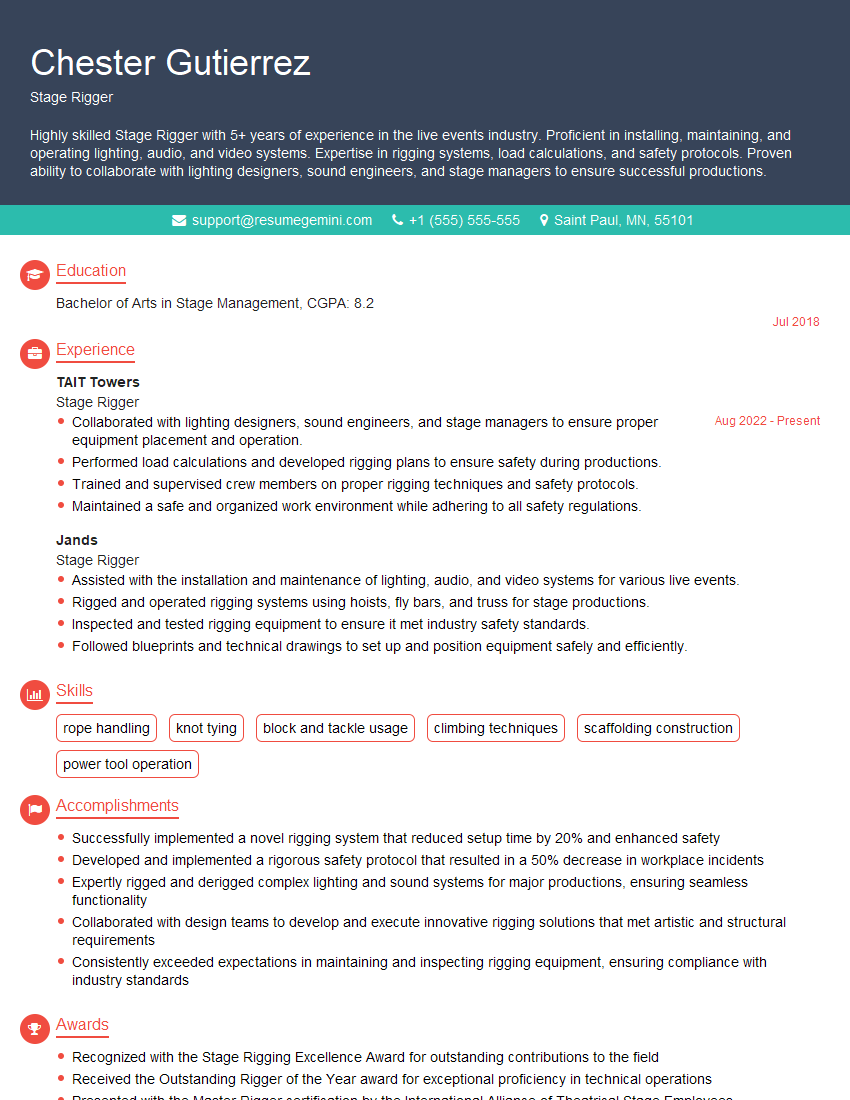
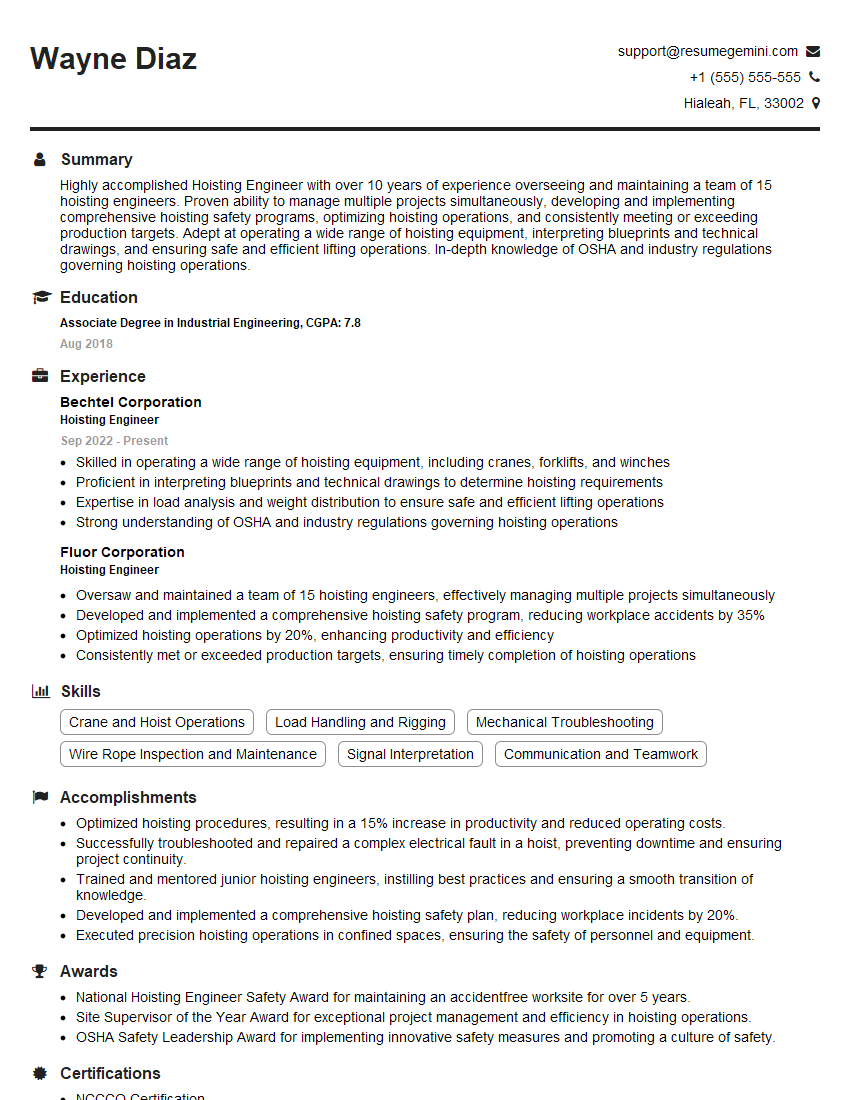
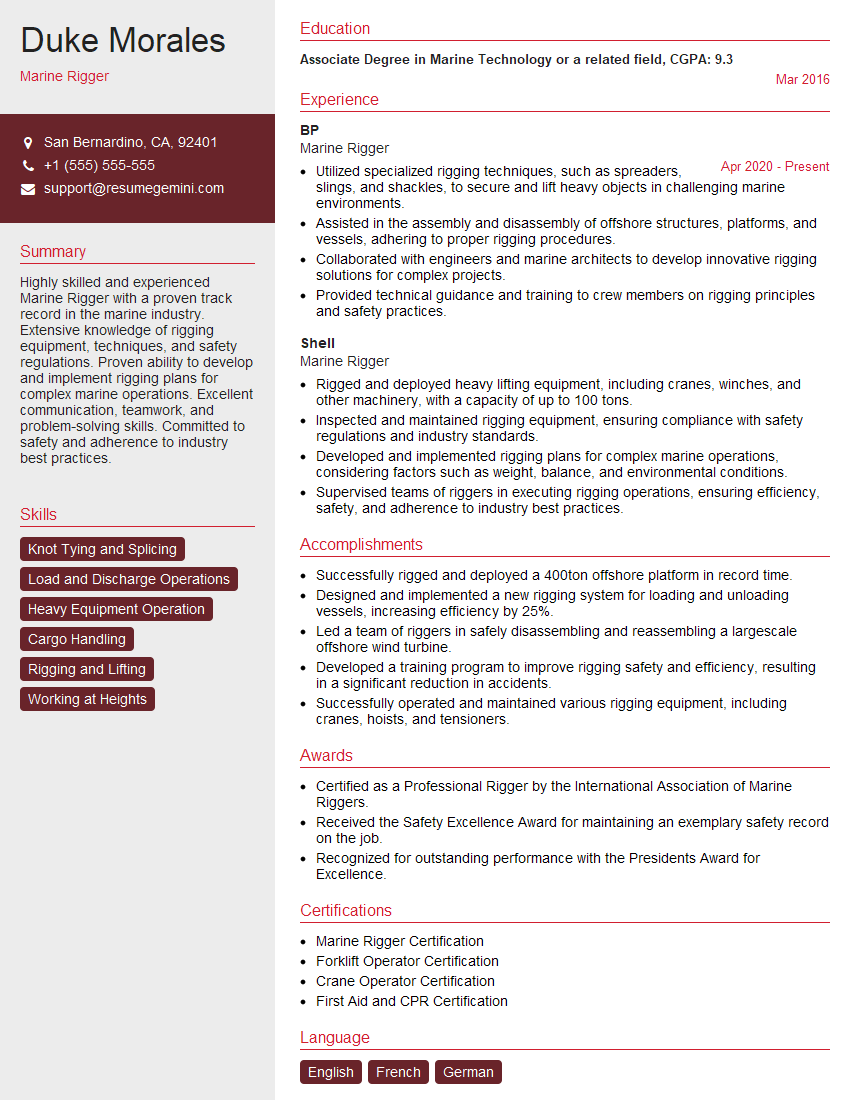
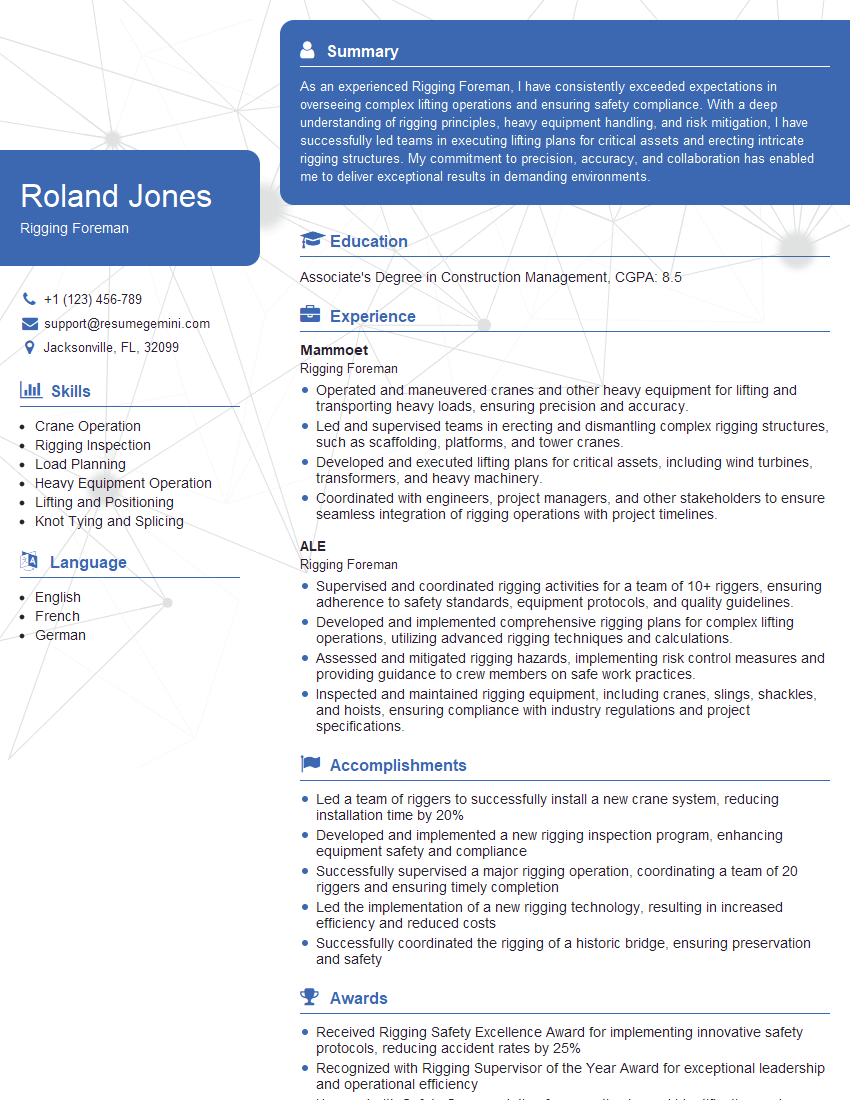
Mastering Rigging opens doors to exciting and rewarding career opportunities in a high-demand field. To stand out from the competition, invest time in crafting a professional, ATS-friendly resume that showcases your skills and experience effectively. ResumeGemini is a trusted resource that can help you build a compelling resume tailored to highlight your rigging expertise. Examples of resumes tailored to Rigger positions are available to help guide you. Take the next step in advancing your career – invest in yourself and your future.






Explore more articles
Users Rating of Our Blogs
Share Your Experience
We value your feedback! Please rate our content and share your thoughts (optional).
What Readers Say About Our Blog
I Redesigned Spongebob Squarepants and his main characters of my artwork.
https://www.deviantart.com/reimaginesponge/art/Redesigned-Spongebob-characters-1223583608
IT gave me an insight and words to use and be able to think of examples
Hi, I’m Jay, we have a few potential clients that are interested in your services, thought you might be a good fit. I’d love to talk about the details, when do you have time to talk?
Best,
Jay
Founder | CEO