Unlock your full potential by mastering the most common Scheduling and Coordinating Yard Operations interview questions. This blog offers a deep dive into the critical topics, ensuring you’re not only prepared to answer but to excel. With these insights, you’ll approach your interview with clarity and confidence.
Questions Asked in Scheduling and Coordinating Yard Operations Interview
Q 1. Explain your experience with yard management software.
My experience with yard management software spans several years and various systems. I’ve worked extensively with both on-premise and cloud-based solutions, including those offering features like real-time tracking, automated scheduling, inventory management, and reporting. For instance, at my previous role, we implemented a system that integrated with our transportation management system (TMS), dramatically improving efficiency in gate operations and reducing turnaround times. This system allowed us to track container locations in real-time, assign tasks to yard staff dynamically, and generate detailed reports on yard utilization and equipment performance. Another system I’ve used provided detailed analytics, identifying bottlenecks and suggesting optimization strategies. I’m proficient in using such software not just as a user, but also understanding the underlying database structures and APIs, allowing me to customize reports and integrate with other systems as needed.
My experience also includes implementing and managing yard management systems across different platforms, from smaller standalone systems to large-scale enterprise solutions. I understand the challenges of data migration, system integration and ensuring data accuracy across different modules.
Q 2. How do you prioritize tasks in a high-pressure yard environment?
Prioritizing tasks in a high-pressure yard environment requires a structured approach. I use a combination of methods, starting with a clear understanding of the yard’s operational goals. Think of it like a conductor leading an orchestra – each instrument (task) has its own importance and timing. I typically employ a system that prioritizes tasks based on urgency, impact, and deadlines. For example, urgent tasks like loading containers for an imminent departure take precedence over routine maintenance. I utilize a Kanban-style board or similar digital tool to visually manage the workflow, making it easy to see what needs immediate attention and what can be scheduled later. This transparency keeps the team informed and fosters collaboration.
Furthermore, I constantly monitor the workload and adjust priorities dynamically based on unforeseen events. Perhaps a critical piece of equipment breaks down; in that case, I’ll immediately re-prioritize tasks to minimize disruption. Communication is key – I keep all relevant stakeholders informed about changes in priorities, ensuring everyone is on the same page.
Q 3. Describe your method for optimizing yard space utilization.
Optimizing yard space utilization is crucial for efficient yard operations. It’s akin to organizing a well-stocked warehouse – maximizing space allows for smoother workflow and minimizes wasted space. My approach involves a multi-pronged strategy. First, I analyze the current yard layout, identifying areas of congestion and underutilization. This often includes using software tools or creating visual maps to gain a clear picture.
Second, I consider implementing strategies such as:
- Improved stacking techniques: Employing methods to maximize vertical space, especially for containers or other stackable items.
- Designated zones: Creating specific zones for different types of equipment or materials, improving flow and minimizing search times.
- Regular audits: Conducting periodic audits to identify and remove unused or obsolete items, freeing up valuable space.
- Equipment optimization: Ensuring that equipment is strategically placed to minimize movement and maximize efficiency.
Finally, I use data-driven insights from yard management systems to continuously monitor space utilization and make adjustments as needed. For example, if I notice a particular area consistently congested, I might redesign that zone or adjust the workflow to alleviate bottlenecks.
Q 4. How do you handle unexpected equipment malfunctions or delays?
Unexpected equipment malfunctions or delays are inevitable in yard operations. My response follows a structured, problem-solving approach, reminiscent of a firefighter quickly assessing and responding to a crisis. First, I immediately assess the situation, determining the severity of the malfunction and its impact on the overall workflow. This may involve communicating with the maintenance team or operators to understand the problem and the estimated time for repair. Second, I re-prioritize tasks, focusing on mitigating the disruption caused by the malfunction or delay. This might involve reassigning tasks to other equipment or personnel or adjusting schedules to account for the downtime. Third, I communicate transparently with all stakeholders, keeping them informed about the situation, the steps being taken, and the projected timeline for resolution. Proactive communication prevents misunderstandings and minimizes potential disruptions further down the line. Finally, after the issue is resolved, I conduct a post-incident review to identify potential preventive measures, ensuring similar situations are less likely to occur in the future.
Q 5. What strategies do you employ to ensure yard safety regulations are met?
Ensuring yard safety is paramount, as important as efficiency. My strategy combines proactive measures with consistent monitoring and enforcement. This involves:
- Regular safety training: Providing comprehensive safety training to all yard personnel, covering topics like equipment operation, hazard identification, and emergency procedures.
- Clear safety protocols: Establishing and enforcing clear safety protocols and guidelines, readily accessible to everyone.
- Regular inspections: Conducting regular inspections of the yard to identify potential hazards such as damaged equipment, obstructed pathways, or poor lighting.
- Use of safety equipment: Enforcing the proper use of personal protective equipment (PPE), such as safety vests, helmets, and gloves.
- Emergency preparedness: Developing and practicing emergency response plans to handle various scenarios, from equipment malfunctions to accidents.
Furthermore, I use data analytics to track safety incidents, identify trends, and implement corrective actions, continuously striving to create a safer work environment.
Q 6. How do you track and manage yard inventory efficiently?
Efficient yard inventory management is essential for smooth operations. My approach combines technology and best practices to ensure accurate and timely tracking. I utilize yard management systems (YMS) or similar software to track inventory levels, locations, and movement. This typically involves barcoding or RFID tagging of items for automated tracking. The system allows for real-time monitoring of inventory levels, enabling proactive ordering of materials or equipment. Regular stocktakes are conducted to verify inventory accuracy against the system records. Discrepancies are investigated and resolved to maintain data integrity.
Beyond the technology, I also implement robust inventory management processes including first-in, first-out (FIFO) inventory management for perishable goods or items with expiration dates. Regular audits are conducted to improve inventory accuracy and identify opportunities for optimization, such as reducing storage space or improving stock rotation. The goal is to ensure that we always have the right items, in the right quantity, and in the right place at the right time.
Q 7. Explain your experience with different yard layout configurations.
My experience encompasses various yard layout configurations, each tailored to specific operational needs and space constraints. I’ve worked with layouts ranging from simple linear arrangements to complex, multi-zoned setups. For example, I’ve worked with:
- Linear layouts: Suitable for smaller yards with limited space, where a simple flow of goods or equipment is needed.
- Parallel layouts: Ideal for larger yards, offering parallel paths for movement and processing, boosting throughput.
- U-shaped layouts: Efficient for handling multiple processes sequentially, ideal for operations requiring multiple stages of processing.
- L-shaped layouts: Useful in situations with space constraints, enabling efficient use of available space.
When designing or evaluating a yard layout, I consider factors such as traffic flow, equipment access, safety regulations, and future expansion needs. Simulation software and modeling techniques can be used to assess various layout options and optimize the design for maximum efficiency and safety before implementation. The right layout significantly impacts productivity and safety in the long run.
Q 8. How do you communicate effectively with drivers and other stakeholders?
Effective communication is the cornerstone of successful yard operations. I utilize a multi-pronged approach, adapting my communication style to the audience. With drivers, I prioritize clear, concise instructions, often using visual aids like maps or numbered lists to ensure understanding, especially during peak times or when dealing with complex delivery instructions. For example, I might use a simple numbered list: 1. Proceed to Dock Bay 3; 2. Present paperwork to attendant; 3. Unload within 30 minutes. For other stakeholders, such as management or clients, I focus on data-driven reports and progress updates, highlighting key performance indicators (KPIs) and proactively addressing potential issues.
Regular team meetings, utilizing both in-person and digital communication tools like group chats or email updates, are vital for transparency and quick problem resolution. Active listening and respectful dialogue are paramount, ensuring all concerns are addressed promptly and effectively. I always aim for proactive communication rather than reactive, anticipating potential bottlenecks and addressing them before they escalate.
Q 9. Describe your experience with load planning and optimization.
Load planning and optimization are crucial for maximizing efficiency and minimizing downtime. My experience involves using various techniques to achieve this. I’ve worked extensively with Transportation Management Systems (TMS) to optimize routes and assign loads based on factors such as vehicle capacity, delivery deadlines, and geographical proximity. This involves careful consideration of weight distribution to prevent overloading and ensure safe transportation.
For instance, I’ve successfully implemented a system where we utilize a software that analyzes real-time yard data, including the location and dimensions of goods, to create optimized loading plans. This software minimizes wasted space and improves the overall turnaround time. Furthermore, I’m adept at using different load planning strategies depending on the specific requirements – for example, employing cross-docking techniques to expedite the process when applicable. I always ensure compliance with all relevant regulations concerning weight, dimensions, and hazardous materials.
Q 10. How do you manage peak workload periods in the yard?
Managing peak workload periods requires a proactive and adaptable approach. My strategy is built on a three-pronged approach: prediction, preparation, and optimization. Firstly, I analyze historical data to predict peak periods accurately. This helps in pre-allocating resources and adjusting staffing schedules in advance. For example, during the holiday season, we’d increase staff and potentially add temporary workers.
Secondly, I implement robust contingency plans for unexpected surges. This could involve having backup equipment available and establishing clear communication protocols to handle potential delays. Finally, optimization involves using technologies that streamline operations. This might include implementing a yard management system (YMS) to optimize truck scheduling and minimize congestion, or using barcode scanners for quicker inventory management. In essence, it’s about being prepared for the unexpected and efficiently using all available resources.
Q 11. What metrics do you use to measure yard efficiency and productivity?
I use a variety of key performance indicators (KPIs) to measure yard efficiency and productivity. These include:
- Throughput time: The total time it takes to unload and load a truck. Tracking this helps identify bottlenecks.
- Truck turnaround time: Time taken for a truck to arrive, unload, load, and depart. A shorter turnaround indicates efficiency.
- Yard utilization rate: Percentage of yard space utilized effectively. This helps optimize space allocation.
- On-time delivery rate: Percentage of shipments delivered on or before the scheduled time.
- Inventory accuracy: Percentage of inventory that is correctly recorded. This impacts efficiency and prevents delays.
- Safety incidents: Number of accidents or near misses. This highlights areas needing improved safety measures.
Regularly monitoring these metrics allows for data-driven decision-making, helping identify areas for improvement and ensuring continuous optimization of yard operations.
Q 12. How do you resolve conflicts between different yard operations?
Conflicts between different yard operations are inevitable, but they can be effectively resolved through a structured approach. My method focuses on open communication, collaboration, and fairness. I start by identifying the root cause of the conflict, actively listening to all involved parties, and documenting the situation.
Next, I facilitate a collaborative problem-solving session, where each party presents their perspective and potential solutions. This ensures everyone feels heard and actively participates in finding a resolution. Fairness is key, ensuring that all involved parties are treated equally and their concerns are given due consideration. When necessary, I may implement temporary procedural changes to address the conflict, documenting the changes and seeking feedback for continuous improvement. Documentation of the conflict resolution is key to preventing future issues of a similar nature.
Q 13. Describe your experience with implementing new yard procedures or technologies.
Implementing new yard procedures or technologies requires a well-planned and phased approach. I begin by thoroughly assessing the need for the change, defining clear objectives, and evaluating the potential impact on existing operations. This involves gathering input from all relevant stakeholders, including drivers and yard personnel, to ensure buy-in and address potential concerns early on.
Next, I develop a detailed implementation plan, outlining the steps involved, timelines, and resource allocation. This plan is crucial for effective execution. Pilot testing of new procedures or technologies in a controlled environment is crucial for identifying and addressing potential issues before full-scale deployment. Thorough training of personnel is paramount, ensuring everyone understands the new processes and can use the new technology effectively. Post-implementation monitoring and evaluation are vital to assess the effectiveness of the changes and make any necessary adjustments.
For example, when implementing a new Yard Management System (YMS), we started with a pilot program in one area of the yard before rolling it out across all operations. This allowed us to refine the system based on real-world feedback and ensure a smoother transition.
Q 14. How do you ensure timely loading and unloading of goods?
Ensuring timely loading and unloading requires a combination of efficient processes, optimized resource allocation, and effective communication. I start by optimizing the scheduling of trucks based on factors like delivery deadlines, product type, and vehicle capacity. This may involve using advanced scheduling software to minimize wait times and maximize throughput.
In addition to scheduling, efficient loading and unloading procedures are crucial. This includes having clearly defined dock assignments, using appropriate equipment (forklifts, conveyors), and ensuring adequate staffing levels. Clear communication with drivers and warehouse personnel is critical to prevent delays and ensure everyone is aware of their responsibilities. Regular monitoring of the process, and prompt response to any issues that arise, such as equipment malfunctions or unexpected delays, is vital to maintaining a smooth and efficient workflow.
For example, using barcode scanners for tracking inventory during loading and unloading eliminates manual data entry errors, improving speed and accuracy.
Q 15. Explain your experience with managing yard maintenance and repairs.
Managing yard maintenance and repairs requires a proactive and systematic approach. It’s not just about fixing things as they break; it’s about preventing breakdowns and ensuring the yard’s infrastructure remains efficient and safe. My approach involves a three-pronged strategy: preventative maintenance, reactive repairs, and continuous improvement.
Preventative Maintenance: This involves scheduling regular inspections of all yard equipment, infrastructure (fencing, lighting, drainage), and paving. We create a detailed schedule based on manufacturer recommendations and our historical data on wear and tear. This includes lubrication, cleaning, and minor adjustments before issues escalate. For example, we schedule regular inspections of forklift batteries and timely replacements of worn tires to prevent unexpected downtime.
Reactive Repairs: When equipment malfunctions or damage occurs, we have a well-defined process for reporting, assessing, and prioritizing repairs. We use a computerized maintenance management system (CMMS) to track work orders, assign technicians, and manage parts inventory. A clear escalation path ensures urgent issues are addressed swiftly. For instance, a broken gate would be prioritized over a minor crack in the pavement.
Continuous Improvement: We regularly analyze maintenance data to identify recurring issues and implement preventive measures. This could involve replacing a frequently failing component with a more robust one, improving training procedures for equipment operators, or adjusting our maintenance schedule based on observed patterns. For example, if we see a spike in flat tires during a particular season, we might adjust tire pressure guidelines or schedule more frequent inspections.
Career Expert Tips:
- Ace those interviews! Prepare effectively by reviewing the Top 50 Most Common Interview Questions on ResumeGemini.
- Navigate your job search with confidence! Explore a wide range of Career Tips on ResumeGemini. Learn about common challenges and recommendations to overcome them.
- Craft the perfect resume! Master the Art of Resume Writing with ResumeGemini’s guide. Showcase your unique qualifications and achievements effectively.
- Don’t miss out on holiday savings! Build your dream resume with ResumeGemini’s ATS optimized templates.
Q 16. How do you handle inclement weather conditions in the yard?
Inclement weather poses significant challenges to yard operations. Safety is paramount, so our response is guided by a detailed weather contingency plan. This plan outlines procedures for different weather events, such as snowstorms, heavy rain, and high winds.
Safety First: During severe weather, we may temporarily suspend operations to ensure the safety of our personnel and equipment. If operations continue, we prioritize safe working practices, including using appropriate safety gear, reducing speed limits for vehicles, and ensuring proper lighting.
Storm Preparation: Before a storm hits, we secure loose materials, clear drainage systems to prevent flooding, and inspect all structures for potential damage. We may also relocate sensitive equipment to a safer location.
Post-Storm Assessment: Following a storm, we perform a thorough assessment of the yard for damage, including fallen trees, debris, and structural damage. We prioritize clearing access routes and repairing any critical infrastructure before resuming normal operations.
Communication: Clear and timely communication with drivers and other stakeholders is crucial. We use weather alerts and updates to inform them of any operational changes or delays.
Q 17. What safety protocols do you implement for forklift operations?
Forklift safety is a top priority. We implement a comprehensive program that includes rigorous training, regular inspections, and strict adherence to safety protocols.
Training: All forklift operators undergo mandatory training that covers safe operating procedures, pre-operation checks, load handling techniques, and emergency response procedures. They must demonstrate proficiency before operating equipment independently.
Pre-Operational Checks: Before each use, operators must perform a thorough pre-shift inspection of the forklift, checking for any mechanical faults, leaks, or damage. They record their findings in a logbook.
Operational Procedures: We have strict rules regarding load capacity, speed limits within the yard, pedestrian safety, and the use of safety devices like seatbelts and horns. Designated pedestrian walkways and forklift traffic lanes are clearly marked.
Regular Inspections: Forklifts undergo regular maintenance and safety inspections by qualified technicians to ensure they are in good working order. We maintain detailed records of these inspections.
Incident Reporting: A clear process for reporting any accidents or near misses is in place, allowing for prompt investigation and corrective actions to prevent future incidents. This fosters a safety-conscious culture.
Q 18. How do you ensure compliance with environmental regulations in the yard?
Environmental compliance is essential. We maintain a comprehensive environmental management system to minimize our impact and ensure adherence to all applicable regulations.
Waste Management: We have a structured waste management plan that includes segregation, recycling, and proper disposal of hazardous materials like used oil and batteries. We work with licensed waste disposal companies to ensure responsible handling.
Spill Prevention and Response: We implement procedures for preventing and responding to spills of hazardous materials, including containment, cleanup, and reporting to the relevant authorities.
Air Quality: We regularly monitor emissions from our equipment and implement measures to minimize air pollution. We also ensure proper maintenance of our vehicles to reduce emissions.
Water Management: We employ measures to prevent water pollution and conserve water usage. This could include regular inspection and maintenance of drainage systems and the use of water-efficient equipment.
Record Keeping: We maintain meticulous records of all environmental activities, including waste generation, emissions, and spill incidents. These records are regularly audited to ensure compliance.
Q 19. Describe your experience with managing yard security measures.
Yard security is critical to protect our assets and personnel. Our security measures are multi-layered and include physical security, access control, and surveillance.
Physical Security: This involves perimeter fencing, secure gates with access control systems, and adequate lighting. Regular patrols of the yard are conducted, especially during nighttime hours.
Access Control: We use a system of ID cards and access codes to restrict entry to authorized personnel only. Visitors are required to sign in and out, and their movements are monitored.
Surveillance: CCTV cameras are strategically placed throughout the yard to monitor activity and deter unauthorized access. The footage is recorded and regularly reviewed.
Security Personnel: Depending on the risk assessment, we might employ security guards, especially during high-risk periods or overnight.
Emergency Response: We have clear procedures for responding to security breaches, including contacting emergency services and coordinating with law enforcement.
Q 20. How do you handle driver check-in and dispatch processes?
Efficient driver check-in and dispatch are crucial for smooth yard operations. We utilize a combination of technology and well-defined processes.
Check-in Process: Drivers check in at a designated point, providing their identification and delivery information. We use a digital system to log their arrival time, assigned dock, and relevant paperwork.
Dispatch Process: We use a yard management system (YMS) to optimize the loading and unloading process. The system assigns docks, tracks trailers, and provides real-time updates to drivers. This ensures efficient workflow and minimizes wait times.
Communication: Clear communication between dispatchers and drivers is vital. We use two-way radios or mobile communication systems to provide real-time updates and address any issues promptly.
Documentation: All driver interactions, including check-in, dispatch, and any incidents, are meticulously documented. This ensures accountability and provides valuable data for operational analysis.
Q 21. How do you track and report key performance indicators (KPIs) for yard operations?
Tracking and reporting KPIs is essential for measuring the efficiency and effectiveness of yard operations. We use a combination of manual and automated data collection methods to monitor key metrics.
Key Performance Indicators (KPIs): We track a variety of KPIs, including:
Throughput:Number of trailers processed per hour or day.Yard Occupancy:Percentage of yard space utilized.Driver Turnaround Time:Time taken for drivers to complete their tasks.On-Time Performance:Percentage of shipments delivered on schedule.Safety Incidents:Number of accidents or near misses.Maintenance Costs:Costs associated with maintaining yard infrastructure and equipment.
Data Collection: Data is collected from various sources, including the YMS, driver logs, maintenance records, and safety reports.
Reporting: We generate regular reports summarizing key KPIs, using charts and graphs to visualize performance trends. This data is used to identify areas for improvement and track the effectiveness of implemented changes.
Data Analysis: We analyze KPI data to identify bottlenecks, inefficiencies, and areas requiring improvement. This analysis guides decisions related to resource allocation, process optimization, and investment in new technologies.
Q 22. How do you use technology to improve yard efficiency and communication?
Technology is crucial for boosting yard efficiency and communication. I’ve leveraged several systems to optimize operations. For example, Yard Management Systems (YMS) provide real-time tracking of equipment and inventory, automating tasks like scheduling and dispatching. This reduces manual errors and improves overall throughput. Imagine trying to manage hundreds of containers manually – a YMS makes that process seamless. Further, radio frequency identification (RFID) technology can track assets accurately, reducing loss and theft. Finally, integrated communication platforms, such as mobile apps and two-way radios with integrated GPS, allow for instant updates between drivers, yard supervisors, and dispatchers, preventing delays caused by miscommunication. For instance, if a container is misplaced, the system alerts the relevant personnel immediately, enabling a swift resolution.
In one instance, I implemented a YMS at a large logistics hub. The system reduced container dwell time by 15% within the first three months, directly translating to significant cost savings and improved on-time delivery rates. This shows the potential of integrating tech to solve logistical challenges.
Q 23. Describe your experience with budget management in a yard environment.
Budget management in a yard environment requires a keen understanding of both fixed and variable costs. Fixed costs include rent, insurance, and equipment maintenance, while variable costs are associated with fuel, labor, and repairs. I use a combination of techniques to manage the budget effectively. Firstly, I meticulously track all expenses, comparing them against the projected budget on a regular basis. This allows for early identification of overspending and proactive measures to mitigate it. I also regularly analyze operational data to identify areas for potential cost reduction, such as optimizing routes, improving equipment utilization, and negotiating better rates with suppliers.
For example, by implementing a preventative maintenance program for equipment, we reduced unexpected repairs by 20%, resulting in significant cost savings. Furthermore, I use data analytics to track key performance indicators (KPIs) like equipment utilization rates and labor costs per unit handled to further enhance efficiency and allocate resources strategically. This data-driven approach helps optimize the budget, ensuring resources are used effectively and maximizing ROI.
Q 24. How do you ensure the proper documentation of all yard activities?
Proper documentation is critical for maintaining accountability, ensuring compliance, and facilitating efficient operations. We use a multi-faceted approach to document all yard activities. This includes utilizing a Transportation Management System (TMS) to record all incoming and outgoing shipments, detailing container numbers, arrival/departure times, and driver information. Each activity is time-stamped and signed digitally by relevant personnel. We also use digital checklists for equipment inspections and maintenance, which are stored in a central database for easy access and audit trails. Additionally, CCTV cameras are strategically placed throughout the yard to provide visual records of activities, especially for security and incident investigation. This approach ensures that complete and accurate records are kept and easily retrievable whenever needed.
For example, in case of an incident or a discrepancy, we can quickly access the relevant records to resolve the issue efficiently. The combination of digital systems and physical records provides a robust and secure documentation system that complies with all industry regulations and internal policies.
Q 25. Explain your approach to problem-solving in a fast-paced yard setting.
Problem-solving in a fast-paced yard environment requires a structured and efficient approach. I utilize a combination of methods. First, I prioritize the issue based on its impact. Urgent issues are tackled immediately, while less urgent ones are addressed systematically. Next, I gather all relevant information by consulting with the involved personnel, reviewing records, and analyzing data. This helps me understand the root cause of the problem. I then brainstorm possible solutions with the team, considering their expertise and input, choosing the most effective and feasible approach. Finally, I implement the solution, monitor its effectiveness, and make any necessary adjustments.
For instance, when faced with a sudden equipment breakdown during peak hours, I first assess the extent of the impact. Then, I immediately dispatch a maintenance team while simultaneously reallocating tasks to other available equipment and personnel to minimize disruption. This proactive, multi-pronged strategy minimizes downtime and ensures smooth operations.
Q 26. What is your experience with different types of yard equipment?
My experience encompasses a wide range of yard equipment, including:
- Forklifts: Various capacities and types (e.g., counterbalance, reach stackers), including experience with maintenance and safety protocols.
- Container handlers: Expertise in operating and maintaining reach stackers and straddle carriers, understanding their specific capabilities and limitations.
- Tractors and trailers: Familiarity with different types of tractors and trailers used for transporting goods within the yard.
- Specialized equipment: Experience with equipment specific to particular cargo types (e.g., specialized cranes for oversized loads).
Beyond operating experience, I have a strong understanding of equipment maintenance, safety regulations, and the importance of regular inspections to prevent breakdowns and ensure operational efficiency. I’m proficient in recognizing potential maintenance needs and scheduling them proactively to minimize downtime.
Q 27. How do you improve teamwork and collaboration within the yard team?
Improving teamwork and collaboration is essential for smooth yard operations. I foster a positive and collaborative work environment through several strategies. Regular team meetings are crucial for open communication, sharing updates, addressing concerns, and acknowledging achievements. I encourage open dialogue and active listening, creating a space where everyone feels comfortable sharing ideas and feedback. I also implement cross-training programs to enhance team members’ skills and versatility, enabling them to support each other effectively.
Recognizing and rewarding outstanding contributions helps build morale and reinforces positive behaviors. For instance, acknowledging a team’s successful collaboration in resolving a challenging situation boosts team spirit and motivates them to work together more effectively. Building trust and mutual respect is paramount; treating everyone fairly and providing clear expectations creates a cohesive and supportive team environment.
Q 28. Describe a time you had to make a difficult decision regarding yard operations.
In a previous role, we faced a severe storm that threatened to disrupt operations significantly. Many containers were at risk of damage. The decision was whether to risk moving them during the storm, potentially putting personnel in danger, or to leave them exposed, risking significant damage and financial losses.
After carefully assessing the situation – weighing the risks of both actions, consulting weather forecasts, and discussing with the team – I made the decision to prioritize safety. We secured the containers as best as possible and suspended operations until the storm passed. Although there was some minor damage, it was significantly less than what could have occurred if we had attempted to move the containers during the storm. This decision, while difficult, demonstrated the importance of prioritizing safety and responsible risk management in a high-pressure environment. The post-storm damage assessment allowed us to develop a better storm preparedness plan.
Key Topics to Learn for Scheduling and Coordinating Yard Operations Interview
- Yard Layout and Optimization: Understanding the physical space, equipment placement, and traffic flow to maximize efficiency and safety.
- Scheduling Techniques: Applying various scheduling methodologies (e.g., FIFO, LIFO, priority-based) to optimize resource allocation and minimize downtime.
- Resource Management: Efficiently allocating personnel, equipment (forklifts, trucks, etc.), and space to meet operational demands.
- Inventory Management: Tracking and managing inventory levels within the yard, ensuring accurate stock counts and minimizing losses.
- Safety Procedures and Regulations: Demonstrating knowledge of safety protocols, including hazard identification, risk assessment, and incident reporting.
- Communication and Collaboration: Effectively communicating with drivers, dispatchers, and other team members to ensure smooth operations.
- Technological Tools and Software: Familiarity with yard management systems (YMS), transportation management systems (TMS), and other relevant software.
- Problem-solving and Decision-Making: Demonstrating the ability to identify and resolve operational challenges, including delays, equipment malfunctions, and unforeseen events.
- Performance Measurement and Reporting: Understanding key performance indicators (KPIs) and generating reports to track efficiency and identify areas for improvement.
- Logistics and Supply Chain Principles: Connecting yard operations to the broader context of the supply chain, understanding its impact on overall efficiency.
Next Steps
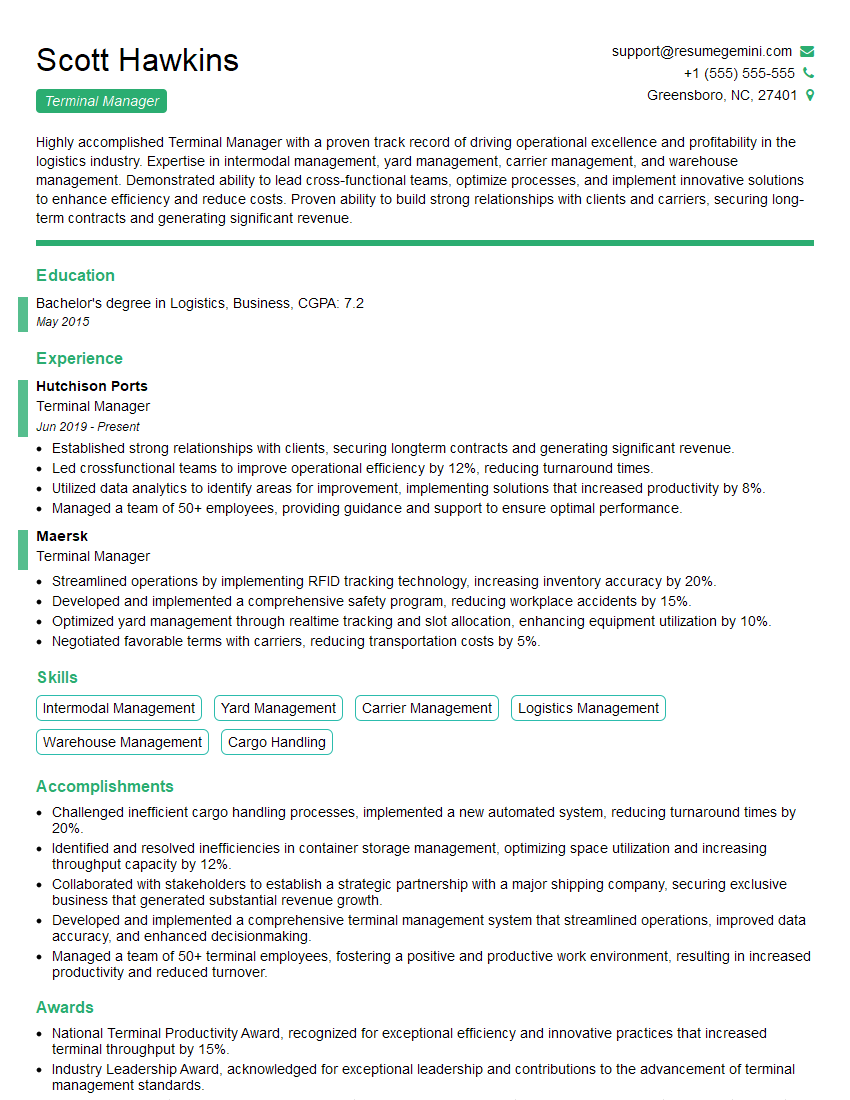
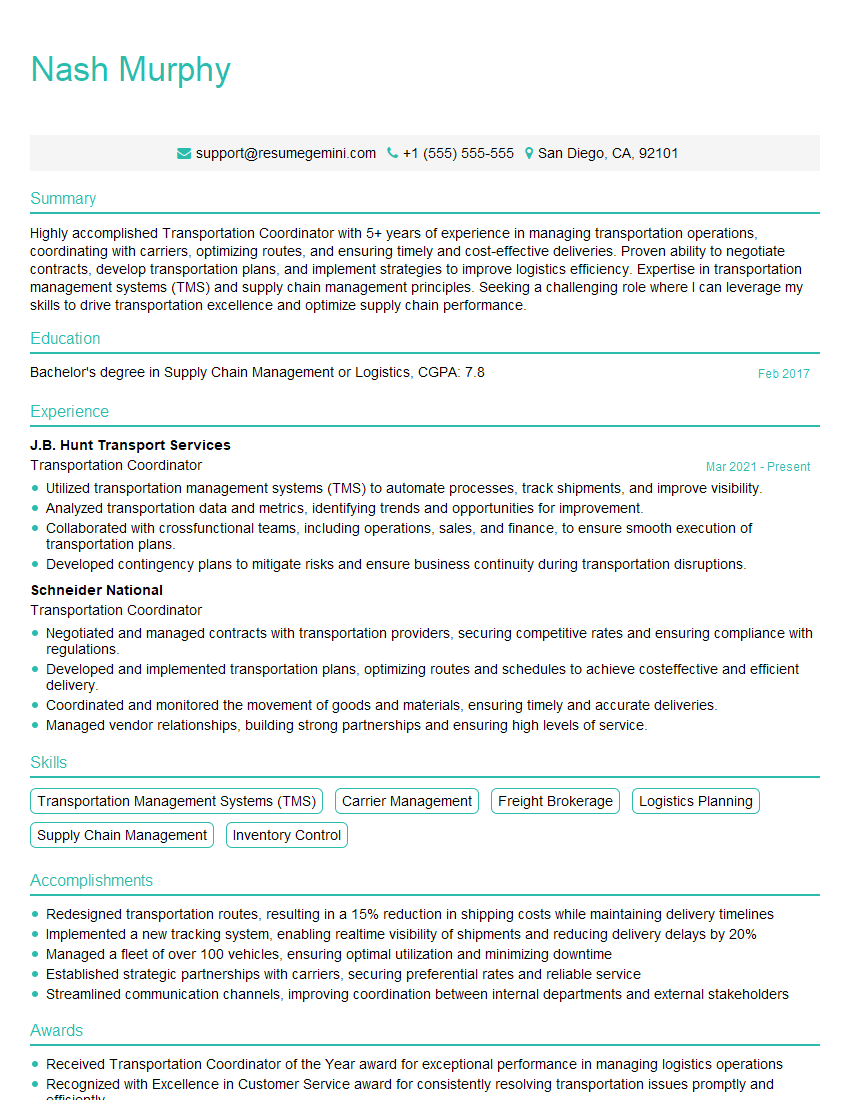
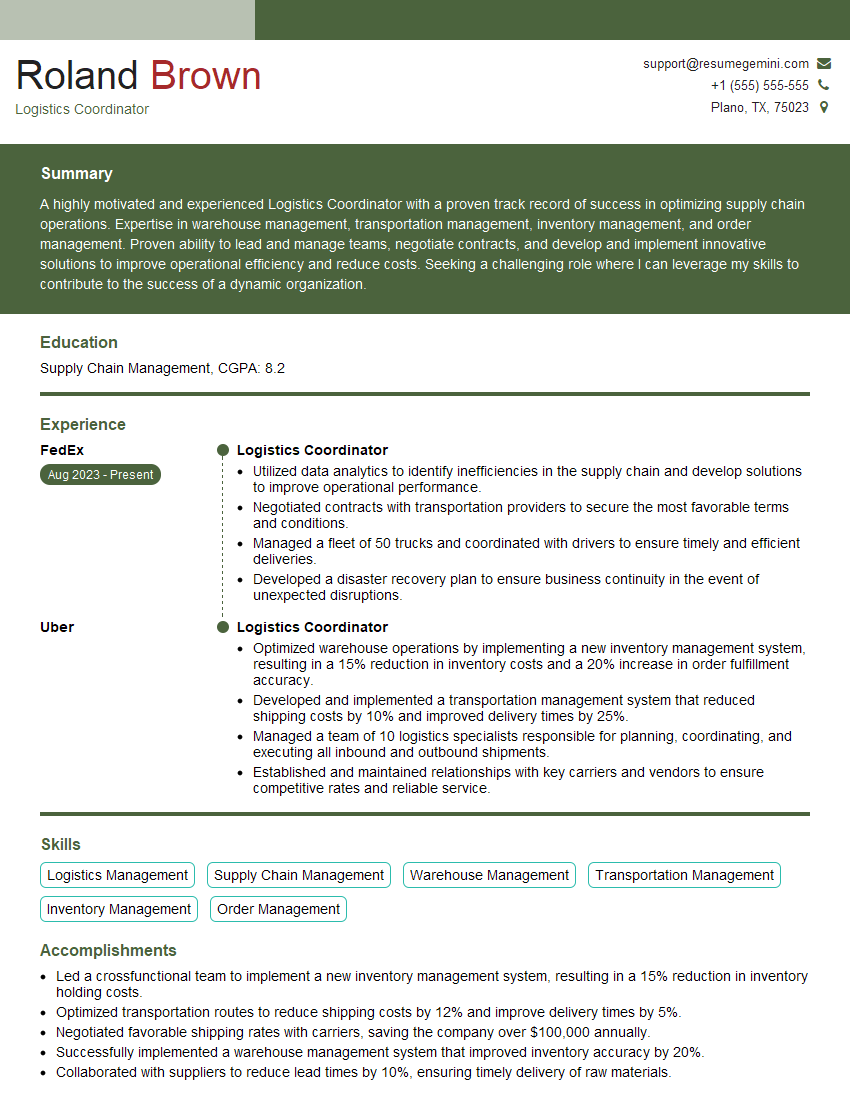
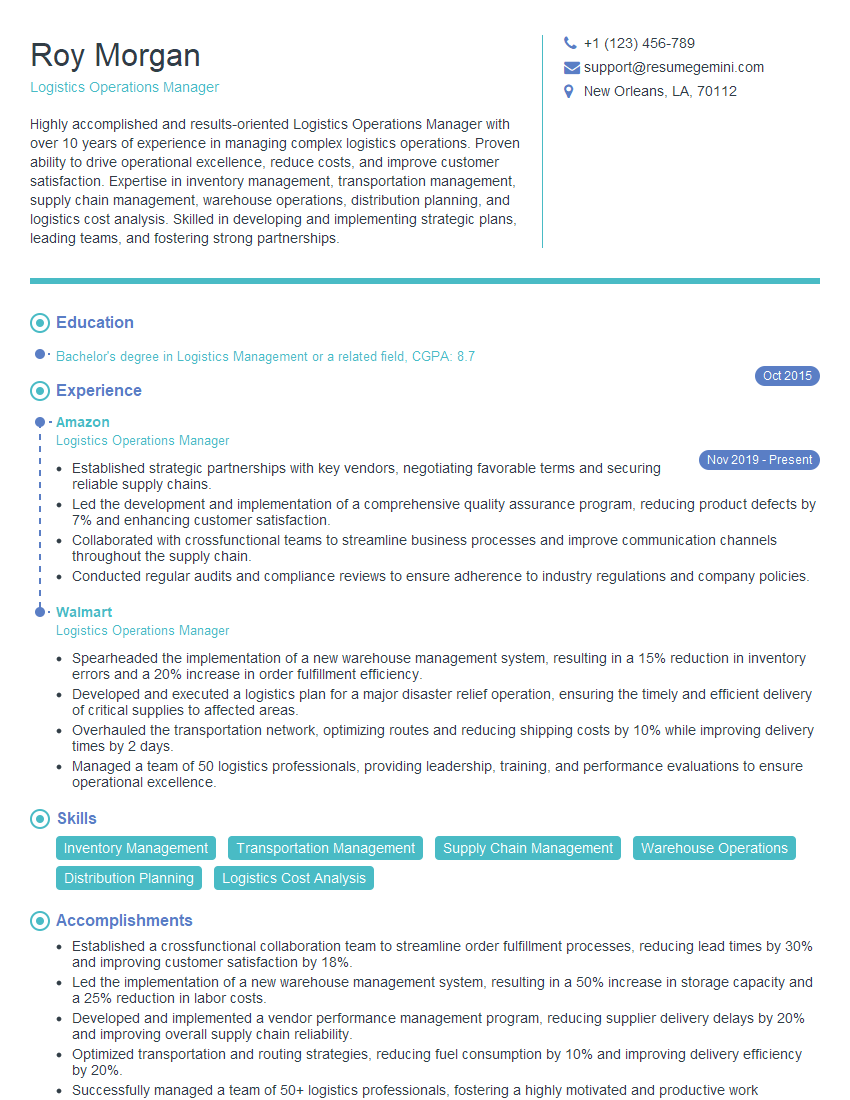
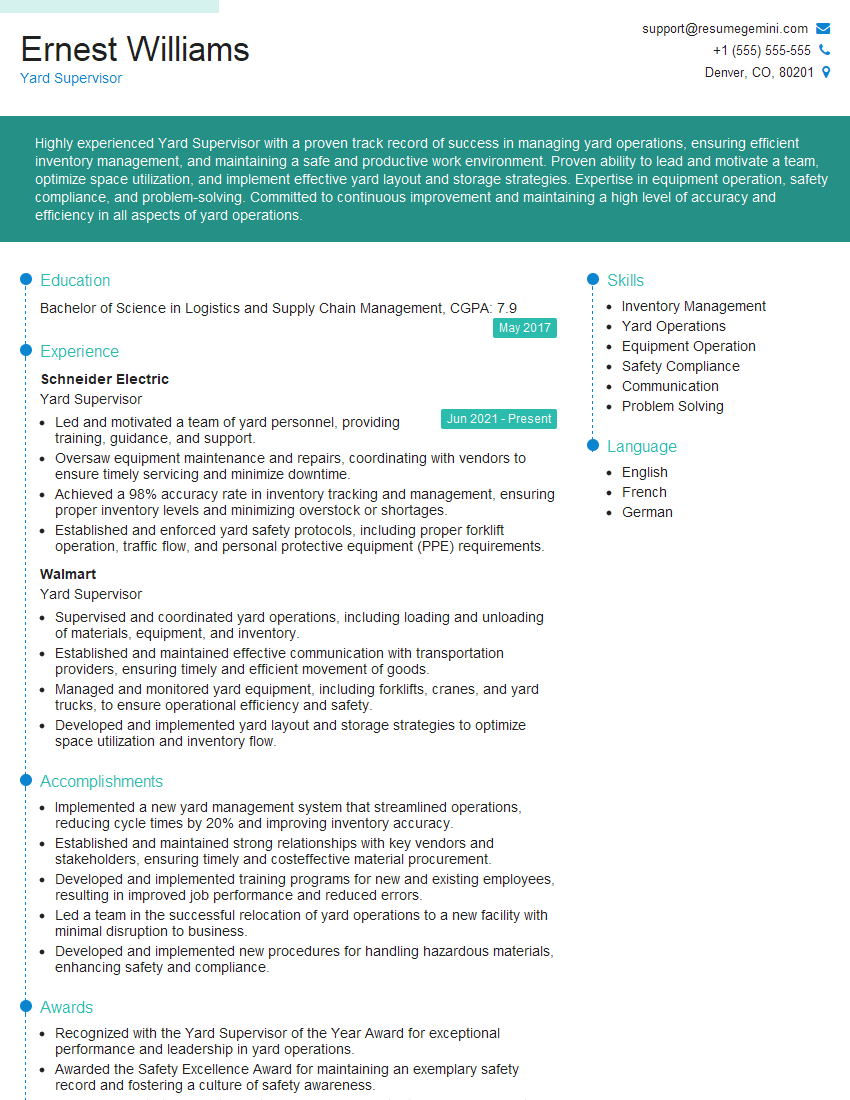
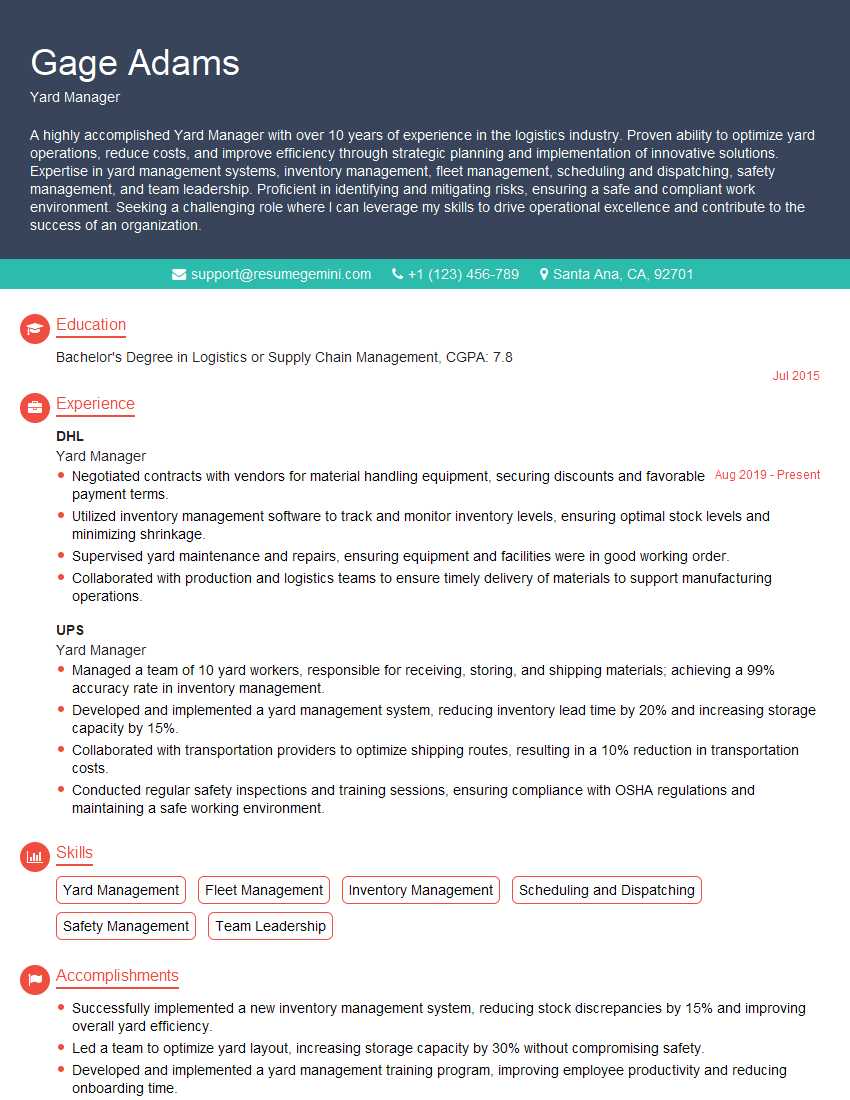
Mastering Scheduling and Coordinating Yard Operations is crucial for career advancement in logistics and supply chain management, opening doors to leadership roles and higher earning potential. An ATS-friendly resume is your key to unlocking these opportunities. To ensure your qualifications shine, consider using ResumeGemini to build a professional resume that highlights your skills and experience effectively. ResumeGemini provides examples of resumes tailored to Scheduling and Coordinating Yard Operations, helping you present yourself in the best possible light to potential employers. Take the next step towards your dream career today!
Explore more articles
Users Rating of Our Blogs
Share Your Experience
We value your feedback! Please rate our content and share your thoughts (optional).
What Readers Say About Our Blog
I Redesigned Spongebob Squarepants and his main characters of my artwork.
https://www.deviantart.com/reimaginesponge/art/Redesigned-Spongebob-characters-1223583608
IT gave me an insight and words to use and be able to think of examples
Hi, I’m Jay, we have a few potential clients that are interested in your services, thought you might be a good fit. I’d love to talk about the details, when do you have time to talk?
Best,
Jay
Founder | CEO