Feeling uncertain about what to expect in your upcoming interview? We’ve got you covered! This blog highlights the most important Science and Social Studies Support interview questions and provides actionable advice to help you stand out as the ideal candidate. Let’s pave the way for your success.
Questions Asked in Science and Social Studies Support Interview
Q 1. Explain your experience supporting students in science experiments.
Supporting students in science experiments involves more than just ensuring they follow the procedure; it’s about fostering inquiry, critical thinking, and a love for scientific exploration. My approach begins with clear and concise instructions, ensuring each student understands the experiment’s objective and the steps involved. I often pre-teach key concepts or vocabulary to ensure a strong foundation. During the experiment, I circulate, providing individualized support—answering questions, offering guidance, and addressing any misconceptions. For example, if students are struggling with measuring liquids accurately, I might provide one-on-one instruction with graduated cylinders and demonstrate proper technique. I encourage collaboration, allowing students to work in pairs or small groups, fostering teamwork and peer learning. Finally, I facilitate a post-experiment discussion, encouraging students to analyze their results, draw conclusions, and identify any potential sources of error. This iterative process—from pre-experiment preparation to post-experiment analysis—is key to ensuring each student gains a valuable learning experience.
Q 2. Describe your methods for differentiating instruction in social studies for diverse learners.
Differentiating instruction in social studies for diverse learners is crucial for creating an inclusive and equitable learning environment. My approach involves utilizing a variety of teaching methods catering to different learning styles and needs. For visual learners, I utilize maps, timelines, and graphic organizers. Auditory learners benefit from discussions, lectures, and podcasts. Kinesthetic learners engage through role-playing, simulations, and hands-on activities like creating historical dioramas. I also differentiate by content, providing varying levels of complexity and support based on individual student needs. For example, students struggling with reading comprehension might receive adapted texts or audio versions of historical accounts, while advanced learners can engage in independent research projects or debates. Regular formative assessments, such as quick checks and exit tickets, allow me to monitor student understanding and adjust my instruction accordingly. This ensures that every student, regardless of their learning style or prior knowledge, has the opportunity to succeed.
Q 3. How do you adapt science activities for students with different learning styles?
Adapting science activities for different learning styles requires a multifaceted approach. For visual learners, I use diagrams, charts, and videos to illustrate concepts. For auditory learners, I incorporate discussions, lectures, and audio recordings. Kinesthetic learners benefit from hands-on activities, simulations, and experiments. For example, when teaching about the water cycle, I might have visual learners create a poster, auditory learners participate in a class discussion about weather patterns, and kinesthetic learners build a model of the water cycle using various materials. I also provide differentiated materials—simpler instructions, adapted lab sheets, or additional support for students who need it. I encourage students to choose methods of presentation that align with their strengths, such as creating a presentation, writing a report, or designing a model.
Q 4. What strategies do you use to engage students in social studies discussions?
Engaging students in social studies discussions requires creating a safe and respectful classroom environment where students feel comfortable sharing their thoughts and ideas. I start by posing open-ended questions that encourage critical thinking and different perspectives. For example, instead of asking ‘What happened in the American Revolution?’, I might ask ‘What were the key causes of the American Revolution, and how did these causes impact the outcome?’. I use collaborative learning strategies, such as think-pair-share or jigsaw activities, to encourage participation and peer learning. I model active listening and respectful dialogue, demonstrating how to engage in constructive disagreement. I also incorporate visual aids and primary source documents to stimulate discussion and provide concrete examples. Creating a ‘talking stick’ or assigning roles within the discussion can help ensure equitable participation from all students.
Q 5. How do you assess student understanding in science and social studies?
Assessing student understanding in science and social studies requires a variety of methods to provide a comprehensive picture of their learning. Formative assessments, such as quizzes, exit tickets, and class discussions, provide ongoing feedback and inform instruction. Summative assessments, like unit tests and projects, evaluate overall learning outcomes. In science, I use practical assessments like experiments and lab reports to evaluate procedural understanding and data analysis skills. In social studies, I might use essays, presentations, or debates to assess critical thinking and communication skills. I also utilize alternative assessments, such as portfolios, projects, and creative writing assignments, to cater to different learning styles and provide opportunities for students to demonstrate their understanding in diverse ways. Providing feedback that is both specific and constructive is crucial to help students improve their understanding.
Q 6. Describe your experience with classroom management techniques in a science or social studies setting.
Effective classroom management is essential for a productive learning environment. In both science and social studies, I focus on building positive relationships with students based on respect and trust. I establish clear expectations and routines from the beginning of the year, ensuring students understand classroom rules and procedures. Proactive strategies, such as engaging lessons and clear instructions, minimize disruptions. When addressing misbehavior, I use a restorative approach, focusing on understanding the root cause of the behavior and helping students develop appropriate coping mechanisms. Positive reinforcement, such as praise and rewards, is key to encouraging positive behavior. I also incorporate student voice in classroom management, seeking their input on rules and procedures, empowering them to take ownership of their learning environment. Differentiation in classroom management, adjusting strategies based on individual needs, is crucial to ensure success for all students.
Q 7. How do you incorporate technology into science and social studies instruction?
Technology plays a significant role in enhancing science and social studies instruction. In science, simulations and virtual labs provide opportunities for hands-on learning when real-world experiments are impractical or unsafe. Interactive online resources, such as educational games and videos, can make learning more engaging. Data analysis tools can help students analyze scientific data and draw conclusions. In social studies, interactive maps, timelines, and virtual field trips bring history and geography to life. Students can use online research tools to explore primary source documents and conduct independent research. Collaboration tools, such as online forums and shared documents, facilitate group projects and discussions. Technology also allows for personalized learning experiences, with adaptive learning platforms providing tailored instruction based on individual student needs. Ethical and responsible use of technology, including digital citizenship and data privacy, are crucial aspects of my instruction.
Q 8. Explain your knowledge of current science and social studies curriculum standards.
My understanding of current science and social studies curriculum standards is comprehensive. I stay updated on frameworks like the Next Generation Science Standards (NGSS) and the Common Core State Standards (CCSS), recognizing their emphasis on inquiry-based learning, critical thinking, and the integration of different disciplines. For science, this includes a deep understanding of the science and engineering practices, crosscutting concepts, and disciplinary core ideas. In social studies, I’m familiar with the focus on historical thinking skills, civic engagement, geographic reasoning, and economic understanding. I regularly consult state-specific standards and curriculum documents to tailor my support to the specific needs of the schools and districts I work with. For example, I know that many states are emphasizing project-based learning and the use of primary sources in both science and social studies.
I also understand the nuances of adapting these standards for diverse learners, ensuring accessibility and inclusivity in curriculum implementation. This includes familiarity with differentiated instruction strategies and accommodations for students with disabilities.
Q 9. How do you collaborate with teachers to support student learning?
Collaboration with teachers is central to my role. I work alongside them to identify areas where students are struggling and develop strategies to address these challenges. This might involve co-teaching lessons, providing professional development on specific pedagogical approaches, or modeling effective classroom management techniques. I frequently observe classrooms, providing constructive feedback and suggesting modifications to lesson plans to enhance student engagement and understanding.
For example, I recently worked with a 5th-grade teacher who was struggling to incorporate primary source analysis into her social studies lessons. Together we developed a series of lesson plans that scaffolded students’ skills, starting with simpler activities and gradually increasing the complexity of the tasks. We also collaborated on creating rubrics to assess student understanding of primary source analysis.
My approach emphasizes a partnership, building trust and fostering a collaborative environment where teachers feel empowered to share their concerns and explore innovative teaching strategies.
Q 10. Describe your experience working with students with Individualized Education Programs (IEPs).
I have extensive experience supporting students with Individualized Education Programs (IEPs). My approach is always student-centered, focusing on understanding each student’s unique learning needs and strengths. This involves carefully reviewing IEPs to identify specific accommodations and modifications required for successful participation in science and social studies. I collaborate closely with special education teachers, general education teachers, and related service providers (such as speech therapists or occupational therapists) to ensure a cohesive and supportive learning environment.
For instance, I might work with a student with an IEP who has difficulty with reading comprehension to provide adapted materials, such as audio books or simplified text versions. For a student with ADHD, I may suggest strategies for managing attention and organization, such as using graphic organizers or breaking down tasks into smaller, more manageable steps. I’m proficient in using assistive technology and adapting assessment methods to meet individual needs.
I believe that every student can learn and succeed, and I am committed to finding the best possible ways to support students with IEPs to reach their full potential.
Q 11. How do you promote critical thinking skills in science and social studies?
Promoting critical thinking skills is a cornerstone of my work. In science, this involves encouraging students to design experiments, analyze data, and evaluate evidence. For example, I might guide students to develop hypotheses, collect and interpret data, and draw conclusions based on evidence, rather than simply memorizing facts. I also emphasize the importance of questioning assumptions and considering alternative explanations.
In social studies, critical thinking involves analyzing primary and secondary sources, identifying bias, and evaluating different perspectives. I guide students to engage in historical debates, consider multiple interpretations of events, and develop their own informed opinions based on evidence. I might use activities like debates or simulations to encourage students to critically examine different viewpoints.
My approach emphasizes open-ended questions, collaborative learning, and opportunities for students to express their ideas and engage in thoughtful discussions. The goal is to cultivate students’ ability to think independently, solve problems effectively, and make informed decisions.
Q 12. How do you use formative and summative assessments to inform instruction?
Formative and summative assessments are crucial for informing instruction. Formative assessments, like quizzes, exit tickets, and class discussions, provide ongoing feedback on student learning, allowing me to adjust my instruction in real-time. This allows for immediate identification of misconceptions and the implementation of corrective strategies. For instance, if a formative assessment reveals a widespread misunderstanding of a particular scientific concept, I can immediately re-teach the concept using a different approach or provide additional support.
Summative assessments, such as unit tests or projects, provide a broader picture of student learning at the end of a unit or course. This data informs my future instruction and helps me identify areas where I need to improve my teaching methods or adjust the curriculum. For example, if a summative assessment shows that students struggled with a particular type of problem-solving, I can adjust my instruction for future units to emphasize that skill.
The data from both types of assessment are used to personalize learning, adapting my approach to meet the needs of individual students and the class as a whole. I analyze assessment data to inform decisions about instructional strategies, resource allocation, and future curriculum development. This cyclical process of assessment, analysis, and adjustment is essential for effective teaching.
Q 13. Explain your understanding of differentiated instruction in science and social studies.
Differentiated instruction is essential for meeting the diverse needs of all learners. In science and social studies, this means adapting my teaching methods and materials to cater to students’ varied learning styles, strengths, and weaknesses. This might involve providing students with different types of activities (e.g., hands-on experiments, research projects, debates), offering varied levels of support (e.g., graphic organizers, peer tutoring, one-on-one assistance), or adjusting the complexity of the tasks (e.g., providing tiered assignments).
For example, in a social studies lesson on the American Revolution, I might offer students a choice of projects: some might write essays, some might create presentations, and some might build models. In science, I might provide different levels of scaffolding for lab experiments, with some students needing more structured guidance than others. I might also use flexible grouping strategies, allowing students to work independently, in pairs, or in small groups depending on their learning needs and preferences. This ensures that all students have access to the curriculum and can demonstrate their learning in ways that are appropriate to their individual strengths.
Q 14. How do you create a positive and inclusive learning environment?
Creating a positive and inclusive learning environment is paramount. I strive to foster a classroom culture where all students feel respected, valued, and safe to take risks. This involves establishing clear expectations for behavior, building positive relationships with students, and creating a classroom atmosphere where collaboration and mutual support are encouraged. I explicitly teach students about diversity and inclusivity, encouraging them to appreciate and celebrate their differences.
I use culturally responsive teaching practices, incorporating diverse perspectives and materials into my lessons. I actively seek out opportunities for students to learn from each other, promoting peer learning and collaboration. For example, I might use group projects that require students to work together and learn from each other’s strengths. I also work to ensure that my classroom is physically accessible and accommodating to all students, including those with disabilities.
I actively monitor the classroom environment, addressing any instances of bullying or discrimination promptly and effectively. I believe that when students feel safe and respected, they are more likely to engage in learning and achieve their full potential.
Q 15. Describe your experience with developing and implementing lesson plans.
Developing and implementing effective lesson plans is the cornerstone of successful teaching. My approach is multifaceted, beginning with a deep understanding of the curriculum standards and student learning objectives. I then design lessons that incorporate diverse learning styles, catering to visual, auditory, and kinesthetic learners. For example, in a unit on the American Revolution, I wouldn’t just rely on lectures. Instead, I’d incorporate primary source analysis (letters from soldiers), interactive simulations (a mock trial of a Loyalist), and hands-on activities (creating timelines or maps).
My lesson plans always include clear learning objectives, engaging activities, assessment strategies, and differentiated instruction to meet the needs of all students. I regularly review and revise my plans based on student performance and feedback, ensuring continuous improvement. I utilize various lesson plan templates, adapting them to suit the specific topic and grade level. For instance, I might use a backward design approach, starting with the assessment, to ensure alignment between teaching and learning outcomes.
Career Expert Tips:
- Ace those interviews! Prepare effectively by reviewing the Top 50 Most Common Interview Questions on ResumeGemini.
- Navigate your job search with confidence! Explore a wide range of Career Tips on ResumeGemini. Learn about common challenges and recommendations to overcome them.
- Craft the perfect resume! Master the Art of Resume Writing with ResumeGemini’s guide. Showcase your unique qualifications and achievements effectively.
- Don’t miss out on holiday savings! Build your dream resume with ResumeGemini’s ATS optimized templates.
Q 16. How do you maintain classroom organization and manage materials?
Maintaining a well-organized classroom is crucial for effective learning. I believe in establishing clear routines and procedures from day one. This includes designated areas for materials, clear labeling of storage, and consistent procedures for transitions between activities. Student involvement is key; I often delegate responsibilities like distributing materials or managing classroom supplies, fostering a sense of ownership and responsibility.
Material management involves careful planning and organization. I create a detailed inventory of all teaching resources and regularly check for missing or damaged items. I utilize storage solutions like labeled bins, shelves, and drawers to keep materials organized and easily accessible. Digital resources are also carefully managed using cloud storage and organized folders. Regular purging of outdated materials ensures efficient space utilization and minimizes clutter.
Q 17. How do you address student misconceptions in science and social studies?
Addressing student misconceptions is a vital part of teaching science and social studies. I actively encourage students to ask questions and express their understanding. I use formative assessments, like quick quizzes or exit tickets, to identify common misconceptions early on. Once identified, I address these misconceptions using various strategies.
For example, if students believe the Earth is flat, I’d use visual aids like globes, videos, and interactive simulations to demonstrate its spherical shape. In social studies, if students misunderstand the concept of democracy, I’d use real-world examples, discussions, and role-playing activities to clarify the concept. I also incorporate peer teaching and collaborative learning activities where students can help each other clarify misunderstandings.
Q 18. Explain your experience with behavior management strategies.
Behavior management is proactive rather than reactive. I establish clear expectations and classroom rules collaboratively with students, ensuring they understand the reasons behind them. Consistent application of these rules is crucial. I use positive reinforcement strategies, such as praise, rewards, and positive feedback, far more frequently than punishment. This builds a positive classroom climate and encourages desired behaviors.
When addressing misbehavior, I focus on understanding the root cause. Sometimes, a student’s disruptive behavior stems from frustration, boredom, or unmet needs. I use restorative justice practices to address conflicts and repair harm. This involves collaborative problem-solving between students and myself, focusing on repairing relationships and restoring community rather than solely punishing the individual. For more serious or persistent issues, I collaborate with parents and administrators.
Q 19. How do you communicate effectively with parents and guardians?
Effective communication with parents and guardians is essential for student success. I utilize various methods, including regular newsletters, emails, parent-teacher conferences, and phone calls. I keep parents informed about student progress, both academic and social-emotional, through regular updates. I strive to maintain open and honest communication, sharing both successes and challenges. I encourage parental involvement by inviting them to participate in classroom activities or events.
In situations where a student is struggling, I proactively reach out to parents to collaborate on solutions. I listen to their concerns and work together to develop a support plan. I always strive to maintain a respectful and collaborative partnership with parents, recognizing their crucial role in their child’s education.
Q 20. How do you use data to inform your instruction?
Data-driven instruction is central to my teaching practice. I use various types of data to inform my instruction, including formative and summative assessments, student work samples, and observations. Formative assessment data, such as quizzes and exit tickets, helps me identify areas where students are struggling and adjust my instruction accordingly. Summative assessment data, such as unit tests and projects, provide a comprehensive picture of student learning at the end of a unit.
For example, if I notice that many students are struggling with a specific concept on a quiz, I’ll re-teach that concept using different strategies or provide additional support. I use data to track student progress over time, identify trends, and adjust my instruction to meet the needs of individual students and the class as a whole. I regularly analyze assessment data to identify patterns and inform future lesson planning.
Q 21. Describe your experience with project-based learning in science or social studies.
Project-based learning (PBL) is a highly effective approach in both science and social studies. I’ve implemented numerous PBL projects, such as designing and building a model of a Roman aqueduct (social studies) or conducting an experiment to investigate the effects of pollution on water quality (science). These projects allow students to apply their knowledge and skills in a meaningful and engaging way.
In a PBL project, students work collaboratively to solve a real-world problem or answer a compelling question. The process encourages critical thinking, problem-solving, and collaboration. I provide students with a framework and guidelines but allow them significant autonomy in their approach. The projects often culminate in a presentation or product that demonstrates their learning. The assessment focuses not only on the final product but also on the process, collaboration, and critical thinking skills developed throughout the project.
Q 22. How do you incorporate real-world applications into your teaching?
Incorporating real-world applications is crucial for making science and social studies engaging and relevant. I believe learning should be experiential, connecting classroom concepts to students’ lives.
Science: Instead of just defining photosynthesis, we conduct experiments growing plants under different light conditions and analyze the results. We discuss the impact of climate change on plant life, connecting scientific concepts to current events and environmental concerns. We might even investigate local ecosystems and the challenges they face, fostering environmental stewardship.
Social Studies: When studying the American Revolution, we don’t just read about it; we analyze primary source documents, debate the motivations of key figures, and even create mock trials to understand the legal and ethical dimensions of the conflict. We explore the lasting impact of the revolution on our current political systems and social structures, connecting the past to the present. We might also analyze current events through the lens of historical precedent.
This approach makes learning more meaningful because students see the direct application of what they are learning, building their understanding and fostering a deeper appreciation for the subject matter.
Q 23. How do you use various assessment tools to measure student progress?
I utilize a variety of assessment tools to get a comprehensive picture of student progress, moving beyond simple tests. My approach is multifaceted and caters to diverse learning styles.
Formative Assessments: These are ongoing, informal assessments like class discussions, quick quizzes, and exit tickets. They provide valuable feedback and help me adjust my teaching in real-time.
Summative Assessments: These are formal assessments like unit tests and projects, which measure mastery of key concepts. These might include essays, presentations, or lab reports, depending on the subject.
Performance-Based Assessments: These assess students’ ability to apply their knowledge and skills in practical settings. For example, in science, students might design and conduct an experiment. In social studies, they might create a presentation analyzing a historical event.
Observations: I regularly observe students during class activities to assess their understanding and engagement. This provides valuable qualitative data complementing quantitative results from tests.
By using a combination of these tools, I gain a holistic understanding of each student’s progress, identifying areas of strength and areas needing further support. This data informs my instruction and allows for individualized learning plans.
Q 24. Describe your experience with creating engaging and interactive lessons.
Creating engaging and interactive lessons is central to my teaching philosophy. I believe that learning should be active and enjoyable.
Inquiry-Based Learning: I frequently use inquiry-based learning, where students formulate their own questions and explore answers through investigation. This approach fosters critical thinking and problem-solving skills.
Technology Integration: I incorporate technology to enhance engagement. Simulations, interactive games, and online resources make learning more dynamic and accessible. For example, using virtual field trips to explore historical sites or using interactive simulations to understand scientific concepts.
Collaborative Projects: Group projects and discussions encourage teamwork and peer learning. Students learn from each other’s perspectives and develop valuable communication skills.
Gamification: Introducing game-like elements, like points or challenges, can boost motivation and engagement, particularly for younger learners.
For instance, in a social studies class studying ancient civilizations, students might work in groups to create a museum exhibit showcasing their findings. In science, they might engage in a hands-on experiment, analyzing results collaboratively. These approaches make learning fun, relevant, and memorable.
Q 25. How do you stay current with best practices in science and social studies education?
Staying current with best practices is paramount in education. I actively seek out professional development opportunities to refine my skills and knowledge.
Professional Organizations: I am a member of relevant professional organizations like the National Science Teachers Association (NSTA) and the National Council for the Social Studies (NCSS), which provide access to research, publications, and conferences.
Workshops and Conferences: I attend workshops and conferences to learn about new teaching methods, curriculum developments, and effective strategies.
Journals and Publications: I regularly read educational journals and publications to stay updated on the latest research and best practices in science and social studies education.
Online Resources: I utilize various online resources, including webinars and online courses, to expand my knowledge and enhance my teaching skills.
Continuous learning is essential to ensure I am providing students with the most effective and engaging learning experiences. It’s a commitment to lifelong professional growth.
Q 26. Explain your knowledge of different learning theories.
My understanding of learning theories informs my teaching methodology. I integrate various theories to cater to diverse learners.
Constructivism: This theory emphasizes that learners actively construct their own knowledge based on prior experiences. I facilitate this by providing opportunities for exploration, discovery, and reflection.
Behaviorism: This focuses on the importance of reinforcement and feedback. I use positive reinforcement to encourage desired behaviors and provide constructive feedback to guide learning.
Cognitivism: This theory highlights the role of mental processes in learning, such as memory and problem-solving. I use strategies that enhance memory, such as mnemonics, and encourage critical thinking through inquiry-based activities.
Social Constructivism: This emphasizes the social nature of learning. I create opportunities for collaboration and peer learning, encouraging students to share ideas and build understanding together.
By blending these theories, I create a learning environment that is engaging, supportive, and caters to a wide range of learning styles.
Q 27. How do you handle challenging student behaviors?
Addressing challenging student behaviors requires a proactive and supportive approach. My strategy is rooted in understanding the underlying causes of the behavior.
Positive Relationships: Building positive relationships with students is crucial. When students feel respected and understood, they are more likely to cooperate.
Clear Expectations: Establishing clear rules and expectations from the outset helps prevent behavioral issues. These should be consistently enforced.
Early Intervention: Addressing minor behavioral issues early on can prevent them from escalating. This might involve a quiet conversation or a brief redirect.
Differentiated Instruction: Addressing learning gaps and providing appropriate support can significantly improve behavior. Students who struggle academically or feel disengaged are more likely to act out.
Collaboration: Working with parents, administrators, and other support staff can provide additional resources and perspectives to effectively address challenging behaviors.
I believe in restorative practices, focusing on repairing harm and promoting reconciliation rather than simply punishing misbehavior. A calm, consistent, and supportive approach is key to creating a positive classroom environment.
Q 28. What are your strengths and weaknesses as an educational support professional?
My strengths lie in my ability to create engaging and interactive learning experiences, my deep subject matter knowledge, and my commitment to building strong relationships with students. I am adaptable, responsive to individual needs, and passionate about fostering a love of learning.
An area for improvement is further development of my skills in managing large classes, specifically in maintaining a balance between individual attention and whole-class instruction. I am actively working on this through professional development and by implementing strategies to promote student self-management.
Key Topics to Learn for Science and Social Studies Support Interview
- Understanding Curriculum Alignment: Analyze how science and social studies concepts connect across different grade levels and learning objectives. Consider practical applications like lesson planning and resource selection.
- Differentiated Instruction Strategies: Explore various teaching methods to cater to diverse learning styles and needs within a science and social studies context. Think about adapting materials and assessments for students with varying abilities.
- Classroom Management Techniques: Discuss effective strategies for creating a positive and productive learning environment, particularly in the context of hands-on science activities and engaging social studies discussions. Consider behavior management and student engagement techniques.
- Assessment and Evaluation Methods: Understand different approaches to assessing student learning in science and social studies, including formative and summative assessments. Think about analyzing student performance data to inform instruction.
- Inquiry-Based Learning: Explore the principles and practical application of inquiry-based learning in both science and social studies. Consider designing projects and activities that encourage student-led investigation and critical thinking.
- Technology Integration: Discuss how technology can enhance teaching and learning in science and social studies. Consider specific software, tools, and resources you are familiar with and how you would use them in the classroom.
- Collaboration and Communication: Highlight your skills in collaborating with teachers, administrators, and parents to support student learning. Discuss effective communication strategies for conveying information and building relationships.
Next Steps
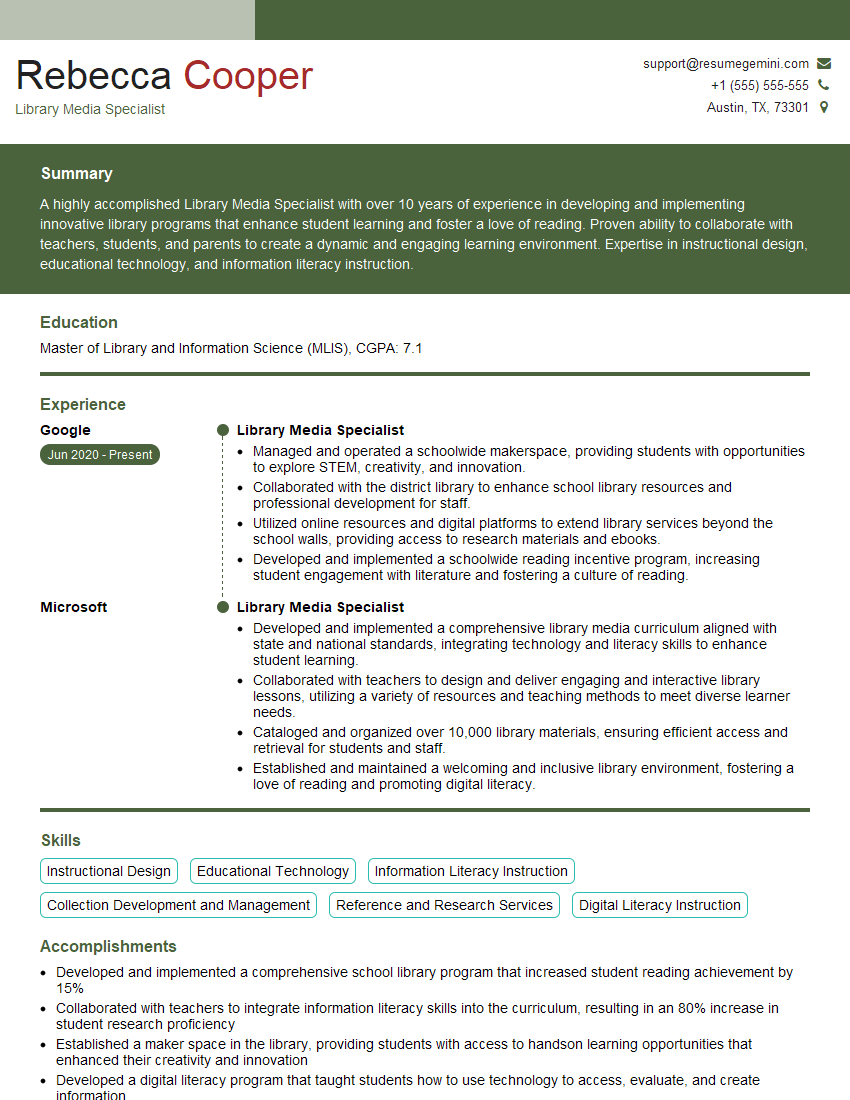
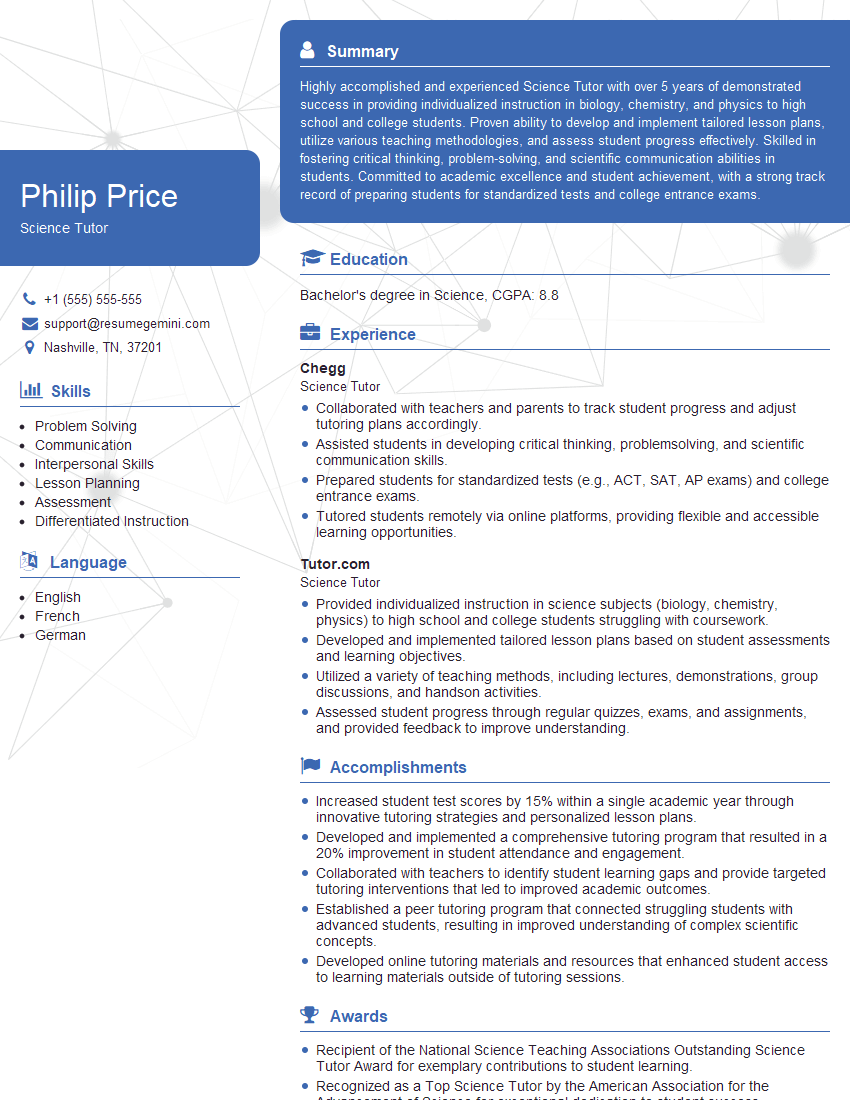
Mastering Science and Social Studies Support opens doors to rewarding careers focused on fostering a love of learning in young minds. Your expertise in curriculum alignment, differentiated instruction, and assessment strategies is highly valuable to schools and educational institutions. To maximize your job prospects, focus on crafting an ATS-friendly resume that showcases your skills and experience effectively. ResumeGemini is a trusted resource that can help you build a professional and impactful resume tailored to your unique qualifications. Examples of resumes tailored to Science and Social Studies Support are available to help guide you through the process.
Explore more articles
Users Rating of Our Blogs
Share Your Experience
We value your feedback! Please rate our content and share your thoughts (optional).
What Readers Say About Our Blog
I Redesigned Spongebob Squarepants and his main characters of my artwork.
https://www.deviantart.com/reimaginesponge/art/Redesigned-Spongebob-characters-1223583608
IT gave me an insight and words to use and be able to think of examples
Hi, I’m Jay, we have a few potential clients that are interested in your services, thought you might be a good fit. I’d love to talk about the details, when do you have time to talk?
Best,
Jay
Founder | CEO