Cracking a skill-specific interview, like one for Security Assessment Trust Management, requires understanding the nuances of the role. In this blog, we present the questions you’re most likely to encounter, along with insights into how to answer them effectively. Let’s ensure you’re ready to make a strong impression.
Questions Asked in Security Assessment Trust Management Interview
Q 1. Explain the difference between vulnerability assessment and penetration testing.
Vulnerability assessment and penetration testing are both crucial for identifying security weaknesses, but they differ significantly in their approach and goals. Think of a vulnerability assessment as a comprehensive health checkup, identifying potential problems, while penetration testing is like a simulated attack, testing the system’s resilience against real-world threats.
Vulnerability Assessment: This is a systematic process of identifying security weaknesses in a system. It uses automated tools and manual checks to scan for known vulnerabilities in software, hardware, and configurations. The output is a report listing identified vulnerabilities, their severity, and potential impact. It’s like getting a blood test – it tells you what’s wrong, but not necessarily how easily it can be exploited.
Penetration Testing: This is a more active and aggressive process that simulates real-world attacks to exploit identified vulnerabilities. Penetration testers attempt to breach the system’s security controls to determine the actual impact of a successful attack. This is like a stress test for your system – it pushes the system to its limits to see how it holds up under pressure. It provides a deeper understanding of the system’s overall security posture than a vulnerability assessment alone.
For example, a vulnerability assessment might identify a missing security patch on a web server. A penetration test would then attempt to exploit that vulnerability to gain unauthorized access to the server. The penetration test would provide information about the success or failure of an exploit and the potential impact of a successful attack.
Q 2. Describe your experience with different security frameworks (e.g., NIST, ISO 27001).
I have extensive experience working with several key security frameworks, including NIST Cybersecurity Framework (CSF) and ISO 27001. My experience spans from aligning organizational security practices with these frameworks to performing audits and gap analyses.
NIST CSF: I’ve used the NIST CSF to help organizations develop a comprehensive cybersecurity program aligned with their specific risk profile. This involved developing risk assessments, implementing security controls, and conducting regular monitoring and improvement activities. The framework’s focus on identifying, protecting, detecting, responding to, and recovering from cybersecurity events has been instrumental in helping several organizations strengthen their security posture. For instance, I helped a financial institution develop a robust incident response plan based on the NIST CSF, which proved effective when they faced a phishing attack.
ISO 27001: I’ve been involved in numerous ISO 27001 certification projects. This included developing and implementing Information Security Management Systems (ISMS), conducting internal audits, and supporting external audits. My work focused on ensuring compliance with the standard’s requirements, resulting in improved confidentiality, integrity, and availability of sensitive information. I worked with a healthcare provider to achieve ISO 27001 certification, implementing robust access controls and data encryption measures, ensuring patient data privacy.
Understanding these frameworks allows me to tailor security assessments to specific organizational needs and regulatory requirements. I can effectively communicate findings and recommendations within the context of these widely accepted standards.
Q 3. How do you identify and prioritize security risks?
Identifying and prioritizing security risks is a critical part of any security assessment. I use a multi-step process that combines qualitative and quantitative analysis.
Asset Identification and Classification: First, we identify all critical assets and classify them based on their value and sensitivity. This involves understanding what data needs protecting and how its loss would impact the organization.
Threat Modeling: We identify potential threats to these assets. This may involve brainstorming sessions, reviewing past incidents, and utilizing threat intelligence sources.
Vulnerability Identification: We identify vulnerabilities that could be exploited by the identified threats. This often involves vulnerability scans, penetration testing, and code reviews.
Risk Assessment: We assess the likelihood and impact of each risk, often using a risk matrix (likelihood x impact). This helps prioritize the most critical risks.
Risk Prioritization: Risks are prioritized based on their overall risk score, considering business impact and feasibility of mitigation.
Mitigation Planning: We develop and implement mitigation strategies for the highest priority risks.
For example, if a vulnerability assessment reveals a critical vulnerability in a web application that processes sensitive customer data, and the likelihood of exploitation is high, this risk would be prioritized over a low-severity vulnerability in a less critical system. This prioritization allows us to focus our efforts on the most impactful threats.
Q 4. What are the key components of a robust security assessment plan?
A robust security assessment plan is critical for a successful assessment. It should include these key components:
Scope Definition: Clearly defining the systems, applications, and data included in the assessment. This prevents scope creep and ensures focus.
Methodology: Outlining the assessment approach (e.g., vulnerability scanning, penetration testing, code review). This ensures consistency and repeatability.
Timeline: Establishing a realistic timeline with clear milestones and deadlines for each phase of the assessment.
Team Roles and Responsibilities: Defining roles and responsibilities for each team member involved in the assessment.
Reporting Requirements: Specifying the format and content of the assessment report, including the level of detail and the audience.
Communication Plan: Establishing a communication plan for regular updates and issue resolution.
Resource Allocation: Identifying and allocating the necessary resources, including personnel, tools, and budget.
Exit Criteria: Defining the criteria for concluding the assessment. This could include the completion of all planned activities and the resolution of critical findings.
A well-defined plan helps ensure a thorough and efficient assessment, maximizing the return on investment while minimizing disruption to business operations.
Q 5. Explain your understanding of Identity and Access Management (IAM).
Identity and Access Management (IAM) is a crucial security function that controls who can access organizational resources and what they can do. It’s like a sophisticated bouncer system for your digital assets, ensuring only authorized individuals can access sensitive information and systems.
A comprehensive IAM system includes:
Authentication: Verifying the identity of users (e.g., username/password, multi-factor authentication).
Authorization: Determining what actions authenticated users are permitted to perform (e.g., read, write, execute).
Account Management: Managing user accounts, including provisioning, de-provisioning, and lifecycle management.
Access Control: Implementing access controls to restrict access to sensitive resources based on roles and privileges (e.g., Role-Based Access Control (RBAC)).
Auditing: Tracking and logging all access attempts and actions to maintain accountability and identify potential security breaches.
Effective IAM is crucial for protecting sensitive data and preventing unauthorized access. Without robust IAM, organizations are significantly vulnerable to data breaches and security incidents.
Q 6. How do you handle conflicting security requirements?
Handling conflicting security requirements is a common challenge. This often arises from competing priorities, such as balancing security with usability or cost. I use a structured approach to resolve these conflicts:
Identify and Document Conflicts: Clearly define the conflicting requirements and their potential impact. This often involves discussions with stakeholders to understand their perspectives and priorities.
Prioritize Requirements: Prioritize the requirements based on their criticality and potential impact on the organization. A risk assessment can be instrumental here, helping to quantify the impact of each requirement.
Develop Trade-off Analysis: Analyze the trade-offs associated with each approach. This might involve weighing the cost of implementing a more secure solution against the potential risks of a less secure alternative. This requires clear communication with stakeholders, presenting all options and justifying decisions.
Negotiate and Compromise: When necessary, negotiate and compromise to reach a solution that meets the most critical requirements while minimizing the impact of the others. This may involve implementing partial solutions or adopting alternative approaches.
Document Decisions and Rationale: Thoroughly document the decisions made and the rationale behind them. This ensures transparency and accountability and avoids future misunderstandings.
For example, if there is a conflict between the need for strong password security and the desire for user-friendliness, a compromise might involve implementing a password manager solution or using multi-factor authentication to enhance security without sacrificing usability.
Q 7. What experience do you have with security auditing tools and techniques?
I have extensive experience with a range of security auditing tools and techniques. My expertise includes using both commercial and open-source tools, adapting my approach based on the specific context and requirements of each project.
Vulnerability Scanners: I’m proficient with Nessus, OpenVAS, QualysGuard, and other leading vulnerability scanners for identifying vulnerabilities in systems and applications. I understand the limitations of automated tools and always use manual verification to ensure accurate results.
Penetration Testing Tools: I have experience with Metasploit, Burp Suite, Nmap, and other penetration testing tools to simulate real-world attacks and assess the effectiveness of security controls. Understanding the ethical and legal implications of penetration testing is paramount, and I always work within the agreed-upon scope and parameters.
Security Information and Event Management (SIEM) Tools: I’m familiar with various SIEM tools, like Splunk and QRadar, used for collecting, analyzing, and correlating security logs to detect and respond to security threats. This involves log analysis and threat hunting techniques.
Code Analysis Tools: I have utilized static and dynamic code analysis tools to identify security vulnerabilities within application code. This helps to proactively prevent vulnerabilities from being introduced into the system.
Beyond tools, I’m well-versed in various manual auditing techniques, such as reviewing security configurations, access controls, and incident response plans. My approach combines automated tools with manual verification and analysis to ensure comprehensive and accurate results.
Q 8. Describe your experience with vulnerability scanning tools.
Vulnerability scanning tools are automated software applications designed to identify security weaknesses in computer systems and networks. My experience encompasses a wide range of these tools, from open-source options like OpenVAS and Nessus to commercial solutions such as QualysGuard and Rapid7 Nexpose. I’m proficient in configuring these tools for various target environments, interpreting the results, and prioritizing vulnerabilities based on their severity and exploitability. For example, during a recent assessment of a client’s web application, I used Burp Suite to perform a comprehensive scan, identifying several SQL injection vulnerabilities and cross-site scripting flaws. I then prioritized these findings based on their CVSS score and potential impact, recommending remediation strategies for the most critical vulnerabilities first. Beyond basic vulnerability scanning, I’m experienced with using tools that perform specific tests like penetration testing (Metasploit) and web application security testing (OWASP ZAP).
Q 9. How do you ensure the confidentiality, integrity, and availability of data?
Ensuring the CIA triad – Confidentiality, Integrity, and Availability – is paramount in any security posture. Confidentiality means protecting sensitive data from unauthorized access. We achieve this through various methods, including encryption (both in transit and at rest), access control lists (ACLs), and data loss prevention (DLP) tools. Integrity focuses on maintaining the accuracy and completeness of data. This involves using checksums, digital signatures, version control, and robust change management processes. Availability ensures that authorized users can access data and resources when needed. High availability is ensured through redundancy, failover mechanisms, disaster recovery planning, and regular backups. Think of it like a bank vault: confidentiality is the lock, integrity ensures the money inside hasn’t been tampered with, and availability means the vault is always accessible to authorized personnel during business hours.
Q 10. What are your preferred methods for reporting security findings?
My preferred method for reporting security findings is to create comprehensive, well-structured reports tailored to the audience. I utilize a standardized format that includes an executive summary highlighting critical findings, a detailed description of each vulnerability, its severity level (often using CVSS scoring), recommended remediation steps, and evidence supporting each finding. For technical audiences, I include detailed technical specifications and exploitability information. I prioritize clear and concise language, avoiding technical jargon where possible. I also use visuals, like heatmaps and graphs, to improve understanding and illustrate the impact of identified vulnerabilities. Finally, I always ensure the report is delivered in a timely manner and includes a prioritized remediation plan, facilitating efficient action from the client.
Q 11. Explain the concept of Zero Trust security.
Zero Trust security is a security model based on the principle of “never trust, always verify.” It assumes no implicit trust granted to any user, device, or network segment, regardless of location (inside or outside the organization’s network). Every access request is verified based on multiple factors, including user identity, device posture, and context. Instead of relying on perimeter security, Zero Trust employs micro-segmentation to isolate resources and limit the blast radius of potential breaches. This approach uses various technologies like multi-factor authentication (MFA), software-defined perimeters (SDPs), and continuous monitoring to ensure only authorized users and devices can access specific resources. Imagine a highly secure building where every door requires unique keycard access, and cameras monitor activity constantly. This approach minimizes the impact of compromised accounts or devices because access is tightly controlled at every step.
Q 12. How do you stay up-to-date with the latest security threats and vulnerabilities?
Staying current with security threats and vulnerabilities is critical. I utilize multiple strategies to achieve this. I subscribe to reputable security newsletters and blogs like those from SANS Institute and KrebsOnSecurity. I actively participate in online security communities and forums, engaging in discussions and learning from other professionals. I regularly attend industry conferences and webinars, keeping abreast of the latest trends and techniques. I also actively monitor vulnerability databases like the National Vulnerability Database (NVD) and exploit databases like Exploit-DB. Finally, I leverage threat intelligence feeds to gain insight into emerging threats and adapt my security strategies accordingly. This multifaceted approach ensures I remain knowledgeable about the ever-evolving threat landscape.
Q 13. What is your experience with risk assessment methodologies?
My experience with risk assessment methodologies includes a strong foundation in frameworks like NIST Cybersecurity Framework, ISO 27005, and FAIR (Factor Analysis of Information Risk). I’m proficient in conducting both qualitative and quantitative risk assessments. For qualitative assessments, I use techniques like brainstorming sessions, SWOT analysis, and risk matrixes to identify and evaluate potential threats and vulnerabilities. Quantitative assessments involve using statistical methods and data analysis to assign numerical values to risks, allowing for more precise prioritization of remediation efforts. For example, I recently used a risk matrix to assess the likelihood and impact of various cybersecurity threats to a financial institution, prioritizing those with higher likelihood and potential for significant financial loss. I can adapt my approach to the specific context and resources available.
Q 14. Describe your experience with implementing security controls.
Implementing security controls involves a multi-layered approach, and my experience spans various areas. This includes designing and implementing access control systems using role-based access control (RBAC) and attribute-based access control (ABAC). I have experience configuring firewalls, intrusion detection/prevention systems (IDS/IPS), and vulnerability scanners. I’ve also worked on implementing data loss prevention (DLP) measures, security information and event management (SIEM) systems, and security awareness training programs. A recent project involved implementing multi-factor authentication (MFA) across all user accounts in an organization, significantly enhancing its security posture. My approach always considers the organization’s specific risk profile, regulatory requirements, and budget constraints. I focus on achieving a balance between robust security and operational efficiency.
Q 15. How do you measure the effectiveness of security controls?
Measuring the effectiveness of security controls is crucial for ensuring a robust security posture. It’s not just about implementing controls; it’s about verifying their efficacy in protecting against threats. We use a multi-faceted approach combining quantitative and qualitative methods.
- Quantitative Measures: These involve metrics like the number of successful attacks blocked, the time taken to detect and respond to incidents, and the reduction in vulnerabilities discovered. For example, tracking the decrease in phishing attempts successfully bypassing our email security filters demonstrates the effectiveness of that specific control. Key Performance Indicators (KPIs) are crucial here, providing measurable data for continuous improvement.
- Qualitative Measures: These methods focus on assessing the effectiveness of security controls based on their design and implementation. Penetration testing, vulnerability assessments, and security audits provide qualitative insights. For example, a security audit might reveal weaknesses in access control policies, highlighting areas for improvement even if no breaches have occurred.
- Compliance Audits: Regularly auditing our systems against relevant regulations (like GDPR, HIPAA, PCI DSS) ensures that our security controls meet legal and industry standards. This provides an independent verification of our effectiveness.
A holistic approach integrating these measures is key. We regularly review our security metrics to identify trends, adapt our controls, and ensure ongoing effectiveness.
Career Expert Tips:
- Ace those interviews! Prepare effectively by reviewing the Top 50 Most Common Interview Questions on ResumeGemini.
- Navigate your job search with confidence! Explore a wide range of Career Tips on ResumeGemini. Learn about common challenges and recommendations to overcome them.
- Craft the perfect resume! Master the Art of Resume Writing with ResumeGemini’s guide. Showcase your unique qualifications and achievements effectively.
- Don’t miss out on holiday savings! Build your dream resume with ResumeGemini’s ATS optimized templates.
Q 16. Explain your understanding of different authentication methods.
Authentication methods verify the identity of users or systems attempting to access resources. Different methods offer varying levels of security and convenience. Here are a few examples:
- Something you know (Password-based): This is the most common method, relying on passwords or PINs. However, it’s vulnerable to phishing and brute-force attacks. Multi-factor authentication (MFA) significantly improves security by adding additional layers.
- Something you have (Token-based): This involves using physical devices like smart cards or security tokens that generate one-time passwords. This adds an extra layer of security beyond passwords.
- Something you are (Biometric): This uses unique biological characteristics like fingerprints, facial recognition, or iris scans for authentication. It’s generally more secure than password-based methods but can be susceptible to spoofing or privacy concerns.
- Something you do (Behavioral): This involves analyzing user behavior patterns like typing rhythm or mouse movements to verify their identity. It’s a more advanced method used in conjunction with others.
- Certificate-based Authentication: Used frequently in enterprise environments, this relies on digital certificates to verify the identity of users and systems. It’s particularly useful for securing network communications and accessing internal resources.
The choice of authentication method depends on the sensitivity of the data and the level of security required. A layered approach, combining multiple methods, often provides the strongest protection.
Q 17. How do you handle security incidents?
Handling security incidents requires a structured and systematic approach. We follow a well-defined incident response plan (IRP) that outlines the steps to take in case of a security breach or attack. This plan is regularly tested and updated.
- Preparation: Proactive steps like regular security assessments, vulnerability scanning, and penetration testing are critical for early detection and mitigation.
- Identification: Quickly identify the incident through monitoring systems, security alerts, or user reports.
- Containment: Isolate affected systems to prevent further damage or data compromise.
- Eradication: Remove malware or other threats from affected systems.
- Recovery: Restore affected systems and data from backups. This includes validating data integrity.
- Post-incident Activity: Analyze the incident to understand the root cause, implement corrective actions to prevent recurrence, and update our IRP based on lessons learned. This is crucial for continuous improvement.
Effective communication is key throughout the process. We keep stakeholders informed and collaborate with relevant teams (IT, legal, PR) as needed. We also meticulously document all steps taken for forensic analysis and future reference.
Q 18. What is your experience with security awareness training?
Security awareness training is paramount. It’s not just about checking a box; it’s about fostering a security-conscious culture. I’ve developed and delivered numerous security awareness programs targeting different employee groups, tailoring the content to their roles and responsibilities.
- Engaging Content: We use a mix of interactive modules, videos, simulated phishing attacks, and gamification to make training more engaging and effective. Boring lectures are a surefire way to fail.
- Regular Refresher Training: Security threats evolve constantly, so regular refresher training is crucial to keep employees up-to-date on the latest threats and best practices. This helps reinforce learned concepts.
- Metrics and Feedback: We track participation rates, quiz scores, and phishing campaign success rates to measure the effectiveness of the training and identify areas needing improvement.
- Tailored Approach: Training is tailored to different roles. Executives receive training on risk management, while technical staff receive more in-depth training on secure coding practices and vulnerability management.
The ultimate goal is to empower employees to be the first line of defense against security threats.
Q 19. How do you ensure compliance with relevant security regulations?
Ensuring compliance with relevant security regulations is a continuous process. It requires a deep understanding of the applicable laws and standards, as well as the implementation of appropriate controls to meet those requirements. This involves staying updated on regulatory changes and adapting our practices accordingly.
- Policy Development and Implementation: We develop and implement comprehensive security policies that align with relevant regulations. This includes data privacy policies, access control policies, incident response policies, and more.
- Regular Audits and Assessments: We conduct regular internal and external audits to assess our compliance posture and identify gaps. These audits help ensure that our security controls are functioning as intended and meet the requirements of relevant regulations.
- Risk Management: We use a risk-based approach to identify and address potential compliance risks. This involves analyzing the likelihood and impact of various risks and prioritizing mitigation efforts accordingly.
- Documentation: Maintaining thorough documentation of our security controls, processes, and audit findings is essential for demonstrating compliance to auditors and regulators.
- Employee Training: Regular training for employees on relevant regulations and compliance requirements ensures everyone understands their roles and responsibilities in maintaining compliance.
Compliance is not just a checklist; it’s an ongoing commitment to maintaining a secure and responsible organization.
Q 20. Explain your experience with different types of security testing (e.g., static, dynamic).
Security testing is vital for identifying vulnerabilities and ensuring the effectiveness of our security controls. I have extensive experience with both static and dynamic testing methods.
- Static Testing: This involves analyzing code without executing it. Tools like static analysis scanners can detect vulnerabilities like buffer overflows, SQL injection flaws, and cross-site scripting (XSS) vulnerabilities in the code itself. It’s cost-effective and can be performed early in the development lifecycle.
- Dynamic Testing: This involves testing the application while it’s running. Penetration testing is a key dynamic testing method, where security professionals attempt to exploit vulnerabilities to assess the system’s security. Other dynamic testing methods include fuzzing (inputting random data to identify crashes) and runtime application self-protection (RASP) tools.
- Integration Testing: This focuses on the interactions between different components of a system.
- Automated Security Testing: We leverage automated tools for tasks like vulnerability scanning, penetration testing, and code analysis. This improves efficiency and coverage.
The combination of static and dynamic testing provides a comprehensive view of the security posture of our systems. We use the results to prioritize remediation efforts and improve the overall security of our applications and infrastructure.
Q 21. Describe your experience with threat modeling.
Threat modeling is a crucial process for identifying and mitigating potential security risks in a system. It’s a proactive approach that helps us understand how threats could exploit vulnerabilities and impact our systems. I’ve employed various threat modeling methodologies throughout my career, adapting them to different contexts and project sizes.
- STRIDE: This is a common threat modeling methodology that focuses on six major threat categories: Spoofing, Tampering, Repudiation, Information disclosure, Denial of service, and Elevation of privilege. We use STRIDE to systematically analyze the different aspects of a system and identify potential threats.
- PASTA (Process for Attack Simulation and Threat Analysis): This methodology involves creating a data flow diagram of the system and then systematically walking through each step to identify potential vulnerabilities.
- DREAD: This is a risk assessment model focusing on Damage potential, Reproducibility, Exploitability, Affected users, and Discoverability. It helps prioritize threats based on their potential impact.
- Threat Modeling Tools: We leverage various threat modeling tools to streamline the process and ensure consistent application of the chosen methodology. These tools often offer templates, reporting features, and collaboration capabilities.
Threat modeling is an iterative process. We regularly revisit our threat models to account for changes in the system and the threat landscape. The goal is not just to identify threats but also to implement effective mitigation strategies.
Q 22. How do you balance security with usability?
Balancing security and usability is a constant tightrope walk. Overly restrictive security measures frustrate users and lead to workarounds that compromise security. Conversely, neglecting security for the sake of convenience leaves systems vulnerable. The key is to find a balance that provides strong security without sacrificing ease of use.
For example, consider multi-factor authentication (MFA). While it significantly enhances security, overly complex MFA methods can be frustrating for users. A good approach is to implement a tiered MFA system, using simpler methods for low-risk access and stronger methods for high-value assets. This makes security manageable for everyone and provides appropriate protection where it’s needed most. Another example is designing user-friendly security awareness training programs that use engaging content rather than lengthy, dry manuals. This improves knowledge retention and reduces the likelihood of employees falling for phishing attacks.
Ultimately, this balance is achieved through careful risk assessment, user-centric design, and ongoing monitoring and improvement. Regularly soliciting user feedback and iterating on security processes can significantly improve both security and usability.
Q 23. What is your experience with security information and event management (SIEM) systems?
I have extensive experience with SIEM systems, including deploying, configuring, and managing them in various enterprise environments. My experience encompasses several leading SIEM platforms, including Splunk, QRadar, and LogRhythm. My work has involved integrating SIEM with other security tools, such as vulnerability scanners and intrusion detection systems, to provide a comprehensive view of the security posture. A key part of my role has been developing custom dashboards and reports to provide meaningful insights into security events, enabling proactive threat hunting and incident response.
For example, in a previous role, I used Splunk to detect and respond to a sophisticated phishing campaign targeting our organization. By correlating log data from various sources, we were able to identify the attack vectors, compromised accounts, and the extent of data exposure. This enabled us to quickly contain the breach, mitigate the damage, and implement preventative measures to prevent future attacks. This involved developing a custom Splunk dashboard to monitor for suspicious login attempts and email traffic, providing real-time visibility into potential threats.
Q 24. Explain your understanding of data loss prevention (DLP) techniques.
Data Loss Prevention (DLP) techniques aim to prevent sensitive data from leaving the organization’s control without authorization. These techniques involve a multi-layered approach encompassing technical, procedural, and awareness components. Technical solutions include network-based DLP tools that monitor and filter network traffic for sensitive data patterns, endpoint DLP tools that scan files and applications on computers and mobile devices, and email security gateways that scan and filter email attachments for sensitive data.
- Network-based DLP: This monitors network traffic for data exfiltration attempts.
- Endpoint DLP: This protects data on user devices from unauthorized access or transfer.
- Email DLP: This prevents sensitive data from being sent via email.
- Data Classification & Labeling: This helps to identify and prioritize sensitive data, enabling better DLP strategy implementation.
- Data Encryption: This renders data unreadable without the appropriate decryption key.
Procedural DLP involves policies and procedures that govern data handling, access control, and disposal. Finally, employee awareness training is crucial in mitigating human error, a leading cause of data breaches. Regular security awareness training educates employees on data handling best practices and the importance of reporting suspicious activity.
For instance, implementing DLP measures might involve deploying a network-based DLP system to block unauthorized uploads of sensitive files to cloud storage services and establishing policies dictating proper data handling procedures and access controls.
Q 25. How do you use metrics to demonstrate the success of your security programs?
Demonstrating the success of security programs requires using key performance indicators (KPIs) and metrics. These metrics should align with the organization’s security objectives and provide quantifiable evidence of improvement. Some examples include:
- Reduction in security incidents: Track the number and severity of security incidents over time. A decrease indicates improved security posture.
- Mean Time To Detect (MTTD) and Mean Time To Respond (MTTR): These metrics measure the effectiveness of incident response. Lower MTTD and MTTR demonstrate improved capabilities.
- Vulnerability remediation rate: Track the percentage of identified vulnerabilities that have been successfully patched or mitigated. A higher rate showcases proactive vulnerability management.
- Phishing campaign success rate: Measure the effectiveness of phishing awareness training by tracking the percentage of employees who fall victim to phishing attempts. A decrease shows improved employee awareness.
- Security awareness training completion rate: Measure the percentage of employees who complete security awareness training. High completion rates signify a commitment to security awareness.
Visualizing this data through dashboards and reports enables stakeholders to easily understand the program’s effectiveness. For example, showing a consistent decrease in security incidents over a year clearly demonstrates the program’s success.
Q 26. What experience do you have with cloud security best practices (AWS, Azure, GCP)?
I possess significant experience working with cloud security best practices across AWS, Azure, and GCP. My experience includes designing secure cloud architectures, implementing identity and access management (IAM) controls, configuring network security groups, implementing data loss prevention (DLP) measures, and conducting regular security assessments. I am also proficient in utilizing cloud-native security tools and services provided by each platform.
For example, in an AWS environment, I’ve utilized IAM roles and policies to implement the principle of least privilege, ensuring that users and applications only have access to the resources they need. Similarly, in Azure, I’ve leveraged Azure Security Center for threat detection and vulnerability management. In GCP, I’ve worked extensively with Cloud Armor for web application firewall protection. My experience encompasses establishing security baselines, configuring logging and monitoring, and implementing automated security controls to maintain a robust cloud security posture.
Q 27. Describe your experience with implementing and managing security policies.
Implementing and managing security policies involves a structured approach. First, policies must be clearly defined, based on industry best practices, regulatory requirements (like GDPR, HIPAA), and the organization’s specific risk profile. They should be easily understandable and actionable for all staff members.
The implementation phase requires collaborating with various teams to integrate the policies into their workflows. This involves technical controls such as access control lists (ACLs), firewalls, and intrusion detection systems, as well as procedural controls like training programs and incident response plans. Regular audits and assessments are crucial to ensure ongoing compliance.
Effective management involves continuous monitoring, policy updates based on evolving threats and technologies, and proactive communication with stakeholders. I have experience creating and managing policies across various areas including data security, access control, incident response, and acceptable use. I also have experience using policy management systems to streamline policy creation, distribution, and compliance monitoring.
For instance, in a past role I developed a comprehensive data security policy that detailed data classification, access control measures, and encryption standards. This policy was then communicated to all employees via training sessions and subsequently monitored for compliance through regular audits and security assessments.
Q 28. How do you communicate complex security issues to non-technical audiences?
Communicating complex security issues to non-technical audiences requires simplifying technical jargon and focusing on the impact rather than the technical details. I use analogies and relatable examples to explain concepts. For instance, instead of explaining complex cryptographic algorithms, I might explain data encryption as ‘locking a box with a strong lock that only the intended recipient has the key to open’.
Visual aids, such as charts and diagrams, are also effective tools to communicate complex information concisely. I also tailor my communication style to the audience, ensuring the message is clear, concise, and relevant to their roles and responsibilities. Finally, actively soliciting questions and feedback helps to clarify misunderstandings and ensure everyone is on the same page. For example, when explaining a data breach, I would focus on what information was compromised, the steps taken to contain it, and the preventative measures implemented rather than diving into the specific technical vulnerabilities exploited.
Key Topics to Learn for Security Assessment Trust Management Interview
- Risk Assessment Methodologies: Understanding and applying various risk assessment frameworks (e.g., NIST, ISO 27005) to evaluate security vulnerabilities and prioritize remediation efforts. Consider practical applications like analyzing threat models and identifying critical assets.
- Vulnerability Management: Deep dive into vulnerability scanning, penetration testing, and remediation processes. Explore practical applications such as interpreting scan results, prioritizing vulnerabilities based on risk, and developing remediation plans.
- Security Controls and Frameworks: Familiarize yourself with common security frameworks (e.g., NIST Cybersecurity Framework, ISO 27001) and the implementation of relevant security controls. Practice applying these frameworks to real-world scenarios and explaining your rationale.
- Identity and Access Management (IAM): Mastering principles of IAM, including authentication, authorization, and access control. Understand practical applications like implementing multi-factor authentication, role-based access control, and privilege management.
- Data Security and Privacy: Explore data classification, data loss prevention (DLP), and compliance with relevant regulations (e.g., GDPR, CCPA). Understand how to apply these concepts in practical scenarios involving sensitive data handling.
- Incident Response and Management: Learn about incident response life cycles, including preparation, detection, analysis, containment, eradication, recovery, and post-incident activity. Practice applying these steps in hypothetical scenarios and discussing your approach to incident management.
- Compliance and Auditing: Understand the importance of compliance with industry regulations and best practices. Familiarize yourself with auditing processes and techniques used to verify the effectiveness of security controls.
Next Steps
Mastering Security Assessment Trust Management is crucial for career advancement in the cybersecurity field, opening doors to leadership roles and high-impact projects. To maximize your job prospects, crafting an ATS-friendly resume is essential. ResumeGemini can significantly enhance your resume-building experience, helping you create a compelling document that highlights your skills and experience. ResumeGemini provides examples of resumes tailored to Security Assessment Trust Management, offering valuable insights into showcasing your qualifications effectively. Take the next step towards your dream cybersecurity career today!

Compliance Officer Resume Sample
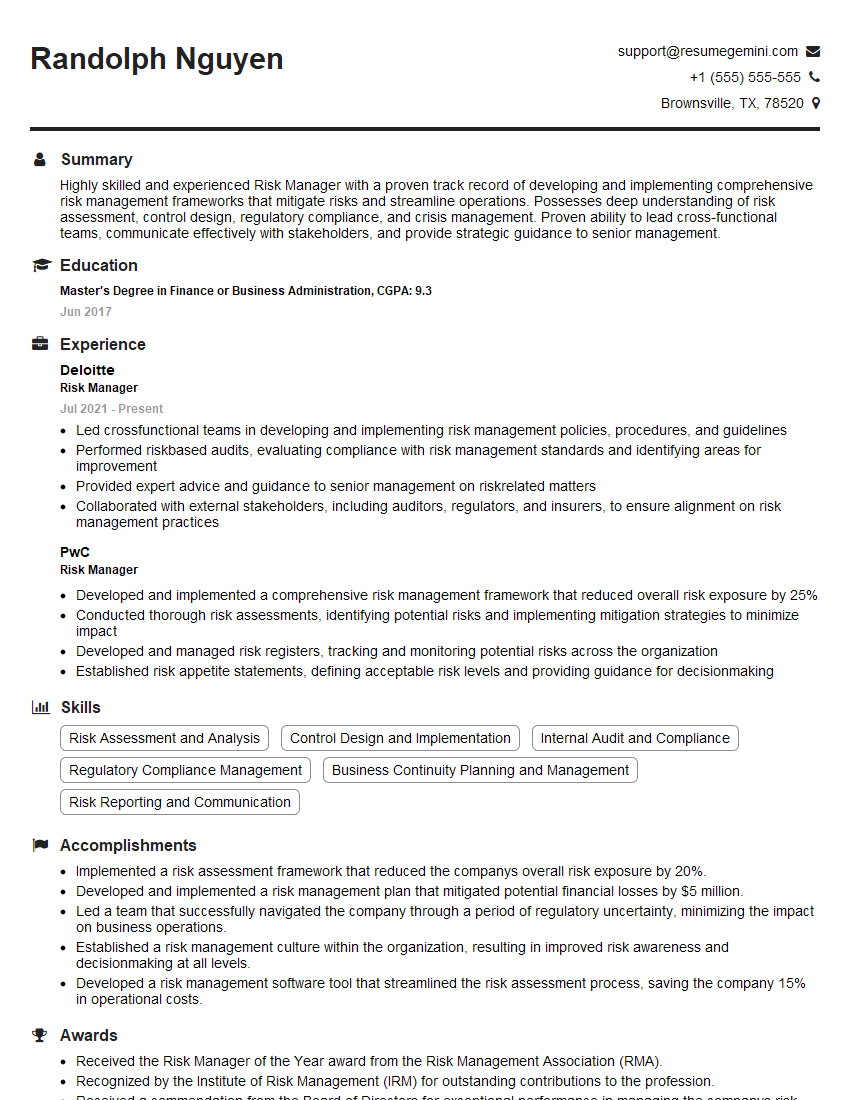
Risk Manager Resume Sample
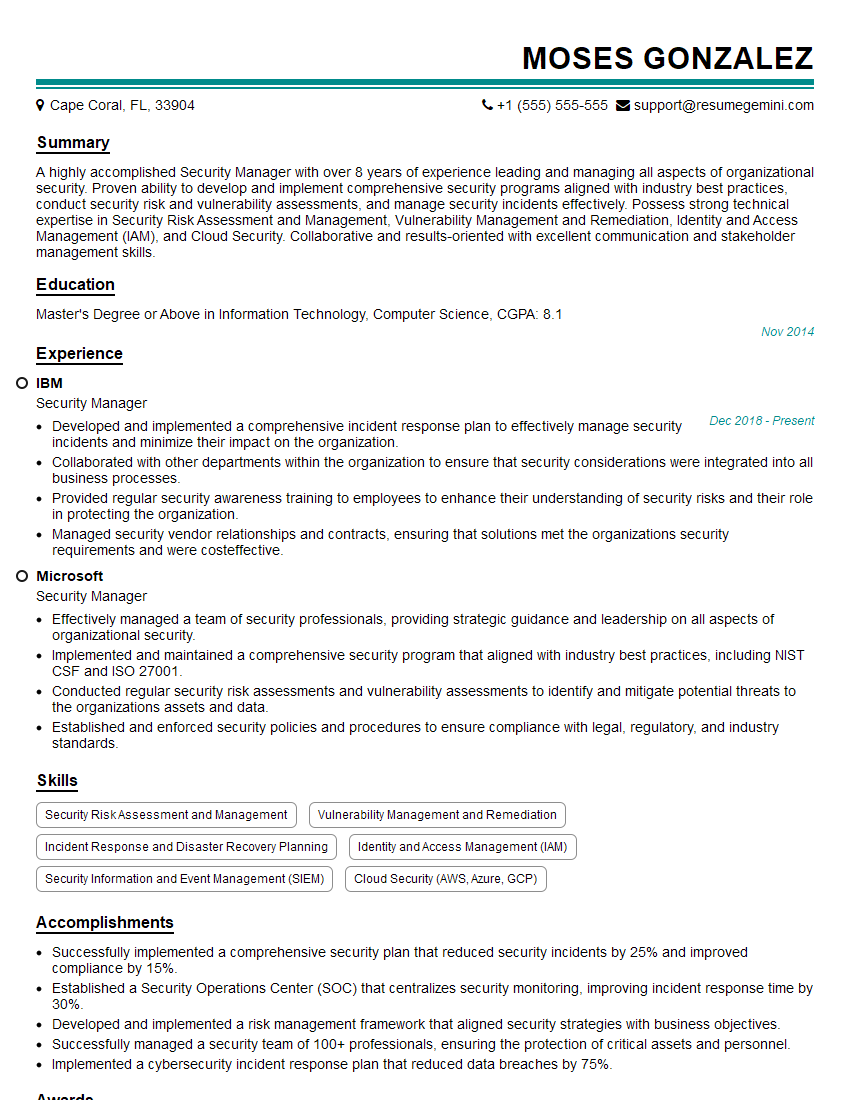
Security Manager Resume Sample
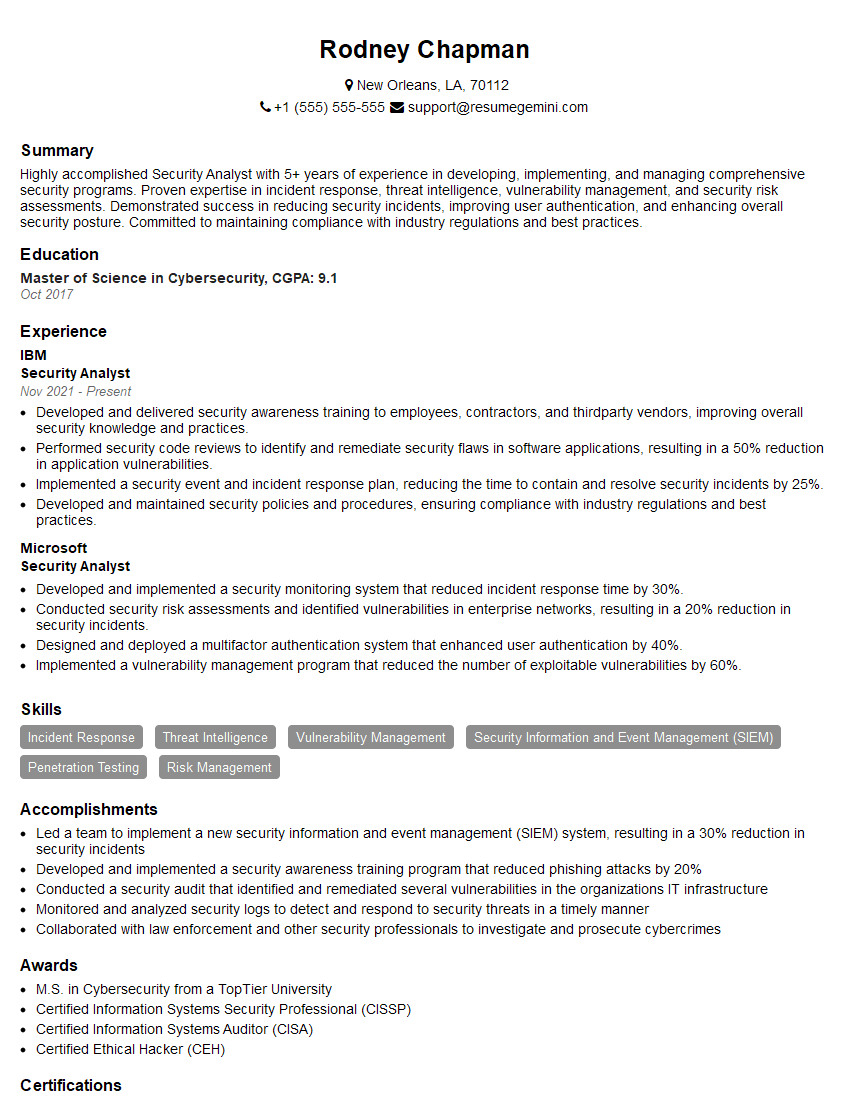
Security Analyst Resume Sample
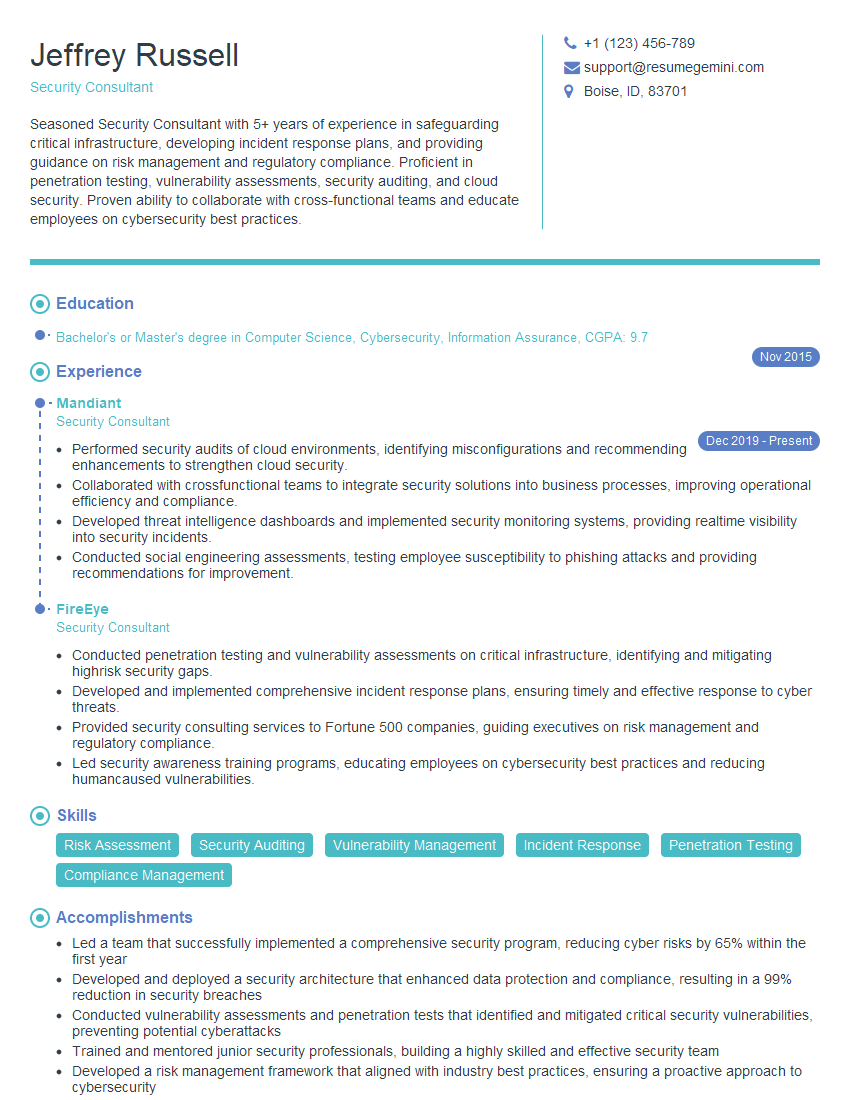
Security Consultant Resume Sample
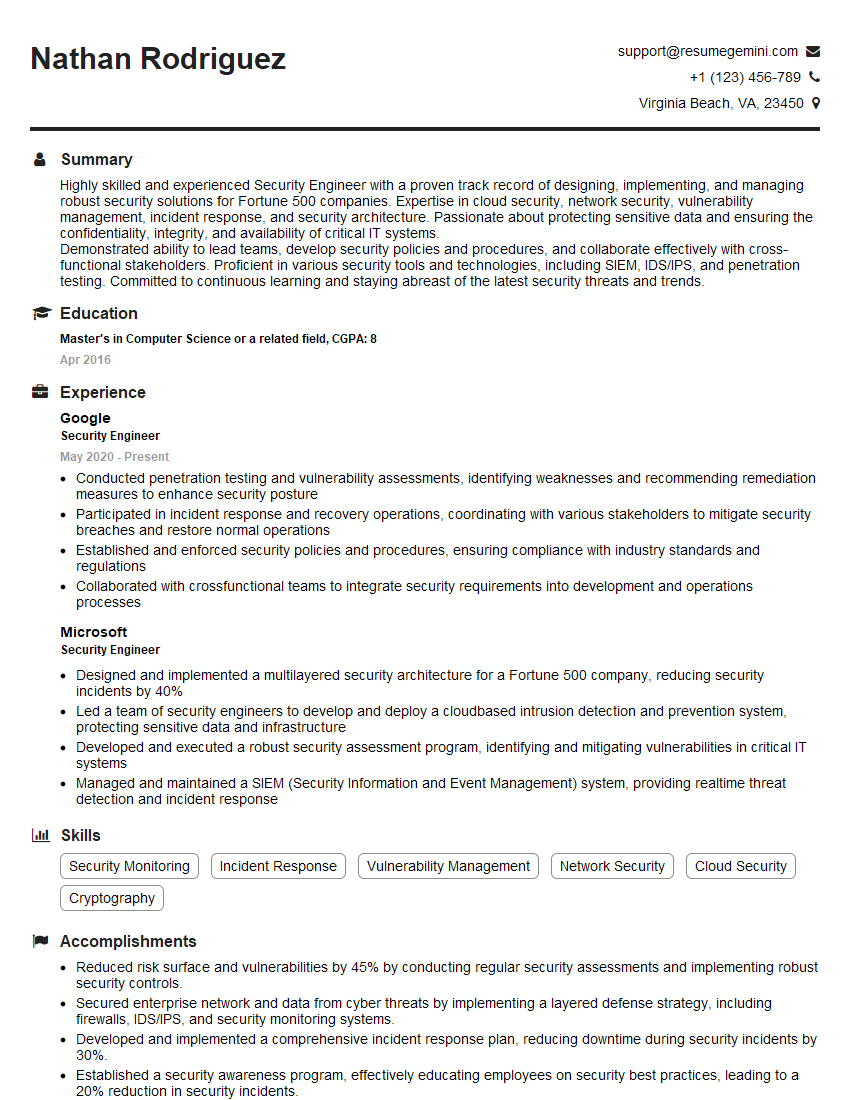
Security Engineer Resume Sample
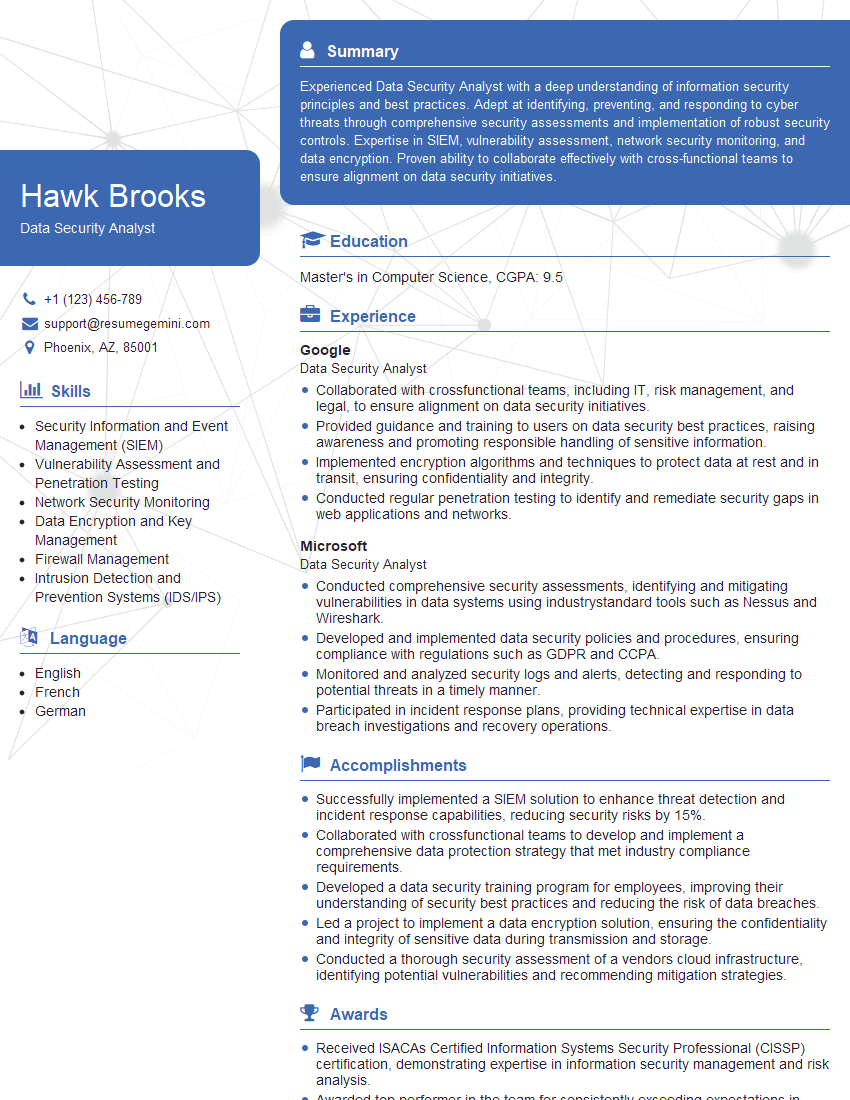
Data Security Analyst Resume Sample
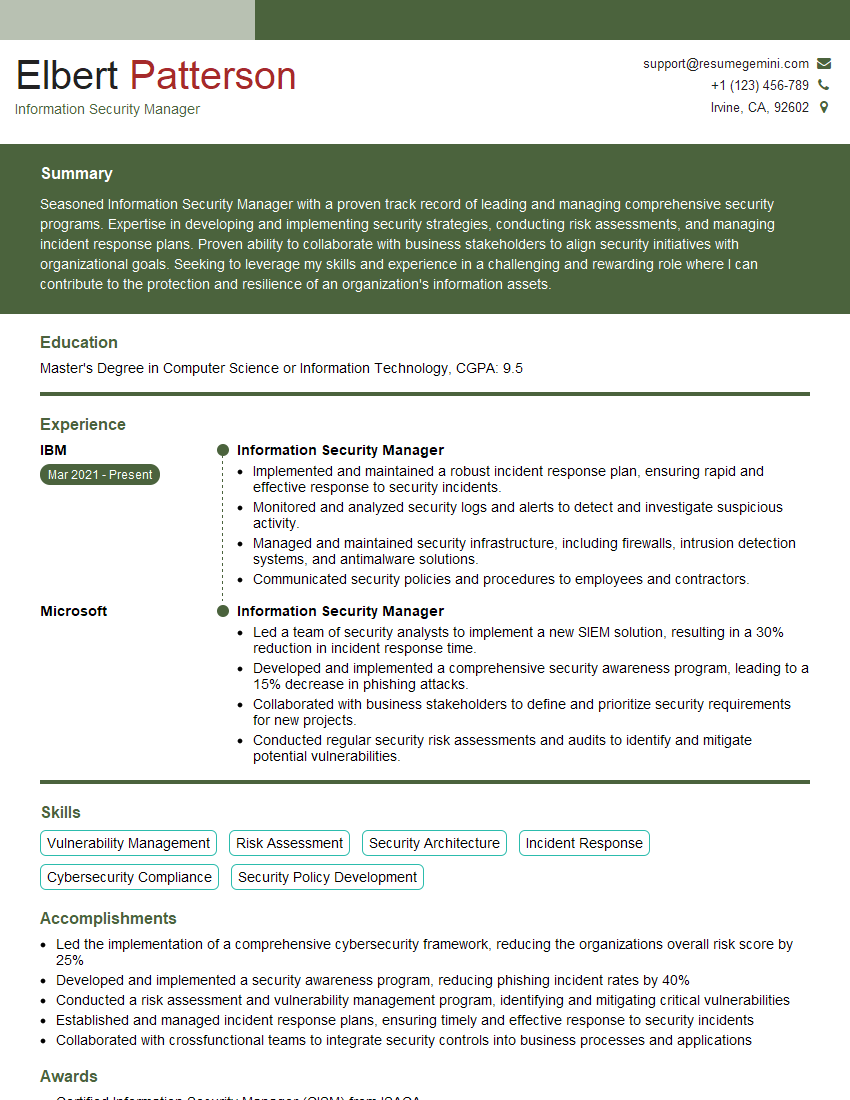
Information Security Manager Resume Sample
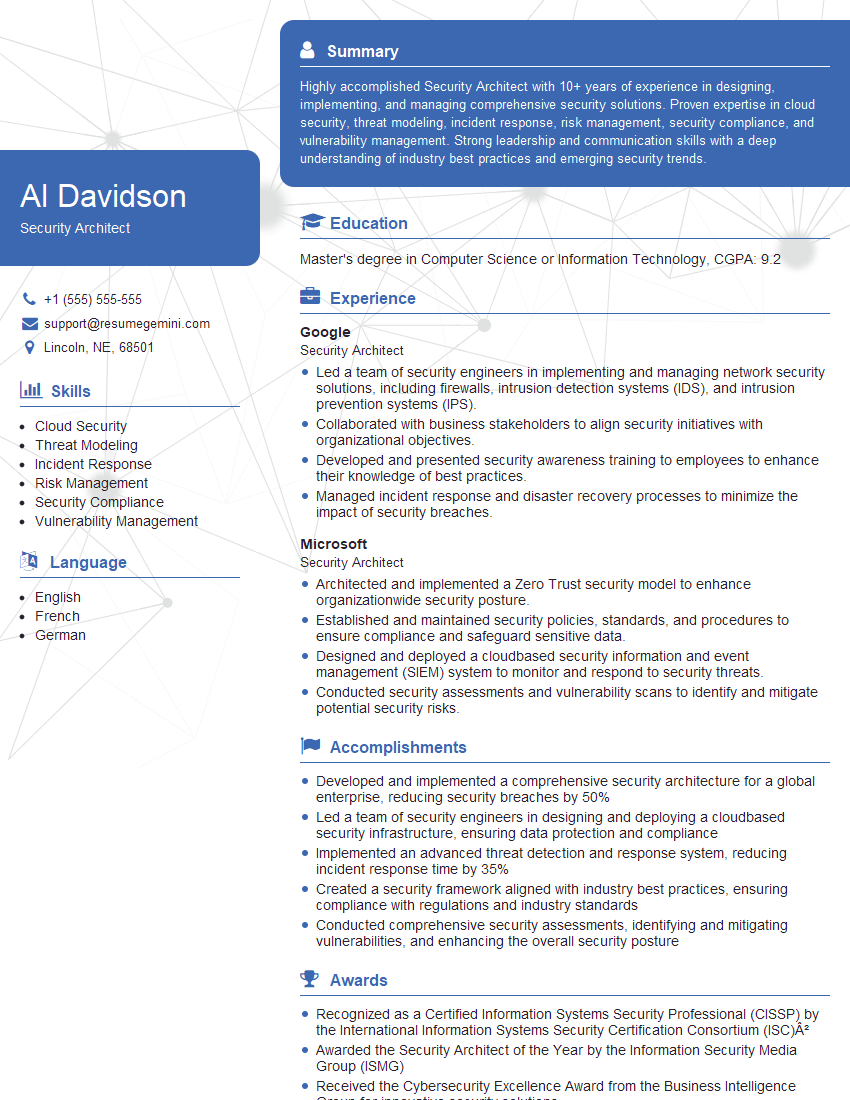
Security Architect Resume Sample
Explore more articles
Users Rating of Our Blogs
Share Your Experience
We value your feedback! Please rate our content and share your thoughts (optional).
What Readers Say About Our Blog
Really detailed insights and content, thank you for writing this detailed article.
IT gave me an insight and words to use and be able to think of examples