Preparation is the key to success in any interview. In this post, we’ll explore crucial Site Surveying and Layout interview questions and equip you with strategies to craft impactful answers. Whether you’re a beginner or a pro, these tips will elevate your preparation.
Questions Asked in Site Surveying and Layout Interview
Q 1. Explain the different types of surveying methods.
Surveying methods are broadly categorized based on the techniques and instruments used. They can be broadly classified into two main categories: Traditional Surveying and Modern Surveying.
- Traditional Surveying: This relies on simpler instruments and often more manual calculations. Methods include:
- Chain Surveying: Uses chains and tapes to measure distances and angles, ideal for small-scale projects.
- Plane Table Surveying: A drawing board is used on a tripod to directly map features. Useful for quick preliminary surveys.
- Compass Surveying: Uses a compass to determine bearings and distances, helpful in areas with limited visibility.
- Leveling: Determines the relative heights of points using a level and staff, essential for determining ground elevations.
- Modern Surveying: Employs advanced electronic instruments for higher accuracy and efficiency. Methods include:
- Total Station Surveying: Uses a total station to measure angles, distances, and coordinates electronically, vastly increasing speed and accuracy.
- GPS Surveying: Relies on signals from GPS satellites to determine three-dimensional coordinates, suitable for large-scale projects and mapping.
- LiDAR Surveying: Employs laser beams to create highly detailed 3D models of the terrain and objects, used in applications like mapping and infrastructure inspection.
The choice of method depends on the project’s size, complexity, required accuracy, and budget.
Q 2. Describe your experience with total stations and GPS equipment.
I have extensive experience with both total stations and GPS equipment, having used them on numerous projects ranging from small building sites to large-scale infrastructure developments.
With total stations, I’m proficient in setting up the instrument, performing precise angular and distance measurements, and utilizing features like robotic tracking and data logging. I’m familiar with various manufacturers like Leica, Trimble, and Topcon, understanding their specific functionalities and capabilities. For instance, on a recent road construction project, we used a Leica total station to accurately stake out the centerline and cross-sections, ensuring proper alignment and grading.
My experience with GPS equipment includes using both geodetic and precise point positioning (PPP) techniques. I understand the importance of selecting appropriate base stations, managing satellite geometry (PDOP), and processing raw data to achieve high accuracy. For example, during a cadastral survey, we employed a high-precision GPS system with RTK (Real-Time Kinematic) capabilities to accurately determine the boundaries of a property, minimizing discrepancies and potential disputes.
Furthermore, I am adept at using post-processing software like Leica Geo Office and Trimble Business Center for data processing and adjustment.
Q 3. How do you ensure accuracy in your surveying measurements?
Accuracy in surveying is paramount. I employ several strategies to ensure the reliability of my measurements:
- Proper Calibration and Maintenance: Regularly checking and calibrating instruments according to manufacturer recommendations is crucial. This includes verifying the accuracy of distances, angles, and leveling.
- Instrument Setup: Precise instrument setup is vital. I carefully level and orient the instrument to minimize errors. For total stations, centering over the control point is crucial. For GPS, ensuring proper antenna phase center offset and atmospheric correction is important.
- Multiple Measurements: Repeating measurements multiple times and analyzing the results for consistency helps identify outliers and improve overall precision. Statistical methods like mean and standard deviation are used to assess accuracy.
- Control Networks: Establishing a robust control network using well-defined points with known coordinates provides a framework for checking measurements and adjusting errors.
- Environmental Considerations: Accounting for atmospheric conditions like temperature and pressure is essential, especially when using total stations and GPS. Corrections are applied to account for refraction and signal delays.
- Quality Control Procedures: Implementing rigorous quality control checks throughout the surveying process, including data validation and error analysis, is key.
Think of it like baking a cake: precise measurements of ingredients are crucial for a perfect result. Similarly, precise surveying measurements are essential for successful construction and infrastructure projects.
Q 4. What are the common sources of error in surveying?
Several factors can introduce errors into surveying measurements. These can be broadly categorized as:
- Instrumental Errors: These arise from imperfections in the instruments themselves, such as miscalibration of the total station or faulty GPS receiver.
- Personal Errors: These are human errors like incorrect reading of instruments, mistakes in recording data, or improper instrument handling.
- Natural Errors: These are due to environmental factors. Temperature variations affect the length of measuring tapes, while atmospheric conditions can impact GPS signals. Refraction of light can also affect angular measurements.
- Systematic Errors: These are consistent errors that occur in a predictable pattern, such as errors due to instrument misalignment or a systematic bias in a particular measurement technique.
- Random Errors: These are unpredictable, small, and fluctuate around a mean value. They are difficult to eliminate completely but can be minimized by repeated measurements.
Understanding these error sources helps me implement appropriate mitigation strategies throughout the surveying process to ensure the highest possible accuracy.
Q 5. Explain your experience with data processing and analysis in surveying.
My experience in data processing and analysis is extensive, encompassing various stages from raw data import to final deliverables. I’m proficient in using surveying software like AutoCAD Civil 3D, ArcGIS, and specialized surveying packages from manufacturers like Leica and Trimble.
The process typically involves importing data from total stations or GPS receivers, performing coordinate transformations and adjustments, and generating various outputs such as topographic maps, cross-sections, and volumetric calculations. I’m adept at using least squares adjustments to minimize errors and ensure the internal consistency of the survey data.
For example, on a recent large-scale land development project, I processed terabytes of LiDAR data to create a highly detailed digital terrain model (DTM) and used this data for volume calculations of earthworks and for generating accurate design plans. I’m comfortable working with various coordinate systems and datums, and am familiar with the complexities of georeferencing and projection transformations.
Q 6. How do you handle discrepancies between field data and design plans?
Discrepancies between field data and design plans are common and require careful investigation. My approach involves a systematic process:
- Verify the Data: I meticulously re-check my field measurements and data processing steps to identify any potential errors. This might involve comparing raw data with processed results and checking for outliers.
- Investigate Potential Sources of Error: I consider all potential sources of errors, both in the field measurements and the design plans. This could include checking for errors in the design, inaccurate control points, or environmental factors affecting the survey.
- Consult with Stakeholders: I discuss the discrepancies with the design team and other relevant stakeholders to identify potential reasons for the differences. This collaborative approach ensures that everyone is on the same page.
- Implement Corrective Actions: Depending on the nature and magnitude of the discrepancies, I may recommend corrective actions, such as adjusting the design, performing additional measurements, or refining the data processing techniques. This might involve generating revised plans or updating the as-built drawings.
- Document Everything: I thoroughly document all steps taken to investigate and resolve the discrepancies, including the identified causes and the corrective actions implemented.
This ensures transparency and provides a clear record of how discrepancies were handled and resolved.
Q 7. Describe your experience with different coordinate systems.
I have extensive experience working with various coordinate systems, including Geographic Coordinate Systems (GCS) like latitude and longitude and Projected Coordinate Systems (PCS) like UTM and State Plane.
Understanding the differences and performing accurate transformations between these systems is crucial for integrating data from various sources and ensuring consistent results. I’m familiar with datums such as NAD83 and WGS84 and their implications for positional accuracy. I regularly utilize software tools and transformation parameters to convert between coordinate systems to ensure that data from different sources are compatible. This is particularly critical when integrating data from GPS surveys with data collected using total stations or when working with existing maps and plans that may use different coordinate systems. For instance, integrating GPS data (WGS84) with local control points (NAD83) requires a precise datum transformation to ensure accurate positioning.
My knowledge extends to understanding map projections and their effects on the accuracy of measurements in different areas. I can select appropriate projections based on the project area and the required level of accuracy.
Q 8. What software are you proficient in for surveying and CAD work?
My proficiency in surveying and CAD software is extensive. I’m highly skilled in industry-standard packages like AutoCAD Civil 3D, which I use daily for tasks such as creating detailed site plans, designing drainage systems, and generating volume calculations. I also have experience with Leica GeoMoS for post-processing survey data, ensuring accuracy and efficiency. For data management and analysis, I utilize software such as ArcGIS and Bentley MicroStation. Finally, I’m comfortable using cloud-based solutions for collaboration and data sharing, like Autodesk BIM 360.
For example, on a recent project involving a large-scale residential development, I used AutoCAD Civil 3D to model the entire site, including roads, utilities, and building footprints. This allowed for efficient clash detection and coordination with other disciplines.
Q 9. How do you manage large datasets in surveying projects?
Managing large datasets in surveying is crucial for accuracy and efficiency. My approach involves a multi-faceted strategy. First, I employ rigorous data quality control (QC) procedures during data acquisition, using real-time checks on the total station or GNSS equipment to identify and correct errors immediately. Second, I utilize database management systems (DBMS) to organize and structure the data logically. Third, I leverage the power of software like Leica GeoMoS to process and filter the data, eliminating outliers and inconsistencies. This software allows for efficient data transformations and coordinate system conversions, crucial when integrating data from different sources. Finally, for particularly large datasets, I utilize cloud-based storage and processing solutions to improve collaboration and reduce strain on local computing resources. This involves utilizing cloud services to store processed data in a readily accessible and secure manner for future analysis and retrieval.
Q 10. Explain your understanding of surveying legal frameworks and regulations.
Understanding surveying legal frameworks and regulations is paramount. My knowledge encompasses local, state, and national regulations related to land surveying, including boundary surveys, ALTA surveys, and construction staking. I’m familiar with the importance of adhering to professional codes of conduct and ethical practices, ensuring accuracy, integrity, and legal compliance. I’m aware of the implications of boundary disputes and the necessity of proper documentation to avoid legal issues. For instance, I’m conversant with the requirements for registered land surveyors to certify survey plans before they can be legally accepted by government authorities. This requires meticulous attention to detail and an understanding of the legal implications of any survey errors.
Q 11. Describe your experience with setting out buildings and structures.
Setting out buildings and structures is a core component of my experience. This involves transferring design data from plans into the real world, ensuring accurate placement of foundations, walls, and other elements. I use a combination of total stations, GPS equipment, and traditional methods to achieve precise results. A typical process involves establishing a control network on-site, then using coordinates from the design to locate and mark key points. This is followed by ongoing checks and adjustments to ensure the construction remains true to the design. I’ve worked on various projects, from small residential buildings to large commercial structures, each presenting unique challenges that require adaptable solutions. For example, on a recent high-rise construction, precise setting out of columns and beams was critical to maintain structural integrity.
Q 12. How do you ensure safety on a surveying site?
Site safety is my top priority. Before commencing any surveying work, I conduct a thorough risk assessment, identifying potential hazards such as uneven terrain, traffic, and proximity to overhead power lines. This assessment informs the development of a site-specific safety plan, which includes measures to mitigate identified risks. This involves implementing safety protocols, including the use of high-visibility clothing, appropriate personal protective equipment (PPE), and communication systems. Regular toolbox talks with the team reinforce safety procedures and encourage a culture of vigilance. Furthermore, I ensure all personnel are aware of and adhere to site-specific safety rules, as well as relevant legislation. A recent project near a busy highway required strict traffic management protocols and regular safety briefings to minimize risk to the survey crew and the public.
Q 13. Explain your experience with level surveys and their applications.
Level surveys are fundamental to establishing elevations and gradients. My experience encompasses various applications, including setting benchmarks, determining earthworks volumes for construction projects, and creating contour maps for site planning. I’m proficient in using both traditional leveling equipment (levels and staves) and modern electronic levels. Understanding the principles of leveling is critical to accuracy, particularly in managing systematic and random errors. For instance, I’ve used level surveys to establish the precise elevations for a large-scale infrastructure project, ensuring that drainage systems were correctly graded to prevent waterlogging. This requires meticulous attention to detail and consistent application of leveling procedures to achieve precise elevation measurements.
Q 14. How do you deal with challenging terrain during surveying?
Challenging terrain presents obstacles, but also requires innovative solutions. Steep slopes, dense vegetation, and difficult access points necessitate adaptive strategies. For instance, I use techniques like traversing and GPS to overcome obstacles that traditional leveling methods might struggle with. In areas with dense vegetation, I might use a combination of ground-based methods and drone surveying to obtain accurate data while minimizing safety risks. Difficult access might require the use of specialized equipment like all-terrain vehicles or even helicopters to reach certain survey points. In essence, tackling challenging terrain requires a flexible approach and the ability to adapt methodologies to the specific conditions encountered. A recent project in a mountainous region required the use of a combination of GPS, total station, and drone surveying to overcome difficult access and steep slopes, ensuring comprehensive data acquisition.
Q 15. What are your skills in using different surveying instruments?
My expertise encompasses a wide range of surveying instruments, both traditional and modern. I’m proficient in using total stations, which are crucial for precise distance and angle measurements, forming the backbone of most surveys. I’m also skilled in operating GPS receivers, understanding the intricacies of both static and kinematic surveying methods, essential for large-scale projects and those requiring high accuracy. Furthermore, I’m experienced with levels (both automatic and digital) for determining elevations, and with theodolites for precise angle measurements in more complex situations. Finally, I’m comfortable with using data collectors and software for efficient data capture and processing. For example, on a recent highway project, using a total station and GPS simultaneously allowed us to quickly and accurately establish the centerline and elevation benchmarks, significantly speeding up the project timeline. My experience extends to maintaining and calibrating these instruments to ensure accuracy and reliability.
Career Expert Tips:
- Ace those interviews! Prepare effectively by reviewing the Top 50 Most Common Interview Questions on ResumeGemini.
- Navigate your job search with confidence! Explore a wide range of Career Tips on ResumeGemini. Learn about common challenges and recommendations to overcome them.
- Craft the perfect resume! Master the Art of Resume Writing with ResumeGemini’s guide. Showcase your unique qualifications and achievements effectively.
- Don’t miss out on holiday savings! Build your dream resume with ResumeGemini’s ATS optimized templates.
Q 16. How do you interpret survey plans and drawings?
Interpreting survey plans and drawings is fundamental to my work. I start by understanding the scale and the coordinate system used, which is typically stated on the drawing itself. Then, I meticulously examine the various symbols and annotations, including benchmarks, contour lines, property boundaries, and utility locations. This allows me to visualize the three-dimensional nature of the site. For example, I can determine the slope of the land using contour lines, understand property limitations based on boundary lines, and ascertain the location of existing infrastructure from utility markings. This ability is critical for planning site layout and avoiding conflicts with existing structures or services. I then cross-reference these drawings with other relevant documents like site investigations reports, ensuring the survey data aligns with other available information.
Q 17. Explain your experience with volume calculations from survey data.
Volume calculations from survey data are routinely performed in my work, particularly for earthworks and cut and fill calculations. I use various methods depending on the data available. For simpler cases involving cross-sections, I utilize the trapezoidal rule or more sophisticated methods like the Prismoidal rule for greater accuracy. For more complex terrains, I use software packages that can process point cloud data obtained from laser scanning or photogrammetry to generate highly precise volume estimations. For instance, on a recent excavation project, I used a combination of cross-sections and a software package to estimate the volume of earth to be removed, helping the project management team accurately estimate the costs and the time needed for the excavation. This ensured that the project stayed within budget and on schedule.
Q 18. How do you manage site logistics and coordination with other teams?
Managing site logistics is a crucial aspect of successful surveying and layout. This involves careful planning, communication, and coordination with various teams, including contractors, engineers, and other specialists. I begin by developing a detailed site plan, identifying access points, staging areas, and potential hazards. I then establish clear communication channels and schedules to ensure everyone is aware of the surveying activities and their potential impact. For example, I coordinate with contractors to ensure access for survey equipment and to prevent interference with their work. Open communication is key – I hold regular meetings to address any concerns or unexpected issues promptly, maintaining the overall efficiency and safety of the site. I use project management software to track progress, manage resources, and identify potential delays proactively.
Q 19. Describe your experience with different types of land surveys.
My experience encompasses a variety of land surveys, including boundary surveys (establishing and defining property lines), topographic surveys (creating detailed maps of the land’s surface features), construction surveys (providing accurate measurements for building and infrastructure projects), and as-built surveys (documenting completed construction). Each type requires specific methodologies and techniques. For example, boundary surveys often involve researching historical records and legal documents, while construction surveys necessitate close collaboration with the construction team to ensure accurate positioning of structures. My experience with diverse survey types has broadened my understanding of different project requirements and allowed me to adapt my approach to each specific context.
Q 20. How do you deal with conflicting information from various sources?
Dealing with conflicting information requires a methodical approach. When faced with discrepancies between different sources (e.g., old survey plans versus recent GPS data, or conflicting property boundary claims), I first meticulously document all the information, noting the source and date of each. I then systematically analyze the data, considering the potential sources of error and the reliability of each source. I may need to perform additional surveys to resolve the conflicts, or consult with legal professionals or other experts when necessary. For example, in a recent boundary dispute, I discovered conflicting information in old deeds and previous surveys. By carefully analyzing these documents alongside GPS data and site evidence, I was able to reconcile the differences, providing a clear and defensible boundary solution.
Q 21. Explain your understanding of error propagation in surveying.
Understanding error propagation is crucial in surveying. Errors in measurements inevitably occur, and these errors can accumulate and propagate through calculations. For example, a small error in measuring an angle can significantly affect the calculated distance in a triangulation survey. I account for this by using appropriate techniques such as least squares adjustment, which statistically minimizes the effects of errors. Furthermore, I carefully select surveying equipment and methodologies appropriate for the required accuracy, and I routinely check measurements and calculations to identify and correct any inconsistencies. By carefully considering the sources of error and employing appropriate techniques, I minimize the impact of errors on the final survey results and ensure the reliability of the data produced.
Q 22. Describe your experience with using surveying software to generate reports.
Generating reports from surveying data is a crucial aspect of my work, and I’m proficient in various software packages such as AutoCAD Civil 3D, Bentley MicroStation, and Leica GeoMos. My process typically involves importing survey data – this could be anything from total station measurements to GPS coordinates – into the chosen software. Then, I use the software’s tools to process this raw data, performing calculations like coordinate transformations and area calculations. The software helps create visualizations, including contour maps, cross-sections, and 3D models of the surveyed site. Finally, I utilize the software’s reporting features to generate professional, client-ready documents, complete with tables, charts, and even automated calculations of volumes or quantities. For example, I recently used AutoCAD Civil 3D to generate a detailed report on a road alignment project, including a comprehensive set of plans and cross-sections showing earthwork volumes. This significantly reduced the time spent on manual calculations and improved the accuracy of the report.
Q 23. How do you ensure the quality control of your survey data?
Quality control is paramount in surveying. My approach is multi-faceted and starts right at the data acquisition stage. I rigorously check instrument calibration before each survey, ensuring accurate measurements. During data collection, I employ techniques such as redundant measurements and independent checks to identify and rectify potential errors. Post-processing involves careful scrutiny of the data using statistical analysis to detect outliers and inconsistencies. For instance, I might use least-squares adjustment to refine the data and improve its overall precision. I also conduct thorough field checks to verify the accuracy of the data against visual observations of the site. Finally, I always have a second person review the final report before submission to the client. This layered approach ensures the highest possible level of data integrity and reliability.
Q 24. What are your strategies for managing time effectively on a surveying project?
Effective time management in surveying is vital. I use a project management approach that starts with a detailed work breakdown structure (WBS). This outlines all tasks involved, from planning and data collection to processing and reporting. Then, I assign realistic durations to each task, considering potential unforeseen delays. I utilize scheduling software to create a visual project timeline, helping me track progress and identify potential bottlenecks. For example, I’ll schedule data processing tasks to occur concurrently with fieldwork where possible. Communication is crucial, so I maintain regular contact with clients and project teams to keep everyone informed of progress and address any issues promptly. Finally, I always incorporate buffer time in my schedules to accommodate unexpected events or complexities. This proactive approach helps me ensure projects are completed on time and within budget.
Q 25. How familiar are you with BIM (Building Information Modeling) and its integration with surveying?
I have a good understanding of BIM (Building Information Modeling) and its growing integration with surveying. BIM provides a central digital representation of a construction project, enabling better collaboration among design, construction, and operation teams. In surveying, this integration improves accuracy and efficiency. For instance, point cloud data acquired through laser scanning can be directly imported into BIM software, creating a detailed 3D model of the existing site conditions. This model can then be used for clash detection, quantity take-offs, and coordination with the proposed design. I’ve worked on projects where integrating survey data into BIM helped reduce rework and improve the overall project timeline. My knowledge extends to understanding different BIM software and data formats, making me adaptable to varied project requirements.
Q 26. Explain your experience with utilizing drone technology in surveying.
Drone technology has revolutionized surveying, and I am experienced in using it to gather high-resolution imagery and point cloud data. I am proficient in operating and processing data from various drone platforms. My workflow involves pre-flight planning, which includes obtaining necessary permissions and meticulously planning flight paths to ensure complete coverage of the site. The drone captures aerial imagery and/or LiDAR data, which is then processed using specialized software like Pix4D or Agisoft Metashape. This processing generates accurate orthomosaics, digital surface models (DSMs), and point clouds. For example, I recently used a drone to survey a large-scale infrastructure project, significantly reducing fieldwork time and cost compared to traditional methods. The high-resolution imagery allowed for detailed analysis of the site, improving the accuracy of the final deliverables.
Q 27. How do you communicate effectively with clients and other professionals?
Effective communication is central to my role. I believe in clear, concise, and proactive communication with clients and other professionals. I start by actively listening to their needs and understanding their expectations. I maintain regular communication throughout the project lifecycle, providing regular updates on progress and proactively addressing any concerns. I use various communication channels, including email, phone calls, and in-person meetings, selecting the most appropriate method for each situation. Furthermore, I ensure that all reports and deliverables are presented in a clear and easily understandable manner, using visuals and plain language to avoid technical jargon. My aim is to build strong, trusting relationships based on open and honest communication.
Q 28. Describe a challenging surveying project and how you successfully overcame the obstacles.
One challenging project involved surveying a steep, heavily wooded hillside for a proposed residential development. Access to the site was extremely limited, and the dense vegetation hindered traditional surveying techniques. To overcome this, I employed a combination of techniques. I used a drone equipped with a high-resolution camera and LiDAR to capture comprehensive data of the site, overcoming the access limitations and vegetation issues. Then, I used ground-based methods in more accessible areas for ground control points, ensuring the accuracy of the drone data. We also faced challenges with unstable terrain. To account for this, I implemented rigorous quality control measures, including multiple measurements at each point and extensive data validation. Ultimately, the integration of drone technology and traditional methods allowed us to deliver accurate and detailed survey data, enabling the successful completion of the project. The project highlighted the importance of adaptability and innovative problem-solving in overcoming challenging site conditions.
Key Topics to Learn for Site Surveying and Layout Interview
- Fundamental Surveying Principles: Understanding concepts like leveling, traversing, and triangulation; their practical applications in establishing site control and setting out building lines.
- Coordinate Systems and Data Management: Working with different coordinate systems (e.g., UTM, State Plane); using surveying software and data management techniques for efficient data handling and analysis.
- Site Measurement Techniques: Mastering various measurement techniques using total stations, GPS, and other surveying instruments; understanding accuracy and precision requirements for different projects.
- Setting Out and Construction Layout: Practical application of surveying data to accurately locate and set out building foundations, structures, and utilities; understanding tolerances and their impact on construction.
- Legal and Regulatory Compliance: Familiarity with relevant regulations and standards related to surveying and construction; understanding the importance of accurate documentation and legal compliance.
- Earthworks and Volume Calculations: Calculating earthworks volumes using various methods; understanding their impact on project costs and scheduling; applying this knowledge to site development projects.
- Leveling and Contouring: Creating contour maps from surveyed data; understanding their use in site planning and earthworks design; applying this knowledge to site development planning.
- Problem-Solving and Decision Making: Analyzing surveying data, identifying discrepancies, and developing solutions to challenges encountered on site; demonstrating effective problem-solving skills and judgment.
- Health and Safety Regulations: Understanding and adhering to health and safety regulations related to surveying and site work; emphasizing the importance of safe working practices on the job.
- Digital Terrain Modeling (DTM): Creating and interpreting DTMs for site analysis and design; demonstrating familiarity with relevant software and techniques.
Next Steps
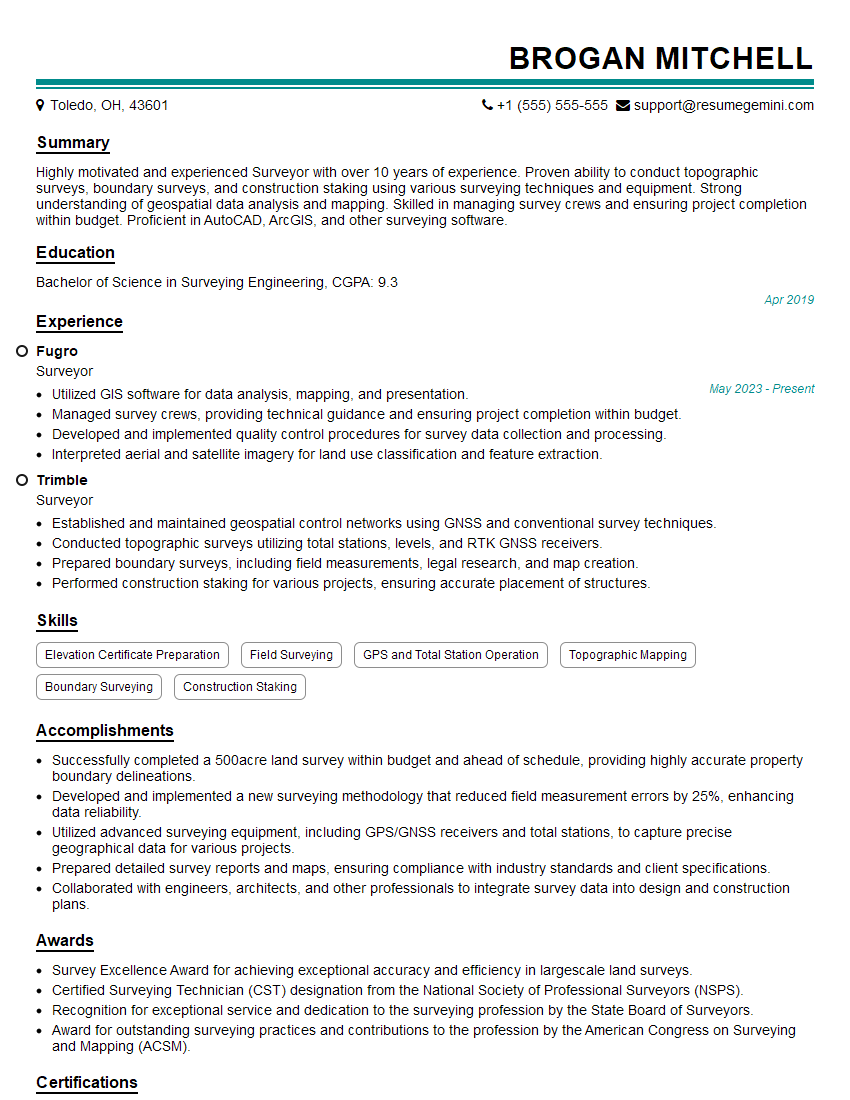
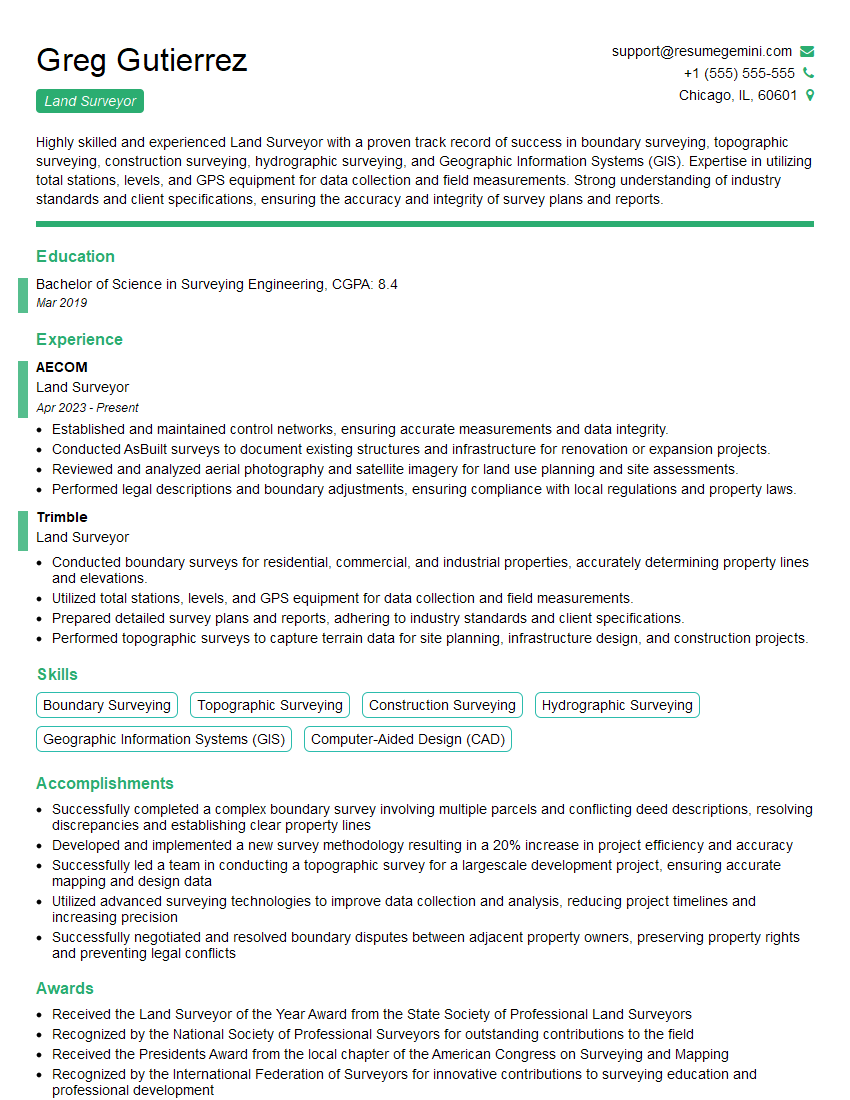
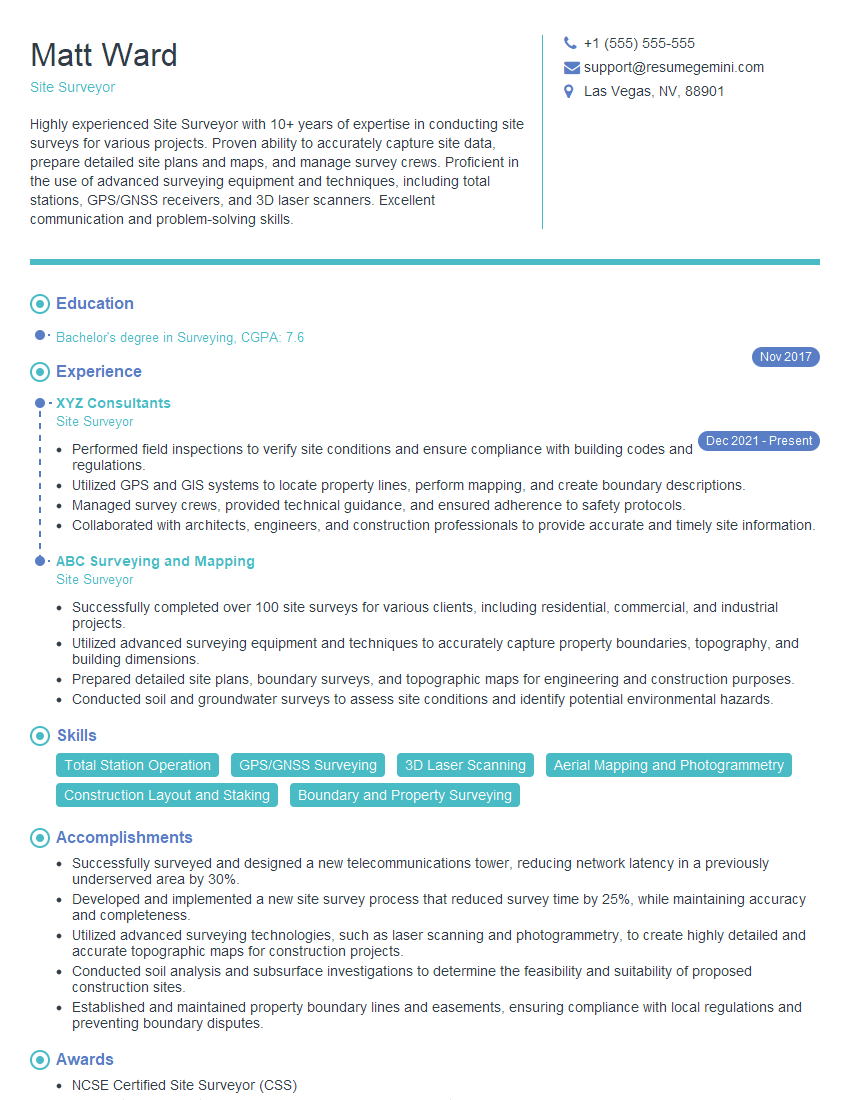
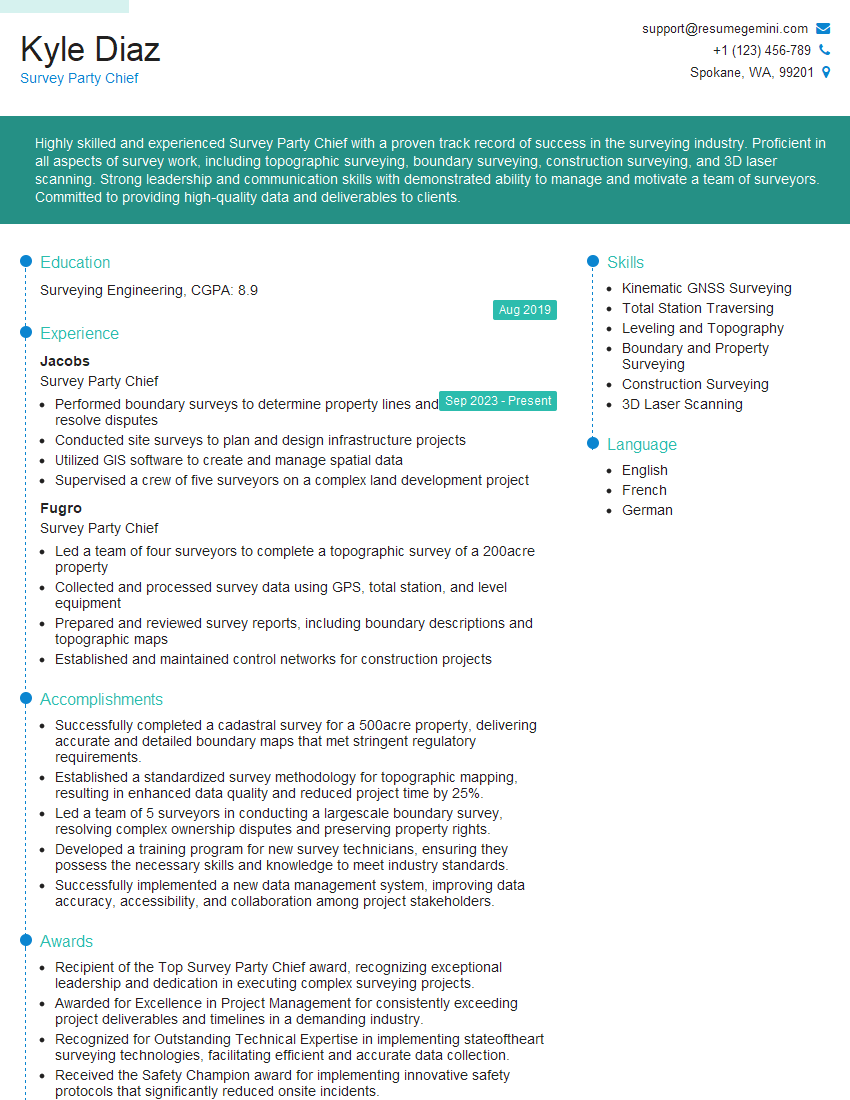
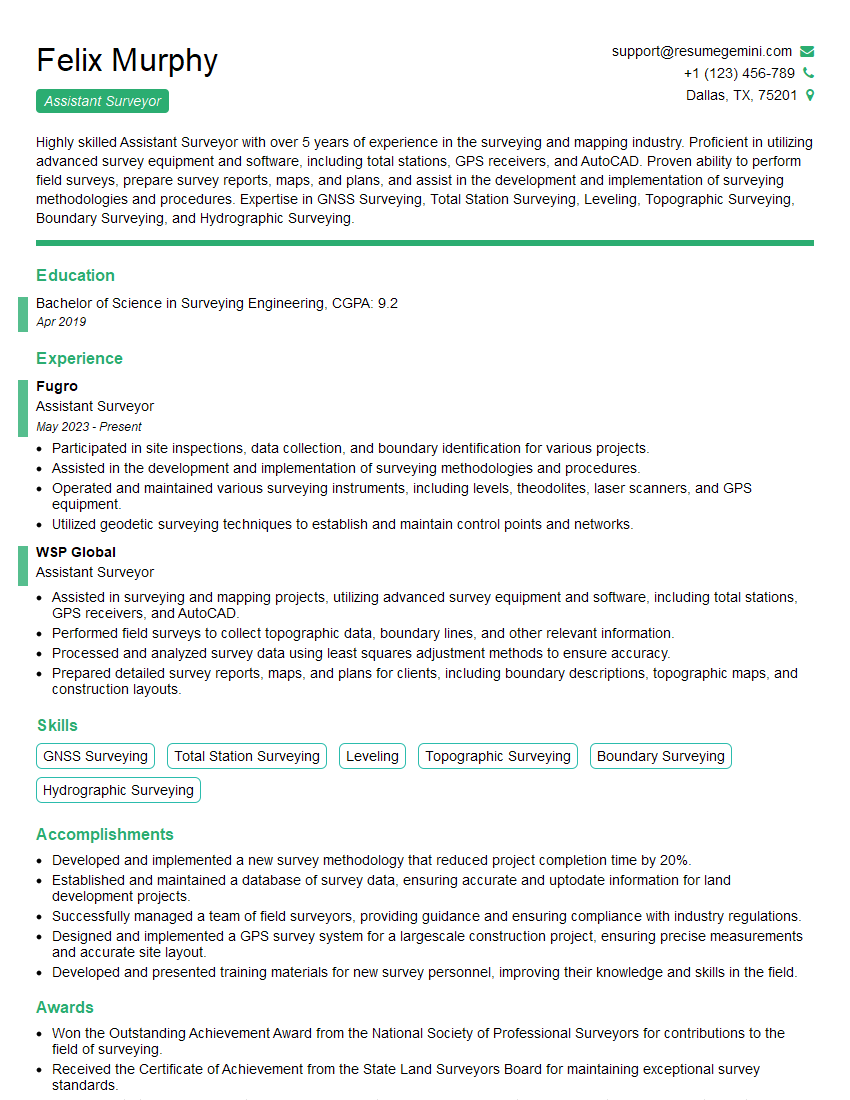
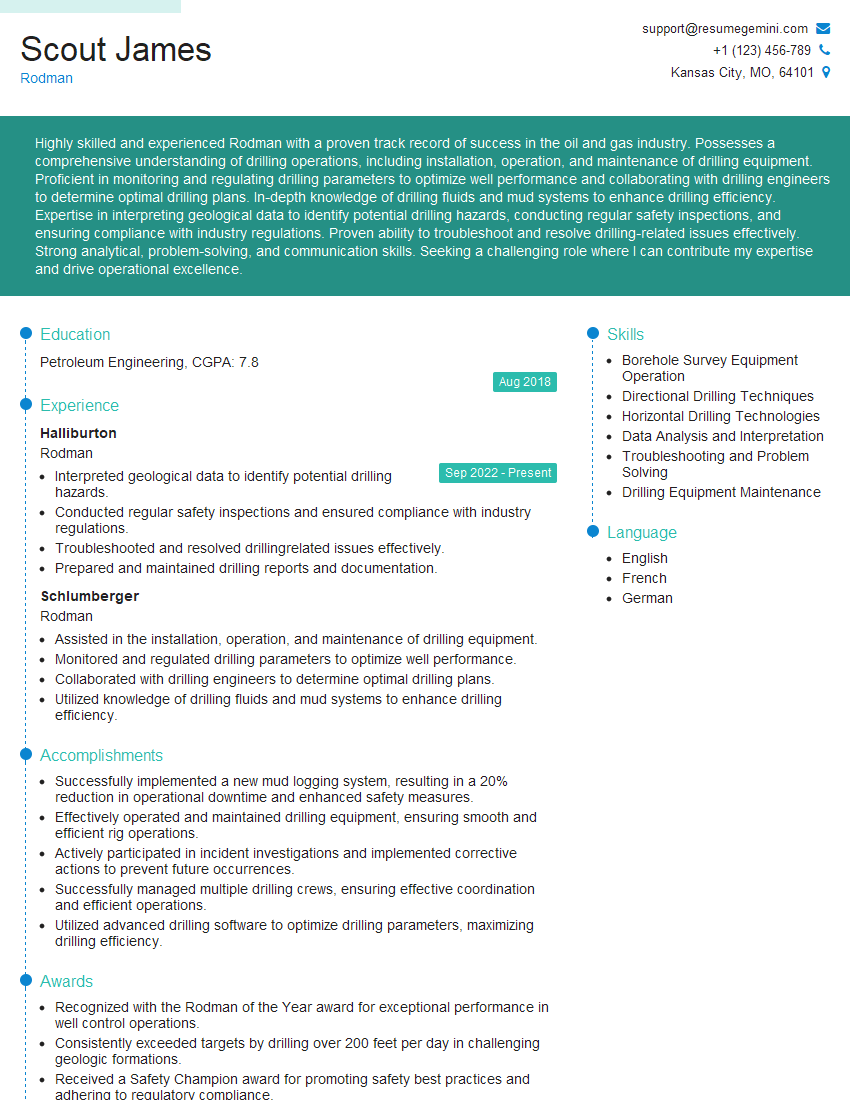
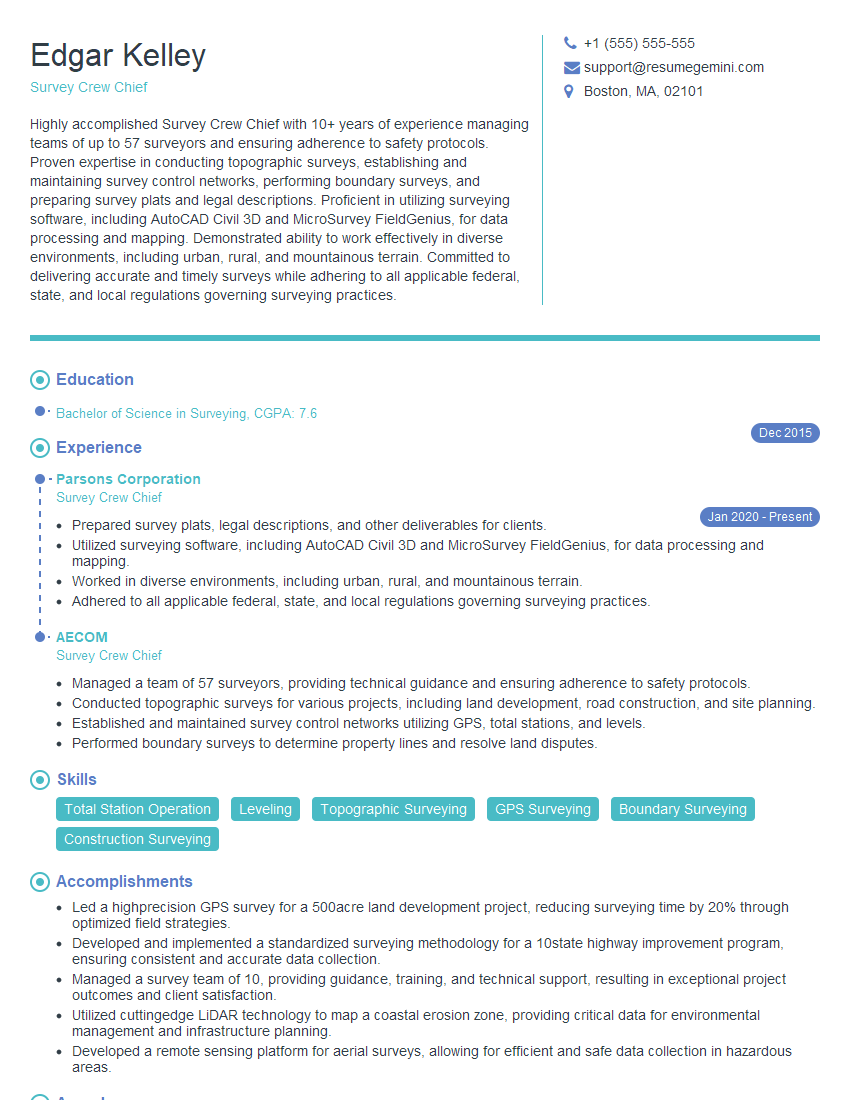
Mastering Site Surveying and Layout is crucial for career advancement in construction, engineering, and land development. A strong understanding of these principles opens doors to more challenging and rewarding projects, higher earning potential, and increased leadership opportunities. To stand out to potential employers, create an ATS-friendly resume that clearly highlights your skills and experience. ResumeGemini is a trusted resource for building professional resumes that get noticed. Use their tools to craft a compelling narrative that showcases your abilities. Examples of resumes tailored to Site Surveying and Layout are available to guide you.


Explore more articles
Users Rating of Our Blogs
Share Your Experience
We value your feedback! Please rate our content and share your thoughts (optional).
What Readers Say About Our Blog
I Redesigned Spongebob Squarepants and his main characters of my artwork.
https://www.deviantart.com/reimaginesponge/art/Redesigned-Spongebob-characters-1223583608
IT gave me an insight and words to use and be able to think of examples
Hi, I’m Jay, we have a few potential clients that are interested in your services, thought you might be a good fit. I’d love to talk about the details, when do you have time to talk?
Best,
Jay
Founder | CEO