Are you ready to stand out in your next interview? Understanding and preparing for Strong work ethic and commitment to providing quality arts education interview questions is a game-changer. In this blog, we’ve compiled key questions and expert advice to help you showcase your skills with confidence and precision. Let’s get started on your journey to acing the interview.
Questions Asked in Strong work ethic and commitment to providing quality arts education Interview
Q 1. Describe your approach to lesson planning for diverse learners.
My approach to lesson planning for diverse learners is built on the principle of Universal Design for Learning (UDL). This framework emphasizes providing multiple means of representation, action & expression, and engagement. Instead of a one-size-fits-all approach, I create varied learning pathways catering to different learning styles and needs.
- Multiple Means of Representation: I offer information in various formats – visual aids, audio recordings, written instructions, hands-on activities, and demonstrations. For example, when teaching color theory, I might use a PowerPoint presentation, paint samples, and a hands-on color mixing exercise simultaneously.
- Multiple Means of Action & Expression: Students can demonstrate their understanding in diverse ways. For a sculpture project, some might prefer working with clay, others with wood or recycled materials. Assessment could be through a presentation, a written reflection, or a performance.
- Multiple Means of Engagement: I create lessons that are relevant, challenging, and motivating for all students. This includes incorporating student interests, providing choices, and offering opportunities for collaboration and peer learning. For instance, a mural project allows students to choose their subject matter, contributing to a shared collective work.
Regularly assessing student understanding and adjusting my teaching methods based on their responses is crucial. This iterative process ensures all students feel seen, heard, and challenged appropriately.
Q 2. How do you maintain a positive and engaging learning environment?
Maintaining a positive and engaging learning environment involves fostering a sense of community, respect, and trust. This starts with establishing clear expectations and classroom routines from the beginning. I believe in creating a space where students feel safe to experiment, take risks, and express themselves without fear of judgment.
- Positive Reinforcement: I frequently praise effort and progress, focusing on the learning process rather than solely on the final product. Celebrating successes, both big and small, helps boost morale and build confidence.
- Student Voice & Choice: I actively incorporate student input in lesson planning and project selection, giving them a sense of ownership and investment in their learning.
- Collaboration & Teamwork: Group projects and collaborative activities encourage peer learning, support, and a shared sense of accomplishment.
- Creating a Visually Stimulating Space: The classroom itself should be inspiring! I incorporate student artwork, relevant visuals, and a well-organized space that minimizes distractions.
Addressing conflicts promptly and fairly, using restorative justice practices whenever possible, helps maintain a respectful atmosphere. Open communication and a willingness to listen to student concerns are paramount.
Q 3. Explain your methods for assessing student progress in the arts.
Assessing student progress in the arts requires a multifaceted approach that moves beyond simple grades. It’s about evaluating not only the final product but also the creative process, critical thinking skills, and technical proficiency. My methods include:
- Observations: I regularly observe students during class, paying attention to their engagement, problem-solving skills, and technical execution.
- Self-Assessment & Peer Assessment: Students reflect on their own work and provide constructive feedback to their peers. This promotes self-awareness and collaborative learning.
- Portfolios: Students maintain portfolios documenting their work throughout the year, allowing for a longitudinal view of their growth and development.
- Rubrics: Clear rubrics outlining expectations for each assignment provide students with a framework for success and facilitate objective evaluation.
- Performance-Based Assessments: For performing arts, live performances or presentations offer a dynamic way to assess skill and expression. For visual arts, a final exhibition can showcase student achievements.
Providing constructive feedback that is both specific and encouraging is key. I focus on celebrating strengths while highlighting areas for improvement.
Q 4. How do you incorporate technology into your arts education practices?
Technology plays a significant role in enhancing my arts education practices. I use it to:
- Digital Art Creation: Software like Photoshop, Procreate, and Blender allows students to explore digital mediums and techniques, expanding their creative possibilities.
- Research & Inspiration: Online resources such as museums’ virtual tours, artist websites, and educational videos provide boundless inspiration and learning opportunities.
- Collaboration & Sharing: Platforms like Google Classroom and digital portfolios enable students to share their work, collaborate on projects, and receive feedback remotely.
- Multimedia Presentations: Students can create compelling multimedia presentations incorporating video, audio, and images, showcasing their understanding in a dynamic format.
- Virtual Field Trips: Technology facilitates virtual visits to museums, galleries, and artist studios, broadening students’ exposure to the arts.
However, I emphasize that technology is a tool to support, not replace, the core artistic processes. Hands-on experience with traditional materials remains crucial.
Q 5. Describe your experience with differentiating instruction to meet individual student needs.
Differentiating instruction is central to my teaching philosophy. I recognize that students learn at different paces and have varied learning styles. My strategies include:
- Tiered Assignments: I offer assignments at varying levels of complexity to meet individual needs. A single project might have basic, intermediate, and advanced options.
- Flexible Grouping: I use a variety of grouping strategies – whole class, small groups, and individual work – to cater to different learning styles and social dynamics.
- Choice Boards: Students can choose from a range of activities to fulfill learning objectives, allowing them to explore their interests and strengths.
- Assistive Technology: I am familiar with and utilize assistive technology, such as text-to-speech software or graphic organizers, to support students with specific learning challenges.
- Individualized Learning Plans (ILPs): For students with IEPs or 504 plans, I work closely with support staff to develop and implement tailored learning plans.
Regular communication with students and parents is essential to monitor progress and make necessary adjustments to the learning plan.
Q 6. How do you manage classroom behavior and maintain discipline?
Classroom management is proactive, focusing on building positive relationships and establishing clear expectations from the start. I believe in fostering a culture of respect and responsibility.
- Positive Behavioral Interventions and Supports (PBIS): I implement a PBIS framework to systematically teach and reinforce positive behaviors.
- Clear Expectations & Routines: Establishing clear routines and expectations minimizes disruptions and creates a predictable learning environment.
- Proactive Strategies: I actively engage students, provide choices, and incorporate movement breaks to prevent boredom and disruptive behavior.
- Restorative Practices: When conflicts arise, I use restorative practices to address the root causes of misbehavior and repair relationships.
- Collaboration with Parents/Guardians: I maintain open communication with parents/guardians to address concerns and create a unified approach to student behavior.
Consequences, when necessary, are consistent, fair, and focused on teaching responsibility and problem-solving skills.
Q 7. What strategies do you employ to foster creativity and critical thinking in your students?
Fostering creativity and critical thinking involves creating a learning environment that encourages risk-taking, experimentation, and thoughtful reflection.
- Open-Ended Projects: I assign open-ended projects that allow students to explore their own ideas and express their individuality. For example, instead of specifying a particular style for a painting, I might ask students to explore the theme of ‘movement’.
- Inquiry-Based Learning: I encourage students to ask questions, investigate, and develop their own understanding through research and exploration.
- Creative Problem-Solving: I incorporate activities that challenge students to find innovative solutions to artistic problems, fostering resourcefulness and adaptability.
- Art History & Critique: Exposure to art history and critical analysis helps students develop their visual literacy, aesthetic sensibilities, and ability to articulate their own artistic ideas.
- Reflection & Feedback: Regular reflection activities and constructive feedback encourage students to analyze their work, identify strengths and weaknesses, and refine their creative processes.
By providing opportunities for exploration, experimentation, and critical analysis, I nurture students’ capacity for creative expression and informed judgment.
Q 8. How do you build relationships with parents and guardians?
Building strong parent-guardian relationships is fundamental to a successful arts education program. It’s about creating a sense of partnership and shared responsibility for the student’s artistic growth. I achieve this through proactive communication, transparency, and genuine care.
Open Communication Channels: I establish multiple avenues for communication – regular newsletters, parent-teacher conferences, email, and even a dedicated class communication app. This ensures everyone is informed about class activities, progress, and any upcoming events.
Transparent Assessment: I provide regular, constructive feedback on student work, explaining the rationale behind my assessments. This clarity helps parents understand their child’s strengths and areas for improvement.
Personal Connection: I make an effort to get to know each parent and guardian individually, understanding their child’s background, interests, and learning styles. This personalized approach fosters trust and mutual respect.
Parent Involvement: I actively seek parent involvement, inviting them to participate in class projects, performances, or workshops. This collaborative approach strengthens the parent-teacher bond and enriches the learning experience.
For instance, in my previous role, I initiated a parent volunteer program for our annual art exhibition. This not only lightened my workload but also fostered a strong sense of community and parental investment in the program.
Q 9. How do you stay current with best practices in arts education?
Staying current in arts education requires a multifaceted approach, involving continuous learning and engagement with the broader professional community. It’s not just about teaching techniques but also about understanding evolving pedagogical approaches and the impact of technology.
Professional Development: I regularly attend workshops, conferences, and seminars focused on innovative teaching methodologies in the arts. This includes exploring new technologies relevant to art creation and presentation.
Journal Reading and Research: I subscribe to relevant educational journals and actively engage with research articles on best practices in arts education. This keeps me informed about current trends and evidence-based teaching strategies.
Networking and Collaboration: I actively participate in professional organizations related to arts education, engaging with colleagues to share ideas and learn from their experiences. This collaborative learning environment significantly enhances my knowledge and teaching approaches.
Online Resources: I utilize online platforms, such as professional learning networks and educational websites, to access valuable resources and engage in online discussions with other educators.
For example, recently I attended a workshop on incorporating digital art tools into the curriculum. This allowed me to incorporate new technologies and methods into my teaching, ultimately enhancing the student’s learning experience.
Q 10. Explain your approach to providing constructive feedback to students.
Providing constructive feedback is crucial for student growth. It’s about offering guidance, not criticism, focusing on both the process and the product. My approach emphasizes positivity, specificity, and actionable steps.
Positive Framing: I always begin with positive reinforcement, highlighting the student’s strengths and efforts before addressing areas for improvement. This creates a supportive learning environment.
Specific and Actionable Feedback: My feedback is clear, concise, and focuses on specific aspects of the work. Instead of saying “This is messy,” I might say, “The composition could benefit from a clearer focal point. Try experimenting with different arrangement of elements.”
Focus on Process: I emphasize the creative process, encouraging students to reflect on their choices and explain their artistic intentions. This allows them to understand their own work better and learn from their experiences.
Student-Centered Approach: I encourage students to actively participate in the feedback process, inviting them to share their thoughts and perspectives. This promotes self-reflection and ownership of their learning.
For instance, I once worked with a student whose paintings lacked vibrancy. Instead of directly criticizing their color choices, I guided them through exercises on color theory and helped them explore different color palettes, ultimately empowering them to find their own artistic voice.
Q 11. Describe your experience with collaborating with colleagues.
Collaboration is essential in arts education. Sharing ideas, resources, and expertise creates a richer and more dynamic learning environment for students. I have extensive experience in collaborating with colleagues, focusing on mutual respect, shared goals, and effective communication.
Shared Planning: I actively participate in collaborative lesson planning with colleagues, sharing ideas and resources to create cohesive and engaging units of study. This ensures consistency and allows us to tailor our approach to the diverse needs of our students.
Resource Sharing: I readily share my resources, including lesson plans, assessment tools, and artistic materials, with colleagues. This fosters a sense of community and reduces unnecessary duplication of effort.
Joint Projects: I actively seek opportunities to collaborate with colleagues on joint projects, such as interdisciplinary arts projects or large-scale art installations. This allows students to experience different artistic mediums and perspectives.
Mentorship and Support: I am happy to mentor newer colleagues, sharing my experience and expertise. I also actively seek mentorship and support from more experienced colleagues, constantly striving to improve my teaching practices.
For example, in a past collaborative project, we worked with the music department to create a multimedia performance that incorporated visual arts, music, and drama. This integrated approach created a truly immersive and engaging experience for students.
Q 12. How do you handle challenges or setbacks in the classroom?
Challenges and setbacks are inevitable in any classroom. My approach emphasizes problem-solving, adaptability, and a focus on student well-being. It’s crucial to address challenges proactively and constructively.
Identify the Root Cause: When facing a challenge, I take the time to carefully analyze the situation, identifying the root cause of the problem. This could involve assessing the curriculum, teaching methods, student behavior, or even classroom dynamics.
Develop and Implement Solutions: Based on my analysis, I develop and implement solutions, making adjustments to my teaching strategies or classroom management techniques as needed. This might involve modifying lesson plans, adjusting assessment methods, or seeking support from colleagues or administrators.
Reflect and Learn: After addressing the challenge, I take time to reflect on the experience, learning from my successes and mistakes. This reflective practice helps me refine my teaching approaches and prevent similar challenges in the future.
Student-Focused Approach: I ensure that any adjustments or changes made address the needs and well-being of my students. The focus is always on creating a positive and supportive learning environment.
For example, when faced with a class struggling with a particular technique, I adapted the lesson to incorporate more hands-on activities and individual guidance, resulting in improved student understanding and confidence.
Q 13. How do you adapt your teaching methods to different learning styles?
Catering to diverse learning styles is paramount for effective arts education. Students learn and express themselves in different ways. My approach involves using a variety of teaching methods and assessment strategies to accommodate these differences.
Varied Instructional Methods: I use a range of teaching methods, incorporating visual aids, hands-on activities, demonstrations, group work, and independent projects. This ensures that all students have opportunities to engage with the material in a way that suits their learning preferences.
Differentiated Instruction: I differentiate my instruction by providing varied levels of support and challenge, ensuring that all students are appropriately engaged. This might involve providing individual support to struggling students or offering extension activities for advanced learners.
Multiple Assessment Methods: I utilize various assessment methods, including projects, performances, presentations, and written reflections. This allows students to demonstrate their understanding and artistic skills in a variety of ways.
Student Choice: Where possible, I offer students choices in their projects and assignments, allowing them to select topics and mediums that align with their interests and strengths.
For example, in a sculpture unit, I offered students choices in materials, working styles (individual or collaborative), and even the subject matter of their projects, allowing for diverse expression and engagement.
Q 14. How do you ensure equity and inclusivity in your arts education program?
Equity and inclusivity are central to my teaching philosophy. It’s about creating a learning environment where all students feel valued, respected, and empowered to express themselves artistically. My approach involves several key strategies.
Culturally Relevant Curriculum: I strive to create a curriculum that is culturally relevant and responsive to the diverse backgrounds and experiences of my students. This involves incorporating diverse artistic styles, perspectives, and histories into my lessons.
Inclusive Language and Representation: I use inclusive language and ensure that the images and materials I use in my classroom accurately represent the diversity of my student population. This is about fostering a sense of belonging and representation for all students.
Access and Support: I actively work to ensure that all students have equal access to resources and support. This includes providing accommodations for students with disabilities and addressing any learning barriers that may impede their artistic development.
Creating a Safe and Supportive Environment: I create a classroom environment that is safe, respectful, and supportive of all students. This involves fostering a culture of respect, empathy, and understanding, and addressing any instances of discrimination or bias promptly and effectively.
For example, in a unit on portraiture, I ensured that the examples shown represented diverse ethnicities, genders, and abilities, promoting inclusivity and representation within the artistic material itself.
Q 15. Describe your experience with curriculum development or adaptation.
Curriculum development and adaptation are crucial for effective arts education. It involves creating or modifying learning plans to meet specific student needs and learning objectives. My experience spans designing comprehensive arts programs, adapting existing curricula to diverse learning styles, and integrating technology to enhance the learning experience.
- For example, I once developed a semester-long visual arts curriculum for a group of underprivileged high school students, focusing on upcycling and found-object art to make the program both accessible and relevant to their lives. This involved sourcing inexpensive materials, adapting project instructions to suit various skill levels, and incorporating community engagement aspects.
- In another instance, I adapted a pre-existing dance curriculum to accommodate students with physical limitations. This required careful consideration of modifications to choreography, the introduction of assistive tools, and a shift in emphasis towards creative expression over technical perfection.
My approach always involves thorough needs assessment, collaboration with colleagues and students, and continuous evaluation to ensure the curriculum remains engaging and effective. I’m adept at utilizing various assessment methods, from informal observations to formal portfolio reviews, to gauge student learning and inform adjustments to the curriculum.
Career Expert Tips:
- Ace those interviews! Prepare effectively by reviewing the Top 50 Most Common Interview Questions on ResumeGemini.
- Navigate your job search with confidence! Explore a wide range of Career Tips on ResumeGemini. Learn about common challenges and recommendations to overcome them.
- Craft the perfect resume! Master the Art of Resume Writing with ResumeGemini’s guide. Showcase your unique qualifications and achievements effectively.
- Don’t miss out on holiday savings! Build your dream resume with ResumeGemini’s ATS optimized templates.
Q 16. How do you manage your time effectively to meet deadlines and expectations?
Effective time management is essential for success in arts education. I utilize a combination of planning tools and strategies to meet deadlines and expectations. Think of it like orchestrating a symphony – each section (task) needs careful timing and coordination to create a harmonious whole.
- I begin with detailed lesson planning, breaking down large projects into smaller, manageable tasks. This allows me to track progress effectively and identify potential bottlenecks.
- I use digital calendars and task management systems to schedule classes, administrative duties, and personal commitments. Setting realistic deadlines and prioritizing tasks ensures I stay on track.
- I also allocate specific blocks of time for focused work, minimizing distractions during those periods. This ‘deep work’ approach allows for greater concentration and efficiency.
- Finally, regular reflection on my workflow helps me identify areas for improvement and refine my time management techniques. I consistently review my schedule, adjust as necessary, and learn from past experiences to optimize my efficiency.
Q 17. How do you prioritize tasks and allocate resources effectively?
Prioritizing tasks and allocating resources requires a strategic approach, much like a director staging a play – you need to allocate resources (actors, sets, costumes) effectively to achieve the best possible production.
- I use a combination of urgency and importance to prioritize my tasks. The Eisenhower Matrix (urgent/important) is a helpful framework. This helps me focus on critical tasks that directly impact student learning and overall program success.
- Resource allocation requires careful consideration of budgetary constraints, available materials, and student needs. For example, I might prioritize purchasing high-quality art supplies for a key project while using more cost-effective alternatives for less critical activities.
- Collaboration is key. I often involve students in decision-making processes related to resource allocation, fostering a sense of ownership and responsibility.
- Regular evaluation of resource usage helps me identify areas where I can optimize spending and efficiency. This allows me to allocate resources more effectively in the future.
Q 18. Describe a time you had to adapt your lesson plan due to unforeseen circumstances.
Adaptability is paramount in teaching. One time, during a ceramics class, the kiln malfunctioned just before a crucial firing. Instead of letting the situation derail the lesson, I quickly pivoted.
- First, I reassured the students, acknowledging their disappointment. This helped manage their immediate emotional response.
- Second, I adapted the lesson plan. We discussed the technical aspects of kiln operation and troubleshooting, turning the unexpected event into a valuable learning opportunity.
- Third, I explored alternative solutions. We focused on analyzing the students’ completed ceramic pieces, discussing their artistic choices and providing feedback. We then transitioned to a hands-on activity focusing on alternative sculpting techniques using air-dry clay.
This experience highlighted the importance of having backup plans and a flexible approach. It transformed a potentially negative situation into a valuable learning moment emphasizing problem-solving and creative adaptation.
Q 19. How do you handle conflict resolution among students?
Conflict resolution among students requires a calm, fair, and empathetic approach. It’s about fostering a classroom environment where students feel safe to express themselves and resolve disagreements respectfully.
- I encourage students to communicate their concerns directly and respectfully, guiding them towards finding solutions collaboratively.
- I act as a mediator, helping students understand each other’s perspectives and find common ground. This often involves active listening and helping students reframe their arguments constructively.
- I emphasize restorative justice approaches, focusing on repairing harm and promoting empathy. This might involve having students apologize or engage in collaborative projects to rebuild relationships.
- In cases of serious conflict, I involve parents or school administration as needed. My primary goal is to create a positive and inclusive classroom environment where all students feel valued and respected.
Q 20. What are your strategies for engaging students who are disengaged or struggling?
Engaging disengaged or struggling students requires a multifaceted approach that addresses both their academic and emotional needs. It’s about tailoring the learning experience to make it relevant and motivating.
- I begin by identifying the root cause of disengagement. This might involve individual conversations, observations, and collaboration with colleagues and parents.
- I differentiate instruction, offering varied learning activities and materials to cater to different learning styles and needs. This might include hands-on projects, group work, or technology integration.
- I incorporate student choice and autonomy whenever possible, empowering students to take ownership of their learning. This could involve allowing students to select projects or participate in collaborative decision-making.
- I celebrate successes, both big and small, to build confidence and motivate students. Positive reinforcement and encouragement are crucial.
- I also make a conscious effort to build positive relationships with my students, creating a supportive and inclusive classroom environment. Showing genuine care and understanding can go a long way in re-engaging struggling learners.
Q 21. How do you measure the effectiveness of your teaching methods?
Measuring the effectiveness of teaching methods is crucial for continuous improvement. I utilize a variety of assessment strategies to gauge student learning and inform my teaching practices.
- Formative assessments: These ongoing assessments, such as observations, informal quizzes, and peer feedback, provide real-time data on student progress and inform adjustments to instruction.
- Summative assessments: These end-of-unit or end-of-term assessments, such as projects, presentations, and formal tests, provide a comprehensive overview of student learning.
- Student self-assessment: Encouraging students to reflect on their learning process provides valuable insights into their strengths and weaknesses, as well as their perceptions of the learning experience.
- Data analysis: I analyze assessment data to identify patterns and trends, informing future lesson planning and curriculum adjustments. This analysis also helps me track overall program effectiveness.
- Student feedback: Gathering feedback from students through surveys or interviews provides valuable insights into their learning experiences and areas where improvements can be made. This helps me understand if the curriculum and my teaching methods are actually effective and engaging.
By employing a combination of these methods, I can gain a holistic understanding of the effectiveness of my teaching and make data-driven decisions to enhance student learning and program outcomes.
Q 22. How do you evaluate and select appropriate art materials and resources?
Selecting art materials is a crucial aspect of effective arts education. It’s not just about picking the cheapest option; it’s about choosing materials that align with the learning objectives, students’ skill levels, and the specific art techniques being taught. My approach is multifaceted.
- Curriculum Alignment: I begin by carefully reviewing the curriculum and identifying the specific skills and concepts students need to learn. For example, if we’re studying watercolor techniques, I’ll prioritize high-quality watercolor paper and paints that allow for subtle color blending and layering. If we are working with sculpture, I’ll consider the weight, durability, and sculpting capabilities of the chosen material (clay, wood, etc.).
- Safety and Appropriateness: Student safety is paramount. I avoid materials that are toxic, easily breakable, or pose a choking hazard, especially for younger learners. For instance, I would opt for non-toxic tempera paints over oil paints in an elementary school setting. I also consider the potential for allergic reactions and make sure to have alternative materials available for students with sensitivities.
- Cost-Effectiveness and Accessibility: While quality is essential, I also need to be mindful of budgetary constraints. I explore various suppliers and look for cost-effective options without compromising on quality. I also explore options for repurposing materials whenever possible. For example, we have successfully used recycled cardboard and paper to create amazing collage projects.
- Variety and Exploration: I believe in exposing students to a wide range of materials to foster creativity and experimentation. This includes traditional mediums like paint, clay, and charcoal, as well as more unconventional materials like found objects, textiles, and digital tools. This broad range allows students to discover their strengths and preferences.
Ultimately, material selection is an ongoing process that involves careful planning, assessment of student needs, and a commitment to providing a safe and stimulating learning environment.
Q 23. How do you ensure the safety and well-being of students in your class?
Student safety and well-being are my top priorities. My classroom is designed with safety in mind, and I actively incorporate safety procedures into every lesson.
- Classroom Setup: The classroom is arranged to minimize tripping hazards and provide adequate workspace. Sharp tools and potentially hazardous materials are stored securely and out of reach when not in use.
- Safety Demonstrations and Instructions: Before every activity involving potentially hazardous materials (like knives, hot glue guns, or power tools for older students), I provide clear and thorough demonstrations and safety instructions. Students are required to practice safe handling techniques under my supervision.
- Emergency Procedures: Students are familiarized with emergency procedures, including evacuation routes and first-aid protocols. I maintain a well-stocked first-aid kit and am trained in basic first aid and CPR.
- Allergy Awareness and Accommodation: I always check for allergies or medical conditions beforehand and make necessary accommodations. For example, I may use hypoallergenic paints or have a separate area for students with sensitivities.
- Supervision and Monitoring: I maintain constant supervision during art-making activities, particularly when students are using tools or materials that require careful handling. I also encourage students to help each other and to report any accidents or concerns.
This multi-layered approach ensures a safe and supportive learning environment where students can focus on their creative work without fear of injury or harm.
Q 24. Describe your experience with implementing arts-based assessments.
Arts-based assessments are crucial for evaluating student understanding in a way that aligns with the creative process. I’ve had extensive experience using a variety of methods.
- Process Portfolios: I regularly utilize process portfolios where students document their creative journey – from initial sketches and brainstorming to the finished artwork. This helps me assess not only the final product but also their problem-solving skills, experimentation, and growth over time.
- Self and Peer Assessments: I encourage students to self-assess their work using rubrics and reflection prompts. Peer assessment further enhances their critical thinking and ability to provide constructive feedback. For example, students might use a rubric to evaluate the composition and use of color in their peers’ paintings.
- Performance-Based Assessments: These assessments might involve creating a presentation, demonstrating a specific technique, or explaining their artistic choices. For example, a student might present their sculpture and discuss the process of creating it and the artistic ideas behind its form.
- Exhibition and Critique: Holding student exhibitions, either within the classroom or in a larger setting, provides a platform for showcasing work and receiving constructive feedback. Critiques provide opportunities for self-reflection and developing a deeper understanding of art principles.
By incorporating these diverse methods, I gain a comprehensive understanding of student learning, fostering creativity and critical thinking.
Q 25. How do you promote a growth mindset in your students?
Cultivating a growth mindset is fundamental to successful arts education. It shifts the focus from innate talent to effort, persistence, and learning from mistakes. I employ several strategies:
- Positive Feedback and Encouragement: I consistently provide positive feedback that focuses on effort and improvement rather than solely on the final product. I emphasize the process of learning and growth as equally important as the outcome.
- Mistakes as Opportunities for Learning: I encourage students to view mistakes as valuable learning opportunities. I help them analyze their errors, identify areas for improvement, and refine their techniques. I often ask ‘What could you try differently next time?’
- Challenging Tasks and Creative Problem Solving: I provide opportunities for students to tackle challenging projects that push their creative boundaries. I frame these challenges as opportunities for growth and problem-solving.
- Sharing Success Stories and Role Models: I share examples of famous artists who persevered through challenges and setbacks, emphasizing the importance of dedication and persistence.
- Growth Mindset Language: I actively model and encourage the use of growth mindset language. For example, instead of saying ‘I can’t do this,’ I encourage them to say ‘I haven’t learned how to do this yet, but I will keep trying.’
By fostering a growth mindset, I empower students to embrace challenges, develop resilience, and celebrate their progress throughout their artistic journey.
Q 26. How do you use data to inform your instruction?
Data-driven instruction is vital in ensuring that my teaching is effective and meets the needs of all students. I use data from various sources to inform my practice.
- Assessment Data: This includes results from formal and informal assessments, such as process portfolios, self-assessments, and project evaluations. I analyze this data to identify student strengths and weaknesses, track progress, and adjust instruction accordingly.
- Student Work Samples: I regularly review student work samples to assess their understanding of concepts and techniques. Trends and patterns in their work inform my instruction and allow me to address common misconceptions or provide differentiated instruction.
- Classroom Observations: I regularly observe student engagement and participation during lessons. This provides valuable insights into student learning and helps me modify my teaching strategies for improved effectiveness.
- Student Feedback: I gather student feedback through surveys, class discussions, and individual conversations. This provides valuable perspectives on their learning experiences and helps me improve my teaching practices.
- Data Analysis and Adjustments: I analyze the collected data to identify areas where students are struggling and adjust my instruction accordingly. This might involve revisiting certain concepts, providing additional support, or differentiating instruction to meet the individual needs of learners.
By utilizing a variety of data sources and regularly analyzing this information, I ensure my teaching is responsive to the needs of my students, fostering a learning environment that is both effective and engaging.
Q 27. How do you maintain professionalism and ethical standards in your teaching practice?
Maintaining professionalism and ethical standards is fundamental to my teaching practice. This involves adhering to a code of conduct that prioritizes student well-being, fairness, and integrity.
- Confidentiality: I maintain the confidentiality of student information, including their artwork, personal details, and academic records. I follow school policy regarding data privacy and protection.
- Objectivity and Fairness: I strive to treat all students fairly and objectively, providing equal opportunities and support to each individual. I avoid showing bias or favoritism in my assessment and instruction.
- Respectful Communication: I maintain respectful and professional communication with students, parents, colleagues, and administrators. I actively listen to others’ perspectives and address concerns in a timely and appropriate manner.
- Professional Boundaries: I maintain appropriate professional boundaries with students and their families. I am mindful of my role as an educator and avoid engaging in personal relationships that could compromise my professional responsibilities.
- Adherence to School Policies and Regulations: I follow all school policies and regulations regarding teaching practices, student safety, and ethical conduct. I am aware of and comply with relevant laws and regulations.
- Continuing Education and Professional Development: I regularly engage in professional development to enhance my teaching skills and stay up-to-date on best practices in art education and ethical standards.
By adhering to these principles, I ensure a supportive and trustworthy learning environment where students feel safe, respected, and valued.
Q 28. Describe your experience with professional development in arts education.
Professional development is an ongoing commitment for me. I actively seek opportunities to enhance my skills and knowledge in arts education.
- Workshops and Conferences: I regularly attend workshops and conferences related to art education, focusing on new techniques, teaching methodologies, and curriculum development. For example, I recently attended a workshop on integrating technology into art instruction.
- Mentorship and Collaboration: I actively participate in mentorship programs and collaborate with other art educators to share best practices and learn from each other. I value the collective wisdom and experience of my peers.
- Online Courses and Resources: I utilize online courses and resources to expand my knowledge of different art forms, teaching strategies, and educational technologies. This allows me to stay abreast of current trends and research in the field.
- Self-Directed Learning: I engage in self-directed learning by exploring new art forms, experimenting with different materials and techniques, and reading educational journals and publications.
- Action Research: I participate in action research projects to test and refine my teaching strategies and explore new ways to improve student learning. This data-driven approach helps me continuously improve my instruction.
Through continuous professional development, I strive to remain a highly effective and well-informed art educator, capable of providing high-quality art education to my students.
Key Topics to Learn for Strong Work Ethic and Commitment to Providing Quality Arts Education Interview
- Defining a Strong Work Ethic in Arts Education: Understanding what constitutes a strong work ethic within the context of arts education, including punctuality, dedication, proactive problem-solving, and a commitment to continuous improvement.
- Demonstrating Commitment to Quality: Articulating your understanding of quality arts education, including curriculum development, student engagement, assessment strategies, and adapting to diverse learning styles. Provide examples of how you’ve ensured quality in your past experiences.
- Practical Application of Teaching Methods: Discuss your proficiency in various teaching methodologies relevant to arts education. This could include project-based learning, collaborative learning, differentiated instruction, and the use of technology in the classroom. Be prepared to discuss their effectiveness.
- Classroom Management and Student Engagement: Highlight your skills in creating a positive and productive learning environment. This includes strategies for managing student behavior, fostering collaboration, and inspiring creativity and engagement in your students.
- Adaptability and Professional Development: Discuss your ability to adapt to changing educational landscapes, incorporate new technologies, and engage in continuous professional development to enhance your teaching skills and knowledge of best practices.
- Collaboration and Communication: Showcase your ability to effectively communicate with students, parents, colleagues, and administrators. Describe successful collaborations and how you contribute to a positive school environment.
- Assessment and Evaluation Strategies: Discuss your experience with various assessment methods for evaluating student progress in the arts. Explain how you use assessment data to inform your instruction and improve student learning.
Next Steps
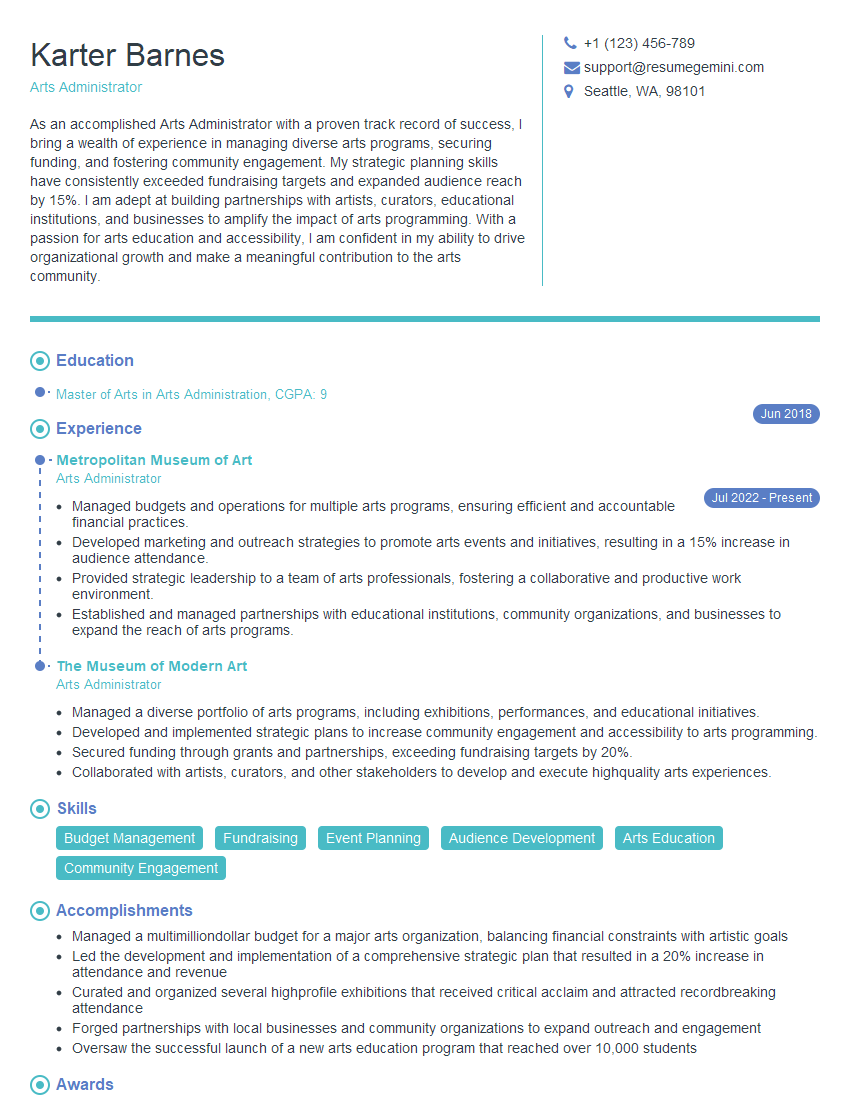
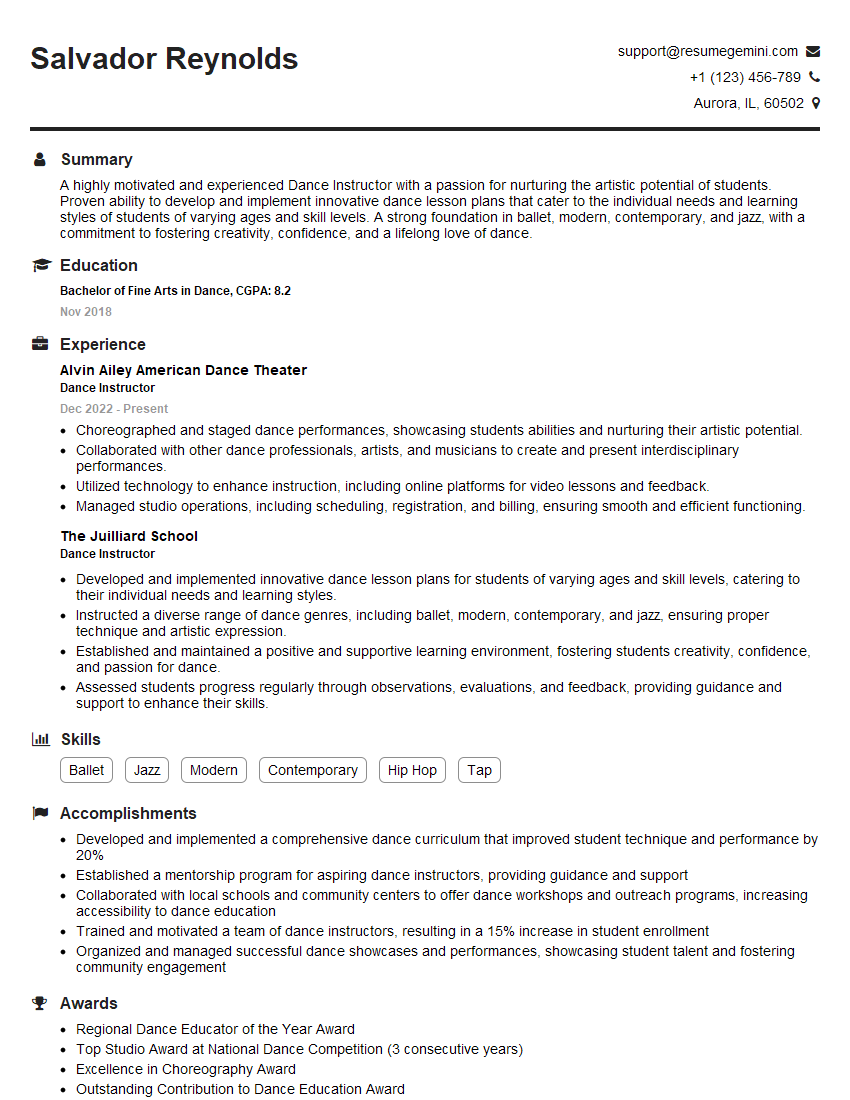
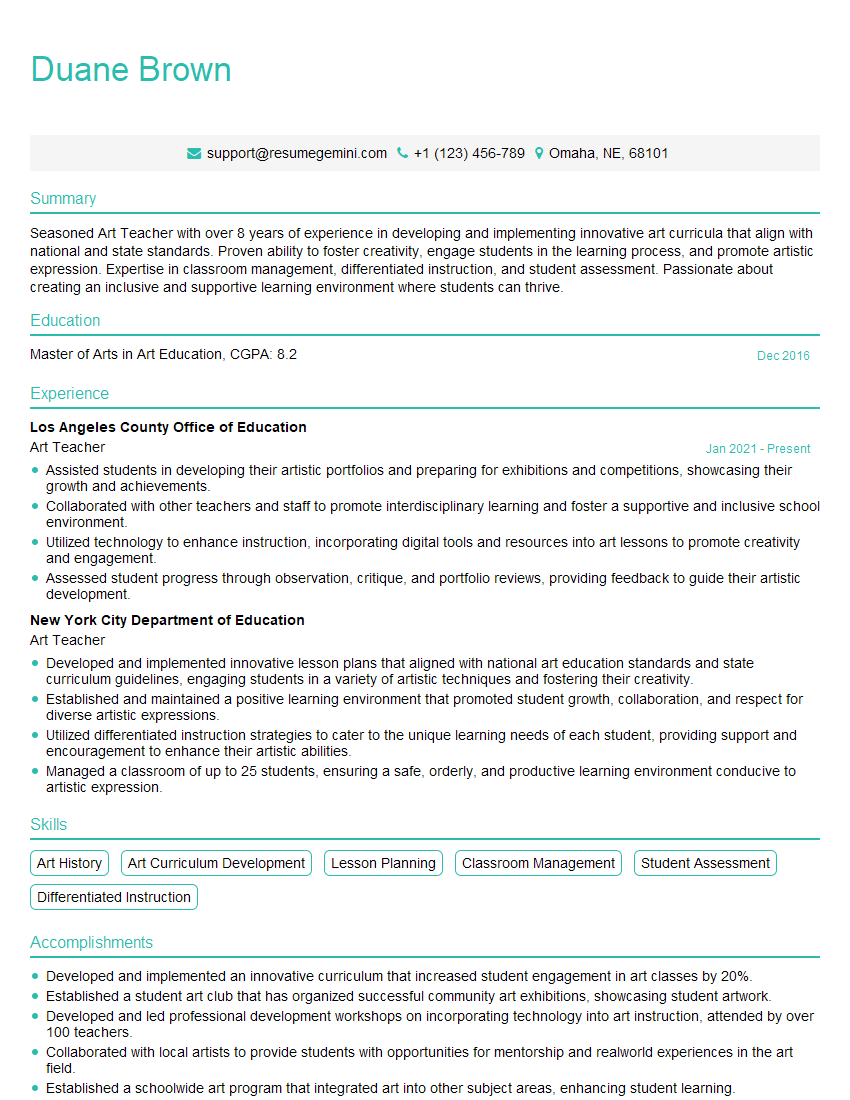
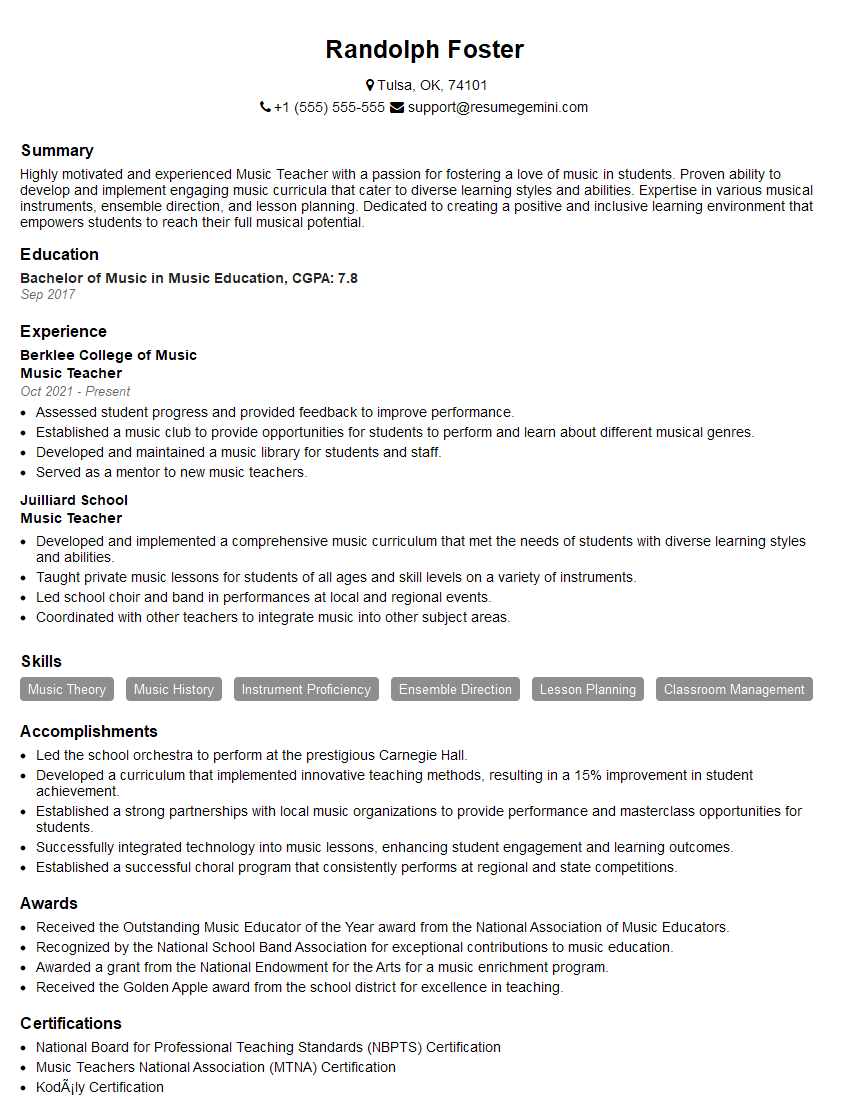
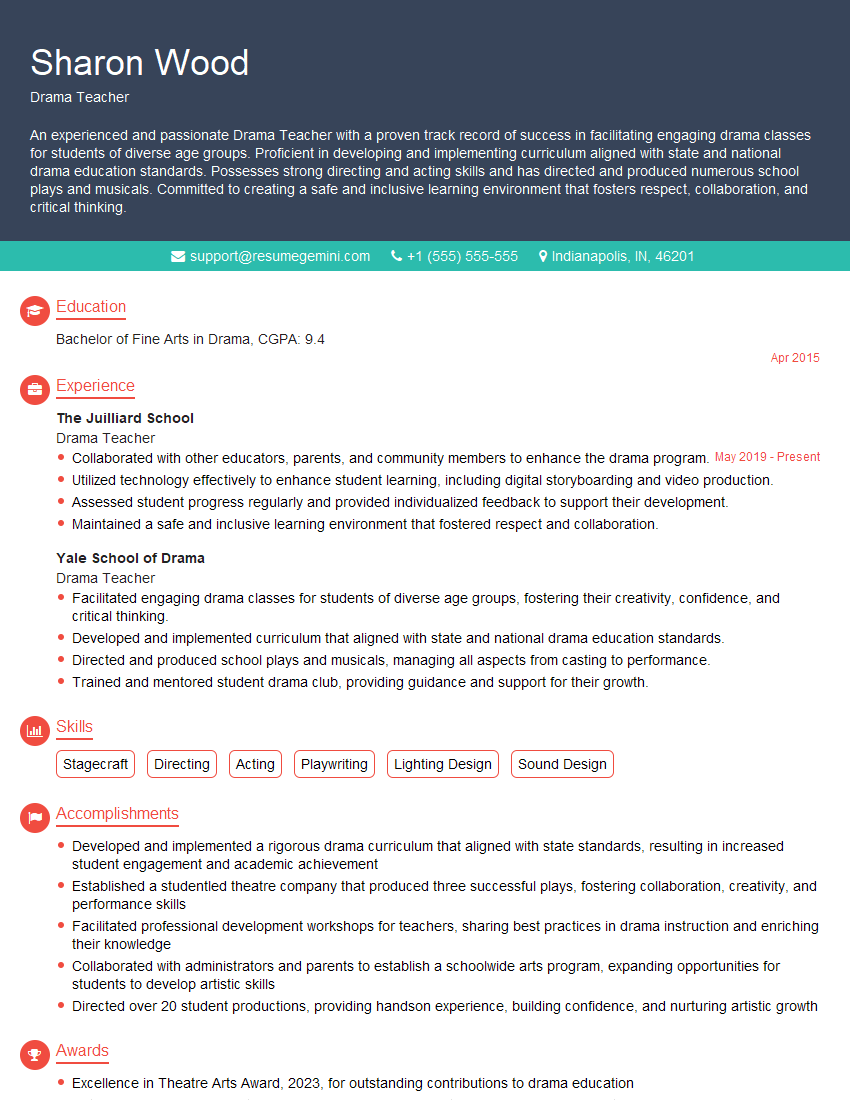
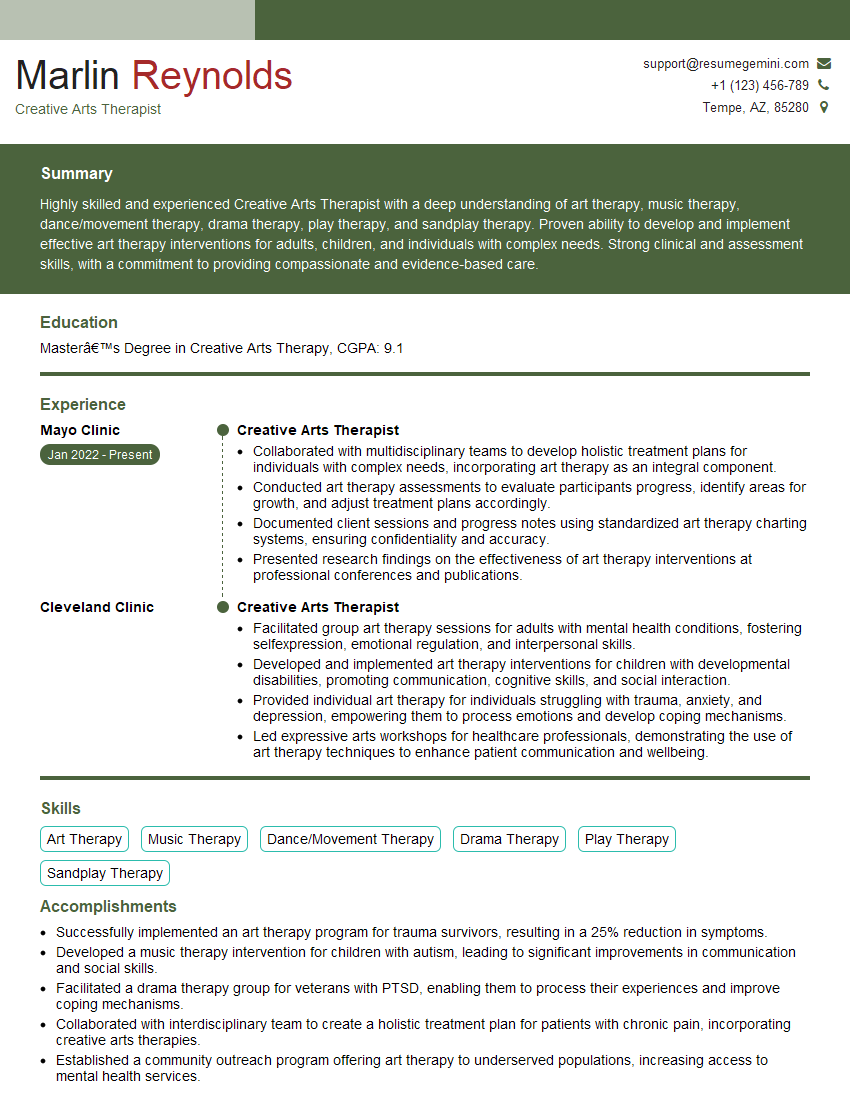
Mastering the concepts of a strong work ethic and commitment to quality arts education is crucial for career advancement in this field. It allows you to present yourself as a dedicated and effective educator, ready to contribute meaningfully to any arts program. Building an ATS-friendly resume is essential to increase your chances of getting your application noticed. Use ResumeGemini to create a professional and impactful resume that highlights your skills and experience. ResumeGemini offers examples of resumes tailored to showcase a strong work ethic and commitment to quality arts education, helping you present your qualifications effectively to potential employers.
Explore more articles
Users Rating of Our Blogs
Share Your Experience
We value your feedback! Please rate our content and share your thoughts (optional).
What Readers Say About Our Blog
Really detailed insights and content, thank you for writing this detailed article.
IT gave me an insight and words to use and be able to think of examples