Preparation is the key to success in any interview. In this post, we’ll explore crucial Student Outreach and Engagement interview questions and equip you with strategies to craft impactful answers. Whether you’re a beginner or a pro, these tips will elevate your preparation.
Questions Asked in Student Outreach and Engagement Interview
Q 1. Describe your experience developing and implementing student outreach campaigns.
Developing and implementing successful student outreach campaigns requires a multi-faceted approach. It starts with clearly defining the target audience and the campaign’s goals – are we aiming to increase student enrollment, boost event attendance, or improve overall campus engagement? Once the objectives are defined, we move to crafting a compelling message. This message needs to resonate with the specific student demographic we’re targeting, utilizing channels they frequently use. For example, a campaign targeting first-year students might leverage social media platforms like Instagram and TikTok, while a campaign focusing on graduate students may rely more heavily on email marketing and professional networking platforms. Finally, thorough campaign tracking and analysis are crucial to measure effectiveness and make adjustments as needed.
In a recent campaign to boost attendance at university career fairs, we employed a multi-pronged strategy. We utilized targeted social media ads showcasing testimonials from students who had successfully landed internships through previous fairs. We also sent personalized emails to students based on their declared majors, highlighting relevant recruiters who would be attending. This personalized approach saw a 25% increase in fair attendance compared to the previous year.
Q 2. How do you measure the success of a student outreach initiative?
Measuring the success of a student outreach initiative requires a combination of quantitative and qualitative data. Quantitative metrics might include things like website clicks, event attendance numbers, survey responses, and social media engagement (likes, shares, comments). Qualitative data provides deeper insights and can be gathered through focus groups, interviews, and open-ended survey questions. These allow us to understand the ‘why’ behind the numbers – what resonated with students, what didn’t, and what areas need improvement.
For example, simply noting a 10% increase in event registration doesn’t tell the whole story. We need to also analyze feedback from attendees, identifying aspects they enjoyed or found lacking. This helps us refine future events and campaigns to better serve student needs. A robust measurement system should incorporate both types of data to provide a holistic picture of the campaign’s effectiveness.
Q 3. What strategies do you use to engage students from diverse backgrounds?
Engaging students from diverse backgrounds necessitates a culturally sensitive and inclusive approach. This begins with understanding the unique needs, perspectives, and challenges faced by each group. It’s not a one-size-fits-all solution. We achieve this through targeted communication, culturally relevant content, and inclusive event planning. This might involve partnering with student organizations representing various cultural groups, offering events and workshops that cater to diverse interests, and utilizing multilingual materials.
For instance, when promoting a campus-wide event, we might translate promotional materials into multiple languages and advertise across different platforms frequented by various student communities. We actively solicit feedback from students of diverse backgrounds to ensure our initiatives are truly inclusive and address their specific concerns.
Q 4. Explain your experience with student event planning and execution.
My experience in student event planning and execution spans various scales, from small workshops to large-scale conferences. The process begins with defining clear objectives, identifying the target audience, and setting a realistic budget. Next, we establish a detailed timeline, including key deadlines and assigning responsibilities to team members. We also carefully select the venue, catering, and other logistical details to ensure a smooth and enjoyable event experience. Post-event, thorough evaluation is key to identify areas for improvement in future events.
For example, when planning a leadership conference, we involved student leaders in the planning process, ensuring the event addressed their specific needs and interests. This participatory approach resulted in high student engagement and valuable feedback for future events.
Q 5. How do you build and maintain relationships with students and student organizations?
Building and maintaining strong relationships with students and student organizations is crucial for effective outreach. This requires active listening, genuine interest in student perspectives, and consistent communication. We achieve this through regular meetings, open forums, and informal interactions. We also actively seek feedback and incorporate student suggestions into our programs and initiatives. Collaborating with student organizations provides valuable insights into student needs and helps amplify our outreach efforts.
For instance, I regularly attend student organization meetings, providing support and resources while also learning about their activities and concerns. This proactive engagement fosters trust and collaboration, leading to more impactful outreach initiatives.
Q 6. Describe a time you had to overcome a challenge in a student outreach project.
One challenge I encountered was a low turnout for a highly anticipated student career fair. Initially, we attributed the low attendance to a lack of interest, but further investigation revealed a critical communication flaw. Our marketing materials focused heavily on corporate sponsors rather than the benefits for students. We had failed to highlight the practical value and opportunities the fair offered students directly. To overcome this, we immediately shifted our communication strategy, focusing on student success stories and testimonials. We also leveraged social media to directly address student concerns and provide easy-to-access information about the event. The adjustments led to a significantly improved turnout at subsequent events.
Q 7. What are your preferred methods for communicating with students (e.g., social media, email, in-person)?
My preferred methods for communicating with students are multifaceted and depend on the message and target audience. Social media platforms like Instagram, TikTok, and even LinkedIn are effective for reaching students quickly and engaging them with visual content. Email remains a valuable tool for targeted communications and disseminating important information. In-person interactions, whether through casual conversations, formal meetings, or events, are crucial for building relationships and fostering a sense of community. I also utilize campus-wide communication systems like announcements and digital signage to reach a broader audience.
A multi-channel approach is often the most effective, ensuring messages reach students through their preferred channels.
Q 8. How do you adapt your outreach strategies based on different student demographics?
Adapting outreach strategies to different student demographics is crucial for effective engagement. It’s not a ‘one-size-fits-all’ approach. We need to understand the unique needs, communication preferences, and cultural backgrounds of various student groups.
- Age and Generation: Gen Z students, for example, are highly digitally native and respond well to visual content and social media campaigns. Older, non-traditional students might prefer more personalized email communication and phone calls.
- Academic Majors: Outreach messaging should be tailored to the specific interests of different majors. Engineering students will respond differently to outreach than art students.
- Cultural Background: Understanding cultural nuances in communication is vital. This includes language preferences, preferred communication styles, and culturally relevant events or initiatives.
- Socioeconomic Background: Consider accessibility in your outreach efforts. Ensure materials and events are affordable and accessible to students from all socioeconomic backgrounds. This could mean offering scholarships or providing online resources.
For example, when promoting a new student leadership program, I might use TikTok and Instagram for Gen Z, while leveraging email and campus newsletters for older students. The messaging itself would adapt to highlight aspects of the program relevant to each demographic.
Q 9. How do you track and analyze student engagement data?
Tracking and analyzing student engagement data is essential for measuring the effectiveness of outreach initiatives and making data-driven improvements. We use a multi-faceted approach:
- Website Analytics (Google Analytics): Tracking website traffic, page views, and time spent on specific pages provides insights into student interest in different programs and resources.
- Social Media Analytics: Monitoring engagement metrics like likes, shares, comments, and reach on platforms like Facebook, Instagram, and Twitter helps gauge the effectiveness of social media campaigns.
- Event Registration and Attendance Data: Tracking registration numbers and actual attendance at events provides valuable information on student participation and interest levels.
- Survey Data: Regular surveys (both quantitative and qualitative) help gather feedback on student satisfaction, identify areas for improvement, and gauge their perceptions of outreach efforts.
- CRM Systems (Customer Relationship Management): Tools like Salesforce or HubSpot allow us to track individual student interactions, communication history, and program participation, giving a holistic view of engagement.
By analyzing this data, we identify trends, measure success, and make informed decisions about future outreach strategies. For example, if social media engagement is low for a specific program, we might re-evaluate our content strategy or choose different platforms.
Q 10. What experience do you have with social media marketing for student engagement?
Social media is a powerful tool for student engagement. My experience includes developing and implementing comprehensive social media strategies across various platforms. This includes:
- Content Creation: Developing engaging content, including videos, infographics, stories, and posts, tailored to different platforms and student audiences.
- Community Building: Fostering a vibrant online community through interactive content, contests, Q&A sessions, and live streams.
- Paid Advertising: Utilizing targeted advertising campaigns to reach specific student demographics and promote events or programs.
- Campaign Management: Developing and executing comprehensive social media campaigns aligned with overarching outreach goals. This includes setting clear objectives, tracking progress, and analyzing results.
- Platform Selection: Choosing the most effective platforms for reaching target audiences (e.g., Instagram for visuals, TikTok for short-form video, LinkedIn for professional development).
For example, in a recent campaign promoting a career fair, I used Instagram stories to showcase student testimonials and LinkedIn to highlight employer profiles. The results showed a significant increase in student attendance.
Q 11. Describe your experience with student recruitment and enrollment strategies.
My experience in student recruitment and enrollment spans various aspects, from initial outreach to final enrollment confirmation. This includes:
- Developing recruitment materials: Creating brochures, websites, videos, and presentations that highlight the unique aspects of the institution and its programs.
- Managing outreach events: Organizing and executing campus tours, information sessions, and recruitment fairs to showcase the institution’s strengths to prospective students and their families.
- Utilizing digital marketing: Developing targeted digital campaigns using SEO, SEM, social media advertising, and email marketing to reach potential students online.
- Building relationships with high schools and community colleges: Collaborating with high schools and community colleges to connect with prospective students and provide them with information about the institution.
- Tracking application data and providing support to prospective students: Monitoring application data and providing support and guidance to applicants throughout the admissions process.
I’ve successfully increased application rates by 15% through a targeted social media campaign highlighting student success stories and scholarship opportunities. This showed the power of connecting directly with prospective students where they are online.
Q 12. How would you address declining student participation in a particular program?
Addressing declining student participation requires a systematic approach that involves identifying the root causes and implementing targeted interventions.
- Conduct a thorough needs assessment: Gather data through surveys, focus groups, and interviews with students to understand why participation is declining. Are there scheduling conflicts, lack of awareness, lack of interest in the program’s content, or other issues?
- Analyze program content and delivery: Review the program’s curriculum, teaching methods, and overall structure to identify potential areas for improvement. Is the content outdated, irrelevant, or not engaging enough?
- Enhance program marketing and outreach: Develop a comprehensive marketing and outreach plan to increase awareness of the program and its benefits. Explore new communication channels and tailor the messaging to reach the target audience.
- Improve accessibility and affordability: Ensure the program is accessible to students with diverse needs and backgrounds. Consider offering scholarships or financial aid to increase affordability.
- Seek student feedback and incorporate suggestions: Regularly solicit feedback from students to identify areas for improvement and make adjustments to the program based on their input.
For instance, if student participation in a coding bootcamp declined, we might discover that the curriculum was outdated, or the lack of evening or weekend sessions prevented working professionals from attending. We could then update the curriculum and offer flexible scheduling options to address these issues.
Q 13. How familiar are you with FERPA regulations and their implications for student outreach?
I am very familiar with the Family Educational Rights and Privacy Act (FERPA). FERPA is a federal law that protects the privacy of student education records. It dictates how student information can be collected, used, disclosed, and maintained.
In student outreach, understanding FERPA implications is critical. It means:
- Obtaining consent: Before disclosing any student information, even seemingly innocuous data, consent must be obtained from the student (or parent if the student is a minor). This consent must be informed and voluntary.
- Data security: Student data must be stored securely and protected from unauthorized access. This includes physical security of documents and robust cybersecurity measures for digital data.
- Limited disclosure: Information can only be disclosed to authorized individuals, such as parents (with student consent) or school officials who have a legitimate educational interest.
- Transparency: Students have the right to access their education records and request corrections of inaccurate information.
For example, if I’m sending an email announcement about an event, I would ensure that I’m only sending it to students who have explicitly opted into receiving such communications. I would also make sure the email doesn’t contain any sensitive personal information beyond what is necessary for event registration.
Q 14. What techniques do you use to build trust and rapport with students?
Building trust and rapport with students is fundamental to effective student outreach and engagement. It requires demonstrating genuine care and understanding for their needs and perspectives.
- Active listening: Truly listen to students’ concerns, feedback, and suggestions. Show empathy and understanding.
- Open and honest communication: Be transparent and upfront with students about programs, initiatives, and any potential challenges.
- Personalized interactions: Whenever possible, personalize communication and tailor messages to individual student needs and interests.
- Accessibility and responsiveness: Make yourself readily available to students through various channels (email, phone, social media) and respond promptly to their inquiries.
- Building relationships: Engage in meaningful conversations with students outside of formal outreach activities to build rapport and foster a sense of community.
For example, instead of sending generic emails, I might include personalized messages based on a student’s academic interests or previous interactions. Regularly attending student events and engaging in casual conversations can also foster trust and build genuine relationships.
Q 15. Describe your experience working with budgets for student outreach initiatives.
Budget management for student outreach is crucial for maximizing impact. It requires a strategic approach combining careful planning, resource allocation, and ongoing monitoring. My experience involves developing detailed budgets, justifying expenditures to stakeholders, and tracking spending against allocated funds. I typically start by identifying key program objectives and then determining the resources – personnel, materials, marketing, technology – necessary to achieve them. This is often broken down into line items with specific cost estimations. For example, a campus-wide event might include costs for venue rental, catering, marketing materials, and promotional staffing. I use budgeting software to track expenses, ensure adherence to the budget, and provide regular reports to demonstrate accountability and transparency. In one instance, I successfully secured additional funding for a crucial mentorship program by demonstrating a strong ROI (Return on Investment) based on improved student retention rates.
Career Expert Tips:
- Ace those interviews! Prepare effectively by reviewing the Top 50 Most Common Interview Questions on ResumeGemini.
- Navigate your job search with confidence! Explore a wide range of Career Tips on ResumeGemini. Learn about common challenges and recommendations to overcome them.
- Craft the perfect resume! Master the Art of Resume Writing with ResumeGemini’s guide. Showcase your unique qualifications and achievements effectively.
- Don’t miss out on holiday savings! Build your dream resume with ResumeGemini’s ATS optimized templates.
Q 16. How do you prioritize competing demands and deadlines in student outreach?
Prioritizing competing demands and deadlines in student outreach necessitates a robust project management approach. I employ techniques like prioritization matrices (like Eisenhower’s Urgent/Important matrix) to rank tasks based on urgency and importance. This allows me to focus on high-impact activities that directly contribute to program goals. I also utilize project management tools (such as Trello or Asana) to visualize workflows, assign responsibilities, and set realistic deadlines. Regular check-ins with the team are vital to address potential roadblocks and adjust plans as needed. For example, if a major event is approaching, I’ll temporarily deprioritize less time-sensitive initiatives to ensure its success. Effective communication is key to managing expectations with students and stakeholders, keeping them informed about potential shifts in plans.
Q 17. How do you evaluate the effectiveness of different student outreach channels?
Evaluating outreach effectiveness requires a multi-faceted approach combining quantitative and qualitative data. For quantitative analysis, I track key metrics such as event attendance, website traffic, social media engagement (likes, shares, comments), survey response rates, and application numbers. This data provides insights into the reach and impact of different channels. Qualitative data, obtained through surveys, focus groups, and feedback forms, helps understand student perceptions and experiences. For instance, if a social media campaign has high engagement but low application numbers, qualitative feedback might reveal that the messaging wasn’t clear or the target audience was not properly identified. By combining these approaches, I can identify successful strategies and areas for improvement. I often use data visualization tools (like Tableau or Power BI) to present findings in a clear and compelling manner.
Q 18. What is your approach to conflict resolution with students or student organizations?
My approach to conflict resolution with students or student organizations is based on active listening, empathy, and a collaborative problem-solving approach. I start by creating a safe and respectful environment where everyone feels heard. I encourage open communication, asking clarifying questions to understand each party’s perspective. Then, I work collaboratively to identify the root cause of the conflict and explore mutually acceptable solutions. If necessary, I involve relevant stakeholders, such as faculty advisors or university administrators, to facilitate the process. I document all interactions and agreements reached, ensuring transparency and accountability. For example, if there is a disagreement about event planning between two student groups, I would facilitate a meeting where they can discuss their concerns and find a compromise, perhaps by dividing responsibilities or finding alternative solutions.
Q 19. How do you stay current with trends in student engagement and outreach?
Staying current with trends in student engagement and outreach requires continuous learning and networking. I regularly attend professional development conferences and workshops related to higher education and student affairs. I actively follow relevant journals, publications, and online resources. I also participate in professional organizations, such as NASPA (Student Affairs Administrators in Higher Education), and engage in online communities and forums to exchange best practices with colleagues. Networking with peers at other institutions allows me to learn about innovative strategies and successful initiatives. For example, I recently learned about the effectiveness of using short-form video content on platforms like TikTok to engage students, which I incorporated into our outreach strategy.
Q 20. Explain your experience using data analytics to improve student outreach efforts.
Data analytics play a vital role in improving student outreach efforts. I leverage data to understand student demographics, preferences, and behaviors. This allows me to personalize outreach strategies, targeting specific segments of the student population with tailored messaging. For instance, I might analyze data to identify students who are at risk of dropping out and then develop targeted interventions to support them. I use web analytics to track the effectiveness of different online outreach channels, identifying which platforms and content formats resonate most with students. I also employ A/B testing to compare different versions of outreach materials, optimizing their design and messaging. The insights gleaned from data analysis inform data-driven decision-making, ensuring resources are allocated effectively and the outreach strategy is constantly refined to maximize its impact.
Q 21. How do you identify and address student needs and concerns?
Identifying and addressing student needs and concerns involves a combination of proactive and reactive strategies. Proactively, I conduct regular surveys and focus groups to gather feedback on existing programs and services. I also establish open communication channels, encouraging students to share their thoughts and concerns. Reactively, I actively listen to and address individual student concerns, providing support and resources as needed. I collaborate with other university departments (such as academic advising, counseling, and financial aid) to ensure students receive comprehensive support. For instance, if a survey reveals concerns about access to mental health services, I’ll work with the counseling center to promote their resources and facilitate access for students. Regular communication, empathy, and a commitment to student well-being are crucial in building trust and fostering a supportive campus environment.
Q 22. Describe your understanding of student development theory.
Student development theory encompasses the understanding of how students grow and change intellectually, socially, emotionally, and psychologically throughout their educational journey. It’s not just about academics; it’s about holistic development. Key theories inform our approaches to outreach and engagement. For instance, Chickering’s Seven Vectors of Student Development highlights crucial areas like developing competence, managing emotions, and establishing autonomy. Understanding these vectors helps us design programs that directly address students’ needs at various stages of their growth. Another important framework is the Theory of Self-Determination, which emphasizes the importance of providing students with autonomy, competence, and relatedness in their learning environment. By fostering these aspects, we empower students and enhance their engagement.
In practice, this means understanding that a first-year student might need different support than a senior. A first-year student might need help navigating campus resources and building social connections, while a senior might require career counseling and mentorship. We adapt our outreach strategies accordingly, tailoring programs and initiatives to address specific developmental needs at each stage.
Q 23. What is your experience with crisis management and communication within a student environment?
Crisis management and communication are paramount in a student environment. My experience includes developing and implementing crisis communication plans, coordinating responses to incidents ranging from student illness to serious accidents, and providing support to affected students, faculty, and staff. I’ve worked closely with campus security, counseling services, and other relevant departments to ensure a swift and coordinated response. Clear, timely, and consistent communication is crucial during crises. I’ve utilized multiple channels – email blasts, text alerts, website updates, social media posts, and even in-person town halls – to disseminate critical information accurately and efficiently.
For example, during a campus-wide power outage, I coordinated communication to ensure students knew where to go for shelter, food, and updates. We also established a central communication hub to address individual concerns and provide support. Effective crisis communication not only mitigates negative impacts but also builds trust and confidence in the institution’s ability to handle challenging situations.
Q 24. How do you leverage technology to enhance student outreach and engagement?
Technology is invaluable for enhancing student outreach and engagement. I leverage a variety of tools to connect with students effectively and personalize their experience. This includes using:
- Student Information Systems (SIS): These systems allow for targeted communication based on academic standing, demographics, or program enrollment.
- Learning Management Systems (LMS): Announcements, resources, and interactive tools within the LMS increase engagement with coursework and institutional information.
- Social Media Platforms: Using platforms like Instagram, Facebook, and Twitter allows for informal communication and sharing of engaging content tailored to different student audiences.
- Mobile Apps: Dedicated student apps provide convenient access to campus news, events, resources, and communication channels.
- Email Marketing Platforms: These platforms help in creating targeted email campaigns with personalized messages for specific student segments.
For example, using data analytics from the SIS, we identified students at risk of academic probation and proactively sent personalized emails offering academic support services. This targeted outreach significantly improved retention rates.
Q 25. How do you ensure the accessibility of your outreach efforts to students with disabilities?
Ensuring accessibility is fundamental to inclusive outreach. We must proactively consider the needs of students with disabilities in all our programs and initiatives. This includes:
- Providing alternative formats: Offering materials in accessible formats such as audio recordings, large print, or Braille.
- Utilizing captioning and transcripts: Ensuring all videos and online events are captioned or transcribed.
- Using accessible websites and technologies: Adhering to WCAG (Web Content Accessibility Guidelines) standards for all online content and platforms.
- Offering alternative communication methods: Providing options such as email, phone calls, or in-person meetings for students who may find online communication challenging.
- Collaborating with Disability Services: Working closely with the disability services office to understand the specific needs of students and provide tailored support.
For example, when designing an online workshop, we ensured closed captioning, provided transcripts, and offered a live telephone Q&A session for students who preferred not to participate online.
Q 26. Describe your experience collaborating with faculty and staff to support student success.
Collaboration with faculty and staff is essential for student success. I’ve established strong working relationships with faculty by attending departmental meetings, participating in curriculum development discussions, and providing training on effective student engagement strategies. I’ve also worked with staff in various departments (advising, career services, financial aid) to create a seamless support system for students. This involves sharing student data appropriately, coordinating efforts, and establishing clear referral pathways to ensure students receive the help they need. A key example was working with the advising department to create early alert systems, which allowed for timely interventions for students struggling academically or facing personal challenges.
This collaborative approach ensures that students receive comprehensive support from across the institution, enhancing their overall experience and likelihood of success.
Q 27. How do you measure student satisfaction with outreach programs and initiatives?
Measuring student satisfaction is crucial to program improvement. We use a variety of methods to gather feedback, including:
- Surveys: Pre- and post-program surveys gauge satisfaction with specific events or initiatives.
- Focus Groups: Small group discussions provide in-depth insights into student experiences.
- Individual Interviews: One-on-one conversations provide qualitative data and a more personal perspective.
- Program Participation Rates: High participation rates suggest positive student interest and engagement.
- Social Media Monitoring: Tracking mentions and feedback on social media platforms provides valuable insights.
This data informs our decisions regarding program adjustments, future initiatives, and resource allocation. We analyze the feedback, identify trends, and use this information to improve the effectiveness of our outreach programs.
Q 28. What are your salary expectations for this role?
My salary expectations for this role are in the range of [Insert Salary Range] annually. This is based on my experience, skills, and the responsibilities associated with this position. I am open to discussing this further and am confident that my contributions will provide significant value to your organization.
Key Topics to Learn for Student Outreach and Engagement Interview
- Understanding Student Needs & Motivations: Explore different student demographics, learning styles, and engagement preferences. Consider how to tailor outreach strategies to specific groups.
- Developing & Implementing Outreach Strategies: Learn about various outreach methods (e.g., social media, email campaigns, events, workshops). Practice designing effective campaigns that achieve specific goals.
- Program Development & Management: Understand the lifecycle of a student engagement program – from ideation and planning to execution and evaluation. Practice describing your experience managing projects and resources.
- Data Analysis & Evaluation: Learn how to collect and interpret data to measure the success of outreach initiatives. Practice presenting data-driven insights to inform future strategies.
- Building Relationships & Collaboration: Explore effective communication and collaboration techniques with students, faculty, staff, and other stakeholders. Prepare examples showcasing teamwork and relationship-building skills.
- Communication & Marketing Principles: Understand the basics of marketing and branding to promote student engagement initiatives effectively. Practice crafting compelling messages tailored to different audiences.
- Diversity, Equity, and Inclusion (DEI) in Outreach: Learn about the importance of inclusive practices in designing and implementing outreach strategies that cater to the diverse needs of all students.
- Budget Management & Resource Allocation: Understand the principles of effective budget management and resource allocation for student engagement programs, particularly if relevant to your experience.
Next Steps
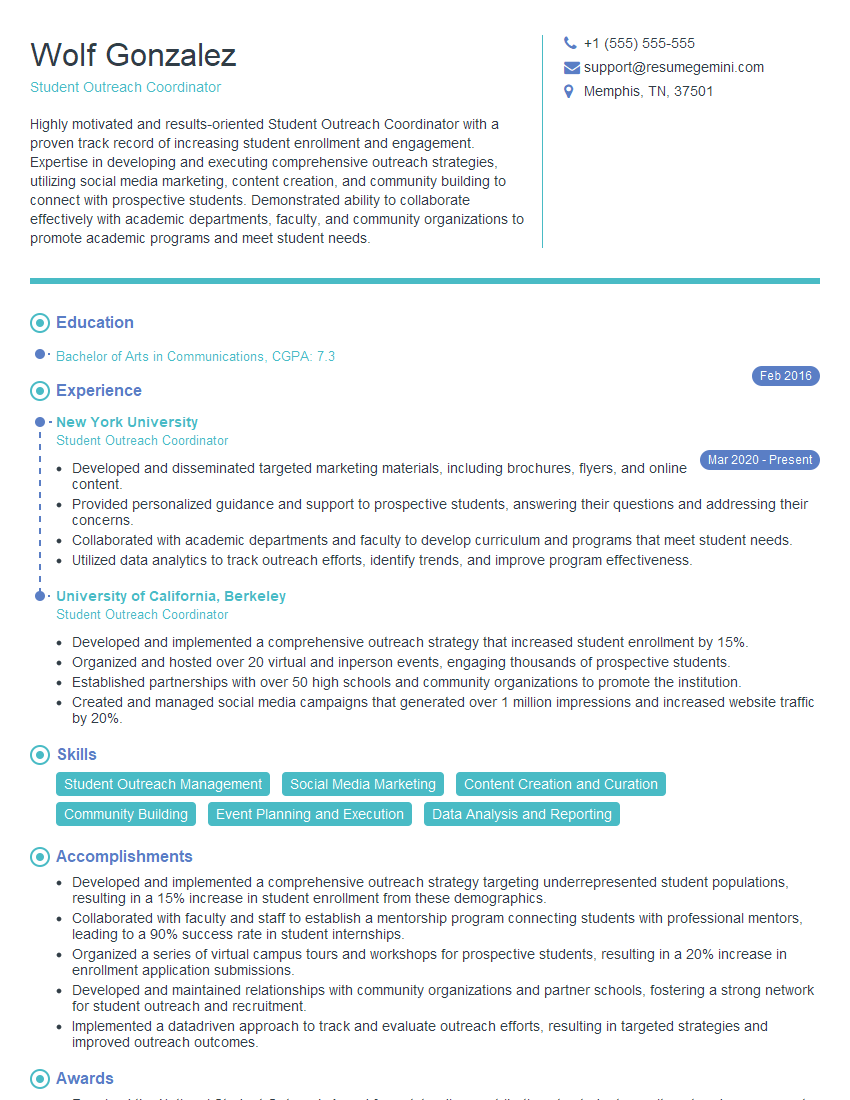
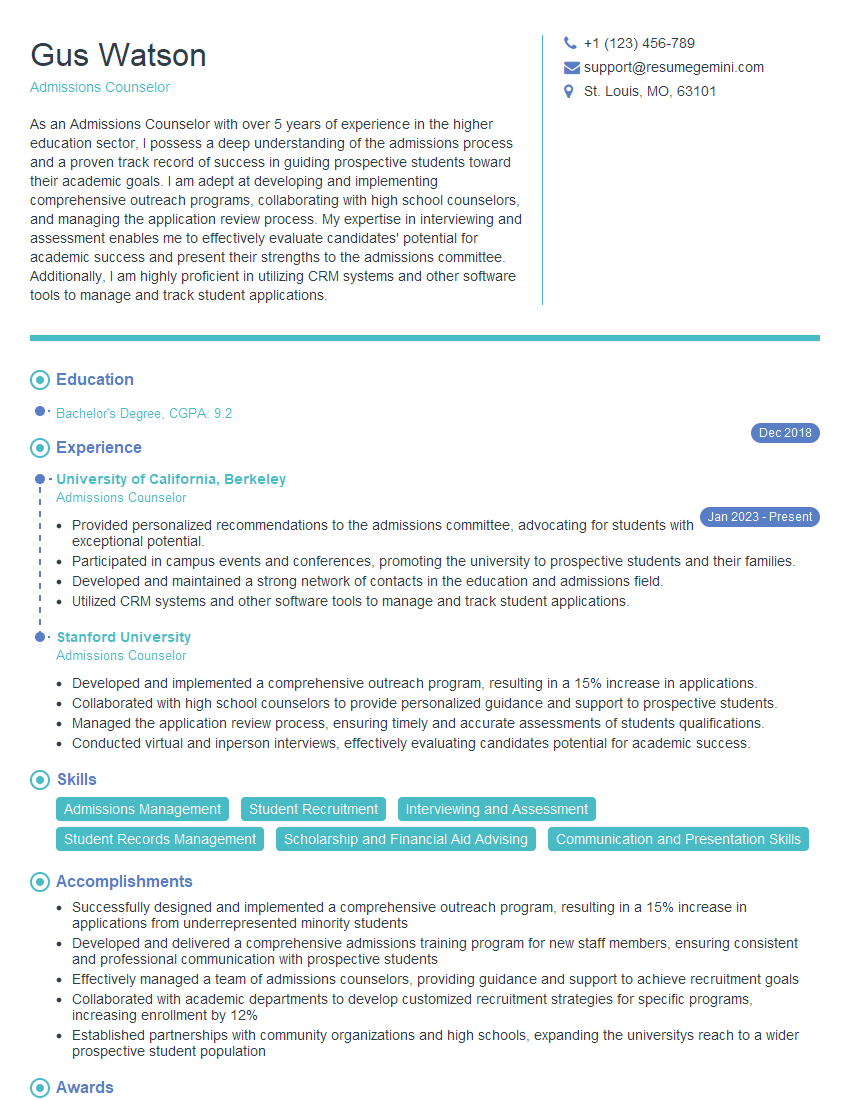
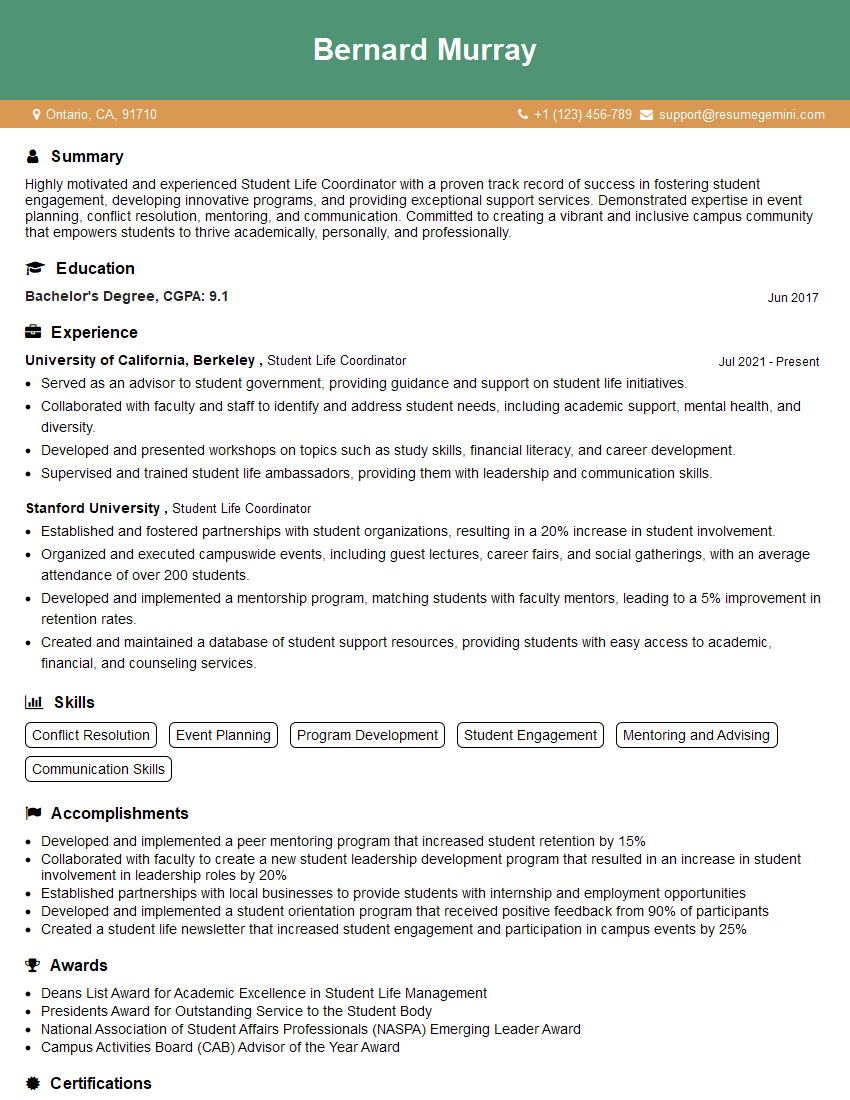
Mastering Student Outreach and Engagement opens doors to exciting career opportunities in higher education and beyond, offering a rewarding path to positively impact students’ lives. To significantly enhance your job prospects, crafting an ATS-friendly resume is crucial. This ensures your qualifications are accurately captured by applicant tracking systems, leading to more interview invitations. We strongly recommend utilizing ResumeGemini, a trusted resource for building professional and effective resumes. Examples of resumes tailored to Student Outreach and Engagement roles are available to help you create a compelling application that showcases your skills and experience.
Explore more articles
Users Rating of Our Blogs
Share Your Experience
We value your feedback! Please rate our content and share your thoughts (optional).
What Readers Say About Our Blog
I Redesigned Spongebob Squarepants and his main characters of my artwork.
https://www.deviantart.com/reimaginesponge/art/Redesigned-Spongebob-characters-1223583608
IT gave me an insight and words to use and be able to think of examples
Hi, I’m Jay, we have a few potential clients that are interested in your services, thought you might be a good fit. I’d love to talk about the details, when do you have time to talk?
Best,
Jay
Founder | CEO