Interviews are more than just a Q&A session—they’re a chance to prove your worth. This blog dives into essential Timber Harvesting Management interview questions and expert tips to help you align your answers with what hiring managers are looking for. Start preparing to shine!
Questions Asked in Timber Harvesting Management Interview
Q 1. Explain the different harvesting methods (clear-cutting, selective cutting, shelterwood, etc.) and their environmental impacts.
Timber harvesting employs various methods, each with distinct environmental impacts. Let’s explore the most common:
- Clear-cutting: This involves removing all trees in a designated area. While efficient and cost-effective, it leads to significant soil erosion, loss of biodiversity, and altered water cycles. Imagine a forest floor suddenly exposed to the elements – it’s vulnerable. However, clear-cutting can be beneficial in creating early successional habitats favored by certain species. It’s crucial to carefully consider the site and plan for regeneration.
- Selective Cutting: This method removes individual trees or small groups, leaving the majority of the forest intact. It minimizes environmental disruption, maintaining biodiversity and soil stability. Think of it like pruning a garden – you remove specific plants without destroying the whole garden. However, selective cutting can be less efficient and more expensive than clear-cutting.
- Shelterwood Cutting: This involves removing trees in stages, leaving some mature trees to provide shade and seed for regeneration. It protects the soil and provides habitat for wildlife, transitioning the forest gradually. It’s a compromise between clear-cutting’s efficiency and selective cutting’s minimal impact, offering a more natural regeneration process.
- Seed-Tree Cutting: Similar to shelterwood, but even fewer trees are left standing to provide seeds for the next generation. This is a riskier approach, relying heavily on successful natural regeneration.
The choice of method depends on various factors including forest type, site conditions, ecological goals, and economic considerations. Sustainable forestry practices emphasize minimizing negative environmental impacts through careful planning and implementation, often integrating multiple methods.
Q 2. Describe your experience with forest road construction and maintenance.
Forest road construction and maintenance are critical for efficient and safe timber harvesting. My experience encompasses the entire process, from initial planning and design considering soil type, slope, and drainage to construction using appropriate techniques to minimize environmental impact. I’ve overseen projects involving various road types, from temporary skid trails to permanent access roads, ensuring they meet required standards. Maintenance is equally important. Regular inspections, timely repairs, and drainage management prevent road degradation, erosion, and safety hazards. For example, I once worked on a project in mountainous terrain, where careful consideration of drainage was paramount to prevent landslides. We employed specialized techniques like water bars and culverts to manage water runoff and protect the road and the surrounding environment. Proper maintenance practices are crucial for extending the lifespan of forest roads and minimizing their environmental footprint.
Q 3. How do you ensure compliance with safety regulations during timber harvesting operations?
Safety is paramount in timber harvesting. My approach involves a multi-faceted strategy beginning with thorough risk assessments tailored to each operation. This includes identifying potential hazards, such as falling trees, equipment malfunctions, and challenging terrain, and developing site-specific safety plans. We implement strict adherence to all relevant Occupational Safety and Health Administration (OSHA) regulations and industry best practices. This involves providing comprehensive safety training to all personnel, ensuring the use of appropriate personal protective equipment (PPE), and regular safety inspections. Furthermore, clear communication channels, effective supervision, and emergency response procedures are crucial. For instance, we use pre-job briefings to reiterate safety procedures and to address any potential concerns. Through consistent enforcement of safety rules and a proactive safety culture, we aim for zero accidents.
Q 4. What are the key factors to consider when developing a harvesting plan?
Developing a comprehensive harvesting plan requires careful consideration of many interconnected factors. These include:
- Forest Inventory Data: Accurate data on tree species, size, volume, and distribution is crucial for planning efficient and sustainable harvesting.
- Soil Conditions: Understanding soil type, stability, and drainage capacity helps in designing harvesting methods and roads to minimize erosion and damage.
- Environmental Considerations: Protecting water resources, minimizing habitat disruption, and ensuring biodiversity are paramount. This often involves adhering to environmental regulations and incorporating best management practices.
- Economic Factors: Profitability and cost-effectiveness must be considered, including timber value, harvesting costs, and transportation logistics.
- Legal and Regulatory Compliance: Harvesting plans must adhere to all applicable local, state, and federal regulations.
- Silvicultural Goals: The plan should align with long-term forest management goals, such as regeneration and future timber production.
Creating a detailed plan ensures efficient operations, minimizes environmental impact, and maximizes economic returns while respecting the ecological integrity of the forest.
Q 5. How do you manage and mitigate risks associated with harvesting in challenging terrain?
Harvesting in challenging terrain presents unique risks. My approach involves a layered risk management strategy. First, a detailed site assessment is conducted to identify specific hazards such as steep slopes, unstable ground, and limited access. This assessment informs the selection of appropriate harvesting methods and equipment. For example, cable logging systems may be necessary in steep terrain to minimize soil disturbance. Specialized training for crews working in challenging terrain is essential. We employ techniques like pre-felling inspections to identify potential hazards and implement safety protocols. We frequently use spotters to alert operators to potential risks, and we prioritize gradual slopes and avoid felling trees uphill. Emergency response plans are meticulously developed and regularly reviewed. Furthermore, weather conditions are constantly monitored, and operations are suspended during periods of high risk, such as heavy rain or high winds. Regular communication and coordination between crews and supervisors are crucial to ensure everyone’s safety.
Q 6. Explain your experience with timber volume estimation and scaling.
Timber volume estimation and scaling are vital for accurate accounting and financial planning in timber harvesting. My experience involves using various methods, including:
- Volume Tables: These tables provide estimated volumes based on tree species, diameter, and height, often derived from extensive forest inventory data.
- Scaling Sticks and Tapes: These tools are used to directly measure tree diameters and lengths for volume calculations.
- 3D Laser Scanning: Advanced technology like LiDAR provides highly accurate measurements of trees and stands, allowing for precise volume estimation.
I’m proficient in using these methods to accurately estimate timber volume both pre-harvest and post-harvest. Accuracy in volume estimation is crucial for negotiations, sales contracts, and resource management. We perform regular quality checks on our estimations to ensure accuracy and prevent discrepancies.
Q 7. Describe your knowledge of different logging equipment and their applications.
My knowledge of logging equipment is extensive. I’m familiar with a wide range of machines and their applications, including:
- Harvesters: These machines fell trees, delimb them, and cut them into logs, significantly increasing efficiency and reducing labor needs.
- Forwarders: These machines transport logs from the felling site to a landing area for further processing or loading.
- Skidders: Used for dragging logs to a landing area, typically in less demanding terrain than forwarders.
- Feller Bunchers: These machines fell and bunch trees together, suitable for specific terrain and timber types.
- Chainsaws: Still essential for specialized felling and bucking operations.
Selecting the right equipment is crucial for efficiency and safety. The choice depends on factors such as forest type, terrain, and logging volume. I have experience operating and maintaining a variety of equipment, and I understand the importance of proper maintenance for optimal performance and safety.
Q 8. How do you ensure the efficient utilization of harvesting resources?
Efficient resource utilization in timber harvesting hinges on meticulous planning and execution. It’s like orchestrating a complex symphony – each instrument (resource) needs to play its part harmoniously for the best outcome. This involves several key strategies:
- Pre-harvest planning: Detailed assessments of the stand, including tree species, size distribution, terrain, and access roads are crucial. This informs the selection of appropriate harvesting methods and equipment, minimizing waste and maximizing yield.
- Optimized harvesting techniques: Choosing the right harvesting system (e.g., clear-cutting, selective harvesting) based on the specific stand characteristics and management objectives is vital. For instance, selective harvesting in a mixed-species stand allows for better utilization of different tree species and reduces overall impact.
- Equipment maintenance and utilization: Regular maintenance of machinery ensures optimal performance and reduces downtime. Properly trained operators are key to maximizing the efficiency of equipment and minimizing fuel consumption.
- Waste reduction strategies: Implementing strategies to minimize logging residue and efficiently utilize all harvested timber is essential. This may involve using innovative processing techniques to create value-added products from smaller branches or utilizing residue for bioenergy.
- Technology integration: Utilizing technology such as GPS-guided harvesting equipment and advanced inventory systems can improve precision, reduce waste and enhance overall efficiency.
For example, in one project, by implementing a pre-harvest planning process that incorporated detailed GIS mapping and site-specific harvesting plans, we reduced waste by 15% and increased overall harvesting efficiency by 10%.
Q 9. How do you monitor and control harvesting costs?
Controlling harvesting costs requires a multi-pronged approach, much like balancing a budget at home. It’s about careful planning, efficient execution and robust monitoring.
- Accurate cost estimation: Developing a detailed budget that includes all aspects of the operation – from labor and equipment to transportation and permits – is the first step. This requires thorough pre-harvest planning and accurate assessment of site conditions.
- Negotiating favorable contracts: Securing competitive prices for equipment, labor, and transportation services is essential. This involves careful negotiation with suppliers and contractors.
- Monitoring productivity and efficiency: Regular monitoring of harvesting progress and equipment performance helps identify potential problems early on and take corrective measures. Tracking fuel consumption, downtime, and labor hours provides valuable insights.
- Risk management: Identifying and mitigating potential risks, such as equipment breakdowns, weather delays, or unexpected site conditions, helps minimize cost overruns.
- Post-harvest analysis: Analyzing the actual costs incurred against the budget allows for identification of areas for improvement in future projects.
In a recent project, by closely monitoring fuel consumption and implementing a preventative maintenance program, we managed to reduce fuel costs by 8%, demonstrating the importance of proactive cost management.
Q 10. What are your strategies for preventing soil erosion and damage during harvesting?
Preventing soil erosion and damage during harvesting is crucial for maintaining long-term forest health and productivity. Think of it as protecting the foundation of the forest ecosystem. This involves:
- Minimizing ground disturbance: Using harvesting techniques that minimize soil compaction and rutting is essential. This might involve employing directional felling techniques or using lighter equipment in sensitive areas.
- Protecting riparian areas: Establishing buffer zones along streams and rivers to prevent sediment runoff into waterways is crucial. This protects water quality and aquatic habitats.
- Implementing erosion control measures: Employing techniques such as water bars, ditching, and seeding, can prevent erosion on steep slopes or disturbed areas.
- Careful road construction and maintenance: Properly designed and maintained forest roads minimize soil erosion and improve access for harvesting operations.
- Reforestation and site preparation: Planting trees and preparing the site for regeneration helps stabilize the soil and prevent erosion.
For instance, in one project involving a steep slope, we implemented a combination of directional felling, water bars, and immediate re-vegetation, which significantly reduced erosion compared to traditional harvesting methods.
Q 11. Explain your experience with forest regeneration and reforestation techniques.
Forest regeneration and reforestation are critical for maintaining forest health and productivity. It’s like ensuring the forest’s future generations are well cared for. My experience encompasses a range of techniques:
- Natural regeneration: Facilitating the natural regeneration of tree species by managing seed trees, removing competing vegetation, and protecting seedlings from herbivores.
- Artificial regeneration: Planting seedlings or using direct seeding techniques to establish new stands. This involves selecting appropriate species, preparing the site properly, and monitoring seedling survival.
- Site preparation: Preparing the site for regeneration by controlling competing vegetation, removing logging debris, and amending the soil where necessary. This might include using prescribed burns or mechanical site preparation techniques.
- Species selection: Choosing tree species that are well-suited to the site conditions and management objectives is crucial. This includes considering factors such as climate, soil type, and potential pests and diseases.
- Monitoring and evaluation: Regular monitoring of the regenerated stand is essential to assess its success and make adjustments as needed. This involves measuring survival rates, growth rates, and overall stand density.
In one project, we successfully established a new stand of Douglas fir using a combination of site preparation, artificial regeneration, and ongoing monitoring, achieving a 90% survival rate after the first year.
Q 12. How do you manage and supervise harvesting crews?
Managing and supervising harvesting crews requires strong leadership, communication, and safety management skills. It’s about ensuring a productive and safe work environment. My approach involves:
- Clear communication: Providing clear instructions and expectations to the crew, ensuring everyone understands their roles and responsibilities.
- Safety training and enforcement: Implementing comprehensive safety training programs and enforcing strict safety protocols. Regular safety meetings are vital to address potential hazards and reinforce safe work practices.
- Monitoring productivity and quality: Regularly monitoring the crew’s progress and the quality of their work to ensure efficiency and adherence to standards.
- Motivation and teamwork: Fostering a positive and collaborative work environment through effective communication, recognition of achievements, and addressing conflicts promptly.
- Conflict resolution: Developing and implementing strategies to resolve conflicts fairly and efficiently, prioritizing safety and productivity.
I once had to resolve a conflict between two crew members regarding logging techniques. By facilitating open communication and finding common ground, we improved teamwork and achieved better results.
Q 13. How do you handle conflicts between harvesting operations and environmental protection?
Balancing harvesting operations with environmental protection requires a thoughtful and proactive approach. It’s about finding the sweet spot between economic needs and ecological sustainability. This involves:
- Environmental assessments: Conducting thorough environmental assessments to identify potential impacts and develop mitigation strategies. This often involves consulting with environmental specialists and regulatory agencies.
- Sustainable harvesting practices: Employing harvesting techniques that minimize environmental impacts, such as selective harvesting, reduced-impact logging, and careful road construction.
- Compliance with regulations: Strictly adhering to all relevant environmental regulations and obtaining necessary permits before commencing harvesting operations.
- Monitoring and mitigation: Regularly monitoring the environmental impacts of harvesting operations and implementing mitigation measures as needed. This may include erosion control, stream protection, and wildlife habitat management.
- Stakeholder engagement: Engaging with local communities, environmental groups, and other stakeholders to address concerns and build consensus. Transparency and open communication are key to building trust.
In one case, we worked with an environmental group to develop a habitat management plan that mitigated the impact of harvesting on a sensitive bird species. This collaborative approach resulted in a win-win scenario.
Q 14. Describe your experience with timber sales contracts and negotiations.
My experience with timber sales contracts and negotiations is extensive. It’s about understanding the market, protecting your interests, and establishing fair and equitable agreements. This involves:
- Market analysis: Conducting thorough market research to determine current timber prices and market trends.
- Contract drafting and review: Developing and reviewing timber sales contracts to ensure they are legally sound, clear, and protect the interests of all parties.
- Negotiation skills: Employing effective negotiation skills to reach mutually acceptable agreements with buyers. This involves understanding the buyer’s needs and finding creative solutions.
- Risk management: Identifying and managing potential risks associated with timber sales, such as price fluctuations, market volatility, and unforeseen circumstances.
- Contract administration: Managing the timber sales contract throughout its lifecycle, including monitoring compliance, resolving disputes, and ensuring timely payments.
In a recent negotiation, we successfully secured a higher price for timber by demonstrating the quality and volume of the stand through detailed inventory data and showcasing the sustainable harvesting practices employed. This demonstrates the importance of preparation and effective negotiation in timber sales.
Q 15. How do you ensure the sustainable management of forest resources?
Sustainable forest management is all about balancing the need for timber with the long-term health of the forest ecosystem. It’s like being a good farmer – you harvest a crop, but you ensure the land remains fertile for future harvests. This involves several key strategies:
- Selective Harvesting: Instead of clear-cutting large areas, we selectively remove mature or less desirable trees, leaving behind a diverse stand that supports a wider range of species and maintains ecosystem services.
- Reforestation and Afforestation: After harvesting, we actively replant trees, ensuring the area is quickly reforested. Afforestation, planting trees in areas that weren’t previously forested, can also contribute to carbon sequestration and biodiversity.
- Protecting Biodiversity: We identify and protect areas of high biodiversity, ensuring that sensitive habitats and endangered species are not adversely affected by logging operations. This could include setting aside buffer zones along waterways or leaving mature trees as wildlife habitat.
- Soil and Water Conservation: Employing sustainable logging practices minimizes soil erosion and protects water quality. This might involve careful planning of skid trails to minimize disturbance and the use of erosion control measures after harvesting.
- Monitoring and Adaptive Management: Regularly monitoring forest health, growth rates, and biodiversity allows us to adapt our management plans based on the latest data. This iterative approach is crucial for long-term sustainability.
For example, in one project, we implemented a silvicultural system that favored the growth of specific tree species valued for their timber while also maintaining a structurally complex forest that provided habitat for various wildlife species. The result was a profitable harvest while enhancing the overall forest ecosystem.
Career Expert Tips:
- Ace those interviews! Prepare effectively by reviewing the Top 50 Most Common Interview Questions on ResumeGemini.
- Navigate your job search with confidence! Explore a wide range of Career Tips on ResumeGemini. Learn about common challenges and recommendations to overcome them.
- Craft the perfect resume! Master the Art of Resume Writing with ResumeGemini’s guide. Showcase your unique qualifications and achievements effectively.
- Don’t miss out on holiday savings! Build your dream resume with ResumeGemini’s ATS optimized templates.
Q 16. What are your methods for assessing the health and productivity of a forest stand?
Assessing forest health and productivity involves a multi-faceted approach combining field observations with advanced technologies. Think of it as a comprehensive health check for the forest.
- Field Surveys: We measure tree diameter, height, and species composition to determine stand density and volume. We also assess tree health by looking for signs of disease, insect infestation, or stress.
- Growth and Yield Models: We use sophisticated models to predict future growth and yield based on current stand characteristics and environmental factors. This helps us optimize harvesting schedules and predict future timber volume.
- Remote Sensing: Aerial photography, LiDAR (Light Detection and Ranging), and satellite imagery provide large-scale data on forest cover, biomass, and canopy structure. This allows us to quickly assess large areas and identify potential problem areas.
- Soil Analysis: Soil samples help determine nutrient levels, which are crucial for tree growth and overall forest health. We look for signs of compaction or degradation due to past harvesting activities.
- Wildlife Surveys: Monitoring wildlife populations and habitat quality helps assess the ecological health of the forest. This may involve camera trapping, track surveys, or habitat assessments.
For instance, using LiDAR data, we were able to create a detailed 3D model of a forest stand, accurately identifying areas with high-value timber and areas requiring specific management interventions, such as thinning or fertilization.
Q 17. How do you integrate technology (e.g., GIS, remote sensing) into timber harvesting operations?
Technology is revolutionizing timber harvesting, making operations more efficient, precise, and sustainable. GIS and remote sensing are central to this transformation.
- GIS (Geographic Information Systems): GIS allows us to map forest stands, roads, and harvesting boundaries with high accuracy. This facilitates efficient planning and minimizes environmental impact by optimizing harvesting routes and reducing unnecessary road construction. We can also integrate data on soil type, slope, and wildlife habitat into our GIS maps for informed decision-making.
- Remote Sensing: Satellite imagery and LiDAR provide detailed information on forest structure and composition, allowing for precise inventory and planning. This technology enables us to identify areas with high-value timber, assess damage from natural events, and monitor forest regeneration progress. We can even use this data to simulate different harvesting scenarios before undertaking any on-the-ground work.
- GPS and Machine Control: GPS-guided harvesting machines enhance precision and reduce damage to surrounding trees and the environment. This ensures efficient harvesting while minimizing waste and environmental disturbance.
In a recent project, we used LiDAR data to create a precise 3D model of the forest, which was then integrated into our GIS system. This allowed us to plan harvesting operations with millimeter accuracy, minimizing damage to residual trees and reducing the overall environmental footprint.
Q 18. Explain your understanding of forest certification programs (e.g., FSC, SFI).
Forest certification programs, such as the Forest Stewardship Council (FSC) and the Sustainable Forestry Initiative (SFI), provide independent verification of sustainable forest management practices. Think of them as a seal of approval for environmentally responsible forestry.
- FSC: The FSC is a global, non-profit organization that sets rigorous standards for sustainable forest management. Certification ensures that timber comes from forests managed according to these standards, promoting responsible forestry practices worldwide.
- SFI: The SFI is a North American program that focuses on sustainable forest management and responsible forestry practices. It provides a framework for landowners and forest managers to improve their environmental and social performance.
- Benefits of Certification: Certified timber often commands a premium price in the market, reflecting its value as a sustainably produced product. Certification also enhances a company’s reputation and helps meet the growing demand for responsibly sourced wood products.
Achieving FSC or SFI certification requires a thorough audit of our management practices, demonstrating our commitment to environmental responsibility and sustainable forest management. It’s a valuable tool for promoting credibility and transparency within the industry.
Q 19. How do you address potential issues related to wildlife habitat during harvesting?
Protecting wildlife habitat during harvesting is crucial for maintaining biodiversity and ecosystem health. It’s a delicate balance – harvesting timber while preserving the homes of forest creatures.
- Habitat Mapping: We identify and map key wildlife habitats, such as nesting sites, denning areas, and migration corridors, before planning harvesting activities.
- Selective Harvesting Techniques: We utilize selective logging practices that minimize habitat disturbance. This could involve leaving buffer zones around sensitive areas or retaining specific trees for wildlife use.
- Leave Areas Untouched: We designate specific areas as reserves or refugia, providing undisturbed habitats for wildlife.
- Timing of Operations: We schedule harvesting operations to avoid sensitive periods, such as breeding seasons or migration times.
- Minimizing Disturbance: We employ methods to minimize noise and traffic during operations, reducing stress on wildlife.
For example, in one project, we worked closely with wildlife biologists to map and protect sensitive nesting areas for an endangered bird species. By carefully planning our harvesting operations around these areas, we successfully completed the harvest without impacting the bird population.
Q 20. Describe your experience with pre-harvest planning and site assessments.
Pre-harvest planning and site assessments are critical for successful and sustainable timber harvesting. It’s like creating a detailed blueprint before starting construction.
- Inventory and Assessment: We conduct thorough inventories to determine the volume, species composition, and quality of timber available. We also assess site conditions, including topography, soil type, and water resources.
- Road Planning and Construction: We plan and construct temporary roads that minimize environmental impact and ensure efficient timber extraction. This includes considering drainage, erosion control, and impacts on wildlife.
- Harvesting Methods Selection: We select the most appropriate harvesting methods, such as clear-cutting, shelterwood, or selection harvesting, based on site conditions and management objectives.
- Environmental Impact Assessment: We assess the potential environmental impacts of the harvesting operation, including impacts on water quality, soil erosion, and wildlife habitat.
- Risk Assessment: We identify and assess potential risks associated with harvesting operations, including safety hazards and potential for environmental damage.
In a recent project, our pre-harvest planning included detailed mapping of sensitive wetland areas, allowing us to develop harvesting plans that minimized impacts on water quality and protected critical habitat.
Q 21. How do you monitor and report on key performance indicators (KPIs) for harvesting operations?
Monitoring and reporting key performance indicators (KPIs) are vital for evaluating the effectiveness and efficiency of harvesting operations. It’s about measuring progress and identifying areas for improvement.
- Volume Harvested: We track the volume of timber harvested against the planned volume.
- Harvesting Costs: We monitor harvesting costs to ensure efficiency and profitability.
- Environmental Impact Indicators: We monitor indicators such as soil erosion, water quality, and wildlife habitat impact to assess the environmental performance of the operation.
- Safety Performance: We track safety incidents and near misses to improve worker safety.
- Timeliness: We monitor the progress of harvesting operations against the planned schedule.
We use specialized software to collect, analyze, and report on these KPIs. Regular reporting allows us to identify areas for improvement, adjust our strategies, and demonstrate accountability to stakeholders.
For example, we track the volume of harvested timber against our planned yields and use this data to refine our future harvesting plans and optimize resource allocation. We also monitor our environmental impact indicators to ensure our operations are meeting our sustainability goals.
Q 22. Explain your understanding of relevant environmental regulations and permits.
Understanding and adhering to environmental regulations is paramount in timber harvesting. This involves familiarity with federal, state, and potentially local laws governing forest management practices. These regulations often cover aspects like:
- Watershed protection: Regulations often specify buffer zones around waterways to prevent sedimentation and erosion during harvesting.
- Endangered species protection: Harvesting plans must account for the presence of endangered or threatened species and their habitats, potentially requiring modifications to avoid impact.
- Air quality: Regulations may limit burning practices or require specific methods for reducing emissions from equipment.
- Forest health: Regulations might mandate specific harvesting techniques to promote forest regeneration and long-term health.
- Permitting: Before commencing any operation, obtaining the necessary permits is crucial. This typically involves submitting a detailed harvesting plan that addresses environmental concerns, including a site-specific assessment.
For example, in a project near a salmon stream, we’d need a permit and implement best management practices (BMPs) such as leaving buffer strips of uncut trees along the stream to filter runoff and prevent erosion.
Q 23. What are your strategies for minimizing the impact of harvesting on water quality?
Minimizing the impact on water quality involves a multi-pronged approach focusing on erosion control and runoff management. Strategies include:
- Proper road construction and maintenance: Well-designed and maintained roads minimize erosion and sediment transport into waterways. This includes using water bars and culverts to manage runoff.
- Streamside management zones (SMZs): Leaving uncut buffer strips along streams prevents sediment and pollutants from entering the water. The width of the SMZ depends on local regulations and the sensitivity of the waterway.
- Selective harvesting techniques: Careful selection of trees to harvest minimizes soil disturbance, thus reducing erosion. Avoiding clear-cutting in sensitive areas is crucial.
- Proper equipment maintenance: Leaks from equipment (fuel, oil, hydraulic fluids) can contaminate water sources. Regular maintenance prevents this.
- Post-harvest site rehabilitation: Planting vegetation helps stabilize the soil, prevent erosion, and filter runoff.
Imagine a scenario where harvesting is near a lake. We would utilize directional felling techniques to keep trees from falling into the water, and employ erosion control mats and other BMPs to manage runoff from skid trails.
Q 24. How do you manage and dispose of harvesting waste responsibly?
Responsible waste management is critical for sustainability. Our approach involves:
- On-site utilization: Whenever feasible, we utilize logging residues (branches, tops, etc.) as biomass for energy generation or mulch for reforestation.
- Recycling: Metal and plastic components from equipment are recycled following appropriate protocols.
- Landfilling: In cases where on-site utilization is not possible, waste is transported to licensed landfills, adhering to all applicable regulations.
- Burning (with permits): In some cases, controlled burning is permitted for disposing of slash under strict guidelines and environmental approvals to prevent air pollution.
- Chipping and spreading: Chipping logging residues creates mulch that can enhance soil quality and reduce erosion.
For instance, in a recent project, we partnered with a local biomass energy plant to utilize logging residues as fuel, thereby reducing landfill waste and providing a sustainable energy source.
Q 25. Describe your experience with equipment maintenance and repair.
Equipment maintenance is a critical component of safe and efficient harvesting. My experience encompasses both preventative and corrective maintenance. This involves:
- Preventative Maintenance Schedules: Following manufacturer’s recommendations for routine inspections, lubrication, and replacement of parts to prevent major breakdowns.
- Proactive Repairs: Addressing minor issues promptly to prevent them from escalating into major problems.
- Diagnostic Skills: Identifying and diagnosing mechanical problems, often using diagnostic tools to pinpoint the source of the issue.
- Safety Checks: Regularly inspecting equipment for safety hazards such as leaks, worn parts, and loose connections.
- Record Keeping: Maintaining meticulous records of maintenance activities to track repairs and ensure compliance with safety standards.
I recall an instance where a chainsaw’s chain started to loosen. A quick adjustment prevented a potential accident and downtime.
Q 26. How do you ensure the safety of workers and the public during harvesting operations?
Ensuring safety is paramount. Our approach encompasses multiple layers:
- Pre-harvest planning: Thoroughly assessing the site for hazards, including terrain, weather conditions, and the presence of potential hazards like power lines.
- Worker training: Providing comprehensive training on safe operating procedures for all equipment and techniques. This includes personal protective equipment (PPE) usage.
- Emergency response plan: Developing and regularly rehearsing emergency procedures in case of accidents or injuries.
- Communication: Maintaining clear communication among crew members throughout the operation using two-way radios and designated signal systems.
- Public safety measures: Establishing safety zones and warning signs to prevent unauthorized access to the harvesting area.
For example, before starting a felling operation, we always brief the team on the felling plan, identifying escape routes and safety zones, highlighting any potential hazards, and reviewing safety protocols.
Q 27. What is your approach to addressing unexpected problems or delays during harvesting?
Addressing unexpected problems requires a proactive and adaptable approach. My strategies include:
- Problem assessment: Quickly and accurately assessing the nature and scope of the problem.
- Resource allocation: Determining the resources (equipment, personnel, materials) needed to address the issue.
- Contingency planning: Having backup plans in place for common issues (e.g., equipment malfunctions, adverse weather).
- Communication: Keeping all stakeholders (clients, crew, supervisors) informed of the situation and the planned course of action.
- Documentation: Meticulously documenting the problem, the solution, and any lessons learned.
In one instance, heavy rain caused a road to become impassable. We quickly devised an alternate route using a different access point and communicated the change to the team and client, minimizing delays.
Q 28. How do you stay updated on the latest advancements and best practices in timber harvesting management?
Staying current in timber harvesting involves continuous learning. I employ various methods:
- Professional organizations: Actively participating in professional organizations like the Society of American Foresters (SAF) to access the latest research and best practices.
- Industry publications and journals: Regularly reading journals and industry publications to keep abreast of new technologies and techniques.
- Conferences and workshops: Attending conferences and workshops to learn from experts and network with colleagues.
- Online resources: Utilizing online resources and databases to access information on new developments in the field.
- Mentorship and peer learning: Learning from experienced professionals and sharing knowledge with colleagues.
For example, recently I attended a workshop on precision forestry, learning about the use of GPS and other technologies to optimize harvesting operations and minimize environmental impact.
Key Topics to Learn for Timber Harvesting Management Interview
- Sustainable Harvesting Practices: Understanding and applying principles of sustainable forestry, including selective logging, reforestation techniques, and minimizing environmental impact.
- Harvest Planning & Logistics: Developing detailed harvest plans, considering factors like terrain, access roads, equipment selection, and crew management for efficient and safe operations.
- Safety Regulations & Compliance: Demonstrating thorough knowledge of OSHA regulations, industry best practices, and effective safety protocols to minimize workplace hazards.
- Timber Valuation & Economics: Assessing timber value, understanding market dynamics, and applying economic principles to optimize harvesting profitability while considering long-term forest health.
- Equipment Operation & Maintenance: Familiarity with various harvesting equipment (felling machines, skidders, loaders, etc.), their operational capabilities, and effective maintenance procedures.
- Crew Management & Leadership: Demonstrating skills in effective team leadership, communication, conflict resolution, and motivating a diverse workforce to achieve common goals.
- Forest Inventory & Mensuration: Understanding techniques for accurately assessing timber volume, species composition, and forest health through various inventory methods.
- Environmental Impact Assessment: Ability to analyze the potential environmental impacts of harvesting operations and implement mitigation strategies to minimize negative consequences.
- Problem-Solving & Decision-Making: Demonstrating the ability to analyze complex situations, make informed decisions under pressure, and effectively solve problems related to equipment malfunction, weather delays, or unexpected challenges.
Next Steps
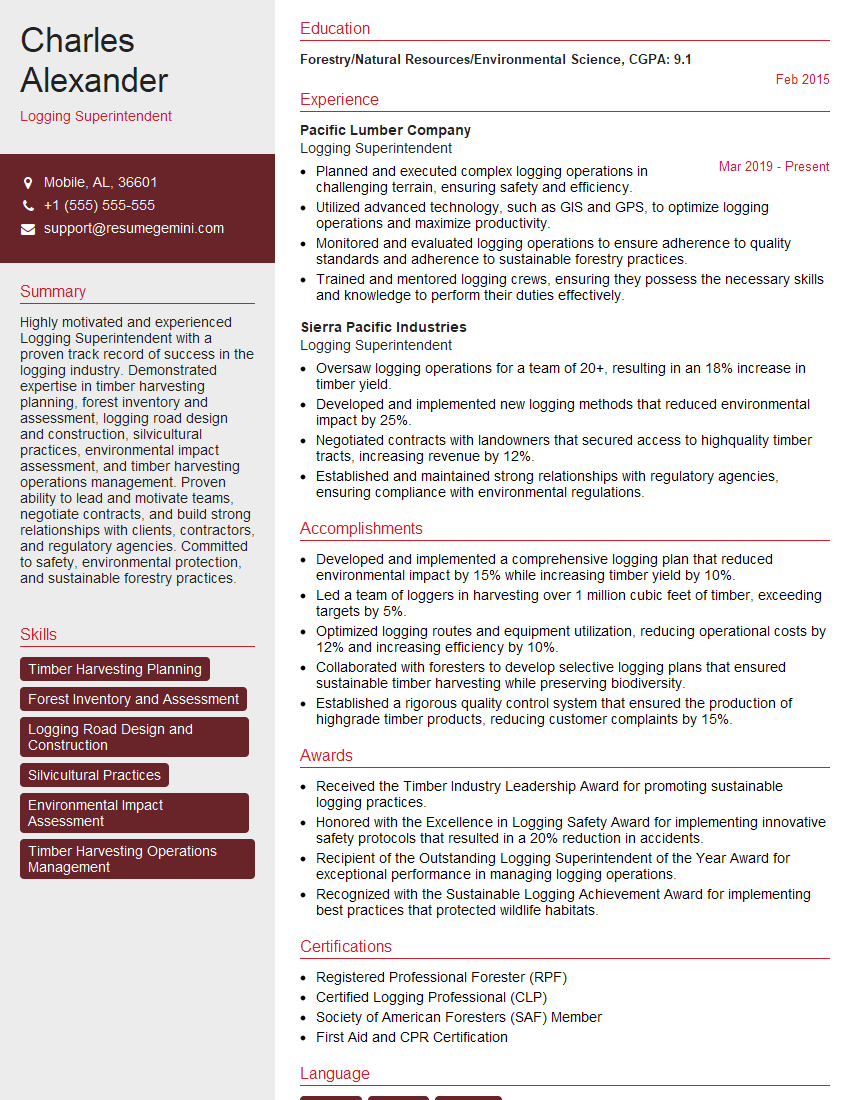
Mastering Timber Harvesting Management is crucial for career advancement in this dynamic and growing field. A strong understanding of these key areas will significantly enhance your interview performance and open doors to exciting opportunities. To maximize your job prospects, creating an ATS-friendly resume is essential. ResumeGemini is a trusted resource that can help you build a professional resume tailored to highlight your skills and experience. Examples of resumes specifically tailored to Timber Harvesting Management are available through ResumeGemini, ensuring your application stands out from the competition.
Explore more articles
Users Rating of Our Blogs
Share Your Experience
We value your feedback! Please rate our content and share your thoughts (optional).
What Readers Say About Our Blog
I Redesigned Spongebob Squarepants and his main characters of my artwork.
https://www.deviantart.com/reimaginesponge/art/Redesigned-Spongebob-characters-1223583608
IT gave me an insight and words to use and be able to think of examples
Hi, I’m Jay, we have a few potential clients that are interested in your services, thought you might be a good fit. I’d love to talk about the details, when do you have time to talk?
Best,
Jay
Founder | CEO