Feeling uncertain about what to expect in your upcoming interview? We’ve got you covered! This blog highlights the most important Traffic Management Plans interview questions and provides actionable advice to help you stand out as the ideal candidate. Let’s pave the way for your success.
Questions Asked in Traffic Management Plans Interview
Q 1. Explain the key components of a comprehensive Traffic Management Plan (TMP).
A comprehensive Traffic Management Plan (TMP) is a crucial document outlining strategies for managing traffic flow and ensuring safety during activities that impact roadways. Think of it as a detailed roadmap for keeping traffic moving smoothly and preventing accidents.
- Project Description: A clear overview of the project, its duration, and its impact on traffic.
- Traffic Assessment: Analysis of existing traffic patterns, volumes, and speeds to identify potential bottlenecks and conflicts.
- Proposed Traffic Control Measures: Detailed specifications of the traffic control devices (e.g., signage, lane closures, temporary signals) to be used.
- Traffic Diversion Routes: Clearly defined alternative routes for drivers to use during the project, minimizing disruption.
- Worker Safety Plan: Strategies for protecting workers on-site through measures like high-visibility clothing, safety barriers, and designated work zones.
- Emergency Response Plan: Procedures for handling accidents or other emergencies, including contact information for relevant authorities.
- Monitoring and Evaluation: A plan for tracking the effectiveness of the TMP, making adjustments as needed, and documenting any issues.
- Communication Plan: Strategies for keeping the public informed about potential delays or disruptions through methods such as electronic signs, social media, and local news.
For example, a TMP for road construction might include detailed diagrams showing lane closures, detours, and the placement of temporary traffic signals, while a TMP for a marathon would focus on route closures, pedestrian management, and emergency vehicle access.
Q 2. Describe your experience developing TMPs for different project types (e.g., road construction, events).
I’ve developed TMPs for a wide range of projects, from large-scale highway reconstruction to smaller-scale events like farmers’ markets. My experience spans various complexities and regulatory environments.
- Road Construction: I’ve worked on numerous highway widening projects, implementing complex lane closures, utilizing temporary traffic signals, and coordinating with contractors to ensure worker safety and minimal traffic disruption. One project involved managing traffic flow during a major bridge replacement, requiring careful planning and coordination with multiple agencies.
- Events: I’ve developed TMPs for large-scale events like concerts and festivals, focusing on pedestrian management, vehicle access control, and emergency evacuation routes. This often involves close collaboration with event organizers, law enforcement, and emergency services.
- Utility Projects: I have experience designing TMPs for underground utility work, focusing on short-term, localized traffic management, often utilizing flaggers and temporary lane closures to minimize disruption.
Each project required a unique approach tailored to the specific context, taking into account factors such as traffic volume, duration of work, and the surrounding infrastructure. My process always begins with a thorough site assessment and risk analysis.
Q 3. How do you ensure the safety of workers and the public during TMP implementation?
Worker and public safety is paramount in every TMP I develop. This is achieved through a multi-layered approach that prioritizes prevention and response.
- Clear Signage and Markings: Using highly visible signage, pavement markings, and delineators to guide traffic and define work zones.
- Adequate Protection Measures: Employing safety barriers, cones, and other physical barriers to separate workers from traffic.
- Traffic Control Devices: Strategic use of flaggers, temporary traffic signals, and speed control measures to regulate traffic flow and reduce speeds.
- Worker Training: Ensuring that all workers involved are properly trained in traffic safety procedures and understand their roles in maintaining safety.
- Emergency Response Plan: Developing a detailed plan for handling accidents or emergencies, including clear communication protocols and designated emergency contacts.
- Regular Monitoring and Inspections: Regularly monitoring the implementation of the TMP to identify and address any safety concerns promptly.
For example, in a road construction project, we might implement a ‘pilot car’ system to guide vehicles through a work zone, or in an event scenario, we’d dedicate specific lanes for emergency vehicles and ensure sufficient lighting in designated areas.
Q 4. What software or tools do you utilize for TMP design and analysis?
I utilize a variety of software and tools to design, analyze, and manage TMPs. These tools enhance efficiency and accuracy.
- AutoCAD: For creating detailed drawings of traffic control layouts, including signage placement and lane closures.
- Transportation Planning Software (e.g., Synchro, VISSIM): For simulating traffic flow under various scenarios and optimizing traffic control strategies. This allows us to predict potential bottlenecks and adjust the TMP accordingly.
- Project Management Software (e.g., Microsoft Project): For scheduling tasks, managing resources, and tracking progress. This ensures that the TMP is implemented efficiently and on time.
- GIS Software (e.g., ArcGIS): To analyze geographical data, such as traffic patterns and road networks, to inform TMP development.
The choice of software depends on the project’s scale and complexity. For smaller projects, simpler tools might suffice, while larger, more complex projects will require the use of sophisticated simulation software.
Q 5. How do you integrate TMPs with other project management plans?
TMPs are not stand-alone documents; they’re integral parts of the overall project management plan. Integration is crucial for success.
- Coordination with Project Schedule: The TMP’s implementation timeline must align with the overall project schedule, ensuring that traffic control measures are in place when needed.
- Resource Allocation: The TMP should clearly outline the resources required for its implementation, including personnel, equipment, and materials. This information is essential for effective resource allocation within the broader project budget.
- Risk Management: The TMP should address potential risks and challenges related to traffic management, integrating seamlessly with the project’s overall risk management plan.
- Communication: The TMP’s communication plan should integrate with the project’s broader communication strategy to ensure consistent messaging to stakeholders.
For example, delays in construction might necessitate adjustments to the TMP, and these changes would need to be communicated to all relevant parties. A coordinated approach minimizes disruption and maintains overall project efficiency.
Q 6. Explain your understanding of traffic control devices and their applications within a TMP.
Traffic control devices are the ‘tools’ of a TMP, used to guide and regulate traffic flow. Understanding their applications is crucial.
- Signage: Various signs (e.g., advance warning signs, lane closure signs, detour signs) guide drivers and inform them about changes in traffic conditions. Placement and type are critical for clarity.
- Pavement Markings: Temporary pavement markings, like lane lines and arrows, guide drivers through construction zones and maintain lane discipline.
- Traffic Signals: Temporary traffic signals control the flow of traffic at intersections or work zones, ensuring safety and efficiency.
- Flaggers: Trained personnel who manually direct traffic, often used in smaller-scale projects or where temporary signals aren’t practical.
- Channelizing Devices: Cones, barrels, and other devices used to guide traffic, delineate work zones, and create temporary lanes.
- Barriers: Concrete barriers, Jersey barriers, or other barriers provide physical separation between traffic and workers.
For instance, in a highway construction project, advance warning signs would alert drivers several kilometers in advance of lane closures, while flaggers might be used to control traffic around smaller work zones. Proper selection and placement of devices is essential for safety and efficiency.
Q 7. How do you address potential conflicts or challenges during TMP implementation?
Challenges are inevitable. Addressing them requires proactive planning and responsive adjustments.
- Unexpected Delays: If unforeseen events (e.g., equipment failure, inclement weather) cause delays, the TMP must be adjusted to maintain safety and minimize disruption. This might involve adjusting work schedules, deploying additional traffic control devices, or implementing alternative traffic routes.
- Conflicting Priorities: Balancing the needs of different stakeholders (e.g., residents, businesses, construction crews) requires careful negotiation and communication. This often involves finding compromises to minimize negative impacts on all parties.
- Public Complaints: Addressing public concerns about traffic delays or inconvenience requires effective communication strategies and a willingness to listen and respond to feedback. This might involve proactively informing the public about potential delays and providing alternative routes.
- Emergency Situations: Having a well-defined emergency response plan is critical. This includes procedures for handling accidents, evacuations, and other unforeseen circumstances.
My approach involves regular monitoring, open communication with stakeholders, and a willingness to adapt the TMP as needed. Flexibility and problem-solving skills are crucial in managing these challenges effectively.
Q 8. Describe your experience in conducting traffic impact studies.
Conducting traffic impact studies is crucial for understanding how proposed developments or events will affect existing traffic patterns. It involves a systematic process of data collection, analysis, and prediction. This helps us determine the need for, and the effectiveness of, a Traffic Management Plan (TMP).
My experience includes utilizing various software packages like Synchro and Vissim to model traffic flow under different scenarios. For example, in a recent project involving a new shopping mall construction, I used these tools to predict peak-hour delays and identify potential bottlenecks. We analyzed existing traffic counts, surveyed roadway geometry, and considered factors such as signal timing and pedestrian activity. The results informed the design of appropriate mitigation measures detailed within the TMP, like additional turning lanes or improved pedestrian crossings. I’ve also conducted field studies, using manual traffic counts and video analysis to validate model outputs and gain a nuanced understanding of real-world traffic behavior.
In another project involving a large-scale public event, we predicted traffic congestion points and proposed solutions such as implementing a park-and-ride system, creating dedicated bus routes and temporary road closures. The analysis helped determine the staffing levels needed for traffic management during the event.
Q 9. How do you evaluate the effectiveness of a TMP after implementation?
Evaluating the effectiveness of a TMP post-implementation is equally important as its design. It allows us to assess whether the plan achieved its objectives and to identify areas for improvement in future projects. My approach involves a multi-faceted evaluation.
- Post-Implementation Traffic Data Collection: This often involves comparing pre- and post-implementation traffic counts at key locations to quantify changes in traffic flow, speed, and delays. We might use automated traffic counters or video analysis for this.
- Stakeholder Feedback: Gathering feedback from residents, businesses, emergency services, and other stakeholders is vital. This can be done through surveys, interviews, or focus groups.
- Incident Monitoring: We review incident reports and emergency response times to assess the impact of the TMP on safety and efficiency.
- KPI Analysis: Key performance indicators, such as average travel time, delay, accident rates, and level of service, are reviewed against the targets set in the initial TMP.
For instance, in a road construction project, we monitored traffic delays using GPS data from vehicles. The data was compared to our pre-project model predictions and allowed us to validate our model and assess the effectiveness of the chosen detour routes. Significant deviations from predicted values would trigger an investigation into potential causes and adjustments to the TMP if necessary.
Q 10. What are the key legal and regulatory considerations when developing a TMP?
Legal and regulatory compliance is paramount when developing a TMP. Oversight often comes from local, regional, and sometimes national transportation agencies. These regulations vary by jurisdiction but typically include aspects like:
- Accessibility: The TMP must adhere to accessibility regulations for people with disabilities, ensuring safe and convenient passage for pedestrians and cyclists.
- Safety Regulations: Strict adherence to traffic signs, pavement markings, and work zone safety regulations, often outlined in manuals like the Manual on Uniform Traffic Control Devices (MUTCD), is critical.
- Environmental Considerations: Minimizing environmental impact, including noise and air pollution, is often a requirement. This might involve careful planning of detour routes and work schedules.
- Permitting: Necessary permits and approvals from relevant authorities must be obtained before implementation. This often includes consultations with emergency services to ensure that the TMP doesn’t impede their response times.
- Public Notification: Adequate public notification of planned traffic disruptions and alternative routes is essential. This usually involves public notices, social media campaigns, and signage.
Failure to comply can lead to delays, fines, or even legal action. A thorough understanding of local regulations is crucial for the successful development and implementation of a TMP.
Q 11. How do you communicate the TMP effectively to stakeholders?
Effective communication is critical for the success of a TMP. Stakeholders need clear, concise, and timely information. My approach involves a multi-channel strategy:
- Pre-Implementation Meetings: Conducting meetings with key stakeholders such as residents, businesses, and emergency services to explain the planned changes, address concerns, and gather feedback.
- Public Notices: Issuing public notices through newspapers, local websites, and community newsletters.
- Signage: Using clear and consistent signage to guide drivers and pedestrians during the implementation of the TMP. The signage should be appropriately placed, and easily understood, including language support if needed.
- Digital Communication: Utilizing social media platforms, websites, and email updates to provide real-time information on traffic conditions and any changes to the plan.
- Community Outreach: Engaging directly with the community through workshops, presentations and Q&A sessions.
For example, during a road closure, we used real-time traffic information on a dedicated website and mobile app to help drivers find alternative routes. Regular updates on project progress via email and social media helped manage expectations and minimize frustration.
Q 12. Describe your experience with different traffic control strategies (e.g., lane closures, detours).
I have extensive experience with various traffic control strategies. The choice of strategy depends on the specific context of the project, including the scale of the work, duration, and location.
- Lane Closures: I’ve managed numerous lane closure projects, employing strategies like flaggers, advanced warning signs, and temporary pavement markings to ensure safety and manage traffic flow efficiently. Careful consideration of peak hours and traffic volumes is essential.
- Detours: Designing effective detours requires detailed knowledge of the road network and careful consideration of driver behavior. Clear and visible signage, well-maintained detour routes, and sufficient capacity are crucial for minimizing congestion and inconvenience. We usually consider GPS navigation data to identify the best alternate routes.
- Signal Timing Adjustments: Optimizing signal timing can significantly reduce delays during construction or events. This can involve coordinated signal control strategies or temporary adjustments to cycle lengths and offsets.
- Traffic Calming Measures: In residential areas or near schools, implementing traffic calming measures like speed bumps or chicanes can be effective in reducing vehicle speeds and improving safety.
In one project, we implemented a complex series of lane closures and detours for a highway widening project. We used advanced traffic simulation software to model traffic flow under various scenarios to ensure that the chosen traffic control measures would minimize disruption. Regular monitoring and adjustments were made based on real-time traffic data.
Q 13. How do you manage changes or revisions to a TMP during project execution?
Managing changes and revisions to a TMP during project execution is a common occurrence. Unforeseen circumstances, such as weather delays or equipment malfunctions, often necessitate modifications. My approach involves:
- Formal Change Management Process: Implementing a structured process for proposing, reviewing, and approving changes. This typically involves documenting the rationale for the change, assessing its impact, and obtaining necessary approvals.
- Real-time Monitoring: Closely monitoring traffic conditions and project progress to identify potential issues requiring immediate adjustments. This often includes field inspections and data analysis.
- Communication: Communicating changes to all stakeholders promptly and effectively through appropriate channels. This helps maintain transparency and minimizes confusion.
- Documentation: Maintaining detailed records of all changes made to the TMP, including the date, reason, and impact of each modification.
For example, if unexpected utility work is discovered during a road construction project, we would immediately assess the impact on the traffic flow and develop a revised TMP. This would involve coordinating with utility companies, updating signage, and notifying stakeholders of the changes. These updates would then be formally documented, ensuring compliance and traceability.
Q 14. What are the key performance indicators (KPIs) you use to measure TMP success?
Key Performance Indicators (KPIs) are vital for measuring the success of a TMP. They provide quantifiable measures of effectiveness against pre-defined targets. My preferred KPIs include:
- Average Travel Time: The average time it takes to travel a specific route. Significant increases in travel time indicate potential issues.
- Delay: The difference between actual travel time and free-flow travel time. High delays signify congestion.
- Level of Service (LOS): A measure of traffic flow conditions, ranging from A (free flow) to F (completely congested). We aim for acceptable LOS levels as defined by relevant standards.
- Accident Rate: The number of accidents occurring within the affected area. An increase in accident rates indicates a potential safety problem.
- Number of Complaints: The number of complaints received from stakeholders. High complaint numbers reflect dissatisfaction.
- Compliance with Schedule and Budget: Ensuring that the TMP implementation remains within the allocated time and budget.
By tracking these KPIs, we can determine whether the TMP is achieving its objectives and identify areas for improvement. For example, a consistently high delay on a specific detour route would indicate the need to explore alternative routing options or traffic management strategies.
Q 15. Explain your understanding of traffic flow theory and its relevance to TMPs.
Traffic flow theory is the foundation of effective Traffic Management Plans (TMPs). It examines how vehicles move through a network, considering factors like speed, density, and flow rate. Understanding these relationships is crucial for predicting congestion, optimizing signal timing, and designing efficient road layouts. For example, knowing the relationship between density and speed (fundamental diagrams) allows us to anticipate bottlenecks and design strategies to mitigate them. A key concept is the capacity of a roadway segment – the maximum flow rate it can handle before significant congestion occurs. TMPs leverage this theory to manage traffic volume, route vehicles efficiently, and ensure smooth flow, minimizing delays and improving safety.
In practical terms, traffic flow theory guides decisions about lane configurations, signal phasing, and the placement of traffic control devices. For instance, during a major construction project, understanding the impact of lane closures on traffic flow allows for the implementation of detour routes and traffic management strategies to minimize disruption.
Career Expert Tips:
- Ace those interviews! Prepare effectively by reviewing the Top 50 Most Common Interview Questions on ResumeGemini.
- Navigate your job search with confidence! Explore a wide range of Career Tips on ResumeGemini. Learn about common challenges and recommendations to overcome them.
- Craft the perfect resume! Master the Art of Resume Writing with ResumeGemini’s guide. Showcase your unique qualifications and achievements effectively.
- Don’t miss out on holiday savings! Build your dream resume with ResumeGemini’s ATS optimized templates.
Q 16. Describe your experience using traffic simulation software.
I have extensive experience using various traffic simulation software packages, including VISSIM, CORSIM, and SUMO. My proficiency encompasses model building, calibration, and validation. For example, in a recent project involving the redesign of a major intersection, I used VISSIM to simulate various design options, comparing their impact on delay, queue length, and safety. This allowed stakeholders to visualize the consequences of different decisions before implementation, leading to a more informed and cost-effective solution. The software allows for detailed modeling of vehicle behavior, pedestrian movements, and even the impact of weather conditions. Calibration involves adjusting the model parameters to match real-world traffic data, ensuring accuracy and reliability. Validation then compares simulated results against real-world observations to confirm the model’s validity.
Q 17. How do you incorporate environmental considerations into TMP development?
Environmental considerations are paramount in modern TMP development. We strive to minimize the environmental impact of traffic by promoting sustainable transport modes, reducing emissions, and minimizing noise pollution. This includes strategies like optimizing signal timing to reduce idling, encouraging the use of public transport through dedicated lanes or improved accessibility, and promoting cycling and walking infrastructure. Incorporating these aspects starts early in the planning process, through environmental impact assessments and careful consideration of sustainable design principles.
For example, in a recent project, we analyzed the potential for increasing bus usage through optimized bus priority measures and improved bus stops, which reduced overall vehicle miles traveled and greenhouse gas emissions. We also worked closely with environmental agencies to identify potential negative impacts and implement mitigation strategies.
Q 18. How do you handle emergency situations or unexpected events during TMP implementation?
Handling unexpected events is a critical aspect of TMP implementation. We establish robust incident management plans that outline procedures for responding to emergencies such as accidents, road closures, or severe weather. This includes clear communication protocols, designated personnel for incident response, and pre-defined alternative routes. Real-time traffic monitoring systems, combined with effective communication channels (e.g., variable message signs, social media updates), enable us to quickly disseminate information to drivers and adjust traffic flow strategies as needed.
A well-designed TMP includes contingency plans for various scenarios, allowing for a flexible and adaptive response. For instance, if a major accident blocks a key artery, we have predetermined rerouting strategies ready to implement to minimize disruption.
Q 19. What are some common mistakes to avoid when developing a TMP?
Several common mistakes can hinder the effectiveness of a TMP. These include:
- Insufficient data collection: Relying on outdated or incomplete traffic data leads to inaccurate predictions and ineffective strategies.
- Lack of stakeholder engagement: Failure to consult with residents, businesses, and emergency services can result in opposition and implementation challenges.
- Inadequate consideration of all modes of transport: Neglecting pedestrians, cyclists, and public transport users leads to an unbalanced and potentially dangerous plan.
- Overlooking capacity constraints: Failing to account for limitations in road infrastructure can lead to unintended congestion.
- Poor communication: Ineffective communication about changes and delays frustrates drivers and undermines the plan’s success.
Avoiding these pitfalls requires thorough planning, data analysis, robust stakeholder engagement, and clear communication.
Q 20. Explain your familiarity with different traffic management standards and guidelines.
I am familiar with a wide range of traffic management standards and guidelines, including those published by organizations like the Institute of Transportation Engineers (ITE), the American Association of State Highway and Transportation Officials (AASHTO), and relevant national and local regulations. These guidelines provide best practices for design, implementation, and evaluation of TMPs. Understanding these standards ensures that the plans are safe, efficient, and compliant with legal requirements. This includes knowledge of relevant design manuals, traffic signal timing standards, and signage regulations. These standards guide the selection of appropriate traffic control devices and methodologies, ensuring consistency and quality.
Q 21. Describe your experience with public consultation and engagement related to TMPs.
Public consultation and engagement are integral to developing successful TMPs. I have extensive experience in facilitating public forums, online surveys, and stakeholder workshops to gather input and address concerns. This collaborative approach ensures the plan addresses the needs of all affected parties and increases the likelihood of acceptance and compliance. Effective communication strategies are key to building trust and garnering support. Transparency in the process is crucial; clearly explaining the rationale behind decisions, addressing concerns openly, and incorporating feedback significantly enhances project outcomes. For instance, in one project, public input led to adjustments in bus routing, improving accessibility for a significant portion of the community and ultimately increasing project acceptance.
Q 22. How do you balance the needs of different stakeholders (e.g., residents, businesses, contractors) when developing a TMP?
Balancing stakeholder needs in a TMP is crucial for successful implementation. It’s like orchestrating a complex symphony – each instrument (stakeholder) has a vital role, and a harmonious outcome requires careful consideration of each part. We use a multi-pronged approach:
- Early and Open Communication: Regular meetings and workshops with residents, businesses, contractors, and local authorities are essential. This ensures their concerns are heard and addressed from the outset.
- Stakeholder Mapping: Identifying key stakeholders and their priorities helps tailor the TMP to minimize disruption and maximize benefits for each group. For example, businesses might prioritize maintaining access for deliveries, while residents may prioritize pedestrian safety and minimizing noise.
- Compromise and Negotiation: Inevitably, there will be conflicting needs. Facilitating constructive dialogue and finding mutually acceptable solutions is key. This might involve adjusting work schedules, implementing temporary detours, or offering compensation for inconveniences.
- Transparency and Accountability: Keeping stakeholders informed of progress, changes, and any unexpected delays helps build trust and manage expectations. A clear communication plan is essential.
For example, during a road resurfacing project, we successfully mitigated concerns from local businesses by scheduling nighttime work to avoid disrupting daytime operations, while ensuring enough time for the project to finish on schedule. This involved extensive communication with the business owners and adjustments to the work schedule.
Q 23. How do you ensure the TMP is cost-effective and efficient?
Cost-effectiveness and efficiency are paramount. Think of a TMP as a well-oiled machine – every part needs to work smoothly and economically. We achieve this by:
- Optimized Routing and Phasing: Strategic planning minimizes the length of road closures and detours, reducing disruption and costs associated with traffic control personnel and signage. This may involve utilizing phased implementations and strategically scheduling work around peak traffic times.
- Technology Integration: Employing intelligent traffic management systems (ITMS), such as adaptive traffic signals and real-time monitoring, can significantly improve traffic flow and reduce the need for extensive manual control, thereby lowering costs.
- Material Efficiency: Careful selection of materials and construction methods can minimize waste and reduce overall project costs. Utilizing sustainable materials is also a growing consideration.
- Resource Allocation: Efficient allocation of personnel, equipment, and materials ensures minimal downtime and avoids unnecessary expenses. We make sure the appropriate personnel are on site and that equipment is properly utilized.
- Contingency Planning: Having well-defined contingency plans helps mitigate unexpected delays or issues, which can significantly increase project costs. This may include backup plans for inclement weather.
For example, in a recent project, using adaptive traffic signals reduced congestion by 15% during peak hours, resulting in a substantial saving in labor costs for traffic control and reduced fuel consumption due to shorter travel times.
Q 24. Explain your experience with different types of traffic data collection methods.
My experience encompasses a range of traffic data collection methods, each with its strengths and weaknesses:
- Manual Counts: These involve physically counting vehicles at specific locations and times. While relatively inexpensive, they are labor-intensive and provide limited data points.
- Automatic Traffic Counters (ATC): These devices provide continuous and automated data on vehicle volume, speed, and occupancy. They are more efficient than manual counts but can be expensive to install and maintain.
- Loop Detectors: Embedded in the roadway, these detectors sense the presence of vehicles and provide data for traffic signal control. They are reliable but require roadway modifications during installation.
- Video Image Processing: Cameras capture traffic images, and software analyzes them to extract traffic data such as speed, density, and vehicle classification. It’s more versatile but requires significant data storage and processing capacity.
- GPS Tracking Data: Data from GPS-enabled devices can provide information on travel times and route choices, but concerns about data privacy need to be considered.
Often, a combination of these methods is used to obtain a comprehensive understanding of traffic patterns.
Q 25. How do you use traffic data to inform TMP design and optimization?
Traffic data is the backbone of effective TMP design and optimization. It’s like a roadmap guiding us towards efficient and safe traffic management. We use data to:
- Identify Congestion Hotspots: Data helps pinpoint areas with recurring congestion, allowing us to prioritize improvements and develop targeted mitigation strategies.
- Model Traffic Flow: Simulation software uses historical traffic data to predict the impact of different TMP scenarios, allowing for optimized design choices.
- Evaluate TMP Effectiveness: Post-implementation, data analysis helps assess the effectiveness of the TMP in reducing congestion, improving safety, and meeting stakeholder needs.
- Adaptive Traffic Control: Real-time data from ATC and loop detectors allows for dynamic adjustments to traffic signal timings, optimizing traffic flow based on current conditions.
- Prioritize Improvements: Data analysis shows whether a certain intersection warrants a traffic light or roundabout design. We can easily decide whether we need to add signage, lane markings, etc.
For example, analysis of pre-implementation traffic data revealed a bottleneck at a particular intersection during peak hours. By adjusting signal timings based on the data and adding dedicated turning lanes as indicated by the simulation models, we significantly reduced congestion and improved travel times.
Q 26. Describe a time you had to troubleshoot a problem with a TMP during implementation.
During a large-scale road closure project, an unforeseen water main break caused a major disruption to the planned detours. The original TMP was rendered ineffective, requiring immediate troubleshooting.
- Problem Assessment: We immediately assessed the situation, confirming the extent of the water main damage and the resultant road closures. We worked closely with the water utility company.
- Emergency Response: We activated our emergency response plan, coordinating with local authorities and emergency services to ensure public safety.
- Revised TMP: We rapidly developed a revised TMP, incorporating the new road closures and establishing alternative detours, ensuring clear signage and communication to drivers.
- Real-time Monitoring: We used real-time traffic monitoring systems to track traffic flow and identify any new bottlenecks or issues. We were able to direct traffic and make adjustments based on what we were seeing on the ground and via cameras.
- Communication: We kept stakeholders (residents, businesses, emergency services) updated via email, phone, and social media, minimizing disruption and maintaining clear communication.
The rapid response and adaptive nature of our solution ensured minimal overall disruption despite the unforeseen circumstances. The incident highlighted the importance of robust contingency planning and adaptable TMPs.
Q 27. How do you stay up-to-date with the latest advancements in traffic management technology and techniques?
Staying current in this field requires continuous learning and engagement. We do this in many ways:
- Professional Development: Attending conferences, workshops, and seminars offered by organizations like the Institute of Transportation Engineers (ITE).
- Industry Publications: Regularly reading journals and publications such as the Transportation Research Record and other relevant industry magazines.
- Online Resources: Staying informed through online courses and webinars provided by universities and professional organizations. I make sure to check out the most recent traffic engineering publications and industry standards.
- Networking: Participating in professional networking events and engaging with colleagues to share best practices and learn about new technologies.
- Software and Technology Updates: Keeping abreast of updates and advancements in traffic simulation software, data analysis tools, and intelligent transportation systems (ITS).
For example, I recently completed a course on the application of Artificial Intelligence in traffic management, enhancing my understanding of predictive modeling and adaptive control strategies.
Q 28. How do you measure the success of a TMP in reducing congestion or improving safety?
Measuring TMP success involves a multi-faceted approach, focusing on both quantitative and qualitative indicators:
- Congestion Reduction: We analyze pre- and post-implementation traffic data, using metrics like average travel times, speed, and vehicle delays to quantify improvements. We also may look at fuel consumption data for a holistic view.
- Safety Improvement: We track accident rates and severity at the project location and surrounding areas before and after the TMP implementation. This measures the safety aspect.
- Stakeholder Satisfaction: Surveys and feedback mechanisms help assess the impact of the TMP on residents, businesses, and other stakeholders. We might use this data to make tweaks and improvements to the TMP.
- Environmental Impact: Analyzing fuel consumption, emissions, and noise levels assesses the environmental effects of the TMP. Sustainable aspects are important.
- Efficiency Metrics: We track metrics such as project completion time and adherence to the budget, measuring efficiency of the TMP implementation.
For example, in one project, post-implementation analysis showed a 20% reduction in average travel times, a 15% decrease in accidents, and high stakeholder satisfaction, demonstrating the TMP’s success in achieving its objectives. We used all the above methods to track success and generate a comprehensive report.
Key Topics to Learn for Traffic Management Plans Interview
- Fundamentals of Traffic Flow: Understanding traffic characteristics, capacity, and level of service. Practical application: Analyzing existing traffic data to identify bottlenecks.
- Traffic Control Devices and Signage: Knowledge of various traffic control devices (signs, signals, pavement markings) and their proper application. Practical application: Designing a temporary traffic management plan for a road construction project.
- Traffic Management Strategies: Familiarity with different traffic management strategies, such as signal timing optimization, roundabouts, and intelligent transportation systems. Practical application: Evaluating the effectiveness of different strategies for a specific location.
- Safety and Risk Assessment: Understanding risk assessment methodologies and safety procedures relevant to traffic management. Practical application: Developing a comprehensive safety plan for a large-scale event.
- Legislation and Regulations: Knowledge of relevant traffic laws, regulations, and standards. Practical application: Ensuring compliance with all applicable regulations in a traffic management plan.
- Modeling and Simulation: Experience with traffic simulation software and modeling techniques. Practical application: Predicting the impact of proposed traffic management changes.
- Communication and Coordination: Understanding the importance of effective communication and coordination among stakeholders. Practical application: Managing communication during an emergency traffic situation.
- Sustainability and Environmental Considerations: Incorporating sustainable practices and minimizing environmental impact in traffic management plans. Practical application: Designing a plan that reduces congestion and emissions.
Next Steps
Mastering Traffic Management Plans is crucial for career advancement in transportation engineering and related fields. A strong understanding of these concepts demonstrates valuable problem-solving skills and a commitment to safety and efficiency. To significantly boost your job prospects, it’s vital to create an ATS-friendly resume that highlights your expertise. ResumeGemini is a trusted resource that can help you craft a compelling and effective resume tailored to the specific requirements of Traffic Management Plans roles. Examples of resumes tailored to this field are available within ResumeGemini to guide you.
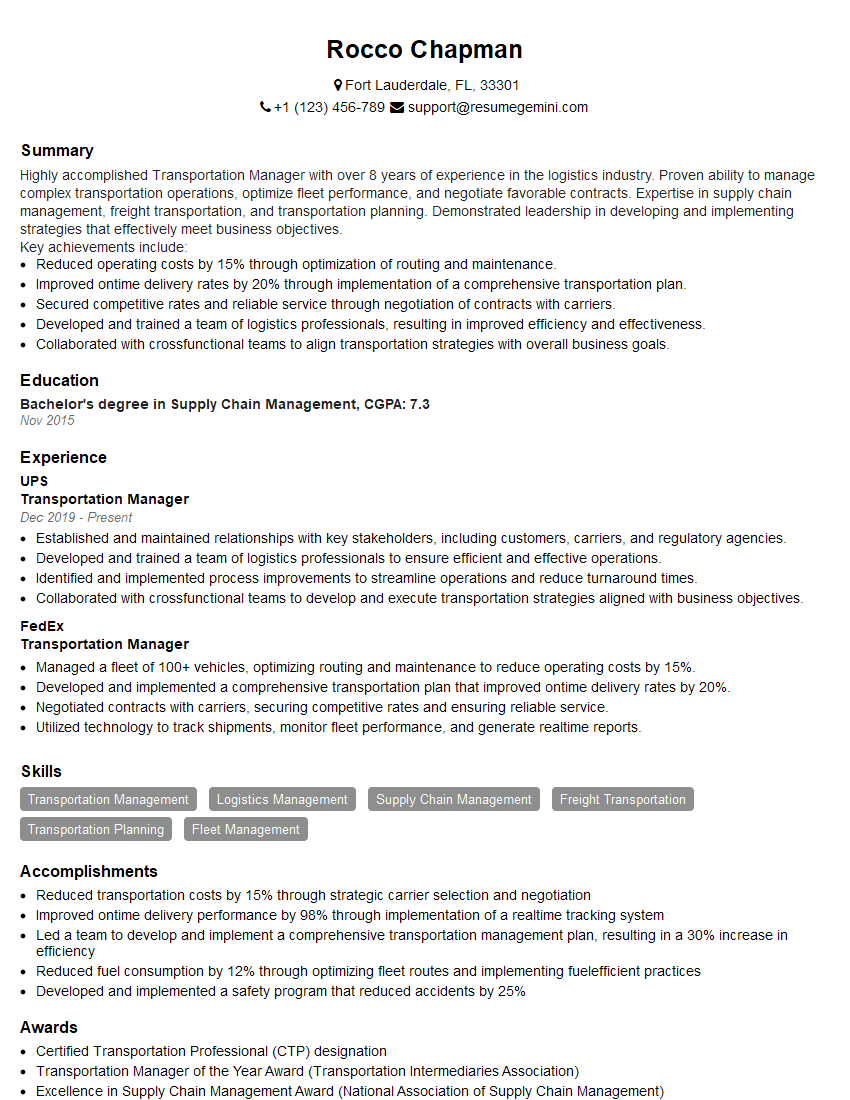
Transportation Manager Resume Sample
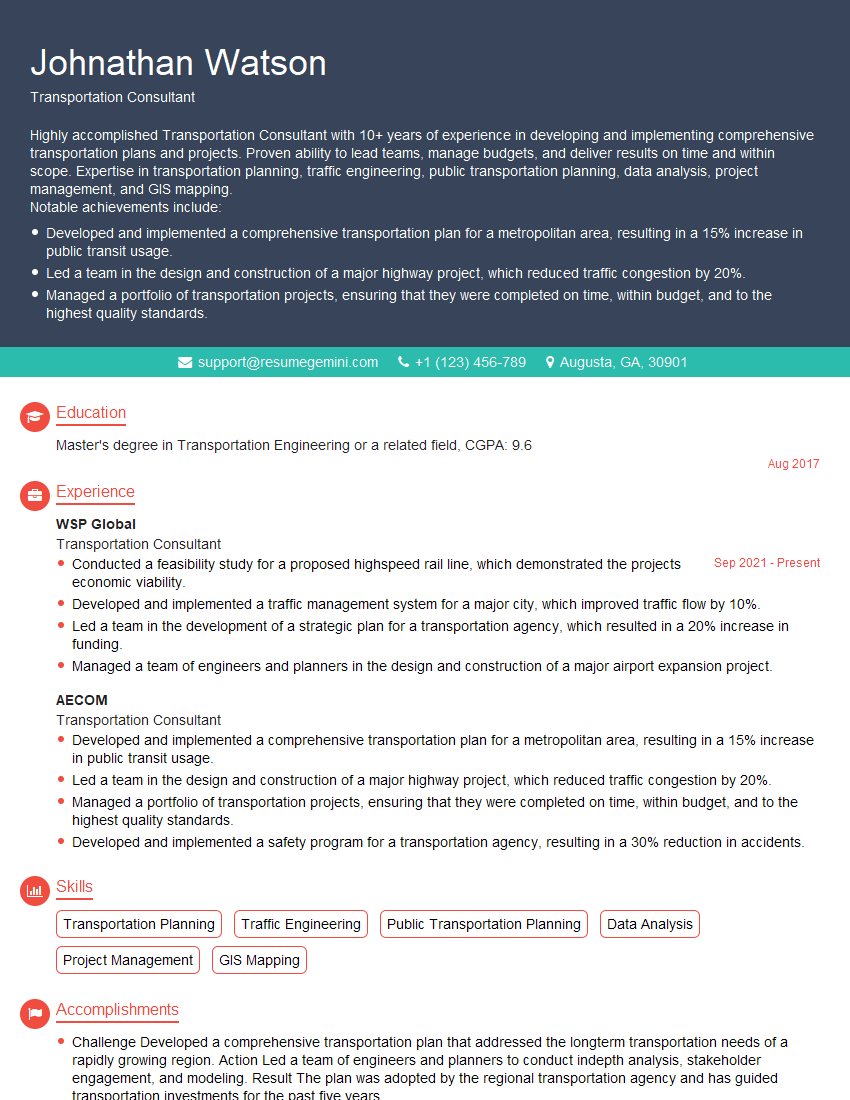
Transportation Consultant Resume Sample
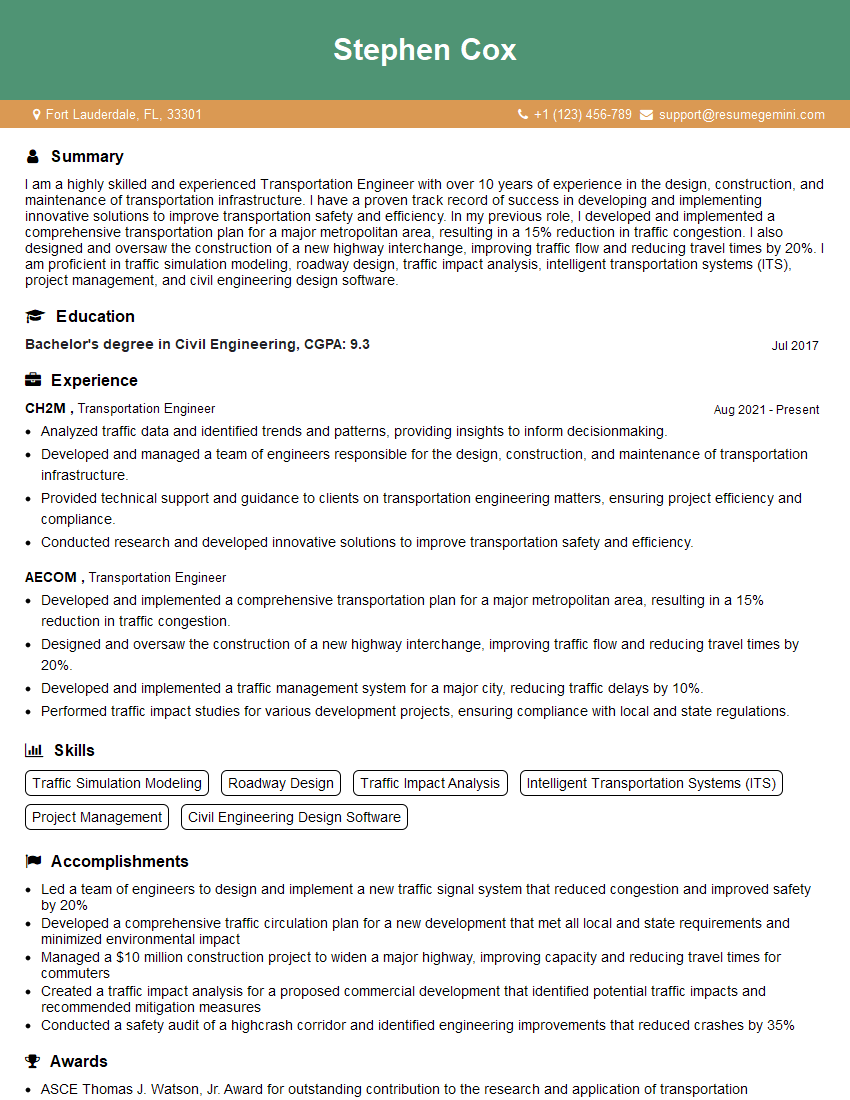
Transportation Engineer Resume Sample

Traffic Engineer Resume Sample
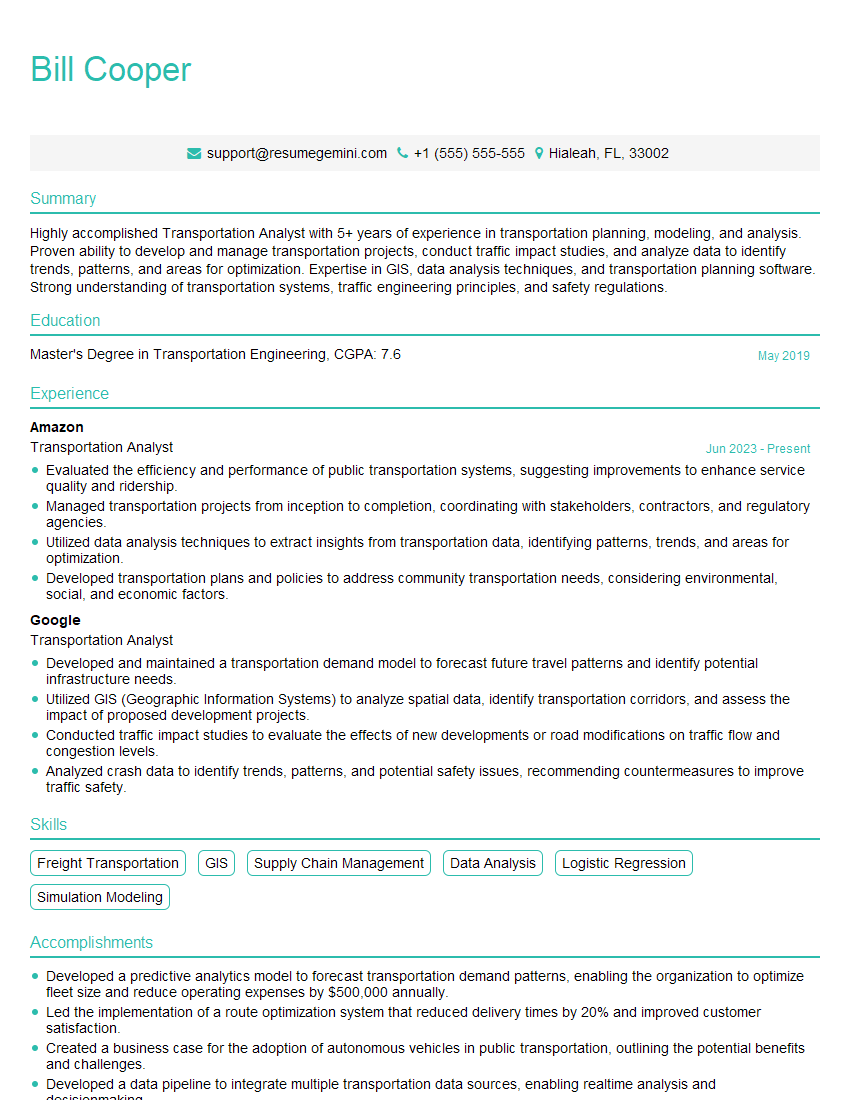
Transportation Analyst Resume Sample
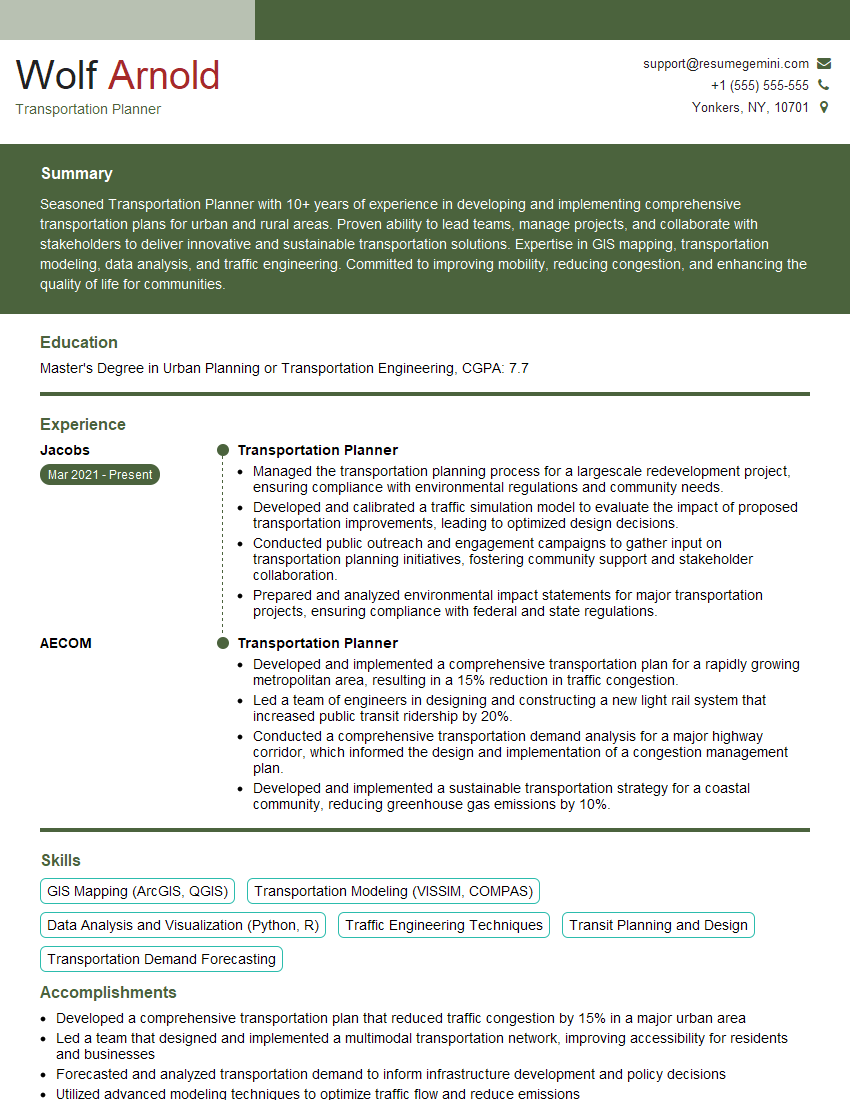
Transportation Planner Resume Sample
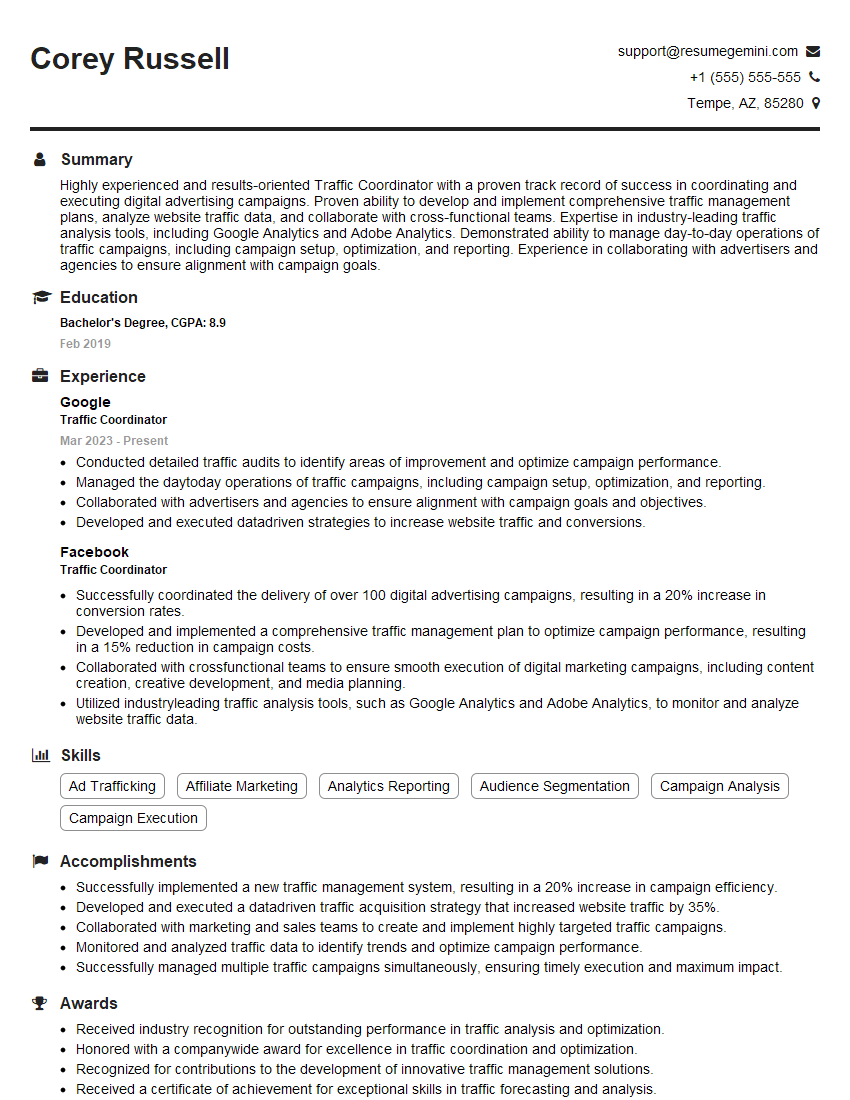
Traffic Coordinator Resume Sample
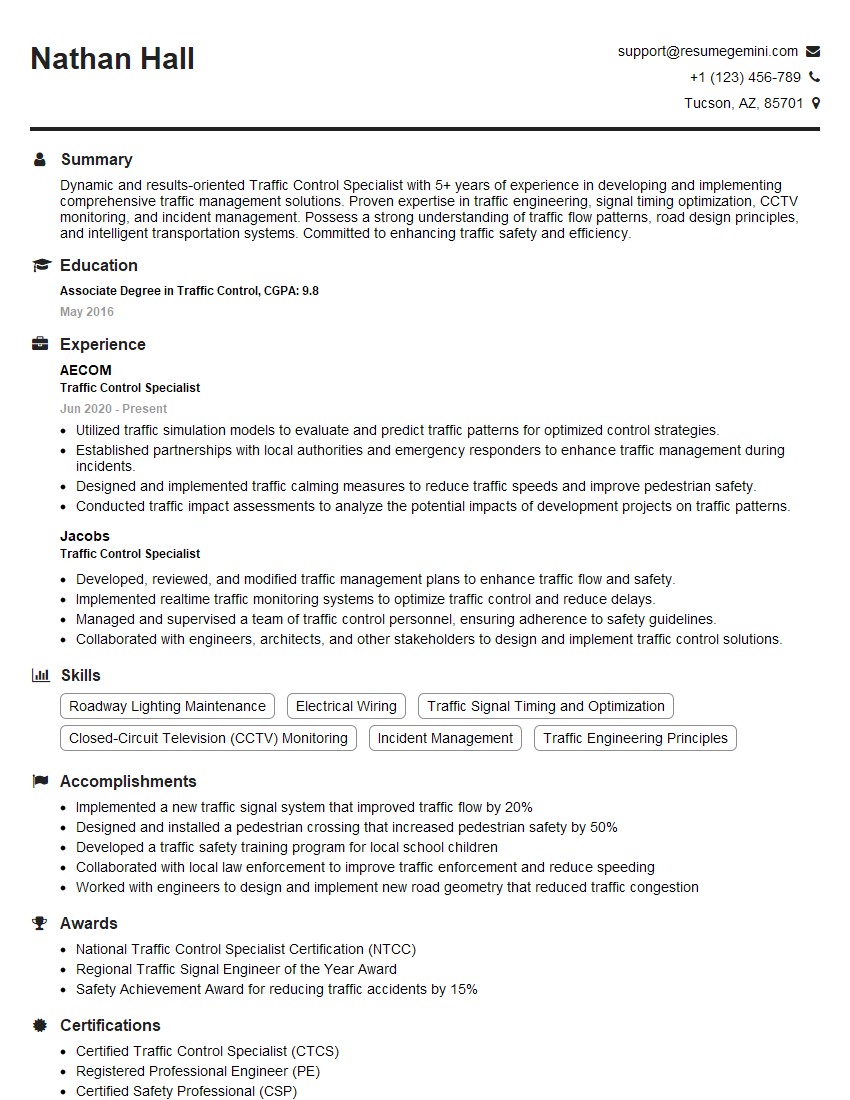
Traffic Control Specialist Resume Sample
Explore more articles
Users Rating of Our Blogs
Share Your Experience
We value your feedback! Please rate our content and share your thoughts (optional).
What Readers Say About Our Blog
I Redesigned Spongebob Squarepants and his main characters of my artwork.
https://www.deviantart.com/reimaginesponge/art/Redesigned-Spongebob-characters-1223583608
IT gave me an insight and words to use and be able to think of examples
Hi, I’m Jay, we have a few potential clients that are interested in your services, thought you might be a good fit. I’d love to talk about the details, when do you have time to talk?
Best,
Jay
Founder | CEO