Unlock your full potential by mastering the most common Understanding of Waste Management Principles interview questions. This blog offers a deep dive into the critical topics, ensuring you’re not only prepared to answer but to excel. With these insights, you’ll approach your interview with clarity and confidence.
Questions Asked in Understanding of Waste Management Principles Interview
Q 1. Explain the 3Rs of waste management.
The 3Rs of waste management – Reduce, Reuse, Recycle – represent a hierarchy of waste management priorities, aiming to minimize environmental impact.
- Reduce: This focuses on preventing waste generation at the source. Think about buying products with minimal packaging, refusing single-use plastics, and opting for durable goods instead of disposable ones. For example, bringing your own reusable shopping bag reduces the demand for plastic bags.
- Reuse: This involves finding alternative uses for items before discarding them. Repurposing glass jars for storage, using old t-shirts as cleaning rags, or donating clothes are all examples of reuse. This extends the lifespan of products and minimizes waste.
- Recycle: This involves processing used materials into new products. Recycling aluminum cans saves significant energy compared to producing new aluminum. However, recycling is the last resort after reduction and reuse; it’s energy-intensive and not always environmentally benign depending on the material and process.
The 3Rs are interconnected and should be applied in that order for maximum effectiveness. A successful waste management strategy emphasizes reduction and reuse before relying heavily on recycling.
Q 2. Describe different waste disposal methods and their environmental impacts.
Various waste disposal methods exist, each with different environmental consequences:
- Landfilling: This involves burying waste in designated areas. While cost-effective, landfills generate methane (a potent greenhouse gas) and leachate (contaminated liquid) which can pollute groundwater. Modern landfills incorporate liners and gas collection systems to mitigate these issues.
- Incineration: Burning waste reduces its volume and can generate energy. However, incineration releases air pollutants, requiring sophisticated air pollution control systems. The ash produced also needs careful management as it can contain hazardous materials.
- Composting: Organic waste (food scraps, yard waste) is decomposed naturally, producing a nutrient-rich soil amendment. Composting reduces landfill burden and creates a valuable resource. However, improper composting can attract pests.
- Anaerobic Digestion: Organic waste is broken down in the absence of oxygen, producing biogas (methane and carbon dioxide) which can be used as a renewable energy source. This method reduces landfill space and generates energy, but it requires specialized infrastructure.
- Ocean Dumping: Historically practiced, this is now largely prohibited due to its severe environmental damage to marine ecosystems.
The choice of disposal method should consider factors such as waste composition, cost, technological availability, and environmental regulations. A well-designed waste management system ideally integrates multiple methods for optimal environmental performance.
Q 3. What are the key components of a comprehensive waste management plan?
A comprehensive waste management plan requires several key components:
- Waste Characterization: Analyzing the type and quantity of waste generated to determine appropriate management strategies. This might involve waste audits and surveys.
- Collection and Transportation: Establishing efficient systems for collecting and transporting waste to processing or disposal facilities. This includes choosing appropriate collection vehicles and routes.
- Processing and Treatment: Selecting suitable methods for processing waste, such as recycling, composting, or incineration, based on waste characterization and environmental considerations.
- Disposal: Managing the final disposal of waste that cannot be recycled or processed, ideally minimizing environmental impact.
- Public Education and Awareness: Educating the public about waste reduction, reuse, and recycling practices to promote participation and responsible waste management behaviors.
- Monitoring and Evaluation: Tracking key indicators, such as waste generation rates, recycling rates, and landfill diversion rates, to assess the effectiveness of the plan and identify areas for improvement.
- Regulatory Compliance: Ensuring compliance with all applicable local, regional, and national environmental regulations and permits.
A successful plan is adaptable and responsive to changes in waste generation patterns and technological advancements. Regular review and updates are crucial.
Q 4. How do you assess the effectiveness of a waste management program?
Assessing the effectiveness of a waste management program involves several key steps:
- Tracking Key Performance Indicators (KPIs): Monitoring metrics such as waste generation rates, recycling rates, landfill diversion rates, and the volume of hazardous waste managed. These KPIs should be compared against targets set in the waste management plan.
- Conducting Waste Audits: Periodically reviewing waste composition to identify areas for improvement in waste reduction, reuse, and recycling.
- Public Perception Surveys: Gathering feedback from the public on their satisfaction with waste collection services and their understanding and participation in waste management programs.
- Environmental Monitoring: Assessing the environmental impacts of waste management practices, such as monitoring leachate from landfills or air emissions from incinerators.
- Cost-Benefit Analysis: Evaluating the economic efficiency of different waste management strategies, weighing costs against benefits such as reduced landfill burden and energy recovery.
Regular reporting and analysis of these indicators are essential for identifying areas needing improvement and adjusting strategies to optimize program performance.
Q 5. Explain the concept of lifecycle assessment in waste management.
Lifecycle assessment (LCA) in waste management involves evaluating the environmental impacts of a product or process throughout its entire life cycle, from raw material extraction to disposal. This comprehensive approach helps identify the most impactful stages and opportunities for improvement.
For example, an LCA of plastic bags would consider the energy used to produce the plastic, the transportation of the bags, their use, and their eventual disposal (landfill, incineration, or recycling). This assessment might reveal that the most significant environmental impact is linked to plastic production or landfill gas emissions.
By considering the entire lifecycle, LCA helps in making informed decisions about waste management strategies, promoting sustainable practices and a circular economy, where waste is minimized and resources are reused or recycled effectively. It guides the design of more environmentally friendly products and processes from the outset.
Q 6. What are the challenges in managing hazardous waste?
Managing hazardous waste presents significant challenges due to its potential to cause harm to human health and the environment. These challenges include:
- Toxicity and Risk: Hazardous wastes encompass a wide range of substances, each with unique toxicity levels and environmental risks requiring specialized handling and disposal methods.
- Storage and Transportation: Safe and secure storage and transportation of hazardous wastes require specialized containers, equipment, and procedures to prevent leaks, spills, or accidental releases. This is costly and requires specialized training.
- Treatment and Disposal: Treatment and disposal methods for hazardous waste are often complex and expensive, involving technologies such as incineration, chemical stabilization, or secure landfilling.
- Regulatory Compliance: Stringent regulations govern the handling, transportation, treatment, and disposal of hazardous waste, requiring meticulous record-keeping and compliance monitoring.
- Illegal Dumping: The improper disposal of hazardous waste, often due to cost-cutting measures or lack of awareness, is a serious environmental and public health concern.
- Liability and Accountability: Establishing clear lines of responsibility for the management of hazardous waste throughout its lifecycle is crucial to prevent environmental damage and human health risks.
Effective hazardous waste management necessitates a robust regulatory framework, advanced technologies, and stringent enforcement to ensure public safety and environmental protection.
Q 7. Describe different types of recycling processes.
Recycling processes vary depending on the material:
- Mechanical Recycling: This involves physically processing materials to separate and clean them for reuse. For example, plastic bottles are shredded, washed, and melted down to produce new plastic products. This is common for plastics, metals, and paper.
- Chemical Recycling: This involves breaking down materials into their basic chemical building blocks, which can then be used to create new materials. This is used for plastics that are difficult to mechanically recycle, converting them into feedstock for new polymers or fuels.
- Biological Recycling (Composting): Organic materials like food waste and yard trimmings are decomposed by microorganisms to produce compost, a soil amendment. This is a natural and environmentally friendly method.
- Energy Recovery: Non-recyclable materials can be incinerated to generate energy, but this method should be considered a last resort after exploring other recycling options due to potential emissions.
The choice of recycling process depends on factors such as material type, cost, technological feasibility, and environmental considerations. Innovations in recycling technologies are constantly improving efficiency and expanding the range of recyclable materials.
Q 8. How do you calculate waste diversion rates?
Waste diversion rate measures the success of a waste management program in diverting waste from landfills. It’s calculated by comparing the amount of waste diverted from landfills through recycling, composting, and other means to the total amount of waste generated.
The formula is: Waste Diversion Rate = (Total Waste Diverted / Total Waste Generated) x 100%
For example, if a city generates 100 tons of waste and diverts 60 tons through recycling and composting, the diversion rate is (60/100) x 100% = 60%. A higher percentage indicates a more effective waste management strategy. This metric is crucial for tracking progress towards sustainability goals and demonstrating the effectiveness of different waste reduction initiatives.
Q 9. Explain the role of composting in waste management.
Composting plays a vital role in waste management by diverting organic waste from landfills. Organic waste, such as food scraps and yard waste, decomposes anaerobically (without oxygen) in landfills, producing methane, a potent greenhouse gas. Composting, on the other hand, is the aerobic decomposition of organic matter, creating a nutrient-rich soil amendment called compost.
This process reduces landfill volume, mitigates greenhouse gas emissions, and produces a valuable resource for agriculture and landscaping. Imagine a community garden thriving on compost derived from local food waste – this is a perfect example of a circular economy in action. Furthermore, composting can be done on a small scale (home composting) or a large industrial scale, depending on the amount of organic waste generated.
Q 10. What are the regulations surrounding landfill operations?
Landfill regulations are stringent and vary by location but generally aim to protect human health and the environment. Key regulations often include:
- Siting Restrictions: Landfills must be located away from sensitive areas like water bodies and fault lines.
- Leachate Management: Regulations dictate the design and operation of leachate collection and treatment systems.
- Gas Management: Landfills must have systems to collect and manage biogas (primarily methane) to prevent its release into the atmosphere.
- Covering and Closure: Regulations specify requirements for daily and final cover to prevent contamination and promote stabilization.
- Monitoring: Regular monitoring of groundwater, soil, and air quality is mandatory to detect any potential contamination.
- Permitting: Operators need permits that detail operational requirements and compliance monitoring.
Failure to comply with these regulations can result in significant fines and legal action.
Q 11. How do you manage leachate and biogas from landfills?
Leachate, a liquid that percolates through waste in a landfill, and biogas, a mixture of gases primarily methane, are significant environmental concerns. Effective management is crucial.
Leachate Management: This involves a collection system that channels leachate to a treatment facility. Treatment methods can range from simple equalization basins to advanced processes like anaerobic digestion or reverse osmosis, depending on the leachate’s composition and local regulations. The treated leachate is often disposed of in a permitted wastewater treatment plant or, after sufficient treatment, safely released into the environment.
Biogas Management: Landfills capture biogas through a network of wells and pipes. This biogas can be used for energy generation (waste-to-energy), flared (burned to reduce methane emissions), or processed further to produce biomethane, a renewable natural gas.
Failure to manage leachate and biogas appropriately can lead to groundwater contamination and significant greenhouse gas emissions, highlighting the need for robust and well-maintained management systems.
Q 12. Describe different types of waste audits and their purposes.
Waste audits are systematic assessments of waste generation, composition, and management practices. Different types of audits serve different purposes:
- Quantitative Waste Audits: These audits focus on measuring the weight or volume of different waste streams. They provide data on the composition of waste, identifying opportunities for recycling and waste reduction.
- Qualitative Waste Audits: These audits involve visually inspecting the waste stream to identify recyclable materials, contaminants, and other relevant information. They are often conducted in conjunction with quantitative audits for a more comprehensive picture.
- Source-Separated Waste Audits: These audits track waste generation at the source (e.g., individual households, offices, or industrial facilities). This helps pinpoint areas for targeted waste reduction interventions.
The purpose of a waste audit is to understand the current waste management system, identify areas for improvement, and measure the effectiveness of waste reduction initiatives. For example, a quantitative audit might reveal that a significant portion of waste consists of recyclable materials, leading to the implementation of a new recycling program. Qualitative audits can identify contamination issues in the recycling stream, leading to improvements in public education.
Q 13. What are the benefits of waste-to-energy technologies?
Waste-to-energy (WtE) technologies convert non-recyclable waste into usable energy, primarily electricity and heat. These technologies offer several benefits:
- Reduced Landfill Burden: WtE reduces the amount of waste going to landfills, extending their lifespan and reducing environmental impacts.
- Renewable Energy Generation: WtE provides a renewable energy source, reducing reliance on fossil fuels and lowering greenhouse gas emissions (compared to landfilling).
- Resource Recovery: Some WtE technologies recover valuable materials from waste, further reducing landfill burden and promoting a circular economy.
- Economic Benefits: WtE plants can create jobs and generate revenue through energy sales.
However, it is important to note that WtE is not a replacement for waste reduction and recycling. It should be seen as part of an integrated waste management strategy, following the waste hierarchy (reduce, reuse, recycle, recover energy, dispose). Concerns about air pollution and ash management must be addressed through careful technology selection and strict environmental regulations.
Q 14. Explain the concept of source reduction in waste management.
Source reduction, the first principle of the waste hierarchy, focuses on preventing waste generation at its source. It’s about reducing the amount of waste created in the first place, rather than dealing with it after it’s generated.
Strategies include:
- Product Design: Designing products with less packaging, longer lifespans, and using recycled materials.
- Sustainable Consumption and Production: Encouraging consumers to buy less and choose products with minimal packaging and environmental impact.
- Waste Prevention Programs: Implementing initiatives to reduce waste generation in businesses and communities (e.g., composting programs, reusable container schemes).
- Education and Awareness: Educating the public about the benefits of waste reduction and providing them with tools and resources to reduce their waste footprint.
Think about the difference between buying a single-use plastic bottle versus a reusable water bottle—the reusable bottle represents source reduction in action. It drastically reduces plastic waste, demonstrating the significant impact this approach has on overall waste management.
Q 15. How do you address illegal dumping in a community?
Addressing illegal dumping requires a multi-pronged approach combining prevention, detection, and enforcement. It’s like tackling a disease – you need to stop its spread, find the sources, and treat the symptoms.
- Prevention: This involves public awareness campaigns to educate residents about proper waste disposal methods, the penalties for illegal dumping, and the environmental consequences. We can also make legal disposal more convenient and affordable, such as by increasing the number of conveniently located recycling and waste disposal sites.
- Detection: Implementing surveillance measures like strategically placed security cameras in known hotspots, utilizing community reporting mechanisms (e.g., a dedicated hotline or online platform), and leveraging technology like drone surveillance can help identify culprits.
- Enforcement: This includes strict penalties for offenders, ranging from fines to community service and even legal prosecution in severe cases. Collaboration with local law enforcement is crucial for effective enforcement. Clear signage indicating penalties for illegal dumping in affected areas is also essential.
For example, in a previous role, we implemented a community-based reporting system using a dedicated mobile app and website. This, coupled with increased patrols and the installation of cameras in problem areas, led to a significant decrease in illegal dumping within six months.
Career Expert Tips:
- Ace those interviews! Prepare effectively by reviewing the Top 50 Most Common Interview Questions on ResumeGemini.
- Navigate your job search with confidence! Explore a wide range of Career Tips on ResumeGemini. Learn about common challenges and recommendations to overcome them.
- Craft the perfect resume! Master the Art of Resume Writing with ResumeGemini’s guide. Showcase your unique qualifications and achievements effectively.
- Don’t miss out on holiday savings! Build your dream resume with ResumeGemini’s ATS optimized templates.
Q 16. What are the key metrics used to evaluate waste management performance?
Key metrics for evaluating waste management performance fall into several categories, providing a holistic view of efficiency and effectiveness. Imagine you’re running a marathon – these metrics track your pace, endurance, and overall progress.
- Waste Diversion Rate: The percentage of waste diverted from landfills through recycling, composting, or other waste reduction strategies. A higher rate indicates a more sustainable system.
(Total waste diverted / Total waste generated) * 100 - Recycling Rate: Specifically measures the percentage of materials successfully recycled. This helps pinpoint areas for improvement in recycling programs.
- Landfill Diversion Rate: Similar to the waste diversion rate, but specifically focuses on the portion of waste not going to landfills.
- Per Capita Waste Generation: The amount of waste generated per person, helping track trends and effectiveness of reduction programs.
- Cost per tonne of waste processed: Measures the efficiency and cost-effectiveness of the entire waste management system.
- Greenhouse Gas Emissions: Tracks the environmental impact of waste management activities, such as methane emissions from landfills.
For instance, tracking the cost per tonne of waste processed helps identify areas where operational efficiencies can be improved. A significant increase in this metric could indicate the need for updated equipment or process optimization.
Q 17. Describe your experience with implementing a waste reduction program.
During my time at [Previous Company Name], I spearheaded a waste reduction program focused on reducing food waste within our office complex. We started by analyzing our current waste generation, focusing on the ‘waste audit’ – a crucial first step in any reduction program. It’s like examining a patient’s medical history before prescribing treatment.
- Waste Audit: We meticulously documented the types and quantities of waste produced, identifying food waste as the major culprit.
- Education and Awareness: We conducted workshops and provided educational materials to promote mindful eating, portion control, and proper food storage.
- Composting Program: We initiated an on-site composting program for food scraps, transforming waste into valuable compost for landscaping.
- Donation Program: Excess food was donated to local charities, reducing waste and supporting the community.
- Monitoring and Evaluation: We continuously tracked our waste generation using regular audits, adjusting our strategies based on the data collected.
The program resulted in a 30% reduction in food waste within the first year, demonstrating the effectiveness of a comprehensive and data-driven approach.
Q 18. How do you ensure compliance with waste management regulations?
Ensuring compliance with waste management regulations requires a proactive and systematic approach. It’s like regularly servicing a car – consistent maintenance prevents major breakdowns.
- Regular Audits and Inspections: Conducting regular internal audits to verify adherence to regulations, and cooperating fully with external audits and inspections by regulatory bodies.
- Record Keeping: Maintaining meticulous records of waste generation, processing, disposal, and transportation, ensuring all documentation is readily available for audits.
- Training and Education: Providing comprehensive training to employees on waste management procedures, regulations, and best practices.
- Stay Updated on Regulations: Continuously monitoring changes in relevant legislation and promptly adjusting our practices to ensure compliance. This could involve subscriptions to relevant newsletters, attending industry conferences, or using specialized legal services.
- Reporting and Corrective Actions: Implementing a system for reporting non-compliance issues, investigating root causes, and implementing corrective actions to prevent recurrence.
For example, we utilize a specialized software to manage our waste tracking and reporting, ensuring compliance and ease of audit trails.
Q 19. What are the emerging trends in waste management?
The waste management landscape is constantly evolving, driven by technological advancements, environmental concerns, and shifting societal priorities. It’s a dynamic field, much like the technology sector.
- Advanced Recycling Technologies: Innovations like chemical recycling and AI-powered sorting systems are improving recycling efficiency and expanding the range of recyclable materials.
- Waste-to-Energy Technologies: Advanced technologies are transforming waste into energy sources, reducing landfill reliance and providing alternative energy.
- Smart Waste Management: Utilizing IoT (Internet of Things) sensors and data analytics to optimize waste collection routes, predict waste generation, and improve efficiency.
- Circular Economy Principles: A growing focus on designing products for durability, repairability, and recyclability to minimize waste generation and maximize resource utilization.
- Increased Public Awareness and Engagement: Greater public awareness of environmental issues is driving demand for more sustainable waste management practices.
For instance, the increasing adoption of smart bins equipped with sensors that monitor fill levels optimizes waste collection routes, reducing fuel consumption and operational costs.
Q 20. Explain the principles of sustainable waste management.
Sustainable waste management operates on several core principles, aiming to minimize environmental impact and conserve resources. It’s a holistic approach, not just about disposal, but about the entire lifecycle of materials.
- Reduce: Prioritizing waste prevention through design, consumption habits, and efficient resource use. This is the most crucial step – preventing waste is far better than managing it.
- Reuse: Extending the lifespan of products through repair, refurbishment, or repurposing. This reduces the demand for new materials and minimizes waste.
- Recycle: Processing materials to create new products, conserving resources and reducing landfill burden.
- Recover: Extracting energy from waste through incineration or anaerobic digestion, turning waste into a resource.
- Dispose: As a last resort, safely disposing of waste in landfills or other appropriate facilities, minimizing environmental harm.
The ‘Reduce, Reuse, Recycle, Recover, Dispose’ hierarchy emphasizes the importance of prevention and resource recovery over simply disposing of waste.
Q 21. How do you prioritize waste management strategies?
Prioritizing waste management strategies involves a multi-faceted approach, much like a doctor diagnosing and treating a patient. You need to assess the symptoms, identify the root causes, and choose the most effective treatment.
- Risk Assessment: Evaluating potential environmental and health risks associated with different waste streams. High-risk waste requires immediate and prioritized action.
- Cost-Benefit Analysis: Comparing the costs and benefits of different waste management options, balancing financial considerations with environmental impacts.
- Regulatory Compliance: Ensuring that all strategies align with relevant legislation and regulations.
- Community Engagement: Considering the needs and preferences of the community when developing and implementing strategies.
- Technological Feasibility: Evaluating the availability and suitability of technologies for various waste management processes.
- Resource Availability: Assessing the availability of resources, such as land, funding, and trained personnel.
For example, a community might prioritize reducing plastic waste due to its severe environmental impact, even if recycling plastic is more expensive than other options. The environmental benefits outweigh the costs in this case.
Q 22. Describe your experience with different waste sorting techniques.
Waste sorting is crucial for effective waste management, maximizing resource recovery and minimizing landfill burden. My experience encompasses a range of techniques, from manual sorting at the source (e.g., household bins for recyclables, compost, and trash) to automated sorting facilities using technologies like optical sorters and eddy current separators.
- Manual Sorting: This involves community education and engagement to ensure proper sorting at the source. I’ve worked on campaigns to improve household participation in recycling programs, focusing on clear communication and providing resources like customized guides. This is often the most cost-effective approach for smaller communities.
- Automated Sorting: These facilities employ advanced technologies to identify and separate different materials. I’ve been involved in the design and implementation of such systems, focusing on improving efficiency and reducing contamination. For instance, I helped optimize an optical sorter to improve its accuracy in identifying plastics based on their resin identification codes. This significantly boosted the quality of recycled plastics.
- Source-separated collection: This involves dedicated collection streams for specific materials, like glass, paper, or yard waste. I have experience designing collection routes and scheduling systems to optimize these separate collections.
Each technique has its strengths and weaknesses; the optimal approach depends on factors like community size, budget, and the availability of infrastructure and technology.
Q 23. How do you handle conflicts related to waste management in a community?
Conflicts in waste management often arise from differing perspectives on responsibility, costs, and environmental impact. My approach involves active listening, transparent communication, and collaborative problem-solving.
- Identify the root cause: Understanding the underlying concerns – be it disagreements about the cost-sharing model, dissatisfaction with collection services, or anxieties about environmental impacts – is paramount. For instance, a conflict might stem from a lack of clear communication about a new recycling program.
- Facilitate dialogue: Creating a platform for open communication between stakeholders – residents, businesses, and local government – is crucial. This might involve town hall meetings, surveys, or focus groups. I utilize conflict resolution techniques such as mediation to bridge the gaps.
- Develop a mutually acceptable solution: Through collaborative discussions, I work towards crafting solutions that address the needs and concerns of all parties. This may involve adjusting collection schedules, improving communication strategies, or exploring alternative waste management options.
- Monitor and evaluate: Following implementation, it’s essential to monitor the effectiveness of the solution and make adjustments as needed. Regular feedback mechanisms help ensure ongoing community satisfaction.
For example, I once successfully resolved a conflict over the placement of a new recycling center by involving the community in the design process, addressing their concerns about traffic and aesthetics. This ensured the center was integrated into the community rather than imposed upon it.
Q 24. What are the economic aspects of effective waste management?
Effective waste management has significant economic implications, both costs and savings. A well-managed system minimizes environmental damage, reduces health risks, and generates economic opportunities.
- Cost Savings: Reduced landfill disposal fees, lower recycling processing costs through improved sorting, and decreased treatment costs for contaminated water bodies, all lead to direct financial savings. Furthermore, implementing preventive measures like reducing waste generation can prevent costs associated with waste collection and transportation.
- Revenue Generation: Waste can be a valuable resource! Recycling and composting programs can generate revenue through the sale of recovered materials and compost. For example, some municipalities sell compost generated from yard waste programs to landscaping companies.
- Economic Development: Investment in waste management infrastructure creates jobs in collection, processing, and recycling. Furthermore, it fosters innovation in resource recovery technologies. The development of a circular economy, where waste is minimized and resources are maximized, is a significant economic driver.
- Externalities: There are costs associated with pollution and environmental damage caused by improper waste management. These ‘externalities’ affect the entire community, impacting things like property values and public health.
Considering the totality of these economic aspects – costs, savings, revenue and externalities – is key to building a financially sustainable waste management system. Cost-benefit analysis is a critical tool for informing decision-making in this area.
Q 25. How do you incorporate community engagement into waste management initiatives?
Community engagement is the cornerstone of successful waste management initiatives. Without active participation, even the best-designed programs will falter. My approach involves a multifaceted strategy:
- Education and Awareness: I design and implement educational campaigns using diverse channels – workshops, community events, social media, and educational materials – to raise awareness about the importance of waste reduction, reuse, and recycling. I focus on simplifying messages and tailoring them to different demographics.
- Collaboration and Partnerships: I establish strong working relationships with community groups, schools, businesses, and other stakeholders to build consensus and promote collective action. This collaboration expands reach and builds community ownership.
- Feedback Mechanisms: I incorporate regular feedback loops, such as surveys, suggestion boxes, and community forums, to gather input, track satisfaction levels, and identify areas for improvement. For example, I once implemented a mobile app that allowed residents to report missed pickups and provide feedback on the collection service.
- Incentives and Recognition: Positive reinforcement significantly boosts participation. Strategies might include reward programs for households and businesses that excel in recycling and waste reduction, public recognition for community leaders who champion sustainability initiatives, and offering discounts on waste disposal fees.
Engaging the community not just as recipients of services but as active partners ensures a more effective and sustainable waste management system.
Q 26. Explain your experience with using waste management software or technology.
I have extensive experience utilizing waste management software and technologies to optimize collection routes, track waste generation data, and improve overall efficiency. This includes using Geographic Information Systems (GIS) and route optimization software.
- GIS Software: I have used ArcGIS to map waste generation hotspots, optimize collection routes, and visualize data on recycling rates and waste composition. This provides crucial insights for targeted interventions and resource allocation.
- Route Optimization Software: Tools like those offered by various waste management technology companies allow for dynamically adjusting collection routes based on real-time traffic conditions, waste generation volume, and other factors. This minimizes fuel consumption and improves service efficiency.
- Waste Management Databases: I’ve worked with databases to track waste generation data, recycling rates, and the composition of waste streams. This data is essential for informed decision-making and for tracking progress towards waste reduction goals. Data analysis informs strategic improvements.
- Smart Bins: I’ve been involved in projects that implement smart bins equipped with sensors to monitor fill levels and optimize collection schedules in real-time. This reduces unnecessary trips and maximizes resource utilization.
The effective use of technology significantly enhances the data-driven nature of waste management, enabling evidence-based decisions and continuous improvement.
Q 27. What are your strategies for improving waste management efficiency?
Improving waste management efficiency requires a holistic approach encompassing multiple strategies:
- Waste Reduction at Source: Implementing strategies to reduce waste generation, such as promoting reuse and repair initiatives, supporting sustainable product design, and educating consumers on responsible consumption patterns, is paramount.
- Optimize Collection Routes: Utilizing route optimization software and data analytics to streamline collection processes, reduce fuel consumption, and minimize vehicle miles traveled, reduces costs and emissions.
- Improve Sorting Efficiency: Investing in advanced sorting technologies and optimizing manual sorting processes to enhance the quality and quantity of recovered materials for recycling.
- Enhance Recycling Infrastructure: Expanding access to recycling facilities, particularly for underserved communities, and investing in improved material recovery facilities (MRFs).
- Promote Composting: Expanding composting programs for organic waste reduces landfill burden and generates valuable soil amendment.
- Data-Driven Decision Making: Continuously monitoring key performance indicators (KPIs), such as recycling rates, landfill diversion rates, and waste generation per capita, to identify areas for improvement and track progress.
By integrating these strategies, we can create a more efficient and sustainable waste management system.
Q 28. Describe your approach to problem-solving in a waste management context.
My approach to problem-solving in waste management is systematic and data-driven. It involves the following steps:
- Define the Problem: Clearly articulating the problem is the first step. This includes specifying the scope of the issue, identifying its root causes, and setting measurable goals.
- Gather Data: Collecting relevant data from various sources, such as waste generation records, recycling rates, community surveys, and environmental impact assessments, helps to understand the problem’s scale and context.
- Analyze Data and Identify Potential Solutions: Utilizing data analysis techniques to identify potential solutions, evaluate their feasibility, and predict their potential impact.
- Develop and Implement a Solution: Developing a detailed plan of action, including timelines, resources, and responsibilities, and putting it into practice. Pilot programs can test solutions before full-scale implementation.
- Monitor and Evaluate Results: Tracking key performance indicators (KPIs) to measure the effectiveness of the implemented solution and make adjustments as needed. This iterative process ensures continuous improvement.
- Communicate Results: Sharing the findings and outcomes with stakeholders to promote transparency and build trust.
For example, when faced with declining recycling rates, I might employ this process to diagnose the issue (e.g., unclear guidelines, lack of access to recycling facilities, contamination), develop and implement a targeted educational campaign, and then measure the impact on recycling rates.
Key Topics to Learn for Understanding of Waste Management Principles Interview
- Waste Characterization and Classification: Understanding different waste streams (municipal solid waste, hazardous waste, industrial waste, etc.), their composition, and appropriate classification methods. This includes knowledge of physical, chemical, and biological properties.
- Waste Reduction and Minimization Strategies: Exploring practical applications of source reduction, reuse, recycling, and composting. This involves understanding the hierarchy of waste management and implementing strategies to minimize environmental impact.
- Waste Collection and Transportation: Familiarity with different collection systems (curbside, transfer stations, etc.), vehicle types, and logistical considerations for efficient and safe waste handling. This includes understanding regulations and best practices.
- Waste Treatment and Disposal Technologies: Knowledge of various treatment methods (incineration, anaerobic digestion, landfilling) and their environmental implications. This also includes understanding the lifecycle assessment of different technologies and their suitability for specific waste streams.
- Waste Management Regulations and Policies: Understanding relevant environmental laws, permits, and regulations at local, regional, and national levels. This includes knowledge of compliance procedures and reporting requirements.
- Environmental Impact Assessment and Life Cycle Analysis: Applying these tools to evaluate the environmental consequences of different waste management options. This includes understanding greenhouse gas emissions, resource depletion, and pollution impacts.
- Sustainable Waste Management Practices: Exploring innovative and sustainable approaches to waste management, such as circular economy principles, waste-to-energy technologies, and extended producer responsibility schemes.
- Problem-Solving in Waste Management: Analyzing case studies and developing solutions to real-world waste management challenges. This might involve optimizing collection routes, improving recycling rates, or mitigating environmental risks.
Next Steps
Mastering Understanding of Waste Management Principles is crucial for career advancement in the environmental sector, opening doors to diverse and impactful roles. A strong understanding of these principles, coupled with a well-crafted resume, significantly enhances your job prospects. To maximize your chances of landing your dream job, invest time in creating an ATS-friendly resume that highlights your skills and experience effectively. ResumeGemini is a trusted resource that can help you build a professional and impactful resume. ResumeGemini provides examples of resumes tailored to Understanding of Waste Management Principles to guide your preparation.
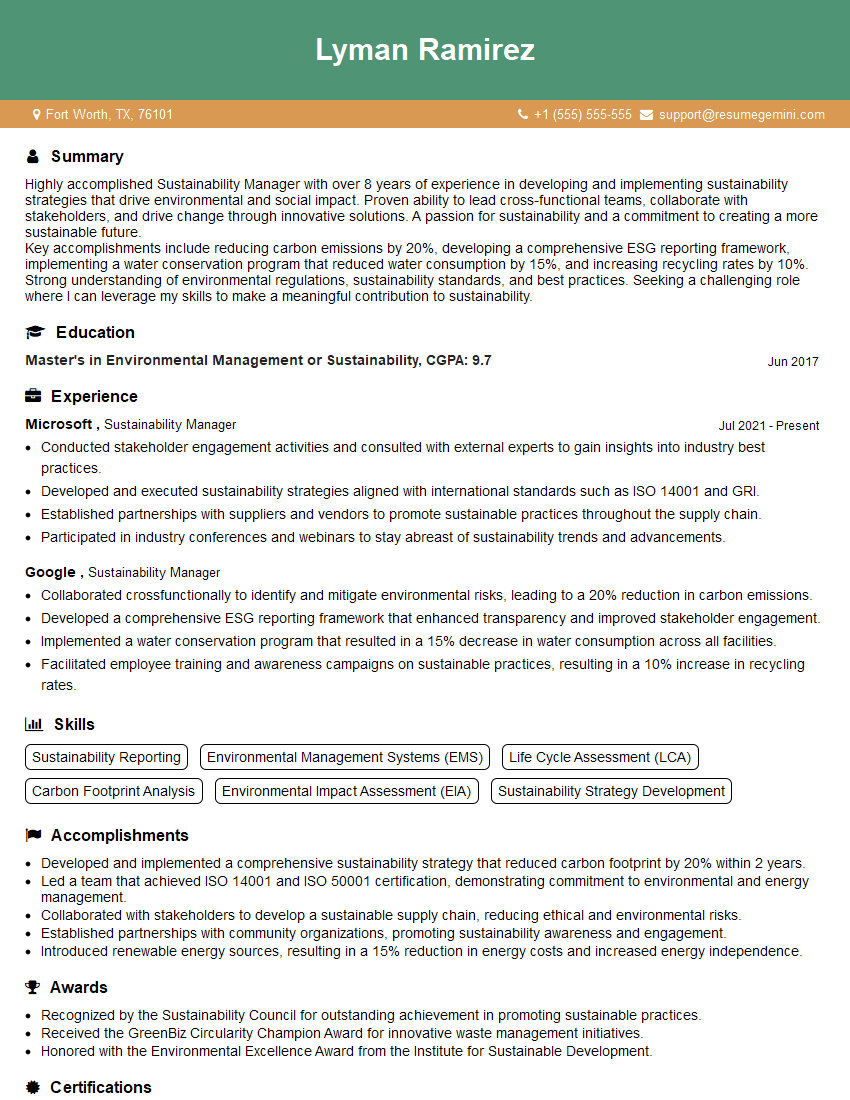
Sustainability Manager Resume Sample
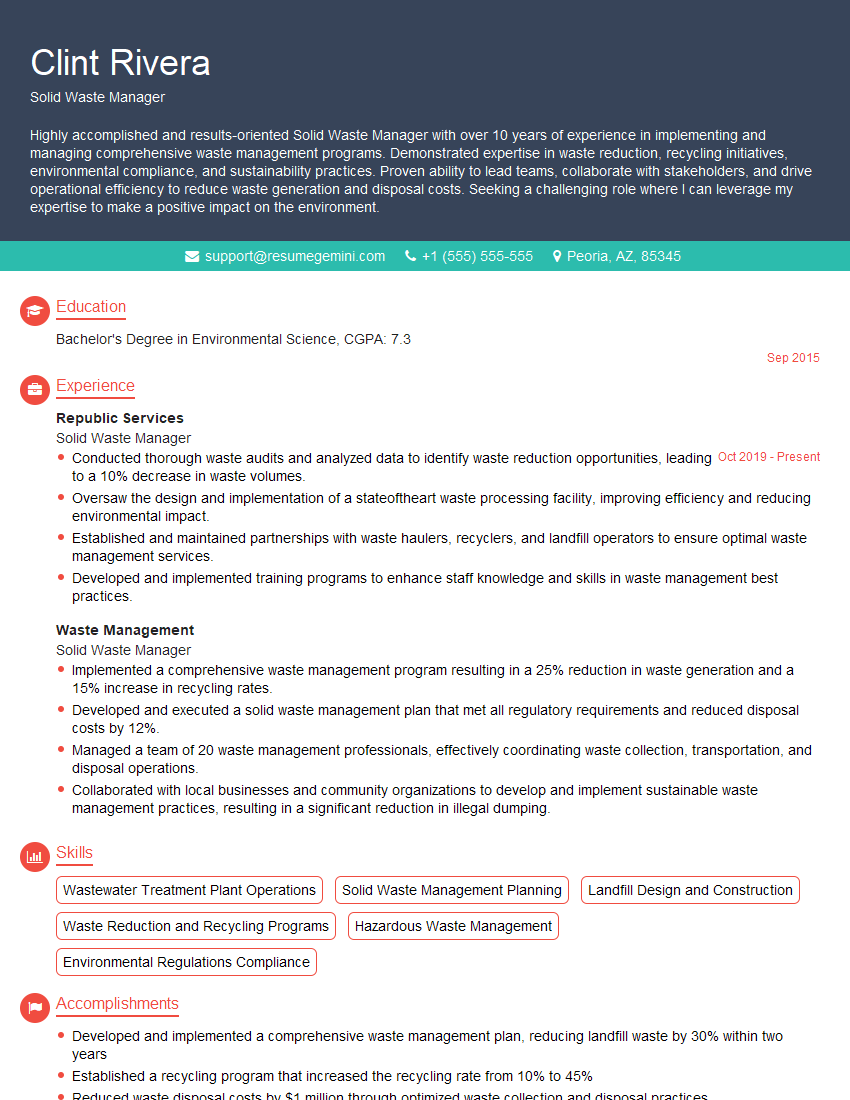
Solid Waste Manager Resume Sample
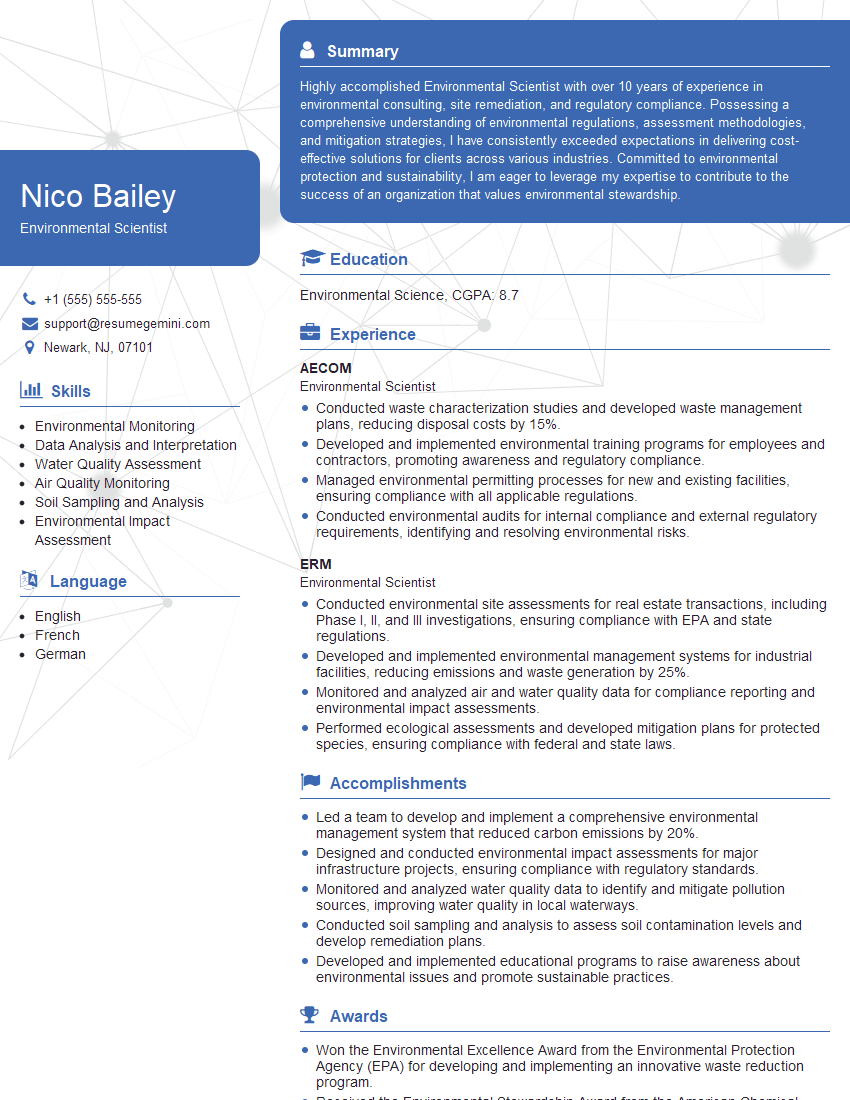
Environmental Scientist Resume Sample
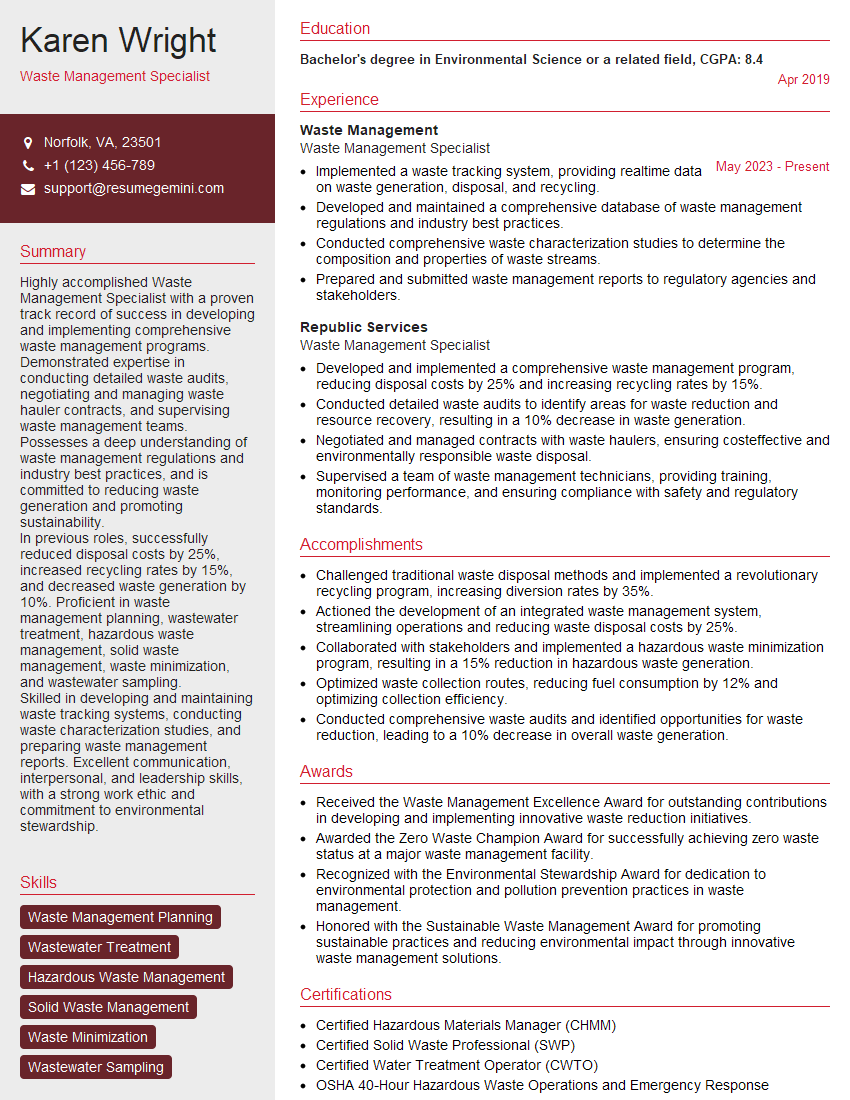
Waste Management Specialist Resume Sample

Sustainability Consultant Resume Sample
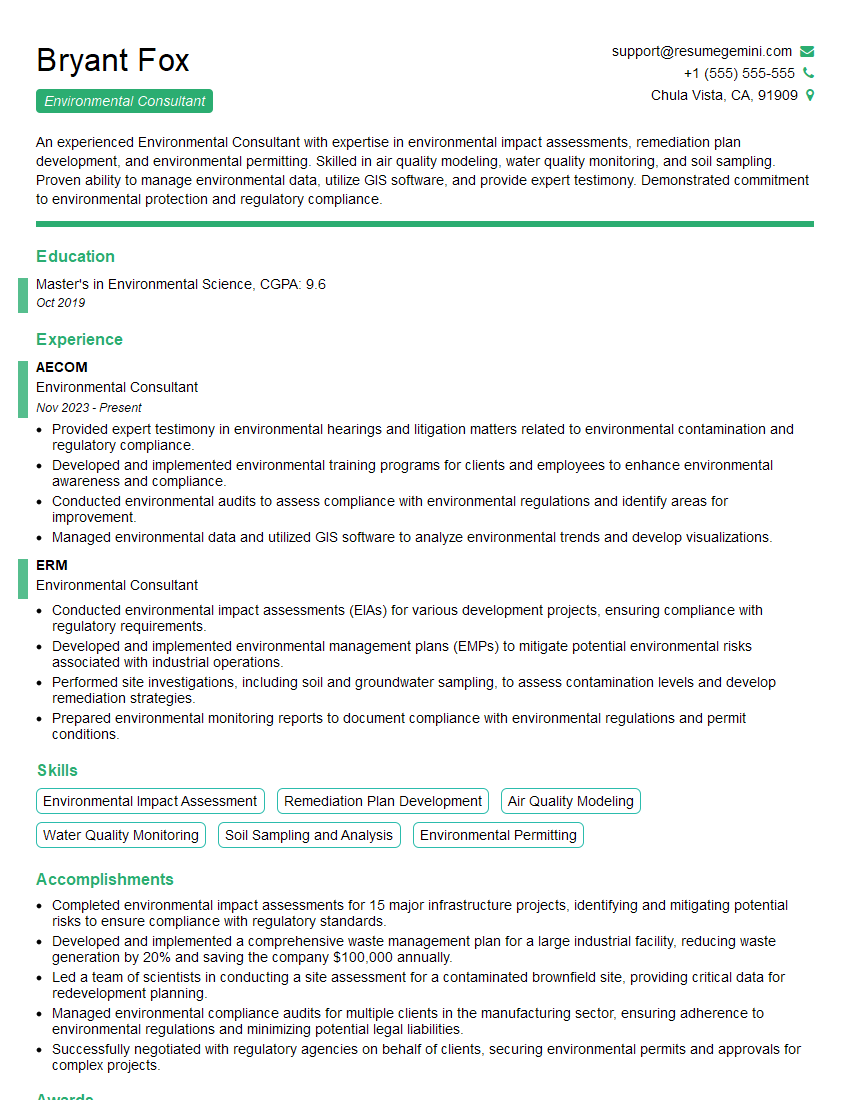
Environmental Consultant Resume Sample
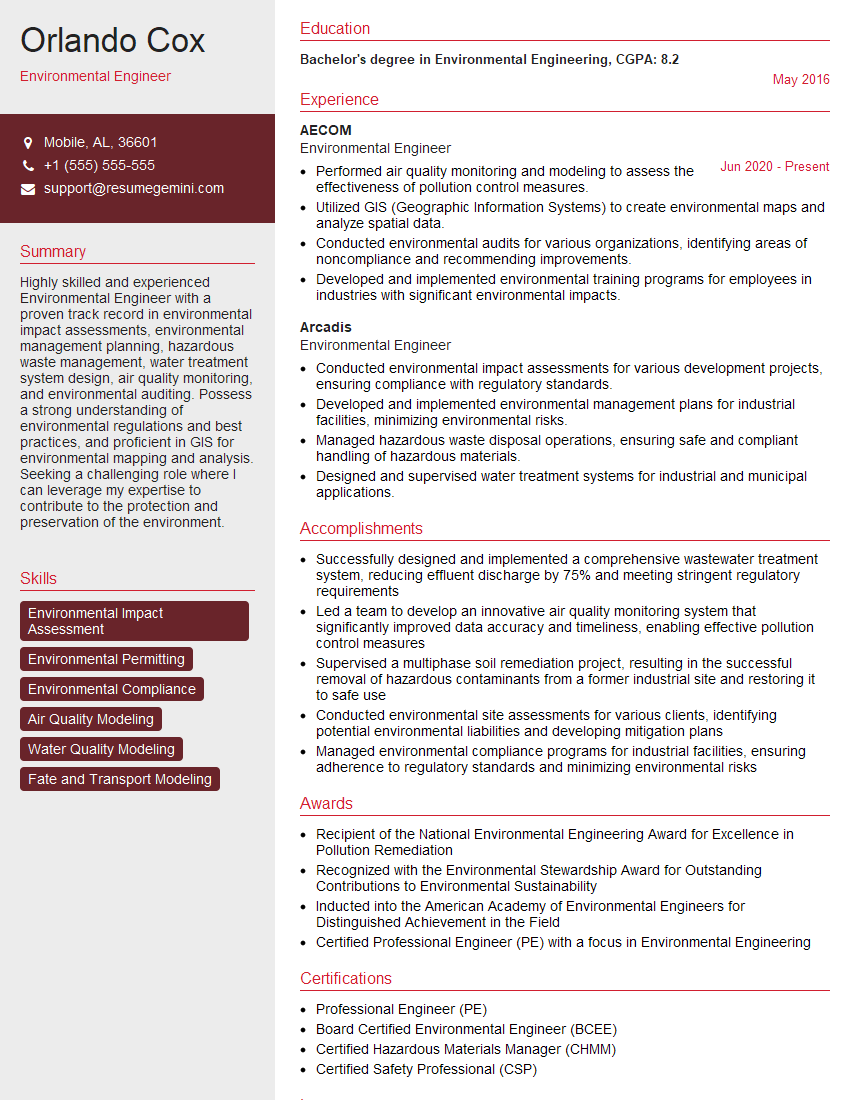
Environmental Engineer Resume Sample
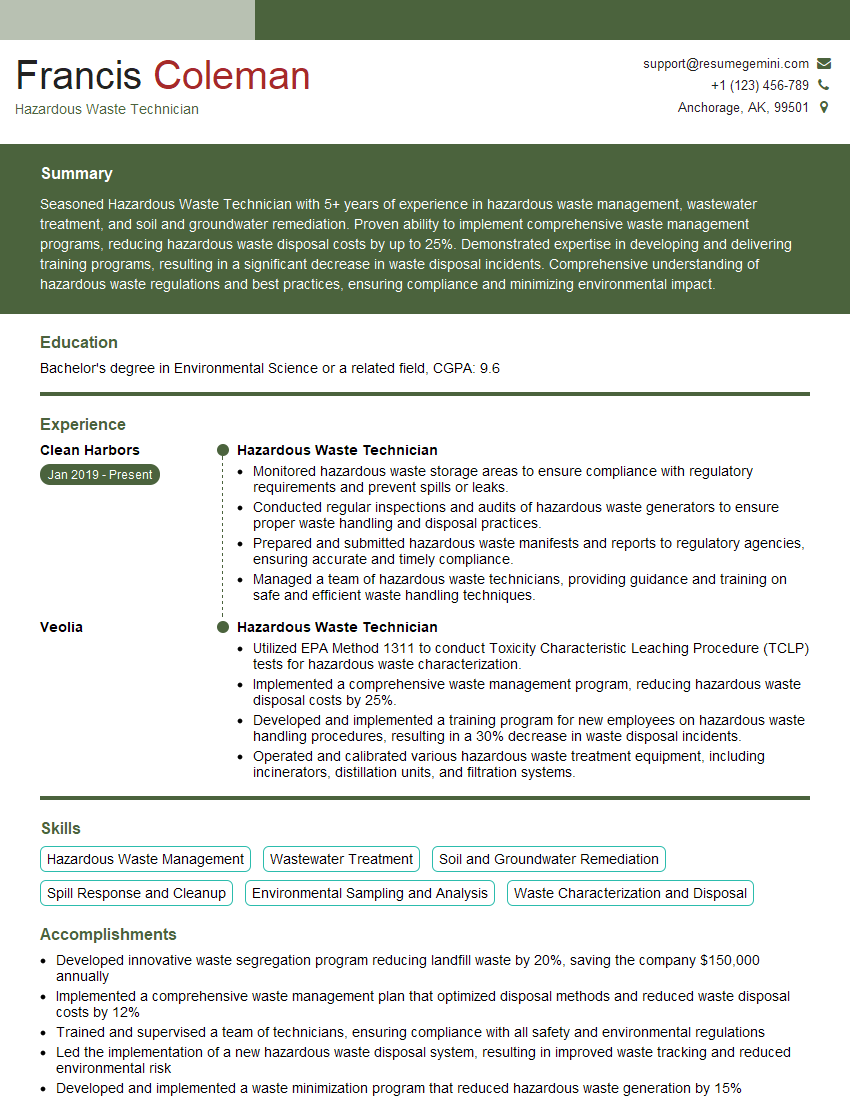
Hazardous Waste Technician Resume Sample
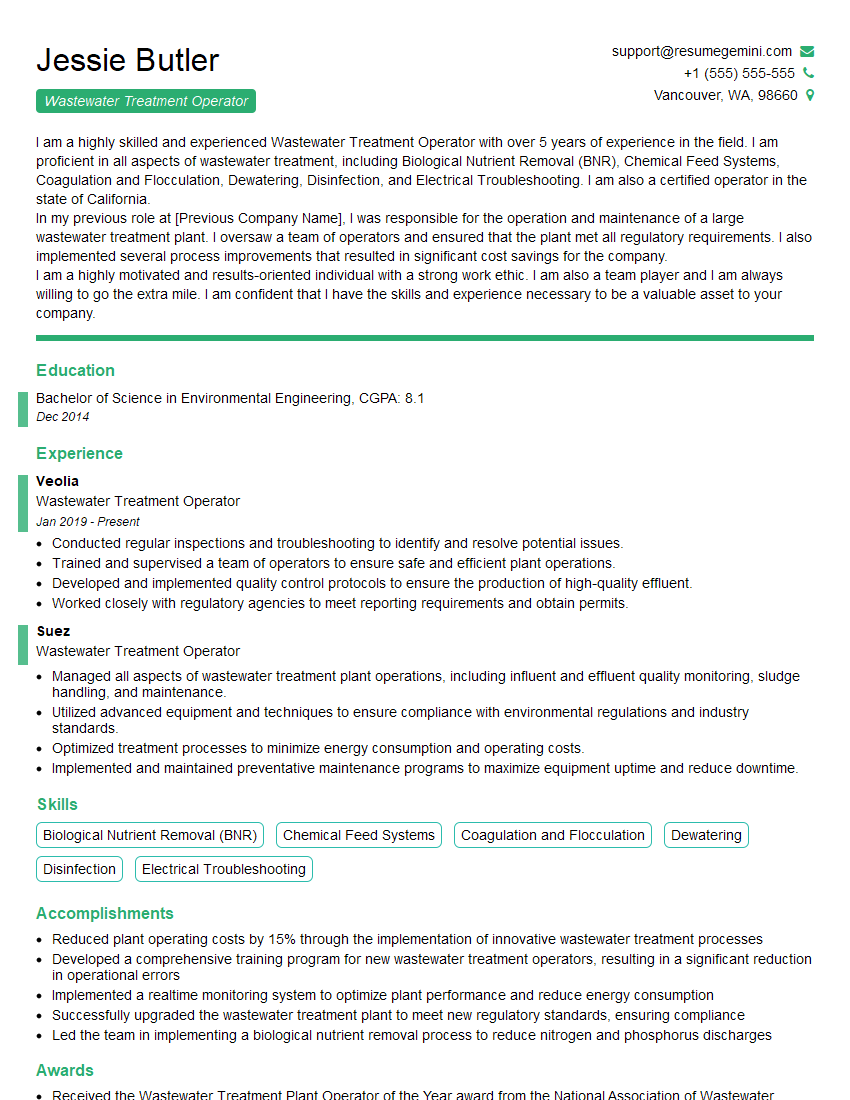
Wastewater Treatment Operator Resume Sample
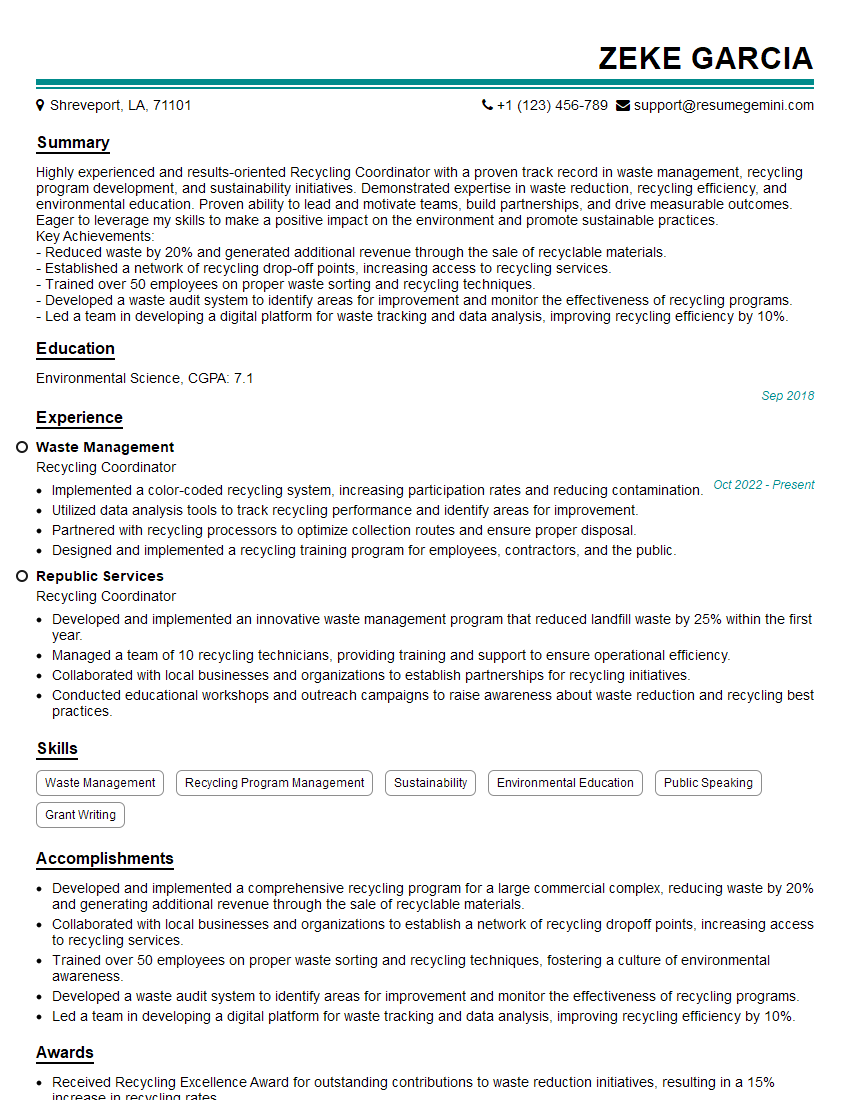
Recycling Coordinator Resume Sample
Explore more articles
Users Rating of Our Blogs
Share Your Experience
We value your feedback! Please rate our content and share your thoughts (optional).
What Readers Say About Our Blog
I Redesigned Spongebob Squarepants and his main characters of my artwork.
https://www.deviantart.com/reimaginesponge/art/Redesigned-Spongebob-characters-1223583608
IT gave me an insight and words to use and be able to think of examples
Hi, I’m Jay, we have a few potential clients that are interested in your services, thought you might be a good fit. I’d love to talk about the details, when do you have time to talk?
Best,
Jay
Founder | CEO