Cracking a skill-specific interview, like one for Understanding of welding and fabrication processes, requires understanding the nuances of the role. In this blog, we present the questions you’re most likely to encounter, along with insights into how to answer them effectively. Let’s ensure you’re ready to make a strong impression.
Questions Asked in Understanding of welding and fabrication processes Interview
Q 1. Explain the difference between MIG, TIG, and stick welding.
MIG, TIG, and stick welding are all arc welding processes, but they differ significantly in their techniques and applications. Think of them as three different tools in a welder’s toolbox, each best suited for a particular job.
- MIG (Metal Inert Gas) Welding: This process uses a continuous feed of filler wire and a shielding gas (often argon or CO2) to protect the weld from atmospheric contamination. The wire acts as both the electrode and the filler material. It’s known for its speed, ease of use, and good penetration, making it ideal for mass production and joining thicker materials. Imagine building a car chassis – MIG is a great choice for the speed and efficiency it provides.
- TIG (Tungsten Inert Gas) Welding: TIG welding uses a non-consumable tungsten electrode to create the arc. A separate filler rod is added manually to the weld pool, offering greater control over the weld bead. It’s typically used with shielding gas (argon or a mixture of argon and helium). TIG welds are known for their high quality, precision, and clean appearance. This is the method you’d use for welding thin sheet metal or creating intricate designs, like a custom exhaust system for a motorcycle.
- Stick (Shielded Metal Arc Welding or SMAW) Welding: This is a more rustic method, using a consumable electrode coated in flux. The flux protects the weld from contamination and provides the filler material. It’s known for its portability (it doesn’t require gas) and can be used in various environments, including outdoors. However, it produces more spatter and requires more skill to achieve a high-quality weld. Think of it as the workhorse – great for on-site repairs or jobs where gas isn’t readily available.
In short, MIG is fast and efficient, TIG is precise and high-quality, and stick welding is portable and versatile.
Q 2. Describe the various types of welding joints.
Welding joints are classified based on how the parts are positioned relative to each other. The choice of joint depends heavily on the application and desired strength. Here are some common types:
- Butt Joint: The edges of the two pieces are butted together, offering good strength but potentially challenging to weld perfectly.
- Lap Joint: One piece overlaps the other; easy to weld but less strong than a butt joint.
- T-Joint: One piece is perpendicular to the other; commonly used in structural work, offering decent strength.
- Corner Joint: Two pieces meet at a 90-degree angle; suitable for various applications, requiring careful weld placement.
- Edge Joint: Edges of two pieces are joined, suitable for thin sheet metals, often requiring backing.
- J and U Joints: These joints use a bevel to prepare the edges of the materials for a complete penetration weld. They are often used for thicker materials and help achieve full penetration weld strength.
The selection of the appropriate joint type is crucial for ensuring the strength and integrity of the final product. For example, a butt joint is preferred for structural applications requiring maximum strength, while a lap joint might suffice for less demanding situations.
Q 3. What are the safety precautions you must follow during welding?
Welding safety is paramount. Neglecting safety can lead to serious injuries or even fatalities. Key precautions include:
- Personal Protective Equipment (PPE): Always wear a welding helmet with appropriate shade, welding gloves, flame-resistant clothing, and safety shoes. Eye protection is critical to prevent severe eye damage.
- Ventilation: Welding produces fumes and gases that can be harmful. Ensure adequate ventilation or use a respirator to minimize exposure. In enclosed spaces, always use local exhaust ventilation.
- Fire Prevention: Keep a fire extinguisher nearby and clear the area of flammable materials. Be mindful of sparks and hot metal that could ignite nearby items.
- Electrical Safety: Ensure proper grounding and use insulated tools to prevent electric shocks. Never work alone.
- Post-Weld Inspection and Cleanup: Always inspect the weld for flaws. Check for slag, spatter and cleanup any hazards created by the welding process.
A common mistake is underestimating the dangers of ultraviolet radiation from the welding arc. Always use a proper welding helmet to protect your eyes and face from these harmful rays.
Q 4. How do you identify and address common welding defects?
Identifying and addressing welding defects is crucial for ensuring the quality and safety of the welded structure. Common defects include:
- Porosity: Small holes in the weld caused by trapped gas; can be addressed by adjusting welding parameters and ensuring proper cleanliness.
- Cracks: Breaks in the weld metal, often due to rapid cooling or residual stresses; requires rework or repair, potentially needing preheating or post-weld heat treatment.
- Undercut: A groove melted into the base metal at the edge of the weld; results from excessive current or incorrect travel speed and needs rework.
- Incomplete Fusion: The weld doesn’t completely fuse with the base metal; indicates a lack of penetration or heat input; needs rework.
- Lack of Penetration: The weld doesn’t penetrate the full thickness of the joined materials; caused by low current or improper technique, requiring rework.
- Slag Inclusion: Trapped slag within the weld; careful cleaning of the weld pool is needed to eliminate this.
Identifying these defects usually involves visual inspection, sometimes aided by non-destructive testing (NDT) methods like radiography or ultrasonic testing. Addressing the defects typically requires rework, which might involve grinding, chipping, and re-welding the affected area.
Q 5. Explain the importance of pre-weld inspection.
Pre-weld inspection is a critical step to ensure the success of the welding process and the quality of the final product. It’s like checking the ingredients before you start baking a cake – you don’t want to discover a spoiled ingredient halfway through!
This inspection verifies that the base materials meet the required specifications, including dimensions, cleanliness, and surface preparation. It also ensures that the joint design is appropriate for the welding process and application, preventing potential flaws and ensuring a high-quality final result. Overlooking pre-weld inspection can lead to wasted materials, rework, and even structural failure.
For example, if the base metal is contaminated with rust or oil, the weld might not properly fuse, leading to incomplete penetration or porosity. Pre-weld inspection helps catch these issues before any welding begins.
Q 6. What is the role of a welding procedure specification (WPS)?
A Welding Procedure Specification (WPS) is a document that outlines the parameters for a specific welding process. It’s a detailed recipe for creating a successful weld, ensuring consistency and quality. Think of it as the blueprint for a welder.
A WPS includes information such as the welding process, filler metal, base materials, preheating temperature, welding parameters (current, voltage, travel speed), and post-weld heat treatment, if required. It ensures that welders consistently produce welds that meet the required standards. Following a validated WPS is essential for ensuring the quality, safety, and reliability of a welded structure, especially in critical applications where weld integrity is paramount. A properly written and followed WPS is vital for meeting industry codes and standards.
Q 7. Describe your experience with different types of filler metals.
My experience encompasses a wide range of filler metals, each selected based on the specific application and base materials. For example:
- Mild Steel Filler Metals: These are commonly used for joining mild steel components and offer good weldability and strength. The specific composition might vary depending on the desired weld characteristics.
- Stainless Steel Filler Metals: These filler metals are used for welding stainless steel, requiring careful consideration of the alloying elements to match the base material’s properties and corrosion resistance.
- Aluminum Filler Metals: Aluminum welding requires specialized filler metals and techniques due to aluminum’s high thermal conductivity and tendency to form oxide layers. Flux-cored wires or TIG processes are frequently utilized.
- High-Strength Low-Alloy (HSLA) Steel Filler Metals: These are used for applications requiring high strength and toughness and often include microalloying elements to optimize weld properties.
- Cast Iron Filler Metals: Welding cast iron demands specialized filler metals to compensate for the material’s brittleness. The selection often involves considering the silicon content for good weldability.
Selecting the wrong filler metal can lead to porosity, cracking, or other weld defects, ultimately compromising the structural integrity. Therefore, careful consideration of the base metal composition and the required properties of the final weld are paramount in selecting the appropriate filler metal.
Q 8. How do you determine the correct welding parameters (voltage, amperage, etc.)?
Determining the correct welding parameters is crucial for achieving strong, sound welds. It’s a balance between several factors, and often involves a combination of experience and reference materials. The primary parameters are voltage, amperage, and travel speed. Think of it like baking a cake: you need the right temperature (voltage), the right amount of ingredients (amperage), and the right baking time (travel speed) to get the perfect result.
Voltage: Controls the arc’s length and heat intensity. Higher voltage generally means a longer, hotter arc, suitable for thicker materials or deeper penetration. Lower voltage produces a shorter, more concentrated arc, ideal for thinner materials.
Amperage: Governs the amount of heat input into the weld. Higher amperage means more heat, faster melting, and potentially more penetration. Too much amperage can lead to burn-through.
Travel Speed: How fast the welding torch moves along the weld joint. Slower speed means more heat input at a given amperage, leading to increased penetration. Faster speed results in less heat input and shallower penetration.
Other Factors: Material type, thickness, joint design, electrode type, and shielding gas all impact parameter selection. Manufacturers often provide recommended parameters in their welding procedure specifications (WPS).
For example, welding thin sheet metal requires lower voltage and amperage with a faster travel speed to prevent burn-through. Conversely, welding thick steel plates necessitates higher voltage, amperage, and a slower travel speed to ensure adequate penetration. I always refer to the WPS and conduct test welds to fine-tune parameters based on the specific job conditions.
Q 9. What are the different types of welding electrodes and their applications?
Welding electrodes come in various types, each suited for specific applications. The choice depends on the base metal being welded, the desired weld properties, and the welding process.
E6010/E6011: These are common, general-purpose electrodes suitable for all positions. They offer good penetration and are easy to use, making them ideal for many applications, especially outdoor work where moisture is a concern (E6011).
E7018: Known for their excellent strength and toughness, these electrodes are often used in critical applications where high-quality welds are essential, such as structural steel work. They require more skill to weld with.
Stainless Steel Electrodes (e.g., 308L): Used for welding stainless steel, these electrodes ensure the weld has the same corrosion resistance as the base metal. They often require specific shielding gases.
Cast Iron Electrodes: Designed specifically for cast iron, these electrodes allow for the welding of this challenging material, commonly used in engine repair or restoration.
Aluminum Electrodes: Used for welding aluminum and its alloys, requiring specific techniques and shielding gases (often argon).
The electrode’s coating plays a crucial role in the welding process, influencing factors like arc stability, penetration, and slag characteristics. Understanding the different electrode types and coatings is paramount for successful welding.
Q 10. Explain the concept of weld penetration and its importance.
Weld penetration refers to the depth to which the weld metal fuses with the base metal. Imagine it as the weld’s ‘roots’ penetrating the base materials. It is crucial for a weld’s strength and integrity. Insufficient penetration results in a weak, unreliable joint prone to cracking or failure under stress. Excessive penetration, on the other hand, can cause burn-through or weakening of the base metal.
Adequate penetration ensures complete fusion, creating a strong metallurgical bond between the weld and the base materials. This is vital for structural applications where the weld must withstand significant loads and stresses. In my experience, achieving optimal penetration involves careful control of the welding parameters (voltage, amperage, travel speed) and proper joint preparation. Inspecting the weld’s cross-section is the best way to evaluate penetration.
For example, in pipeline welding, insufficient penetration is a serious safety hazard, and strict quality control measures are implemented to ensure every weld meets the required penetration depth. Radiographic testing (RT) is often used to verify this.
Q 11. How do you ensure the quality of your welds?
Ensuring weld quality involves a multi-faceted approach starting from the preparation stage to the final inspection. I employ several key strategies:
Proper Joint Preparation: Cleanliness and accurate joint fit-up are fundamental. This minimizes porosity and ensures complete fusion.
Precise Welding Parameters: Using the correct voltage, amperage, and travel speed as discussed earlier is essential.
Visual Inspection: A thorough visual inspection of the weld bead is the first step, checking for any defects like porosity, cracks, or undercut.
Non-Destructive Testing (NDT): Techniques such as radiographic testing (RT), ultrasonic testing (UT), or magnetic particle inspection (MPI) can detect internal flaws that are not visible to the naked eye.
Documentation: Maintaining detailed records of welding parameters, materials used, and inspection results ensures traceability and aids in troubleshooting.
A well-documented welding process, combined with a thorough inspection, gives confidence that the welds are sound and meet the required standards. I always prioritize safety and quality – it’s not just about making a weld, it’s about making a safe and reliable structure.
Q 12. Describe your experience with different types of fabrication techniques.
My fabrication experience encompasses a range of techniques, including:
SMAW (Shielded Metal Arc Welding): A versatile process suitable for various materials and thicknesses, commonly used in structural steel fabrication.
GMAW (Gas Metal Arc Welding): A highly productive process used for both thin and thick materials, often employed in automotive and pipeline fabrication. I have extensive experience with both short-circuiting and pulsed GMAW techniques.
GTAW (Gas Tungsten Arc Welding): A precise process known for producing high-quality welds, ideally suited for thin materials, aluminum, and stainless steel. This technique requires considerable skill and precision.
Cutting and Shaping Techniques: I am proficient in using various cutting tools like plasma cutters, oxy-fuel torches, and abrasive cutting wheels, along with bending and forming techniques for sheet metal and other materials.
Assembly Methods: I’m skilled in using various joining methods including bolting, riveting, and the use of adhesives to complement welding where appropriate.
My experience covers projects involving both small-scale repairs and large-scale fabrication projects, consistently delivering high-quality results within stipulated timelines.
Q 13. Explain your understanding of different types of steel and their weldability.
Understanding steel types and their weldability is crucial for producing successful welds. Different steels possess varying chemical compositions, impacting their weldability. Factors such as carbon content, alloying elements, and grain structure significantly influence the welding process and the weld’s final properties.
Carbon Steel: The most common type, its weldability is largely determined by carbon content. Higher carbon content (above 0.25%) can make the steel more susceptible to cracking during welding, requiring preheating and post-weld heat treatment (PWHT).
Low-Alloy Steel: These steels contain small amounts of alloying elements to enhance strength or other properties. Their weldability is generally good but might require specific welding parameters and procedures depending on the alloying elements.
Stainless Steel: These steels contain chromium and other elements, providing excellent corrosion resistance. Welding stainless steel requires specific techniques and electrodes to avoid issues such as sensitization and intergranular corrosion.
High-Strength Low-Alloy (HSLA) Steels: These steels offer high strength with good weldability. However, they often require controlled cooling rates to avoid cracking.
Proper preheating, interpass temperature control, post-weld heat treatment, and the selection of appropriate welding consumables are crucial factors in ensuring the successful welding of different steel types. I always consult relevant codes and standards to determine the appropriate welding procedure for each material.
Q 14. How do you interpret welding symbols?
Welding symbols are a standardized graphical language used to communicate detailed weld specifications. Understanding these symbols is essential for ensuring that the weld is constructed correctly. They provide information on the weld type, size, location, and other critical parameters.
A typical welding symbol consists of a reference line, an arrow, a tail, and various other elements. The arrow indicates the location of the weld on the joint. The tail provides supplementary information such as the weld type, dimension, and specific requirements. The reference line carries the basic weld symbols, which denote the type of weld (e.g., fillet weld, groove weld), its size, and its length. The symbol itself can also contain additional information like the finish of the weld.
For example, a symbol with a specific contour line might indicate a specific type of groove weld, or it might specify the size of the fillet weld, the angle of the weld, or even whether or not any specific type of surface treatment will be needed. Learning to read and interpret these symbols accurately prevents miscommunication and ensures welds are made to the correct specifications.
Mastering welding symbols is a fundamental skill for any welder or fabricator. It is an essential part of professional practice. I regularly use welding symbol reference charts to ensure consistent quality in my work.
Q 15. What is your experience with non-destructive testing (NDT) techniques for welds?
Non-destructive testing (NDT) is crucial for ensuring the integrity of welds without causing damage. My experience encompasses various NDT methods, including visual inspection (VI), which is the first and often most important step; magnetic particle inspection (MPI), ideal for detecting surface and near-surface cracks in ferromagnetic materials; dye penetrant testing (DPT), another surface inspection method effective for detecting discontinuities open to the surface; ultrasonic testing (UT), utilizing high-frequency sound waves to detect internal flaws; and radiographic testing (RT), or X-ray/gamma ray inspection, offering detailed internal views of weld structures.
For instance, during a recent project involving pressure vessels, we used UT to detect potential internal porosity and RT to verify complete penetration of the welds. In another project with a complex stainless steel structure, MPI was vital for revealing any surface cracks that might compromise the structure’s strength. The selection of the appropriate NDT method always depends on the material, weld type, and the specific requirements of the project.
Career Expert Tips:
- Ace those interviews! Prepare effectively by reviewing the Top 50 Most Common Interview Questions on ResumeGemini.
- Navigate your job search with confidence! Explore a wide range of Career Tips on ResumeGemini. Learn about common challenges and recommendations to overcome them.
- Craft the perfect resume! Master the Art of Resume Writing with ResumeGemini’s guide. Showcase your unique qualifications and achievements effectively.
- Don’t miss out on holiday savings! Build your dream resume with ResumeGemini’s ATS optimized templates.
Q 16. Describe your experience with blueprint reading and interpretation.
Blueprint reading is fundamental to fabrication. My expertise extends beyond simply interpreting drawings; I understand how to extract critical information, including dimensions, tolerances, material specifications, welding symbols (which are key!), and assembly sequences. I’m proficient in recognizing different projection methods, section views, and detail drawings.
For example, I’ve worked on projects with complex weld configurations needing precise interpretation of welding symbols to correctly determine weld sizes, types (e.g., fillet, groove), and locations. Misunderstanding a single detail on a blueprint can lead to significant rework or even safety hazards, so meticulous attention to detail is paramount. I’m comfortable using both physical blueprints and digital CAD drawings, and always clarify ambiguities with the design engineer before proceeding.
Q 17. How do you handle unexpected challenges or issues during a welding project?
Unexpected challenges are inevitable in welding. My approach involves a systematic problem-solving method: First, I identify the root cause of the issue. Then, I assess the impact of the challenge on the project’s schedule and quality. Third, I develop and implement a corrective action plan and thoroughly document the issue and the resolution.
For instance, I once encountered significant distortion in a weldment due to improper preheating. Instead of panicking, I carefully analyzed the situation, determined the cause, and proposed a plan involving rework and the implementation of proper preheating procedures for the remaining welds. Effective communication with the project team is essential; openly discussing the challenge allows for collaborative solutions.
Q 18. What is your experience with different types of welding equipment?
My experience with welding equipment is extensive, spanning various processes and technologies. I’m proficient with Gas Metal Arc Welding (GMAW), or MIG welding, known for its speed and versatility; Gas Tungsten Arc Welding (GTAW), or TIG welding, providing precise control and high-quality welds; Shielded Metal Arc Welding (SMAW), or stick welding, suitable for outdoor applications; and Flux-Cored Arc Welding (FCAW), offering good penetration and all-position capabilities. I am also familiar with various power sources, including constant current and constant voltage machines, and understand the importance of selecting the right equipment for the specific material and application.
For instance, I’ve successfully used GMAW for high-volume production runs and GTAW for precision welds on thin-walled stainless steel components. Understanding the nuances of each process and its associated equipment is crucial for ensuring optimal weld quality and efficiency.
Q 19. Describe your experience with automated welding systems.
I have experience with automated welding systems, including robotic welding cells and mechanized welding processes. This experience involves programming, setup, and troubleshooting of automated systems. My expertise includes familiarity with different robotic programming languages and the integration of automated systems with other manufacturing processes.
Specifically, I was involved in a project where we implemented a robotic welding cell for the automated welding of large steel frames. This involved programming the robot’s movements, optimizing weld parameters, and ensuring the seamless integration of the robotic system with the overall production line. Automated systems can significantly increase productivity and consistency, and understanding their intricacies is an essential skill in modern fabrication.
Q 20. Explain your understanding of heat treatment processes related to welding.
Heat treatment is a critical step in many welding projects, influencing the final properties of the weldment. My understanding includes various heat treatment processes, such as stress relieving, which reduces residual stresses in the weld and surrounding base material; normalization, refining the grain structure to improve mechanical properties; and annealing, softening the material for improved machinability.
The choice of heat treatment process depends on the material and the specific requirements of the application. For example, in a critical application like a pressure vessel, stress relieving is essential to prevent cracking and ensure the long-term integrity of the structure. I carefully select the appropriate heat treatment cycle based on the material specifications and applicable codes and standards. Improper heat treatment can negate the benefits of a well-executed weld, so it is a crucial aspect of the fabrication process.
Q 21. What are the common causes of porosity in welds?
Porosity, the presence of small holes or voids in a weld, is a common weld defect. Several factors contribute to its formation. These include insufficient shielding gas coverage in GMAW or GTAW, moisture contamination in the welding consumables (electrodes, flux), improper welding parameters (e.g., excessive current), and the presence of dissolved gases in the weld pool.
For instance, insufficient shielding gas can lead to oxidation of the weld metal, resulting in porosity. Similarly, moisture in the electrode coating can create gas pockets during welding. To prevent porosity, proper cleaning procedures for the base material and welding consumables are essential, along with careful control of the welding process parameters, such as amperage and welding speed. Regular monitoring and inspection during the welding process also helps in early detection and corrective action.
Q 22. How do you ensure the structural integrity of a welded joint?
Ensuring the structural integrity of a welded joint is paramount in any fabrication project. It’s not just about joining two pieces of metal; it’s about creating a connection that’s as strong, or stronger, than the base material. This involves a multi-faceted approach encompassing proper preparation, precise welding techniques, and thorough inspection.
Proper Joint Design: The type of joint (butt, lap, fillet, etc.) must be chosen based on the application’s stress requirements. A poorly designed joint is a recipe for failure, regardless of welding skill.
Surface Preparation: Cleanliness is crucial. Any contaminants (rust, paint, oil) weaken the weld and must be removed through methods like grinding, wire brushing, or chemical cleaning. Think of it like trying to glue two pieces of wood together – you wouldn’t expect a strong bond if the surfaces were dirty.
Correct Welding Parameters: The choice of welding process (MIG, TIG, stick, etc.), amperage, voltage, and travel speed directly impact the weld’s quality. Incorrect settings can lead to porosity (holes in the weld), incomplete penetration (a weak joint), or excessive heat input (causing warping or cracking).
Proper Weld Bead Formation: A skilled welder creates consistent, smooth, and well-formed weld beads. This ensures uniform penetration and minimizes stress concentrations.
Non-Destructive Testing (NDT): Techniques such as visual inspection, radiographic testing (X-ray), ultrasonic testing, and dye penetrant testing are used to detect internal or surface flaws that might compromise the weld’s integrity. This is like a thorough medical checkup for the weld.
For example, in a pressure vessel application, failing to achieve proper penetration in a butt weld could lead to a catastrophic failure, potentially causing significant damage or injury. Therefore, meticulous attention to detail at every stage is essential.
Q 23. What is your experience with different types of welding gases?
My experience encompasses a wide range of welding gases, each with its unique properties and applications. The most common are:
Shielding Gases: These gases protect the weld pool from atmospheric contamination (oxygen and nitrogen) that can cause porosity and weaken the weld. I’m proficient with Argon (for TIG and MIG welding stainless steel and aluminum), Helium (for TIG welding deeper penetration), and mixtures like Argon/CO2 (for MIG welding steel). The choice of shielding gas depends heavily on the base metal and the desired weld quality.
Fuel Gases: For gas welding (oxy-fuel welding), I’ve worked with Acetylene, Propane, and MAPP gas. Each provides a different flame temperature and characteristics, making them suitable for various applications. Acetylene provides the highest temperature, ideal for cutting and welding thicker materials, while propane offers a more forgiving and controllable flame for thinner materials.
I understand the importance of gas purity and the potential hazards associated with handling these gases. I’m trained in safe cylinder handling, regulator usage, and leak detection procedures. For instance, I once had to troubleshoot a MIG welder producing poor welds due to a leaky argon regulator. By systematically checking each component, I identified the leak and rectified the problem, ensuring optimal welding performance.
Q 24. Describe your experience with maintaining welding equipment.
Maintaining welding equipment is critical for safety, productivity, and weld quality. My experience includes regular preventative maintenance, troubleshooting malfunctions, and performing minor repairs.
Preventative Maintenance: This involves tasks like cleaning gas lines, checking gas flow, inspecting cables for damage, lubricating moving parts, and ensuring proper grounding. It’s like regular servicing of a car to prevent major breakdowns.
Troubleshooting: I can diagnose and resolve issues like arc starting problems, inconsistent welding performance, and power supply issues. My approach is systematic, starting with visual inspection, followed by checking connections, gas flow, and finally, internal components. For example, I once diagnosed a faulty wire feeder motor in a MIG welder by listening to the unusual noise it was making.
Minor Repairs: I am capable of replacing worn-out parts such as contact tips, gas lenses, and nozzles. This reduces downtime and saves costs compared to calling a repair technician for every minor issue.
Proper equipment maintenance not only extends its lifespan but also ensures consistent weld quality. A poorly maintained welder can produce inconsistent welds and potentially cause safety hazards.
Q 25. How familiar are you with relevant safety standards (e.g., OSHA, AWS)?
I’m very familiar with relevant safety standards, including OSHA (Occupational Safety and Health Administration) and AWS (American Welding Society) standards. These standards guide safe welding practices and ensure the production of high-quality welds.
OSHA Regulations: I am knowledgeable about OSHA’s requirements concerning personal protective equipment (PPE), such as eye protection, welding helmets, gloves, and clothing. I also understand regulations regarding ventilation, fire prevention, and confined space entry. These standards are vital for ensuring a safe working environment for myself and my colleagues.
AWS Standards: I’m familiar with AWS’s recommended practices for various welding processes, including preheating requirements, welding procedures, and post-weld heat treatment. These standards help ensure consistent weld quality and structural integrity across projects. They also help in proper material selection and defining acceptance criteria for weld quality.
Compliance with these standards is non-negotiable. They are not just rules, but essential guidelines that directly impact worker safety and project success. A lack of adherence could lead to costly rework, accidents, or even legal ramifications.
Q 26. Explain your approach to troubleshooting welding problems.
My approach to troubleshooting welding problems is systematic and methodical. I follow a structured process to identify the root cause efficiently.
Gather Information: Begin by observing the problem closely. What type of defect is occurring (porosity, cracking, lack of fusion)? What are the welding parameters (voltage, amperage, travel speed)? What is the base material? The more information you collect, the faster the solution.
Visual Inspection: Carefully examine the weld bead, surrounding metal, and equipment for any obvious problems. Is there any discoloration, excessive spatter, or warping?
Check Welding Parameters: Verify that all settings (voltage, amperage, gas flow, etc.) are correct based on the welding process and base material. Even small variations can cause significant problems.
Inspect Equipment: Check for any faulty equipment components. This includes gas lines, electrodes, contact tips, and power supply issues.
Test Welds: Perform test welds to verify that the issue is resolved. This may involve adjusting parameters or replacing faulty components.
For example, if I encountered excessive spatter in a MIG welding operation, I would first check for correct gas flow and shielding, then examine the wire feed speed and finally the contact tip condition. This systematic approach ensures the problem is effectively identified and rectified.
Q 27. Describe your experience with managing a welding team or project.
My experience in managing welding teams and projects involves aspects of planning, execution, and quality control. It’s more than just welding; it’s about coordinating people, resources, and processes to meet project goals efficiently and safely.
Project Planning: This involves carefully evaluating project specifications, creating detailed work plans, ordering materials, and scheduling tasks. Understanding the project scope and establishing clear timelines is crucial.
Team Leadership: I’ve led teams of welders, assigning tasks based on individual skills and experience, providing necessary training, and ensuring compliance with safety procedures. Effective communication and mentorship are key to a productive team.
Quality Control: Maintaining consistent weld quality involves regular monitoring of welds during the process and conducting thorough inspections upon completion. This includes adhering to relevant codes and standards and ensuring proper documentation of all welding activities.
Problem-Solving: Troubleshooting welding defects or equipment issues requires swift action to minimize downtime and maintain project schedule. I encourage open communication and collaboration in identifying and resolving issues effectively.
For example, during a large-scale fabrication project involving various welding processes, I coordinated a team of seven welders, successfully completing the project ahead of schedule and within budget. This required careful planning, efficient resource allocation, and clear communication to ensure the project’s success.
Key Topics to Learn for Understanding of Welding and Fabrication Processes Interview
- Welding Processes: Understanding different welding techniques (e.g., SMAW, GMAW, GTAW, FCAW), their applications, advantages, and limitations. This includes knowledge of weld parameters (voltage, amperage, travel speed) and their impact on weld quality.
- Fabrication Processes: Familiarity with various fabrication methods like cutting (plasma, laser, oxy-fuel), bending, forming, and joining techniques. Be prepared to discuss the selection criteria for different processes based on material, design, and cost.
- Weld Joint Design: Knowledge of different types of weld joints (butt, lap, fillet, tee) and their suitability for various applications. Understanding of joint preparation and its effect on weld strength and integrity.
- Material Selection: Ability to select appropriate materials for welding and fabrication based on the application requirements, including considerations for strength, corrosion resistance, and weldability.
- Quality Control and Inspection: Understanding of non-destructive testing (NDT) methods like visual inspection, radiography, ultrasonic testing, and their importance in ensuring weld quality and structural integrity. Be ready to discuss common weld defects and their causes.
- Safety Procedures: Demonstrate a thorough understanding of safety regulations and best practices in welding and fabrication environments, including personal protective equipment (PPE) and hazard identification.
- Blueprint Reading and Interpretation: Ability to interpret engineering drawings and welding symbols to understand fabrication requirements accurately.
- Problem-Solving and Troubleshooting: Be prepared to discuss how you would approach and solve common problems encountered during welding and fabrication, such as weld defects, material inconsistencies, or equipment malfunctions.
Next Steps
Mastering welding and fabrication processes is crucial for career advancement in many high-demand industries. A strong understanding of these processes showcases your technical skills and problem-solving abilities, opening doors to more challenging and rewarding roles. To maximize your job prospects, create a compelling, ATS-friendly resume that highlights your expertise. ResumeGemini is a trusted resource to help you build a professional resume that stands out. We provide examples of resumes tailored to the welding and fabrication industry to help guide you in showcasing your skills effectively.
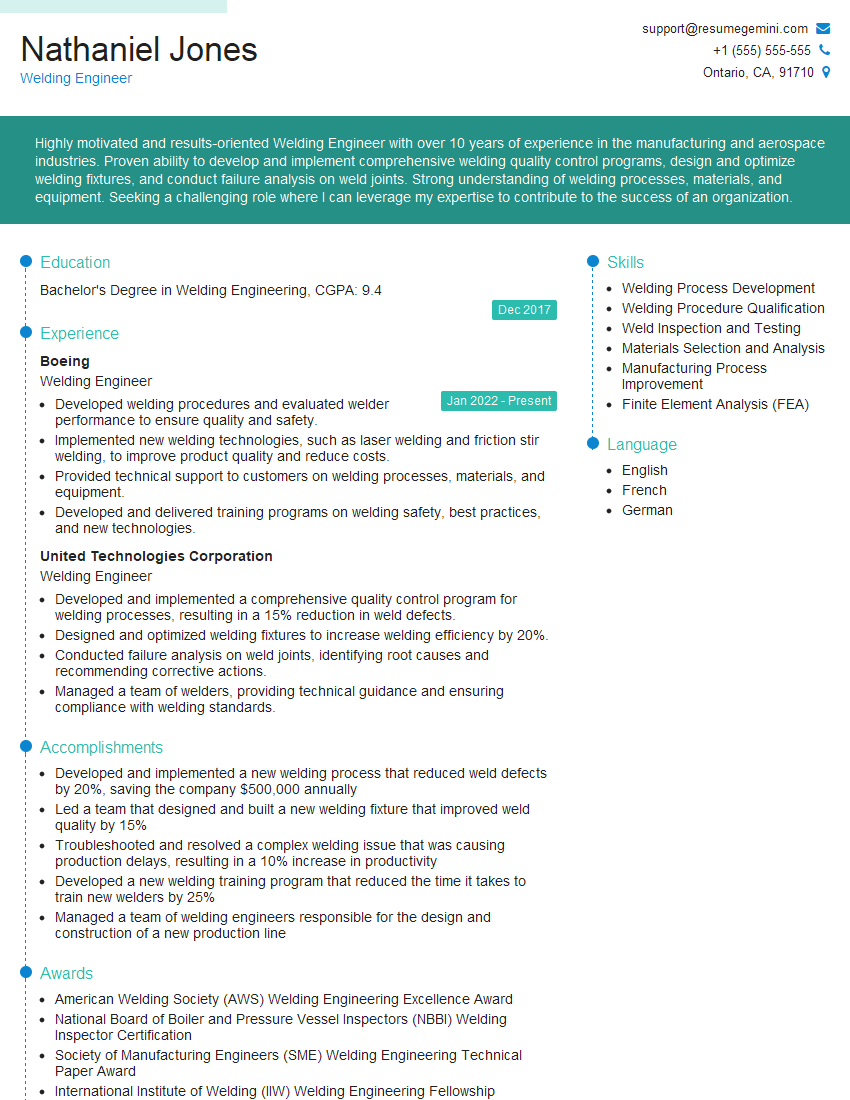
Welding Engineer Resume Sample
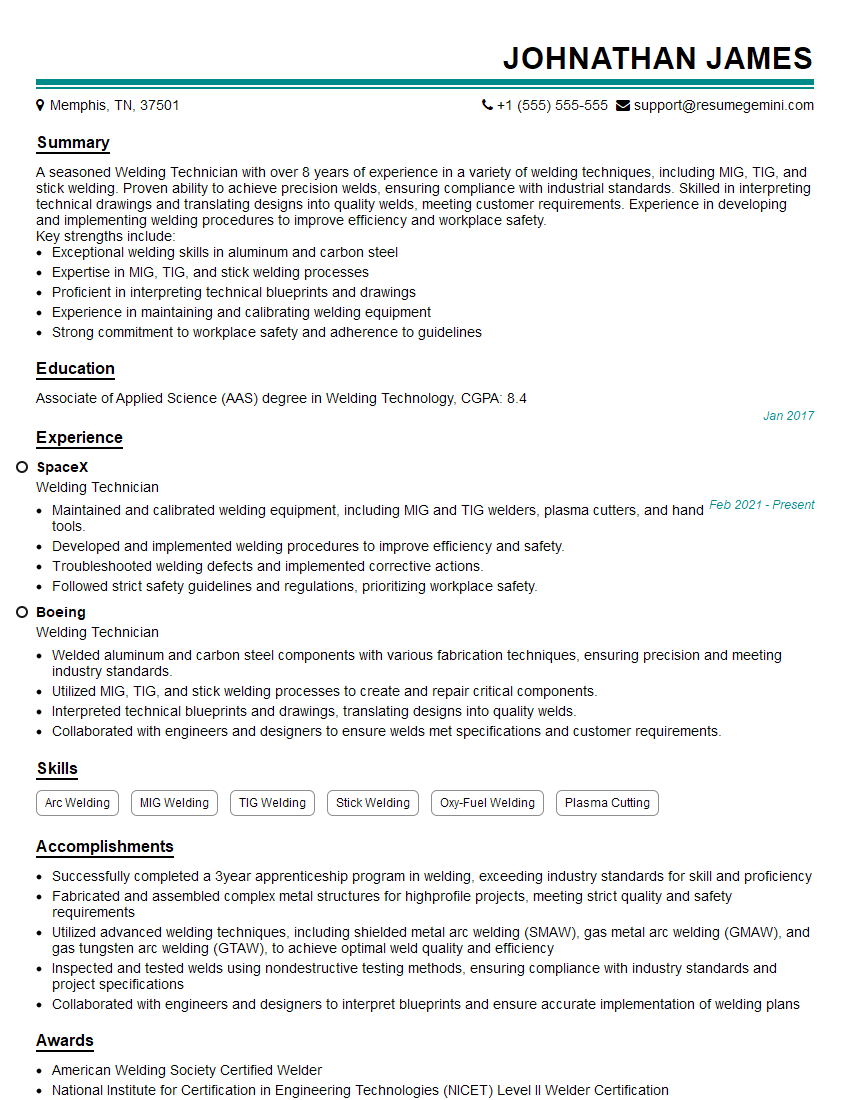
Welding Technician Resume Sample

Welding Instructor Resume Sample
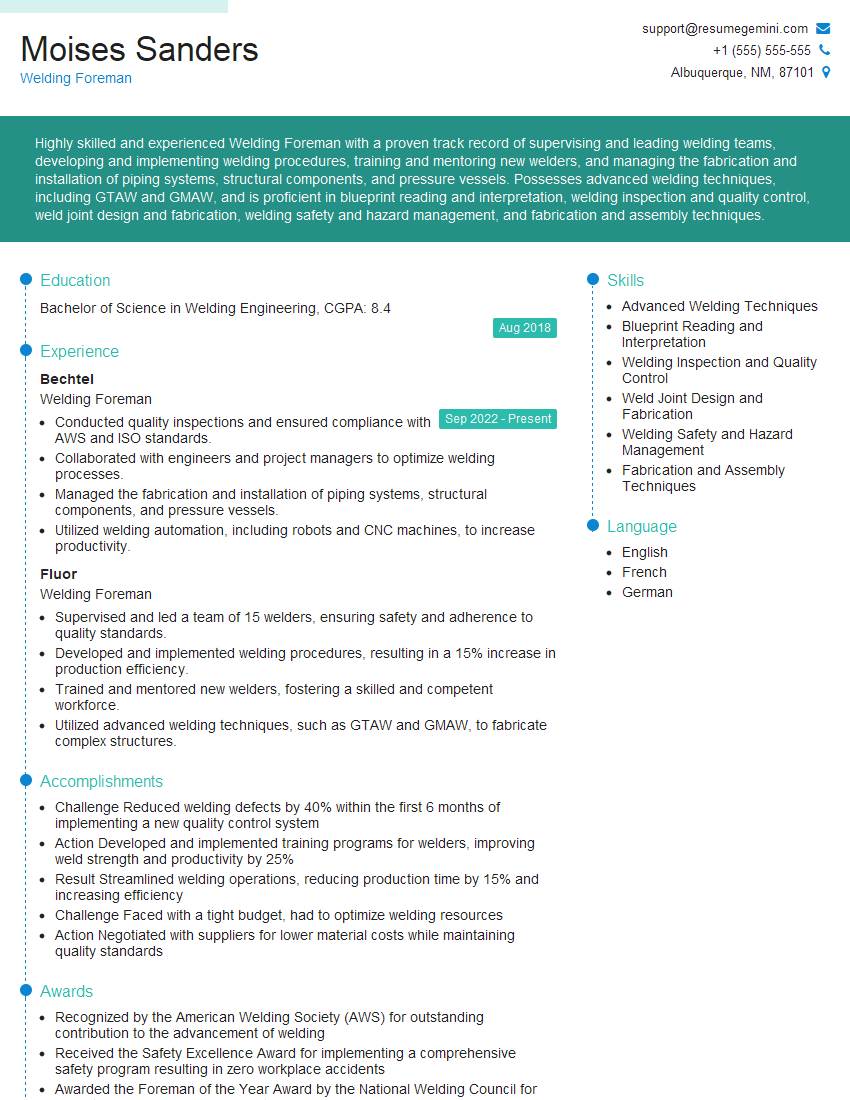
Welding Foreman Resume Sample
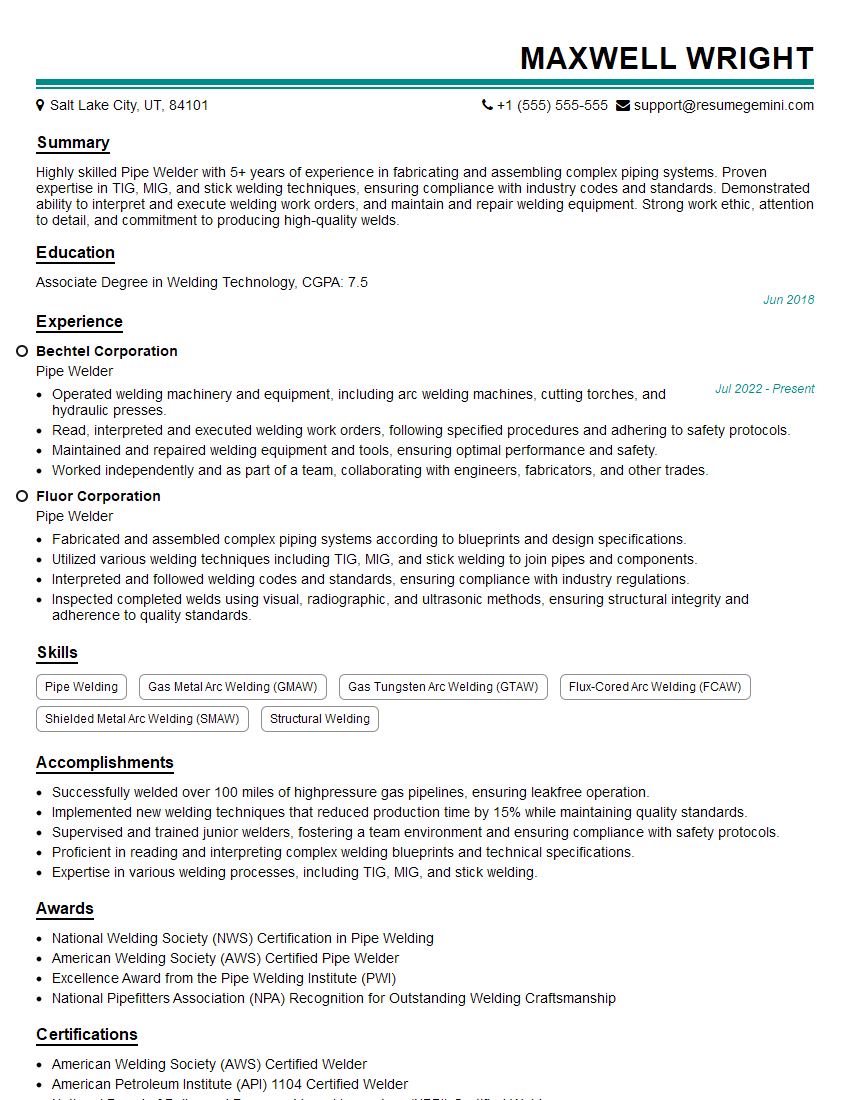
Pipe Welder Resume Sample
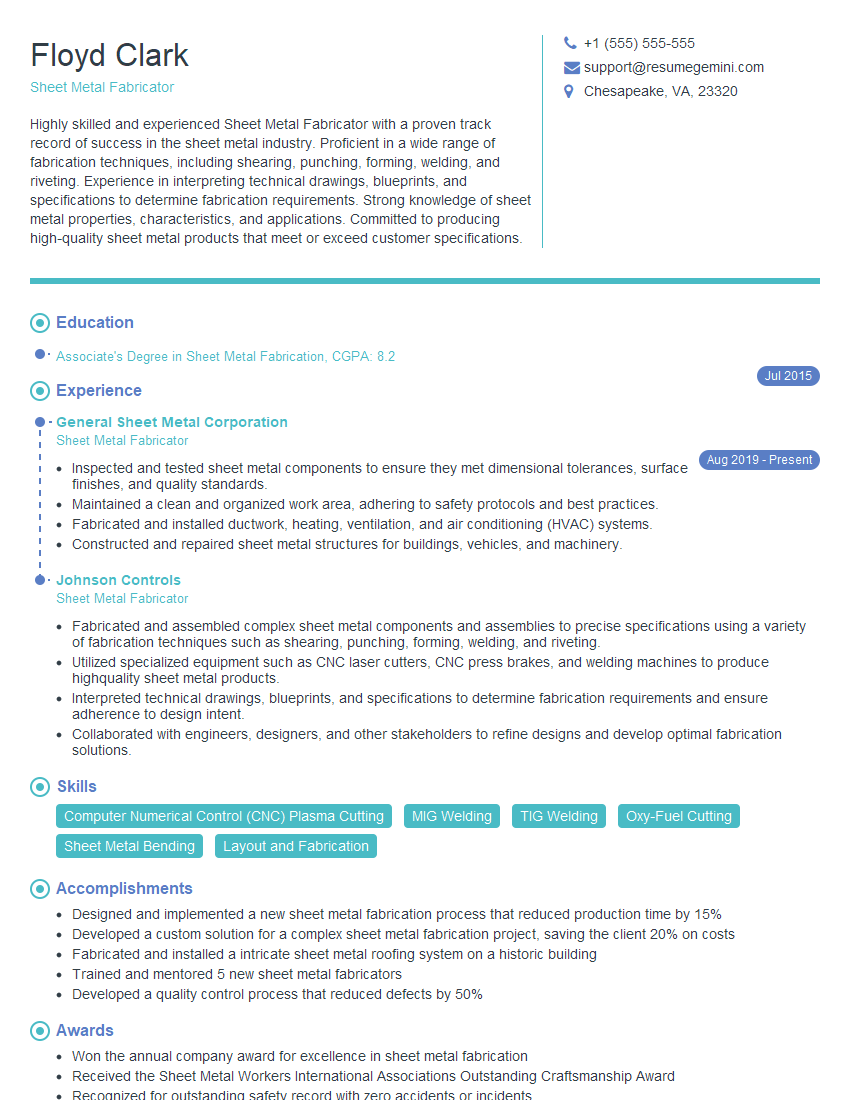
Sheet Metal Fabricator Resume Sample
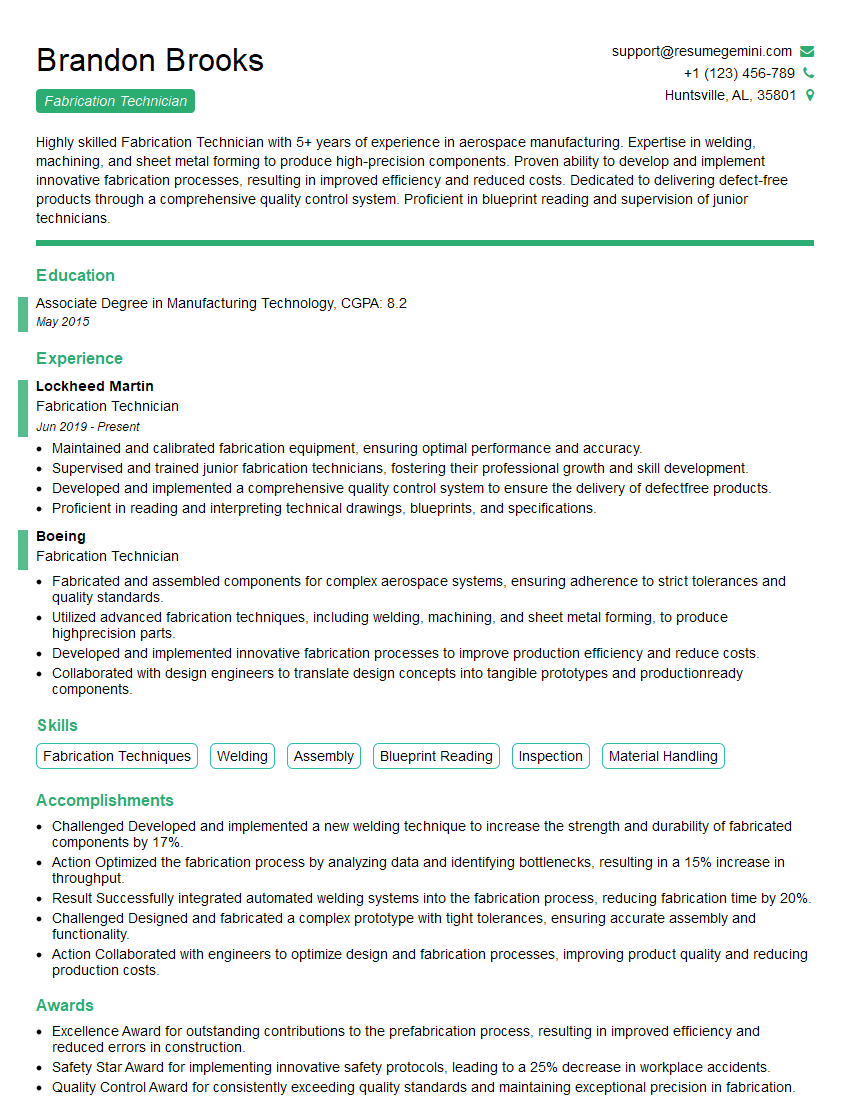
Fabrication Technician Resume Sample
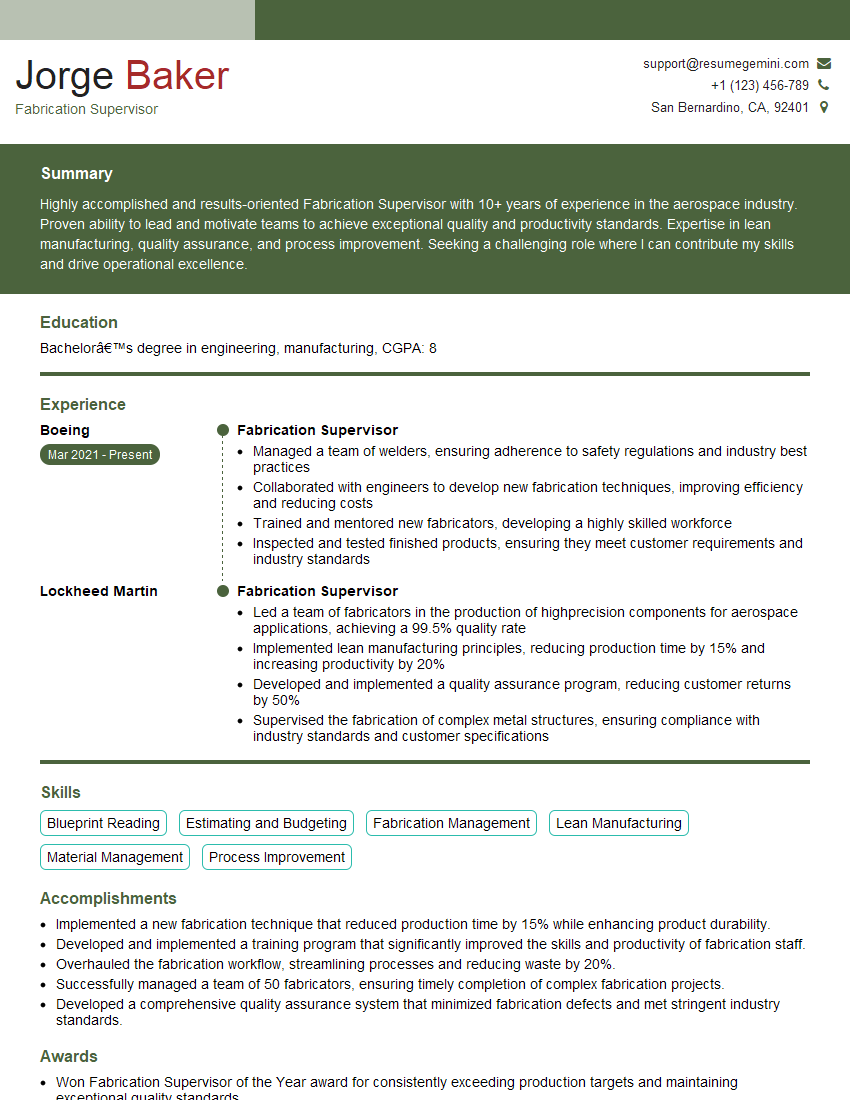
Fabrication Supervisor Resume Sample
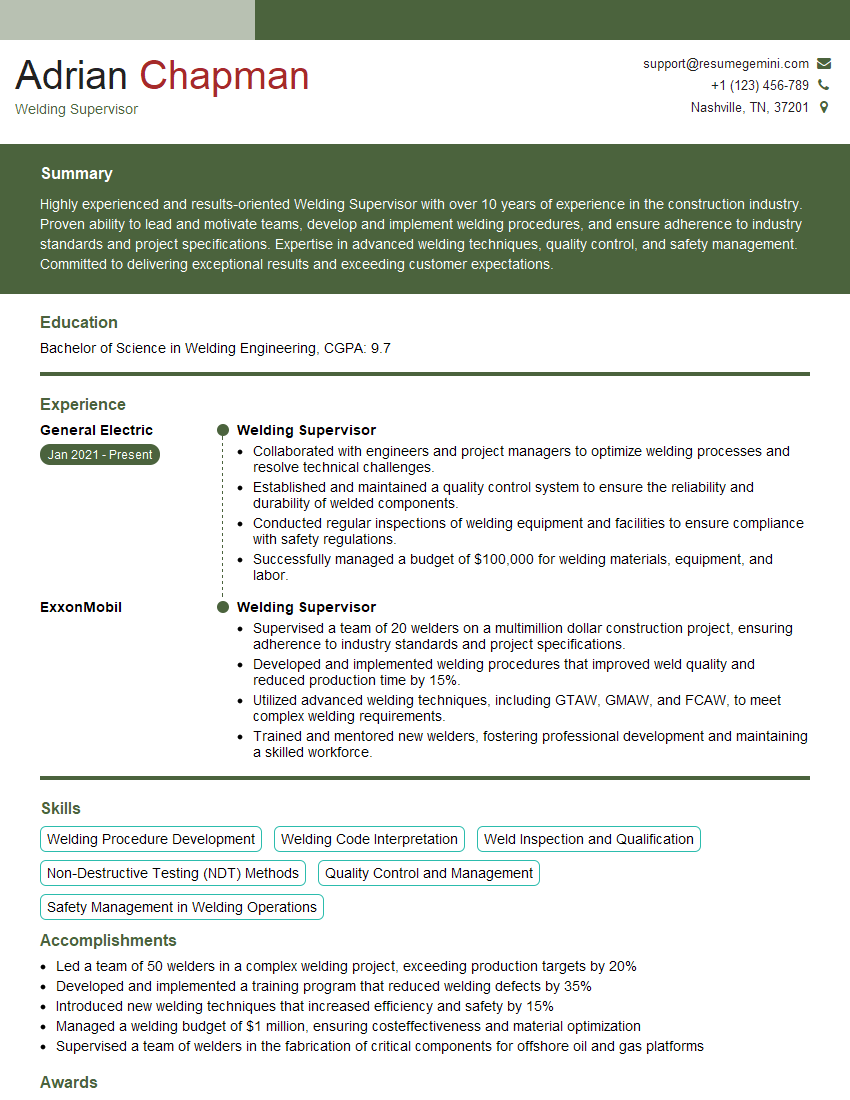
Welding Supervisor Resume Sample
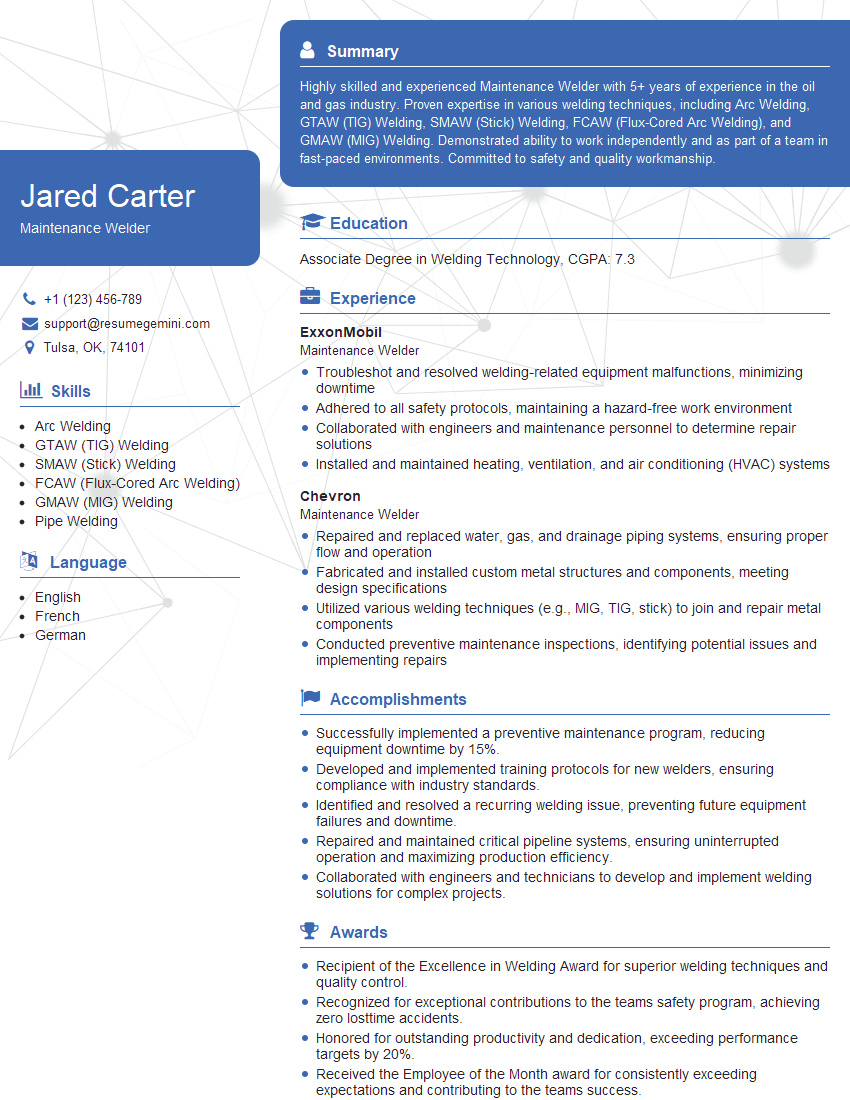
Maintenance Welder Resume Sample
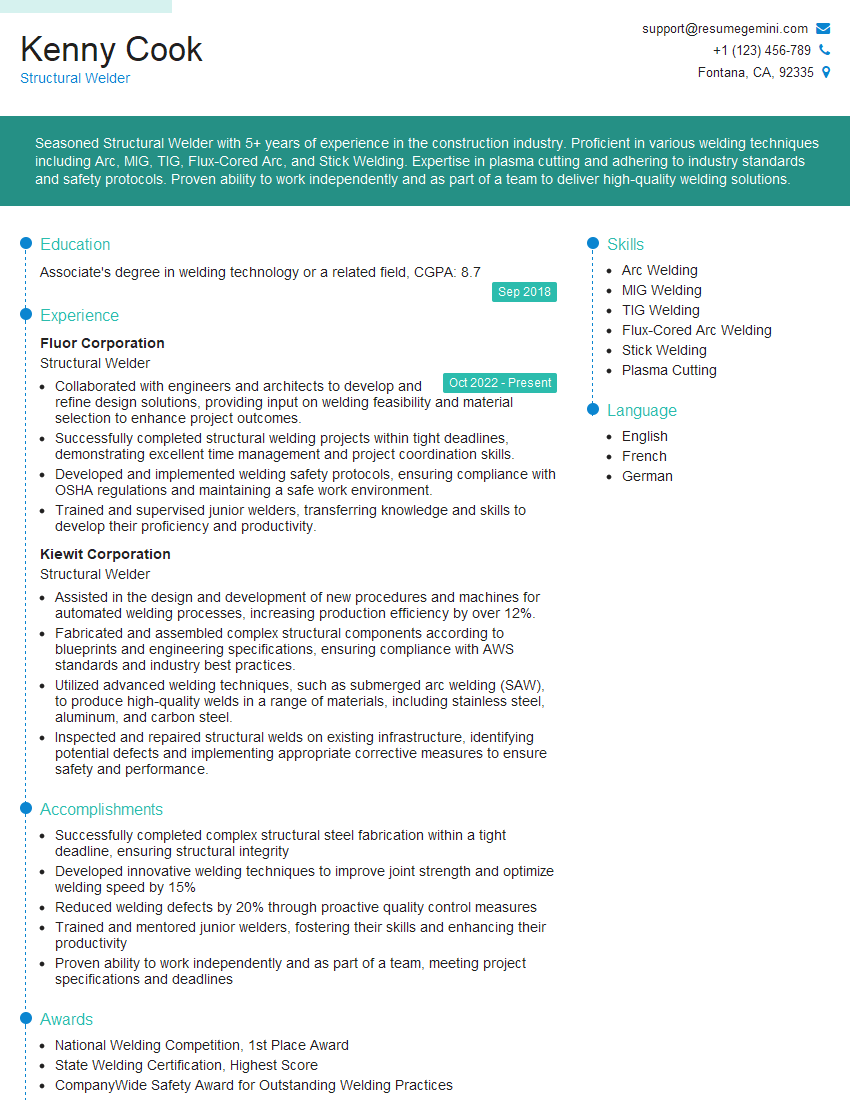
Structural Welder Resume Sample
Explore more articles
Users Rating of Our Blogs
Share Your Experience
We value your feedback! Please rate our content and share your thoughts (optional).
What Readers Say About Our Blog
I Redesigned Spongebob Squarepants and his main characters of my artwork.
https://www.deviantart.com/reimaginesponge/art/Redesigned-Spongebob-characters-1223583608
IT gave me an insight and words to use and be able to think of examples
Hi, I’m Jay, we have a few potential clients that are interested in your services, thought you might be a good fit. I’d love to talk about the details, when do you have time to talk?
Best,
Jay
Founder | CEO