Interviews are more than just a Q&A session—they’re a chance to prove your worth. This blog dives into essential Upselling and Cross-Selling Skills interview questions and expert tips to help you align your answers with what hiring managers are looking for. Start preparing to shine!
Questions Asked in Upselling and Cross-Selling Skills Interview
Q 1. Describe your approach to identifying upselling opportunities.
Identifying upselling opportunities starts with a deep understanding of the customer and their needs. I wouldn’t just focus on pushing a more expensive product; instead, I’d analyze their current purchase and see how I can enhance their experience or solve a potential future problem. This involves active listening during the initial interaction to understand their motivations, budget, and current pain points. For example, if a customer is purchasing a basic camera, I might ask about their photography goals. If they mention wanting better low-light performance, I’d present a higher-end model with those features. I also analyze sales data to identify common upgrade paths. If many customers who purchase Product A later upgrade to Product B, that’s a strong indicator of an upselling opportunity. Essentially, it’s about uncovering latent needs and presenting tailored solutions.
- Active Listening: Pay close attention to the customer’s conversation to identify unspoken needs.
- Data Analysis: Review sales data to understand common upgrade patterns.
- Needs-Based Selling: Focus on solving the customer’s problems rather than simply pushing a more expensive product.
Q 2. How do you determine which products or services are suitable for cross-selling?
Cross-selling involves offering complementary products or services to enhance the customer’s primary purchase. Suitability is determined by identifying products with strong positive correlations. For instance, if a customer buys a new laptop, I might suggest a compatible printer, external hard drive, or software package that works seamlessly with it. I also consider the customer’s profile and purchase history. If a customer consistently buys eco-friendly products, cross-selling other sustainable options is a natural fit. Before suggesting cross-selling items, I carefully assess whether they add value for the customer and are compatible with their current purchase. It’s not about just selling more; it’s about enriching the customer experience.
- Product Compatibility: Ensure the products or services work well together.
- Customer Profile: Tailor recommendations to the customer’s preferences and past purchases.
- Value Proposition: Highlight the benefits of the cross-sell, demonstrating clear added value.
Q 3. Explain your understanding of the difference between upselling and cross-selling.
Upselling and cross-selling are distinct but related sales strategies. Upselling focuses on persuading the customer to purchase a more expensive or premium version of the product they are already considering. It’s about increasing the value of the initial transaction. For example, instead of a standard hotel room, upselling might involve offering a suite with extra amenities. Cross-selling, on the other hand, involves offering additional products or services that complement the customer’s initial purchase. It expands the customer’s overall transaction. For example, if a customer is buying a new phone, cross-selling could involve suggesting a protective case or a screen protector. The key difference lies in whether the added purchase is a more premium version of the same product (upselling) or an entirely different but complementary product (cross-selling).
Q 4. What metrics do you use to measure the success of your upselling and cross-selling efforts?
Measuring the success of upselling and cross-selling efforts involves tracking several key metrics. Upselling conversion rate measures the percentage of customers who upgrade to a more expensive product. Average order value (AOV) shows the average revenue generated per transaction, which is directly influenced by successful upselling and cross-selling. Cross-sell conversion rate indicates the percentage of customers who purchase additional products or services. I also analyze customer lifetime value (CLTV) to assess the long-term impact of these strategies. By monitoring these metrics, I can identify areas for improvement and optimize my approach to enhance profitability and customer satisfaction.
Q 5. How do you handle objections from customers regarding upselling or cross-selling?
Handling objections regarding upselling or cross-selling requires empathy and a focus on providing solutions. I would start by actively listening to the customer’s concern. If they cite budget constraints, I might explore more affordable options or highlight financing plans. If they question the value of the upgrade or additional product, I would clearly explain the benefits and how it improves their overall experience. Sometimes, a simple “no” is acceptable, and I respect their decision. However, I always try to end the interaction on a positive note, leaving the door open for future opportunities. It’s about building a relationship based on trust and understanding their needs rather than forcing a sale.
Q 6. Share an example of a time you successfully up-sold a product or service.
A customer was purchasing a basic entry-level laptop for general use. During the conversation, they mentioned needing the laptop for both work and personal projects. I asked about their work and discovered they sometimes worked with large files, which required more processing power. I then offered a slightly higher-tier model with a faster processor, more RAM, and a larger SSD. I emphasized how this upgrade would dramatically speed up their workflow and enhance their overall productivity. They were initially hesitant because of the price difference, but I highlighted the long-term benefits and showed them the specifications. The customer ultimately upgraded and expressed their satisfaction with the improved performance.
Q 7. Share an example of a time you successfully cross-sold a product or service.
A customer purchased a new digital camera from our store. During the checkout process, I suggested a high-quality camera bag designed to protect the camera from scratches and impacts. I also offered a memory card with significantly higher storage capacity, explaining how this would allow them to capture more photos and videos without constantly deleting files. Both products were naturally compatible with their purchase and significantly enhanced their overall photography experience. The customer appreciated the recommendations and purchased both items, resulting in a more profitable transaction and greater customer satisfaction.
Q 8. How do you build rapport with customers to facilitate upselling and cross-selling?
Building rapport is the cornerstone of successful upselling and cross-selling. It’s about establishing trust and a genuine connection with the customer, making them feel understood and valued. I achieve this through active listening, showing empathy, and asking insightful questions to understand their needs and pain points beyond their initial purchase.
- Active Listening: I pay close attention to what the customer says, both verbally and nonverbally, to understand their underlying needs and preferences.
- Empathy: I try to put myself in the customer’s shoes, understanding their perspective and acknowledging their concerns.
- Asking Open-Ended Questions: Instead of yes/no questions, I ask questions like, “How do you plan to use this product?” or “What are your biggest challenges in [relevant area]?” This encourages them to share more information, revealing potential upselling or cross-selling opportunities.
- Mirroring and Matching: Subtly mirroring the customer’s body language or tone can create a subconscious connection, fostering trust and rapport. (Note: This should be done subtly and naturally, avoiding mimicry).
For example, if a customer is purchasing a basic camera, I might ask, “What type of photography do you enjoy most?” Understanding their passion for landscapes, for instance, allows me to suggest a tripod or a wide-angle lens as a natural upsell.
Q 9. Describe your approach to presenting upselling and cross-selling opportunities.
Presenting upselling and cross-selling opportunities requires a delicate balance: being helpful without being pushy. My approach is to frame these suggestions as solutions to the customer’s needs or enhancements to their experience. I avoid generic pitches and focus on personalization.
- Contextualization: I connect the upsell/cross-sell directly to the customer’s initial purchase or expressed needs. If a customer bought a laptop, I wouldn’t just offer a mouse; I’d ask if they need a comfortable external keyboard to improve their productivity.
- Highlighting Benefits, Not Just Features: Instead of listing specifications, I emphasize how the additional product or service will improve their life or solve a specific problem. For example, “This extended warranty will give you peace of mind, knowing you’re protected against unexpected repairs.”
- Using Storytelling: I might share a brief anecdote about how a similar customer benefited from the upsell/cross-sell, making it relatable and less of a sales pitch.
- Offering Choices: Instead of presenting one option, I offer a few different choices at varying price points, empowering the customer to make the best decision for their needs and budget.
For instance, after a customer buys a new phone, I might say, “Many customers find our protective case and screen protector are invaluable for extending the life of their phone. Would you be interested in exploring those options?”
Q 10. What strategies do you use to overcome customer hesitation or resistance?
Overcoming customer hesitation or resistance requires patience, understanding, and skillful handling of objections. My approach is to address their concerns directly and empathetically, offering further information and solutions.
- Acknowledge and Validate: I start by acknowledging the customer’s concerns. For example, “I understand that’s a significant investment, and you want to make sure it’s the right choice.”
- Address Specific Objections: I directly address the customer’s concerns, providing clear and concise answers. If they’re worried about cost, I might highlight financing options or the long-term value of the upsell.
- Focus on Value Proposition: I reiterate the benefits of the upsell/cross-sell and demonstrate how it aligns with the customer’s needs and desires.
- Offer a Trial or Guarantee: If appropriate, I might offer a trial period or a satisfaction guarantee to alleviate their risks.
- Respect their Decision: If they still decline, I respect their decision without pressure and thank them for their time. This maintains a positive relationship for future opportunities.
For example, if a customer hesitates about purchasing an extended warranty, I might say, “I understand that’s an added cost, but consider the potential repair costs if something were to happen. This warranty protects you from those potentially expensive repairs, offering peace of mind.”
Q 11. How do you tailor your upselling and cross-selling approach to different customer segments?
Tailoring my approach to different customer segments is crucial for maximizing effectiveness. I segment customers based on factors like demographics, purchase history, and expressed needs. My strategy involves adapting my communication style, product recommendations, and pricing strategies accordingly.
- High-Value Customers: For premium customers, I might focus on exclusive products, premium services, or personalized bundles. My communication style would be more formal and consultative.
- Budget-Conscious Customers: For budget-conscious customers, I’d focus on value-added offerings, highlighting cost-effectiveness and potential long-term savings. I might suggest affordable alternatives or payment plans.
- New Customers: For new customers, I’d primarily focus on building trust and demonstrating value. I might start with a basic upsell or cross-sell, gradually introducing more options as the relationship develops.
- Returning Customers: For returning customers, I leverage their purchase history to recommend products they might be interested in based on their past behaviour. I might also offer loyalty programs or exclusive discounts.
For instance, a high-value customer might appreciate a customized solution that includes premium features and dedicated support. A budget-conscious customer, however, might be more receptive to a value bundle or a discount on a complementary product.
Q 12. What is your understanding of the ethical considerations involved in upselling and cross-selling?
Ethical considerations are paramount in upselling and cross-selling. Transparency and honesty are key. I ensure that all recommendations are genuinely beneficial to the customer and not driven solely by sales targets. I avoid deceptive or manipulative tactics.
- Transparency: I clearly explain the features and benefits of any upsell or cross-sell, avoiding any misleading information.
- Honesty: I am upfront about pricing and any potential limitations or drawbacks of the product or service.
- Customer Focus: I always prioritize the customer’s needs and interests, ensuring any recommendation aligns with their best interests, not just my sales goals.
- Avoiding Pressure: I avoid high-pressure sales tactics, allowing customers to make informed decisions without feeling coerced.
- Respectful Boundaries: I respect the customer’s decision if they choose not to purchase the additional product or service.
For example, if a customer expresses concern about a feature, I address it honestly instead of trying to downplay it. I would never suggest a product that is not appropriate for their needs just to increase sales.
Q 13. How do you prioritize upselling and cross-selling opportunities?
Prioritizing upselling and cross-selling opportunities involves a strategic approach. I consider several factors to determine the best opportunities.
- Customer Needs: I prioritize opportunities that directly address the customer’s expressed needs or pain points.
- Product Compatibility: I focus on products or services that are naturally complementary to the customer’s initial purchase.
- Profitability: I consider the profitability of the upsell or cross-sell opportunity, while still prioritizing customer value.
- Customer Lifetime Value (CLTV): I consider the potential for long-term engagement and repeat business, focusing on opportunities that contribute to building a lasting customer relationship.
- Time Constraints: I prioritize opportunities based on the time available during the interaction.
For example, if a customer purchases a printer, I might prioritize offering compatible ink cartridges or a printer maintenance plan before suggesting unrelated products. This ensures a relevant and timely offering.
Q 14. How do you stay updated on new products or services to enhance your upselling and cross-selling capabilities?
Staying updated on new products and services is vital for effective upselling and cross-selling. I employ several strategies to ensure my knowledge remains current.
- Regular Product Training: I actively participate in product training sessions and workshops offered by the company.
- Internal Resources: I utilize internal resources such as product manuals, sales materials, and company intranets to stay informed about new releases and updates.
- Industry News and Publications: I regularly read industry publications and blogs to learn about new trends and competitor offerings.
- Customer Feedback: I pay close attention to customer feedback, using it to understand their needs and preferences and identify potential upselling or cross-selling opportunities.
- Networking: I network with colleagues and other professionals in the industry to share best practices and learn about new products or services.
By actively pursuing these methods, I ensure my knowledge base is up-to-date and allows me to make informed recommendations to customers, enhancing their overall experience and driving sales growth.
Q 15. How do you use sales data to inform your upselling and cross-selling strategies?
Sales data is the bedrock of effective upselling and cross-selling. I analyze various metrics to understand customer behavior and purchasing patterns. For example, I’d look at:
- Purchase history: Identifying frequently purchased items together reveals opportunities for cross-selling. If customers often buy product A and product B, I might suggest B when they purchase A.
- Customer segmentation: Grouping customers based on demographics, purchase history, and behavior allows targeted upselling and cross-selling campaigns. High-value customers might be offered premium services, while new customers receive introductory offers.
- Product performance: Analyzing which products have high conversion rates, average order values, and profit margins helps prioritize upselling and cross-selling efforts. We focus on promoting those that are profitable and popular.
- Website analytics: Tracking website behavior shows which products customers view, add to cart, and abandon. This data reveals hidden opportunities for upselling – perhaps offering a related accessory or a higher-tier version of a viewed product.
By leveraging this data, I can create personalized recommendations that resonate with individual customer needs, leading to increased sales and customer satisfaction. For instance, if a customer frequently buys running shoes, I might upsell them a higher-quality pair with improved features or cross-sell them running socks or a water bottle.
Career Expert Tips:
- Ace those interviews! Prepare effectively by reviewing the Top 50 Most Common Interview Questions on ResumeGemini.
- Navigate your job search with confidence! Explore a wide range of Career Tips on ResumeGemini. Learn about common challenges and recommendations to overcome them.
- Craft the perfect resume! Master the Art of Resume Writing with ResumeGemini’s guide. Showcase your unique qualifications and achievements effectively.
- Don’t miss out on holiday savings! Build your dream resume with ResumeGemini’s ATS optimized templates.
Q 16. What sales techniques do you employ to successfully upsell or cross-sell?
My sales techniques revolve around building rapport and understanding customer needs before making any suggestions. I employ several strategies:
- Needs-based selling: I start by actively listening to understand the customer’s needs and pain points. This informs my recommendations, ensuring the upsell or cross-sell genuinely addresses their requirements, rather than feeling like a pushy sales tactic.
- Problem/solution approach: I highlight how the upsell or cross-sell solves a problem or improves their experience. For example, if a customer is buying a basic laptop, I might upsell them a model with a longer battery life, highlighting the convenience of all-day productivity.
- Value proposition framing: I focus on the value the additional product or service brings, not just the added cost. I emphasize benefits like increased efficiency, improved quality, or long-term savings.
- Trial closes and qualifying questions: I use strategic questions to gauge interest and address any objections. For instance, ‘Would a longer warranty provide you with peace of mind?’ helps me understand their priorities and address potential concerns.
- Storytelling: Sharing positive customer experiences with similar upsells or cross-sells can build trust and showcase the product’s value in a relatable way.
Remember, it’s a conversation, not a pitch. The goal is to add value, not just increase sales figures.
Q 17. Describe your process for identifying customer needs and linking them to relevant product/service offerings.
Identifying customer needs is paramount. My process involves:
- Active listening: Paying close attention to what the customer says, both verbally and nonverbally. This helps uncover unspoken needs or preferences.
- Open-ended questions: Asking questions like ‘What are you hoping to achieve with this purchase?’ encourages customers to elaborate on their needs and goals.
- Needs analysis: Summarizing the customer’s needs and goals to ensure I understand them correctly before making any recommendations. This helps prevent suggesting irrelevant products.
- Product knowledge: Possessing comprehensive knowledge of the product line allows me to accurately match products and services to the customer’s requirements.
- Cross-referencing: If a customer expresses a particular need, I can often link that to another product or service that directly addresses it.
For example, if a customer expresses frustration with slow internet speeds, I might cross-sell them a higher-speed internet package or upsell them a router with better performance. The key is understanding the underlying problem and offering a relevant solution.
Q 18. How do you handle a situation where a customer is clearly not interested in an upsell or cross-sell?
Respecting customer decisions is crucial. If a customer declines an upsell or cross-sell, I never pressure them. Instead, I:
- Acknowledge their decision: I thank them for their consideration and reaffirm my commitment to helping them find the best solution for their needs.
- Summarize their purchase: Confirming the order ensures clarity and provides a positive closing to the interaction.
- Maintain the relationship: I emphasize that I’m available if they have any other questions or require assistance in the future.
- Gather feedback: Politely asking why they declined the offer provides valuable insights for future improvements in my approach. Was the price too high? Was the feature not relevant? This helps tailor recommendations more effectively next time.
It’s about building long-term relationships, not just achieving immediate sales. Respecting a customer’s ‘no’ often leads to stronger loyalty in the long run.
Q 19. Explain your understanding of the psychology behind successful upselling and cross-selling.
Successful upselling and cross-selling hinges on understanding customer psychology. Key aspects include:
- Reciprocity: Offering value upfront builds goodwill and increases the likelihood of a positive response to upsells or cross-sells. A small, complimentary service might make a customer more receptive to a larger purchase.
- Scarcity: Highlighting limited-time offers or limited stock can create a sense of urgency and motivate customers to act quickly.
- Anchoring: Presenting the upsell as a small incremental increase in cost compared to the original purchase makes it seem more appealing.
- Framing: Highlighting the benefits rather than just the features of the upsell or cross-sell is vital. It’s not about selling a product; it’s about selling a solution or a better experience.
- Loss aversion: Framing the upsell as avoiding a potential loss (e.g., missing out on a valuable feature) can be more effective than emphasizing gains alone.
Understanding these psychological principles allows me to tailor my approach to each customer, maximizing the chances of a successful upsell or cross-sell without resorting to manipulative tactics.
Q 20. What are some common pitfalls to avoid when upselling or cross-selling?
Avoiding common pitfalls is essential for successful upselling and cross-selling. Some frequent mistakes include:
- Lack of needs assessment: Pushing irrelevant upsells or cross-sells frustrates customers and damages trust.
- Poor timing: Attempting an upsell or cross-sell too early in the sales process or when the customer is clearly rushed can be ineffective.
- Aggressive tactics: High-pressure sales techniques are counterproductive and can alienate customers.
- Ignoring objections: Failing to address customer concerns or objections diminishes the chance of a successful sale.
- Lack of product knowledge: Being unable to answer customer questions or clearly articulate the value proposition of an upsell or cross-sell damages credibility.
- Focusing solely on profit: Prioritizing profits over customer needs leads to a poor customer experience and potentially long-term damage to the business.
By focusing on building rapport, understanding customer needs, and providing value, these pitfalls can be easily avoided.
Q 21. How do you integrate upselling and cross-selling into your overall sales process?
Upselling and cross-selling are integrated seamlessly throughout my sales process. It’s not a separate activity but rather a natural part of the conversation. My approach is:
- Early identification: During the initial needs assessment, I look for potential upsell or cross-sell opportunities.
- Natural flow: I integrate upsell and cross-sell suggestions organically into the conversation, ensuring they align with the customer’s needs.
- Value-driven approach: I always emphasize the added value and benefits of any suggested upgrade or complementary product.
- Throughout the buying process: I revisit potential upsell/cross-sell opportunities at different stages of the process; it’s not just something I do at the end. For example, after the initial sale is confirmed but before processing, I can check in about potential add-ons.
- Personalized recommendations: I tailor my recommendations to each customer’s individual needs and purchasing history, making them feel valued and understood.
By consistently integrating upselling and cross-selling strategies throughout the sales process in a natural and respectful way, I can achieve higher sales conversions while fostering strong customer relationships.
Q 22. How would you handle a situation where an upsell or cross-sell results in customer dissatisfaction?
Customer dissatisfaction after an upsell or cross-sell is a serious issue that requires immediate attention. My approach focuses on empathy, understanding, and resolution. It’s crucial to remember that the goal isn’t just to make the sale, but to build a long-term relationship with the customer.
My steps would be:
- Listen and Empathize: First, I actively listen to the customer’s concerns, acknowledging their feelings and validating their perspective. For example, I might say, “I understand your frustration; it sounds like the added feature wasn’t quite what you expected.” This shows I value their feedback.
- Identify the Root Cause: I investigate why the customer is unhappy. Was the upsell/cross-sell poorly presented? Did the product/service fail to meet expectations? Was there a miscommunication? Understanding the cause is key to fixing the problem.
- Offer a Solution: Depending on the issue, I might offer a refund, a replacement, a discount on future purchases, or a solution to the problem the additional product/service was meant to solve. This shows a commitment to resolving the situation.
- Follow Up: After resolving the immediate issue, I follow up with the customer to ensure they are satisfied and to gauge their future needs. This demonstrates ongoing care and builds trust.
For instance, if a customer purchased a basic software package and then felt pressured into buying a premium upgrade that was ultimately too complex for their needs, I would offer a full refund for the upgrade and perhaps suggest alternative, simpler solutions.
Q 23. What are your preferred methods for tracking and reporting your upselling and cross-selling results?
Tracking and reporting upselling and cross-selling results is crucial for evaluating the effectiveness of my strategies and identifying areas for improvement. I utilize a multi-faceted approach:
- CRM System: I leverage our CRM (Customer Relationship Management) system to track every upsell and cross-sell attempt, recording whether it was successful, the specific products/services involved, the sales channel used, and any relevant customer notes. This provides a comprehensive database for analysis.
- Sales Dashboards: I regularly monitor sales dashboards that automatically generate key metrics such as conversion rates for upsells and cross-sells, average revenue per sale, and overall revenue generated through these strategies. This provides a quick overview of performance.
- Custom Reports: I create custom reports to analyze specific aspects of upselling and cross-selling performance. For example, I might analyze the effectiveness of different upsell offers based on customer segments or sales channels. This allows for in-depth investigation and targeted improvements.
- A/B Testing: To optimize strategies, I conduct A/B tests on different upsell and cross-sell offers, comparing their performance to determine which resonates best with customers. This data-driven approach allows for continuous improvement.
By combining these methods, I gain a clear understanding of what’s working, what’s not, and where to focus my efforts for maximum impact.
Q 24. How do you measure the ROI of your upselling and cross-selling efforts?
Measuring the ROI of upselling and cross-selling efforts involves comparing the incremental revenue generated by these activities against the costs associated with them. A simple formula is:
ROI = (Incremental Revenue - Costs) / Costs * 100%
Incremental Revenue: This is the additional revenue generated from successful upsells and cross-sells that would not have occurred otherwise. For example, if a customer purchased a product for $100 and you successfully upsell them a related product for $50, the incremental revenue is $50.
Costs: These include the costs associated with implementing the upselling and cross-selling strategies. This might include the time spent on training, the cost of marketing materials used to promote additional products, or the development of new offers. It’s important to consider both direct and indirect costs.
Example: Let’s say you generate $10,000 in incremental revenue from upselling and cross-selling, and the costs associated with these efforts were $2,000. The ROI would be: ROI = ($10,000 - $2,000) / $2,000 * 100% = 400%. This indicates a strong return on investment.
Accurate ROI calculation requires careful tracking of both revenue and costs, emphasizing the importance of the methods mentioned in the previous question.
Q 25. How do you incorporate feedback from customers into your upselling and cross-selling approach?
Customer feedback is invaluable for refining my upselling and cross-selling approach. I actively solicit feedback through various channels:
- Post-purchase surveys: I send short surveys to customers after they’ve made a purchase, asking about their satisfaction with the product and whether they found the upsell/cross-sell offers relevant and valuable. Open-ended questions provide qualitative insights.
- Customer reviews: I monitor online reviews and feedback platforms to understand customer perceptions of both the products and the upselling/cross-selling process. Negative reviews offer opportunities for improvement.
- Direct communication: I actively engage with customers, either directly or through customer service teams, to understand their experiences and address concerns. This allows for real-time feedback and immediate issue resolution.
- Focus groups: On occasion, I organize focus groups with customers to gain deeper insights into their needs and preferences, enabling the development of better-targeted upsell and cross-sell strategies.
By analyzing this feedback, I can identify areas where my approach needs refinement, improve offer targeting, and enhance the overall customer experience. For instance, if feedback consistently indicates that a certain upsell is confusing or irrelevant, I would revise it or remove it entirely.
Q 26. How do you adapt your upselling and cross-selling techniques to different sales channels?
Adapting upselling and cross-selling techniques to different sales channels is crucial for maximizing effectiveness. Each channel presents unique opportunities and challenges:
- E-commerce: This channel allows for personalized recommendations based on browsing history and purchase behavior. Upsells and cross-sells can be integrated seamlessly into the checkout process with targeted product suggestions. A/B testing various placement and messaging strategies is critical.
- In-person sales: Building rapport with the customer is essential. Understanding their specific needs and tailoring upsell/cross-sell suggestions accordingly is crucial. Active listening and consultative selling are key elements of success.
- Telemarketing: Clear and concise communication is paramount. Focusing on the value proposition of the upsell/cross-sell and addressing potential objections proactively are critical. Training on effective call handling and objection management is vital.
- Social media: Targeted advertising and engaging content can drive upselling and cross-selling opportunities. Social proof, influencer marketing, and showcasing customer testimonials are effective strategies. Precise tracking and analytics are essential.
The key is to understand the unique characteristics of each channel and tailor the approach accordingly, ensuring the messaging, timing, and methods are optimized for the specific customer journey.
Q 27. Describe a time you had to overcome a significant challenge related to upselling or cross-selling.
One significant challenge I faced involved a new product launch where the initial upsell strategy was underperforming. We launched a premium version of an existing software, but the conversion rate for the upsell was disappointingly low.
The Challenge: Our initial approach focused on highlighting the new features in the premium version without considering the customer’s existing needs and usage patterns. The messaging was too technical, and the value proposition wasn’t clearly articulated for our existing customer base.
My Solution: I conducted thorough customer research, analyzing user data and feedback to identify the pain points of our existing customers. Based on this, I restructured our upsell strategy:
- Simplified Messaging: I reframed the marketing message to focus on solving specific customer problems rather than just listing new features. For example, instead of emphasizing technical specifications, we highlighted how the premium version saved time and improved productivity.
- Targeted Segmentation: We segmented our customers based on their usage patterns and needs. This allowed us to tailor the upsell offers to specific segments, increasing the relevance and effectiveness of our approach.
- A/B Testing of Offers: We A/B tested different upsell offers and messaging to identify the most effective approaches. This data-driven approach helped us refine our strategy continuously.
The revised strategy resulted in a significant improvement in the upsell conversion rate, demonstrating the importance of understanding customer needs and adapting the approach accordingly.
Q 28. How do you ensure compliance with company policies and regulations when upselling and cross-selling?
Compliance with company policies and regulations is paramount in upselling and cross-selling. My approach includes:
- Thorough Training: I ensure I have a thorough understanding of all relevant company policies and legal regulations, including those related to consumer protection, data privacy, and fair trading practices.
- Transparency and Disclosure: I am transparent with customers about the products and services I am offering, clearly outlining all features, benefits, and costs. I avoid any misleading or deceptive practices.
- Obtaining Informed Consent: I always obtain informed consent before suggesting or presenting upsell or cross-sell options. Customers should feel empowered to make their purchasing decisions without pressure.
- Documentation and Record Keeping: I maintain accurate records of all upselling and cross-selling activities, including customer interactions, offers presented, and outcomes. This is essential for auditing and compliance purposes.
- Regular Compliance Reviews: I participate in regular compliance reviews to stay updated on changes in policies, regulations, and best practices. This ensures ongoing adherence to the highest ethical and legal standards.
By adhering to these principles, I ensure that all my upselling and cross-selling activities are conducted ethically and legally, protecting both the company and the customer.
Key Topics to Learn for Upselling and Cross-Selling Skills Interview
- Understanding Customer Needs: Learn to effectively identify and analyze customer needs beyond their initial request. This involves active listening, questioning techniques, and empathy.
- Identifying Upselling and Cross-selling Opportunities: Practice recognizing opportunities to suggest complementary products or higher-value alternatives that genuinely benefit the customer. Consider scenarios and how you would approach them.
- Building Rapport and Trust: Explore techniques for building strong relationships with customers based on trust and understanding, crucial for successful upselling and cross-selling.
- Objection Handling: Develop strategies for addressing customer objections effectively and persuasively, turning potential roadblocks into opportunities.
- Presentation and Communication Skills: Master the art of clearly and concisely presenting product value propositions and benefits to customers. Consider different communication styles and adapt your approach.
- Ethical Considerations: Understand the ethical implications of upselling and cross-selling and how to maintain integrity while maximizing sales.
- Metrics and Performance Tracking: Learn how to measure the success of your upselling and cross-selling efforts and how to use data to improve your performance. Consider key performance indicators (KPIs).
- Sales Techniques and Strategies: Explore various sales methodologies and techniques applicable to upselling and cross-selling. Consider the advantages and disadvantages of different approaches.
Next Steps
Mastering upselling and cross-selling skills is crucial for career advancement in sales and customer-facing roles. These skills demonstrate your ability to generate revenue, increase customer satisfaction, and build lasting relationships. To significantly enhance your job prospects, crafting a compelling and ATS-friendly resume is essential. ResumeGemini can help you build a professional and impactful resume that showcases your expertise in upselling and cross-selling. We offer examples of resumes tailored to these skills to guide you through the process. Invest the time to create a resume that highlights your capabilities and sets you apart from the competition.
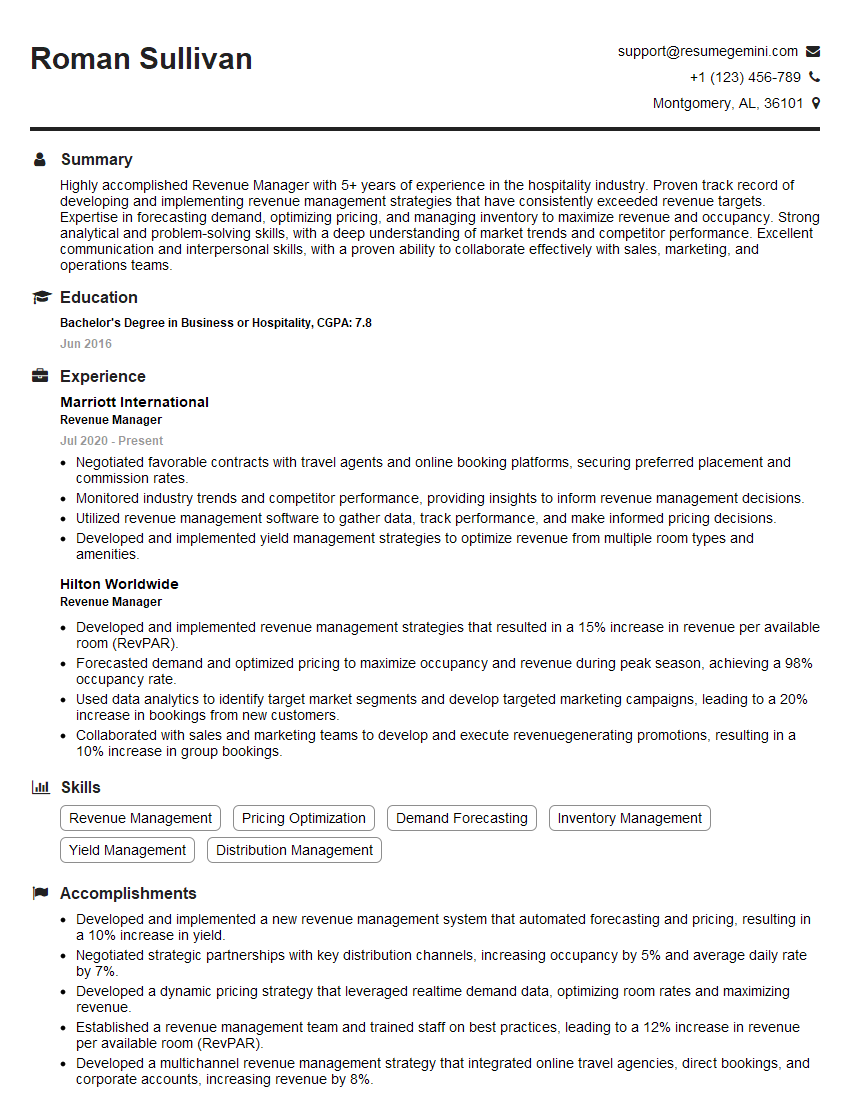
Revenue Manager Resume Sample
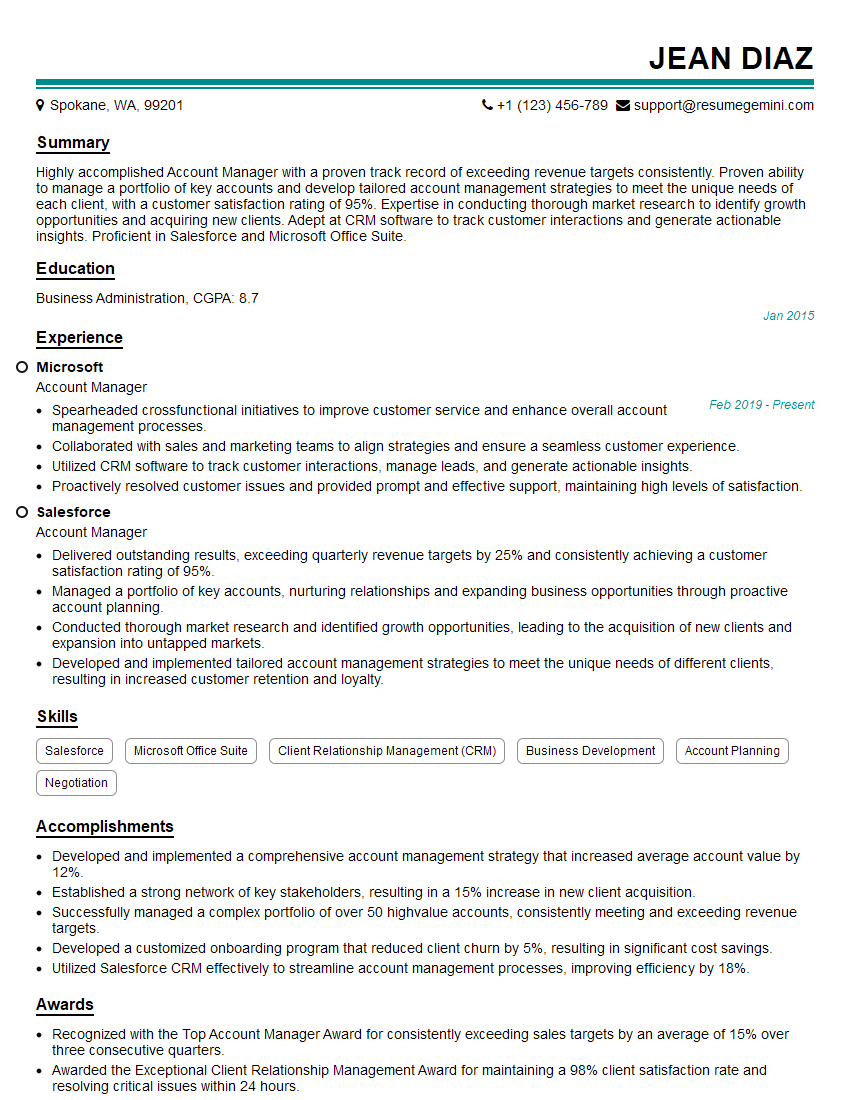
Account Manager Resume Sample
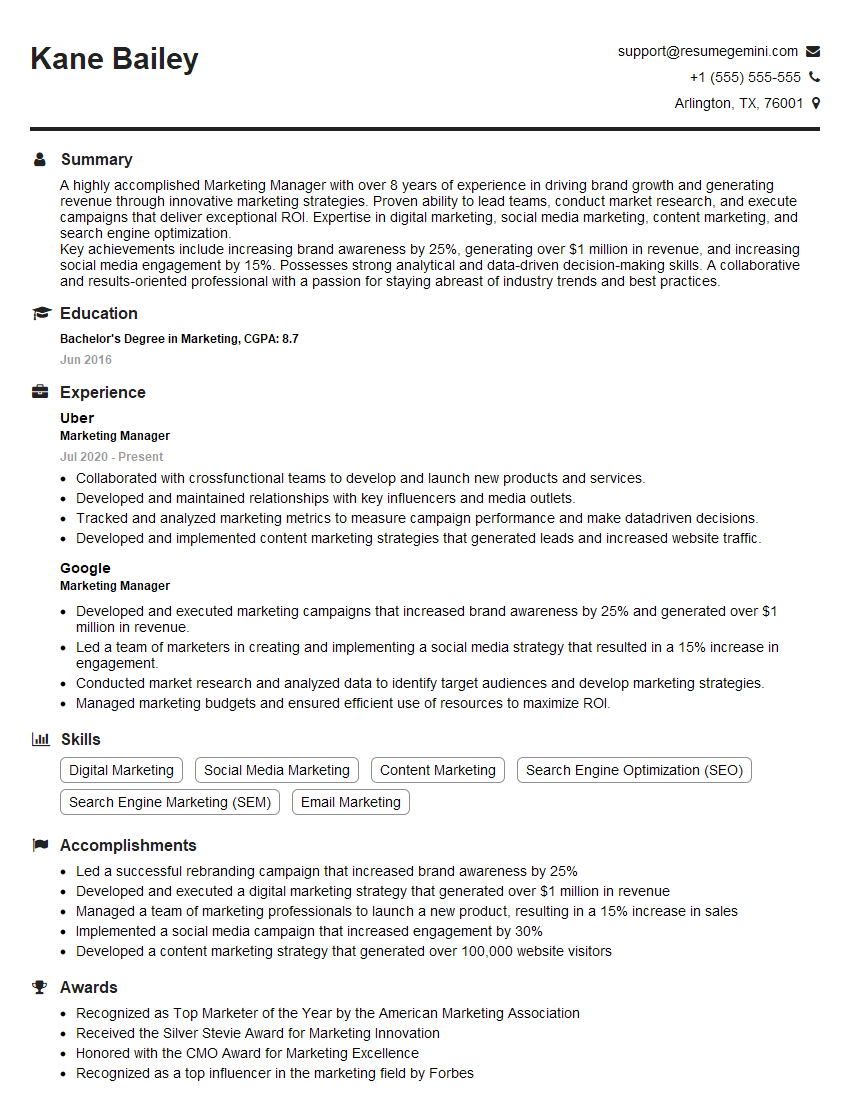
Marketing Manager Resume Sample
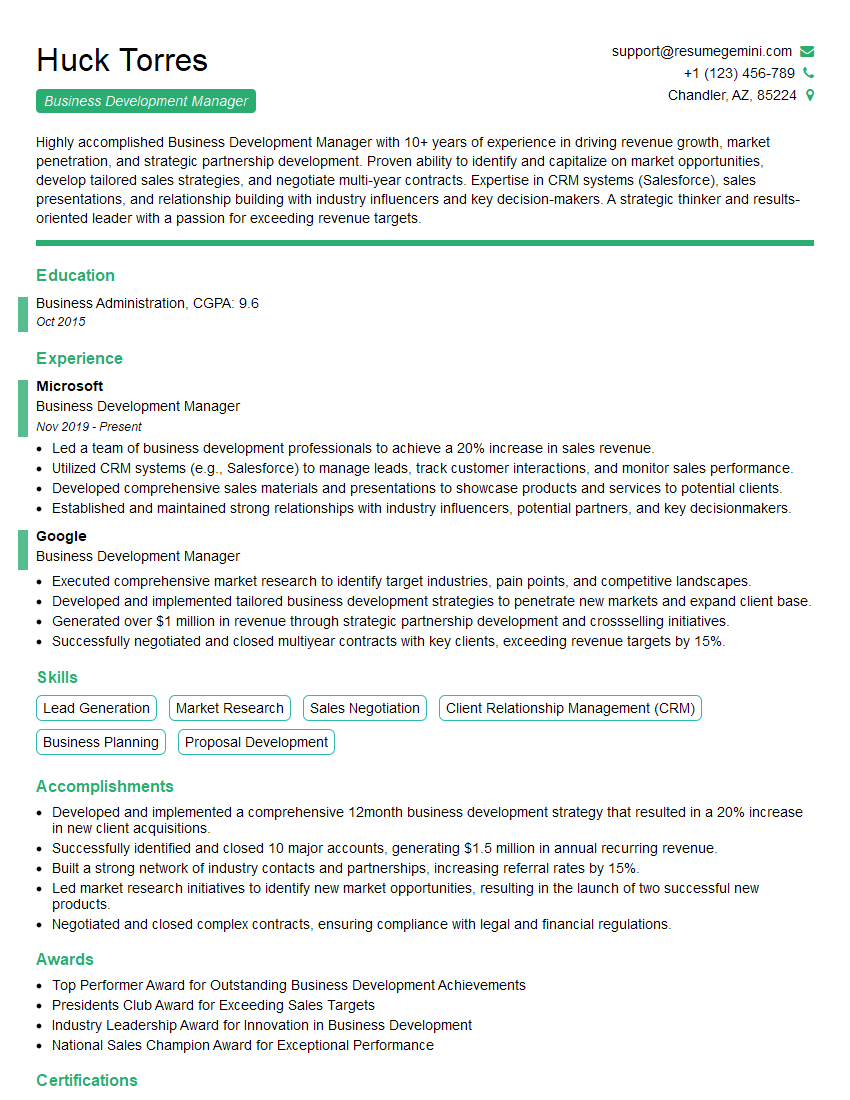
Business Development Manager Resume Sample
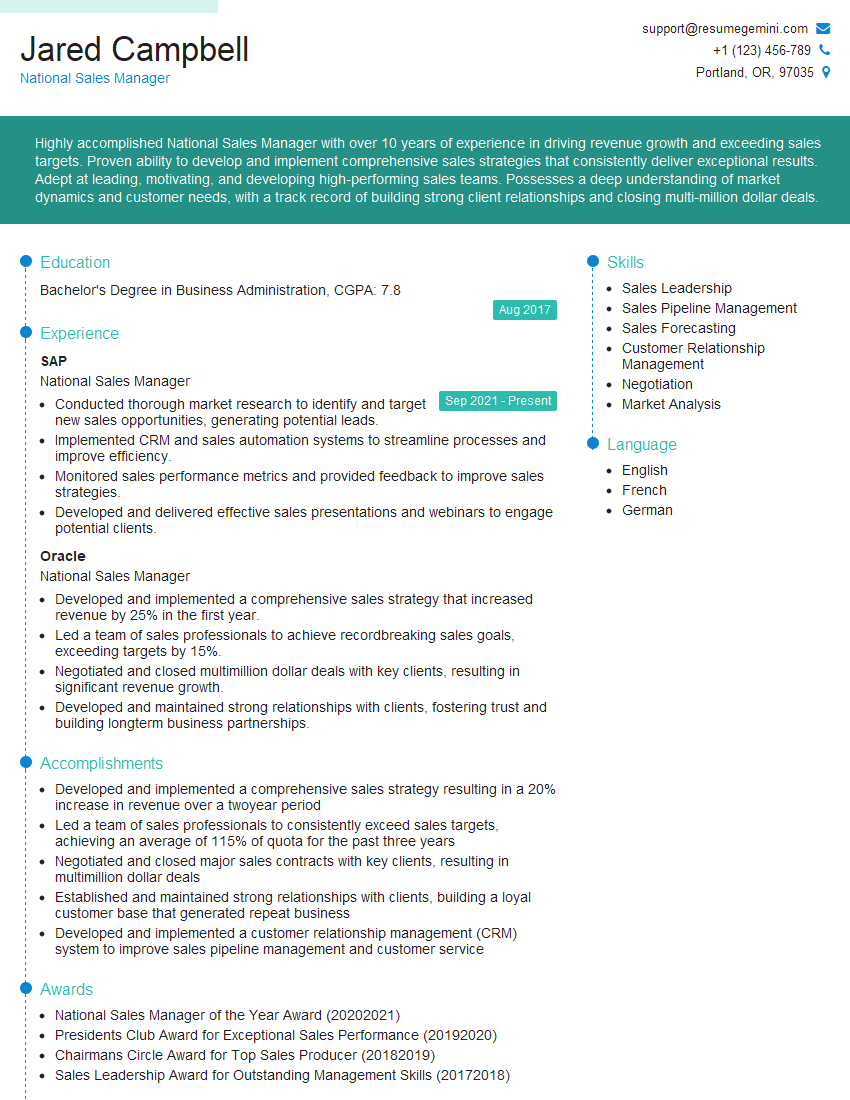
National Sales Manager Resume Sample
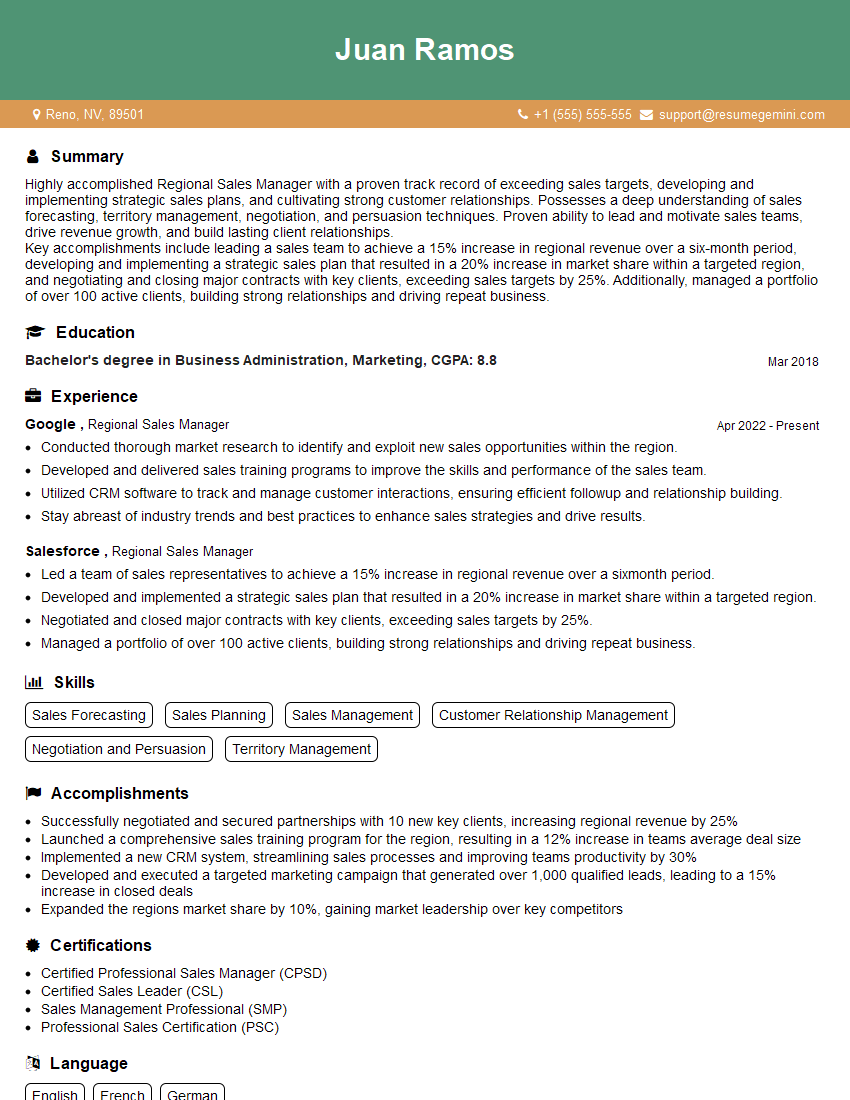
Regional Sales Manager Resume Sample
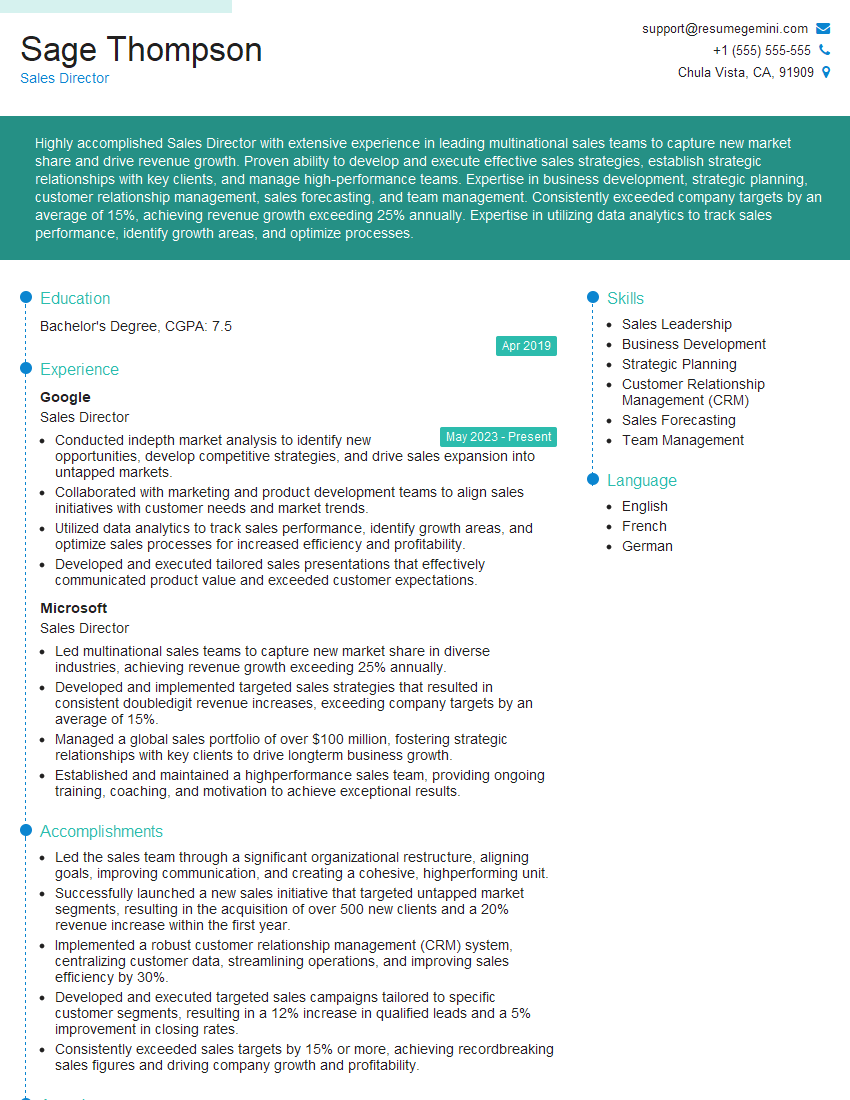
Sales Director Resume Sample
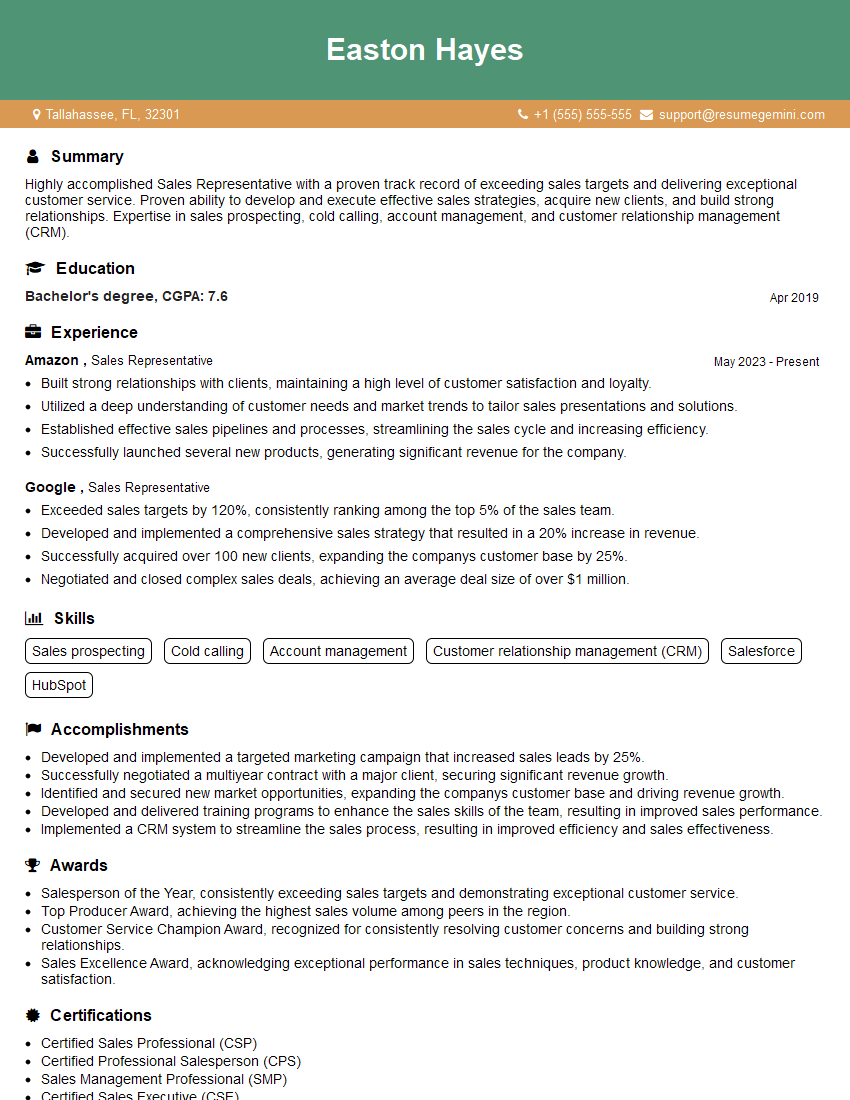
Sales Representative Resume Sample
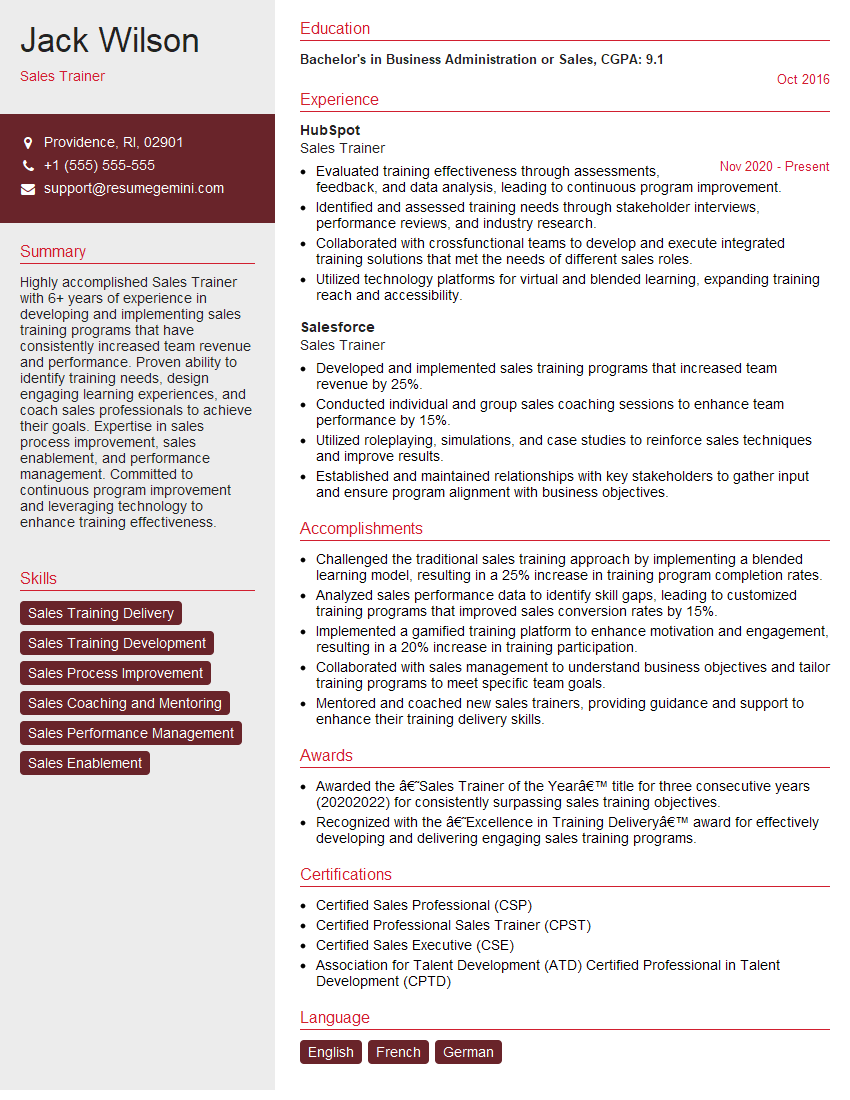
Sales Trainer Resume Sample
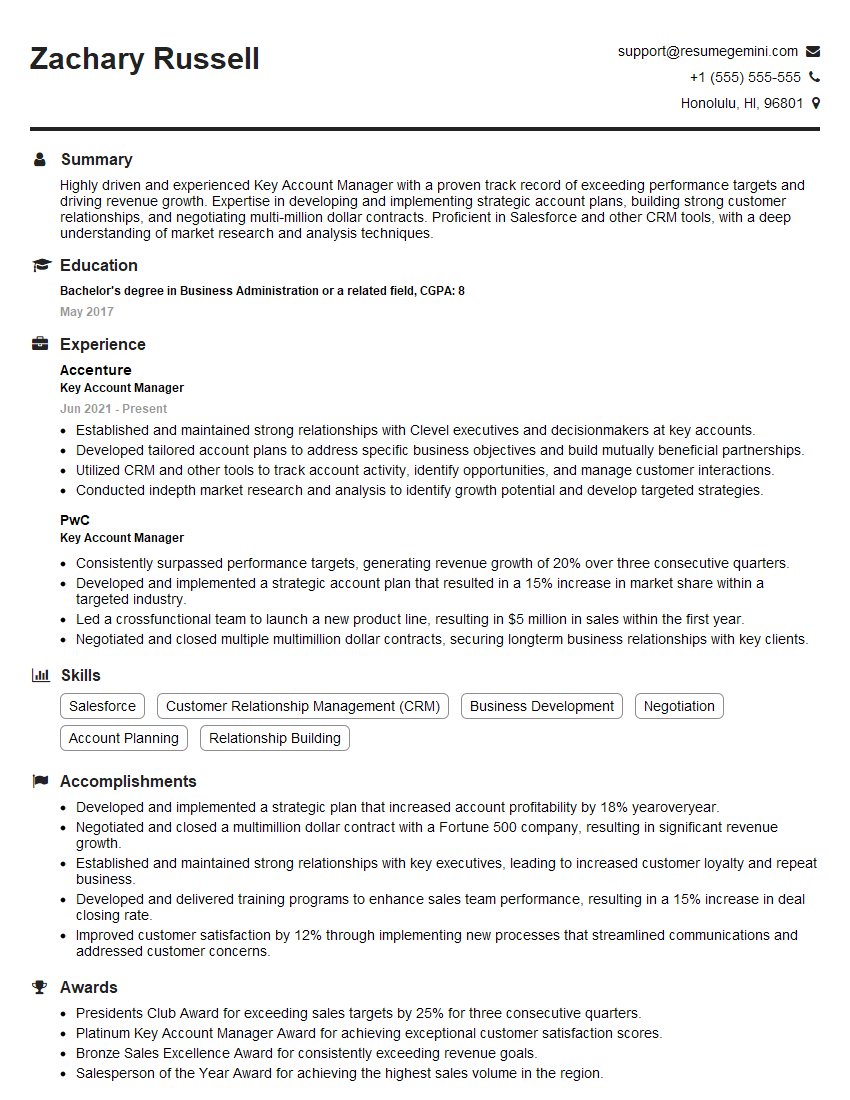
Key Account Manager Resume Sample
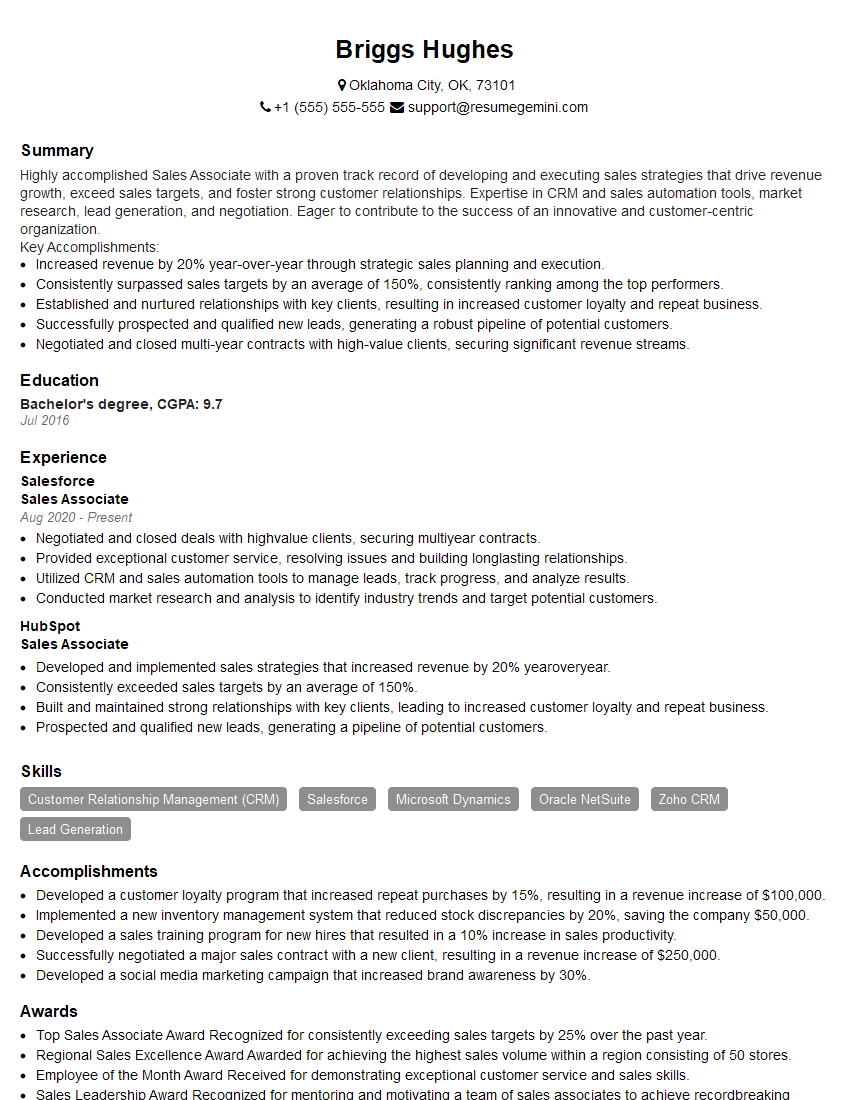
Sales Associate Resume Sample
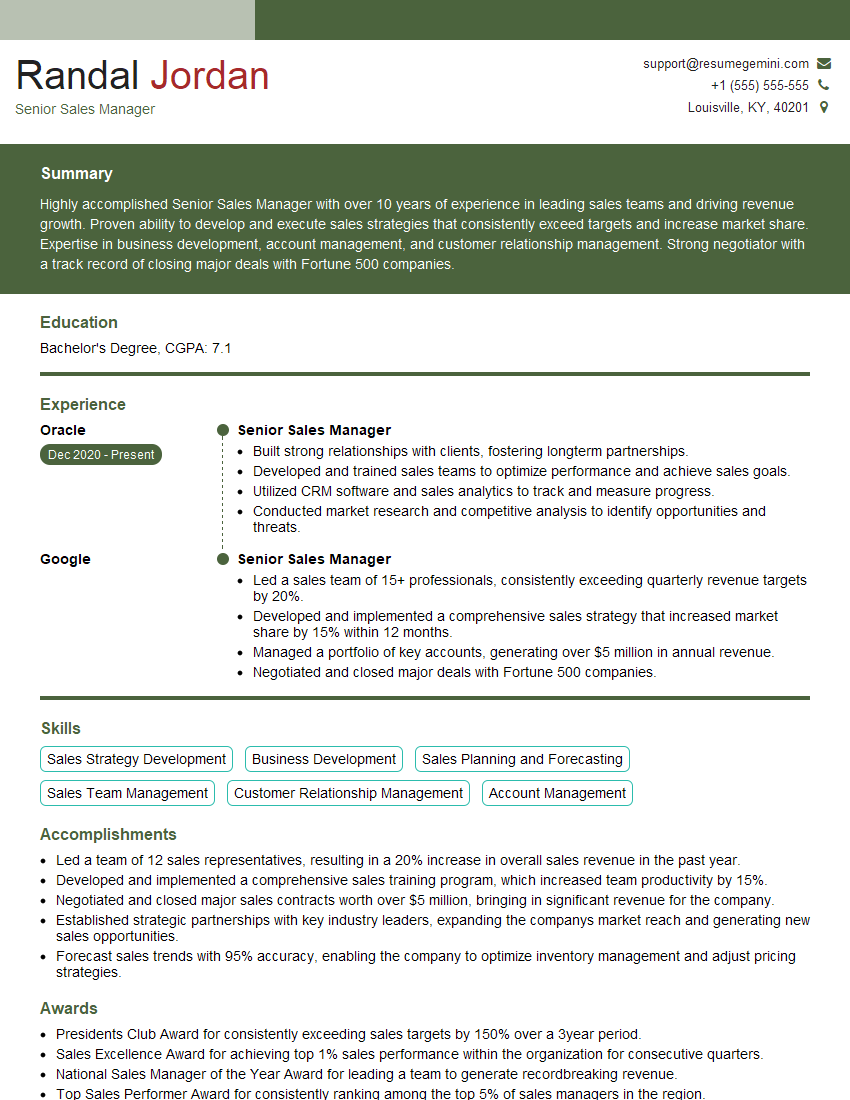
Senior Sales Manager Resume Sample
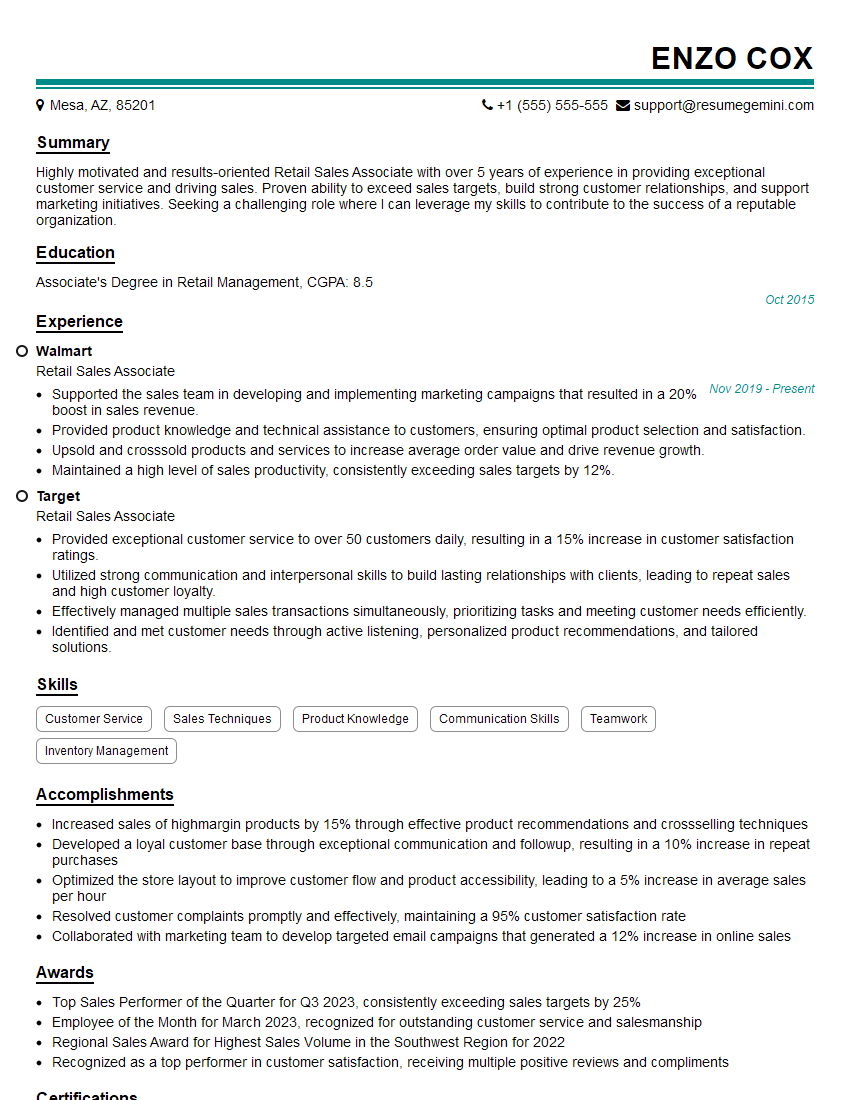
Retail Sales Associate Resume Sample
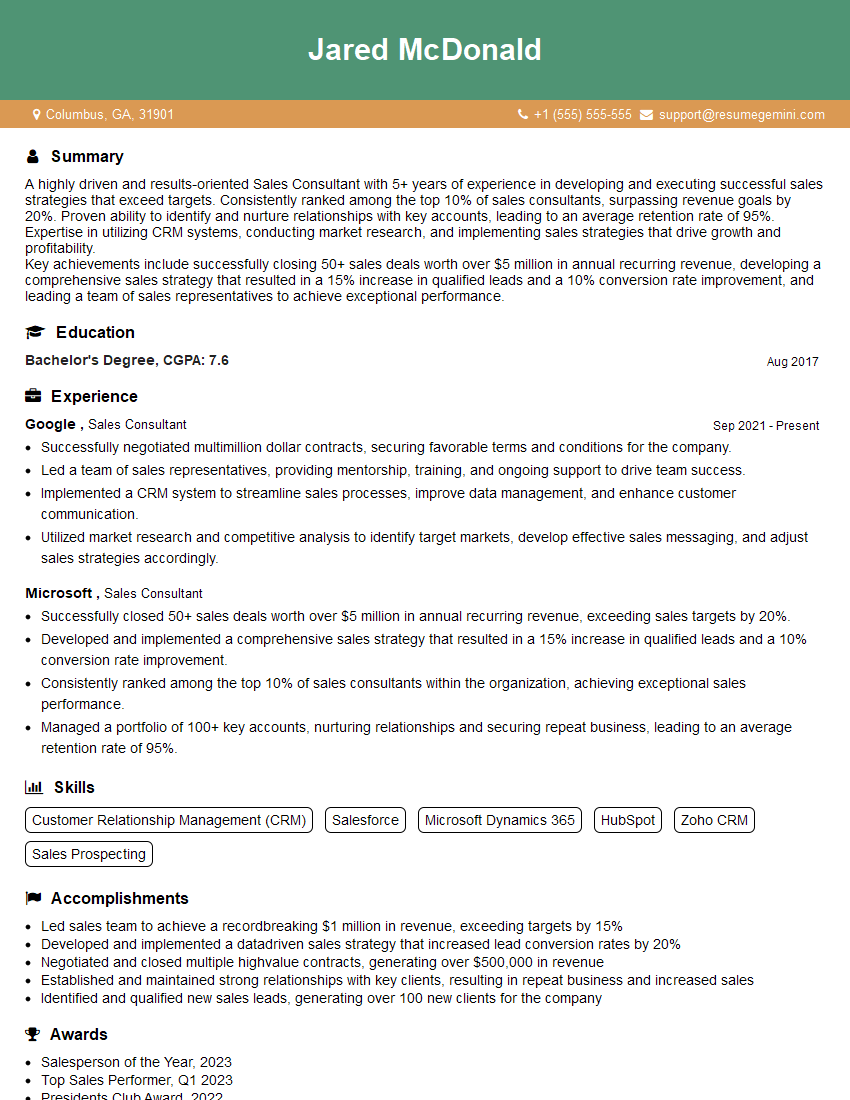
Sales Consultant Resume Sample
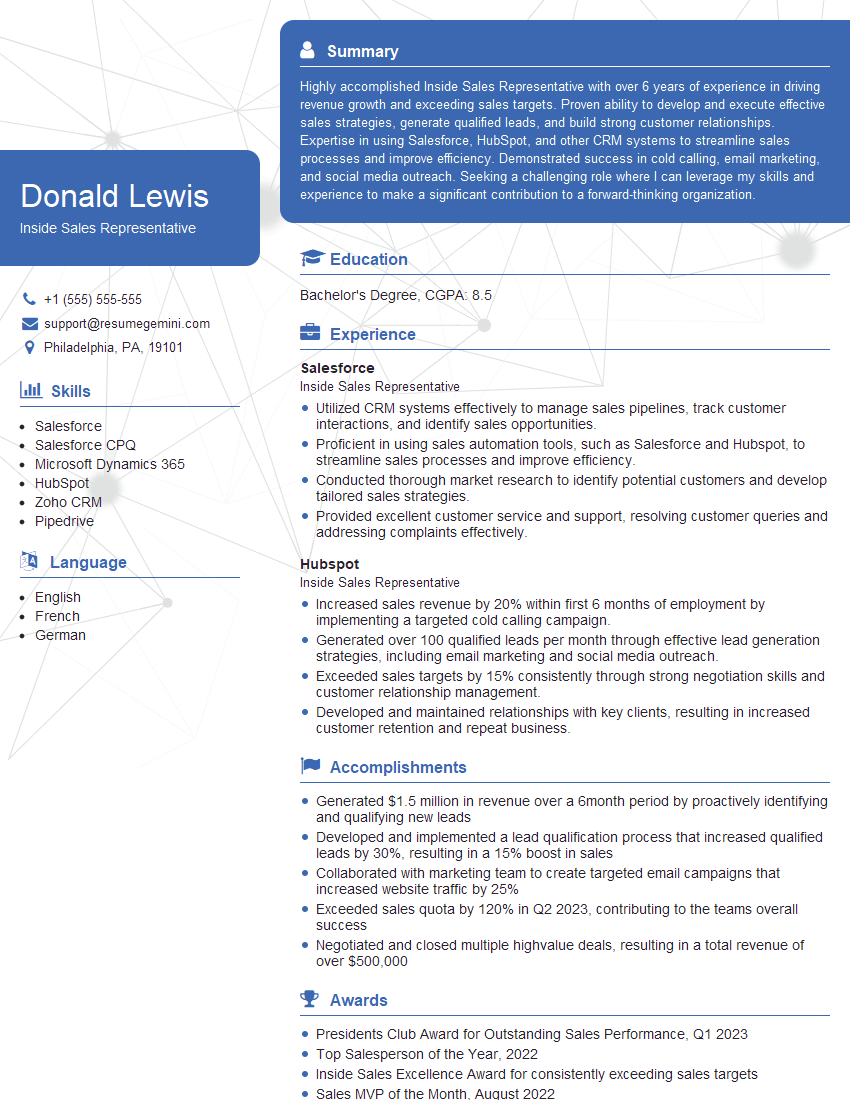
Inside Sales Representative Resume Sample
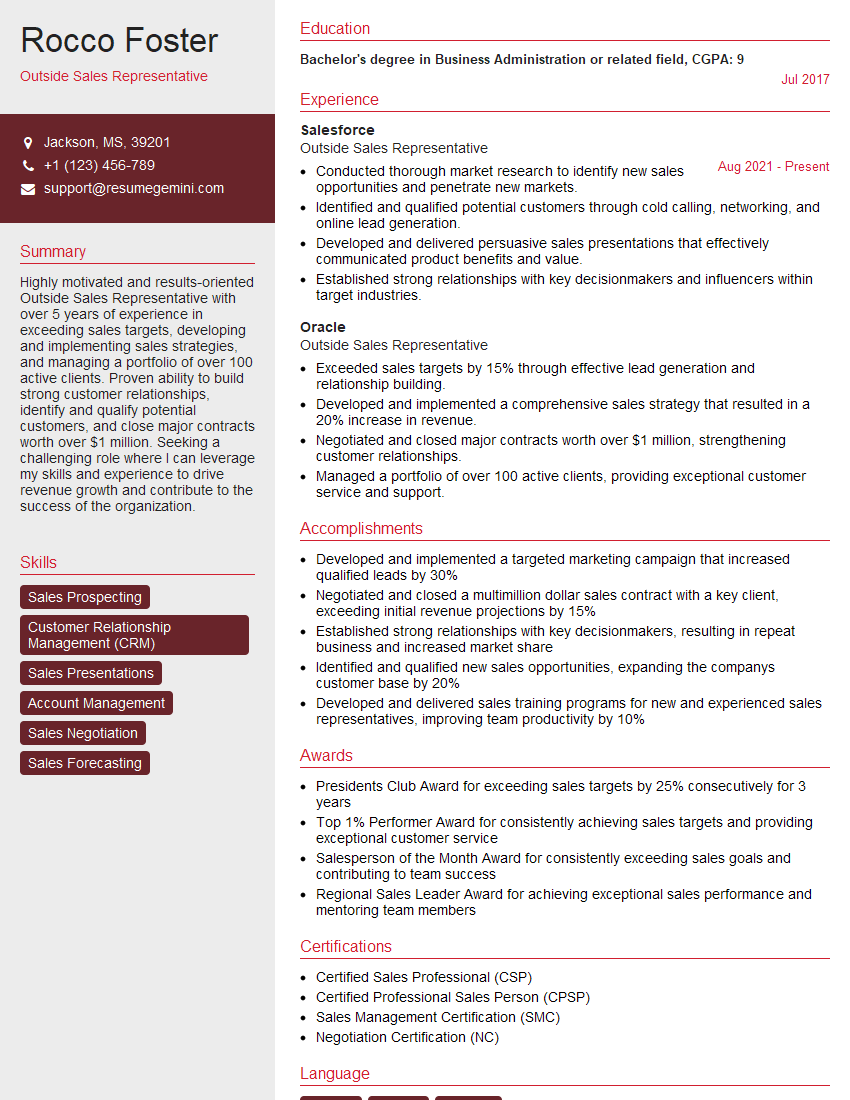
Outside Sales Representative Resume Sample
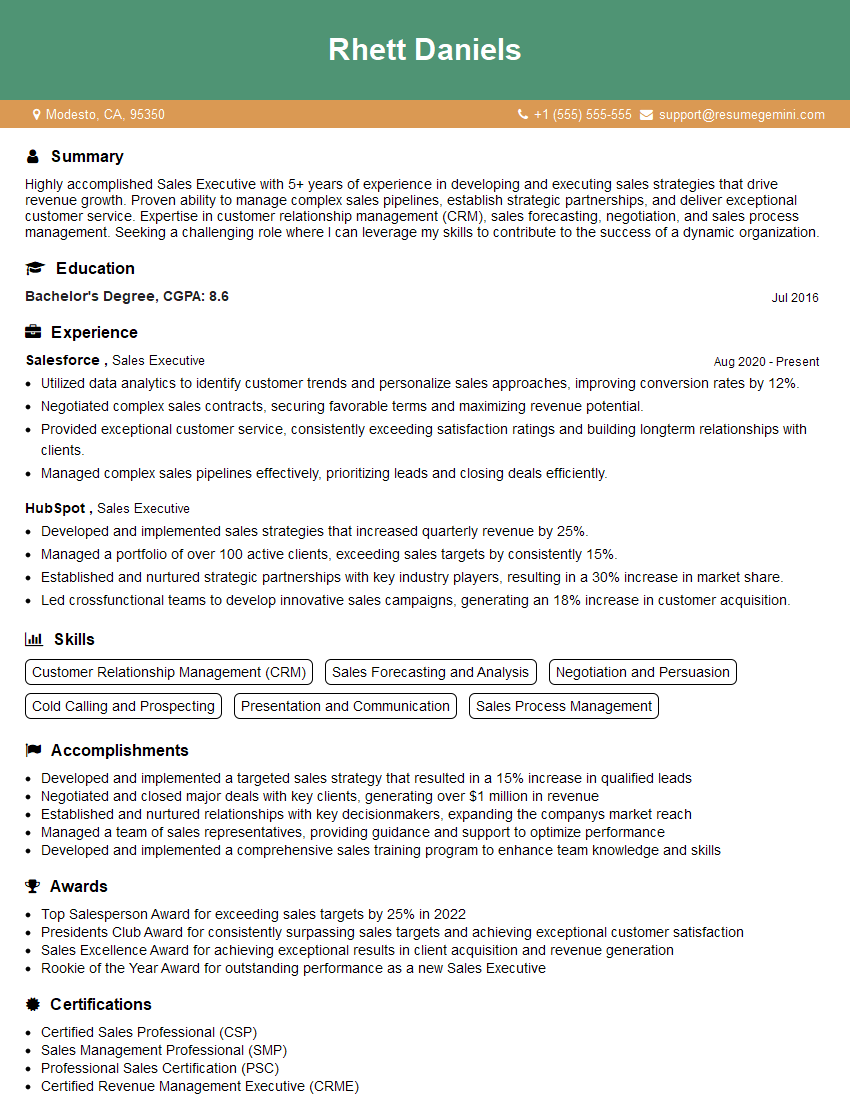
Sales Executive Resume Sample
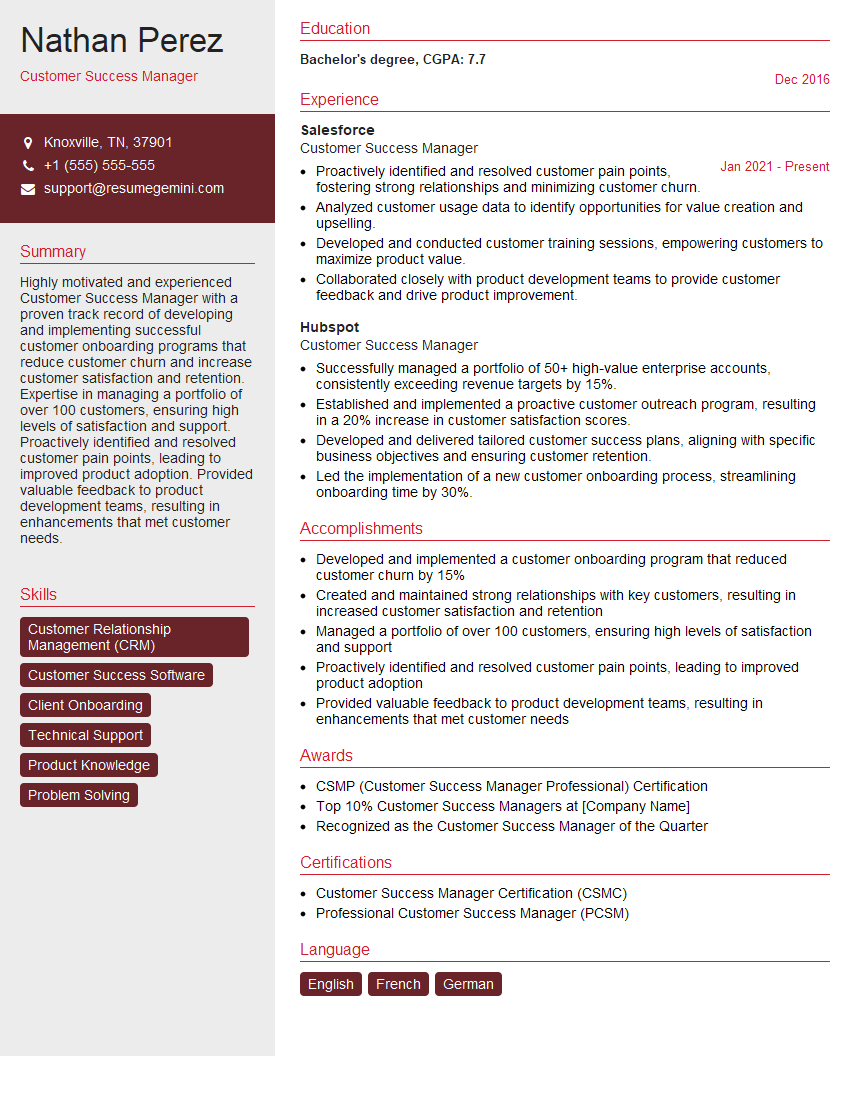
Customer Success Manager Resume Sample
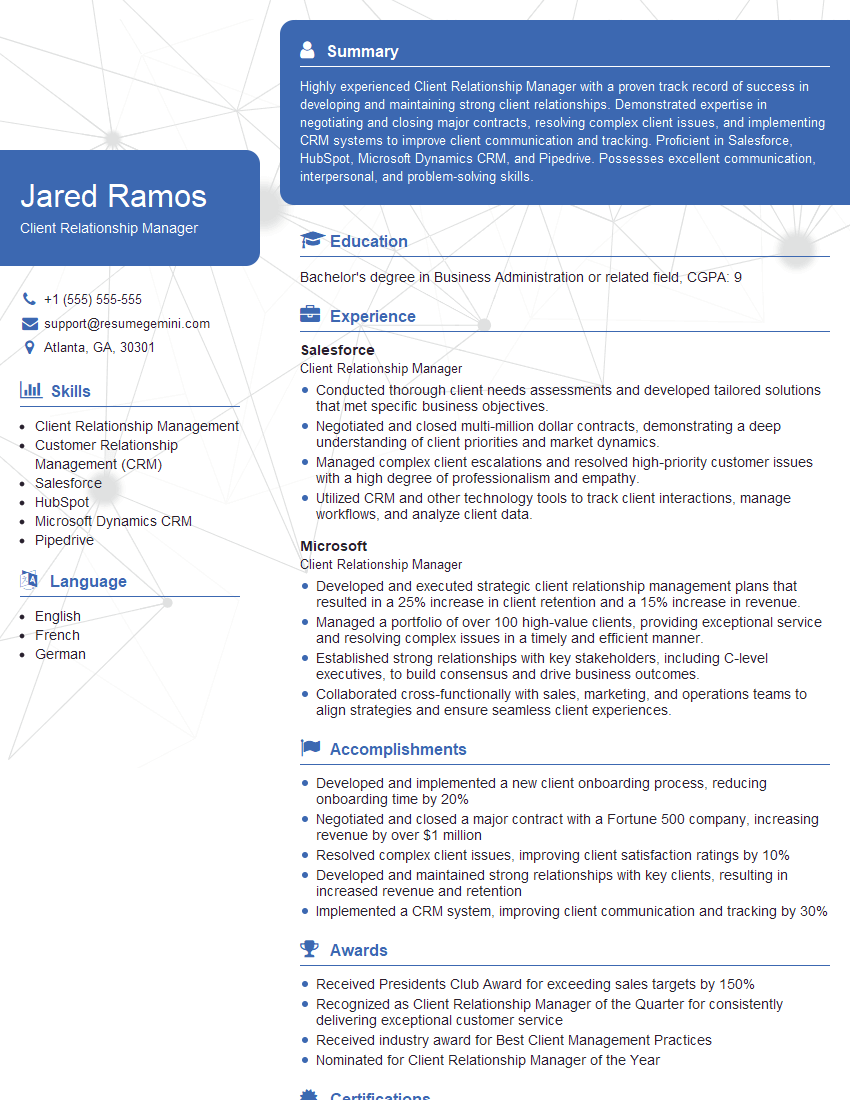
Client Relationship Manager Resume Sample
- Revenue Manager
- Account Manager
- Marketing Manager
- Business Development Manager
- National Sales Manager
- Regional Sales Manager
- Sales Director
- Sales Representative
- Sales Trainer
- Key Account Manager
- Sales Associate
- Senior Sales Manager
- Retail Sales Associate
- Sales Consultant
- Inside Sales Representative
- Outside Sales Representative
- Sales Executive
- Customer Success Manager
- Client Relationship Manager
Explore more articles
Users Rating of Our Blogs
Share Your Experience
We value your feedback! Please rate our content and share your thoughts (optional).
What Readers Say About Our Blog
I Redesigned Spongebob Squarepants and his main characters of my artwork.
https://www.deviantart.com/reimaginesponge/art/Redesigned-Spongebob-characters-1223583608
IT gave me an insight and words to use and be able to think of examples
Hi, I’m Jay, we have a few potential clients that are interested in your services, thought you might be a good fit. I’d love to talk about the details, when do you have time to talk?
Best,
Jay
Founder | CEO