Unlock your full potential by mastering the most common Urban Design and Form-Based Codes interview questions. This blog offers a deep dive into the critical topics, ensuring you’re not only prepared to answer but to excel. With these insights, you’ll approach your interview with clarity and confidence.
Questions Asked in Urban Design and Form-Based Codes Interview
Q 1. Define Form-Based Codes (FBCs) and explain their key differences from traditional zoning.
Form-Based Codes (FBCs) regulate development by focusing on the physical form of buildings and public spaces, rather than solely on land use as traditional zoning does. Think of it this way: traditional zoning dictates what you can build (residential, commercial, industrial), while FBCs dictate how you build it (building height, setbacks, lot coverage, architectural styles). This shift in focus leads to a more predictable and visually cohesive built environment.
- Traditional Zoning: Primarily regulates land use (residential, commercial, industrial), often resulting in monotonous and predictable streetscapes due to its focus on use rather than form. It uses abstract rules with less emphasis on the physical design.
- Form-Based Codes: Regulates the physical form of buildings and spaces through detailed design standards. It creates a more visually appealing environment, emphasizing street design, building heights, and relationships between buildings. This leads to a more predictable and visually cohesive outcome.
For example, a traditional zoning code might simply state that a lot can be used for residential purposes. An FBC, however, would specify building height, setbacks from the street and property lines, architectural features, and even material choices, ensuring a consistent streetscape along a particular street.
Q 2. Describe the benefits and limitations of implementing Form-Based Codes.
FBCs offer numerous benefits, but also present limitations.
- Benefits:
- Predictable and cohesive built environment: FBCs lead to more visually appealing and walkable neighborhoods by regulating building form and design.
- Increased property values: A well-designed FBC can increase property values by creating a more attractive and desirable environment.
- Improved walkability and bikeability: FBCs often prioritize pedestrian and bicycle infrastructure, creating more vibrant and lively streets.
- Reduced development uncertainty: Clear design standards reduce ambiguity and streamline the development review process.
- Limitations:
- Complexity: FBCs can be more complex and require more specialized expertise than traditional zoning codes, thus increasing initial implementation costs.
- Potential for inflexibility: Overly restrictive FBCs can stifle creativity and innovation in design.
- Enforcement challenges: Effective enforcement requires careful monitoring and potentially more staff resources.
- Community buy-in: Successful implementation relies heavily on strong community engagement and support.
For instance, while a well-crafted FBC in a historic district can preserve its character, an overly rigid FBC could hinder modern architectural innovation, thereby hindering development and creating a stagnant environment.
Q 3. Explain the role of public participation in the development and implementation of FBCs.
Public participation is crucial for successful FBC development and implementation. It ensures the code reflects the community’s vision and values, fostering ownership and support. This is achieved through various avenues:
- Charrettes: Intensive, collaborative design workshops involving residents, developers, architects, and planners to brainstorm design solutions and shape the code’s key elements.
- Public hearings: Formal meetings where community members can provide feedback on draft code provisions and express their concerns.
- Surveys and online engagement: Utilizing online platforms and questionnaires to collect feedback from a broader range of stakeholders.
- Community advisory committees: Establishing groups of community members to provide ongoing input and guidance throughout the development process.
Ignoring public input can lead to a code that doesn’t resonate with the community, resulting in resistance to its adoption and ultimately, failure. For example, a community deeply attached to its historic architecture might resist an FBC that permits overly modern designs.
Q 4. How do FBCs address issues of urban sprawl and promote walkability?
FBCs combat urban sprawl and promote walkability by emphasizing mixed-use development, compact building designs, and pedestrian-friendly streetscapes.
- Mixed-use development: FBCs encourage the integration of residential, commercial, and recreational uses within a single area, reducing the need for long commutes and promoting walkability.
- Compact building design: They prioritize smaller lot sizes, higher building densities, and building forms that maximize interaction with the street, creating a more vibrant and pedestrian-oriented environment.
- Pedestrian-friendly streets: FBCs often include design standards for sidewalks, street trees, crosswalks, and other pedestrian amenities, making walking and biking safer and more appealing.
For example, an FBC might require buildings to have ground-floor retail spaces, thus activating street life and encouraging people to walk rather than drive. By minimizing reliance on cars, sprawl is lessened and the community becomes more environmentally friendly.
Q 5. Discuss the relationship between Form-Based Codes and Transit-Oriented Development (TOD).
FBCs and Transit-Oriented Development (TOD) are highly compatible. TOD focuses on creating vibrant, mixed-use communities centered around public transit, while FBCs provide the design framework for achieving that vision.
- Density and mixed-use: FBCs support TOD by allowing for higher densities and mixed-use development near transit stations, maximizing access to transit and minimizing the need for car travel.
- Pedestrian and bicycle infrastructure: FBCs promote pedestrian and bicycle-friendly environments, making it easier and safer for residents to walk or bike to transit stations.
- Building design: FBCs can be tailored to ensure buildings near transit are appropriately scaled and oriented to maximize accessibility and visual appeal.
An FBC in a TOD area might encourage taller buildings near transit stations while gradually reducing building height as distance from the station increases, creating a natural transition between higher density and lower density areas. This thoughtful approach creates efficient and attractive neighborhoods.
Q 6. How do you incorporate sustainability principles into Form-Based Code design?
Incorporating sustainability into FBCs requires a holistic approach that considers various environmental factors.
- Building orientation and design: FBCs can optimize building orientation to maximize solar gain in winter and minimize it in summer. They can also promote energy-efficient building materials and designs.
- Green spaces and landscaping: Integrating green spaces, trees, and permeable pavements can help reduce the urban heat island effect, improve air quality, and manage stormwater runoff.
- Walkability and bikeability: Promoting alternative modes of transportation reduces reliance on cars and decreases greenhouse gas emissions.
- Water conservation: FBCs can encourage the use of water-efficient landscaping and building systems.
- Material selection: Promoting the use of locally-sourced and recycled materials can reduce the carbon footprint of construction.
For example, an FBC might require green roofs on all buildings above a certain height, reducing stormwater runoff and the urban heat island effect. Incentivizing the use of sustainable building materials through density bonuses or other mechanisms can also be beneficial.
Q 7. What are the key design elements considered in creating a successful Form-Based Code?
Creating a successful FBC involves careful consideration of several key design elements:
- Street network design: The layout of streets significantly impacts the character and functionality of a neighborhood. Considerations include street hierarchy, pedestrian connectivity, and provision of green spaces.
- Building form and scale: Regulating building height, setbacks, lot coverage, and architectural styles creates a cohesive and visually appealing streetscape.
- Public space design: Adequate provision of parks, plazas, and other public spaces enhances the quality of life and promotes social interaction.
- Parking requirements: Parking requirements should be carefully balanced to ensure adequate parking without encouraging excessive car dependency.
- Mixed-use zoning: Integrating residential, commercial, and other uses encourages activity throughout the day and reduces reliance on cars.
- Transparency and clarity: A well-written FBC is clear, concise, and easy to understand, minimizing ambiguity and facilitating efficient review processes.
A successful FBC uses these elements to create a strong visual identity for a given area, while allowing flexibility within a clear regulatory framework. It’s a balance between providing a framework for development and allowing for creative expression.
Q 8. Describe the process of translating Form-Based Code regulations into practical design guidelines.
Translating Form-Based Code (FBC) regulations into practical design guidelines requires a multi-step process that bridges the gap between legal language and actionable design principles. It’s like translating a complex legal document into a user-friendly instruction manual for builders and designers.
Step 1: Interpreting the Code: We begin by thoroughly reviewing the FBC, identifying key regulations regarding building height, setbacks, lot coverage, architectural styles, and permitted uses. This involves a detailed analysis of each section, understanding the intent behind each provision. For example, a regulation limiting building height might be aimed at preserving views or sunlight access.
Step 2: Developing Design Standards: We then translate these regulations into visual and textual design standards. This involves creating diagrams, charts, and detailed descriptions that illustrate acceptable building forms and design elements. We might use sample building elevations, floor plans, and cross-sections to illustrate what conforms to the code.
Step 3: Creating a Design Manual: These standards are compiled into a comprehensive design manual that serves as a guide for developers and architects. This manual should include clear illustrations, examples of permitted and prohibited designs, and a glossary of terms. It’s important the manual is easily navigable and understandable, even for those without extensive urban planning background.
Step 4: Public Review and Feedback: The draft design guidelines should be presented to the community for feedback to ensure the guidelines are both realistic and meet community aspirations. This feedback loop is crucial for refining and improving the clarity and effectiveness of the manual.
Step 5: Implementation and Refinement: After finalizing the design guidelines, we monitor their implementation and make necessary adjustments based on real-world application. This might involve revising or clarifying sections of the manual to address ambiguities or unexpected challenges.
Q 9. Explain how you would address potential conflicts between Form-Based Codes and existing zoning regulations.
Addressing conflicts between Form-Based Codes and existing zoning regulations requires a strategic approach that prioritizes clarity and consistency. It’s like resolving a legal dispute between two different sets of rules.
Amendment or Overlay: Often, the most effective solution is to formally amend the existing zoning regulations to align with the FBC. This involves a comprehensive review of both sets of regulations to identify areas of conflict and then proposing amendments to either the zoning code or the FBC to ensure a cohesive regulatory framework. An overlay zoning district can also be used to apply the FBC on top of existing zoning without formally amending the base code.
Conformance Determination: In cases where complete harmonization isn’t immediately feasible, a clear process for determining conformance with both codes should be established. This might involve a tiered review process that considers the relative importance of different regulations and allows for variances in limited situations.
Phased Implementation: For large-scale implementations, a phased approach can be effective. This involves gradually introducing the FBC to different areas of the community, allowing for iterative adjustments based on experience and feedback. A pilot program in a smaller area can be a good starting point to test the effectiveness of the code before wider implementation.
Communication and Training: Clear communication and training for all stakeholders – city staff, developers, architects, and the public – are essential to ensure everyone understands the updated regulatory framework and how to navigate potential conflicts. This includes creating clear documentation and offering workshops or training sessions.
Q 10. How do you evaluate the effectiveness of a Form-Based Code after implementation?
Evaluating the effectiveness of a Form-Based Code after implementation involves a comprehensive assessment using a mix of quantitative and qualitative methods. Think of it as a post-project evaluation to see if the intended goals were met.
Data Analysis: We analyze building permit data to see if the code is resulting in the desired building forms, densities, and land uses. This includes tracking building heights, setbacks, lot coverage, and the mix of uses.
Field Observation: On-site observation allows for a qualitative assessment of the built environment, ensuring that the built form aligns with the code’s intent and that the design standards are producing a positive impact on the community’s visual character.
Community Surveys and Interviews: We gather feedback from residents, businesses, and developers to understand their perception of the code’s impact on the neighborhood. This includes assessing their satisfaction with the built environment and the code’s overall effectiveness.
Economic Impact Assessment: Evaluating the economic impact of the FBC assesses its effects on property values, development activity, and job creation. This requires analyzing property tax revenue, construction activity, and employment data.
Comparative Analysis: Comparison with areas that haven’t adopted FBC helps in isolating the effects of the code, highlighting both positive and negative aspects of its impact on the community.
Q 11. How do you engage stakeholders in the development of Form-Based Codes?
Engaging stakeholders is paramount to the success of Form-Based Codes. It’s crucial to ensure the code reflects the community’s vision and addresses their concerns. Think of it as building a consensus around a shared vision for the future of a neighborhood.
Public Forums and Workshops: Holding public forums and workshops provides opportunities for stakeholders to voice their opinions, share concerns, and participate in shaping the code.
Charrettes: Design charrettes—intensive, collaborative design sessions—involve stakeholders in hands-on design exercises, fostering a sense of ownership and collaboration.
Online Surveys and Feedback Mechanisms: Using online tools enables wider participation and provides a convenient way for stakeholders to offer feedback.
Targeted Outreach: We conduct targeted outreach to specific stakeholder groups such as residents, business owners, developers, and community organizations to ensure their voices are heard.
Transparency and Communication: Consistent and transparent communication regarding the code’s development and implementation is crucial to maintaining trust and fostering collaboration.
Q 12. What software or tools are you proficient in using for Form-Based Code analysis and design?
Proficiency in various software and tools is essential for effective Form-Based Code analysis and design. My expertise includes:
GIS Software (ArcGIS, QGIS): For analyzing land use patterns, visualizing proposed developments, and assessing the impact of design decisions on the built environment.
CAD Software (AutoCAD, Revit): For creating and manipulating drawings, generating building models, and visualizing proposed development scenarios.
Data Analysis Software (R, Python): For analyzing large datasets related to zoning, development trends, and the effectiveness of design regulations.
Design Visualization Software (SketchUp, Lumion): For creating high-quality visualizations that assist in communicating design proposals and engaging stakeholders.
Q 13. Describe your experience with community engagement in urban planning projects.
I have extensive experience engaging communities in urban planning projects. One notable project involved developing a Form-Based Code for a historic downtown area. We faced initial skepticism from some residents hesitant about change. To overcome this, we:
Established a Community Advisory Committee: This involved selecting diverse stakeholders—residents, business owners, architects, and preservationists—to actively participate in the FBC development process.
Hosted multiple public workshops and charrettes: These sessions facilitated open dialogues, addressing concerns, and generating consensus around key design elements.
Used visual aids and interactive tools: Demonstrating the code’s implications using 3D models and interactive maps helped to facilitate understanding.
Maintained transparent communication: Regularly updated websites and newsletters kept the community informed about progress and changes.
The result was a Form-Based Code that was widely supported and has helped revitalize the downtown area while preserving its historic character. This project highlights the importance of active listening, inclusive participation, and clear communication in fostering positive community engagement.
Q 14. Explain your understanding of urban design principles and their application to Form-Based Codes.
My understanding of urban design principles is deeply intertwined with my work on Form-Based Codes. FBCs, at their core, are a tool to implement urban design principles through regulatory means. Think of it as translating design aspirations into actionable rules.
Mixed-Use Development: FBCs often promote mixed-use development by regulating building form to encourage a blend of residential, commercial, and public uses, increasing vibrancy and pedestrian activity.
Pedestrian-Oriented Design: Through regulations on building setbacks, street widths, and placement of entrances, FBCs can support pedestrian-friendly streets and enhance walkability.
Building Height and Massing: FBCs often incorporate regulations on building height and massing to ensure compatibility with the surrounding context and prevent the creation of monotonous streetscapes.
Architectural Character and Style: FBCs can be used to promote a specific architectural character or style to create a cohesive and distinctive neighborhood identity. This might involve prescribing specific materials, design elements, or building profiles.
Green Infrastructure and Sustainability: An increasingly common focus of FBCs is to encourage the incorporation of green infrastructure and sustainable design elements, contributing to environmental sustainability.
By translating these urban design principles into clear and concise regulations, FBCs provide a robust framework for shaping the built environment and creating vibrant, livable communities.
Q 15. How do you balance the needs of different stakeholders when developing a Form-Based Code?
Developing a Form-Based Code (FBC) requires a delicate balancing act. It’s not simply about satisfying one group; it’s about finding common ground among diverse stakeholders with often conflicting priorities. Think of it like orchestrating a symphony – each instrument (stakeholder) has its own unique voice, and the conductor (the urban designer) needs to harmonize them to create a beautiful and functional whole.
My approach involves a multi-faceted strategy: Firstly, extensive community engagement is crucial. This includes public forums, workshops, and surveys to understand the needs and aspirations of residents, business owners, developers, and other stakeholders. Secondly, data-driven analysis plays a vital role. We use demographic data, traffic studies, and economic analyses to inform decisions and justify choices. Thirdly, transparent communication ensures everyone understands the process and the rationale behind decisions. Finally, iterative design allows for adjustments based on feedback received throughout the process. The goal is to achieve a consensus, not necessarily complete agreement, resulting in a code that is both effective and widely accepted.
Career Expert Tips:
- Ace those interviews! Prepare effectively by reviewing the Top 50 Most Common Interview Questions on ResumeGemini.
- Navigate your job search with confidence! Explore a wide range of Career Tips on ResumeGemini. Learn about common challenges and recommendations to overcome them.
- Craft the perfect resume! Master the Art of Resume Writing with ResumeGemini’s guide. Showcase your unique qualifications and achievements effectively.
- Don’t miss out on holiday savings! Build your dream resume with ResumeGemini’s ATS optimized templates.
Q 16. Describe a project where you successfully used Form-Based Codes to achieve a specific urban design goal.
In a recent project revitalizing a historic downtown area, we used an FBC to achieve a specific urban design goal: increasing pedestrian activity and promoting a vibrant streetscape. The area was characterized by surface parking lots and underutilized buildings, hindering walkability. Our FBC focused on:
- Regulating building setbacks to create continuous sidewalks and enhance pedestrian-level interaction.
- Establishing height limits that respected the scale of existing historic structures while permitting appropriate density.
- Incentivizing ground-floor commercial uses through reduced parking requirements.
- Defining architectural styles and materials to ensure a cohesive streetscape.
The results were remarkable. The FBC facilitated the development of mixed-use buildings with active ground floors, attracting new businesses and residents. Pedestrian traffic increased significantly, and the area transformed into a lively and attractive destination. We used performance-based standards in certain areas to allow flexibility while ensuring the overall goals of the code were met.
Q 17. How do you ensure that a Form-Based Code is both flexible and predictable?
The key to a successful FBC is finding the balance between flexibility and predictability. Think of it as a well-tailored suit – it’s structured enough to provide a desirable shape and form, yet flexible enough to allow for individual expression. We achieve this by:
- Employing form-based regulations which guide the physical form and arrangement of buildings and spaces rather than focusing solely on detailed prescriptive regulations.
- Using adjustable parameters, like building envelopes, which allow for flexibility in design within established guidelines.
- Establishing clear and concise language in the code to minimize ambiguity and ensure predictability.
- Developing comprehensive design guidelines that accompany the FBC, providing further clarification and examples of acceptable design approaches.
This blend ensures developers have a clear framework to work within, while still allowing for creative design solutions. The predictability reduces uncertainty and streamlines the review process, while the flexibility fosters innovation and unique architectural expression.
Q 18. What are the common challenges faced during the implementation of Form-Based Codes?
Implementing FBCs presents unique challenges. One common issue is resistance to change from stakeholders accustomed to traditional zoning regulations. Educating the community and developers on the benefits of FBCs is paramount. Another challenge is the complexity of drafting and implementing a comprehensive and effective FBC. This requires expertise in urban design, law, and community engagement. Lack of qualified personnel to administer and enforce the FBC can also hinder successful implementation. Finally, political considerations and community consensus building can be significant obstacles to overcome. Addressing these challenges requires careful planning, strong communication, and the development of a comprehensive implementation strategy.
Q 19. How do you address issues of equity and social justice in the development of FBCs?
Equity and social justice are paramount considerations when developing FBCs. We ensure equitable outcomes by actively considering how the code might affect different socioeconomic groups. This involves:
- Analyzing the impacts of the code on affordability, ensuring it doesn’t inadvertently price out lower-income residents or businesses.
- Promoting inclusivity through design guidelines that encourage diverse housing types and commercial spaces.
- Ensuring access to amenities such as parks, public transit, and community facilities for all residents.
- Consulting with community groups and advocates to understand and address potential equity concerns.
It’s not simply about creating a visually appealing environment; it’s about creating a truly equitable and just one for all members of the community.
Q 20. Describe your experience working with different building types and their regulations within a Form-Based Code.
My experience working with different building types within an FBC framework is extensive. I have handled regulations for everything from residential apartments and townhouses to commercial storefronts, mixed-use buildings, and even public spaces. The key is to understand how different building types contribute to the overall urban fabric and how regulations can shape their form and function. For instance, we might have different parking requirements for residential vs. commercial buildings, or different height and setback restrictions depending on the context and proximity to significant landmarks. We also utilize bonus and incentive provisions to encourage desirable building types and features, such as green buildings or affordable housing units.
Q 21. How do you interpret and apply regulations related to building setbacks, height limits, and parking requirements in FBCs?
Interpreting and applying regulations related to building setbacks, height limits, and parking requirements in FBCs demands a nuanced understanding of the code’s intent and the specific context of the project. We carefully analyze the code’s diagrams, tables, and written descriptions to determine the appropriate regulations for a given site. For example, a building’s setback might vary based on its location within a particular zone or its proximity to a street or landmark. Height limits are similarly context-dependent, often influenced by surrounding buildings and the desired character of the neighborhood. Parking requirements are often flexible in FBCs, with incentives for shared parking, alternative transportation, or reduced parking in high-transit areas. We strive for clarity and consistency in our interpretation and application, ensuring fairness and predictability for developers while maintaining the overall goals of the FBC.
Q 22. Explain your understanding of the impact of Form-Based Codes on property values and economic development.
Form-Based Codes (FBCs), unlike traditional zoning codes that focus on land use designations, regulate the physical form of development. This means they prescribe building heights, setbacks, architectural styles, and streetscape features to create a desired urban environment. Their impact on property values and economic development is multifaceted and often positive.
Positive Impacts on Property Values: By promoting walkability, creating attractive streetscapes, and ensuring design consistency, FBCs can increase property values. Imagine a neighborhood transformed from a collection of disparate buildings into a cohesive, vibrant place—property owners benefit from this improved aesthetic and functionality. This is often reflected in higher sale prices and rental rates. Moreover, the predictability inherent in FBCs – developers know exactly what is allowed – can reduce development risk and make projects more attractive to investors.
Positive Impacts on Economic Development: FBCs can stimulate economic growth by attracting businesses and residents who value the quality of life and aesthetic appeal a well-designed urban area offers. This can lead to increased tax revenue for municipalities, supporting public services. Furthermore, the emphasis on mixed-use development—residential, commercial, and public spaces integrated—promotes local economies, generating jobs and encouraging vibrant community life. FBCs can support the creation of walkable, transit-oriented neighborhoods, reducing dependence on cars and increasing access to employment and amenities.
Potential Challenges: It’s crucial to acknowledge potential downsides. Rigorous design guidelines can restrict some development choices, potentially increasing construction costs. Effective implementation requires a strong understanding of local context and needs to avoid unintended consequences. However, when thoughtfully implemented, the long-term economic benefits usually outweigh the initial challenges.
Q 23. How do you measure the success of a Form-Based Code in achieving its intended goals?
Measuring the success of a Form-Based Code requires a holistic approach, looking beyond simple metrics. It’s not just about the number of permits issued but rather the achievement of broader community goals—creating a vibrant, walkable, economically viable, and aesthetically pleasing environment. Success isn’t measured solely by numbers, but also through qualitative assessments.
We need to consider if the FBC has:
- Achieved the intended design outcomes: Does the built environment reflect the vision articulated in the code? Has it created the desired streetscapes, building heights, and architectural character?
- Stimulated economic development: Have property values increased? Has new investment been attracted? Have local businesses thrived?
- Improved quality of life: Are residents satisfied with the changes? Has walkability improved? Has the code contributed to a stronger sense of community?
- Supported sustainable development: Has the code encouraged efficient land use? Has it promoted alternative transportation modes? Has it addressed environmental concerns?
These assessments often involve comparing pre- and post-implementation data, conducting resident surveys, and utilizing qualitative methods to gauge community perceptions. It’s an ongoing process, requiring regular monitoring and evaluation to ensure the code remains effective and adapts to changing circumstances.
Q 24. What are some key performance indicators (KPIs) you would use to evaluate the success of a Form-Based Code implementation?
Key Performance Indicators (KPIs) for evaluating a Form-Based Code implementation could include:
- Building Permit Data: Number of permits issued, types of buildings permitted (residential, commercial, mixed-use), and the rate of development.
- Property Value Assessments: Tracking changes in property values over time in areas subject to the FBC, compared to control areas.
- Investment Levels: Measuring new construction investment, private investment in renovations, and total economic impact.
- Walkability Scores: Using tools and metrics to assess the walkability of the area, considering factors like pedestrian infrastructure, proximity to amenities, and street connectivity.
- Building Height and Setback Compliance: Analyzing whether buildings adhere to the regulations established in the FBC.
- Density and Mixed-Use Development Metrics: Assessing the successful integration of residential and commercial uses, as well as the achieved density levels.
- Resident Surveys and Public Feedback: Gathering data on resident satisfaction, perceptions of safety, and overall quality of life.
- Traffic and Parking Data: Monitoring changes in traffic congestion and parking demand.
These KPIs, when considered together, provide a comprehensive view of the FBC’s effectiveness.
Q 25. Describe your experience with using GIS or other mapping tools for Form-Based Code analysis.
GIS (Geographic Information Systems) and other mapping tools are invaluable for Form-Based Code analysis. They allow for visualizing the existing built environment, overlaying the FBC regulations, and identifying potential conflicts or areas needing refinement. My experience includes using ArcGIS to:
- Map existing building footprints and characteristics: Identifying height, setbacks, and uses to assess compliance with the desired form and character.
- Visualizing FBC regulations: Creating interactive maps showing allowable building envelopes, height restrictions, and design guidelines.
- Analyzing potential development scenarios: Simulating different development patterns to predict their impact on the streetscape and overall design.
- Identifying gaps and inconsistencies: Highlighting areas where the FBC may be unclear, conflicting, or impractical.
- Tracking progress over time: Monitoring the implementation of the FBC and the changes in the built environment.
For example, using ArcGIS Pro, I can create a map layer representing the allowable building footprint for a specific lot based on the FBC, then overlay this with the existing building footprint to quickly identify potential compliance issues. Such visualization facilitates informed decision-making and ensures that the code is appropriately applied and effectively implemented.
Q 26. How do you adapt Form-Based Codes to different contexts and community needs?
Adapting Form-Based Codes to different contexts requires a deep understanding of the specific community’s character, history, and aspirations. It’s not a one-size-fits-all approach. The process typically involves:
- Community Engagement: Extensive public participation is crucial to understand local priorities, concerns, and design preferences.
- Context Analysis: A thorough study of the existing built environment, including its architectural styles, street patterns, and existing land uses.
- Goals and Objectives: Clearly defining the community’s desired outcomes for the area—whether it’s increased density, improved walkability, or preservation of historical character.
- Design Standards: Developing design standards that reflect the community’s vision, while being flexible enough to accommodate diverse development proposals.
- Phasing and Implementation: A carefully planned implementation strategy, often involving phasing in the code over time to allow for a smoother transition.
- Monitoring and Evaluation: Regularly assessing the code’s effectiveness and making adjustments as needed.
For instance, an FBC for a historic downtown area would prioritize preserving existing architectural features and promoting compatible new development. In contrast, a code for a rapidly growing suburban area might focus on promoting mixed-use development, walkability, and transit-oriented design. Each community’s unique needs must be understood and integrated into the code’s framework.
Q 27. What are some examples of successful Form-Based Code implementations you have studied or been involved in?
Several successful Form-Based Code implementations have demonstrated its effectiveness in transforming communities. One notable example is the city of [Name of a City with successful FBC, e.g., Celebration, Florida], which leveraged an FBC to establish a cohesive and well-planned community from the ground up, resulting in high property values and a thriving atmosphere. Another successful example is [Name of a City with successful FBC, e.g., Laguna Beach, California], where the code helped to preserve the character of the city while allowing for careful density increases. These successful cases often share common threads: robust community engagement, a clear vision for the desired built environment, and a flexible yet well-defined framework that balances community aspirations with practical development considerations. In my own practice, I’ve been directly involved with the implementation of an FBC in [Name of a City/Town or a general area if confidentiality is needed] that successfully revitalized a blighted commercial district by promoting mixed-use development and enhancing pedestrian experience. The results have been documented through before-and-after photographs, property value assessments, and surveys reflecting the positive community response.
Key Topics to Learn for Urban Design and Form-Based Codes Interview
- Principles of Urban Design: Understanding fundamental urban design principles like walkability, connectivity, mixed-use development, and creating vibrant public spaces. Consider how these principles translate into practical design solutions.
- Form-Based Codes Fundamentals: Mastering the core concepts of form-based codes, including their structure, regulations, and implementation processes. Explore the differences between traditional zoning and form-based codes.
- Transit-Oriented Development (TOD): Analyze the role of form-based codes in facilitating TOD and promoting sustainable transportation options. Be prepared to discuss case studies and best practices.
- Design Charrettes and Community Engagement: Discuss your experience (or theoretical understanding) of participatory design processes and how form-based codes support community involvement in shaping the built environment.
- Implementation and Enforcement of Form-Based Codes: Understand the practical challenges and solutions related to implementing and enforcing form-based codes. Consider the role of regulatory bodies and community stakeholders.
- Sustainability and Resilience in Urban Design: Explore how form-based codes can contribute to creating sustainable and resilient urban environments. Think about green infrastructure, climate change adaptation, and resource management.
- Case Studies and Best Practices: Familiarize yourself with successful examples of form-based code implementation from different cities and contexts. Be ready to analyze these examples critically.
- Problem-Solving in Urban Design: Practice applying your knowledge to hypothetical urban design challenges. Consider how form-based codes can be used to address specific issues, such as traffic congestion or lack of affordable housing.
Next Steps
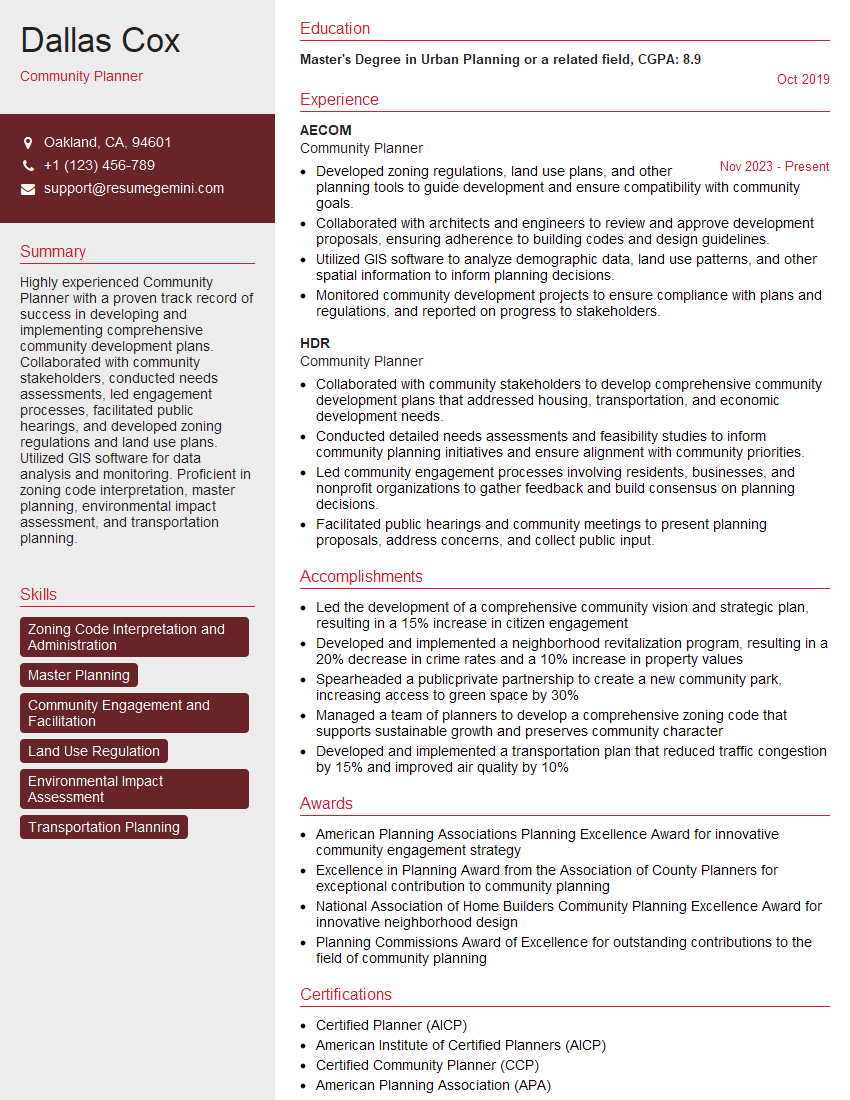
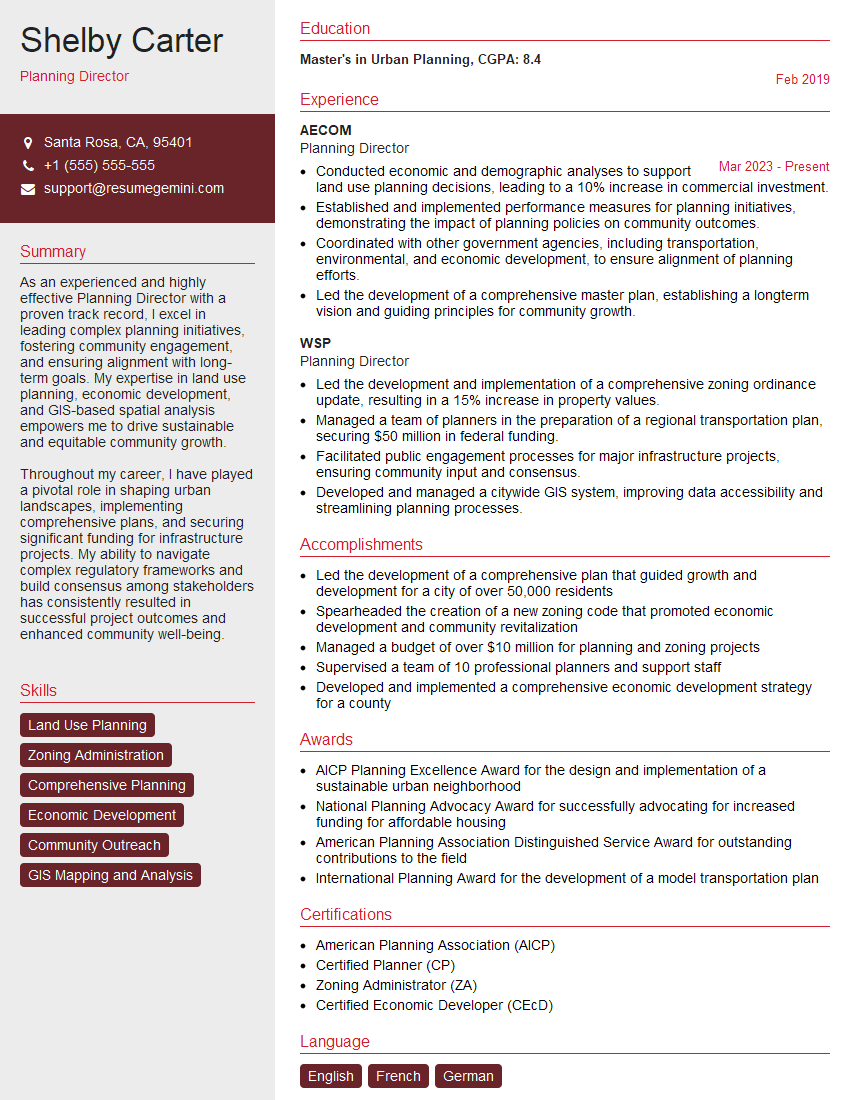
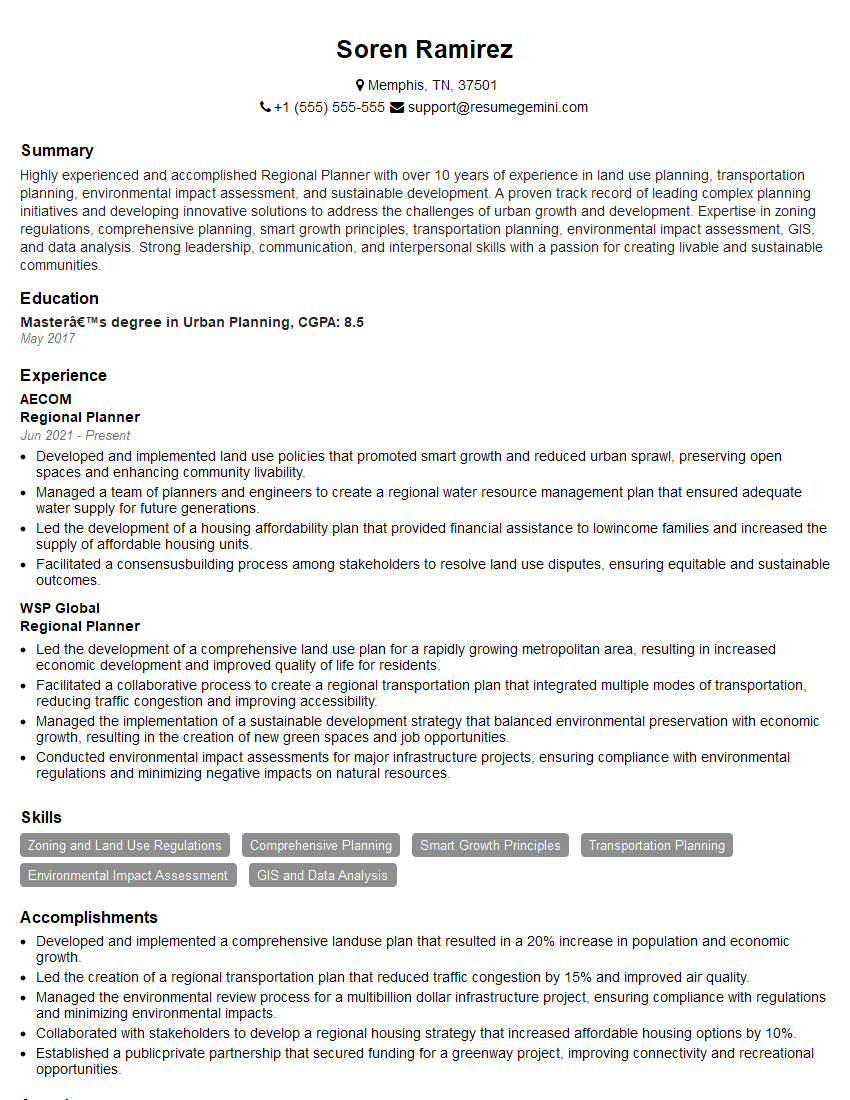
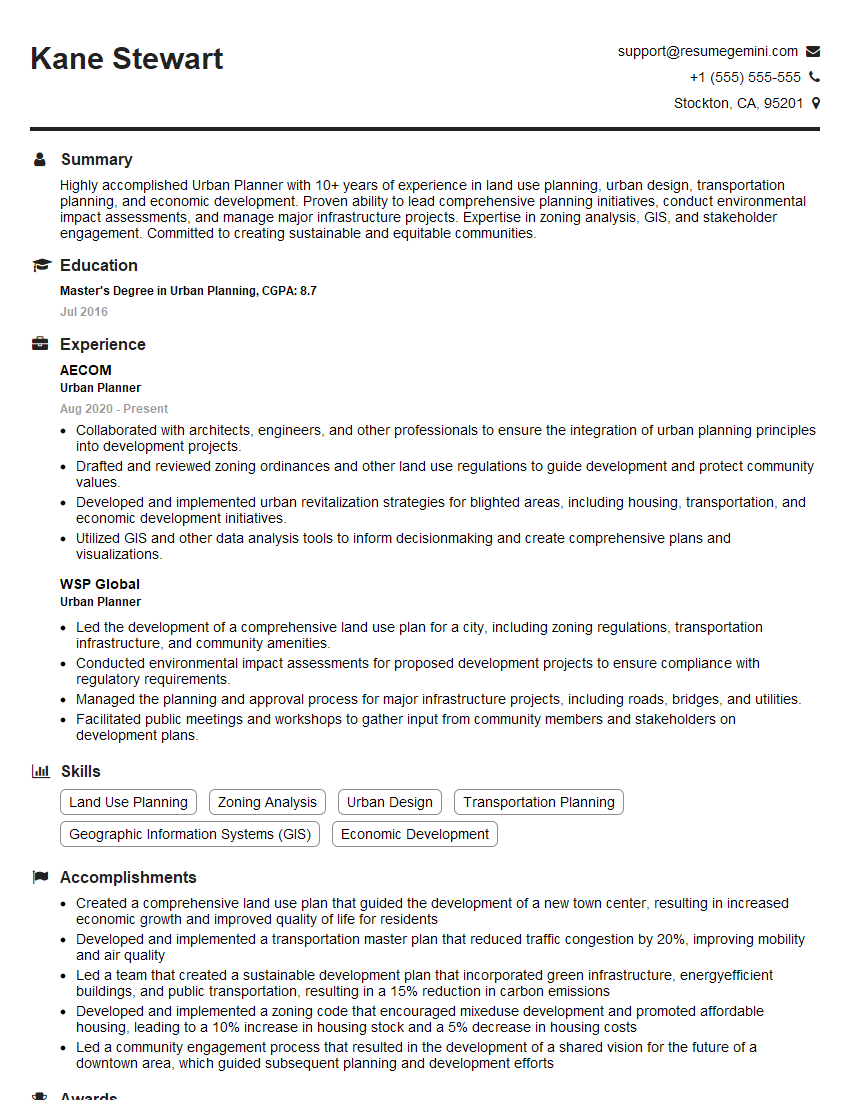
Mastering Urban Design and Form-Based Codes is crucial for career advancement in urban planning and related fields. A strong understanding of these concepts demonstrates your expertise and problem-solving abilities, making you a highly sought-after candidate. To maximize your job prospects, focus on creating a compelling and ATS-friendly resume that highlights your relevant skills and experience. We highly recommend using ResumeGemini to build a professional and effective resume. ResumeGemini offers tools and resources to create a standout resume, and we provide examples of resumes tailored to Urban Design and Form-Based Codes to help you get started. Take the next step towards your dream career today!
Explore more articles
Users Rating of Our Blogs
Share Your Experience
We value your feedback! Please rate our content and share your thoughts (optional).
What Readers Say About Our Blog
I Redesigned Spongebob Squarepants and his main characters of my artwork.
https://www.deviantart.com/reimaginesponge/art/Redesigned-Spongebob-characters-1223583608
IT gave me an insight and words to use and be able to think of examples
Hi, I’m Jay, we have a few potential clients that are interested in your services, thought you might be a good fit. I’d love to talk about the details, when do you have time to talk?
Best,
Jay
Founder | CEO