Are you ready to stand out in your next interview? Understanding and preparing for Vessel Towing interview questions is a game-changer. In this blog, we’ve compiled key questions and expert advice to help you showcase your skills with confidence and precision. Let’s get started on your journey to acing the interview.
Questions Asked in Vessel Towing Interview
Q 1. Describe your experience with different types of towing vessels and their capabilities.
My experience encompasses a wide range of towing vessels, each with unique capabilities tailored to specific tasks. For instance, I’ve worked extensively with tugboats, ranging from small harbor tugs ideal for maneuvering barges in confined spaces to powerful ocean-going tugs capable of handling very large crude carriers (VLCCs) or even assisting in deep-sea salvage operations. The capabilities vary significantly based on horsepower, bollard pull (the force a tug can exert at its bollard – a strong post on the deck), and the type of towing gear they employ.
- Harbor Tugs: Excellent maneuverability, low draft for shallow waters, typically used for assisting in port and harbor operations.
- Ocean-Going Tugs: High horsepower, substantial bollard pull, designed for long-distance towing in open waters, often equipped with dynamic positioning (DP) systems for precise station-keeping.
- Salvage Tugs: Powerful and heavily built, specialized equipment for handling disabled vessels, equipped for emergency towing and rescue operations.
- Multi-Purpose Tugs: Often a balance of power and maneuverability, equipped for diverse tasks including towing, escorting, and firefighting.
Understanding these differences is critical for selecting the appropriate vessel for a given operation, ensuring both efficiency and safety.
Q 2. Explain the process of planning a complex towing operation.
Planning a complex towing operation is a meticulous process involving several key steps. It’s like orchestrating a complex ballet on the open sea, requiring careful choreography and anticipation of potential challenges. We begin with a thorough assessment of the vessel to be towed, including its dimensions, weight, stability, and any known structural weaknesses. Next, we meticulously chart the route, considering factors like water depth, currents, tides, and potential hazards such as shipping lanes, shallow areas, or restricted waterways.
Meteorological forecasts are crucial, and we incorporate detailed weather predictions for the entire duration of the operation. We prepare contingency plans for adverse weather conditions, including potential delays or rerouting strategies. Crucially, we assemble a competent team, including qualified personnel for the towing vessel and communication with the vessel being towed.
Legal considerations and necessary permits also are addressed early in the process. Finally, a detailed operational plan is created, outlining procedures for towing, communication protocols, emergency response plans, and vessel-specific requirements. This plan is reviewed and approved by all stakeholders before commencement.
Q 3. How do you handle emergency situations during a towing operation?
Emergency situations during towing operations require swift, decisive action. My experience has taught me that preparedness and clear communication are paramount. A pre-defined emergency response plan is crucial, which includes predefined roles and responsibilities for each crew member.
For instance, if we encounter sudden severe weather, the immediate priority is the safety of the crew and the vessels involved. This may involve seeking sheltered waters, deploying additional safety equipment, or even abandoning the tow if the situation necessitates it.
In case of equipment failure, like a towline breakage, immediate steps are taken to secure the tow and prevent uncontrolled drifting. We assess the damage, implement repairs if feasible, or develop alternative strategies to continue the operation safely. Throughout the emergency, consistent communication with relevant authorities and other vessels in the vicinity is maintained. Post-incident analysis is conducted to identify root causes and prevent similar occurrences in the future.
Q 4. What are the key safety regulations you must adhere to while towing vessels?
Adherence to safety regulations is non-negotiable. We operate under a rigorous framework of international and national regulations, including SOLAS (Safety of Life at Sea) conventions, MARPOL (International Convention for the Prevention of Pollution from Ships) regulations, and specific national maritime safety codes.
These regulations cover aspects like vessel stability, crew certifications, emergency preparedness, communication protocols, pollution prevention, and the proper use and maintenance of towing equipment. Regular inspections and audits are conducted to ensure compliance. Detailed documentation of all aspects of the operation is maintained as evidence of compliance with these critical regulations.
Q 5. Describe your experience with different types of towage equipment.
My experience includes proficiency with various towage equipment, each designed for specific purposes and conditions. This ranges from simple wire ropes to sophisticated systems such as:
- Wire Ropes: Varying diameters and strengths, crucial for securing the tow and transferring tension effectively.
- Bridles: Systems of multiple ropes used to distribute the load and enhance stability during towing.
- Synthetic Ropes: Offer advantages in terms of strength-to-weight ratio and reduced wear and tear compared to wire ropes.
- Towing Hooks and Pins: Critical components for securely attaching the towline to the vessels.
- Winches: Used to control the tension on the towline and maintain safe towing speeds.
Regular maintenance and inspection of these components are integral to ensuring the safety and efficiency of any towing operation. We utilize both traditional and more modern specialized towing equipment according to the needs of the job.
Q 6. How do you assess weather conditions and their impact on towing operations?
Accurate weather assessment is paramount. We utilize a variety of resources, including meteorological forecasts from reputable sources, satellite imagery, and on-board weather instrumentation. Factors like wind speed and direction, wave height, sea state, visibility, and current strength all significantly impact towing operations.
For example, high winds can create excessive stress on the towline, and significant wave action can lead to vessel instability or even damage. We analyze these factors to determine the feasibility and safety of proceeding, often employing a decision-making matrix that combines weather data with risk assessment. If conditions deteriorate beyond acceptable limits, we have contingency plans in place, including seeking shelter or postponing the operation until conditions improve. This proactive approach is crucial for mitigating risks.
Q 7. What is your experience with using navigation systems and charts during towing?
Modern navigation systems are essential for safe and efficient towing operations. I have extensive experience using GPS, electronic charts (ECDIS), radar, and Automatic Identification Systems (AIS) to track vessel positions, monitor surrounding traffic, and plan optimal routes.
ECDIS systems allow us to overlay various layers of navigational information onto charts, enabling effective route planning and hazard avoidance. AIS provides real-time data on nearby vessels, helping us anticipate and avoid potential collisions. Radar assists in navigating in low visibility conditions. I am proficient in interpreting and integrating the data from these systems to make informed decisions, ensuring both the safety and efficiency of the operation. Furthermore, I have a thorough understanding of paper charts and traditional navigational techniques, providing redundancy and backup in case of system failure.
Q 8. Explain your understanding of tidal currents and their effect on towing.
Tidal currents are the horizontal movement of water caused by the gravitational pull of the sun and moon. Understanding tidal currents is crucial in vessel towing because they significantly impact the speed and direction of the tow. Strong tidal currents can increase the time required for a tow, necessitate higher tow power, and even make a tow impossible or extremely risky. Conversely, favorable currents can aid in towing, reducing fuel consumption and travel time.
For example, imagine towing a barge in a narrow channel. A strong opposing current could dramatically increase the load on the towline and the tugboat’s engines, potentially leading to equipment failure or loss of control. Conversely, a following current could assist the towing vessel, making the operation smoother and more efficient. Experienced tow masters meticulously study tidal charts and forecasts to plan optimal towing routes and schedules, minimizing the negative impacts of currents and maximizing the use of favorable ones.
In practice, this involves selecting towing windows based on predicted current speeds and directions, adjusting towing speed and direction to account for current influence, and having contingency plans in place for unexpected current changes. This planning process is especially critical in areas with strong tidal ranges or complex current patterns.
Q 9. How do you manage communication with other vessels during a towing operation?
Communication during towing operations is paramount for safety and efficiency. We rely on a multi-layered approach involving various communication channels. The primary method is VHF radio, which allows for continuous communication with other vessels, harbor authorities, and the tug’s own crew. We use standardized maritime radio phrases to ensure clarity and avoid misunderstandings. This includes reporting our position, intentions, and any potential hazards.
Additionally, we use AIS (Automatic Identification System) transponders, which broadcast our vessel’s position, course, and speed to other equipped vessels. This aids in collision avoidance and situational awareness. In complex operations, we may also utilize dedicated communication channels, such as dedicated VHF channels or even satellite communication for long-distance tows. Pre-tow briefings establish clear communication protocols and emergency procedures, ensuring everyone is on the same page.
For instance, before entering a busy shipping lane, we’d announce our intentions and request permission to cross. We’d also use the VHF to coordinate with pilot boats and other vessels involved in the operation. Clear and concise communication prevents mishaps and ensures a smooth towing operation.
Q 10. Describe your experience with managing a crew during a towing operation.
Managing a crew during a towing operation requires strong leadership, clear communication, and effective delegation. My approach involves pre-operation briefings, where I outline the plan, safety procedures, and the role of each crew member. This ensures everyone understands their responsibilities and contributes effectively. During the tow, I maintain constant communication with the crew, monitoring their performance and providing guidance when necessary. Safety is always the top priority, and I encourage open communication to address any concerns or issues promptly.
I foster a team environment where every member feels valued and empowered to contribute. This involves active listening, providing constructive feedback, and recognizing good performance. I handle conflict constructively, ensuring that any disagreements are resolved in a timely and professional manner, prioritizing the safety of the operation and the well-being of the crew. A well-managed crew is essential for ensuring a successful and safe towing operation; it’s a team effort.
For example, during a particularly challenging tow in rough seas, I delegated specific tasks based on crew members’ strengths, and constant communication prevented any potential mishaps and ensured the safety of the vessel and the crew. Clear delegation of responsibilities ensures efficiency and reduces the likelihood of errors.
Q 11. How do you handle a towing line failure?
Tow line failure is a serious incident requiring immediate and decisive action. The first step is to immediately reduce engine speed to minimize further strain on the remaining equipment. The next step is to assess the damage and determine the cause of the failure. This involves examining the towline for signs of wear, tear, or other damage. We use visual inspection and, if necessary, specialized equipment for thorough examination. Simultaneously, we’ll assess the condition of the towed vessel to ensure its stability and safety.
Depending on the situation, we might attempt to re-establish the tow using a spare towline, or we may need to deploy alternative methods, such as using a second tugboat or anchoring the towed vessel until repairs are completed. Safety is the top priority, and we ensure the towed vessel remains stable and is not at risk of drifting into a hazardous area. Thorough documentation of the event, including details on the cause of failure, and actions taken, is essential for improving future operations.
For instance, if a towline snaps during a heavy storm, we’d immediately reduce engine speed, assess the condition of the barge, and carefully consider options to re-establish the tow, possibly deploying a second tug to provide support and ensure stability. Post-incident investigation is critical to prevent similar future incidents.
Q 12. What are the common causes of towing accidents, and how can they be prevented?
Common causes of towing accidents include improper planning, inadequate equipment, poor communication, and adverse weather conditions. Preventing these accidents requires a multi-pronged approach. Proper planning involves thorough risk assessment, considering factors like weather forecasts, tidal currents, and the condition of both the towing vessel and the towed vessel. Regular equipment maintenance is critical to ensure that all equipment, especially the towlines and winches, are in good working order. Clear and effective communication between the crew, other vessels, and harbor authorities is essential to avoid collisions and other incidents. Finally, having contingency plans in place for adverse weather conditions can mitigate risks significantly.
For instance, failing to account for strong tidal currents can result in loss of control of the tow, while neglecting regular maintenance of the towline can lead to breakage during the operation. Clear communication protocols, as mentioned before, are crucial for navigating busy waters and avoiding collisions. Regular safety drills and training can ensure the crew is prepared for emergencies.
Ultimately, prevention involves a proactive approach to risk management, emphasizing safety and communication at every stage of the operation. By implementing rigorous safety procedures, adhering to regulations, and conducting regular training, we greatly reduce the likelihood of accidents.
Q 13. Explain your understanding of the different types of towing methods.
Several towing methods exist, each suited to different circumstances.
- Stern Towing: This is the most common method, where the tugboat pulls the towed vessel from behind. It’s versatile and suitable for various vessel types and conditions.
- Bow Towing: The tugboat pushes the towed vessel from the front. This method is less common but suitable for certain vessel types and situations. It usually involves less stress on the towline.
- Side Towing: The tugboat tows the vessel alongside. This is useful when maneuvering in confined spaces or when towing a vessel with limited maneuverability. It needs careful coordination.
- Combination Towing: This involves multiple tugboats, often utilizing both stern and bow towing methods simultaneously for added control and power. This is employed for very large or heavy vessels.
The choice of towing method depends on factors such as the size and type of vessel being towed, the environmental conditions, and the available tugboat capacity. Each method presents its own challenges and advantages, requiring careful consideration to ensure safety and efficiency. For example, stern towing is typically preferred for its stability, while side towing is more suitable for maneuvering in restricted waterways.
Q 14. How do you calculate the required tow power for a specific operation?
Calculating the required tow power is a complex process involving several factors. It’s not a simple formula, but rather an engineering calculation considering many variables. The key factors include the size and weight of the towed vessel, the anticipated environmental conditions (wind, current, waves), the distance to be towed, and the desired towing speed. Resistance to motion is a key element; it’s affected by the hull design of the towed vessel, water depth, sea state, and the speed required. Specialized software and hydrodynamic modeling are often used to make these calculations more accurately.
In practice, experienced tow masters often rely on a combination of calculation methods, including empirical formulas and experience-based estimations, alongside the use of specialized software. Safety margins are always factored in to account for unforeseen circumstances. Overestimating the required power is always preferred to ensure sufficient capacity to maintain control during challenging situations.
While a precise formula isn’t readily available, a simplified conceptual model might consider total resistance (hull resistance + wave resistance + wind resistance + current resistance) multiplied by a safety factor, resulting in a required power. This provides a basic idea, however, a detailed analysis requires considerable expertise and software.
Q 15. Describe your experience with maintaining towing equipment.
Maintaining towing equipment is crucial for safe and efficient operations. It’s not just about regular checks; it’s a proactive approach encompassing preventative maintenance and rigorous inspections. My experience involves a multi-faceted approach.
- Regular Inspections: I meticulously inspect all towing gear – towlines (wire and synthetic), bridles, shackles, and winches – before each tow. This includes checking for wear and tear, corrosion, broken strands, and proper lubrication. Any signs of damage necessitate immediate replacement or repair. Think of it like a pre-flight check for an airplane – crucial for safety.
- Preventative Maintenance: This goes beyond visual inspections. I follow a strict schedule for lubricating moving parts, tightening bolts, and replacing worn components. For instance, wire rope requires regular lubrication to prevent corrosion and fatigue. Winches need periodic servicing to ensure proper functioning under load.
- Record Keeping: Detailed logs are maintained, documenting all inspections, maintenance activities, and repairs. This allows us to track equipment lifespan and anticipate potential failures. It also demonstrates compliance with safety regulations.
- Specialized Training: My expertise extends to understanding the specific maintenance requirements of different types of towing equipment, from heavy-lift operations to smaller coastal tows. I’ve participated in specialized training courses to stay up-to-date on best practices and new technologies.
For example, during one long-distance tow, a routine inspection revealed minor fraying in a wire rope. Replacing it proactively prevented a potentially catastrophic failure mid-ocean.
Career Expert Tips:
- Ace those interviews! Prepare effectively by reviewing the Top 50 Most Common Interview Questions on ResumeGemini.
- Navigate your job search with confidence! Explore a wide range of Career Tips on ResumeGemini. Learn about common challenges and recommendations to overcome them.
- Craft the perfect resume! Master the Art of Resume Writing with ResumeGemini’s guide. Showcase your unique qualifications and achievements effectively.
- Don’t miss out on holiday savings! Build your dream resume with ResumeGemini’s ATS optimized templates.
Q 16. How do you handle conflicts with other vessels or authorities during towing operations?
Conflicts during towing operations are best avoided through proactive communication and adherence to regulations. However, when conflicts arise, a calm and professional approach is paramount.
- Prioritization of Safety: The first priority is always the safety of the tow, the towing vessel, and other vessels in the vicinity. Any action taken must prioritize safety.
- Communication: I utilize VHF radio effectively to communicate clearly and concisely with other vessels, pilots, and port authorities. I confirm intentions and acknowledge any requests or instructions.
- Adherence to Regulations: Following the International Regulations for Preventing Collisions at Sea (COLREGs) is crucial. Understanding and applying these rules helps avoid and resolve conflicts peacefully. For example, understanding the rules of the road for towing vessels is critical.
- Documentation: Maintaining a detailed log of all communication and events, including timestamps and vessel identifiers, serves as evidence in case of disputes.
- Escalation Protocol: If communication fails to resolve the conflict, I follow established escalation procedures, contacting higher authorities such as coastal radio stations or maritime authorities.
During one operation, a fishing vessel came too close to our tow. Clear communication and adherence to COLREGs helped us de-escalate the situation safely, avoiding a potential collision.
Q 17. What is your experience with using radar and AIS during towing?
Radar and AIS (Automatic Identification System) are indispensable tools for safe towing operations, significantly enhancing situational awareness, especially in areas with heavy traffic or limited visibility.
- Radar: Radar provides a real-time picture of surrounding vessels and navigational hazards, regardless of visibility. I use it to detect other vessels, monitor their course and speed, and anticipate potential collisions.
- AIS: AIS provides information about the identity, position, course, and speed of other vessels equipped with AIS transponders. This allows for proactive collision avoidance and enhances communication. For example, I can see the name and details of an approaching vessel on my chart plotter and contact them on the VHF radio.
- Integrated Systems: I’m proficient in using integrated navigation systems that combine radar and AIS data with electronic charts to provide a comprehensive picture of the operational environment.
- Interpretation of Data: Knowing how to interpret radar and AIS data effectively is crucial. False echoes on radar or inaccurate AIS information sometimes occur, and careful interpretation is necessary.
In a recent foggy tow, radar helped me detect a slow-moving cargo vessel in time to adjust course and avoid a close-quarters situation.
Q 18. How do you ensure the stability of a towed vessel?
Ensuring the stability of a towed vessel is critical for safe towing. This requires considering several factors.
- Proper Towing Arrangement: Selecting the correct towing gear, including the type and length of towlines and the use of bridles, is crucial. The arrangement must account for the size, weight, and stability of the towed vessel and the expected sea conditions.
- Trim and List: The trim (fore-and-aft balance) and list (side-to-side tilt) of the towed vessel must be monitored and adjusted if necessary. This can involve using additional ballast or adjusting the towline length and angle.
- Sea Conditions: The sea state significantly impacts stability. In rough seas, the towline tension must be managed carefully to avoid excessive stresses on the towed vessel and towing gear. Reducing speed and adopting appropriate seamanship practices are essential.
- Vessel Condition: The structural integrity and seaworthiness of the towed vessel are crucial. Any pre-existing damage must be assessed and addressed before the tow commences.
- Monitoring: Continuous monitoring of the towed vessel’s attitude, motion, and condition is vital. This is done visually and, in many cases, using various sensors.
I recall a tow where a significant list developed due to unexpected weather. By carefully adjusting the towline and communicating with the tug, we managed to restore stability and complete the tow safely.
Q 19. Describe your knowledge of environmental regulations related to towing.
Environmental regulations regarding towing are stringent and vary depending on location and the type of tow. My knowledge encompasses several key areas.
- Oil Pollution: Preventing oil spills from the towing vessel or the towed vessel is paramount. I’m familiar with regulations concerning oil discharge, equipment maintenance (like bilge pumps), and emergency response procedures in case of a spill.
- Ballast Water Management: Regulations regarding ballast water discharge to prevent the spread of invasive species are strictly enforced. I ensure compliance by following appropriate procedures and using ballast water treatment systems where required.
- Protected Areas: Navigating through environmentally sensitive areas like marine parks or sanctuaries requires adherence to specific regulations, including speed restrictions and careful route planning.
- Waste Disposal: Proper disposal of garbage and other waste is critical, complying with regulations on marine sanitation devices and waste management at ports.
- Reporting Requirements: Reporting incidents such as spills or accidental releases of pollutants is legally mandated, and I have experience with timely and accurate reporting.
For instance, during a tow near a coral reef, I meticulously followed designated routes and speed limits to minimize environmental impact.
Q 20. How do you handle situations with limited visibility during towing?
Limited visibility during towing presents significant challenges, demanding increased vigilance and reliance on available technology.
- Reduced Speed: Speed must be reduced significantly to increase reaction time and to reduce the risk of collisions. A prudent slow speed is better than a fast collision.
- Enhanced Lookout: Maintaining a sharp lookout is essential, employing all available means to detect potential hazards. This includes using radar, AIS, and fog signals.
- Fog Signals: Using appropriate fog signals as prescribed by COLREGs is mandatory, ensuring that our position and maneuvers are clearly communicated to other vessels.
- Communication: Maintaining frequent and clear communication with other vessels, pilots, and port authorities is crucial to exchange information and coordinate movements.
- Navigation: Precise navigation using electronic charts, GPS, and other navigational aids is essential to maintain track and avoid hazards.
In dense fog, we once had to completely stop our tow for several hours until visibility improved. Safe and slow is always our priority.
Q 21. Explain your experience with night towing operations.
Night towing operations present unique challenges requiring careful planning and enhanced safety precautions.
- Lighting: Ensuring all required lights are operational and correctly positioned on both the towing vessel and the towed vessel is essential for visibility. This includes navigation lights, stern lights, and towing lights.
- Lookout: A dedicated and vigilant lookout is essential, as visibility is naturally reduced at night.
- Communication: Effective communication with other vessels and authorities is critical, using VHF radio to exchange information about position and maneuvers.
- Enhanced Navigation: Using all available navigation aids, including radar, GPS, and electronic charts, is particularly important at night.
- Crew Fatigue Management: Managing crew fatigue is crucial due to the extended hours and challenging conditions of night operations. Adequate rest and crew rotation are paramount.
During a night tow, we experienced an equipment malfunction. Thanks to our detailed pre-planning and the crew’s professionalism, we were able to address the issue efficiently and safely complete the operation.
Q 22. What is your approach to risk assessment and mitigation in towing?
Risk assessment and mitigation in towing is a multi-faceted process that begins long before the tow begins and continues throughout the operation. It’s not just about identifying potential hazards, but also understanding their likelihood and the potential severity of their consequences. My approach is systematic and follows a structured methodology.
- Hazard Identification: This involves meticulously identifying all potential hazards, such as adverse weather conditions (high winds, storms, fog), equipment malfunctions (engine failure, towline breakage), navigational challenges (narrow channels, congested waterways), human error (fatigue, poor communication), and environmental factors (strong currents, shallow water).
- Risk Assessment: Once hazards are identified, I assess their likelihood and potential severity using a matrix or similar tool. This allows prioritization of risks. For example, a high-likelihood, high-severity risk like a hurricane would warrant far more attention and mitigation than a low-likelihood, low-severity risk such as a minor equipment malfunction.
- Mitigation Strategies: Based on the risk assessment, I develop and implement mitigation strategies. This might include route planning to avoid hazardous areas, deploying additional safety equipment (e.g., extra anchors, emergency communication systems), increasing crew vigilance, conducting pre-departure equipment checks, and having contingency plans in place for various scenarios (e.g., emergency towing, salvage assistance).
- Monitoring and Review: Throughout the towing operation, I continuously monitor the situation and reassess risks as needed. Conditions can change rapidly, so it’s crucial to adapt the mitigation strategies accordingly. Post-tow, I review the operation to identify any areas where the process could be improved.
For instance, during a recent tow of a large LNG carrier, we anticipated strong currents in a specific area. Our mitigation strategy included adjusting the tow schedule to coincide with a period of calmer currents, deploying additional tugboats for extra pulling power, and maintaining constant communication with meteorological services for updated weather forecasts.
Q 23. How do you deal with mechanical failures on the towing vessel or the towed vessel?
Mechanical failures on either the towing vessel or the towed vessel are serious events requiring immediate and decisive action. My response is guided by established emergency procedures and a calm, methodical approach.
- Immediate Assessment: The first step involves quickly assessing the nature and extent of the failure. Is it a minor issue that can be addressed on the spot, or does it require more extensive repairs? This requires careful inspection and communication with the engineering crew.
- Emergency Procedures: We have pre-established emergency procedures for various types of failures. These procedures typically involve securing the towed vessel, assessing the immediate risks, initiating communication with relevant authorities (e.g., coast guard), and implementing contingency plans (e.g., deploying additional tugs, seeking shelter).
- Damage Control: While awaiting assistance or undertaking repairs, the focus is on damage control to prevent further problems. This could involve securing loose equipment, slowing down or stopping the operation, and taking steps to minimize any potential environmental impact.
- Repair or Replacement: Depending on the nature and severity of the failure, repairs might be undertaken at sea (if feasible and safe) or the operation might be suspended until the vessel reaches a port for repairs. This decision is based on a risk assessment.
- Post-Incident Review: After the event, a thorough review is conducted to determine the cause of the failure, the effectiveness of the response, and whether improvements can be made to prevent similar incidents in the future.
For example, if the main engine of the towing vessel fails, we immediately switch to an auxiliary engine and use the tugboat’s emergency steering system. Simultaneously, we send a distress signal and begin the process of finding a replacement tug.
Q 24. Describe your experience with different types of barges and their characteristics.
My experience encompasses a wide variety of barges, each with unique characteristics that influence towing strategies.
- Tanker Barges: These are designed to carry liquid cargo, such as oil or chemicals. Towing considerations include stability concerns due to the liquid cargo shift, potential for environmental damage in case of a spill, and the need for special handling procedures due to the hazardous nature of the cargo.
- Dry Cargo Barges: These carry solid cargo, such as grain, coal, or construction materials. The main concerns are the weight distribution, potential for shifting cargo, and the structural integrity of the barge under load.
- Deck Barges: These are flat-bottomed barges often used for transporting heavy equipment, containers, or other oversized items. Safe and secure lashing of the cargo is crucial to prevent damage or shifting during the tow.
- Self-Propelled Barges: These barges have their own propulsion system. While they are less demanding to tow, communication and coordination with their crew are critical.
The characteristics, such as size, draft, cargo type, and structural design, dictate the choice of towing equipment, speed, route, and overall towing strategy. A large tanker barge requires a different approach than a small deck barge. For example, towing a fully loaded grain barge requires careful monitoring for cargo shifts, while towing a deck barge necessitates securing the cargo to prevent movement.
Q 25. How do you ensure the safe transfer of a towed vessel?
Safe transfer of a towed vessel is a critical phase that demands meticulous planning and execution. The procedure varies depending on the type of vessel, but the core principles remain consistent.
- Pre-Transfer Planning: This involves a thorough review of the weather forecast, water conditions, and the capabilities of all involved vessels. We need to ensure sufficient manpower and equipment are available. This includes thorough communication and coordination with all personnel involved in the transfer.
- Securing the Towline: This is a very critical step and should be executed methodically and safely. Ensuring the towline is securely connected, with appropriate tension and slack, is essential for preventing accidents. Often, multiple lines are used for added security.
- Communication and Coordination: Constant communication between the towing vessel, the towed vessel, and any assisting vessels is crucial. Clear signals and instructions must be given and understood to ensure everyone works together smoothly. This might involve hand signals, radio communication, or both.
- Gradual Release: During the transfer, the towing vessel should release the towline slowly and carefully to minimize sudden jerks or stresses on the connection points. This should be done in a controlled manner, considering the water currents and the forces involved.
- Post-Transfer Check: After the transfer is complete, a thorough check must be made to ensure that the towline is properly secured and that the towed vessel is safely underway.
A real-world example is transferring a barge from one tug to another in a busy port. We would plan the maneuver carefully, choosing a time of minimal traffic, employing additional crew for assistance, and using specialized equipment to ensure a smooth and safe transfer.
Q 26. Explain your understanding of the International Regulations for Preventing Collisions at Sea (COLREGs) and their relevance to towing.
The International Regulations for Preventing Collisions at Sea (COLREGs) are a crucial set of rules that govern the safe navigation of vessels at sea. They are paramount in towing operations, as towing configurations significantly alter a vessel’s maneuverability and visibility.
- Rules for Sailing Vessels and Power-Driven Vessels: COLREGs define the rules for vessels meeting each other, including those being towed. A vessel being towed is considered a power-driven vessel and must adhere to the corresponding rules and regulations.
- Lights and Shapes: COLREGs specify the lights and shapes that towing vessels must display to clearly indicate their presence and nature of their operation. This is vital for other vessels to understand the situation and take appropriate evasive maneuvers.
- Sound Signals: COLREGs outline the sound signals required for vessels in various situations. This ensures other vessels can understand the intent of the towing vessels and respond accordingly, particularly in conditions of low visibility.
- Restricted Maneuverability: Towing vessels often exhibit restricted maneuverability due to the length and arrangement of the tow. COLREGs make allowances for such situations but still expect the towing vessel to take all necessary precautions to avoid collisions.
- Special Situations: COLREGs address specific scenarios in towing, such as navigating in narrow channels, congested waterways, or restricted visibility.
Non-compliance with COLREGs can lead to serious accidents. For example, failure to display the correct lights or shapes could lead to a collision with another vessel. Understanding and strict adherence to these rules is non-negotiable in ensuring safe towing operations.
Q 27. How do you handle delays or unexpected circumstances during a towing operation?
Delays and unexpected circumstances are inevitable in towing operations. My approach emphasizes proactive planning and adaptability.
- Contingency Planning: Before embarking on a tow, I develop contingency plans for various foreseeable delays, such as equipment malfunctions, adverse weather, or unforeseen navigational challenges. This includes identifying alternative routes, securing backup equipment, and having communication protocols in place.
- Communication and Reporting: Open communication is key. I keep all stakeholders—clients, port authorities, and other vessels—informed of any delays and their potential impact. Regular progress reports and updates are essential to manage expectations.
- Risk Re-assessment: Any unexpected circumstances necessitate a re-assessment of the risks involved. This might lead to modifications in the towing plan, adjustments to the schedule, or even temporary suspension of the operation depending on the severity.
- Problem-Solving and Decision-Making: A calm and methodical approach is crucial. I focus on problem-solving, evaluating options, and making informed decisions to ensure the safety of the vessel, crew, and cargo. This involves a collaborative approach with the crew, seeking advice when needed.
- Documentation: All delays, unexpected events, and the steps taken to address them are thoroughly documented for future reference and analysis.
For example, if we encounter unexpectedly strong headwinds, we might decide to seek shelter in a nearby port, revise the route, reduce towing speed, or request additional tugboat assistance. The specific response depends on the severity of the headwinds and the capabilities of the towing vessel.
Q 28. What steps do you take to ensure the security of the towed vessel and its cargo?
Securing the towed vessel and its cargo is paramount. My approach encompasses multiple layers of security measures.
- Secure Lashing and Mooring: Proper lashing and mooring techniques are crucial to prevent cargo shifting or damage during transit. This involves using high-strength ropes, chains, or other securing devices appropriate for the cargo and weather conditions. The techniques used vary greatly depending on the cargo and the type of barge or vessel being towed.
- Regular Inspections: Throughout the towing operation, I conduct regular inspections of the lashings and moorings to ensure they remain secure. This includes checking for signs of wear, tear, or loosening. Bad weather conditions might warrant more frequent checks.
- Weather Monitoring: I monitor weather conditions closely and adjust the towing strategy as needed to mitigate risks associated with severe weather. This may include seeking shelter in port, reducing speed, or altering the route.
- Navigation and Route Planning: Careful route planning is essential to minimize risks. This involves avoiding known hazardous areas and selecting routes that minimize exposure to harsh weather or heavy traffic.
- Emergency Procedures: We have established emergency procedures to deal with any unforeseen circumstances that might compromise the security of the towed vessel or its cargo. This includes plans for dealing with equipment failure, emergencies at sea, or potentially adverse weather conditions.
For instance, when towing a barge carrying heavy construction equipment, extra care is taken to ensure the equipment is properly secured, often using specialized straps and securing mechanisms to prevent shifting during rough weather or sudden changes in direction.
Key Topics to Learn for Vessel Towing Interview
- Vessel Handling & Maneuvering: Understanding principles of towage, including forces acting on vessels, effects of currents and wind, and safe maneuvering techniques in various conditions.
- Towing Equipment & Systems: Knowledge of different types of towing equipment (e.g., tugboats, lines, winches), their capabilities and limitations, and routine maintenance procedures.
- Navigation & Communication: Proficiency in using nautical charts, GPS systems, and communication protocols (VHF radio) for safe and efficient towing operations.
- Safety Regulations & Procedures: Familiarity with relevant safety regulations, emergency response procedures, and risk assessment methodologies in the context of vessel towing.
- Practical Application: Scenario-based problem solving – consider how you would handle a specific situation, such as an unexpected change in weather or equipment malfunction during a towing operation. Focus on your decision-making process and problem-solving skills.
- Environmental Considerations: Understanding environmental regulations and best practices related to minimizing the environmental impact of towing operations.
- Legal Aspects: Basic understanding of maritime law and regulations pertaining to towing contracts and liabilities.
- Advanced Topics (for Senior Roles): Consider exploring topics such as dynamic positioning, specialized towing techniques (e.g., heavy lift towing), and fleet management strategies.
Next Steps
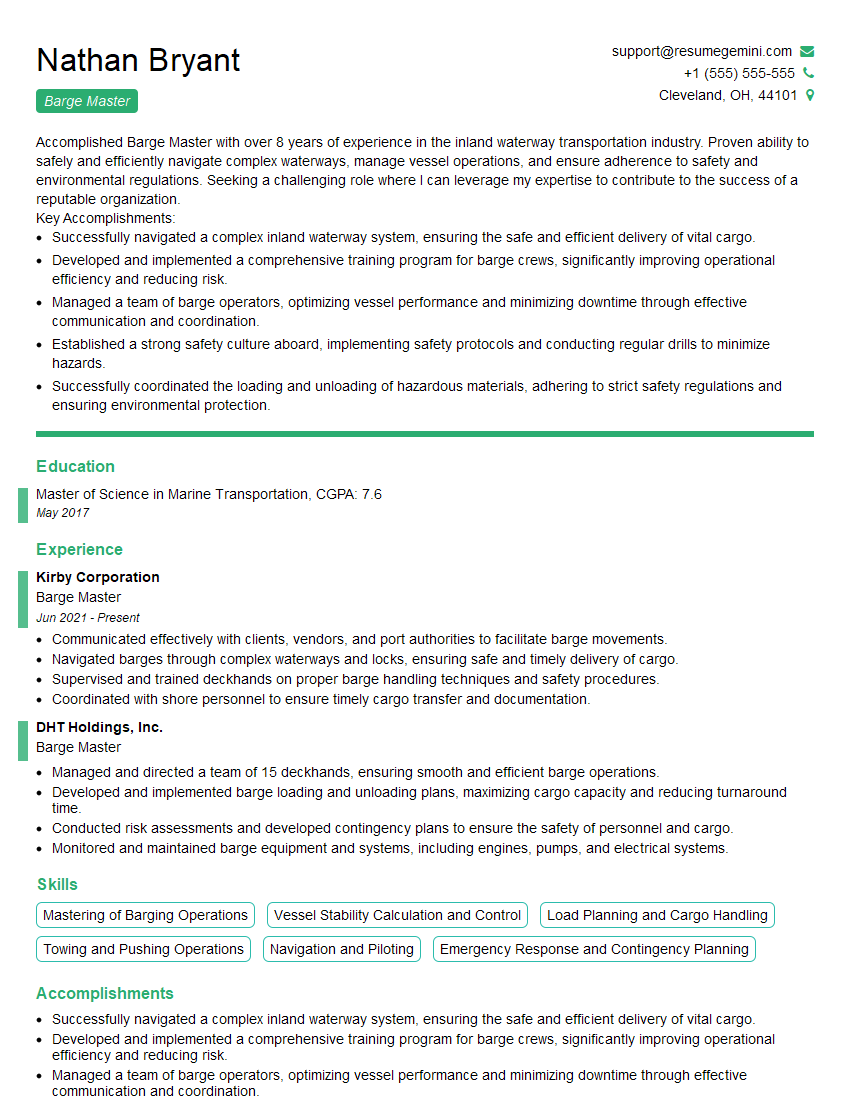
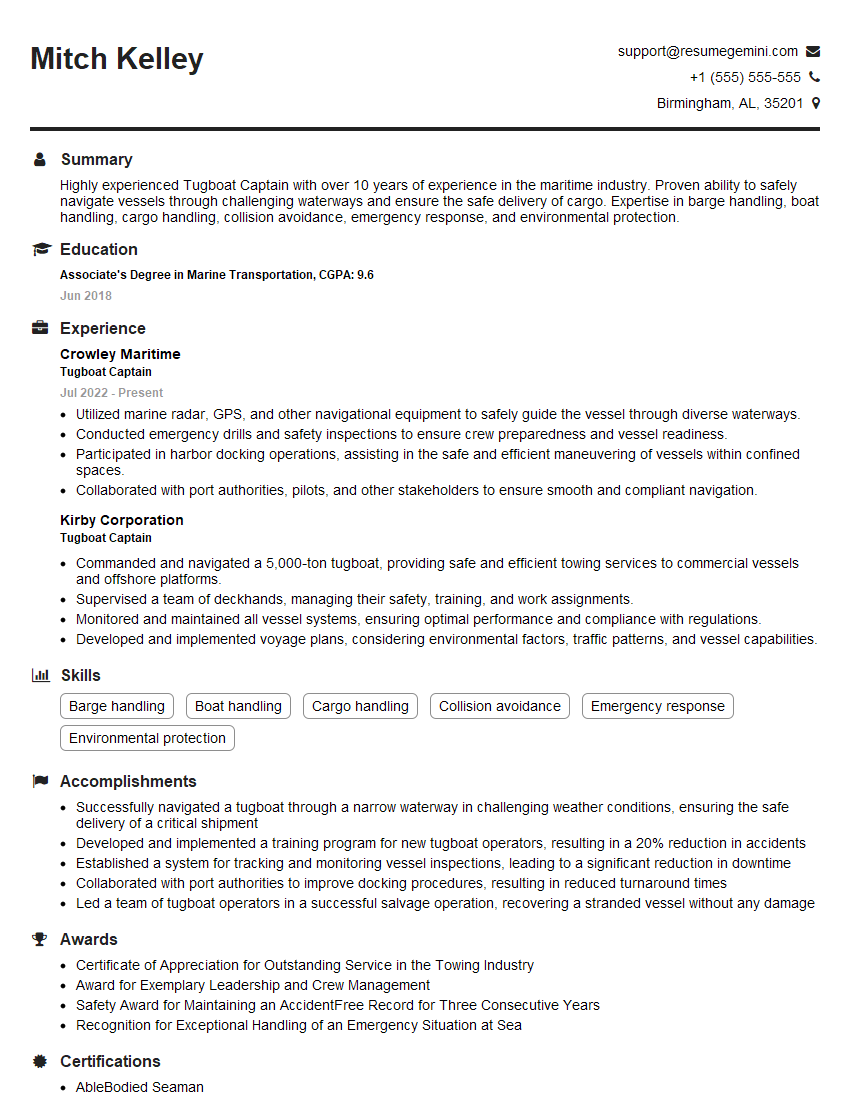
Mastering vessel towing opens doors to a rewarding career with opportunities for advancement and specialization. To maximize your job prospects, creating a compelling and ATS-friendly resume is crucial. ResumeGemini is a trusted resource that can help you build a professional resume tailored to highlight your skills and experience in vessel towing. Examples of resumes tailored specifically to the Vessel Towing industry are available to help guide you through this process.
Explore more articles
Users Rating of Our Blogs
Share Your Experience
We value your feedback! Please rate our content and share your thoughts (optional).
What Readers Say About Our Blog
I Redesigned Spongebob Squarepants and his main characters of my artwork.
https://www.deviantart.com/reimaginesponge/art/Redesigned-Spongebob-characters-1223583608
IT gave me an insight and words to use and be able to think of examples
Hi, I’m Jay, we have a few potential clients that are interested in your services, thought you might be a good fit. I’d love to talk about the details, when do you have time to talk?
Best,
Jay
Founder | CEO