Are you ready to stand out in your next interview? Understanding and preparing for Virtual Private Network (VPN) Configuration and Management interview questions is a game-changer. In this blog, we’ve compiled key questions and expert advice to help you showcase your skills with confidence and precision. Let’s get started on your journey to acing the interview.
Questions Asked in Virtual Private Network (VPN) Configuration and Management Interview
Q 1. Explain the difference between a site-to-site VPN and a remote access VPN.
The key difference between site-to-site and remote access VPNs lies in what they connect. Think of it like this: site-to-site is connecting two offices, while remote access connects an individual to a network.
- Site-to-site VPN: This type of VPN creates a secure connection between two or more networks. For example, a company might have an office in New York and another in London. A site-to-site VPN creates a secure, encrypted tunnel between these two networks, allowing them to communicate as if they were physically connected. This is ideal for sharing resources and maintaining consistent network policies across multiple locations.
- Remote access VPN: This allows individual users to connect to a private network remotely, usually from their home or a public Wi-Fi network. Imagine an employee working from home. A remote access VPN securely connects their computer to the company’s network, enabling them to access internal resources, such as files and applications, as if they were physically in the office. This improves security by encrypting all communication.
In short: Site-to-site connects networks; remote access connects individuals to networks.
Q 2. What are the common VPN protocols (e.g., IPSec, OpenVPN, L2TP/IPSec)? Compare their strengths and weaknesses.
Several VPN protocols exist, each with its strengths and weaknesses. The choice depends on the specific security requirements and infrastructure.
- IPSec (Internet Protocol Security): A suite of protocols providing authentication and encryption at the network layer. It’s robust and widely used in site-to-site VPNs. Strengths: Strong security, mature technology, good performance. Weaknesses: Can be complex to configure, may require specialized hardware or software.
- OpenVPN: An open-source protocol offering strong security and flexibility. It’s popular for both site-to-site and remote access VPNs. Strengths: Open-source, highly configurable, good performance, supports various encryption algorithms. Weaknesses: Can be more challenging to set up than simpler protocols.
- L2TP/IPSec: Combines the Layer 2 Tunneling Protocol (L2TP) with IPSec. L2TP provides the tunneling framework, while IPSec handles security. It’s often used in remote access VPNs. Strengths: Relatively easy to configure, widely supported by operating systems. Weaknesses: Can be less performant than IPSec alone, security relies on IPSec’s strength.
Consider these factors when choosing: desired security level, ease of configuration, compatibility with existing infrastructure, and performance requirements.
Q 3. Describe the process of configuring a VPN using IPSec.
Configuring an IPSec VPN involves several steps, and the exact process varies depending on the specific devices and operating systems involved. However, the general steps are:
- Define the VPN Gateway: Each participating network (e.g., the company network and the remote network) needs a VPN gateway. This gateway will handle the encryption and decryption of data.
- Establish an Authentication Method: This ensures only authorized devices can connect. Common methods include pre-shared keys or digital certificates.
- Configure Security Associations (SAs): SAs define the parameters for secure communication, including encryption algorithms, authentication methods, and key exchange protocols.
- Establish the IPsec Tunnel: Once the SAs are established, the tunnel is created, encrypting all traffic between the gateways.
- Verify Connectivity: After configuration, testing is crucial to ensure that the VPN tunnel is functional and secure.
For example, on a Linux system, you would typically use the ipsec command-line tool to configure the IPSec parameters. This involves creating configuration files specifying security associations, pre-shared keys, and other parameters. The exact commands and configuration files are system-specific, but the fundamental principles remain the same.
Q 4. How do you troubleshoot a VPN connection failure?
Troubleshooting a failed VPN connection requires a systematic approach. Start with the basics and move to more advanced techniques:
- Check the basics: Verify network connectivity, confirm correct VPN server address and credentials, and ensure the VPN client is running correctly.
- Firewall and Antivirus: Firewalls and antivirus software can sometimes block VPN traffic. Temporarily disable them to see if this resolves the issue. (Remember to re-enable them afterward!)
- Check VPN Client Logs: Most VPN clients provide logs that detail connection attempts and errors. These logs are invaluable for identifying specific problems.
- Examine Network Configuration: Ensure the correct network settings are configured on both the client and the server side, including IP addresses, subnet masks, and DNS servers.
- Test Network Connectivity: Use tools like
pingortracerouteto check connectivity to the VPN server and other network resources.
If the problem persists, consult the VPN server’s documentation or support resources for further assistance.
Q 5. What are the security considerations when setting up a VPN?
Security is paramount when setting up a VPN. Several crucial considerations include:
- Strong Authentication: Use robust authentication mechanisms like strong passwords, multi-factor authentication (MFA), and digital certificates to prevent unauthorized access.
- Appropriate Encryption: Employ strong encryption algorithms (like AES-256) to protect data in transit.
- Regular Updates: Keep VPN software, firmware, and operating systems updated to patch security vulnerabilities.
- Access Control: Implement strict access control lists (ACLs) to limit access to sensitive resources.
- Strong Key Management: Securely store and manage encryption keys. Regular key rotation is a good security practice.
- Regular Audits and Monitoring: Regularly audit VPN configurations and monitor logs to detect and respond to security incidents.
Ignoring these points can leave your VPN vulnerable to attacks, compromising sensitive data. Regular security assessments are vital.
Q 6. Explain the concept of VPN tunneling.
VPN tunneling is the core concept of a VPN. Imagine a tunnel—an encrypted pathway—that protects your data as it travels across a public network like the internet. This tunnel encrypts your data, making it unreadable to anyone who intercepts it. Once the data reaches its destination, it’s decrypted and accessible only to authorized users.
Think of it like sending a secret message in a locked box. Only someone with the key (the decryption key) can open the box (decrypt the data) and read the message. VPN tunneling ensures data confidentiality and integrity by encrypting all communications.
Q 7. What is a VPN concentrator, and what are its benefits?
A VPN concentrator is a dedicated device or software that manages multiple VPN connections. It’s a central point for handling remote access VPN connections from numerous users or sites. Imagine a switchboard for VPN connections.
- Centralized Management: Simplify the management of multiple VPN connections from a single point.
- Enhanced Security: Provides a centralized point for implementing security policies and monitoring access.
- Scalability: Allows for easy scaling of VPN connections as needed.
- Resource Optimization: More efficient use of network resources compared to managing individual VPN connections.
Large organizations benefit greatly from VPN concentrators, as they streamline the management of remote access for a large number of employees.
Q 8. How do you manage VPN users and access permissions?
Managing VPN users and access permissions involves a multi-layered approach focusing on user identity, authorization, and access control. Think of it like managing keys to a building: you wouldn’t give everyone a master key!
- Centralized User Management: We leverage a centralized directory service like Active Directory or RADIUS to manage user accounts. This allows for efficient creation, modification, and deletion of user credentials, eliminating manual configuration for each VPN device.
- Role-Based Access Control (RBAC): Instead of granting individual permissions, we define roles (e.g., ‘Guest,’ ‘Employee,’ ‘Administrator’) with specific access rights. This simplifies management and improves security. An employee might only have access to the internal network, while an administrator has full control.
- Group Policies: For Windows-based VPNs, Group Policies are invaluable for defining access restrictions and security settings. For example, we can enforce strong password policies or restrict access based on geographic location.
- VPN Client Configuration: The VPN client software itself often includes features for defining user profiles with customized settings. This lets us specify which network resources a user can access once connected.
- Regular Audits: Periodically reviewing user access rights is crucial to identify any outdated or unnecessary permissions. This helps prevent security breaches.
For example, imagine a company deploying a VPN for remote workers. Using RBAC, they can create a ‘Remote Employee’ role with access to company email and specific internal applications but not the server room network. This ensures only authorized personnel access sensitive information.
Q 9. How do you monitor VPN performance and ensure uptime?
Monitoring VPN performance and ensuring uptime requires a proactive approach, combining tools and strategies to identify and address potential problems before they impact users. It’s like having a checkup for your network’s heart.
- VPN Monitoring Tools: Specialized tools provide real-time visibility into VPN performance metrics such as connection speed, latency, packet loss, and CPU/memory utilization on the VPN gateway. Examples include dedicated VPN management platforms or network monitoring tools with VPN-specific capabilities.
- Log Analysis: Regularly reviewing VPN logs helps identify patterns, errors, or security events. Analyzing log data helps detect and resolve connection issues or security breaches. This requires establishing a robust logging and alert system.
- Redundancy and High Availability: Implementing redundant VPN gateways or failover mechanisms ensures continuous connectivity, even if one gateway fails. Think of this as having a backup generator for your network.
- Capacity Planning: Proactive capacity planning ensures the VPN infrastructure can handle peak loads without performance degradation. This includes regular assessments of bandwidth usage and forecasting future needs.
- Performance Testing: Regular performance testing under various load conditions helps identify and address bottlenecks before they affect users. This helps optimize configuration and scaling strategies.
For instance, by monitoring latency, we can promptly identify a problem with a specific VPN gateway and either resolve it or initiate a failover to a backup gateway to maintain connectivity.
Q 10. Explain the role of encryption and authentication in VPN security.
Encryption and authentication are the cornerstones of VPN security, working together to protect data confidentiality and integrity. They are like a two-part lock on your digital door.
- Encryption: Encryption transforms readable data (plaintext) into an unreadable format (ciphertext) during transmission. This ensures that even if the VPN connection is intercepted, the data remains confidential. Common VPN encryption protocols include IPSec, OpenVPN, and L2TP/IPSec. The stronger the encryption algorithm (e.g., AES-256), the more secure the connection.
- Authentication: Authentication verifies the identity of the VPN client before granting access. This prevents unauthorized users from accessing the network. This is like verifying you are who you say you are before entering the building. Common authentication methods involve username/password, certificates, or tokens.
Together, encryption and authentication provide a secure tunnel between the VPN client and the server. Without both, the VPN would be vulnerable to eavesdropping and unauthorized access. For instance, AES-256 encryption scrambles data, ensuring confidentiality, while certificate-based authentication verifies the identity of connecting devices before allowing encrypted communication.
Q 11. What are different authentication methods used in VPNs?
VPNs employ various authentication methods, each with its own strengths and weaknesses, much like choosing the right key for your lock.
- Username and Password: The simplest method, but vulnerable to phishing and brute-force attacks if not properly secured with strong password policies and multi-factor authentication.
- Certificates: Digital certificates provide a stronger form of authentication, verifying the identity of the client and the VPN server. They are often used in enterprise environments for better security.
- RADIUS (Remote Authentication Dial-In User Service): A centralized authentication server that can manage user credentials and access policies for multiple VPN gateways. Offers better scalability and central management.
- Tokens: Hardware or software tokens generate one-time passwords, enhancing security by adding an extra layer of authentication.
- Smart Cards: Similar to tokens, smart cards store cryptographic keys and certificates, providing strong authentication.
The choice of authentication method depends on the security requirements and the infrastructure in place. For a small office, username/password with MFA might suffice. However, for high-security environments, certificate-based authentication or RADIUS is recommended.
Q 12. What is a VPN gateway?
A VPN gateway is a network device, often a router or a dedicated VPN appliance, that acts as the entry point to the VPN. Think of it as the security guard at the entrance to your building.
It manages VPN connections, encrypts and decrypts data, and enforces security policies. The VPN gateway is responsible for authenticating clients, establishing secure tunnels, and routing traffic between the VPN clients and the internal network. It’s the heart of the VPN infrastructure.
Different VPN solutions may use different gateway technologies, like routers with VPN capabilities, dedicated VPN appliances from vendors like Cisco or Fortinet, or even cloud-based VPN services like AWS or Azure.
Q 13. What are the key performance indicators (KPIs) for a VPN?
Key Performance Indicators (KPIs) for a VPN help measure its effectiveness and identify areas for improvement. They’re like the vital signs of your network’s health.
- Connection Success Rate: The percentage of successful VPN connection attempts.
- Average Connection Time: The average time it takes to establish a VPN connection.
- Latency: The delay in data transmission, measured in milliseconds.
- Throughput/Bandwidth Utilization: The amount of data transmitted per unit of time. This shows whether the VPN is saturated.
- Packet Loss: The percentage of data packets that are lost during transmission.
- VPN Server CPU/Memory Utilization: Monitoring server resources to ensure they can handle the load.
- Number of Concurrent Users: The number of users connected to the VPN simultaneously.
- Security Incidents: Tracking failed login attempts, security breaches, or unauthorized access attempts.
By tracking these KPIs, you can proactively identify and address performance bottlenecks or security vulnerabilities. For example, high latency might indicate network congestion, requiring bandwidth upgrades or optimization. A high number of failed login attempts might suggest a security threat.
Q 14. Describe the process of implementing a multi-factor authentication (MFA) for VPN access.
Implementing multi-factor authentication (MFA) for VPN access significantly enhances security by adding an extra layer of verification beyond just a username and password. It’s like adding a second lock to your door.
The process typically involves these steps:
- Choose an MFA Method: Select a suitable MFA method such as:
- Time-based One-Time Passwords (TOTP): Using an authenticator app (e.g., Google Authenticator, Authy).
- Push Notifications: Receiving a notification on a registered device to approve the login attempt.
- Hardware Tokens: Using a physical device that generates unique codes.
- SMS-based codes: Receiving a verification code via SMS.
- Configure the VPN Server: Integrate the chosen MFA method with the VPN server. This often involves configuring a RADIUS server (for centralized MFA management) or using built-in MFA features within the VPN solution.
- Configure User Accounts: Enroll users in the chosen MFA method, requiring them to register their authenticator app or device.
- Test and Deploy: Thoroughly test the MFA implementation before deploying it to all users. Ensure that users are properly trained on how to use the MFA method.
- Monitor and Manage: Continuously monitor the MFA system for security events and ensure that it is functioning correctly.
For example, using TOTP, a user would enter their username and password, and then a code generated by their authenticator app to complete the VPN login. This prevents unauthorized access even if their username and password are compromised.
Q 15. How do you address VPN scalability issues?
VPN scalability hinges on effectively handling increasing user demands and data traffic without compromising performance or security. Think of it like building a highway – as more cars (users) need to travel, you need more lanes (bandwidth and resources) to prevent congestion.
Addressing this involves several strategies:
- Deploying multiple VPN gateways: Distributing the load across multiple gateways prevents a single point of failure and improves overall throughput. Imagine splitting the highway into multiple routes.
- Using load balancing techniques: This intelligently distributes traffic across available gateways based on factors like server load, geographical location, and connection speed. It’s like having traffic lights and smart routing systems to manage the highway flow efficiently.
- Implementing VPN concentrators: These devices aggregate multiple VPN connections, optimizing resource utilization and simplifying management. This is akin to having a central traffic control center for the entire highway system.
- Employing efficient VPN protocols: Protocols like IPsec with optimized encryption algorithms can significantly impact scalability. Choosing the right protocol is like selecting the appropriate vehicle type for the highway – a smaller, more efficient car might be better than a large truck for certain situations.
- Vertical scaling (adding resources to existing gateways): Increasing server processing power, memory, and bandwidth can handle increased user demand. This is similar to widening existing highway lanes.
- Horizontal scaling (adding new gateways): This is the most common approach, adding more gateways to the network.
The best approach depends on factors such as budget, existing infrastructure, and anticipated growth.
Career Expert Tips:
- Ace those interviews! Prepare effectively by reviewing the Top 50 Most Common Interview Questions on ResumeGemini.
- Navigate your job search with confidence! Explore a wide range of Career Tips on ResumeGemini. Learn about common challenges and recommendations to overcome them.
- Craft the perfect resume! Master the Art of Resume Writing with ResumeGemini’s guide. Showcase your unique qualifications and achievements effectively.
- Don’t miss out on holiday savings! Build your dream resume with ResumeGemini’s ATS optimized templates.
Q 16. What are the common VPN security threats and vulnerabilities?
VPN security threats are numerous. They can be broadly categorized as:
- Compromised VPN servers: A breach of the VPN server can grant attackers access to all connected clients’ data and network resources. Imagine a thief gaining control of the entire highway system.
- Weak or default credentials: Using easily guessed passwords or default settings creates easy entry points for attackers. It’s like leaving the highway gates unlocked.
- Vulnerable VPN clients: Outdated or poorly configured VPN client software presents vulnerabilities exploitable by malicious actors. Think of it as having faulty vehicles on the highway.
- Man-in-the-middle (MitM) attacks: Attackers intercept communication between the client and the server, potentially stealing data or injecting malware. This is like a robber hijacking vehicles on the highway and robbing the passengers.
- Denial-of-service (DoS) attacks: These attacks flood the VPN server with traffic, making it unavailable to legitimate users. It’s like completely blocking the highway, causing a traffic jam.
- Data breaches due to misconfigurations: Improperly configured VPNs can leak sensitive information. It’s like having poorly secured storage facilities alongside the highway.
Mitigating these risks involves regular security audits, strong password policies, up-to-date software, robust access controls, and the implementation of intrusion detection/prevention systems.
Q 17. What are your experiences with VPN load balancing?
My experience with VPN load balancing has been extensive, focusing primarily on achieving high availability and optimal resource utilization. I’ve worked with both hardware-based and software-defined load balancers, using techniques like round-robin, least connections, and source IP hashing.
For example, in a large enterprise environment with multiple office locations connecting to a central data center via VPN, we implemented a load balancer that distributed traffic across several VPN gateways based on the client’s geographical location. This ensured that users connected to the closest gateway, minimizing latency and improving performance. The system also dynamically adjusted the load distribution based on real-time server load, ensuring optimal resource allocation. This setup mirrored the way a large airport might distribute arriving airplanes to multiple gates to avoid congestion.
Furthermore, I’ve implemented health checks to ensure only operational gateways receive traffic. This avoids forwarding requests to failed servers, ensuring uninterrupted service. Health checks are similar to regular inspections of highway lanes for road closures or accidents.
Q 18. Explain the importance of VPN logging and auditing.
VPN logging and auditing are crucial for security, compliance, and troubleshooting. Logs provide a detailed record of VPN connections, including timestamps, user identities, source and destination IP addresses, and connection duration. Auditing ensures that these logs are regularly reviewed and analyzed for suspicious activity.
The importance is threefold:
- Security Monitoring: Identifying unauthorized access attempts, data breaches, or insider threats.
- Compliance: Meeting regulatory requirements (like GDPR or HIPAA) that mandate logging and auditing of sensitive data access.
- Troubleshooting: Pinpointing connectivity issues or performance bottlenecks.
Consider a scenario where a data breach occurs. Detailed VPN logs can help investigators determine when the breach happened, who accessed the system, and what data was compromised. Without logs, it would be nearly impossible to conduct a thorough investigation. Proper logging and auditing is like having a detailed record of every event that takes place on the highway – essential for accident investigation and maintaining order.
Q 19. How do you handle VPN security incidents?
Handling VPN security incidents involves a structured approach:
- Containment: Immediately isolate affected systems to prevent further damage. This might involve disabling compromised accounts or blocking malicious IP addresses – akin to immediately closing down a section of highway after an accident.
- Eradication: Identify the root cause of the incident and remove the threat. This could involve patching vulnerabilities, reinstalling software, or replacing compromised hardware.
- Recovery: Restore affected systems to a functional state. This might involve restoring data from backups or reconfiguring network settings.
- Post-incident analysis: Conduct a thorough review of the incident to identify weaknesses in the security infrastructure and implement preventative measures. This is like examining an accident to prevent future incidents from occurring.
- Documentation: Maintain detailed records of the incident, including steps taken to contain, eradicate, and recover from the incident. This is vital for future incident response and compliance.
A strong incident response plan is essential, outlining roles, responsibilities, and communication protocols. Regular security awareness training for users also significantly reduces the risk of human error, a leading cause of security incidents.
Q 20. How do you integrate VPN with other security tools (e.g., firewalls, intrusion detection systems)?
Integrating VPN with other security tools is vital for a layered security approach. Think of it as building multiple layers of defense to protect the highway system.
- Firewalls: Firewalls control network traffic, blocking unauthorized access attempts. They act as gatekeepers to the highway, controlling who can enter.
- Intrusion Detection/Prevention Systems (IDS/IPS): These systems monitor network traffic for malicious activity and can take action to block or mitigate threats. They are like security cameras and patrol officers on the highway.
- Security Information and Event Management (SIEM) systems: SIEM systems collect and correlate security logs from multiple sources, including the VPN, firewalls, and IDS/IPS, providing a centralized view of security events. This acts as the control center for highway surveillance and management.
Integration typically involves configuring the VPN to work in conjunction with these tools, such as setting up appropriate firewall rules to allow only authorized VPN traffic and configuring IDS/IPS to monitor VPN traffic for suspicious activity. SIEM systems often integrate with VPN logging to provide comprehensive security monitoring and incident response capabilities.
Q 21. What are your experiences with different VPN vendors and their solutions?
My experience spans various VPN vendors, including Cisco, Palo Alto Networks, Fortinet, and Pulse Secure. Each vendor offers unique strengths and weaknesses. For instance:
- Cisco: Strong enterprise-grade solutions with robust features and scalability, but often more complex to manage and more expensive.
- Palo Alto Networks: Known for its strong security features and integration with other security tools. It can be a great solution for organizations prioritizing security.
- Fortinet: Offers a wide range of solutions, from small to large deployments, known for its good price-to-performance ratio.
- Pulse Secure: Popular for its ease of use and remote access capabilities; often a good choice for smaller organizations or for remote workforces.
The choice of vendor depends on several factors, including the size of the organization, budget, required features, and existing infrastructure. A thorough evaluation of each vendor’s solution is crucial to ensure it meets specific needs. Choosing a VPN vendor is like choosing a highway construction company – the right one depends on the specific needs and the scale of the project.
Q 22. Describe your experience with VPN automation and scripting.
VPN automation is crucial for efficient management, especially in large-scale deployments. My experience encompasses scripting languages like Python and PowerShell to automate tasks such as VPN connection establishment, configuration changes, user provisioning, and monitoring. For example, I’ve used Python with libraries like paramiko to automate the configuration of Cisco AnyConnect VPN clients across hundreds of machines, significantly reducing manual effort and human error. Another project involved using PowerShell to create and manage VPN tunnels on Windows Server environments, including automated failover mechanisms.
I’ve also worked with configuration management tools like Ansible and Puppet to manage VPN configurations across various platforms. These tools allow for repeatable and consistent deployments, ensuring uniformity across the VPN infrastructure. For instance, I used Ansible to configure OpenVPN servers on multiple Linux distributions, defining roles and tasks for streamlined deployment and updates.
Q 23. What is your experience with VPN failover and redundancy?
VPN failover and redundancy are essential for maintaining continuous connectivity. My experience involves implementing various redundancy strategies, including:
- Active-Passive Failover: Utilizing multiple VPN gateways where one is active and the other is on standby, automatically taking over if the primary gateway fails. I’ve implemented this using heartbeat mechanisms and BGP failover.
- Active-Active Failover: Employing multiple VPN gateways that concurrently handle traffic, distributing the load and providing higher availability. This often requires sophisticated load balancing techniques.
- Geographic Redundancy: Deploying VPN gateways in geographically diverse locations to minimize the impact of regional outages. This approach ensures continuous connectivity even in the event of a localized disaster.
I’ve used technologies like BGP (Border Gateway Protocol) and load balancers to implement these failover strategies, ensuring high availability and minimizing downtime.
Q 24. Explain the impact of VPN on network performance.
VPNs, while enhancing security, can impact network performance due to the added encryption and routing overhead. The impact depends on several factors:
- Encryption Algorithm: Strong encryption algorithms like AES-256 offer robust security but consume more processing power, potentially leading to slower speeds.
- Network Congestion: VPN traffic adds to the overall network load, potentially resulting in slower speeds if the network is already congested.
- VPN Server Location: Connecting to a geographically distant VPN server introduces latency, impacting application performance.
- VPN Protocol: Different VPN protocols (e.g., OpenVPN, IPsec) have varying performance characteristics.
Optimizing VPN performance involves selecting appropriate encryption algorithms and protocols, ensuring sufficient bandwidth, and strategically locating VPN servers close to users. Careful monitoring and optimization are crucial to minimize the performance impact.
Q 25. How do you secure VPN access for mobile devices?
Securing VPN access for mobile devices requires a multi-layered approach:
- Strong Authentication: Implementing multi-factor authentication (MFA) adds a significant layer of security, requiring more than just a password. This could involve using a one-time password (OTP) or a hardware security key.
- Device Management: Enrolling mobile devices in a Mobile Device Management (MDM) system enables remote management and control, allowing for the enforcement of security policies and the ability to remotely wipe devices if compromised.
- VPN Client Configuration: Configuring the VPN client with strong encryption protocols and ensuring regular updates is essential. Restricting access to specific VPN servers based on device type or location is another effective strategy.
- Regular Security Audits: Regularly reviewing security logs for suspicious activity is crucial for detecting and responding to potential threats.
Additionally, educating users about security best practices and the potential risks associated with using VPNs on mobile devices is crucial.
Q 26. What is your experience with VPN compliance regulations (e.g., HIPAA, GDPR)?
Compliance with regulations like HIPAA and GDPR is paramount when handling sensitive data via VPN. My experience involves understanding and implementing the necessary security controls to comply with these regulations. This includes:
- Data Encryption: Using strong encryption algorithms both in transit and at rest, ensuring confidentiality.
- Access Control: Implementing robust access control mechanisms to restrict access to sensitive data based on roles and responsibilities.
- Auditing and Logging: Maintaining comprehensive audit trails to track access and data usage, facilitating compliance audits.
- Data Retention Policies: Adhering to appropriate data retention policies, deleting data when no longer needed.
I am familiar with the technical requirements of both HIPAA and GDPR and can translate their requirements into practical VPN configurations and management practices.
Q 27. How do you ensure VPN compliance with company security policies?
Ensuring VPN compliance with company security policies involves a proactive approach. This begins with a thorough understanding of the organization’s security policies and their alignment with relevant regulatory frameworks. My approach includes:
- Policy Integration: Integrating security policies directly into the VPN configuration, ensuring that all users and devices adhere to the same standards.
- Regular Audits and Reviews: Conducting regular audits to verify compliance with company security policies and identify potential vulnerabilities.
- Security Awareness Training: Educating users about the security policies related to VPN usage and best practices.
- Automated Monitoring: Utilizing monitoring tools to track VPN usage and alert on any deviations from established security policies. This might include alerting on unauthorized access attempts or unusual traffic patterns.
This holistic approach ensures the VPN infrastructure remains secure and compliant.
Q 28. Describe a challenging VPN configuration or troubleshooting scenario you faced and how you resolved it.
I once encountered a challenging scenario involving a VPN connection that experienced intermittent connectivity issues. Initial troubleshooting pointed towards network problems, but after extensive investigation, we discovered the issue stemmed from a misconfiguration in the VPN server’s firewall rules. Specifically, the rules were blocking specific ports required for the VPN protocol, causing intermittent connectivity.
The resolution involved a systematic approach:
- Careful Review of Firewall Rules: We meticulously reviewed the firewall rules on the VPN server, comparing them against the documented requirements for the VPN protocol in use.
- Testing and Verification: We systematically tested the firewall rules by temporarily disabling them or making incremental changes, verifying the impact on VPN connectivity.
- Implementation of Correct Rules: Once the problematic rules were identified, we implemented the correct rules, ensuring they allowed the necessary traffic flow for the VPN protocol.
- Rigorous Testing: After implementing the corrections, we performed rigorous testing to ensure the VPN connection was stable and reliable under various conditions.
This experience highlighted the importance of detailed documentation, systematic troubleshooting, and thorough testing in resolving complex VPN configuration issues. It also underscored the crucial role of regularly reviewing and auditing firewall rules to maintain security and prevent unexpected problems.
Key Topics to Learn for Virtual Private Network (VPN) Configuration and Management Interview
- VPN Protocols: Understanding the strengths and weaknesses of various protocols (IPSec, OpenVPN, SSTP, L2TP/IPSec) and their practical implications for security and performance. Consider scenarios where one protocol might be preferred over another.
- VPN Gateway Configuration: Hands-on experience configuring VPN gateways on various platforms (e.g., Cisco ASA, FortiGate, pfSense). Be prepared to discuss routing, firewall rules, and access control lists within the context of VPN deployments.
- Remote Access VPNs: Explain the setup and management of remote access VPNs, including user authentication, authorization, and accounting (AAA). Discuss best practices for securing remote access.
- Site-to-Site VPNs: Describe the configuration and management of site-to-site VPNs for connecting geographically dispersed networks. Focus on addressing network routing challenges and ensuring seamless connectivity.
- VPN Security Best Practices: Discuss key security considerations, such as encryption algorithms, key management, and auditing. Be prepared to explain how to mitigate common VPN vulnerabilities.
- Troubleshooting VPN Connectivity Issues: Develop your problem-solving skills by practicing common troubleshooting techniques for VPN connections. Be ready to discuss methods for diagnosing and resolving connectivity problems.
- VPN Performance Optimization: Discuss strategies for optimizing VPN performance, including bandwidth management, network optimization, and efficient resource allocation.
- High Availability and Redundancy: Explain how to design and implement highly available and redundant VPN solutions to ensure business continuity.
- Monitoring and Logging: Understand the importance of VPN monitoring and logging for security and performance management. Discuss tools and techniques for effective monitoring.
Next Steps
Mastering Virtual Private Network (VPN) Configuration and Management opens doors to exciting career opportunities in network security and IT infrastructure. To significantly boost your job prospects, invest time in creating a strong, ATS-friendly resume that highlights your skills and experience. ResumeGemini is a trusted resource that can help you build a professional and impactful resume. They provide examples of resumes tailored to Virtual Private Network (VPN) Configuration and Management roles, ensuring your qualifications shine through. Take the next step towards your dream job – craft a compelling resume that showcases your expertise!
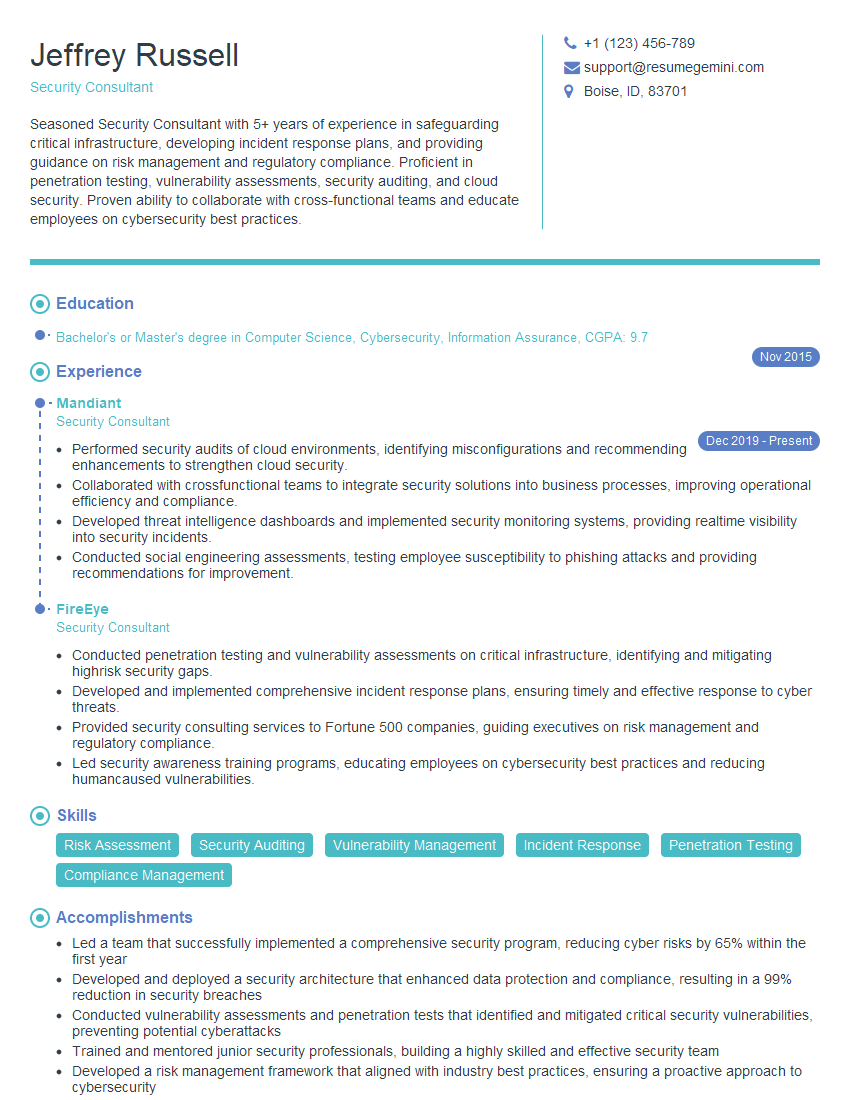
Security Consultant Resume Sample

Network Administrator Resume Sample
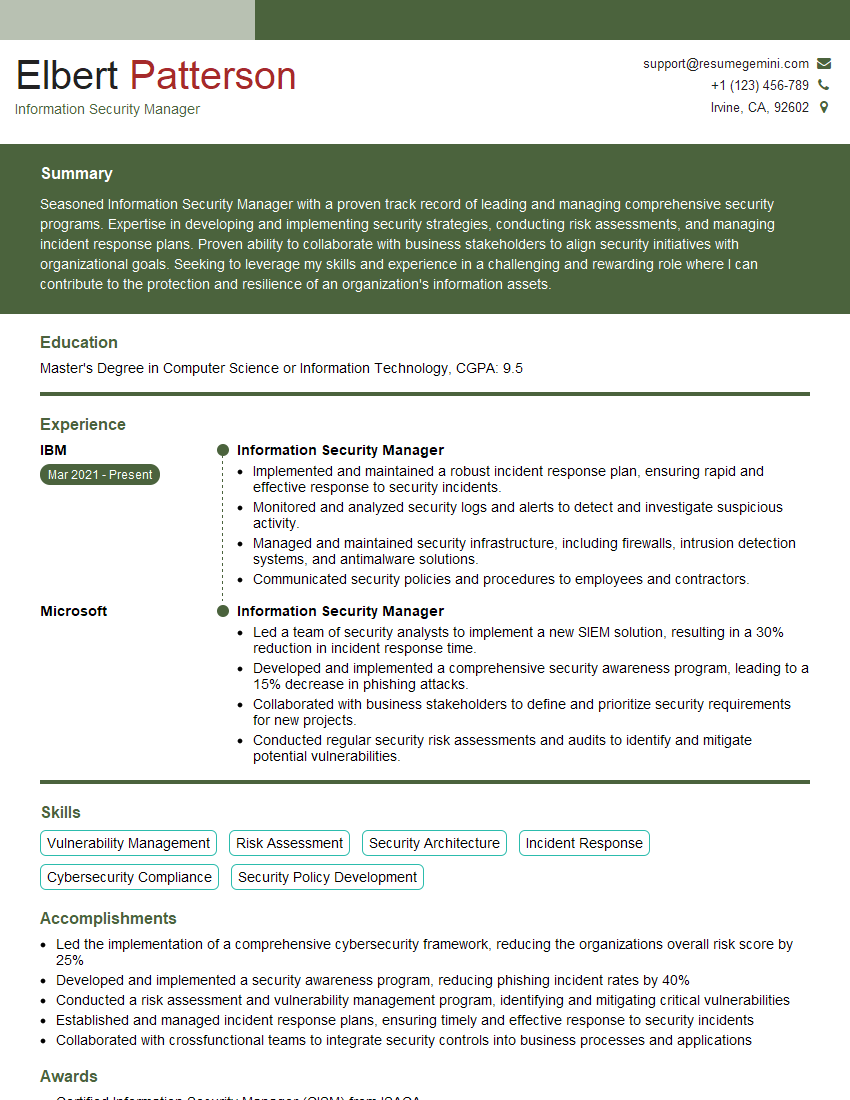
Information Security Manager Resume Sample
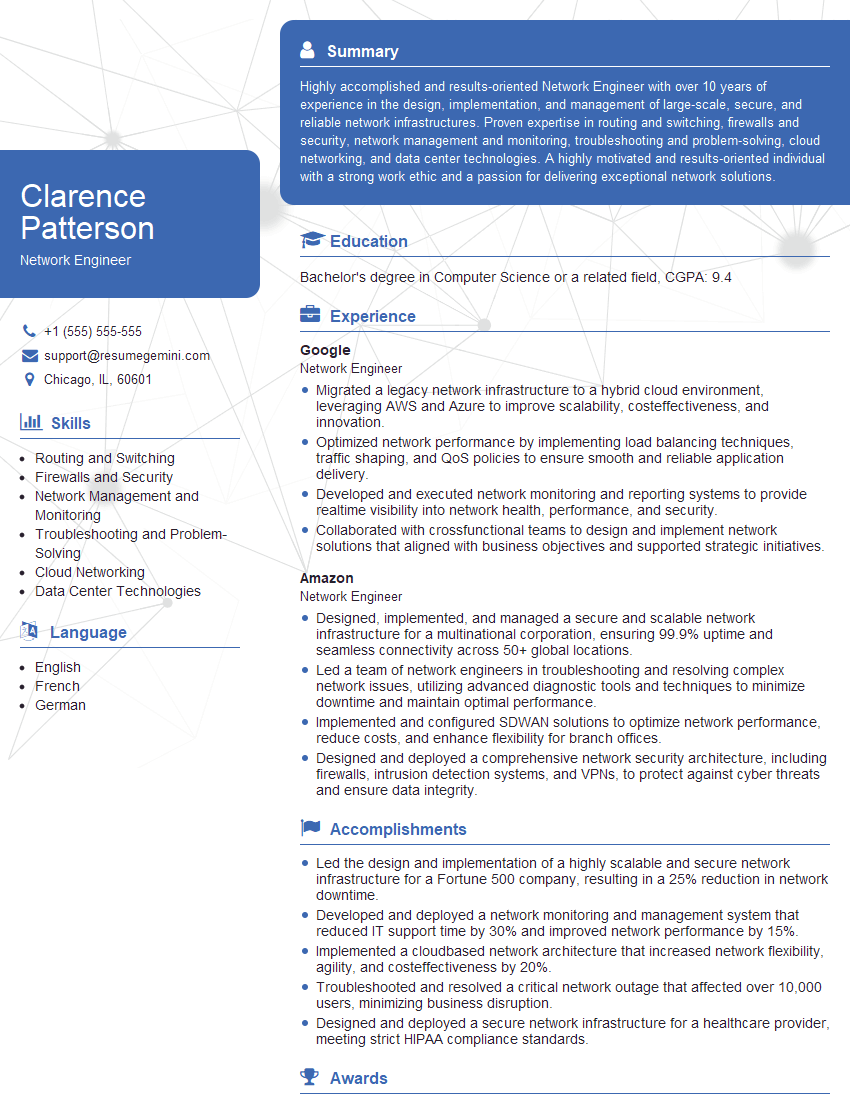
Network Engineer Resume Sample

Network Security Analyst Resume Sample
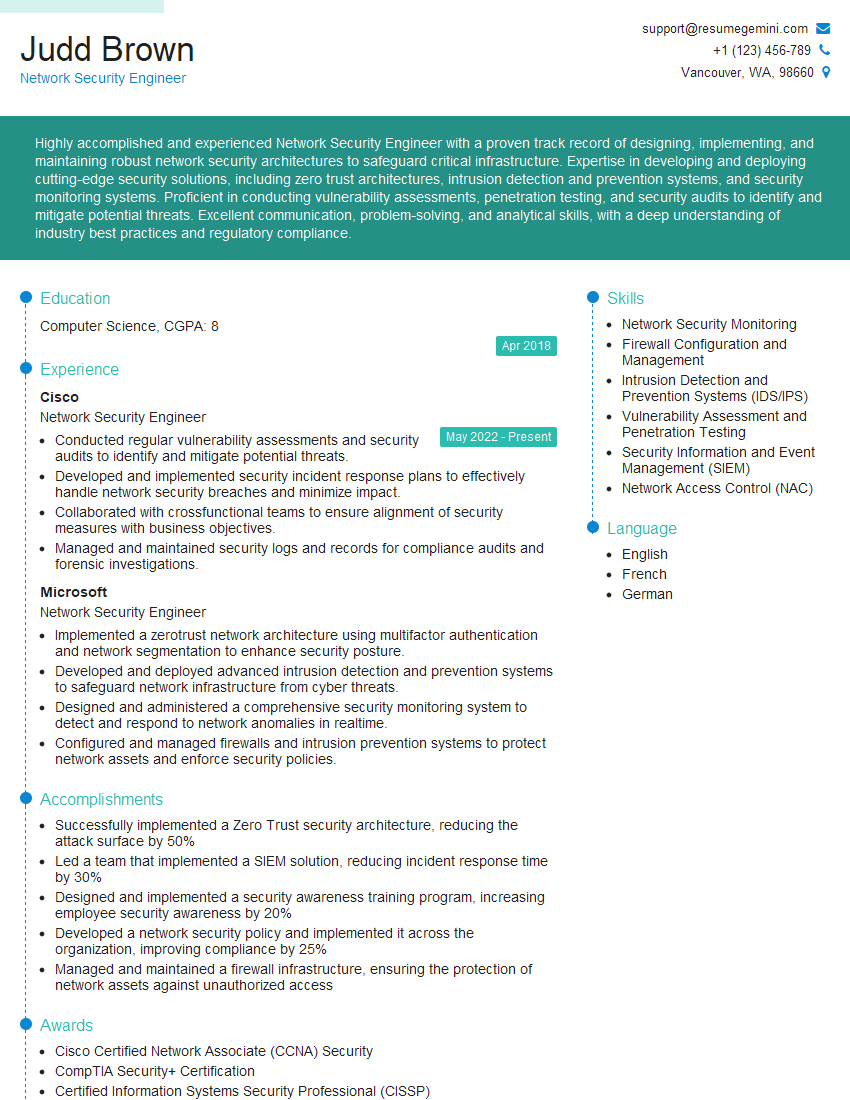
Network Security Engineer Resume Sample
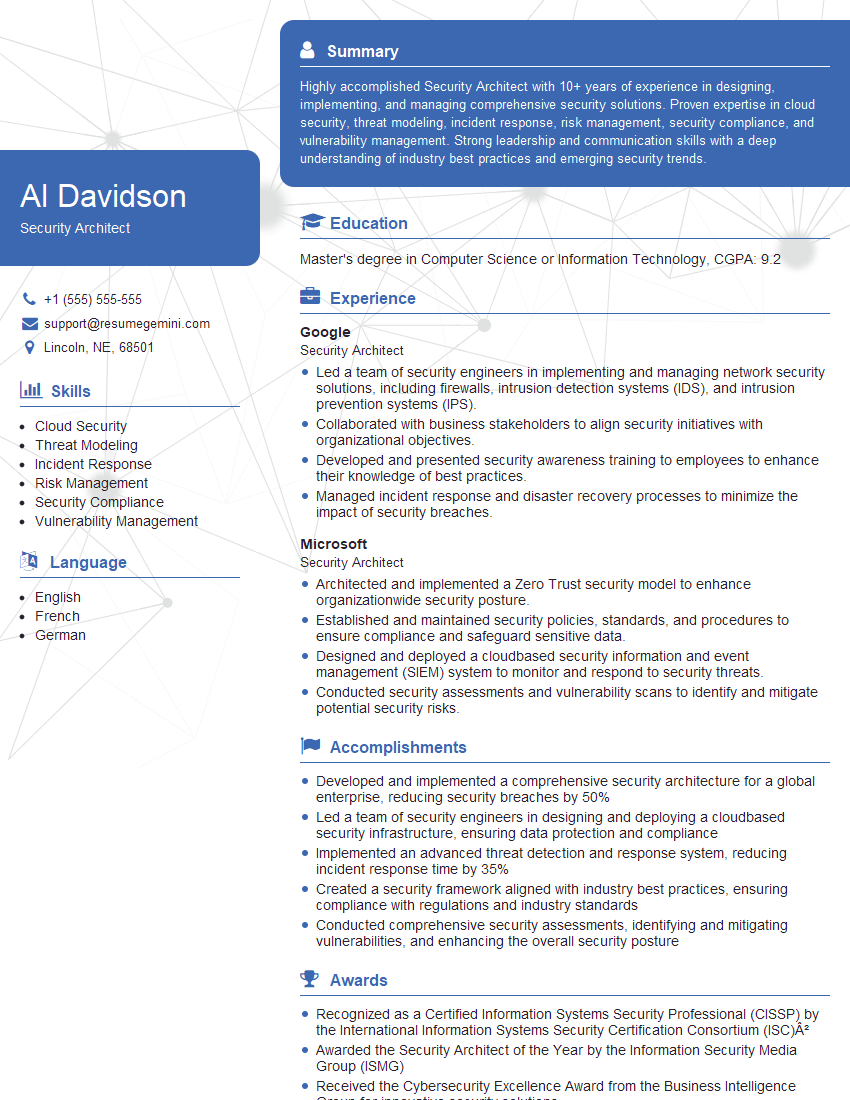
Security Architect Resume Sample
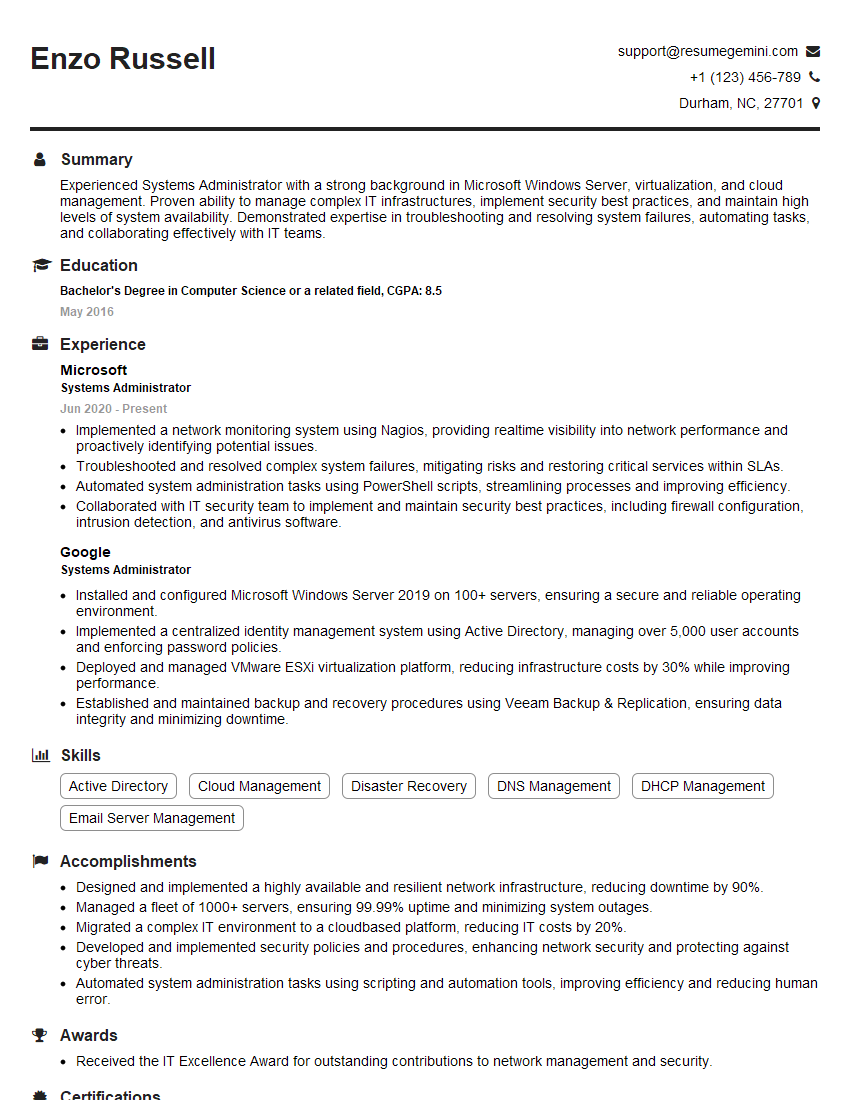
Systems Administrator Resume Sample

Infrastructure Engineer Resume Sample
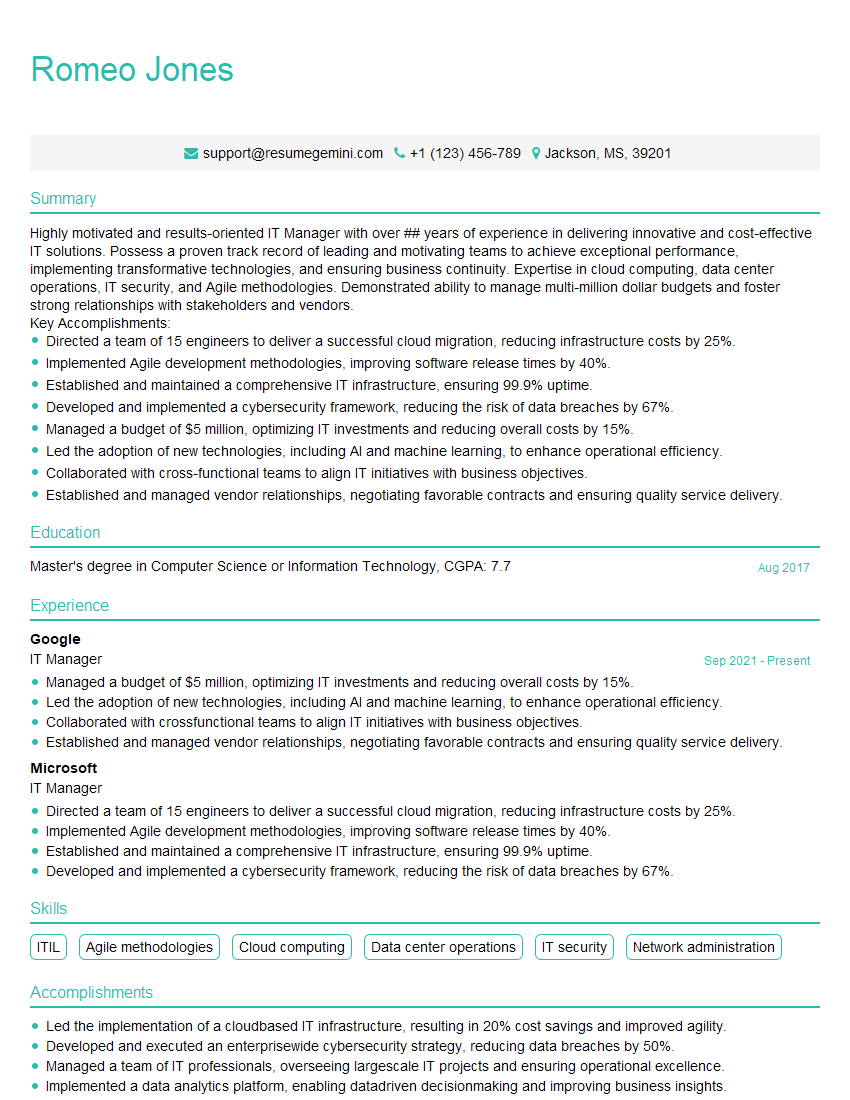
IT Manager Resume Sample

IT Security Specialist Resume Sample
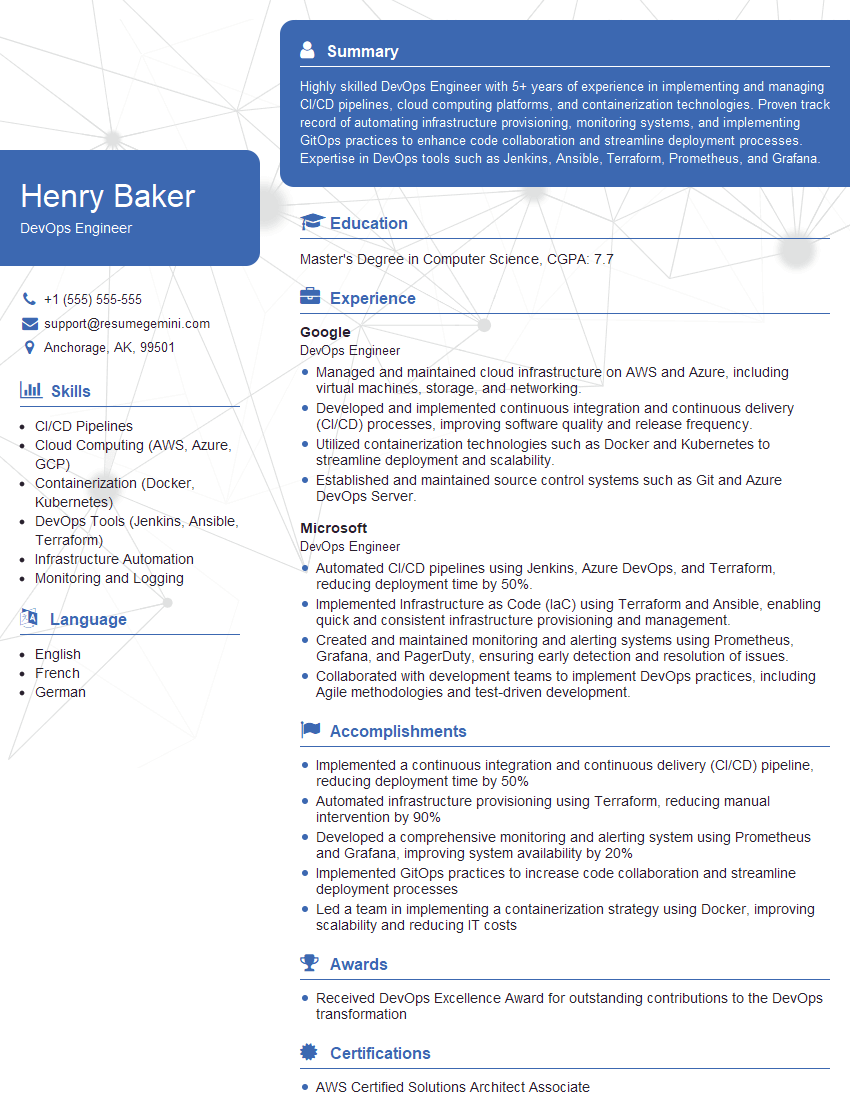
DevOps Engineer Resume Sample
Cloud Architect Resume Sample
Cybersecurity Analyst Resume Sample
Explore more articles
Users Rating of Our Blogs
Share Your Experience
We value your feedback! Please rate our content and share your thoughts (optional).
What Readers Say About Our Blog
I Redesigned Spongebob Squarepants and his main characters of my artwork.
https://www.deviantart.com/reimaginesponge/art/Redesigned-Spongebob-characters-1223583608
IT gave me an insight and words to use and be able to think of examples
Hi, I’m Jay, we have a few potential clients that are interested in your services, thought you might be a good fit. I’d love to talk about the details, when do you have time to talk?
Best,
Jay
Founder | CEO