Are you ready to stand out in your next interview? Understanding and preparing for Vocational Skills Training interview questions is a game-changer. In this blog, we’ve compiled key questions and expert advice to help you showcase your skills with confidence and precision. Let’s get started on your journey to acing the interview.
Questions Asked in Vocational Skills Training Interview
Q 1. Describe your experience designing vocational training curricula.
Designing effective vocational training curricula requires a deep understanding of both the target industry and adult learning principles. My approach begins with a thorough needs analysis, identifying the specific skills and knowledge gaps that the training aims to address. This involves collaborating with industry experts, reviewing job descriptions, and analyzing current industry trends. I then translate these needs into learning objectives, breaking down complex skills into manageable, sequential modules. Each module includes a mix of theoretical instruction, practical exercises, and real-world case studies. For example, in a curriculum for welding, we’d start with safety procedures, then progress to basic techniques, and finally culminate in complex projects simulating real-world scenarios. I ensure that the curriculum is aligned with relevant industry standards and certifications, and that assessments are integrated throughout to track learner progress.
For example, when developing a curriculum for medical assistants, I worked directly with local clinics to identify the most in-demand skills. This resulted in a curriculum that heavily emphasized electronic health record (EHR) software proficiency, patient communication techniques, and phlebotomy skills, all tailored to the specific needs of the local healthcare market.
Q 2. What methods do you use to assess learner progress in vocational skills training?
Assessing learner progress in vocational training is crucial for ensuring effectiveness and providing timely feedback. My approach is multifaceted and incorporates a variety of methods. I utilize formative assessments, such as quizzes, practical demonstrations, and observations during training sessions, to provide ongoing feedback and identify areas needing improvement. These formative assessments are low-stakes, focusing on learning rather than grading. Summative assessments, on the other hand, evaluate learners’ mastery of the overall curriculum. These might include comprehensive written exams, practical skills tests (like a simulated job task), or portfolio reviews demonstrating competency across a range of skills.
For instance, in a carpentry program, formative assessments might include observing a learner’s ability to use a saw correctly, while a summative assessment could be building a small, functional structure to demonstrate overall carpentry skills. I also use feedback forms and learner self-assessments to gather insights into their learning experience and identify areas for improvement in the training program itself.
Q 3. How do you adapt your teaching methods to accommodate diverse learning styles?
Accommodating diverse learning styles is paramount in effective vocational training. I employ a variety of teaching methods to cater to visual, auditory, and kinesthetic learners. Visual learners benefit from diagrams, charts, and videos; auditory learners from lectures and discussions; and kinesthetic learners from hands-on activities and simulations. I incorporate a blended learning approach, combining online modules with in-person workshops and practical labs. This allows learners to engage with the material in ways that best suit their learning preferences.
For example, when teaching troubleshooting skills in electronics, I’d use diagrams and videos for visual learners, explain troubleshooting steps verbally for auditory learners, and have hands-on lab sessions for kinesthetic learners to practice diagnosing and fixing faulty circuits. Providing multiple learning resources and allowing learners flexibility in how they approach the material are crucial for inclusion and success.
Q 4. Explain your experience with developing and delivering online vocational training.
I have extensive experience developing and delivering online vocational training. This involves creating engaging and interactive online modules using learning management systems (LMS) such as Moodle or Canvas. I focus on incorporating multimedia elements, such as videos, interactive simulations, and virtual labs, to make the learning experience dynamic and effective. Furthermore, I design the online training with asynchronous and synchronous elements; asynchronous modules allow learners to work at their own pace, while synchronous elements, such as live webinars or virtual office hours, provide opportunities for interaction and Q&A. Effective online training requires careful consideration of accessibility, ensuring compatibility across various devices and providing support mechanisms to address technical difficulties and learner needs.
For example, in an online welding course, I used virtual reality simulations to allow students to practice welding techniques in a safe and controlled environment before working with actual equipment. This minimized safety risks and allowed for repeated practice, critical in developing welding proficiency.
Q 5. How do you maintain up-to-date knowledge of industry best practices and technological advancements in vocational training?
Staying current with industry best practices and technological advancements is crucial for maintaining the relevance and effectiveness of vocational training. I achieve this through a combination of strategies. I actively participate in professional development opportunities, attending conferences, workshops, and webinars related to vocational education and training. I subscribe to industry journals and newsletters, and I regularly review current research and publications on effective teaching methodologies and technological innovations in the field. Furthermore, I maintain strong relationships with industry professionals, regularly seeking their feedback and insights on emerging trends and skill requirements. This ensures that the curricula I design reflect the latest industry demands and incorporate the most effective technologies.
For instance, I recently attended a conference on the use of augmented reality in vocational training, which led to the incorporation of AR applications into my curriculum for automotive repair.
Q 6. Describe your experience creating and evaluating vocational training assessments.
Creating and evaluating vocational training assessments involves a systematic approach ensuring they accurately measure learner competency. I use a variety of assessment methods, including written tests, practical demonstrations, oral presentations, and portfolio reviews, ensuring that the chosen method appropriately aligns with the learning objectives. The assessments must be valid – measuring what they intend to measure – and reliable – producing consistent results across different administrations. I also incorporate standards-based grading, defining clearly what constitutes mastery of each skill. After administering the assessments, I analyze the results to determine their effectiveness and identify areas for improvement in both the assessments and the training program.
For example, when assessing a culinary student’s skills, I would use a combination of written tests on food safety and theory, a practical cooking demonstration, and a portfolio showcasing their culinary creations. Analysis of the results would inform adjustments to the curriculum and assessment methods to better prepare students for success.
Q 7. How would you address a learner who is struggling to grasp a particular concept in vocational training?
Addressing a struggling learner requires a patient and multi-pronged approach. I begin by identifying the specific area of difficulty. This may involve discussions with the learner, reviewing their work, and observing their performance during practical tasks. Once the root cause is identified, I adapt my teaching methods to address the specific learning need. This could involve providing additional one-on-one instruction, using different teaching materials or strategies, or offering alternative learning activities. I also collaborate with other instructors or support staff, like learning specialists, to provide additional support if needed. It’s crucial to foster a supportive learning environment, ensuring the learner feels comfortable asking for help and receiving constructive feedback. The goal is to break down complex concepts into smaller, more manageable steps, building confidence and competence along the way.
For instance, if a learner is struggling with a specific welding technique, I might provide additional hands-on practice, demonstrate the technique multiple times using slow-motion video, and allow the learner to practice on different types of metal. Regular check-ins and positive reinforcement are key to helping the learner overcome their challenges.
Q 8. What strategies do you use to ensure learner engagement and motivation in vocational training?
Learner engagement and motivation are paramount in vocational training. My strategy is multifaceted, focusing on creating a stimulating and relevant learning environment. I believe in tailoring the experience to the individual, understanding their learning styles and prior experiences.
- Real-world relevance: I constantly connect the training to real-world applications, showing learners how the skills they’re acquiring directly translate to jobs and solve real-world problems. For example, in a carpentry course, we might build a small structure for a local charity, giving the project tangible meaning.
- Active learning techniques: Lectures are minimized; instead, I prioritize active learning methods like group projects, simulations, and hands-on activities. Think role-playing scenarios for customer service training, or mock interviews to build confidence.
- Personalized feedback and support: I provide regular, constructive feedback, focusing on both strengths and areas for improvement. I also ensure learners have access to individual support, addressing any specific challenges or concerns promptly. This might involve one-on-one mentoring or connecting them with additional resources.
- Gamification and incentives: I incorporate elements of gamification, such as points systems, leaderboards (used responsibly to avoid competition anxiety), and badges to acknowledge achievements, encouraging friendly competition and motivation.
- Collaboration and peer learning: Group work fosters collaboration, allowing learners to learn from each other and build teamwork skills – a valuable asset in many vocational fields.
By combining these approaches, I aim to create a vibrant and engaging learning environment where learners are motivated to succeed.
Q 9. How do you incorporate hands-on learning and practical application into your vocational training programs?
Hands-on learning and practical application are central to effective vocational training. Theory alone is insufficient; learners need to apply their knowledge in a practical setting to truly master the skills.
- Simulations and workshops: I extensively utilize simulations and workshops mirroring real-world work environments. For example, in a plumbing course, learners practice pipe fitting and repair in a simulated home setting. In a culinary arts program, they prepare meals in a fully equipped kitchen.
- Real-world projects: I regularly integrate real-world projects, where learners work on tasks similar to those they’ll encounter in their chosen profession. This could include building a small website for a client in a web development course, or diagnosing and repairing faulty equipment in a mechanics course.
- Mentorship and apprenticeship models: Where feasible, I incorporate mentorship and apprenticeship models, pairing learners with experienced professionals who can provide guidance and on-the-job training. This offers invaluable experience and helps bridge the gap between theory and practice.
- Industry-standard equipment and tools: Ensuring access to industry-standard equipment and tools is vital. Learners must be proficient with the same tools and technologies used in professional settings.
By providing these opportunities, learners develop not only the technical skills but also the practical experience crucial for employment success.
Q 10. Explain your approach to creating a safe and inclusive learning environment for vocational training.
Creating a safe and inclusive learning environment is a non-negotiable aspect of my approach to vocational training. This involves cultivating a culture of respect, understanding, and support for all learners.
- Clear expectations and guidelines: From day one, I establish clear expectations regarding behavior, respect, and communication. This creates a framework for respectful interaction amongst learners and instructors. A code of conduct is explicitly discussed and agreed upon.
- Addressing harassment and discrimination: I have zero tolerance for harassment, discrimination, or bullying of any kind. Clear procedures for reporting and addressing such incidents are established, and I ensure learners are aware of these procedures and feel comfortable using them.
- Accessibility and inclusivity: I adapt the learning materials and methods to cater to diverse learning styles and needs. This may include providing alternative formats for learning materials, making reasonable adjustments for learners with disabilities, and incorporating culturally sensitive teaching approaches. For example, offering translated materials or modifying assessments to suit diverse learning styles.
- Promoting a sense of community: Building a strong sense of community is vital. Icebreaker activities, group projects, and social events can foster a supportive and inclusive environment where learners feel comfortable sharing their ideas and experiences.
Creating this environment helps ensure all learners feel safe, respected, and able to reach their full potential. A safe environment fosters better learning outcomes.
Q 11. How do you measure the effectiveness of your vocational training programs?
Measuring the effectiveness of vocational training programs requires a multi-faceted approach, combining quantitative and qualitative data.
- Learner outcomes: I track learner performance throughout the program, using assessments, tests, and practical demonstrations to measure their progress and mastery of skills. This includes pre- and post-training assessments to measure skill improvement.
- Job placement rates: A key indicator is the job placement rate of our graduates. We actively track where our graduates find employment and their job satisfaction.
- Employer feedback: I actively solicit feedback from employers who hire our graduates. This provides valuable insight into the relevance and effectiveness of the training.
- Learner satisfaction surveys: Regular learner satisfaction surveys gauge their perception of the program’s quality, identifying areas for improvement.
- Retention rates: Long-term retention rates of knowledge and skills are also important to monitor. This might involve follow-up surveys or interviews several months after completion of training.
By analyzing this data, we can identify areas of strength and weakness in our programs and make data-driven improvements to enhance their effectiveness.
Q 12. Describe your experience working with industry partners to develop relevant vocational training programs.
Collaboration with industry partners is crucial for developing relevant and effective vocational training programs. This ensures the curriculum remains up-to-date and aligns with industry needs and demands.
- Advisory boards: I’ve worked with industry advisory boards composed of professionals from various sectors. These boards provide valuable insights into current industry trends, skill requirements, and emerging technologies.
- Joint curriculum development: I’ve participated in joint curriculum development with industry partners, ensuring the training content is relevant and aligned with industry standards. This includes working directly with companies to tailor training to their specific needs. For example, working with a local hospital to develop a specific nursing assistant program.
- Work-integrated learning opportunities: I facilitate work-integrated learning opportunities for learners, such as internships, apprenticeships, and placements in real-world work settings. This provides valuable practical experience and helps bridge the gap between education and employment.
- Guest speakers and workshops: I regularly invite industry professionals to deliver guest lectures and workshops, sharing their expertise and real-world insights with learners.
These collaborations ensure our graduates possess the skills and knowledge demanded by the industry, increasing their employability and contributing to the overall success of our training programs.
Q 13. How do you handle conflicts or disagreements among learners in a vocational training setting?
Conflicts and disagreements among learners are inevitable in any learning environment. My approach focuses on early intervention, mediation, and fostering a culture of respectful communication.
- Early intervention: I address minor disagreements promptly and informally, often through a casual conversation with the involved learners. This usually involves listening to each side and guiding them to find common ground.
- Mediation: For more serious conflicts, I use a mediation approach, creating a safe space where learners can express their concerns and work towards a resolution. This often involves helping them identify the root cause of the conflict and finding mutually acceptable solutions.
- Clear communication guidelines: I reinforce the importance of clear and respectful communication, providing learners with strategies for expressing their concerns constructively. This might include training on active listening and conflict resolution skills.
- Consequences for disruptive behavior: In cases of serious misconduct or repeated conflicts, formal disciplinary action is taken in accordance with the institution’s policies. This may include warnings, suspension, or expulsion.
My goal is not just to resolve immediate conflicts but also to build learners’ interpersonal skills, enabling them to manage disagreements effectively in future workplace environments.
Q 14. What is your experience with different vocational training delivery methods (e.g., online, in-person, blended learning)?
I have extensive experience with various vocational training delivery methods, recognizing that the optimal approach often depends on the specific training program, learner needs, and available resources.
- In-person training: Traditional in-person training remains highly effective for many vocational skills, especially those requiring hands-on practice and close instructor supervision. The immediate feedback and interaction create a strong learning environment. This is ideal for learning practical skills needing direct demonstration and feedback.
- Online training: Online training offers flexibility and accessibility, reaching learners in remote locations or those with scheduling constraints. However, effective online training requires careful design and use of interactive learning materials to maintain engagement. Effective use of online forums and video conferencing can help build community in virtual settings. For example, using a virtual reality simulator for a construction course can replicate real work experiences.
- Blended learning: Blended learning, combining online and in-person components, leverages the strengths of both approaches. Online modules can deliver theoretical content, while in-person sessions focus on practical application and hands-on training. This allows customization of the learning experience for diverse needs.
My approach is to select the delivery method best suited to the specific needs of the program and learners, ensuring a high-quality learning experience irrespective of the format.
Q 15. How do you address learner feedback and use it to improve your vocational training programs?
Learner feedback is the cornerstone of effective vocational training. It allows us to identify areas of strength and weakness in our programs, ensuring they remain relevant and impactful. We gather feedback through various channels, including post-training surveys, informal discussions, focus groups, and performance reviews.
For example, if consistent negative feedback points to a lack of clarity in explaining a specific welding technique, we’d revise the training materials, incorporate more visual aids, and potentially add hands-on practice sessions with increased instructor supervision. We analyze the data quantitatively (e.g., calculating average satisfaction scores) and qualitatively (e.g., identifying recurring themes in open-ended responses). This integrated approach helps us to make data-driven improvements, tailoring our programs to the specific needs and learning styles of our learners.
A practical example involved a carpentry program. Feedback highlighted difficulty understanding complex blueprint reading. In response, we implemented a phased approach to blueprint interpretation, starting with simplified diagrams and gradually increasing complexity. We also integrated interactive software that simulated blueprint reading and problem-solving, resulting in significant improvement in learner performance.
Career Expert Tips:
- Ace those interviews! Prepare effectively by reviewing the Top 50 Most Common Interview Questions on ResumeGemini.
- Navigate your job search with confidence! Explore a wide range of Career Tips on ResumeGemini. Learn about common challenges and recommendations to overcome them.
- Craft the perfect resume! Master the Art of Resume Writing with ResumeGemini’s guide. Showcase your unique qualifications and achievements effectively.
- Don’t miss out on holiday savings! Build your dream resume with ResumeGemini’s ATS optimized templates.
Q 16. Describe your experience with different assessment methods (e.g., written exams, practical demonstrations, portfolios).
Assessment in vocational training needs to be multifaceted to accurately reflect the diverse skills acquired. Written exams test theoretical knowledge, but practical demonstrations and portfolios provide crucial evidence of practical competency.
- Written Exams: These assess theoretical understanding of concepts and principles. For example, in an electrical technician program, a written exam might cover safety regulations and circuit analysis.
- Practical Demonstrations: These are crucial for evaluating hands-on skills. A welding student, for example, might demonstrate their ability to perform different types of welds, adhering to safety protocols. The instructor would assess the quality, speed, and precision of the work.
- Portfolios: Portfolios allow learners to showcase their work over time, highlighting their progress and skills. A graphic design student might include various design projects, showcasing their creativity and proficiency in different software programs. This method allows for a more holistic assessment of skills development.
I’ve found that a combination of these methods offers the most comprehensive assessment of learner abilities, providing a balanced picture of both theoretical knowledge and practical skills.
Q 17. How do you ensure that your vocational training programs align with industry standards and requirements?
Maintaining alignment with industry standards is paramount. We achieve this through a multi-pronged approach:
- Industry Collaboration: We regularly consult with industry professionals – employers, trade associations, and subject matter experts – to ensure our curriculum and assessment methods remain current and relevant. We involve them in curriculum design, providing feedback on the content and skills taught.
- Industry-Recognized Certifications: We aim to offer training programs that lead to nationally or internationally recognized certifications, validating the skills acquired by our learners. This increases their employability and competitiveness in the job market.
- Regular Curriculum Reviews: We conduct regular reviews of our training programs, updating them based on changes in industry best practices, new technologies, and evolving job requirements. This ensures that our learners acquire the skills that are actually needed in the workplace.
For example, our plumbing program is regularly updated based on the latest plumbing codes and regulations. Our instructors also maintain close ties with local plumbing companies, ensuring the training remains practical and relevant to industry demands.
Q 18. What are some common challenges you face in delivering vocational training, and how do you overcome them?
Several challenges exist in vocational training. One significant challenge is maintaining up-to-date equipment and resources, especially in rapidly evolving technological fields. Funding limitations and the high cost of specialized tools can make this difficult. We address this by exploring partnerships with equipment suppliers for discounted rates, securing grants for equipment upgrades, and fostering relationships with industry partners who can donate or lend equipment.
Another challenge is addressing learner diversity – different learning styles, prior experiences, and levels of motivation. We tackle this by using diverse teaching methods, offering individualized learning plans, and creating supportive learning environments. This includes peer mentoring and providing additional support for learners who may be struggling.
Finally, ensuring high learner engagement can be a challenge, particularly in subjects that learners might find initially difficult. To counter this, we incorporate gamification techniques, hands-on activities, project-based learning, and real-world case studies to keep learners actively involved and motivated.
Q 19. How do you stay current with changes in technology and their impact on vocational training?
Staying current is critical. I achieve this through several methods:
- Professional Development: I actively participate in industry conferences, workshops, and online courses to stay abreast of new technologies and trends. This includes attending conferences focused on educational technology and vocational skill development.
- Industry Publications and Research: I regularly read industry journals, research papers, and online resources to understand technological advancements and their implications for vocational training.
- Networking: I maintain a network of contacts within the industry, including professionals, educators, and researchers, allowing me to learn about new developments and best practices. This includes participating in online forums and communities related to vocational education.
For instance, I recently attended a workshop on the use of virtual and augmented reality in welding training, leading to the integration of VR simulations into our curriculum.
Q 20. How do you integrate technology effectively into your vocational training programs?
Technology enhances vocational training significantly. We integrate technology strategically and thoughtfully:
- Computer-Aided Design (CAD) Software: In design programs, we use CAD software to simulate real-world scenarios, allowing learners to practice design skills without the cost or risk of physical materials.
- Simulation Software: We employ simulation software in areas like automotive repair and mechatronics to provide safe and controlled environments for learners to practice complex procedures.
- Online Learning Platforms: We utilize online learning platforms for delivering supplemental materials, providing access to resources outside of class time, and facilitating online assessments.
- Virtual Reality (VR) and Augmented Reality (AR): These technologies offer immersive learning experiences, allowing for realistic practice in safety-critical environments.
For example, our automotive repair program uses simulation software to allow students to practice diagnosing and repairing complex vehicle systems without risking damage to real vehicles. The VR component adds a visual layer that helps students understand the process much better.
Q 21. Describe your experience with developing individualized learning plans for learners with diverse needs.
Individualized learning plans (ILPs) are crucial for catering to diverse learner needs. We begin by conducting thorough assessments of each learner’s prior skills, learning styles, and personal goals. We use a variety of assessment tools, including aptitude tests, interviews, and observations.
Based on this assessment, we develop a personalized plan that outlines specific learning objectives, strategies, and resources tailored to the individual learner. For example, a learner with a strong visual learning style might benefit from more visual aids and demonstrations, while a learner with a kinesthetic learning style might require more hands-on activities. Learners with disabilities might need additional support and accommodations. We may also adjust the pace of learning to accommodate different levels of prior knowledge and skill.
Regular monitoring and evaluation of the ILP are crucial, ensuring the plan remains relevant and effective. We frequently meet with each learner to review their progress, discuss any challenges, and make necessary adjustments to the plan. This iterative process ensures that the training remains relevant and effective for all learners.
Q 22. How do you manage multiple projects and deadlines simultaneously in a vocational training context?
Managing multiple vocational training projects and deadlines effectively requires a structured approach. I utilize project management methodologies like Agile, breaking down large projects into smaller, manageable tasks with clearly defined timelines and deliverables. This allows for better organization and prioritization. For instance, I might have one project focused on developing a new welding curriculum, another on updating our carpentry program, and a third on implementing a new online learning platform. Each receives a dedicated schedule and resources, while I track progress through Gantt charts or Kanban boards. Regular team meetings ensure everyone is aligned and any roadblocks are addressed proactively. This proactive approach, combined with effective communication and a focus on realistic scheduling, prevents project overlap and ensures timely completion of all training initiatives.
Q 23. What are your preferred methods for tracking learner progress and providing timely feedback?
Tracking learner progress and providing timely feedback is paramount. I use a blended approach incorporating various methods. This includes regular formative assessments like quizzes and practical exercises, summative assessments like final exams and projects, and ongoing observation during practical training sessions. I utilize Learning Management Systems (LMS) like Moodle or Canvas to automatically track progress on online assignments and quizzes, providing instant feedback. For practical work, I maintain detailed checklists and observation logs, providing personalized feedback within 24-48 hours of the assessment. This rapid feedback loop encourages learners to address any deficiencies quickly and promotes continuous improvement. For example, if a learner struggles with a specific welding technique, I’ll provide immediate personalized instruction and guidance, rather than waiting until the end of the course. This ensures they master the skill before moving on to more advanced techniques.
Q 24. How do you foster collaboration and teamwork among learners in your vocational training programs?
Fostering collaboration and teamwork is crucial in vocational training, mirroring real-world workplace dynamics. I integrate collaborative projects, group assignments, and peer learning activities into the curriculum. For instance, in a carpentry program, learners might work together on building a small structure, requiring them to plan, delegate tasks, and problem-solve collectively. I also utilize techniques like think-pair-share and group discussions to encourage active participation and knowledge sharing. I establish clear guidelines for group work, defining roles and responsibilities, and providing regular feedback on teamwork effectiveness. I facilitate team-building activities to enhance communication and trust among learners, creating a supportive and collaborative learning environment.
Q 25. Explain your understanding of adult learning principles and how they apply to vocational training.
Adult learning principles significantly influence my approach to vocational training. I understand that adults are self-directed, experience-based learners who bring diverse backgrounds and motivations to the classroom. I apply Andragogy, the art and science of helping adults learn, by focusing on: 1) Relevance: Connecting training to learners’ real-world experiences and career goals. 2) Experience: Building upon learners’ existing knowledge and skills. 3) Self-Concept: Respecting learners’ autonomy and fostering a sense of ownership in their learning. 4) Readiness to Learn: Motivating learners through clear objectives and practical applications. 5)Orientation to Learning: Providing opportunities for problem-solving and application of learned skills. For example, I would tailor a training module on computer programming to include case studies relevant to the learners’ chosen industries, rather than purely theoretical exercises.
Q 26. Describe your experience mentoring or coaching learners in vocational training.
I have extensive experience mentoring and coaching vocational training learners. My approach focuses on individualized support, tailored to each learner’s strengths and weaknesses. I provide regular one-on-one sessions to discuss progress, address challenges, and offer guidance on career pathways. I encourage self-reflection and goal setting, empowering learners to take ownership of their learning journey. I’ve helped numerous learners overcome obstacles, both academic and personal, by providing practical advice and emotional support. For instance, I mentored a learner who was struggling with confidence, providing strategies for self-advocacy and helping them identify their strengths. Through consistent support, this learner not only excelled in their training but also secured a rewarding job after graduation.
Q 27. How do you ensure the relevance and effectiveness of your vocational training programs in a changing job market?
Ensuring relevance and effectiveness in a changing job market is crucial. I maintain close connections with industry partners through regular consultations and advisory boards, gathering feedback on current skill demands and emerging technologies. I incorporate this feedback into curriculum design, updating training materials and equipment to reflect industry best practices. I also integrate emerging technologies and industry-recognized certifications into the programs. For example, if there is a high demand for 3D printing skills, we would incorporate that into our design programs. By adapting proactively to market changes, our graduates gain competitive edge and increased employability.
Q 28. How do you promote and market your vocational training programs to potential learners?
Promoting and marketing our vocational training programs involves a multi-pronged approach. We utilize online platforms like social media and our website to highlight program features, testimonials, and success stories. We participate in career fairs and industry events, providing direct interaction with potential learners. We also collaborate with local businesses and community organizations to reach out to specific target audiences. Partnerships with local schools and colleges provide a pipeline of potential students. We emphasize the practical skills acquired, career opportunities, and financial return on investment in our marketing materials. A strong emphasis on testimonials from past successful graduates adds credibility and builds trust.
Key Topics to Learn for Your Vocational Skills Training Interview
- Understanding the Training Program: Thoroughly review the curriculum, learning objectives, and assessment methods of your vocational skills training program. Be prepared to discuss your understanding of the program’s overall goals and how it aligns with your career aspirations.
- Practical Skills & Application: Focus on the practical skills you’ve acquired. Think about specific projects, assignments, or challenges you faced and how you applied your learned skills to solve them. Be ready to illustrate your competency with real-world examples.
- Safety Procedures & Regulations: Depending on your field, understanding and adhering to safety regulations is paramount. Review any relevant safety protocols you learned and be prepared to discuss their importance and application in your chosen vocation.
- Teamwork & Collaboration: Many vocational roles require effective teamwork. Prepare examples demonstrating your ability to collaborate, communicate effectively, and contribute positively within a team environment.
- Problem-Solving & Critical Thinking: Highlight instances where you had to troubleshoot problems, analyze situations, and make informed decisions based on your training. Showcase your ability to think critically and creatively to find solutions.
- Professionalism & Workplace Ethics: Employers value professionalism. Review workplace ethics, appropriate communication styles, and the importance of punctuality and reliability. Be ready to discuss how you embody these qualities.
- Industry Trends & Technologies: Stay updated on current trends and technologies relevant to your chosen vocation. Demonstrating awareness of industry developments shows initiative and a commitment to ongoing learning.
Next Steps: Unlock Your Career Potential
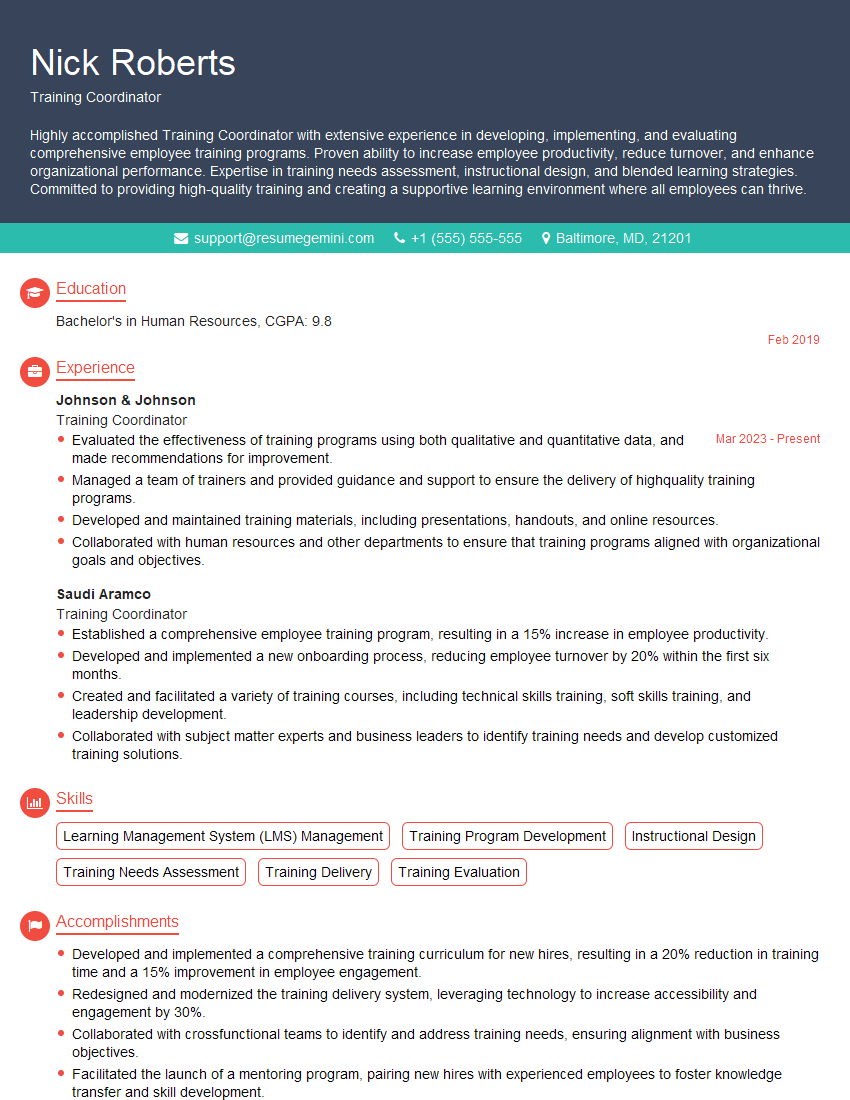
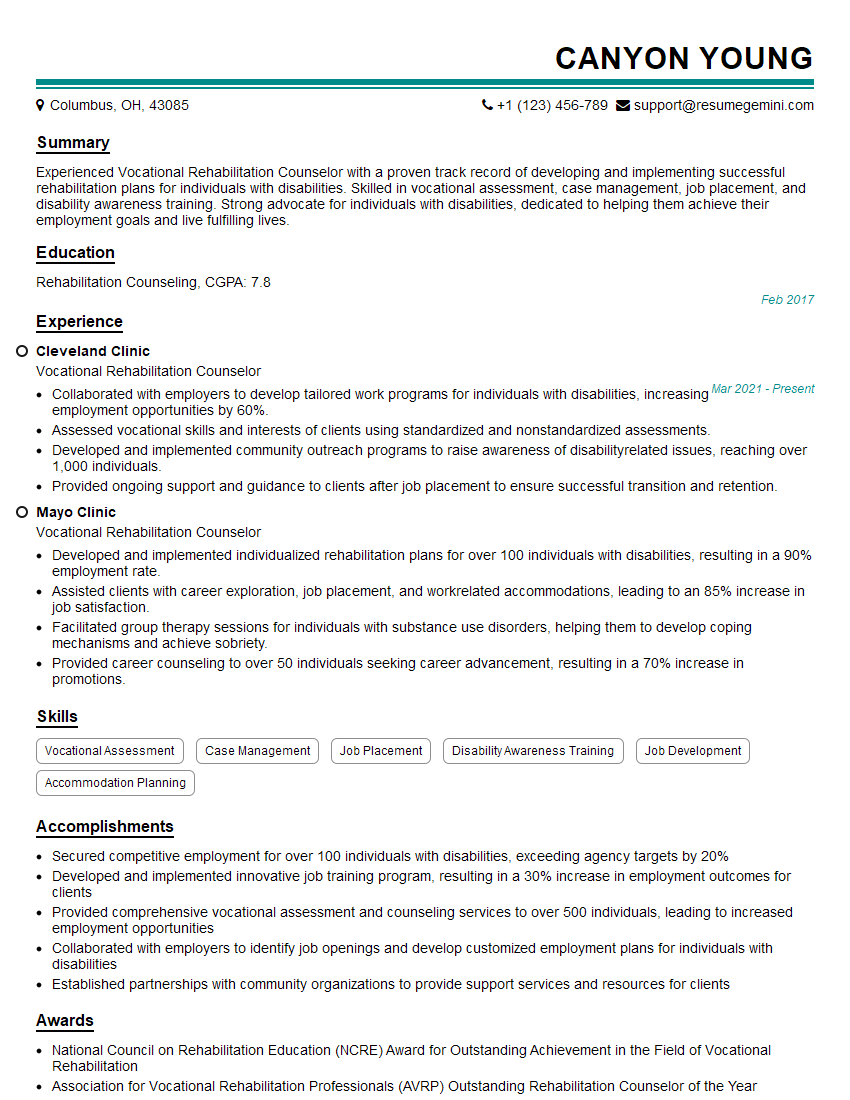
Mastering your vocational skills training is the key to unlocking a successful and fulfilling career. A strong foundation in these practical skills, coupled with a well-crafted resume, will significantly increase your job prospects. To make sure you stand out to potential employers, focus on building an ATS-friendly resume that highlights your achievements and skills effectively. We highly recommend using ResumeGemini, a trusted resource for building professional resumes. ResumeGemini provides examples of resumes tailored to Vocational Skills Training, giving you a head start in presenting yourself as the ideal candidate. Take the next step and create a resume that truly showcases your potential.
Explore more articles
Users Rating of Our Blogs
Share Your Experience
We value your feedback! Please rate our content and share your thoughts (optional).
What Readers Say About Our Blog
I Redesigned Spongebob Squarepants and his main characters of my artwork.
https://www.deviantart.com/reimaginesponge/art/Redesigned-Spongebob-characters-1223583608
IT gave me an insight and words to use and be able to think of examples
Hi, I’m Jay, we have a few potential clients that are interested in your services, thought you might be a good fit. I’d love to talk about the details, when do you have time to talk?
Best,
Jay
Founder | CEO