Cracking a skill-specific interview, like one for Vocational Training Assistance, requires understanding the nuances of the role. In this blog, we present the questions you’re most likely to encounter, along with insights into how to answer them effectively. Let’s ensure you’re ready to make a strong impression.
Questions Asked in Vocational Training Assistance Interview
Q 1. Explain your experience in developing and implementing vocational training programs.
Developing and implementing vocational training programs requires a multifaceted approach. It begins with a thorough needs assessment to identify skill gaps in the target workforce or individual learners. This assessment informs the curriculum design, ensuring alignment with industry demands and learner capabilities. My experience includes designing programs ranging from basic skills training (like digital literacy or workplace safety) to highly specialized technical skills training (such as CNC machining or advanced welding techniques). For example, I once developed a program for unemployed young adults focusing on entry-level IT skills, resulting in a 75% job placement rate within six months. The implementation phase involves securing resources (training facilities, equipment, instructors), recruiting trainees, scheduling classes, and monitoring progress. A robust evaluation system, including pre- and post-training assessments, is crucial to measure program effectiveness and make necessary adjustments.
- Needs Assessment: Surveys, interviews, job market analysis
- Curriculum Development: Learning objectives, instructional materials, assessment methods
- Implementation: Instructor training, resource allocation, learner support
- Evaluation: Program impact, learner outcomes, employer feedback
Q 2. Describe your methods for assessing individual learner needs and tailoring training plans accordingly.
Assessing individual learner needs is paramount to tailoring effective training plans. I employ a combination of methods including pre-training assessments (tests, interviews, questionnaires), observation of practical skills, and discussions to understand learning styles, prior experience, and learning goals. For instance, I might use a diagnostic test to evaluate a trainee’s existing computer skills before placing them in a more advanced course. Based on this data, I create personalized learning plans that address specific skill gaps and incorporate diverse learning techniques (visual aids, hands-on activities, simulations) to cater to different learning preferences. Regular check-ins and feedback sessions ensure the plan remains relevant and effective throughout the training process. This individualized approach fosters learner engagement and maximizes learning outcomes. Think of it like building a custom house – you wouldn’t use the same blueprint for every client; you adapt the design to their unique needs and preferences.
Q 3. How do you ensure the effectiveness of vocational training programs?
Ensuring the effectiveness of vocational training programs relies heavily on a robust evaluation system. This involves setting clear learning objectives at the outset, measuring trainee progress against these objectives throughout the program, and collecting feedback from trainees and employers post-training. Methods include pre- and post-training assessments (tests, practical demonstrations, projects), regular progress monitoring, and feedback surveys. I also incorporate employer feedback sessions to assess the relevance and efficacy of the training in the workplace. For example, if post-training assessments reveal a weakness in a particular skill, the curriculum can be revised to address this gap. Analyzing data from all these sources enables continuous improvement and ensures the program remains aligned with industry needs and learner goals. Regular review and updates are key to maintaining the program’s relevance and effectiveness.
Q 4. What strategies do you use to motivate and engage trainees in the learning process?
Motivating and engaging trainees is crucial for successful learning. I employ several strategies to foster a positive learning environment. These include setting clear expectations and providing regular positive feedback, creating a collaborative learning environment where trainees can support each other, incorporating hands-on activities and real-world projects to make learning relevant, using technology effectively to enhance engagement, and providing opportunities for trainees to showcase their skills. For example, organizing friendly competitions or group projects can boost motivation and teamwork. Regular recognition of achievements, both big and small, is also essential to maintain momentum. I also encourage trainees to set personal learning goals and track their progress, promoting a sense of ownership and accomplishment. A key aspect is adapting my teaching style to connect with the diverse learning styles and personalities within the group.
Q 5. How do you handle situations where trainees struggle with specific skills or concepts?
When trainees struggle with specific skills or concepts, I adopt a multifaceted approach to support their learning. This begins with identifying the root cause of the difficulty – is it a lack of foundational knowledge, a misunderstanding of the concept, or a lack of confidence? Once the problem is pinpointed, I provide individualized support through additional instruction, one-on-one tutoring, and access to supplementary resources (videos, workbooks, online tutorials). I also employ differentiated instruction, adapting my teaching methods to suit the learner’s needs. For example, I might use visual aids for a visual learner or incorporate hands-on activities for a kinesthetic learner. Positive reinforcement and encouragement are crucial to build confidence and motivation. In severe cases, referral to other support services, like academic advisors or career counselors, may be necessary.
Q 6. Describe your experience in collaborating with employers to design and deliver relevant training programs.
Collaboration with employers is vital for designing and delivering relevant training programs. I actively engage with employers through regular meetings, site visits, and surveys to understand their current and future workforce needs, identify skill gaps, and ensure the training content aligns with their requirements. This involves discussing job descriptions, analyzing workplace tasks, and understanding the technologies and tools used in the industry. Employer input ensures the training is practical, relevant, and meets industry standards. For example, I’ve partnered with local manufacturing companies to design customized training programs that equip trainees with the specific skills needed to work on their production lines, leading to direct job placement after training completion. This collaborative approach creates a strong link between training and employment, maximizing the impact of the program.
Q 7. How do you stay up-to-date on the latest trends and best practices in vocational training?
Staying current with the latest trends and best practices in vocational training requires a continuous learning approach. I regularly attend conferences and workshops, participate in professional development programs, and actively engage with relevant professional organizations. I subscribe to industry publications, journals, and online resources to stay abreast of new technologies, teaching methodologies, and industry best practices. Networking with other professionals in the field allows for exchange of ideas and insights. Regular review and update of training materials and methodologies based on the latest research and feedback are essential to maintain program effectiveness and relevance. For example, I recently completed a certification course on using virtual reality (VR) for vocational training, enhancing my ability to create immersive and engaging learning experiences.
Q 8. How do you measure the success of a vocational training program?
Measuring the success of a vocational training program goes beyond simply completing the course. We need a multi-faceted approach, using both quantitative and qualitative data.
- Quantitative Metrics: These are the numbers. We track things like completion rates (percentage of trainees who finish the program), employment rates (percentage of graduates employed in their field within a specific timeframe, say 6 months or a year), salary levels achieved, and trainee satisfaction scores (measured through surveys). For example, a 90% completion rate combined with an 85% employment rate within six months would indicate a very successful program.
- Qualitative Metrics: These are the stories. We assess the skills gained by observing trainees’ performance in practical assessments, analyzing their feedback, and conducting employer surveys. Do employers feel the training adequately prepared graduates? Are graduates utilizing the skills learned? Feedback from both employers and trainees is crucial here. For instance, consistently positive employer feedback regarding trainee performance reflects a strong program.
- Return on Investment (ROI): A crucial element. We analyze the costs of the program (instructor salaries, materials, facilities) against the increased earning potential of graduates. A high ROI shows that the program is not only effective but also financially sound.
Ultimately, a successful vocational training program produces skilled, employable graduates who contribute positively to the workforce and report feeling satisfied with their training experience.
Q 9. Explain your experience with different training methodologies (e.g., on-the-job training, classroom instruction, online learning).
Throughout my career, I’ve utilized a variety of training methodologies, each with its strengths and weaknesses.
- On-the-job training (OJT): This hands-on approach is invaluable for developing practical skills. I’ve overseen numerous OJT programs where trainees learned by assisting experienced professionals, gradually taking on more responsibility. For example, a trainee mechanic might start by observing engine repairs before eventually performing them under supervision. The advantage is immediate application of knowledge, but it relies heavily on the mentor’s skill and availability.
- Classroom Instruction: This traditional method is excellent for imparting theoretical knowledge and foundational concepts. I’ve designed and delivered numerous classroom-based courses, utilizing interactive lectures, group discussions, and presentations. This method ensures everyone receives the same information, but can lack the practical application found in OJT.
- Online Learning: The digital age demands online solutions. I have extensive experience developing and managing online training modules, utilizing platforms like Moodle or Coursera. These modules allow for flexible learning, accommodating diverse schedules. However, successful online learning requires careful design to maintain engagement and provide adequate feedback.
Often, the most effective approach involves a blended learning model, combining the strengths of classroom instruction, OJT, and online learning. This ensures a comprehensive and engaging learning experience.
Q 10. How do you address diversity and inclusion in your training programs?
Diversity and inclusion are paramount. We actively strive to create inclusive environments where all trainees feel valued and respected.
- Curriculum Design: Our training materials and methodologies are designed to be accessible to individuals from various backgrounds, avoiding language barriers and cultural biases. We use inclusive language and imagery.
- Accessibility: We ensure our facilities and resources are accessible to individuals with disabilities, adhering to all relevant accessibility standards. We offer accommodations for learners with varying needs, providing alternative learning materials or assistive technologies when necessary.
- Instructor Training: Our instructors receive thorough training on diversity and inclusion best practices. They are equipped to handle cultural differences, address microaggressions, and create a safe space for all learners. This includes understanding and respecting varying learning styles.
- Recruitment: We actively recruit from diverse populations, aiming for a trainee body that reflects the broader community. This enhances the learning environment for everyone.
Addressing diversity and inclusion is not a one-time effort but an ongoing process of continuous improvement, requiring constant evaluation and adaptation to our learners’ needs.
Q 11. Describe your experience in creating and managing training budgets.
Budget management is critical. I have extensive experience creating and managing training budgets, from securing funding to allocating resources effectively.
- Needs Assessment: Before developing a budget, a thorough needs assessment is crucial. This helps to identify the specific training needs and the resources required to meet them. This assessment informs the scope of the training program and thus the budget.
- Resource Allocation: Once funding is secured, allocating resources efficiently is crucial. This involves careful consideration of instructor salaries, training materials, equipment, facilities, and technology. We prioritize cost-effective solutions while maintaining quality.
- Tracking and Reporting: Regular monitoring of expenses and generating reports is essential to ensure the budget remains on track and to identify areas for potential cost savings. Transparency in budget management is crucial for accountability.
- Funding Sources: I have experience securing funding from various sources, including government grants, corporate sponsorships, and private donations. Understanding different funding opportunities and navigating the application process is crucial.
Effective budget management ensures the successful delivery of high-quality training programs without exceeding allocated funds.
Q 12. How do you handle conflict between trainees or between trainees and instructors?
Conflict resolution is a vital skill. My approach is to address conflicts promptly and fairly, ensuring a safe and productive learning environment.
- Open Communication: I encourage open communication between trainees and instructors. Creating a culture of respect and trust is key. Trainees are encouraged to voice concerns without fear of reprisal.
- Mediation: If conflict arises, I act as a mediator, helping individuals understand each other’s perspectives. I focus on finding common ground and mutually agreeable solutions. The focus is on resolution, not assigning blame.
- Clear Policies: Establishing clear policies on acceptable behavior and outlining procedures for handling conflicts is crucial. These policies are communicated to everyone involved at the start of the training program.
- Documentation: For serious conflicts, maintaining detailed documentation of the incident and steps taken to resolve it is necessary. This documentation aids in consistent and fair application of policies.
Proactive conflict management fosters a positive learning environment, enabling trainees to focus on skill development and achieving their learning goals.
Q 13. Explain your experience in developing training materials (e.g., manuals, presentations, online modules).
Developing effective training materials is crucial. My experience encompasses a wide range of media and formats.
- Needs Analysis: I begin by conducting a thorough needs analysis to determine the specific knowledge and skills trainees require. This informs the content, style, and format of the materials.
- Content Development: I then develop the training content, ensuring it is accurate, clear, concise, and engaging. This includes creating outlines, writing scripts for presentations, and developing interactive exercises.
The goal is to create materials that are not only informative but also engaging and easy to understand, maximizing the learning experience.
Q 14. How do you ensure the safety of trainees during practical training sessions?
Safety is paramount in practical training. We employ a comprehensive approach to ensure the safety of our trainees.
- Risk Assessment: Before any practical training commences, a thorough risk assessment is conducted to identify potential hazards and develop safety protocols. This assessment involves identifying and mitigating potential risks.
- Safety Training: Trainees receive comprehensive safety training before participating in practical sessions. This training covers specific safety procedures, the use of protective equipment, and emergency response protocols. We emphasize the importance of safety from the outset.
- Supervision: All practical training sessions are closely supervised by qualified instructors. This ensures that trainees follow safety procedures and receive immediate assistance if needed. The instructor-to-trainee ratio is carefully considered to guarantee adequate supervision.
- Protective Equipment: Trainees are provided with and required to use appropriate personal protective equipment (PPE), such as safety glasses, gloves, and hearing protection. The use of PPE is non-negotiable.
- Emergency Procedures: Clear emergency procedures are established and communicated to all trainees. This includes emergency contact information, evacuation plans, and first-aid procedures. Regular drills reinforce the procedures.
Our commitment to safety creates a secure and encouraging learning environment where trainees can focus on developing their skills without undue risk.
Q 15. Describe your experience with using technology to enhance vocational training.
Technology has revolutionized vocational training, offering engaging and efficient learning experiences. My experience includes leveraging various platforms and tools to enhance training delivery and accessibility.
- Learning Management Systems (LMS): We utilize LMS platforms like Moodle or Canvas to host course materials, track progress, facilitate online discussions, and deliver assessments. This allows for a blended learning approach, combining in-person and online components.
- Interactive Simulations and Virtual Reality (VR): For hands-on training, simulations provide a safe and controlled environment to practice skills. For example, aspiring electricians can practice wiring circuits in a virtual environment before working with live equipment. VR can further enhance this immersion, increasing engagement and retention.
- Mobile Learning Apps: Microlearning apps deliver bite-sized training modules accessible anytime, anywhere, fostering continuous learning and reinforcement. This is particularly beneficial for trainees with busy schedules or those needing to review specific concepts.
- Data Analytics: LMS data provides insights into learner performance, helping identify areas needing improvement in the curriculum or teaching methods. For instance, if a significant number of trainees struggle with a particular module, we can revise it for better clarity and effectiveness.
By integrating these technologies, we’ve seen improved learner engagement, increased knowledge retention, and better overall training outcomes.
Career Expert Tips:
- Ace those interviews! Prepare effectively by reviewing the Top 50 Most Common Interview Questions on ResumeGemini.
- Navigate your job search with confidence! Explore a wide range of Career Tips on ResumeGemini. Learn about common challenges and recommendations to overcome them.
- Craft the perfect resume! Master the Art of Resume Writing with ResumeGemini’s guide. Showcase your unique qualifications and achievements effectively.
- Don’t miss out on holiday savings! Build your dream resume with ResumeGemini’s ATS optimized templates.
Q 16. How do you track trainee progress and provide feedback?
Tracking trainee progress and providing effective feedback is crucial for successful vocational training. We employ a multi-faceted approach:
- Regular Assessments: We use a variety of assessment methods (detailed in a later answer) to gauge understanding and skill development throughout the program. This includes quizzes, practical exercises, and projects.
- LMS Tracking: Our LMS provides real-time data on completion rates, scores on assessments, and time spent on various modules. This allows us to identify trainees who might be falling behind or struggling with specific concepts.
- One-on-One Feedback: We conduct regular meetings with trainees to discuss their progress, address concerns, and provide personalized feedback. This can involve reviewing their work, providing constructive criticism, and offering additional support as needed. This personal touch is invaluable.
- Peer Feedback: In certain modules, we encourage peer feedback and group projects to foster collaboration and allow trainees to learn from each other.
- Progress Reports: We provide regular written progress reports to trainees and, where appropriate, their employers, highlighting strengths and areas for improvement.
This comprehensive tracking system enables us to intervene early if a trainee is experiencing difficulties, ensuring they stay on track and successfully complete the program.
Q 17. How do you address the needs of learners with disabilities in your training programs?
Ensuring inclusivity for learners with disabilities is paramount. We tailor our training programs to accommodate diverse needs, adhering to accessibility guidelines and best practices.
- Individualized Learning Plans (ILPs): We develop ILPs for trainees with disabilities, outlining specific accommodations and support strategies based on their individual needs and learning styles. This may involve adjusting the learning environment, providing assistive technologies, or modifying assessment methods.
- Assistive Technologies: We provide access to assistive technologies such as screen readers, speech-to-text software, and adaptive keyboards as needed. We ensure that our learning materials are accessible to those with visual or auditory impairments.
- Accessible Learning Materials: We create materials that comply with WCAG (Web Content Accessibility Guidelines) standards, including using alternative text for images, providing transcripts for videos, and ensuring sufficient color contrast.
- Collaboration with Support Services: We work closely with disability support services to ensure trainees have the necessary resources and support throughout their training journey.
- Inclusive Learning Environments: We create a welcoming and supportive learning environment where trainees feel comfortable asking for help and sharing their needs.
Our commitment to inclusive practices ensures that all trainees, regardless of ability, have the opportunity to succeed.
Q 18. What is your experience with different assessment methods (e.g., written exams, practical assessments, portfolios)?
Selecting the right assessment methods is key to accurate evaluation of trainee skills and knowledge. We utilize a diverse range of techniques:
- Written Exams: These assess theoretical understanding and knowledge recall. We design exams to test comprehension and application of concepts, avoiding rote memorization.
- Practical Assessments: These are crucial for skills-based training. Trainees demonstrate their abilities through hands-on tasks, simulations, or real-world projects relevant to their chosen vocation. For example, a carpentry trainee might build a small project, demonstrating their skills in measurement, cutting, and assembly.
- Portfolios: Portfolios allow trainees to showcase their work over time, illustrating their progress and development. This is particularly useful for creative vocations or those involving a range of skills. A graphic design trainee might include a collection of their best work, demonstrating their proficiency in different design software and styles.
- Observations: Direct observation of trainees performing tasks allows for assessment of practical skills, work habits, and problem-solving abilities.
- Presentations: Presentations offer a platform for trainees to articulate their understanding of complex concepts, research findings, or project outcomes.
The choice of assessment method depends on the specific skills and knowledge being evaluated and the nature of the training program. A combination of methods provides a comprehensive assessment of trainee capabilities.
Q 19. How do you ensure the quality of your training programs?
Maintaining high-quality training programs is a continuous process. We employ several strategies to ensure excellence:
- Curriculum Review and Updates: We regularly review and update our curricula to incorporate new technologies, industry best practices, and feedback from trainees and employers. This ensures the training remains relevant and current.
- Instructor Training and Development: We invest in ongoing professional development for our instructors, providing them with opportunities to enhance their teaching skills and stay abreast of the latest developments in their fields. This includes workshops, conferences, and mentorship opportunities.
- Feedback Mechanisms: We actively solicit feedback from trainees, employers, and other stakeholders through surveys, focus groups, and informal discussions. This feedback informs improvements in our programs and services.
- Accreditation and Certification: We strive for accreditation from recognized industry bodies, demonstrating our commitment to meeting high quality standards. This provides external validation of our training programs.
- Quality Assurance Audits: We conduct regular internal and external quality assurance audits to monitor the effectiveness of our programs and identify areas for improvement.
Our commitment to continuous improvement guarantees that our training programs remain high quality and meet the evolving needs of the industry.
Q 20. Describe a time you had to adapt a training program due to unexpected circumstances.
During a plumbing apprenticeship program, a significant water main break disrupted access to our training facility’s essential plumbing systems. The scheduled practical assessment on pipe fitting was impossible.
To adapt, I immediately contacted the local community college, which offered us access to their fully functional plumbing labs. We swiftly rescheduled the assessment, minimizing disruption to the trainees’ schedules. Furthermore, I incorporated a short, supplementary module on emergency response and repair procedures relevant to water main breaks, transforming an unexpected setback into a valuable learning opportunity. The trainees appreciated the practical, real-world application of their skills in dealing with an unexpected event.
Q 21. How do you ensure trainees are prepared for employment after completing the program?
Preparing trainees for employment is a core objective of our training programs. We implement various strategies to ensure a smooth transition into the workforce:
- Job Search Skills Training: We provide training on resume writing, interview techniques, and job search strategies. This includes mock interviews and workshops on networking and building professional connections.
- Industry Connections: We maintain close relationships with employers in the relevant industries, providing trainees with opportunities for internships, apprenticeships, and job placements. We often arrange site visits and guest lectures by industry professionals.
- Mentorship Programs: We pair trainees with experienced professionals in their chosen field, providing valuable guidance and support as they navigate their career path.
- Career Counseling: We offer career counseling services to help trainees explore career options, set realistic goals, and develop a career plan.
- Post-Program Support: We provide ongoing support to graduates, even after they have completed their training. This may include assistance with job searching, networking opportunities, and continuing professional development.
Our comprehensive approach ensures that trainees are not only well-equipped with the necessary skills but are also well-prepared for the challenges and opportunities of the job market.
Q 22. What are some common challenges in vocational training, and how do you overcome them?
Common challenges in vocational training often revolve around learner engagement, curriculum relevance, resource limitations, and placement difficulties. Overcoming these requires a multi-pronged approach.
Learner Engagement: Many trainees lack intrinsic motivation. We combat this through interactive learning methods, gamification, and incorporating real-world projects that directly connect to their future careers. For instance, we might use simulations for electricians to practice wiring safely before working with live equipment.
Curriculum Relevance: The job market is constantly evolving. We address this by regularly updating our curriculum based on industry feedback and emerging technologies. We collaborate closely with local businesses to understand their needs and ensure our training reflects the current skill demands.
Resource Limitations: Funding and equipment can be scarce. We overcome this by seeking grants, forging partnerships with businesses (who often donate equipment), and leveraging technology for cost-effective training solutions such as online courses and virtual labs.
Placement Difficulties: Securing employment after training is crucial. We actively engage in job placement services (detailed further in response to question 3), build strong relationships with employers, and offer resume writing and interview skills training.
Q 23. How do you build rapport and trust with trainees?
Building rapport and trust is paramount for successful training. It’s about creating a safe and supportive learning environment where trainees feel comfortable asking questions, sharing concerns, and making mistakes without fear of judgment.
Active Listening: I begin by truly listening to each trainee’s background, aspirations, and challenges. This demonstrates genuine interest and respect.
Empathy and Understanding: Recognizing that each trainee has a unique learning style and personal circumstances is crucial. I adapt my teaching methods to accommodate different learning needs and provide support where necessary.
Open Communication: Maintaining clear and consistent communication, providing regular feedback, and being approachable foster a sense of trust. I encourage trainees to share their feedback openly and honestly.
Positive Reinforcement: Celebrating successes, both big and small, helps boost confidence and motivation. I always focus on strengths and provide constructive feedback to improve skills.
Q 24. Describe your experience with job placement services for trainees.
My experience with job placement services involves a comprehensive approach, going beyond simply providing a list of job openings. It starts well before the training ends.
Resume and Interview Skills Workshops: These prepare trainees for the job application process, including crafting compelling resumes and practicing interview techniques.
Employer Partnerships: I proactively build strong relationships with local businesses, understanding their hiring needs and making introductions between trainees and potential employers.
Mentorship Programs: We pair trainees with industry professionals for guidance and networking opportunities.
Job Fairs and Networking Events: We actively participate in events to connect trainees with a wider range of potential employers.
Post-Placement Follow-Up: We maintain contact with trainees after they secure employment to offer ongoing support and address any challenges.
For example, I recently helped place a group of carpentry trainees with a local construction company. We facilitated introductions, provided job-specific training, and continued support through a six-month mentorship program, resulting in all trainees retaining employment.
Q 25. How do you evaluate the long-term impact of your training programs?
Evaluating the long-term impact involves a combination of quantitative and qualitative data collection.
Quantitative Data: We track employment rates, salary levels, and career progression of our graduates over time. This data provides measurable evidence of program effectiveness.
Qualitative Data: We conduct follow-up surveys and interviews to gather feedback on trainees’ experiences, job satisfaction, and the relevance of the training to their current roles. This provides valuable insights into the program’s strengths and areas for improvement.
Alumni Network: Maintaining a strong alumni network allows us to gather valuable feedback and track long-term career outcomes.
By combining these data sources, we gain a comprehensive understanding of our programs’ long-term impact, allowing us to continually refine and enhance our training offerings.
Q 26. Explain your experience with compliance regulations related to vocational training.
Compliance regulations are critical in vocational training. My experience involves ensuring adherence to various legal and ethical standards, including those related to:
Health and Safety: Maintaining safe learning environments, providing appropriate safety training, and complying with all relevant safety regulations is paramount. We conduct regular safety inspections and keep detailed records.
Disability Discrimination: We are committed to providing accessible and inclusive training for individuals with disabilities. This includes making reasonable accommodations and providing assistive technologies.
Data Privacy: Protecting the personal information of trainees is crucial. We strictly adhere to data privacy laws and have robust data security protocols in place.
Accreditation and Certification: We ensure our programs meet the required standards for accreditation and certification, maintaining the credibility and value of our training.
Regular updates on regulations and compliance training for staff are part of our ongoing commitment to ethical and legal operation.
Q 27. How do you utilize data and analytics to improve vocational training programs?
Data and analytics play a vital role in improving vocational training programs. We use data to understand learner performance, identify areas needing improvement, and measure the effectiveness of different teaching methods.
Learner Performance Tracking: We collect data on attendance, test scores, and project completion rates to monitor individual and group progress. This helps identify struggling learners who may need extra support.
Curriculum Evaluation: We analyze feedback from trainees and employers to assess the effectiveness of the curriculum. This data informs curriculum revisions and ensures alignment with industry needs.
Program Effectiveness Measurement: We track key performance indicators (KPIs) such as employment rates and salary levels to gauge the overall success of our training programs.
Predictive Analytics: We are exploring the use of predictive analytics to identify at-risk learners and personalize interventions to improve outcomes.
For example, by analyzing learner performance data, we discovered a weakness in our welding training module. We revised the module, added more hands-on practice, and saw a significant improvement in trainee performance.
Q 28. Describe your experience in working with diverse teams and stakeholders.
My experience working with diverse teams and stakeholders is extensive. Effective collaboration is crucial in vocational training, as it involves learners from various backgrounds, instructors with diverse expertise, and employers with varying needs.
Inclusivity and Respect: I create a workplace where everyone feels valued and respected, regardless of their background or perspectives.
Open Communication: I facilitate open and honest communication channels to ensure that everyone’s voice is heard and considered.
Conflict Resolution: I have developed strong conflict-resolution skills, enabling me to navigate disagreements constructively and reach mutually beneficial solutions.
Collaboration and Teamwork: I encourage collaboration and teamwork to leverage the collective expertise and perspectives of the entire team.
For example, I successfully collaborated with a team including instructors from different vocational backgrounds, representatives from local businesses, and community organizations to develop a new training program addressing the skills gap in the renewable energy sector.
Key Topics to Learn for Vocational Training Assistance Interview
- Understanding Vocational Needs Assessments: Learn how to effectively assess individual needs and identify appropriate training programs. This includes understanding different learning styles and tailoring approaches accordingly.
- Program Development and Implementation: Explore the process of designing, developing, and implementing vocational training programs. This involves budgeting, resource allocation, and curriculum development. Consider practical examples of successful program implementation and challenges encountered.
- Individualized Learning Plans (ILPs): Master the creation and management of ILPs, ensuring alignment with individual goals, learning styles, and career aspirations. Understand how to track progress and make adjustments as needed.
- Collaboration and Stakeholder Management: Learn effective communication and collaboration strategies with trainees, employers, educators, and other stakeholders. Consider scenarios requiring conflict resolution and negotiation.
- Job Placement and Career Support: Understand strategies for assisting trainees in securing employment, including resume writing, interview preparation, and job search techniques. Explore different job placement models and their effectiveness.
- Monitoring and Evaluation: Learn how to measure the effectiveness of training programs through data analysis and outcome assessment. Consider different evaluation methods and their implications for program improvement.
- Legal and Ethical Considerations: Familiarize yourself with relevant legislation, regulations, and ethical guidelines concerning vocational training and the confidentiality of trainee information.
- Emerging Trends in Vocational Training: Stay updated on technological advancements and innovative approaches in vocational training, such as online learning platforms and virtual reality simulations.
Next Steps
Mastering Vocational Training Assistance opens doors to a rewarding career where you can make a tangible difference in people’s lives. Your expertise in guiding individuals towards fulfilling careers is highly valuable. To maximize your job prospects, it’s crucial to present your skills effectively. Creating an ATS-friendly resume is essential for getting your application noticed. We strongly recommend using ResumeGemini, a trusted resource for building professional and impactful resumes. ResumeGemini provides examples of resumes tailored to the Vocational Training Assistance field, giving you a head start in crafting a compelling application that showcases your capabilities.
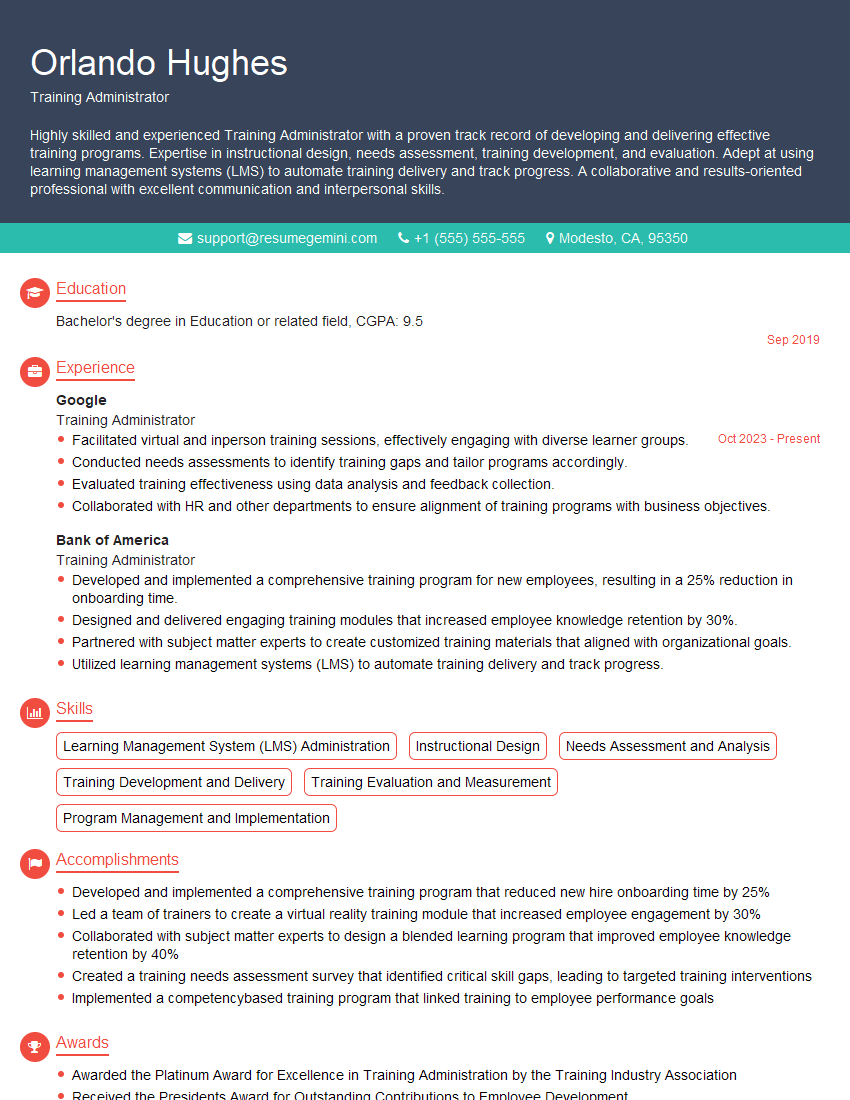
Training Administrator Resume Sample
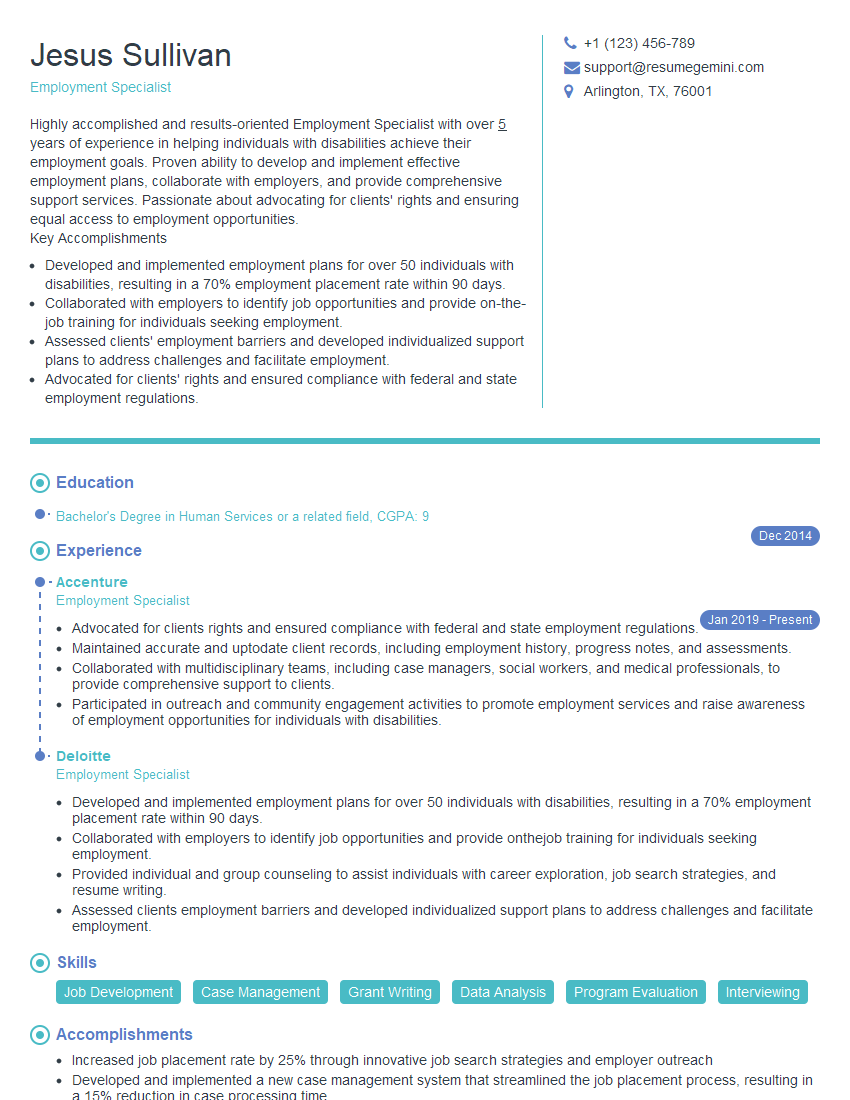
Employment Specialist Resume Sample
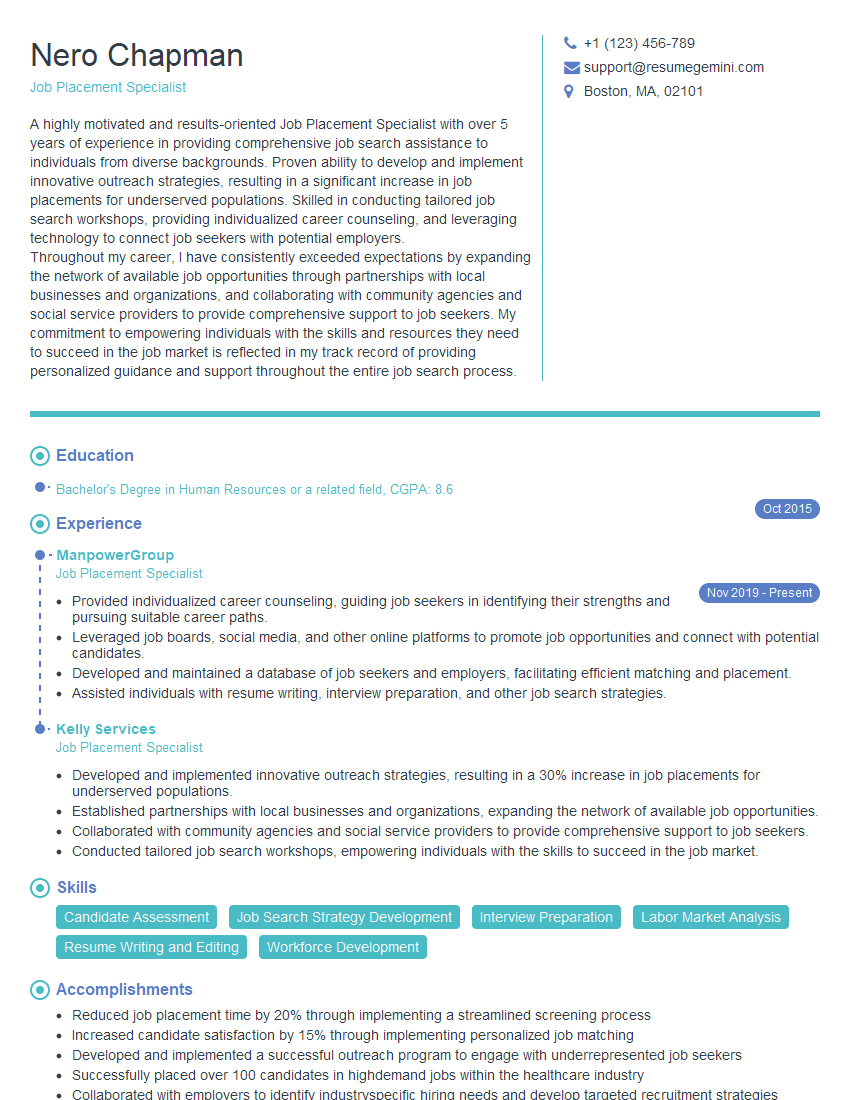
Job Placement Specialist Resume Sample
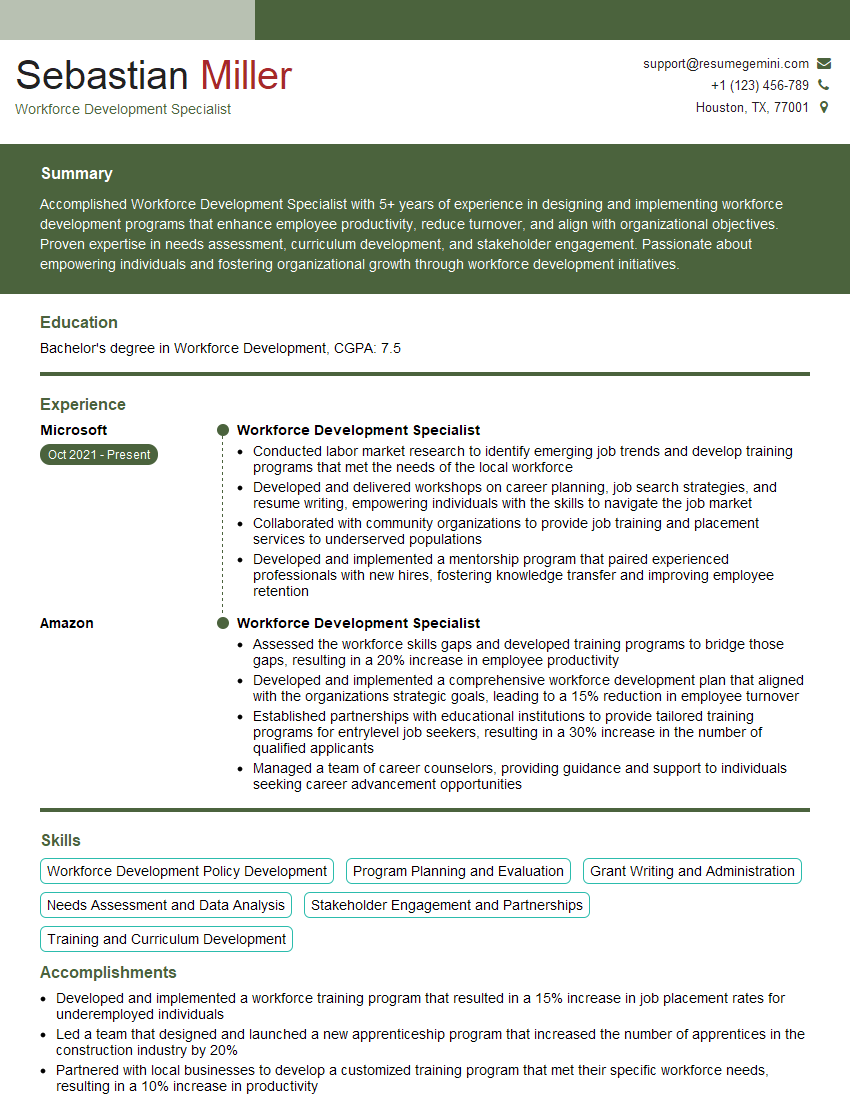
Workforce Development Specialist Resume Sample
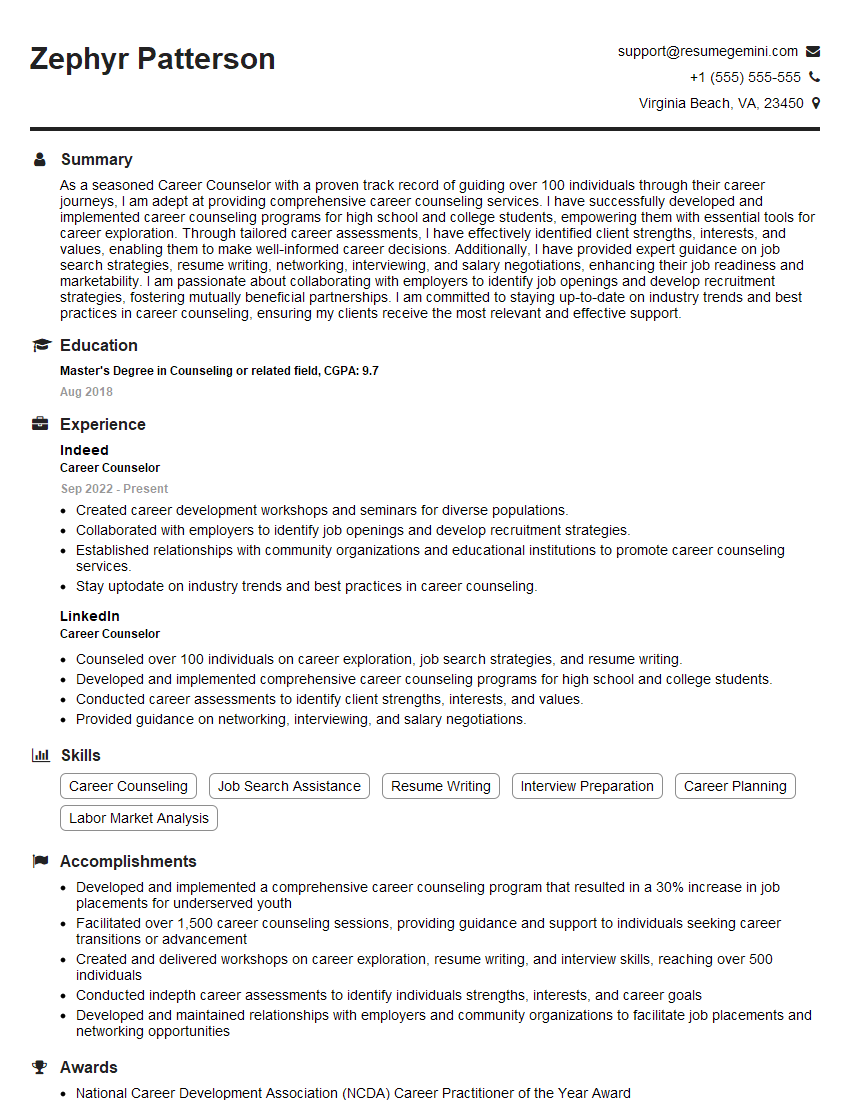
Career Counselor Resume Sample
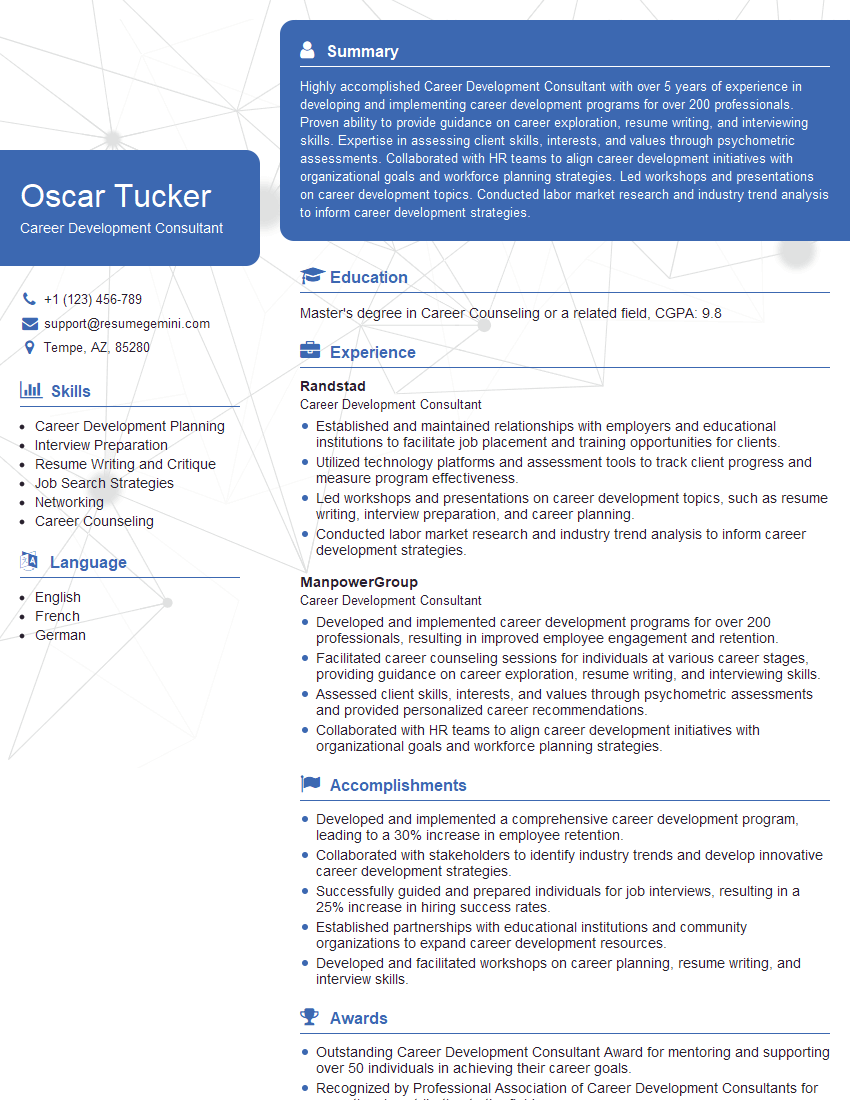
Career Development Consultant Resume Sample
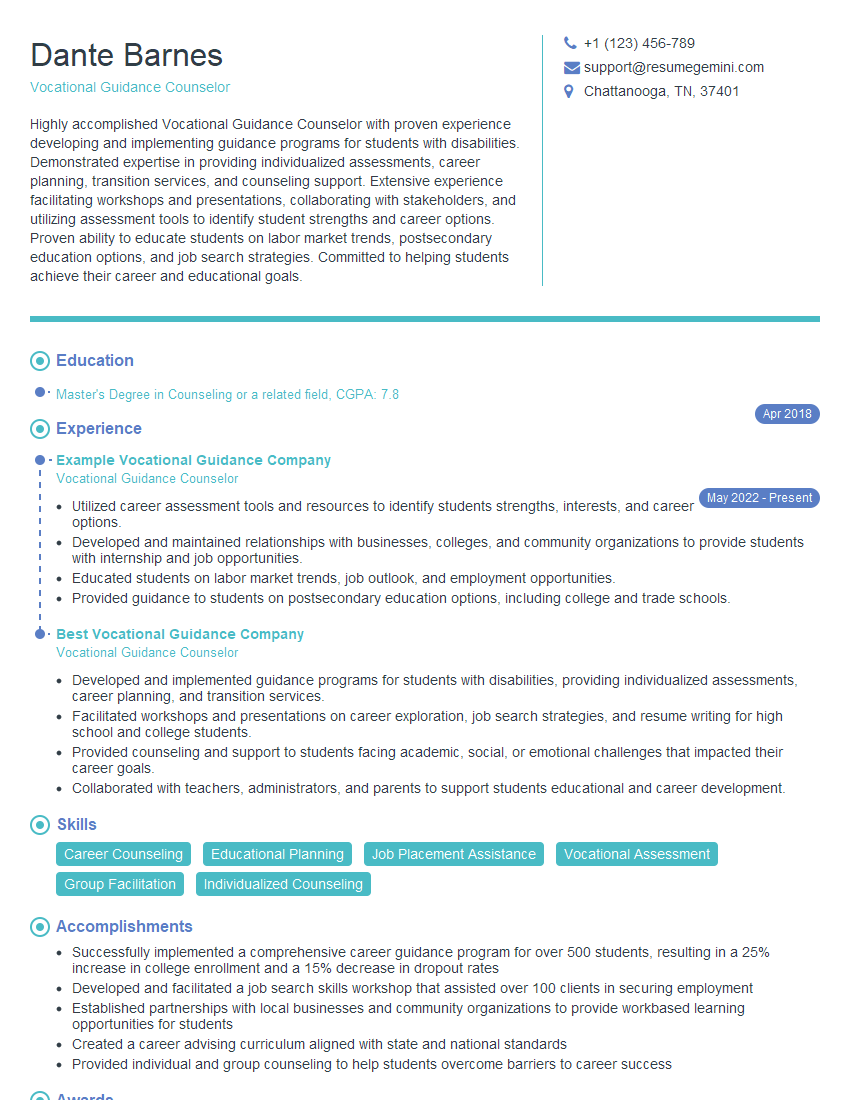
Vocational Guidance Counselor Resume Sample
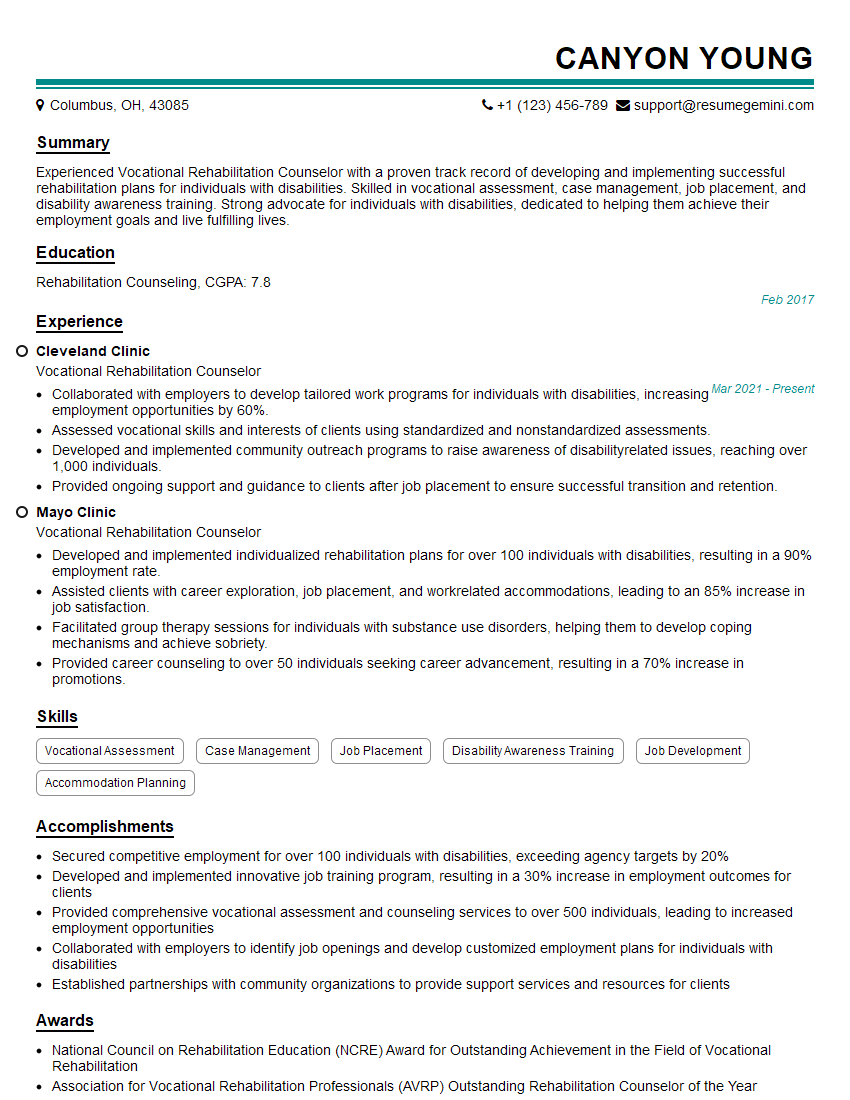
Vocational Rehabilitation Counselor Resume Sample

Adult Education Instructor Resume Sample
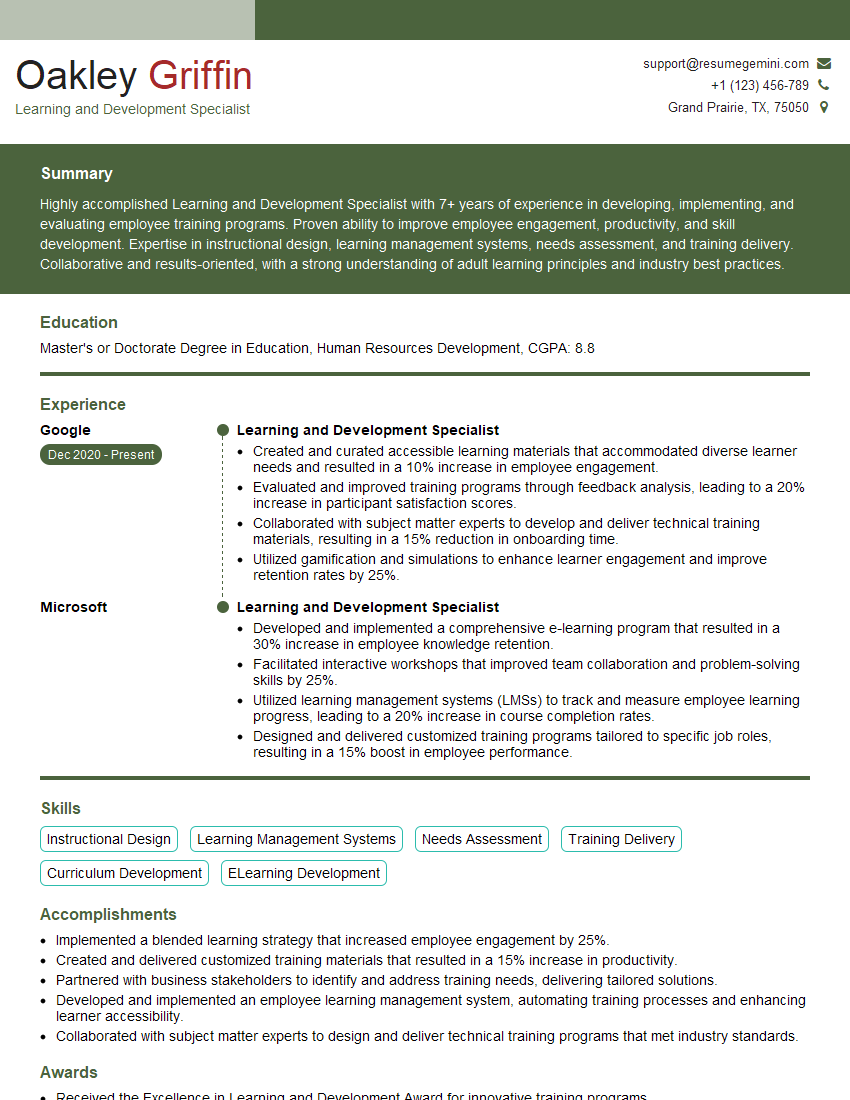
Learning and Development Specialist Resume Sample
Explore more articles
Users Rating of Our Blogs
Share Your Experience
We value your feedback! Please rate our content and share your thoughts (optional).
What Readers Say About Our Blog
I Redesigned Spongebob Squarepants and his main characters of my artwork.
https://www.deviantart.com/reimaginesponge/art/Redesigned-Spongebob-characters-1223583608
IT gave me an insight and words to use and be able to think of examples
Hi, I’m Jay, we have a few potential clients that are interested in your services, thought you might be a good fit. I’d love to talk about the details, when do you have time to talk?
Best,
Jay
Founder | CEO