Cracking a skill-specific interview, like one for Weather and Tide Analysis, requires understanding the nuances of the role. In this blog, we present the questions you’re most likely to encounter, along with insights into how to answer them effectively. Let’s ensure you’re ready to make a strong impression.
Questions Asked in Weather and Tide Analysis Interview
Q 1. Explain the difference between high and low tides.
High and low tides are the regular rising and falling of sea levels caused by the gravitational pull of the moon and, to a lesser extent, the sun. A high tide occurs when the water level reaches its highest point, while a low tide represents the lowest point. Think of it like a gentle bulge of water following the moon as it orbits the Earth. The difference in height between high and low tide is called the tidal range, and it can vary significantly depending on location and other factors.
Imagine a bathtub with a slowly rotating object nearby – that object slightly pulls the water towards it, creating a subtle bulge. This simplified analogy helps understand how the moon’s gravity influences the ocean’s surface.
Q 2. Describe the factors influencing tidal patterns.
Tidal patterns are influenced by a complex interplay of factors. The primary driver is the gravitational pull of the moon and the sun. The moon’s proximity to the Earth makes its effect dominant. However, other factors significantly modify these basic tidal patterns:
- Shape of the coastline and ocean floor: Bays and inlets can amplify tidal ranges, while wide, open coastlines might experience smaller variations. The seabed’s topography influences the way tidal waves propagate.
- Earth’s rotation: The Earth’s rotation generates the Coriolis effect (explained in the next question), slightly deflecting tidal currents.
- Ocean currents: Strong ocean currents can either accelerate or slow down tidal flows, modifying the timing and height of tides.
- Atmospheric pressure: High atmospheric pressure pushes down on the ocean surface, slightly lowering the tide, while low pressure has the opposite effect. This is usually a minor influence compared to the gravitational forces.
- Wind: Strong winds can pile up water against the coastline, leading to higher-than-predicted high tides or lower-than-predicted low tides.
For instance, the Bay of Fundy in Canada is famous for its exceptionally high tidal range, largely due to its unique funnel-shaped geography.
Q 3. What is the Coriolis effect and how does it impact weather systems?
The Coriolis effect is an inertial force that appears to deflect moving objects (like air and water) to the right in the Northern Hemisphere and to the left in the Southern Hemisphere. It’s not a true force, but rather a consequence of Earth’s rotation. Imagine spinning a merry-go-round – objects on it seem to curve as they move.
In weather systems, the Coriolis effect is crucial in shaping the rotation of large-scale weather patterns such as hurricanes and cyclones. In the Northern Hemisphere, low-pressure systems rotate counter-clockwise, while in the Southern Hemisphere they rotate clockwise. This rotation is a direct result of the Coriolis effect interacting with the pressure gradient force (air moving from high to low pressure). Without the Coriolis effect, these systems would simply move directly from high to low pressure with no significant rotation.
Q 4. Explain the concept of atmospheric pressure and its relationship to weather.
Atmospheric pressure is the force exerted by the weight of the atmosphere on a unit area of the Earth’s surface. It’s measured in units like millibars (mb) or hectopascals (hPa). Areas of high pressure generally indicate fair weather because the descending air inhibits cloud formation. Conversely, low-pressure systems are often associated with stormy weather as rising air leads to cloud development and precipitation.
The relationship between atmospheric pressure and weather is fundamental. Changes in pressure gradients drive wind, influencing the movement of weather systems. For example, a steep pressure gradient between a high and low-pressure system leads to strong winds. Barometers measure atmospheric pressure, and their readings can provide valuable insights into short-term weather changes.
Q 5. How do you interpret weather charts and maps?
Interpreting weather charts and maps requires understanding various symbols and data representations. These charts usually show:
- Isobars: Lines connecting points of equal atmospheric pressure, indicating high and low-pressure systems.
- Isotherms: Lines of equal temperature.
- Fronts: Boundaries between different air masses, marked with symbols indicating cold, warm, occluded, or stationary fronts.
- Wind barbs: Indicate wind speed and direction.
- Precipitation symbols: Represent various types of precipitation like rain, snow, or hail.
- Cloud cover symbols: Show the extent of cloud cover.
By analyzing the arrangement of these elements, meteorologists can identify weather patterns, predict future conditions, and issue warnings about severe weather events. For example, a closely packed isobar pattern indicates strong winds.
Q 6. Describe the different types of weather fronts.
Weather fronts are boundaries separating air masses with different temperatures and densities. There are four main types:
- Cold front: A cold air mass pushes into a warmer air mass, causing rapid lifting of warm air, leading to thunderstorms, heavy showers, and strong winds.
- Warm front: A warm air mass moves over a colder air mass, causing gentle lifting and typically resulting in widespread cloud cover, light to moderate rain or snow, and gradual temperature increase.
- Occluded front: A cold front overtakes a warm front, lifting warm air aloft. This often results in a mixture of cold and warm front weather characteristics.
- Stationary front: A boundary between air masses that shows little movement, leading to prolonged periods of cloudy conditions and precipitation.
Identifying these fronts on weather maps is crucial for short-term weather forecasting. The movement and interaction of fronts are key to understanding the evolution of weather systems.
Q 7. What are the key elements of a weather forecast?
Key elements of a weather forecast include:
- Temperature: Maximum and minimum temperatures expected for the forecast period.
- Precipitation: Type, amount, and likelihood of precipitation (rain, snow, sleet, hail).
- Wind: Speed and direction of the wind.
- Humidity: Measure of moisture in the air.
- Cloud cover: Expected cloud cover throughout the day.
- Visibility: Expected visibility conditions.
- UV index: Measure of the intensity of ultraviolet radiation.
- Special warnings: Alerts for severe weather events like thunderstorms, tornadoes, or blizzards.
The accuracy of a weather forecast depends on the sophistication of the models used, the quality of the input data, and the skill of the meteorologist interpreting the data. A good forecast should clearly communicate potential impacts of the weather on daily life.
Q 8. How do you predict tidal currents?
Predicting tidal currents involves understanding the complex interplay of astronomical forces (primarily the gravitational pull of the moon and sun) and the bathymetry (shape and depth) of the ocean floor. We don’t simply predict the height of the tide; we model the flow of water. This requires sophisticated hydrodynamic models.
These models use numerical methods to solve the equations governing fluid motion, incorporating factors like:
- Astronomical forcing: Predicting the precise positions of the sun and moon to calculate their gravitational influence.
- Bathymetry: High-resolution maps of the seabed are crucial, as the shape of the ocean floor significantly impacts the speed and direction of currents.
- Coriolis effect: The Earth’s rotation influences current direction, particularly noticeable in larger-scale currents.
- Wind stress: Wind can significantly influence surface currents, particularly in shallow waters or near coastlines.
- Freshwater inflow: Rivers and streams introduce fresh water, affecting salinity and current patterns.
Essentially, we build a computer simulation of the ocean in a specific region, feeding it all this data. The output shows predicted current speed and direction at various points and times. Imagine it as a sophisticated weather forecast, but for the ocean’s currents instead of the atmosphere.
Q 9. Explain the different types of tides (spring, neap, etc.).
Tides are primarily caused by the gravitational pull of the moon and sun. Their interaction with the Earth’s rotation creates various tidal patterns. The most prominent are:
- Spring Tides: Occur when the sun, moon, and Earth are aligned (during new and full moons). The gravitational forces combine, producing higher high tides and lower low tides – a greater tidal range.
- Neap Tides: Occur when the sun and moon are at right angles to each other (during first and third quarter moons). Their gravitational forces partially cancel each other out, leading to smaller tidal ranges – lower high tides and higher low tides.
- Diurnal Tides: One high tide and one low tide per day.
- Semi-diurnal Tides: Two high tides and two low tides per day, approximately equal in height.
- Mixed Tides: A combination of diurnal and semi-diurnal tides, with two unequal high tides and two unequal low tides per day.
The type of tide experienced at a specific location depends on its geographical position, bathymetry, and the interaction of astronomical forces. For instance, some coastal areas might experience predominantly semi-diurnal tides, while others may experience mixed tides.
Q 10. What is a tidal bore?
A tidal bore is a fascinating phenomenon where the leading edge of an incoming tide forms a wave that travels upstream in a river or estuary. It occurs when a large tidal range meets a shallow, funnel-shaped river mouth, which causes the incoming tide to surge rapidly against the river’s current.
Imagine a wall of water rushing upstream, sometimes reaching several meters in height. The speed and height of the bore depend on several factors: the tidal range, the shape of the river, and the river’s flow rate. The Qiantang River in China is famous for its spectacular tidal bores. It’s a breathtaking sight, but also potentially dangerous, emphasizing the power of tidal forces.
Q 11. How do you use tide prediction models?
Tide prediction models are essential tools for various applications, from maritime navigation to coastal engineering. They use harmonic analysis, which breaks down the complex tidal signal into a series of sinusoidal waves with different periods and amplitudes. These components represent the influences of different astronomical bodies.
The models generally combine this harmonic analysis with hydrodynamic modeling, taking into account the shape of the coastline and the ocean floor. This allows for precise predictions of both the height and the currents of the tide.
In practice, I might use a software package that takes as input the geographical location, date, and time. The output would be a table or graph showing the predicted tide height and current at intervals throughout the day. These predictions are vital for planning activities like harbor dredging, marine transportation, and coastal defense projects.
Q 12. What are the limitations of weather forecasting?
Weather forecasting, despite significant advances, has inherent limitations. The atmosphere is a chaotic system, meaning small initial uncertainties can lead to large differences in the forecast over time – the famous ‘butterfly effect’.
Limitations include:
- Incomplete data: We don’t have complete observations of atmospheric conditions globally, particularly over oceans and remote regions. This leads to uncertainties in the initial conditions for the models.
- Model limitations: Even the most advanced models are simplifications of reality. They cannot perfectly capture all the complex physical processes occurring in the atmosphere.
- Computational constraints: Running detailed models requires significant computing power, limiting the resolution and the forecast range.
- Subgrid-scale processes: Many important weather processes, such as cloud formation, occur at scales smaller than the grid resolution of the models. These must be parameterized (approximated), introducing uncertainty.
The accuracy of a weather forecast is highest in the short term and decreases as the forecast range increases. It’s important to always consider the forecast’s uncertainty and to consult multiple sources.
Q 13. Describe the different types of atmospheric models.
Atmospheric models are complex computer programs that simulate the Earth’s atmosphere using numerical methods. Different types exist, categorized primarily by their horizontal resolution, vertical extent, and the physical processes they represent.
- Global Circulation Models (GCMs): These models simulate the entire atmosphere at relatively coarse resolution (hundreds of kilometers). They are used to study long-term climate change and large-scale weather patterns.
- Regional Climate Models (RCMs): These models have higher resolution than GCMs and are nested within GCMs to simulate weather phenomena at a regional scale (tens of kilometers). They provide more detail in specific areas.
- Weather Prediction Models (WPMs): These models focus on short-term forecasts (days to a week) with very high resolution (kilometers or less) to capture detailed weather events like storms. They often use data assimilation techniques to combine observations with model outputs for improved accuracy.
- Ensemble Prediction Systems: These systems run multiple WPMs or GCMs with slightly different initial conditions and model parameters. This accounts for the inherent uncertainty in forecasting and provides a range of possible outcomes.
Each model type has its own strengths and weaknesses, making a particular model suitable for certain research and application goals. The choice depends on the required spatial and temporal scales and the processes of interest.
Q 14. How do you assess the accuracy of weather forecasts?
Assessing the accuracy of weather forecasts is crucial for evaluating model performance and improving future predictions. Several methods are used:
- Verification scores: These quantify the agreement between the forecast and observations. Common metrics include the Brier score (for probabilistic forecasts), the Heidke skill score (for categorical forecasts like rain/no rain), and the root-mean-square error (RMSE) for continuous variables like temperature.
- Ensemble spread: For ensemble prediction systems, the spread (range of outcomes) in the ensemble can indicate the uncertainty of the forecast. A larger spread suggests greater uncertainty.
- Case studies: Analyzing individual weather events can provide insights into model strengths and weaknesses. This might involve comparing the model’s simulated evolution of a storm with actual observations.
- Long-term monitoring: Tracking forecast accuracy over extended periods helps assess the overall performance of a forecasting system and identify any biases or systematic errors.
The choice of evaluation method depends on the specific forecast variable (temperature, precipitation, wind speed, etc.) and the goals of the evaluation. For example, assessing the accuracy of hurricane track predictions might use different metrics than assessing the accuracy of temperature forecasts.
Q 15. How do you interpret meteorological data?
Interpreting meteorological data involves a multi-step process that goes beyond simply looking at numbers. It requires understanding the context, identifying patterns, and making predictions. We start by examining various parameters like temperature, pressure, humidity, wind speed and direction, precipitation, and cloud cover. This data often comes from various sources including weather stations, satellites, radar, and weather models.
For example, a sudden drop in atmospheric pressure coupled with rising humidity and strong, shifting winds might indicate an approaching storm. We then analyze these data points using statistical methods and forecasting models to understand the current weather situation and predict future conditions. This involves considering the spatial distribution of these parameters – a high-pressure system over a region might cause dry and sunny weather, whereas a low-pressure system might bring rain and wind. Visualizations like weather maps are crucial for interpreting this spatial data, allowing us to quickly grasp trends and anomalies.
Finally, we consider the specific geographic location and its topography, as these factors can significantly influence local weather patterns. A coastal region, for instance, might experience more moderate temperatures and higher humidity than an inland area at the same latitude.
Career Expert Tips:
- Ace those interviews! Prepare effectively by reviewing the Top 50 Most Common Interview Questions on ResumeGemini.
- Navigate your job search with confidence! Explore a wide range of Career Tips on ResumeGemini. Learn about common challenges and recommendations to overcome them.
- Craft the perfect resume! Master the Art of Resume Writing with ResumeGemini’s guide. Showcase your unique qualifications and achievements effectively.
- Don’t miss out on holiday savings! Build your dream resume with ResumeGemini’s ATS optimized templates.
Q 16. Explain the difference between sea level and tidal height.
Sea level and tidal height are closely related but distinct concepts. Sea level refers to the average height of the ocean’s surface over a long period, typically measured against a benchmark. This average is calculated by taking numerous measurements over many years to account for natural fluctuations. Think of it as a baseline.
Tidal height, on the other hand, represents the instantaneous height of the ocean surface at a specific location and time relative to that mean sea level. Tides are caused primarily by the gravitational pull of the moon and the sun, creating cyclical variations in sea level. So, the tidal height is constantly changing, rising and falling throughout the day, while sea level provides a relatively stable reference point.
For example, a tidal height of +2 meters means that the ocean surface is 2 meters above the mean sea level at that particular moment. It’s crucial to distinguish between the two for accurate navigation, coastal engineering, and predicting flooding risks. Ignoring the tidal variations while only considering the mean sea level would lead to significant errors.
Q 17. What are the key factors affecting coastal erosion?
Coastal erosion is a complex process driven by a combination of factors. It’s essentially the wearing away of land along the coastline by natural forces. The key players include:
- Wave action: Waves are the primary erosional force, constantly pounding the coast, eroding cliffs, and transporting sediment. The energy of waves depends on factors such as wind speed, fetch (distance over which the wind blows), and the shape of the coastline.
- Tides: Tidal currents can accelerate erosion, particularly during high tides and storms, as they carry away eroded material.
- Sea level rise: As global sea levels rise, the baseline against which waves act is elevated, leading to increased coastal erosion.
- Storms: Severe storms such as hurricanes and cyclones can cause catastrophic coastal erosion in a short period due to their intense waves and storm surges.
- Human activities: Construction of coastal defenses, removal of vegetation, and dredging can disrupt natural sediment transport and accelerate erosion.
Imagine a beach constantly bombarded by waves. Over time, the waves break down the sand and rocks, carrying them away. If sea level rises, this process intensifies, as the waves have a higher starting point to work with. Human interference, such as building seawalls without considering sediment transport, can further exacerbate the problem.
Q 18. How do you use weather data for marine safety?
Weather data is paramount for marine safety. Accurate weather forecasts and real-time observations are crucial for making informed decisions to mitigate risks at sea.
We utilize weather data to predict and prepare for:
- Stormy weather: Forecasts of wind speed, direction, wave height, and precipitation help vessels avoid hazardous conditions. Knowing the timing and intensity of a storm is crucial for making decisions about seeking shelter.
- Visibility limitations: Information on fog, rain, or snow is essential for safe navigation, particularly in busy shipping lanes.
- Sea state: Wave height and period information help assess the seaworthiness of vessels and guide decisions about route planning.
- Extreme weather events: Monitoring of tropical cyclones, hurricanes, and other extreme weather events is critical for issuing warnings and ensuring the safety of mariners.
Q 19. Explain the effects of El Niño and La Niña on weather patterns.
El Niño and La Niña are contrasting climate patterns associated with variations in sea surface temperatures in the tropical Pacific Ocean. They significantly impact global weather patterns.
El Niño is characterized by unusually warm ocean temperatures in the central and eastern tropical Pacific. This warming disrupts atmospheric circulation, leading to altered rainfall patterns globally. Typically, El Niño events are associated with wetter conditions in some parts of the world (e.g., the southwestern U.S.) and drier conditions in others (e.g., Australia). It can also lead to more frequent and intense storms in certain regions.
La Niña is the opposite phase, characterized by unusually cool ocean temperatures in the central and eastern tropical Pacific. This cooling also impacts atmospheric circulation, but in a different way, often leading to wetter conditions in Australia and drier conditions in parts of the Americas. The specific effects vary from event to event and location to location.
Think of it like a seesaw: El Niño is one side being elevated (warmer waters), and La Niña is the other side being elevated (cooler waters). This tilting influences wind patterns and precipitation globally, leading to shifts in weather patterns across the planet.
Q 20. How do you analyze historical weather and tide data?
Analyzing historical weather and tide data involves several key steps. First, we gather data from reliable sources such as government agencies (e.g., NOAA, the Met Office), research institutions, and private weather stations. This data is often available in various formats (e.g., CSV, NetCDF). Data quality control is crucial; we need to identify and correct errors or outliers to ensure accuracy.
Next, we use statistical methods to analyze trends and patterns. This might involve calculating averages, standard deviations, and correlations between different variables. For example, we might analyze the relationship between wind speed and wave height or investigate the long-term trends in sea level. Time series analysis is often used to identify cyclical patterns, such as seasonal variations in temperature or tidal cycles.
We might also utilize spatial analysis techniques to study the geographic distribution of weather phenomena. For instance, mapping rainfall data can reveal areas prone to flooding or droughts. Sophisticated statistical models and machine learning algorithms can help identify complex relationships within the data and predict future events.
Finally, visualization is key – we create graphs, charts, and maps to present the findings in a clear and accessible way. This helps in communication to stakeholders, whether it’s informing coastal management strategies or supporting marine safety operations.
Q 21. What software or tools do you use for weather and tide analysis?
The tools and software used for weather and tide analysis are diverse and depend on the specific tasks. For data acquisition and processing, we often utilize:
- Specialized meteorological software: Packages like GRIB API for handling weather model data, and specialized GIS software for spatial analysis.
- Oceanographic modeling software: Programs like ROMS (Regional Ocean Modeling System) or FVCOM (Finite Volume Coastal Ocean Model) are used for simulating tides and currents.
- Statistical software: R and Python with packages like Pandas, NumPy, and SciPy are extensively used for statistical analysis, time series modeling, and machine learning.
- Data visualization tools: Software like MATLAB, ArcGIS, and various Python libraries (e.g., Matplotlib, Seaborn) aid in creating informative visuals.
In addition to software, access to high-performance computing resources is often necessary to process and analyze large datasets, especially when running complex models or conducting simulations.
Q 22. Describe your experience with statistical analysis in meteorology or oceanography.
Statistical analysis is fundamental to meteorology and oceanography, allowing us to extract meaningful insights from vast datasets. I’ve extensively used methods like time series analysis to identify trends and patterns in weather data, such as predicting seasonal rainfall or identifying the frequency of extreme weather events. For instance, I used ARIMA (Autoregressive Integrated Moving Average) models to forecast hurricane intensity based on historical wind speed and pressure data. Regression analysis has been invaluable in establishing relationships between variables – for example, correlating sea surface temperature with the abundance of a specific fish species. Furthermore, I’m proficient in using statistical software like R and Python with packages such as pandas, NumPy, and Statsmodels to perform these analyses, create visualizations, and validate model accuracy.
In oceanography, I’ve applied similar techniques to analyze tidal data, using Fourier analysis to decompose complex tidal signals into constituent waves (e.g., M2, S2, K1). This helps in predicting future tidal heights and currents with high accuracy, crucial for navigation and coastal engineering. Principal Component Analysis (PCA) has helped me reduce the dimensionality of oceanographic datasets containing numerous parameters, allowing for easier identification of dominant patterns and relationships.
Q 23. How do you communicate complex meteorological information to non-experts?
Communicating complex meteorological information to non-experts requires a multi-faceted approach focusing on clarity, simplicity, and relatability. I avoid technical jargon and instead use analogies and visual aids. For instance, instead of saying ‘a high-pressure system is causing clear skies,’ I might explain, ‘Imagine a giant dome of air pressing down; this prevents clouds from forming, leading to sunny weather.’ I use metaphors: ‘Think of wind as the air’s breathing,’ or ‘rain is like the sky’s tears.’
Visualizations are crucial. I often use charts, graphs, and maps to depict weather patterns and trends. For example, a simple color-coded map showing temperature variations across a region is much more easily grasped than a table of numerical data. I also tailor my language and explanations to the audience’s background knowledge, understanding that a conversation with a farmer will differ from one with a schoolchild. Storytelling is powerful: sharing anecdotes about past weather events can help to ground the information and make it more memorable.
Q 24. Describe your experience with data visualization related to weather or tides.
Data visualization is integral to my work. I’m proficient in using various software packages, including GIS (Geographic Information Systems) software like ArcGIS and QGIS, to create maps visualizing weather patterns, temperature anomalies, precipitation distribution, and flood risk zones. For tidal analysis, I frequently utilize time series plots to show tidal heights and currents over time, identifying patterns like spring and neap tides. I also generate scatter plots to demonstrate the correlation between different variables, such as wind speed and wave height.
In addition to static visualizations, I’ve also created interactive dashboards using tools like Tableau and Power BI, allowing users to explore data dynamically and create custom visualizations. For example, a dashboard might allow a user to select a specific location and time period to view historical weather data and forecasts, or to visualize the impact of sea-level rise on coastal communities using 3D models. This approach ensures the information is easily accessible and understandable, supporting better decision-making.
Q 25. Explain your understanding of climate change and its impacts on coastal regions.
Climate change, driven primarily by increased greenhouse gas emissions, poses significant threats to coastal regions. Rising sea levels, due to thermal expansion of seawater and melting glaciers/ice sheets, lead to increased coastal erosion, saltwater intrusion into freshwater aquifers, and heightened vulnerability to storm surges. Changes in precipitation patterns, including more intense rainfall events and prolonged droughts, further exacerbate these problems. Increased ocean temperatures contribute to coral bleaching and the disruption of marine ecosystems. The frequency and intensity of extreme weather events, such as hurricanes and typhoons, are also projected to increase, causing more frequent and severe flooding and damage to coastal infrastructure.
My work involves analyzing climate projections and their implications for specific coastal areas. This includes using climate models to simulate future sea level rise and storm surge events, and then integrating this information into risk assessments and adaptation planning. For example, I’ve worked on projects evaluating the vulnerability of coastal communities to flooding and developing strategies for improving coastal resilience, such as building seawalls, restoring coastal wetlands, and implementing early warning systems.
Q 26. What is your experience with different types of weather sensors and instruments?
My experience encompasses a wide range of weather and oceanographic sensors and instruments. In meteorology, I’ve worked with automatic weather stations (AWS) equipped with sensors for measuring temperature, humidity, wind speed and direction, precipitation, and atmospheric pressure. I’m also familiar with radar systems used for detecting precipitation and tracking storms, and satellite-based remote sensing for monitoring large-scale weather patterns. For upper-air observations, I have experience with radiosondes and weather balloons.
In oceanography, I’ve used tide gauges for measuring sea level, current meters for measuring water currents, and wave buoys for measuring wave height, period, and direction. I’m also familiar with various types of underwater sensors used for measuring water temperature, salinity, and other oceanographic parameters. Experience with Acoustic Doppler Current Profilers (ADCPs) for measuring water velocity profiles is also valuable in understanding coastal currents and their impact on sedimentation and erosion patterns. Understanding data acquisition, calibration, and quality control procedures associated with each instrument is crucial for accurate analysis.
Q 27. How do you handle conflicting weather data from different sources?
Conflicting weather data from different sources is a common challenge. My approach involves a multi-step process. First, I assess the reliability and accuracy of each data source, considering factors such as the sensor type, calibration procedures, data resolution, and historical performance. I also examine the spatial and temporal coverage of the data to determine if inconsistencies are due to differences in location or time. Second, I perform a quality control check on the data, identifying and removing any obvious errors or outliers.
Third, I use statistical methods to reconcile conflicting data. This might involve averaging data from multiple sources, applying weighted averages based on the reliability of each source, or using data assimilation techniques that combine data from different sources into a single, more consistent dataset. Finally, if discrepancies persist despite these efforts, I investigate potential sources of error, such as instrument malfunction, data transmission errors, or differences in measurement methodologies. Documenting the data reconciliation process and its rationale is crucial for transparency and reproducibility.
Q 28. Describe a challenging weather or tide analysis project you’ve worked on and the solution you implemented.
One challenging project involved predicting storm surge during a major hurricane that threatened a low-lying coastal city. The challenge stemmed from the limited historical data on storm surge in that specific location, coupled with the uncertainty associated with hurricane track forecasting. To tackle this, I combined historical data from nearby locations with high-resolution numerical weather prediction models, applying statistical downscaling techniques to improve the accuracy of the predictions at the local level.
Additionally, I incorporated data on sea level rise due to climate change into the surge prediction model, as even minor changes in sea level can significantly exacerbate surge impacts. The solution involved a multi-faceted approach: (1) Bayesian statistical modeling to incorporate uncertainty in both the hurricane track and the historical data; (2) high-resolution hydrodynamic modeling to simulate storm surge propagation; and (3) the development of a probabilistic surge forecast to communicate the uncertainty associated with the predictions to decision-makers. This approach provided valuable information for emergency response planning, allowing authorities to take appropriate actions to minimize the impact of the storm.
Key Topics to Learn for Weather and Tide Analysis Interview
- Atmospheric Science Fundamentals: Understanding atmospheric pressure, temperature, humidity, wind patterns, and their influence on weather forecasting.
- Oceanographic Principles: Grasping tidal forces (gravitational pull of the sun and moon), wave dynamics, currents, and their interaction with coastal environments.
- Data Analysis Techniques: Proficiency in interpreting meteorological and oceanographic data, including charts, graphs, and numerical models. This includes understanding statistical methods for analyzing trends and patterns.
- Weather Forecasting Models: Familiarity with numerical weather prediction (NWP) models and their limitations, including understanding the inputs and outputs of these models.
- Tide Prediction Methods: Knowledge of harmonic analysis and other methods used to predict tides, including understanding the limitations of these methods.
- Practical Applications: Understanding the applications of weather and tide analysis in various fields like maritime navigation, coastal engineering, fisheries management, and environmental monitoring.
- Problem-Solving & Critical Thinking: Ability to analyze complex datasets, identify potential errors, and formulate effective solutions to real-world problems related to weather and tide forecasting.
- Software & Tools: Familiarity with relevant software and tools used in weather and tide analysis (mentioning specific software is optional, as it can quickly become outdated).
Next Steps
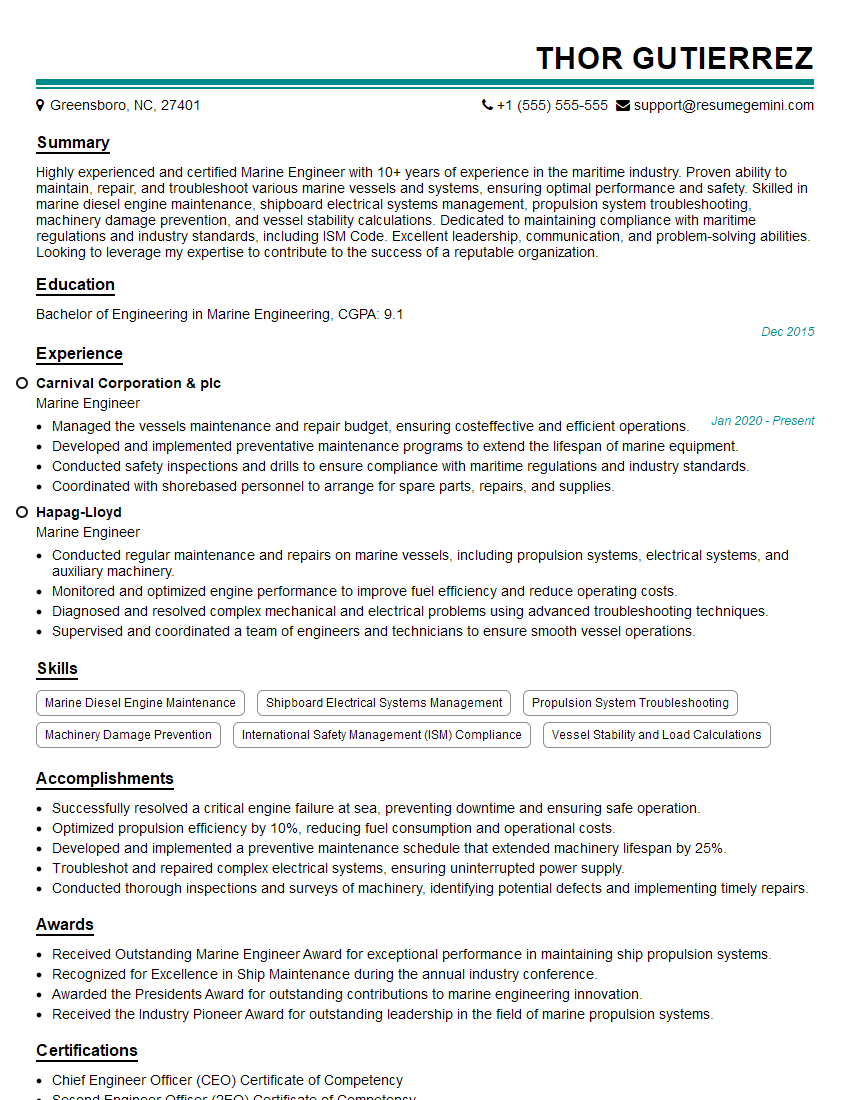
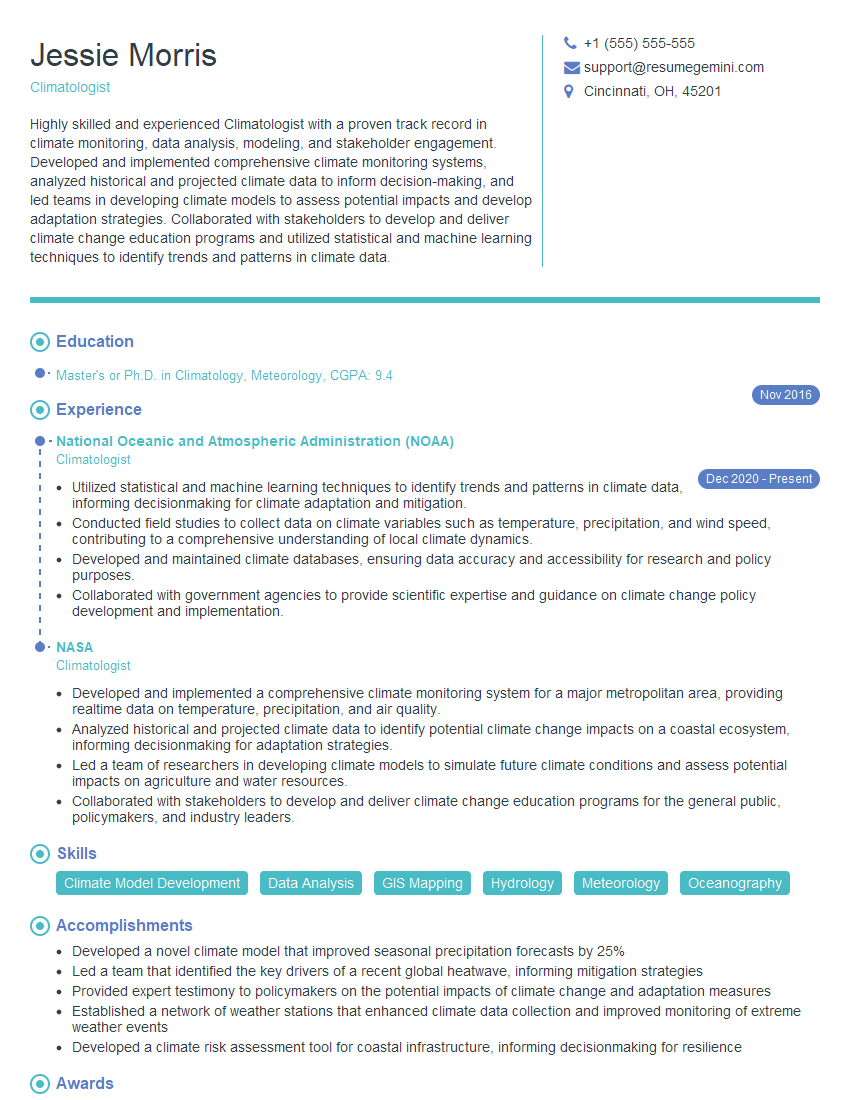
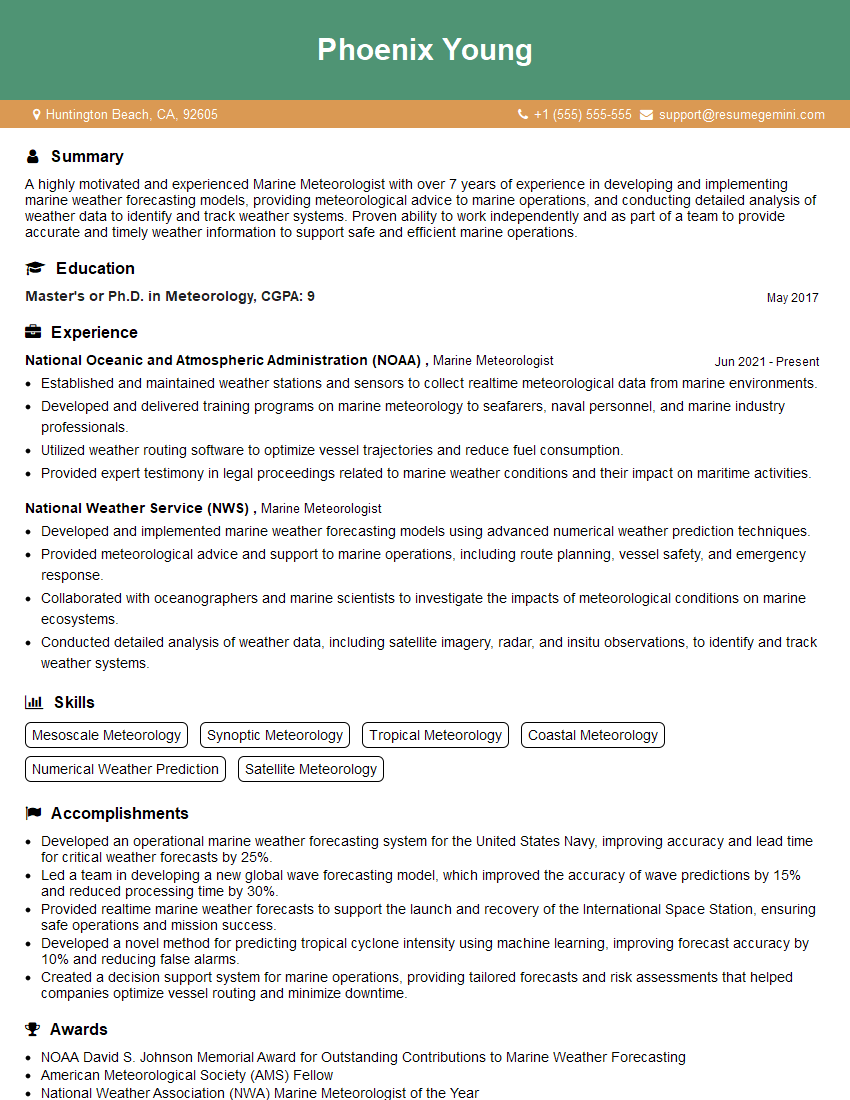
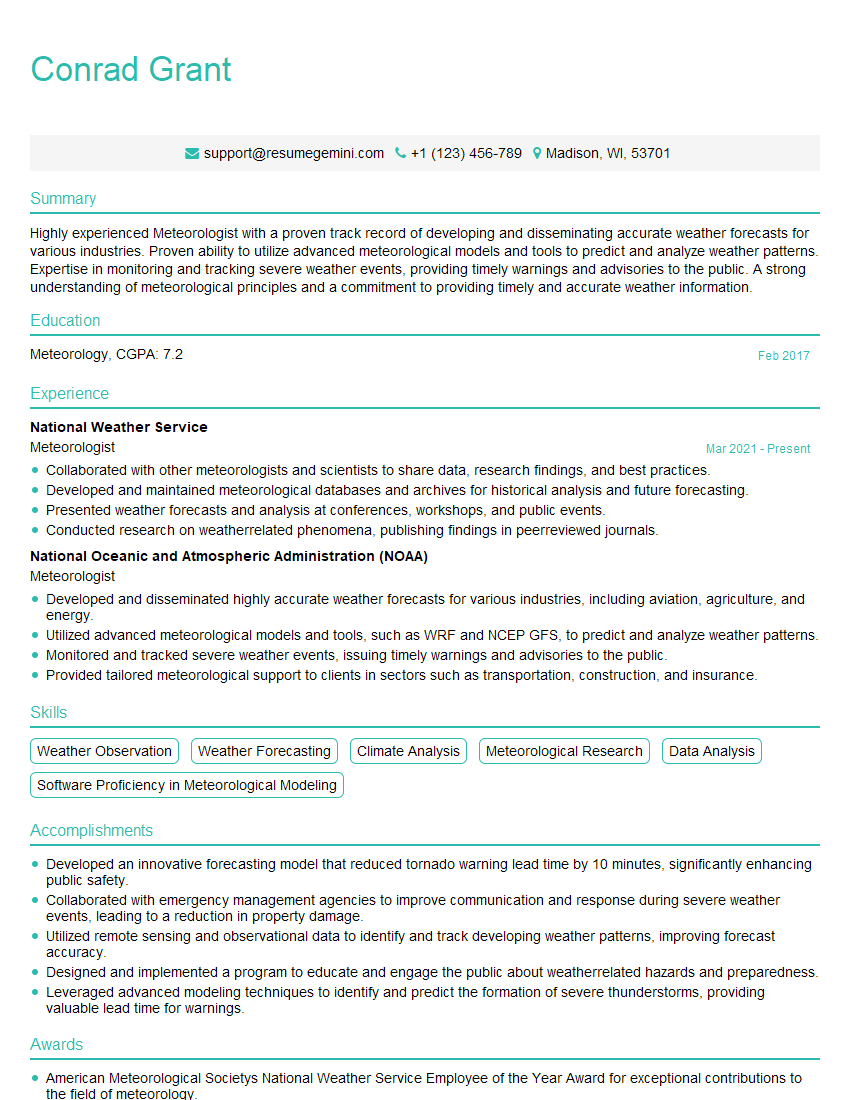
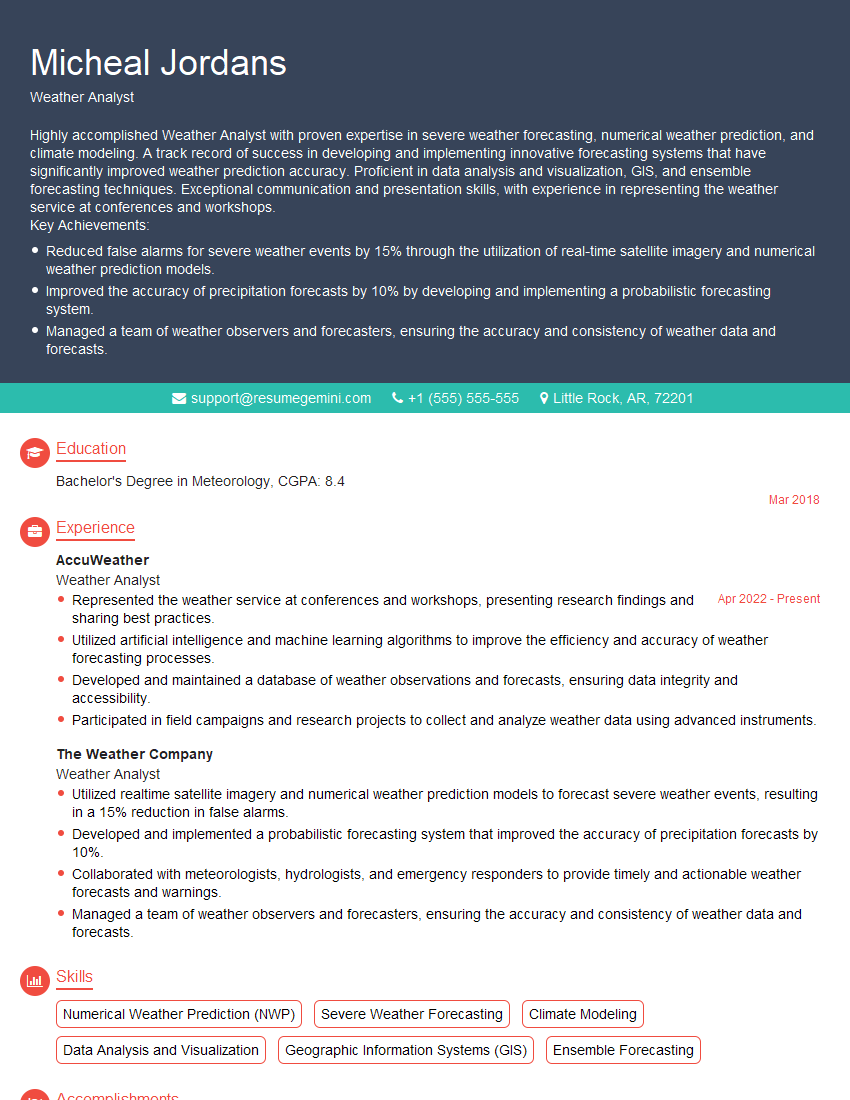
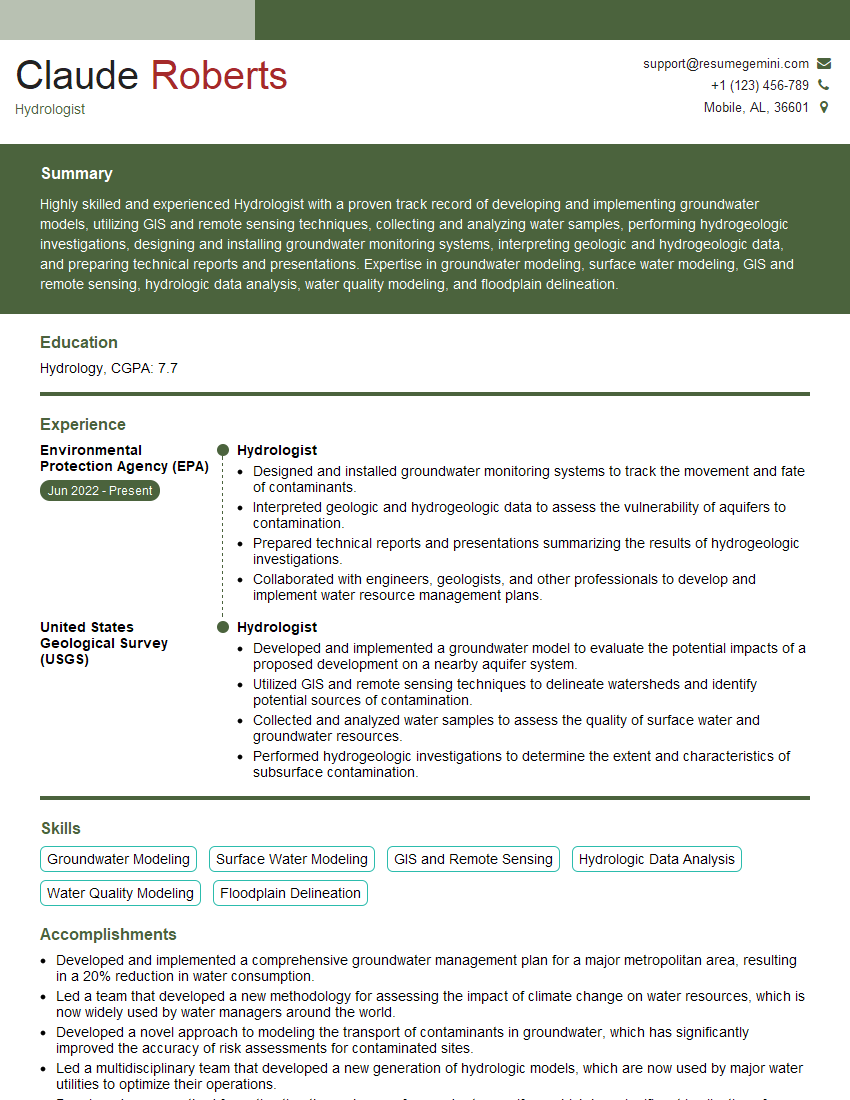
Mastering Weather and Tide Analysis opens doors to exciting careers in fields demanding a deep understanding of environmental processes. Strong analytical skills and the ability to interpret complex data are highly sought after. To significantly boost your job prospects, creating a compelling and ATS-friendly resume is crucial. ResumeGemini is a trusted resource to help you build a professional and impactful resume that highlights your skills and experience effectively. Examples of resumes tailored specifically for Weather and Tide Analysis professionals are available to help guide you. Invest time in crafting a strong resume – it’s your first impression to potential employers.
Explore more articles
Users Rating of Our Blogs
Share Your Experience
We value your feedback! Please rate our content and share your thoughts (optional).
What Readers Say About Our Blog
I Redesigned Spongebob Squarepants and his main characters of my artwork.
https://www.deviantart.com/reimaginesponge/art/Redesigned-Spongebob-characters-1223583608
IT gave me an insight and words to use and be able to think of examples
Hi, I’m Jay, we have a few potential clients that are interested in your services, thought you might be a good fit. I’d love to talk about the details, when do you have time to talk?
Best,
Jay
Founder | CEO