Feeling uncertain about what to expect in your upcoming interview? We’ve got you covered! This blog highlights the most important Welding Procedures and Specifications interview questions and provides actionable advice to help you stand out as the ideal candidate. Let’s pave the way for your success.
Questions Asked in Welding Procedures and Specifications Interview
Q 1. Explain the difference between a Welding Procedure Specification (WPS) and a Procedure Qualification Record (PQR).
A Welding Procedure Specification (WPS) and a Procedure Qualification Record (PQR) are both crucial documents in welding, but they serve distinct purposes. Think of the WPS as a recipe and the PQR as the proof that the recipe works.
A WPS is a written document that outlines the specific parameters for a particular welding process. It details everything from the type of filler metal and base material to the preheat temperature, welding current, and travel speed. It’s the instruction manual for the welder. It’s created before welding commences and guides the welder on how to perform the weld to meet required quality standards.
A PQR, on the other hand, is a record of the actual welding process performed to qualify a WPS. It documents the results of a test weld performed according to the WPS. This includes things like mechanical testing results (tensile strength, impact strength), macro and micro examination of the weld metal, and visual inspection. It proves that the parameters detailed in the WPS produce welds that meet the required standards. The PQR is created after a successful test weld.
In short: The WPS tells you how to weld, and the PQR proves that it works.
Q 2. Describe the essential elements of a WPS.
A WPS must contain several essential elements to ensure consistent and high-quality welds. These elements are typically mandated by relevant codes and standards, such as ASME Section IX or AWS D1.1. Missing any crucial information can invalidate the WPS.
- Process: Specifies the welding process (e.g., Gas Metal Arc Welding (GMAW), Shielded Metal Arc Welding (SMAW), Tungsten Inert Gas Welding (TIG)).
- Base Materials: Identifies the type, grade, and thickness of the materials being joined. For instance, specifying ‘ASTM A36 steel, 10mm thick’.
- Filler Metals: Specifies the type, grade, and diameter of the filler metal (welding wire or rod) used. Example: ‘ER70S-6, 1.2mm diameter’.
- Joint Design: Describes the type of joint (e.g., butt, fillet, lap) and its dimensions. This is often illustrated with diagrams.
- Preheating Temperature: Specifies the temperature to which the base material must be preheated before welding to prevent cracking in susceptible materials.
- Interpass Temperature: Indicates the temperature range allowed between weld passes. Maintaining this temperature is crucial for preventing defects.
- Welding Parameters: Details the specific settings for the chosen process, such as voltage, current, travel speed, shielding gas type and flow rate. For example: ‘Voltage: 25V, Current: 150A, Travel Speed: 20 cm/min’.
- Post-Weld Heat Treatment (PWHT): If required, this specifies the temperature and time for PWHT to relieve stresses and improve weld properties.
- Qualification Tests: Identifies the required tests (e.g., mechanical testing, visual inspection, radiographic testing) to verify weld quality.
Q 3. What are the key considerations when selecting a welding process for a specific application?
Selecting the right welding process is critical for achieving a sound, reliable weld. Several factors must be considered:
- Material Type and Thickness: Different processes excel with different materials. For example, TIG welding is preferred for thin sections and materials requiring high precision, while SMAW is suitable for thicker sections in various materials.
- Joint Design: Certain processes are better suited for specific joint configurations. Fillet welds are easily created with SMAW, while TIG might be best for complex butt joints.
- Weld Joint Access: Access limitations influence process choice. SMAW can be used in awkward positions due to the portability of the equipment, while TIG welding might be difficult in confined spaces.
- Required Weld Quality: The level of quality needed dictates the process. For high-quality welds in critical applications, processes such as TIG and GMAW are more suitable due to their better control and cleaner welds.
- Cost and Productivity: Some processes are faster and more economical than others. SMAW is usually more productive for larger welds, whereas TIG might be more expensive but necessary for high-precision tasks.
- Environmental Conditions: Outdoor welding might necessitate processes less susceptible to wind or moisture.
For example, welding a thin sheet of stainless steel in a clean room environment requires a process like TIG to minimize heat input and spatter and achieve superior aesthetics. Conversely, welding thick carbon steel plates in a shipyard might be effectively done with SMAW because of its high deposition rate and robustness.
Q 4. How do you determine the appropriate preheat temperature for a weld?
Determining the appropriate preheat temperature depends heavily on several factors, primarily the base material and the risk of cracking. There’s no universal temperature; it’s specified in the WPS or determined using relevant codes and standards.
The factors include:
- Base Material: High-strength steels, low-alloy steels, and some stainless steels are more susceptible to cracking at lower temperatures and thus require preheating. The material’s chemical composition influences its susceptibility to hydrogen cracking.
- Weld Joint Design: Complex geometries and thick sections can trap heat and increase the risk of cracking, potentially necessitating preheating.
- Welding Process: Different welding processes generate different levels of heat input. High heat input processes may need less preheating than lower heat input processes.
- Ambient Temperature: Cold weather can necessitate higher preheat temperatures to offset the heat loss.
- Hydrogen Content: Higher hydrogen content in the base material or filler metal increases the likelihood of cracking, and preheating is critical for its diffusion.
The preheat temperature is often specified in the WPS and should always be verified through reference to relevant welding codes or material specifications. It’s usually measured using a contact pyrometer on the base material near the weld joint.
Q 5. Explain the importance of interpass temperature control.
Interpass temperature control is crucial for preventing weld defects and ensuring good weld quality. The interpass temperature is the temperature of the previously deposited weld bead before the next bead is applied. Maintaining the correct interpass temperature prevents rapid cooling of the weld metal, which can lead to several issues.
Importance:
- Hydrogen Cracking: Rapid cooling can trap hydrogen within the weld, making it brittle and prone to cracking. Maintaining the correct interpass temperature allows sufficient time for the hydrogen to diffuse out.
- Residual Stress Reduction: Proper interpass temperatures help reduce residual stresses in the weld and the heat-affected zone (HAZ), thus mitigating the risk of cracking and improving toughness.
- Improved Weld Metal Properties: Consistent interpass temperature leads to better grain structure and mechanical properties in the weld metal.
- Preventing Distortion: Controlling cooling rate through appropriate interpass temperature helps reduce weld distortion and warpage.
Monitoring and controlling the interpass temperature can involve using thermocouples to measure the temperature between passes, ensuring the weld cools down slowly, and potentially using insulation blankets to maintain heat.
Q 6. What are the common non-destructive testing (NDT) methods used to inspect welds?
Non-destructive testing (NDT) methods are essential for evaluating the quality of welds without causing damage to the component. Several common NDT methods are used:
- Visual Inspection (VI): The simplest method, involving visual examination of the weld for surface defects like cracks, porosity, or undercuts. This is always the first step in NDT.
- Radiographic Testing (RT): Uses X-rays or gamma rays to penetrate the weld and detect internal defects such as porosity, inclusions, cracks, and lack of fusion. The resulting image shows density variations indicating defects.
- Ultrasonic Testing (UT): Uses high-frequency sound waves to detect internal flaws. The sound waves reflect off discontinuities within the weld, indicating the presence and size of defects.
- Magnetic Particle Testing (MT): Suitable for ferromagnetic materials, this method uses magnetic fields and iron particles to detect surface and near-surface flaws. The particles accumulate at the surface defects and are then visualized.
- Liquid Penetrant Testing (PT): A surface inspection method used to detect cracks and other surface-breaking discontinuities. A liquid penetrant is applied to the surface and excess penetrant is removed. A developer is then used to draw the penetrant out of the cracks, making them visible.
The choice of NDT method depends on the specific application, material, and the type of defects expected. Often, a combination of methods is used for thorough inspection. For example, visual inspection is always followed by other NDT methods for critical applications.
Q 7. Describe the different types of weld defects and their causes.
Weld defects can significantly reduce the strength and integrity of a weld. Understanding their causes is crucial for prevention. Here are some common defects:
- Cracks: Breaks in the weld metal or HAZ, caused by factors like rapid cooling, high residual stress, hydrogen embrittlement, or improper preheat. Types include hot cracks (during solidification), cold cracks (after cooling), and fatigue cracks (due to cyclic loading).
- Porosity: Small, gas-filled voids in the weld metal, often caused by insufficient shielding gas, moisture contamination, or improper welding parameters.
- Inclusions: Non-metallic particles entrapped in the weld metal, stemming from the welding process, base materials, or filler materials. Examples include slag, oxides, and tungsten inclusions in TIG welds.
- Lack of Fusion: Incomplete joining of the weld metal to the base metal, resulting from insufficient heat input, improper cleaning, or incorrect welding technique.
- Lack of Penetration: Incomplete fusion between the weld metal and the root of the joint. This is often due to low heat input, insufficient travel speed, or incorrect joint design.
- Undercut: A groove melted into the base metal at the edge of the weld, caused by excessive current or travel speed.
- Overlap: The weld metal extends beyond the weld edges, often due to excessive welding speed or improper weaving.
Understanding the root cause of these defects is key to developing corrective actions. For instance, porosity might necessitate improved shielding gas coverage, while cracks might necessitate adjustment of preheat temperature or post-weld heat treatment.
Q 8. How do you interpret a welding symbol?
Welding symbols are a shorthand language used on engineering drawings to communicate all the necessary information about a weld to the welder. They’re like a roadmap for the weld, telling the welder exactly what type of weld to make, where to place it, and the required dimensions and specifications.
A typical welding symbol includes several key elements: the reference line, arrow side, other side, and various supplementary symbols and dimensions. The arrow points to the part where the weld is to be applied. The information on the arrow side describes the weld on that component, while the other side details the weld on the opposite component. Dimensions such as weld size, length, and spacing are also indicated. Supplementary symbols might include weld type (e.g., fillet, groove, spot), joint design (e.g., butt joint, lap joint), and specific weld processes.
Example: Imagine a symbol with an arrow pointing to a line, a small square on the arrow side indicating a fillet weld, and the number ‘6’ indicating the weld leg size (6mm). This tells the welder to create a 6mm fillet weld on the side the arrow points to.
Understanding these symbols is crucial to avoid errors and ensure consistent and high-quality welds. Misinterpreting a welding symbol can lead to costly rework or, worse, safety hazards. Regular training and reference to relevant standards are key to proficient symbol interpretation.
Q 9. What are the safety precautions you should take while performing welding operations?
Welding presents several inherent safety hazards. Protecting yourself and others requires rigorous adherence to safety protocols. These precautions are paramount to preventing accidents and injuries.
- Personal Protective Equipment (PPE): This is non-negotiable. Always wear appropriate PPE, including a welding helmet with a shade appropriate for the process, welding gloves, flame-resistant clothing, and safety footwear. Eye protection is especially critical, as arc flash can cause severe and permanent eye damage.
- Ventilation: Welding often produces fumes and gases that can be toxic. Ensure adequate ventilation in the welding area or use a respirator designed for the specific welding process and materials involved. This is particularly important when working in confined spaces.
- Fire Prevention: Welding involves high temperatures and sparks that can easily ignite flammable materials. Keep the area clear of combustibles, and have a fire extinguisher readily available. Use fire blankets to protect nearby materials and equipment.
- Electrical Safety: For processes like GMAW, maintain secure connections to prevent electrical shock. Ensure the equipment is grounded properly. Never touch live electrical components.
- Environmental Considerations: Be mindful of the environmental impact of the welding process. Dispose of welding slag and other byproducts responsibly according to local regulations.
- Proper Training and Certification: Welders should always be properly trained and certified before performing any welding operations. Training should cover not only the technical aspects but also comprehensive safety procedures.
Remember, safety is not just a checklist, but a mindset. A proactive approach to safety is the best way to prevent accidents and ensure a safe working environment for everyone.
Q 10. Explain the significance of welder qualification.
Welder qualification is essential to ensure that welders possess the necessary skills and knowledge to produce welds that meet the required quality standards. It’s a systematic process to verify a welder’s competence to perform specific welding procedures on particular materials.
Qualification involves practical tests demonstrating the welder’s ability to create sound welds according to specified parameters. These tests are typically performed on test coupons, which are then subjected to visual inspection and often destructive testing (like tensile testing or bend testing) to evaluate the weld’s mechanical properties. The results must meet predetermined acceptance criteria outlined in relevant codes and standards (e.g., ASME Section IX).
Significance:
- Ensures Quality: Qualified welders consistently produce high-quality welds, reducing the risk of failures and ensuring the structural integrity of welded components.
- Enhances Safety: Qualified welders are better equipped to identify and mitigate potential hazards, leading to safer working conditions.
- Promotes Compliance: Qualification ensures compliance with industry standards and regulations, reducing legal and financial risks.
- Increases Productivity: Qualified welders are often more efficient and can produce welds more quickly, leading to cost savings and improved project timelines.
The specific qualification requirements can vary based on the project, material, and applicable codes and standards. The absence of proper welder qualification exposes the project to potential risks and compromises the overall quality and safety.
Q 11. What are the different types of welding joints?
Welding joints are classified based on how the components are joined together. The choice of joint depends on factors like the application, material thickness, and desired strength.
- Butt Joint: Two components are joined end-to-end, often requiring a groove weld to fill the gap.
- Lap Joint: One component overlaps the other, usually joined by a fillet weld.
- T-Joint: One component is joined perpendicularly to another, often using a fillet or groove weld.
- Corner Joint: Two components are joined at a 90-degree angle, typically using a fillet weld.
- Edge Joint: Two components are joined edge-to-edge, often using a fillet weld.
- Mitre Joint: Two components are joined at an angle, often using a groove weld or a combination of groove and fillet welds.
Each joint type has its strengths and weaknesses, affecting its suitability for various applications. For example, butt joints are strong under tensile load, while lap joints offer less strength but can be easier to weld.
The selection of the appropriate joint type is a crucial design consideration. Improper joint design can significantly weaken the structure, leading to failures.
Q 12. How do you handle discrepancies between the WPS and the actual welding procedure being used?
Any discrepancies between the Welding Procedure Specification (WPS) and the actual welding procedure being used are unacceptable and must be addressed immediately. These deviations can compromise the integrity and safety of the weld.
Handling Discrepancies:
- Identify the Discrepancy: Carefully compare the WPS with the actual welding parameters being used (e.g., preheat temperature, welding current, travel speed, shielding gas flow rate). Note down all the differences.
- Assess the Impact: Determine the potential consequences of the deviations. Will they significantly affect the weld quality, mechanical properties, or safety? Refer to relevant codes and standards for guidance.
- Implement Corrective Actions: Based on the assessment, take appropriate corrective actions. This could involve adjusting the welding parameters to match the WPS, obtaining approval for deviations from the engineering or inspection team, or performing supplementary non-destructive testing (NDT) to verify weld integrity. Never proceed with welding if major discrepancies exist without proper approval.
- Documentation: Thoroughly document all discrepancies, corrective actions, and approvals. This documentation forms a crucial part of the project’s quality control records.
- Re-qualification if needed: If the deviation is significant and could compromise the weld’s integrity, the welder may need to be re-qualified using the modified procedure.
Failing to address discrepancies can have serious consequences, potentially leading to weld failures, project delays, and even safety hazards. Strict adherence to the WPS is key to ensuring consistent, high-quality welds.
Q 13. Describe your experience with different welding processes (e.g., GMAW, SMAW, GTAW).
I have extensive experience with various welding processes, including Gas Metal Arc Welding (GMAW), Shielded Metal Arc Welding (SMAW), and Gas Tungsten Arc Welding (GTAW). Each process has its unique characteristics, strengths, and applications.
- GMAW (MIG): I’m proficient in using GMAW for various materials, including steel, stainless steel, and aluminum. I’m experienced with different wire feeds, shielding gases (like CO2 and argon mixtures), and welding positions. I’ve used this process extensively in high-volume production environments and for applications requiring high deposition rates.
- SMAW (Stick): I’m well-versed in SMAW, which is very versatile and suitable for both shop and field applications. My experience includes working with different electrode types, managing arc length, and handling various welding positions. I’ve employed SMAW for structural welding, repair work, and applications where access is limited.
- GTAW (TIG): I have significant experience with GTAW, a process renowned for its precision and ability to create high-quality welds with excellent aesthetics. I’ve used this process on thin materials, stainless steel, and other materials requiring high levels of control. This expertise includes working with AC and DC current, different gas types, and a variety of filler metals.
My experience extends beyond simply executing these processes. I understand the nuances of each, including parameter selection, troubleshooting, and ensuring consistent weld quality in accordance with the WPS and relevant codes and standards. I also understand the importance of maintaining equipment in optimal working condition.
Q 14. What are the requirements for a WPS according to ASME Section IX?
ASME Section IX, a widely recognized standard for welding and brazing qualifications, outlines specific requirements for Welding Procedure Specifications (WPS). These requirements ensure consistent weld quality and structural integrity.
Key requirements include:
- Essential Variables: The WPS must define the essential variables that significantly affect the weld’s mechanical properties and its acceptability. These variables depend on the process and materials used. Examples include base metal type and thickness, filler metal type and size, preheat temperature, welding current, and shielding gas type.
- Non-Essential Variables: The WPS will also identify non-essential variables—those that might affect weld appearance but don’t significantly alter its mechanical strength or integrity. These parameters can be adjusted within specified limits without requiring re-qualification.
- Procedure Qualification Record (PQR): A PQR is mandatory. This document records the results of the qualification test performed according to the WPS, demonstrating that the procedure produces acceptable welds. It provides evidence that the procedure meets the code’s requirements.
- Welding Procedure Qualification: The welder qualification process must demonstrate the welder’s ability to perform the weld according to the WPS. This usually involves producing test welds, followed by visual and mechanical testing of those welds to meet acceptance criteria.
- Specific Process Parameters: The WPS must specify the details of the welding process, including the type of equipment, shielding gas flow rate (if applicable), travel speed, and electrode type (if applicable).
- Material Specifications: The WPS must define the base metals and filler metals used, including their chemical composition and mechanical properties.
- Post-Weld Heat Treatment (PWHT): If PWHT is required, the WPS must specify the temperature, time, and cooling rate.
Adherence to ASME Section IX is crucial for ensuring the quality, safety, and compliance of welded structures in various industries. Ignoring these requirements could lead to catastrophic failures and liability issues.
Q 15. How do you ensure the traceability of welding materials?
Ensuring traceability of welding materials is paramount for quality control and liability. It’s like keeping a detailed family tree for each weld – knowing its exact origin and history. This is achieved through a robust system involving meticulous documentation and identification at every stage.
Material Certification: Each batch of welding consumables (electrodes, filler wire, etc.) must come with a certificate of compliance, stating the chemical composition, mechanical properties, and conformity to relevant standards (like AWS A5.1 for electrodes). We meticulously store these certificates, often digitally, linked to specific batches and projects.
Unique Identification: Each container or spool of material is labelled with unique identifiers, often including batch numbers and supplier information. This allows us to track the material from its origin to the final weld. We might also use RFID tagging for larger projects.
Inventory Management: A comprehensive inventory system tracks the usage of each batch, ensuring proper stock rotation (FIFO – First In, First Out). This prevents the accidental use of outdated or substandard materials. We use specialized software to manage this.
Weld Procedure Specifications (WPS) Reference: The WPS used for a specific weld must clearly specify the required materials. This link between the WPS and material certification provides complete traceability.
Imagine a scenario where a weld fails. Complete traceability allows us to quickly determine which batch of electrodes was used, verify its compliance, and identify any potential problems with the material or its handling. This saves time, money, and prevents potentially dangerous situations.
Career Expert Tips:
- Ace those interviews! Prepare effectively by reviewing the Top 50 Most Common Interview Questions on ResumeGemini.
- Navigate your job search with confidence! Explore a wide range of Career Tips on ResumeGemini. Learn about common challenges and recommendations to overcome them.
- Craft the perfect resume! Master the Art of Resume Writing with ResumeGemini’s guide. Showcase your unique qualifications and achievements effectively.
- Don’t miss out on holiday savings! Build your dream resume with ResumeGemini’s ATS optimized templates.
Q 16. Explain the importance of using qualified welders and welding procedures.
Qualified welders and approved welding procedures are the cornerstones of safe and reliable welding. Think of it as building a house – you wouldn’t let just anyone do the electrical wiring or foundation work. Similarly, welding requires specialized skills and adherence to strict procedures.
Qualified Welders: Welders must possess the necessary skills and experience to perform the required welds to a consistently high standard. This is demonstrated through rigorous testing and certification according to relevant codes (like ASME Section IX). We verify certifications regularly and conduct random performance tests to ensure continued competency.
Approved Welding Procedures (WPS): A WPS is a documented set of instructions detailing every aspect of the welding process, including material specifications, preheating requirements, welding parameters (current, voltage, travel speed), and post-weld heat treatment. It’s like a recipe for a perfect weld. Each WPS undergoes rigorous testing and qualification to ensure its effectiveness and produces welds meeting the desired quality standards. We maintain a comprehensive library of WPSs, regularly reviewed and updated.
Using unqualified welders or unapproved procedures risks producing defective welds, leading to structural failures, costly repairs, and potential safety hazards. Strict adherence to these standards minimizes these risks and protects the integrity of the structure.
Q 17. What is the role of a Welding Coordinator in a project?
The Welding Coordinator is the central figure ensuring all welding activities on a project are performed safely, efficiently, and according to code. They’re like the air traffic controller for welding operations, coordinating multiple teams and processes.
Procedure Compliance: They ensure all welders follow approved WPSs and adhere to relevant codes and standards.
Material Control: They oversee the procurement, storage, and use of welding materials, ensuring proper traceability.
Personnel Management: They coordinate welder training, certification, and performance monitoring.
Documentation: They maintain all necessary welding records, including WPSs, welder qualifications, inspection reports, and non-compliance reports.
Risk Management: They identify and mitigate welding-related hazards on the site.
In a large project, the Welding Coordinator acts as the single point of contact for all welding-related matters, ensuring smooth and compliant operations.
Q 18. How do you manage welding-related risks on a construction site?
Managing welding risks on a construction site requires a proactive and multi-faceted approach. We use a systematic risk assessment process and implement various control measures to mitigate potential hazards.
Hazard Identification: We systematically identify all potential hazards related to welding, such as fire, electrical shock, burns, fumes, and ultraviolet radiation.
Risk Assessment: We evaluate the likelihood and severity of each hazard, prioritizing those with higher risks.
Control Measures: We implement control measures to mitigate the identified risks, including:
- Fire prevention measures (fire extinguishers, fire blankets, designated welding areas).
- Personal Protective Equipment (PPE) – mandatory for all welders (gloves, helmets, eye protection, protective clothing).
- Ventilation and fume extraction systems to control hazardous fumes and gases.
- Regular safety inspections and training.
- Emergency response plans in case of accidents.
Monitoring and Review: We continuously monitor the effectiveness of the control measures and review the risk assessment regularly to adapt to changing conditions.
For instance, in a confined space welding operation, we would implement enhanced ventilation, additional fire safety measures and strictly control the number of personnel allowed in the area. Effective risk management is critical for ensuring a safe working environment for all personnel on-site.
Q 19. What are the common codes and standards used in welding (e.g., AWS, ASME)?
Several codes and standards govern welding practices, ensuring quality, safety, and consistency. These codes are like international laws for welding, providing a common framework for projects worldwide.
American Welding Society (AWS): AWS develops standards for welding processes, materials, and testing. Examples include AWS D1.1 (Structural Welding Code – Steel) and AWS A5.1 (Specification for Carbon Steel Electrodes for Shielded Metal Arc Welding).
American Society of Mechanical Engineers (ASME): ASME’s Boiler and Pressure Vessel Code (BPVC) Section IX is a widely recognized standard for welding procedures and welder qualification in the pressure vessel and related industries. It defines rigorous qualification processes.
International Organization for Standardization (ISO): ISO develops international standards, including those related to welding. These standards help ensure global consistency in welding practices.
Other National and Regional Standards: Many countries have their national standards for welding, often based on or similar to the AWS, ASME, or ISO standards.
The specific codes and standards used depend on the project’s scope, industry, and location. We always carefully select the appropriate standards based on the requirements of the project specifications.
Q 20. How do you interpret and apply weld symbols according to relevant codes?
Interpreting weld symbols is crucial for clear communication between engineers and welders. They’re like a shorthand language, conveying complex welding requirements in a compact visual format. They are typically found on engineering drawings.
A weld symbol contains several elements:
Reference Line: The horizontal line that forms the basis of the symbol.
Arrow Side: Indicates the side of the joint where the weld is located.
Other Side: Indicates if a similar weld is required on the opposite side of the joint.
Weld Type: Indicates the type of weld (e.g., fillet, groove, plug).
Weld Dimensions: Specifies the size and length of the weld.
Finishing Symbols: Indicate any surface finishing requirements (e.g., grinding, chipping).
For example, a symbol showing a basic groove weld would include the reference line with an arrow indicating the side of the joint to be welded, a symbol for a groove weld, a dimension indicating the weld size, and perhaps a symbol indicating the required finishing. We consult the relevant code (e.g., ASME Y14.3M) to interpret all elements and ensure the final weld meets the design specifications. Misinterpretation could lead to faulty welds.
Q 21. Describe your experience with developing and implementing welding procedures.
I have extensive experience in developing and implementing welding procedures, spanning various projects and industries. The process is iterative and requires meticulous attention to detail.
Procedure Development: This starts with a thorough understanding of the project requirements, material specifications, and design drawings. We then select the appropriate welding process, determine the optimal welding parameters (current, voltage, speed, etc.), define preheating and post-weld heat treatment requirements, and specify the required materials and inspection methods. We often perform preliminary welding tests to refine the parameters and ensure weld quality.
Procedure Qualification: Once a WPS is drafted, it undergoes a rigorous qualification process. Test welds are fabricated using the specified procedure, and they undergo destructive and non-destructive testing (NDT) such as visual inspection, radiography, and ultrasonic testing to verify that the welds meet the required standards. Detailed documentation of the qualification process is vital.
Procedure Implementation: Once a WPS is qualified, it is implemented on the project. Welders must be properly trained on the procedure, and regular monitoring is necessary to ensure that they follow the WPS meticulously. We use documented inspection procedures throughout the project to ensure conformance.
Procedure Revision: Welding procedures are not static; they may need revision based on feedback from the field, updated codes, or changes in material specifications. We maintain records of all revisions and ensure that any changes are properly documented and implemented.
For example, I recently developed a WPS for welding high-strength steel in a subsea pipeline project. The qualification process included stringent testing to ensure the welds could withstand the immense pressure and corrosive environment. The development of this WPS involved close collaboration with engineers and material specialists. This thorough approach ensures high quality and safety.
Q 22. How do you handle non-conformances found during welding inspection?
Handling non-conformances during welding inspection involves a systematic approach focusing on identification, documentation, corrective action, and prevention. First, the non-conformity is precisely documented, including location, type of defect (e.g., porosity, cracking, undercut), and severity. Photographs and detailed sketches are crucial. Then, we determine the root cause through a thorough analysis, potentially involving discussions with welders and review of welding parameters. Depending on the severity and location, corrective actions might range from grinding out the defect and re-welding to complete rejection of the component. Crucially, we implement preventative measures to avoid similar occurrences – this could involve retraining welders, adjusting welding procedures, or improving quality control measures. For instance, if excessive porosity is consistently found, we might examine the shielding gas purity, electrode condition, or pre-cleaning procedures.
A formal non-conformity report is usually generated, outlining the issue, corrective actions, and verification steps. This report serves as a record for traceability and future audits. The goal is not just to fix the immediate problem but to systematically learn from it and enhance overall welding quality and consistency.
Q 23. What is your experience with different types of base metals and their weldability?
My experience encompasses a wide range of base metals, each with its unique weldability characteristics. For example, carbon steels are relatively easy to weld, but high-carbon steels require preheating to prevent cracking. Stainless steels present challenges due to their susceptibility to sensitization and intergranular corrosion; careful selection of filler metals and welding parameters is essential. Aluminum alloys require specific techniques due to their high thermal conductivity and tendency to form oxide films. I’m also proficient with welding low-alloy steels, duplex stainless steels, and nickel-based alloys, each demanding specialized knowledge of appropriate welding processes, filler materials, and post-weld heat treatments.
Understanding weldability means considering the base metal’s composition, mechanical properties, and susceptibility to various welding defects. I utilize material data sheets and welding codes to determine suitable welding parameters, including preheat and interpass temperatures, and select appropriate filler materials for optimal weld quality and to minimize distortion and cracking. For example, when welding titanium, a highly reactive metal, specialized equipment and procedures are required to prevent contamination and ensure a strong, reliable weld.
Q 24. Explain the concept of heat input and its effect on weld quality.
Heat input in welding refers to the amount of heat energy supplied per unit length of weld. It’s typically expressed in Joules per millimeter (J/mm) or kilojoules per inch (kJ/in). It’s a critical parameter affecting weld quality because it dictates the cooling rate of the weld metal. A high heat input results in a slower cooling rate, leading to larger grain size, potentially reducing the weld’s mechanical properties like strength and hardness, but could also reduce the risk of cracking in some materials. Conversely, a low heat input leads to a faster cooling rate, resulting in a finer grain structure which can increase strength and hardness, however this can also increase the susceptibility to cracking in some materials.
The optimal heat input depends heavily on the base metal and the welding process. Imagine it like baking a cake: too much heat (high heat input) will result in a dry, overcooked cake, whereas too little heat (low heat input) will result in a raw, undercooked cake. Similarly, an incorrect heat input in welding can lead to defects like porosity, cracking, or insufficient fusion. Proper control of heat input is crucial for achieving the desired weld properties and avoiding defects.
Q 25. Describe the difference between destructive and non-destructive testing for welds.
Destructive testing (DT) and non-destructive testing (NDT) are both essential for assessing weld quality, but they differ fundamentally in their approach. DT involves destroying a portion of the weld to evaluate its internal structure and properties. Examples include tensile testing (measuring the strength), bend testing (assessing ductility), and hardness testing. These tests provide quantitative data about the weld’s mechanical properties. However, DT is destructive, meaning that the tested sample is unusable after the testing.
NDT methods, conversely, examine the weld without causing damage. Common NDT techniques include visual inspection (checking for surface defects), radiographic testing (RT, using X-rays or gamma rays to detect internal flaws), ultrasonic testing (UT, using sound waves to detect internal flaws), magnetic particle inspection (MPI, for detecting surface and near-surface cracks in ferromagnetic materials), and liquid penetrant testing (LPT, for detecting surface cracks). NDT is invaluable for inspecting completed structures and ensuring structural integrity without sacrificing the component.
The choice between DT and NDT depends on the application. DT is often used for verifying compliance with specific standards on smaller samples, while NDT is preferred for inspecting large structures and components where complete destruction is unacceptable.
Q 26. How do you ensure compliance with relevant health and safety regulations during welding?
Ensuring compliance with health and safety regulations during welding is paramount. This involves adherence to relevant standards and guidelines, such as OSHA regulations in the United States or equivalent standards in other countries. Key aspects include:
- Proper ventilation: Welding produces fumes and gases that can be harmful. Adequate ventilation, such as local exhaust ventilation or general ventilation, is crucial to remove these contaminants.
- Personal Protective Equipment (PPE): Welders must consistently wear appropriate PPE, including welding helmets with appropriate shade filters, welding gloves, protective clothing (to protect against sparks and spatter), and respiratory protection (where necessary).
- Fire safety: Welding operations present a fire risk. Flammable materials should be removed from the vicinity, fire extinguishers should be readily available, and fire watches may be required.
- Electrical safety: Welding equipment operates at high voltages and currents. Proper grounding, insulation, and lockout/tagout procedures are essential to prevent electrical shock.
- Eye and skin protection: Welders and nearby personnel need to protect their eyes and skin from intense UV radiation and spatter.
Regular safety training and toolbox talks reinforce safe work practices, ensuring all personnel understand and follow the safety protocols. Pre-job hazard assessments help identify and mitigate potential risks before welding commences.
Q 27. What software or tools do you use for managing welding procedures and data?
For managing welding procedures and data, I utilize several software tools and databases. These range from simple spreadsheet programs (like Microsoft Excel) to specialized welding management software. Spreadsheets are useful for tracking parameters, material certifications, and welder qualifications, while more advanced software can integrate with other systems for quality control and data analysis.
Specialized welding management software often includes features for creating and managing welding procedure specifications (WPS), welder qualifications, and inspection reports. This type of software allows for better traceability, reduces errors, and improves overall efficiency. In some cases, custom databases are designed to meet specific organizational needs and integrate with existing ERP systems. My familiarity with various software packages allows me to select and implement the most suitable tools for different projects and organizational contexts. Data management is critical for ensuring compliance, improving productivity, and enhancing overall welding quality.
Q 28. Describe a challenging welding project you’ve worked on and how you overcame the challenges.
One particularly challenging project involved welding a large, complex stainless steel pressure vessel for a pharmaceutical plant. The intricate geometry, stringent quality requirements, and tight deadlines presented numerous hurdles. The complexity of the welds, combined with the critical nature of the application (pharmaceutical manufacturing demands extremely high standards for cleanliness and integrity), meant that a high degree of precision was absolutely essential.
We overcame these challenges through careful planning, meticulous execution, and proactive problem-solving. This included:
- Detailed WPS development: We created meticulously detailed WPSs that included pre- and post-weld heat treatments to manage the risk of intergranular corrosion.
- Rigorous welder qualification: We ensured our welders had extensive experience and were qualified to perform the specific welds using the designated processes and materials.
- Extensive NDT: We employed multiple NDT methods, including RT and UT, to verify the integrity of the welds at each stage of the process. This allowed for the early detection and correction of any defects.
- Strict quality control: A dedicated quality control team ensured adherence to procedures and specifications throughout the welding process.
Through meticulous planning, diligent execution, and proactive use of quality control measures, we successfully completed the project on time and to the client’s complete satisfaction, demonstrating our capability to handle high-stakes, complex welding tasks.
Key Topics to Learn for Your Welding Procedures and Specifications Interview
- Welding Process Selection: Understanding the suitability of different welding processes (e.g., GMAW, SMAW, GTAW) for various materials and applications. Consider factors like joint design, material thickness, and required weld quality.
- Procedure Qualification Records (PQRs): Learn how PQRs document the welding parameters used to achieve a qualified weld, including pre-weld and post-weld procedures. Understand the importance of accurate record-keeping and traceability.
- Welding Procedure Specifications (WPSs): Master the creation and interpretation of WPSs, which detail the specific parameters (voltage, amperage, travel speed, etc.) to be used for a given welding process and material. Practice applying WPSs to real-world scenarios.
- Weld Joint Design: Familiarize yourself with different joint designs (butt, lap, tee, corner) and their strengths and weaknesses. Understand how joint design impacts weldability and overall structural integrity.
- Material Compatibility: Develop a strong understanding of how different base materials (steel, aluminum, stainless steel) affect welding parameters and potential challenges. Know how to select appropriate filler metals.
- Weld Defects and their Causes: Learn to identify common weld defects (porosity, cracks, undercut) and understand their root causes. Discuss troubleshooting strategies and preventative measures.
- Non-Destructive Examination (NDE) Techniques: Gain familiarity with common NDE methods (visual inspection, radiography, ultrasonic testing) used to verify weld quality and identify potential flaws.
- Codes and Standards (e.g., AWS D1.1): Understand the importance of adhering to relevant industry codes and standards to ensure weld quality and safety. Be prepared to discuss specific codes and their applications.
- Safety Procedures and Regulations: Demonstrate a strong understanding of safety protocols related to welding, including personal protective equipment (PPE) and hazard mitigation.
- Problem-Solving and Troubleshooting: Be ready to discuss how you would approach and solve practical welding problems, such as addressing defects or adapting procedures to specific challenges.
Next Steps
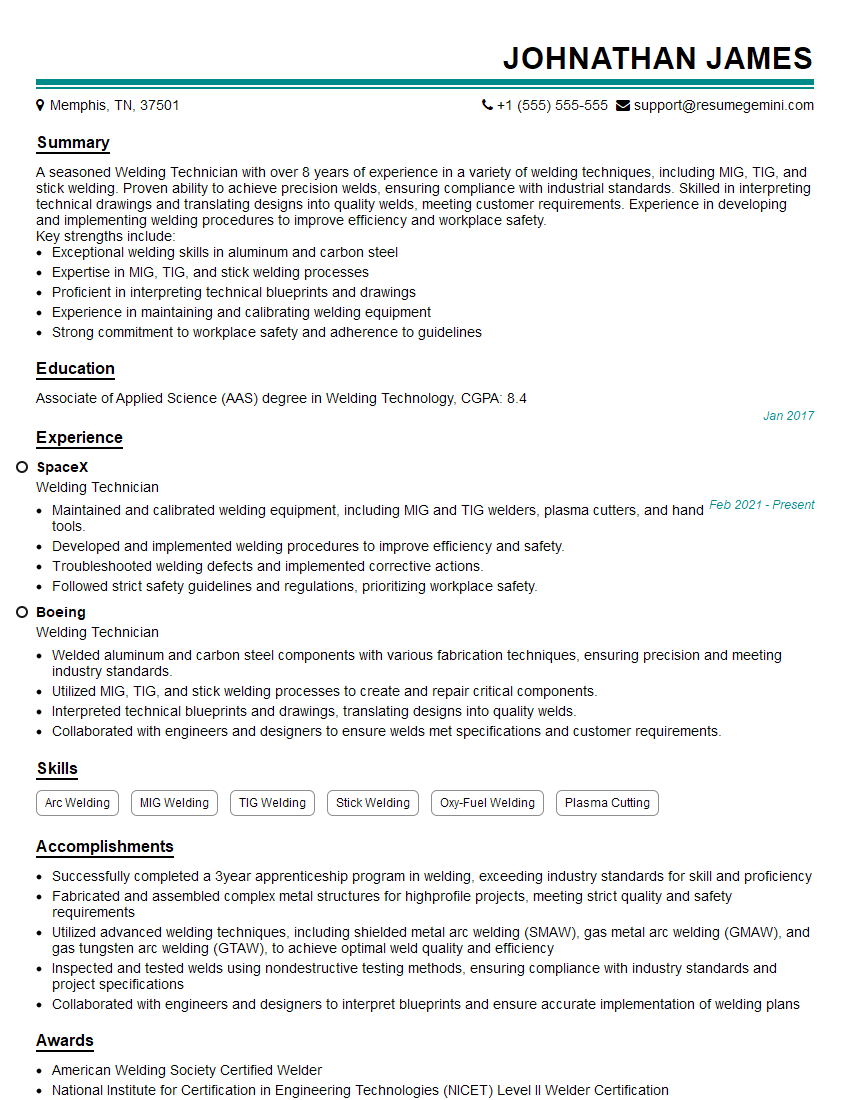
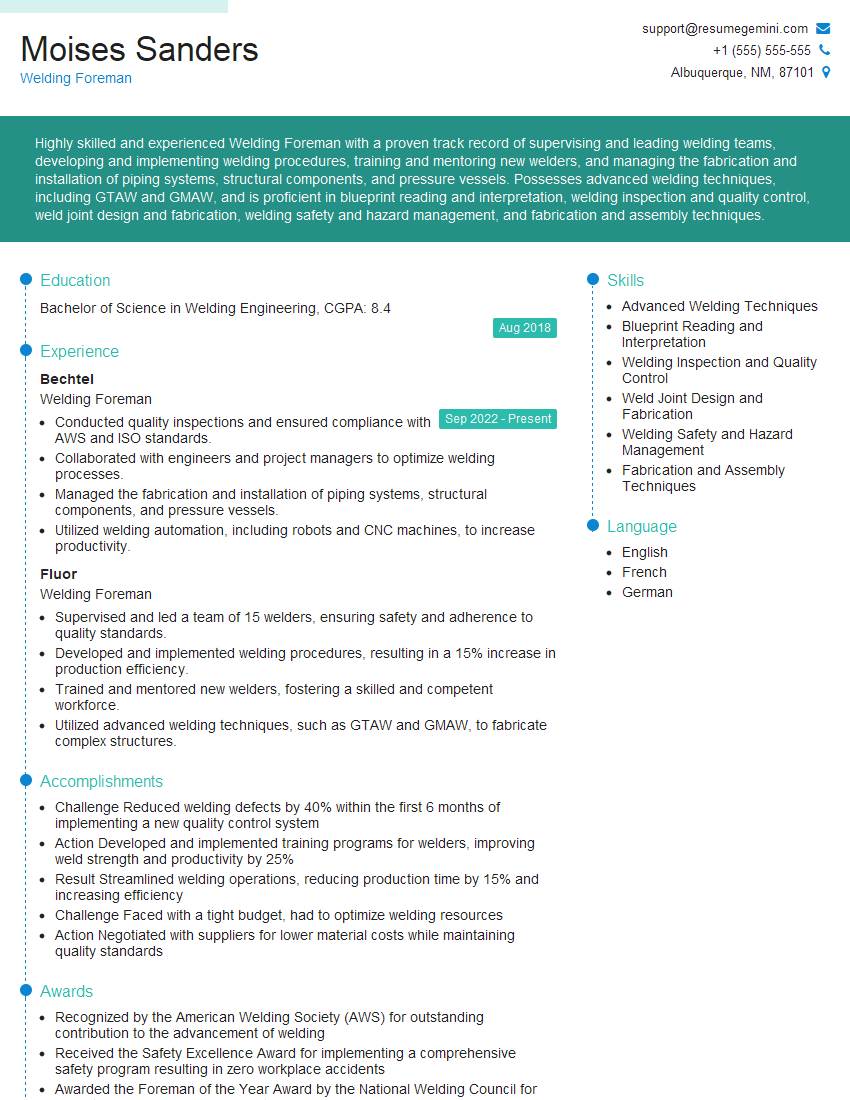
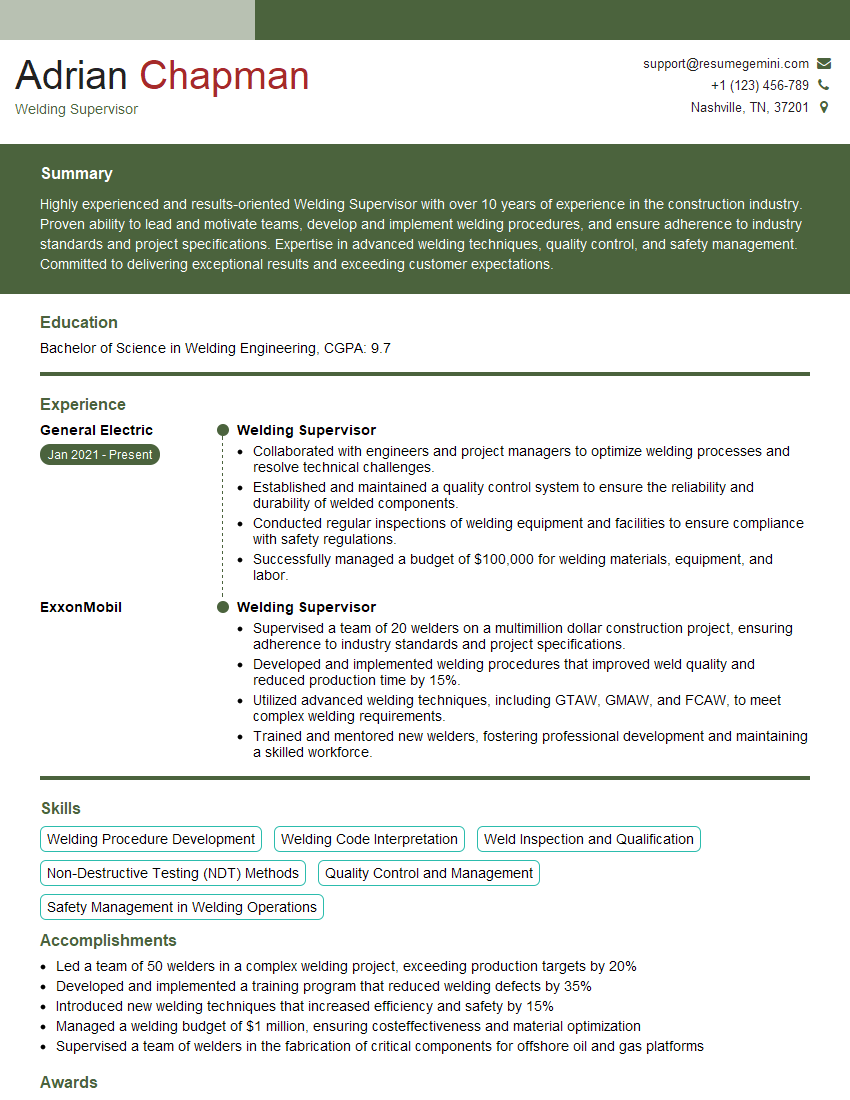
Mastering Welding Procedures and Specifications is crucial for career advancement in the welding industry, opening doors to higher-paying positions and specialized roles. A well-crafted resume is your key to unlocking these opportunities. Building an ATS-friendly resume is essential for getting your application noticed. We recommend using ResumeGemini, a trusted resource for creating professional and effective resumes. ResumeGemini provides examples of resumes tailored to Welding Procedures and Specifications expertise, giving you a head start in crafting your winning application.

Explore more articles
Users Rating of Our Blogs
Share Your Experience
We value your feedback! Please rate our content and share your thoughts (optional).
What Readers Say About Our Blog
I Redesigned Spongebob Squarepants and his main characters of my artwork.
https://www.deviantart.com/reimaginesponge/art/Redesigned-Spongebob-characters-1223583608
IT gave me an insight and words to use and be able to think of examples
Hi, I’m Jay, we have a few potential clients that are interested in your services, thought you might be a good fit. I’d love to talk about the details, when do you have time to talk?
Best,
Jay
Founder | CEO