Interviews are more than just a Q&A session—they’re a chance to prove your worth. This blog dives into essential Wind Design interview questions and expert tips to help you align your answers with what hiring managers are looking for. Start preparing to shine!
Questions Asked in Wind Design Interview
Q 1. Explain the difference between static and dynamic wind loads.
Static wind loads represent the constant force exerted by wind on a structure, assuming the wind speed remains constant. Think of it like a steady push. We calculate these based on the average wind speed at a given location and the structure’s exposed area. Dynamic wind loads, on the other hand, consider the fluctuating nature of wind – gusts, turbulence, and vortex shedding. Imagine a strong gust hitting your car – that’s a dynamic load. These fluctuations can significantly increase the forces on a structure compared to the static load alone, making dynamic analysis crucial for safety.
A simple analogy: Imagine pushing a door steadily (static). That’s different from suddenly slamming it (dynamic). The latter exerts much larger forces for a short time.
Q 2. Describe the various methods used for wind load calculations.
Wind load calculations utilize several methods, each with its own level of complexity and accuracy. The simplest involves using building codes and standards (like ASCE 7 in the US) which provide prescribed wind pressures based on location, height, and building shape. These are often sufficient for smaller structures. More complex methods include the use of statistical analysis of wind data, which allow us to create probabilistic models of the wind climate. Then, there are computational methods, like Computational Fluid Dynamics (CFD), providing a detailed, highly-accurate simulation of wind flow around a structure, offering significant advantages over simpler methods when dealing with complex geometries.
- Building Code Method: Simplest, uses pre-calculated pressure coefficients.
- Equivalent Static Wind Load Method: Applies a simplified static load which accounts for the average wind speed and dynamic effects through a gust factor.
- Dynamic Analysis Methods: These involve advanced techniques like spectral analysis (identifying dominant frequencies) and time-history analysis (simulating wind speed fluctuations over time). These are vital for tall buildings and slender structures.
- Computational Fluid Dynamics (CFD): Provides a very detailed and visual model of air flow.
Q 3. How do you account for terrain effects in wind load analysis?
Terrain significantly affects wind speed and turbulence. Flat, open terrain leads to higher wind speeds, while hilly or forested areas cause wind to slow down and become more turbulent. We account for terrain effects through various roughness classifications. These classifications determine a roughness length (z0), which represents the height at which the wind speed becomes zero. A higher roughness length indicates increased turbulence and reduced wind speed at a given height. This roughness length is then used in wind profile models to estimate wind speeds at different elevations above the ground. For instance, a flat, open area would have a lower roughness length than a densely wooded area. Many building codes offer charts and equations to determine suitable roughness lengths for different terrain categories.
This adjustment is crucial. Ignoring terrain effects can lead to underestimation or overestimation of wind loads, potentially compromising structural safety.
Q 4. What are the key design considerations for wind turbines?
Wind turbine design faces unique challenges due to the significant wind loads they experience. Key considerations include:
- Aerodynamic Design: Blade design is paramount, balancing efficient energy capture with structural integrity under high wind speeds. Blade shape and angle affect aerodynamic loads substantially.
- Structural Integrity: The tower, nacelle, and blades must withstand extreme loads caused by wind gusts, turbulence, and vibrations. Fatigue failure is a major concern due to cyclical loading.
- Dynamic Response: Wind turbines must be able to handle dynamic loads effectively. Proper analysis is critical to avoid resonance and catastrophic failures.
- Foundation Design: The foundation needs to securely anchor the turbine, considering overturning moments and uplift forces. Soil conditions are crucial.
- Control Systems: Sophisticated control systems are needed to adjust the blade pitch angle and yaw to optimize power generation and ensure structural safety under varying wind conditions.
Failure to address these factors could lead to premature wear and tear, structural failure, or even complete collapse of the structure.
Q 5. Explain the importance of wind tunnel testing in wind engineering.
Wind tunnel testing is an invaluable tool in wind engineering. It allows us to physically simulate wind flow around a structure, obtaining detailed measurements of pressure and forces. This is especially crucial for complex geometries where simplified analytical models fall short. The scale model of a building or wind turbine is placed in a wind tunnel and subjected to controlled wind conditions, replicating different wind speeds and directions. Pressure sensors and other instruments measure the forces acting on the model, providing data that is used to refine the design and ensure its ability to withstand extreme wind events. Wind tunnel testing helps identify areas of high pressure or vortices and validates computational models.
For example, a wind tunnel test might reveal unexpected vortices forming behind a tall building, leading to adjustments in its design to mitigate these potentially damaging effects.
Q 6. What are the limitations of using simplified wind load models?
Simplified wind load models, while useful for preliminary assessments and smaller projects, have significant limitations. Their accuracy decreases with increasing structural complexity and irregularity. They often neglect important aspects of wind behavior like turbulence, vortex shedding, and the effects of nearby buildings. This simplification can lead to inaccurate predictions, potentially compromising safety and leading to underdesigned or overdesigned structures. Simplified models might also fail to capture local wind effects such as channeling, acceleration, or separation in complex terrain, leading to design errors.
For critical projects or complex structures, these limitations necessitate a more sophisticated approach – like CFD or detailed wind tunnel testing.
Q 7. Describe your experience with Computational Fluid Dynamics (CFD) software for wind analysis.
I have extensive experience using various CFD software packages, including ANSYS Fluent and OpenFOAM, for wind analysis. My expertise encompasses setting up complex simulations of wind flow around structures, utilizing different turbulence models (like k-ε and LES), and post-processing results to extract relevant engineering data like pressure coefficients and wind forces. I have used CFD to analyze the wind loads on a variety of projects, including high-rise buildings, bridges, and wind turbines. This allows for a much more detailed examination of wind patterns, identifying pressure fluctuations and turbulence intensities in various areas, which is often not possible using simpler approaches. For instance, on a recent project involving a high-rise building near a significant hill, CFD modeling allowed us to accurately predict the effects of terrain-induced wind acceleration, leading to a more robust and efficient design.
CFD simulations are computationally intensive but deliver highly accurate and visually rich results that aid in design optimization and mitigation of wind-related risks.
Q 8. How do you validate CFD results?
Validating CFD (Computational Fluid Dynamics) results in wind design is crucial for ensuring the accuracy and reliability of the analysis. It’s not just about getting a number; it’s about understanding if that number truly reflects reality. We use a multi-pronged approach:
Grid Independence Study: We run simulations with progressively finer meshes. If the results converge (meaning they don’t change significantly with increased mesh refinement), it indicates the solution is grid-independent, reducing numerical errors. Think of it like zooming in on a map – eventually, you reach a level of detail where further zooming provides no new information.
Code Verification: We regularly check the CFD software against known analytical solutions or experimental data for simpler cases. This ensures the solver itself is working correctly. Imagine testing a calculator by performing simple arithmetic; if it fails basic checks, we can’t trust complex calculations.
Experimental Validation: Whenever possible, we compare CFD results with wind tunnel tests or on-site measurements. This provides a crucial ground truth against which to judge the accuracy of our simulations. This is the ultimate test, comparing the virtual world to the real world.
Sensitivity Analysis: We systematically vary input parameters (like wind speed, turbulence intensity, and building geometry) to understand their impact on the results. This helps identify potential sources of uncertainty and assess their significance. Imagine testing different materials for a building – understanding the impact of each material on the final design is key.
Uncertainty Quantification: We acknowledge that uncertainties exist in both the input data and the model itself. Techniques like probabilistic methods are used to quantify the range of possible outcomes, rather than just providing a single point estimate. This gives a realistic assessment of design risks.
Q 9. What are the different types of wind turbines and their characteristics?
Wind turbines come in various types, each with its own strengths and weaknesses. The key distinctions lie in the orientation of the rotor and the number of blades:
Horizontal-Axis Wind Turbines (HAWTs): These are the most common type, with the rotor shaft oriented horizontally. They are further categorized by their design:
Upwind HAWTs: The rotor faces the wind, simpler in design, but susceptible to shadowing effects. Imagine a person walking directly towards a fan.
Downwind HAWTs: The rotor is behind the tower. They can be less noisy than upwind types but are more mechanically complex due to the added stress on components.
Vertical-Axis Wind Turbines (VAWTs): The rotor shaft is oriented vertically. These have the advantage of capturing wind from any direction. However, they typically generate lower power output compared to HAWTs of the same size. Imagine a spinning cylinder, grabbing wind from all around.
The characteristics of each turbine type significantly impact their design and performance. Factors to consider include power output, efficiency, cost, maintenance requirements, and the specific wind conditions at the proposed site. Matching the turbine type to the site’s characteristics is vital for optimal energy production.
Q 10. Explain the concept of wind shear and its impact on wind load calculations.
Wind shear refers to the variation of wind speed and direction with height above the ground. Imagine a river – the water flows faster near the surface than at the bottom due to friction with the riverbed. Wind behaves similarly. The wind speed generally increases with height above ground level due to less friction.
This is crucial in wind load calculations because structures experience different wind speeds at different heights. A tall building, for instance, will experience significantly higher wind speeds at its top than at its base. We can’t use a single wind speed for the whole structure. Instead, we use a wind profile (a mathematical representation of wind speed versus height) to account for this variation.
Ignoring wind shear can lead to underestimation of wind loads at higher elevations and subsequent structural failure. Accurate wind load calculations must incorporate appropriate wind shear profiles, often defined by power-law equations or more complex logarithmic profiles, depending on the terrain roughness and atmospheric stability.
Q 11. How do you account for turbulence in your wind load analysis?
Turbulence, the irregular and chaotic fluctuations in wind speed and direction, is another critical factor in wind load analysis. It’s like the choppy waves on a stormy sea, unlike the smooth flow of a calm river.
We account for turbulence by:
Using Turbulence Models: CFD simulations employ turbulence models (e.g., k-ε, k-ω SST) to simulate the turbulent flow field. These models are mathematical approximations that capture the effects of turbulence on the mean flow. The choice of model depends on the complexity of the flow and the accuracy required.
Incorporating Turbulence Intensity: We use meteorological data to determine the turbulence intensity at the site. This parameter represents the level of turbulence and is used as input in the wind load calculations and CFD simulations.
Gust Factor Approach: For simpler analyses, we may apply a gust factor to the mean wind speed, effectively adding a safety margin to account for the peak gusts. This is a more conservative approach compared to CFD, but can be suitable for preliminary assessments.
Simulating Turbulent Wind Fields: Advanced methods may involve generating realistic turbulent wind fields using digital wind tunnel techniques or stochastic approaches. This improves the accuracy of simulations, especially for complex structures or critical design scenarios.
Accurate representation of turbulence is vital for evaluating the dynamic response of structures and ensuring their safety under turbulent wind conditions.
Q 12. What are the design codes and standards you are familiar with (e.g., ASCE 7, Eurocode)?
I’m proficient in several international design codes and standards for wind engineering, including:
ASCE 7-16 (American Society of Civil Engineers): This is the widely used standard in the United States for minimum design loads for buildings and other structures.
Eurocode 1: The European standard addressing actions on structures. It provides comprehensive guidance on wind loads, including detailed procedures for calculating wind pressures and forces.
EN 1991-1-4: This specific part of Eurocode 1 focuses solely on wind actions.
IS 875 (Indian Standard): I’m also familiar with Indian standards for wind loads, relevant for projects in India.
My familiarity with these standards ensures that my designs meet the necessary safety requirements and regulations, irrespective of the project’s geographical location.
Q 13. Describe your experience with different wind analysis software (e.g., ANSYS Fluent, Star CCM+).
Throughout my career, I’ve extensively used several wind analysis software packages, including:
ANSYS Fluent: I have extensive experience using Fluent for performing detailed CFD simulations of wind flow around structures. Its strengths lie in its robust solver capabilities and its broad range of turbulence models.
Star CCM+: This software is another powerful CFD tool I utilize for similar purposes, especially when dealing with complex geometries and multiphase flows. I appreciate its user-friendly interface and meshing capabilities.
OpenFOAM: This open-source software is excellent for customized simulations and research-oriented applications where I can tailor the solution to specific needs.
My experience encompasses pre-processing (geometry creation and meshing), solving (running the CFD simulation), and post-processing (extracting and analyzing results). I’m adept at selecting the appropriate software and techniques based on the specific requirements of each project.
Q 14. How do you determine the appropriate wind speed for design purposes?
Determining the appropriate wind speed for design purposes is a critical step in wind engineering. It involves several factors:
Return Period: The design wind speed is typically based on a specified return period (e.g., 50 years, 100 years). This represents the average recurrence interval of a wind event of a certain intensity. A longer return period indicates a higher wind speed, reflecting a lower probability of exceedance.
Location and Topography: The wind speed varies geographically and is affected by local topography. Coastal regions tend to experience higher wind speeds than inland areas. The local terrain (flat, hilly, or mountainous) also influences wind patterns.
Height Above Ground Level: Wind speed increases with height. Therefore, design speeds need to be calculated for different heights of the structure.
Risk Assessment: The consequences of failure also determine the choice of design wind speed. A critical structure like a hospital may require a higher design wind speed compared to a less critical structure.
Wind Load Codes: Design codes (like ASCE 7 or Eurocode) provide methodologies to determine design wind speeds based on the considerations mentioned above. These codes often use a combination of historical weather data, statistical analysis, and engineering judgment.
Ultimately, selecting the appropriate design wind speed is a balanced approach that considers risk, reliability, cost, and regulatory compliance.
Q 15. Explain the importance of considering wind effects on structural stability.
Wind effects are paramount in structural design because wind loads can significantly impact a structure’s stability and safety. Imagine a tall building swaying violently in a strong storm – that’s the direct result of wind pressure. Ignoring wind loads can lead to catastrophic failures, ranging from minor damage to complete collapse. We must account for both static wind loads (constant pressure) and dynamic wind loads (fluctuating pressure due to gusts and turbulence). The design process involves calculating these forces and ensuring the structure has sufficient strength and stiffness to withstand them. This includes considerations like the structure’s shape, height, location, and the local wind climate.
For example, the design of skyscrapers involves sophisticated computational fluid dynamics (CFD) simulations to accurately model wind flow around the building and predict the resulting pressure distribution. This informs the structural design, ensuring sufficient bracing and reinforcement to resist the predicted wind loads. Similarly, bridges and other long-span structures require meticulous consideration of wind-induced vibrations and flutter, potential sources of instability.
Career Expert Tips:
- Ace those interviews! Prepare effectively by reviewing the Top 50 Most Common Interview Questions on ResumeGemini.
- Navigate your job search with confidence! Explore a wide range of Career Tips on ResumeGemini. Learn about common challenges and recommendations to overcome them.
- Craft the perfect resume! Master the Art of Resume Writing with ResumeGemini’s guide. Showcase your unique qualifications and achievements effectively.
- Don’t miss out on holiday savings! Build your dream resume with ResumeGemini’s ATS optimized templates.
Q 16. What are the various types of wind sensors and their applications?
Various types of wind sensors are crucial for measuring wind speed, direction, and other parameters relevant to wind energy and meteorological studies. These include:
- Anemometers: These are the workhorses of wind measurement, coming in various designs like cup anemometers (common for general wind speed measurement), sonic anemometers (accurate for turbulence measurement), and laser anemometers (non-contact, used in specialized applications).
- Wind vanes: These determine the direction of wind flow, typically paired with anemometers to provide a complete wind vector.
- Lidar (Light Detection and Ranging): This remote sensing technology uses laser beams to scan the atmosphere, providing a 3D profile of wind speed and direction at different heights. This is particularly useful for wind resource assessment over large areas or in challenging terrain.
- SODAR (Sound Detection and Ranging): Similar to lidar, but uses sound waves instead of light. It’s effective for lower altitude measurements and can penetrate light cloud cover.
Applications range from weather forecasting and climate research to wind energy project site assessment, wind turbine control, and even structural monitoring. For example, in wind farm development, a network of anemometers and lidar systems would provide the detailed wind data necessary for optimal turbine placement and energy yield prediction.
Q 17. How do you assess the wind resource at a potential wind farm site?
Assessing the wind resource at a potential wind farm site is critical to determining its viability. We need to understand the wind’s speed, direction, and consistency over the site and at various heights. Insufficient wind resource means the project won’t generate sufficient electricity, rendering it economically unfeasible. This involves several steps, including gathering historical wind data, conducting on-site measurements, and analyzing the data to predict future energy production.
Think of it like scouting the perfect location for a watermill: you wouldn’t build it where the stream is slow and unpredictable! Similarly, a wind farm needs a consistently strong wind resource to be successful. A comprehensive assessment helps predict the long-term energy output and the profitability of the wind farm.
Q 18. Describe the process of conducting a wind resource assessment.
Conducting a wind resource assessment is a multi-stage process:
- Data Collection: Gather existing wind data from nearby weather stations, or deploy on-site meteorological masts (towers with anemometers and wind vanes at multiple heights) for detailed measurements over an extended period (typically 1-2 years). Lidar or SODAR can supplement this process.
- Data Analysis: Process the collected wind data to determine key parameters like mean wind speed, wind shear (how wind speed changes with height), wind direction frequency, and turbulence intensity. Statistical methods and specialized software are used to analyze data, accounting for seasonal and diurnal variations.
- Resource Mapping: Create wind maps showing the spatial distribution of wind resources across the site. This helps identify areas with optimal wind conditions for turbine placement.
- Energy Yield Assessment: Simulate the performance of wind turbines at the site using wind data and turbine characteristics. Software models estimate the annual energy production, considering turbine wake effects (downstream wind speed reduction due to upstream turbines).
- Uncertainty Analysis: Assess uncertainties associated with the wind resource assessment, considering factors like instrument errors, data gaps, and the inherent variability of the wind. This allows for a more realistic estimation of energy production.
The outcome is a comprehensive report outlining the wind resource characteristics and projected energy yield, guiding investment decisions and wind farm design.
Q 19. Explain your understanding of wind farm layout optimization.
Wind farm layout optimization aims to maximize energy capture while minimizing negative interactions between turbines. Turbines placed too close together experience wake effects, significantly reducing their individual energy output. Optimization involves using sophisticated algorithms and simulations to determine the best arrangement of turbines on a given site. Factors considered include:
- Wake Effects: Minimizing the impact of one turbine’s wake on downstream turbines.
- Terrain Features: Optimizing turbine placement to take advantage of favorable terrain and minimize negative impacts.
- Grid Connection: Considering the proximity to the electrical grid and minimizing transmission losses.
- Environmental Impact: Balancing energy production with minimizing environmental impact.
Optimization techniques can range from simple rules-of-thumb to advanced computational methods such as genetic algorithms and particle swarm optimization. The goal is to find the layout that maximizes the overall energy production of the wind farm, taking into account the complexities of wind flow and turbine interactions. Software tools are commonly employed to model wind flow, simulate turbine performance, and perform optimization calculations.
Q 20. What are the environmental considerations in wind energy project development?
Environmental considerations are paramount in wind energy project development. We must carefully assess and mitigate potential impacts on:
- Wildlife: Bird and bat mortality due to collisions with turbine blades is a major concern. Careful siting, operational strategies, and mitigation measures (like bird deterrent systems) are crucial.
- Landscape and Visual Impacts: Wind turbines can alter the visual landscape. Visual impact assessments are necessary, often involving community consultations to address aesthetic concerns.
- Noise Pollution: Turbines generate noise, which can affect nearby residents. Noise modeling and mitigation measures (like noise barriers) are needed to keep noise levels within acceptable limits.
- Habitat Disruption: Construction and operation can affect local ecosystems. Protecting sensitive habitats and minimizing disruption during construction are vital.
- Electromagnetic Fields: While generally considered low, the effects of electromagnetic fields from turbines require assessment and monitoring.
Environmental impact assessments (EIAs) are legally mandated for most wind farm projects, providing a framework for identifying, assessing, and mitigating potential environmental risks. Sustainable practices and stakeholder engagement are essential for responsible wind energy development.
Q 21. How do you account for the effects of icing on wind turbine design?
Icing on wind turbine blades is a serious concern, especially in cold climates, as it can significantly reduce energy production and even cause structural damage. The accumulation of ice adds weight and alters the aerodynamic shape of the blades, leading to reduced efficiency and increased stresses. Severe icing can lead to blade failure.
To account for the effects of icing, wind turbine designs incorporate various strategies:
- Blade Design: The blade’s shape and material properties are designed to minimize ice adhesion and withstand the increased loads associated with ice accretion.
- De-icing Systems: These systems either prevent ice formation or remove it once it has formed. Common methods include heating systems (electrical or fluid-based) and mechanical de-icing systems (vibration or blade rotation).
- Control Systems: Turbine control systems are programmed to adjust operating parameters (like rotational speed) to minimize the effects of icing. They can even shut down the turbine if ice accumulation reaches critical levels.
- Structural Analysis: Advanced structural analysis techniques are used to determine the loads the blades must withstand under icing conditions, ensuring sufficient strength and safety.
The design process considers meteorological data on icing frequency and severity to tailor the design and operational strategies to the specific site conditions.
Q 22. What are the common failure modes of wind turbines?
Wind turbine failure modes are diverse and often interconnected, stemming from the complex interplay of structural, mechanical, and electrical components subjected to extreme environmental conditions. Common failure modes include:
- Blade failures: Fatigue cracks, delamination, erosion, and impacts from birds or ice are common causes. These can lead to catastrophic blade loss and damage to other components.
- Gearbox failures: Gearboxes are complex and heavily loaded, prone to wear and tear, lubrication issues, and ultimately, catastrophic failure leading to downtime and costly repairs. This is often a major source of wind turbine downtime.
- Generator failures: Overheating, insulation breakdown, and bearing failures are potential issues impacting generator efficiency and lifespan.
- Tower failures: Fatigue, corrosion, and foundation settlement can compromise tower structural integrity. Tower failures are typically catastrophic events.
- Yaw system failures: Malfunction of the yaw system, responsible for orienting the turbine towards the wind, can lead to reduced energy capture or even structural damage.
- Pitch system failures: The pitch system controls blade angle to regulate power; malfunction can cause overload and damage to the blade or gearbox.
Understanding these failure modes is crucial for designing robust turbines, developing effective maintenance strategies, and ensuring safe and reliable wind farm operation.
Q 23. Describe your experience with wind farm operation and maintenance.
My experience encompasses over ten years in wind farm operation and maintenance, working with both onshore and offshore projects. I’ve been involved in all aspects, from preventative maintenance scheduling and executing complex repairs to troubleshooting unexpected failures and implementing corrective actions. For example, I led a team that successfully diagnosed and repaired a series of gearbox failures at a large onshore wind farm, identifying a root cause related to lubricant degradation. This involved coordinating with multiple vendors, managing resources effectively under time constraints, and implementing a new lubricant management system to prevent recurrence. In another instance, I assisted in the development and implementation of a remote monitoring system for an offshore wind farm, enabling early detection of potential issues and reducing downtime. This significantly improved operational efficiency and reduced maintenance costs. My work also extends to developing and implementing comprehensive O&M plans, ensuring compliance with safety regulations, and optimizing maintenance strategies to maximize turbine uptime and energy production.
Q 24. What are the challenges associated with offshore wind energy projects?
Offshore wind energy projects present unique challenges not encountered in onshore projects. The key challenges include:
- Harsh marine environment: Offshore structures face relentless exposure to high winds, waves, and salt spray, accelerating corrosion and requiring robust designs. Regular inspections and maintenance become more difficult and expensive.
- Installation and maintenance logistics: Transporting and installing massive turbines and components in deep water is logistically complex, demanding specialized vessels and equipment. Maintenance access is also limited and costly, requiring specialized crews and potentially underwater operations.
- Grid connection: Establishing reliable grid connections to transmit the generated power to the onshore grid often requires significant investments in subsea cables and onshore infrastructure.
- Environmental considerations: Offshore projects must adhere to stringent environmental regulations aimed at protecting marine ecosystems, including minimizing impacts on marine life and habitats.
- Higher capital costs: The higher complexity and logistical challenges associated with offshore projects significantly increase the initial capital investment.
Addressing these challenges requires innovative engineering solutions, robust risk management strategies, and careful consideration of environmental impacts.
Q 25. How do you address the fatigue loading on wind turbine components?
Fatigue loading is a critical concern in wind turbine design, as components undergo cyclical stresses from fluctuating wind loads. Addressing this requires a multi-pronged approach:
- Material selection: Using high-strength, fatigue-resistant materials like specific grades of steel or composites significantly enhances component lifespan.
- Design optimization: Finite element analysis (FEA) is crucial for simulating fatigue loading and optimizing designs to minimize stress concentrations and extend fatigue life. This includes optimizing component geometry and connections.
- Robustness factors: Incorporating appropriate safety factors during design helps to account for uncertainties and potential variations in loading conditions.
- Fatigue testing: Rigorous testing, including accelerated fatigue tests, helps to validate design assumptions and ensure components meet required fatigue limits.
- Regular inspections and maintenance: Implementing regular inspection programs to detect and repair fatigue cracks at an early stage is essential for preventing catastrophic failures.
For example, by using advanced FEA techniques, we can identify areas of high stress concentration in a turbine blade and modify its design to distribute loads more efficiently, thus increasing its fatigue life significantly.
Q 26. Explain your understanding of aeroelasticity in wind turbine design.
Aeroelasticity is the study of the interaction between aerodynamic forces, elastic deformation, and inertial forces in wind turbines. It’s crucial because wind turbines are flexible structures subjected to dynamic wind loads. Ignoring aeroelastic effects can lead to inaccurate predictions of turbine response, vibrations, and potential failures. Understanding aeroelasticity is essential for:
- Predicting blade vibrations: Aeroelastic simulations help predict blade flutter (self-excited oscillations) and other vibrations that can damage blades.
- Designing effective control systems: Aeroelastic models inform the design of pitch control systems and other control mechanisms to mitigate vibrations and improve turbine performance.
- Assessing structural integrity: Aeroelastic analysis helps assess the structural integrity of the entire turbine, considering the combined effects of aerodynamic loads and structural flexibility.
Consider a scenario where a new blade design is being developed. Aeroelastic simulations are performed to analyze its behavior under various wind conditions. These simulations can help engineers identify potential resonance frequencies that could lead to excessive vibrations and subsequently design modifications to mitigate them.
Q 27. Describe your experience in developing wind farm feasibility studies.
My experience in developing wind farm feasibility studies is extensive, involving a systematic process that considers various aspects:
- Wind resource assessment: Analyzing meteorological data to evaluate the wind resource at the proposed site, using tools like Weibull distributions and power curves. This helps to estimate potential energy generation.
- Site suitability analysis: Assessing the site’s suitability for wind turbine installation, considering factors like terrain, soil conditions, grid access, environmental impacts, and regulatory constraints.
- Turbine selection: Choosing the most appropriate turbine technology based on wind resource characteristics, site conditions, and project economics.
- Financial modeling: Developing a comprehensive financial model to assess project viability, including capital costs, operating expenses, energy production, and revenue projections.
- Environmental impact assessment: Conducting an environmental impact assessment to comply with environmental regulations and minimize ecological effects.
- Risk assessment: Identifying and evaluating potential risks throughout the project lifecycle, such as technical risks, financial risks, and regulatory risks.
Recently, I led a feasibility study for an onshore wind farm, which involved developing a detailed model that incorporated site-specific wind data, turbine performance curves, and financial projections, ultimately demonstrating the project’s viability and securing funding.
Q 28. How do you ensure the structural integrity of wind turbine towers?
Ensuring the structural integrity of wind turbine towers is paramount. The process involves:
- Design Codes & Standards: Adherence to relevant design codes and standards (e.g., IEC 61400-3) ensures the tower meets minimum safety and performance requirements.
- Material Selection and Testing: Employing high-strength, corrosion-resistant steels and subjecting them to rigorous material testing ensures sufficient strength and durability under cyclic loading.
- Finite Element Analysis (FEA): Sophisticated FEA models simulate loading conditions (wind, seismic, etc.) to optimize tower design for minimum weight while maintaining structural integrity. This often involves advanced computational tools and expert knowledge in structural mechanics.
- Foundation Design: A well-designed foundation is critical. Soil analysis is paramount to choose the right foundation type (e.g., monopiles, jackets) that can support the tower under all loading conditions. This includes considerations for soil properties and potential settlement.
- Corrosion Protection: Implementing robust corrosion protection strategies, such as coatings and cathodic protection, is crucial for extending the tower’s lifespan in harsh environmental conditions.
- Regular Inspections and Maintenance: Periodic inspections, including visual checks, ultrasonic testing, and other non-destructive techniques, detect early signs of damage and allow for timely repairs.
For instance, designing a tower for a specific offshore site might involve advanced FEA to accurately model the complex hydrodynamic forces and optimize the tower’s geometry to withstand extreme wave loads and fatigue.
Key Topics to Learn for Wind Design Interview
- Wind Turbine Aerodynamics: Understanding lift, drag, and blade element momentum theory; analyzing airfoil performance and wind shear effects.
- Wind Resource Assessment: Utilizing meteorological data to evaluate wind speed, turbulence intensity, and energy yield at potential wind farm sites; employing software tools for site analysis.
- Turbine Design and Selection: Evaluating different turbine technologies (e.g., horizontal-axis, vertical-axis); understanding gearbox design, generator types, and control systems.
- Structural Dynamics: Analyzing tower and blade structural integrity under dynamic wind loads; understanding fatigue analysis and failure modes.
- Wind Farm Layout and Control: Optimizing turbine spacing and orientation to maximize energy capture; implementing wake steering and power management strategies.
- Environmental Impact Assessment: Understanding the environmental considerations of wind energy projects, including noise pollution, avian mortality, and landscape impact.
- Grid Integration: Understanding the connection of wind farms to the electricity grid, including power quality, stability, and forecasting.
- Cost and Economic Analysis: Evaluating the financial viability of wind energy projects, including capital costs, operational expenses, and revenue streams.
- Computational Fluid Dynamics (CFD): Applying CFD simulations to model wind flow around turbines and wind farms; interpreting results and refining designs.
- Data Analysis and Visualization: Analyzing wind data, performance data, and simulation results; creating visualizations to communicate findings effectively.
Next Steps
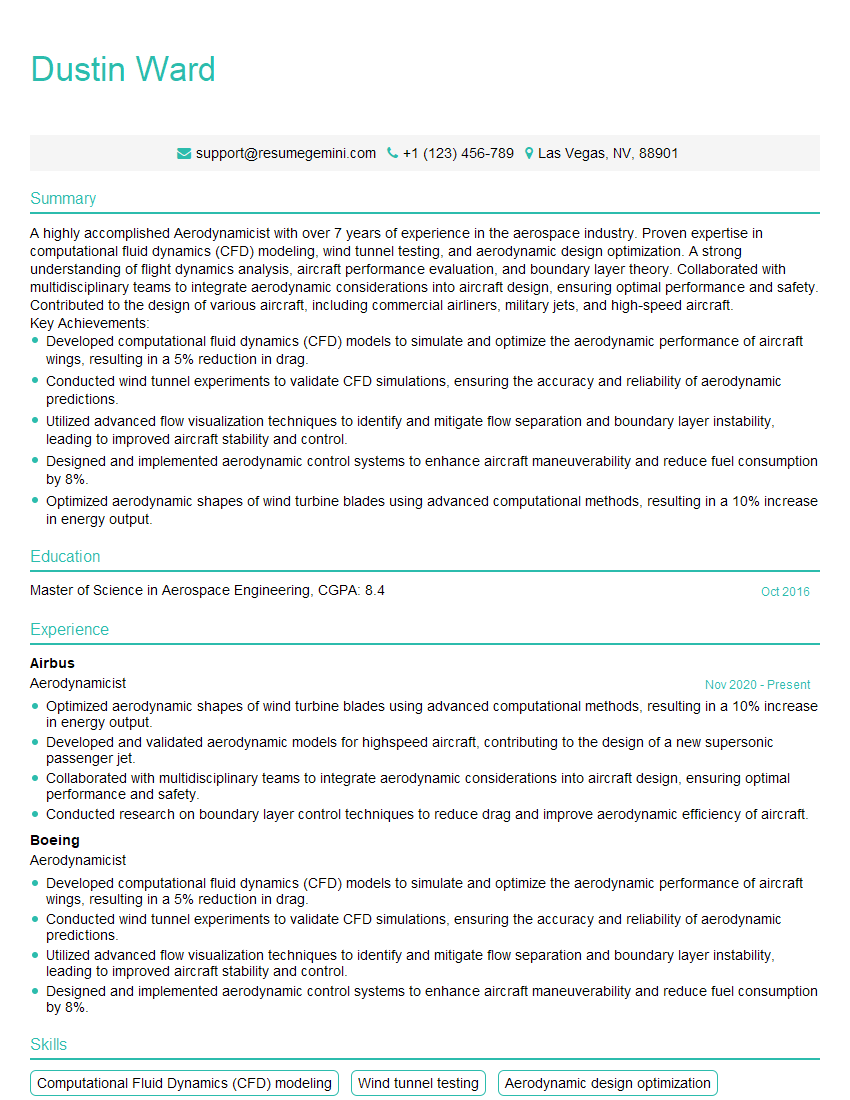
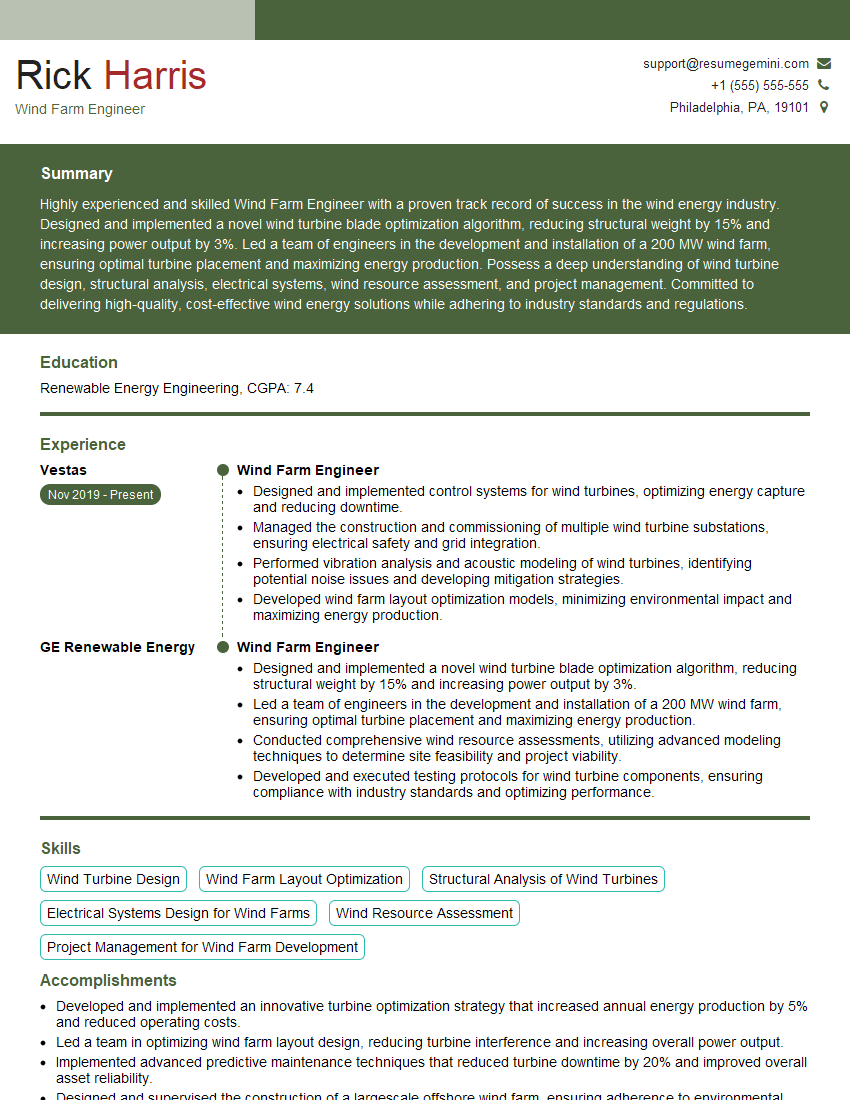
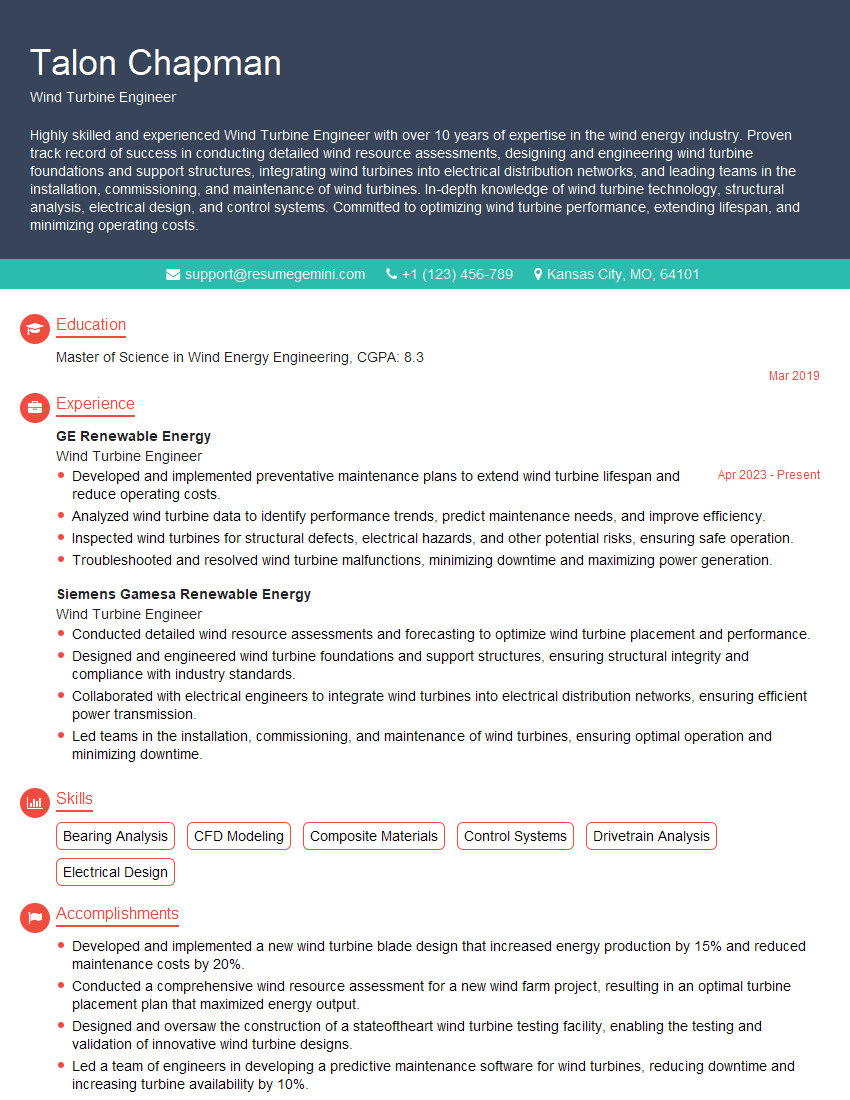
Mastering Wind Design principles opens doors to exciting and impactful careers in a rapidly growing industry. To stand out, a strong, ATS-friendly resume is crucial. ResumeGemini is a trusted resource that can help you craft a compelling resume highlighting your skills and experience. Take advantage of their tools and resources to showcase your capabilities effectively. Examples of resumes tailored to Wind Design are available to help guide your creation process.

Explore more articles
Users Rating of Our Blogs
Share Your Experience
We value your feedback! Please rate our content and share your thoughts (optional).
What Readers Say About Our Blog
I Redesigned Spongebob Squarepants and his main characters of my artwork.
https://www.deviantart.com/reimaginesponge/art/Redesigned-Spongebob-characters-1223583608
IT gave me an insight and words to use and be able to think of examples
Hi, I’m Jay, we have a few potential clients that are interested in your services, thought you might be a good fit. I’d love to talk about the details, when do you have time to talk?
Best,
Jay
Founder | CEO