The right preparation can turn an interview into an opportunity to showcase your expertise. This guide to Curricular Integration interview questions is your ultimate resource, providing key insights and tips to help you ace your responses and stand out as a top candidate.
Questions Asked in Curricular Integration Interview
Q 1. Explain your understanding of curricular integration.
Curricular integration is the deliberate and thoughtful process of connecting different subject areas or concepts within a curriculum to create a more cohesive and meaningful learning experience for students. Instead of teaching subjects in isolation, integration weaves them together, highlighting the interrelationships and showing students how knowledge builds upon itself. Think of it like a tapestry: individual threads (subjects) are interwoven to create a rich and complex whole.
For example, a unit on ancient civilizations might integrate history, geography, art, and language arts. Students could study the geography of ancient Egypt, write stories from the perspective of an ancient Egyptian, analyze hieroglyphics, and create artwork inspired by Egyptian art. This approach helps students develop a deeper understanding of each subject and how they relate to one another.
Q 2. Describe a time you integrated diverse learning styles into a curriculum.
In a seventh-grade science unit on ecosystems, I integrated diverse learning styles to cater to visual, auditory, and kinesthetic learners. For visual learners, I incorporated detailed diagrams, charts, and videos of various ecosystems. Auditory learners benefited from class discussions, debates, and presentations. Kinesthetic learners participated in hands-on activities like building miniature ecosystems in terrariums and creating models of food chains. Assessments included written tests for auditory learners, diagram-based quizzes for visual learners, and presentations for kinesthetic learners to showcase their terrarium creations and understanding.
The results were remarkable. Student engagement increased significantly, leading to improved understanding and higher test scores across all learning styles. The key was to offer a variety of learning experiences that met the needs of all students, not just one preferred learning style.
Q 3. How do you assess the effectiveness of curricular integration?
Assessing the effectiveness of curricular integration requires a multifaceted approach. It’s not enough to simply look at standardized test scores. I use a combination of methods:
- Student Performance Data: Analyzing test scores, project grades, and class participation to see if integrated units lead to improved learning outcomes across subjects.
- Student Feedback: Surveys, interviews, and focus groups to gauge students’ understanding, engagement, and perceptions of the integrated curriculum.
- Teacher Observation: Observing student interactions during integrated activities to assess collaboration, critical thinking, and problem-solving skills.
- Portfolio Assessment: Reviewing students’ work samples (essays, projects, presentations) to assess their depth of understanding and application of knowledge across disciplines.
By using a variety of assessment methods, I can get a more complete picture of the effectiveness of the integrated curriculum and make necessary adjustments.
Q 4. What are the key challenges in integrating technology into the curriculum?
Integrating technology effectively into the curriculum presents several challenges:
- Digital Divide: Ensuring equitable access to technology and internet connectivity for all students is crucial. Some students may lack access to devices or reliable internet at home.
- Teacher Training and Support: Teachers need adequate training and ongoing support to effectively use technology in their teaching. Simply providing technology isn’t enough; teachers need to understand how to integrate it meaningfully into their lessons.
- Curriculum Alignment: Technology should be used to enhance learning, not just as a gimmick. The technology chosen should align with the learning objectives and be integrated thoughtfully into the curriculum.
- Maintaining Student Engagement: Technology can be distracting if not used appropriately. Teachers need to find ways to use technology in a way that is engaging and focused on learning.
- Data Privacy and Security: Protecting student data and ensuring responsible use of technology are paramount.
Addressing these challenges requires careful planning, collaboration, and ongoing evaluation.
Q 5. How do you ensure alignment between curriculum, assessment, and instructional strategies?
Alignment between curriculum, assessment, and instructional strategies is essential for effective teaching and learning. This alignment ensures that what students are taught, how they are assessed, and how they are taught are all interconnected and support the same learning goals. I ensure this alignment through:
- Backward Design: Starting with clearly defined learning objectives, then designing assessments that measure those objectives, and finally, selecting instructional strategies that help students achieve those objectives.
- Curriculum Mapping: Creating a visual representation of the curriculum, including learning objectives, assessments, and instructional activities, to ensure coherence and consistency.
- Regular Review and Revision: Continuously reviewing and revising the curriculum, assessments, and instructional strategies to ensure they are aligned and effective.
- Collaboration: Working with colleagues to share best practices and ensure consistency in the curriculum across grade levels or subjects.
This process ensures that all aspects of the teaching and learning process work together seamlessly to achieve desired learning outcomes.
Q 6. Describe your experience with curriculum mapping.
My experience with curriculum mapping involves creating visual representations of the curriculum to show the scope and sequence of learning objectives and their alignment with assessments and instructional activities. I typically use a spreadsheet or specialized curriculum mapping software. This provides a clear picture of what students will learn, how they will be assessed, and how those assessments will inform instruction. This allows for easy identification of gaps or overlaps in the curriculum and ensures that all components are aligned. For instance, I recently mapped a high school history curriculum to ensure that all key concepts were addressed across different grade levels and to identify potential areas for greater integration between history and other subjects such as literature and government. The visual map revealed a significant gap in the coverage of the Cold War, leading to curriculum adjustments to ensure adequate coverage.
Q 7. Explain your process for developing a vertically aligned curriculum.
Developing a vertically aligned curriculum involves ensuring that learning progressively builds upon itself across grade levels. My process begins with identifying the essential skills and knowledge students need to master at each grade level. Then, I analyze the curriculum across grade levels to identify areas where skills and concepts can be connected and built upon. I use a variety of techniques including:
- Common Core Standards or other relevant standards: Using these standards as a framework for building the curriculum ensures coherence and consistency across grade levels.
- Backward Mapping: Identifying the skills and knowledge needed at the highest grade level and working backward to determine what students need to learn at each preceding grade level.
- Collaborative Planning: Working with teachers at different grade levels to ensure that the curriculum is aligned and that there are clear progressions in learning.
- Regular Review and Revision: Regularly reviewing and revising the curriculum to ensure that it is effectively building upon itself and meeting the needs of students.
For instance, in developing a vertically aligned mathematics curriculum, I ensure that foundational skills in arithmetic, learned in early elementary grades, form the basis for more advanced concepts in algebra and calculus at higher grade levels. This ensures students build a strong and interconnected understanding of mathematical concepts.
Q 8. How do you incorporate backward design principles into your curriculum integration work?
Backward design, in the context of curriculum integration, flips the traditional approach on its head. Instead of starting with activities and then figuring out the goals, we begin by identifying the desired learning outcomes. This ensures that every element of the integrated curriculum directly contributes to student achievement of those pre-defined goals.
My process involves three stages:
- Identify Desired Results: What essential knowledge, skills, and understandings do students need to demonstrate mastery? This involves careful consideration of standards, assessments, and the overall learning objectives. For instance, if the goal is to understand the impact of the American Revolution, we’d define specific knowledge (key figures, events, causes, consequences) and skills (analyzing primary sources, evaluating arguments).
- Determine Acceptable Evidence: How will students demonstrate their understanding? This stage focuses on designing assessments that accurately measure the desired results. Examples include essays, presentations, projects, and performance tasks that require application of knowledge and skills. A rubric outlining grading criteria is crucial for clarity and fairness.
- Plan Learning Experiences and Instruction: This is where the integration happens. We select and sequence learning activities, using a variety of teaching strategies and resources (e.g., literature, art, science experiments, technology) that will best enable students to achieve the desired results. For the American Revolution example, we might integrate history lessons with literature (reading primary accounts), art (analyzing revolutionary-era paintings), and social studies (debating the causes and effects).
This ensures that all integrated activities are purposeful and contribute meaningfully to student learning, avoiding the pitfall of merely ‘covering’ topics without deep understanding.
Q 9. What are some common misconceptions about curricular integration?
Several misconceptions cloud the understanding of curricular integration. One common one is that it simply means throwing different subjects together. Integration is not about superficial connections but about creating meaningful links between disciplines to foster deeper understanding.
- Misconception 1: It’s just ‘fun activities’: Integration is not simply about adding crafts or games to lessons. It requires careful planning and alignment with learning objectives.
- Misconception 2: It’s too time-consuming: While initial planning requires more effort, effective integration often leads to efficiency in the long run by reducing repetition and fostering deeper learning, thus saving time in the long run.
- Misconception 3: It’s only for younger students: Integrated curricula are applicable and beneficial across all grade levels, albeit with differing approaches.
- Misconception 4: Teachers must be experts in all subjects: Successful integration requires collaboration and leveraging expertise within a team. It’s about creating a shared vision and facilitating connections, not requiring each teacher to master all subjects.
Effective integration requires careful planning, thoughtful selection of activities, and clear alignment with learning objectives to avoid these pitfalls.
Q 10. How do you handle resistance to change when implementing a new curriculum?
Resistance to change is a natural hurdle when implementing new curricula. Addressing it effectively requires a multi-pronged approach focused on building trust, understanding, and buy-in.
- Open Communication and Collaboration: Involve teachers in the planning process from the outset. Conduct surveys, hold workshops, and foster open dialogue to address concerns and gather feedback. This creates a sense of ownership and reduces resistance.
- Professional Development: Provide comprehensive training on the new curriculum, focusing on practical application and addressing teachers’ specific needs and anxieties. Peer coaching and mentoring can be invaluable.
- Showcasing Successes: Share examples of successful implementation from other schools or districts, or highlight early successes within the school. Positive reinforcement and evidence of effectiveness can sway skeptics.
- Addressing Concerns Directly: Actively listen to teachers’ concerns and address them honestly and directly. If certain issues cannot be resolved, be open about the limitations and offer compromises or alternative solutions.
- Provide Adequate Resources and Support: Ensure teachers have access to the necessary resources, materials, and technological support to implement the new curriculum effectively. This minimizes frustration and strengthens commitment.
Remember, change management is a process, not an event. Patience, persistence, and a commitment to addressing concerns are key to overcoming resistance and fostering a culture of innovation.
Q 11. How do you ensure inclusivity and accessibility in curriculum design?
Inclusivity and accessibility are paramount in curriculum design. We must create learning experiences that cater to the diverse needs and abilities of all students. This involves a multifaceted strategy:
- Universal Design for Learning (UDL): UDL provides a framework for creating flexible learning experiences that provide multiple means of representation, action and expression, and engagement. This ensures that all students can access the curriculum and demonstrate their learning in ways that suit their strengths.
- Differentiated Instruction: Tailor instruction to meet the individual needs of students by providing varied learning activities, materials, and assessments. This could involve offering different levels of complexity, providing choices in tasks, or using varied modalities (visual, auditory, kinesthetic).
- Assistive Technology: Utilize appropriate assistive technologies (e.g., text-to-speech software, screen readers, graphic organizers) to support students with disabilities.
- Culturally Responsive Teaching: Incorporate diverse perspectives and experiences into the curriculum to ensure that all students feel represented and valued. This includes using materials that reflect the diversity of the student population and using culturally relevant pedagogy.
- Collaboration with Support Staff: Work closely with special education teachers, counselors, and other support staff to ensure that the curriculum meets the needs of all students.
By proactively considering these elements, we can create a truly inclusive and equitable learning environment where all students have the opportunity to thrive.
Q 12. Describe your experience with different curriculum models (e.g., thematic, project-based).
I have experience with various curriculum models, each with its own strengths and weaknesses.
- Thematic Units: These organize learning around a central theme, drawing connections between different subject areas. For instance, a unit on ‘Ancient Civilizations’ might integrate history, geography, art, and language arts. Thematic units can be highly engaging and help students make meaningful connections, but they require careful planning to ensure that all learning objectives are met.
- Project-Based Learning (PBL): PBL engages students in in-depth exploration of complex, real-world problems. Students work collaboratively to design, develop, and present solutions. PBL fosters critical thinking, problem-solving, and collaboration skills, but it requires careful scaffolding and management to ensure that all students are successful.
- Interdisciplinary Units: These units focus on integrating two or more disciplines to explore a specific topic in depth. For example, an interdisciplinary unit on ‘Climate Change’ might draw upon science, social studies, and language arts to provide a holistic understanding of the topic.
The choice of model depends on the specific learning objectives, the age and abilities of the students, and the available resources. I am adept at adapting and blending elements from various models to create effective and engaging learning experiences.
Q 13. How do you use data to inform curriculum development and integration decisions?
Data is crucial for informing curriculum development and integration decisions. It provides evidence-based insights into student learning and allows for continuous improvement.
- Formative Assessment Data: Regular formative assessments (e.g., quizzes, exit tickets, class discussions) provide ongoing feedback on student understanding. This data helps identify areas where adjustments to instruction or activities are needed. For example, if students struggle with a particular concept, we can adjust the teaching strategies or provide additional support.
- Summative Assessment Data: Summative assessments (e.g., unit tests, projects, final exams) measure student learning at the end of a unit or course. This data helps evaluate the effectiveness of the integrated curriculum and identify areas for improvement in future iterations.
- Student Feedback: Gathering student feedback through surveys, interviews, or focus groups can provide valuable insights into their learning experiences and identify areas where the curriculum could be improved. This is especially important to address diversity and accessibility needs.
- Teacher Reflection: Teachers’ reflections on their teaching practices and student learning are an essential source of data. This reflective practice informs future curriculum development and integration decisions.
By analyzing and interpreting this data, we can make evidence-based decisions about the curriculum, ensuring that it is effective, engaging, and meets the needs of all students. Data visualization tools and analysis techniques are essential for effective interpretation and action planning.
Q 14. Explain your familiarity with various learning theories (e.g., constructivism, cognitivism).
My understanding of various learning theories informs my approach to curriculum integration.
- Constructivism: This theory emphasizes the active role of learners in constructing their own knowledge. In curriculum integration, this means creating opportunities for students to actively engage with materials, experiment, and make connections between different concepts. For example, project-based learning activities are well-aligned with constructivist principles.
- Cognitivism: This theory focuses on mental processes such as memory, attention, and problem-solving. In curriculum integration, this means designing activities that challenge students’ thinking skills and promote higher-order thinking. Activities that incorporate critical thinking, problem-solving, and creativity are aligned with cognitive principles.
- Behaviorism: Although less central to my approach, I understand its value in establishing clear expectations, providing positive reinforcement, and using techniques like spaced repetition for effective knowledge retention.
- Social Constructivism: This approach highlights the importance of social interaction and collaboration in learning. I ensure opportunities for peer learning, group work, and collaborative projects are incorporated to tap into this dimension. This fosters both deeper learning and stronger community within the classroom.
By integrating principles from these learning theories, I aim to create a curriculum that is both engaging and effective in fostering deep, meaningful learning. I adapt my approach depending on the specific learning objectives and the needs of the students.
Q 15. How do you collaborate with teachers to effectively integrate curriculum?
Effective curriculum integration requires a collaborative approach with teachers. I believe in fostering a partnership where teachers feel valued and their expertise is central to the process. My strategy begins with active listening and understanding the unique strengths and challenges of each teacher and their specific student populations.
- Initial Consultation: I start by conducting individual meetings or small group discussions to understand teachers’ current practices, identify areas for improvement, and gauge their comfort level with new pedagogical approaches.
- Professional Development: I facilitate professional development workshops and training sessions focused on specific integration strategies. These sessions are interactive and tailored to address the teachers’ immediate needs and concerns, using real-world examples and hands-on activities.
- Co-Planning and Modeling: I actively participate in co-planning sessions with teachers, modeling effective integration techniques in their classrooms. This allows for immediate feedback and refinement of strategies based on classroom dynamics. For example, I might help a history teacher integrate primary source analysis into a language arts lesson focused on persuasive writing.
- Ongoing Support and Feedback: After implementation, I provide ongoing support through classroom observations, informal chats, and collaborative reflection sessions. Constructive feedback is key, focusing on both successes and areas for growth.
This collaborative model ensures ownership and buy-in from teachers, leading to more sustainable and effective curriculum integration.
Career Expert Tips:
- Ace those interviews! Prepare effectively by reviewing the Top 50 Most Common Interview Questions on ResumeGemini.
- Navigate your job search with confidence! Explore a wide range of Career Tips on ResumeGemini. Learn about common challenges and recommendations to overcome them.
- Craft the perfect resume! Master the Art of Resume Writing with ResumeGemini’s guide. Showcase your unique qualifications and achievements effectively.
- Don’t miss out on holiday savings! Build your dream resume with ResumeGemini’s ATS optimized templates.
Q 16. What are your strategies for maintaining ongoing curriculum review and revision?
Maintaining a dynamic and relevant curriculum requires a robust review and revision process. My approach is data-driven and iterative, ensuring continuous improvement.
- Data Analysis: I utilize student achievement data (e.g., standardized test scores, classroom assessments, project-based learning outcomes) to identify areas of strength and weakness in the curriculum. This data informs the need for revisions.
- Teacher Feedback: Regular feedback from teachers is crucial. Surveys, focus groups, and informal conversations help to capture their insights into the curriculum’s effectiveness and identify areas needing improvement or adjustment.
- Stakeholder Input: I actively solicit input from parents, administrators, and community members to ensure the curriculum aligns with the broader educational goals and community needs. This might involve surveys, parent-teacher meetings, or town halls.
- Curriculum Mapping: Regularly reviewing curriculum maps helps identify gaps, redundancies, and inconsistencies across grade levels and subject areas. It ensures vertical alignment and a cohesive learning experience for students.
- Pilot Programs and Small-Scale Testing: Before implementing large-scale changes, I advocate for pilot programs to test the effectiveness of new approaches in a controlled environment. This allows for data-informed adjustments before widespread implementation.
This cyclical process ensures the curriculum remains aligned with best practices, student needs, and evolving educational standards.
Q 17. Describe your experience with curriculum alignment across different grade levels.
Curriculum alignment across grade levels is essential for seamless student progression. In my previous role, I led the development of a vertically aligned math curriculum spanning grades K-5. This involved a multi-faceted approach.
- Common Core Standards: We utilized the Common Core State Standards as a framework, ensuring a consistent progression of skills and concepts across all grade levels.
- Skill Progression Charts: We created detailed skill progression charts illustrating how specific mathematical concepts built upon each other from year to year. This helped identify any gaps or overlaps in the curriculum.
- Shared Assessment Tools: We developed common assessment tools to measure student understanding of key concepts at each grade level, allowing us to identify areas where students were struggling and make data-driven adjustments.
- Teacher Collaboration: We facilitated regular meetings between teachers from consecutive grade levels. These meetings provided opportunities to discuss student performance, share best practices, and ensure a smooth transition between grades.
- Scope and Sequence Alignment: A meticulous review of the scope and sequence of each grade level’s curriculum ensured clear pathways for student learning. It also helped to identify any gaps or redundancies in the content.
This collaborative approach led to a more coherent and effective math program that provided a strong foundation for students’ future academic success.
Q 18. How do you balance standardization with flexibility in curriculum implementation?
Balancing standardization with flexibility is a key challenge in curriculum implementation. A rigid, inflexible approach can stifle creativity and fail to address the diverse needs of students. Conversely, a completely flexible approach can lead to inconsistencies and a lack of accountability. My strategy involves finding a balance.
- Essential Standards and Learning Objectives: Establishing a clear set of essential standards and learning objectives provides a foundation for standardization. These standards outline the core knowledge and skills all students should acquire.
- Differentiated Instruction: Recognizing that students learn at different paces and in different ways, I incorporate differentiated instruction strategies. This allows teachers to adapt their teaching methods and materials to meet the individual needs of students while still adhering to the essential standards. This might involve offering varied levels of support, using different learning modalities, or providing personalized learning pathways.
- Teacher Autonomy: Providing teachers with a degree of autonomy in how they deliver the curriculum is crucial. This allows them to utilize their pedagogical expertise and tailor their instruction to their students’ specific needs and learning styles within the framework of the established standards.
- Data-Driven Adjustments: Regularly analyzing student performance data allows for flexible adjustments to the curriculum. If a particular approach isn’t working, data can inform changes to instruction or materials without compromising the essential standards.
This approach promotes both consistency and adaptability, resulting in a more effective and engaging learning experience for all students.
Q 19. Describe your experience using curriculum development software or platforms.
I have extensive experience using various curriculum development software and platforms, including platforms like Google Classroom, Canvas, and Edmodo for managing assignments and communication, and platforms like Curriculum Maestro and Bloom’s Taxonomy software for planning and aligning curriculum. These platforms offer a range of benefits:
- Centralized Resource Management: These platforms provide a central repository for curriculum documents, lesson plans, assessments, and other resources, making them easily accessible to teachers and students.
- Collaboration and Communication: Many platforms facilitate collaboration among teachers, allowing for the sharing of resources and best practices. They can also be used to communicate with students and parents.
- Data Tracking and Analysis: Some platforms offer tools for tracking student progress and analyzing data, providing valuable insights into curriculum effectiveness and areas for improvement.
- Alignment and Mapping: Certain platforms offer features for mapping curriculum to standards, ensuring that the curriculum is aligned with educational goals.
My experience with these platforms has significantly improved the efficiency and effectiveness of curriculum development and implementation. For example, using a platform’s mapping feature, I was able to quickly identify gaps in our science curriculum and recommend targeted adjustments to ensure complete coverage of the standards.
Q 20. How do you address the needs of diverse learners in curriculum integration?
Addressing the needs of diverse learners is paramount in curriculum integration. My approach is multifaceted and focuses on creating inclusive learning environments that cater to students’ varying learning styles, abilities, and cultural backgrounds.
- Universal Design for Learning (UDL): I advocate for applying the principles of UDL, which focuses on providing multiple means of representation, action and expression, and engagement. This ensures that all students have access to the curriculum and can demonstrate their learning in diverse ways.
- Differentiated Instruction: As mentioned earlier, differentiated instruction is crucial for meeting the diverse needs of learners. This may involve providing tiered assignments, varied learning activities, or flexible grouping strategies.
- Culturally Responsive Teaching: I strongly believe in culturally responsive teaching, which involves integrating students’ cultural backgrounds and experiences into the curriculum. This makes the learning more relevant and engaging for all students.
- Assistive Technology: Where necessary, I advocate for the use of assistive technology to support students with disabilities. This can include specialized software, adaptive equipment, or other tools that promote access and participation.
- Collaboration with Special Education Teachers: Close collaboration with special education teachers is essential to ensure that students with IEPs or 504 plans have appropriate support and access to the curriculum.
By implementing these strategies, we can create a more equitable and inclusive learning environment where all students can thrive.
Q 21. What are your strategies for effective communication with stakeholders regarding curriculum changes?
Effective communication with stakeholders is crucial for successful curriculum integration. My approach involves a multi-pronged strategy focusing on transparency, accessibility, and responsiveness.
- Parent Communication: I utilize various methods to communicate with parents, including newsletters, parent-teacher conferences, workshops, and online platforms. Information shared includes curriculum overviews, learning objectives, assessment plans, and resources to support learning at home.
- Teacher Communication: Regular meetings, email updates, and online forums are used to keep teachers informed about curriculum changes and provide opportunities for feedback. The information shared includes training schedules, curriculum maps, assessment guidelines, and support materials.
- Administrative Communication: Regular reports and presentations are provided to administrators detailing the progress of curriculum integration, addressing challenges, and showcasing successes. This includes data on student performance and teacher feedback.
- Community Engagement: Where appropriate, community members are involved through presentations, public forums, and partnerships with local organizations. This can involve inviting community experts into the classroom or collaborating on projects that reflect community values and needs.
- Two-way Communication: I strive to create opportunities for two-way communication, actively seeking feedback from all stakeholders and addressing concerns promptly. This fosters a sense of shared ownership and helps to build consensus around curriculum changes.
By ensuring transparent and accessible communication, I strive to build trust and understanding among all stakeholders, contributing to a successful curriculum implementation.
Q 22. How do you manage competing priorities when working on curriculum integration projects?
Managing competing priorities in curriculum integration requires a structured approach. Think of it like a conductor leading an orchestra – each instrument (subject, standard, resource) has its own part, but they must harmonize. My strategy involves prioritizing tasks based on urgency and importance using a matrix. I identify key goals and then break them down into smaller, manageable tasks, assigning deadlines and allocating resources effectively. For instance, if I’m integrating technology into a history curriculum, I might prioritize teacher training workshops before full implementation in the classroom. Regular project check-ins help me identify potential bottlenecks and adjust accordingly. Open communication with stakeholders, including teachers, administrators, and parents, ensures everyone is informed and contributing effectively to the shared goal. This prevents conflicts and ensures everyone is working towards the same objectives.
Q 23. Describe your experience with developing and implementing professional development for teachers.
My experience in developing and implementing professional development for teachers centers around creating engaging and relevant experiences. I believe in a blended approach, combining online modules with in-person workshops and collaborative sessions. For example, when integrating project-based learning, I designed a series of workshops that started with theoretical frameworks and then moved to practical application, allowing teachers to create their own project outlines. Post-workshop follow-ups, mentorship opportunities, and access to online resources ensure ongoing support. I assess the effectiveness of these programs through pre- and post-training surveys, teacher feedback sessions, and observations of classroom practices. Data gathered from these assessments helps me refine future professional development initiatives to meet the specific needs of the teachers and the curriculum integration goals.
Q 24. How do you measure the impact of curriculum integration on student learning outcomes?
Measuring the impact of curriculum integration on student learning outcomes requires a multi-faceted approach that goes beyond simple test scores. We use a variety of methods, including pre- and post-assessments aligned to specific learning objectives, classroom observations focusing on student engagement and collaborative work, portfolio assessments showcasing student projects and growth, and surveys gathering student and teacher perceptions. For example, in a science curriculum integrating inquiry-based learning, we might measure not only the students’ understanding of scientific concepts through tests, but also their ability to design and conduct experiments, analyze data, and communicate their findings through presentations or reports. This holistic view provides a rich understanding of how curriculum integration is impacting student learning across various dimensions.
Q 25. What strategies do you employ to foster a culture of continuous improvement in curriculum development?
Fostering a culture of continuous improvement in curriculum development involves creating a system of ongoing evaluation and feedback. This starts with establishing clear benchmarks and regularly collecting data on student performance and teacher feedback. We use data-driven decision making, analyzing results to identify areas for improvement. For example, if assessment data shows a gap in student understanding of a particular concept, we might revise the instructional materials or teacher training to address that specific weakness. Regular curriculum review cycles, involving teachers, administrators, and community stakeholders, ensure that the curriculum remains relevant, engaging, and aligned with evolving educational standards and student needs. The feedback loop is crucial, and this allows for an iterative process of refinement and enhancement.
Q 26. How do you incorporate feedback from teachers, students, and parents in your curriculum work?
Incorporating feedback from teachers, students, and parents is crucial for effective curriculum development. We utilize a variety of methods to gather this input. Teacher feedback is collected through surveys, focus groups, and individual interviews. Student feedback is obtained through classroom discussions, student surveys, and exit tickets. Parent input is gathered via parent surveys, parent-teacher conferences, and community forums. This feedback is analyzed, and any trends or patterns are used to revise and refine the curriculum accordingly. For instance, if student feedback reveals that a particular unit is confusing or uninteresting, we might modify the instructional approach or add more engaging activities. This participatory process ensures that the curriculum is not only effective but also relevant and meaningful to all stakeholders.
Q 27. Describe a time you had to adapt your curriculum due to unforeseen circumstances.
During the implementation of a new technology-integrated math curriculum, unforeseen circumstances arose when our district experienced a widespread technology outage just before the launch. We had to quickly adapt our plans. Instead of abandoning the curriculum altogether, we focused on the core learning objectives that could be taught offline. We created modified lesson plans that emphasized hands-on activities and group work, using readily available materials. We also communicated proactively with parents and teachers, keeping them updated on the situation and our contingency plans. This experience taught me the importance of having backup plans and being flexible in the face of unexpected challenges. Though the initial implementation was different than planned, we still managed to meet many of the learning objectives, showcasing the adaptability and resilience of our curriculum development team.
Key Topics to Learn for Curricular Integration Interview
- Defining Curricular Integration: Understanding the various models and philosophies behind integrating subjects across the curriculum. This includes exploring the differences between subject-based, thematic, and interdisciplinary approaches.
- Curriculum Design & Development: Practical application of integration strategies in designing engaging and effective lesson plans. Consider how to align learning objectives, assessment methods, and resources to promote integrated learning.
- Assessment & Evaluation: Developing appropriate assessment strategies that accurately measure student understanding within an integrated curriculum. This includes exploring authentic assessment methods and evaluating the effectiveness of integrated learning experiences.
- Technological Integration: Exploring the role of technology in facilitating curricular integration and enhancing student engagement. Consider the use of various digital tools and resources to support integrated learning.
- Addressing Challenges in Implementation: Identifying and overcoming common obstacles encountered during the implementation of an integrated curriculum. This includes managing time constraints, resource allocation, and teacher collaboration.
- Theoretical Frameworks: Exploring relevant educational theories (e.g., constructivism, social constructivism) that underpin effective curricular integration.
- Collaboration & Communication: Understanding the importance of effective communication and collaboration among teachers, administrators, and other stakeholders to successfully implement integrated curriculum.
Next Steps
Mastering curricular integration significantly enhances your value as an educator, opening doors to exciting opportunities and career advancement. A well-crafted resume is crucial for showcasing your skills and experience to potential employers. Building an ATS-friendly resume is key to maximizing your job prospects. We strongly recommend using ResumeGemini, a trusted resource, to create a professional and impactful resume that highlights your expertise in curricular integration. Examples of resumes tailored to Curricular Integration are available to help you get started.

Curriculum Developer Resume Sample
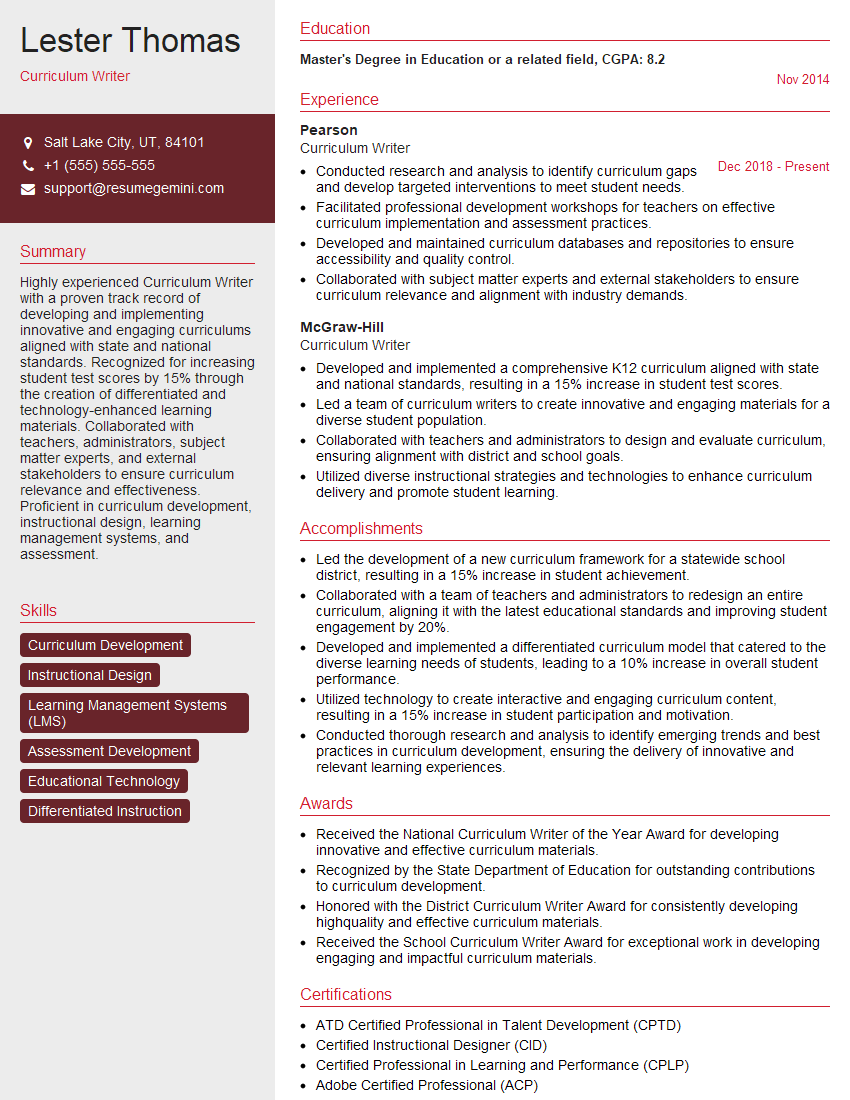
Curriculum Writer Resume Sample

Training Specialist Resume Sample
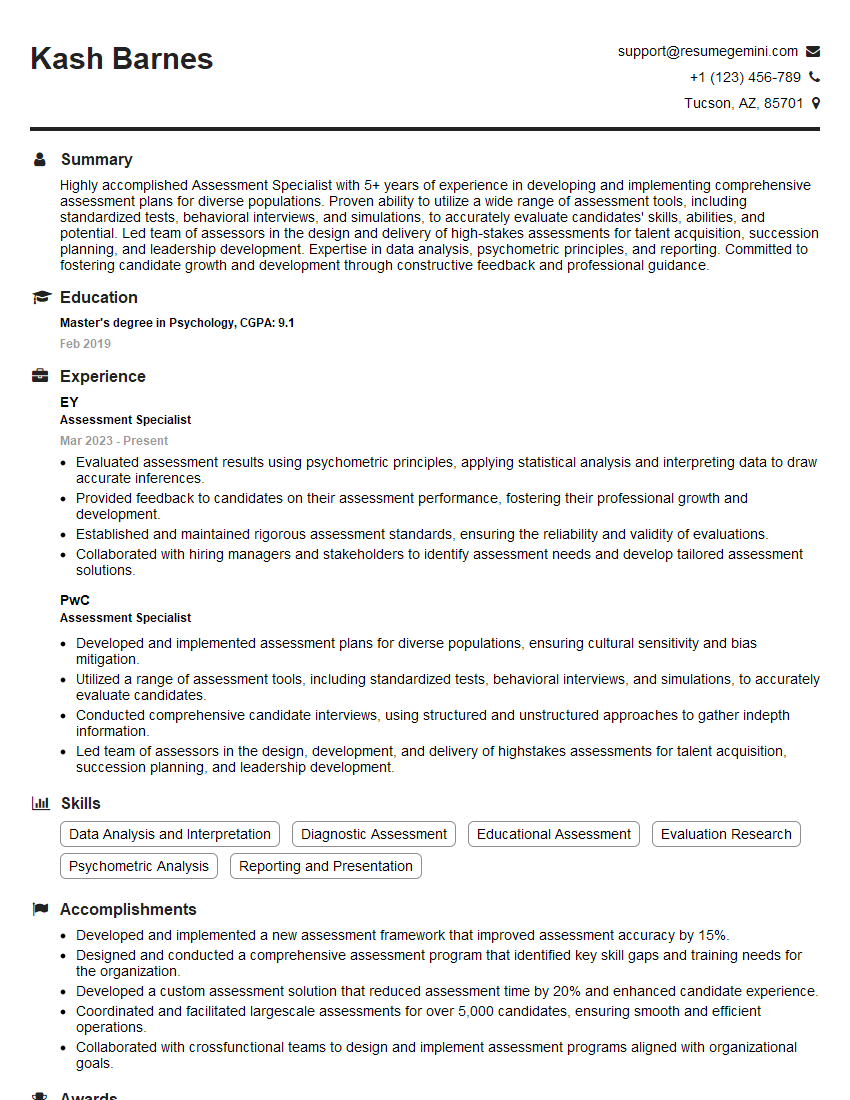
Assessment Specialist Resume Sample
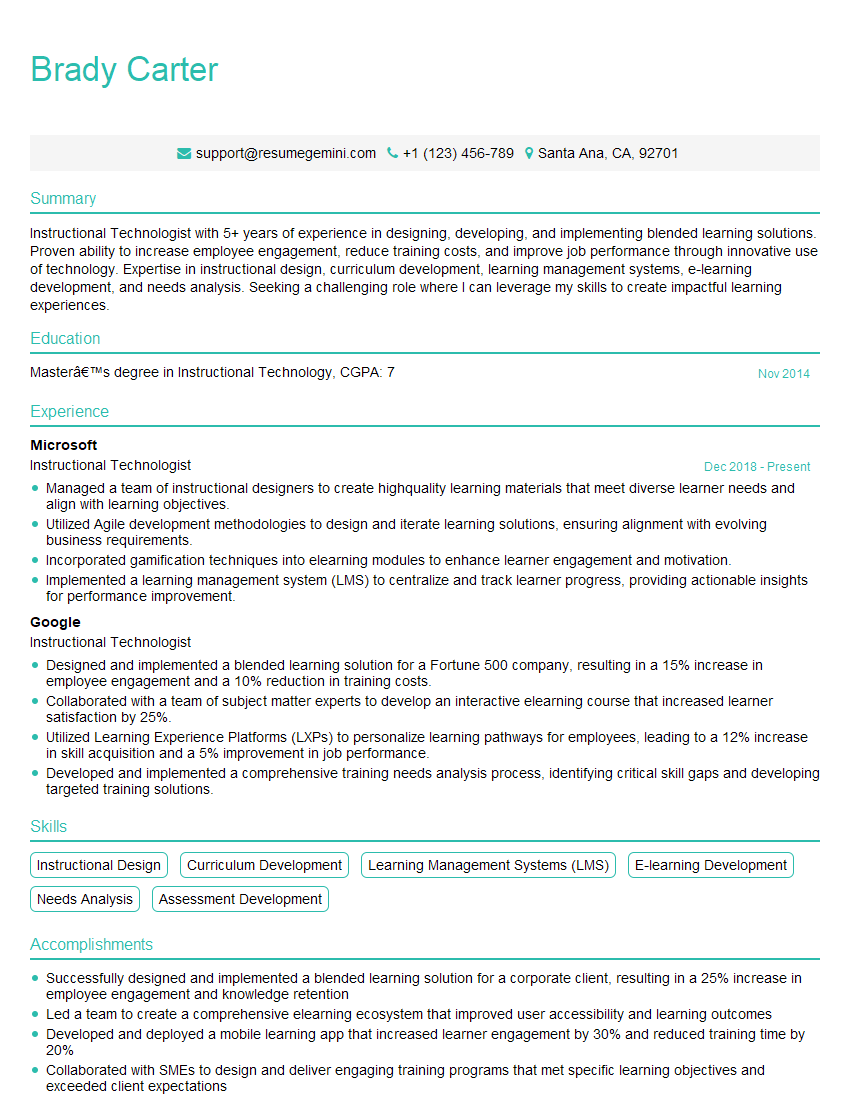
Instructional Technologist Resume Sample
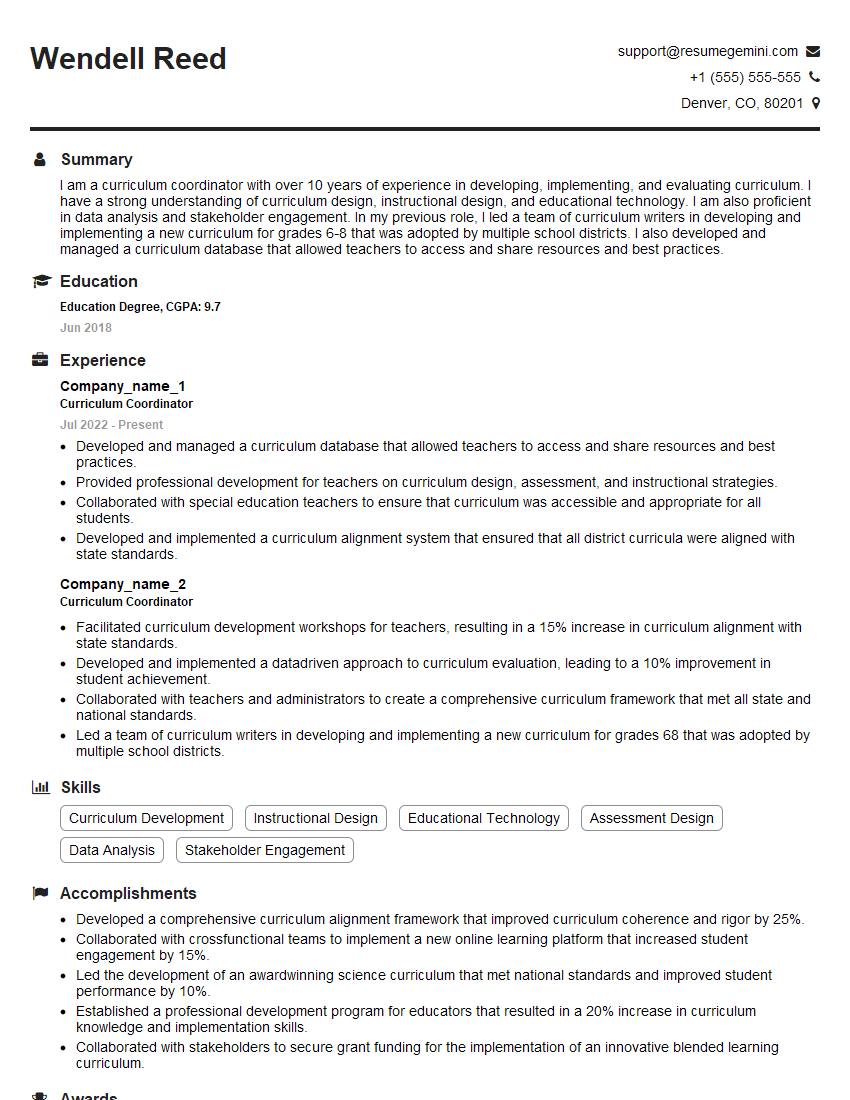
Curriculum Coordinator Resume Sample
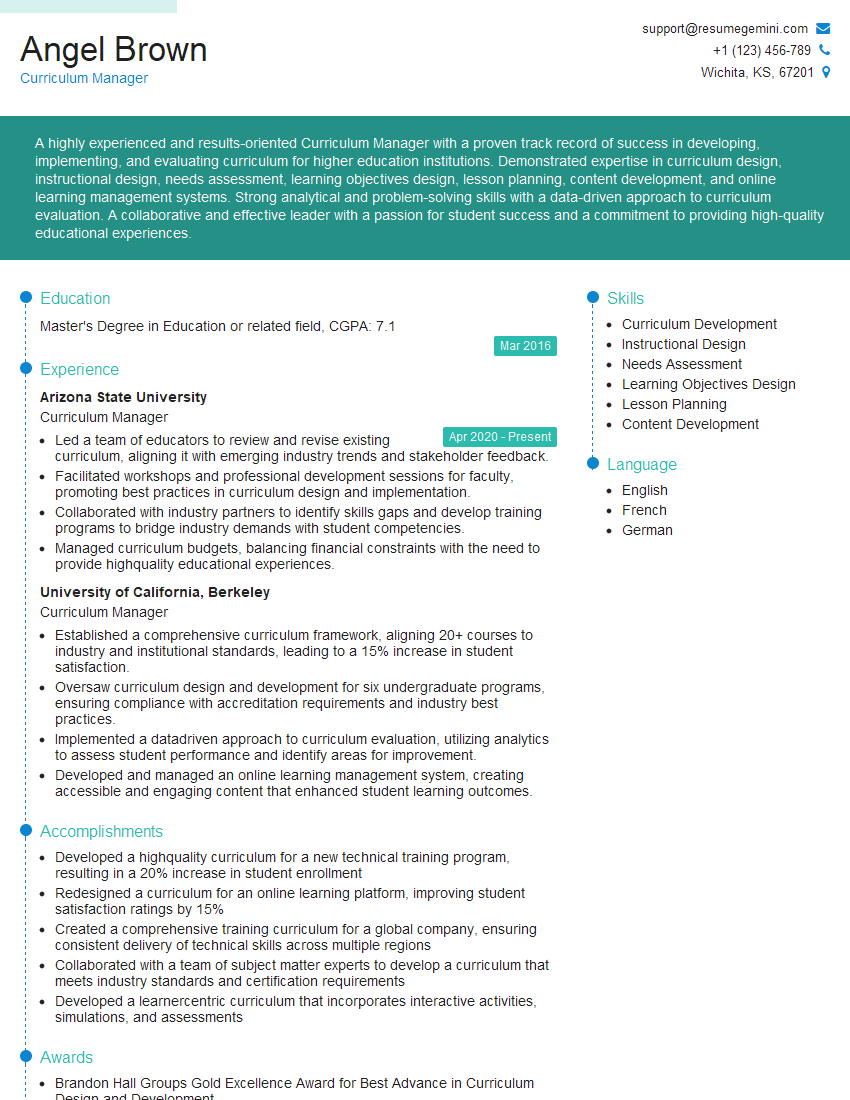
Curriculum Manager Resume Sample
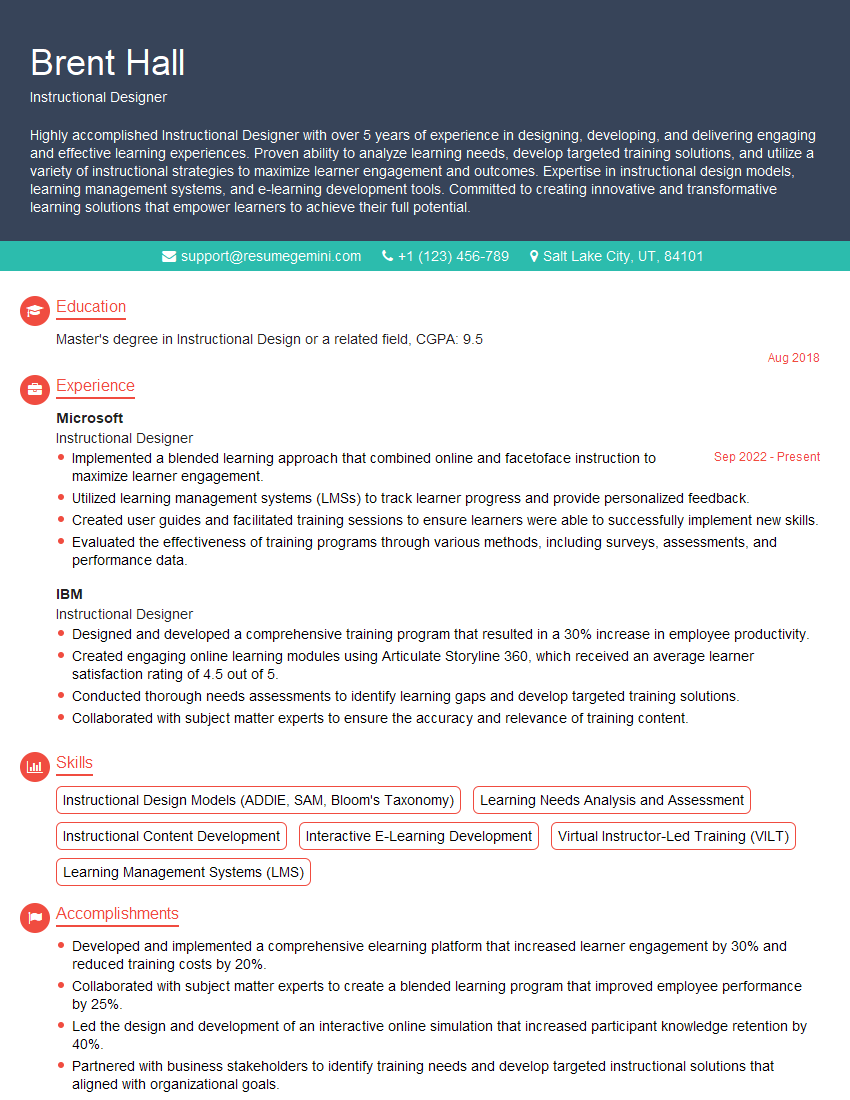
Instructional Designer Resume Sample

Educational Technologist Resume Sample
Explore more articles
Users Rating of Our Blogs
Share Your Experience
We value your feedback! Please rate our content and share your thoughts (optional).
What Readers Say About Our Blog
Really detailed insights and content, thank you for writing this detailed article.
IT gave me an insight and words to use and be able to think of examples