Unlock your full potential by mastering the most common Trip Planning and Route Optimization interview questions. This blog offers a deep dive into the critical topics, ensuring you’re not only prepared to answer but to excel. With these insights, you’ll approach your interview with clarity and confidence.
Questions Asked in Trip Planning and Route Optimization Interview
Q 1. Explain the difference between Dijkstra’s algorithm and A* search for route optimization.
Both Dijkstra’s algorithm and A* search are graph traversal algorithms used for finding the shortest path between nodes, but they differ significantly in their approach. Dijkstra’s algorithm is a greedy algorithm; it explores all possible paths from a starting node until it finds the shortest path to the destination. It’s guaranteed to find the optimal solution but can be computationally expensive for large graphs. Think of it like systematically searching every street in a city until you find the shortest route. A* search, on the other hand, is a heuristic algorithm. It uses a heuristic function (an educated guess) to estimate the distance from the current node to the destination, guiding the search towards more promising paths. This makes it much faster than Dijkstra’s algorithm for many problems, although it doesn’t guarantee finding the absolute shortest path in all cases. Imagine using a map; A* is like using the map to prioritize streets that seem closer to your destination, while Dijkstra’s is like exploring every single street regardless of direction.
In short: Dijkstra’s guarantees the optimal solution but is slower; A* is faster but might not find the absolute shortest path. The choice depends on the size of the graph and the need for optimality versus speed.
Q 2. Describe your experience with various route optimization software (e.g., Google Maps Platform, OR-Tools).
I’ve extensively used several route optimization software packages, including the Google Maps Platform and OR-Tools. The Google Maps Platform excels at providing real-time traffic data and user-friendly APIs for easy integration into applications. I’ve used its Directions API to build applications that dynamically generate routes based on current traffic conditions. For instance, I built a delivery route optimization system for a local courier company, leveraging the Google Maps Platform to minimize delivery times during peak traffic hours. OR-Tools, on the other hand, offers a more powerful and flexible set of algorithms, particularly useful for complex vehicle routing problems (VRPs) that involve multiple vehicles, time windows, and capacity constraints. I used OR-Tools to solve a complex logistics problem for a large distribution network, optimizing the routes for a fleet of trucks delivering goods across multiple states. It allowed us to incorporate constraints such as delivery deadlines, truck capacities, and driver rest times, resulting in significant cost savings.
Q 3. How do you handle real-time traffic updates when optimizing routes?
Handling real-time traffic updates is crucial for accurate route optimization. My approach involves integrating real-time traffic data feeds (like those from Google Maps Platform or other providers) into the routing algorithm. This typically involves:
- Fetching Real-Time Data: Regularly querying an API for up-to-the-minute traffic conditions on relevant road segments.
- Updating the Graph: Dynamically updating the graph representing the road network with the new traffic information, reflecting changes in travel times.
- Re-optimization: Re-running the chosen routing algorithm (such as A* or Dijkstra’s) with the updated graph to compute a new, more efficient route.
- Fallback Mechanisms: Implementing strategies to handle situations where real-time data is unavailable or unreliable (e.g., using historical averages).
Q 4. What are the key factors to consider when planning a multi-stop delivery route?
Planning a multi-stop delivery route requires careful consideration of several factors. These include:
- Delivery Locations: The coordinates (latitude and longitude) of each delivery stop.
- Time Windows: The acceptable time ranges for deliveries at each location. For example, a bakery might only accept deliveries between 6 am and 10 am.
- Vehicle Capacity: The maximum number of packages or total weight a vehicle can carry.
- Travel Times: The estimated time it takes to travel between stops, considering factors like traffic and road conditions.
- Distance: The total distance covered to deliver all packages.
- Cost: Fuel costs, driver wages, and other operational expenses.
Q 5. Explain the concept of vehicle routing problem (VRP) and its variations.
The Vehicle Routing Problem (VRP) is a classic optimization problem focused on finding the optimal set of routes for a fleet of vehicles to serve a number of customers. The objective is usually to minimize the total distance traveled or travel time. Several variations exist, including:
- Capacitated VRP (CVRP): Vehicles have limited capacity, and the total demand of customers assigned to a vehicle cannot exceed its capacity.
- VRP with Time Windows (VRPTW): Each customer has a specific time window during which the delivery or service must occur.
- VRP with Pickups and Deliveries (VRPPD): Vehicles must pick up items from some locations and deliver them to others.
- Multi-Depot VRP (MDVRP): Vehicles depart from multiple depots (starting points).
Q 6. How do you balance distance, time, and cost when optimizing routes?
Balancing distance, time, and cost is a crucial aspect of route optimization. It’s often a multi-objective optimization problem, where finding the perfect balance requires trade-offs. One common approach is to define a weighted cost function that combines these three factors: WeightedCost = w1 * Distance + w2 * Time + w3 * Cost, where w1, w2, and w3 are weights representing the relative importance of each factor. The weights can be adjusted based on specific priorities. For example, in a time-sensitive delivery, w2 (weight for time) might be higher than w1 (weight for distance). Another approach is to use Pareto optimization, which identifies a set of non-dominated solutions – those where you cannot improve one objective without worsening another. This allows decision-makers to choose the best compromise based on their specific needs.
Q 7. Describe your experience with different routing algorithms (e.g., nearest neighbor, greedy algorithm).
I’ve worked with various routing algorithms, including the nearest neighbor and greedy algorithms. The nearest neighbor algorithm is a simple heuristic that starts at a depot and repeatedly visits the nearest unvisited customer. While easy to implement, it often produces suboptimal solutions, especially for complex problems. Imagine choosing the closest store on your shopping list and then the next closest and so on—you may not have the most efficient route in the end. Greedy algorithms also iteratively make locally optimal choices, but they can incorporate more sophisticated criteria than simple distance. For instance, a greedy algorithm could choose the next customer that minimizes the increase in total travel time or cost. These simpler algorithms serve as good starting points or benchmarks, and can be extremely fast for preliminary results, but for complex problems with many constraints, metaheuristics or more advanced algorithms are generally necessary.
Q 8. How do you handle constraints such as time windows, vehicle capacity, and driver availability?
Handling constraints like time windows, vehicle capacity, and driver availability is crucial for efficient route optimization. It’s essentially solving a complex puzzle where each piece has limitations. We use optimization algorithms, often variations of Vehicle Routing Problem (VRP) solvers, to address these.
Time windows are incorporated by adding constraints to the algorithm, ensuring each stop is visited within its designated start and end time. For example, a delivery to a hospital might have a narrow time window to avoid disrupting operations. Vehicle capacity is integrated by assigning weights or volumes to each stop, preventing routes from exceeding the vehicle’s maximum load. Think of a delivery truck carrying furniture – the algorithm needs to ensure no route exceeds the truck’s weight limit. Driver availability is handled by creating schedules that consider driver shifts, breaks, and other constraints. For example, if a driver’s shift ends at 5 pm, the algorithm will avoid assigning stops that extend beyond that time. We often use constraint programming techniques or linear programming to solve these problems. Sophisticated software packages or custom-built solutions are employed depending on complexity.
Q 9. What metrics do you use to evaluate the efficiency of a route?
Evaluating route efficiency involves multiple metrics, each offering different insights. Key metrics include:
- Total distance or travel time: The most fundamental metric, measuring the overall length or duration of the route. Minimizing this is a primary goal.
- Fuel consumption: Crucial for cost optimization, especially for long-haul routes. Factors like vehicle type, terrain, and traffic are considered.
- Number of vehicles required: Reducing the number of vehicles needed saves on operational costs and improves efficiency.
- Service level adherence: Measures how well the route adheres to time windows and other service requirements (e.g., on-time delivery rate).
- Route balance: Ensures that workload is evenly distributed across drivers and vehicles, promoting fairness and reducing driver fatigue.
Choosing the most important metrics depends on the specific application. For example, an express delivery service would prioritize service level adherence, while a large logistics company might focus on minimizing the total number of vehicles.
Q 10. How do you identify and address bottlenecks in a transportation network?
Identifying and addressing bottlenecks in a transportation network requires a multifaceted approach. We use data analysis techniques and visualization tools to pinpoint areas of congestion.
Data Analysis: Analyzing historical traffic data, GPS tracking data, and other relevant information helps identify recurring delays and congestion hotspots. Techniques like heatmaps can visualize traffic density. For example, analysis might reveal that a particular intersection consistently causes delays during peak hours.
Network Modeling: Sophisticated simulation models can be used to predict the impact of different interventions. For example, we could simulate the impact of adding a new lane to a highway or implementing traffic light adjustments.
Addressing Bottlenecks: Solutions vary depending on the nature of the bottleneck. Options include improving infrastructure (e.g., widening roads, building bypasses), optimizing traffic flow (e.g., implementing intelligent traffic management systems), and improving public transport options. In the case of our intersection example, implementing optimized traffic light timing could potentially alleviate congestion.
Q 11. Explain your experience with Geographic Information Systems (GIS) for route optimization.
Geographic Information Systems (GIS) are indispensable tools in route optimization. They allow us to visualize and analyze spatial data, including road networks, points of interest (e.g., delivery locations, warehouses), and geographical features (e.g., terrain, rivers).
My experience involves using GIS software (like ArcGIS or QGIS) to create and manage spatial datasets, conduct network analysis (shortest path algorithms, service area calculations), and visualize optimized routes on interactive maps. For example, I’ve used GIS to overlay road networks with traffic data to determine optimal routes that avoid congested areas. The ability to integrate multiple data layers – road networks, traffic, weather data – allows for a more holistic and accurate route optimization process.
Q 12. Describe your experience with data visualization tools for route planning and analysis.
Data visualization is critical for communicating complex route optimization results effectively. I have experience using various tools to create clear, informative visualizations.
Tools such as Tableau, Power BI, and even custom Python scripts with libraries like Matplotlib and Seaborn, enable me to generate interactive maps showing optimized routes, heatmaps depicting traffic congestion levels, and charts comparing different route options based on various metrics (e.g., distance, time, cost). These visualizations aid in decision-making, providing stakeholders with a clear understanding of the route optimization process and its outcomes. For example, a heatmap visualizing delivery time variations across different routes would help identify areas needing improvement.
Q 13. How do you handle unexpected events (e.g., road closures, traffic accidents) during route execution?
Handling unexpected events during route execution is crucial for maintaining efficiency and meeting deadlines. Real-time traffic data feeds, coupled with dynamic route recalculation algorithms, are essential for this.
When an unexpected event (e.g., road closure) occurs, the system needs to detect the disruption using real-time data (from GPS trackers, traffic sensors, or traffic APIs). Then, a dynamic route recalculation algorithm adjusts the route to bypass the obstruction, selecting alternative paths based on updated traffic conditions and minimizing delays. This often involves algorithms that prioritize speed, minimizing distance, or maintaining adherence to time windows, depending on the specific requirements. Notifications can be sent to drivers about route changes, and the system may adjust subsequent stops along the optimized route to mitigate further delays. This adaptive routing is implemented through APIs and real-time data feeds.
Q 14. What are the advantages and disadvantages of using different transportation modes (e.g., truck, rail, air)?
Choosing the right transportation mode depends on various factors, each offering distinct advantages and disadvantages:
- Truck: Offers high flexibility and door-to-door delivery, but can be expensive for long distances and slow compared to rail or air.
- Rail: Cost-effective for large volumes over long distances, but less flexible with limited accessibility to all locations and slower than air freight.
- Air: Fastest mode for long distances, ideal for time-sensitive goods, but most expensive and often requires additional ground transportation.
The best mode depends on the specific context – the cost, urgency, volume, fragility, and accessibility of the goods, as well as the distance to be covered. Often, a multimodal approach, combining different modes to leverage their respective strengths, is the most effective solution. For instance, transporting goods via rail for long distances and using trucks for final-mile delivery is a commonly used multimodal strategy.
Q 15. Explain your experience with different route optimization techniques (e.g., metaheuristics, heuristics).
Route optimization employs various techniques to find the most efficient path between multiple points. My experience spans both heuristic and metaheuristic approaches. Heuristics, like the Nearest Neighbor algorithm, provide quick, approximate solutions by following simple rules. For instance, the Nearest Neighbor algorithm starts at a depot and repeatedly visits the nearest unvisited location until all are covered. This is fast but may not yield the absolute best solution.
Metaheuristics, on the other hand, are more sophisticated and aim for global optimality. I’ve worked extensively with genetic algorithms, simulated annealing, and ant colony optimization. Genetic algorithms, for example, mimic natural selection, evolving a population of potential routes to find increasingly better solutions over generations. Simulated annealing uses a probabilistic approach, accepting sometimes worse solutions to escape local optima and potentially find better global solutions. Ant colony optimization mimics the foraging behavior of ants, with artificial ants laying down pheromones to indicate preferable paths.
In practice, the choice of technique depends on the problem’s complexity and computational resources. For small-scale problems, heuristics might suffice. But for large-scale logistics or delivery networks, the power and sophistication of metaheuristics become essential in finding near-optimal, cost-effective routes.
Career Expert Tips:
- Ace those interviews! Prepare effectively by reviewing the Top 50 Most Common Interview Questions on ResumeGemini.
- Navigate your job search with confidence! Explore a wide range of Career Tips on ResumeGemini. Learn about common challenges and recommendations to overcome them.
- Craft the perfect resume! Master the Art of Resume Writing with ResumeGemini’s guide. Showcase your unique qualifications and achievements effectively.
- Don’t miss out on holiday savings! Build your dream resume with ResumeGemini’s ATS optimized templates.
Q 16. How do you ensure the safety and compliance of drivers when optimizing routes?
Safety and compliance are paramount. My approach integrates real-time traffic data, weather updates, and road conditions into route optimization. This ensures drivers avoid hazardous areas, such as road closures or areas prone to accidents. We also incorporate speed limits and driving regulations directly into the route algorithms to ensure compliance with local laws. For example, we might add constraints to avoid certain roads during peak hours or prioritize routes with less congestion to minimize aggressive driving behaviors.
Furthermore, regular driver training emphasizes defensive driving techniques and adherence to safety protocols. The system can also incorporate driver fatigue detection, sending alerts or suggesting breaks based on pre-defined driving patterns and durations. Real-time monitoring of driver behavior provides another layer of safety, allowing for immediate interventions if necessary. Regular audits and reports on safety metrics contribute to continuous improvement in driver safety and regulatory compliance.
Q 17. What are your strategies for minimizing fuel consumption and reducing carbon footprint?
Minimizing fuel consumption and reducing the carbon footprint are critical sustainability goals. My strategies include:
- Route Optimization for Efficiency: Prioritizing routes with minimal distance and smoother driving conditions directly reduces fuel consumption. Avoiding unnecessary idling and incorporating speed optimization within legal limits also contributes significantly.
- Real-time Traffic Data Integration: By avoiding congested areas, we minimize fuel wasted in stop-and-go traffic. This is achieved by leveraging real-time traffic information APIs.
- Vehicle Maintenance and Optimization: Proper vehicle maintenance, including tire pressure monitoring and regular engine checks, impacts fuel efficiency. Our system integrates with fleet management tools to ensure optimal vehicle condition.
- Eco-Driving Techniques: Incorporating eco-driving strategies into route planning and driver training, such as smooth acceleration and braking, can reduce fuel consumption significantly.
- Alternative Fuel Sources and Vehicle Types: Where feasible, the optimization algorithms can consider routes compatible with electric vehicles or other alternative fuel sources, reducing the reliance on fossil fuels.
By implementing these strategies holistically, we contribute to lower operational costs, reduced emissions, and a smaller environmental impact.
Q 18. How do you incorporate customer preferences and priorities into route planning?
Incorporating customer preferences is crucial for a positive experience. We achieve this through various methods. For example, customers might have preferences regarding specific routes (avoiding tolls, highways, or certain areas), preferred delivery windows, or even the type of vehicle used for delivery. This information is collected through various channels, such as during booking or through customer profiles.
Our route optimization system utilizes constraint programming techniques to handle these preferences. Constraints are added to the optimization problem to filter out routes violating customer preferences. For instance, if a customer specifies a ‘no-toll’ preference, the algorithm will only consider routes without tolls. Customer priority levels can be integrated into the optimization function, with high-priority customers having their preferences prioritized more heavily during route generation. This ensures our route planning considers both efficiency and customer satisfaction.
Q 19. Describe your experience with developing and implementing route optimization models.
I have extensive experience in developing and implementing route optimization models using various programming languages and tools. For example, I’ve developed models using Python with libraries like NetworkX and OR-Tools for solving complex routing problems. NetworkX helps in building the underlying network representation, while OR-Tools offers powerful solvers for different optimization problems.
My models incorporate various data sources, including geographic information systems (GIS) data, real-time traffic information APIs, and customer data. I’ve also worked with cloud-based platforms, like Google Cloud Platform or AWS, to handle large-scale data processing and model deployment. The models are typically designed to be scalable and adaptable to changing conditions and business requirements, allowing for easy modifications and integrations with other systems.
For example, in a project involving last-mile delivery optimization, I developed a model that considered delivery time windows, driver availability, package size, and customer location to generate optimal routes minimizing overall delivery time and fuel consumption. The model was integrated into a mobile app used by drivers, providing them with real-time navigation and delivery instructions.
Q 20. How do you manage multiple conflicting objectives in route optimization?
Route optimization often involves multiple conflicting objectives. For instance, minimizing travel time might conflict with minimizing fuel consumption or minimizing the number of vehicles used. To manage these conflicts, I employ several strategies:
- Multi-objective optimization techniques: These techniques, such as weighted sum method or Pareto optimization, allow for finding a set of optimal solutions (Pareto front) that represent trade-offs between different objectives. The decision-maker can then select the most suitable solution based on their priorities.
- Goal programming: This method assigns priorities and weights to different objectives, allowing the algorithm to strive for achieving these goals in order of priority. It’s particularly useful when certain objectives are more critical than others.
- Constraint programming: By setting hard and soft constraints, we can incorporate different objectives in the model. Hard constraints (e.g., time windows) must be met, while soft constraints (e.g., minimizing fuel consumption) can be relaxed to a certain degree.
The choice of strategy depends on the specific problem and the relative importance of different objectives. Often, a combination of these techniques proves most effective in finding a satisfactory solution.
Q 21. What is your experience with using APIs for route planning?
I have extensive experience using various APIs for route planning, including Google Maps Platform, Mapbox, and HERE Maps. These APIs provide essential functionalities such as distance matrix calculation, route calculation considering various constraints (avoiding tolls, ferries, highways, etc.), real-time traffic data, and geocoding. Understanding the strengths and limitations of different APIs is critical for choosing the most suitable one for a specific project.
For example, in one project involving a large-scale delivery network, we used the Google Maps Platform’s Distance Matrix API to calculate the distances between all delivery locations. Then, we fed this data to our custom optimization algorithm to determine the most efficient routes considering various factors, including delivery time windows and driver availability. The route data generated by our algorithm was then integrated with a mobile navigation app using the Google Maps Platform’s Directions API, providing drivers with turn-by-turn navigation instructions.
Selecting the right API depends on factors like cost, performance requirements, data accuracy, and the specific features needed. I am proficient in integrating these APIs with custom-built applications and algorithms, ensuring seamless integration and efficient data flow for optimal route planning.
Q 22. How do you ensure data accuracy and reliability for route optimization?
Data accuracy is paramount in route optimization. Inaccurate data leads to inefficient routes, wasted time, and increased costs. We ensure accuracy through a multi-pronged approach:
- Multiple Data Sources: We leverage various sources like real-time traffic data from providers like Google Maps Platform or TomTom, historical traffic patterns, and even in-house GPS data from our fleet (if applicable). This triangulation helps to minimize errors from any single source.
- Data Validation and Cleansing: Before incorporating data into our optimization algorithms, we meticulously validate and clean it. This involves identifying and correcting outliers, handling missing data appropriately (using imputation techniques or removing faulty entries), and ensuring data consistency across different sources.
- Regular Updates: Real-time traffic conditions are dynamic. We continuously update our data feeds to reflect the current situation. This might involve scheduled updates every few minutes or even more frequent updates depending on the sensitivity to real-time changes.
- Algorithm Robustness: The optimization algorithms themselves need to be robust enough to handle noisy or incomplete data. Techniques like fuzzy logic or probabilistic models can be used to incorporate uncertainty and make the system less susceptible to minor data inaccuracies.
- Error Detection and Correction: We build in mechanisms to detect and correct errors. For example, comparing optimized routes with historical data can help identify anomalies that might signal data issues.
Imagine planning a route during rush hour. Relying solely on a static map would be misleading. Using real-time traffic data allows for dynamic adjustments, preventing delays and ensuring the most efficient path is chosen.
Q 23. Describe a time you had to optimize a complex route under time pressure.
During a large-scale music festival, we faced the challenge of optimizing shuttle routes for over 100,000 attendees. The time constraint was immense—the festival was starting in just a few hours, and several key roads were unexpectedly closed due to an accident. My team and I sprang into action:
- Rapid Assessment: We quickly assessed the impact of the road closures using real-time traffic data and mapped out alternative routes.
- Prioritization: We prioritized shuttle routes based on the expected passenger volume and urgency (getting attendees to the festival grounds quickly).
- Algorithm Adaptation: We adapted our route optimization algorithm to account for the dynamic changes, considering factors like traffic congestion, detour lengths, and shuttle capacity. This involved using a constraint satisfaction problem solver to handle road closures as constraints.
- Real-time Monitoring: Once the shuttles were in operation, we used a real-time tracking system to monitor their progress and make adjustments to the routes as needed (e.g., rerouting shuttles to avoid unexpected bottlenecks).
- Communication: We kept festival organizers and drivers continuously updated about route changes via a combination of a centralized dashboard, SMS alerts, and radio communication.
Despite the unexpected road closure, we successfully optimized shuttle routes minimizing delays and ensuring a smooth arrival for most attendees. This highlights the importance of adaptability and real-time responsiveness in route optimization.
Q 24. Explain how you would approach optimizing routes for a last-mile delivery service.
Optimizing routes for last-mile delivery is significantly different from long-haul transportation. Key considerations include:
- Time Windows: Deliveries often have strict time windows, which necessitate precise scheduling and route optimization to ensure on-time delivery.
- Multiple Stops: Efficiently sequencing multiple stops is crucial for minimizing travel time and fuel consumption. This requires sophisticated algorithms like Vehicle Routing Problem (VRP) solvers.
- Dynamic Routing: Unexpected events like traffic congestion or package delays require dynamic adjustments to maintain efficiency. Real-time traffic data and dynamic routing algorithms are therefore crucial.
- Delivery Agent Capacity: Delivery agents have limited capacity (e.g., number of packages they can carry). Route optimization must consider this constraint.
- Geocoding and Address Validation: Accurate geocoding of delivery addresses is paramount for optimal routing. We’d use a robust geocoding service and address verification to minimize errors.
- Optimization Metrics: Optimization should consider minimizing total travel time, fuel consumption, number of vehicles, and the number of late deliveries.
We would likely use a combination of VRP algorithms (potentially using heuristics or metaheuristics for larger problems) coupled with real-time traffic data and sophisticated mapping tools to solve the last-mile delivery problem. This would involve optimizing a set of routes across many delivery vehicles, potentially considering delivery preferences such as time window constraints and delivery agent locations.
Q 25. What is your familiarity with different types of maps and their use in route planning?
I’m familiar with a range of maps and their applications in route planning:
- Road Maps: Traditional road maps are foundational, providing basic road networks. They are useful for initial route planning but lack real-time information.
- Satellite Imagery: Satellite imagery provides a visual context, helpful for identifying geographical features and potential obstacles (e.g., construction zones not yet reflected in road maps).
- Digital Maps (e.g., Google Maps, OpenStreetMap): These are crucial for dynamic route optimization. They offer real-time traffic data, points of interest (POIs), and detailed road networks. The API access provided by these platforms is critical for integrating into our optimization systems. OpenStreetMap is particularly valuable because of its open-source nature and community contributions.
- 3D Maps: Useful for visualizing complex urban environments and considering elevation changes which affect travel times, especially for vehicles with limitations (e.g., large trucks avoiding bridges with height restrictions).
- Specialized Maps (e.g., nautical charts, hiking maps): For specific domains like maritime navigation or outdoor excursions, specialized maps are needed.
The choice of map depends heavily on the application. For example, last-mile delivery benefits greatly from dynamic digital maps and real-time data, while planning a cross-country road trip might use a combination of traditional road maps for initial route planning, then digital maps for up-to-date traffic information.
Q 26. How do you validate and refine optimized routes to ensure accuracy?
Validating and refining optimized routes is a crucial step to ensure accuracy and reliability:
- Simulation: We simulate the optimized routes using historical data and traffic patterns to predict their performance under different scenarios.
- Sensitivity Analysis: We assess how sensitive the routes are to variations in input data (e.g., traffic fluctuations). This helps to identify potential bottlenecks and areas for improvement.
- Real-world Testing (A/B Testing): When possible, we conduct real-world tests by comparing the performance of optimized routes with alternative routes. This helps validate our models and identify areas needing refinement.
- Feedback Loops: We actively collect feedback from drivers and users to identify inaccuracies or inefficiencies in the optimized routes. This can highlight issues not captured by our simulations.
- Iterative Refinement: Based on simulations, testing, and feedback, we iteratively refine our optimization algorithms and data sources to improve route accuracy and efficiency.
Think of it like testing a new recipe. Simulations are like dry runs, real-world testing is like actually cooking the dish, and feedback is like getting reviews from your guests. This iterative process allows us to fine-tune the route planning process to achieve optimal results.
Q 27. How do you communicate route plans and updates to drivers and stakeholders?
Effective communication is critical for successful route planning. We employ a multi-channel approach:
- Route Visualization Software: We use specialized software to present routes clearly and concisely, often including features like turn-by-turn instructions, estimated arrival times, and real-time traffic updates visible on a map.
- Mobile Apps: Dedicated mobile apps provide drivers with turn-by-turn navigation, real-time updates, and communication channels with dispatchers.
- Automated Notifications: Automated notifications (e.g., SMS, email) keep stakeholders informed about route changes, delays, and delivery status updates.
- Centralized Dashboards: Real-time dashboards provide a comprehensive overview of all routes, enabling monitoring of progress, identification of potential issues, and proactive intervention.
- Two-way Communication Channels: We ensure drivers can communicate easily with dispatchers to report issues or request assistance.
Imagine a delivery driver navigating a complex city. Clear, concise instructions, real-time traffic updates, and a way to communicate with the dispatcher are essential for efficient and stress-free delivery. This comprehensive approach to communication ensures efficiency and prevents errors.
Key Topics to Learn for Trip Planning and Route Optimization Interview
- Algorithm Fundamentals: Understand the core algorithms behind route optimization, such as Dijkstra’s algorithm, A*, and heuristics. Consider their strengths and weaknesses in different scenarios.
- Graph Theory: Grasp the concepts of graphs, nodes, edges, weighted graphs, and their representation in solving trip planning problems. Be prepared to discuss different graph data structures.
- Constraint Satisfaction: Explore how constraints like time windows, vehicle capacity, and distance limitations influence route optimization and how to incorporate them into solutions.
- Practical Applications: Be ready to discuss real-world applications like delivery route optimization, transportation logistics, travel itinerary planning, and ride-sharing services. Focus on how algorithms are applied in these scenarios.
- Data Structures and Efficiency: Understand the importance of efficient data structures (e.g., heaps, priority queues) for optimizing algorithm performance in route planning.
- API Integration: Discuss your experience (if any) integrating with mapping APIs (like Google Maps Platform) to fetch real-time data for route calculations.
- Problem Solving & Optimization Techniques: Practice approaching route optimization problems systematically. Be prepared to discuss different approaches to finding optimal or near-optimal solutions, including approximation algorithms and heuristics.
- Software and Tools: Familiarity with relevant software or tools used in route optimization (e.g., GIS software, specific optimization libraries) will be a significant advantage.
Next Steps
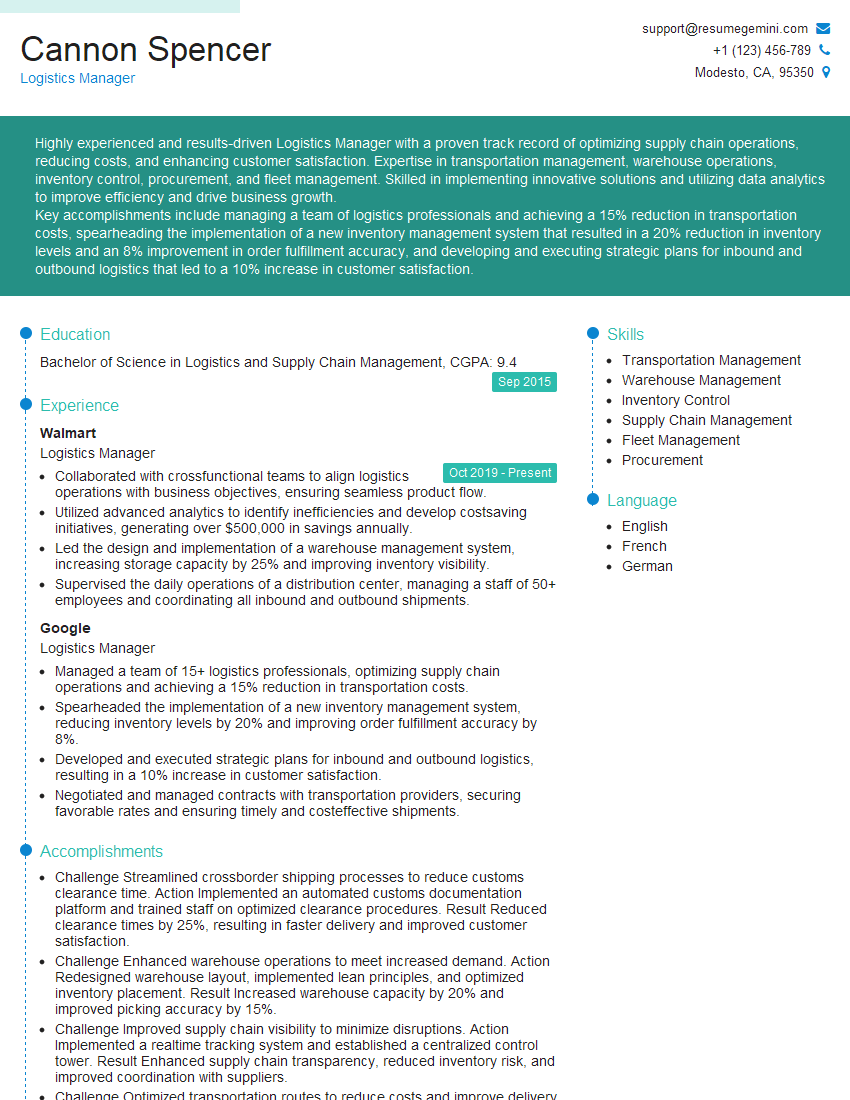
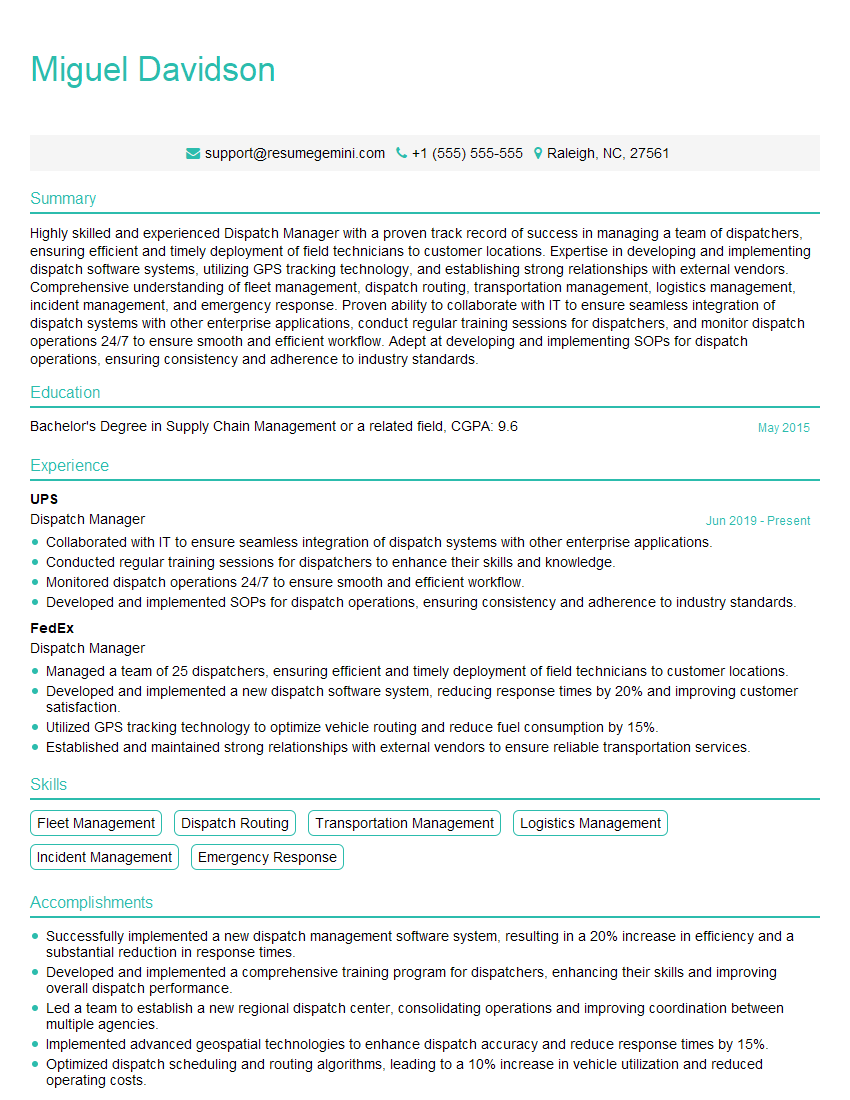
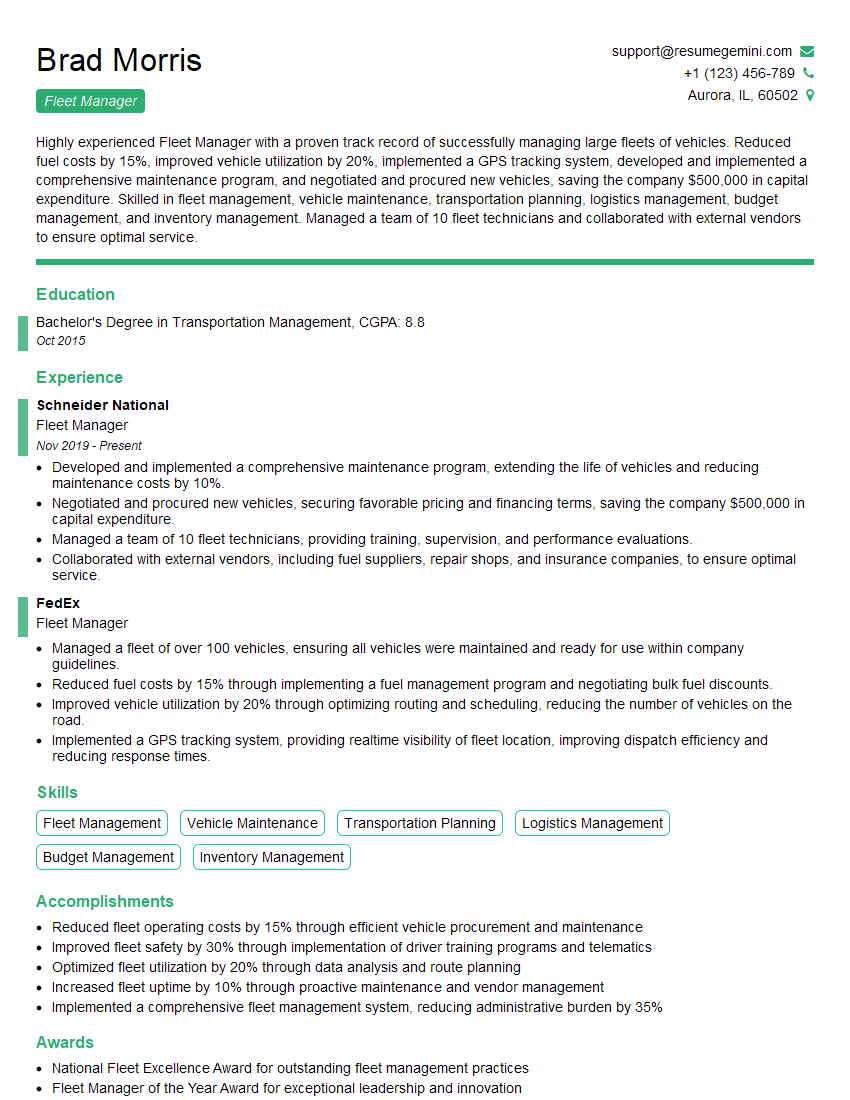
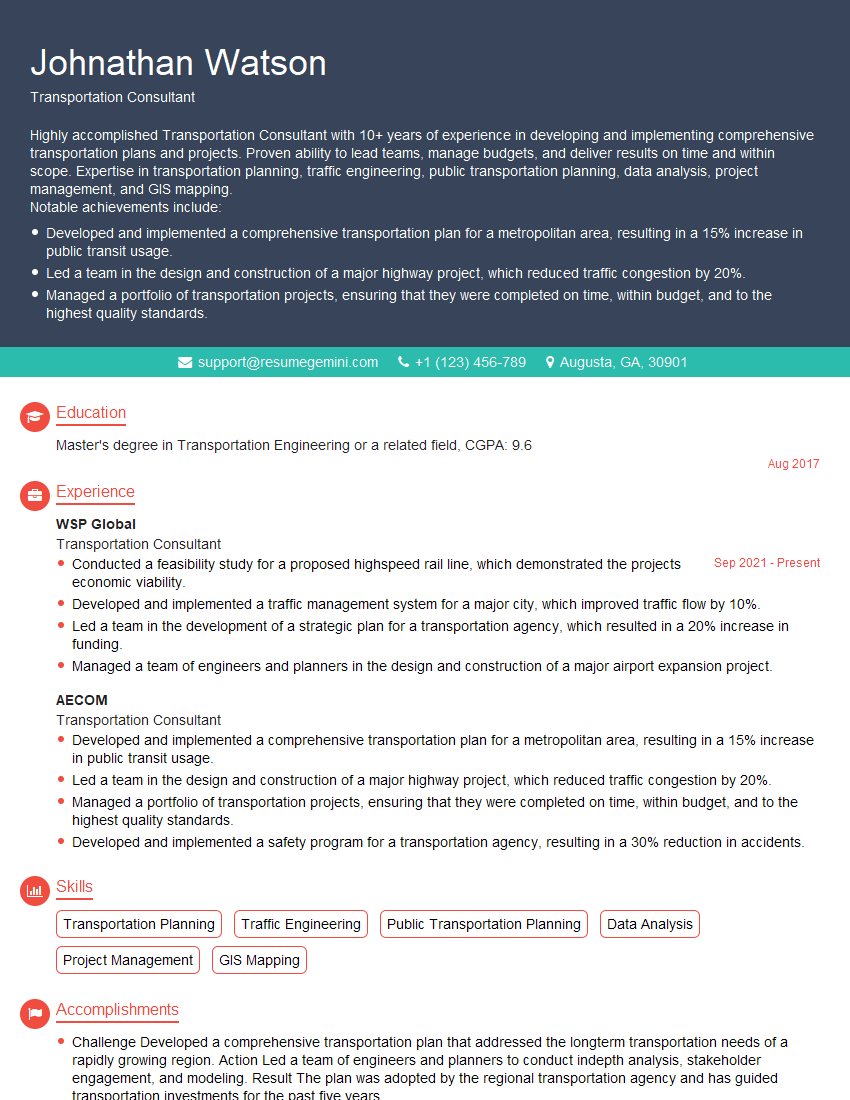
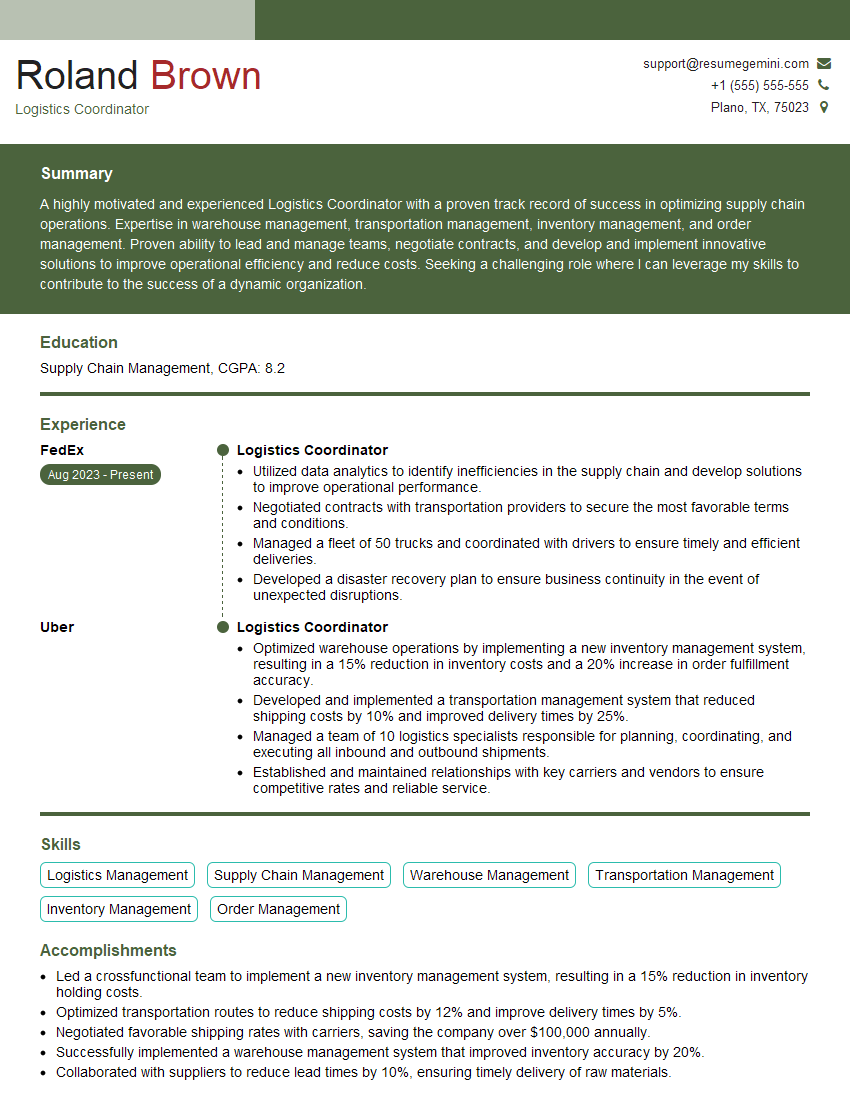
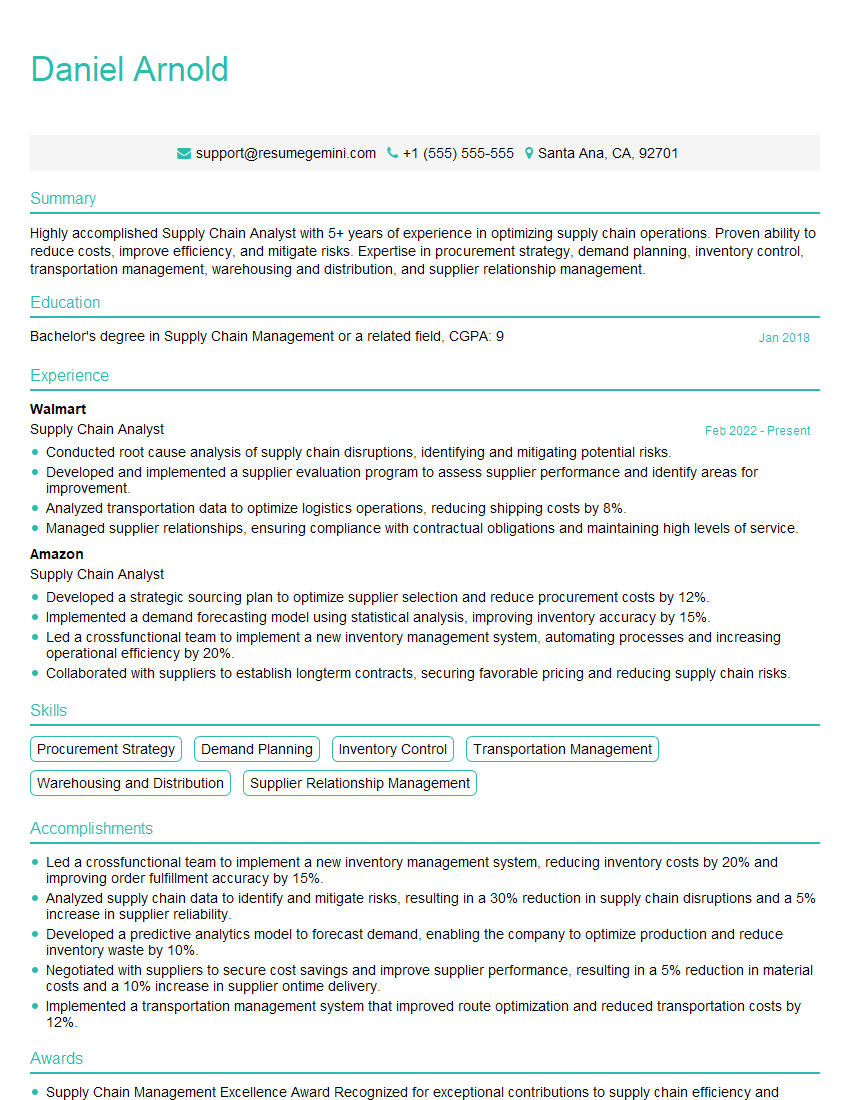
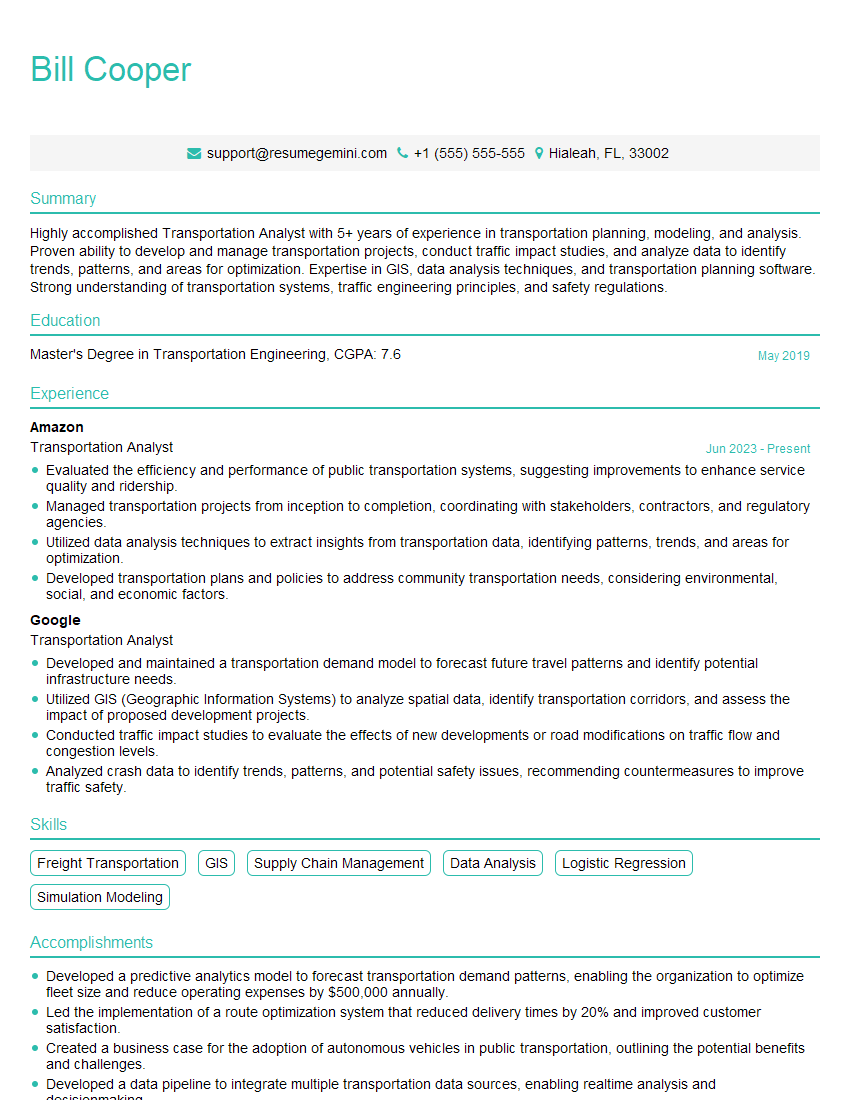
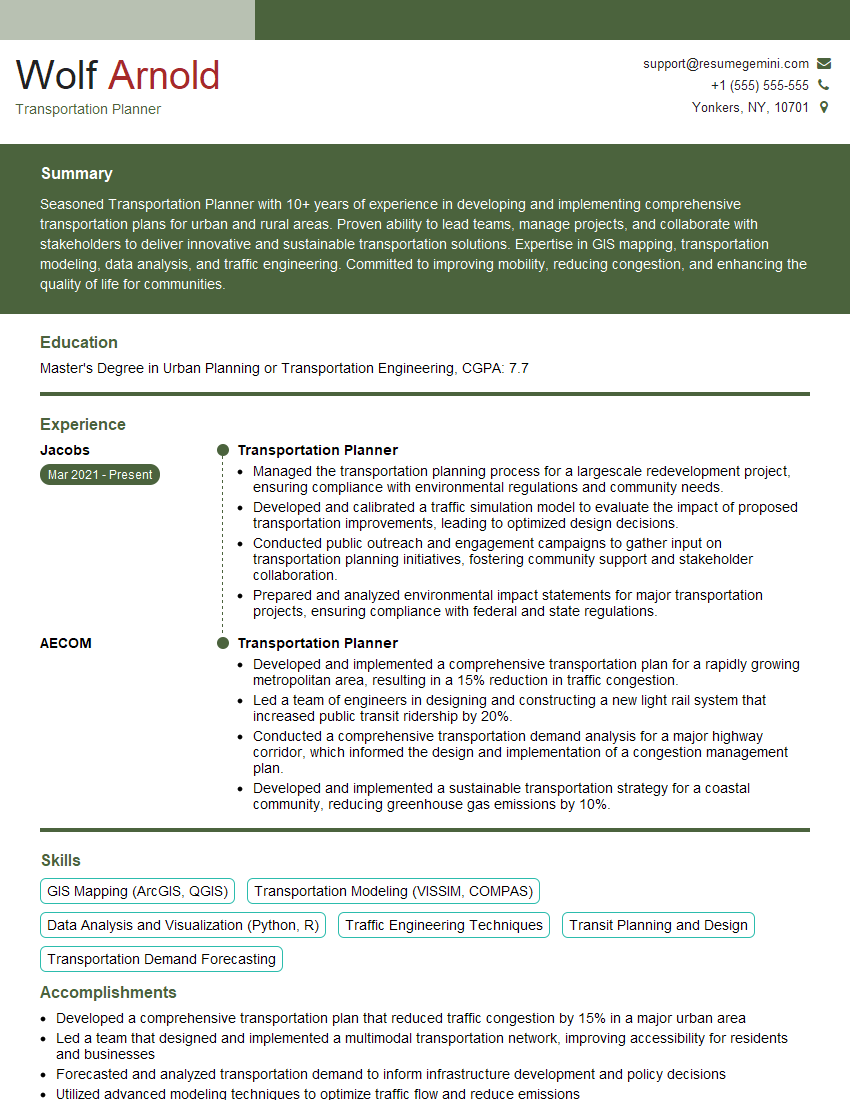
Mastering Trip Planning and Route Optimization opens doors to exciting careers in logistics, transportation, and technology. Demonstrating proficiency in these areas is crucial for career advancement and securing high-demand roles. To significantly increase your chances of landing your dream job, invest time in crafting an ATS-friendly resume that highlights your skills and experience effectively. ResumeGemini is a trusted resource for building professional, impactful resumes, and we provide examples of resumes tailored to Trip Planning and Route Optimization to help you get started. Use these examples as a springboard to create a resume that showcases your unique qualifications and impresses potential employers.
Explore more articles
Users Rating of Our Blogs
Share Your Experience
We value your feedback! Please rate our content and share your thoughts (optional).
What Readers Say About Our Blog
Really detailed insights and content, thank you for writing this detailed article.
IT gave me an insight and words to use and be able to think of examples