Feeling uncertain about what to expect in your upcoming interview? We’ve got you covered! This blog highlights the most important Offset Printing Techniques interview questions and provides actionable advice to help you stand out as the ideal candidate. Let’s pave the way for your success.
Questions Asked in Offset Printing Techniques Interview
Q 1. Explain the difference between sheetfed and web offset printing.
The core difference between sheetfed and web offset printing lies in how the paper is fed into the press. Think of it like this: sheetfed is like loading individual sheets of paper into a printer, one at a time, while web offset is like feeding a continuous roll of paper, much like a giant roll of wrapping paper.
- Sheetfed offset printing: Uses individual sheets of paper, typically larger sizes like 26×40 inches. This is ideal for smaller print runs, high-quality jobs, and projects requiring precise registration (alignment of colors).
- Web offset printing: Uses a continuous roll of paper (the web). This is perfect for mass production, high-speed printing, and projects like newspapers, magazines, and large-scale brochures. The speed allows for lower per-unit costs.
In essence, sheetfed is more precise and versatile for shorter runs, while web offset is faster and more economical for mass production. The choice depends heavily on the print job’s volume and quality requirements.
Q 2. Describe the process of platemaking for offset printing.
Platemaking is the crucial step where the image is transferred from the design file to the printing plate. It’s like creating the ‘stamp’ for the printing process. The most common method today is Computer-to-Plate (CTP), a digital process that eliminates the need for film.
- Digital workflow: The design file (usually PDF) is sent to a CTP device.
- Laser imaging: The CTP uses lasers to expose a photosensitive plate, creating an image directly onto it.
- Plate processing: The exposed plate is then processed to remove unexposed areas, leaving behind the image that will be transferred to the blanket and then the paper.
- Plate mounting: Finally, the plate is mounted onto the printing cylinder of the offset press.
Different types of plates exist, such as thermal plates and violet plates, each with its own characteristics and compatibility with specific CTP devices and press types. The choice depends on factors like press speed, ink type, and run length. Proper platemaking is critical for consistent image quality and sharp details.
Q 3. What are the common types of offset printing inks and their properties?
Offset printing inks are specially formulated to transfer efficiently from the plate to the blanket to the paper. Several types exist, each with unique properties:
- Conventional inks: These are oil-based and dry through oxidation. They are durable and offer vibrant colors but require longer drying times, making them less suitable for high-speed printing.
- UV (Ultraviolet) curing inks: These dry instantly upon exposure to UV light, allowing for faster production and immediate handling of printed materials. They are known for excellent scratch resistance but require specialized UV curing units.
- Water-based inks: These are environmentally friendly and have a lower odor. However, they usually have less vibrancy than oil-based inks and might not be suitable for all substrates.
- Hybrid inks: These combine properties of different ink types to achieve a balance between drying speed, color vibrancy, and environmental considerations.
The choice of ink depends on factors like the substrate (paper type), print speed, drying conditions, and environmental concerns. The properties include drying time, color vibrancy, gloss, and the overall print quality.
Q 4. How do you adjust ink density and dot gain during the printing process?
Adjusting ink density and dot gain is crucial for achieving the desired color reproduction and overall print quality. It’s a delicate balance.
- Ink density: This refers to the concentration of ink on the paper. It’s controlled through adjustments to the ink keys on the printing press, and it impacts the vibrancy of colors. Too much ink leads to muddy colors, while too little makes them pale.
- Dot gain: This is the spreading of ink dots during printing, resulting in larger dots than intended. It’s influenced by factors like paper type, ink viscosity, and printing pressure. Excessive dot gain makes images appear darker and less sharp.
Adjustments are made through fine-tuning the press settings. Ink density is primarily adjusted using the ink keys, while dot gain can be influenced by adjusting the impression pressure and ink viscosity (thinning or thickening the ink). Color bars and density readings are used to monitor and ensure consistent and accurate ink application.
Q 5. What are the different types of paper suitable for offset printing?
Many paper types are suitable for offset printing, each with different properties affecting the final print quality:
- Coated papers: Offer a smooth surface for crisp, high-resolution prints. They are commonly used for magazines, brochures, and high-quality publications.
- Uncoated papers: Have a slightly textured surface, providing a more natural and rustic look. They’re good for books, stationery, and invitations.
- Gloss papers: Provide a high-shine finish and vibrant colors. They are best for projects where color intensity is important.
- Matte papers: Reduce glare and offer a sophisticated look. These work well where a less reflective finish is preferred.
- Recycled papers: Environmentally friendly option but may have slightly different printing properties.
Selecting the right paper is crucial because it affects the ink absorption, color reproduction, and overall feel of the final product. The paper choice should always align with the design and intended use.
Q 6. Explain the role of blankets in the offset printing process.
The blanket is a crucial component in the offset printing process—the intermediary between the printing plate and the paper. Think of it as a soft, resilient ‘transfer’ medium.
The blanket cylinder is covered with a flexible rubber blanket that picks up the ink image from the plate. This image is then transferred onto the paper as the paper cylinder comes into contact with the blanket. Because the blanket is pliable, it can easily conform to the surface of the plate and the paper, ensuring consistent and even ink transfer. It also acts as a buffer, protecting both the plate and the paper from direct contact and preventing damage.
Blanket quality greatly affects print quality. Proper blanket tension and condition are crucial for minimizing image defects. Worn or improperly maintained blankets lead to fuzzy images, uneven ink distribution, and overall poor print quality.
Q 7. How do you troubleshoot common printing press problems like misregistration or slurring?
Troubleshooting printing press problems requires a systematic approach. Let’s address misregistration and slurring:
- Misregistration: This means that the colors aren’t properly aligned. It can be caused by issues such as improper plate mounting, incorrect cylinder settings, or mechanical problems within the press. Troubleshooting involves carefully checking the plate alignment, verifying the cylinder settings, and inspecting the press’s mechanical components for any wear or damage.
- Slurring: This is a blurring or smearing of the image, often caused by excessive ink or improper ink distribution. Troubleshooting steps include adjusting the ink settings, checking the ink viscosity, and ensuring proper blanket condition and tension.
A step-by-step process includes:
- Visual inspection: Carefully examine the printed sheets for patterns or inconsistencies.
- Press checks: Run test prints with adjustments to settings like ink keys, impression pressure, and blanket tension.
- Systematic elimination: Isolate the problem area (plates, cylinders, rollers, or ink system) by testing each component.
- Maintenance: Regularly schedule preventative maintenance to prevent future problems.
Understanding the press mechanics and the printing process is essential to effectively troubleshoot these and other common press issues.
Q 8. Describe your experience with color management in offset printing.
Color management in offset printing is crucial for achieving consistent and accurate color reproduction across different printing runs. It involves a complex workflow that begins long before the press starts running. Think of it like a recipe – you need precise measurements to get the desired outcome. We use color profiles (like ICC profiles) to translate the colors on screen to the colors produced by the printing process. This involves calibrating monitors, proofing systems, and the printing press itself to ensure that the intended colors are accurately represented.
My experience encompasses using various color management software (like GMG, X-Rite i1) to create and implement these profiles, ensuring consistency from design to print. I’ve also worked extensively with different color spaces (CMYK, RGB, etc.) and understood their limitations and inter-conversions, particularly focusing on accurate color reproduction for specific substrates and inks.
For instance, I once worked on a project with highly specific Pantone colors for a corporate brochure. By carefully profiling the press and using a calibrated proofing system, we were able to achieve near-perfect color matching, avoiding costly reprints and client dissatisfaction.
Q 9. How do you ensure consistent color accuracy throughout a printing run?
Maintaining consistent color accuracy throughout a printing run requires a multi-faceted approach. It’s like baking a cake – you need to follow the recipe precisely each time to get the same result.
- Pre-press Color Control: This starts with carefully managing color in the design stage, using calibrated monitors and software, and creating accurate color proofs.
- Press Setup and Calibration: Before each run, the printing press needs to be carefully calibrated using color test strips and densitometers to check the ink densities and dot gain. We adjust the ink keys and rollers to achieve the target values.
- Regular Monitoring During the Run: Continuous monitoring is crucial. I regularly pull test sheets throughout the run and use a densitometer to measure the color values, ensuring they remain within acceptable tolerances. Adjustments are made as needed to maintain consistency.
- Ink Consistency: Maintaining consistent ink viscosity and avoiding ink build-up on rollers is important for consistent color. Regular cleaning and maintenance of the ink system helps.
- Substrate Consistency: The type and quality of paper used greatly impact color. Choosing a consistent paper supply is essential.
By carefully following these steps, we can minimize color variations and ensure a high-quality, consistent print product.
Q 10. What are the different types of printing plates used in offset printing?
Offset printing utilizes different types of printing plates, each with its own advantages and disadvantages. Think of them as different tools in a toolbox, each suited for a particular job.
- PS Plates (Photosensitive Plates): These are widely used due to their relatively low cost and ease of processing. They are exposed to UV light through a film to create the image.
- CTP Plates (Computer-to-Plate Plates): These plates are imaged directly from a digital file, bypassing the traditional film stage. This offers higher precision, faster turnaround times, and reduced costs associated with film processing.
- Thermal Plates: These plates are exposed to heat, usually through a thermal imaging device. They are known for their high resolution and are often used for high-quality printing.
- UV Plates: Used in UV offset printing, these plates are sensitive to ultraviolet light. They offer advantages in high-speed printing, particularly for packaging.
The choice of plate depends on factors like budget, print quality requirements, and press capabilities. For instance, CTP plates are preferred when high precision and fast turnaround are critical, while PS plates might be more cost-effective for smaller jobs.
Q 11. Explain your experience with Computer-to-Plate (CTP) technology.
Computer-to-Plate (CTP) technology has revolutionized offset printing, enabling direct imaging of plates from digital files, eliminating the need for film. It’s like going from writing letters by hand to using a word processor. It significantly improves efficiency and accuracy.
My experience with CTP includes operating various CTP devices, from different manufacturers, and managing the workflow. This includes preparing and optimizing digital files for plate imaging, troubleshooting imaging issues, ensuring proper plate exposure and processing, and managing plate quality. I’m proficient in RIP software (Raster Image Processors) to manage image processing and color management for CTP plates. For example, I have used Creo, Kodak, and Agfa systems. I’m also experienced with different plate types and their specific requirements.
The benefits are clear: faster turnaround times, higher accuracy, reduced waste from film processing, and better control over the entire printing process. This directly impacts profitability and client satisfaction by reducing lead times and improving quality.
Q 12. How do you maintain and clean an offset printing press?
Maintaining and cleaning an offset printing press is crucial for ensuring consistent print quality, minimizing downtime, and extending the lifespan of the equipment. Think of it as regular maintenance on your car – it keeps it running smoothly.
My experience includes daily cleaning routines, which involve cleaning rollers, dampening units, ink ducts, and blankets. I’m proficient in using appropriate cleaning solutions and following manufacturer recommendations. Regular preventative maintenance, such as checking and adjusting rollers, bearings, and other moving parts, is equally important to me. I also perform more thorough cleaning and maintenance procedures as needed, including blanket washing. This includes thorough cleaning of the inking system to ensure consistent ink delivery. The frequency of these tasks depends on press usage and print volume.
Proper maintenance practices directly translate to fewer press stops due to malfunctions, less waste from poor print quality, and longer press lifespan resulting in cost savings for the company.
Q 13. What are your skills in prepress processes like image manipulation and file preparation?
Prepress processes are the foundation of a successful print job. My skills in this area are comprehensive, focusing on preparing files for optimal printing results. Think of this as the blueprint before construction begins.
I’m proficient in using Adobe Creative Suite (Photoshop, Illustrator, InDesign) to manipulate images, ensuring proper resolution, color spaces, and file formats for offset printing. This includes things like color correction, image retouching, and preparing vector graphics. I’m also adept at preflighting files to identify potential problems before they reach the printing press, preventing costly errors.
File preparation includes ensuring correct bleed, margins, and imposition layouts to optimize sheet usage and printing efficiency. I understand the importance of following industry standards and client specifications to produce print-ready files without any surprises. For example, I’ve handled complex jobs with numerous color separations and intricate design elements. This requires meticulous attention to detail to avoid issues such as misaligned elements or color mismatches.
Q 14. Describe your experience with different types of finishing techniques (e.g., folding, binding).
Finishing techniques add the final touches to a printed product, enhancing its presentation and functionality. It’s like the finishing touches on a piece of artwork. My experience encompasses a range of finishing techniques:
- Folding: I’m skilled in different folding methods (e.g., half-fold, letter-fold, roll-fold) and can choose the appropriate method based on the product’s design and required format.
- Binding: I have experience with various binding techniques, such as saddle-stitch binding (for booklets), perfect binding (for books), wire-o binding (for notebooks), and case binding (for hardback books). Selecting the right binding method depends on the number of pages, the desired look, and budget.
- Cutting and Trimming: Accurate cutting and trimming are crucial for a professional finish. I’m proficient in operating cutting machines to ensure precise cuts.
- Other Finishing: This includes lamination (for protection and gloss), embossing/debossing (for texture), and die-cutting (for custom shapes).
I understand the relationship between different finishing techniques and the overall quality of the final product. For example, I would carefully consider the paper weight and fold type to prevent cracking or distortion during folding. This knowledge helps me to advise clients on the optimal finishing choices for their projects.
Q 15. How do you identify and resolve quality issues in printed materials?
Identifying and resolving quality issues in offset printing requires a systematic approach. It starts with a thorough understanding of the desired outcome, comparing it to the actual print. We look for inconsistencies in several key areas:
- Color Accuracy: Are the colors consistent across the entire print run and true to the design specifications? We use densitometers and spectrophotometers to objectively measure color and compare it against the target ICC profile. A common issue might be incorrect ink density, necessitating adjustments to the printing press settings.
- Image Sharpness and Registration: Is the image crisp and clear? Are the colors and images perfectly aligned (registered)? Problems here often stem from issues with the printing plates, press adjustments (like gripper settings and blanket pressure), or improper paper feeding.
- Paper Quality: Is the paper consistent in terms of weight, texture, and smoothness? Variations in paper can directly affect color, sharpness, and ink absorption.
- Ink Problems: Are there any signs of ink drying issues (e.g., mottle, slow drying), trapping problems (where colors don’t blend smoothly at the edges), or smearing? This often calls for adjustments to the ink viscosity, the fountain solution, or the drying system of the press.
Troubleshooting involves isolating the problem. For example, if we see color inconsistencies, we might check the ink keys, the dot gain, and the calibration of the spectrophotometer. If there’s poor registration, we analyze the plate mounting, the press’s mechanical components and the feeder mechanism. A well-maintained press and regular press checks are crucial for preventative maintenance.
Career Expert Tips:
- Ace those interviews! Prepare effectively by reviewing the Top 50 Most Common Interview Questions on ResumeGemini.
- Navigate your job search with confidence! Explore a wide range of Career Tips on ResumeGemini. Learn about common challenges and recommendations to overcome them.
- Craft the perfect resume! Master the Art of Resume Writing with ResumeGemini’s guide. Showcase your unique qualifications and achievements effectively.
- Don’t miss out on holiday savings! Build your dream resume with ResumeGemini’s ATS optimized templates.
Q 16. What is your experience with different types of offset printing presses (e.g., Heidelberg, Komori)?
I’ve worked extensively with both Heidelberg and Komori offset printing presses. My experience spans various models, from the older Speedmaster series by Heidelberg to their more recent XL-class presses and the Komori Lithrone series. Each manufacturer has its own strengths. Heidelberg presses are known for their robust build and precise engineering. Komori, on the other hand, often features advanced automation and technology like inline color control systems.
My experience includes setting up jobs on these presses, fine-tuning settings for optimal print quality, troubleshooting issues, and performing regular maintenance. I’m comfortable with the nuances of each system, and I understand how to leverage the unique features of each to optimize the printing process and enhance the quality of the end product.
For instance, I’ve found that Heidelberg’s pre-press functions require a certain level of technical expertise to master, while Komori’s intuitive interface is faster for initial setup. However, I also understand that optimal performance across both brands depends on regular maintenance, detailed knowledge of the press’s technical specifications and consistent attention to detail.
Q 17. What safety procedures do you follow while operating an offset printing press?
Safety is paramount. Before operating any offset printing press, I always ensure I’ve followed these procedures:
- Pre-operation Inspection: I thoroughly check the press for any mechanical issues, loose parts, or potential hazards.
- Personal Protective Equipment (PPE): I always wear appropriate safety glasses, hearing protection, and protective clothing.
- Lockout/Tagout Procedures: Before conducting any maintenance or repairs, I follow strict lockout/tagout procedures to prevent accidental start-ups.
- Awareness of Moving Parts: I maintain a safe distance from moving parts of the press at all times and only approach when the press is completely stopped and locked out.
- Emergency Stop Procedures: I am fully aware of the location and operation of all emergency stop buttons and procedures.
- Proper Lifting Techniques: When handling heavy printing materials, I always use appropriate lifting techniques to prevent injuries.
- Housekeeping: I maintain a clean and organized work area to prevent accidents caused by clutter or spills.
Furthermore, I regularly attend safety training sessions to stay updated on best practices and new safety regulations.
Q 18. Explain your understanding of color profiles (e.g., ICC profiles).
ICC profiles are essential for consistent color reproduction across different devices and workflows. They are essentially mathematical descriptions of how a particular device (e.g., a printer, scanner, or monitor) responds to color. An ICC profile characterizes the color characteristics and limitations of a device. It maps the device’s color space to a standardized color space (like sRGB or Adobe RGB).
In offset printing, we use ICC profiles to ensure that the colors we see on screen accurately represent the colors that will be printed. The designer creates the artwork with a specific ICC profile in mind, typically a profile that matches the printing press and the paper stock being used. The pre-press stage involves converting the digital file into printing plates, taking into account the ICC profile to achieve color accuracy.
Without accurate ICC profiles, we risk significant color variations between the digital design and the printed output. Imagine designing a vibrant red logo. If the designer uses a different profile than the printer’s profile, the printed logo might appear duller or even of a different shade entirely.
Q 19. How do you handle print job specifications and deadlines?
Handling print job specifications and deadlines requires a meticulous approach. I typically start by thoroughly reviewing the job specifications. This includes the quantity, paper type, color profile, finishing requirements (e.g., binding, cutting), and, critically, the deadline.
I create a detailed project plan with specific timelines for each stage, from pre-press through to printing and finishing. I factor in potential delays, like unforeseen issues in the printing process or delivery problems. I also establish regular communication with the client to keep them informed of progress and address any concerns.
For example, if a rush job comes in, I’ll prioritize it by coordinating resources effectively and ensuring all the necessary steps—pre-press, plate making, printing, finishing—are optimized to meet the tight deadline. This often requires efficient communication with my team and creative problem-solving to maintain quality while meeting constraints.
Q 20. What is your experience with different paper stocks and their impact on printing results?
Different paper stocks significantly impact printing results. The choice of paper affects everything from ink absorption and drying time to the final look and feel of the printed piece.
- Coated Paper: Coated papers provide a smooth surface, resulting in crisp, sharp images with vibrant colors. However, they can be more expensive and may not be suitable for all applications.
- Uncoated Paper: Uncoated papers have a more porous surface, which may lead to slight ink absorption and a softer, more textured print. They’re generally more eco-friendly and cost-effective, but the print quality may be less vibrant.
- Specialty Papers: Papers like textured stocks, recycled papers, or linen papers add unique tactile qualities and aesthetic appeal to the final product but may require specific adjustments to the printing process.
Understanding the characteristics of each paper stock is crucial. For instance, when printing on uncoated paper, we may need to adjust the ink density to compensate for increased absorption and avoid feathering. With coated paper, we need to ensure the correct ink-water balance to prevent mottle and achieve sharp detail. Choosing the right paper aligns with the project’s aesthetic goals and budget.
Q 21. Describe your troubleshooting skills related to ink problems (e.g., drying, trapping).
Troubleshooting ink problems is a key skill in offset printing. Ink drying issues are often addressed by adjusting the ink viscosity, using appropriate dryers (UV or IR), or ensuring proper ventilation. Mottle, which is uneven ink distribution, can be caused by incorrect ink-water balance, or issues with the rollers and dampening system. We might adjust the fountain solution or the roller settings.
Trapping, which is the smooth blending of two adjacent colors, depends on the proper ink formulation and press adjustments. Poor trapping can result in color variations or gaps between colors. This often requires adjustments to the ink characteristics, ink keys, and press settings such as impression pressure and the sequence in which the inks are applied.
My troubleshooting approach involves a systematic examination of factors such as ink viscosity, fountain solution, roller conditions, temperature, and humidity. I typically begin with the simplest adjustments and work my way up to more complex solutions. For example, I might start by adjusting the ink density or fountain solution, then move to roller cleaning or replacing the ink if needed. Documentation of each step helps to prevent similar problems in future jobs.
Q 22. How familiar are you with different types of printing plates (e.g., thermal, violet)?
My experience encompasses a wide range of printing plates used in offset printing. The choice of plate depends heavily on the printing press and the specific job requirements. Let’s look at two common types:
- Thermal Plates: These are created using a thermal imaging process. A laser exposes a photosensitive layer on the plate, hardening the exposed areas and leaving the unexposed areas easily washable. They’re known for their ease of use, relatively fast processing times, and cost-effectiveness, making them ideal for short-to-medium runs. I’ve extensively used them for projects involving quick turnaround times and smaller print volumes.
- Violet Plates (also known as UV plates): These plates utilize ultraviolet light for imaging. They generally offer higher resolution and better durability than thermal plates, leading to sharper images and longer plate life, especially beneficial for longer print runs and high-quality demands. My experience with violet plates includes projects requiring superior image detail and precise color reproduction, such as high-end brochures and packaging materials. I’ve also worked with other types such as CTP (Computer-to-Plate) plates, which are directly imaged digitally, eliminating the need for films.
Selecting the right plate type is crucial. Factors to consider include print quality requirements, run length, press type, budget, and turnaround time. For instance, a high-volume, long-run project demanding precise color matching would naturally benefit from violet plates, while a smaller, time-sensitive job might be better suited to thermal plates.
Q 23. What is your experience with imposition software?
Imposition software is integral to efficient offset printing, and I’m highly proficient in several leading programs. My experience spans various software like Esko ArtiosCAD, Imposition, and others. These programs allow me to efficiently arrange pages for optimal printing on sheets, minimizing waste and maximizing output. I’m comfortable creating complex imposition schemes for different sheet sizes, orientations, and binding styles. For instance, I can efficiently plan the imposition for a 16-page booklet, ensuring that the pages are arranged correctly to fold and bind seamlessly. A key skill is understanding the relationship between the imposition plan and the cutting and folding processes, ensuring a final product free from errors. I can also efficiently generate imposition sequences and manage complex projects requiring multiple imposition sets.
Q 24. How do you manage waste and maintain sustainability in offset printing?
Sustainability is paramount in modern offset printing. My approach to waste management and eco-friendly practices involves several key strategies:
- Reducing Paper Waste: Precise imposition and efficient press operation are essential to minimizing paper waste. I meticulously plan impositions to optimize sheet usage and consistently monitor press performance to reduce spoilage.
- Conserving Water and Chemicals: Our print shop implements water-saving technologies and uses environmentally friendly cleaning solutions and press washes, reducing our water and chemical consumption.
- Recycling and Responsible Disposal: We have a comprehensive recycling program for paper, metal plates, and other waste materials. We adhere to all local and national regulations for the safe disposal of hazardous materials.
- Choosing Sustainable Suppliers: We prioritize partnerships with suppliers that offer eco-friendly inks, papers, and other printing materials with certifications such as FSC (Forest Stewardship Council).
For example, I’ve implemented a system to track and analyze paper waste, identifying areas where improvements could be made. This data-driven approach has significantly reduced our paper consumption.
Q 25. Explain your experience with quality control checks throughout the printing process.
Quality control is an ongoing process throughout the offset printing procedure. It isn’t just a final step; it’s integrated into every stage.
- Pre-press Checks: This starts with verifying the digital files for resolution, color profiles, and proper bleeds. We perform thorough checks of the film or plates for any defects before mounting them on the press.
- Press Checks: Once the press is running, we continuously monitor print quality, paying close attention to color consistency, registration, and ink density. We use color measurement tools like densitometers and spectrophotometers to ensure accurate color reproduction and consistency throughout the print run.
- Post-press Checks: After printing, we inspect the finished product for defects such as smudging, misregistration, or inconsistencies in color or sharpness. We conduct random sample checks across the entire print run.
- Documentation: Detailed records are maintained for every job, including all quality control checks, ensuring accountability and allowing for easy troubleshooting.
Imagine a high-profile marketing campaign: a single flaw in thousands of printed materials could damage brand reputation. My rigorous approach to quality control ensures that doesn’t happen.
Q 26. How do you handle customer complaints regarding print quality?
Handling customer complaints regarding print quality requires a systematic and professional approach.
- Listen Empathetically: First, I listen carefully to the customer’s concerns and repeat their points to ensure understanding. This shows respect and facilitates a constructive dialogue.
- Gather Information: I gather all relevant information: the job details, the specific issues raised, and any supporting evidence (photos, samples).
- Investigate Thoroughly: I carefully examine the printed materials and compare them to the original artwork and production records to identify the root cause of the problem. Was it a pre-press error, a press issue, or a post-press issue?
- Propose Solutions: Based on my investigation, I propose solutions: reprinting the affected materials, offering a discount on future work, or other appropriate compensation.
- Follow Up: I ensure the customer is satisfied with the resolution and follow up to ensure the issue doesn’t recur.
Transparency and a commitment to rectifying the situation are paramount. Turning a negative experience into a positive one is key to maintaining client relationships.
Q 27. What are your skills in using press control systems and software?
I am skilled in using various press control systems and software, including Heidelberg Prinect, and others. This includes programming the press for specific jobs, monitoring ink and water levels, adjusting color settings and managing the overall printing process. My expertise extends to troubleshooting press issues and maintaining optimal press performance. For example, I can quickly identify and resolve issues with color registration or ink consistency, minimizing downtime and maximizing productivity.
These systems provide data on press performance, ink usage, and other metrics, which are essential for optimizing production and reducing waste. I regularly use this data to fine-tune press settings, reducing errors and improving efficiency. My understanding of these systems helps in proactively identifying and resolving potential issues before they impact production.
Q 28. Describe your experience with maintaining press registration and achieving accurate color matching.
Maintaining press registration and achieving accurate color matching are critical skills in offset printing. Press registration refers to aligning the different color plates (cyan, magenta, yellow, and black) precisely to avoid misregistration, where colors overlap incorrectly. Accurate color matching involves reproducing the intended colors consistently throughout the print run.
- Precise Plate Mounting: Correct mounting of plates is crucial for accurate registration. I use precision tools and techniques to ensure the plates are properly aligned on the press.
- Regular Monitoring and Adjustment: During the printing process, I regularly monitor registration and make adjustments as needed using the press controls. This involves fine-tuning the plate cylinders to maintain alignment.
- Color Management Systems: I’m adept at using color management systems (CMS) to ensure accurate color reproduction. This involves profiling the press, the inks, and the substrates to create a consistent color profile for the job.
- Color Measurement: Color measurement devices such as densitometers and spectrophotometers are used to measure and verify color accuracy, ensuring consistency throughout the run.
Imagine printing a photograph: inaccurate registration or color matching would ruin the image. My experience ensures that the final product faithfully represents the original artwork, achieving the required color accuracy.
Key Topics to Learn for Offset Printing Techniques Interview
- Color Management: Understanding color spaces (CMYK, RGB), color separation, and achieving accurate color reproduction. Practical application: Troubleshooting color inconsistencies in print jobs.
- Platemaking: Familiarization with different platemaking technologies (CTP, conventional), plate preparation, and quality control. Practical application: Identifying and resolving plate-related printing defects.
- Press Operation: Knowledge of offset press mechanisms, ink and water balance, paper handling, and speed optimization. Practical application: Diagnosing and resolving common press malfunctions, such as slurring or ghosting.
- Pre-press Procedures: Understanding file preparation, imposition, trapping, and proofing techniques. Practical application: Preparing files for optimal print quality and minimizing errors.
- Post-press Finishing: Knowledge of various finishing techniques such as cutting, folding, binding, and laminating. Practical application: Selecting the appropriate finishing techniques based on project requirements.
- Print Quality Control: Understanding quality metrics, troubleshooting techniques, and waste reduction strategies. Practical application: Implementing quality control checks throughout the printing process.
- Safety Procedures and Regulations: Understanding and adhering to safety protocols in the offset printing environment. Practical application: Maintaining a safe and efficient work environment.
- Troubleshooting and Problem Solving: Developing effective strategies for identifying and resolving common printing problems. Practical application: Analyzing print defects and implementing corrective actions.
Next Steps
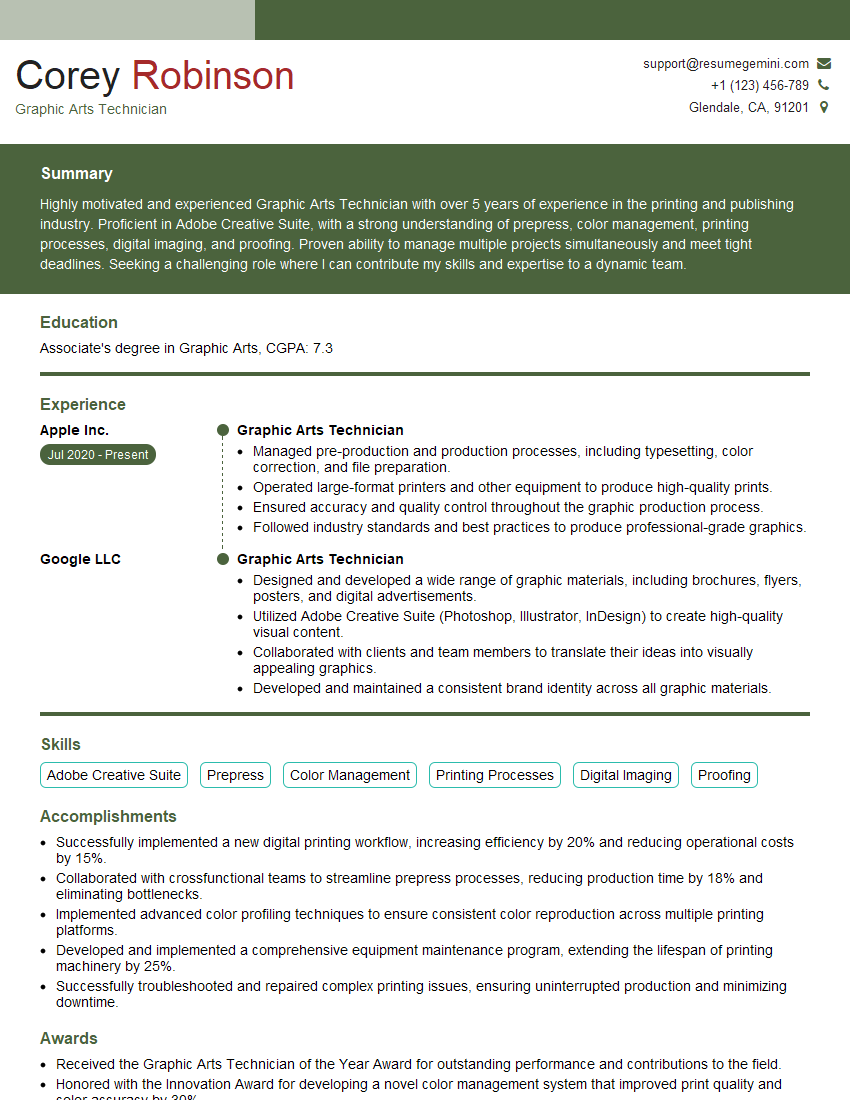
Mastering Offset Printing Techniques opens doors to exciting career opportunities in a dynamic industry. A strong understanding of these principles demonstrates valuable skills and expertise to potential employers. To maximize your job prospects, create an ATS-friendly resume that highlights your qualifications effectively. ResumeGemini is a trusted resource that can help you build a professional and impactful resume. They offer examples of resumes tailored to Offset Printing Techniques to guide you through the process, ensuring your skills and experience are presented in the best possible light.





Explore more articles
Users Rating of Our Blogs
Share Your Experience
We value your feedback! Please rate our content and share your thoughts (optional).
What Readers Say About Our Blog
Really detailed insights and content, thank you for writing this detailed article.
IT gave me an insight and words to use and be able to think of examples