Unlock your full potential by mastering the most common Tooling and Die Maintenance interview questions. This blog offers a deep dive into the critical topics, ensuring you’re not only prepared to answer but to excel. With these insights, you’ll approach your interview with clarity and confidence.
Questions Asked in Tooling and Die Maintenance Interview
Q 1. Explain the different types of die maintenance you have experience with.
Die maintenance encompasses a wide range of activities aimed at extending the lifespan and ensuring the consistent performance of dies. My experience covers several key areas:
- Preventive Maintenance: This involves regular inspections, cleaning, lubrication, and minor adjustments to prevent major failures. For example, I routinely inspect punches and dies for wear, checking for burrs, cracks, or misalignment.
- Corrective Maintenance: This addresses problems that have already occurred, such as repairing cracks, replacing worn components, or sharpening dull cutting edges. I’ve successfully repaired numerous progressive dies with broken punches and cracked stripper plates.
- Predictive Maintenance: This involves using data and analysis to anticipate potential problems before they occur. This could involve monitoring die temperature or using sensor data to predict tool wear. I’ve implemented systems for tracking die performance and identifying trends indicative of impending failures.
- Emergency Maintenance: This handles unexpected breakdowns that require immediate attention to resume production. I’ve been instrumental in quickly diagnosing and resolving issues that caused sudden production downtime, minimizing losses.
Each type of maintenance requires different skills and techniques, but all aim to maximize die performance and minimize downtime.
Q 2. Describe your experience with preventative maintenance on tooling.
Preventative maintenance is crucial for maximizing the lifespan and precision of tooling. My approach involves a structured program combining regular inspections and scheduled maintenance tasks. For example, I established a system of daily, weekly, and monthly inspections for a large stamping operation. Daily inspections involved checking for obvious wear or damage and ensuring proper lubrication. Weekly inspections included more detailed checks for alignment and minor adjustments. Monthly inspections included complete disassembly, cleaning, and lubrication of key components. We even developed a checklist for each inspection level to ensure nothing is missed, improving consistency and efficiency. Additionally, we utilized condition monitoring techniques such as measuring punch and die wear, identifying potential problems before they significantly impact production quality.
Beyond scheduled maintenance, I emphasize proper handling and storage of tools. This includes keeping dies clean, using protective coatings, and ensuring correct storage conditions to prevent rust and corrosion. Proper documentation of all maintenance activities, including repairs and replacements, is crucial for tracking performance and facilitating predictive maintenance.
Q 3. How do you troubleshoot common tooling problems?
Troubleshooting tooling problems requires a systematic approach. I typically start by carefully examining the affected tool, identifying the type and location of the problem. This might involve visual inspection, measuring dimensions, and analyzing the product defects. For example, if a stamped part shows excessive burrs, I’d examine the die’s sharpness and clearances. If the part is misshapen, I would investigate die alignment or possible bending of the punch or die.
Once I’ve identified the problem, I’ll investigate the potential causes. Was it due to wear and tear? Improper lubrication? A collision? Or was there a setup error? I’ll then develop a solution, which might involve sharpening the die, adjusting clearances, replacing worn parts, or realigning the tooling. Documenting the problem, its cause, and the solution is crucial for preventing recurrence and improving future maintenance strategies. In cases involving complex problems, I leverage my experience and readily consult technical manuals or expert colleagues.
Q 4. What are the different types of tooling materials and their applications?
Tooling materials are selected based on the application’s demands for strength, durability, wear resistance, and cost-effectiveness. Common materials and their applications include:
- High-Speed Steel (HSS): Excellent for general-purpose tooling, offering good hardness and wear resistance. Often used in punches and dies for less demanding applications.
- Powder Metallurgy High-Speed Steel (PM HSS): Offers superior toughness and wear resistance compared to traditional HSS. Ideal for high-volume production.
- Carbide: Extremely hard and wear-resistant, suitable for high-speed, high-precision tooling and long production runs. Commonly used for punches and dies in demanding applications.
- Ceramic: Offers superior wear resistance to carbide in certain applications, especially at high temperatures. Used where extreme hardness and wear resistance are critical.
- Tool Steel: A broad category encompassing various alloys with differing properties. Selection depends heavily on the specific application requirements, such as tensile strength, impact resistance, and hardenability.
The choice of material is a critical decision, influencing the lifespan, precision, and ultimately the cost-effectiveness of the tooling.
Q 5. Explain your experience with CNC machining related to tooling.
My experience with CNC machining in relation to tooling includes designing, programming, and operating CNC milling and turning machines to create and modify tooling components. I’ve been involved in the entire process, from designing the tooling in CAD software to generating CNC programs and executing the machining operations. This includes:
- Creating new tooling: Designing and manufacturing new punches, dies, and other tooling components from scratch using CNC machining.
- Modifying existing tooling: Using CNC machining to repair damaged tooling components, adjust dimensions, or incorporate design improvements.
- Creating fixtures: Designing and manufacturing custom fixtures for holding and manipulating tooling during machining operations. This ensures accurate and efficient machining.
- Maintaining CNC machines: I’m proficient in performing basic maintenance tasks on CNC machines, ensuring their continued performance and accuracy.
CNC machining provides the precision and repeatability necessary for creating high-quality tooling components, and I’m confident in my ability to leverage its capabilities to meet diverse tooling needs.
Q 6. How do you ensure the accuracy and precision of tooling during maintenance?
Ensuring accuracy and precision during tooling maintenance is paramount. My strategies include:
- Precise Measurement: I utilize high-precision measuring instruments such as CMMs (Coordinate Measuring Machines), dial indicators, and micrometers to accurately assess dimensions and identify deviations from specifications. This ensures that any repairs or adjustments maintain the required tolerances.
- Proper Alignment: Accurate alignment of punches and dies is crucial. I use alignment tools and techniques to ensure the proper relationship between the components, minimizing friction and preventing premature wear.
- Controlled Environment: Maintaining a clean and controlled environment during maintenance is important to prevent contamination and damage. This includes using appropriate cleaning agents and protective coverings.
- Calibration and Verification: Regular calibration of measuring instruments and verification of the tooling’s accuracy against known standards are essential for maintaining consistent precision.
- Documentation: Meticulous record-keeping, including detailed measurements and inspection reports, allows for tracking and verification of maintenance procedures and helps prevent inconsistencies over time.
By implementing these procedures, I ensure that the maintained tooling consistently meets the required precision and accuracy standards.
Q 7. Describe your experience with die sharpening and repair.
Die sharpening and repair are specialized skills requiring both precision and experience. I have extensive experience in these areas, utilizing a variety of techniques depending on the type of die and the extent of the damage. For example:
- Sharpening: I use specialized grinding equipment, including surface grinders and honing machines, to sharpen dull cutting edges on punches and dies. The process requires precision to achieve the correct sharpness and maintain the original geometry. I pay close attention to minimizing the material removal to extend the tool’s life.
- Crack Repair: Small cracks can sometimes be repaired by welding, using specialized techniques to minimize distortion and maintain the tool’s integrity. Larger cracks often necessitate replacement of the damaged component.
- Damage Repair: Damage such as chips or gouges can be addressed by grinding, EDM (electrical discharge machining), or even manual filing and polishing, depending on the extent and location of the damage. Careful consideration is always given to minimizing additional damage to the tool.
- Rebuilding: Severely worn or damaged dies may require significant rebuilding, involving replacing worn components, remachining sections, and potentially incorporating design improvements. This requires a thorough understanding of the die’s construction and operation.
Die sharpening and repair extend the life of valuable tooling, reducing costs and minimizing downtime. It’s a critical skill for any successful tooling and die maintenance program.
Q 8. What are the safety protocols you follow when maintaining tooling?
Safety is paramount in tooling maintenance. My approach is built around a layered safety system, starting with a thorough risk assessment before any work begins. This involves identifying potential hazards like sharp edges, moving parts, and exposure to cutting fluids. I always use the appropriate Personal Protective Equipment (PPE), including safety glasses, gloves, hearing protection, and steel-toe boots. Lockout/Tagout (LOTO) procedures are strictly adhered to when working on energized equipment or machinery. This ensures that power sources are completely isolated to prevent accidental activation. Regular machine inspections are key, and I’m trained to identify and report any unsafe conditions immediately. Furthermore, I follow all company safety regulations and participate in regular safety training to stay updated on best practices. For instance, during a recent maintenance procedure on a large stamping press, I meticulously followed the LOTO procedure, ensuring the press was completely de-energized before starting any work. This prevented a potential accident and ensured the safety of myself and my colleagues.
Q 9. How do you document tooling maintenance procedures?
Tooling maintenance procedures are meticulously documented using a Computerized Maintenance Management System (CMMS). This system allows for detailed tracking of all maintenance activities, including preventative maintenance schedules, repair history, and replacement parts. Each procedure is documented step-by-step, including specific tools and equipment needed, safety precautions, and quality control checks. We use standardized forms and digital photographs to capture critical details such as tool wear patterns, measurement data, and any anomalies discovered during inspection. For example, when performing a die change, I would record the date, time, die number, and any adjustments made to the machine to ensure optimal performance. This detailed documentation ensures consistency, helps identify trends, and provides valuable data for future maintenance planning. It also assists in troubleshooting issues and facilitates communication among the maintenance team and other departments.
Q 10. Describe your experience with using different measuring instruments in tooling maintenance.
My experience with measuring instruments is extensive. I regularly use various tools depending on the application and required precision. For example, I routinely use dial calipers for precise measurements of dimensions and depths, micrometers for extremely accurate measurements of small parts, and height gauges for precise vertical measurements. Optical comparators allow me to inspect complex geometries and identify minute deviations from specifications. Surface roughness is assessed using surface roughness testers. For larger components, I rely on coordinate measuring machines (CMMs) for accurate three-dimensional measurements. Finally, I’m proficient in using laser alignment systems to ensure precise alignment of tooling components. In one instance, a subtle misalignment in a progressive die was discovered using a CMM, preventing a potential production bottleneck and costly rework. The ability to select and accurately use these instruments is crucial to identifying and correcting tooling wear, ensuring quality and productivity.
Q 11. What software are you familiar with for CAD/CAM related to tooling?
I’m proficient in several CAD/CAM software packages, including AutoCAD, SolidWorks, and Mastercam. AutoCAD is primarily used for 2D drafting and design modifications, while SolidWorks offers robust 3D modeling capabilities, allowing me to visualize and analyze tooling designs. Mastercam is vital for programming CNC machines for the manufacturing and maintenance of tooling components. Understanding these programs allows me to interpret designs, make modifications, simulate tooling performance, and program CNC machines for efficient and accurate repairs or modifications. For instance, using SolidWorks, I recently modeled a replacement component for a worn-out punch, which was then manufactured using Mastercam-generated CNC programs, significantly reducing downtime and improving the overall efficiency of the process.
Q 12. How do you identify and resolve tooling wear issues?
Identifying and resolving tooling wear issues is a critical aspect of my role. The process begins with visual inspection, looking for signs of wear such as cracks, chipping, scratches, and deformation. Precision measurements using the instruments mentioned earlier are then taken to quantify the extent of the wear. I analyze wear patterns to understand the root cause of the problem. This analysis could involve evaluating the material properties, operating parameters, or even the design of the tooling itself. Strategies for resolution depend on the nature and severity of the wear. Minor wear might be addressed through sharpening, polishing, or minor adjustments. Severe wear usually requires repairs or part replacement, often involving CNC machining or other advanced fabrication techniques. For example, during a routine inspection, I noticed excessive wear on the shearing edge of a blanking die. By analyzing the wear pattern and conducting measurements, I determined that the material being stamped was harder than initially expected. This led to a change in the stamping process parameters and the selection of a more wear-resistant material for the die, effectively solving the issue.
Q 13. What is your experience with progressive dies?
I have extensive experience with progressive dies, which are complex tools used for high-volume production of parts. I understand their intricate design, including the various stations involved in a single stroke of the press. My experience encompasses troubleshooting, maintenance, and repair of these dies, which often involve multiple components that require precise alignment and synchronization. I’m familiar with common issues encountered in progressive dies, such as die breakage, punch wear, and misalignment. I know how to diagnose these problems using various diagnostic techniques, including visual inspection, measurement, and analysis of the produced parts. For instance, I once resolved a production issue on a progressive die used to stamp automotive parts. The parts were coming out with inconsistent dimensions. Through careful analysis and measurement, I pinpointed a misalignment in one of the intermediate stations. A precise adjustment of the station resolved the issue, leading to the production of high-quality parts. My work with progressive dies includes preventative maintenance to ensure long-term operational efficiency and reduced downtime.
Q 14. Explain your experience with compound dies.
Compound dies are another area of my expertise. These dies perform multiple operations in a single stroke of the press, usually combining operations like blanking, piercing, and forming. My experience includes designing, maintaining, and troubleshooting compound dies. The complexity of these dies requires a deep understanding of the individual operations and their interdependencies. I’m adept at identifying problems, such as stripping issues, material flow issues, and punch and die alignment problems. For example, during a recent project, I resolved a stripping issue in a compound die used to manufacture electrical connectors. Through meticulous inspection and analysis, I found that the stripping mechanism was not properly aligned, causing the parts to bind during the stripping phase. Adjusting the alignment of this mechanism resolved the stripping issue, allowing the die to efficiently produce high-quality parts. My experience ensures I can effectively troubleshoot and maintain compound dies for optimum performance.
Q 15. How do you handle emergency repairs on a production line?
Emergency repairs on a production line demand swift, decisive action. My approach prioritizes safety first, followed by a rapid assessment of the damage, and then a strategic repair or workaround. Think of it like a battlefield triage – stabilize the situation before addressing the root cause.
Step 1: Safety First! Isolate the affected area, ensuring power is off and the machinery is secured to prevent further damage or injury. This involves locking out and tagging out procedures, crucial for safety.
Step 2: Assess the Damage: Quickly determine the nature and extent of the problem. Is it a broken punch, a cracked die, or a jammed mechanism? Photography and detailed notes are invaluable here. Often, a quick visual inspection reveals the source of the malfunction.
Step 3: Implement a Solution: This depends on the severity. Simple repairs, like replacing a worn pin, can be done on-site. More complex issues might require a temporary fix to resume production while a permanent solution is prepared. For example, if a critical component breaks, we might fabricate a temporary substitute from readily available materials while the proper replacement is ordered.
Step 4: Documentation and Preventative Measures: Thorough documentation is key, including photos, the nature of the repair, and the time taken. This information is crucial for root cause analysis to prevent future occurrences. We’ll initiate a detailed investigation to determine why the failure happened, which might involve material analysis or process review.
Example: Once, a critical punch broke during peak production. We quickly fabricated a temporary replacement from a hardened steel rod, allowing production to continue at reduced capacity while a new punch was manufactured. This minimized downtime and met production targets.
Career Expert Tips:
- Ace those interviews! Prepare effectively by reviewing the Top 50 Most Common Interview Questions on ResumeGemini.
- Navigate your job search with confidence! Explore a wide range of Career Tips on ResumeGemini. Learn about common challenges and recommendations to overcome them.
- Craft the perfect resume! Master the Art of Resume Writing with ResumeGemini’s guide. Showcase your unique qualifications and achievements effectively.
- Don’t miss out on holiday savings! Build your dream resume with ResumeGemini’s ATS optimized templates.
Q 16. Explain your understanding of GD&T (Geometric Dimensioning and Tolerancing) as it relates to tooling.
GD&T, or Geometric Dimensioning and Tolerancing, is the language of precision. It’s a system for specifying the allowable variation in a part’s geometry. In tooling, GD&T is vital for ensuring that tools function correctly and produce parts within the required specifications. It’s not just about dimensions; it’s about the precise relationship between features.
Relevance to Tooling: Imagine a stamping die creating a hole. Simple dimensions might specify the hole’s diameter, but GD&T goes further, defining the hole’s position, roundness, and perpendicularity relative to other features. This level of precision prevents misalignment, part failures, and costly rework.
Key Concepts:
- Tolerances: The permissible variation in a dimension (e.g., ±0.005 inches).
- Features of Size: Features like holes and shafts whose dimensions are controlled (diameter, width).
- Geometric Tolerances: Control the form, orientation, location, and runout of features (e.g., straightness, circularity, position).
Practical Application: GD&T is communicated through drawings and specifications. Tool designers use GD&T to ensure that the tool’s components are manufactured to the necessary precision. Inspectors use GD&T to verify that the tooling meets the specified requirements before it is used in production. A missing or poorly defined GD&T symbol can lead to expensive tooling rework or defective parts.
Q 17. Describe your experience with different types of presses and their impact on tooling.
My experience encompasses various press types, each impacting tooling differently. The choice of press dictates the tooling design, materials, and maintenance strategies.
Types of Presses and their Impact:
- Mechanical Presses: These use a crankshaft to drive the ram. They are versatile but can be slower than other types. Tooling for mechanical presses often needs to withstand high impact forces and repeated cycles. Proper lubrication and wear monitoring are key.
- Hydraulic Presses: These use hydraulic cylinders to generate force, providing adjustable pressure and speed. Tooling often needs to withstand higher pressures and may require specialized designs for precise control.
- Pneumatic Presses: These use compressed air to drive the ram, suitable for lighter applications. Tooling needs to be designed for the specific pressure capabilities.
- Progressive Presses: These perform multiple operations in a single stroke, often demanding intricate tooling with multiple stations. Alignment and precise sequencing are crucial. Maintenance often involves adjusting or replacing individual station components.
Impact on Tooling: The press’s tonnage (force), speed, and cycle time directly influence tooling design and material selection. Higher tonnage presses require more robust tooling materials (e.g., hardened steels) and more rigid construction. Faster cycle times increase wear, requiring more frequent maintenance.
Q 18. How do you maintain and repair tooling used for stamping?
Maintaining and repairing stamping tooling involves a multifaceted approach encompassing preventative maintenance, regular inspection, and timely repairs.
Preventative Maintenance: This includes regular lubrication of moving parts, cleaning of debris, and monitoring for wear. Proper lubrication significantly reduces friction and extends tool life.
Regular Inspection: Visual inspections identify issues like cracks, wear on punches and dies, or misalignment. Regular measurements ensure dimensions remain within tolerances.
Repair Strategies:
- Sharpening: Worn punches and dies can be resharpened using specialized grinding equipment. This extends their life but reduces their size, so it’s not unlimited.
- Repairing Cracks: Minor cracks can sometimes be repaired by welding or using specialized epoxy. However, significant cracks may necessitate replacement.
- Replacing Worn Components: Worn or damaged components, such as bushings, guides, or ejector pins, need timely replacement to ensure smooth operation.
- Re-grinding: Worn dies can sometimes be reground to restore their original dimensions. This is a time-consuming process.
Example: Regular sharpening of punches in a progressive die for automotive parts extends the tool’s life by many thousands of cycles, dramatically lowering replacement costs. If this is neglected, premature failure and downtime will result.
Q 19. How do you maintain and repair tooling used for injection molding?
Injection molding tooling maintenance and repair require a different approach than stamping, focusing on precision and surface quality.
Preventative Maintenance: This includes regular cleaning of the mold cavity and runners to remove residual plastic and prevent buildup. Lubrication of moving parts, such as ejector pins and slides, ensures smooth operation and reduces wear.
Regular Inspection: Careful visual inspection for wear marks, scratches, or pitting is crucial. Accurate measurement verifies that dimensions remain within the tolerances specified by GD&T.
Repair Strategies:
- Polishing: Scratches and minor pitting can be removed by polishing to restore the surface finish and prevent defects in the molded parts. This requires specialist equipment and expertise.
- Repairing Cracks: Small cracks can sometimes be repaired using specialized epoxy or welding. However, larger cracks often necessitate replacement.
- Replacing Worn Components: Worn ejector pins, sprue bushings, or guide pins should be replaced promptly to prevent defects and maintain consistent part quality.
- Re-machining: Severe wear might require re-machining of mold components. This is a costly process but can extend the lifespan of the tooling significantly.
Example: A small crack in a mold cavity can lead to significant surface defects in the molded part. Prompt detection and repair using a specialized epoxy prevent large-scale scrap and rework, saving considerable time and resources.
Q 20. What are the common causes of tooling failure?
Tooling failures stem from a range of causes, broadly categorized into:
Material Fatigue: Repeated stress and strain lead to microscopic cracks that eventually propagate and cause failure. This is especially common in high-cycle applications.
Wear and Tear: Friction, abrasion, and impact gradually erode tooling components. This is influenced by the material properties, lubrication, and the process parameters.
Improper Design or Manufacturing: Flaws in the tooling design or manufacturing process can create weak points, predisposing the tool to failure. Inadequate GD&T can also lead to functionality issues.
Improper Operation or Maintenance: Neglecting lubrication, overloading the tool, or using improper techniques can significantly shorten its lifespan. Lack of regular inspection is a major contributor.
Environmental Factors: Exposure to excessive heat, cold, or corrosive substances can degrade tooling materials, leading to premature failure. This is particularly important in chemically demanding environments.
Example: A stamping die failed due to a combination of material fatigue from repeated cycles and a hidden manufacturing defect in the punch holder. Root cause analysis highlighted the need for stricter quality control procedures during manufacturing and more robust materials for critical components.
Q 21. How do you improve the lifespan of tooling?
Extending tooling lifespan involves a proactive approach encompassing careful selection of materials, proper design, meticulous maintenance, and diligent operational practices.
Material Selection: Choosing materials with high hardness, wear resistance, and toughness is fundamental. This often involves specialized alloys or surface treatments to enhance durability.
Proper Design: Optimal tool design minimizes stress concentrations, incorporates features for easy maintenance, and considers wear patterns. Accurate GD&T ensures precise fitting and functionality.
Meticulous Maintenance: Regular lubrication, cleaning, and inspection are essential. This prevents wear and tear, detects minor problems early, and allows for timely repairs.
Diligent Operational Practices: Avoiding overloading, using the tool within its designed parameters, and adhering to correct operational procedures minimize stress and wear.
Process Optimization: Analyzing the process parameters (speed, pressure, temperature) to identify areas for improvement can reduce wear significantly. This often requires collaboration between tooling and process engineers.
Example: Implementing a predictive maintenance program using vibration analysis on a large injection mold identified impending bearing failure, allowing for timely replacement and avoiding costly downtime and potential damage to the mold.
Q 22. Explain your experience with different types of lubricants and coolants used with tooling.
My experience encompasses a wide range of lubricants and coolants, each chosen based on the specific tooling material, application, and operational conditions. For example, in high-speed machining of steel, a water-soluble coolant with extreme pressure (EP) additives is crucial to prevent galling and ensure effective heat dissipation. The EP additives are vital as they create a protective layer between the tool and workpiece, reducing friction and wear. Conversely, for delicate operations with aluminum or softer metals, a less aggressive, perhaps even a synthetic oil-based lubricant, might be preferred to prevent surface damage. I’ve also worked extensively with various types of greases for maintaining press fit tooling components, selecting those with appropriate temperature ranges and viscosity grades to prevent slippage or premature wear. The selection process always involves careful consideration of factors such as the material compatibility, desired viscosity, environmental concerns, and the cost-effectiveness of each option.
Furthermore, I am familiar with the importance of regular coolant analysis to maintain its effectiveness and prevent issues like bacterial growth or chemical breakdown, extending tooling life and improving surface finish.
- Water-soluble coolants: Cost-effective, readily available, but require careful management to avoid bacterial contamination.
- Synthetic coolants: Offer superior performance and longer lifespan, but come with a higher price tag.
- Oil-based lubricants: Suitable for specific applications but pose environmental concerns and require careful disposal.
- Specialty greases: Designed for high-temperature or extreme-pressure applications, crucial for maintaining precise fits in tooling.
Q 23. How do you manage your workload and prioritize tasks in tooling maintenance?
Prioritizing tasks in tooling maintenance requires a structured approach. I typically use a combination of methods, beginning with a detailed assessment of all equipment’s condition using preventative maintenance schedules and checklists. Then, I prioritize based on several key factors: criticality of the equipment to production (downtime costs), urgency of repairs (immediate safety hazards or impending failures), and the availability of necessary resources (spare parts, skilled labor). I leverage a computerized maintenance management system (CMMS) to track work orders, assign priorities, and monitor progress. This allows for effective scheduling and resource allocation. For instance, a minor adjustment on a low-priority tool might be scheduled for a less busy period, while a major repair on a critical production line tool would take immediate precedence. I also believe in proactive communication with the production team to understand their immediate needs and anticipate potential problems before they arise.
Q 24. Describe a time you had to solve a challenging tooling problem.
In one instance, we were experiencing consistent breakage of a critical punch in a progressive die used for stamping automotive parts. The initial suspicion was material defect, but after thorough inspection, including microscopic analysis, we ruled that out. The problem turned out to be a subtle issue with the die’s alignment, specifically a slight misalignment causing excessive stress on the punch at a particular point. We carefully used a laser alignment system to pinpoint the misalignment, meticulously corrected it using shims and fine adjustments, and implemented a stricter alignment checking procedure during die setup. The problem was solved, and we also significantly reduced the risk of future issues by refining our preventative maintenance practices.
Q 25. How do you stay up-to-date with the latest advances in tooling technology?
Staying current in tooling technology is crucial for maintaining a competitive edge. I regularly attend industry conferences and workshops, such as those hosted by organizations like the Society of Manufacturing Engineers (SME). I also subscribe to relevant trade publications and journals, and actively participate in online forums and communities. Moreover, I’m currently pursuing online courses on advanced machining techniques and materials science, including courses covering additive manufacturing processes and advanced materials such as nano-structured coatings for enhanced tool wear resistance. Staying informed about the newest materials, coatings, and designs is crucial for optimizing processes and troubleshooting effectively.
Q 26. Describe your experience with different types of tooling materials, such as steel, carbide, and ceramics.
My experience includes working with a variety of tooling materials. High-speed steel (HSS) remains a workhorse for many applications due to its balance of strength, toughness, and affordability. However, for high-volume production or where extreme wear resistance is required, carbide tools are indispensable. Their hardness significantly extends tool life, allowing for higher cutting speeds and improved surface finish. I’ve also worked with ceramic tools for specific applications, particularly in high-temperature environments or for cutting extremely hard materials where even carbide might fall short. Each material has unique properties: HSS offers good toughness and is easier to regrind, while carbide is much harder but more brittle, and ceramics are very hard but even more brittle and more prone to chipping. The choice depends entirely on the application.
Q 27. How do you handle difficult situations or disagreements with other members of the maintenance team?
Handling disagreements within the maintenance team requires a collaborative approach. I believe in open communication and active listening. When a conflict arises, I try to understand each person’s perspective and identify the root cause of the disagreement, focusing on the task at hand rather than personalities. Finding common ground and working towards a mutually acceptable solution is my priority. If necessary, I involve a supervisor or manager to facilitate a constructive dialogue and mediate the situation. The team’s overall goal is efficient, reliable, and safe operation, so maintaining a positive work environment and professional relationships are paramount.
Q 28. What are your salary expectations for this role?
My salary expectations are in line with the industry standard for a Tooling and Die Maintenance expert with my experience and qualifications. Considering my proven track record, demonstrated expertise in resolving complex tooling issues, and proficiency in implementing preventive maintenance strategies, I am confident that my contributions will significantly benefit your organization. I am open to discussing a competitive compensation package that reflects my value and aligns with the responsibilities of this role. A detailed discussion can provide a precise figure that suits both parties.
Key Topics to Learn for Your Tooling and Die Maintenance Interview
- Die and Mold Design Fundamentals: Understanding the principles behind die and mold construction, including materials selection, design considerations, and common design flaws.
- Preventive Maintenance Procedures: Practical application of routine inspection, lubrication, and cleaning techniques to extend the lifespan of tooling and dies. Knowing how to create and follow a PM schedule.
- Troubleshooting and Repair Techniques: Diagnosing common tooling and die problems, such as wear and tear, breakage, and misalignment. Experience with repair methods, including welding, grinding, and machining.
- Precision Measurement and Inspection: Proficiency in using various measuring instruments (calipers, micrometers, CMMs) to ensure accurate dimensions and tolerances are met. Understanding GD&T principles.
- Safety Procedures and Regulations: Demonstrating knowledge of safe operating procedures for tooling and die maintenance, including lockout/tagout procedures and personal protective equipment (PPE) usage.
- Hydraulic and Pneumatic Systems: Understanding the operation and maintenance of hydraulic and pneumatic systems commonly found in tooling and die machinery. Troubleshooting common issues in these systems.
- Material Science and Metallurgy: Knowledge of various metals and materials used in tooling and die construction and their properties, including hardness, strength, and wear resistance. Understanding heat treatments and their effects.
- Computer Numerical Control (CNC) Machines: Familiarity with CNC machining processes and their application in tooling and die repair and modification. Basic programming knowledge is beneficial.
- Problem-Solving and Root Cause Analysis: Demonstrate your ability to systematically identify and resolve tooling and die problems using analytical skills and logical reasoning.
- Documentation and Record Keeping: Maintaining detailed records of maintenance activities, repairs, and inspections. Understanding the importance of accurate and organized documentation.
Next Steps
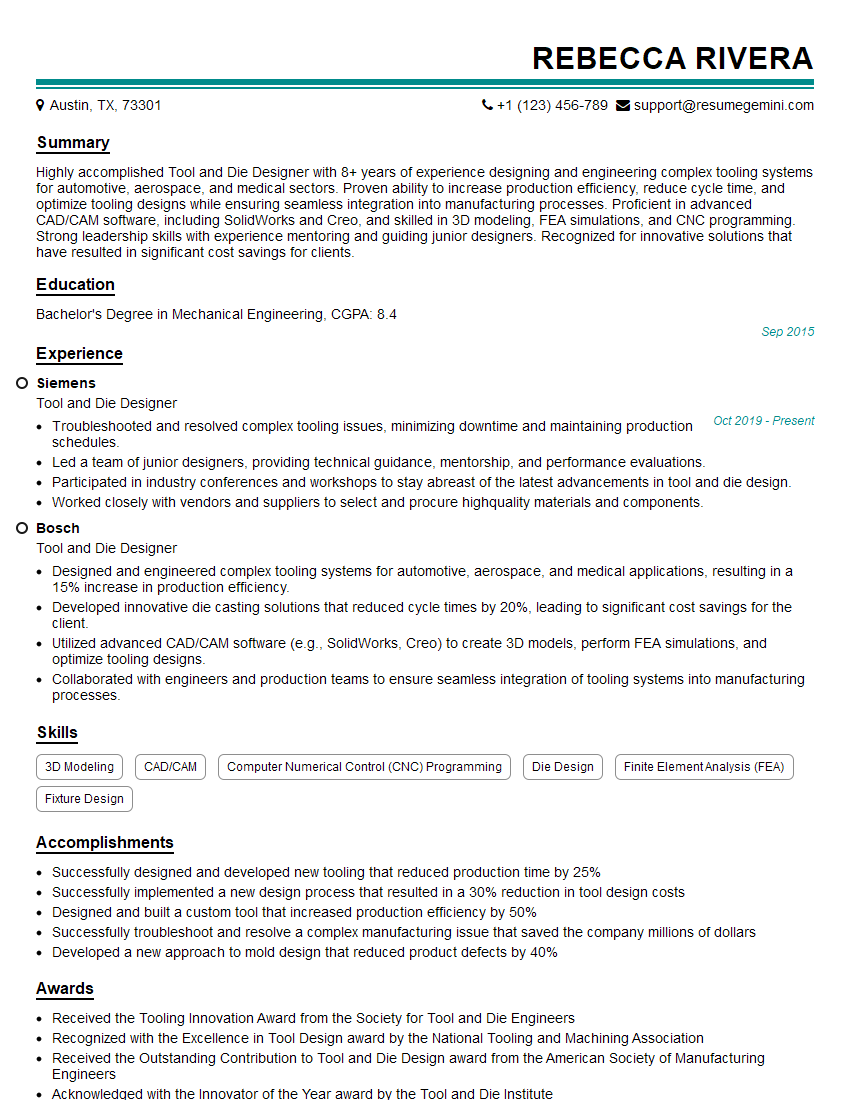
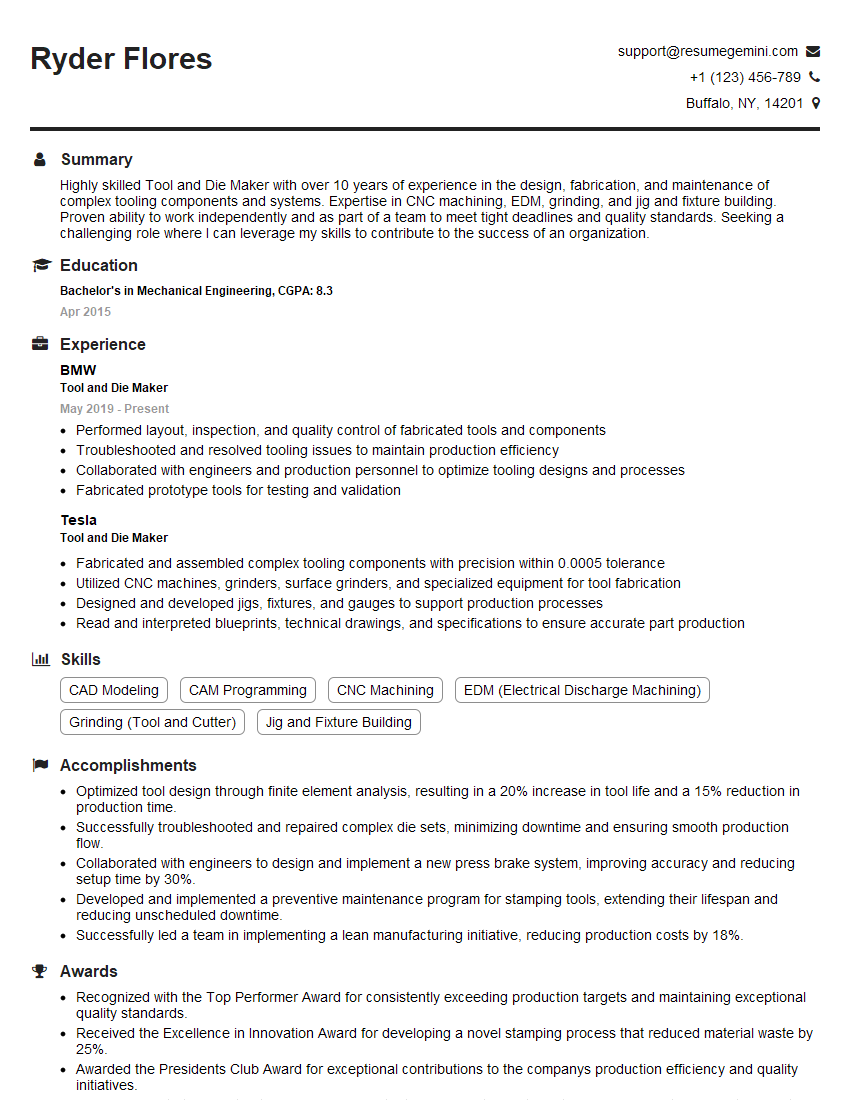
Mastering Tooling and Die Maintenance opens doors to rewarding careers with excellent growth potential. Advancement opportunities often involve specialized skills and increased responsibility within manufacturing and production environments. To maximize your job prospects, creating an ATS-friendly resume is crucial. This ensures your application gets noticed by recruiters and hiring managers. We strongly encourage you to utilize ResumeGemini as a trusted resource for crafting a professional and impactful resume. ResumeGemini provides examples of resumes tailored to Tooling and Die Maintenance professionals to guide you through the process.

Explore more articles
Users Rating of Our Blogs
Share Your Experience
We value your feedback! Please rate our content and share your thoughts (optional).
What Readers Say About Our Blog
I Redesigned Spongebob Squarepants and his main characters of my artwork.
https://www.deviantart.com/reimaginesponge/art/Redesigned-Spongebob-characters-1223583608
IT gave me an insight and words to use and be able to think of examples
Hi, I’m Jay, we have a few potential clients that are interested in your services, thought you might be a good fit. I’d love to talk about the details, when do you have time to talk?
Best,
Jay
Founder | CEO