The thought of an interview can be nerve-wracking, but the right preparation can make all the difference. Explore this comprehensive guide to Plastics interview questions and gain the confidence you need to showcase your abilities and secure the role.
Questions Asked in Plastics Interview
Q 1. Explain the difference between thermoplastic and thermoset polymers.
The key difference between thermoplastic and thermoset polymers lies in their response to heat. Think of it like this: thermoplastics are like play-dough – you can repeatedly heat them, mold them, and cool them down without changing their fundamental chemical structure. Thermosets, on the other hand, are like an egg – once they’re cooked (cured), they’re permanently set and cannot be re-melted without degrading.
- Thermoplastics: These polymers have long, chain-like molecules that are intertwined but not chemically bonded. Heating weakens these interactions, allowing the polymer to soften and become moldable. Cooling solidifies the material, and this process can be repeated many times. Examples include polyethylene (PE), polypropylene (PP), and polyvinyl chloride (PVC). They’re commonly used in bottles, films, and pipes due to their recyclability.
- Thermosets: In thermosets, the polymer chains are cross-linked through chemical bonds, forming a rigid, three-dimensional network. This cross-linking prevents the polymer from melting upon reheating. Instead, it will decompose or char. Examples include epoxy resins, polyester resins, and phenolic resins. They are preferred for applications needing high strength and heat resistance, such as car parts, electrical insulation and fiberglass composites.
Q 2. Describe the injection molding process in detail.
Injection molding is a high-volume manufacturing process used to create parts by injecting molten plastic into a mold. Imagine a syringe injecting liquid into a precisely shaped cavity. It’s incredibly efficient and versatile.
- Melting: Plastic resin pellets are fed into a heated barrel where they melt into a viscous liquid.
- Injection: A screw or plunger injects the molten plastic under high pressure into a precisely machined mold cavity.
- Holding: The molten plastic fills the cavity completely, holding the shape under pressure until it solidifies.
- Cooling: The mold is typically water-cooled to rapidly solidify the plastic part.
- Ejection: Once cooled, ejector pins push the solidified part out of the mold.
- Cycle Repeat: The process repeats continuously, producing many identical parts.
The mold itself is crucial; it determines the final shape and features of the part. Complex geometries and intricate designs are easily achievable.
Q 3. What are the common types of plastic resins and their applications?
Numerous plastic resins exist, each with unique properties. Here are some common examples:
- Polyethylene (PE): A flexible, low-cost resin used in films, bags, bottles, and pipes. High-density polyethylene (HDPE) is stiffer than low-density polyethylene (LDPE).
- Polypropylene (PP): Stronger and more heat-resistant than PE, used in containers, fibers, and automotive parts.
- Polyvinyl Chloride (PVC): Rigid and durable, used in pipes, windows, and flooring. It’s known for its weather resistance.
- Polyethylene Terephthalate (PET): Used in food and beverage bottles due to its transparency and barrier properties.
- Acrylonitrile Butadiene Styrene (ABS): A tough, impact-resistant plastic used in automotive parts, electronics housings, and toys.
- Polycarbonate (PC): Strong, transparent, and heat-resistant, used in safety glasses, lenses, and compact discs.
The choice of resin depends heavily on the application’s required properties—strength, flexibility, heat resistance, chemical resistance, and cost.
Q 4. How do you determine the appropriate material for a given application?
Selecting the right plastic material is critical for success. It’s a multi-step process.
- Define Requirements: What will the part do? What stresses will it endure (mechanical, thermal, chemical)? What are the aesthetic needs (color, transparency)? What is the production volume?
- Material Property Review: Consult material databases and specifications. Consider tensile strength, impact resistance, flexural modulus, melting point, and chemical resistance.
- Testing and Prototyping: Create prototypes using shortlisted materials to validate performance in real-world conditions. This helps identify potential issues early on.
- Cost Analysis: Compare the cost of materials, processing, and any potential failures. A slightly more expensive material might be cheaper in the long run if it reduces defects.
- Regulatory Compliance: Ensure the chosen material meets all relevant regulations for the intended application (e.g., food contact, medical applications).
For example, designing a medical device requires biocompatible materials that meet stringent safety standards, whereas a simple toy might prioritize low cost and impact resistance.
Q 5. Explain the concept of melt flow index (MFI).
The Melt Flow Index (MFI), also known as melt mass-flow rate (MFR), measures the ease with which a thermoplastic polymer melts and flows. It’s a key indicator of the polymer’s molecular weight and viscosity. Imagine squeezing toothpaste – a high MFI indicates a low viscosity, like easily flowing toothpaste, while a low MFI represents a high viscosity, like a thick gel.
MFI is determined by extruding a molten polymer through a standardized die under specific temperature and pressure conditions. The amount of polymer extruded in a given time is measured and reported as grams per 10 minutes (g/10 min). A higher MFI number means the polymer flows more easily. This is important for processing, as it dictates the settings for injection molding machines and other processes.
Q 6. Describe different types of plastic degradation.
Plastic degradation refers to the breakdown or deterioration of polymer properties over time, caused by various factors.
- Thermal Degradation: Exposure to high temperatures can break down the polymer chains, leading to discoloration, embrittlement, and reduced strength. Think of a plastic bag left in a hot car.
- Oxidative Degradation: Reaction with oxygen in the air can weaken the polymer chains, causing changes in color and properties. UV light accelerates this process.
- Hydrolytic Degradation: Reaction with water can break down the polymer chains, particularly in polymers susceptible to hydrolysis (e.g., polyesters). This is a concern in humid environments or when exposed to moisture.
- Photodegradation: Exposure to UV light can break down the polymer chains, causing discoloration, embrittlement, and loss of strength. This is especially prevalent in outdoor applications.
- Biodegradation: Certain plastics can be broken down by microorganisms under specific conditions. Biodegradable plastics are a growing area of research, aiming for more sustainable solutions.
Q 7. What are the common causes of defects in injection molding?
Injection molding, while highly efficient, can be prone to defects. Careful control of the process parameters is essential.
- Short Shots: The plastic doesn’t completely fill the mold cavity, resulting in incomplete parts.
- Flashing: Molten plastic leaks out between the mold halves.
- Sink Marks: Surface depressions caused by uneven cooling or shrinkage.
- Warpage: Distortion or bending of the part due to uneven cooling or internal stresses.
- Weld Lines: Visible lines where the plastic flows merge, often weaker than the surrounding material.
- Burn Marks: Discoloration or degradation caused by excessive heat.
These defects can stem from issues with mold design, material properties, injection pressure, temperature, or cooling rates. Careful process optimization and quality control are vital to minimize these defects.
Q 8. How do you troubleshoot issues in an extrusion process?
Troubleshooting an extrusion process involves a systematic approach. Think of it like diagnosing a car problem – you need to identify the symptoms and then trace them back to the root cause. We start by carefully observing the extruded product itself: Is it the correct dimensions? Does it have any surface defects like bubbles, streaks, or discoloration? Is the output consistent?
Next, we examine the process parameters. This includes checking the extruder’s screw speed, melt temperature, die temperature, and back pressure. We also analyze the material: Is the resin properly dried? Are there any contaminants present? Are we using the correct grade of resin for the desired product?
- Visual Inspection: Carefully examine the extrudate for flaws like surface imperfections, variations in diameter, or inconsistent color.
- Parameter Adjustments: Systematically adjust process parameters like screw speed, melt temperature, and die pressure, observing the effect on the extrudate. Small changes can have significant effects.
- Material Analysis: Check the resin for moisture content, contamination, and correct grade. This often requires lab testing.
- Die Analysis: Inspect the die for wear, damage, or clogging. A worn or improperly designed die can significantly impact product quality.
- Data Logging Review: Review historical process data to identify trends or anomalies that might indicate a developing problem.
For instance, if the extrudate is exhibiting a significant amount of ‘shorties’ (short pieces of plastic), we might investigate the screw design, melt temperature (too low), or back pressure (too high). Each problem requires a different solution, highlighting the need for careful observation and methodical adjustments.
Q 9. Explain the role of plasticizers in plastics.
Plasticizers are substances added to polymers to increase their flexibility, workability, and softness. Imagine trying to mold clay that’s completely dry and brittle – it would be very difficult. Plasticizers act like tiny lubricants within the polymer structure, allowing the polymer chains to slide past each other more easily. This reduces the glass transition temperature (Tg), the temperature below which a polymer becomes hard and brittle.
They are especially important for polymers like PVC (polyvinyl chloride), which is naturally quite rigid. Without plasticizers, PVC would be hard and inflexible, making it unsuitable for many applications like flooring, clothing, and medical devices. Common plasticizers include phthalates (like DEHP), but concerns about their potential toxicity have led to a search for safer alternatives, like citrates and adipates.
The amount of plasticizer added affects the final properties. More plasticizer means a more flexible, softer material, but it can also reduce the material’s strength and durability. The selection of plasticizer is crucial and depends on the desired properties of the final product and any regulatory requirements, such as food contact compliance.
Q 10. What are the environmental concerns associated with plastic production and disposal?
The environmental impact of plastics is a significant concern. The production of plastics often relies on fossil fuels, contributing to greenhouse gas emissions. Furthermore, the manufacturing process itself can generate air and water pollution. The sheer volume of plastic waste generated is overwhelming, as much of it ends up in landfills or, worse, polluting our oceans and ecosystems.
- Greenhouse Gas Emissions: Plastics production relies heavily on fossil fuels, leading to significant carbon emissions.
- Microplastic Pollution: Plastic debris breaks down into microplastics, which contaminate water sources and enter the food chain, posing risks to wildlife and potentially humans.
- Landfill Space: Plastics are slow to decompose, occupying valuable landfill space and causing long-term environmental problems.
- Ocean Pollution: Plastic waste accumulates in oceans, endangering marine life through entanglement and ingestion.
- Chemical Leaching: Some plastics can leach harmful chemicals into the environment and potentially into food or water sources.
Addressing these issues requires a multifaceted approach, including developing more sustainable production methods, improving recycling infrastructure, reducing plastic consumption, and promoting the use of biodegradable and compostable alternatives.
Q 11. Describe various methods for recycling plastics.
Plastic recycling involves several methods, each suited to different types of plastics. The process usually begins with sorting plastics by type (indicated by resin identification codes), as different plastics require different processing techniques.
- Mechanical Recycling: This is the most common method. Plastics are shredded, washed, and melted down to create new products. This is suitable for many types of plastics like PET (polyethylene terephthalate) and HDPE (high-density polyethylene).
- Chemical Recycling: This involves breaking down plastics into their chemical building blocks to create new polymers. This is useful for plastics that are difficult to mechanically recycle, and it can yield high-quality materials.
- Energy Recovery: When plastics cannot be recycled mechanically or chemically, they can be incinerated to generate energy. This approach reduces landfill waste but still involves emissions.
For example, PET bottles are commonly mechanically recycled into polyester fibers for clothing or new plastic bottles. Chemical recycling is being explored to break down mixed plastic waste into valuable feedstock for new plastics, reducing the need for virgin materials.
Q 12. Explain the concept of polymer crystallinity and its effect on properties.
Polymer crystallinity refers to the degree of order in the arrangement of polymer chains. Imagine a perfectly aligned stack of spaghetti (crystalline) versus a tangled mess (amorphous). Crystalline polymers have regions where the chains are regularly arranged in a three-dimensional lattice, while amorphous polymers have a more random, disordered structure.
Crystallinity significantly impacts a polymer’s properties:
- Strength and Stiffness: Crystalline regions contribute to greater strength and stiffness because the ordered chains are tightly packed and resist deformation.
- Melting Point: Crystalline polymers have a sharper melting point compared to amorphous polymers, which exhibit a glass transition.
- Density: Crystalline polymers are denser than amorphous polymers because the chains are more closely packed.
- Transparency: Highly crystalline polymers tend to be opaque due to light scattering at the crystalline boundaries, while amorphous polymers are often more transparent.
For example, high-density polyethylene (HDPE) is highly crystalline, making it strong and rigid, suitable for bottles and containers. In contrast, low-density polyethylene (LDPE) is more amorphous, resulting in a more flexible and transparent material used for plastic films.
Q 13. What are the different types of polymer additives and their functions?
Polymer additives are substances added to polymers to modify their properties and enhance their performance. Think of them as the ‘secret ingredients’ that tailor the final product to specific needs.
- Plasticizers (already discussed): Increase flexibility and reduce stiffness.
- Fillers: Reduce cost, increase stiffness, and improve processability. Examples include talc, calcium carbonate, and glass fibers.
- Stabilizers: Protect polymers from degradation due to heat, light, and oxidation. Antioxidants are a common type.
- Colorants: Provide color and opacity. Pigments are insoluble colorants, while dyes are soluble.
- Flame Retardants: Reduce flammability, crucial for safety in various applications.
- UV Stabilizers: Protect polymers from damage caused by ultraviolet light.
- Antistatic Agents: Reduce the buildup of static electricity.
The choice of additives depends on the specific application and desired properties. For example, a food-grade plastic would require additives that are non-toxic and compliant with food safety regulations.
Q 14. How do you ensure the quality and consistency of plastic products?
Ensuring the quality and consistency of plastic products requires a comprehensive approach, starting from raw material selection to final product testing. It’s like baking a cake – you need precise measurements and careful execution to get consistent results.
- Raw Material Control: Strict quality control of incoming raw materials (resins, additives) is essential to maintain consistent properties.
- Process Monitoring: Continuous monitoring of process parameters (temperature, pressure, screw speed) during manufacturing ensures consistent product properties.
- In-Process Quality Control: Regular sampling and testing during the manufacturing process allow for prompt identification and correction of any deviations.
- Finished Product Testing: Rigorous testing of the final product verifies that it meets specified requirements regarding dimensions, strength, appearance, and other relevant properties.
- Statistical Process Control (SPC): Statistical methods are used to analyze process data and identify trends, allowing for proactive adjustments to maintain consistency.
- Calibration and Maintenance: Regular calibration of equipment and preventive maintenance are essential to ensure the accuracy and reliability of the manufacturing process.
For instance, regular checks on the melt flow index (MFI) of the resin ensure its consistent processability. Dimensional checks of the finished product ensure it meets design specifications. Implementing a robust quality control system is paramount for producing high-quality, consistent plastic products.
Q 15. Describe your experience with different types of molding equipment.
My experience encompasses a wide range of molding equipment, from injection molding machines – both hydraulic and electric – to extrusion lines for profile and sheet production, and even rotational molding for larger, hollow parts. I’ve worked extensively with various machine sizes, clamping forces, and screw configurations. For example, I’ve optimized cycle times on a high-speed injection molding machine producing small, intricate parts for medical devices, and I’ve also managed the production of large, complex automotive components using a massive multi-cavity injection molding system. My experience also includes troubleshooting equipment malfunctions, preventative maintenance, and working with different types of tooling, including hot runners and cold runners. This practical hands-on experience allows me to select the most efficient and cost-effective molding process for any given project.
- Injection Molding: I’m proficient in both hydraulic and electric injection molding machines, understanding the nuances of each type. I can optimize parameters like injection pressure, melt temperature, and holding pressure to achieve high-quality parts.
- Extrusion Molding: I’ve worked with single-screw and twin-screw extruders for various applications, including film production and profile extrusion. Understanding die design and melt flow characteristics is critical for achieving consistent product dimensions and quality.
- Rotational Molding: My experience includes working with this process for producing large, hollow parts. This involves understanding the principles of resin distribution and heating/cooling cycles to achieve the desired wall thickness and part geometry.
Career Expert Tips:
- Ace those interviews! Prepare effectively by reviewing the Top 50 Most Common Interview Questions on ResumeGemini.
- Navigate your job search with confidence! Explore a wide range of Career Tips on ResumeGemini. Learn about common challenges and recommendations to overcome them.
- Craft the perfect resume! Master the Art of Resume Writing with ResumeGemini’s guide. Showcase your unique qualifications and achievements effectively.
- Don’t miss out on holiday savings! Build your dream resume with ResumeGemini’s ATS optimized templates.
Q 16. Explain the significance of material selection in the design process.
Material selection is paramount in the design process; it dictates the final product’s properties, cost, and performance. The wrong material choice can lead to part failure, excessive costs, or even safety hazards. Think of it like choosing the right tool for a job – you wouldn’t use a screwdriver to hammer a nail. Factors to consider include mechanical properties (strength, stiffness, toughness), thermal properties (heat deflection temperature, thermal expansion), chemical resistance, aesthetic requirements (color, finish), and of course, cost. For example, designing a lightweight, high-strength part might lead to selecting a carbon fiber-reinforced polymer, while a food-contact application would demand a material that complies with FDA regulations and exhibits excellent chemical resistance.
I typically use a systematic approach: I start by defining the key functional requirements of the part. Then I evaluate various materials based on their data sheets and compare them against the requirements. Finally, I might perform some prototyping and testing to validate my choice. Software tools and databases are crucial in this process, allowing for rapid comparison of material properties. A well-informed material selection greatly impacts the success and longevity of the final product.
Q 17. How do you handle issues related to dimensional stability in plastic parts?
Dimensional stability is crucial for many plastic parts, ensuring consistent dimensions and performance over time and under different environmental conditions. Several factors influence it, including the material’s inherent properties (like its coefficient of thermal expansion), molding parameters (like injection pressure and cooling rate), and post-processing steps. Addressing dimensional stability issues requires a multi-pronged approach.
- Material Selection: Choosing a material with a low coefficient of thermal expansion is crucial. Crystalline polymers generally offer better dimensional stability than amorphous polymers.
- Mold Design: Proper mold design, including appropriate gate locations and cooling channels, plays a significant role. A well-designed mold ensures uniform cooling and minimizes internal stresses.
- Molding Parameters: Optimizing molding parameters, such as injection pressure, melt temperature, and holding pressure, helps reduce warpage and shrinkage.
- Post-Molding Processes: Techniques like annealing can be employed to relieve internal stresses and improve dimensional stability.
- Simulation: Using software tools to simulate the molding process and predict warpage allows for proactive design adjustments.
For instance, I recently encountered warpage issues with a thin-walled part. By optimizing the cooling channels in the mold and adjusting the injection pressure, we were able to significantly reduce warpage and meet the dimensional requirements.
Q 18. Describe your experience with CAD/CAM software for plastic part design.
I’m proficient in several CAD/CAM software packages, including SolidWorks, Autodesk Inventor, and Fusion 360. My expertise extends beyond simple part modeling to encompass advanced features such as mold design, tooling analysis, and simulation. I use CAD software to create detailed 3D models of plastic parts, considering factors like draft angles, undercuts, and wall thicknesses. CAM software then translates these designs into instructions for CNC machining, allowing for the creation of molds and other tooling components. I’m also experienced in using simulation software to predict mold filling behavior, identify potential issues like air traps and weld lines, and optimize part design for manufacturability.
For example, I’ve used SolidWorks to design a complex multi-component assembly, subsequently employing its mold design features to create the necessary molds, and finally simulated the injection molding process using Moldflow to identify and correct potential problems before producing a physical mold.
Q 19. How do you perform stress analysis on plastic components?
Stress analysis of plastic components is critical to ensure their structural integrity and prevent failure. I utilize Finite Element Analysis (FEA) software like ANSYS or Abaqus to perform these analyses. The process starts with creating a 3D model of the component in CAD software. This model is then imported into the FEA software, where a mesh is generated to divide the model into smaller elements. Next, I define the material properties, boundary conditions (such as loads and constraints), and loading conditions. The software then solves the equations and generates results that show stress, strain, and displacement throughout the component. I use these results to identify potential stress concentrations, weak points, and areas of high deformation. Based on the analysis, I can modify the design or select a more suitable material to improve the part’s strength and durability.
For example, I used FEA to analyze a complex plastic housing for an electronic device subjected to shock and vibration loads. The analysis identified a potential stress concentration in a particular area. I was then able to redesign that area to distribute stresses more effectively, enhancing the structural integrity of the component.
Q 20. What are the key considerations for designing for manufacturability in plastics?
Designing for manufacturability (DFM) in plastics is essential to ensure efficient and cost-effective production. This involves considering the manufacturing process early on in the design stage, avoiding design features that are difficult or expensive to produce. Key considerations include:
- Draft Angles: Parts need sufficient draft angles to allow for easy ejection from the mold.
- Wall Thickness: Consistent wall thickness is crucial for uniform cooling and prevents warping. Avoid abrupt changes in wall thickness.
- Undercuts and Ribs: Minimizing undercuts and strategically placing ribs can simplify mold design and improve part strength.
- Gate and Runner Locations: Careful selection of gate and runner locations ensures proper mold filling and minimizes stress concentration.
- Ejection System: Design features must accommodate the mold’s ejection system to facilitate easy part removal.
- Tolerances: Realistic tolerances must be specified to avoid unnecessary costs and processing difficulties.
By incorporating DFM principles from the outset, I can significantly reduce lead times, tooling costs, and the risk of manufacturing defects. For instance, a simple change in the part’s geometry, such as adding a draft angle, can significantly reduce the time and cost associated with mold making and part ejection.
Q 21. Explain your understanding of different plastic testing methods (e.g., tensile, impact, flexural).
Understanding various plastic testing methods is crucial for ensuring the quality and performance of plastic parts. These tests help assess mechanical properties, thermal stability, and chemical resistance.
- Tensile Testing: This determines the material’s strength and elongation under tensile stress. It reveals the ultimate tensile strength, yield strength, and elongation at break.
- Impact Testing: Methods like Izod and Charpy impact tests evaluate a material’s resistance to fracture under impact loads. This is important for applications where the part might experience sudden shocks or drops.
- Flexural Testing: This measures the material’s resistance to bending. It reveals flexural strength and modulus, providing insights into the part’s stiffness and ability to withstand bending stresses.
- Hardness Testing: Methods like Shore Durometer testing measure the resistance to indentation, providing information about the surface hardness of the material.
- Creep Testing: This evaluates the material’s behavior under sustained loads over time, determining its long-term dimensional stability.
These tests are essential for material selection, quality control, and ensuring the final product meets required specifications. The results obtained from these tests guide design decisions and help predict the part’s behavior in its intended application. For example, impact testing is critical when designing parts for automotive applications, ensuring they can withstand collisions. Similarly, tensile testing provides valuable information when designing parts that experience tensile loads during operation.
Q 22. How do you ensure the safety of plastic products for consumers?
Ensuring the safety of plastic products for consumers is paramount and involves a multi-faceted approach. It begins with careful material selection, considering factors like potential leaching of harmful chemicals (e.g., BPA in polycarbonate) and ensuring compliance with relevant food safety regulations like FDA regulations in the US or EFSA regulations in Europe. We also need to consider the intended use of the product. A toy designed for a child will have vastly different safety requirements than a plastic component in an industrial machine.
Secondly, rigorous quality control measures are essential throughout the manufacturing process. This includes regular testing of raw materials, in-process checks, and final product testing to ensure the absence of defects or contaminants that could pose a safety risk. For example, we might conduct tensile strength tests to ensure the product can withstand expected stresses or impact tests for durability. Finally, clear and accurate labeling is vital, informing consumers about the product’s composition, intended use, and any necessary safety precautions. This includes things like warnings about choking hazards for small children or safe temperature ranges for food containers.
Q 23. What are the common regulatory requirements for plastic products?
Regulatory requirements for plastic products vary significantly depending on the intended use, geographic location, and the specific type of plastic. However, some common requirements include:
- Food Contact Regulations: These regulations, like FDA 21 CFR 177, dictate the allowable levels of migrating substances from plastics intended for food contact. This is crucial to prevent the leaching of potentially harmful chemicals into food.
- Chemical Safety Regulations: Regulations like REACH (Registration, Evaluation, Authorization and Restriction of Chemicals) in the EU aim to control the use of hazardous substances in plastic manufacturing. This includes restrictions or approvals for specific chemicals.
- Packaging Regulations: Regulations govern the recyclability and biodegradability of plastic packaging, often promoting the use of recycled content and reducing environmental impact. This might involve specific labelling requirements regarding recycling symbols.
- Safety Standards: Standards from organizations like ASTM International define testing methods and safety requirements for various plastic products, ensuring consistency and performance across the industry. For instance, there are standards for flammability, impact resistance, and tensile strength.
Compliance with these regulations often requires meticulous record-keeping, regular audits, and engagement with regulatory bodies.
Q 24. Describe your experience with statistical process control (SPC) in a plastics manufacturing environment.
Statistical Process Control (SPC) is fundamental to maintaining consistent quality and efficiency in plastics manufacturing. My experience involves using SPC charts, like control charts (e.g., X-bar and R charts for measuring dimensions or weight), to monitor key process parameters during injection molding, extrusion, or blow molding.
For example, in injection molding, we might monitor the melt temperature, injection pressure, and clamping force to ensure consistent part dimensions and quality. By plotting these parameters on control charts, we can identify trends, shifts, or outliers that indicate potential problems before they lead to significant defects or scrap. This allows for proactive adjustments to the process, preventing costly downtime and improving product quality. I have utilized software like Minitab for data analysis and chart generation, assisting in identifying assignable causes for variations and implementing corrective actions.
Q 25. Explain your experience with process optimization techniques in plastics manufacturing.
Process optimization in plastics manufacturing focuses on enhancing efficiency, reducing costs, and improving product quality. My experience includes implementing techniques such as Design of Experiments (DOE) to optimize injection molding parameters.
For instance, we used a full factorial DOE to identify the optimal combination of melt temperature, injection pressure, and cooling time to minimize warpage in a specific part. This involved systematically varying the parameters and analyzing the resulting data to determine the optimal settings. Furthermore, I’ve utilized Lean manufacturing principles, like value stream mapping, to identify and eliminate waste in the production process. This might involve streamlining material handling, reducing setup times, or optimizing the layout of the manufacturing floor. Such improvements lead to decreased cycle times, lower material costs, and higher overall productivity.
Q 26. How do you maintain a safe working environment in a plastics manufacturing facility?
Maintaining a safe working environment in a plastics manufacturing facility requires a proactive and comprehensive approach. This includes implementing strict safety protocols, providing thorough safety training to all employees, and ensuring compliance with all relevant OSHA regulations (or equivalent regulations in other countries).
Specific measures include regular machine inspections, implementing lockout/tagout procedures for maintenance, providing personal protective equipment (PPE) like safety glasses, gloves, and hearing protection, and establishing clear emergency procedures. Regular safety audits and employee training programs are vital to reinforce safety awareness and prevent accidents. Furthermore, addressing ergonomic factors through proper workstation design and equipment selection can minimize the risk of musculoskeletal injuries. A strong safety culture, where reporting near misses and hazards is encouraged without fear of reprisal, is crucial for a truly safe working environment.
Q 27. Describe a challenging project you worked on related to plastics and how you overcame the challenges.
One challenging project involved resolving a significant increase in defects in a high-volume injection molding process. The defects were sink marks appearing on the surface of a critical component for a medical device. Initially, the problem was attributed to various factors – material inconsistencies, mold issues, and machine settings.
Our team systematically investigated each potential cause. We employed DOE to systematically evaluate the impact of different machine parameters. We conducted thorough mold analysis to identify any potential imperfections or wear. We also analyzed the material properties more rigorously. Through this methodical approach, we discovered the root cause to be a subtle degradation in the mold’s cooling channels, leading to inconsistent cooling and hence, sink marks. The solution involved a strategic mold repair, and subsequent implementation of a preventive maintenance program to avoid recurrence. This highlights the importance of thorough investigation and systematic problem-solving in complex manufacturing challenges.
Q 28. How do you stay updated on the latest advancements and trends in the plastics industry?
Staying updated on the latest advancements and trends in the plastics industry is crucial for maintaining professional competitiveness. I utilize several strategies to achieve this. I actively participate in industry conferences and trade shows, such as the K show, to network with peers and learn about new technologies and innovations. I subscribe to leading industry publications and journals and regularly review their content.
I also actively participate in online forums and communities, engaging in discussions with other professionals and experts. Furthermore, I actively seek out continuing education opportunities, attending webinars and short courses to refresh my knowledge and stay abreast of emerging technologies like additive manufacturing (3D printing) and the development of sustainable bioplastics. By continuously learning and adapting, I ensure my skills and knowledge remain relevant and valuable in this dynamic industry.
Key Topics to Learn for Plastics Interview
- Polymer Chemistry: Understanding polymer structure, properties (e.g., crystallinity, molecular weight), and the relationship between structure and properties. Practical application: Explaining how different polymer types are suitable for specific applications (e.g., packaging, automotive parts).
- Plastics Processing: Familiarize yourself with various manufacturing techniques such as injection molding, extrusion, blow molding, thermoforming. Practical application: Analyzing the advantages and disadvantages of each process and selecting the optimal method for a given product design.
- Material Selection and Design: Learn about factors influencing material selection (e.g., cost, performance requirements, environmental impact). Practical application: Justifying your choice of plastic for a specific application, considering factors like strength, durability, and recyclability.
- Mechanical Properties of Plastics: Understand concepts like tensile strength, yield strength, impact resistance, and fatigue. Practical application: Interpreting stress-strain curves and explaining how these properties influence the design and performance of plastic components.
- Plastic Additives and Fillers: Explore the role of various additives (e.g., plasticizers, stabilizers, flame retardants) and fillers (e.g., glass fibers, talc) in modifying plastic properties. Practical application: Designing a plastic formulation to achieve specific performance characteristics.
- Sustainability and Recycling: Understand current challenges and solutions related to plastic waste management and recycling technologies. Practical application: Discussing environmentally friendly design practices and the use of recycled materials.
- Quality Control and Testing: Learn about common quality control methods used in the plastics industry, including dimensional inspection, material testing, and failure analysis. Practical application: Troubleshooting issues during the manufacturing process or investigating product failures.
Next Steps
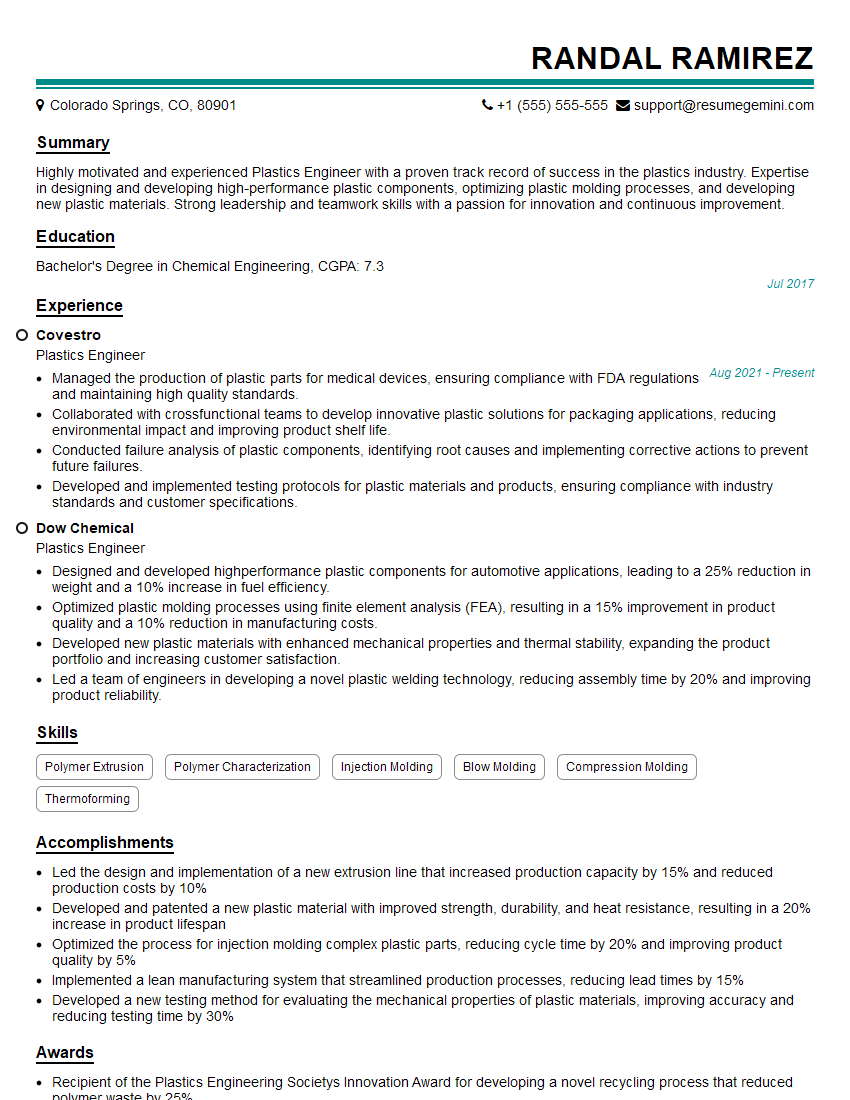
Mastering the fundamentals of plastics engineering opens doors to a wide range of exciting and impactful career opportunities. To maximize your job prospects, focus on crafting an ATS-friendly resume that effectively highlights your skills and experience. ResumeGemini is a trusted resource to help you build a professional and impactful resume. We provide examples of resumes tailored to the Plastics industry to guide you in creating a compelling application. Invest time in perfecting your resume – it’s your first impression on potential employers.
Explore more articles
Users Rating of Our Blogs
Share Your Experience
We value your feedback! Please rate our content and share your thoughts (optional).
What Readers Say About Our Blog
I Redesigned Spongebob Squarepants and his main characters of my artwork.
https://www.deviantart.com/reimaginesponge/art/Redesigned-Spongebob-characters-1223583608
IT gave me an insight and words to use and be able to think of examples
Hi, I’m Jay, we have a few potential clients that are interested in your services, thought you might be a good fit. I’d love to talk about the details, when do you have time to talk?
Best,
Jay
Founder | CEO