The right preparation can turn an interview into an opportunity to showcase your expertise. This guide to Investigation and Detention Techniques interview questions is your ultimate resource, providing key insights and tips to help you ace your responses and stand out as a top candidate.
Questions Asked in Investigation and Detention Techniques Interview
Q 1. Describe your experience in conducting thorough background investigations.
Conducting thorough background investigations involves a systematic process of gathering and verifying information about an individual. It’s like piecing together a puzzle, where each piece of information contributes to a complete picture. This process often includes:
- Reviewing public records: This includes court records, property records, and driving records to uncover any legal history or financial issues.
- Interviewing sources: We speak to individuals who know the subject, such as family, friends, former employers, and neighbours. These interviews are crucial for gaining insights into the subject’s character and behaviour. It’s important to ask open-ended questions and verify the information received from multiple sources.
- Online searches: We use various online resources, including social media platforms and professional networking sites, to uncover information about the subject’s online presence and activities. This needs to be done carefully and legally, respecting privacy laws.
- Verification of information: One of the most crucial steps is verifying the information gathered. We cross-reference information from different sources to ensure accuracy and consistency.
For instance, in one case, initial reports suggested a candidate was a model citizen. However, a thorough background check revealed several instances of minor fraud and unpaid debts, information that wasn’t readily apparent initially. This highlights the importance of thorough investigation.
Q 2. Explain the legal requirements for lawful detention.
Lawful detention requires a legal basis, typically involving probable cause, reasonable suspicion, or a warrant. Think of it as a carefully balanced scale: the authority to detain must be weighed against an individual’s right to liberty.
- Probable cause: This exists when there are reasonable grounds to believe a crime has been committed, and the individual in question is involved. This is a higher standard than reasonable suspicion.
- Reasonable suspicion: A lower standard than probable cause, reasonable suspicion allows for a brief detention to investigate suspicious circumstances. Think of a police officer stopping someone who matches the description of a suspect.
- Warrant: Issued by a judge or magistrate, a warrant authorizes the detention of an individual based on a detailed explanation of probable cause. Warrantless arrests are allowed under specific circumstances, such as witnessing a crime.
- Miranda rights (in applicable jurisdictions): Individuals being detained must be informed of their rights, including the right to remain silent and the right to an attorney. This ensures fairness and transparency.
Failing to meet these legal requirements can lead to unlawful detention, potentially resulting in legal repercussions and the exclusion of evidence obtained during the detention.
Q 3. Outline the steps involved in processing a detainee.
Processing a detainee is a meticulous process aimed at ensuring safety, documenting the process, and preserving evidence. Think of it as a carefully choreographed dance, where each step is crucial.
- Initial assessment: This involves checking the detainee’s physical and mental state, noting any injuries or health concerns. This is the first step in ensuring their well-being.
- Search and booking: The detainee is searched for weapons and contraband, and their personal belongings are inventoried and secured. This is for safety and to prevent the loss of evidence.
- Photography and fingerprinting: These procedures are essential for identification and creating a permanent record. This is a key part of the official documentation.
- Information gathering: Basic personal information, such as name, address, and date of birth, is collected. This information helps to build a complete picture.
- Placement in a detention cell: The detainee is placed in a secure cell, appropriate for their condition and any specific needs.
A crucial element is maintaining accurate records throughout the entire process. This documentation forms the foundation for any future legal proceedings.
Q 4. How do you maintain the chain of custody for evidence?
Maintaining the chain of custody for evidence is paramount to ensure its admissibility in court. It’s like a carefully documented relay race, where each person handling the evidence must account for their possession. This involves:
- Detailed documentation: Each person who handles the evidence must sign and date a chain-of-custody form, recording the time and date of possession and any changes in the evidence’s condition.
- Secure storage: Evidence must be stored in a secure location to prevent tampering or contamination. This might involve locked rooms, evidence bags, or specialized storage facilities.
- Proper handling: Evidence must be handled carefully to avoid damage or contamination. This includes using appropriate gloves and avoiding unnecessary contact.
- Regular checks: Periodic checks should be conducted to ensure the integrity of the evidence and identify any potential issues.
Breaking the chain of custody can compromise the admissibility of the evidence in court, so meticulous record-keeping is absolutely essential.
Q 5. What methods do you employ to gather and analyze intelligence?
Gathering and analyzing intelligence involves a multi-faceted approach, leveraging various techniques and sources. It’s like putting together a complex puzzle using various tools and techniques.
- Open-source intelligence (OSINT): This involves gathering information from publicly available sources, such as news articles, social media, and government websites. Think of it as doing extensive research online.
- Human intelligence (HUMINT): This involves gathering information from human sources, such as informants, witnesses, and suspects. This often requires building trust and rapport.
- Signal intelligence (SIGINT): This involves intercepting and analyzing electronic communications, such as phone calls, emails, and internet traffic. This requires specialized equipment and training.
- Data analysis: Once the information is gathered, it needs to be analyzed to identify patterns, connections, and insights. This might involve sophisticated analytical techniques and software.
For example, in a drug trafficking investigation, OSINT might reveal the suspect’s travel patterns, while HUMINT might provide insight into their network and operations. Combining these sources provides a much clearer and more complete picture.
Q 6. Explain your understanding of different interrogation techniques.
Interrogation techniques are methods used to obtain information from suspects or witnesses. It’s a delicate balance between obtaining information and respecting individual rights. Different techniques exist, each with its own strengths and limitations.
- Reid Technique: A highly structured approach focusing on accusatorial questioning and psychological manipulation. It’s controversial and needs to be used carefully to avoid false confessions.
- PEACE Model: A more modern and less confrontational approach that emphasizes rapport building, empathy, and open-ended questions. This prioritizes building trust and facilitating a collaborative environment.
- Cognitive Interviewing: A technique that focuses on reconstructing the events from the perspective of the witness or suspect, encouraging them to recall details using various memory techniques. This aids in recalling accurate details.
The choice of technique depends on various factors, including the nature of the crime, the suspect’s personality, and the legal framework. Ethical considerations are paramount, and the use of coercion or torture is strictly prohibited.
Q 7. How do you ensure the safety and security of detainees?
Ensuring the safety and security of detainees is a crucial aspect of the detention process. It’s about creating a secure environment while upholding human rights. This requires a multi-pronged approach:
- Regular checks: Detainees should be checked regularly to ensure their well-being and to detect any potential issues, such as self-harm or medical emergencies.
- Secure facilities: Detention facilities should be designed and maintained to prevent escapes and to ensure the safety of both detainees and staff. This involves reinforced doors, security cameras, and robust security protocols.
- Segregation: Detainees should be segregated based on their risk level and any potential conflicts. This helps to minimize the risk of violence or harm.
- Monitoring: Continuous monitoring of the detention facility through surveillance cameras and regular patrols helps to identify and address potential threats promptly.
- Access control: Strict access control measures should be in place to limit who can enter and exit the detention facility and to monitor movement within.
The safety and well-being of detainees are paramount. A well-managed facility prioritizes both security and respect for individual rights.
Q 8. Describe your experience with surveillance techniques.
Surveillance techniques are crucial in investigations, encompassing various methods to gather information discreetly. My experience includes utilizing both overt and covert surveillance methods. Overt methods, like stationary observation posts, are clearly visible and rely on the element of surprise. Covert techniques, however, demand more skill and planning, involving things like discreet video and audio recording, or utilizing specialized equipment for long-range observation.
For example, in one case, we used a combination of techniques. We began with overt surveillance, observing a suspected drug trafficking location for several days to establish patterns and identify key individuals. This provided us with a baseline understanding of their operations, which we then used to inform the planning of our covert surveillance deployment. The covert phase involved the use of hidden cameras and audio recorders to gather evidence without alerting the suspects.
Another key aspect of my surveillance experience involves technical surveillance countermeasures (TSCM), where I learned to detect and mitigate any attempts by suspects to discover surveillance equipment. This involves understanding how bugs and tracking devices work and knowing how to find and neutralize them. Ultimately, successful surveillance relies heavily on careful planning, risk assessment, and adapting techniques based on the specific circumstances.
Q 9. How do you handle conflict resolution within a detention environment?
Conflict resolution in detention settings requires a calm and professional approach, prioritizing de-escalation and safety. My strategy involves a three-step process. First, I actively listen to understand the root cause of the conflict; this might involve separating individuals to allow them to calm down. Second, I attempt to mediate the situation fairly, addressing each individual’s concerns and identifying common ground, ensuring a sense of fairness. If mediation fails, and the situation escalates, I implement established procedures to restore order; this may involve contacting support personnel or using appropriate physical intervention techniques. Proper documentation at each step is crucial.
For example, I once resolved a conflict between two detainees arguing over a shared phone. By calmly separating them and listening to their individual grievances, I discovered a misunderstanding over phone call times. I then mediated, creating a fair schedule for both. This demonstrated to them the value of clear communication and respect for established rules. Maintaining a calm and impartial demeanour is key, even under pressure, to avoid escalating conflict further.
Q 10. What are the ethical considerations involved in investigative work?
Ethical considerations are paramount in investigative work. We must always operate within the bounds of the law and maintain the highest standards of integrity. Key ethical dilemmas include balancing the need to gather evidence against the rights of individuals. This involves adhering strictly to legal procedures, like obtaining proper warrants and respecting due process. We should also avoid biased practices and ensure fair treatment of all individuals, regardless of their perceived guilt or innocence. The confidentiality of gathered information is paramount, and its misuse is a significant breach of ethics.
For instance, using deceptive tactics, even if legally permissible, requires careful consideration of the ethical implications. We must ensure that these tactics are proportionate to the crime, do not involve undue coercion, and do not unduly harm the reputation or life of innocent parties. A thorough ethical review of each decision is crucial to maintaining professionalism and the integrity of the investigative process.
Q 11. Explain your proficiency in using investigative databases and software.
I am proficient in using various investigative databases and software, including case management systems (CMS), crime mapping software, and specialized law enforcement databases like NCIC (National Crime Information Center). My experience includes using these tools to track suspects, analyze crime patterns, and build cases. I am adept at using search functions and Boolean logic (AND, OR, NOT) to refine searches for relevant information. I can also extract data and create reports for analysis and presentations.
For instance, in a recent investigation, I utilized crime mapping software to identify hotspots for a series of burglaries. By analyzing the spatial distribution of the crimes, I was able to pinpoint a potential area of focus for increased surveillance and ultimately lead to the apprehension of the suspects. My ability to efficiently navigate and interpret data from these databases is essential to effective investigations.
Q 12. How do you handle sensitive information and maintain confidentiality?
Handling sensitive information and maintaining confidentiality is a critical aspect of my work. I adhere strictly to data protection policies and security protocols. This includes using secure systems for storing and accessing sensitive data, employing encryption when necessary, and restricting access to authorized personnel only. I also understand the implications of data breaches and the importance of immediately reporting any suspected compromises. Furthermore, I am mindful of the need to protect the privacy of individuals, even those suspected of wrongdoing, unless legally mandated to disclose such information.
For example, all case files are kept securely on encrypted servers, and access is strictly controlled using role-based permissions. The physical security of documents is also maintained, ensuring only authorized personnel can access physical copies. This is crucial to maintain public trust and uphold the integrity of the investigation.
Q 13. Describe your experience with report writing and documentation.
Effective report writing and documentation are essential for accurate and transparent record-keeping. My experience includes writing comprehensive reports detailing investigative findings, including detailed narratives, evidence logs, and timelines. I use clear and concise language, avoiding ambiguity and jargon, while ensuring factual accuracy and completeness. I am proficient in using report writing software and understand the importance of using consistent formatting and adhering to established protocols.
In every report, I structure my findings logically, following a clear narrative sequence, ensuring each point is supported by evidence. A well-structured report is crucial for effective communication to other investigators, prosecutors, and ultimately, the court. Proper documentation is essential not only for the prosecution process but also for audit trails and legal compliance.
Q 14. How do you assess the credibility of witnesses and informants?
Assessing the credibility of witnesses and informants requires a careful and systematic approach. I use a multi-faceted approach, considering factors like the witness’s prior record, consistency of their statements, the presence of corroborating evidence, and their demeanor during interviews. Consistency checks include comparing their statements to other evidence or witness accounts. Additionally, I assess their potential biases or motivations, considering whether they might have personal reasons to lie or exaggerate.
For example, if a witness provides seemingly contradictory statements, I would review other evidence and seek to clarify any discrepancies through further questioning. If an informant has a prior criminal record, I carefully weigh their information against other supporting evidence before considering it credible. Ultimately, the credibility assessment is a judgment call that requires experience, keen observation, and a skeptical yet open mind.
Q 15. What is your approach to identifying and mitigating risks?
Identifying and mitigating risks is a cornerstone of effective investigation and detention. My approach is proactive and multi-layered, encompassing risk assessment, preventative measures, and contingency planning. I begin by conducting a thorough environmental scan, identifying potential threats to safety and security, including those posed by the detainee(s), the environment itself, and even external factors. This might involve assessing the detainee’s history, known associates, and potential motivations.
For instance, a known gang member might pose a higher risk of violence or escape than a first-time offender. Once risks are identified, I develop a tailored mitigation strategy. This might involve specific security protocols, such as increased surveillance, cell placement considerations, and the restriction of certain items. Regular monitoring and reassessment are crucial. If unforeseen circumstances arise, I’m prepared to adapt my strategy, calling upon emergency procedures or requesting additional support as needed. It’s like building a house: You start with a solid foundation (risk assessment), construct walls (preventative measures), and finally, add the roof (contingency planning), to protect it from unforeseen storms.
Career Expert Tips:
- Ace those interviews! Prepare effectively by reviewing the Top 50 Most Common Interview Questions on ResumeGemini.
- Navigate your job search with confidence! Explore a wide range of Career Tips on ResumeGemini. Learn about common challenges and recommendations to overcome them.
- Craft the perfect resume! Master the Art of Resume Writing with ResumeGemini’s guide. Showcase your unique qualifications and achievements effectively.
- Don’t miss out on holiday savings! Build your dream resume with ResumeGemini’s ATS optimized templates.
Q 16. How do you manage stress in high-pressure situations?
High-pressure situations are inherent to this profession. My stress management strategy is multifaceted. Firstly, I prioritize physical and mental wellbeing. This includes maintaining a healthy lifestyle outside of work, getting enough sleep, and regularly exercising. Secondly, I rely on strong time management skills and organizational strategies to avoid feeling overwhelmed. I break down complex tasks into manageable steps, prioritizing those that have the greatest impact. Thirdly, I utilize mindfulness techniques, such as deep breathing exercises, to manage stress in real-time. Finally, I’ve cultivated a strong support network of colleagues and mentors who I can confide in and seek guidance from when facing difficult situations. Think of it like a pressure cooker: Consistent and proactive management of stress is necessary to avoid a critical breakdown.
Q 17. Describe your experience with forensic evidence collection and analysis.
My experience with forensic evidence collection and analysis is extensive. I’m proficient in adhering to strict chain-of-custody protocols to ensure the integrity of evidence. This involves meticulously documenting every step of the process, from initial discovery to final analysis. I’ve worked with various types of evidence, including biological samples (DNA, blood), trace evidence (fibers, hair), digital evidence (computers, phones), and physical evidence (weapons, documents). I understand the importance of proper packaging, labeling, and storage to prevent contamination or degradation. For instance, in one case, a seemingly insignificant hair found at a crime scene led to a crucial identification through DNA analysis, directly impacting the investigation’s outcome. This highlights the importance of thorough and meticulous collection and analysis.
Q 18. Explain your understanding of different types of searches.
Different types of searches are conducted based on the specific circumstances. A plain view search involves observing evidence in plain sight without needing a warrant. A consent search requires voluntary consent from the individual being searched. A search incident to arrest allows officers to search a person and the immediate area within their control after a lawful arrest. Warrant searches require probable cause and a judge’s approval. Finally, stop-and-frisk searches require reasonable suspicion of criminal activity. Each type of search has specific legal requirements and limitations that must be followed meticulously. Failure to comply with these legal protocols can compromise an entire investigation and invalidate collected evidence. Understanding the nuances between these search types is critical for upholding the law and ensuring justice is served.
Q 19. How do you handle resistance or non-compliance from detainees?
Handling resistance or non-compliance from detainees requires a calm, assertive approach, prioritizing safety and de-escalation techniques. My strategy emphasizes clear and concise communication, establishing rapport wherever possible while firmly asserting authority. I begin by explaining the reason for detention and the procedures that will be followed. If resistance continues, I employ appropriate control measures, always using the minimum force necessary and documenting everything thoroughly. This may include verbal commands, physical restraints, and, if necessary, the involvement of specialized units. In all cases, maintaining professionalism and respect, even in the face of aggression, is essential. The goal is to safely resolve the situation, while protecting the rights of the detainee. It’s about finding the balance between firmness and empathy.
Q 20. Describe your experience in interviewing suspects and witnesses.
Interviewing suspects and witnesses is a skill honed through experience and training. I approach each interview with a structured plan, preparing questions beforehand, but remaining flexible enough to adapt to the flow of conversation. With suspects, I employ a neutral yet assertive tone, aiming to establish a professional rapport without appearing overly friendly. I focus on obtaining factual information, observing their demeanor and body language for inconsistencies or deception. With witnesses, I aim to create a safe and comfortable space to encourage open and honest accounts. I use open-ended questions to elicit detailed information, avoiding leading or suggestive questions. Careful note-taking and audio/video recording (where permitted) are crucial for accurate record-keeping. In both instances, active listening, empathy, and objectivity are key to obtaining reliable and comprehensive information.
Q 21. How do you maintain professionalism and impartiality in investigations?
Maintaining professionalism and impartiality is paramount in investigations. It necessitates adhering to a strict ethical code, acting objectively and avoiding bias based on personal beliefs, prejudices, or external pressures. I constantly remind myself that the goal is to uncover the truth, regardless of personal feelings about the individuals involved. Documenting all actions and decisions meticulously serves as a check against bias and ensures accountability. Furthermore, I strive to remain objective in assessing evidence and interpreting information, seeking corroboration and considering alternative perspectives. Regular self-reflection and peer review also help maintain objectivity and identify any potential biases that might inadvertently creep into the investigative process. Upholding impartiality requires constant vigilance and commitment to fairness.
Q 22. What is your experience with using technology in investigations?
Technology has revolutionized investigations. My experience encompasses a wide range of tools, from basic data analysis software to sophisticated forensic techniques. For instance, I’ve used cell phone forensics to extract crucial data like call logs, messages, and location data, directly impacting case outcomes. In one case, recovering deleted photos from a suspect’s phone provided irrefutable evidence. I’m also proficient in using Geographic Information Systems (GIS) to map crime scenes, analyze patterns, and identify potential suspects. Furthermore, I have experience with open-source intelligence (OSINT) gathering, utilizing online databases and social media platforms to build profiles and gather background information on individuals. Finally, I understand and utilize various surveillance technologies ethically and within legal parameters, always adhering to strict privacy regulations.
Q 23. Explain your understanding of due process and legal rights.
Due process and legal rights are fundamental principles ensuring fairness and justice within the legal system. It guarantees that individuals are treated fairly and have the opportunity to defend themselves against accusations. This includes the right to legal representation, the right to remain silent, the right to a speedy and public trial, and protection against self-incrimination. Understanding these rights is crucial to conducting investigations ethically and legally. For example, before questioning a suspect, I always ensure they’re aware of their Miranda rights – the right to remain silent and the right to an attorney. Failure to adhere to these rights can lead to inadmissible evidence and jeopardize the entire investigation. I constantly update my knowledge of evolving legal precedents to ensure compliance and maintain the integrity of the investigative process.
Q 24. How do you prioritize tasks and manage workload in complex investigations?
Prioritizing tasks in complex investigations requires a structured approach. I typically employ a prioritization matrix, assigning tasks based on urgency and importance. High-urgency, high-importance tasks are tackled first. This might involve securing a crime scene or interviewing a key witness before their memory fades. I break down large investigations into smaller, manageable tasks, using project management tools to track progress and deadlines. For example, in a large-scale fraud investigation, I would first focus on identifying key players, securing financial records, and then moving to interview suspects. Regular team meetings and progress reports ensure everyone remains aligned and informed. Effective communication and collaboration are key to managing workload efficiently and avoiding burnout.
Q 25. Describe your experience with crisis management and emergency response procedures.
My experience in crisis management involves responding to high-pressure situations effectively and calmly. I’ve participated in numerous emergency response procedures, including hostage situations and large-scale disasters. Training in incident command systems and crisis communication techniques helps me coordinate resources and ensure safety. In one instance, a bomb threat required swift action. We evacuated the building, established a secure perimeter, and coordinated with bomb disposal experts. Clear communication with all stakeholders, including the public and emergency services, was paramount. Maintaining composure under pressure and making sound judgments are crucial aspects of crisis management, ensuring safety and minimizing damage.
Q 26. Explain your understanding of different types of detention facilities.
Detention facilities vary significantly based on the nature of the offense and the suspect’s status. There are jails for pre-trial detention, prisons for convicted felons, juvenile detention centers for minors, and specialized facilities for individuals with mental health issues. Jails typically house individuals awaiting trial or those serving short sentences. Prisons hold convicted individuals serving longer sentences, often categorized by security level. Juvenile detention focuses on rehabilitation and reform, while specialized facilities offer appropriate care for individuals with specific needs. Understanding these differences is crucial for ensuring detainees are housed appropriately and receive necessary care. This knowledge informs my decisions regarding appropriate detention locations and appropriate treatment protocols for specific individuals.
Q 27. How do you ensure the health and welfare of detainees?
Ensuring the health and welfare of detainees is paramount. This involves adhering to strict protocols for medical care, mental health support, and safety. Regular health checks, access to medical professionals, and appropriate dietary provisions are essential. Recognizing signs of mental distress and providing timely intervention are crucial aspects of detainee welfare. We ensure detainees have access to basic necessities like clean water, adequate sanitation, and appropriate clothing. Regular inspections of facilities and monitoring of conditions are critical to maintaining a safe and healthy environment. Furthermore, rigorous protocols are in place to prevent abuse or neglect, ensuring all detainees are treated humanely and with respect.
Q 28. Describe your experience with conducting internal investigations.
Conducting internal investigations requires a neutral and objective approach. These investigations often focus on allegations of misconduct or policy violations within an organization. My experience includes gathering evidence, interviewing witnesses, and analyzing data to determine the validity of claims. Maintaining confidentiality and impartiality is crucial throughout the process. In one case, I investigated allegations of financial irregularities within a department. This involved examining financial records, interviewing employees, and applying forensic accounting techniques. A thorough and unbiased investigation led to the identification of the responsible parties and the implementation of corrective measures to prevent future occurrences. Transparency and fairness are vital in restoring trust and integrity within an organization after such an investigation.
Key Topics to Learn for Investigation and Detention Techniques Interview
- Legal Frameworks and Rights: Understanding relevant laws, regulations, and constitutional rights pertaining to investigation and detention procedures. This includes knowing the limits of lawful authority and potential legal challenges.
- Interviewing and Interrogation Techniques: Mastering effective communication skills for eliciting information, building rapport, and conducting legally sound interviews. Practical application includes recognizing and handling deceptive behavior.
- Evidence Collection and Preservation: Understanding chain of custody protocols, proper documentation procedures, and the importance of preserving the integrity of evidence. This also includes familiarity with different types of evidence and their admissibility in court.
- Search and Seizure Procedures: Thorough knowledge of legal requirements for conducting searches and seizures, including warrant requirements, exceptions to the warrant rule, and the proper execution of search warrants.
- Detention Procedures and Protocols: Understanding the legal requirements for detention, including appropriate use of force, documentation, and ensuring the well-being of detainees. This includes familiarity with different detention facilities and their operational procedures.
- Report Writing and Documentation: Developing clear, concise, and accurate reports that effectively communicate investigative findings and detention procedures. This involves mastering proper grammar, organization, and evidentiary support.
- Ethical Considerations: Understanding and upholding ethical standards and professional conduct within the context of investigation and detention. This includes recognizing and addressing potential conflicts of interest and biases.
- Crisis Management and De-escalation: Developing skills to manage tense situations, de-escalate conflicts, and maintain control in potentially volatile environments. This might include conflict resolution techniques and understanding threat assessment.
Next Steps
Mastering Investigation and Detention Techniques is crucial for career advancement in law enforcement and related fields. A strong understanding of these techniques demonstrates professionalism, competence, and a commitment to upholding the law. To significantly increase your job prospects, create an ATS-friendly resume that highlights your skills and experience. We strongly recommend using ResumeGemini to build a professional and impactful resume. ResumeGemini offers a user-friendly platform and provides examples of resumes tailored specifically to Investigation and Detention Techniques, giving you a significant head start in your job search.
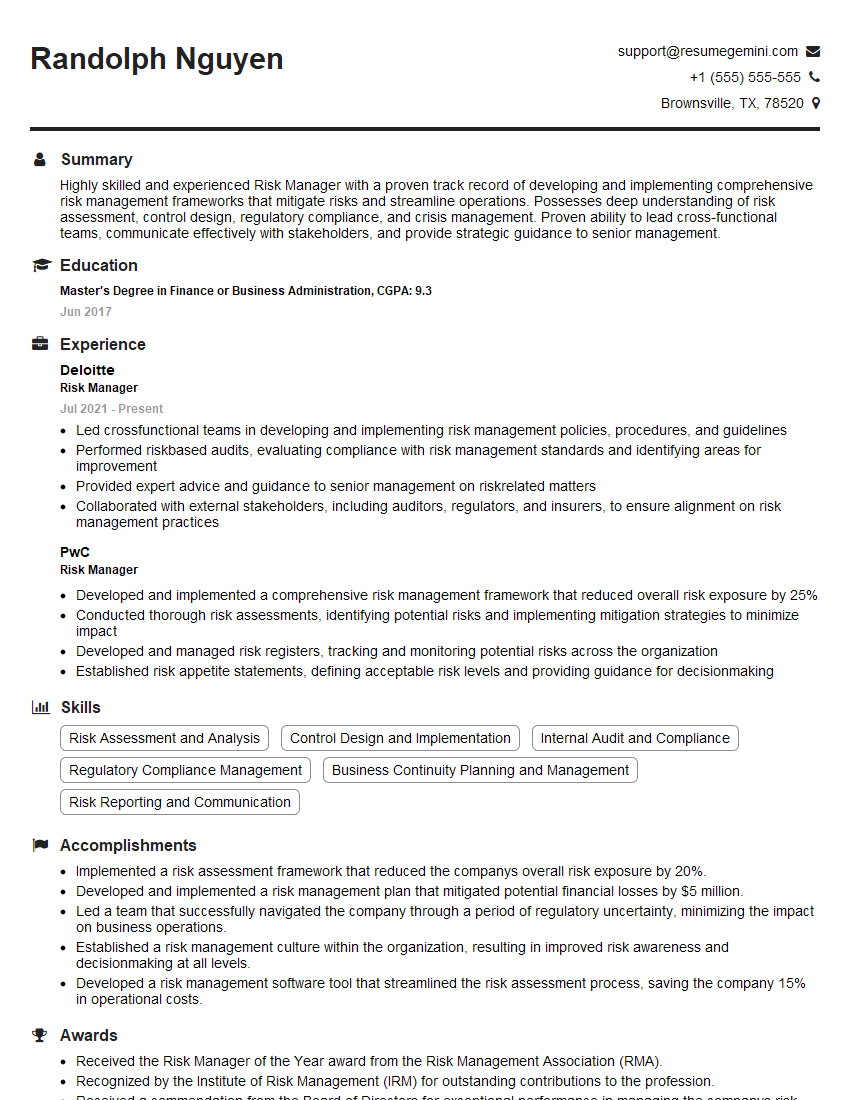
Risk Manager Resume Sample
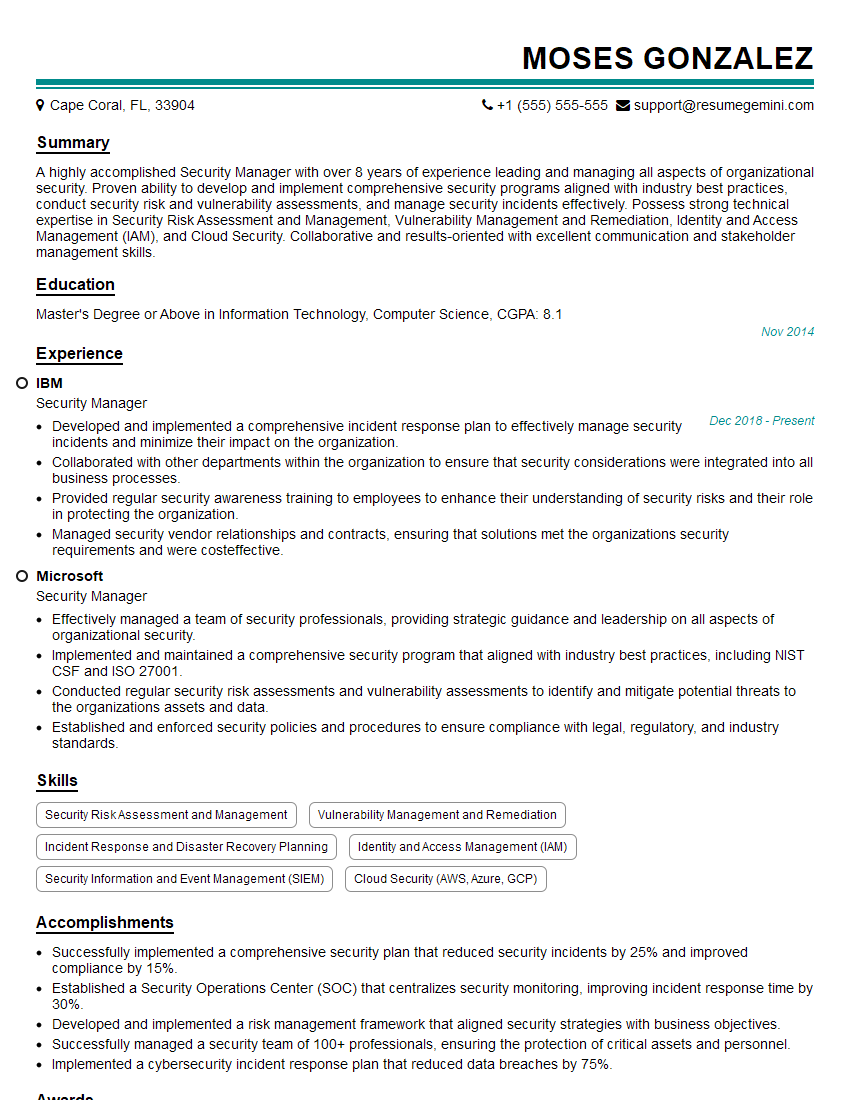
Security Manager Resume Sample
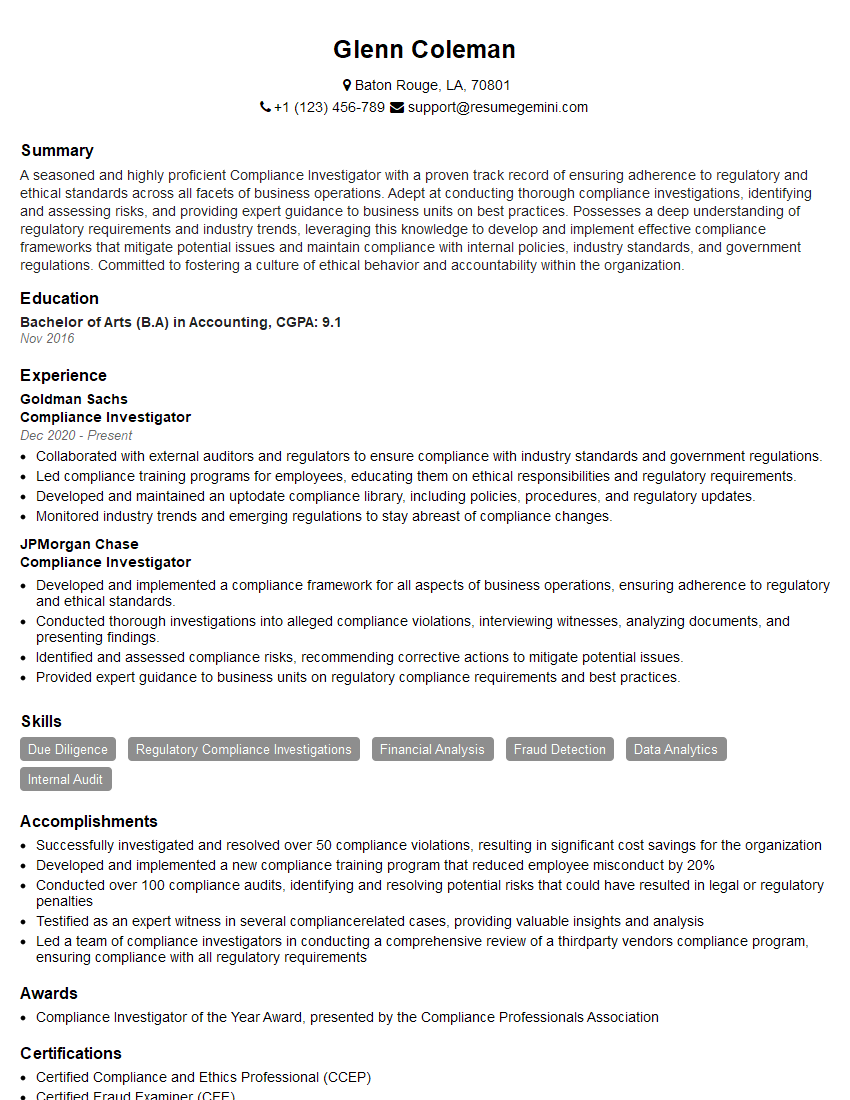
Compliance Investigator Resume Sample
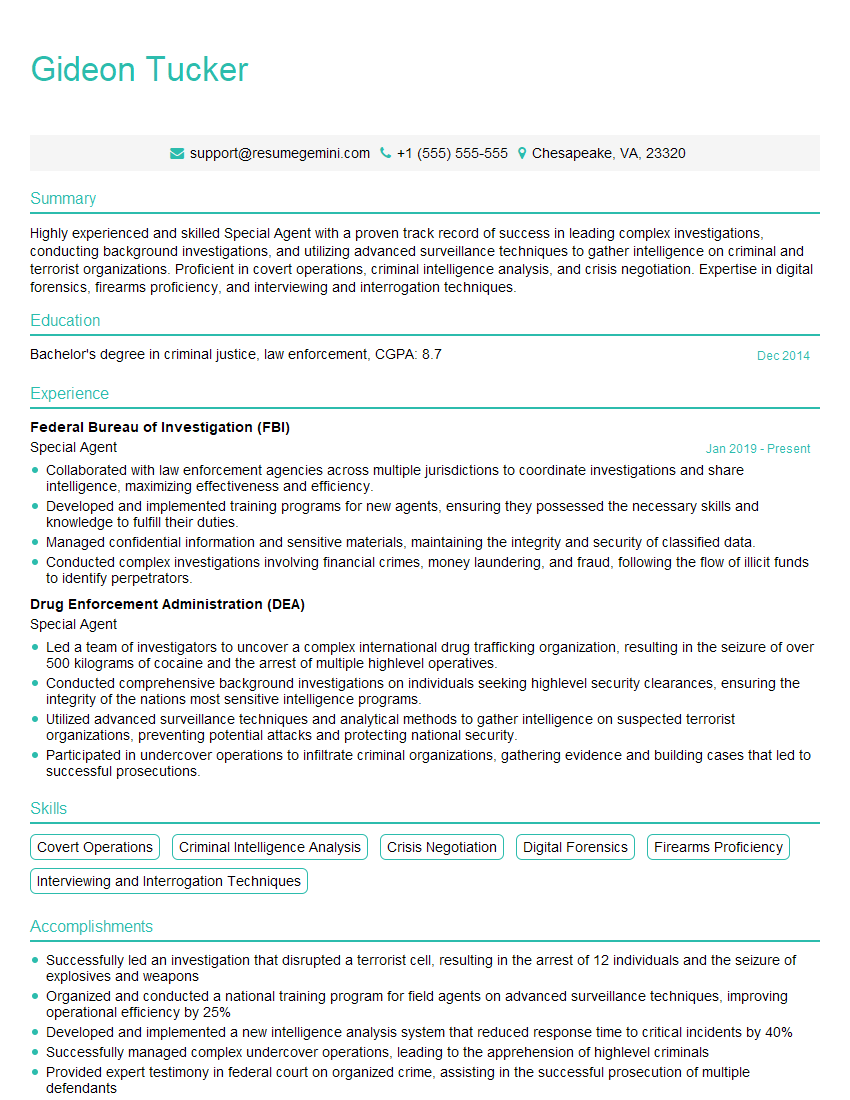
Special Agent Resume Sample
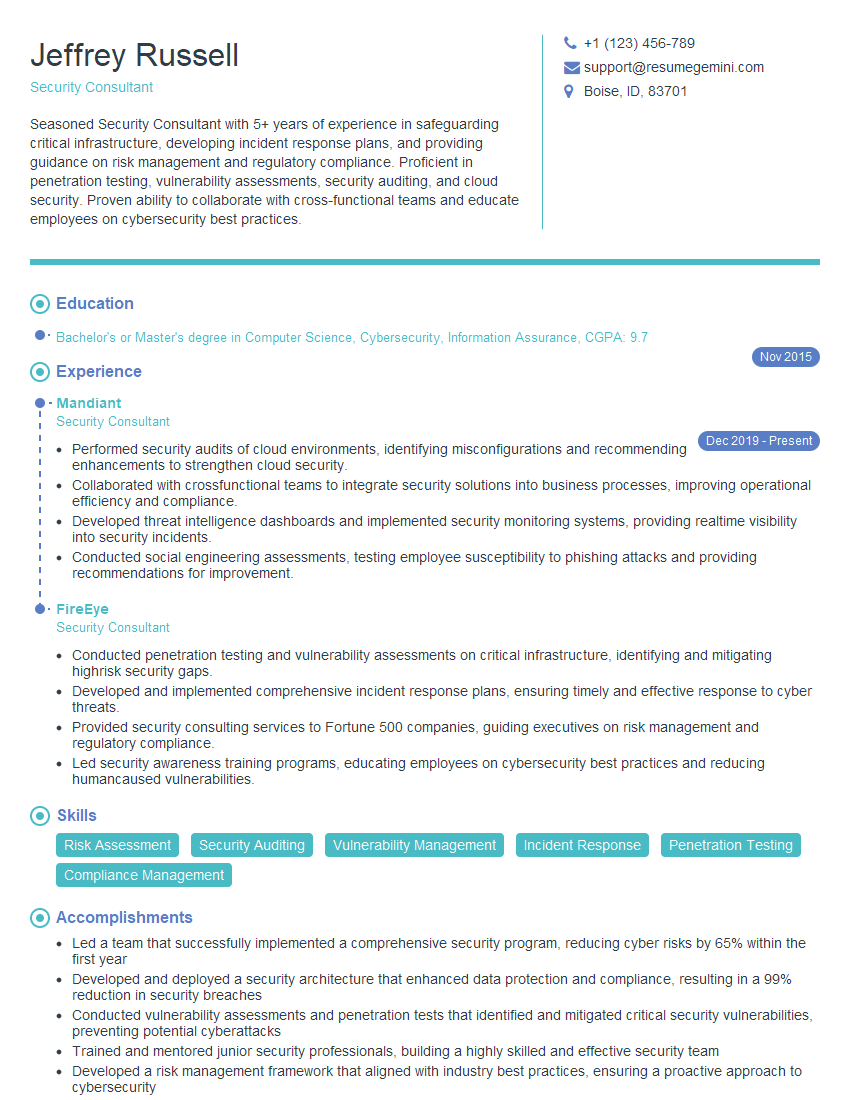
Security Consultant Resume Sample
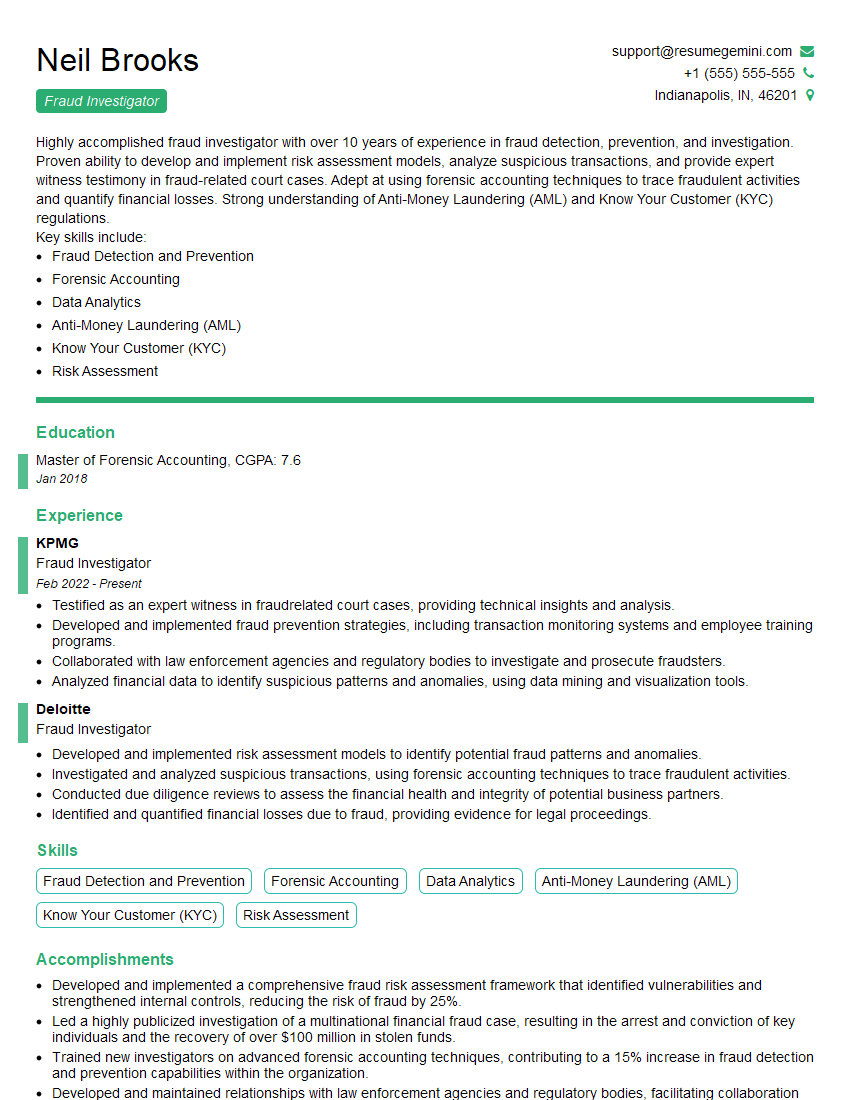
Fraud Investigator Resume Sample
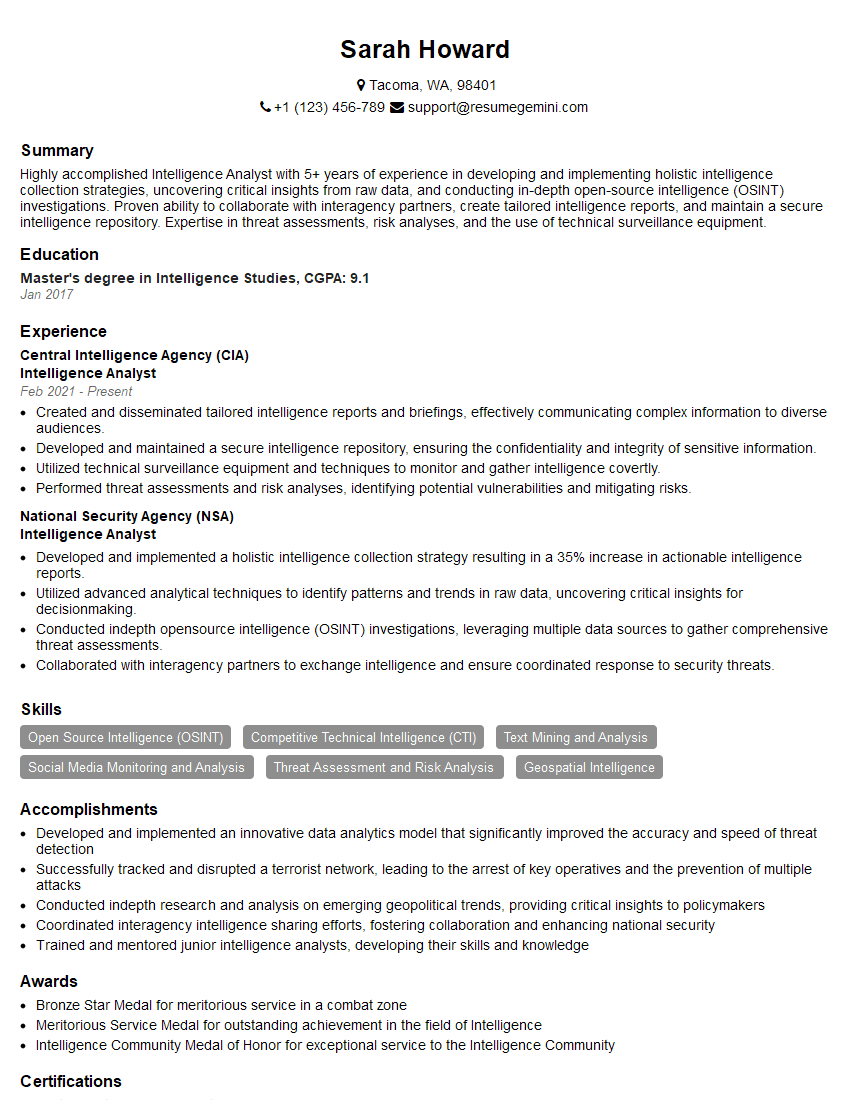
Intelligence Analyst Resume Sample
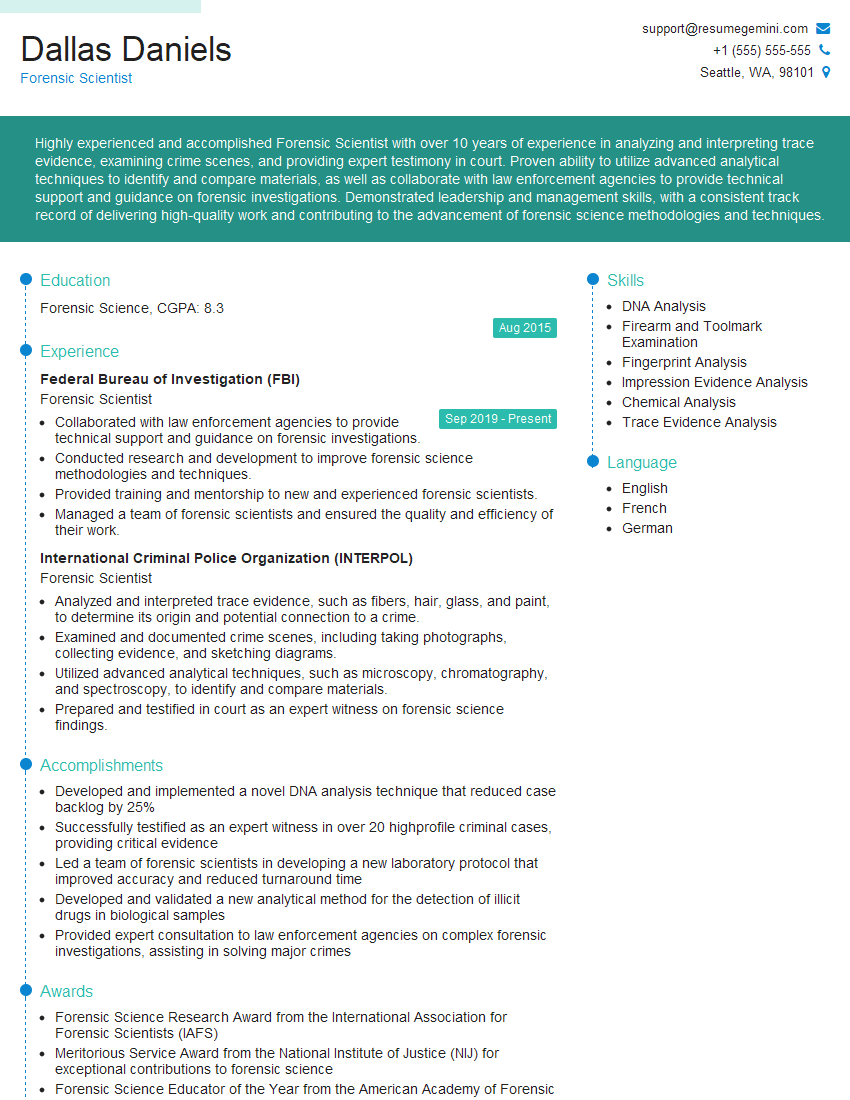
Forensic Scientist Resume Sample
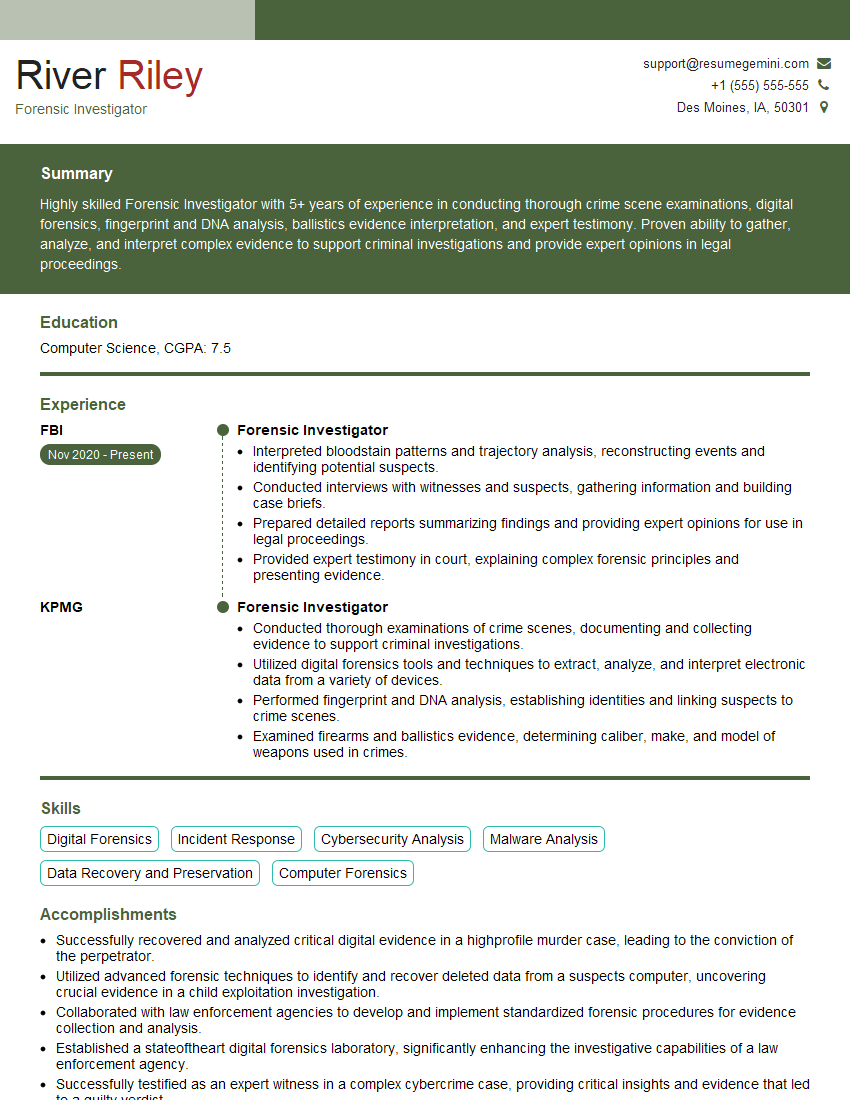
Forensic Investigator Resume Sample
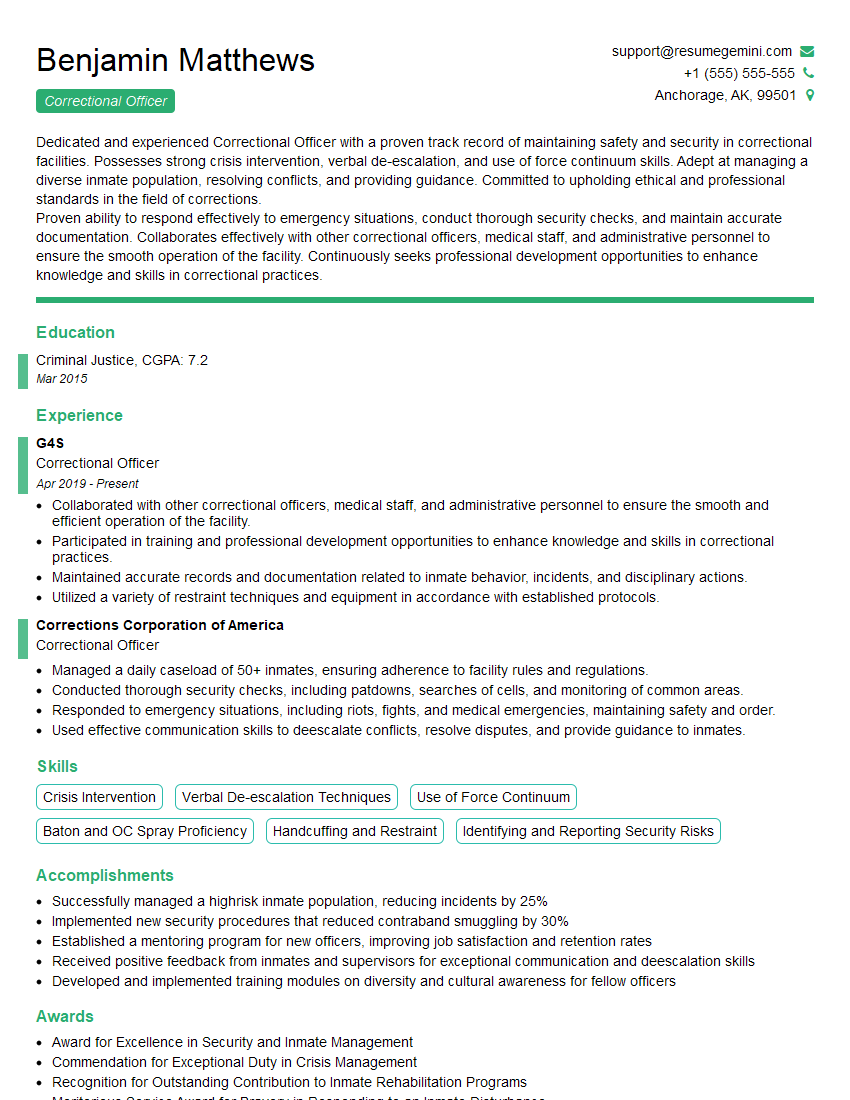
Correctional Officer Resume Sample
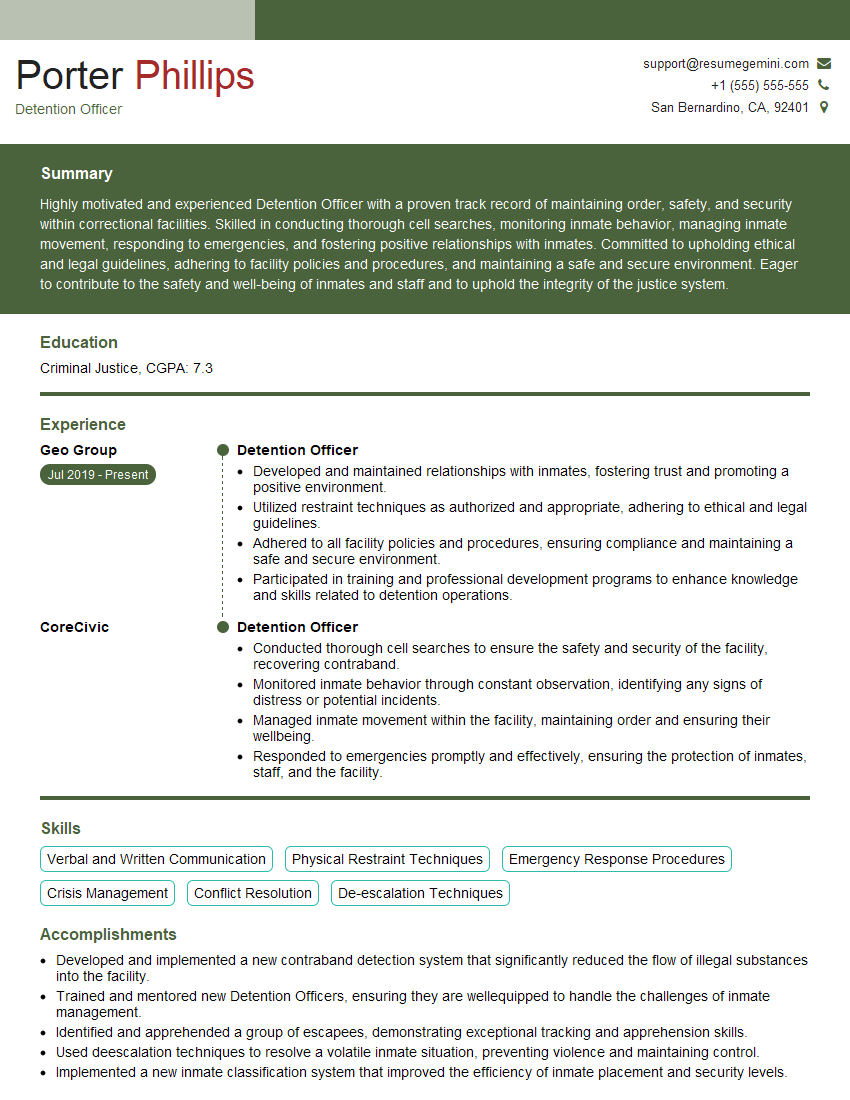
Detention Officer Resume Sample
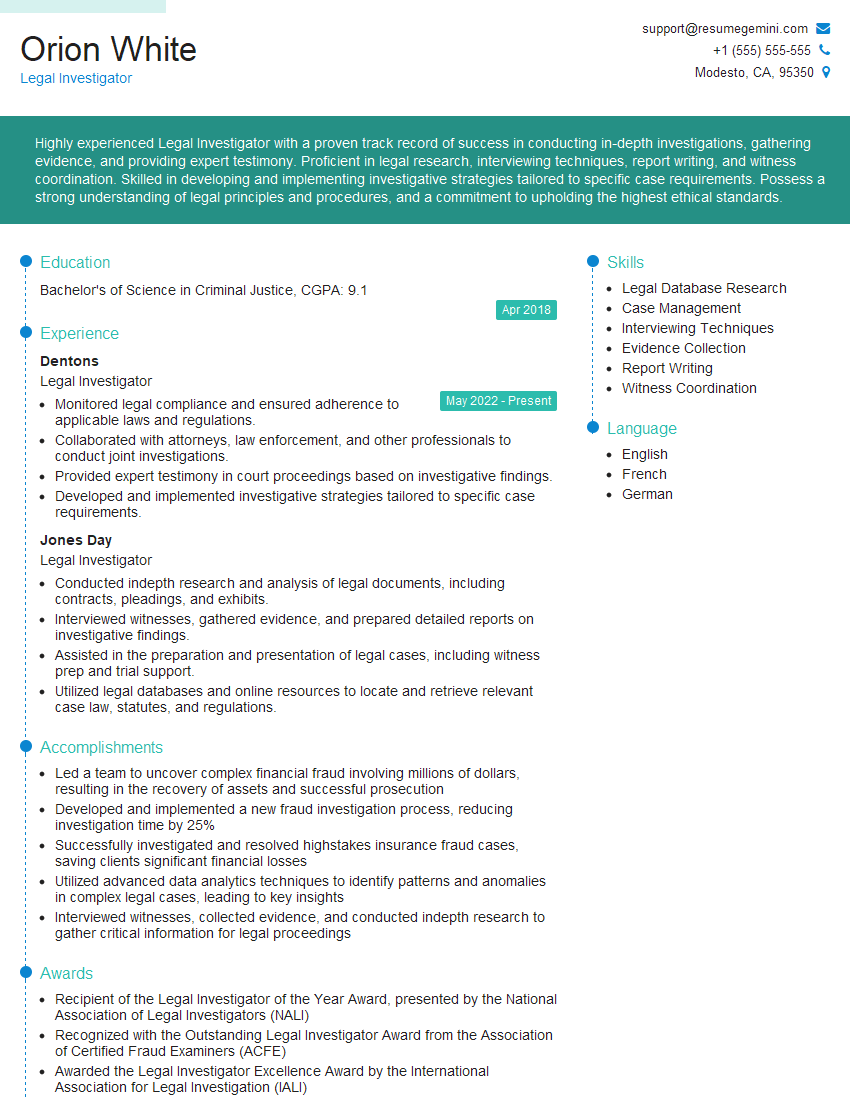
Legal Investigator Resume Sample
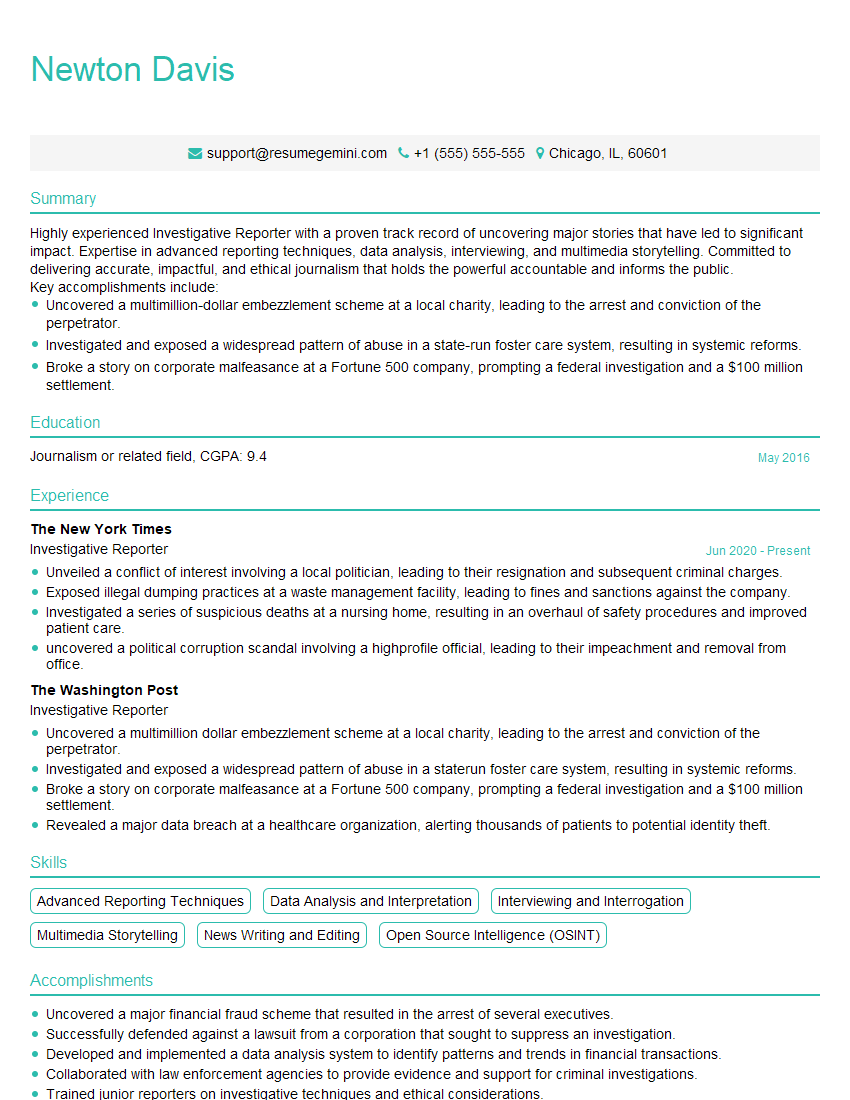
Investigative Reporter Resume Sample
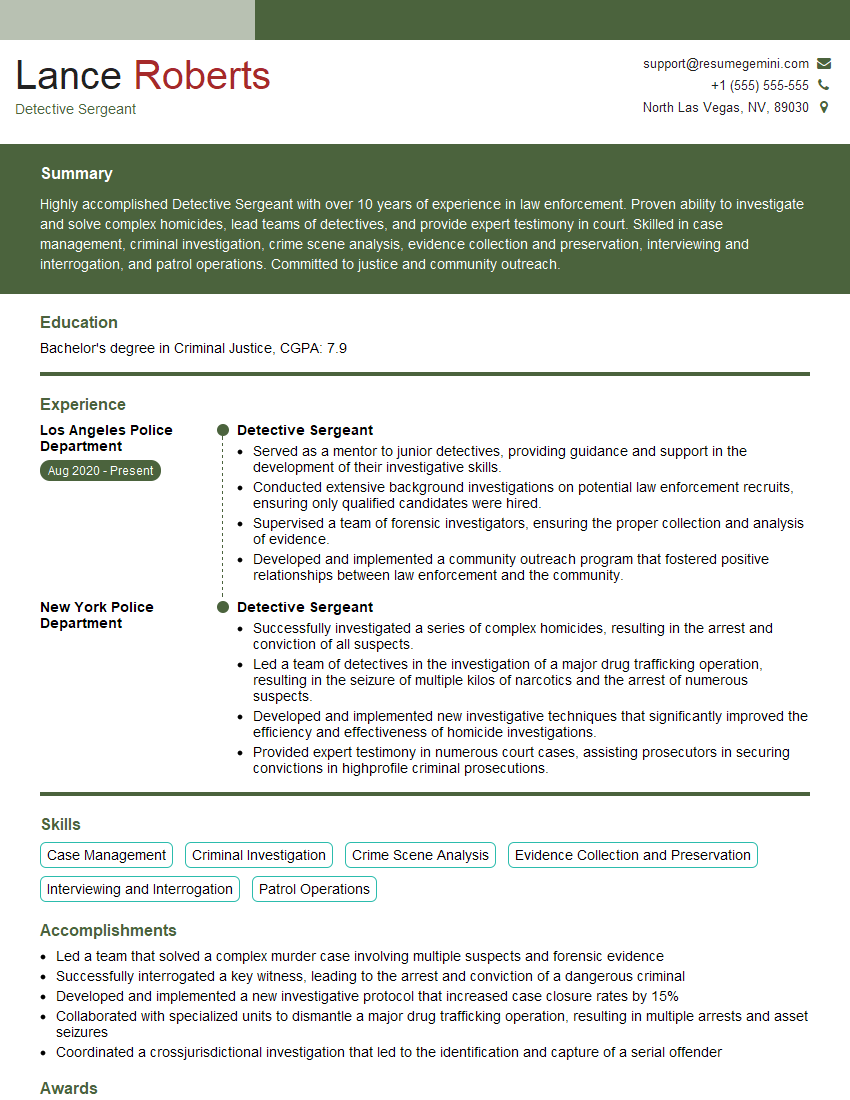
Detective Sergeant Resume Sample
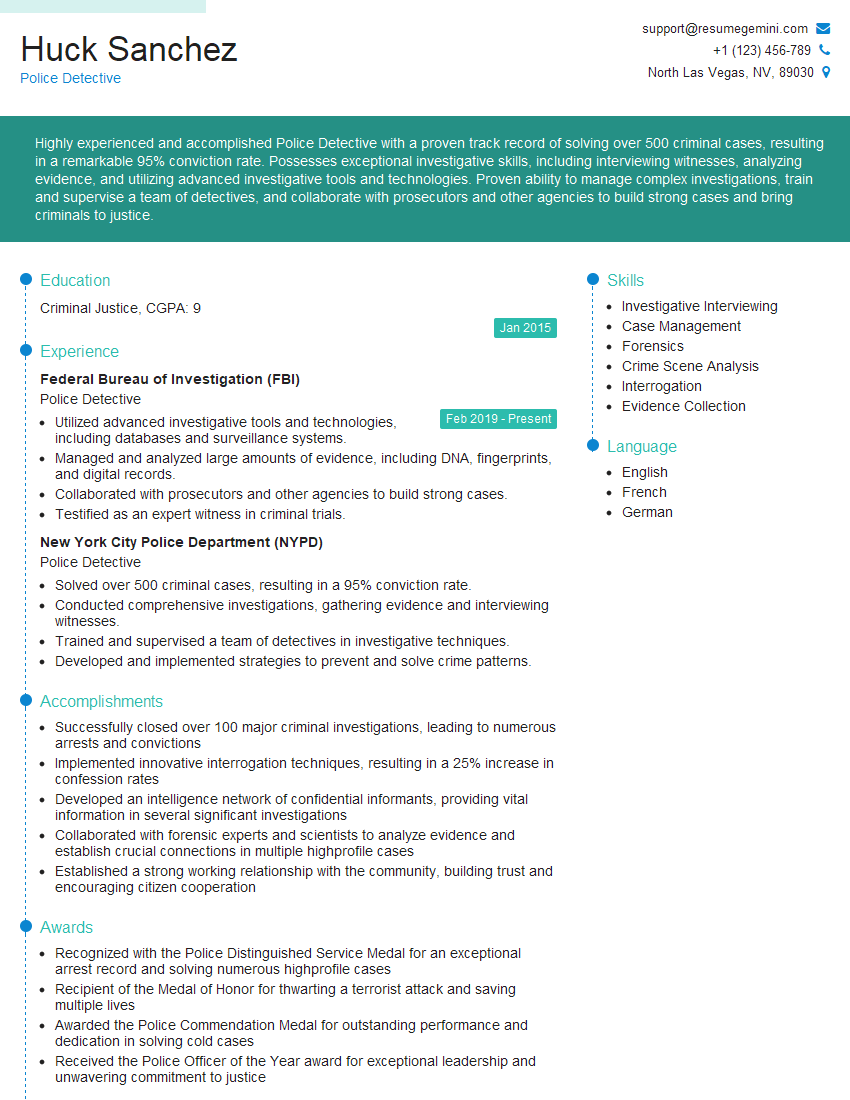
Police Detective Resume Sample
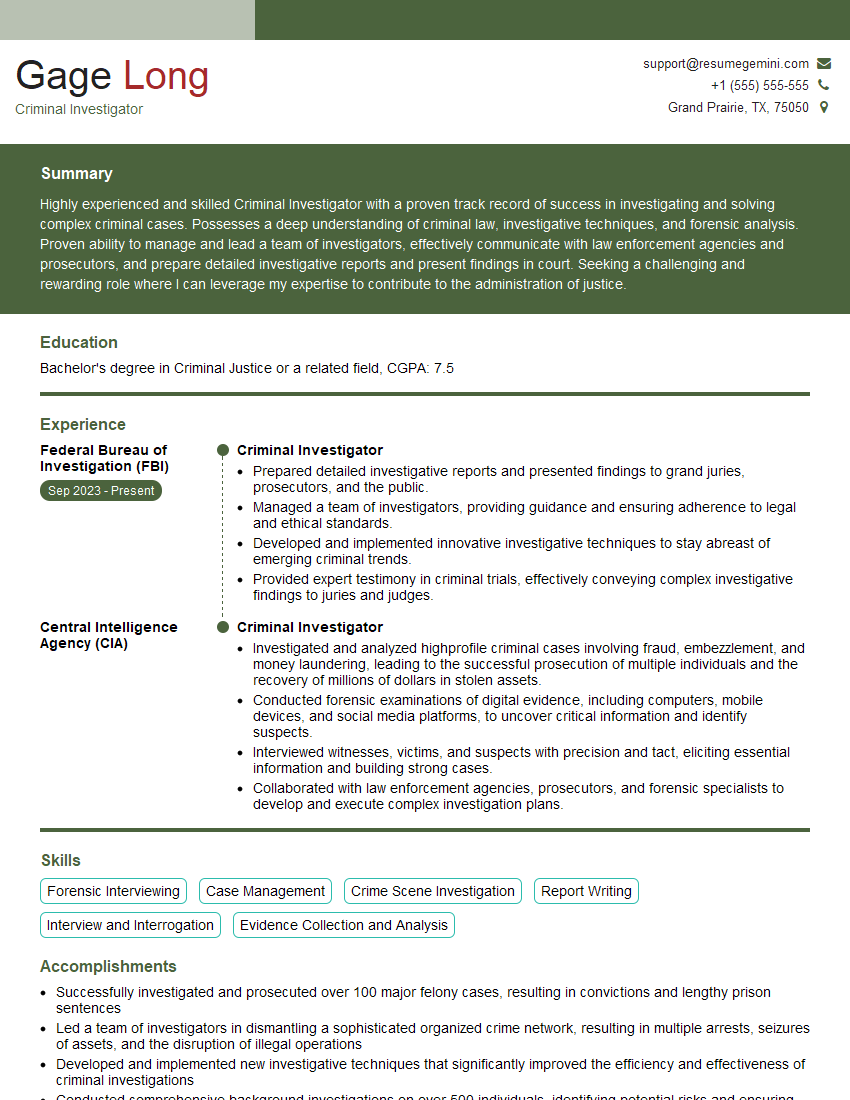
Criminal Investigator Resume Sample
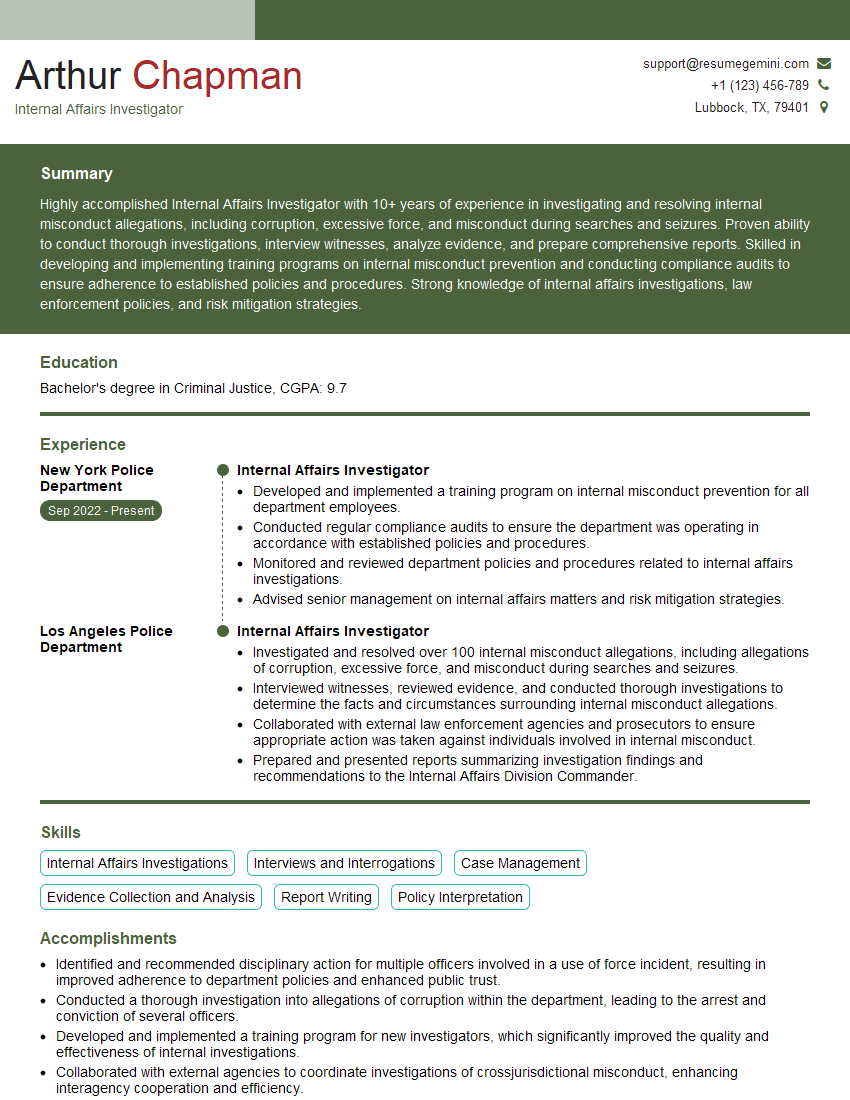
Internal Affairs Investigator Resume Sample
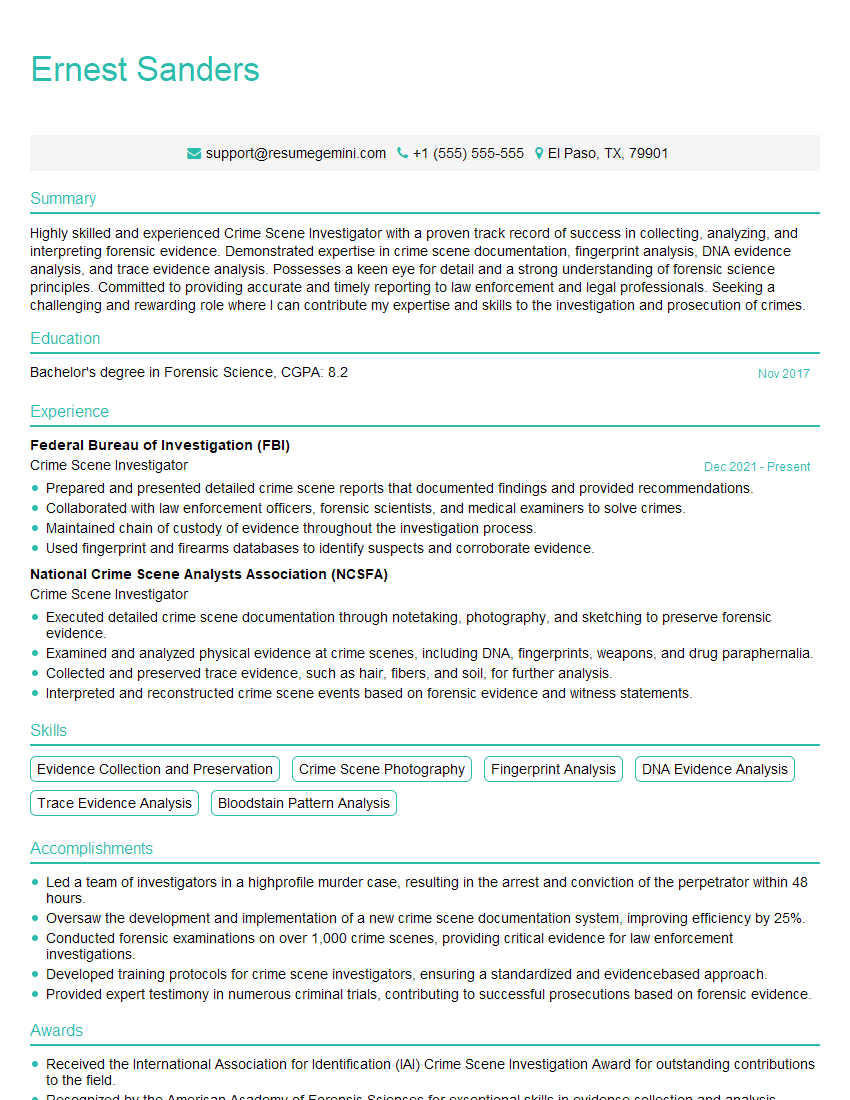
Crime Scene Investigator Resume Sample
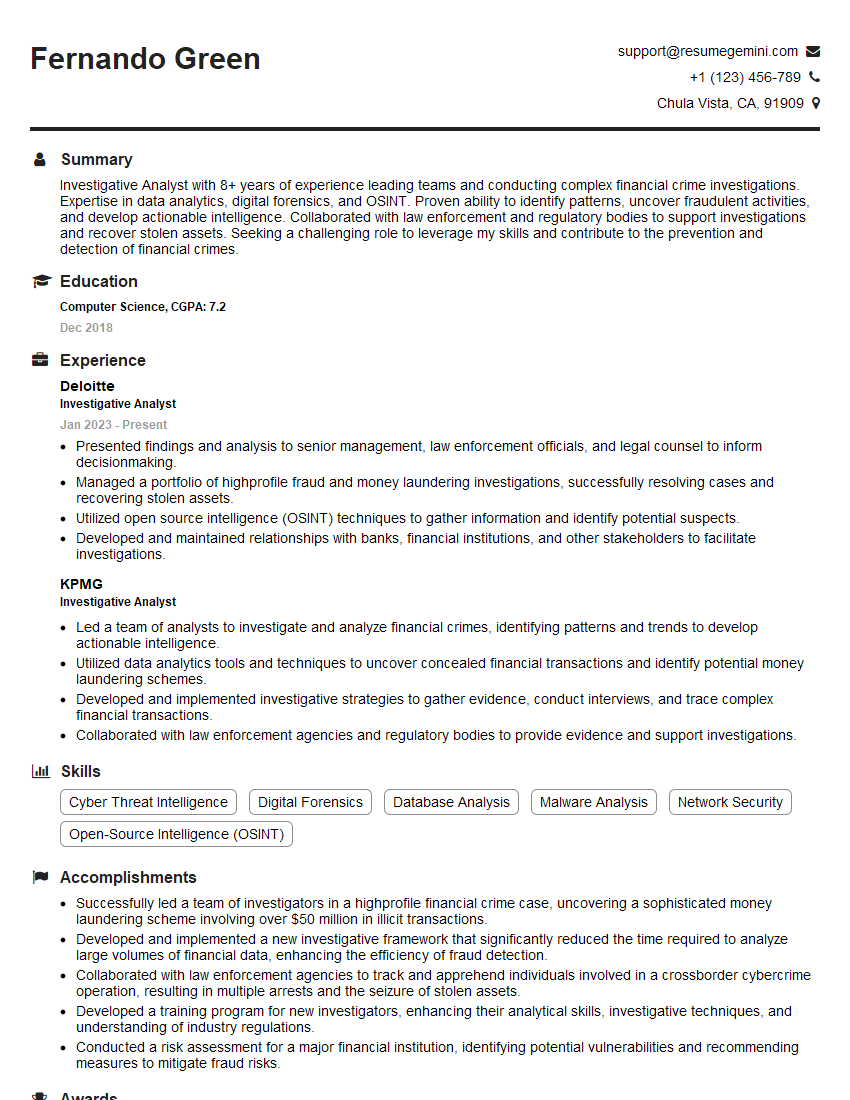
Investigative Analyst Resume Sample
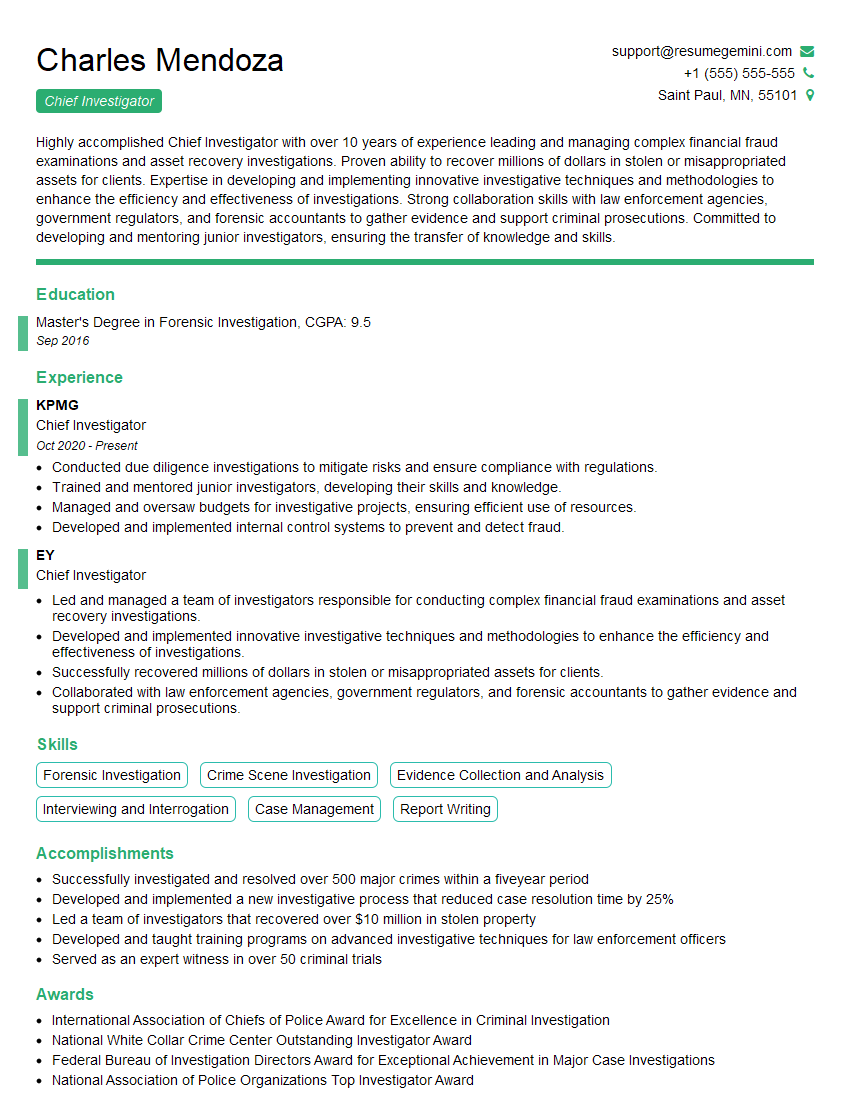
Chief Investigator Resume Sample

Loss Prevention Investigator Resume Sample
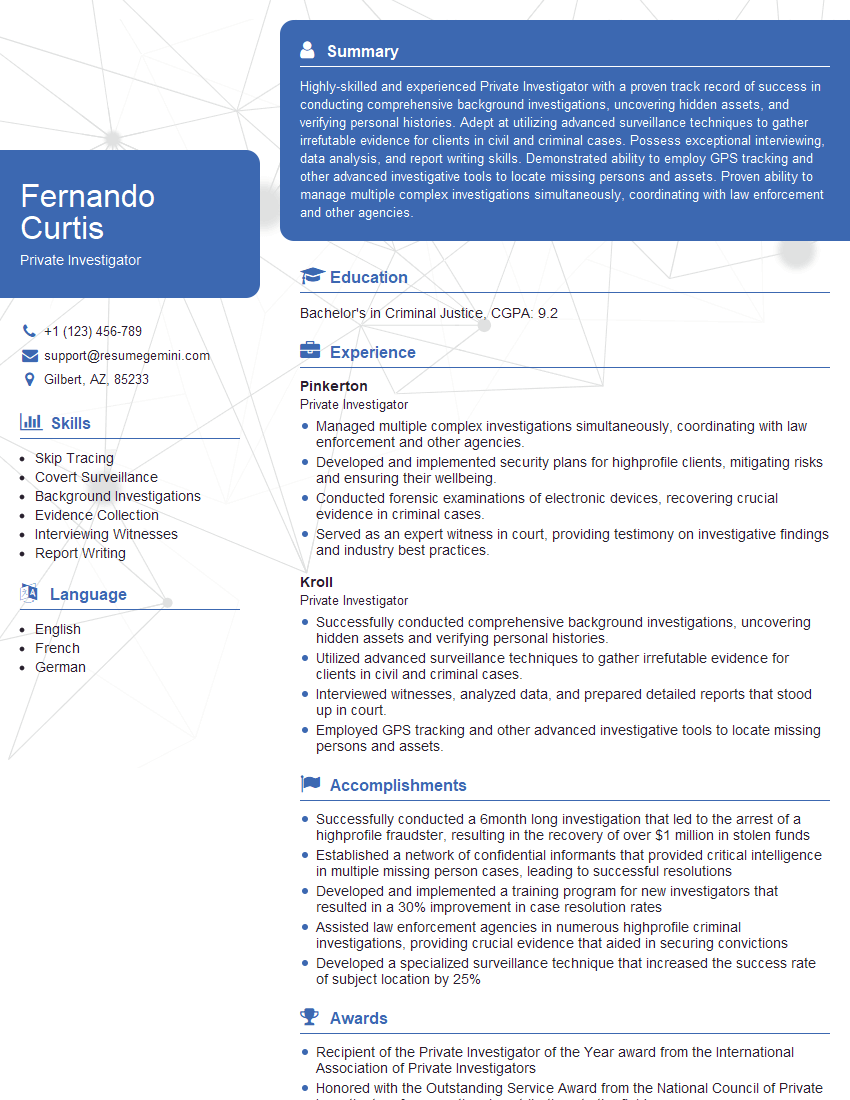
Private Investigator Resume Sample
- Risk Manager
- Security Manager
- Compliance Investigator
- Special Agent
- Security Consultant
- Fraud Investigator
- Intelligence Analyst
- Forensic Scientist
- Forensic Investigator
- Correctional Officer
- Detention Officer
- Legal Investigator
- Investigative Reporter
- Detective Sergeant
- Police Detective
- Criminal Investigator
- Internal Affairs Investigator
- Crime Scene Investigator
- Investigative Analyst
- Chief Investigator
- Loss Prevention Investigator
- Private Investigator
Explore more articles
Users Rating of Our Blogs
Share Your Experience
We value your feedback! Please rate our content and share your thoughts (optional).
What Readers Say About Our Blog
Really detailed insights and content, thank you for writing this detailed article.
IT gave me an insight and words to use and be able to think of examples