The right preparation can turn an interview into an opportunity to showcase your expertise. This guide to Knowledge of train car classifications interview questions is your ultimate resource, providing key insights and tips to help you ace your responses and stand out as a top candidate.
Questions Asked in Knowledge of train car classifications Interview
Q 1. What are the different types of freight cars and their typical uses?
Freight cars, also known as railcars, come in a wide variety of types, each designed for specific cargo. Think of them as specialized delivery trucks, but on rails! Here are some key examples:
- Covered Hopper Cars: These cars have a sloped roof and enclosed sides, ideal for transporting grain, flour, sugar, and other free-flowing materials that need protection from the elements. Imagine a giant, metal silo on wheels.
- Gondola Cars: Open-top cars used for hauling bulk materials like coal, ore, scrap metal, and aggregates. They’re like large, open-top containers that allow easy loading and unloading with minimal handling.
- Tank Cars: Cylindrical cars designed to transport liquids and gases such as petroleum products, chemicals, and liquefied gases. Safety features are paramount here, including pressure relief valves and specialized coatings to prevent leaks.
- Boxcars: Enclosed, rectangular cars with sliding doors or end doors, used for transporting packaged goods, manufactured products, and general merchandise. Think of them as the ‘general purpose’ cargo cars.
- Refrigerated Cars (reefers): Insulated cars with refrigeration units, used for transporting perishable goods like fruits, vegetables, meat, and dairy products. They maintain a controlled temperature to preserve freshness during transit.
- Flatcars: Cars with a flat deck, used for carrying oversized or heavy equipment, such as construction machinery, lumber, and vehicles. Often, they use specialized tie-downs and securing systems to prevent shifting cargo.
- Double-Stack Cars: Designed to carry two levels of containers, maximizing cargo capacity and efficiency in transporting intermodal freight. These are critical for moving containers efficiently between rail and other transportation modes.
The choice of railcar depends heavily on the type of cargo, its sensitivity, and the required handling procedures. For instance, transporting hazardous materials requires specialized tank cars with stringent safety features.
Q 2. Explain the difference between a hopper car and a gondola car.
The key difference between hopper cars and gondola cars lies in how they are loaded and unloaded, and the type of cargo they carry. Both are open-top cars, but that’s where the similarity ends.
- Hopper cars have bottom doors or gates that allow the contents to be discharged by gravity. This makes them ideal for free-flowing materials like grain, coal, or cement. Think of them like giant upside-down funnels.
- Gondola cars, on the other hand, are open-topped cars with no bottom doors. Unloading is typically done by using cranes, excavators, or other equipment to remove the material from the top. This design is suited for larger, irregularly shaped materials that don’t flow freely.
In essence, hopper cars are designed for self-unloading, while gondola cars require external unloading mechanisms. This difference in design directly impacts their usage and the types of materials they transport.
Q 3. Describe the classification system used for identifying railcars.
Railcar classification is a complex system, but broadly, it involves using a combination of reporting marks and numerical codes. The reporting marks are a unique alpha-numeric identifier assigned to each railcar owner, similar to a license plate. These marks are typically painted on the sides of the car and are followed by a numerical designation that further identifies the specific car within that owner’s fleet.
Additionally, a system of AAR (Association of American Railroads) codes is used to categorize the type of railcar. These codes describe features like car type, capacity, and other relevant characteristics. This standardized system enables efficient tracking, management, and safety inspections across the entire rail network.
For example, a reporting mark might be CP 123456, where CP identifies the owner (Canadian Pacific Railway) and 123456 is the car number. The AAR code might then indicate the specific type, like a covered hopper car or a tank car. This combined system allows for precise identification and tracking of individual railcars within the vast network.
Q 4. What are the key safety considerations related to different types of railcars?
Safety considerations for railcars vary significantly depending on the type of cargo they carry. For example:
- Hazardous Materials: Tank cars transporting flammable or toxic materials require specialized safety features like pressure relief valves, emergency shut-off valves, and placards clearly indicating the hazardous contents. These cars are subject to rigorous inspections and handling protocols.
- Oversized Loads: Flatcars carrying oversized or heavy loads require careful securing procedures to prevent shifting or damage during transit. Improper securing can lead to derailments and accidents.
- Refrigerated Cars: Maintaining proper temperature and preventing leaks are crucial for maintaining the quality and safety of perishable goods. Regular maintenance and inspection of refrigeration units are essential.
- General Cargo: Even general-purpose cars like boxcars need proper bracing and loading techniques to prevent shifting or damage during transportation. Overloading can compromise the structural integrity of the car.
Beyond the cargo, ensuring the structural integrity of the railcar itself is critical. Regular inspections are vital to identify potential issues before they can lead to accidents.
Q 5. How do you identify a damaged or unsafe railcar?
Identifying a damaged or unsafe railcar involves a thorough visual inspection, looking for:
- Structural Damage: Bent or broken frames, cracked welds, damaged undercarriages, and dents or punctures in the car body.
- Leaks: Leaks from tank cars, or damage indicating potential leaks, are a significant safety hazard. Look for stains, dripping, or unusual odors.
- Improper Securing: Loose or improperly secured loads on flatcars or other open-top cars.
- Wheel and Brake Issues: Flat or damaged wheels, malfunctioning brakes, or signs of excessive wear.
- Missing or Damaged Components: Missing or damaged ladders, handrails, or safety devices.
- Tampering: Evidence of unauthorized access or tampering with the car’s seals or locks.
Any of these indicators necessitates a closer inspection and may require the car to be taken out of service until repairs are made. Documentation of any damage is also essential for safety records and potential liability claims.
Q 6. What are the standard procedures for inspecting a railcar?
Standard procedures for inspecting a railcar typically follow a checklist and include:
- Visual Inspection: A thorough visual examination of the entire car, looking for any signs of damage or defects (as described in the previous answer).
- Undercarriage Inspection: Checking the wheels, axles, bearings, and other undercarriage components for damage or wear.
- Brake System Inspection: Verifying the functionality of the brake system and looking for any leaks or damage.
- Coupler Inspection: Inspecting the couplers that connect the railcars to ensure they are in good working order.
- Documentation: Recording all findings, including any damage or deficiencies, in a detailed inspection report.
The specific inspection procedures and frequency vary depending on the type of railcar and its operational history. Regulatory bodies like the FRA (Federal Railroad Administration) in the US establish guidelines for these inspections to ensure safety across the rail network.
Q 7. Explain the process of loading and unloading different types of railcars.
Loading and unloading procedures vary significantly based on the type of railcar and cargo:
- Hopper Cars: Loading is typically done from the top using chutes or conveyors. Unloading is by gravity through bottom gates or doors. This requires careful control to prevent jamming or spillage.
- Gondola Cars: Loading and unloading usually involve cranes, excavators, or other equipment to lift the material. Careful placement is critical to avoid overloading or damage to the car.
- Tank Cars: Loading and unloading involve specialized pumps and pipelines. Safety precautions are paramount, with strict protocols to prevent leaks, spills, and exposure to hazardous materials.
- Boxcars: Loading is typically done through the side doors or end doors, often using forklifts or other material handling equipment. Unloading follows a similar process.
- Refrigerated Cars: Loading and unloading follow similar procedures as boxcars, but temperature control must be maintained throughout the process.
- Flatcars: Loading involves securing the cargo to the flat deck using chains, straps, or other tie-down systems. Unloading often requires specialized equipment.
In all cases, safety is paramount. Proper training, equipment, and adherence to established procedures are crucial to prevent accidents and ensure efficient and safe loading and unloading operations.
Q 8. What are the regulations governing the transportation of hazardous materials in railcars?
The transportation of hazardous materials by rail is governed by a complex web of regulations, primarily in the United States by the Department of Transportation’s (DOT) Hazardous Materials Regulations (HMR). These regulations dictate everything from the type of railcar allowed for specific materials to the required placards, emergency response plans, and training for personnel. Think of it like a very strict recipe for shipping dangerous goods – every step needs to be followed precisely to ensure safety.
The HMR specifies packaging requirements, the proper classification of hazardous materials (explosives, flammable liquids, toxic substances, etc.), and the necessary documentation, including shipping papers. Failure to comply can result in significant fines, and in extreme cases, criminal charges. For example, transporting highly flammable materials in a tank car not designed for that specific substance would be a serious violation. Each hazardous material has a specific identification number, and knowing this number is crucial for proper handling and transport.
Beyond the DOT, other agencies may also have jurisdiction depending on the specific material or route, such as the Environmental Protection Agency (EPA) for environmental concerns and the Federal Railroad Administration (FRA) for railroad safety aspects. The regulations are continuously updated to reflect new scientific understanding and technological advancements in safety.
Q 9. How do you determine the weight capacity of a specific railcar?
Determining the weight capacity of a specific railcar isn’t as simple as finding a single number; it depends on several factors. First, you need to identify the railcar type – different types have different capacities. A gondola car, for example, which is open-topped, will likely have a lower capacity than a covered hopper car of similar size. Next, you need the railcar’s specific identification number. This number allows you to look up the car’s specifications in a database maintained by the Association of American Railroads (AAR), or a similar organization in your region.
The AAR provides detailed information about each railcar, including its maximum weight capacity, including both the weight of the car itself (tare weight) and the maximum permissible payload. You also need to consider the track’s weight restrictions; if a heavier car goes on a track not rated for the load, it’s a safety risk and a violation. For instance, a railcar’s capacity might be 100 tons, but the rail line it’s traveling on only permits loads up to 80 tons. It’s essential to operate below the lower of the two limits.
Finally, you must factor in other variables. Weather conditions can affect weight limits – for instance, you might have lower weight limits after heavy rainfall to prevent track damage. The condition of the railcar itself also plays a role. If a railcar shows signs of wear or structural issues, its operational weight capacity may be lowered.
Q 10. What are the common maintenance requirements for different types of railcars?
Maintenance requirements vary significantly depending on the type of railcar. Tank cars, for instance, require regular inspections of their internal coatings and safety valves to ensure they’re capable of containing hazardous materials without leaks. These inspections often include ultrasonic testing and pressure testing to identify potential weaknesses. They may also need specialized cleaning protocols between different shipments to prevent contamination.
Hopper cars, used for bulk materials like grain or coal, need frequent checks of their unloading mechanisms to ensure smooth operation. This includes inspection of gates, chutes, and air slides. Corrosion is a significant concern for hopper cars, particularly in areas with harsh climates or materials that cause corrosion. Regular painting and rust prevention measures are essential.
Boxcars, which are general-purpose enclosed railcars, require inspections of their doors, roofs, and underframes. Regular lubrication and inspection of wheel bearings are crucial across almost all types. Wheel wear is a common issue, so regular inspections and replacements when needed are paramount. All types of railcars require periodic brake inspections and adjustments to ensure safe operation. Documentation of all maintenance is essential for regulatory compliance and safety. Think of it like a car – the more often you do basic maintenance, the less likely you are to need major repairs later.
Q 11. Describe the various types of couplers and their functions.
Railcar couplers are the mechanisms that connect railcars together to form a train. The most common type is the Janney coupler, an automatic knuckle coupler. Imagine it like a mechanical hand that automatically grabs onto the next car. It’s designed for quick and easy connection and disconnection, crucial for efficient train operations. This automatic coupling has greatly improved safety, reducing the need for manual coupling, which was a dangerous task in the past.
There are also other types of couplers used for specialized purposes or in older rail systems. Some older freight cars might use different types of couplers, necessitating careful consideration during operations. There are also buffer couplers, which often work in conjunction with Janney couplers to help absorb shocks during movement. The Janney coupler is a pivotal component of modern railcar operation ensuring smooth and safe connections. Understanding the various types and their functions is crucial to ensuring train integrity and safety during movement. Incompatibilities in couplers can significantly hinder operations and cause delays, so maintenance and standardization are important.
Q 12. How do you determine the appropriate type of railcar for a specific shipment?
Selecting the appropriate railcar for a shipment involves considering several factors. The most important is the nature of the cargo itself. Liquids require tank cars, bulk solids might use hopper cars, and packaged goods need boxcars or gondolas. The volume of the cargo is also a crucial factor – a small shipment would require a different type of railcar compared to a large shipment. The type and weight of the cargo influence the required railcar’s size and structural capabilities. Hazardous materials will necessitate cars specifically designed for their safe transport, adhering strictly to regulatory standards. For example, transporting highly corrosive chemicals needs a tank car with special internal lining.
The destination also matters. If the rail line has specific restrictions (gauge, weight limits), the choice of railcar must consider those restrictions. The shipper’s needs, such as loading and unloading ease, must also be considered. Choosing the right railcar is a delicate balance between safety, regulatory compliance, efficiency, and cost-effectiveness. Failure to choose correctly can lead to significant delays, damage, and potentially serious safety issues.
Q 13. What are the environmental considerations related to railcar operations?
Environmental concerns related to railcar operations are significant, focusing on minimizing pollution and waste. Spills of hazardous materials are a major concern, potentially contaminating soil and water sources. Strict regulations and emergency response plans are in place to mitigate these risks. The impact of noise pollution near rail lines is also a consideration, requiring mitigation measures in some cases. Fuel efficiency of locomotives also impacts the overall carbon footprint of rail transport.
Another critical area is the lifecycle management of railcars themselves. Recycling and responsible disposal of old or damaged railcars are crucial in minimizing environmental impact. Corrosion and material degradation can lead to environmental issues, so preventative maintenance and responsible material choices play a significant part in minimizing environmental impacts. The use of cleaner fuels and technologies is also an ongoing area of focus in reducing the environmental footprint of rail transport.
Q 14. Explain the concept of railcar pooling and its benefits.
Railcar pooling is a system where multiple companies share a common fleet of railcars, rather than each company owning its own separate fleet. Think of it like a car-sharing program, but for railcars. This is advantageous for companies that don’t need railcars consistently or for companies that want to reduce their capital expenditures.
The benefits are numerous. Pooling reduces the need for individual companies to invest heavily in railcar ownership and maintenance. It also improves efficiency through better utilization of railcars. Idle railcars are less common because they can be quickly reallocated to companies that need them. Pooling can lead to lower costs overall, as economies of scale are achieved. It can also lead to better inventory management and reduced administrative burdens.
A well-managed railcar pool enhances the efficiency of freight movement, reducing transport times and costs. This system also aids in environmental benefits through efficient utilization of existing assets.
Q 15. What are some common issues with railcar brakes and how are they addressed?
Railcar brake issues are a critical safety concern. Common problems include brake sticking (due to rust, debris, or component failure), brake pipe leaks (resulting in reduced braking power), and issues with the air compressor supplying air to the brakes. Addressing these requires a multi-pronged approach.
- Regular Inspections: Thorough visual inspections and testing are crucial. This involves checking for leaks, inspecting brake shoes and components for wear and tear, and testing brake cylinder pressure.
- Preventive Maintenance: Scheduled maintenance includes replacing worn parts, lubricating moving components, and cleaning brake systems to prevent issues before they occur. This is similar to maintaining a car’s braking system.
- Repair and Replacement: If issues are detected, immediate repair or component replacement is necessary. This often requires specialized tools and knowledge of the specific railcar’s braking system. A faulty air compressor, for instance, needs immediate replacement to ensure safe operation.
- Testing and Certification: After maintenance or repair, rigorous testing is conducted to ensure the brakes meet safety standards and are functioning correctly before the railcar returns to service. This ensures public safety and complies with regulatory requirements.
Imagine a scenario where a train’s brakes fail; the consequences could be catastrophic. Therefore, rigorous maintenance and testing are paramount.
Career Expert Tips:
- Ace those interviews! Prepare effectively by reviewing the Top 50 Most Common Interview Questions on ResumeGemini.
- Navigate your job search with confidence! Explore a wide range of Career Tips on ResumeGemini. Learn about common challenges and recommendations to overcome them.
- Craft the perfect resume! Master the Art of Resume Writing with ResumeGemini’s guide. Showcase your unique qualifications and achievements effectively.
- Don’t miss out on holiday savings! Build your dream resume with ResumeGemini’s ATS optimized templates.
Q 16. How do you handle railcar derailments or other accidents?
Handling railcar derailments or accidents involves a coordinated effort between various teams, including railway personnel, emergency responders, and potentially government agencies. The immediate priority is safety.
- Secure the Scene: The first step is to isolate the area, ensuring public safety and preventing further incidents. This may involve road closures, evacuation, and establishing a safety perimeter.
- Assess Damage: Once secured, a thorough assessment of the damage is carried out to determine the extent of the derailment and the potential hazards (e.g., hazardous materials leaks).
- Emergency Response: Appropriate emergency services (fire, police, medical) are called in as needed. The response depends heavily on the nature of the accident – a derailment carrying hazardous materials would require a significantly different response than a simple derailment of empty cars.
- Recovery and Cleanup: Specialized equipment is often used to re-rail derailed cars. Cleanup involves removing debris, repairing damaged track, and investigating the cause of the accident. This can be a lengthy process.
- Investigation: A detailed investigation is conducted to determine the root cause of the accident. This will inform preventative measures and potentially legal proceedings.
Think of it as a complex puzzle where each piece – safety, assessment, response, recovery, and investigation – needs to fall into place effectively.
Q 17. Describe the role of a railcar classification yard.
A railcar classification yard acts as a crucial hub for sorting and organizing railcars. It’s like a giant sorting facility for trains. Incoming trains, often carrying various types of railcars destined for different locations, are broken down in the yard.
- Uncoupling and Sorting: Engines separate the cars based on their destination, using various switching techniques. This involves maneuvering individual cars or groups of cars onto different tracks.
- Reassembly: Once sorted, the cars are reassembled into new trains destined for their final destinations. This process maximizes efficiency, ensuring trains are composed of cars headed to similar regions or customers.
- Inspection and Maintenance: While in the yard, some basic inspections and minor maintenance might be performed. This is where minor repairs and visual checks might take place.
- Storage: Classification yards also provide temporary storage for railcars awaiting their next assignment. This keeps the flow of goods consistent and manages the availability of railcars.
Imagine a massive postal sorting facility, but instead of letters, you’re sorting freight cars to various locations across the country. The yard efficiently coordinates the complex movement of railcars.
Q 18. What are the different methods used for tracking railcars?
Tracking railcars is essential for efficient transportation and logistics. Multiple methods are employed:
- Manual Tracking: Historically, tracking relied on waybills and physical documentation, a slow and error-prone system.
- Automated Tracking Systems: These systems use electronic data interchange (EDI) and specialized sensors on railcars to provide real-time location and status information. This allows for precise tracking from origin to destination.
- GPS Tracking: GPS devices installed on railcars provide accurate location data. This enhances security, preventing theft and ensuring timely delivery.
- Radio Frequency Identification (RFID): RFID tags are attached to railcars and read by scanners at various points along the route. This provides passive identification and real-time updates about car location.
Think of it like package tracking – but on a much larger scale. These systems ensure efficient movement and transparent visibility into the railcar’s journey.
Q 19. What is the significance of the AAR reporting marks on a railcar?
AAR reporting marks are a crucial identification system for railcars in North America. They’re a unique set of initials and numbers painted on the side of each railcar. The marks consist of a combination of letters and numbers that identify the owner of the railcar.
- Ownership Identification: The reporting marks instantly identify the owner (e.g., a leasing company or railroad) of a particular railcar.
- Tracking and Management: These marks are essential for tracking railcars across various railroad networks, assisting in efficient movement and accountability.
- Interchange: The reporting marks are critical in the interchange process between different railway companies, ensuring proper billing and responsibility for each car.
Imagine a license plate for a car – the reporting marks are the equivalent for railcars, instantly providing information about their owner and facilitating tracking and management.
Q 20. Explain the concept of interchange between different railway companies.
Interchange between different railway companies is the process of transferring railcars from one railway’s network to another. This seamless transfer is critical for efficient long-distance transportation, as many shipments traverse multiple railroad lines.
- Agreements and Contracts: Railroads have agreements that govern how they exchange railcars, including billing processes, responsibility for maintenance, and handling procedures.
- Reporting Marks and Tracking: AAR reporting marks play a key role in identifying the owner of the railcar during interchange, ensuring proper billing and accountability.
- Yard Operations: Classification yards are crucial in the interchange process. They sort cars based on destination and route them to the appropriate railroad.
- Electronic Data Interchange (EDI): EDI systems automate the exchange of information related to railcar interchange, enhancing efficiency and reducing manual errors.
Think of it as relaying a package between different delivery services – a smooth interchange ensures efficient delivery across multiple networks.
Q 21. What are the latest technologies used in railcar management?
Recent technological advancements significantly enhance railcar management:
- Predictive Maintenance: Sensors and data analytics predict potential maintenance needs, reducing downtime and preventing unexpected failures. This is similar to how modern cars can predict maintenance requirements based on driving patterns and usage.
- IoT and Telematics: Internet of Things (IoT) devices and telematics provide real-time tracking and condition monitoring of railcars. This offers detailed insights into various parameters such as temperature, location, and even shock levels, enhancing security and safety.
- Automated Classification Yards: Automated switching and sorting systems increase efficiency and reduce the need for manual labor in classification yards.
- Blockchain Technology: Blockchain can enhance security and transparency in tracking railcar ownership, movement, and condition, preventing fraud and ensuring accountability.
These technologies are transforming the industry, improving efficiency, safety, and overall management of railcar assets.
Q 22. How do you ensure the efficient utilization of railcars?
Efficient railcar utilization hinges on optimizing both the car’s lifespan and its active deployment. Think of it like managing a fleet of delivery trucks – you want them all working, not sitting idle. We achieve this through meticulous planning and data-driven decision making.
Predictive Maintenance: By analyzing data from sensors and maintenance logs, we can predict potential failures and schedule repairs proactively, minimizing downtime. For example, if sensors detect unusual wheel wear patterns on a particular type of hopper car, we can address it before it leads to a major breakdown and delays.
Optimized Routing and Scheduling: Sophisticated software helps us determine the most efficient routes and schedules, ensuring railcars are always moving toward their next assignment. This avoids empty return trips, a major source of inefficiency. Imagine a scenario where we can consolidate shipments and send a single fully loaded train instead of multiple partially full ones.
Real-time Tracking and Monitoring: GPS tracking and other technologies provide continuous visibility into the location and status of each railcar, enabling quick response to delays or unexpected issues. This allows for proactive adjustments to schedules and minimizes disruption to operations.
Demand Forecasting: By analyzing historical data and anticipated market conditions, we forecast future demand for different types of railcars, allowing for proactive allocation and leasing of additional capacity if needed, thereby preventing bottlenecks.
Q 23. Describe the various types of tank cars and their safety features.
Tank cars are specialized for transporting liquids and gases, each designed with specific safety features tailored to the substance they carry. The design is critical due to the inherent risks associated with these shipments.
General Service Tank Cars: These are often used for various non-hazardous liquids. Safety features typically include pressure relief valves to prevent over-pressurization and sturdy construction to withstand impacts.
Pressure Tank Cars: Used for liquefied gases and other high-pressure liquids. These cars have thicker walls and enhanced safety features, such as pressure-relief devices and rupture disks. The design ensures that even under intense pressure changes, these cars are structurally sound enough to avoid accidents.
Cryogenic Tank Cars: Designed for transporting cryogenic liquids (extremely low temperatures), these cars employ advanced insulation and specialized valves to maintain the low temperatures. Failures can lead to extremely dangerous situations, thus, safety is paramount.
Hazardous Materials Tank Cars: These cars are built to rigorous standards to transport hazardous materials, including specialized fittings, pressure-relief devices, and protective coatings. Specific safety features vary by the class and type of hazardous material, in accordance with regulations.
Safety features common across various types include:
- Thermal protection: To prevent excessive heating or cooling.
- Pressure relief valves: To prevent over-pressurization.
- Emergency shut-off valves: To quickly stop the flow of liquid in case of an emergency.
- Tank car testing: Rigorous testing to ensure structural integrity and safety.
Q 24. What are the challenges in managing a diverse fleet of railcars?
Managing a diverse railcar fleet presents unique challenges. It’s like managing a large apartment complex with different units requiring varying maintenance needs. The key is to have a system that efficiently handles this diversity.
Maintenance Complexity: Each railcar type has unique maintenance requirements, making scheduling and resource allocation complex. We need specialized technicians and parts for each type, creating logistical hurdles.
Parts Inventory Management: A large fleet requires a substantial inventory of spare parts, which is costly to maintain. Efficient inventory management is key to minimizing costs while ensuring availability when needed. We use a sophisticated inventory management system that tracks parts usage and predicts future needs.
Compliance and Regulations: Different railcar types are subject to varying regulations and inspections, increasing the complexity of compliance. We use sophisticated software that tracks regulations and manages compliance for each car type. This reduces risk of non-compliance.
Data Management: Tracking the location, condition, and maintenance history of a diverse fleet requires robust data management systems. This includes integrating data from different sources to provide a holistic view of the fleet’s health.
Q 25. How do you handle railcar repairs and maintenance scheduling?
Railcar repair and maintenance scheduling is a critical aspect of efficient operations. It’s like scheduling doctor’s appointments for your entire fleet, prioritizing those who need immediate attention. We utilize a combination of strategies:
Predictive Maintenance: As mentioned earlier, analyzing data to predict failures allows for proactive repairs, minimizing downtime. For example, we might schedule a wheelset inspection based on the cumulative mileage and sensor readings.
Preventive Maintenance: Regular scheduled maintenance, such as inspections and lubrication, extends the lifespan of the railcars and prevents minor issues from becoming major problems. We follow strict maintenance schedules customized to each railcar type.
Corrective Maintenance: Addressing failures as they occur, this requires a rapid response system to minimize delays. We have a dedicated team that responds to breakdown reports and repairs issues promptly.
Maintenance Scheduling Software: Specialized software helps optimize the scheduling of repairs, considering the availability of technicians, parts, and railcar utilization. This tool helps reduce downtime while scheduling repairs effectively.
Q 26. What are some examples of innovative railcar designs and technologies?
The railcar industry is constantly evolving, with innovative designs and technologies aiming to improve efficiency, safety, and sustainability.
High-capacity railcars: Designs that increase cargo capacity without significantly increasing length improve efficiency by reducing the number of cars needed per shipment.
Lightweight railcars: Using advanced materials reduces the weight of the railcar, allowing for increased payload and fuel efficiency. This translates into cost savings through fuel consumption.
Improved braking systems: Advanced braking systems enhance safety and reduce stopping distances. This enhances overall safety and reduces the risk of accidents.
Smart railcars: Equipped with sensors and data-logging capabilities, smart railcars provide real-time data on various aspects of their performance, enabling predictive maintenance and improved operational efficiency.
Automated coupling systems: These systems reduce the time and effort required to couple and uncouple railcars, improving efficiency and safety in switching operations. This contributes to faster transit times and reduces manual labor.
Q 27. What are the key performance indicators (KPIs) for railcar operations?
Key Performance Indicators (KPIs) for railcar operations provide insights into efficiency, safety, and profitability. These metrics are like vital signs for the health of the operation.
Utilization Rate: The percentage of time a railcar is actively carrying cargo. A higher utilization rate indicates efficient use of assets.
Average Transit Time: The average time it takes for a railcar to complete a journey. Shorter transit times improve efficiency and reduce costs.
Maintenance Costs: The total cost of maintenance per railcar or per ton-mile. Lower maintenance costs indicate effective maintenance strategies.
On-time Performance: The percentage of shipments delivered on time. High on-time performance reflects efficient scheduling and operation.
Safety Incidents: The number of accidents or incidents per million railcar-miles. A low incident rate indicates a strong focus on safety.
Revenue per Car-Mile: Measures the profitability of each railcar’s operation. A higher rate reflects optimal revenue generation.
Q 28. How do you stay up-to-date with the latest regulations and best practices in railcar classification and management?
Staying current in the railcar industry requires continuous learning and engagement with regulatory bodies and industry best practices. It’s like a doctor staying up-to-date with medical advancements; constant professional development is essential.
Industry Associations: Membership in professional organizations like the Association of American Railroads (AAR) provides access to the latest regulations, best practices, and industry news.
Regulatory Websites: Regularly reviewing the websites of relevant regulatory agencies, such as the Federal Railroad Administration (FRA), keeps us informed about changes in regulations.
Industry Publications and Conferences: Attending industry conferences and reading trade publications keeps us abreast of new technologies and developments.
Training and Certifications: Ensuring our team members have the necessary training and certifications to maintain railcars according to current standards and regulations. This allows us to manage our resources effectively.
Data Analysis and Benchmarking: Analyzing internal data and benchmarking our performance against industry standards helps us identify areas for improvement and stay competitive.
Key Topics to Learn for Knowledge of Train Car Classifications Interview
- Types of Rolling Stock: Understanding the different classifications of freight cars (e.g., tank cars, hopper cars, boxcars, flatcars) and passenger cars, including their specific uses and capacities.
- Car Components and Functionality: Familiarize yourself with the key components of various train cars and how they function, including braking systems, couplers, and undercarriages. Understanding the differences in design and functionality based on cargo type is crucial.
- Safety Regulations and Procedures: Knowledge of relevant safety regulations and procedures related to handling and inspection of different train car types is essential for demonstrating a commitment to safe operations.
- Loading and Unloading Procedures: Learn about the safe and efficient loading and unloading practices for various types of cargo and train cars. This includes understanding weight distribution and securing cargo to prevent damage and accidents.
- Maintenance and Repair: Understanding basic maintenance and repair procedures for different types of train cars demonstrates practical experience and problem-solving skills. This could include identifying common issues and performing routine checks.
- Track and Car Interactions: Understanding how different train car types interact with the track, including gauge, curves, and gradients, shows a broader understanding of railway operations.
- AAR (Association of American Railroads) Standards: Familiarity with AAR standards and classifications will demonstrate a deep understanding of industry best practices and regulations.
Next Steps
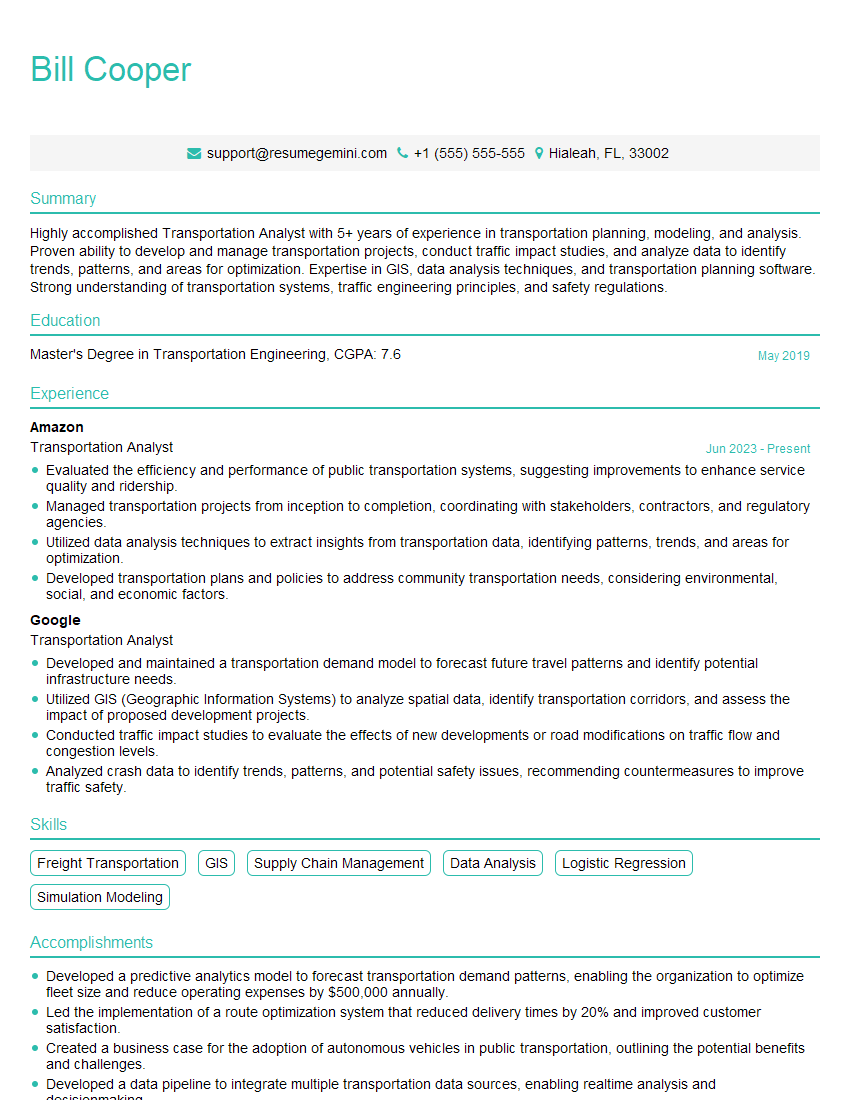
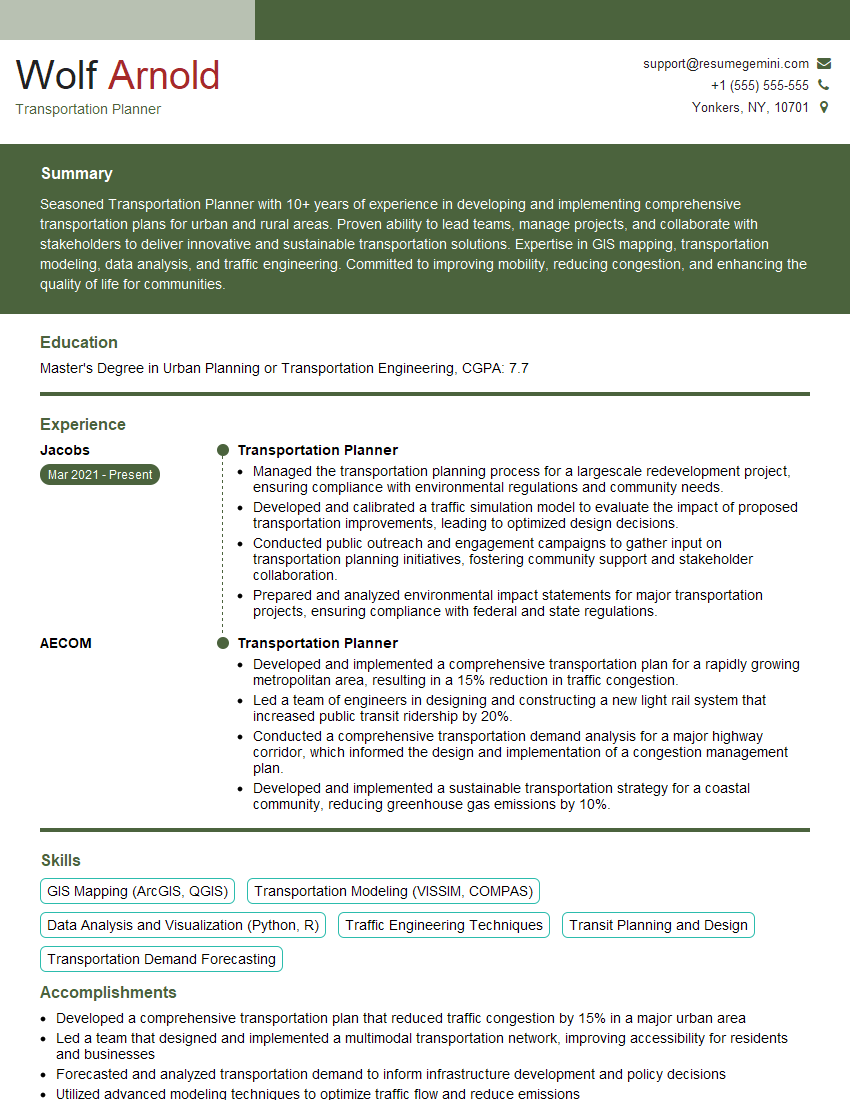
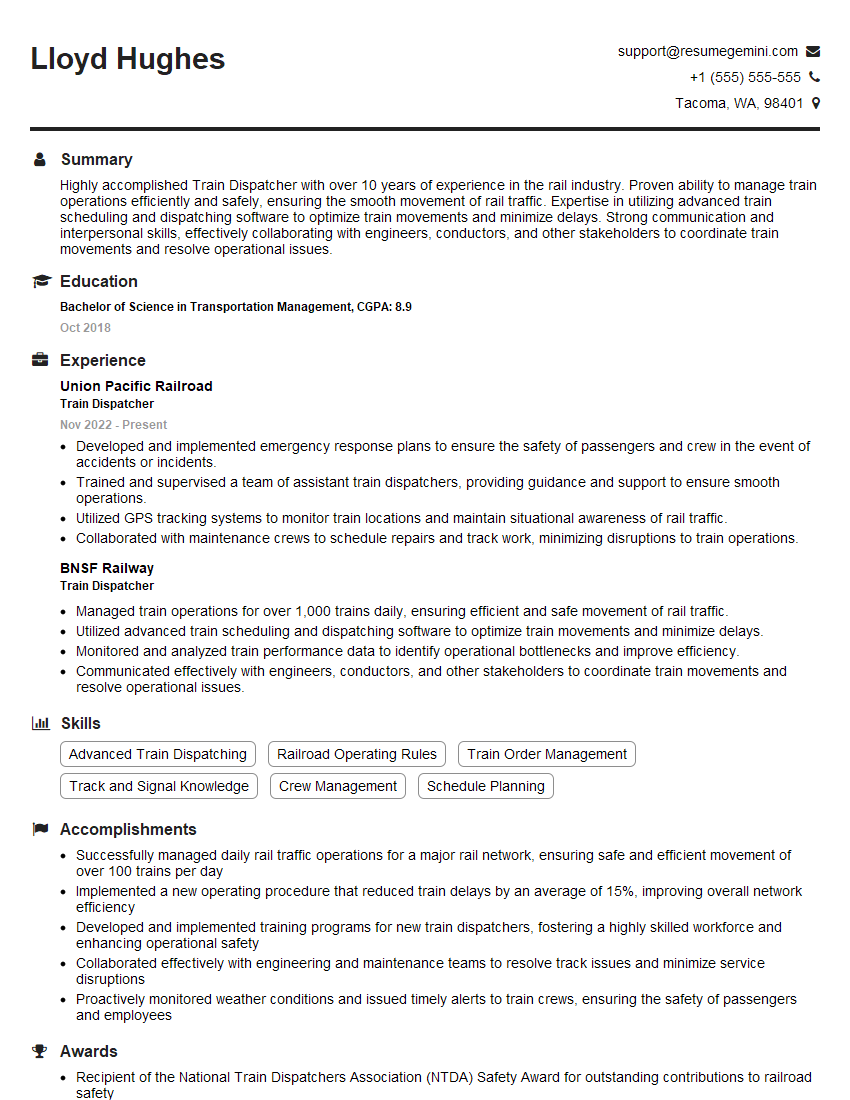
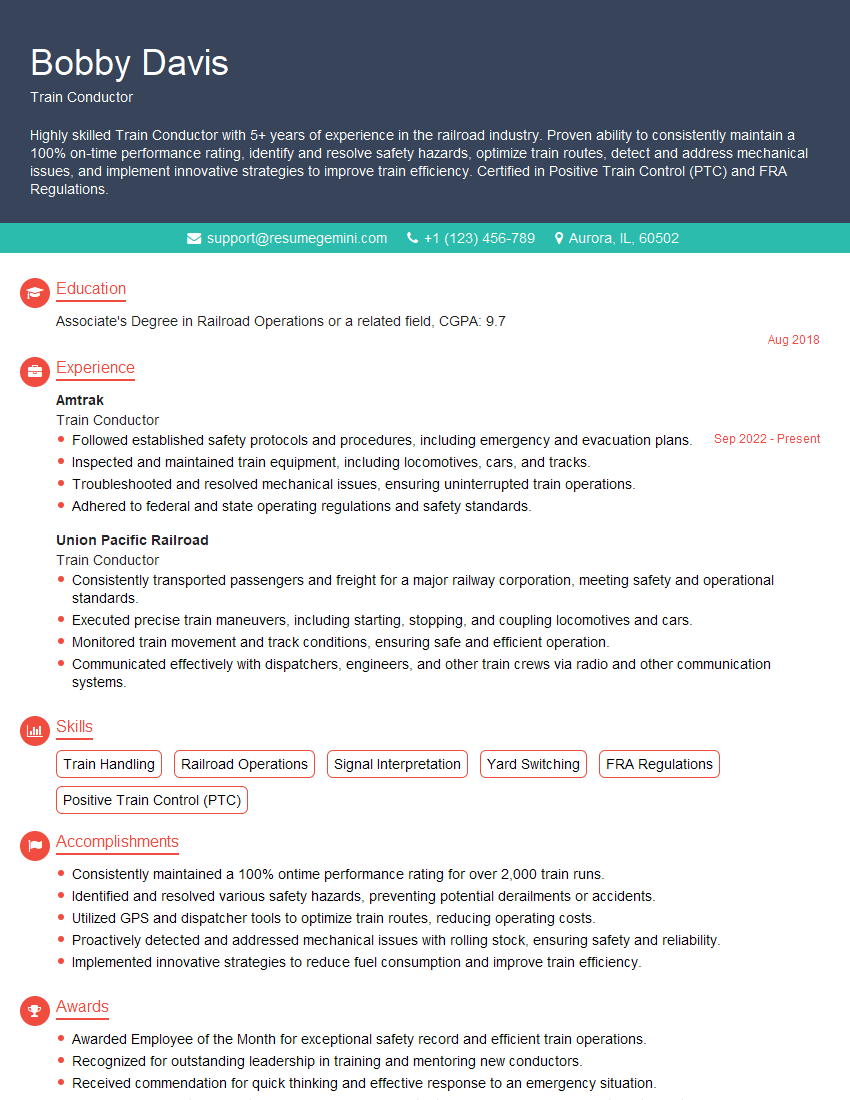
Mastering knowledge of train car classifications is crucial for career advancement within the railway industry, opening doors to specialized roles and increased responsibilities. A strong understanding of these concepts demonstrates your technical proficiency and commitment to safety. To significantly boost your job prospects, create an ATS-friendly resume that highlights your skills and experience effectively. ResumeGemini is a trusted resource to help you build a professional and impactful resume that showcases your expertise. Examples of resumes tailored to Knowledge of train car classifications are available to help guide your creation. Invest the time to build a compelling resume – it’s your first impression with potential employers.



Explore more articles
Users Rating of Our Blogs
Share Your Experience
We value your feedback! Please rate our content and share your thoughts (optional).
What Readers Say About Our Blog
Really detailed insights and content, thank you for writing this detailed article.
IT gave me an insight and words to use and be able to think of examples