Unlock your full potential by mastering the most common Tool Distribution interview questions. This blog offers a deep dive into the critical topics, ensuring you’re not only prepared to answer but to excel. With these insights, you’ll approach your interview with clarity and confidence.
Questions Asked in Tool Distribution Interview
Q 1. Explain your experience with different inventory management systems.
My experience spans several inventory management systems, from simple spreadsheet-based tracking to sophisticated Enterprise Resource Planning (ERP) systems like SAP and Oracle. I’ve worked with Warehouse Management Systems (WMS) such as Fishbowl and NetSuite, which offer real-time inventory visibility, automated tasks, and improved accuracy. Each system presents its own strengths and weaknesses depending on the scale of operations and the specific needs of the business. For example, spreadsheets are suitable for small-scale operations but lack the scalability and reporting capabilities of a dedicated WMS. Conversely, an ERP system might be overkill for a very small business, adding unnecessary complexity and cost. My experience allows me to select and implement the most suitable system based on the specific context.
In a previous role, we transitioned from a manual inventory system to a cloud-based WMS. This significantly improved our accuracy, reduced manual errors, and enabled real-time tracking of stock levels. The implementation itself required careful planning, training of personnel, and meticulous data migration. But the result was a streamlined and efficient inventory management process.
Q 2. Describe your process for optimizing warehouse layout for efficient tool retrieval.
Optimizing a warehouse layout for efficient tool retrieval hinges on understanding the principles of lean manufacturing and applying them to the specific characteristics of the tools being handled. This involves a systematic approach:
- Frequency Analysis: Identifying the tools most frequently retrieved and placing them in the most accessible locations, such as closer to the shipping docks or picking stations.
- Tool Categorization: Grouping similar tools together to minimize search time. This might be based on tool type, size, or customer demand.
- Layout Design: Utilizing efficient flow patterns to minimize travel distances. This often involves implementing a U-shaped or L-shaped layout to optimize workflow.
- Storage Solutions: Selecting appropriate storage solutions, such as shelving units, drawers, or specialized racking systems, to maximize space utilization and improve accessibility. Vertical storage can be particularly effective for maximizing space.
- Visual Management: Implementing clear labeling, color-coding, and signage to enable quick and easy tool identification and location.
For instance, in one project, we reorganized a warehouse by implementing a zone-picking system, significantly reducing the average picking time by 25%. We also introduced shadow boards to visually represent the proper location of each tool, reducing misplacements and increasing efficiency.
Q 3. How do you manage discrepancies between inventory records and physical stock?
Discrepancies between inventory records and physical stock are a common challenge in tool distribution. Addressing them requires a multi-faceted approach focusing on prevention and resolution:
- Regular Cycle Counting: Implementing a regular cycle counting system, where a small portion of the inventory is counted frequently rather than a full annual count. This provides early detection of discrepancies.
- Improved Data Entry: Ensuring accuracy in data entry through the use of barcode scanners or RFID technology to minimize manual errors.
- Inventory Audits: Conducting regular, thorough inventory audits to identify and rectify significant discrepancies. This often involves a physical count of all stock to compare to system records.
- Root Cause Analysis: Investigating the root cause of any discrepancies identified. This might involve reviewing processes, training personnel, or improving equipment to prevent future errors.
- Inventory Adjustment Procedures: Establishing clear procedures for adjusting inventory records to reflect actual stock levels after discrepancies are identified and investigated.
For example, we once discovered a significant discrepancy due to a faulty barcode scanner. By identifying and replacing the faulty scanner and retraining staff on proper scanning techniques, we eliminated the source of the discrepancies.
Q 4. Explain your understanding of supply chain management principles within the context of tool distribution.
Supply chain management in tool distribution involves the seamless flow of tools from manufacturers to end-users. Key principles include:
- Sourcing: Selecting reliable suppliers who can meet quality and delivery requirements. This involves assessing supplier capabilities, negotiating favorable terms, and establishing strong relationships.
- Inventory Management: Maintaining optimal stock levels to meet demand without excessive storage costs. This requires forecasting demand, tracking inventory levels, and implementing efficient inventory control systems.
- Logistics: Efficiently transporting tools from warehouses to customers. This involves selecting appropriate transportation modes, optimizing delivery routes, and managing transportation costs.
- Demand Planning: Accurately forecasting demand to optimize production and inventory levels. This involves analyzing historical sales data, considering seasonal variations, and anticipating future market trends.
- Quality Control: Ensuring the quality of tools throughout the supply chain, from manufacturing to delivery. This includes regular inspections, quality checks, and addressing any quality issues promptly.
Effective supply chain management reduces costs, improves on-time delivery, and enhances customer satisfaction. In my experience, implementing robust supply chain management practices leads to significant improvements in operational efficiency and profitability.
Q 5. How do you prioritize orders for timely delivery, considering varying customer demands?
Prioritizing orders for timely delivery requires a strategic approach that balances customer demands with operational capabilities. I typically use a combination of methods:
- Order Prioritization Matrix: Creating a matrix that prioritizes orders based on factors like customer importance, order urgency, and delivery deadlines. This matrix can incorporate a scoring system to rank orders.
- First In, First Out (FIFO): Employing FIFO principles to ensure that the oldest orders are processed first, minimizing storage costs and reducing the risk of obsolescence.
- Customer Segmentation: Categorizing customers based on their value and importance to the business. High-value customers might receive priority treatment.
- Capacity Planning: Accurately assessing the capacity of the warehouse and transportation network to handle orders efficiently. This ensures that promises made to customers are realistic and achievable.
- Real-time Monitoring: Using real-time tracking systems to monitor order status and identify potential delays. This enables proactive intervention and minimizes disruption.
In one instance, we implemented a real-time order tracking system that allowed us to respond quickly to unexpected events, such as traffic delays or equipment malfunctions, thereby minimizing the impact on delivery times and customer satisfaction.
Q 6. Describe your experience with different transportation modes (e.g., trucking, rail, air) and their suitability for tool distribution.
My experience encompasses various transportation modes, each with its own strengths and weaknesses for tool distribution:
- Trucking: The most common mode for regional and local deliveries. It offers flexibility and relatively low cost, but can be slower than other modes for long distances.
- Rail: Cost-effective for long-distance transport of large volumes of tools, but less flexible and slower than trucking.
- Air Freight: Fastest mode for urgent deliveries, but the most expensive. Typically used for time-sensitive or high-value tools.
The choice of transportation mode depends on factors such as distance, delivery timeframe, volume of tools, and cost considerations. For example, we might use trucking for local deliveries and rail for transporting bulk shipments to regional distribution centers. Air freight might be reserved for expedited deliveries of specialized or critical tools.
Q 7. How do you handle damaged or defective tools during the distribution process?
Handling damaged or defective tools is crucial for maintaining customer satisfaction and minimizing financial losses. The process involves:
- Inspection Procedures: Establishing clear procedures for inspecting incoming and outgoing tools to identify damage or defects promptly.
- Damage Reporting: Creating a system for documenting damage, including details such as the nature of the damage, the quantity affected, and the cause of the damage.
- Return and Repair Process: Implementing a streamlined process for returning damaged tools to suppliers or manufacturers for repair or replacement.
- Disposal Procedures: Establishing procedures for safely disposing of tools that are beyond repair. This should comply with all relevant environmental regulations.
- Root Cause Analysis: Investigating the root cause of damage to prevent recurrence. This might involve reviewing packaging, handling procedures, or transportation methods.
In one case, we traced recurring damage to inadequate packaging. By implementing new packaging standards, we significantly reduced the incidence of damaged goods. This involved close collaboration with our packaging supplier to ensure the effectiveness and cost-efficiency of the new solution.
Q 8. Explain your approach to forecasting demand for tools, considering seasonality and market trends.
Forecasting tool demand requires a multi-faceted approach that blends historical data analysis with an understanding of current market trends and seasonal fluctuations. We don’t rely on simple extrapolations; instead, we utilize sophisticated forecasting models.
First, we meticulously analyze past sales data, identifying seasonal peaks and troughs. For instance, we see a significant surge in demand for landscaping tools in spring and summer, while winter brings increased demand for snow removal equipment. This historical data forms the foundation of our forecast.
Secondly, we incorporate market trend analysis. This involves monitoring industry publications, attending trade shows, and actively engaging with customers and industry experts to understand emerging trends and potential disruptions (e.g., a new construction boom, shifts in DIY enthusiasm, technological advancements affecting tool usage). We might use techniques like regression analysis to model the impact of these trends on demand.
Finally, we integrate qualitative factors. These include upcoming projects, anticipated marketing campaigns, and any planned changes in our distribution network. This qualitative input refines the quantitative models, leading to a more accurate forecast.
For example, if we anticipate a large infrastructure project commencing in a specific region, we’ll adjust our forecast upward for related tools like heavy-duty drills and demolition hammers in that region. The forecasting process is iterative, constantly refined and validated against actual sales data.
Q 9. How do you maintain accurate records of tool movements throughout the distribution network?
Maintaining accurate tool movement records is critical for efficient inventory management and customer satisfaction. We achieve this through a combination of robust technology and meticulous processes.
At the heart of our system is a sophisticated Warehouse Management System (WMS), which tracks every tool from the moment it enters our warehouse to its final delivery. This involves scanning barcodes at each stage of the process: receiving, storage, picking, packing, and shipping. This ensures real-time visibility of tool location and status. The WMS integrates with our transportation management system (TMS) to track shipment progress.
Beyond the WMS, we utilize regular physical inventory checks to reconcile system data with physical stock. This helps identify discrepancies and ensures data accuracy. We also employ rigorous data validation procedures to catch and correct potential errors early on. Any inconsistencies are investigated and resolved promptly.
Moreover, we train our staff thoroughly in the proper use of the WMS and inventory management best practices. Clear communication protocols are vital to minimize errors and maintain data integrity throughout the entire distribution network.
Q 10. What metrics do you use to evaluate the efficiency of the tool distribution process?
We use a range of key performance indicators (KPIs) to evaluate the efficiency of our tool distribution process. These metrics provide actionable insights into areas for improvement.
- Order Fulfillment Rate: Percentage of orders fulfilled on time and in full.
- Inventory Turnover Rate: How quickly inventory is sold and replenished.
- On-Time Delivery Rate: Percentage of deliveries arriving on the scheduled date.
- Average Delivery Time: Average time taken to deliver tools from order placement to receipt.
- Warehouse Efficiency: Metrics like picking accuracy, order processing time, and storage utilization.
- Customer Satisfaction: Measured through surveys and feedback.
- Logistics Costs: Tracking warehousing, transportation, and handling expenses to optimize efficiency.
By monitoring these KPIs, we can identify bottlenecks, areas of inefficiency, and opportunities for optimization. For example, consistently low inventory turnover might signal excess stock, while a low on-time delivery rate could indicate problems in our transportation network or warehouse operations. Regular KPI analysis allows us to proactively address these issues.
Q 11. Describe a time you had to resolve a critical logistics issue during tool distribution.
During a major winter storm, a critical shipment of snow removal tools was delayed, threatening a significant regional client’s operation. This was a high-stakes situation because the client was responsible for clearing major roadways.
My immediate response was to activate our emergency logistics protocol. This involved: first, assessing the impact of the storm on various transportation routes, including road closures and airport delays; second, exploring alternative transportation methods like utilizing all-terrain vehicles (ATVs) and rail options for segments of the journey that were still accessible. I had to leverage my knowledge of different freight carriers and negotiate expedited shipping rates, even for these less conventional options. Third, we provided real-time updates to the client, maintaining open communication and transparency.
While we couldn’t entirely prevent the initial delay, the combined efforts of our team and the strategic use of alternative transportation routes resulted in a partial shipment reaching the client within 24 hours, enough to meet their immediate needs. The remaining tools were successfully delivered as soon as the severe weather subsided. This experience highlighted the importance of proactive contingency planning and adaptable logistics strategies.
Q 12. How do you manage relationships with key suppliers to ensure timely tool delivery?
Maintaining strong relationships with key suppliers is crucial for ensuring timely tool delivery and maintaining a stable supply chain. We approach supplier management strategically.
We start by selecting suppliers based on their reliability, quality of tools, and ability to meet our delivery requirements. We establish clear contracts outlining service level agreements (SLAs), including delivery schedules, quality standards, and penalty clauses for non-compliance. We carefully monitor supplier performance based on these SLAs. Regular communication is paramount, utilizing regular meetings, performance reviews, and proactive problem-solving.
We foster collaboration by sharing our demand forecasts with our key suppliers, enabling them to plan their production accordingly. We also engage in joint inventory management practices where appropriate, allowing for better optimization and reduced risk of stockouts. We believe in a fair and mutually beneficial relationship that prioritizes long-term partnerships over short-term gains. Transparency and open communication are key elements.
For example, if a supplier experiences unexpected delays, we work collaboratively to find alternative solutions, such as sourcing from secondary suppliers or adjusting our delivery schedules to mitigate the impact on our customers.
Q 13. Explain your experience with warehouse management systems (WMS) and their integration with other systems.
My experience with Warehouse Management Systems (WMS) is extensive. I’ve worked with several leading WMS platforms, including Infor WMS and SAP EWM, successfully integrating them with various Enterprise Resource Planning (ERP) systems and transportation management systems (TMS).
A WMS is the backbone of our distribution operations. It manages all aspects of warehouse activities, from receiving and putaway to order picking, packing, and shipping. Successful integration with other systems is essential for seamless data flow throughout the supply chain. For example, integration with our ERP system allows for automated order processing, inventory updates, and demand forecasting. Integration with our TMS optimizes transportation routes, schedules deliveries, and tracks shipments in real time.
I’ve been involved in several WMS implementations and upgrades, including data migration, user training, and process optimization. My understanding encompasses not just the technical aspects, but also the operational and strategic implications of choosing and utilizing a WMS effectively. The key to success is meticulous planning, user engagement, and ongoing monitoring.
Q 14. How do you ensure compliance with safety regulations during tool handling and transportation?
Ensuring compliance with safety regulations during tool handling and transportation is a top priority. We implement comprehensive safety protocols throughout our entire distribution process, starting with proper storage and handling practices in our warehouse.
We adhere to OSHA (or relevant regional) standards for tool storage, ensuring that tools are properly organized, secured, and stored according to their type and weight. We provide comprehensive training to our warehouse staff on safe lifting techniques, the use of Personal Protective Equipment (PPE), and hazard identification. Regular safety audits and inspections are conducted to identify and rectify any potential hazards.
For transportation, we comply with Department of Transportation (DOT) regulations for hazardous materials and secure load transportation. Tools are properly packaged and secured to prevent damage and movement during transit. Drivers are trained on safe driving practices and the proper handling of tools during loading and unloading. We conduct regular vehicle inspections to ensure compliance with safety standards and maintain detailed records of all transportation activities.
Regular safety training, ongoing monitoring, and adherence to both internal and external regulations are vital in preventing workplace accidents and maintaining a safe work environment for our employees and customers.
Q 15. Describe your experience with different types of packaging and its impact on tool distribution costs.
Packaging plays a crucial role in tool distribution, directly impacting costs. The type of packaging chosen affects shipping costs, storage space, and the risk of damage. For instance, using heavy-duty corrugated cardboard boxes for robust tools minimizes damage but increases shipping weight and cost. Conversely, lighter-weight packaging, like bubble wrap envelopes for smaller hand tools, lowers shipping costs but increases the risk of damage during transit.
- Bulk Packaging: Cost-effective for large orders but requires more storage space and handling. Example: Tools shipped in a large wooden crate.
- Individual Packaging: Protects each tool individually, reducing damage risk, but increases overall packaging costs. Example: Each screwdriver packaged in its own blister pack.
- Reusable Packaging: Environmentally friendly and can reduce long-term costs, but requires a return system and may not be suitable for all tools. Example: Plastic tool cases used for repeated shipments.
My experience has shown that optimizing packaging involves a careful balancing act. We analyzed the cost of different packaging options against the rate of damage and losses, ultimately selecting a system that minimizes overall costs while ensuring tool integrity. We also considered environmental factors, choosing recyclable materials whenever possible.
Career Expert Tips:
- Ace those interviews! Prepare effectively by reviewing the Top 50 Most Common Interview Questions on ResumeGemini.
- Navigate your job search with confidence! Explore a wide range of Career Tips on ResumeGemini. Learn about common challenges and recommendations to overcome them.
- Craft the perfect resume! Master the Art of Resume Writing with ResumeGemini’s guide. Showcase your unique qualifications and achievements effectively.
- Don’t miss out on holiday savings! Build your dream resume with ResumeGemini’s ATS optimized templates.
Q 16. How do you identify and address bottlenecks in the tool distribution process?
Identifying bottlenecks in tool distribution requires a systematic approach. I typically use a combination of data analysis and on-site observation. We start by mapping the entire process, from warehousing to final delivery, noting each step and its time consumption. We then analyze data on order fulfillment times, inventory levels, and shipping delays. This helps pinpoint areas with significant delays or inefficiencies.
For example, if we consistently observe delays in the picking and packing stage, we might investigate whether our warehouse layout is optimized, if we need to invest in better inventory management software, or if additional personnel are required. Once a bottleneck is identified, the solution depends on the root cause. It could involve process improvements, technology upgrades, or staff training.
Addressing bottlenecks often involves collaboration. I would work closely with the warehouse team, logistics providers, and sales team to implement the chosen solution. We would then monitor the impact of the changes and make further adjustments as needed.
Q 17. Explain your experience with utilizing technology to improve the efficiency of tool distribution.
Technology has revolutionized tool distribution. We’ve successfully implemented a Warehouse Management System (WMS) that provides real-time inventory tracking, optimized picking routes, and automated order processing. This significantly improved accuracy and speed. We also integrated the WMS with our Enterprise Resource Planning (ERP) system for seamless data flow across departments.
Furthermore, we utilize route optimization software to plan efficient delivery routes, reducing fuel consumption and delivery times. Tracking software embedded in shipments allows us to monitor the location of tools in real-time and proactively address any delays or potential issues. Finally, a customer portal provides customers with real-time updates on their orders.
The benefits have been substantial, including reduced lead times, improved inventory accuracy, lowered transportation costs, and enhanced customer satisfaction. For example, the WMS reduced our order fulfillment time by 25%, directly impacting our efficiency and profitability.
Q 18. How do you communicate effectively with various stakeholders throughout the tool distribution process?
Effective communication is vital in tool distribution. I employ a multi-faceted approach tailored to different stakeholders. With warehouse staff, I emphasize clear, concise instructions and regular feedback sessions. With logistics providers, I maintain open lines of communication, ensuring timely updates on shipments and addressing any issues promptly.
For example, during a recent logistics issue, I used a combination of email updates and phone calls to keep all relevant parties informed and to facilitate a quick resolution. With customers, I prioritize clear and proactive communication, providing timely updates on order status and addressing any concerns with empathy and professionalism. This includes using multiple channels such as email, phone, and a customer portal.
I also hold regular meetings with cross-functional teams to ensure alignment on goals and to identify and address potential issues proactively. Transparent communication builds trust and ensures a smooth distribution process.
Q 19. How do you manage returns and exchanges of tools?
Managing returns and exchanges requires a well-defined process. We ensure that returned tools are inspected for damage and functionality. A clear return policy is communicated to customers, outlining the conditions for return and the associated procedures. We use a tracking system to monitor the status of returned tools and manage the exchange process efficiently.
For damaged tools, we determine whether the damage occurred during shipping or due to customer misuse. This informs whether a replacement or refund is appropriate. Tools that can be repaired are sent to our repair facility, while those beyond repair are disposed of responsibly. We maintain detailed records of all returns and exchanges to track trends and identify potential areas for improvement in product quality or packaging.
Our goal is to make the return and exchange process as smooth as possible for both the customer and the business, ensuring customer satisfaction and minimizing potential losses.
Q 20. What are your strategies for mitigating risks associated with tool theft or loss during distribution?
Mitigating risks associated with tool theft or loss requires a multi-layered approach. We implement strong security measures in our warehouse, including access control systems, surveillance cameras, and regular inventory checks. During transportation, we use secure vehicles and tracking devices to monitor shipments in real-time. We also partner with reputable logistics providers with a proven track record of security.
For high-value tools, we utilize specialized packaging and shipping methods that offer enhanced protection against theft or damage. We also insure shipments to cover potential losses. We regularly review and update our security protocols to adapt to evolving risks and leverage the latest technology, such as GPS tracking and tamper-evident seals.
Employee training on security procedures is also a key component. We emphasize the importance of responsible handling of tools and reporting any suspicious activity.
Q 21. Describe your experience with different types of tools and their specific handling requirements.
My experience encompasses a wide range of tools, from delicate precision instruments to heavy-duty power tools. Each requires specific handling and storage requirements. For example, delicate measuring instruments necessitate careful packaging to prevent damage during shipping and storage. They require climate-controlled storage to maintain accuracy. Heavy-duty tools, on the other hand, require robust packaging to withstand the rigors of shipping and handling. Power tools require additional safety precautions during handling and storage to prevent accidents.
We use specialized containers and equipment for each type of tool to ensure optimal protection and safety. Our warehouse layout is designed to accommodate the different storage needs of various tool types. For example, we have designated areas for storing hazardous materials and climate-controlled areas for delicate instruments. We also provide regular training to our staff on the proper handling and storage procedures for each type of tool.
Q 22. How do you prioritize cost-effectiveness without sacrificing service quality in tool distribution?
Balancing cost-effectiveness and service quality in tool distribution is a tightrope walk. It’s about optimizing every step of the process without compromising reliability or customer satisfaction. This involves a multi-pronged approach.
- Strategic Sourcing: Negotiating favorable rates with multiple suppliers, leveraging bulk discounts, and exploring alternative, cost-effective materials without sacrificing quality. For example, finding a supplier who offers comparable quality tools at a lower price point, perhaps through streamlined manufacturing or different packaging.
- Efficient Logistics: Optimizing delivery routes, consolidating shipments, and using efficient transportation modes (e.g., choosing trucking over air freight when time sensitivity isn’t critical) to reduce shipping costs. I once implemented a route optimization software that reduced our fuel consumption by 15%, directly impacting our bottom line.
- Inventory Management: Implementing robust inventory control systems to minimize storage costs, reduce waste from obsolescence, and prevent stockouts. This might include adopting just-in-time inventory practices or using forecasting models to predict demand accurately.
- Technology Integration: Using software for automated order processing, inventory tracking, and route planning can significantly reduce manual labor and administrative overhead. This saves both time and money.
- Continuous Improvement: Regularly reviewing all aspects of the distribution process, identifying areas for improvement, and implementing changes to further optimize efficiency and cost-effectiveness. Regular data analysis and performance benchmarking are crucial.
Ultimately, it’s about finding the sweet spot – the point where cost savings don’t negatively impact on-time delivery, order accuracy, or customer service.
Q 23. Explain your understanding of lean manufacturing principles in the context of tool distribution.
Lean manufacturing principles, focused on eliminating waste and maximizing efficiency, are highly applicable to tool distribution. In this context, waste takes many forms: excess inventory, unnecessary transportation, defects, waiting time, overproduction, and more.
- Value Stream Mapping: Identifying all steps in the tool distribution process, from order placement to delivery, and analyzing each step to identify areas of waste. This helps pinpoint bottlenecks and inefficiencies.
- Just-in-Time (JIT) Inventory: Minimizing inventory holding costs by receiving tools only when they are needed. This requires accurate demand forecasting and strong relationships with suppliers.
- 5S Methodology: Organizing the warehouse and distribution center to ensure efficient workflow, reduce search time, and improve safety. This involves sorting, setting in order, shining (cleaning), standardizing, and sustaining.
- Kaizen (Continuous Improvement): Implementing small, incremental changes to continuously improve processes. Regular employee input and feedback loops are essential for identifying opportunities for improvement.
- Pull System: Instead of pushing tools out based on forecasts, using a pull system where tools are only distributed in response to customer orders. This reduces the risk of overstocking.
By applying these principles, we can create a leaner, more efficient tool distribution system that minimizes waste and maximizes value for both the company and the customer.
Q 24. Describe your experience with implementing new processes or technologies to improve tool distribution.
I have extensive experience implementing new processes and technologies to optimize tool distribution. One significant project involved the implementation of a Warehouse Management System (WMS).
Our previous system relied heavily on manual processes, leading to inaccuracies in inventory tracking, slow order fulfillment, and increased risk of errors. The WMS we implemented automated many key functions, including:
- Inventory Tracking: Real-time visibility into stock levels, allowing us to proactively manage inventory and prevent stockouts.
- Order Management: Automated order processing, reducing manual data entry and minimizing errors.
- Warehouse Operations: Optimized picking and packing processes, improving efficiency and reducing labor costs.
- Reporting and Analytics: Comprehensive reporting and data analytics capabilities, providing valuable insights into operational performance and identifying areas for improvement.
The results were dramatic. We saw a 20% reduction in order fulfillment time, a 10% decrease in inventory holding costs, and a significant improvement in order accuracy. This upgrade drastically improved our operational efficiency and customer satisfaction.
Q 25. How do you address customer complaints or concerns regarding tool delivery or quality?
Addressing customer complaints is paramount. My approach is centered around prompt resolution and proactive communication.
- Acknowledge and Empathize: First, I acknowledge the customer’s concern and express empathy for their frustration. Making the customer feel heard is the first step to a positive resolution.
- Gather Information: Thoroughly investigate the issue to understand the root cause. This may involve reviewing delivery records, inspecting the tools, or speaking with the relevant staff.
- Propose a Solution: Based on the investigation, offer a solution that satisfies the customer. This might involve a refund, replacement tools, expedited shipping, or a combination thereof.
- Follow Up: After resolving the issue, I always follow up with the customer to ensure their satisfaction and to gather feedback on the process.
- Document Everything: Detailed records of complaints, investigations, and resolutions are crucial for identifying trends and improving processes.
Proactive communication, clear expectations, and a customer-centric approach minimize the likelihood of complaints in the first place. I believe that addressing concerns effectively strengthens customer loyalty and builds trust.
Q 26. What are your strategies for managing inventory levels effectively during peak demand seasons?
Managing inventory during peak seasons requires a strategic approach that balances meeting demand with avoiding excessive inventory costs.
- Demand Forecasting: Accurate demand forecasting is crucial. I use a combination of historical data, market trends, and sales projections to estimate demand during peak seasons.
- Safety Stock: Maintaining a strategic safety stock of high-demand tools to buffer against unexpected surges in demand.
- Supplier Relationships: Building strong relationships with suppliers to ensure timely deliveries during peak periods. This often involves negotiating preferred delivery schedules and early order discounts.
- Flexible Storage: Having the capacity to handle increased inventory levels during peak seasons, whether through additional warehouse space or temporary storage solutions.
- Real-time Monitoring: Continuous monitoring of inventory levels and sales data to identify and respond to unexpected changes in demand.
Proactive planning and flexible strategies are key to successfully navigating peak demand seasons without stockouts or excessive inventory.
Q 27. How do you ensure the accuracy of pricing and billing information related to tool distribution?
Ensuring accurate pricing and billing is critical for maintaining financial integrity and customer trust. My approach involves a combination of process automation and rigorous checks.
- Automated Pricing Systems: Using software that automatically calculates pricing based on pre-defined rules and discounts. This minimizes manual data entry and reduces the risk of errors.
- Regular Data Audits: Conducting regular audits of pricing data to identify and correct any discrepancies. This involves comparing pricing data to supplier agreements and market prices.
- Multiple Approvals: Implementing a system of multiple approvals for pricing changes and invoices to ensure accuracy and prevent fraud.
- Inventory Reconciliation: Regularly reconciling inventory data with sales and billing data to identify any discrepancies that might affect pricing or billing accuracy.
- Customer Feedback: Actively soliciting feedback from customers regarding billing information to quickly address any issues.
Accuracy in pricing and billing is a foundational aspect of responsible business conduct. A robust system minimizes disputes, protects the company’s financial health, and strengthens customer relationships.
Q 28. Describe your experience with negotiating contracts with logistics providers and suppliers.
Negotiating contracts with logistics providers and suppliers requires a strategic and collaborative approach. My experience involves:
- Market Research: Thoroughly researching the market to identify potential providers and understand their pricing structures and capabilities.
- Clearly Defined Requirements: Clearly defining the company’s needs in terms of delivery timelines, service levels, and volume requirements.
- Competitive Bidding: Conducting competitive bidding processes to obtain the most favorable terms and pricing.
- Contract Negotiation: Negotiating contracts that address key performance indicators (KPIs), service level agreements (SLAs), and risk mitigation strategies.
- Relationship Building: Building strong, long-term relationships with key providers to foster trust and collaboration.
- Performance Monitoring: Continuously monitoring provider performance against contract terms and addressing any issues promptly.
Effective negotiation relies on preparation, clear communication, and a win-win mentality. The goal is to establish mutually beneficial partnerships that support the company’s long-term objectives.
Key Topics to Learn for Tool Distribution Interview
- Supply Chain Management in Tool Distribution: Understanding the flow of tools from manufacturer to end-user, including inventory management, logistics, and warehousing.
- Sales and Marketing Strategies: Developing and implementing effective sales strategies for various customer segments (e.g., retail, contractors, industrial). Analyzing market trends and competitor activities.
- Customer Relationship Management (CRM): Building and maintaining strong relationships with customers, handling inquiries, and resolving issues effectively. Utilizing CRM software for efficient customer interaction.
- Pricing and Profitability Analysis: Understanding cost structures, pricing models, and profit margins. Analyzing sales data to optimize pricing strategies.
- Technology in Tool Distribution: Familiarity with relevant software and technologies used in inventory management, order processing, and customer relationship management (e.g., ERP systems, e-commerce platforms).
- Distribution Network Optimization: Strategies for optimizing delivery routes, warehouse locations, and overall distribution efficiency to reduce costs and improve delivery times.
- Regulatory Compliance: Understanding and adhering to relevant industry regulations and safety standards related to tool distribution.
- Problem-solving and Decision-making: Applying analytical skills to solve logistical challenges, inventory discrepancies, and customer issues efficiently and effectively.
- Teamwork and Communication: Demonstrating effective communication and collaboration skills to work effectively with colleagues, suppliers, and customers.
Next Steps
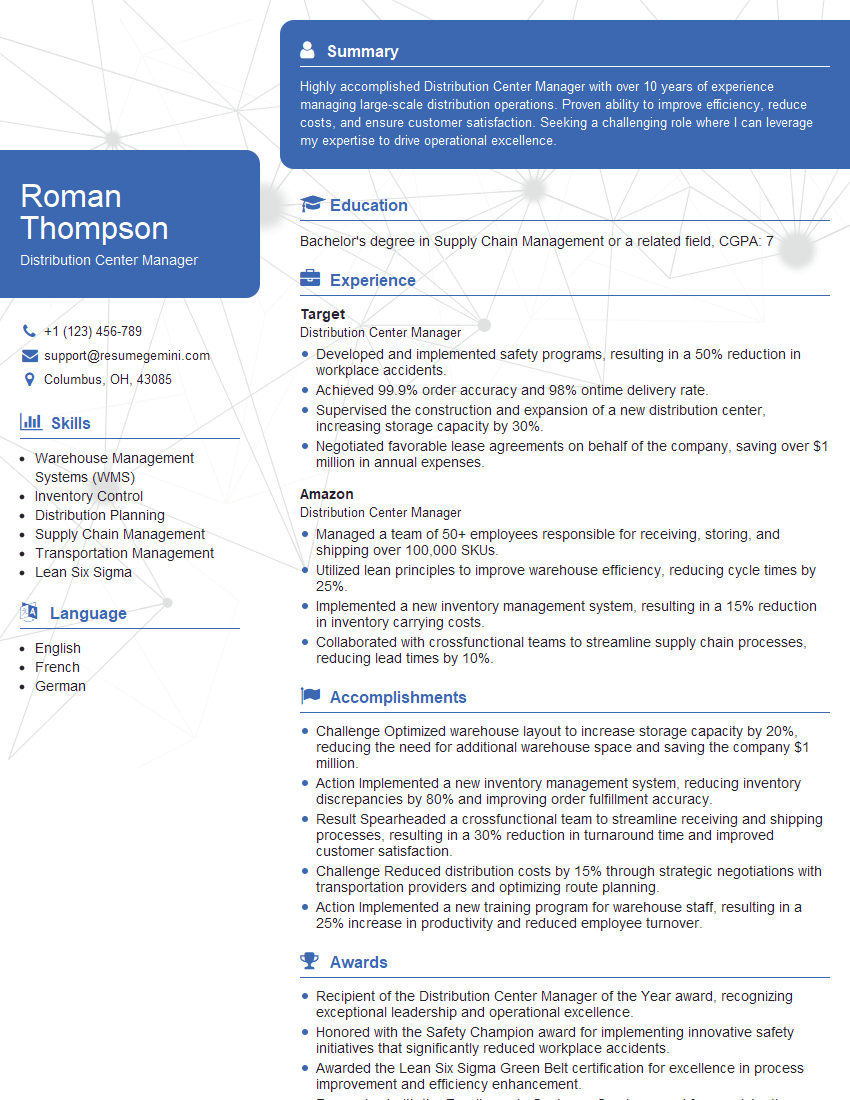
Mastering the intricacies of tool distribution opens doors to exciting career advancements, offering opportunities for specialization in areas like logistics, sales, or management. A strong resume is crucial for showcasing your skills and experience to potential employers. Creating an ATS-friendly resume significantly increases your chances of getting your application noticed. We recommend using ResumeGemini, a trusted resource for building professional resumes, to craft a compelling document that highlights your qualifications. Examples of resumes tailored to the Tool Distribution industry are available to help guide you.
Explore more articles
Users Rating of Our Blogs
Share Your Experience
We value your feedback! Please rate our content and share your thoughts (optional).
What Readers Say About Our Blog
Really detailed insights and content, thank you for writing this detailed article.
IT gave me an insight and words to use and be able to think of examples